7-162
153.
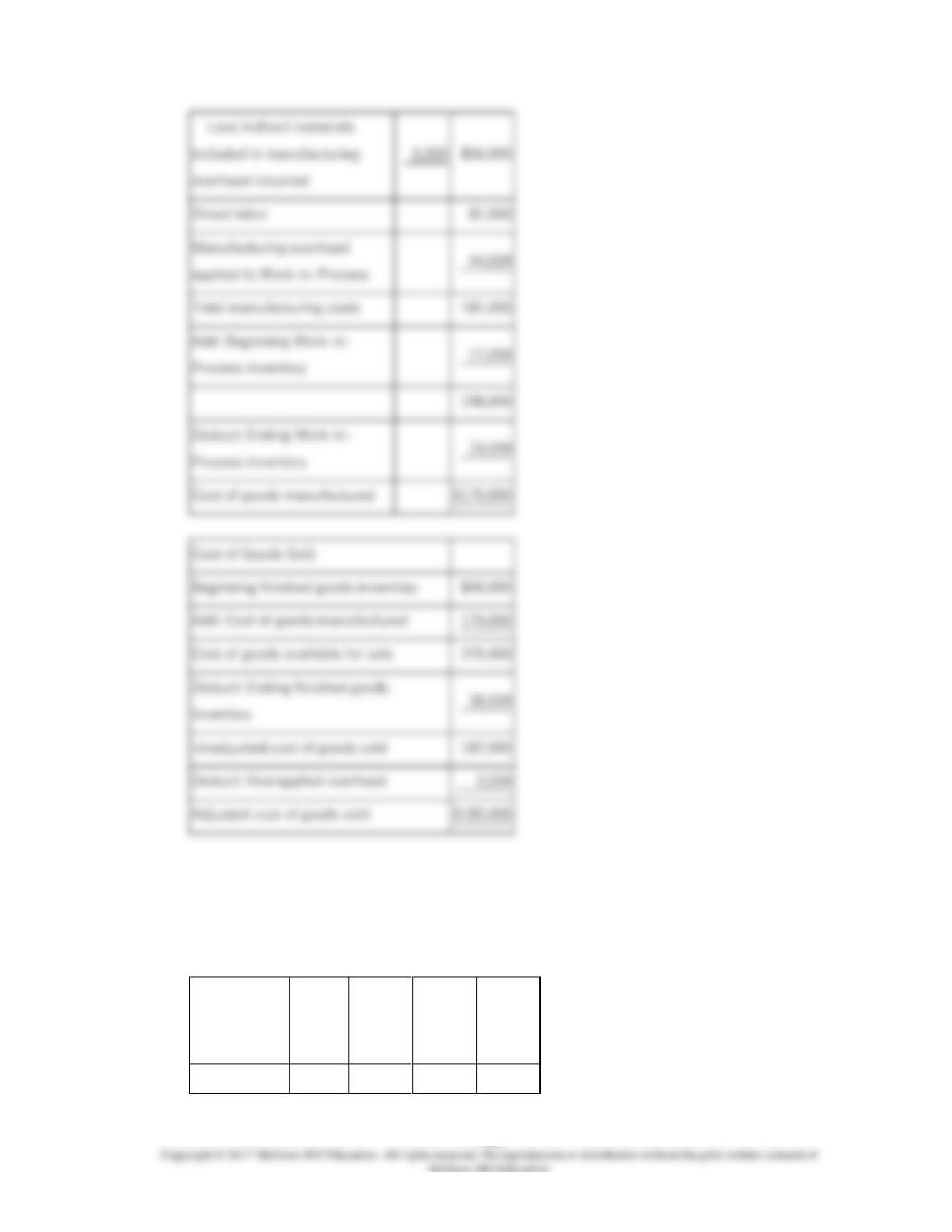
Dickerson Corporation has provided the following data for the month of April:
Inventories:
Beginning
Ending
Raw materials
$21,000
$35,000
Work-in-Process
$17,000
$19,000
Finished goods
$46,000
$38,000
Additional information:
Raw materials purchases
$76,000
Direct labor cost
$81,000
Manufacturing overhead cost incurred
$42,000
Indirect materials included in
manufacturing overhead cost incurred
$6,000
Manufacturing overhead cost applied to
Work-in-Process
$44,000
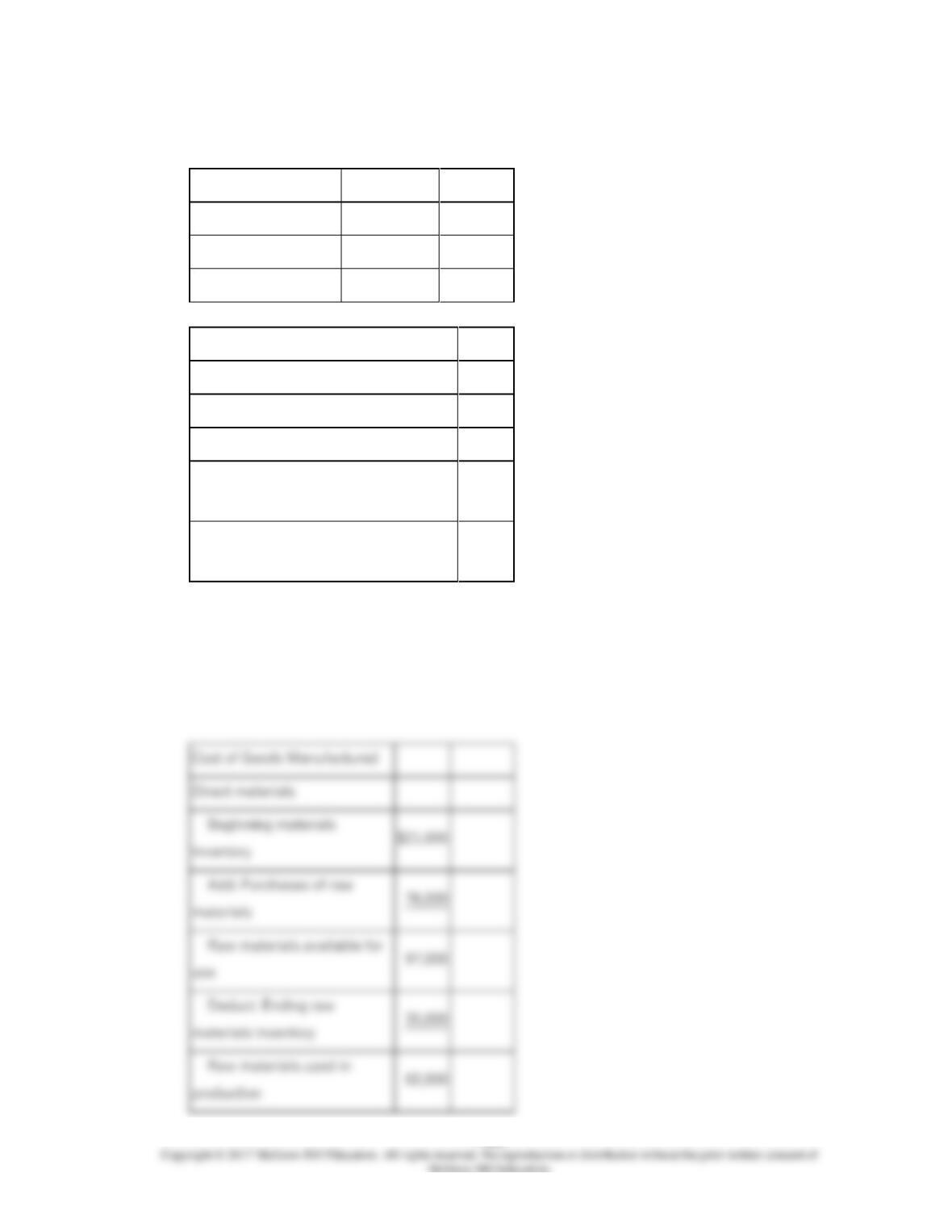
Cost of Goods Manufactured
Direct materials
Raw materials available for
use
Deduct: Ending raw
materials inventory
production
7-163
Deduct: Ending finished goods
154.
Townley Inc. has provided the following data for the month of February. There were no
beginning inventories; consequently, the direct materials, direct labor, and manufacturing
overhead applied listed below are all for the current month.
Work-
in–
Process
Finished
Goods
Cost of
Goods
Sold
Total
Direct
$7,570
$19,200
$35,280
$62,050
7-164
materials
Direct labor
8,810
24,000
44,100
76,910
Manufacturing
overhead
applied
8,320
15,600
28,080
52,000
Total
$24,700
$58,800
$107,460
$190,960
Manufacturing overhead for the month was overapplied by $3,000.
The company allocates any underapplied or overapplied overhead among Work–in–
Process, finished goods, and cost of goods sold at the end of the month on the basis of
the overhead applied during the month in those accounts.
Required:
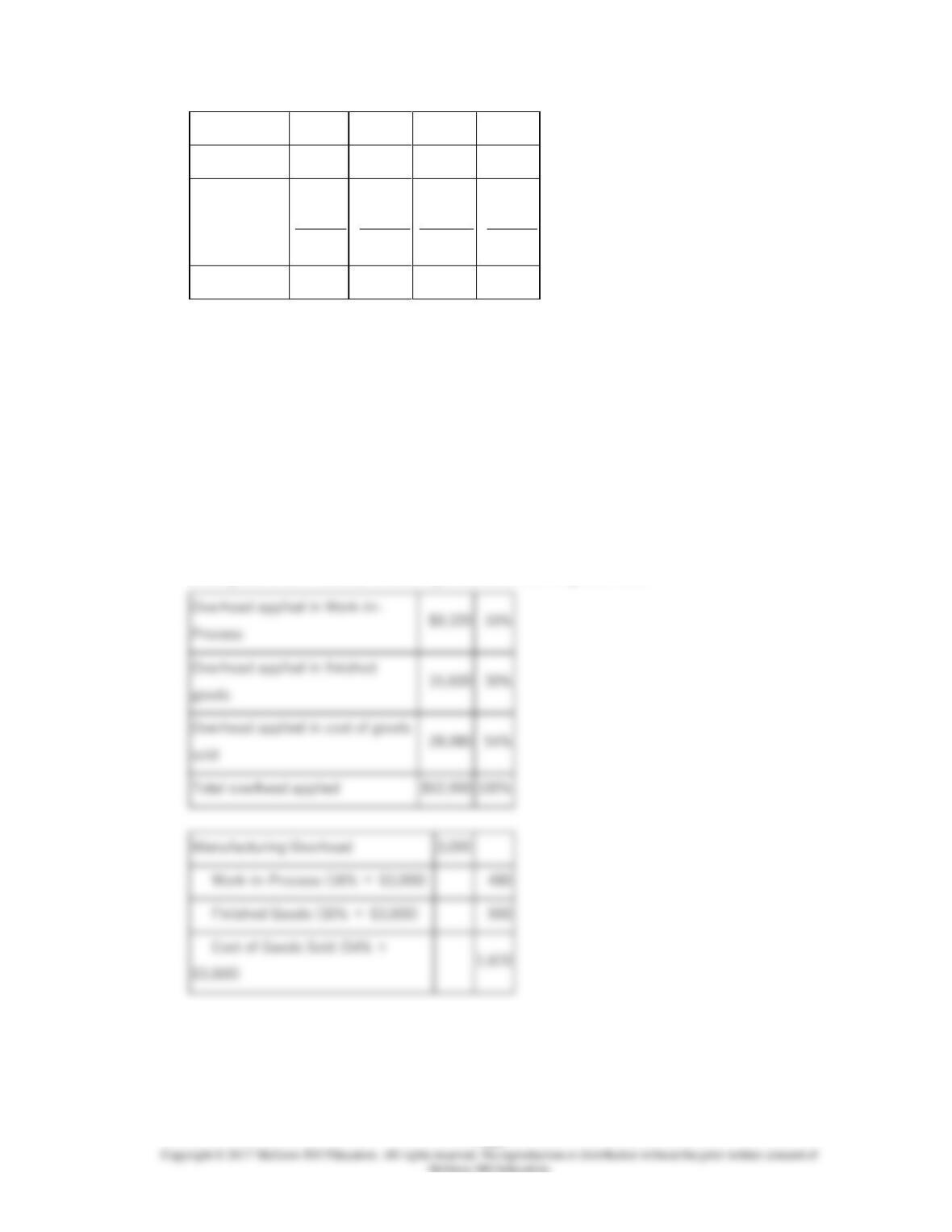
Provide the journal entry that would record the allocation of underapplied or overapplied
among Work-in-Process, finished goods, and cost of goods sold.
Process
goods
$52,000
3,000
155.
Ardvark Inc. has provided the following data for the month of November. There were no
beginning inventories; consequently, the direct materials, direct labor, and manufacturing
overhead applied listed below are all for the current month.

7-165
Work-
in–
Process
Finished
Goods
Cost of
Goods
Sold
Total
Direct
materials
$3,500
$11,200
$51,800
$66,500
Direct labor
3,260
14,400
66,600
84,260
Manufacturing
overhead
applied
3,840
7,680
36,480
48,000
Total
$10,600
$33,280
$154,880
$198,760
Manufacturing overhead for the month was underapplied by $6,000.
The company allocates any underapplied or overapplied overhead among Work-in–
Process, finished goods, and cost of goods sold at the end of the month on the basis of
the overhead applied during the month in those accounts.
Required:
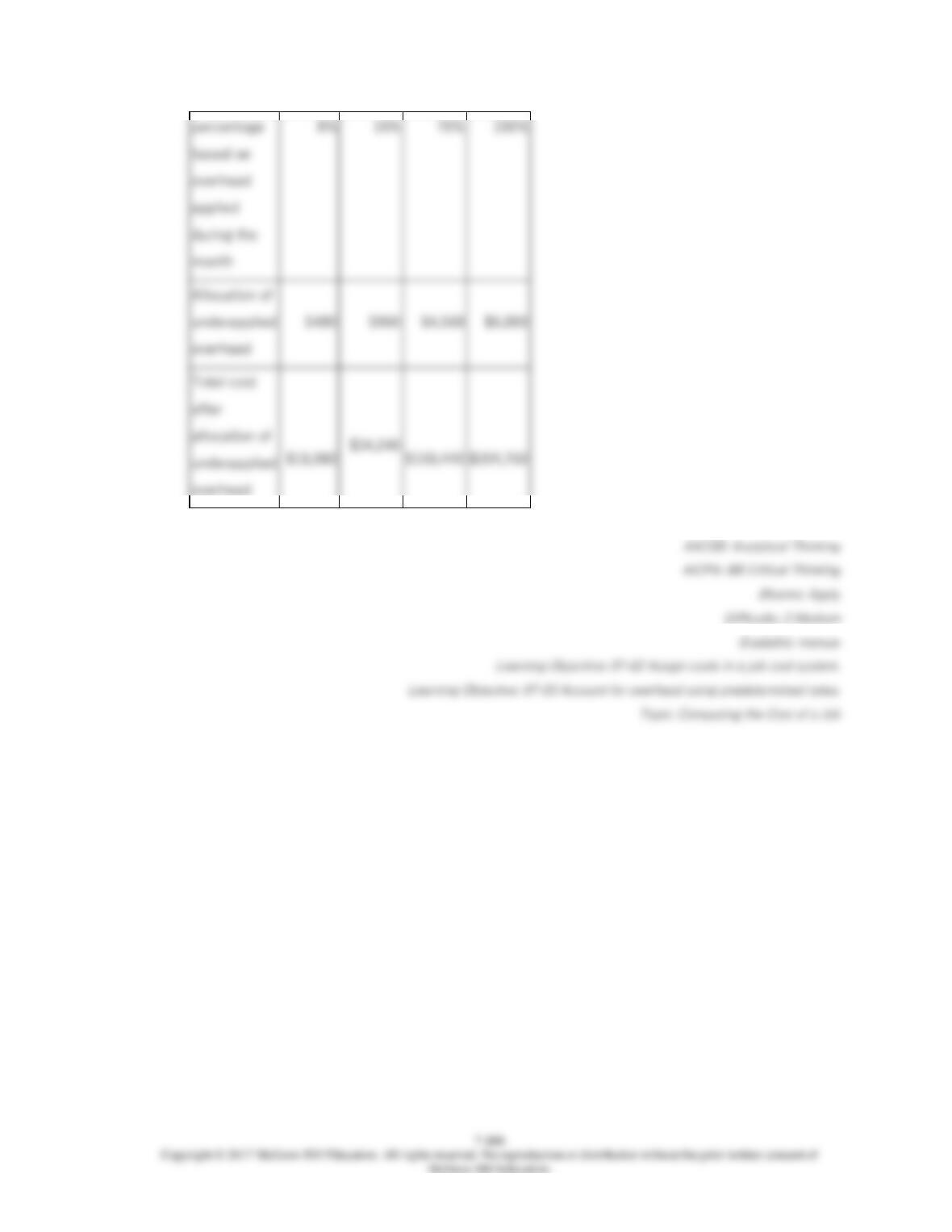
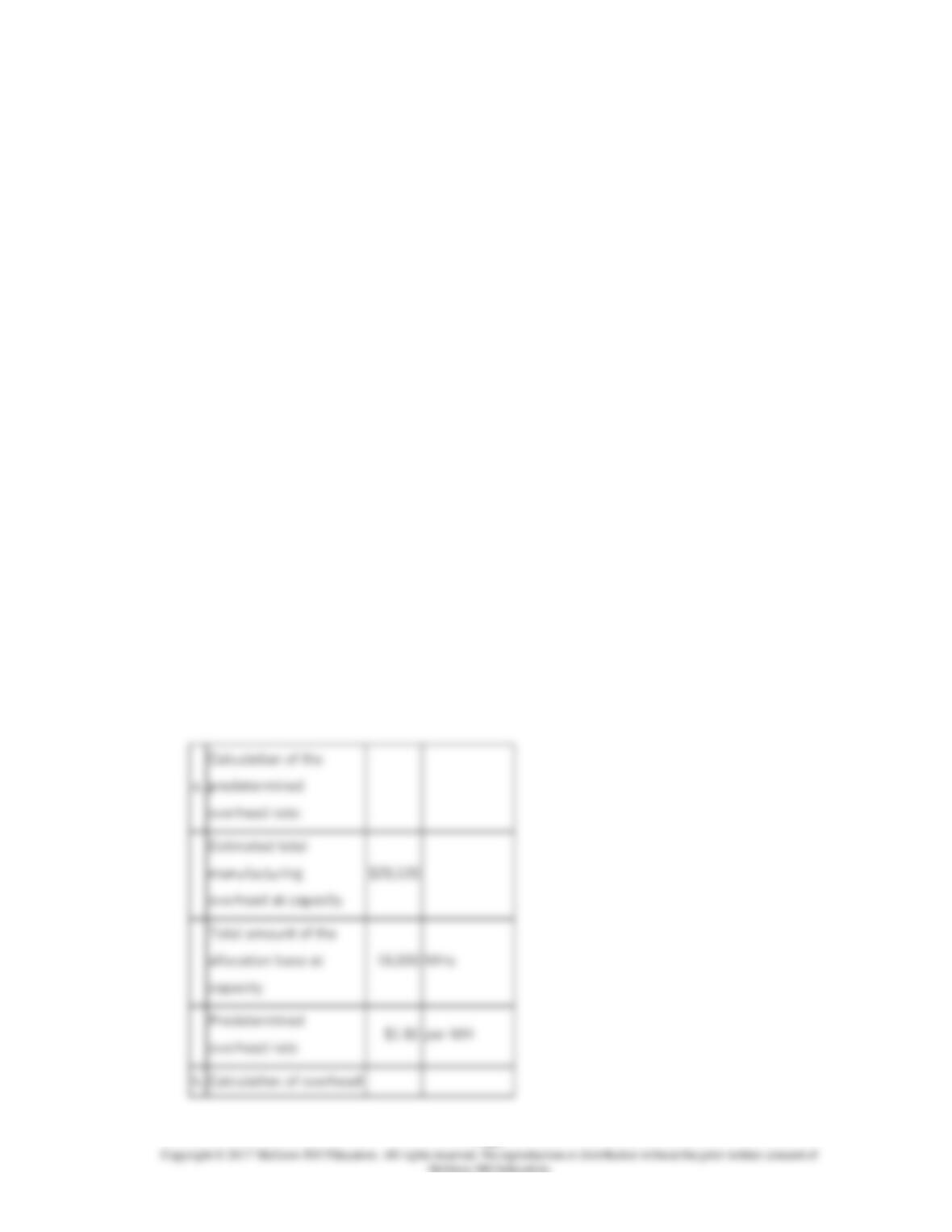
Determine the cost of Work-in-Process, finished goods, and cost of goods sold AFTER
allocation of the underapplied or overapplied overhead for the period.
overhead
7-167
156.
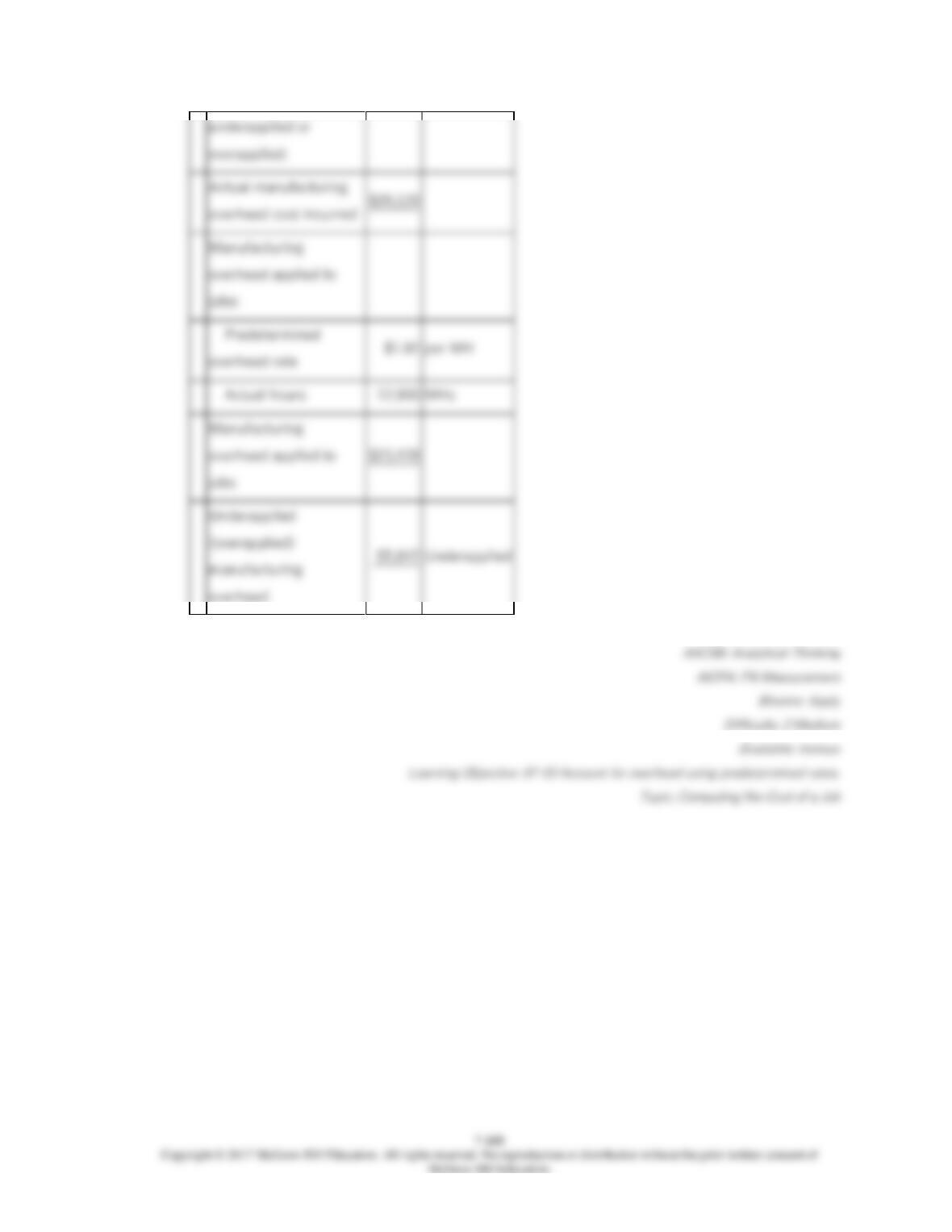

7-169
157.
The management of Atlas Corporation would like to investigate the possibility of basing its
predetermined overhead rate on activity at capacity rather than on the estimated amount
of activity for the year. The company’s controller has provided an example to illustrate how
this new system would work. In this example, the allocation base is machine-hours and
the estimated amount of the allocation base for the upcoming year is 19,000 machine–
hours. In addition, capacity is 21,000 machine-hours and the actual activity for the year is
18,200 machine-hours. All of the manufacturing overhead is fixed and is $71,820 per year.
For simplicity, it is assumed that this is the estimated manufacturing overhead for the year
as well as the manufacturing overhead at capacity and the actual amount of
manufacturing overhead for the year.
Required:
a. Determine the predetermined overhead rate if the predetermined overhead rate is
based on the estimated amount of the allocation base.
b. Determine the underapplied or overapplied overhead for the year if the predetermined
overhead rate is based on the estimated amount of the allocation base.
c. Determine the predetermined overhead rate if the predetermined overhead rate is based
on the amount of the allocation base at capacity.
d. Determine the underapplied or overapplied overhead for the year if the predetermined
overhead rate is based on the amount of the allocation base at capacity.
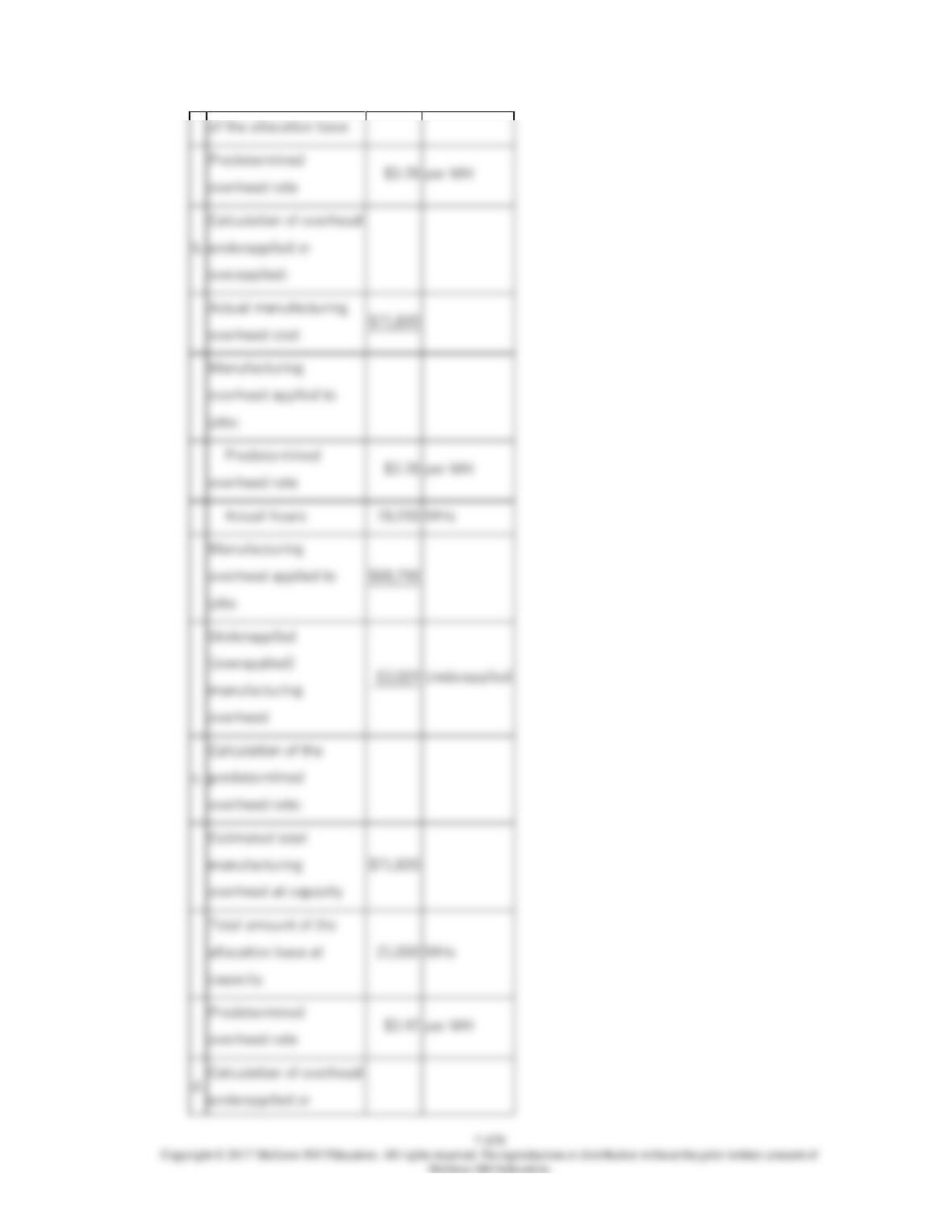
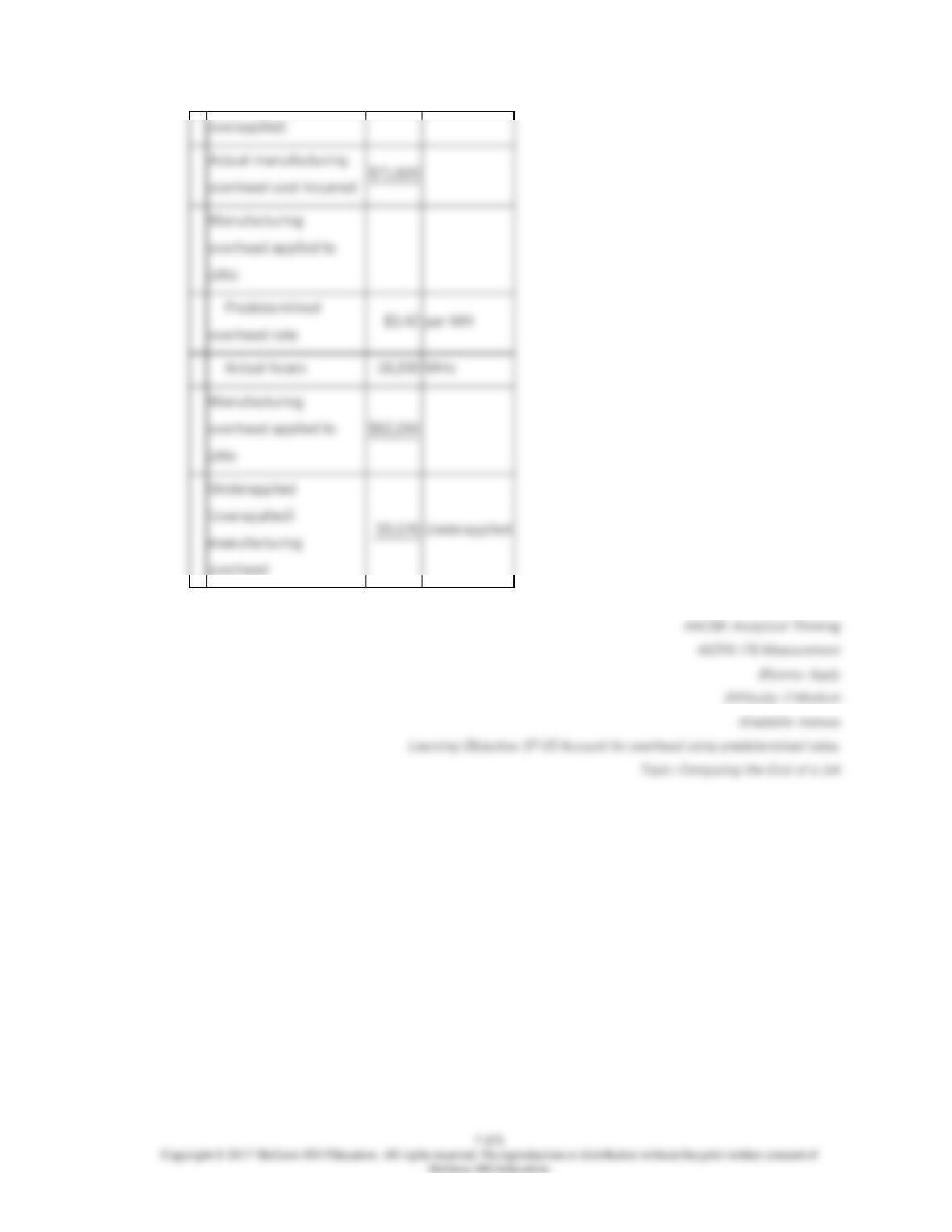

7-172
158.
The management of Grainger Corporation would like to investigate the possibility of
basing its predetermined overhead rate on activity at capacity rather than on the
estimated amount of activity for the year. The company’s controller has provided an
example to illustrate how this new system would work. In this example, the allocation base
is machine-hours and the estimated amount of the allocation base for the upcoming year
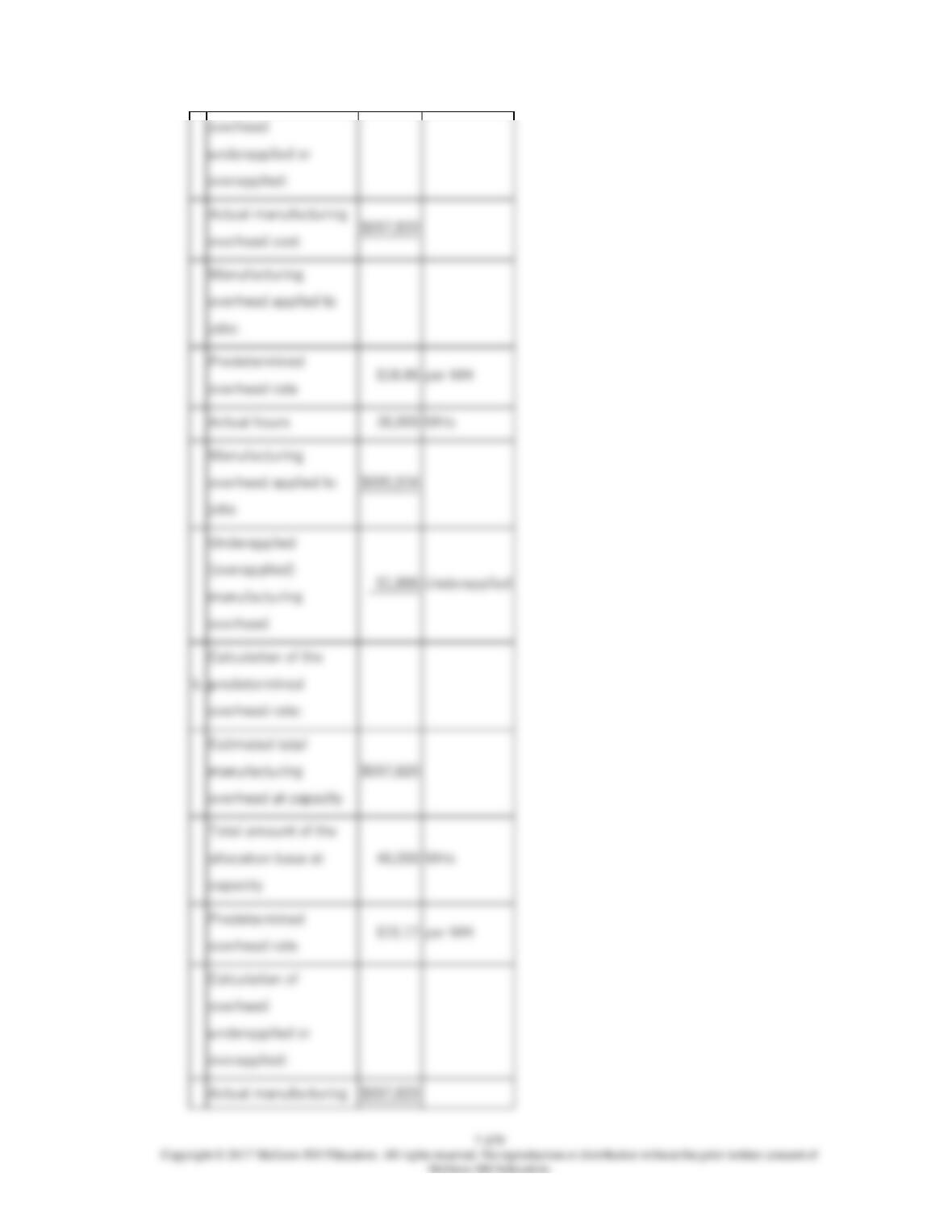
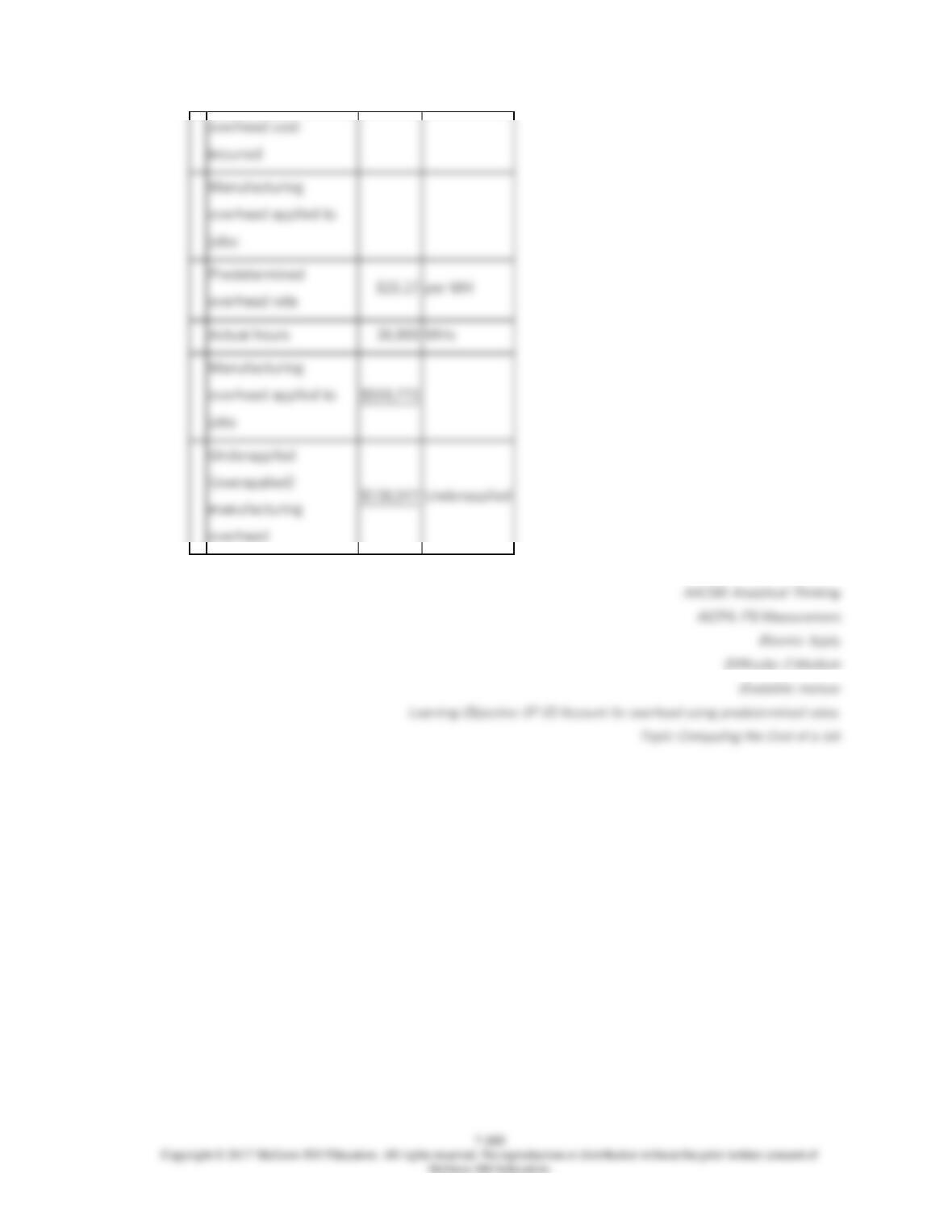
is 48,000 machine-hours. In addition, capacity is 53,000 machine-hours and the actual
activity for the year is 47,700 machine-hours. All of the manufacturing overhead is fixed
and is $1,144,800 per year. For simplicity, it is assumed that this is the estimated
manufacturing overhead for the year as well as the manufacturing overhead at capacity
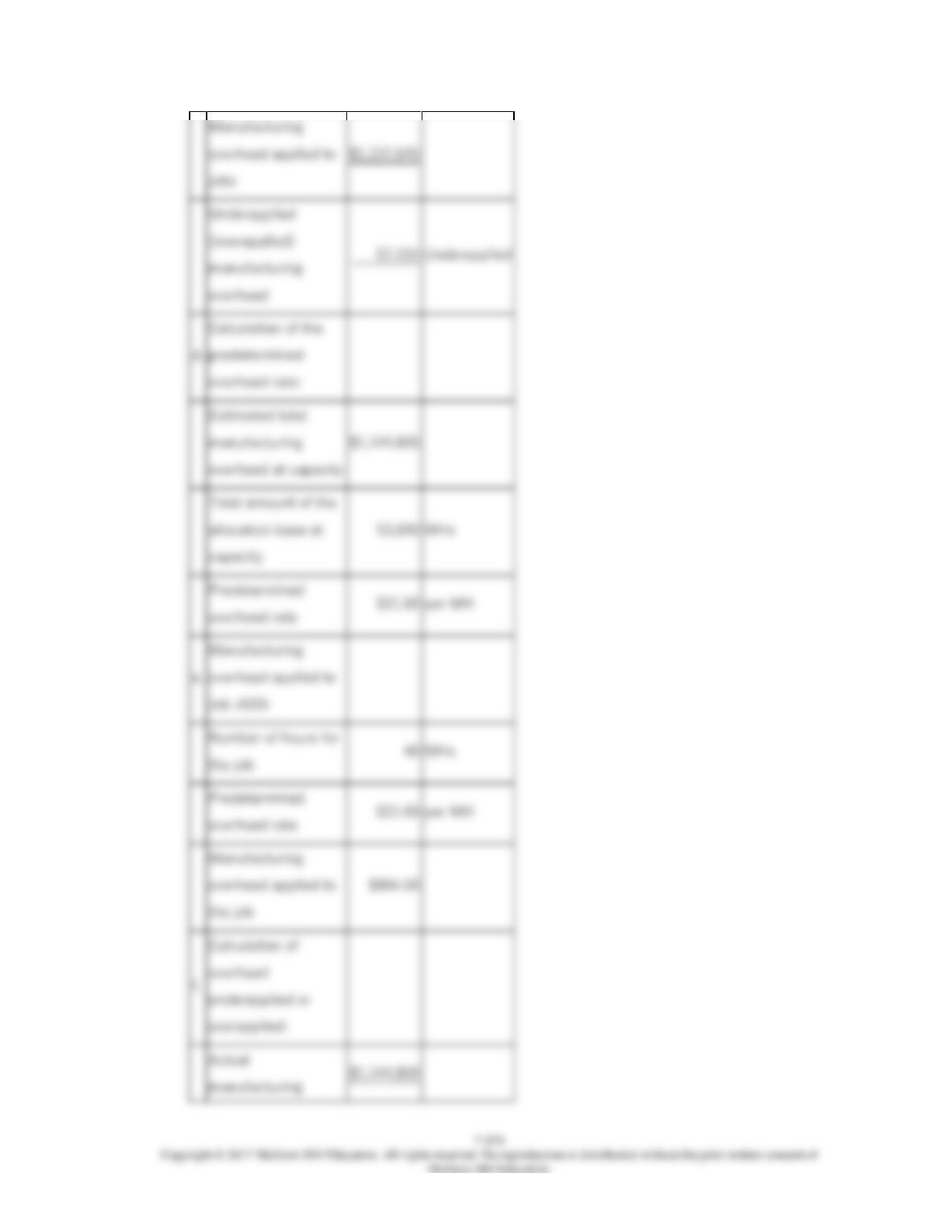
and the actual amount of manufacturing overhead for the year. Job SUA–600, which
required 40 machine-hours, is one of the jobs worked on during the year.
Required:
a. Determine the predetermined overhead rate if the predetermined overhead rate is
based on the estimated amount of the allocation base.
b. Determine how much overhead would be applied to Job SUA–600 if the predetermined
overhead rate is based on estimated amount of the allocation base.
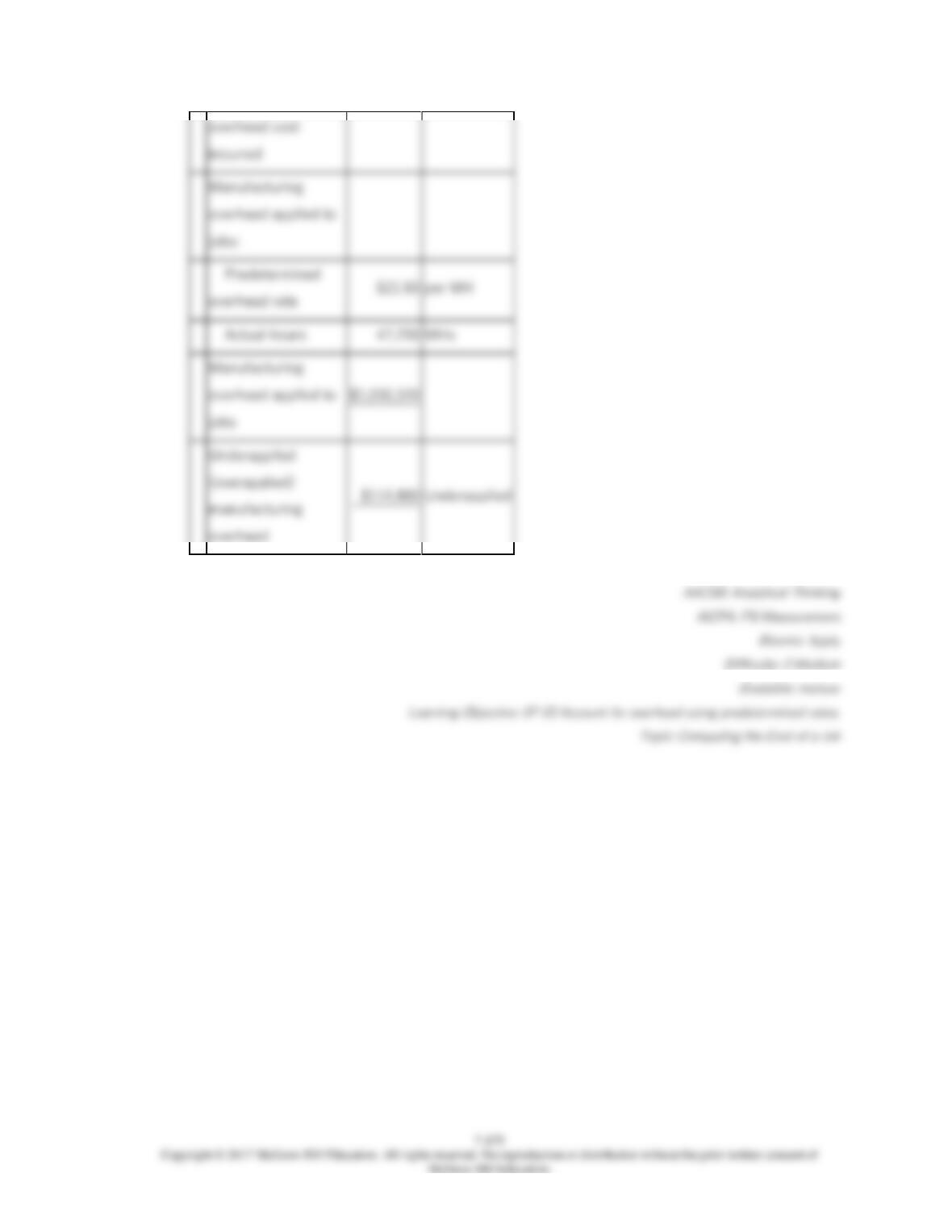
c. Determine the underapplied or overapplied overhead for the year if the predetermined
overhead rate is based on the estimated amount of the allocation base.
d. Determine the predetermined overhead rate if the predetermined overhead rate is
based on the amount of the allocation base at capacity.
e. Determine how much overhead would be applied to Job SUA-600 if the predetermined
overhead rate is based on the amount of the allocation base at capacity.
f. Determine the underapplied or overapplied overhead for the year if the predetermined
overhead rate is based on the amount of the allocation base at capacity.
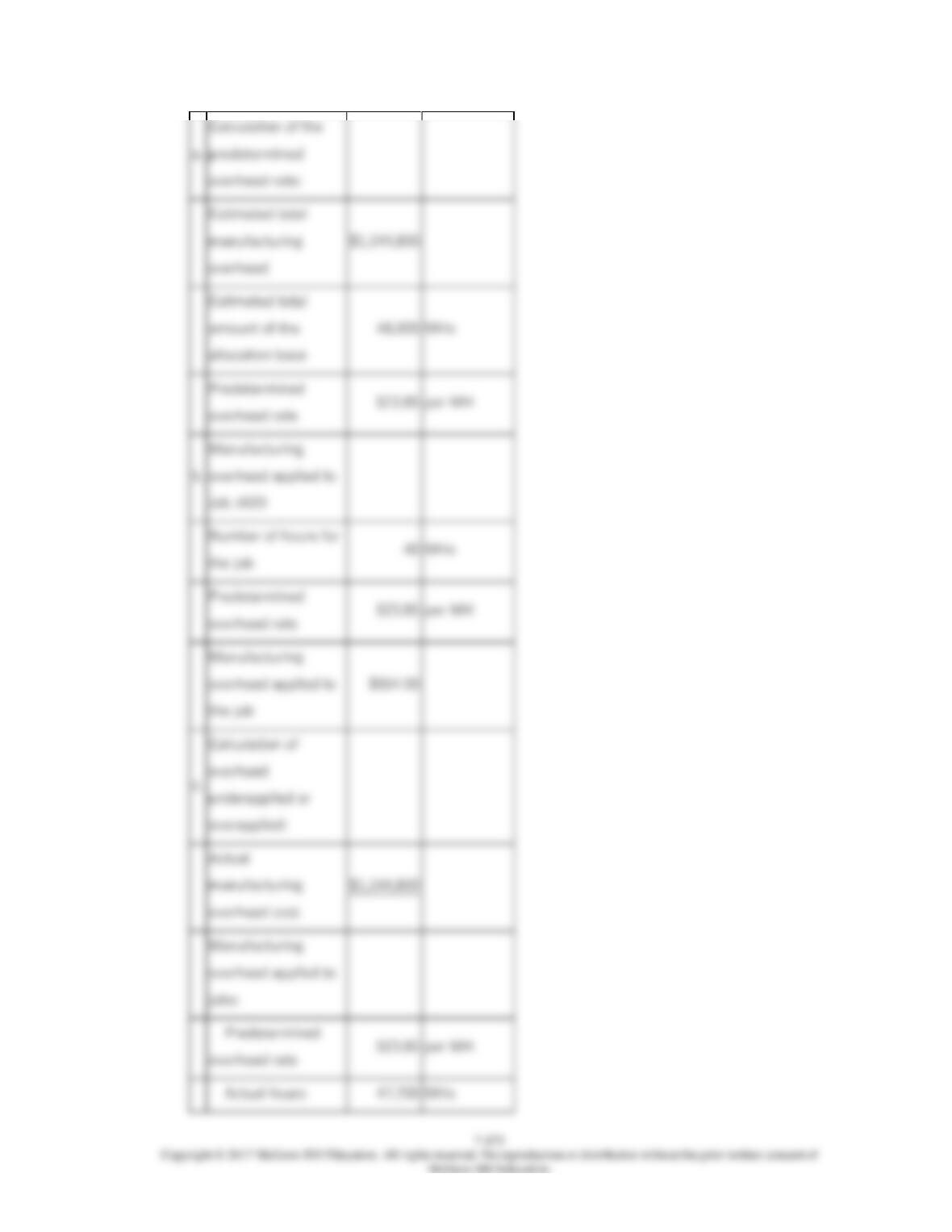
7-176
159.
The management of Royal Corporation would like to investigate the possibility of basing
its predetermined overhead rate on activity at capacity rather than on the estimated
amount of activity for the year. The company’s controller has provided an example to
illustrate how this new system would work. In this example, the allocation base is
machine-hours and the estimated amount of the allocation base for the upcoming year is
70,000 machine-hours. In addition, capacity is 82,000 machine-hours and the actual
activity for the year is 72,900 machine-hours. All of the manufacturing overhead is fixed
and is $4,132,800 per year. For simplicity, it is assumed that this is the estimated
manufacturing overhead for the year as well as the manufacturing overhead at capacity
and the actual amount of manufacturing overhead for the year. Job 706H, which required
300 machine-hours, is one of the jobs worked on during the year.
Required:
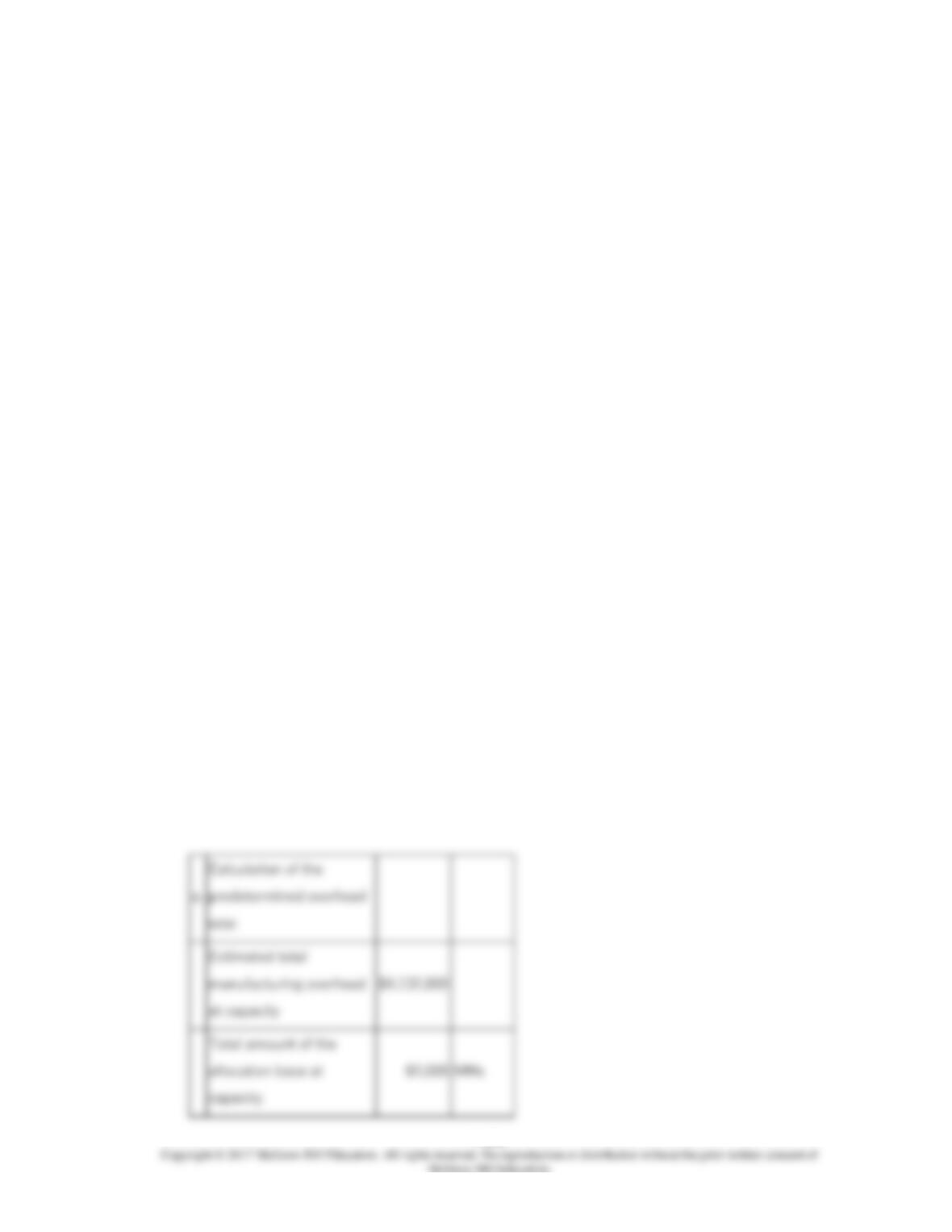
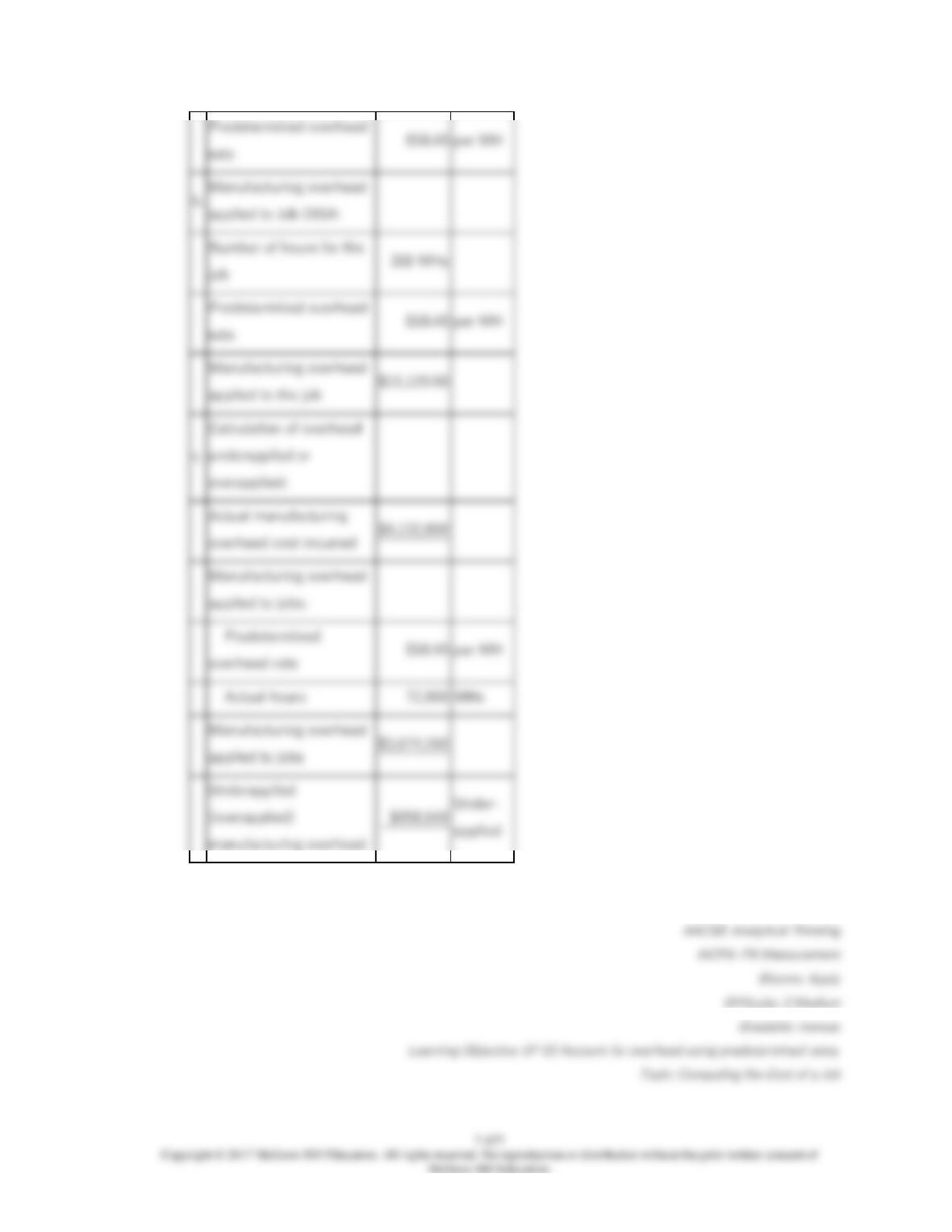
a. Determine the predetermined overhead rate if the predetermined overhead rate is
based on the amount of the allocation base at capacity.
b. Determine how much overhead would be applied to Job 706H if the predetermined
overhead rate is based on the amount of the allocation base at capacity.
c. Determine the underapplied or overapplied overhead for the year if the predetermined
overhead rate is based on the amount of the allocation base at capacity.
7-178
160.
The management of Philly Corporation would like to investigate the possibility of basing its
predetermined overhead rate on activity at capacity rather than on the estimated amount
of activity for the year. The company’s controller has provided an example to illustrate how
this new system would work. In this example, the allocation base is machine-hours and
the estimated amount of the allocation base for the upcoming year is 37,000 machine–
hours. In addition, capacity is 46,000 machine-hours and the actual activity for the year is
36,900 machine-hours. All of the manufacturing overhead is fixed and is $697,820 per year.
For simplicity, it is assumed that this is the estimated manufacturing overhead for the year
as well as the manufacturing overhead at capacity and the actual amount of
manufacturing overhead for the year.
Required:
a. Determine the underapplied or overapplied overhead for the year if the predetermined
overhead rate is based on the estimated amount of the allocation base.
b. Determine the underapplied or overapplied overhead for the year if the predetermined
overhead rate is based on the amount of the allocation base at capacity.