83.
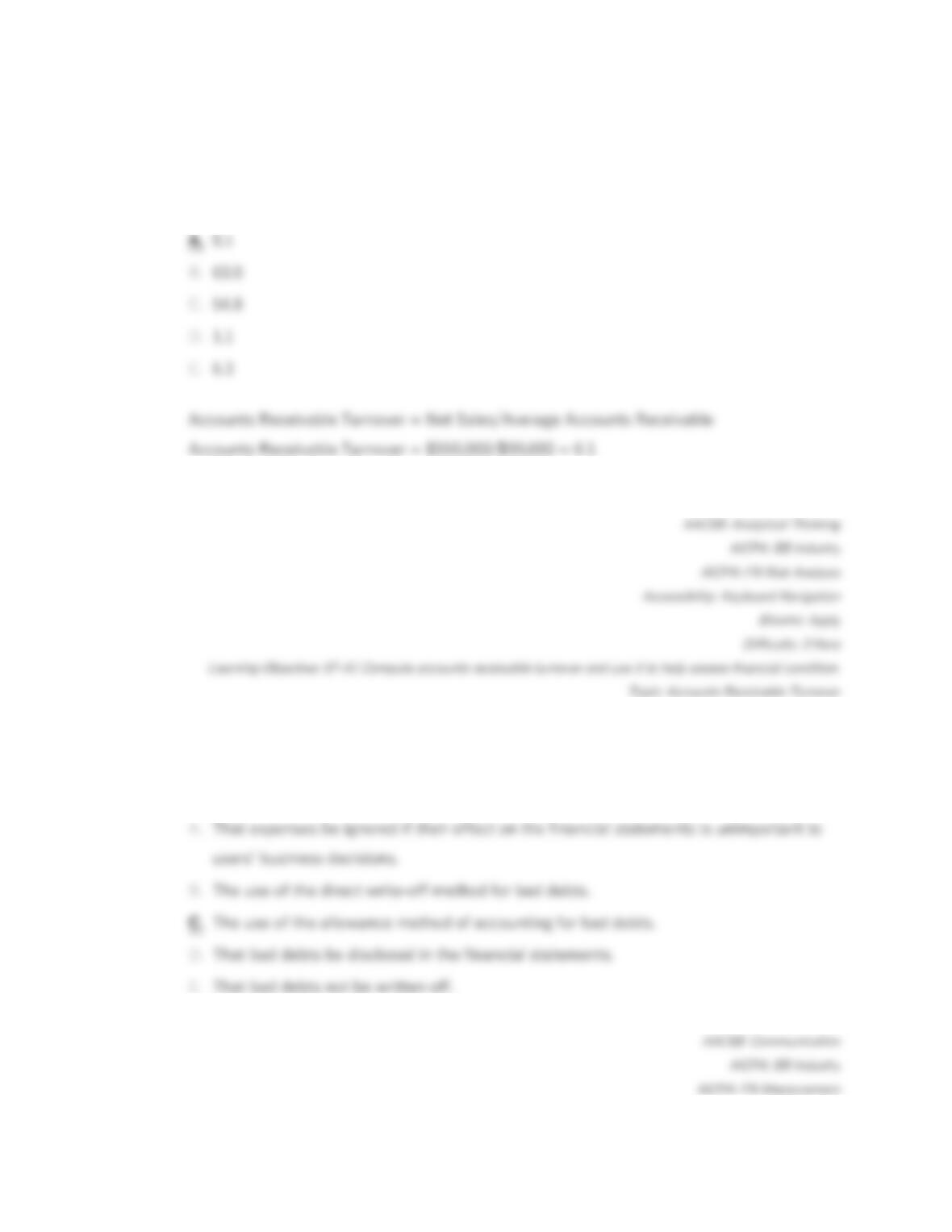
A company had total sales of $600,000, net sales of $550,000, and an average accounts
receivable of $90,000. Its accounts receivable turnover equals:
84.
The matching principle, as applied to bad debts, requires:
85.
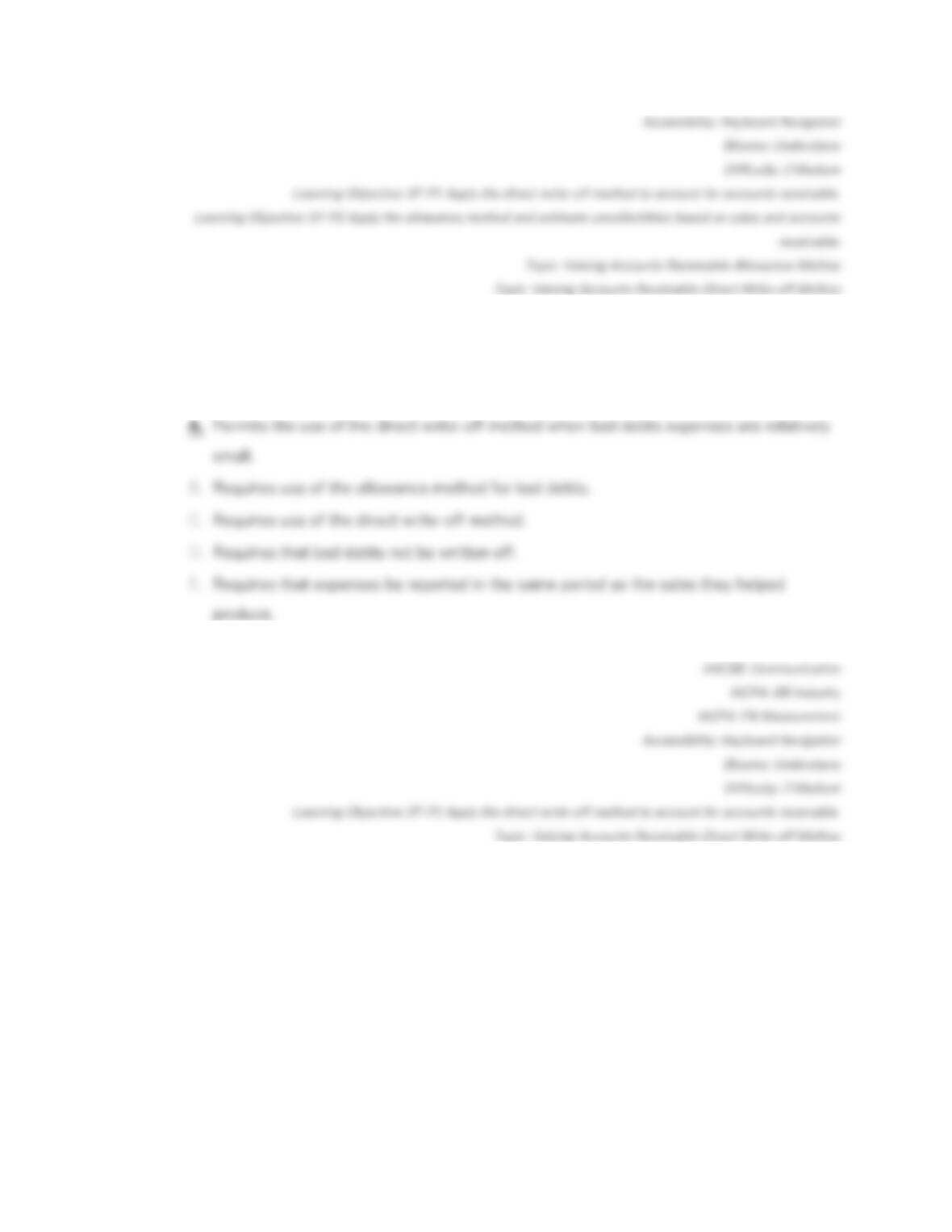
The materiality constraint, as applied to bad debts:
86.
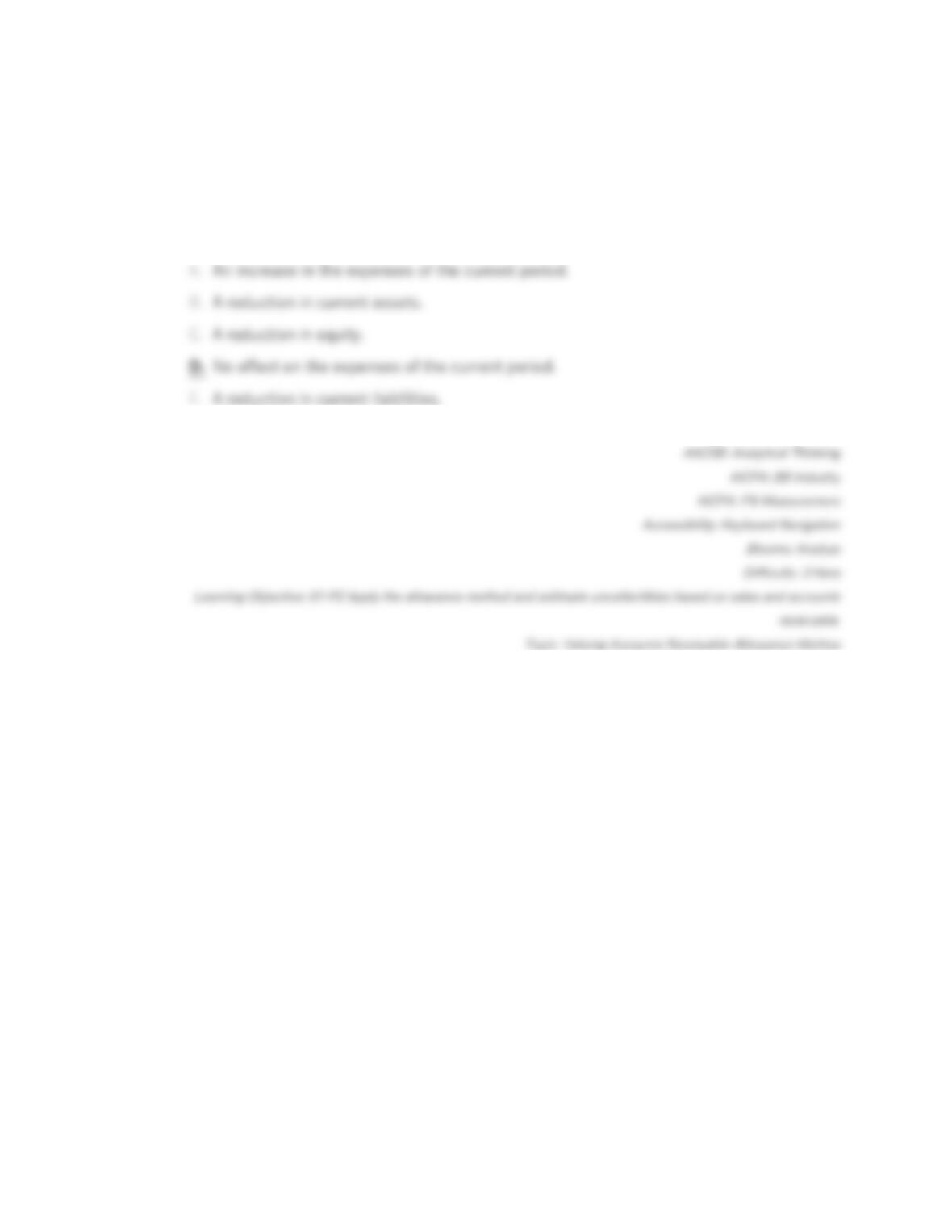
If the credit balance of the Allowance for Doubtful Accounts account exceeds the amount
of a bad debt being written off, the entry to record the write-off against the allowance
account results in:
87.
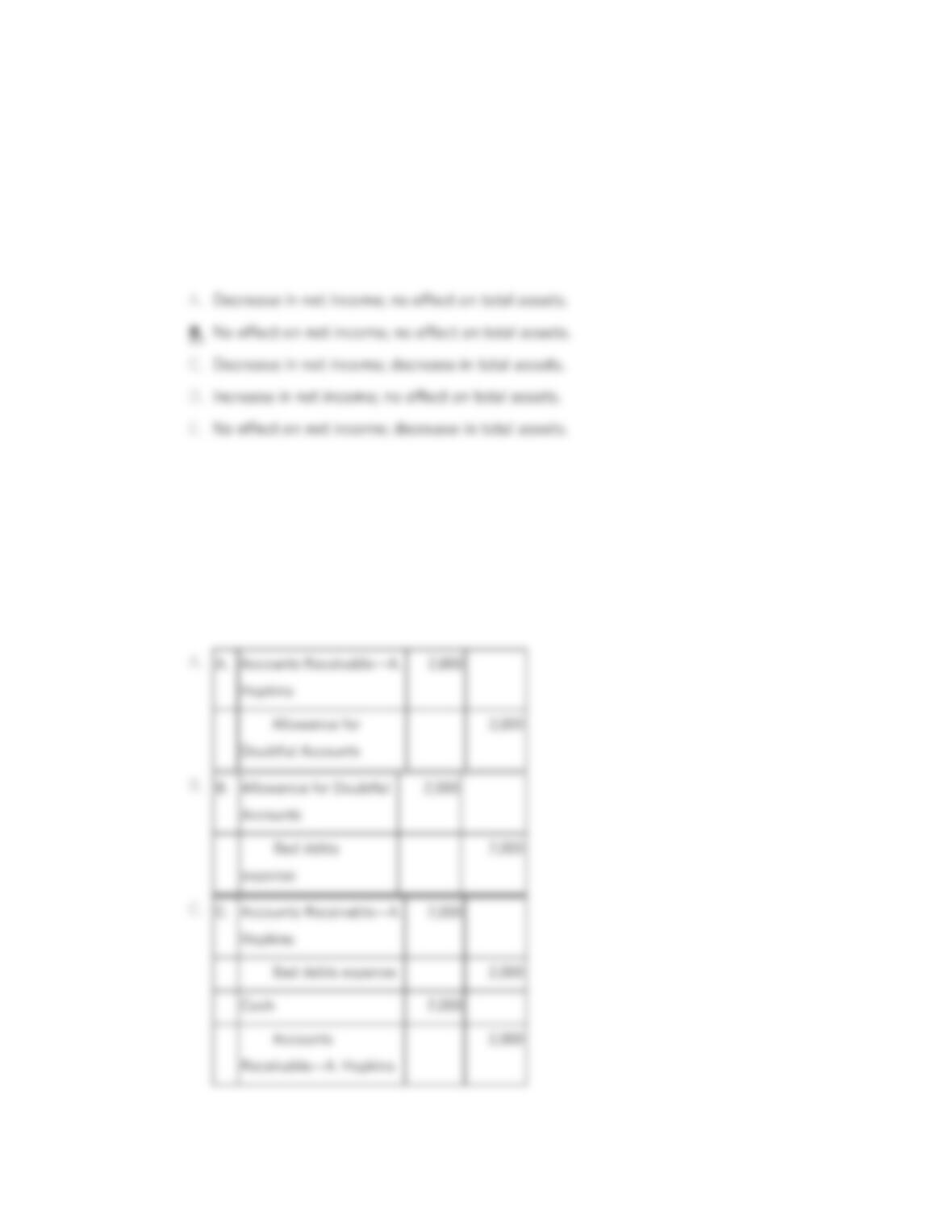
On October 17 of the current year, a company determined that a customer’s account
receivable was uncollectible and that the account should be written off. Assuming the
allowance method is used to account for bad debts, what effect will this write–off have on
the company’s net income and total assets?
88.
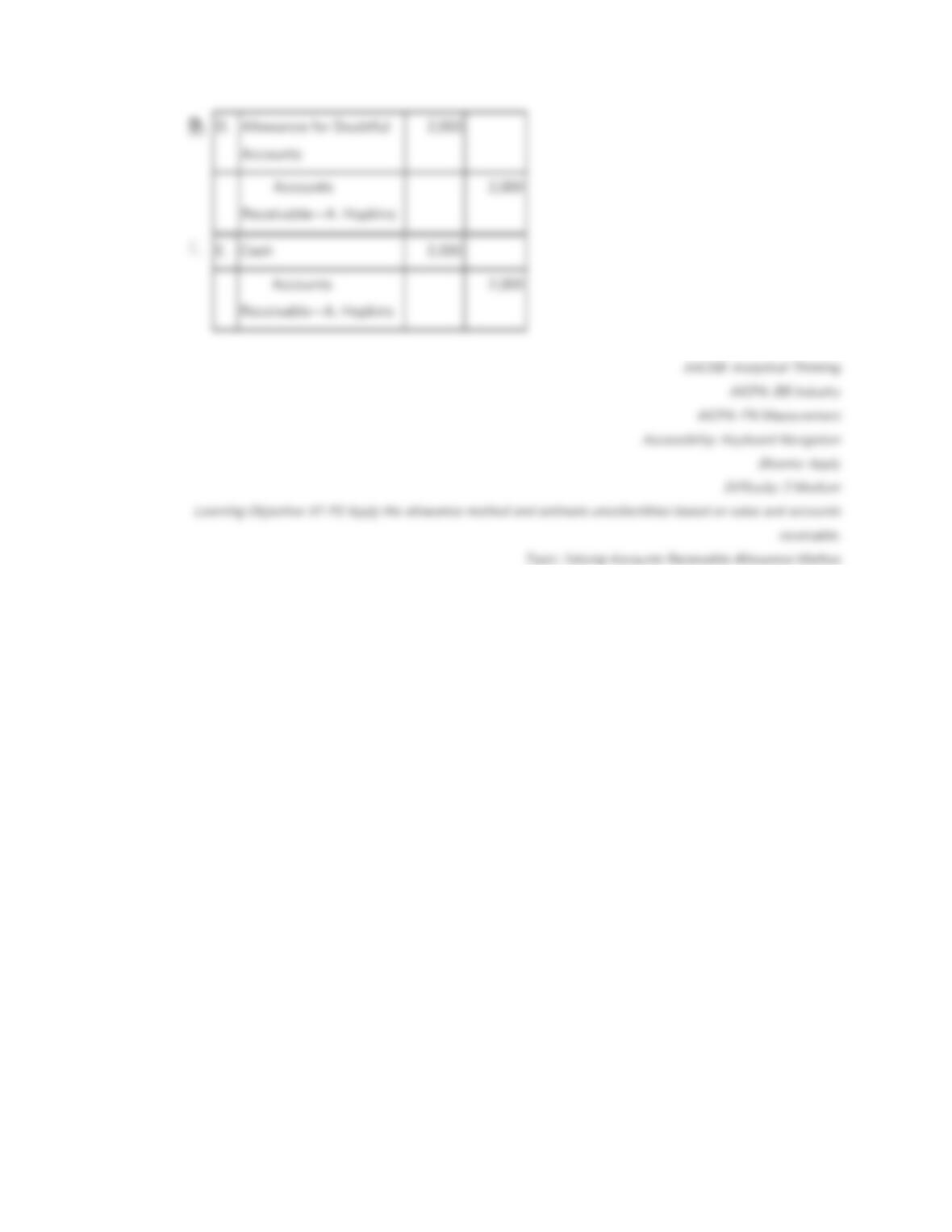
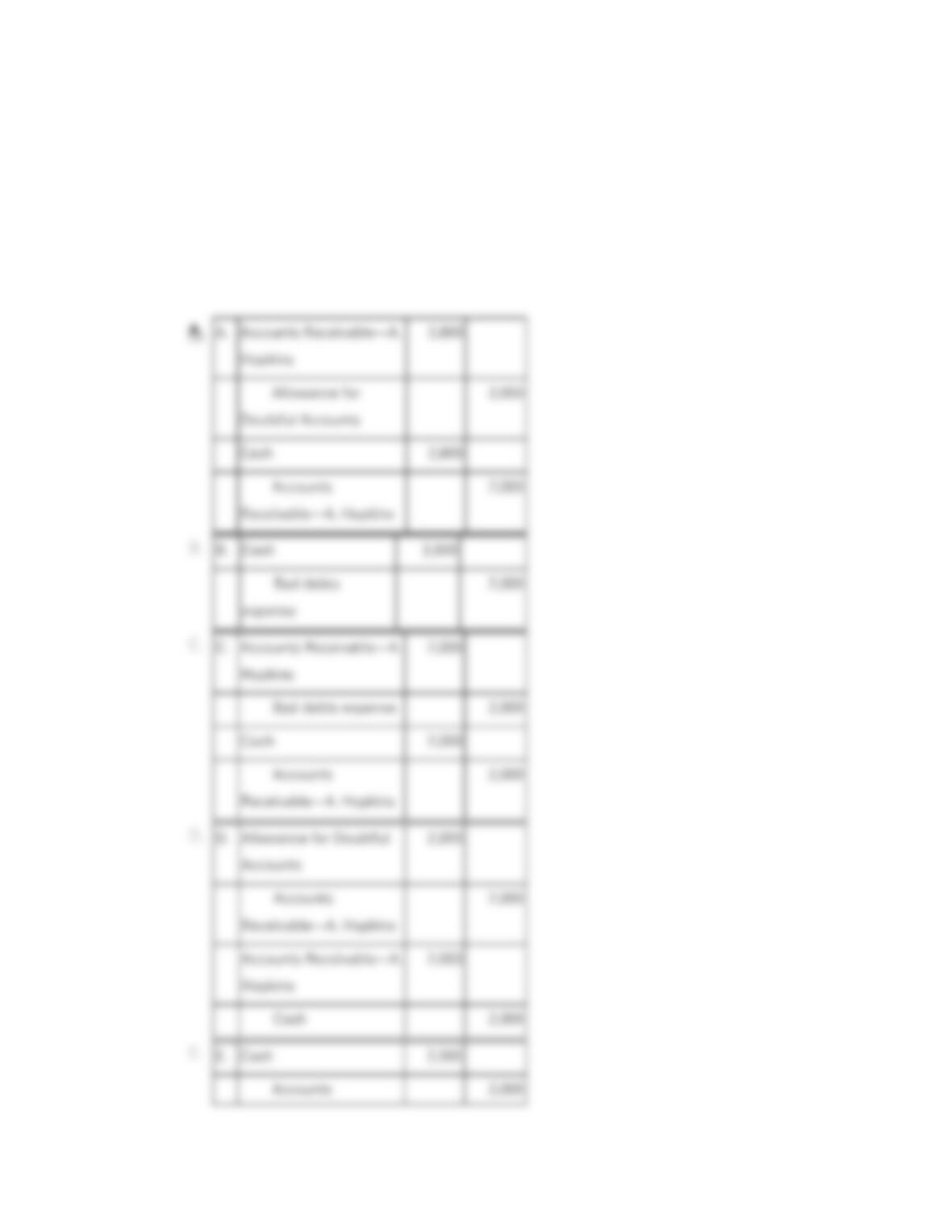
Gideon Company uses the allowance method of accounting for uncollectible accounts. On
May 3, the Gideon Company wrote off the $2,000 uncollectible account of its customer, A.
Hopkins. On July 10, Gideon received a check for the full amount of $2,000 from Hopkins.
The entry or entries Gideon makes to record the write off of the account on May 3 is:
89.
Gideon Company uses the allowance method of accounting for uncollectible accounts. On
May 3, the Gideon Company wrote off the $2,000 uncollectible account of its customer, A.
Hopkins. On July 10, Gideon received a check for the full amount of $2,000 from Hopkins.
On July 10, the entry or entries Gideon makes to record the recovery of the bad debt is
(are):
90.
The allowance method based on the idea that a given percent of a company’s credit sales
for the period is uncollectible is:
91.
A method of estimating bad debts expense that involves a detailed examination of
outstanding accounts and the length of time past due is the:
92.
Which of the following is an accounting procedure that (1) estimates and reports bad
debts expense from credit sales during the period the sales are recorded, and (2) reports
accounts receivable at the estimated amount of cash to be collected?
93.
On December 31 of the current year, the unadjusted trial balance of a company using the
percent of receivables method to estimate bad debt included the following: Accounts
Receivable, debit balance of $95,250; Allowance for Doubtful Accounts, credit balance of
$921. What amount should be debited to Bad Debts Expense, assuming 6% of outstanding
accounts receivable at the end of the current year will be uncollectible?
94.
A company ages its accounts receivables to determine its end of period adjustment for
bad debts. At the end of the current year, management estimated that $15,750 of the
accounts receivable balance would be uncollectible. Prior to any year–end adjustments,
the Allowance for Doubtful Accounts had a debit balance of $375. What adjusting entry
should the company make at the end of the current year to record its estimated bad debts
expense?
95.
A company uses the percent of sales method to determine its bad debts expense. At the
end of the current year, the company’s unadjusted trial balance reported the following
selected amounts:
Accounts receivable
$375,000 debit
Allowance for doubtful accounts
500 debit
Net Sales
800,000 credit
All sales are made on credit. Based on past experience, the company estimates that 0.6%
of credit sales are uncollectible. What amount should be debited to Bad Debts Expense
when the year-end adjusting entry is prepared?
96.
A company uses the percent of sales method to determine its bad debts expense. At the
end of the current year, the company’s unadjusted trial balance reported the following
selected amounts:
Accounts receivable
$375,000 debit
Allowance for doubtful accounts
500 debit
Net Sales
800,000 credit
All sales are made on credit. Based on past experience, the company estimates 0.6% of
credit sales to be uncollectible. What adjusting entry should the company make at the end
of the current year to record its estimated bad debts expense?
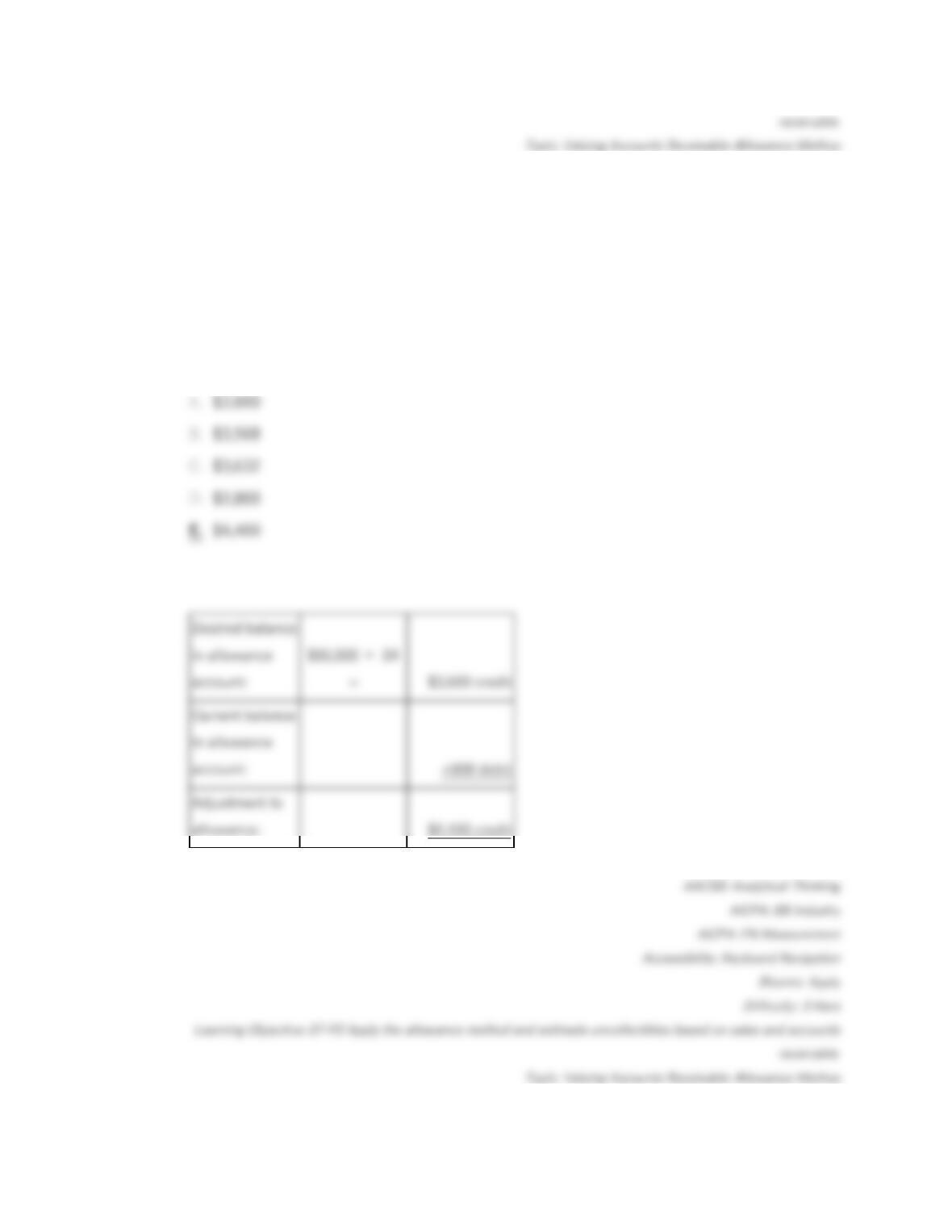
97.
A company has $90,000 in outstanding accounts receivable and it uses the allowance
method to account for uncollectible accounts. Experience suggests that 4% of outstanding
receivables are uncollectible. The current balance (before adjustments) in the allowance
for doubtful accounts is an $800 debit. The journal entry to record the adjustment to the
allowance account includes a debit to Bad Debts Expense for:
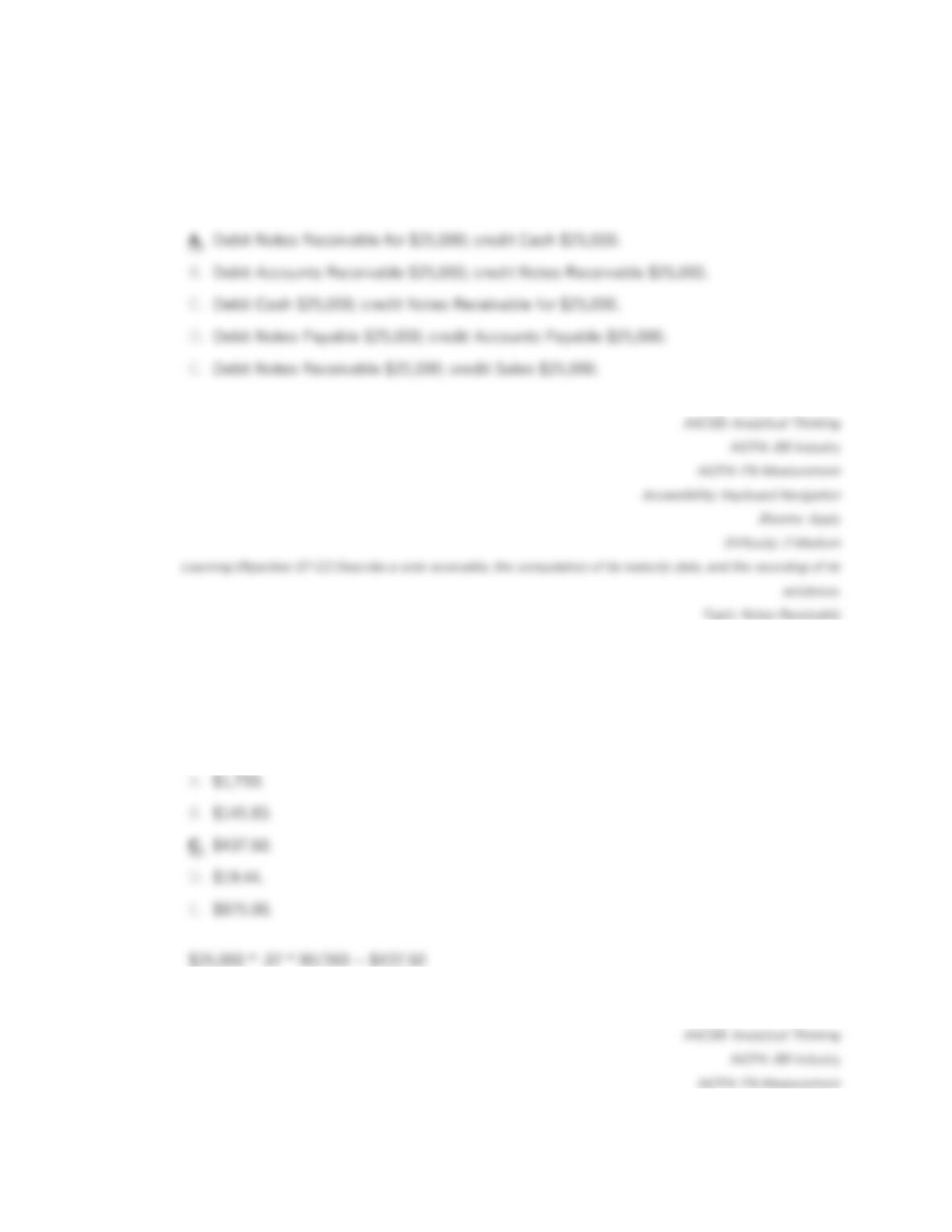
98.
Jasper makes a $25,000, 90-day, 7% cash loan to Clayborn Co. Jasper’s entry to record the
transaction should be:
99.
Jasper makes a $25,000, 90-day, 7% cash loan to Clayborn Co. The amount of interest that
Jasper will collect on the loan is:
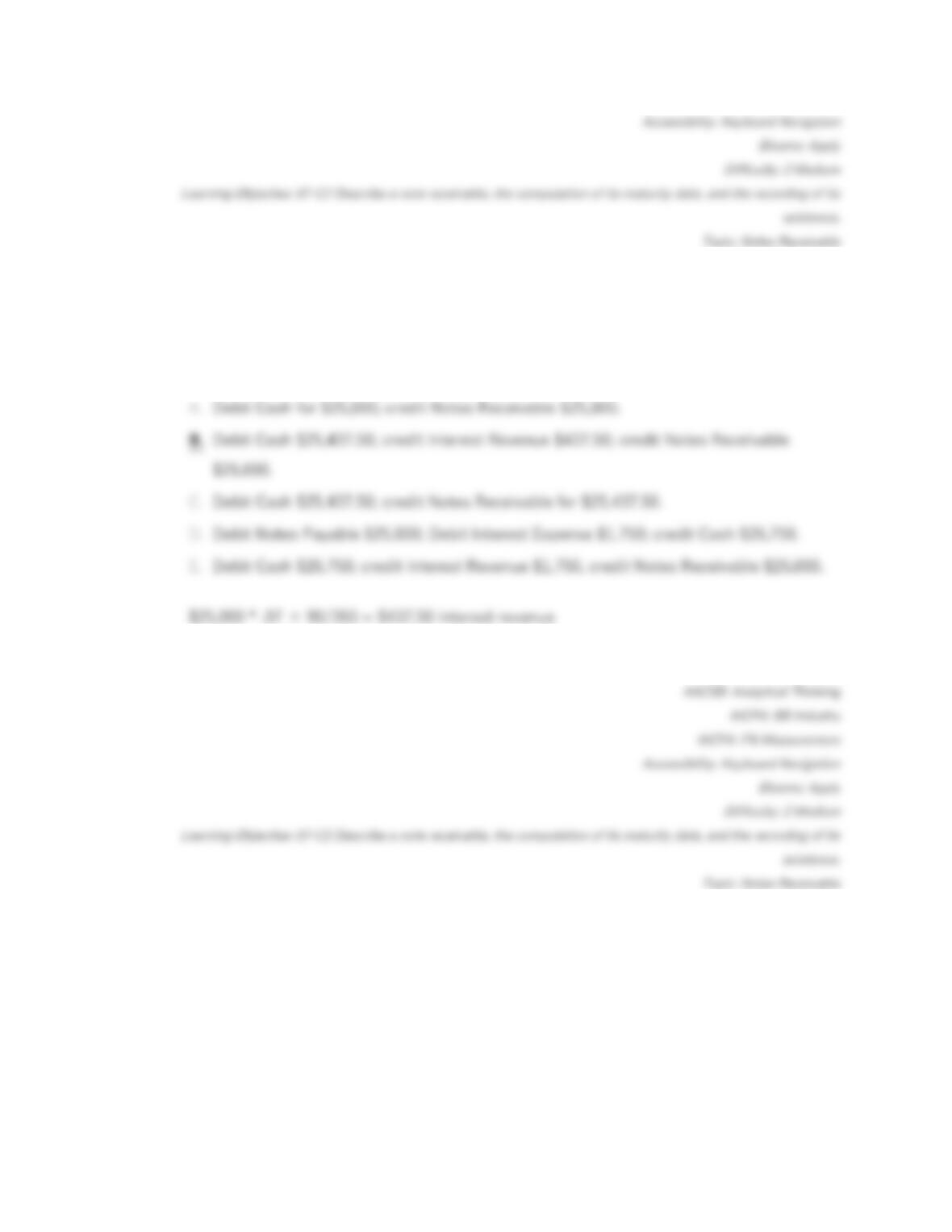
100.
Jasper makes a $25,000, 90-day, 7% cash loan to Clayborn Co. Jasper’s entry to record the
collection of the note and interest at maturity should be:
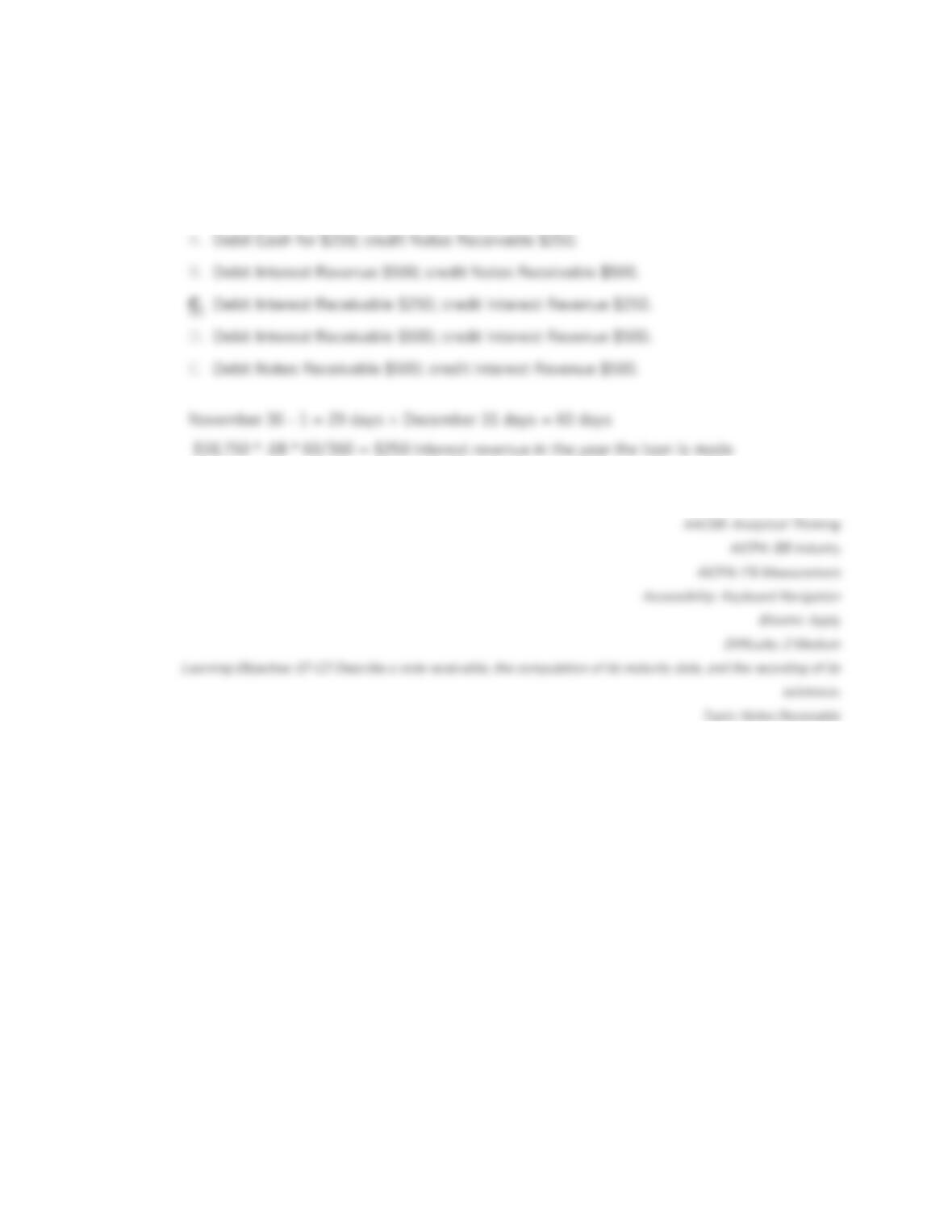
101.
Lemming makes an $18,750, 120-day, 8% cash loan to Notions Co. on November 1.
Lemming’s end-of-period adjusting entry on December 31 should be:
102.
The amount due on the maturity date of a $6,000, 60-day 4%, note receivable is:
103.
Giorgio Italian Market bought $4,000 worth of merchandise from Food Suppliers and
signed a 90-day, 6% promissory note for the $4,000. Food Supplier’s journal entry to record
the sales transaction is:
104.
Giorgio Italian Market bought $4,000 worth of merchandise from Food Suppliers and
signed a 90-day, 6% promissory note for the $4,000. Food Supplier’s journal entry to record
the collection on the maturity date is:
105.
Music World sold $7,800 in electronic components to Jax Recording Studio. Jax signed a
60-day, 8% promissory note for $7,800. Music World’s journal entry to record the sales
transaction is:
106.
Music World sold $7,800 in electronic components to Jax Recording Studio. Jax signed a
60-day, 8% promissory note for $7,800. Music World’s journal entry to record the collection
on the maturity date is:
107.
Honoring a note receivable indicates that the maker has:
AACSB: Communication