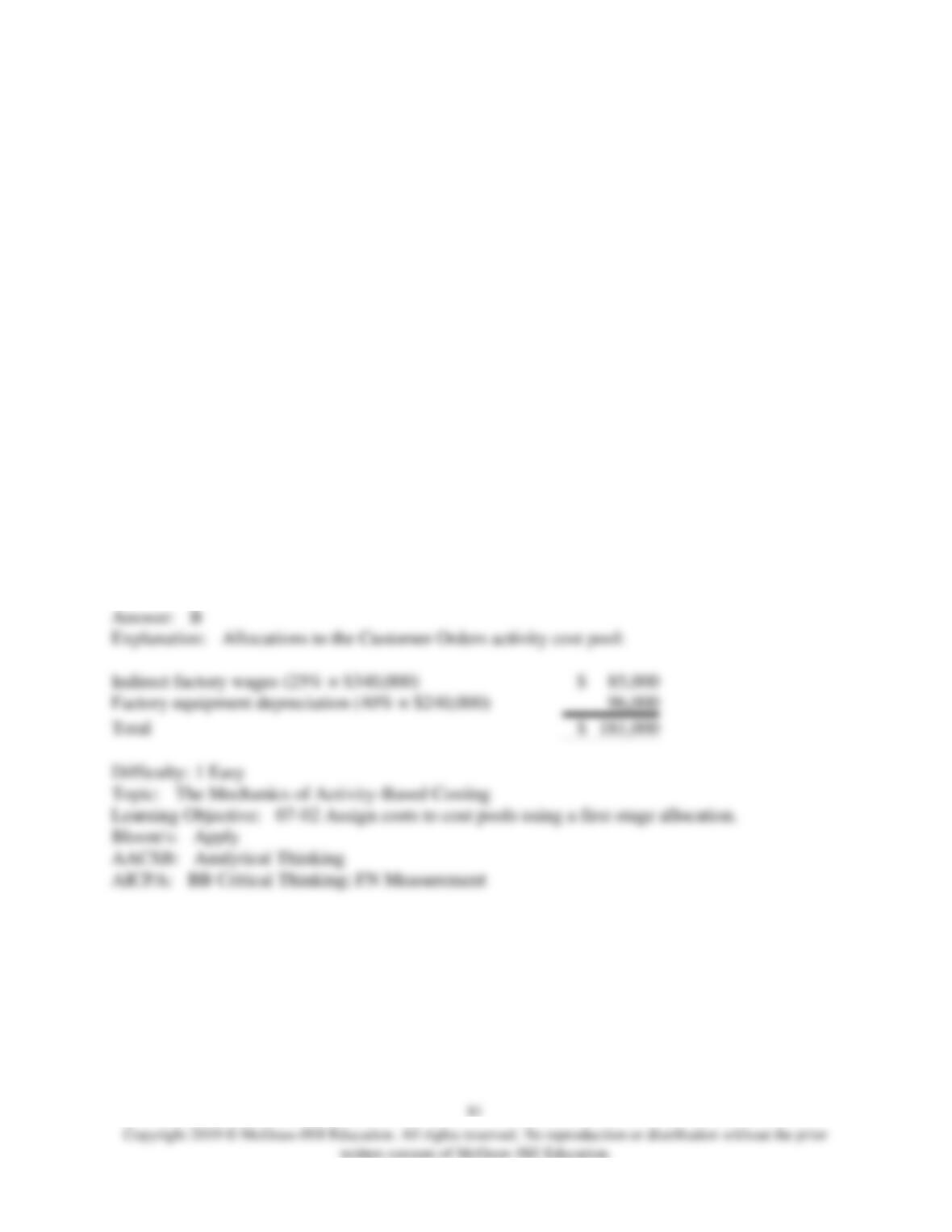
89) Weldon Corporation has provided the following data from its activity-based costing
accounting system:
Indirect factory wages
$
340,000
Factory equipment depreciation
$
240,000
Distribution of Resource Consumption across Activity Cost Pools:
Activity Cost Pools
Customer Orders
Product Processing
Other
Total
Indirect factory wages
25%
65%
10%
100%
Factory equipment depreciation
40%
40%
20%
100%
The “Other” activity cost pool consists of the costs of idle capacity and organization-sustaining
costs that are not assigned to products.
How much indirect factory wages and factory equipment depreciation cost would be assigned to
the Customer Orders activity cost pool?
A) $188,500
B) $181,000
C) $290,000
D) $580,000
Indirect factory wages (25% × $340,000)
$
Factory equipment depreciation (40% × $240,000)
Total
$
181,000
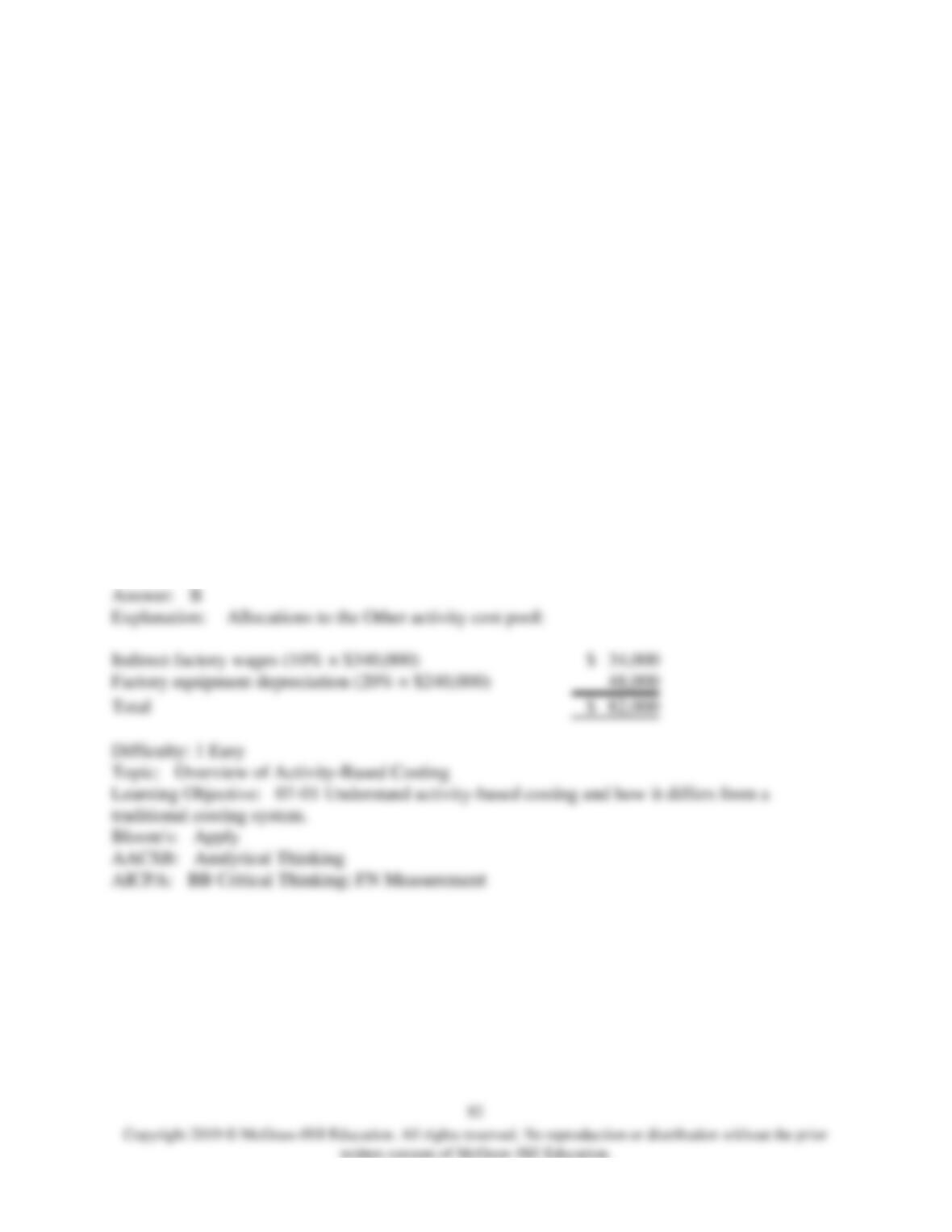
90) Weldon Corporation has provided the following data from its activity-based costing
accounting system:
Supervisory wages
$
340,000
Factory supplies
$
240,000
Distribution of Resource Consumption across Activity Cost Pools:
Activity Cost Pools
Customer Orders
Product Processing
Other
Total
Supervisory wages
25%
65%
10%
100%
Factory supplies
40%
40%
20%
100%
The “Other” activity cost pool consists of the costs of idle capacity and organization-sustaining
costs that are not assigned to products.
How much indirect factory wages and factory equipment depreciation cost would NOT be
assigned to products using the activity-based costing system?
A) $340,000
B) $82,000
C) $0
D) $240,000
Indirect factory wages (10% × $340,000)
34,000
Factory equipment depreciation (20% × $240,000)
48,000
Total
82,000

Immen Corporation manufactures two products: Product B82O and Product P99Y. The company
uses a plantwide overhead rate based on direct labor-hours. It is considering implementing an
activity-based costing (ABC) system that allocates its manufacturing overhead to four cost pools.
The following additional information is available for the company as a whole and for Products
B82O and P99Y.
Activity Cost Pool
Activity Measure
Total Cost
Total Activity
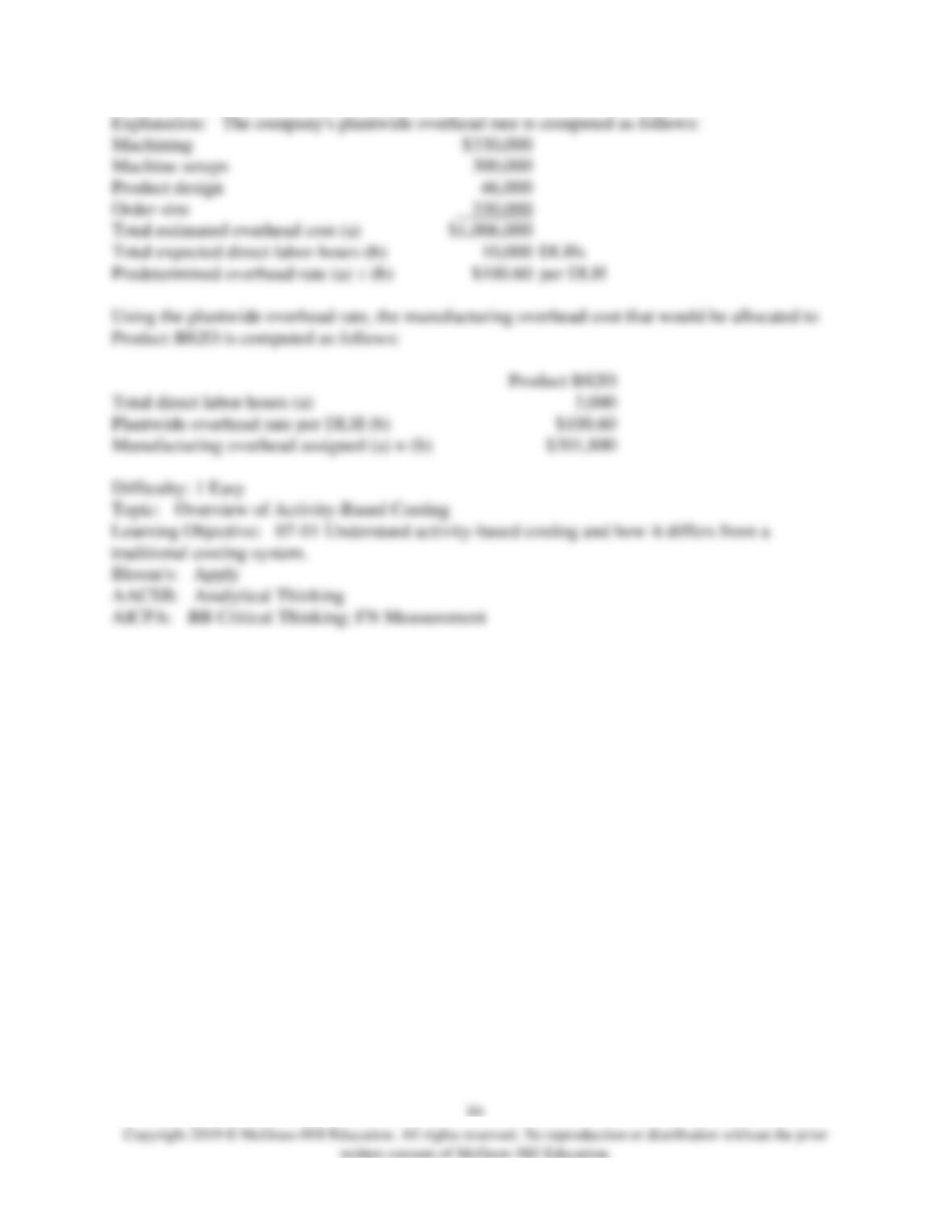
Machining
Machine-hours
$
330,000
15,000
MHs
Machine setups
Number of setups
$
300,000
500
setups
Product design
Number of products
$
46,000
2
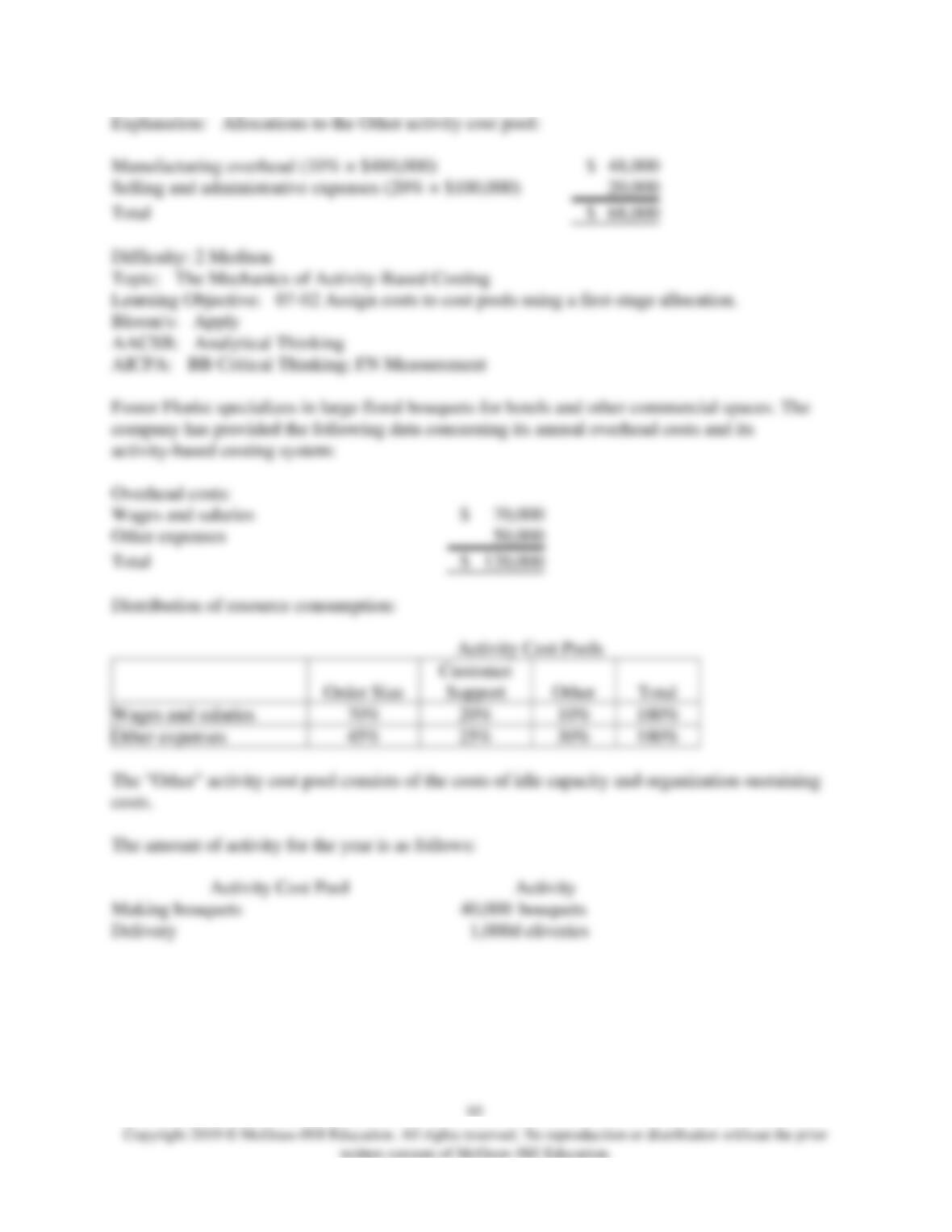
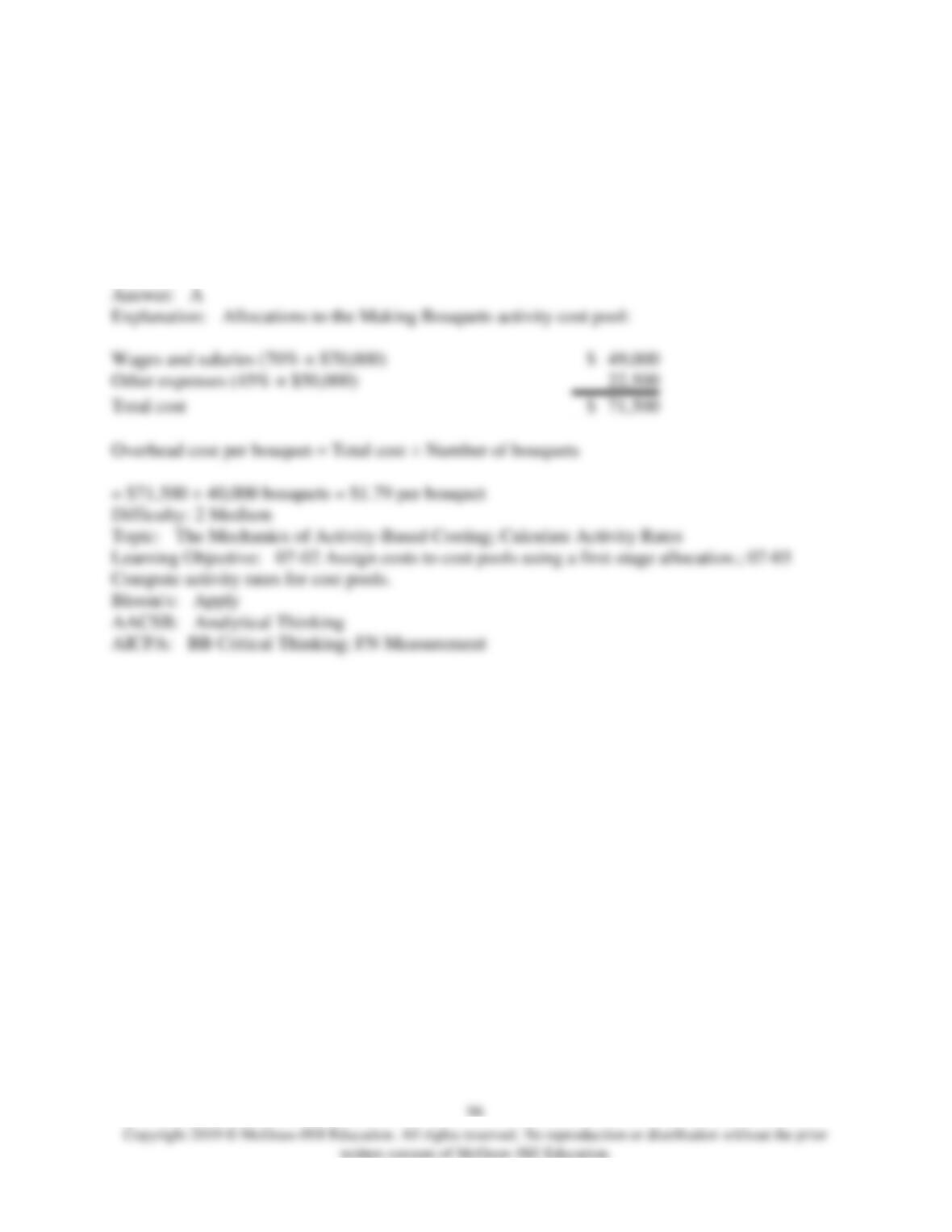
products
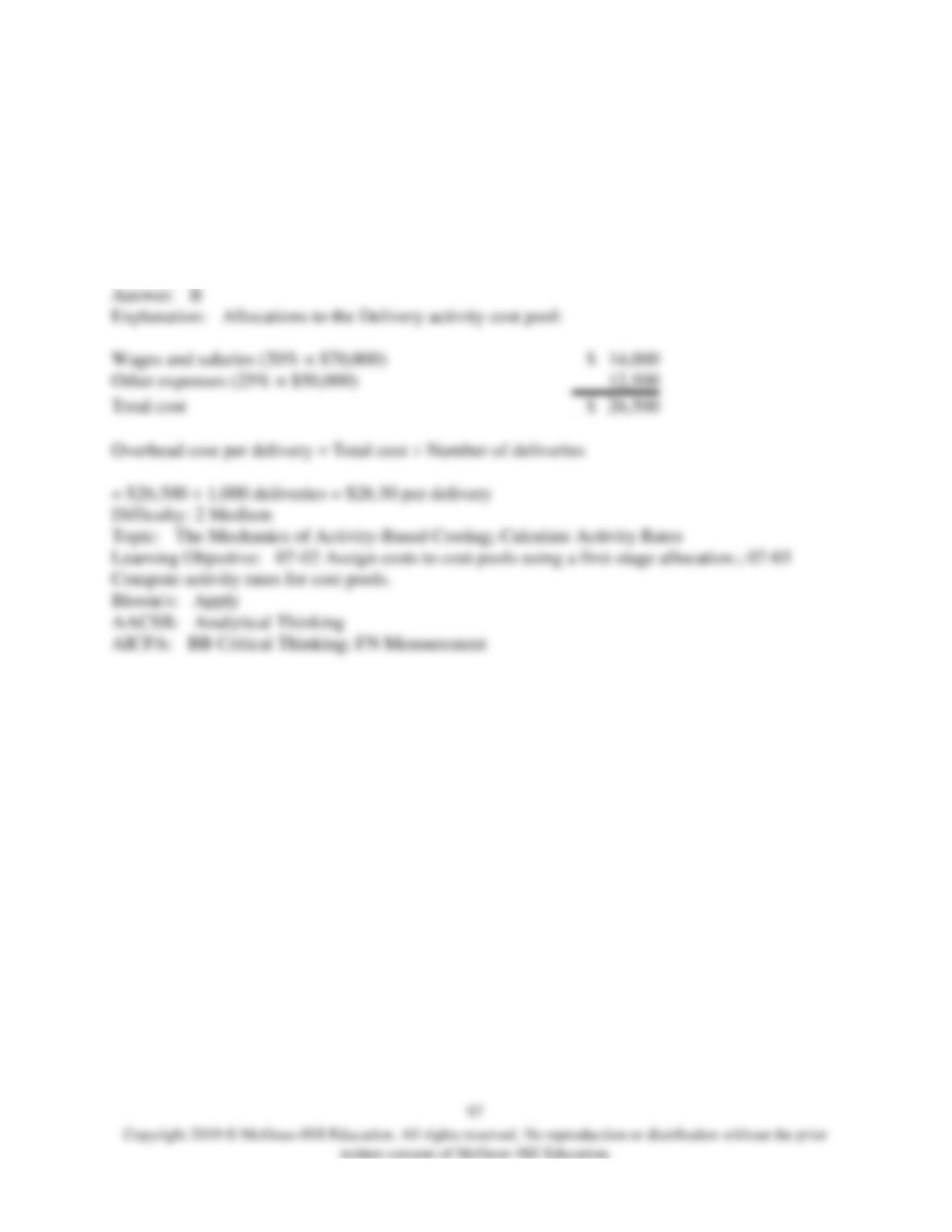
Order size
Direct labor-hours
$
330,000
10,000
DLHs
Activity Measure
Product
B82O
Product
P99Y
Machine-hours
7,000
8,000
Number of setups
200
300
Number of products
1
1
Direct labor-hours
3,000
7,000
91) Using the plantwide overhead rate, how much manufacturing overhead cost would be
allocated to Product B82O?
A) $704,200
B) $301,800
C) $610,000
D) $503,000
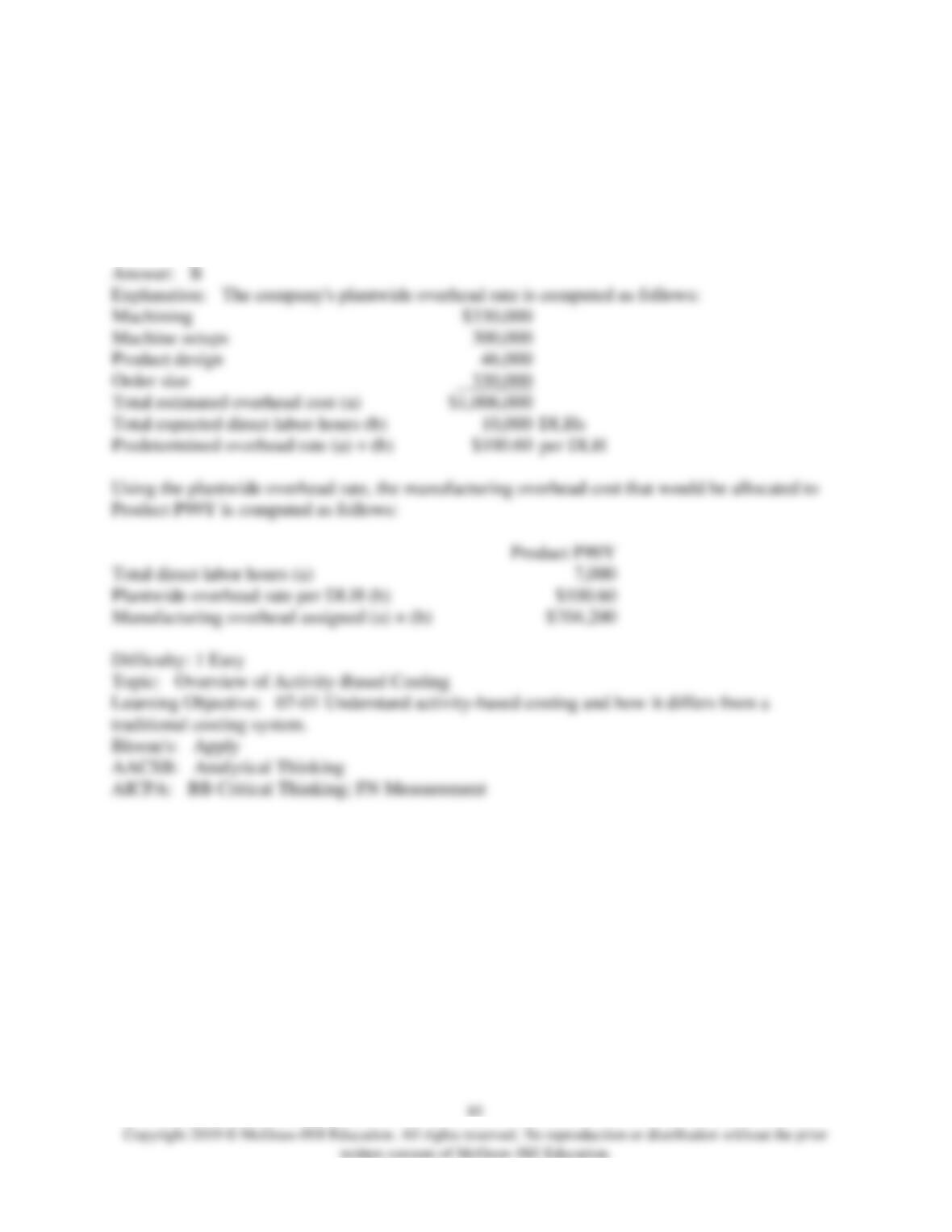
92) Using the plantwide overhead rate, how much manufacturing overhead cost would be
allocated to Product P99Y?
A) $503,000
B) $704,200
C) $396,000
D) $301,800
93) Using the plantwide overhead rate, how much manufacturing overhead cost would be
allocated to Product P56L?
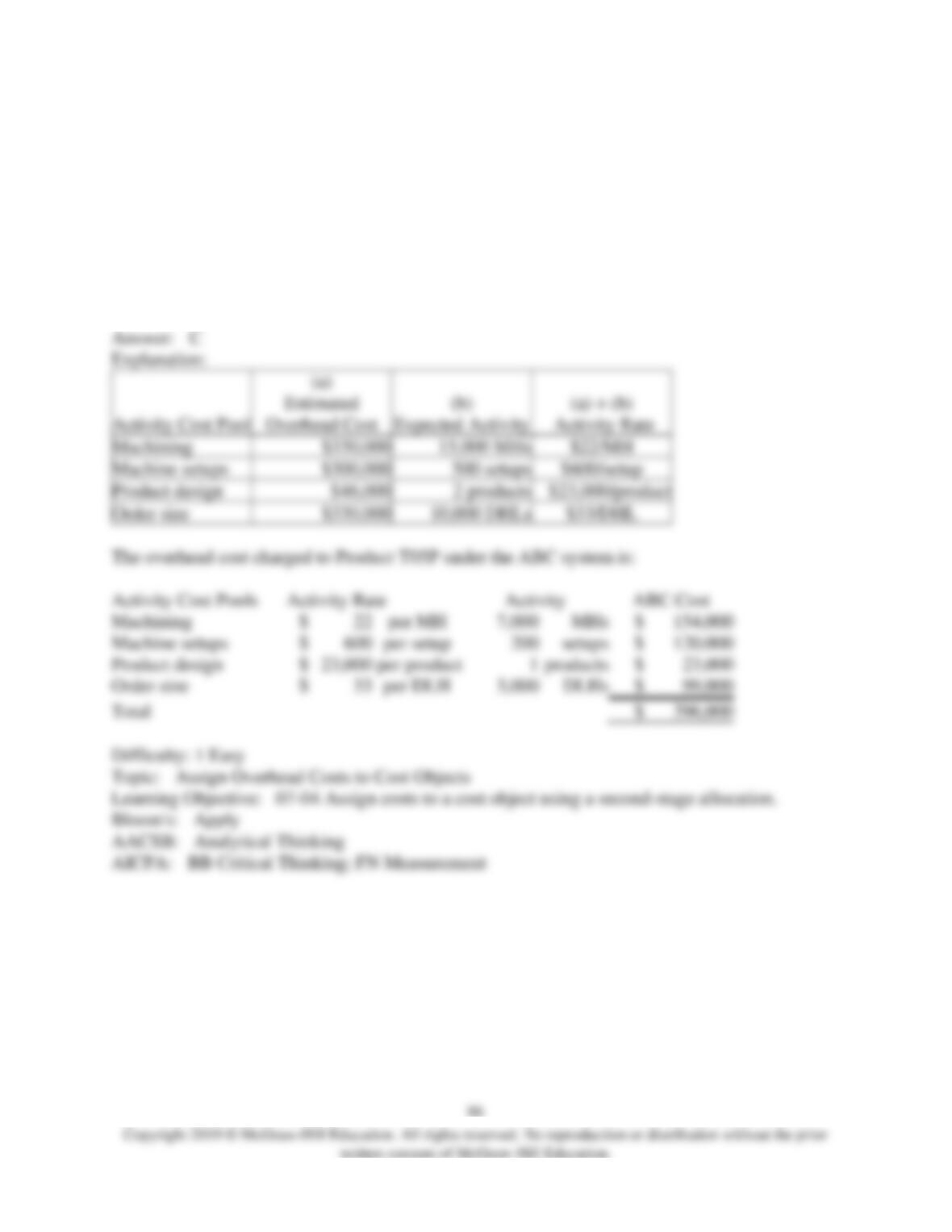
Using the ABC system, how much total manufacturing overhead cost would be assigned to
Product B82O?
A) $503,000
B) $297,000
C) $396,000
D) $99,000
94) Using the plantwide overhead rate, how much manufacturing overhead cost would be
allocated to Product P56L?
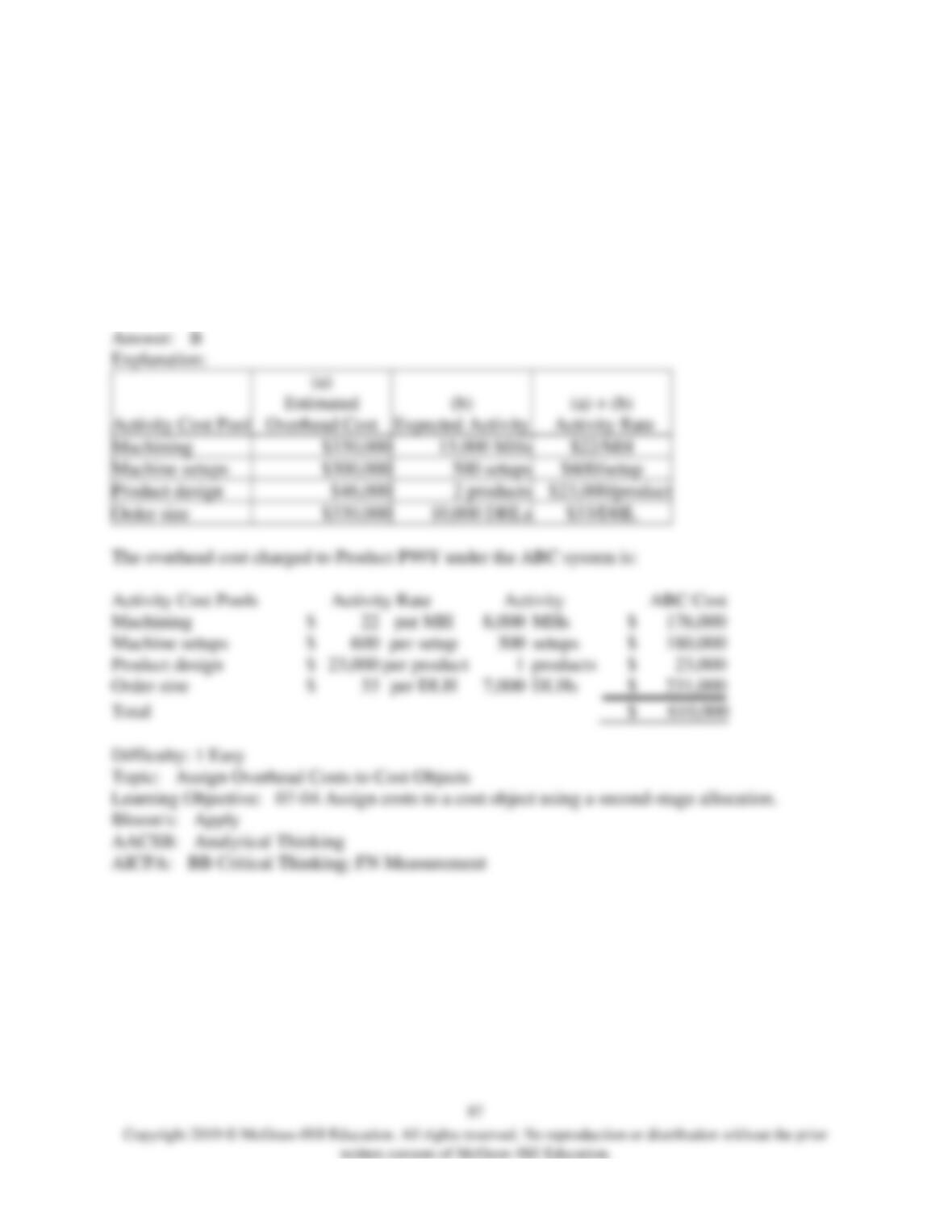
Using the ABC system, how much total manufacturing overhead cost would be assigned to
Product P99Y?
A) $379,000
B) $610,000
C) $503,000
D) $231,000

88
Hails Corporation manufactures two products: Product Q21F and Product H44W. The company
uses a plantwide overhead rate based on direct labor-hours. It is considering implementing an
activity-based costing (ABC) system that allocates its manufacturing overhead to four cost pools.
The following additional information is available for the company as a whole and for Products
Q21F and H44W.
Activity Cost Pool
Activity Measure
Total Cost
Total Activity
Machining
Machine-hours
$
195,000
13,000
MHs
Machine setups
Number of setups
$
90,000
150
setups
Product design
Number of products
$
64,000
2
products
Order size
Direct labor-hours
$
280,000
10,000
DLHs
Activity Measure
Product Q21F
Product H44W
Machine-hours
9,000
4,000
Number of setups
80
70
Number of products
1
1
Direct labor-hours
6,000
4,000
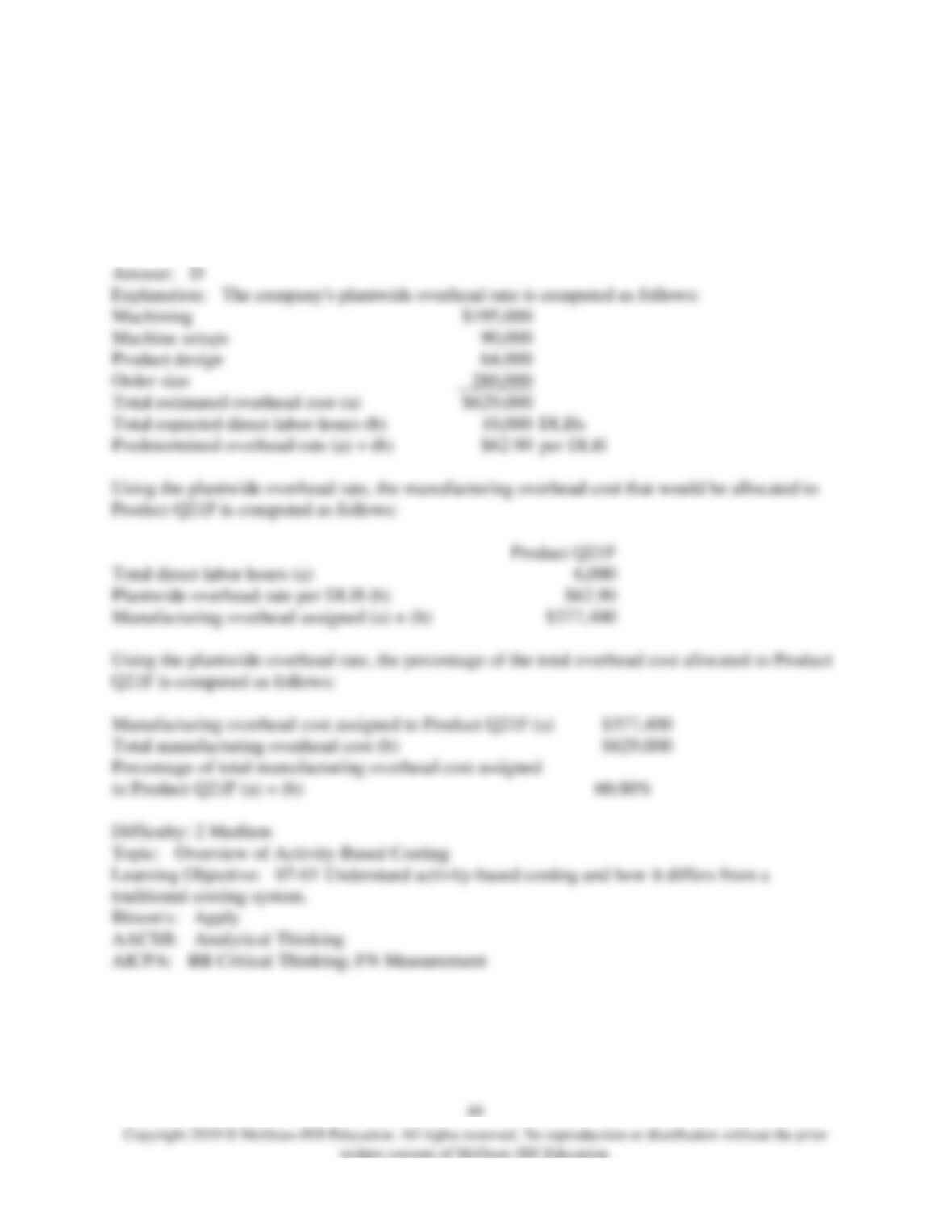
95) Using the plantwide overhead rate, the percentage of the total overhead cost that is allocated to
Product Q21F is closest to:
A) 21.30%
B) 17.81%
C) 50.00%
D) 60.00%
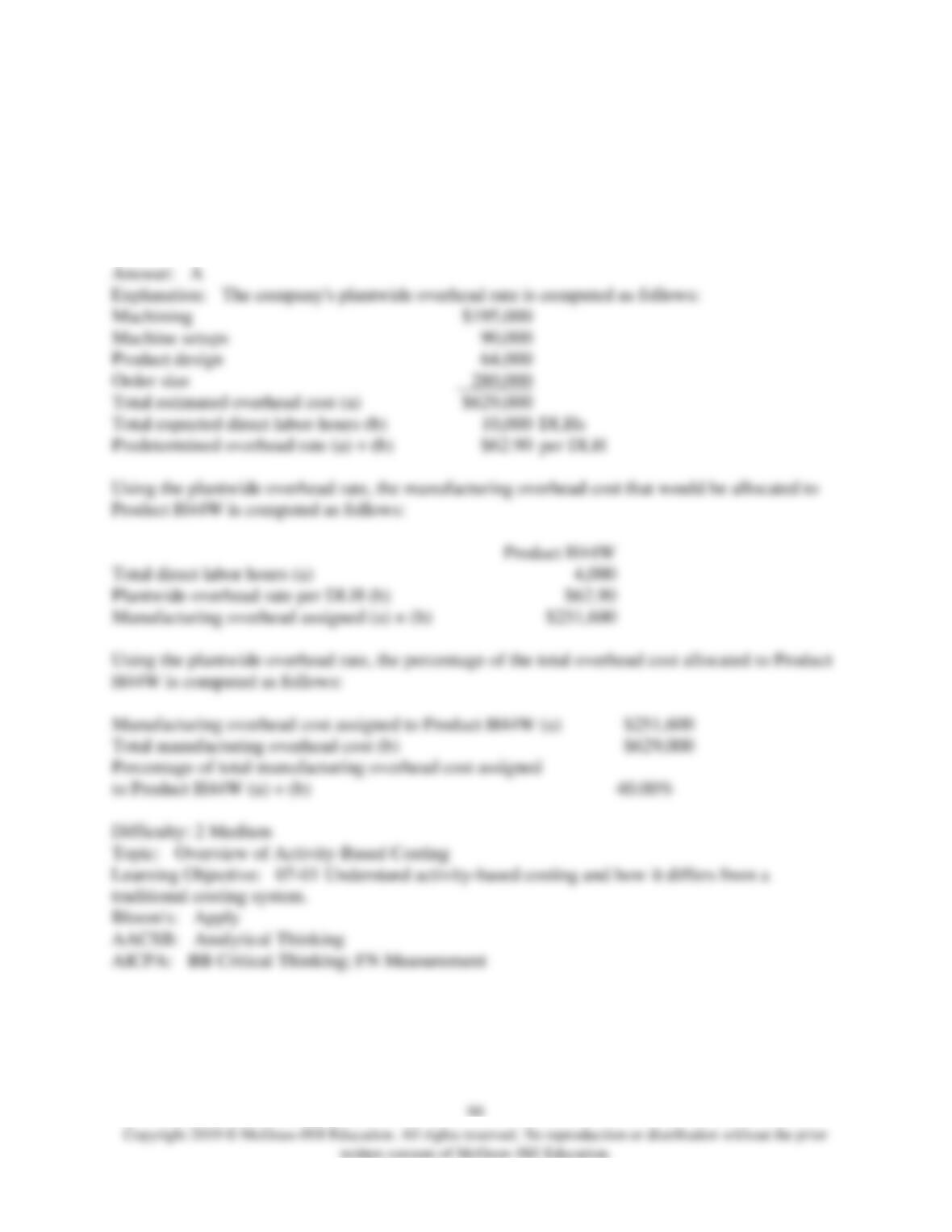
96) Using the plantwide overhead rate, the percentage of the total overhead cost that is allocated to
Product H44W is closest to:
A) 40.00%
B) 50.00%
C) 17.81%
D) 21.30%
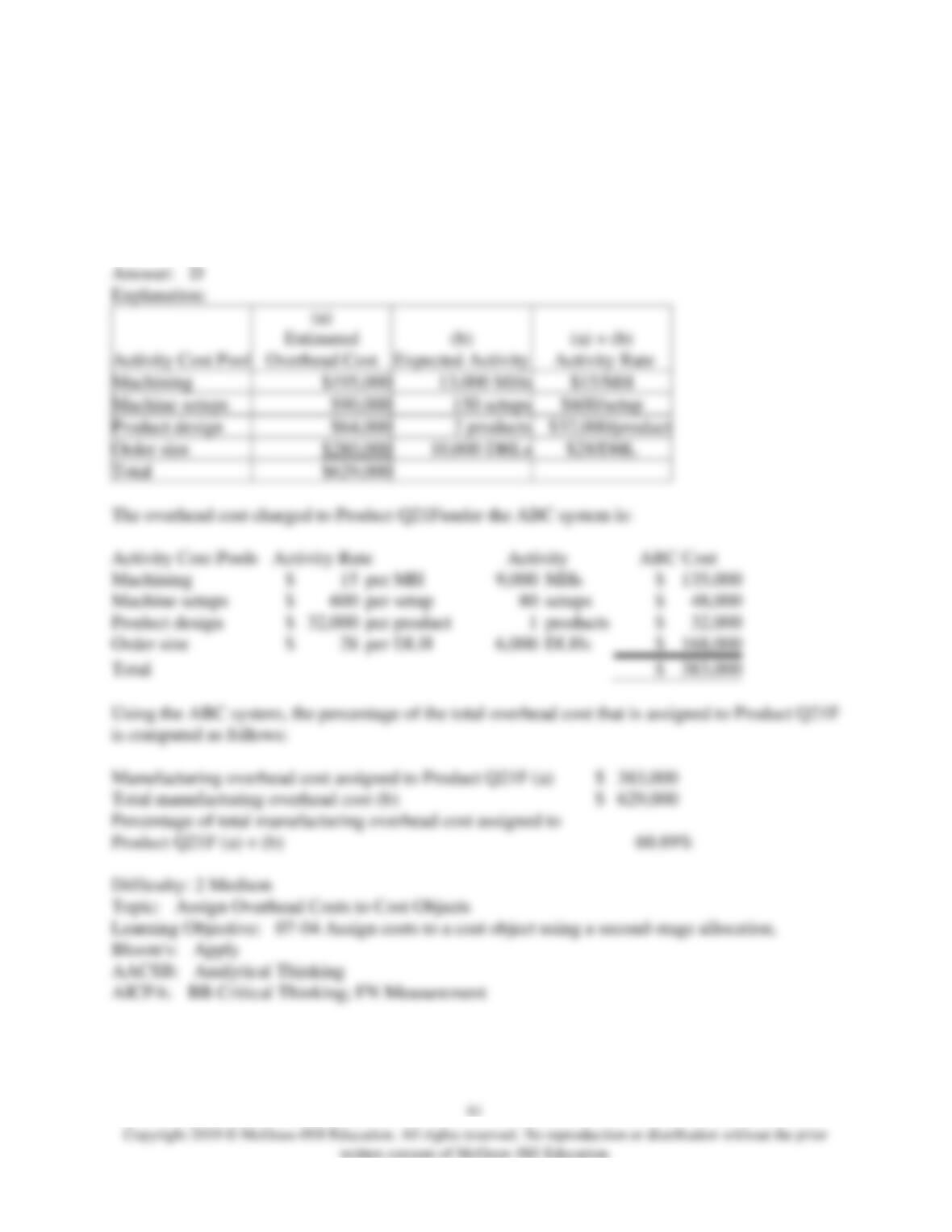
97) Using the ABC system, the percentage of the total overhead cost that is assigned to Product
Q21F is closest to:
A) 26.71%
B) 50.00%
C) 34.18%
D) 60.89%
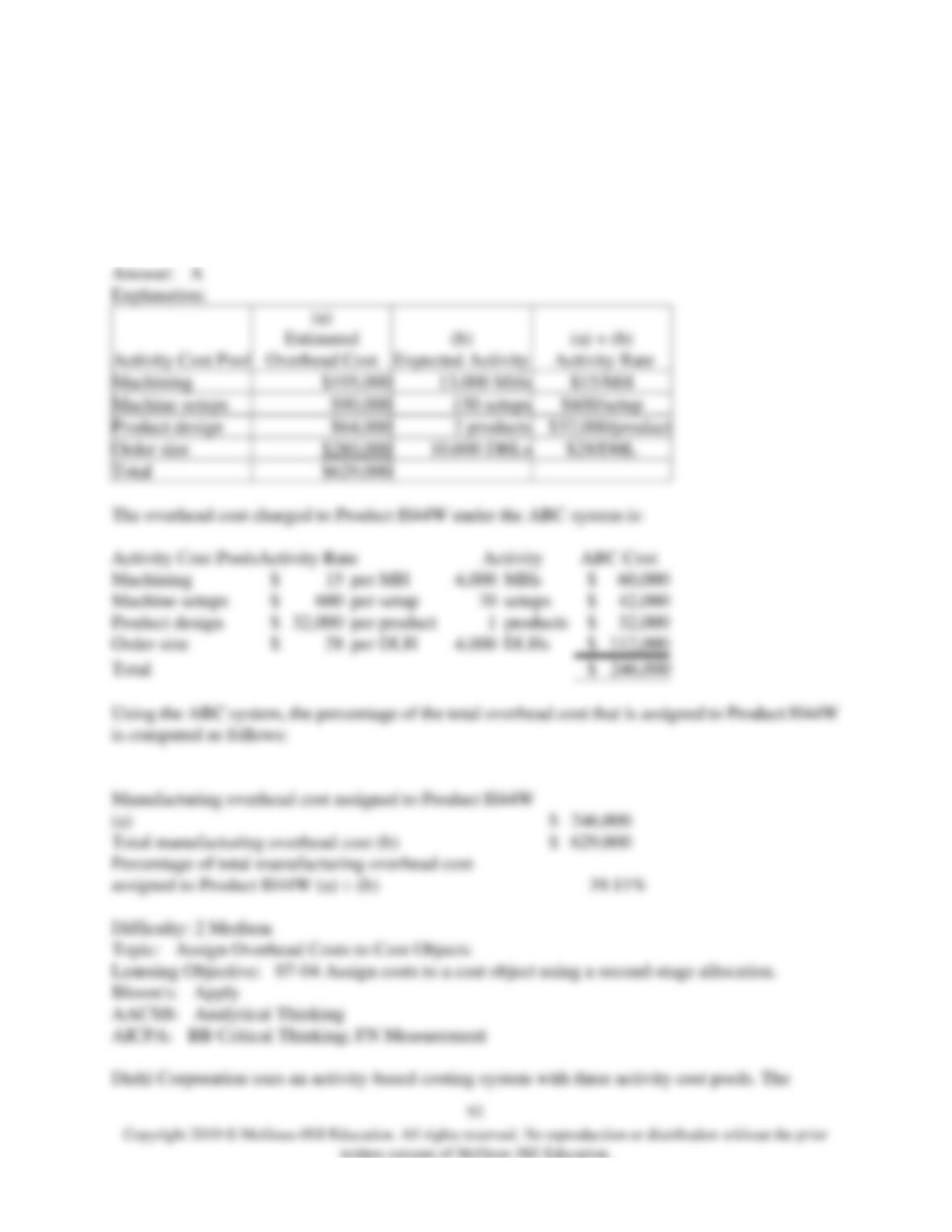
98) Using the ABC system, the percentage of the total overhead cost that is assigned to Product
H44W is closest to:
A) 39.11%
B) 21.30%
C) 50.00%
D) 17.81%
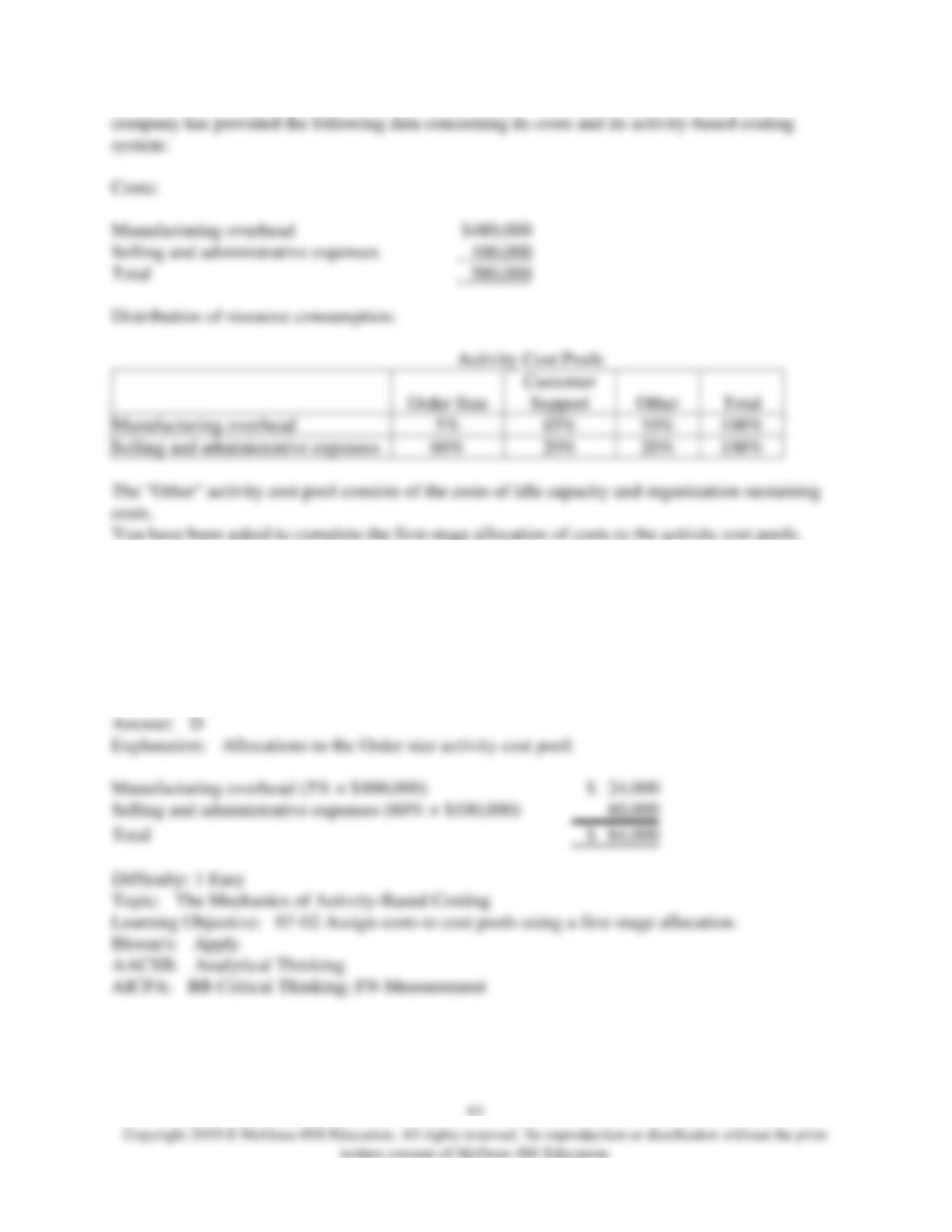
99) How much cost, in total, would be allocated in the first-stage allocation to the Order Size
activity cost pool?
A) $348,000
B) $188,500
C) $29,000
D) $84,000
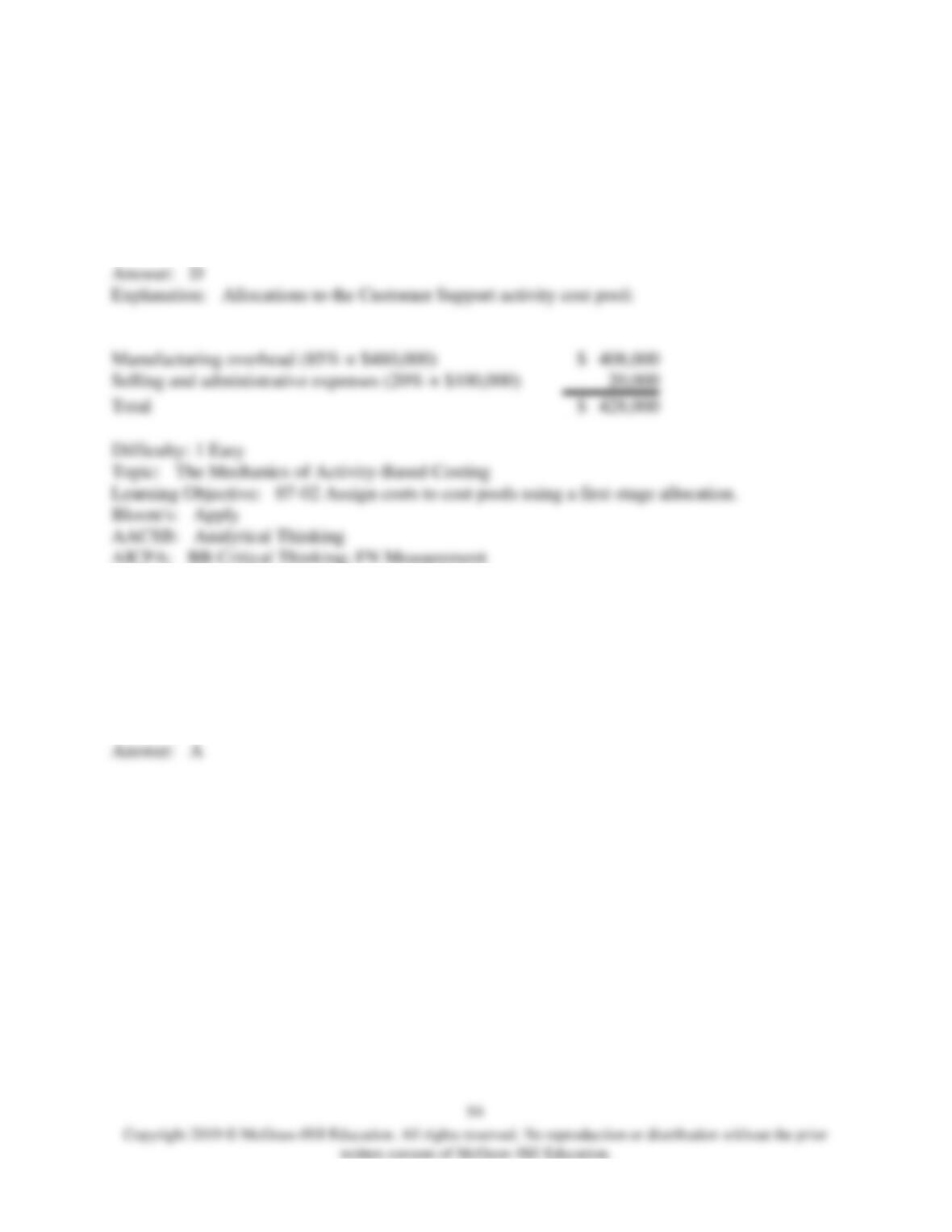
100) How much cost, in total, would be allocated in the first-stage allocation to the Customer
Support activity cost pool?
A) $304,500
B) $493,000
C) $116,000
D) $428,000
101) How much cost, in total, should NOT be allocated to orders and products in the second stage
of the allocation process if the activity-based costing system is used for internal decision-making?
A) $68,000
B) $0
C) $116,000
D) $58,000
102) What would be the total overhead cost per bouquet according to the activity-based costing
system? In other words, what would be the overall activity rate for the making bouquets activity
cost pool? (Round to the nearest whole cent.)
A) $1.79
B) $1.73
C) $2.10
D) $1.35
103) What would be the total overhead cost per delivery according to the activity-based costing
system? In other words, what would be the overall activity rate for the deliveries activity cost
pool? (Round to the nearest whole cent.)
A) $27.00
B) $26.50
C) $30.00
D) $24.00
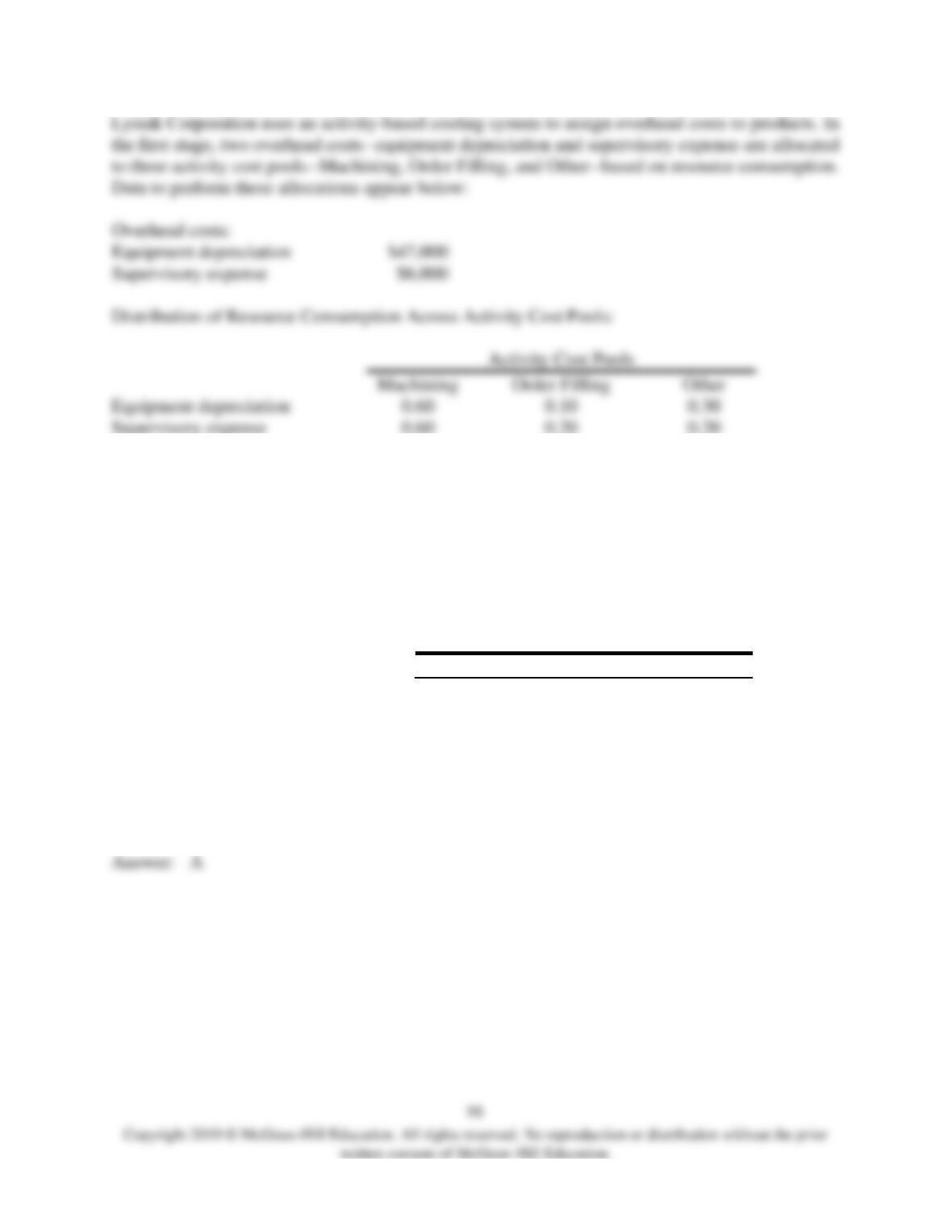
Overhead costs:
Equipment depreciation
Supervisory expense
Equipment depreciation
Supervisory expense
104) In the second stage, Machining costs are assigned to products using machine-hours (MHs)
and Order Filling costs are assigned to products using the number of orders. The costs in the Other
activity cost pool are not assigned to products. Activity data for the company’s two products
follow:
Activity:
MHs (Machining)
Orders (Order Filling)
Product C9
6,900
200
Product U0
3,100
800
Total
10,000
1,000
How much overhead cost is allocated to the Machining activity cost pool under activity-based
costing in the first stage of allocation?
A) $31,800
B) $3,600
C) $15,300
D) $28,200
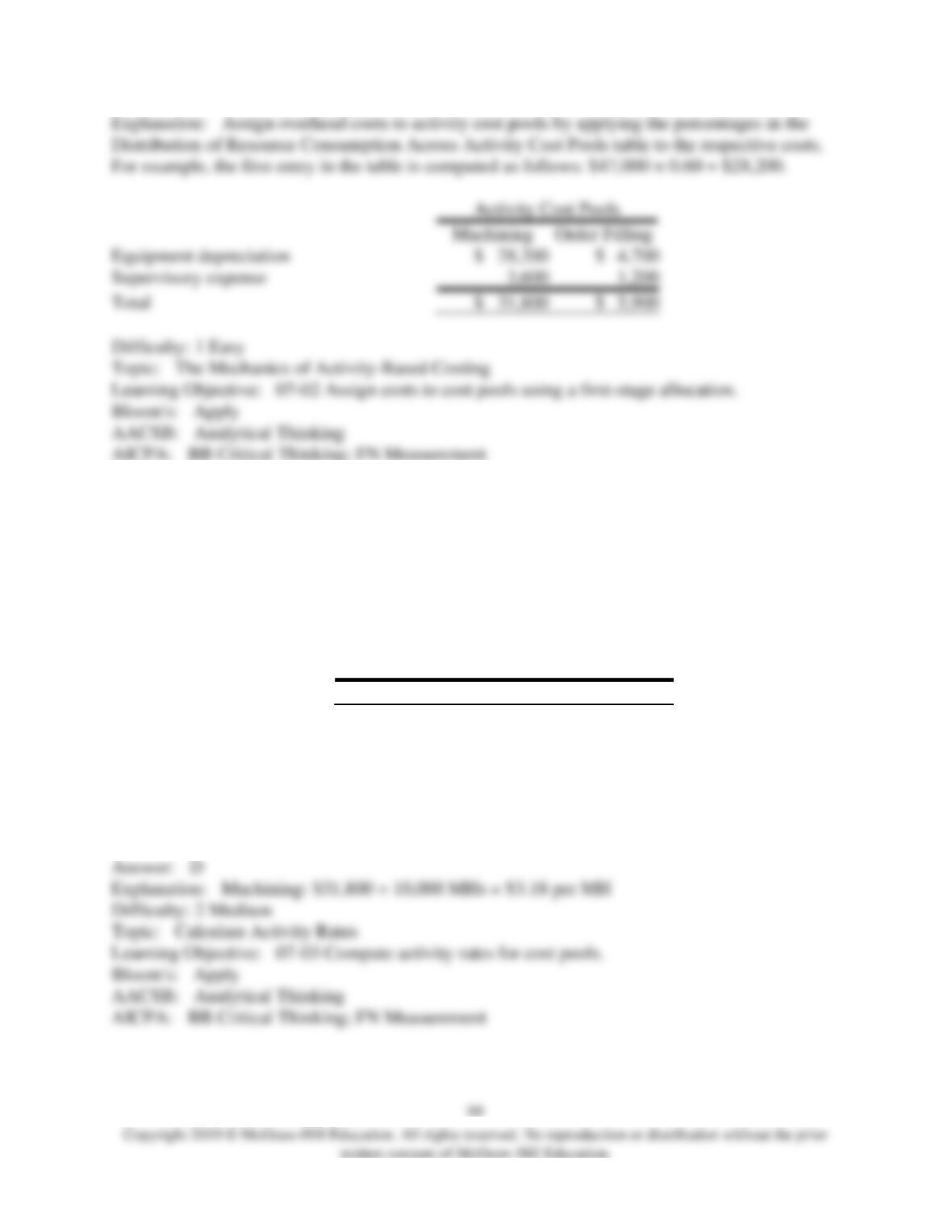
Equipment depreciation
Supervisory expense
Total
105) In the second stage, Machining costs are assigned to products using machine-hours (MHs)
and Order Filling costs are assigned to products using the number of orders. The costs in the Other
activity cost pool are not assigned to products. Activity data for the company’s two products
follow:
Activity:
MHs (Machining)
Orders (Order Filling)
Product C9
6,900
200
Product U0
3,100
800
Total
10,000
1,000
The activity rate for the Machining activity cost pool under activity-based costing is closest to:
A) $18.00 per MH
B) $5.30 per MH
C) $2.82 per MH
D) $3.18 per MH
106) In the second stage, Machining costs are assigned to products using machine-hours (MHs)
and Order Filling costs are assigned to products using the number of orders. The costs in the Other
activity cost pool are not assigned to products. Activity data for the company’s two products
follow:
Activity:
MHs (Machining)
Orders (Order Filling)
Product C9
6,900
200
Product U0
3,100
800
Total
10,000
1,000
What is the overhead cost assigned to Product C9 under activity-based costing?
A) $26,500
B) $21,942
C) $1,180
D) $23,122
Machining $3.18 per MH × 6,900 MHs
Order Filling $5.90 per order × 200 orders
Total