7-141
86.
Dilbert Farm Supply is located in a small town in the rural west. Data regarding the store’s
operations follow:
o Sales are budgeted at $260,000 for November, $230,000 for December, and $210,000 for
January.
o Collections are expected to be 80% in the month of sale, 19% in the month following the
sale, and 1% uncollectible.
o The cost of goods sold is 65% of sales.
o The company desires to have an ending merchandise inventory at the end of each month
equal to 60% of the next month’s cost of goods sold. Payment for merchandise is made in the
month following the purchase.
o Other monthly expenses to be paid in cash are $20,300.
o Monthly depreciation is $20,000.
o Ignore taxes.
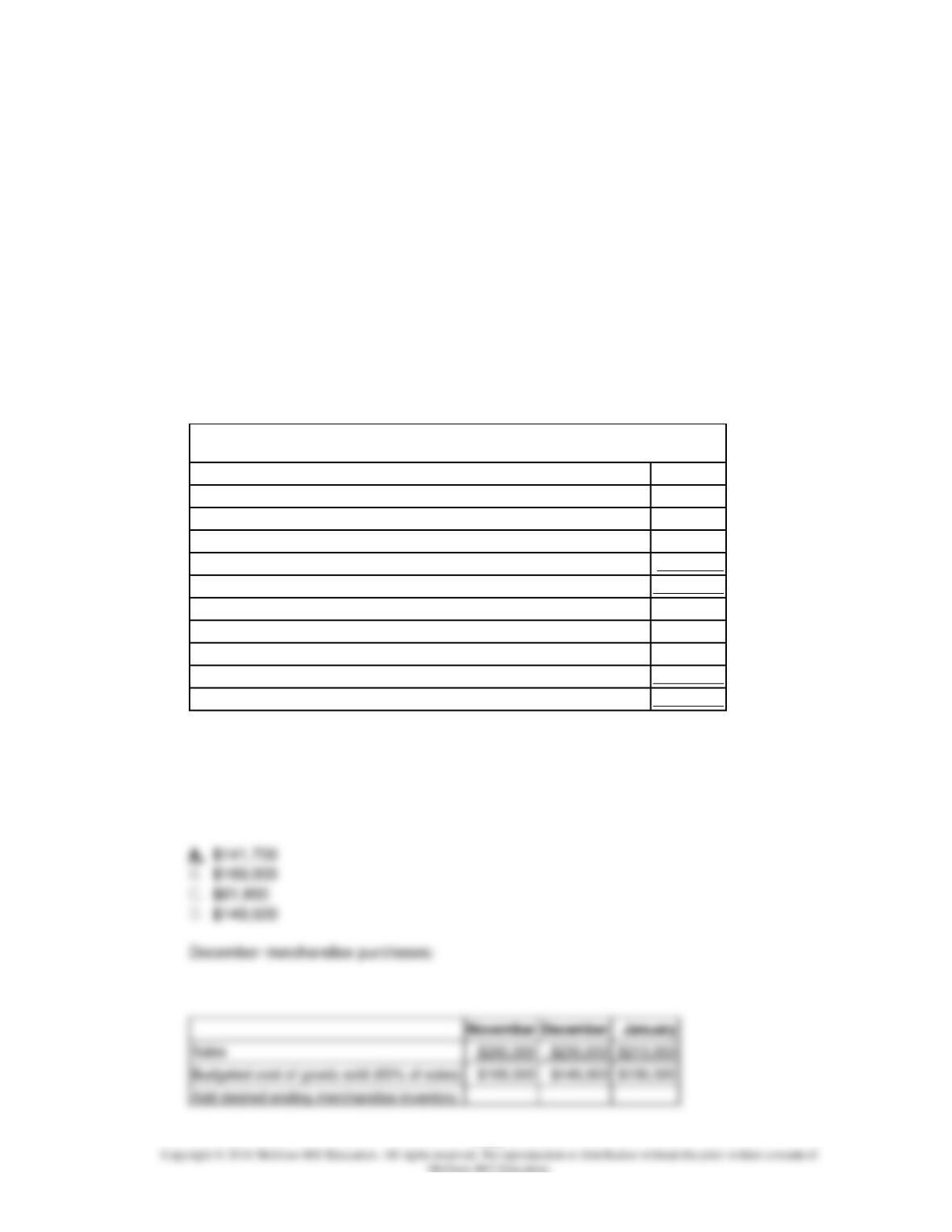
Balance Sheet
October 31
Assets
Cash
$27,000
Accounts receivable, net of allowance for uncollectible accounts
79,000
Merchandise inventory
101,400
Property, plant and equipment, net of $574,000 accumulated depreciation
1,082,000
Total assets
$1,289,400
Liabilities and Stockholders’ Equity
Accounts payable
$169,000
Common stock
740,000
Retained earnings
380,400
Total liabilities and stockholders’ equity
$1,289,400
Sales
$210,000
The cost of December merchandise purchases would be:
7-142
7-143
87.
Dilbert Farm Supply is located in a small town in the rural west. Data regarding the store’s
operations follow:
o Sales are budgeted at $260,000 for November, $230,000 for December, and $210,000 for
January.
o Collections are expected to be 80% in the month of sale, 19% in the month following the
sale, and 1% uncollectible.
o The cost of goods sold is 65% of sales.
o The company desires to have an ending merchandise inventory at the end of each month
equal to 60% of the next month’s cost of goods sold. Payment for merchandise is made in the
month following the purchase.
o Other monthly expenses to be paid in cash are $20,300.
o Monthly depreciation is $20,000.
o Ignore taxes.
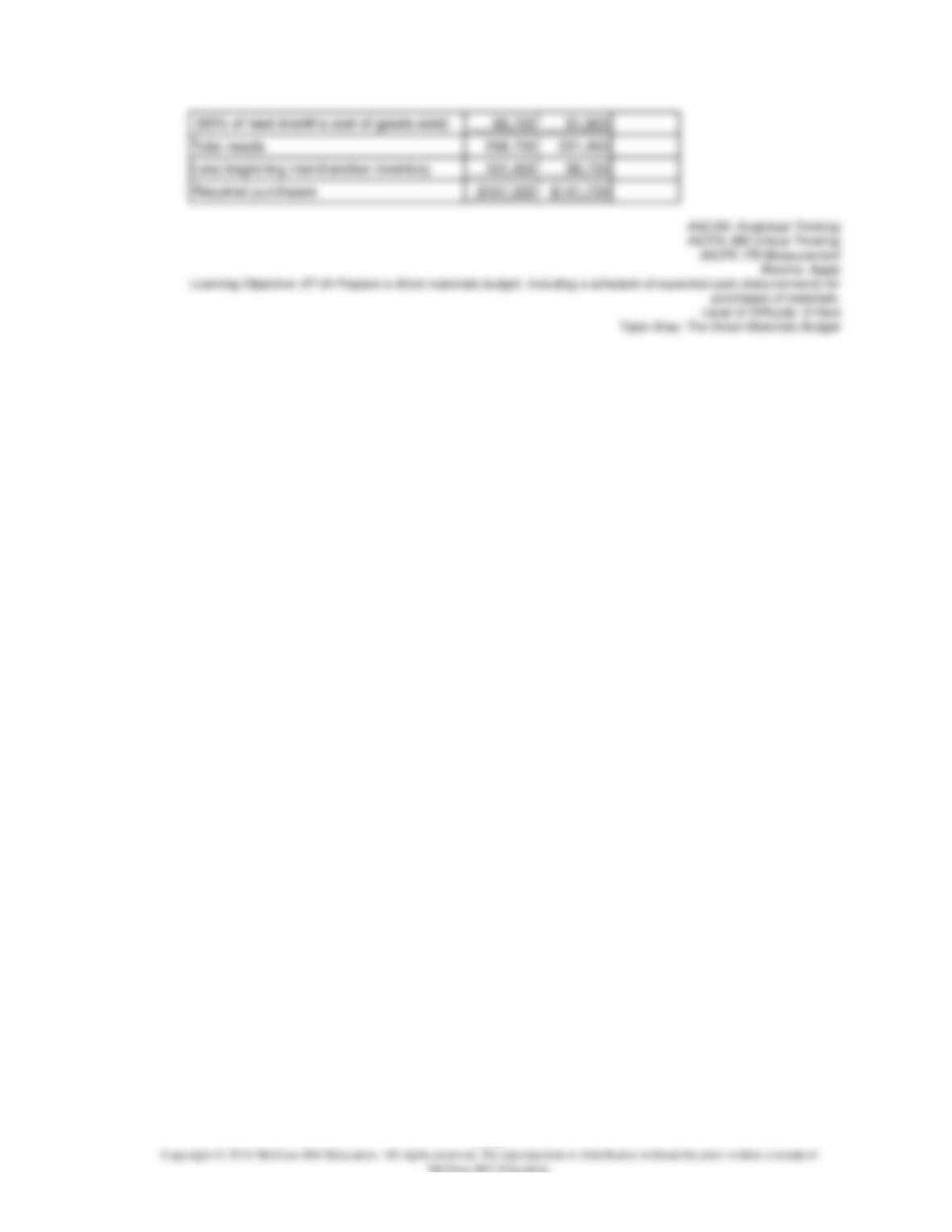
Balance Sheet
October 31
Assets
Cash
$27,000
Accounts receivable, net of allowance for uncollectible accounts
79,000
Merchandise inventory
101,400
Property, plant and equipment, net of $574,000 accumulated depreciation
1,082,000
Total assets
$1,289,400
Liabilities and Stockholders’ Equity
Accounts payable
$169,000
Common stock
740,000
Retained earnings
380,400
Total liabilities and stockholders’ equity
$1,289,400
Sales
Budgeted cost of goods sold (65% of sales)
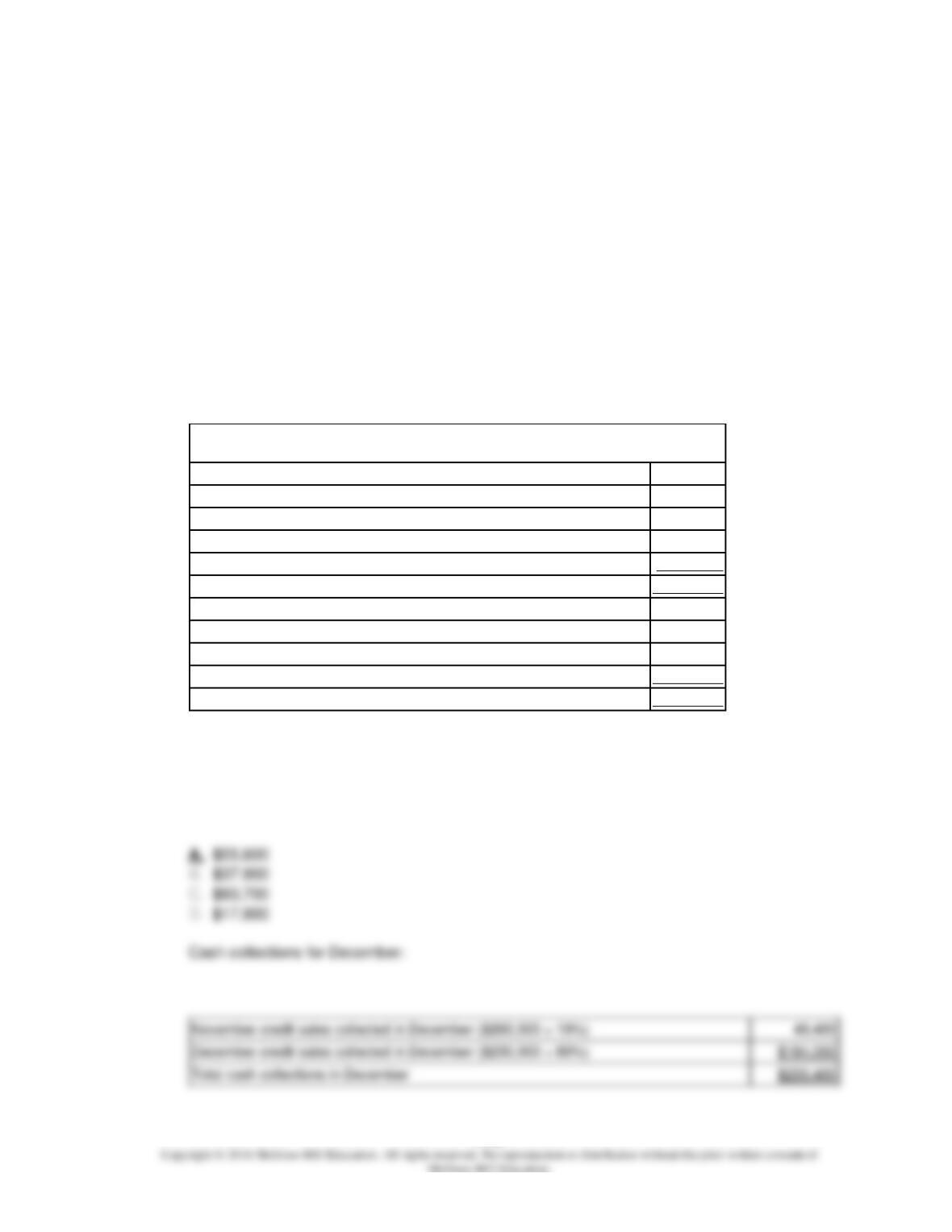
December cash disbursements for merchandise purchases would be:
7-144
7-145
88.
Dilbert Farm Supply is located in a small town in the rural west. Data regarding the store’s
operations follow:
o Sales are budgeted at $260,000 for November, $230,000 for December, and $210,000 for
January.
o Collections are expected to be 80% in the month of sale, 19% in the month following the
sale, and 1% uncollectible.
o The cost of goods sold is 65% of sales.
o The company desires to have an ending merchandise inventory at the end of each month
equal to 60% of the next month’s cost of goods sold. Payment for merchandise is made in the
month following the purchase.
o Other monthly expenses to be paid in cash are $20,300.
o Monthly depreciation is $20,000.
o Ignore taxes.
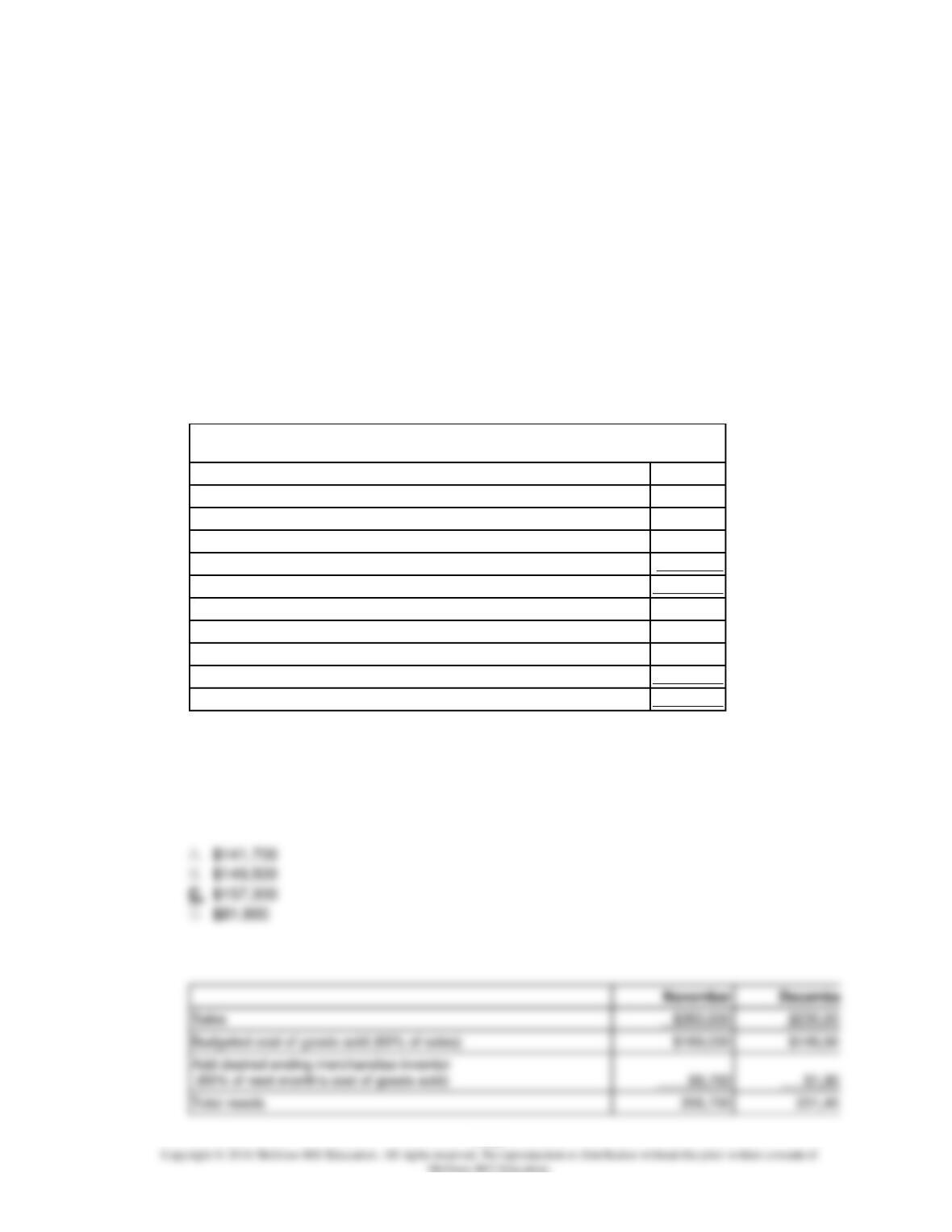
Balance Sheet
October 31
Assets
Cash
$27,000
Accounts receivable, net of allowance for uncollectible accounts
79,000
Merchandise inventory
101,400
Property, plant and equipment, net of $574,000 accumulated depreciation
1,082,000
Total assets
$1,289,400
Liabilities and Stockholders’ Equity
Accounts payable
$169,000
Common stock
740,000
Retained earnings
380,400
Total liabilities and stockholders’ equity
$1,289,400
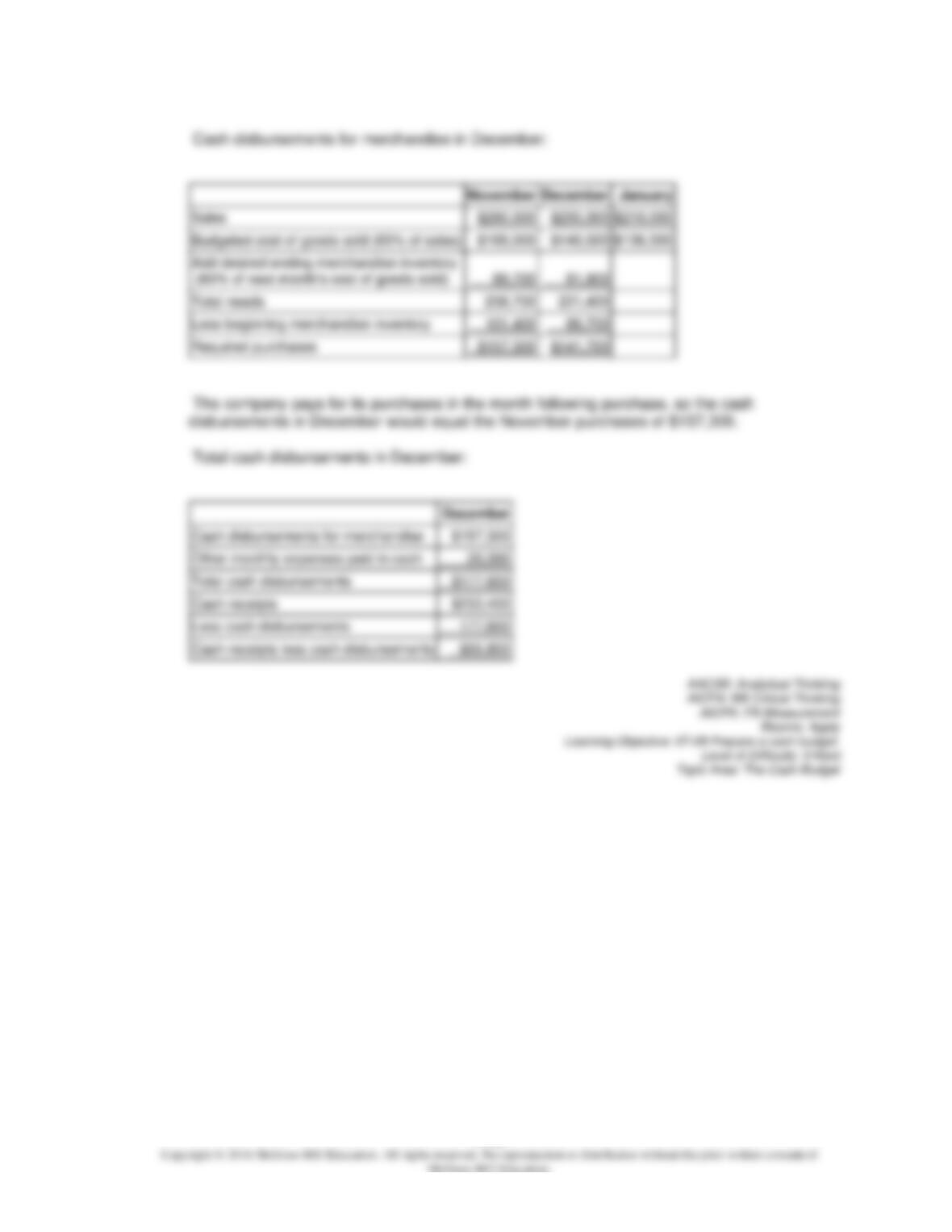
November credit sales collected in December ($260,000 × 19%)
December credit sales collected in December ($230,000 × 80%)
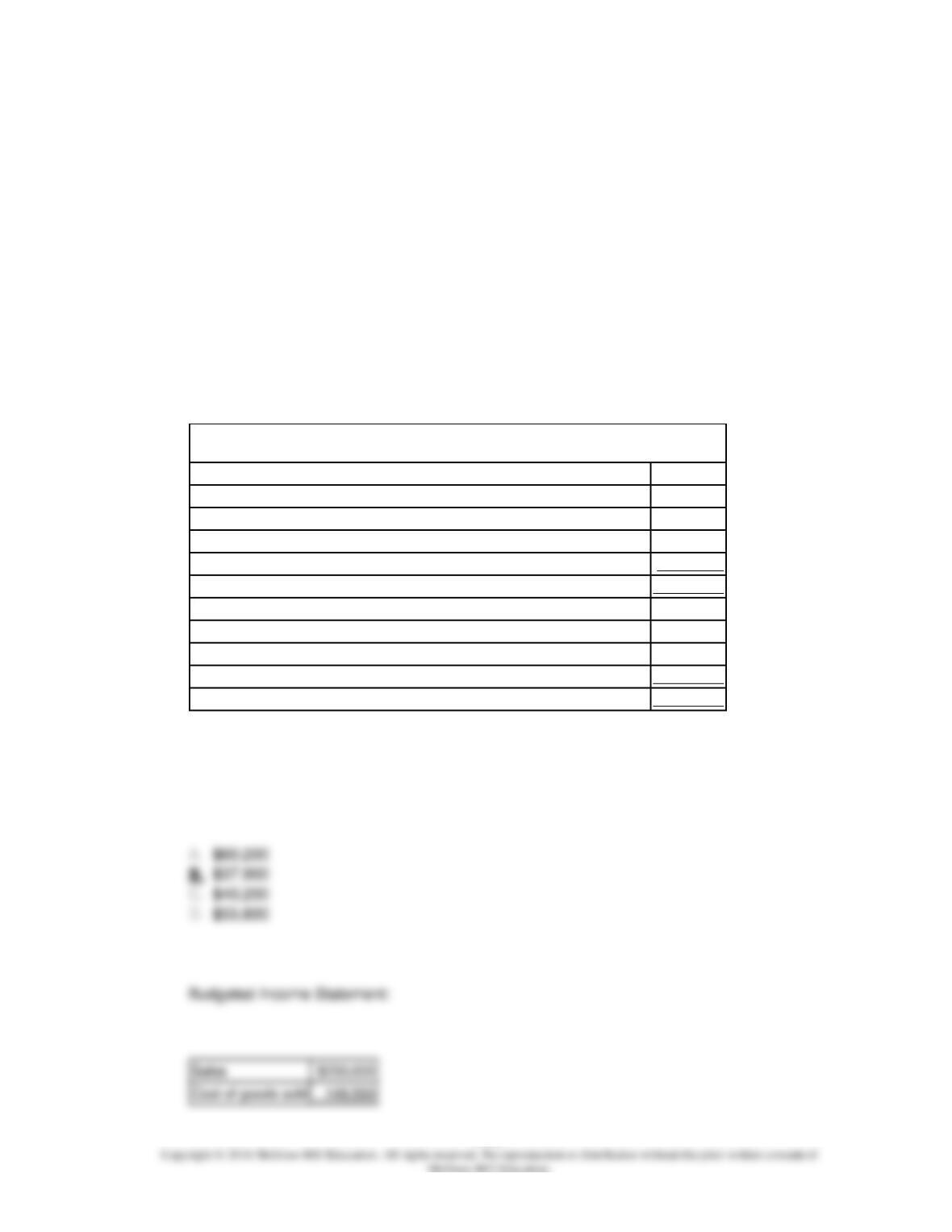
The difference between cash receipts and cash disbursements for December would be:
7-146
7-147
89.
Dilbert Farm Supply is located in a small town in the rural west. Data regarding the store’s
operations follow:
o Sales are budgeted at $260,000 for November, $230,000 for December, and $210,000 for
January.
o Collections are expected to be 80% in the month of sale, 19% in the month following the
sale, and 1% uncollectible.
o The cost of goods sold is 65% of sales.
o The company desires to have an ending merchandise inventory at the end of each month
equal to 60% of the next month’s cost of goods sold. Payment for merchandise is made in the
month following the purchase.
o Other monthly expenses to be paid in cash are $20,300.
o Monthly depreciation is $20,000.
o Ignore taxes.
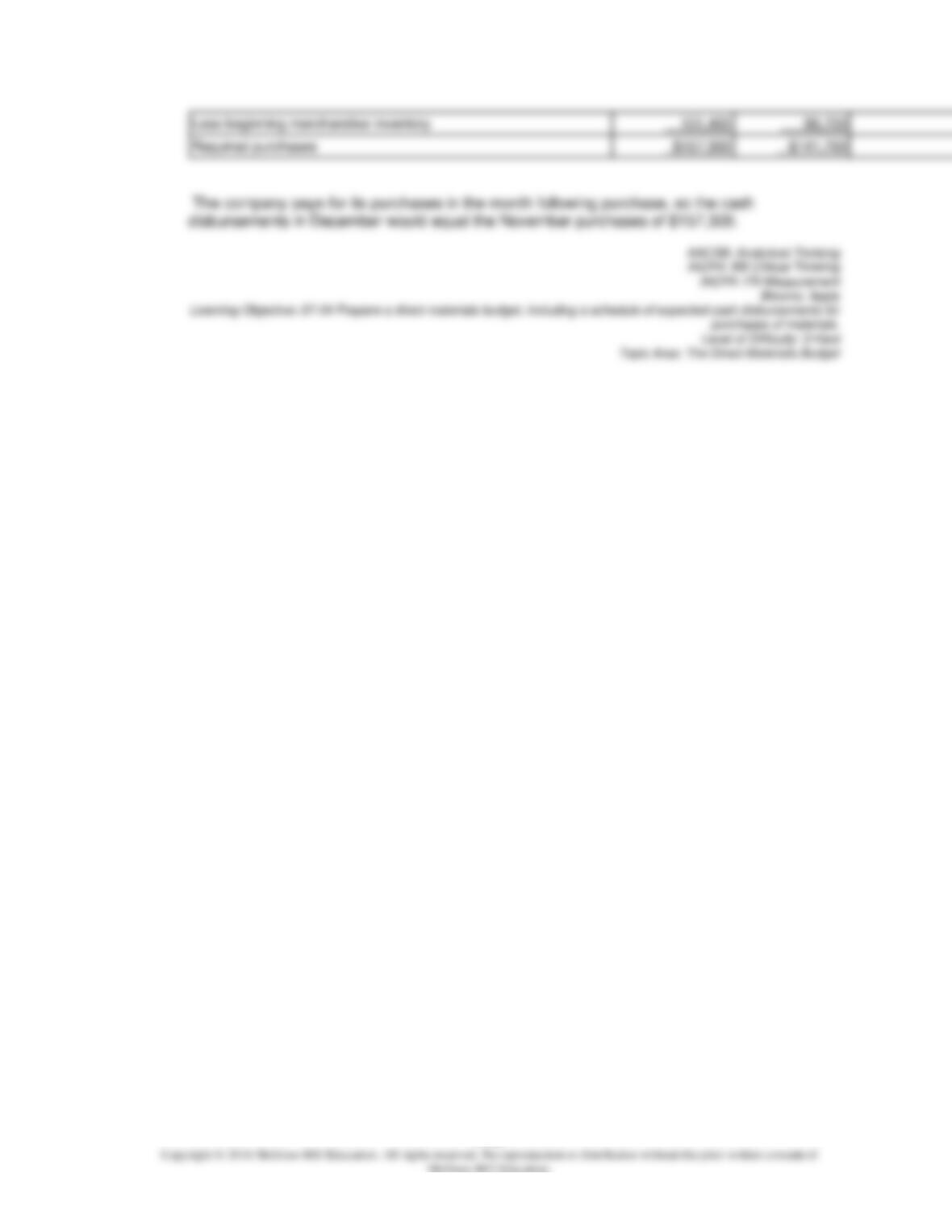
Balance Sheet
October 31
Assets
Cash
$27,000
Accounts receivable, net of allowance for uncollectible accounts
79,000
Merchandise inventory
101,400
Property, plant and equipment, net of $574,000 accumulated depreciation
1,082,000
Total assets
$1,289,400
Liabilities and Stockholders’ Equity
Accounts payable
$169,000
Common stock
740,000
Retained earnings
380,400
Total liabilities and stockholders’ equity
$1,289,400
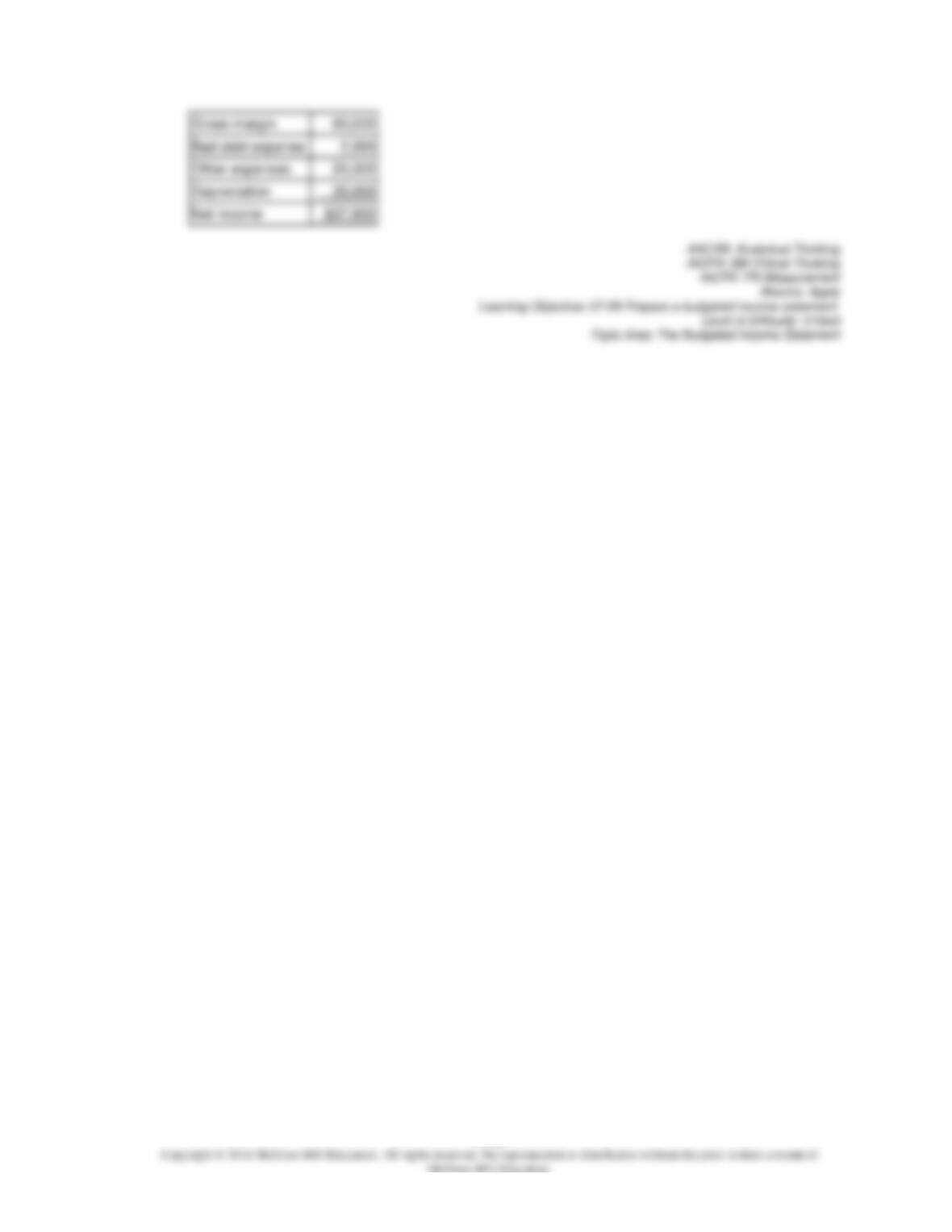
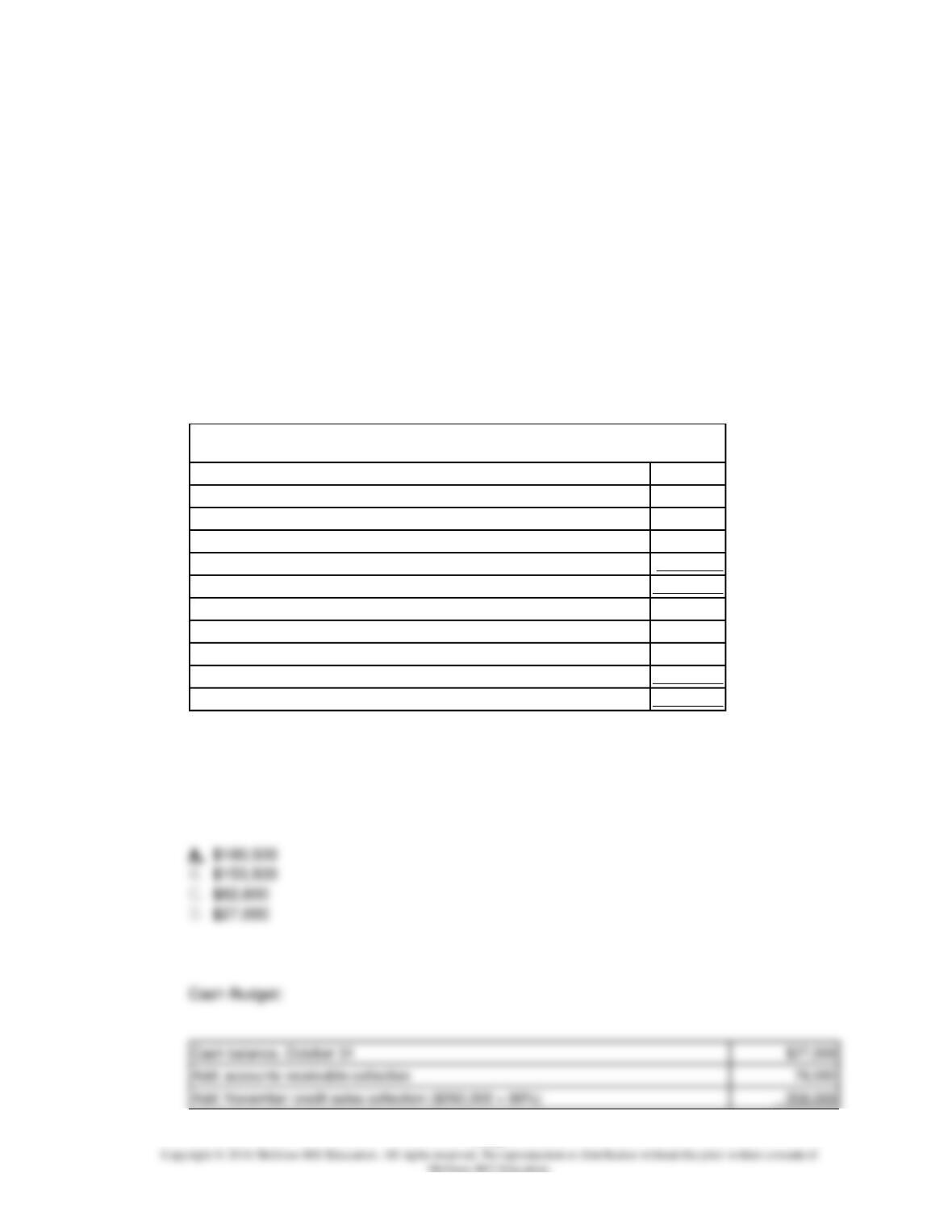
The net income for December would be:
7-148
7-149
90.
Dilbert Farm Supply is located in a small town in the rural west. Data regarding the store’s
operations follow:
o Sales are budgeted at $260,000 for November, $230,000 for December, and $210,000 for
January.
o Collections are expected to be 80% in the month of sale, 19% in the month following the
sale, and 1% uncollectible.
o The cost of goods sold is 65% of sales.
o The company desires to have an ending merchandise inventory at the end of each month
equal to 60% of the next month’s cost of goods sold. Payment for merchandise is made in the
month following the purchase.
o Other monthly expenses to be paid in cash are $20,300.
o Monthly depreciation is $20,000.
o Ignore taxes.
Balance Sheet
October 31
Assets
Cash
$27,000
Accounts receivable, net of allowance for uncollectible accounts
79,000
Merchandise inventory
101,400
Property, plant and equipment, net of $574,000 accumulated depreciation
1,082,000
Total assets
$1,289,400
Liabilities and Stockholders’ Equity
Accounts payable
$169,000
Common stock
740,000
Retained earnings
380,400
Total liabilities and stockholders’ equity
$1,289,400
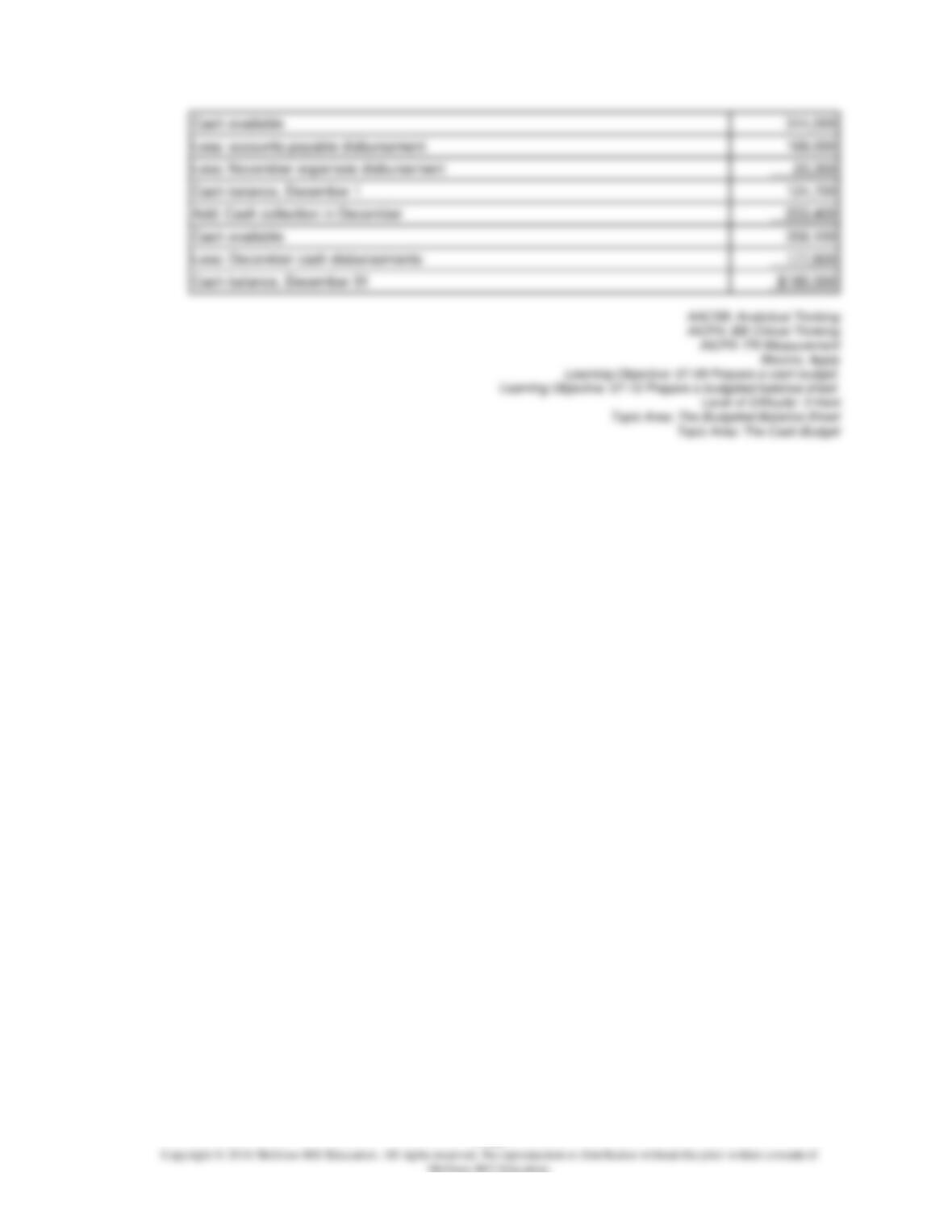
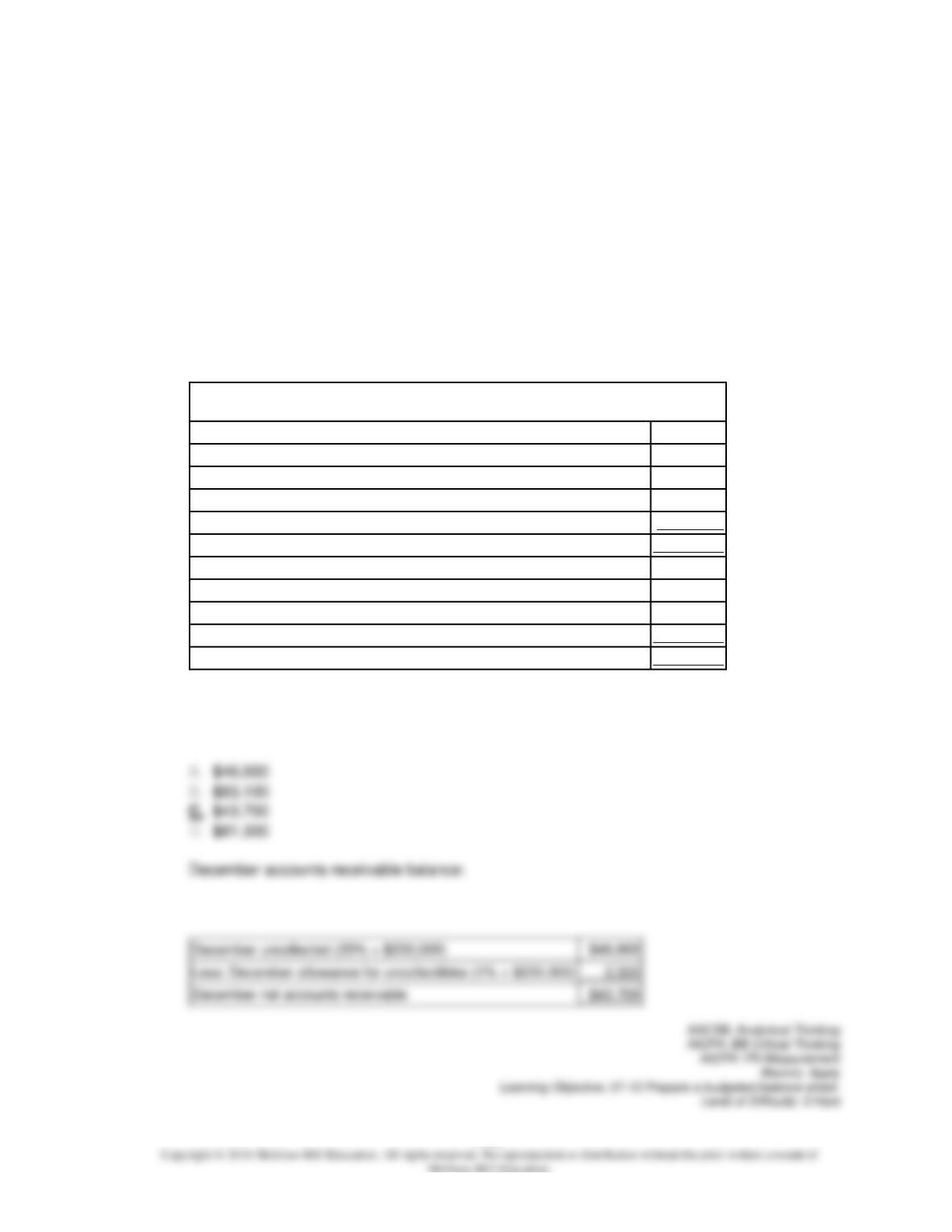
Cash balance, October 31
The cash balance at the end of December would be:
7-150
7-151
91.
Dilbert Farm Supply is located in a small town in the rural west. Data regarding the store’s
operations follow:
o Sales are budgeted at $260,000 for November, $230,000 for December, and $210,000 for
January.
o Collections are expected to be 80% in the month of sale, 19% in the month following the
sale, and 1% uncollectible.
o The cost of goods sold is 65% of sales.
o The company desires to have an ending merchandise inventory at the end of each month
equal to 60% of the next month’s cost of goods sold. Payment for merchandise is made in the
month following the purchase.
o Other monthly expenses to be paid in cash are $20,300.
o Monthly depreciation is $20,000.
o Ignore taxes.
Balance Sheet
October 31
Assets
Cash
$27,000
Accounts receivable, net of allowance for uncollectible accounts
79,000
Merchandise inventory
101,400
Property, plant and equipment, net of $574,000 accumulated depreciation
1,082,000
Total assets
$1,289,400
Liabilities and Stockholders’ Equity
Accounts payable
$169,000
Common stock
740,000
Retained earnings
380,400
Total liabilities and stockholders’ equity
$1,289,400
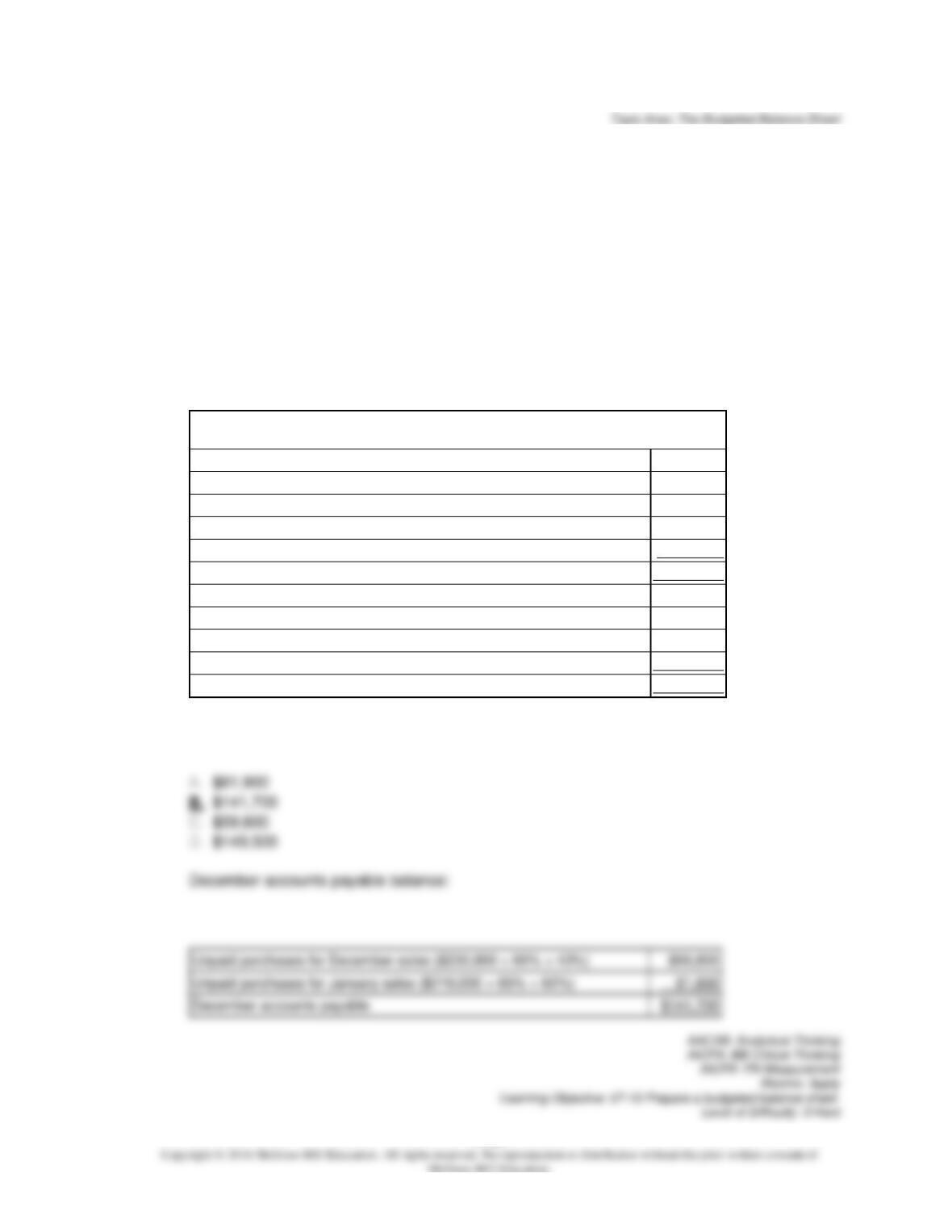
December uncollected (20% × $230,000)
Less: December allowance for uncollectibles (1% × $230,000)
2,300
December net accounts receivable
The accounts receivable balance, net of uncollectible accounts, at the end of December
would be:
7-152
92.
Dilbert Farm Supply is located in a small town in the rural west. Data regarding the store’s
operations follow:
o Sales are budgeted at $260,000 for November, $230,000 for December, and $210,000 for
January.
o Collections are expected to be 80% in the month of sale, 19% in the month following the
sale, and 1% uncollectible.
o The cost of goods sold is 65% of sales.
o The company desires to have an ending merchandise inventory at the end of each month
equal to 60% of the next month’s cost of goods sold. Payment for merchandise is made in the
month following the purchase.
o Other monthly expenses to be paid in cash are $20,300.
o Monthly depreciation is $20,000.
o Ignore taxes.
Balance Sheet
October 31
Assets
Cash
$27,000
Accounts receivable, net of allowance for uncollectible accounts
79,000
Merchandise inventory
101,400
Property, plant and equipment, net of $574,000 accumulated depreciation
1,082,000
Total assets
$1,289,400
Liabilities and Stockholders’ Equity
Accounts payable
$169,000
Common stock
740,000
Retained earnings
380,400
Total liabilities and stockholders’ equity
$1,289,400
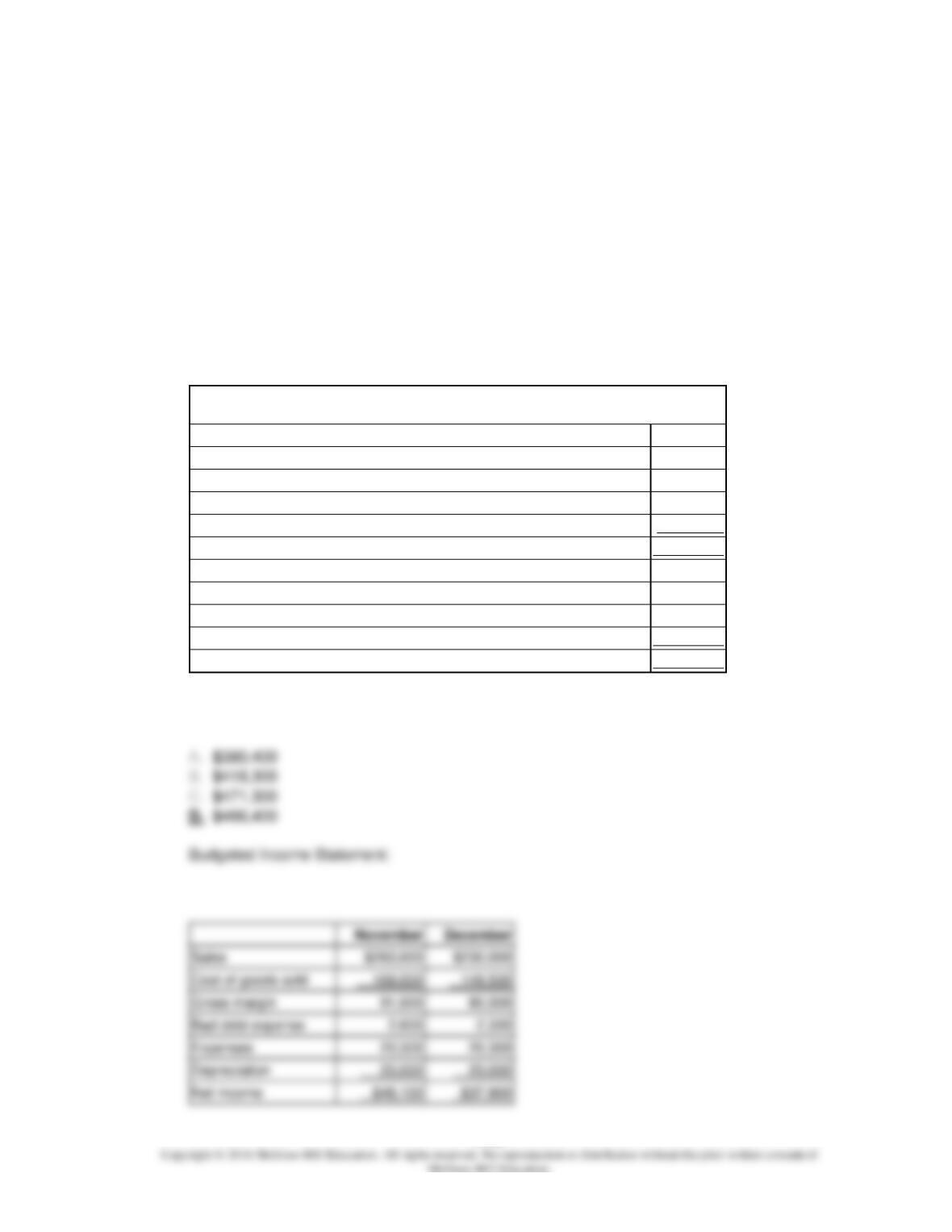
Unpaid purchases for December sales ($230,000 × 65% × 40%)
Unpaid purchases for January sales ($210,000 × 65% × 60%)
December accounts payable
Accounts payable at the end of December would be:
7-153
7-154
93.
Dilbert Farm Supply is located in a small town in the rural west. Data regarding the store’s
operations follow:
o Sales are budgeted at $260,000 for November, $230,000 for December, and $210,000 for
January.
o Collections are expected to be 80% in the month of sale, 19% in the month following the
sale, and 1% uncollectible.
o The cost of goods sold is 65% of sales.
o The company desires to have an ending merchandise inventory at the end of each month
equal to 60% of the next month’s cost of goods sold. Payment for merchandise is made in the
month following the purchase.
o Other monthly expenses to be paid in cash are $20,300.
o Monthly depreciation is $20,000.
o Ignore taxes.
Balance Sheet
October 31
Assets
Cash
$27,000
Accounts receivable, net of allowance for uncollectible accounts
79,000
Merchandise inventory
101,400
Property, plant and equipment, net of $574,000 accumulated depreciation
1,082,000
Total assets
$1,289,400
Liabilities and Stockholders’ Equity
Accounts payable
$169,000
Common stock
740,000
Retained earnings
380,400
Total liabilities and stockholders’ equity
$1,289,400
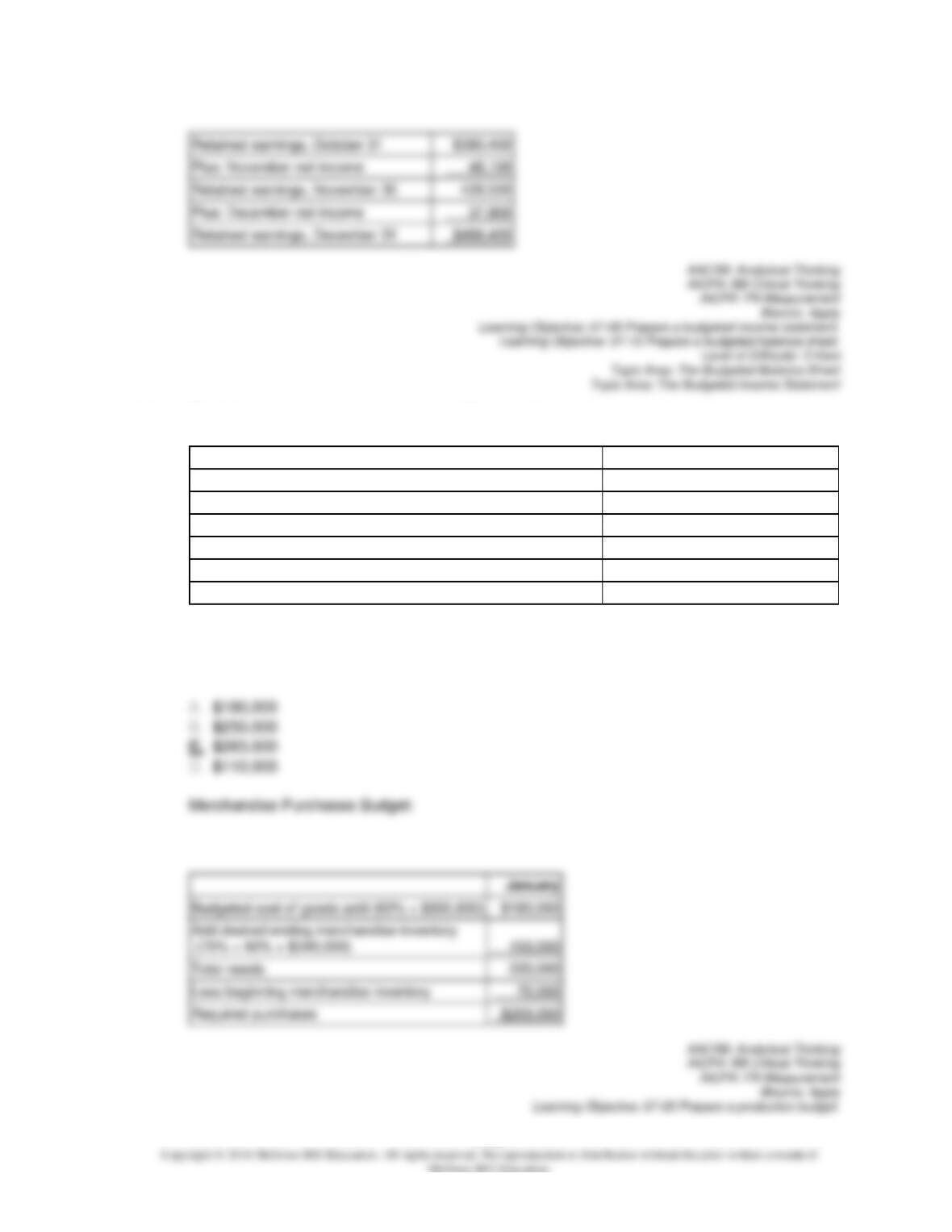
Sales
Cost of goods sold
Gross margin
Bad debt expense
Expenses
Retained earnings at the end of December would be:
7-155
Retained earnings, October 31
Plus: November net income
Retained earnings, November 30
Plus: December net income
Retained earnings, December 31
94.
The following are budgeted data for the Bingham Corporation, a merchandising company:
Budgeted Sales (at retail):
January
$300,000
February
$340,000
March
$400,000
April
$350,000
Cost of goods sold as a percentage of sales
60%
Desired ending inventory
75% of next month sales
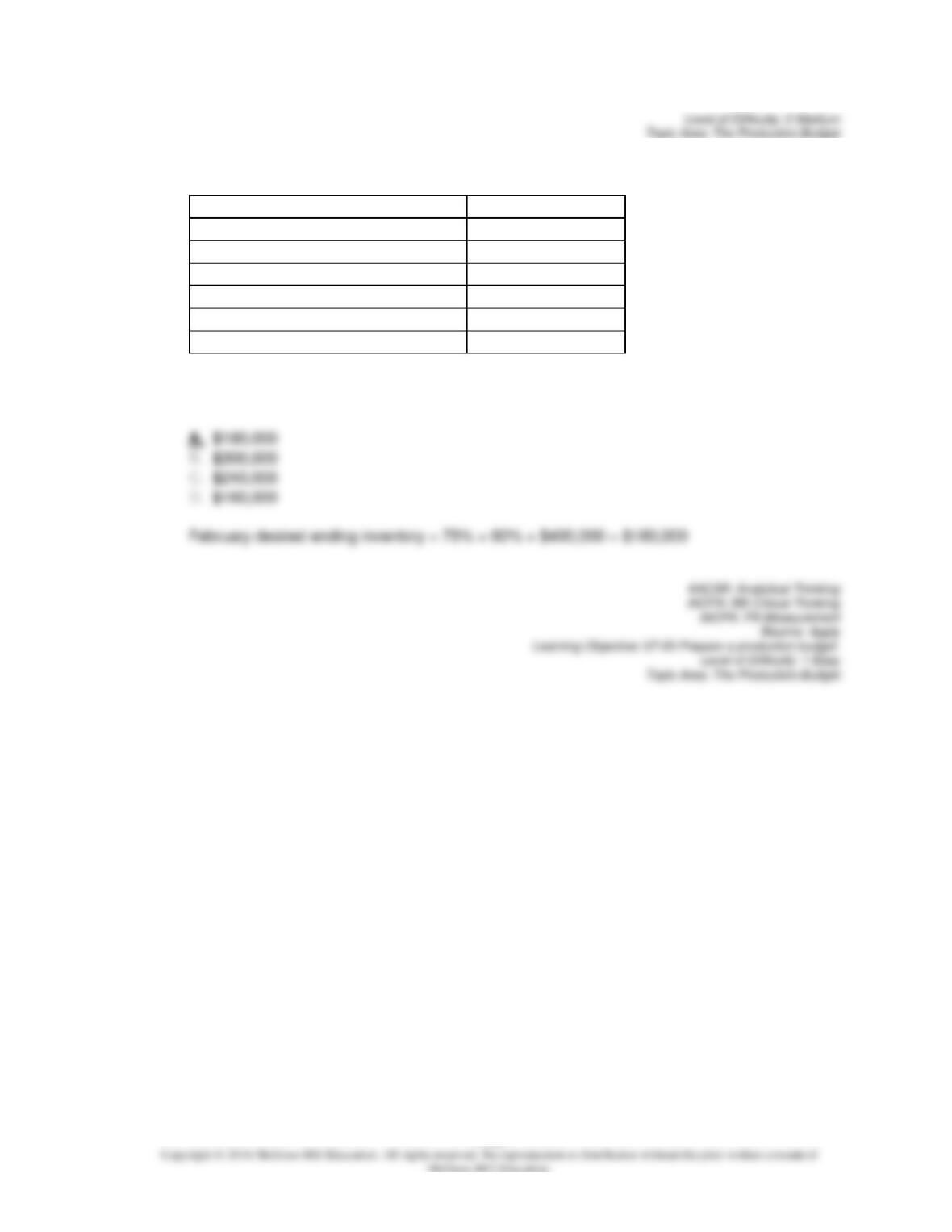
Budgeted cost of goods sold (60% × $300,000)
Total needs
Less beginning merchandise inventory
Required purchases
Assuming that the Bingham Corporation had inventory on hand of $70,000 (at cost) on
January 1, the purchases for January (at cost) would be:
7-156
95.
The following are budgeted data for the Bingham Corporation, a merchandising company:
Budgeted Sales (at retail):
January
$300,000
February
$340,000
March
$400,000
April
$350,000
Cost of goods sold as a percentage of sales
60%
Desired ending inventory
75% of next month sales
The desired ending inventory (at cost) for February would be:
7-157
96.
The following are budgeted data for the Bingham Corporation, a merchandising company:
Budgeted Sales (at retail):
January
$300,000
February
$340,000
March
$400,000
April
$350,000
Cost of goods sold as a percentage of sales
60%
Desired ending inventory
75% of next month sales
(75% × 60% × $350,000)
Total needs
Assume that all purchases are paid for in the month following the month of purchase. The
cash disbursements for purchases that would appear in the April cash budget would be:
7-158
97.
Harris Inc., has budgeted sales in units for the next five months as follows:
June
9,400 units
July
7,800 units
August
7,300 units
September
5,400 units
October
4,100 units
Past experience has shown that the ending inventory for each month should be equal to 20%
of the next month’s sales in units. The inventory on May 31 contained 1,880 units. The
company needs to prepare a production budget for the next five months.
The beginning inventory for September should be:
7-159
98.
Harris Inc., has budgeted sales in units for the next five months as follows:
June
9,400 units
July
7,800 units
August
7,300 units
September
5,400 units
October
4,100 units
Past experience has shown that the ending inventory for each month should be equal to 20%
of the next month’s sales in units. The inventory on May 31 contained 1,880 units. The
company needs to prepare a production budget for the next five months.
The total number of units produced in July should be:
7-160
99.
May Corporation, a merchandising firm, has budgeted sales as follows for the third quarter of
the year:
July
$80,000
August
$90,000
September
$70,000
Cost of goods sold is equal to 65% of sales. The company wants to maintain a monthly
ending inventory equal to 130% of the Cost of Goods Sold for the following month. The
inventory on June 30 is less than this ideal since it is only $65,000. The company is now
preparing a Merchandise Purchases Budget.
The desired beginning inventory for September is: