Chapter 07 – Reporting and Interpreting Cost of Goods Sold and Inventory
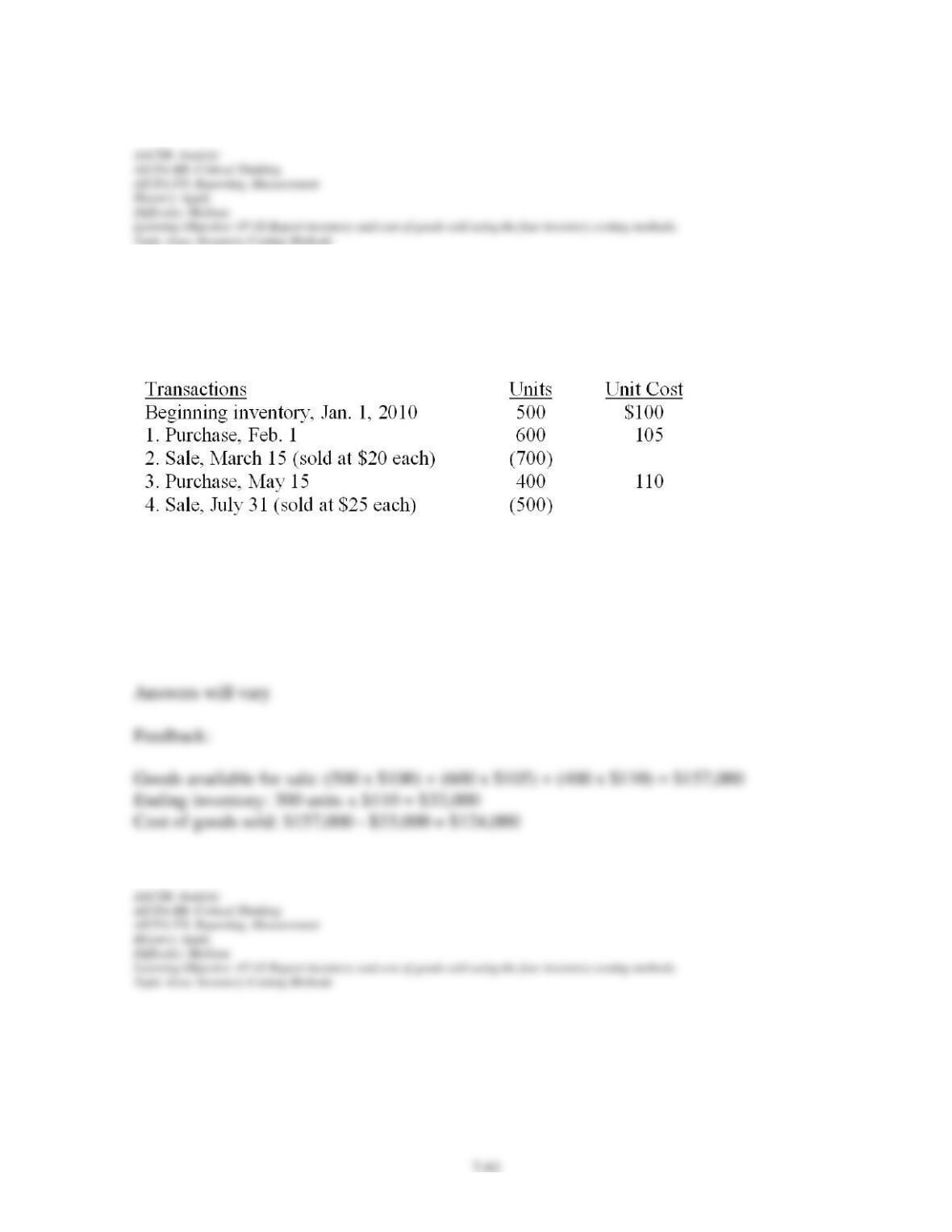
109. Jennings Company uses the periodic inventory system and applied FIFO inventory
costing. At the end of the annual accounting period, December 31, 2010, the accounting
records for the best selling item in inventory showed:
Calculate the following: (round to the nearest dollar.)
1. Goods available for sale
2. Ending inventory
3. Cost of goods sold
Chapter 07 – Reporting and Interpreting Cost of Goods Sold and Inventory
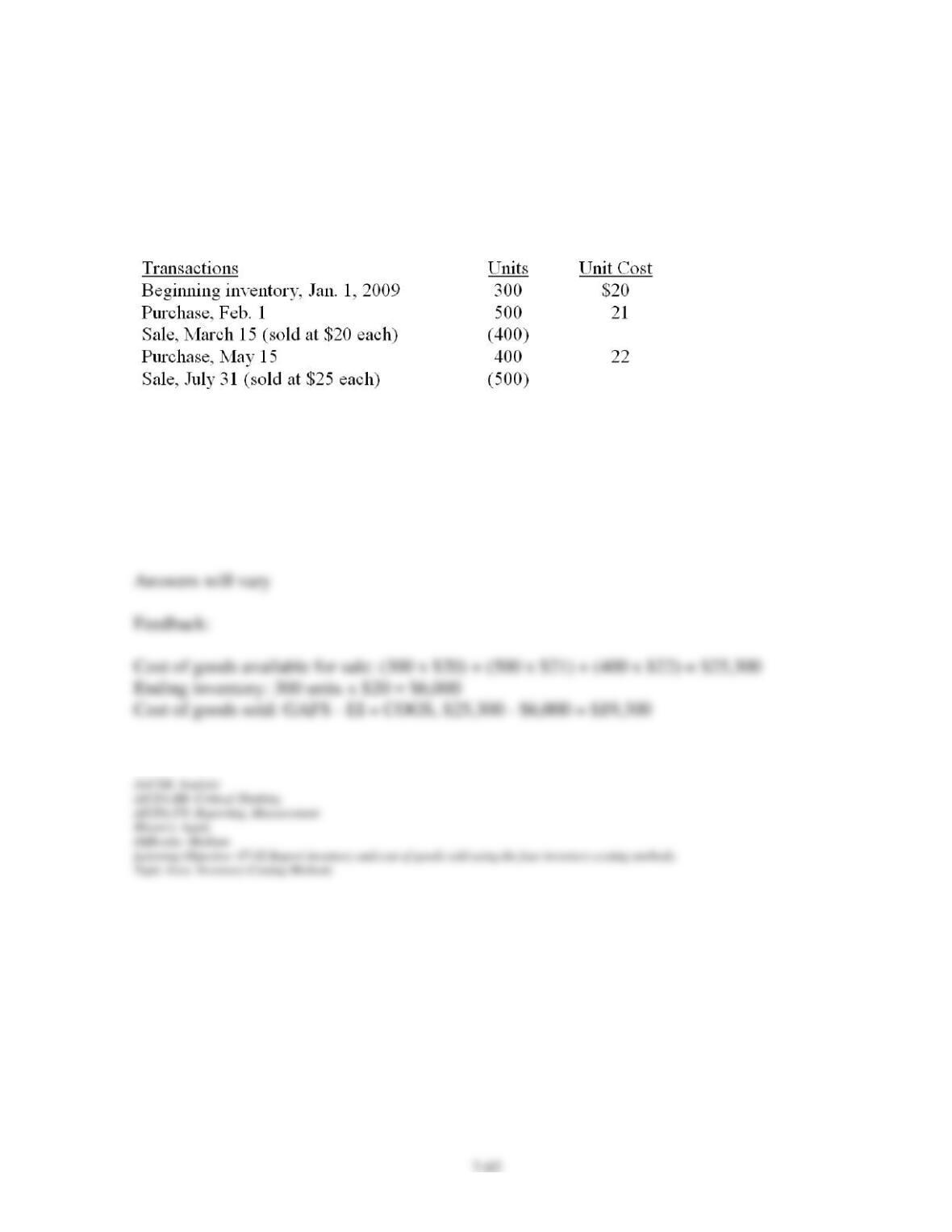
110. Freeman Company uses the periodic inventory system and applied LIFO inventory
costing. At the end of the annual accounting period, December 31, 2009, the accounting
records in inventory showed
Calculate the following: (round to the nearest dollar.)
1. Cost of goods available for sale
2. Ending inventory
3. Cost of goods sold
Chapter 07 – Reporting and Interpreting Cost of Goods Sold and Inventory
7-63
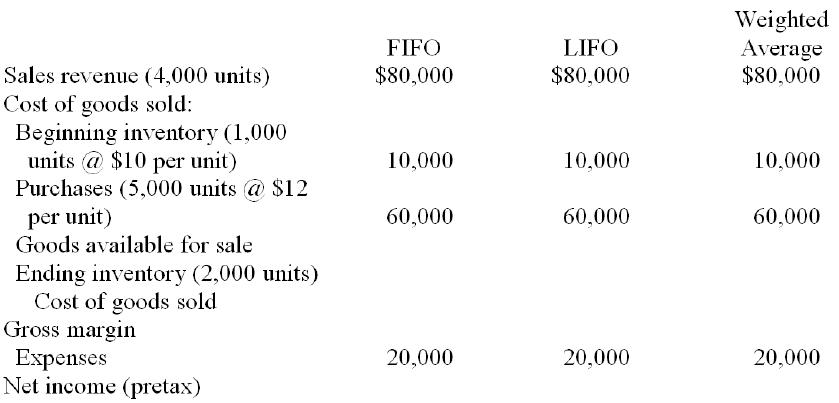
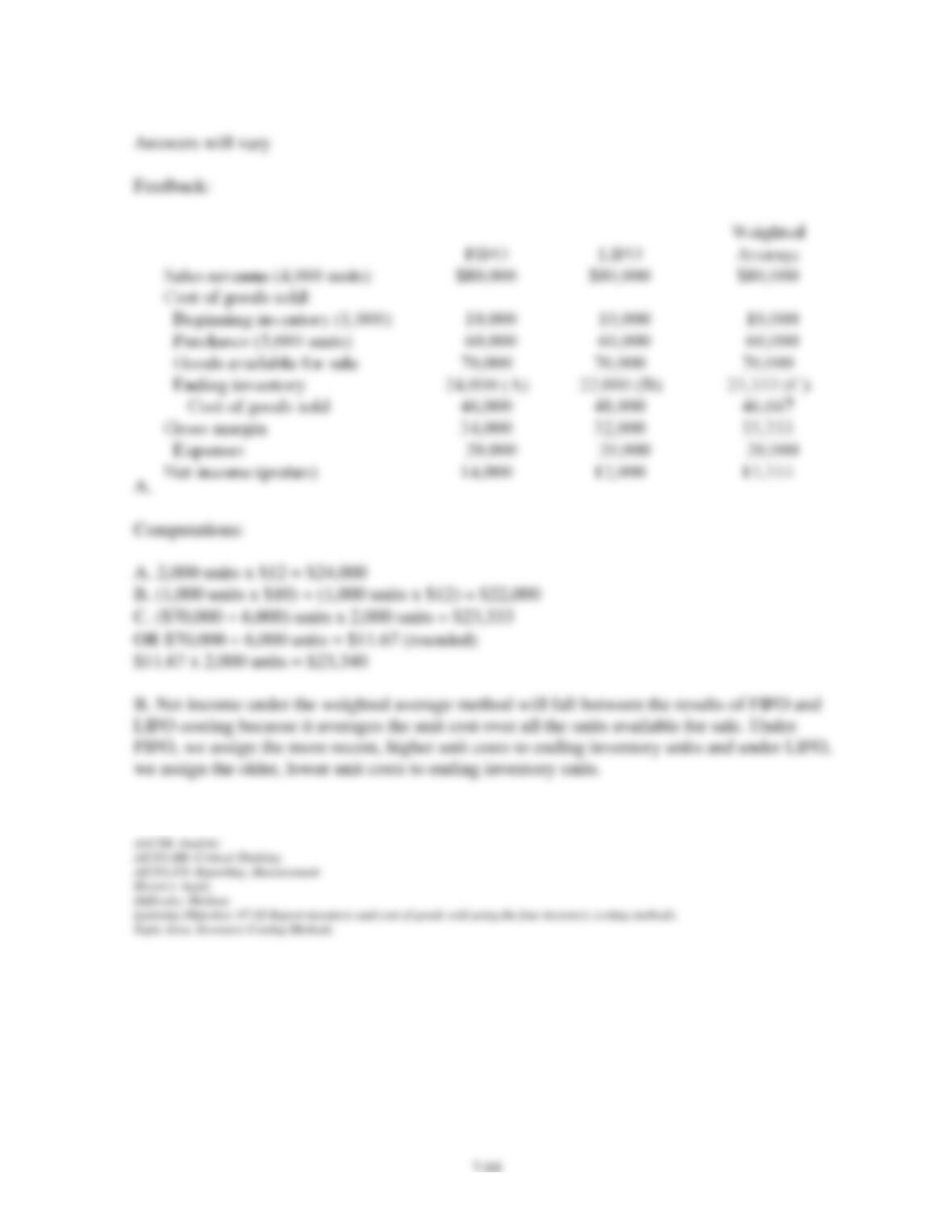
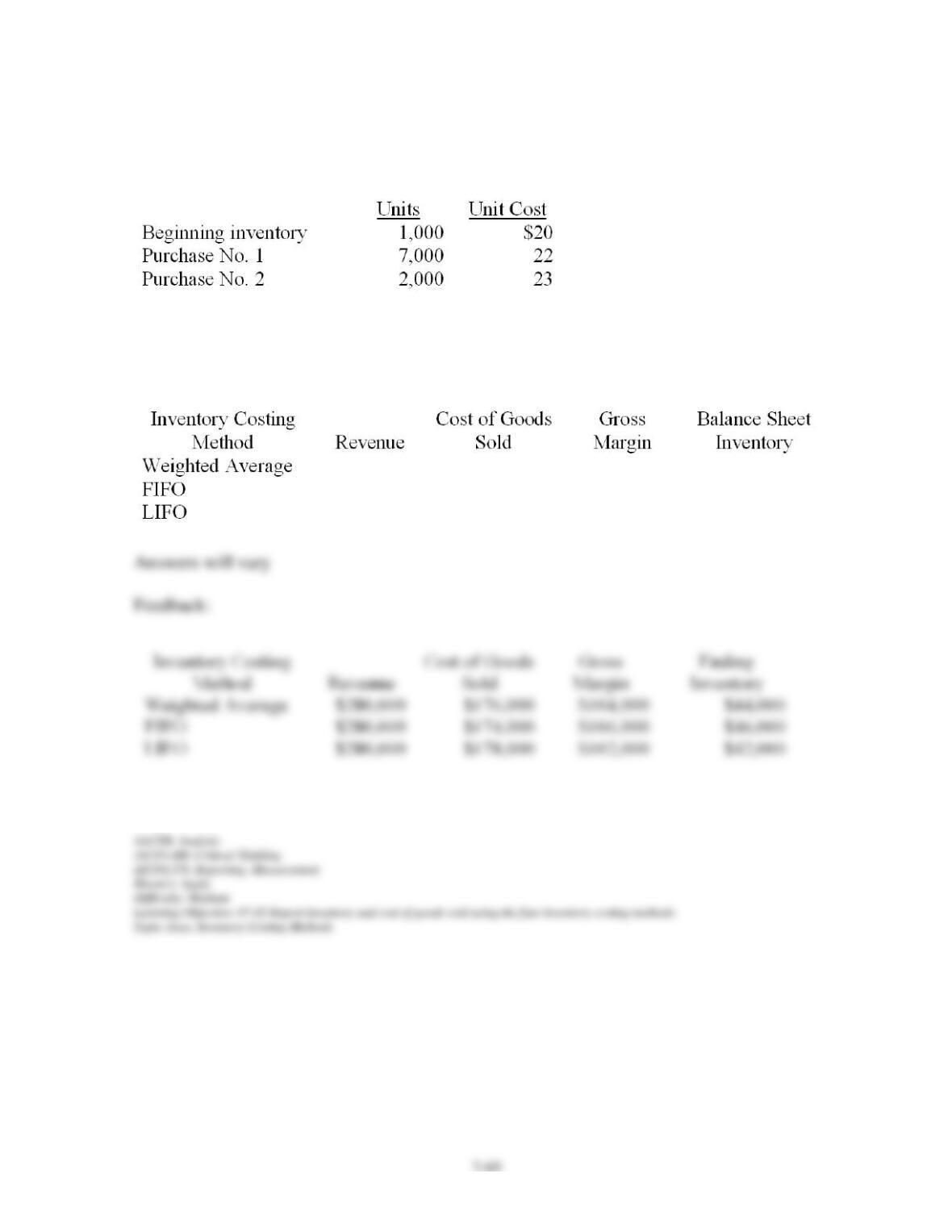
111. A. Compute the missing amounts in the income statement under three different inventory
costing methods: (Round your answers to the nearest dollar).
B. Explain the results of the weighted-average inventory costing method compared to the
FIFO and LIFO costing methods.
Chapter 07 – Reporting and Interpreting Cost of Goods Sold and Inventory
Chapter 07 – Reporting and Interpreting Cost of Goods Sold and Inventory
112. Hopkins Company reported the following information related to inventory and sales:
Sales—8,000 units at $35 per unit.
Compute the following amounts assuming a periodic inventory system:
Chapter 07 – Reporting and Interpreting Cost of Goods Sold and Inventory
7-66
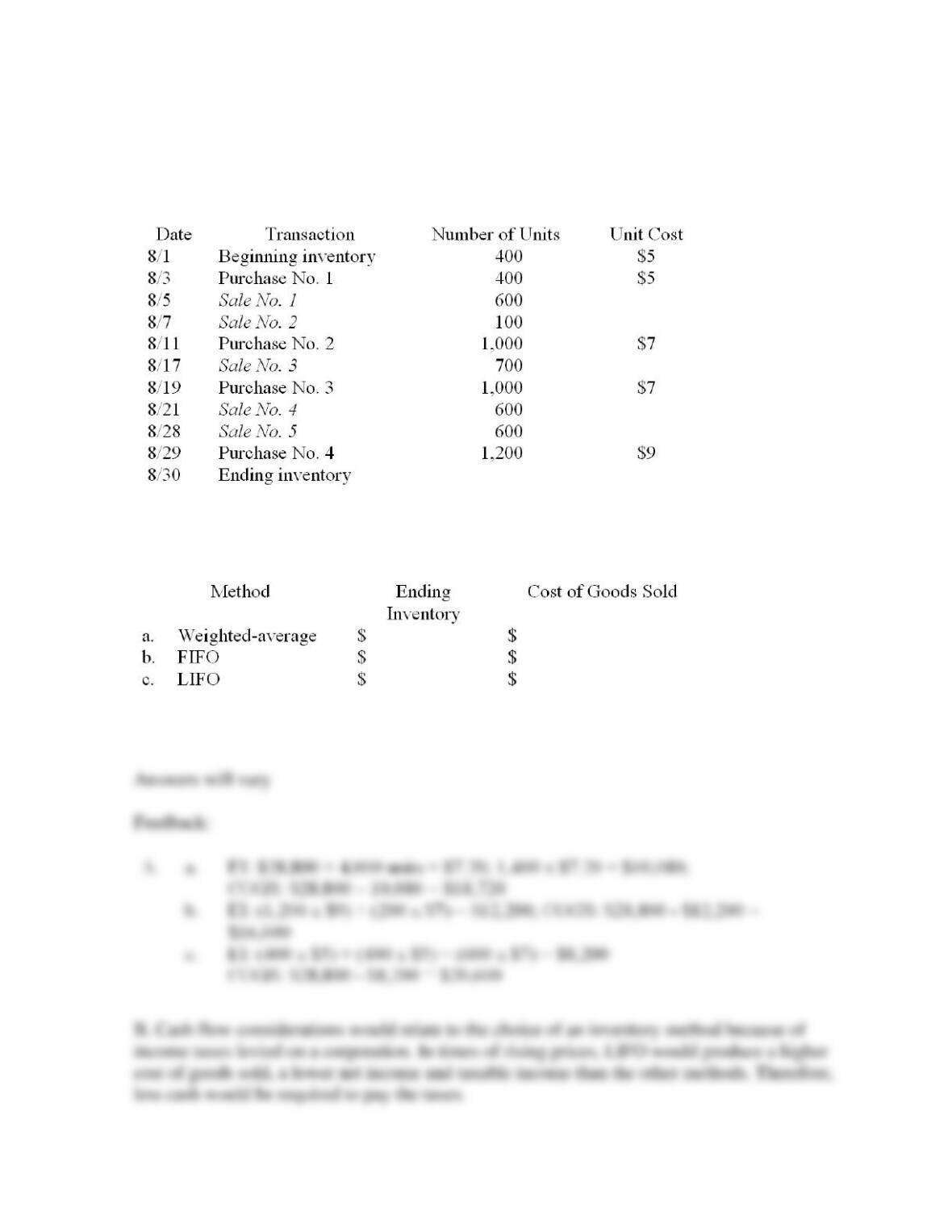
113. The inventory records of Martin Corporation reflected the following information for the
month of August:
A. Determine the amount of the ending inventory and cost of goods sold under each of the
following methods assuming the periodic inventory system.
B. Why would cash flow considerations relate to the choice of an inventory method?
Chapter 07 – Reporting and Interpreting Cost of Goods Sold and Inventory
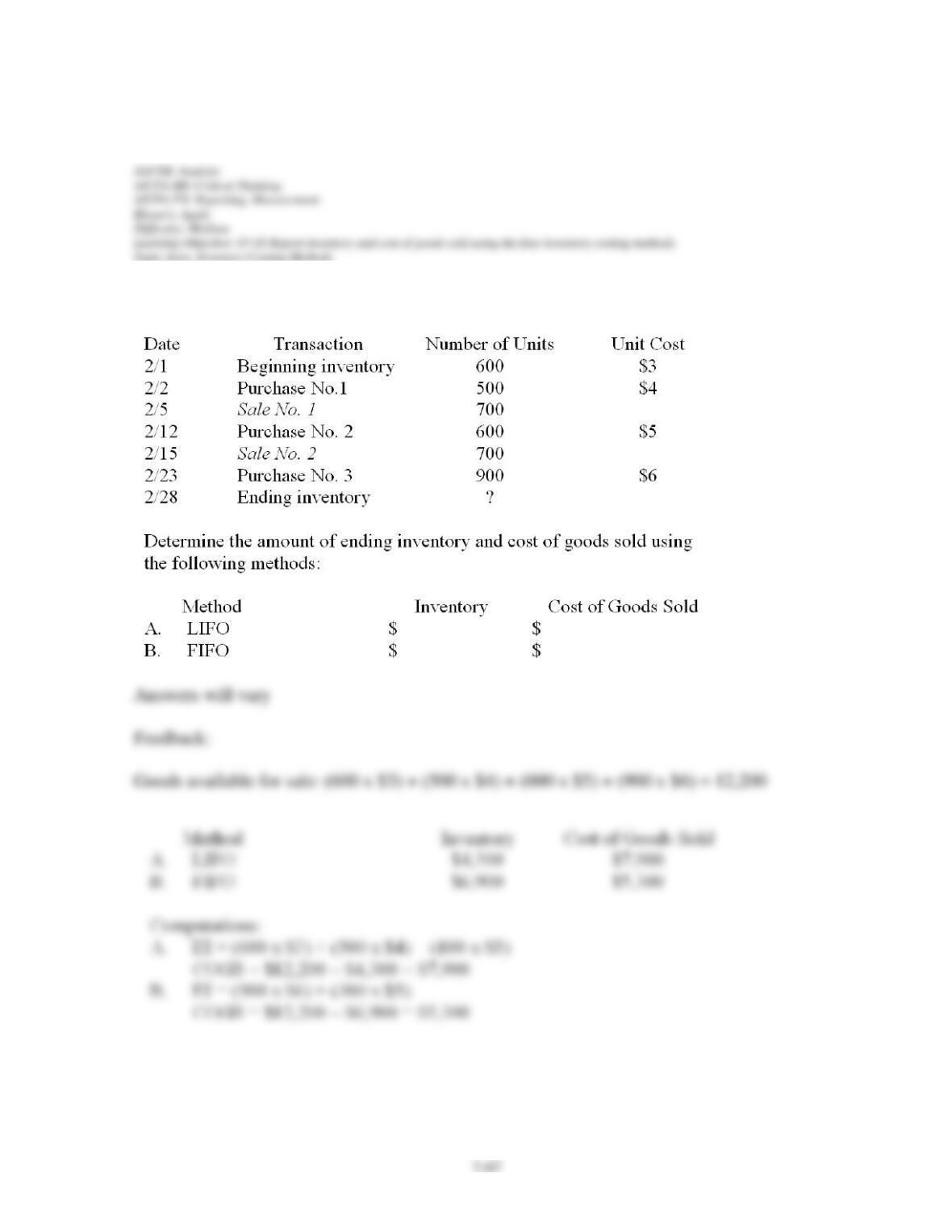
114. The records of Atlantis Company reflected the following for the month of February:
Chapter 07 – Reporting and Interpreting Cost of Goods Sold and Inventory
7-68
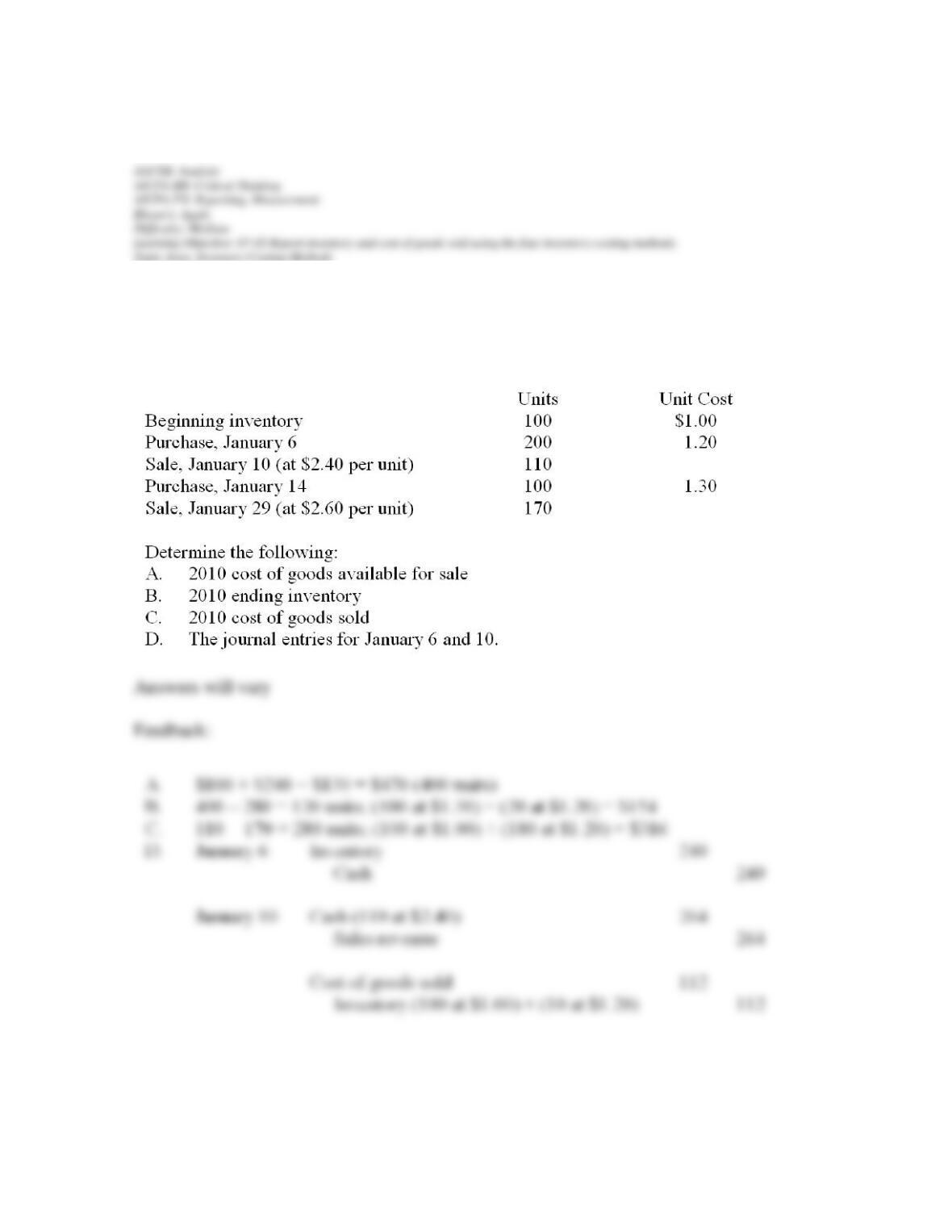
115. Rio Company uses the FIFO inventory costing method and has a perpetual inventory
system. All purchases and sales were cash transactions. The records reflected the following
for January, 2010:
Chapter 07 – Reporting and Interpreting Cost of Goods Sold and Inventory
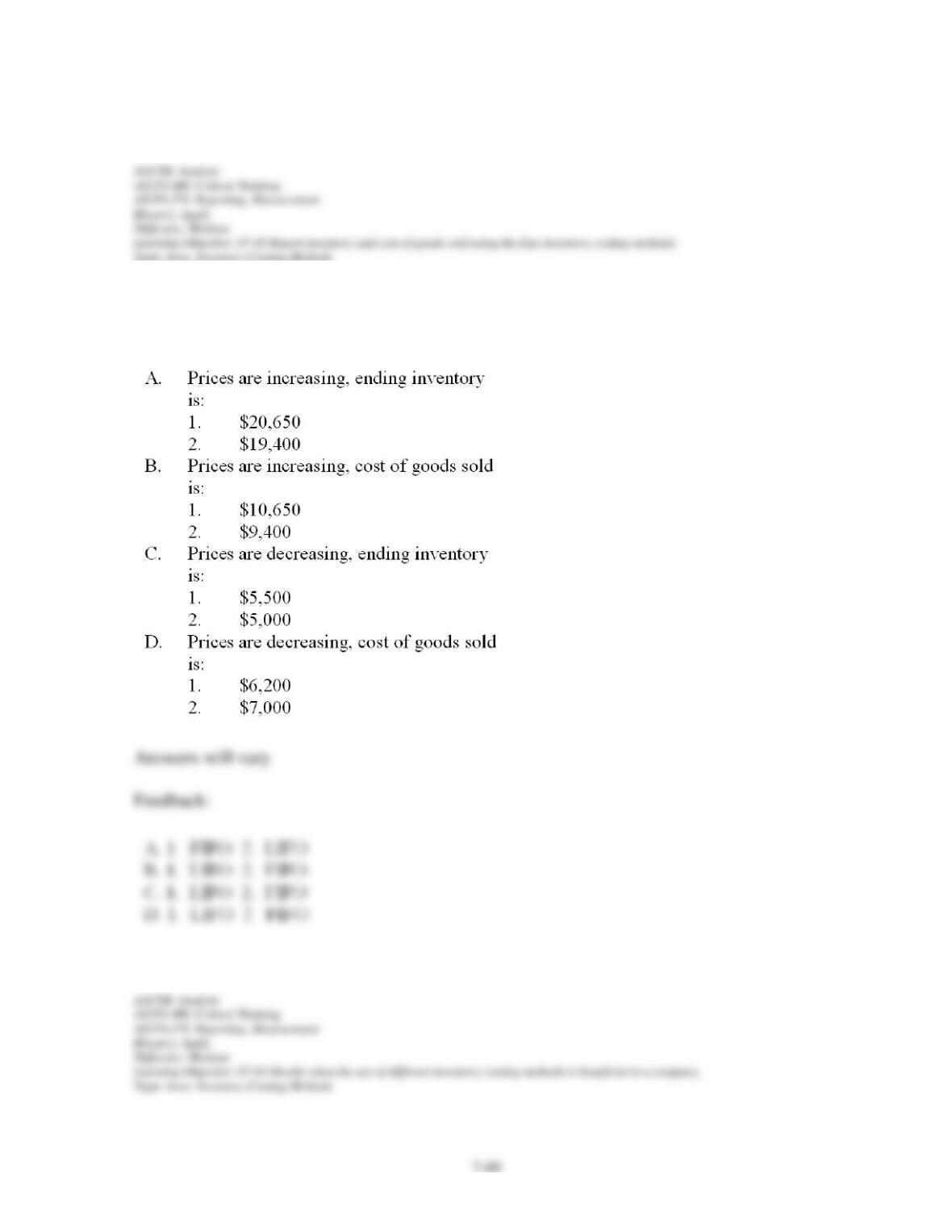
116. Given a particular set of facts and assumptions, the following pairs of amounts were
computed using FIFO and LIFO. For each pair of amounts, indicate which amount resulted
from applying FIFO, and which amount resulted from applying LIFO.
Chapter 07 – Reporting and Interpreting Cost of Goods Sold and Inventory
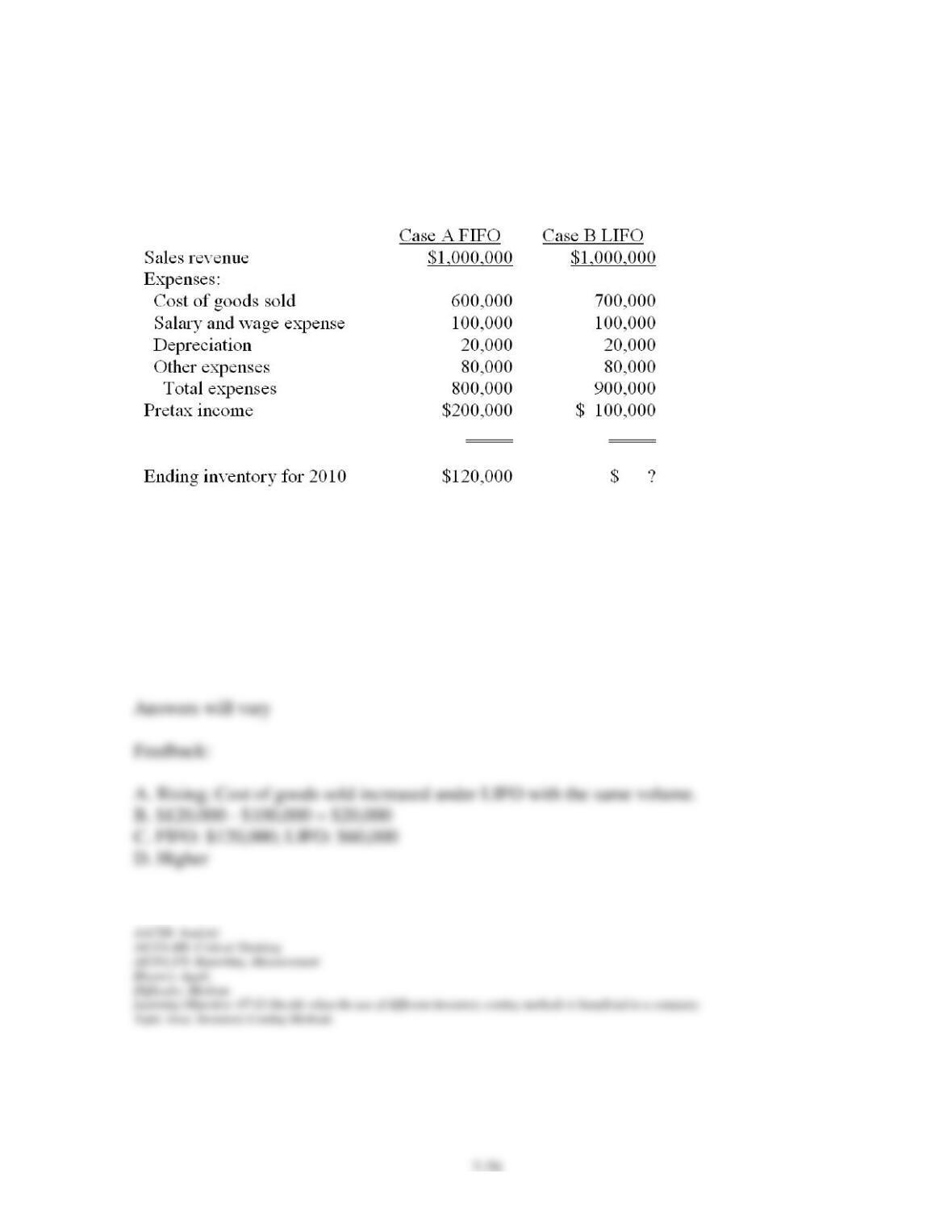
117. The single-step income statement for Clinton Company for 2010 reported the following
under two different assumptions
Answer the following questions (assume a 40% income tax rate):
A. Were merchandise inventory costs rising, or falling? Explain your answer.
B. What was the amount of the LIFO ending inventory?
C. Calculate net income (after tax) for both LIFO and FIFO.
D. Under FIFO, would retained earnings on the balance sheet be higher or lower than under
LIFO?
Chapter 07 – Reporting and Interpreting Cost of Goods Sold and Inventory
7-71
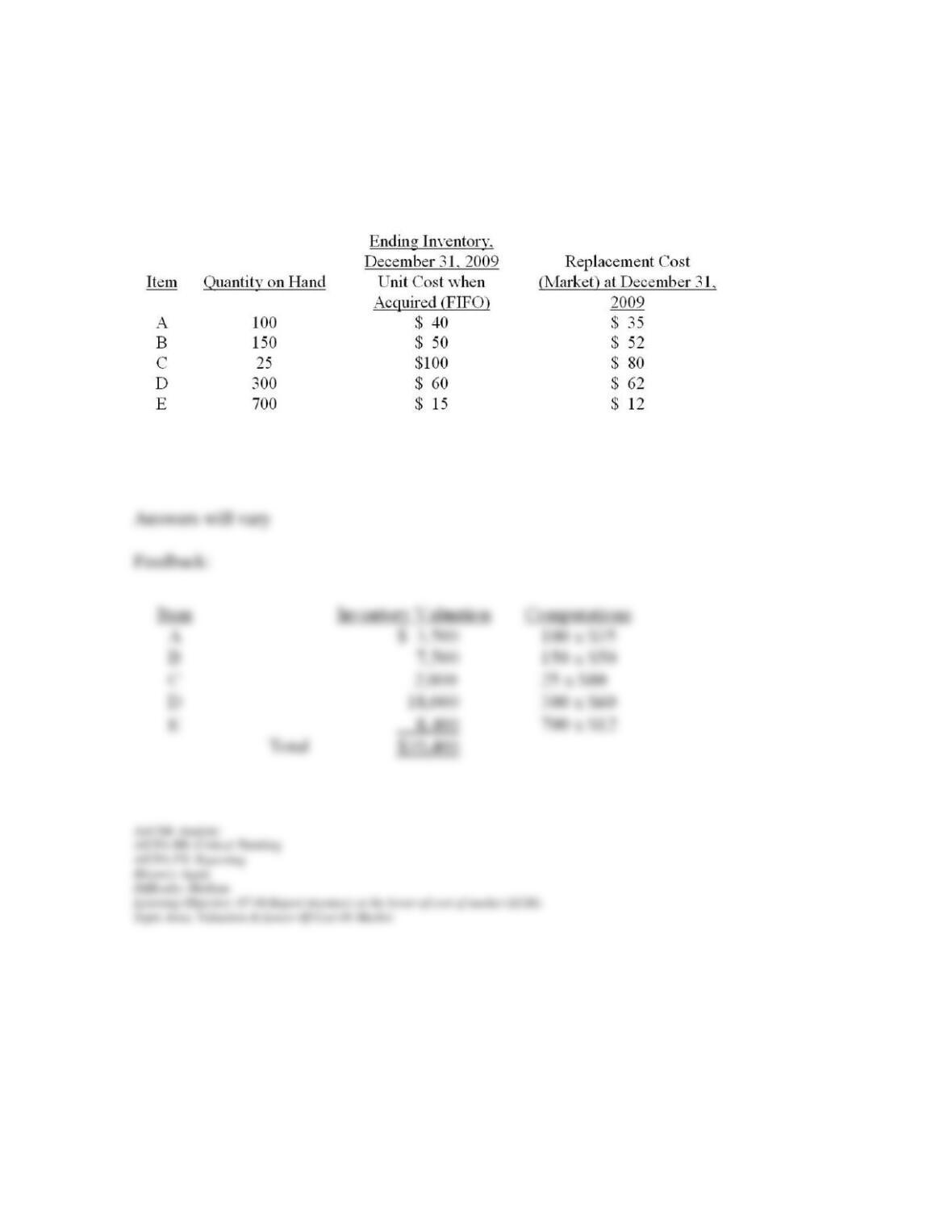
118. Boulder, Inc. is computing its inventory at December 31, 2010. The following
information relates to the five major inventory items regularly stocked for resale
Using the lower-of-cost-or-market rule, compute the total valuation for each inventory item at
December 31, 2010, and the total inventory valuation.