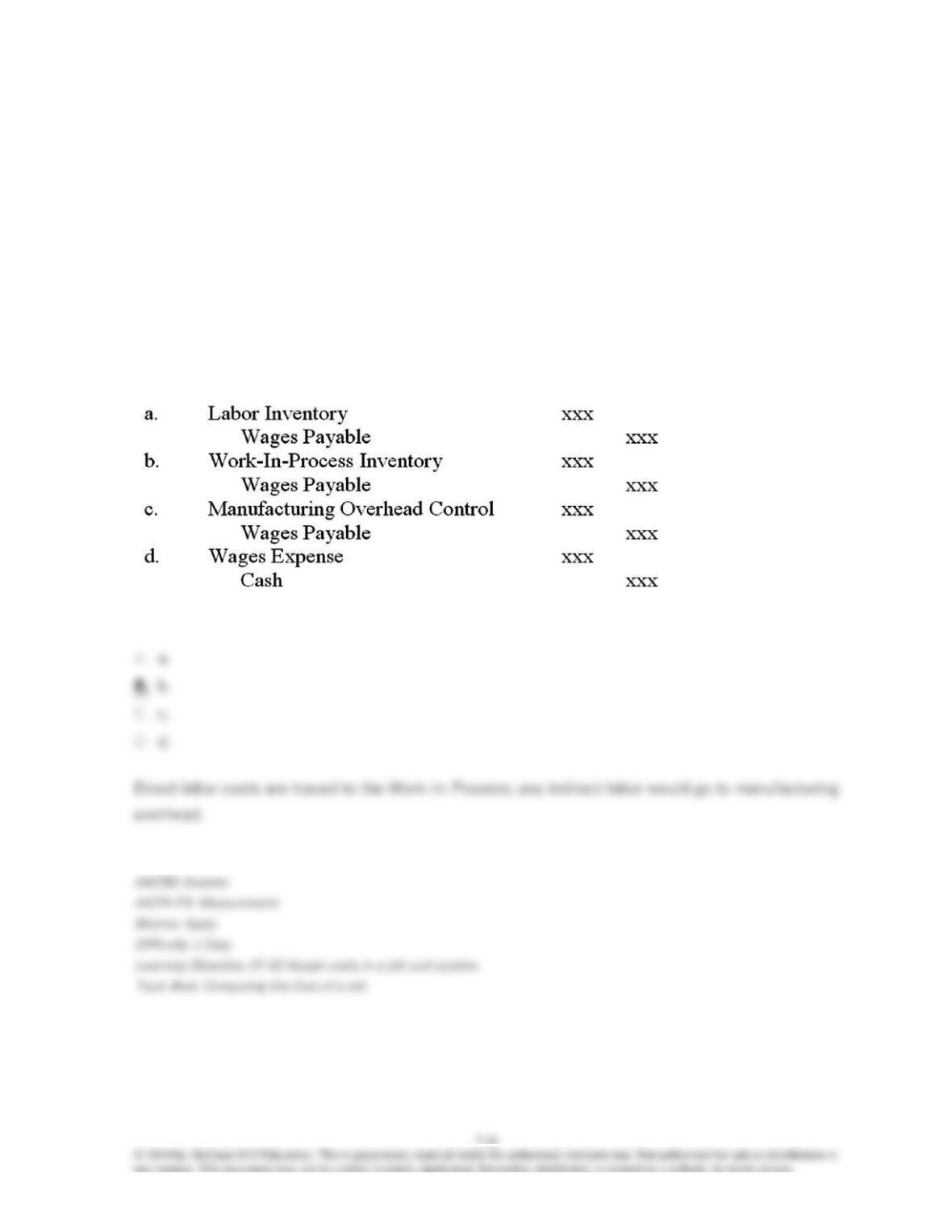
60. The following events took place at a manufacturing company for the current year:
(1) Purchased $95,000 in direct materials.
(2) Incurred labor costs as follows: (a) direct, $56,000 and (b) indirect, $13,600.
(3) Other manufacturing overhead was $107,000, excluding indirect labor.
(4) Transferred 80% of the materials to the manufacturing assembly line.
(5) Completed 65% of the Work-in–Process during the year.
(6) Sold 85% of the completed goods.
(7) There were no beginning inventories.
What is the journal entry to record the direct labor costs for the period?
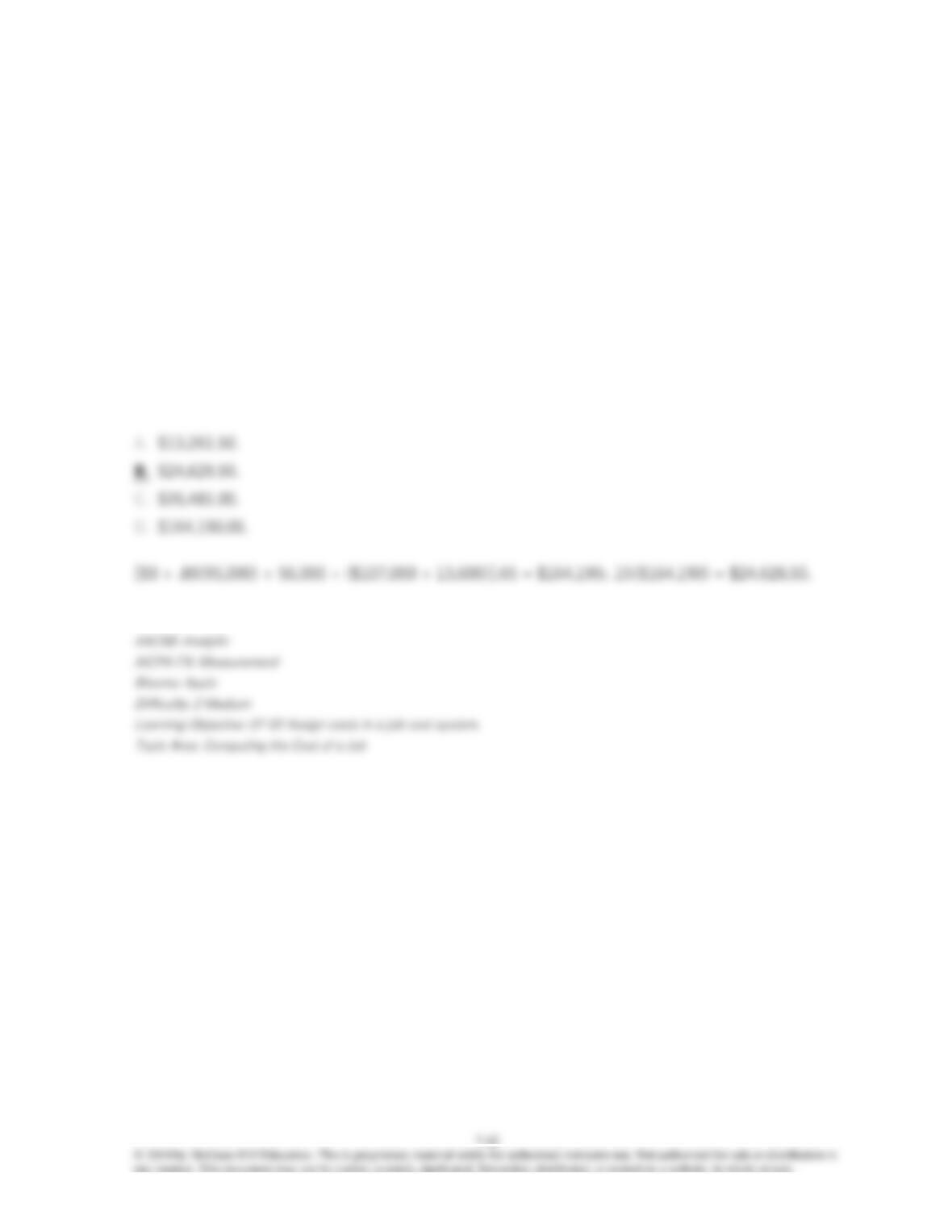
61. The following events took place at a manufacturing company for the current year:
(1) Purchased $95,000 in direct materials.
(2) Incurred labor costs as follows: (a) direct, $56,000 and (b) indirect, $13,600.
(3) Other manufacturing overhead was $107,000, excluding indirect labor.
(4) Transferred 80% of the materials to the manufacturing assembly line.
(5) Completed 65% of the Work-in–Process during the year.
(6) Sold 85% of the completed goods.
(7) There were no beginning inventories.
What is the value of the ending Finished Goods Inventory?
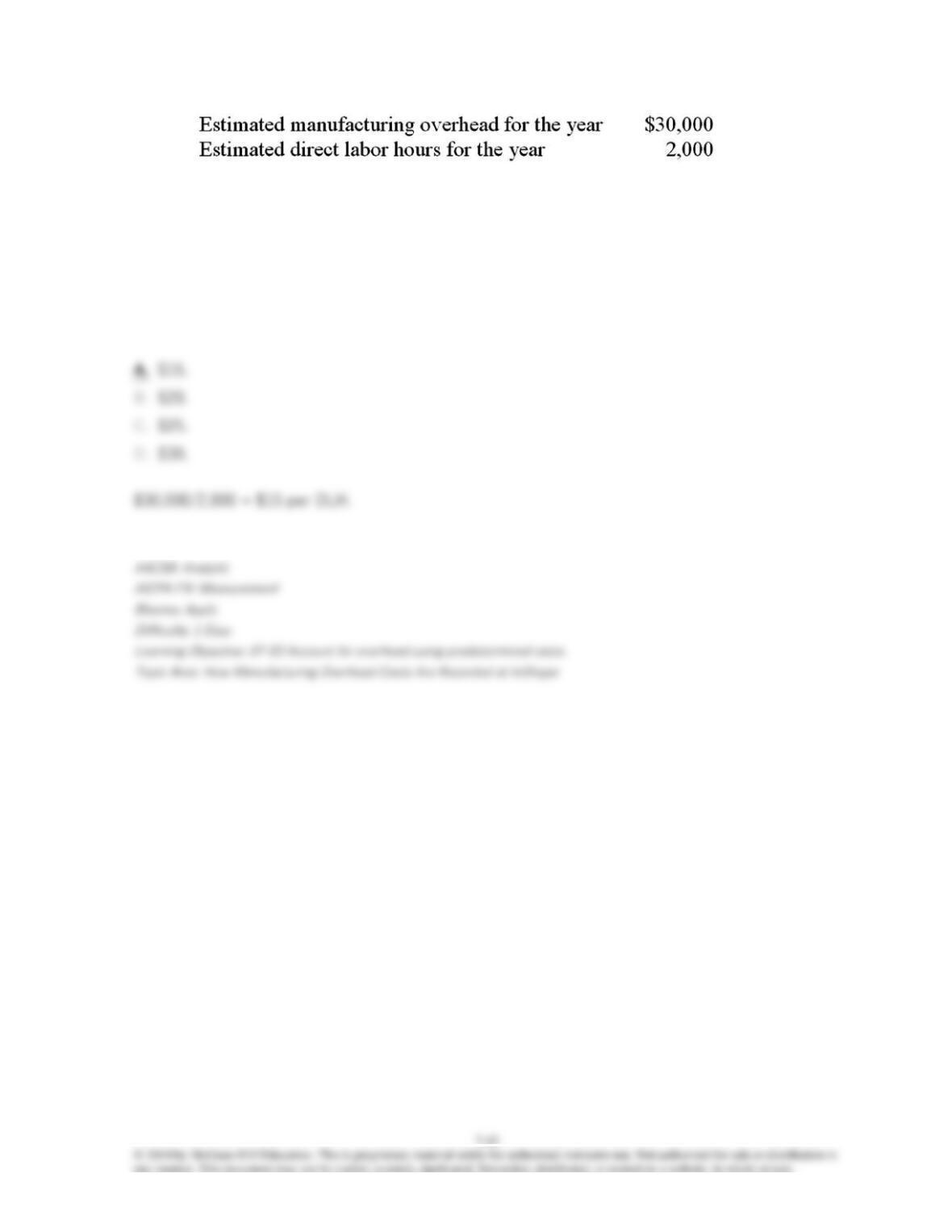
62.
Two jobs were worked on during the year: Job A-101 and Job A-102. The number of direct labor–
hours spent on Job A-101 and Job A-102 were 1,200 and 1,000, respectively. The actual
manufacturing overhead was $37,000.
What is the predetermined manufacturing overhead rate per direct labor hour for the year?
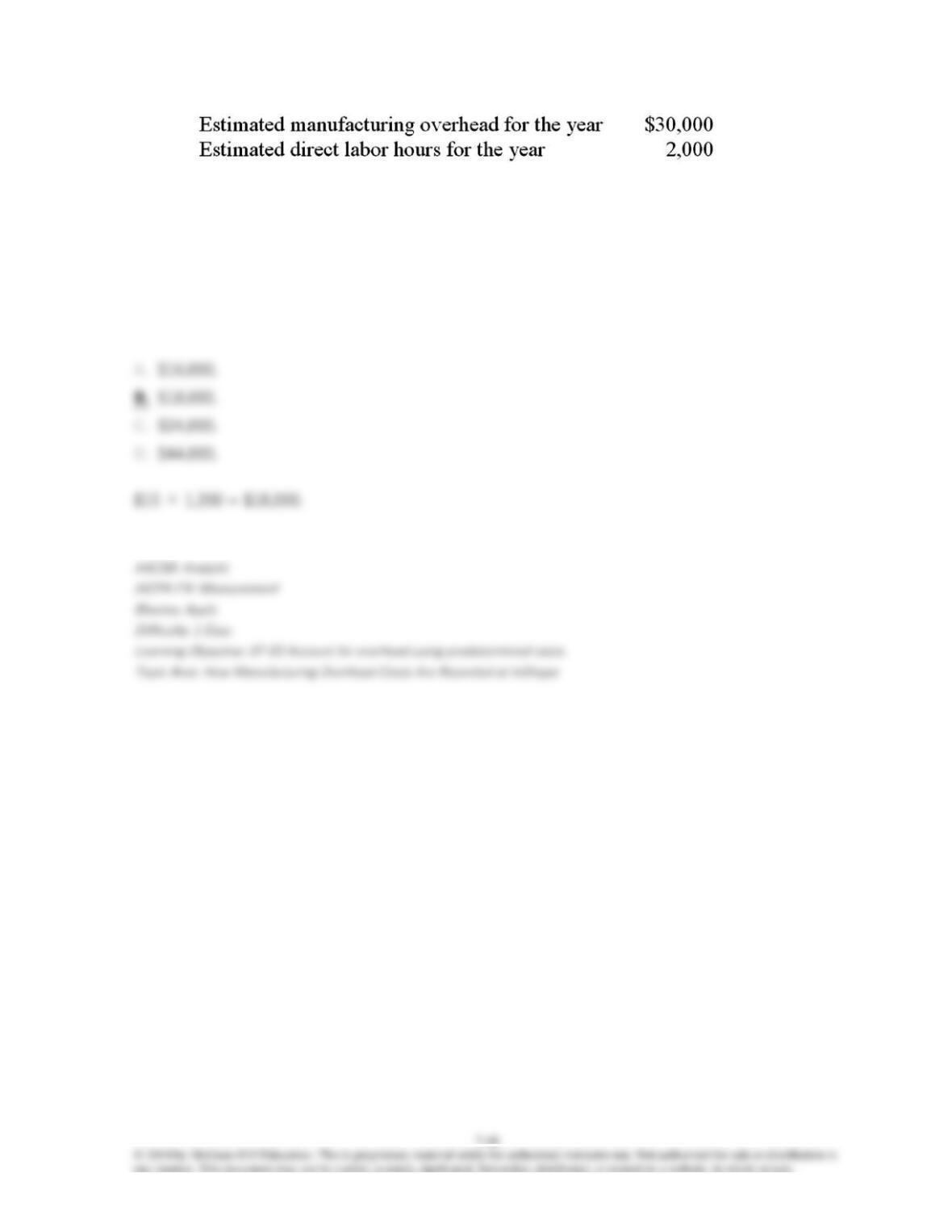
63.
Two jobs were worked on during the year: Job A-101 and Job A-102. The number of direct labor–
hours spent on Job A-101 and Job A-102 were 1,200 and 1,000, respectively. The actual
manufacturing overhead was $37,000.
What was the amount of manufacturing overhead applied to Job A-101?
64.
Two jobs were worked on during the year: Job A-101 and Job A-102. The number of direct labor–
hours spent on Job A-101 and Job A-102 were 1,200 and 1,000, respectively. The actual
manufacturing overhead was $37,000.
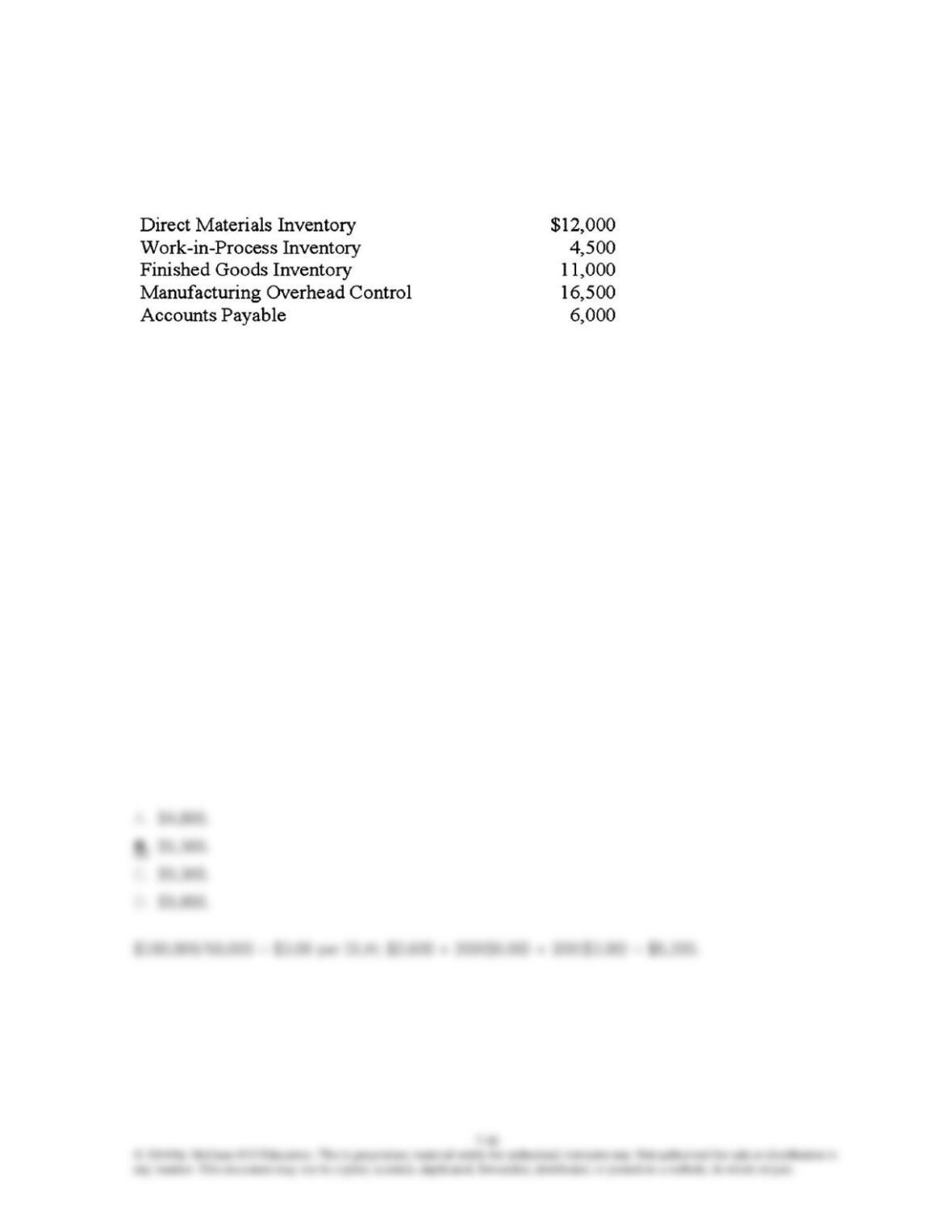
What is the amount of the under– or overapplied manufacturing overhead?
65. The Update Company does not maintain backup documents for its computer files. In June,
some of the current data were lost, and you have been asked to help reconstruct the data. The
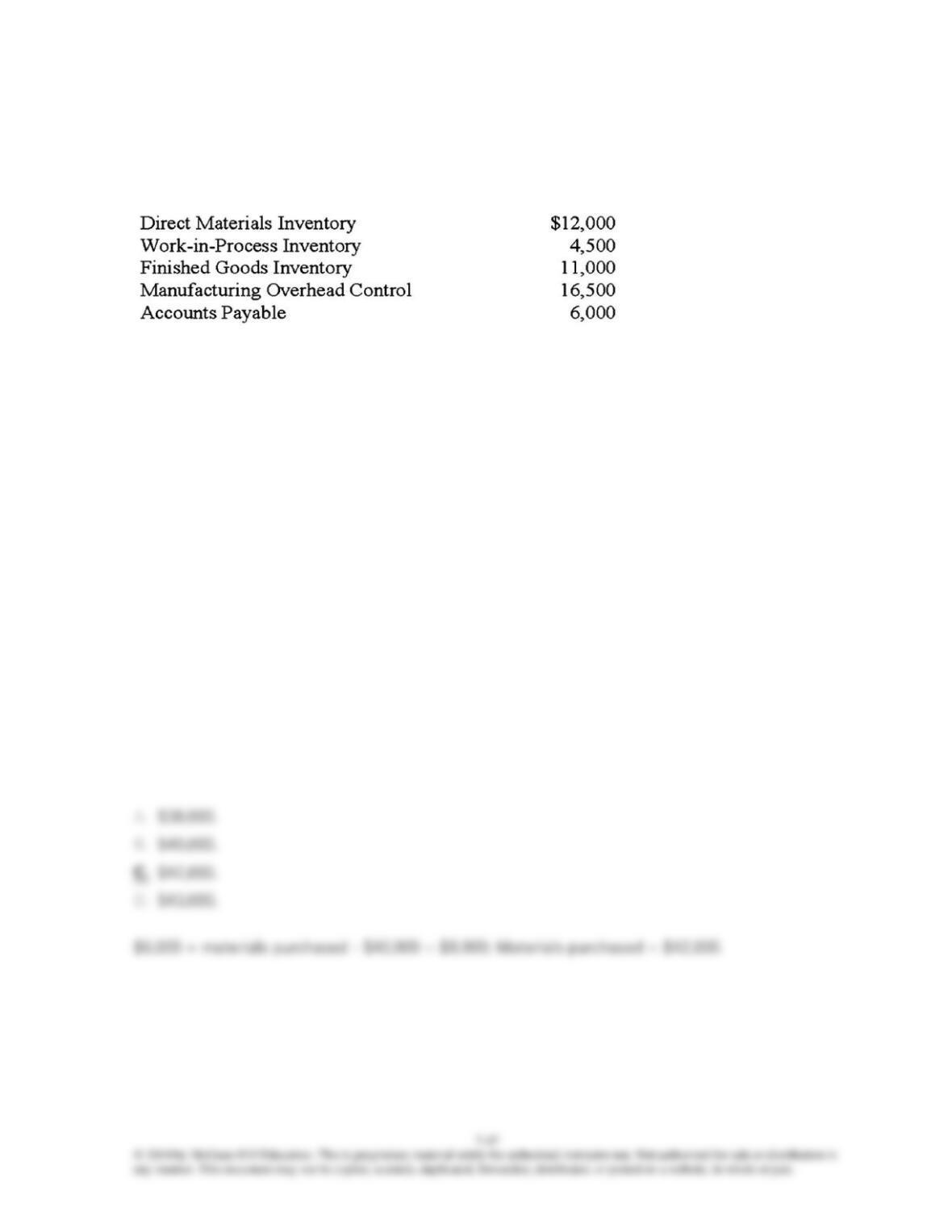
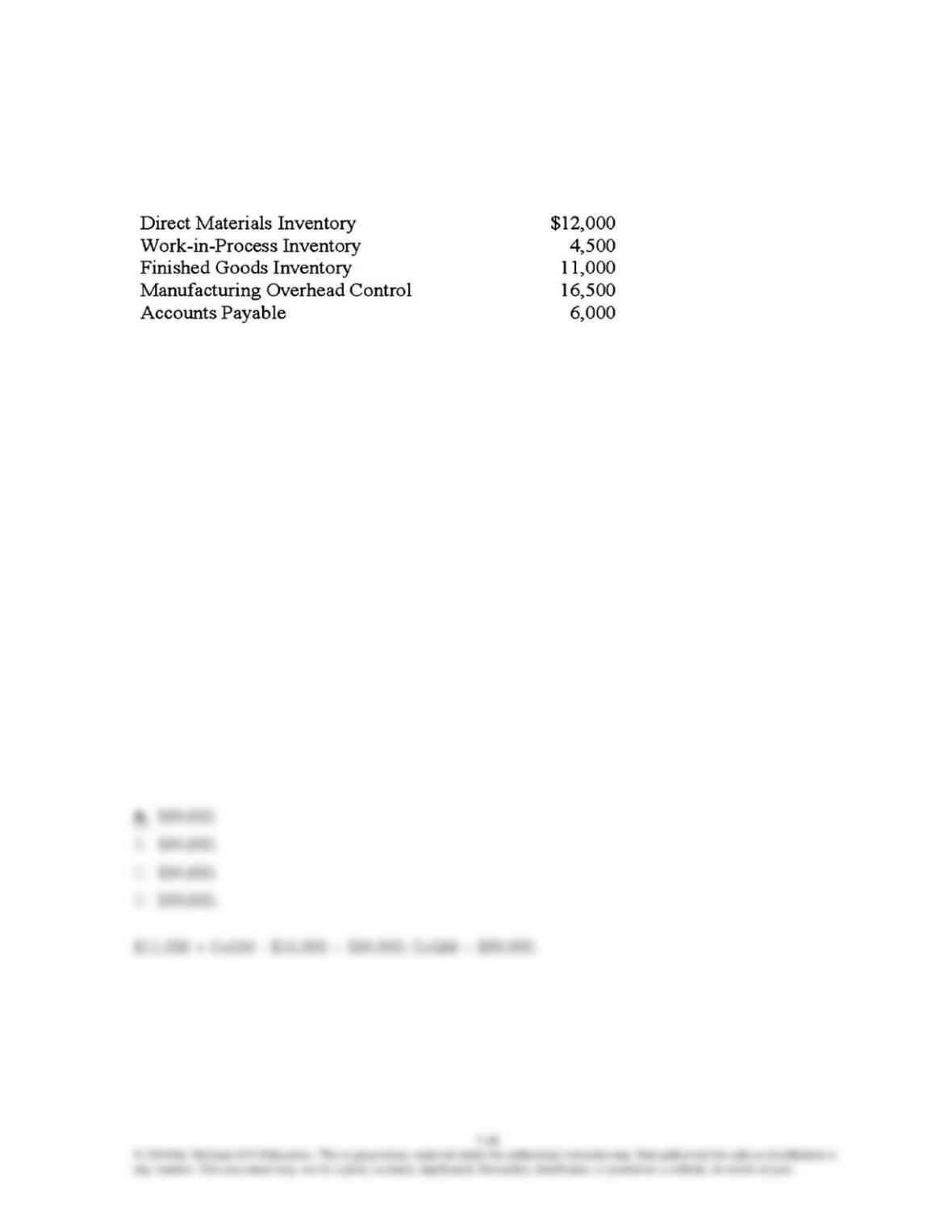
following beginning balances on June 1 are known:
Reviewing old documents and interviewing selected employees have generated the following
additional information:
The production superintendent’s job cost sheets indicated that materials of $2,600 were included
in the June 30 Work–in-Process Inventory. Also, 300 direct labor-hours had been paid at $6.00 per
hour for the jobs in process on June 30.
The Accounts Payable account is only for direct material purchases. The clerk remembers clearly
that the balance in the Accounts Payable on June 30 was $8,000. An analysis of canceled checks
indicated payments of $40,000 were made to suppliers during June.
Payroll records indicate that 5,200 direct labor-hours were recorded for June. It was verified that
there were no variations in pay rates among employees during June.
Records at the warehouse indicate that the Finished Goods Inventory totaled $16,000 on June 30.
Another record kept manually indicates that the Cost of Goods Sold in June totaled $84,000.
The predetermined overhead rate was based on an estimated 60,000 direct labor-hours for the
year and an estimated $180,000 in manufacturing overhead costs.
What is the ending balance in the Work–in-Process Inventory on June 30?
66. The Update Company does not maintain backup documents for its computer files. In June,
some of the current data were lost, and you have been asked to help reconstruct the data. The
following beginning balances on June 1 are known:
Reviewing old documents and interviewing selected employees have generated the following
additional information:
The production superintendent’s job cost sheets indicated that materials of $2,600 were included
in the June 30 Work–in-Process Inventory. Also, 300 direct labor-hours had been paid at $6.00 per
hour for the jobs in process on June 30.
The Accounts Payable account is only for direct material purchases. The clerk remembers clearly
that the balance in the Accounts Payable on June 30 was $8,000. An analysis of canceled checks
indicated payments of $40,000 were made to suppliers during June.
Payroll records indicate that 5,200 direct labor-hours were recorded for June. It was verified that
there were no variations in pay rates among employees during June.
Records at the warehouse indicate that the Finished Goods Inventory totaled $16,000 on June 30.
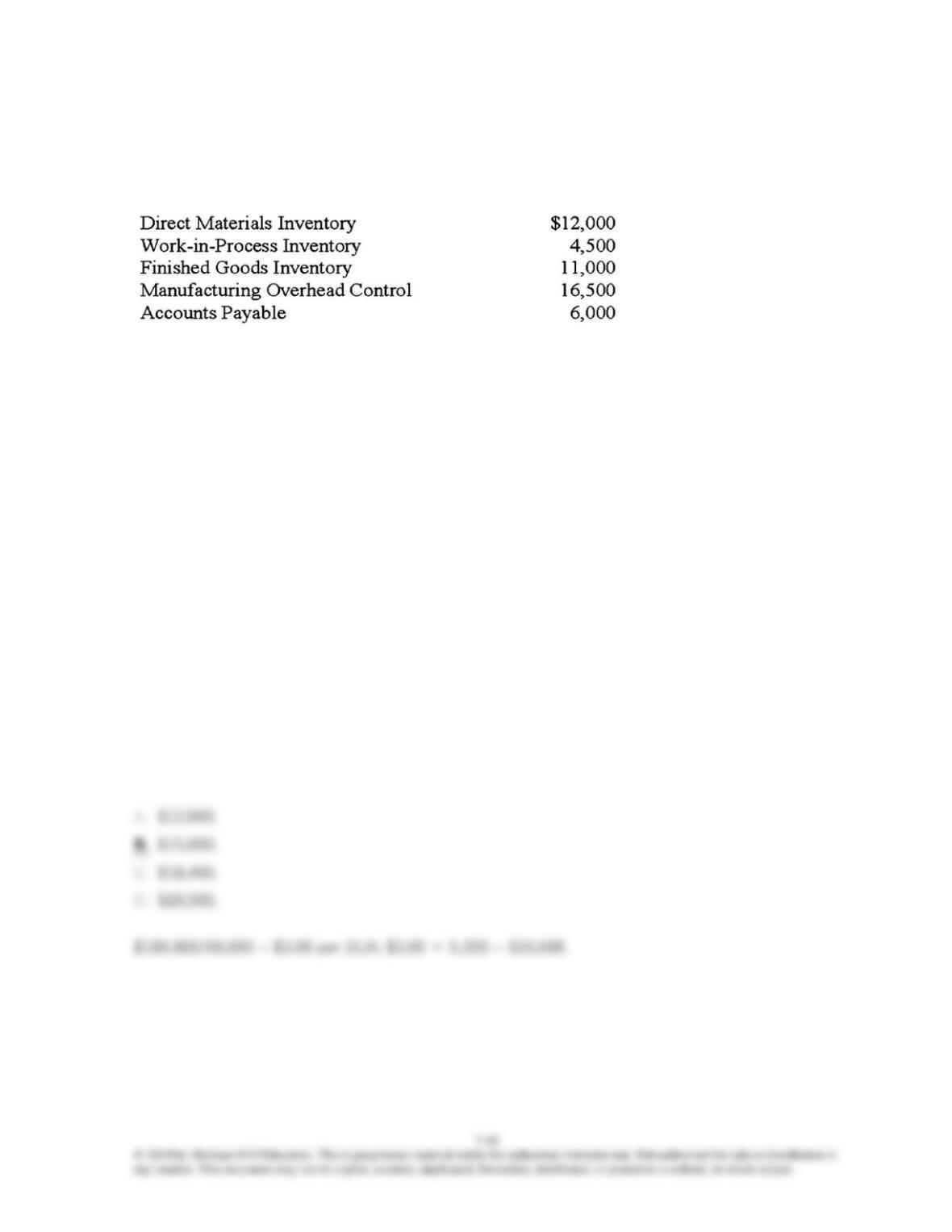
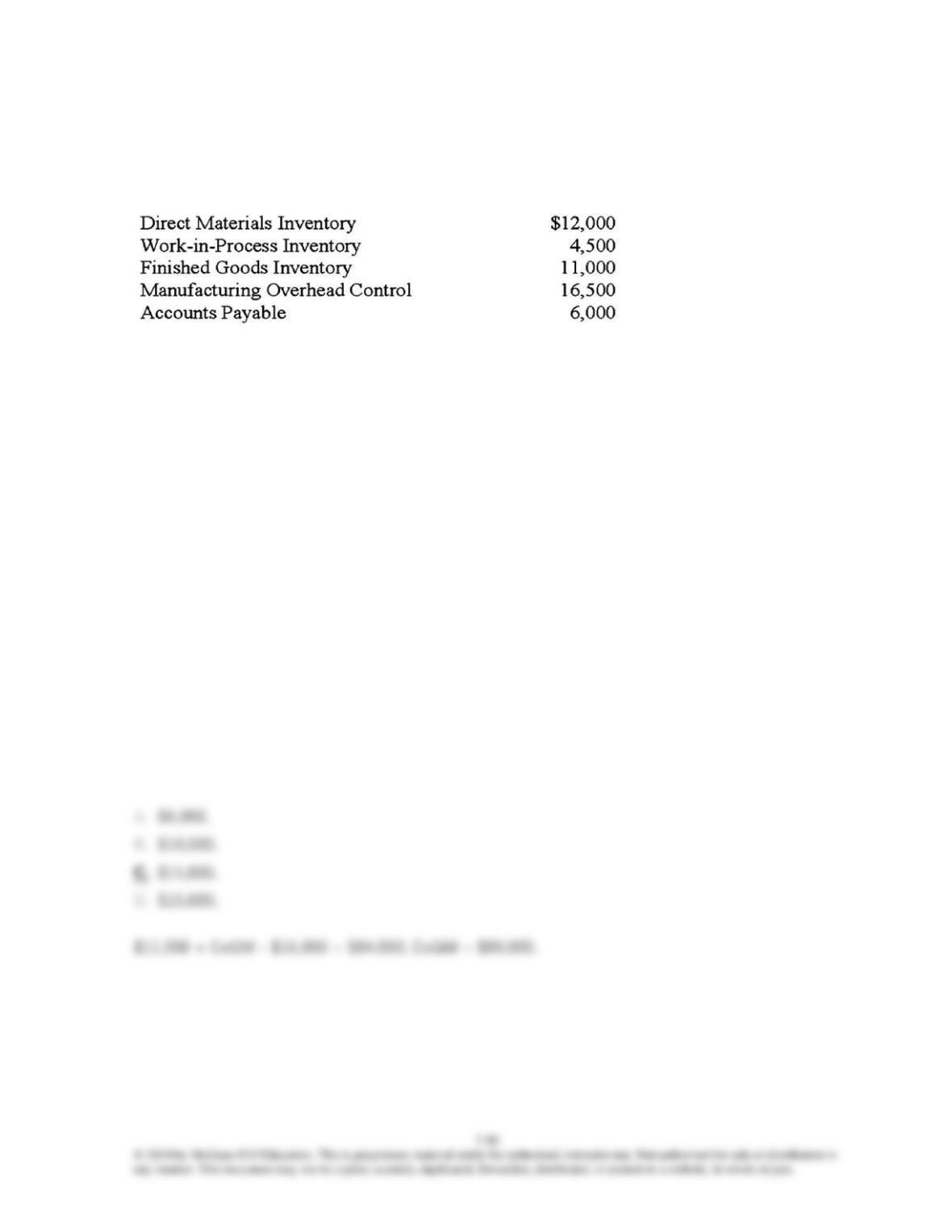
Another record kept manually indicates that the Cost of Goods Sold in June totaled $84,000.
The predetermined overhead rate was based on an estimated 60,000 direct labor-hours for the
year and an estimated $180,000 in manufacturing overhead costs.
What is the amount of direct materials purchased during June?
67. The Update Company does not maintain backup documents for its computer files. In June,
some of the current data were lost, and you have been asked to help reconstruct the data. The
following beginning balances on June 1 are known:
Reviewing old documents and interviewing selected employees have generated the following
additional information:
The production superintendent’s job cost sheets indicated that materials of $2,600 were included
in the June 30 Work–in-Process Inventory. Also, 300 direct labor-hours had been paid at $6.00 per
hour for the jobs in process on June 30.
The Accounts Payable account is only for direct material purchases. The clerk remembers clearly
that the balance in the Accounts Payable on June 30 was $8,000. An analysis of canceled checks
indicated payments of $40,000 were made to suppliers during June.
Payroll records indicate that 5,200 direct labor-hours were recorded for June. It was verified that
there were no variations in pay rates among employees during June.
Records at the warehouse indicate that the Finished Goods Inventory totaled $16,000 on June 30.
Another record kept manually indicates that the Cost of Goods Sold in June totaled $84,000.
The predetermined overhead rate was based on an estimated 60,000 direct labor-hours for the
year and an estimated $180,000 in manufacturing overhead costs.
What is the Cost of Goods Manufactured for June?
68. The Update Company does not maintain backup documents for its computer files. In June,
some of the current data were lost, and you have been asked to help reconstruct the data. The
following beginning balances on June 1 are known:
Reviewing old documents and interviewing selected employees have generated the following
additional information:
The production superintendent’s job cost sheets indicated that materials of $2,600 were included
in the June 30 Work–in-Process Inventory. Also, 300 direct labor-hours had been paid at $6.00 per
hour for the jobs in process on June 30.
The Accounts Payable account is only for direct material purchases. The clerk remembers clearly
that the balance in the Accounts Payable on June 30 was $8,000. An analysis of canceled checks
indicated payments of $40,000 were made to suppliers during June.
Payroll records indicate that 5,200 direct labor-hours were recorded for June. It was verified that
there were no variations in pay rates among employees during June.
Records at the warehouse indicate that the Finished Goods Inventory totaled $16,000 on June 30.
Another record kept manually indicates that the Cost of Goods Sold in June totaled $84,000.
The predetermined overhead rate was based on an estimated 60,000 direct labor-hours for the
year and an estimated $180,000 in manufacturing overhead costs.
How much manufacturing overhead was applied to the Work–in-Process Inventory during June?
69. The Update Company does not maintain backup documents for its computer files. In June,
some of the current data were lost, and you have been asked to help reconstruct the data. The
following beginning balances on June 1 are known:
Reviewing old documents and interviewing selected employees have generated the following
additional information:
The production superintendent’s job cost sheets indicated that materials of $2,600 were included
in the June 30 Work–in-Process Inventory. Also, 300 direct labor-hours had been paid at $6.00 per
hour for the jobs in process on June 30.
The Accounts Payable account is only for direct material purchases. The clerk remembers clearly
that the balance in the Accounts Payable on June 30 was $8,000. An analysis of canceled checks
indicated payments of $40,000 were made to suppliers during June.
Payroll records indicate that 5,200 direct labor-hours were recorded for June. It was verified that
there were no variations in pay rates among employees during June.
Records at the warehouse indicate that the Finished Goods Inventory totaled $16,000 on June 30.
Another record kept manually indicates that the Cost of Goods Sold in June totaled $84,000.
The predetermined overhead rate was based on an estimated 60,000 direct labor-hours for the
year and an estimated $180,000 in manufacturing overhead costs.
What is the ending balance in the Direct Materials Inventory on June 30?
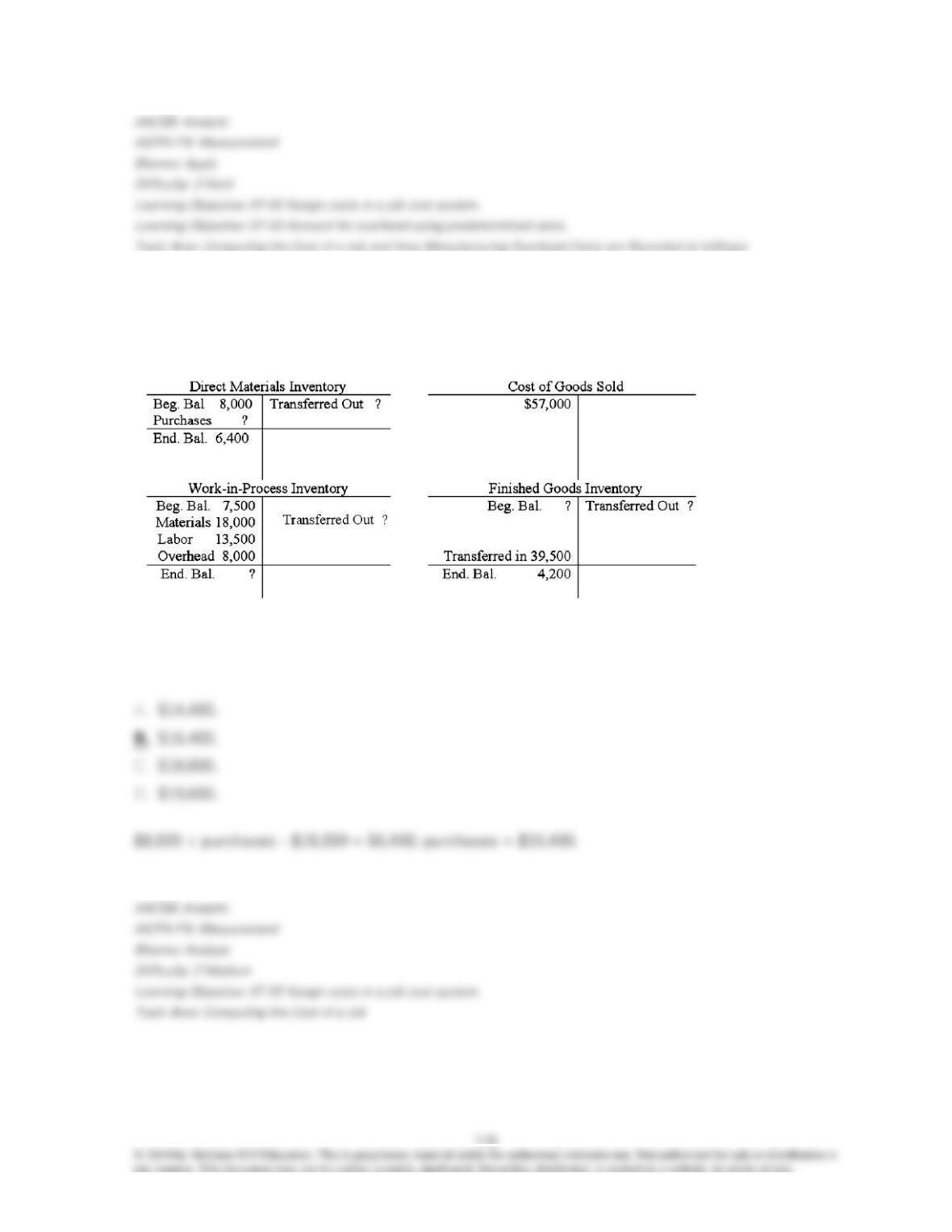
70. The financial records for the Lee Manufacturing Company have been destroyed in a fire.
The following information has been obtained from a separate set of books maintained by the cost
accountant. The cost accountant now asks for your assistance in computing the missing amounts.
What is the amount of the materials purchased?
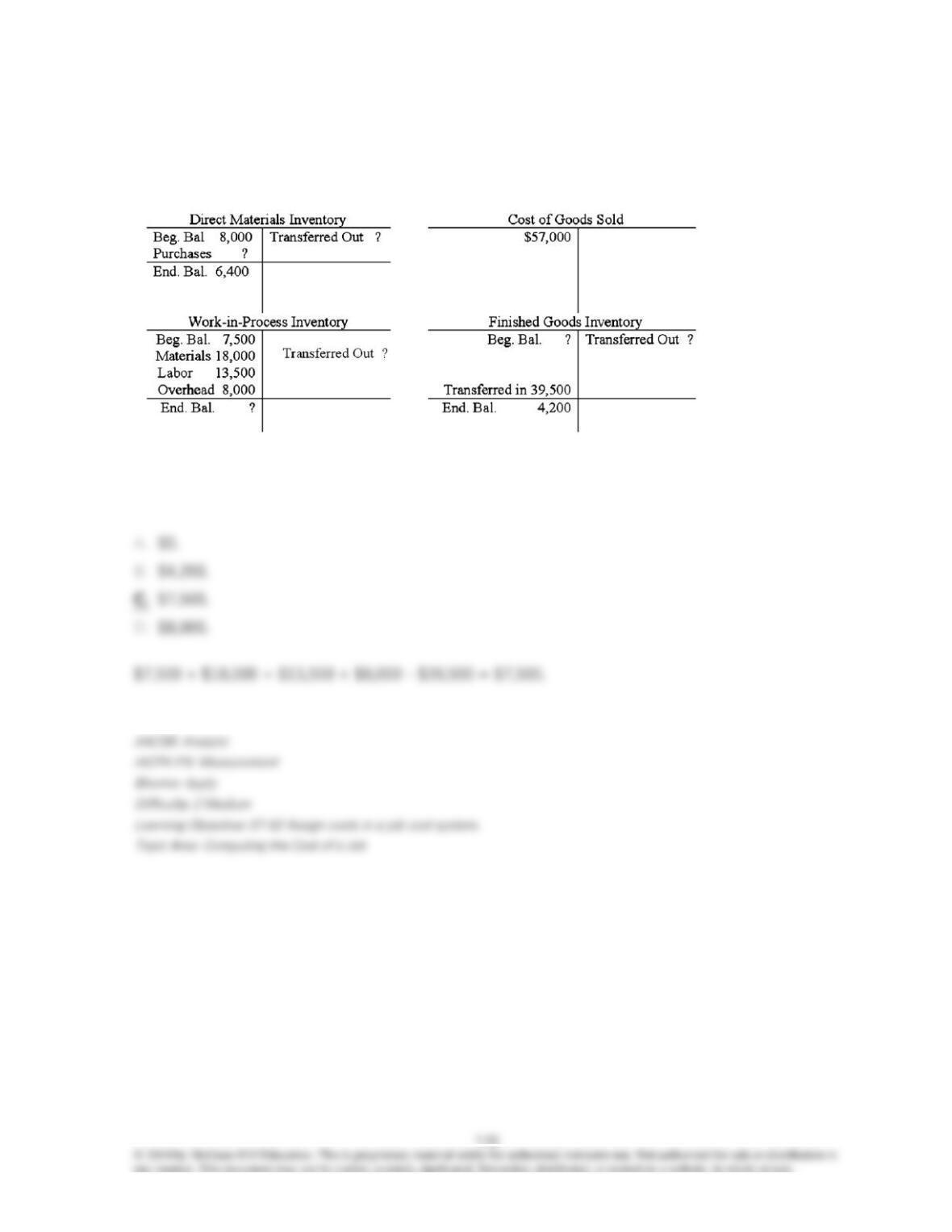
71. The financial records for the Lee Manufacturing Company have been destroyed in a fire.
The following information has been obtained from a separate set of books maintained by the cost
accountant. The cost accountant now asks for your assistance in computing the missing amounts.
What is the value of the ending Work–in-Process inventory balance?
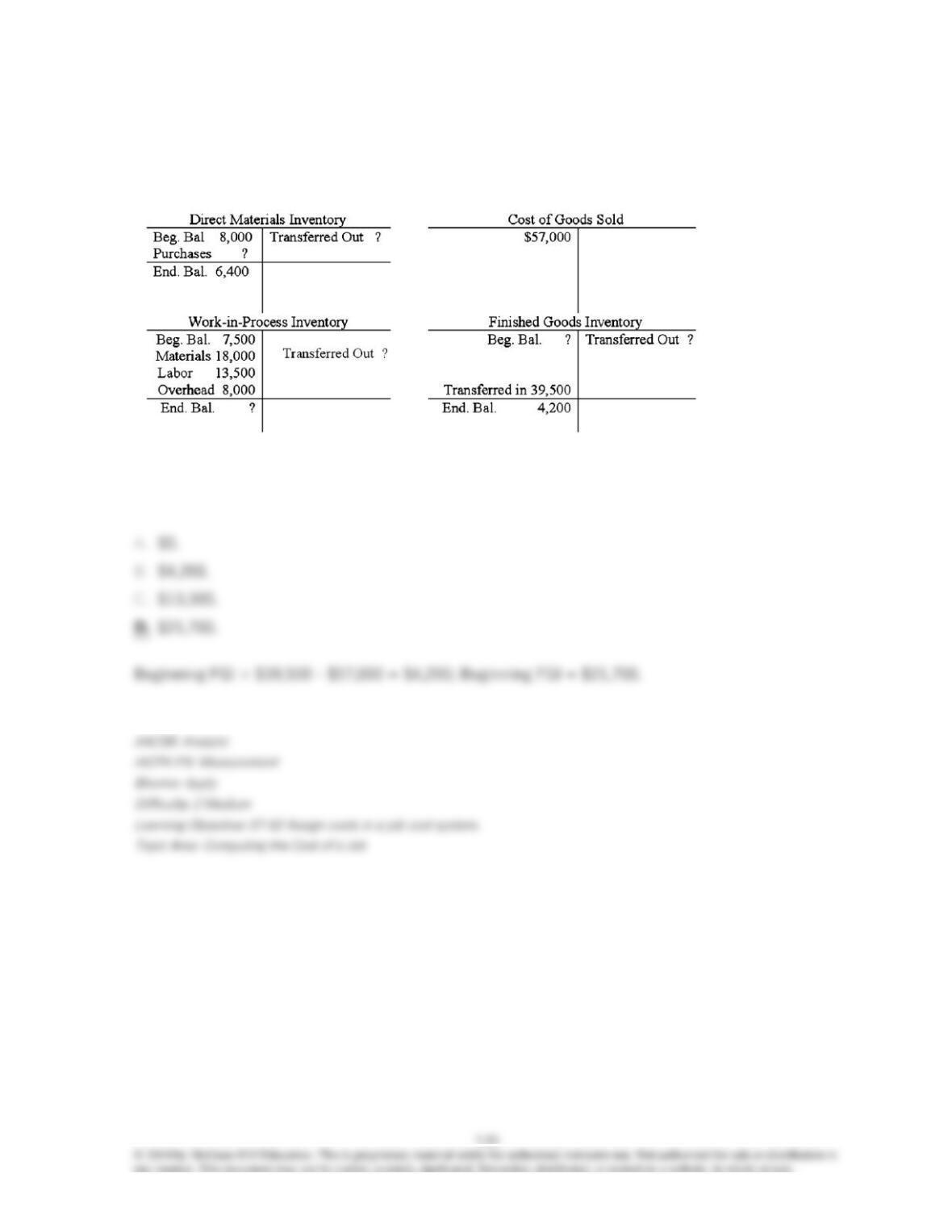
72. The financial records for the Lee Manufacturing Company have been destroyed in a fire.
The following information has been obtained from a separate set of books maintained by the cost
accountant. The cost accountant now asks for your assistance in computing the missing amounts.
What is the value of the beginning Finished Goods Inventory?
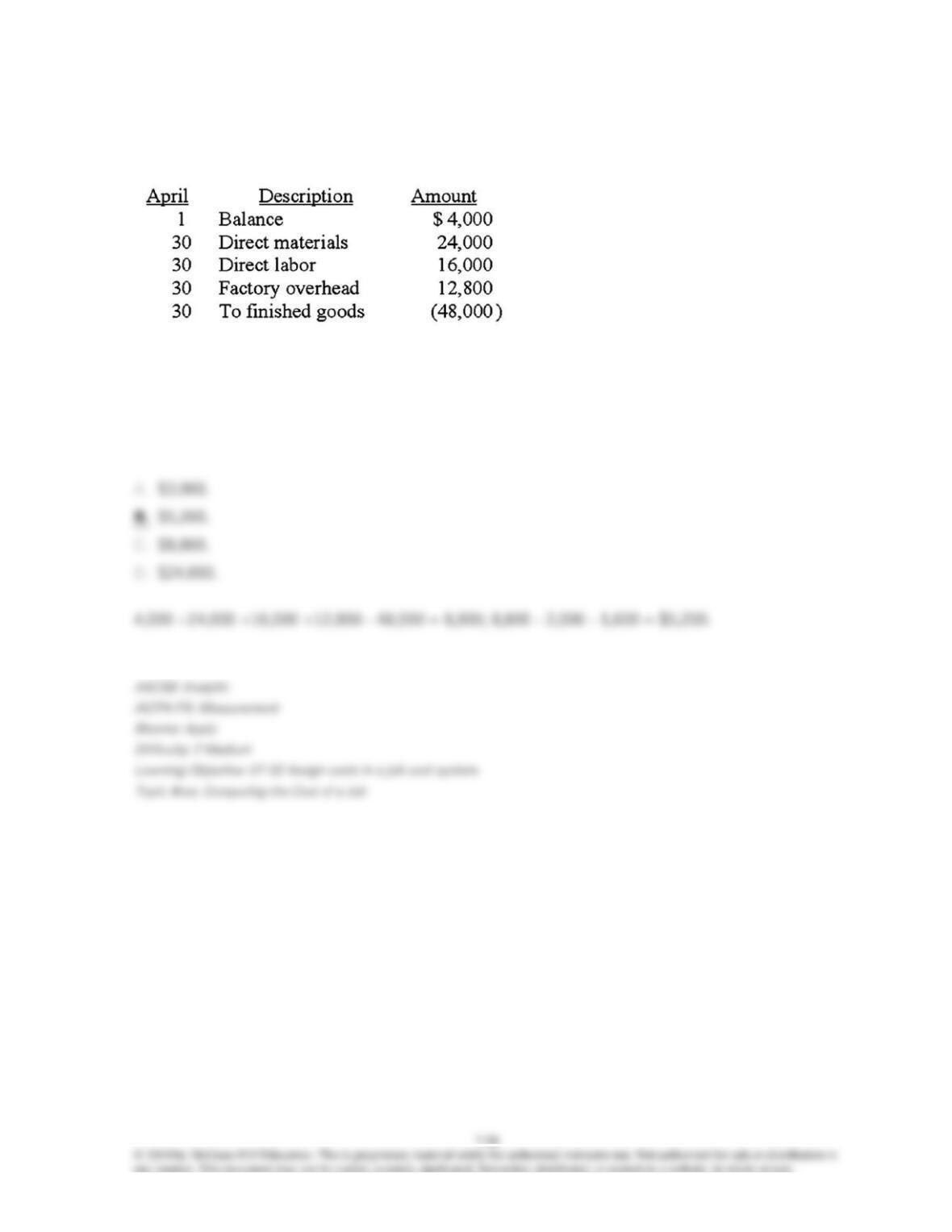
73. Birk Co. uses a job order costing system. The following debits (credits) appeared in Birk’s
work-in-process account for the month of April:
Birk applies overhead to production at a predetermined rate of 80% of direct labor cost. Job No. 5,
the only job still in process on April 30 has been charged with direct labor of $2,000. What was the
amount of direct material charged to Job No.5? (CPA adapted)
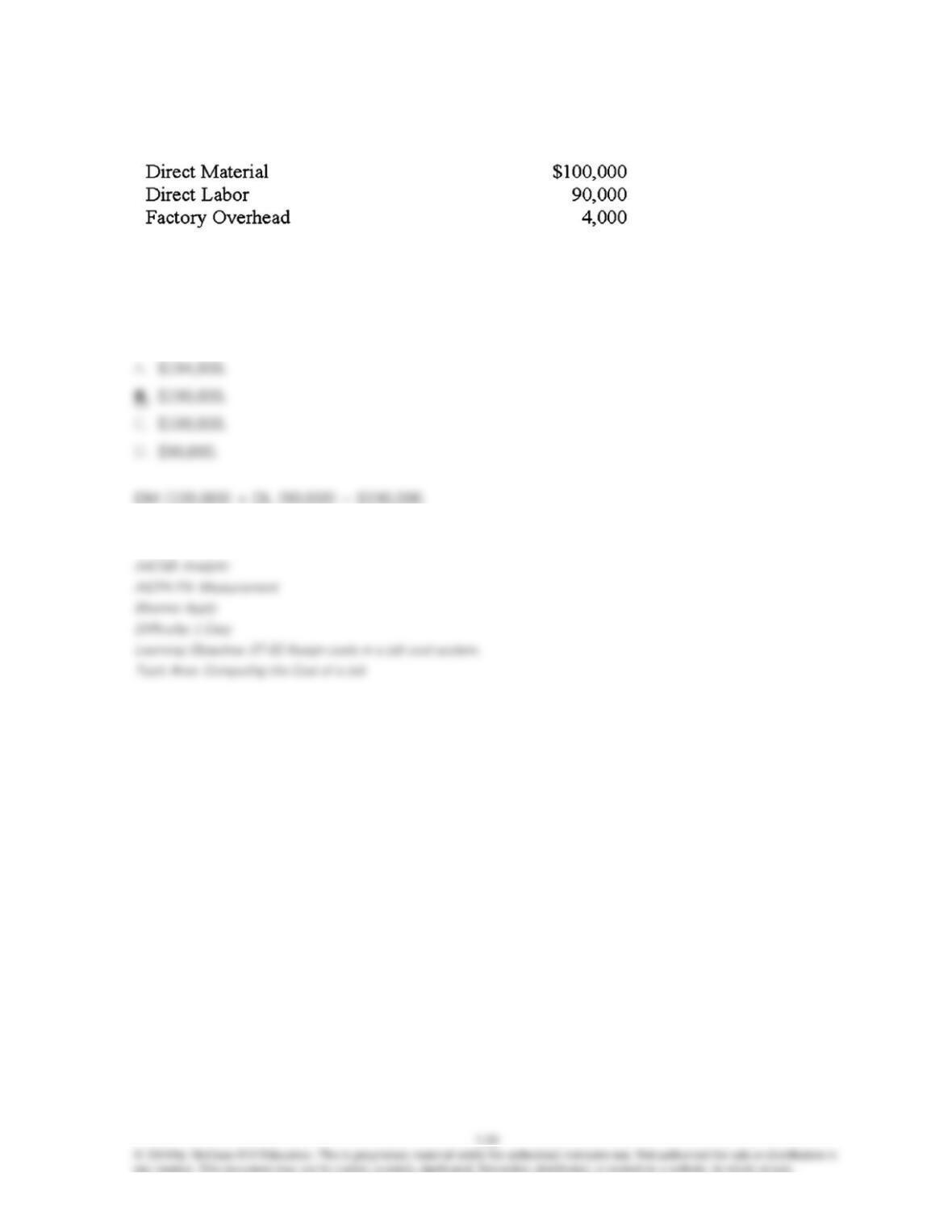
74. The following are Mill Co.’s production costs for October:
What amount of costs should be traced to specific products in the production process? (CPA
adapted)
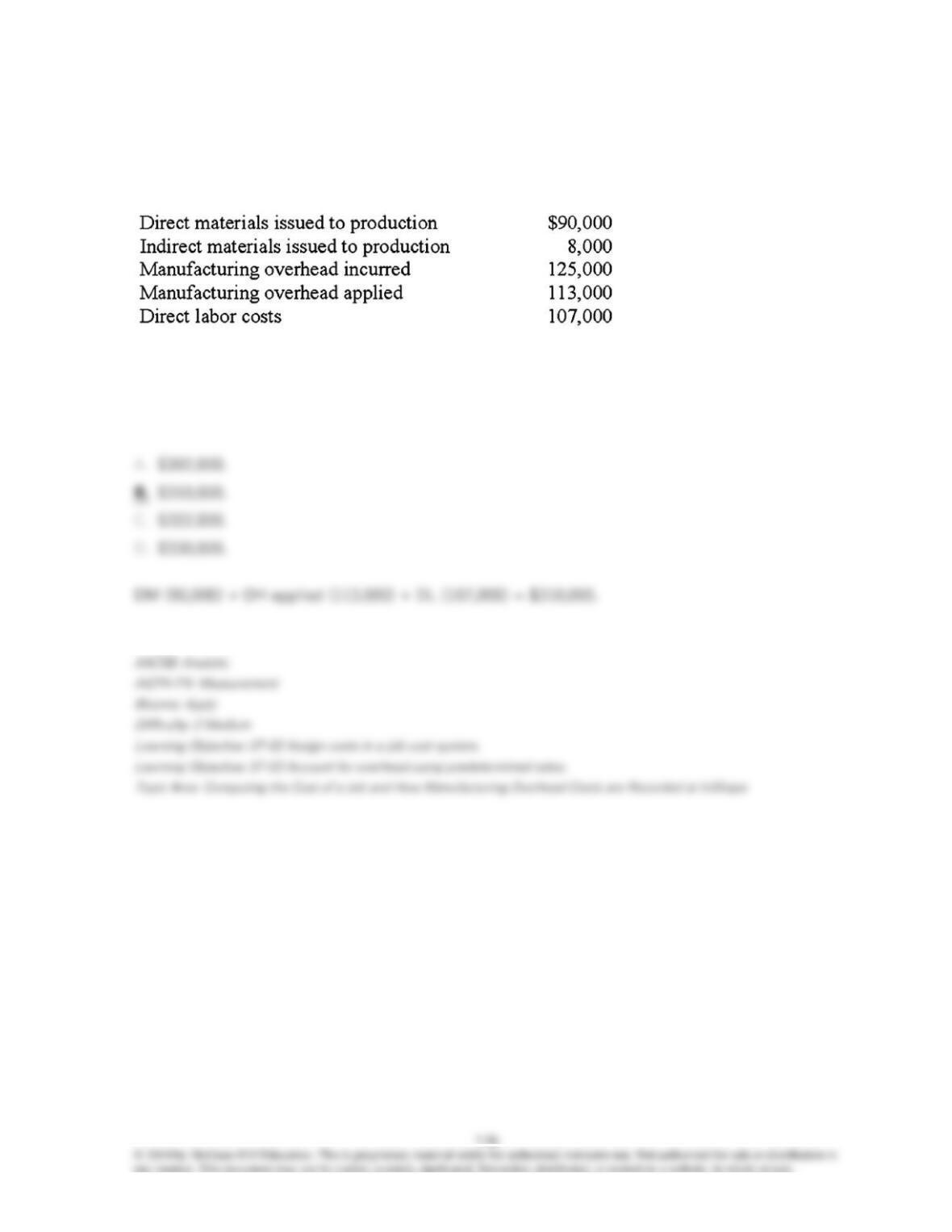
75. Under Pick Co.’s job order costing system, manufacturing overhead is applied to Work-in–
Process using a predetermined annual overhead rate. During January, Pick’s transactions included
the following:
Pick had neither beginning nor ending inventory in Work–in-Process Inventory. What was the cost
of jobs completed in January? (CPA adapted)
76. In a traditional job order costing system, the issue of indirect materials to a production
department increases: (CPA adapted)
77. Which of the following actions do not cause an impropriety in job costing?
78. Which of the following approaches allocates overhead by multiplying a predetermined
overhead rate × actual activity?
79. Which of the following approaches allocates overhead by multiplying an actual overhead
rate × actual activity?
80. Which of the following approaches allocates overhead by multiplying a predetermined rate
× standard activity?
81. Scottso Corporation applies overhead using a normal costing approach based upon
machine-hours. Budgeted factory overhead was $266,400, budgeted machine-hours were 18,500.
Actual factory overhead was $287,920, actual machine-hours were 19,050. How much overhead
would be applied to production?
82. Scottso Corporation applies overhead using a normal costing approach based upon
machine-hours. Budgeted factory overhead was $266,400, budgeted machine-hours were 18,500.
Actual factory overhead was $287,920, actual machine-hours were 19,050. How much is the Over-
or underapplied overhead?
83. Scottso Corporation applies overhead using an actual costing approach. Budgeted factory
overhead was $266,400, budgeted machine-hours were 18,500. Actual factory overhead was
$287,920, actual machine-hours were 19,050. How much overhead would be applied to
production?