37. Which of the following statements is (are) true regarding the application of manufacturing
overhead?
(A) Manufacturing overhead is only recorded on the job cost sheets when (a) financial statements
are prepared or a job is completed.
(B) Overapplied overhead occurs when the actual overhead costs incurred during a period are
greater than the overhead costs applied during the period.
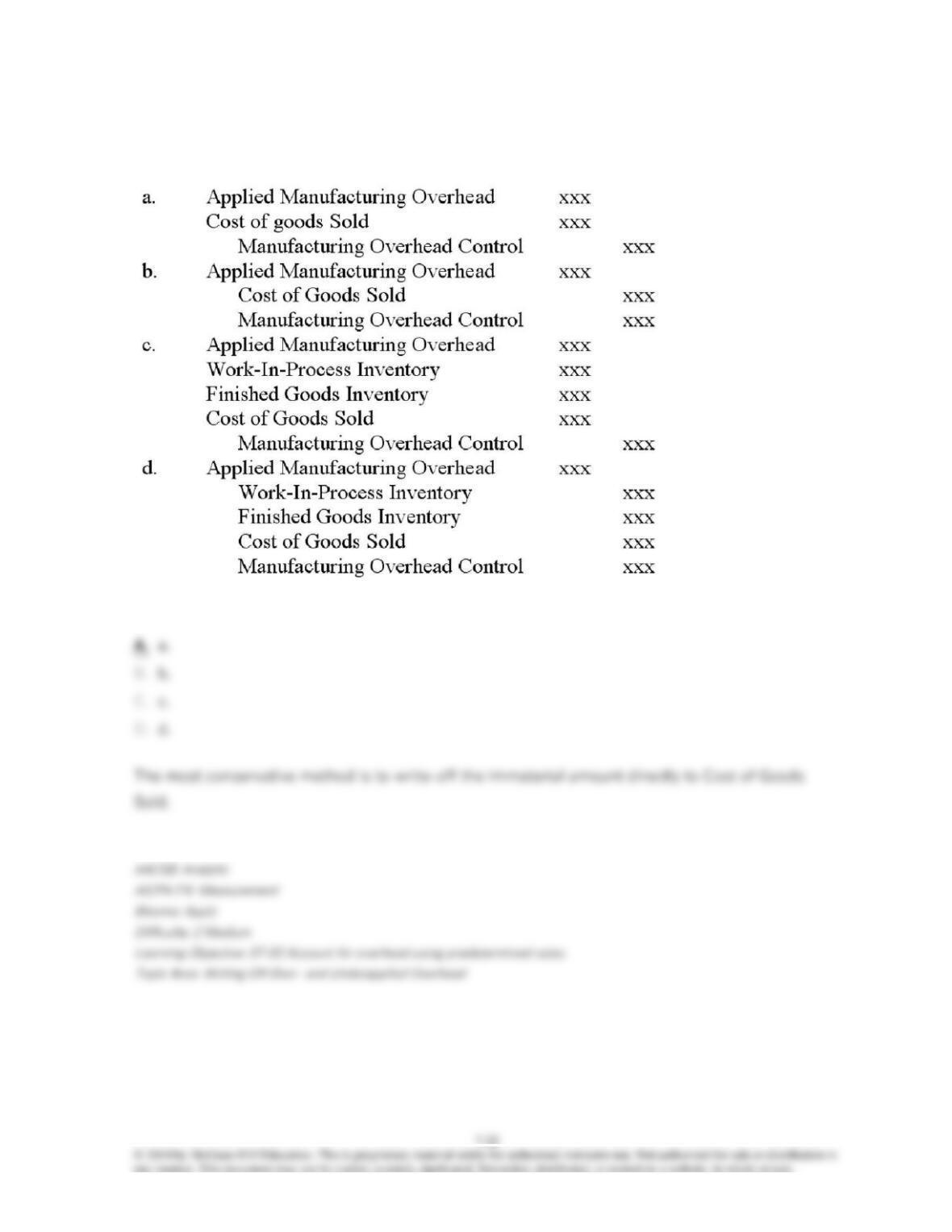
38. The journal entry to write-off an insignificant underapplied overhead balance at the end of
an accounting period is:
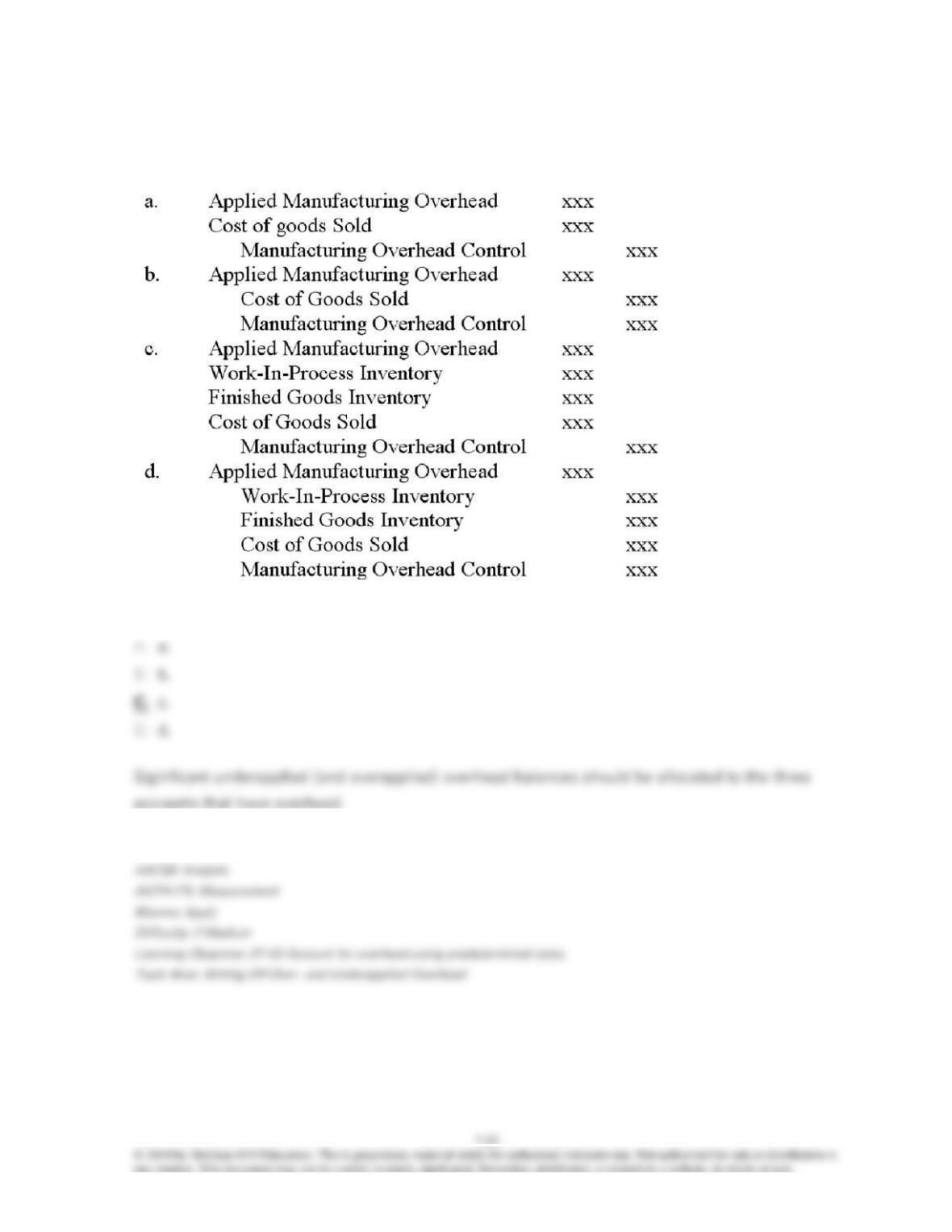
39. The journal entry to write-off a significant underapplied overhead balance at the end of an
accounting period is:
40. If a company multiplies its predetermined overhead rate by the actual activity level of its
allocation base, it is using:
41. If a company multiplies its actual overhead rate by the actual activity level of its allocation
base, it is using:
42. One of the primary differences between job costing for service and manufacturing
companies is service firms generally:
43. Which of the following is not a difference between job costing for service firms and job
costing for manufacturing companies?
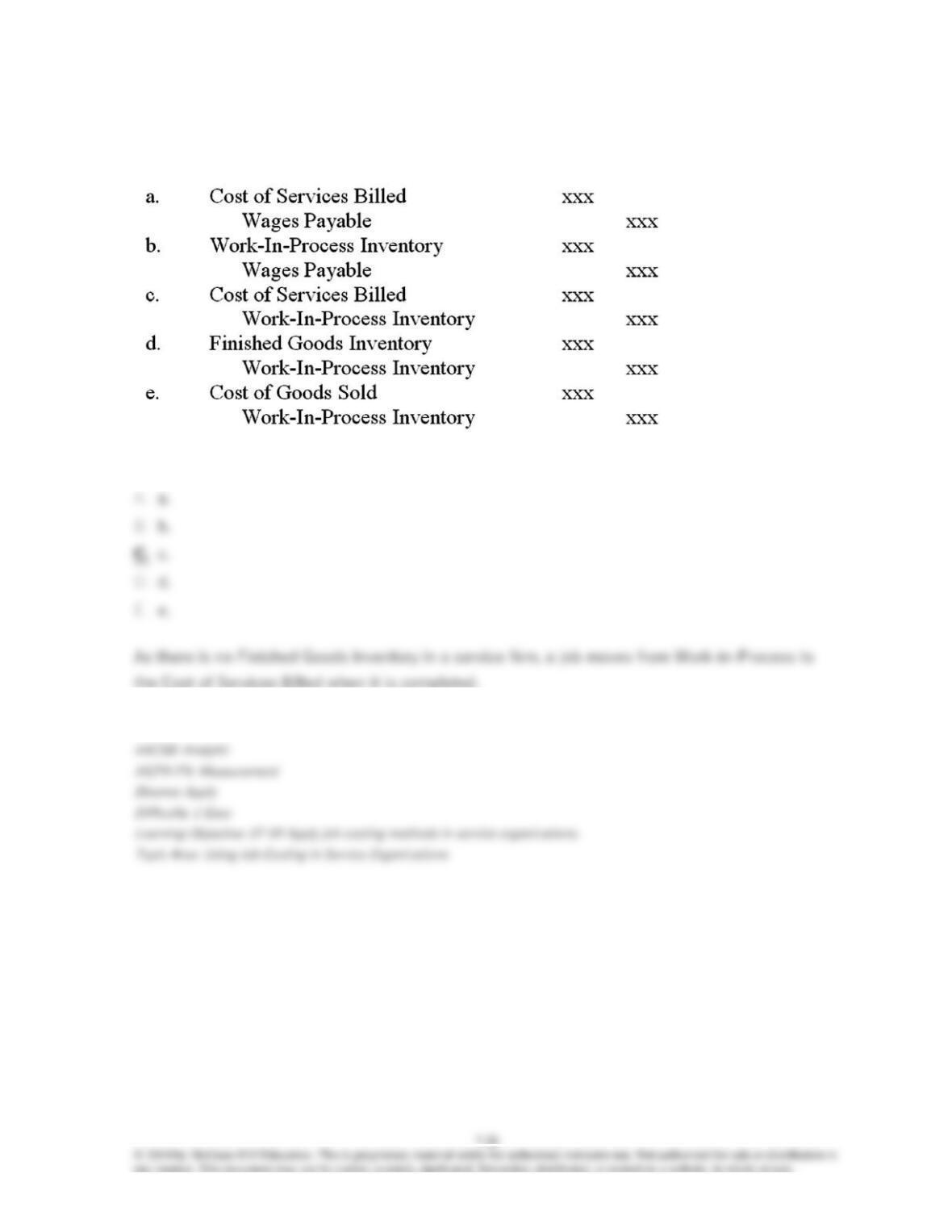
44. The journal entry to record the completion of a contract in a job costing system for a
service firm is:
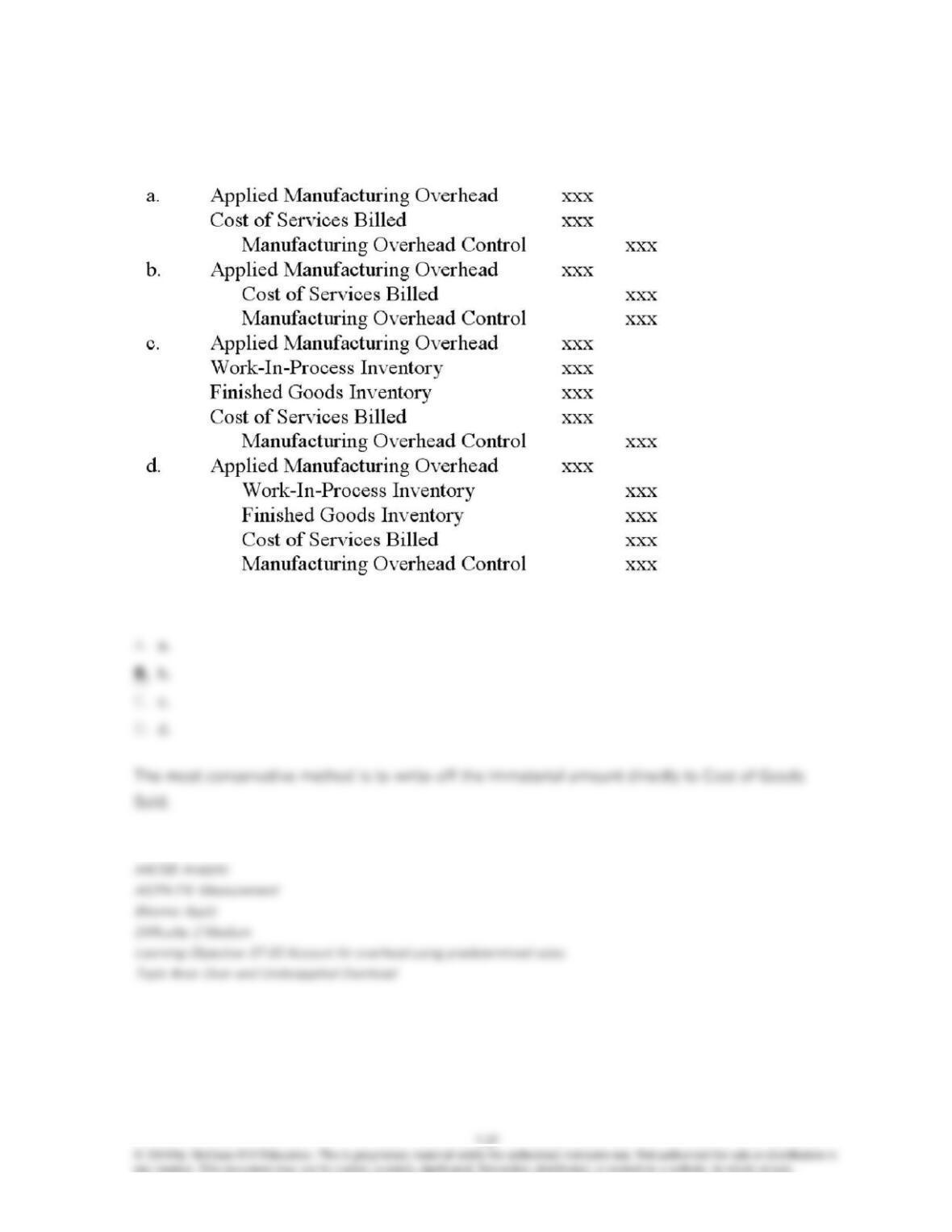
45. The journal entry to write-off an insignificant overapplied overhead balance at the end of
an accounting period for a service firm is:
46. Complex jobs that take multiple time periods and require the work of many different
departments, divisions, or subcontractors are called:
47. Manufacturing overhead applied on the basis of direct labor-hours was $120,000, while
actual manufacturing overhead incurred was $124,000 for the month of April. Which of the
following is always true given the statement above?
48. The predetermined overhead rate for manufacturing overhead for 2012 is $4.00 per direct
labor hour. Employees are expected to earn $5.00 per hour and the company is planning on paying
its employees $100,000 during the year. However, only 75% of the employees are classified as
“direct labor.” What was the estimated manufacturing overhead for 2012?
49. Before prorating the manufacturing overhead costs at the end of 2012, the Cost of Goods
Sold and Finished Goods Inventory had applied overhead costs of $57,500 and $20,000 in them,
respectively. There was no Work-in-Process at the beginning or end of 2012. During the year,
manufacturing overhead costs of $74,000 were actually incurred. The balance in the Applied
Manufacturing Overhead was $77,500 at the end of 2012. If the under or overapplied overhead is
prorated between Cost of Goods Sold and the inventory accounts, how much will be allocated to
the Finished Goods Inventory?
50. Before prorating the manufacturing overhead costs at the end of 2012, the Cost of Goods
Sold and Finished Goods Inventory had applied overhead costs of $57,500 and $20,000 in them,
respectively. There was no Work-in-Process at the beginning or end of 2012. During the year,
manufacturing overhead costs of $74,000 were actually incurred. The balance in the Applied
Manufacturing Overhead was $77,500 at the end of 2012. If the under– or overapplied overhead is
prorated between Cost of Goods Sold and the inventory accounts, how much will be the Cost of
Goods Sold after the proration?
51. The Work-in-Process Inventory account of a manufacturing firm has a balance of $2,400
at the end of an accounting period. The job cost sheets of two uncompleted jobs show charges of
$400 and $200 for materials used, and charges of $300 and $500 for direct labor used. Overhead
is applied as a percentage of direct labor costs. The predetermined rate is:
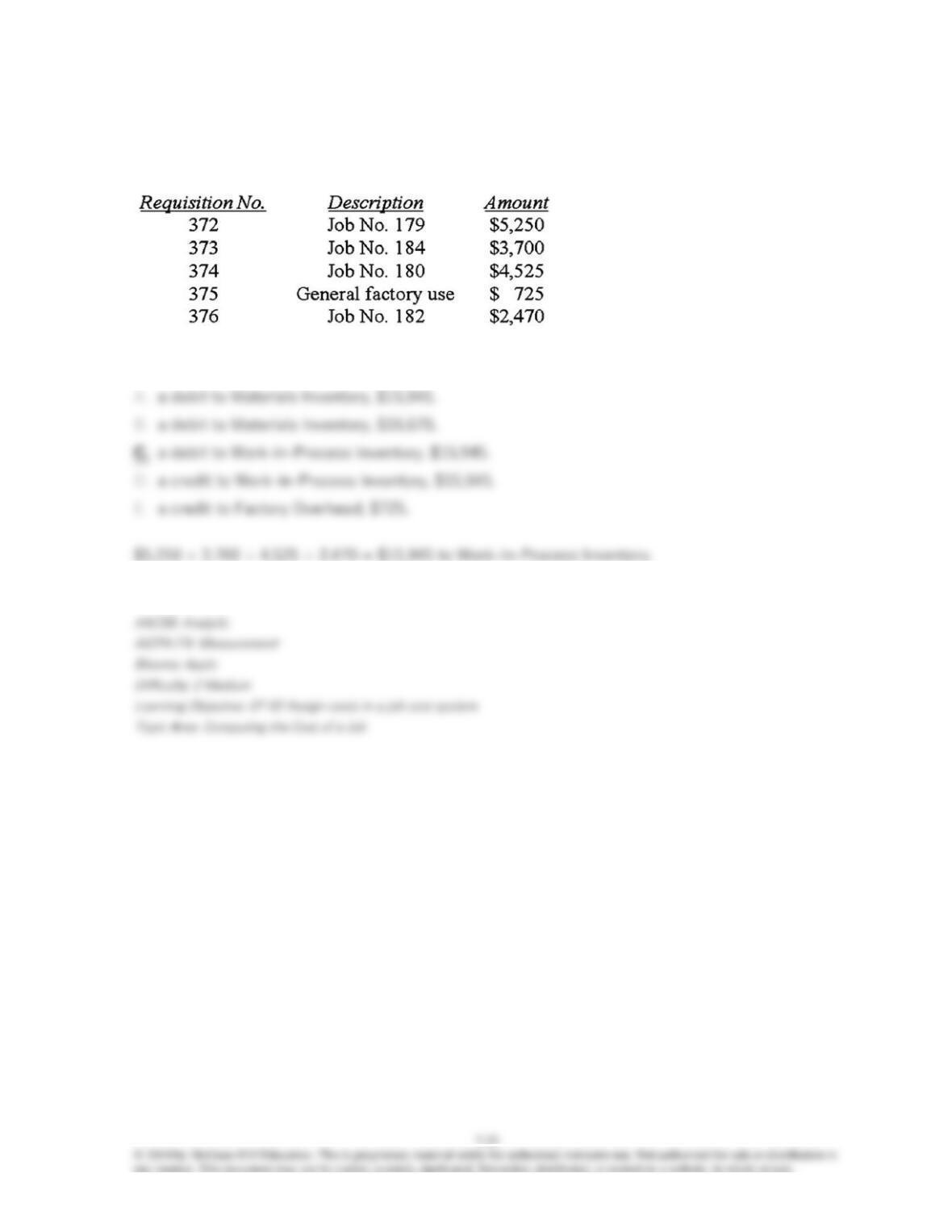
52. The general journal entry to record the issuance of the materials represented by the
following materials requisitions for the month includes:
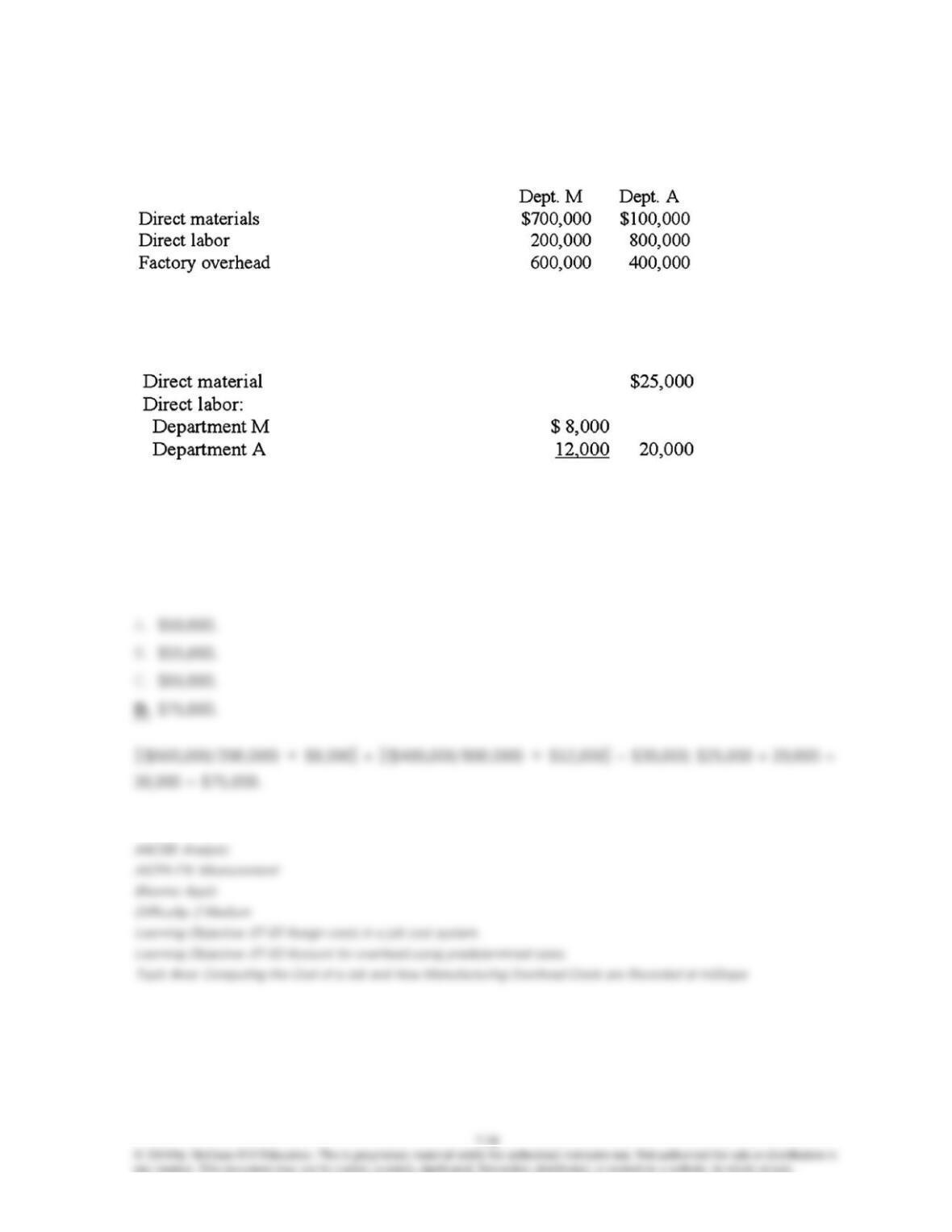
53. Tillman Corporation uses job costing and has two production departments, M and A.
Budgeted manufacturing costs for the year are as follows:
The actual direct material and direct labor costs charged to Job. No. 432 during the year were as
follows:
Tillman applies manufacturing overhead to production orders on the basis of direct labor cost
using departmental rates predetermined at the beginning of the year based on the annual budget.
The total cost associated with Job. No. 432 for the year should be:
7-35
54. The following selected data were taken from the books of the Bixby Box Company. The
company uses job costing to account for manufacturing costs. The data relate to June operations.
A) Materials and supplies were requisitioned from the stores clerk as follows:
Job 405, material X, $7,000.
Job 406, material X, $3,000; material Y, $6,000.
Job 407, material X, $7,000; material Y, $3,200.
For general factory use: materials A, B, and C, $2,300.
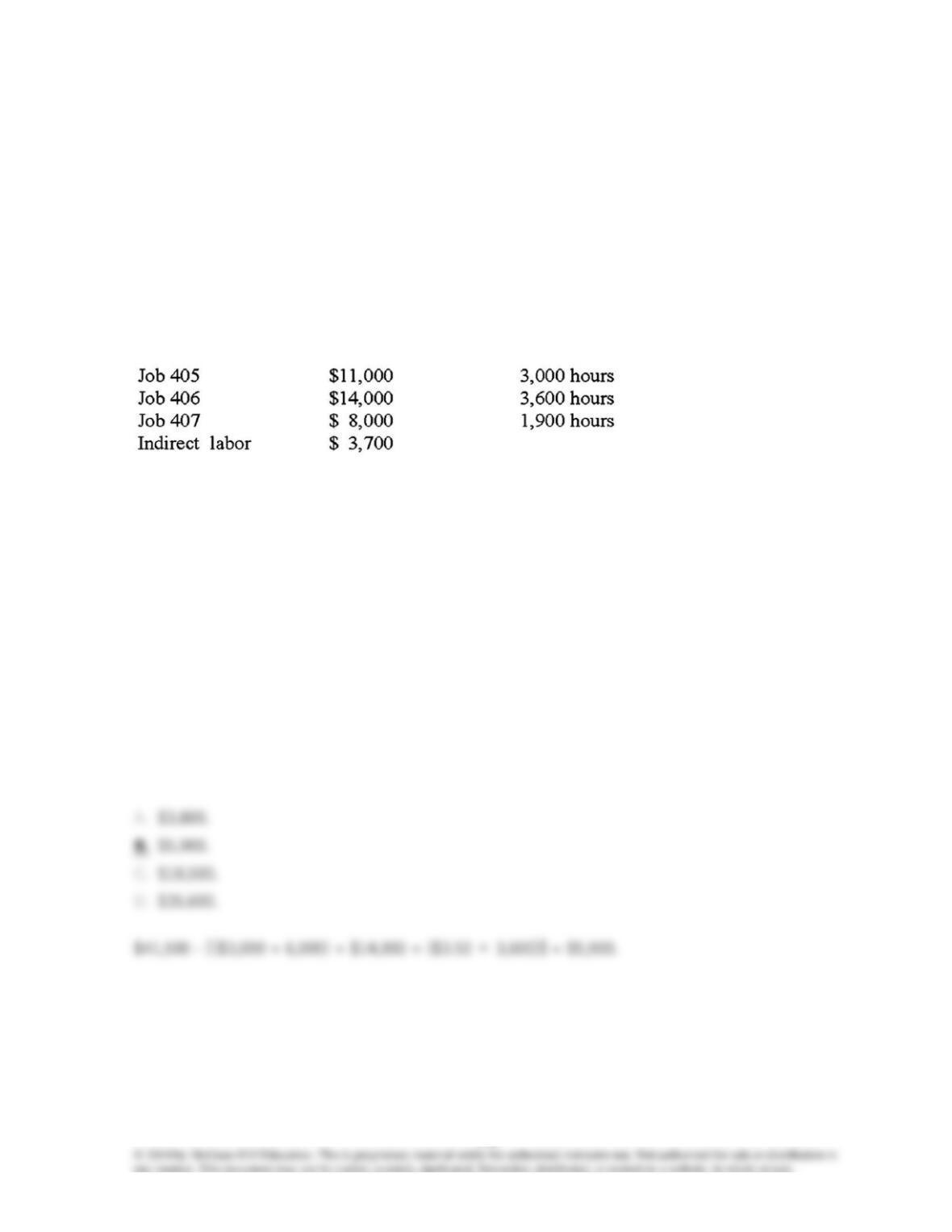
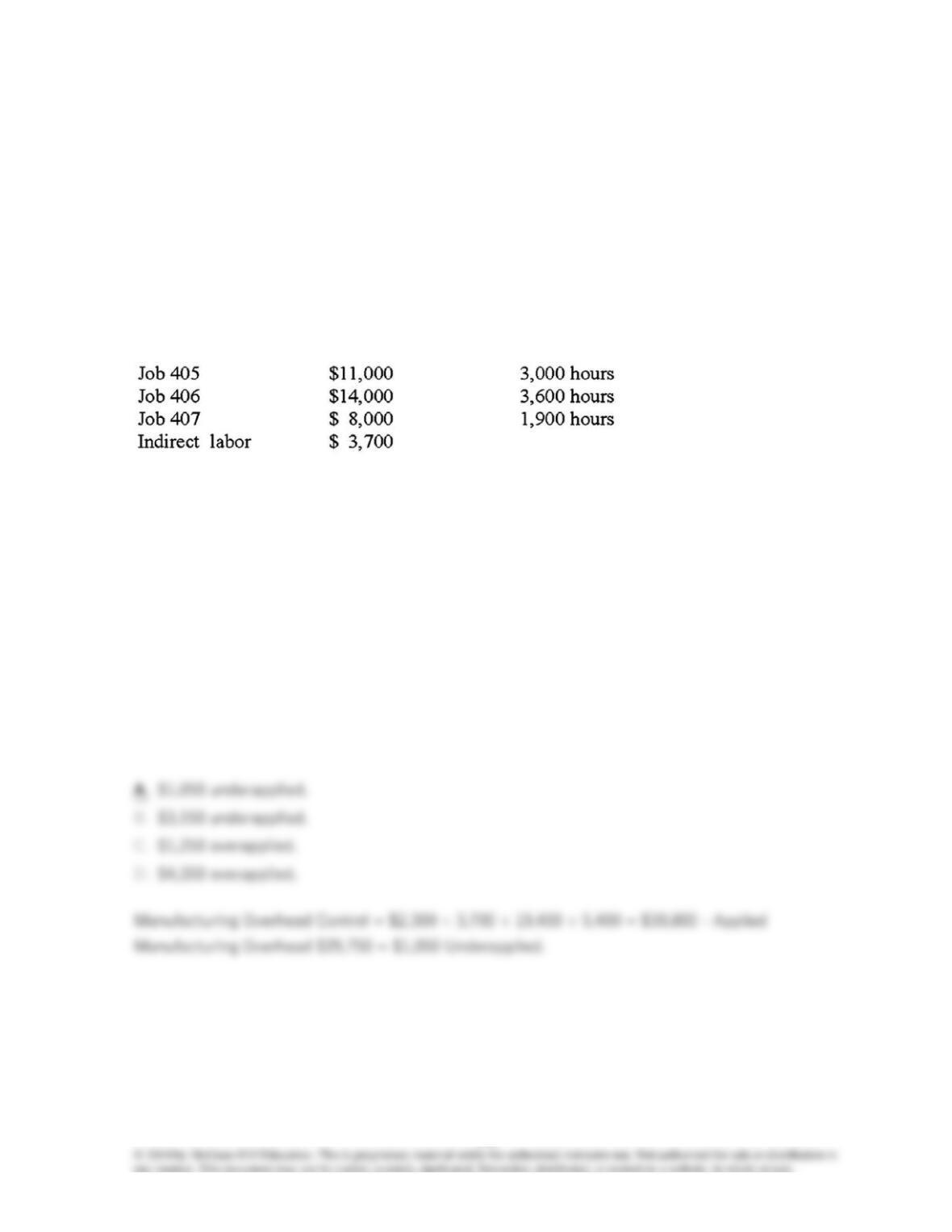
B) Time tickets for the month were chargeable as follows:
C) Other information:
Factory paychecks for $36,700 were issued during the month.
Various factory overhead charges of $19,400 were incurred on account.
Depreciation of factory equipment for the month was $5,400.
Factory overhead was applied to jobs at the rate of $3.50 per direct labor hour.
Job orders completed during the month: Job 405 and Job 406.
Selling and administrative costs were $2,100.
Factory overhead is closed out only at the end of the year.
If Job 406 was sold on account for $41,500, how much gross profit would be recognized for the
job?
7-36
55. The following selected data were taken from the books of the Bixby Box Company. The
company uses job costing to account for manufacturing costs. The data relate to June operations.
A) Materials and supplies were requisitioned from the stores clerk as follows:
Job 405, material X, $7,000.
Job 406, material X, $3,000; material Y, $6,000.
Job 407, material X, $7,000; material Y, $3,200.
For general factory use: materials A, B, and C, $2,300.
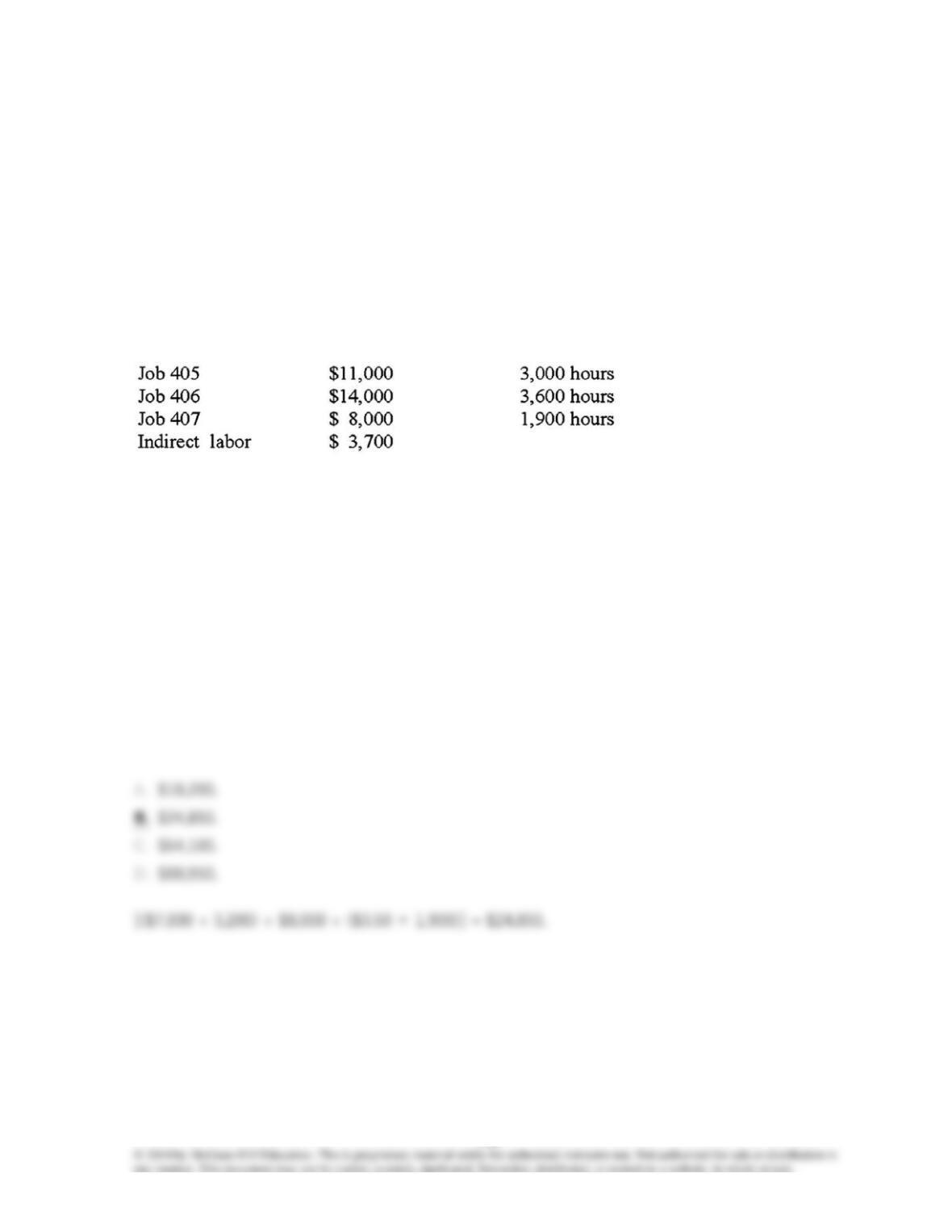
B) Time tickets for the month were chargeable as follows:
C) Other information:
Factory paychecks for $36,700 were issued during the month.
Various factory overhead charges of $19,400 were incurred on account.
Depreciation of factory equipment for the month was $5,400.
Factory overhead was applied to jobs at the rate of $3.50 per direct labor hour.
Job orders completed during the month: Job 405 and Job 406.
Selling and administrative costs were $2,100.
Factory overhead is closed out only at the end of the year.
The end of the month Work-in-Process Inventory balance would be:
7-37
56. The following selected data were taken from the books of the Bixby Box Company. The
company uses job costing to account for manufacturing costs. The data relate to June operations.
A) Materials and supplies were requisitioned from the stores clerk as follows:
Job 405, material X, $7,000.
Job 406, material X, $3,000; material Y, $6,000.
Job 407, material X, $7,000; material Y, $3,200.
For general factory use: materials A, B, and C, $2,300.
B) Time tickets for the month were chargeable as follows:
C) Other information:
Factory paychecks for $36,700 were issued during the month.
Various factory overhead charges of $19,400 were incurred on account.
Depreciation of factory equipment for the month was $5,400.
Factory overhead was applied to jobs at the rate of $3.50 per direct labor hour.
Job orders completed during the month: Job 405 and Job 406.
Selling and administrative costs were $2,100.
Factory overhead is closed out only at the end of the year.
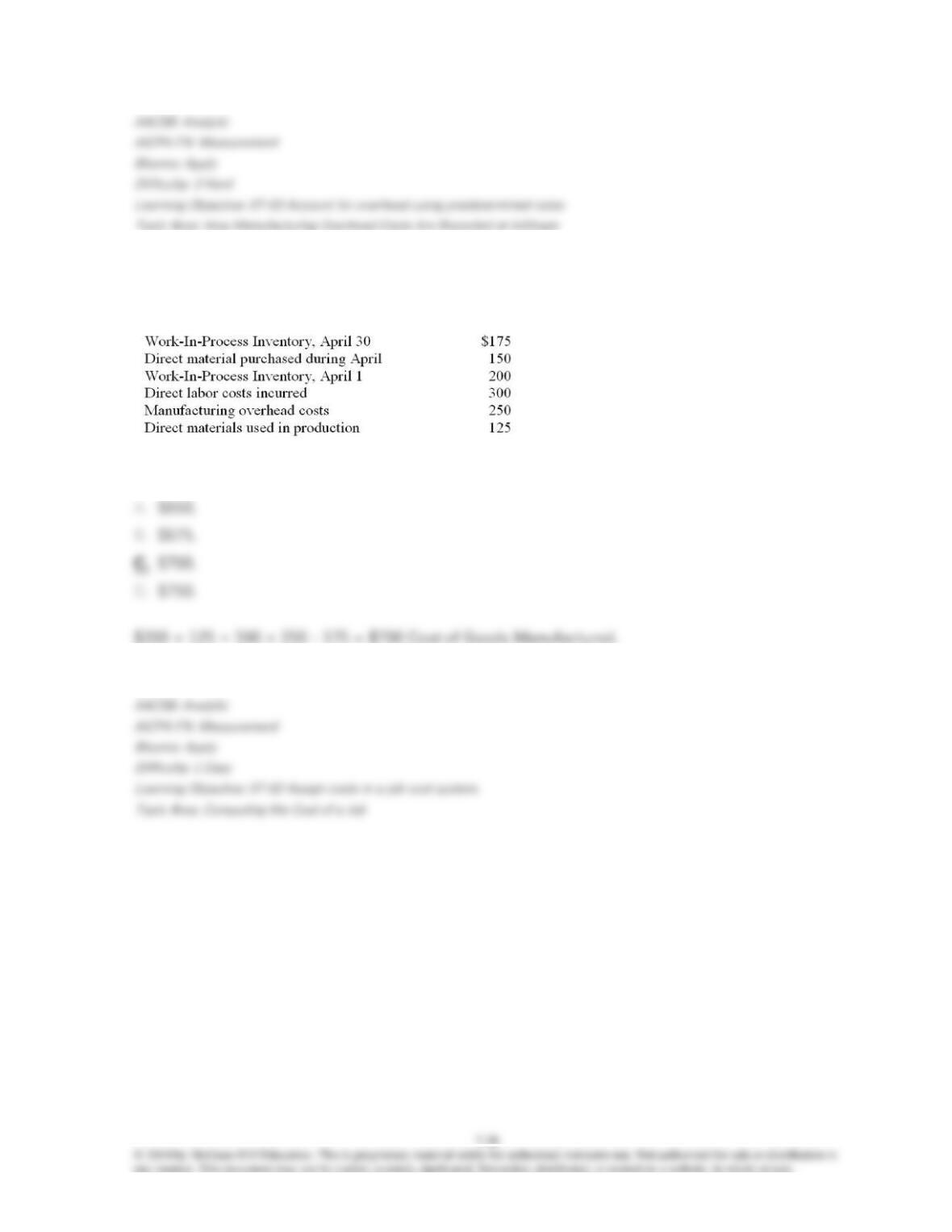
The balance in the factory overhead account would represent the fact that overhead was:
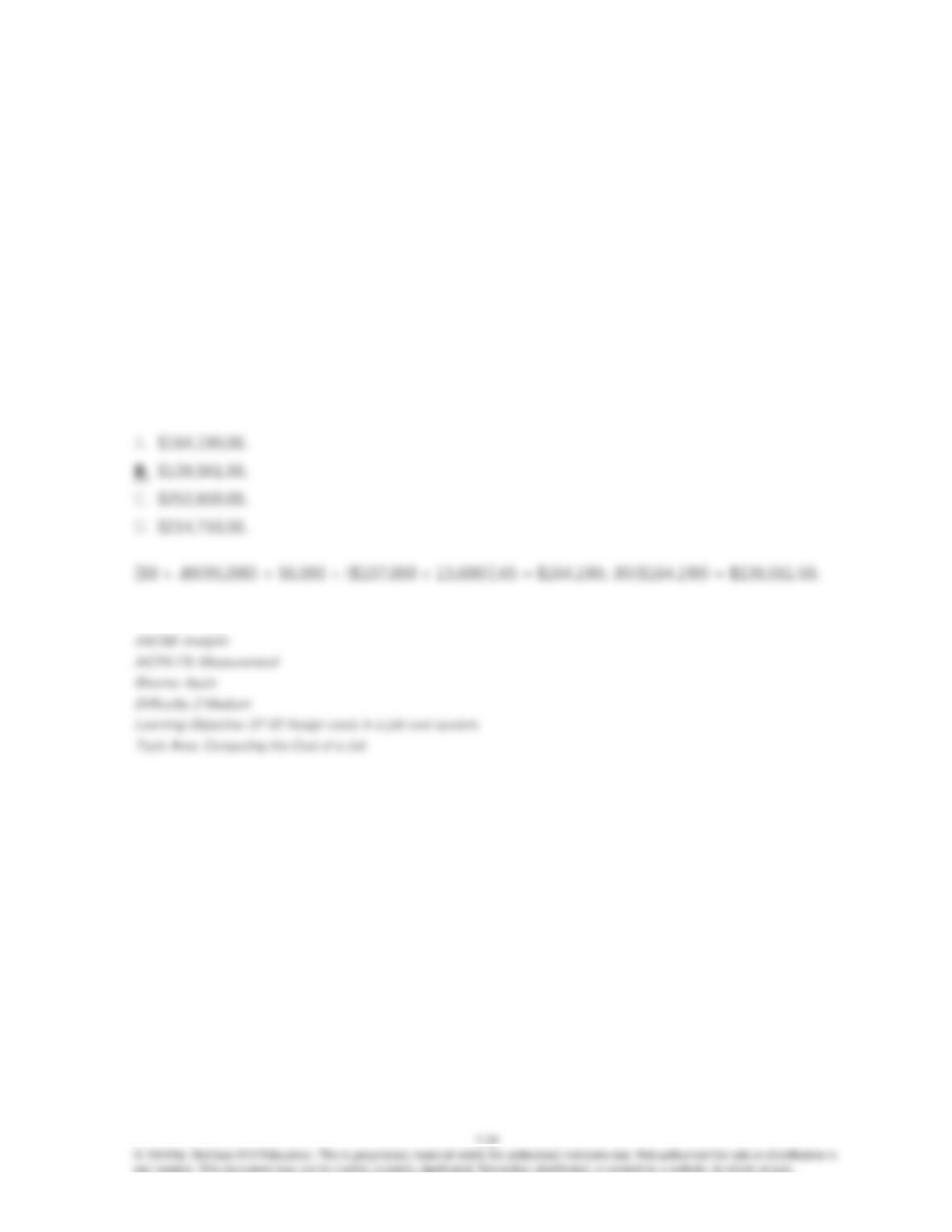
57. Compute the Work–in-Process transferred to the finished goods warehouse on April 30
using the following information:
58. The following events took place at a manufacturing company for the current year:
(1) Purchased $95,000 in direct materials.
(2) Incurred labor costs as follows: (a) direct, $56,000 and (b) indirect, $13,600.
(3) Other manufacturing overhead was $107,000, excluding indirect labor.
(4) Transferred 80% of the materials to the manufacturing assembly line.
(5) Completed 65% of the Work-in–Process during the year.
(6) Sold 85% of the completed goods.
(7) There were no beginning inventories.
What is the company’s Cost of Goods Sold?
59. The following events took place at a manufacturing company for the current year:
(1) Purchased $95,000 in direct materials.
(2) Incurred labor costs as follows: (a) direct, $56,000 and (b) indirect, $13,600.
(3) Other manufacturing overhead was $107,000, excluding indirect labor.
(4) Transferred 80% of the materials to the manufacturing assembly line.
(5) Completed 65% of the Work-in–Process during the year.
(6) Sold 85% of the completed goods.
(7) There were no beginning inventories.
What is the value of the ending Work–in-Process Inventory?