1. A job is a product or service that can be easily and conveniently distinguished from other
products/services.
2. Job cost sheets are used in accounting systems as a subsidiary ledger for the Work–in–
Process account.
3. Job shops have three types of inventory accounts: Direct Materials, Work–in-Process, and
Finished Goods.
4. The cost in the ending Finished Goods inventory account consists of the direct materials,
direct labor, and manufacturing overhead of all jobs still in process at the end of the period.
5. Accounting for direct materials and direct labor is easier than accounting for
manufacturing overhead costs.
6. Indirect material and indirect labor are two examples of manufacturing overhead costs.
7. The journal entry to record actual manufacturing overhead for indirect material debits
Manufacturing Overhead (Control) and credits Accounts Payable.
8. The journal entry to record actual manufacturing overhead for indirect labor debits
Manufacturing Overhead (Control) and credits Work-in-Process inventory.
9. The periodic allocation of manufacturing overhead costs to job cost sheets is based on an
event, not a transaction.
10. The predetermined overhead rate is computed by dividing the estimated activity of the
allocation base into the estimated manufacturing overhead costs.
11. The journal entry to apply manufacturing overhead costs to completed jobs credits either
Applied Manufacturing Overhead or Manufacturing Overhead (Control).
12. At the end of the accounting period, manufacturing overhead costs are applied to
uncompleted jobs using the same predetermined overhead rate that is used to apply
manufacturing overhead costs to completed jobs.
13. Overapplied overhead occurs when the actual overhead costs incurred during a period are
greater than the overhead costs applied during the period.
14. Underapplied overhead occurs when the actual overhead costs incurred during a period
are greater than the overhead costs applied during the period.
15. Normal costing uses the actual allocation base activity to apply manufacturing overhead
costs to jobs during the period.
16. Actual costing does not use a predetermined overhead rate to apply manufacturing
overhead costs to jobs completed during the period.
17. Service organizations, by their nature, cannot have a balance in Work–in-Process
Inventory.
18. Service organizations generally use the same job costing procedures as manufacturers.
19. It is unethical to intentionally charge costs to the wrong job.
20. One difference between jobs and projects is the account titles used in the costing
process.
21. Which of the following statements is (are) true regarding product costing?
(A) A job is a cost object that can be easily and conveniently distinguished from other cost
objects.
(B) Job cost sheets are used in accounting systems as a subsidiary ledger for the Work–in–
Process account.
22. For which of the following businesses would a job order cost system be appropriate?
23. Which of the following is not a characteristic of job costing?
24. Which of the following companies would most likely use job costing?
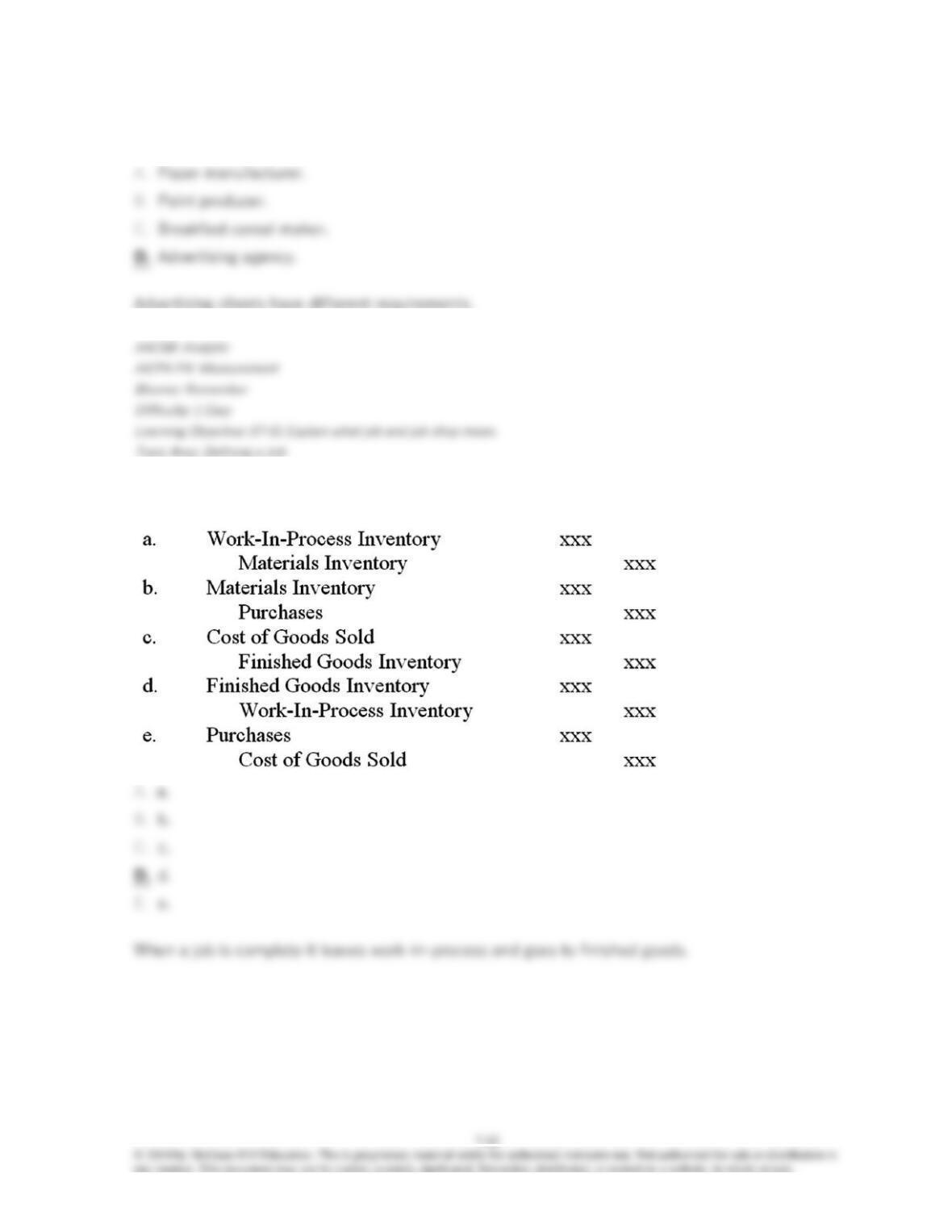
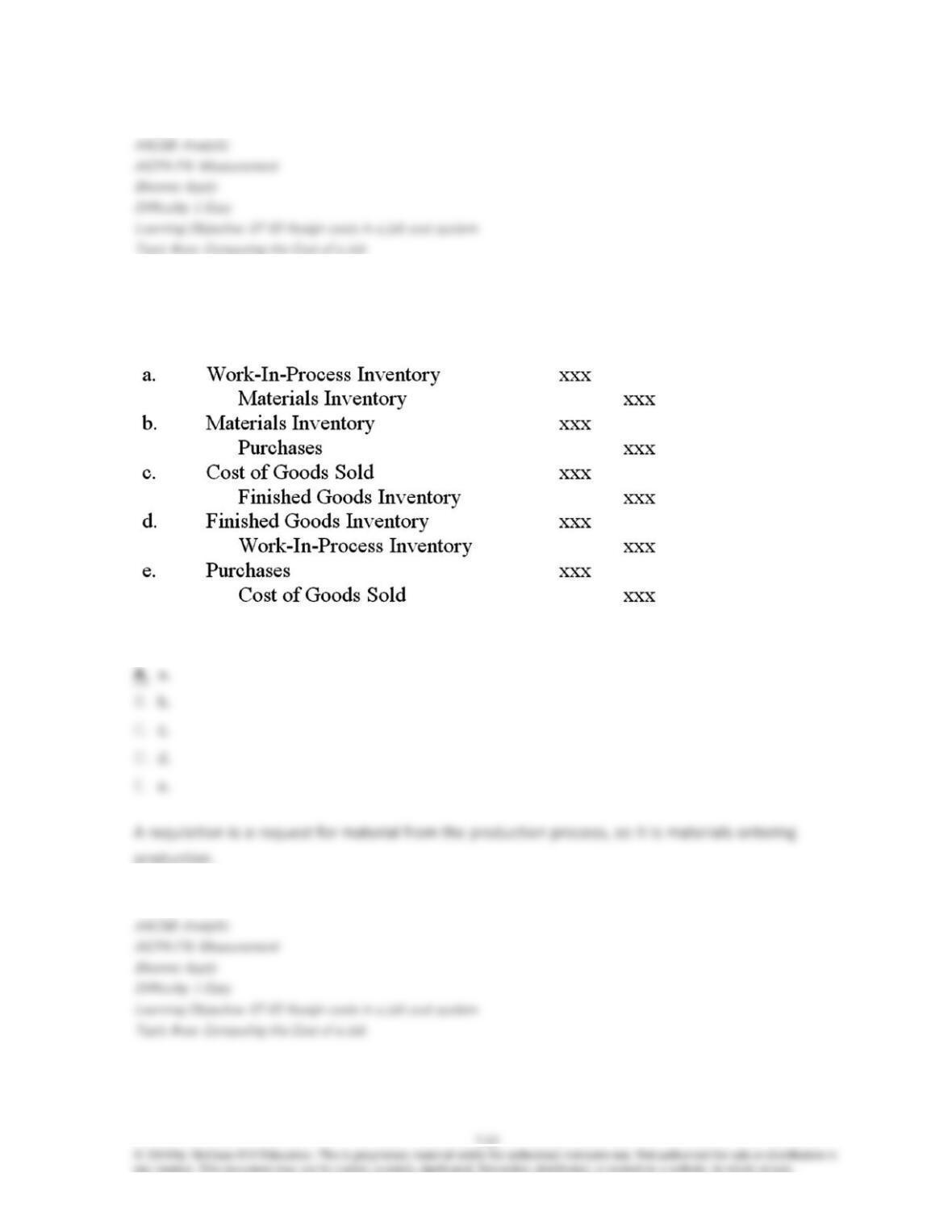
25. The journal entry to record the completion of a job in a job order cost system is:
26. The journal entry to record requisitions of material for new jobs started during the period
is:
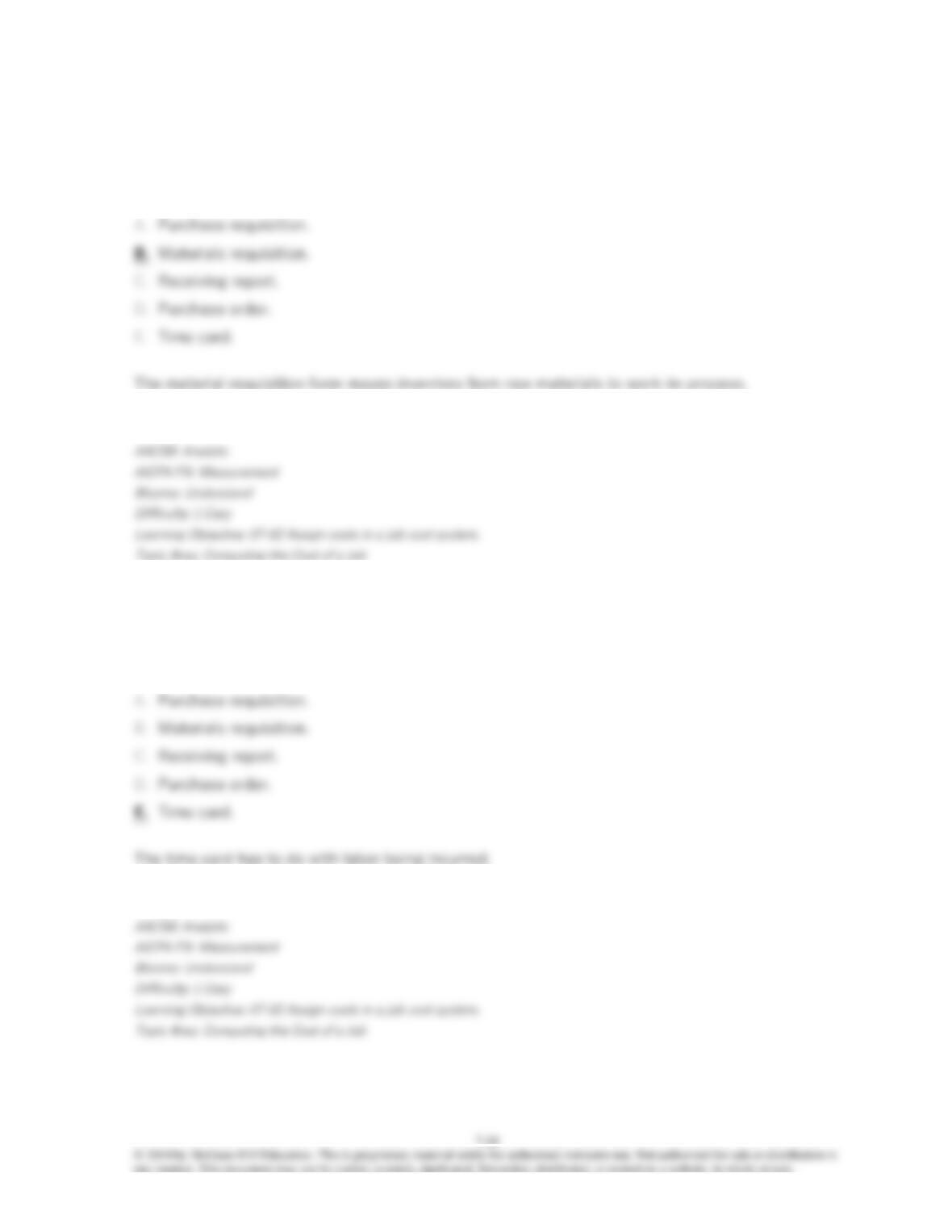
27. Which of the following documents is used as the basis for posting to the direct materials
section of the job cost sheet?
28. Which of the following documents is used as the basis for posting to the direct labor
section of the job cost sheet?
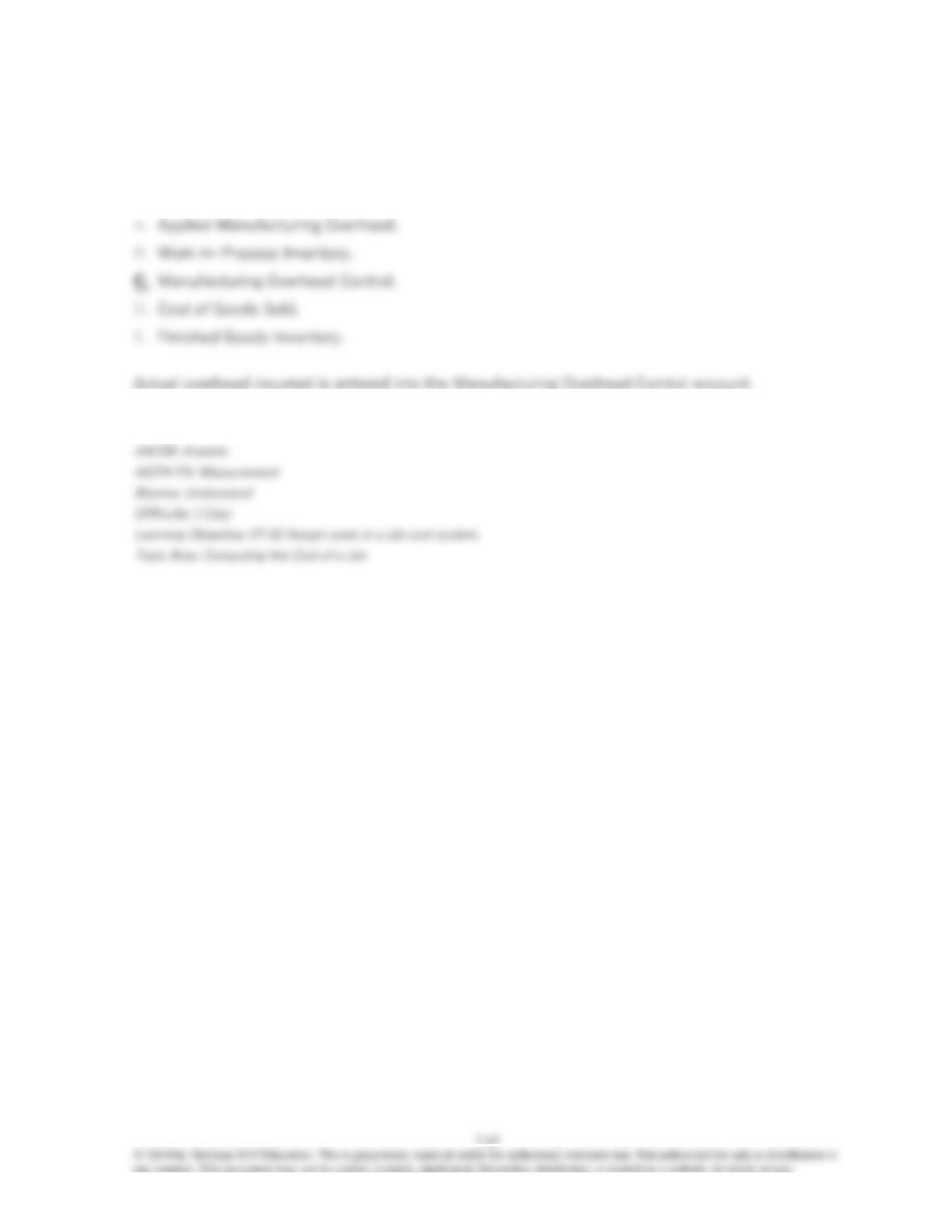
29. Which of the following accounts is used to accumulate the actual manufacturing overhead
costs incurred during a period?
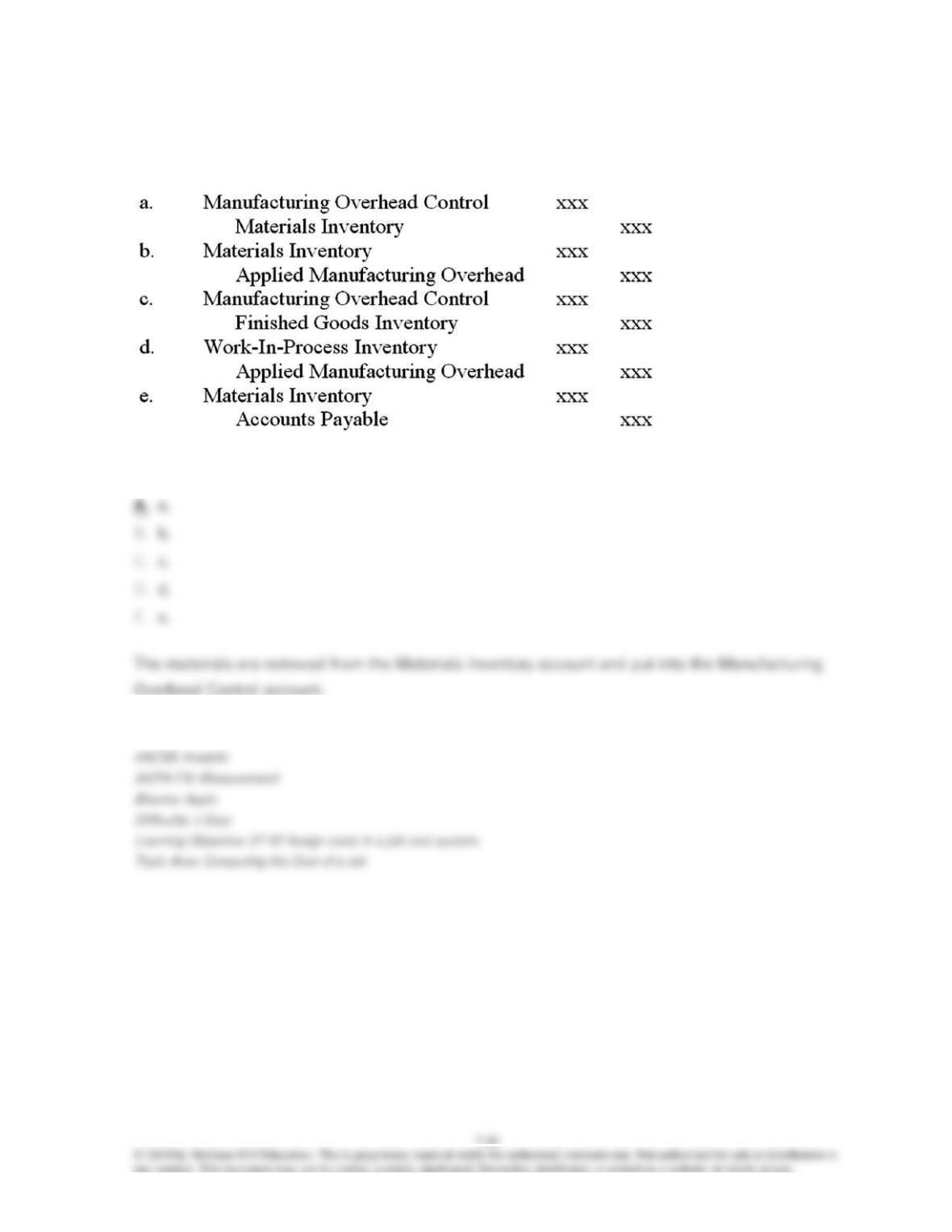
30. The journal entry to record the actual manufacturing overhead costs for indirect material
is:
31. What are the transfers-out from the Finished Goods Inventory called?
32. In a job costing system, the dollar amount in the journal entry that transfers the costs of
jobs from Work-in-Process Inventory to Finished Goods Inventory is the sum of the costs charged
to all jobs:
33. Which of the following events or transactions will not result in manufacturing overhead
being applied to production?
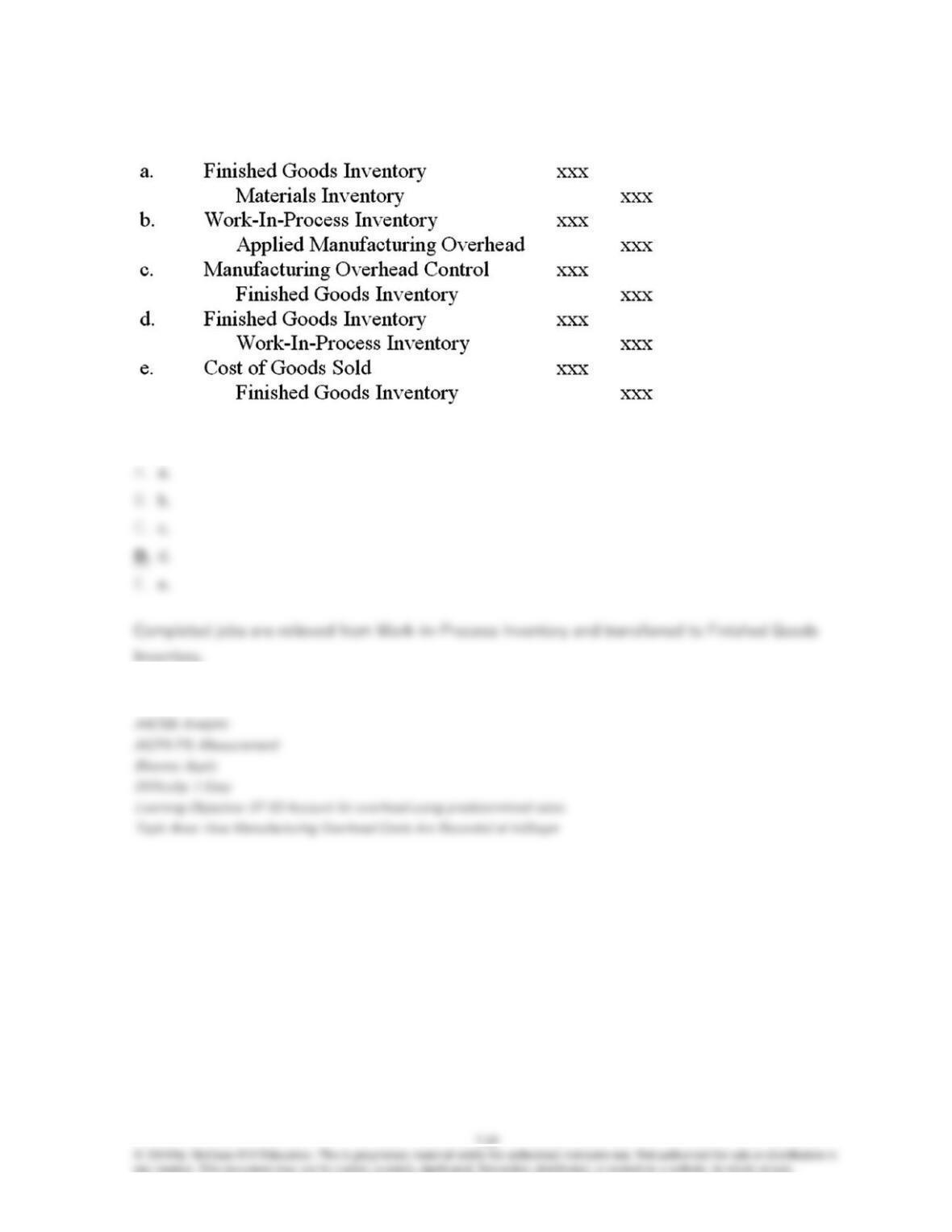
34. The journal entry to record the completion of a job in a job costing system is:
35. It is possible that the total cost of a job started in April and completed in May will not
include:
36. Underapplied overhead occurs when the balance in the Manufacturing Overhead Control
account is: