123.
Periodic inventory system
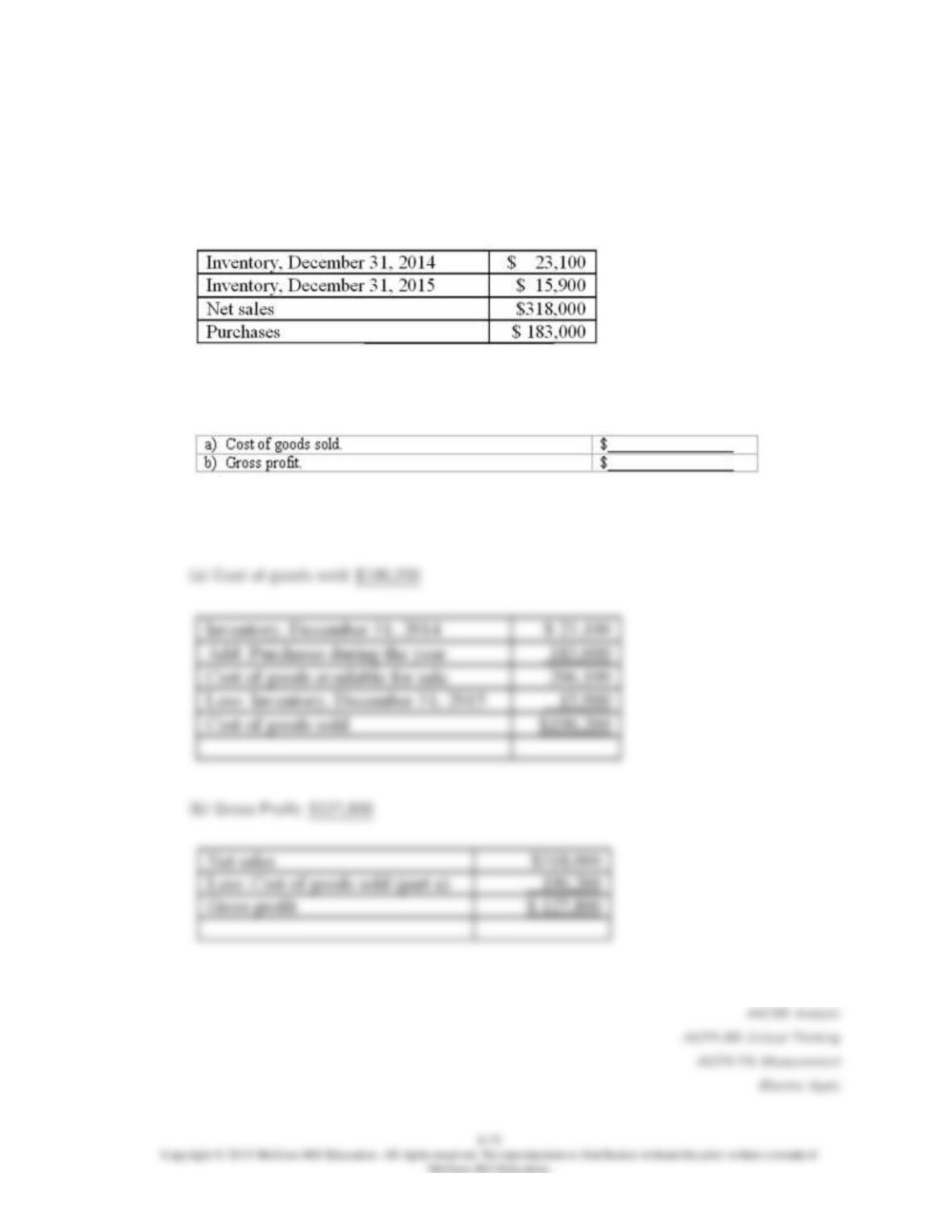
Soundview Centre uses a periodic inventory system. At the end of 2015, the accounting
records include the following information:
Compute the following for 2015:
124.
Periodic inventory system
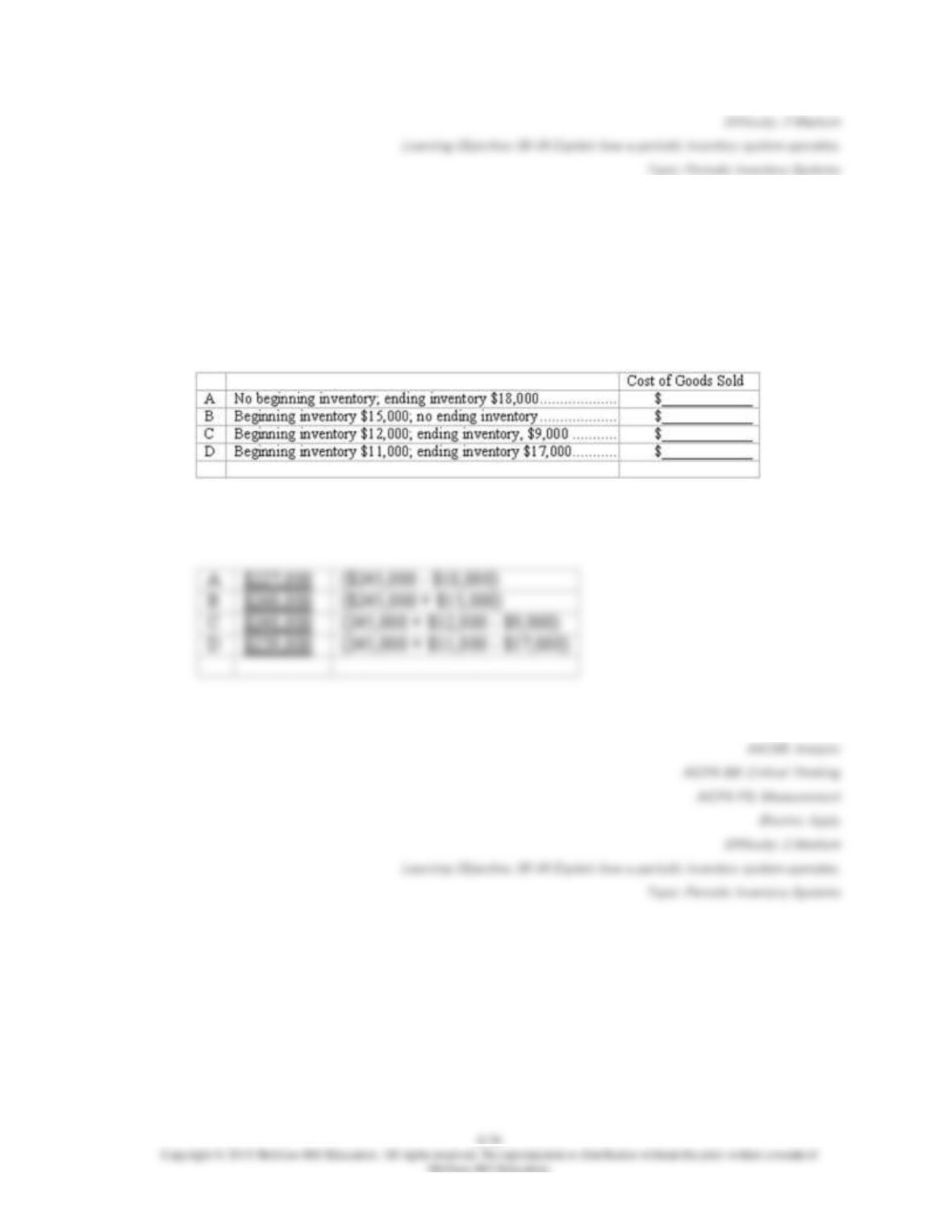
Armstrong Creation uses a periodic inventory system. During the current year, the
company purchased merchandise at a cost of $245,000. You are to compute the cost of
goods sold under each of the following alternative assumptions:
125.
Inventory systems
Briefly distinguish between a perpetual inventory system and a periodic inventory system.
126.
Inventory systems
Indicate whether you would expect each of the following businesses to maintain a
perpetual or a periodic inventory system. Explain the reasoning behind your answers:
(a) A jewelry store.
(b) A roadside vegetable stand.
6-79
Copyright © 2015 McGraw-Hill Education. All rights reserved. No reproduction or distribution without the prior written consent of
McGraw-Hill Education.
127.
Inventory systems
Bookmarks, Inc. sells used books at its store in the resort community of Lake Bryn Mawr.
The owner maintains a large inventory of used books purchased from estate sales, flea
markets, and customers. During the tourist seasons of summer and winter, the store is
exceptionally busy with customers. Each customer usually makes small purchases ranging
in amount from one to twenty dollars. What type of inventory system would you
recommend to the owner of Bookmarks, Inc.? Explain the reasoning behind your advice.
6-80
128.
Journal entries for merchandising transactions
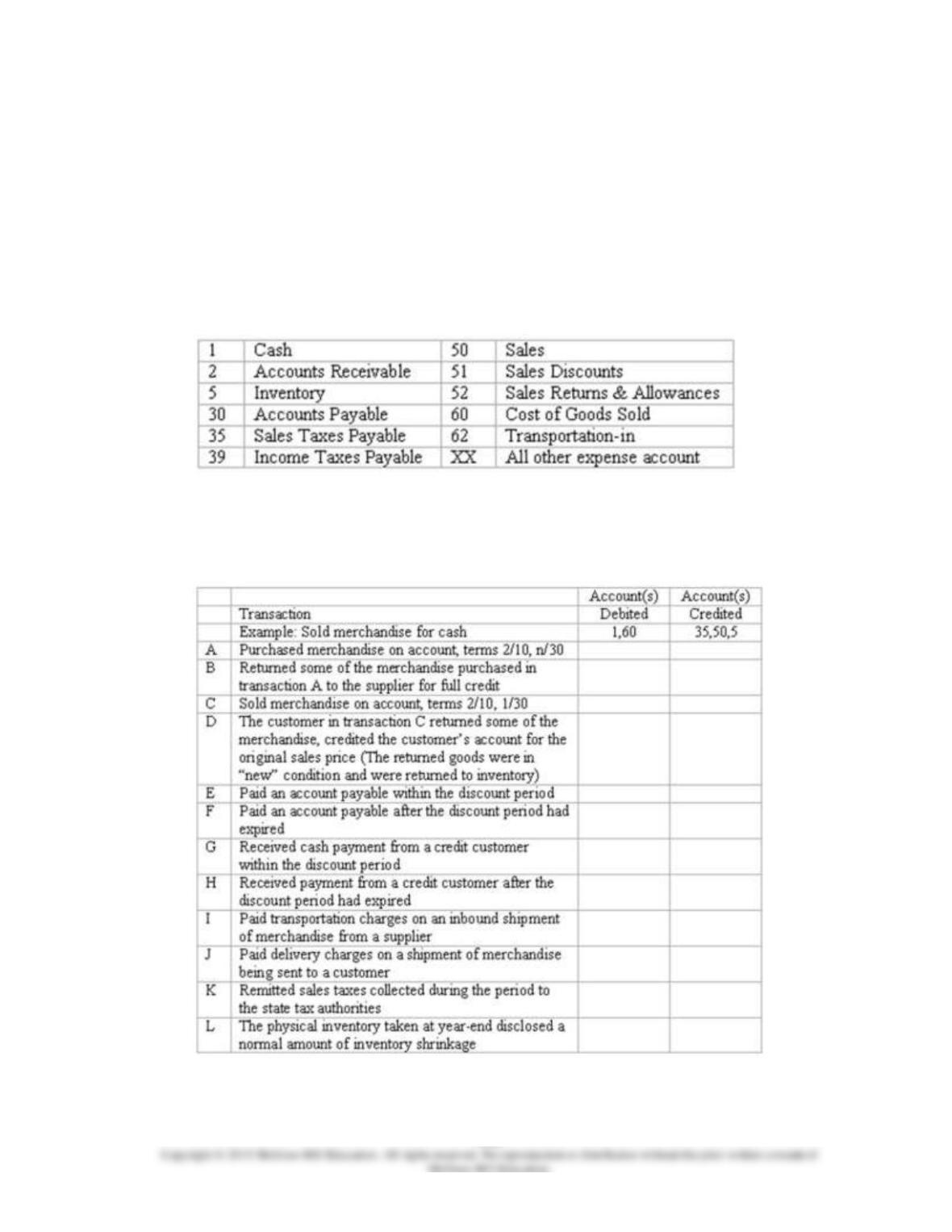
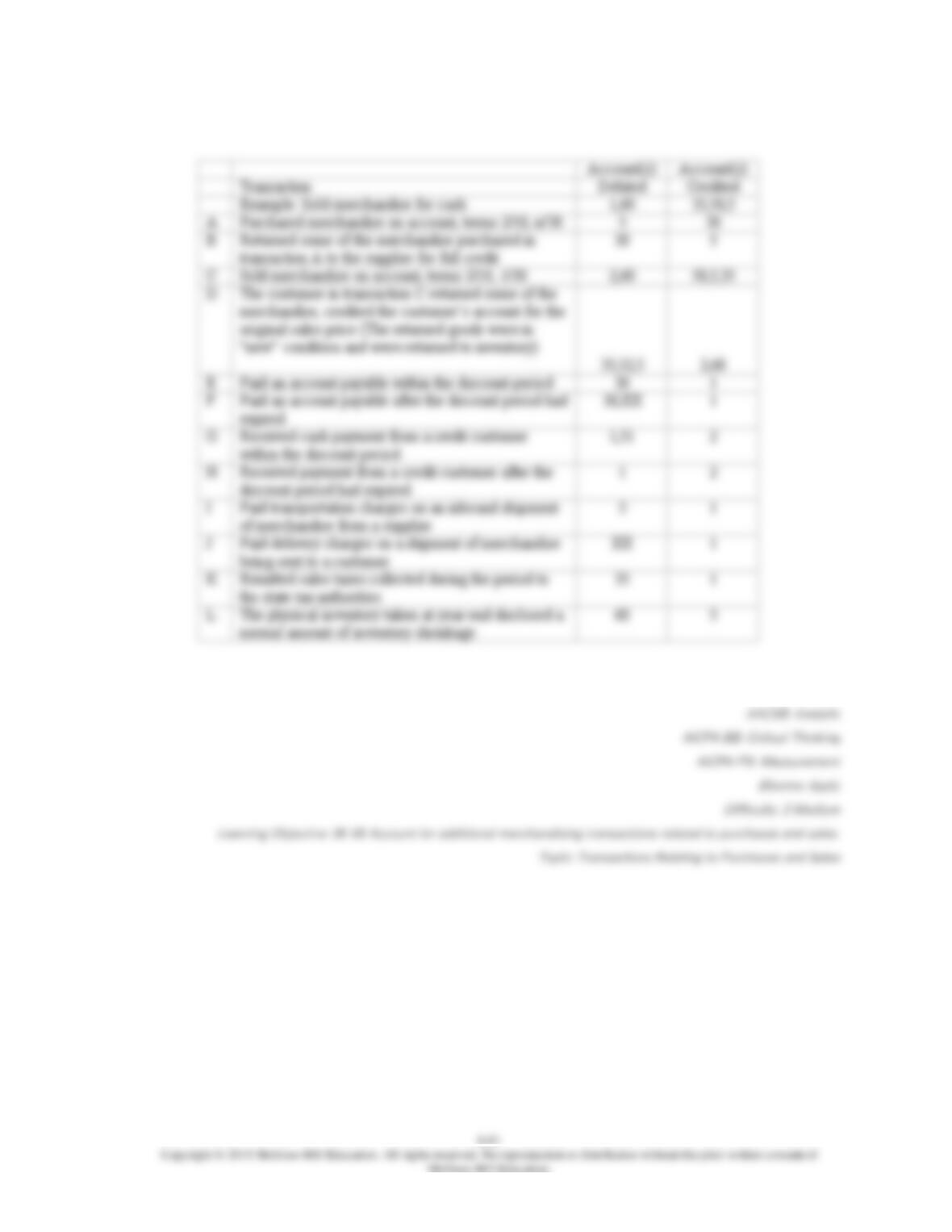
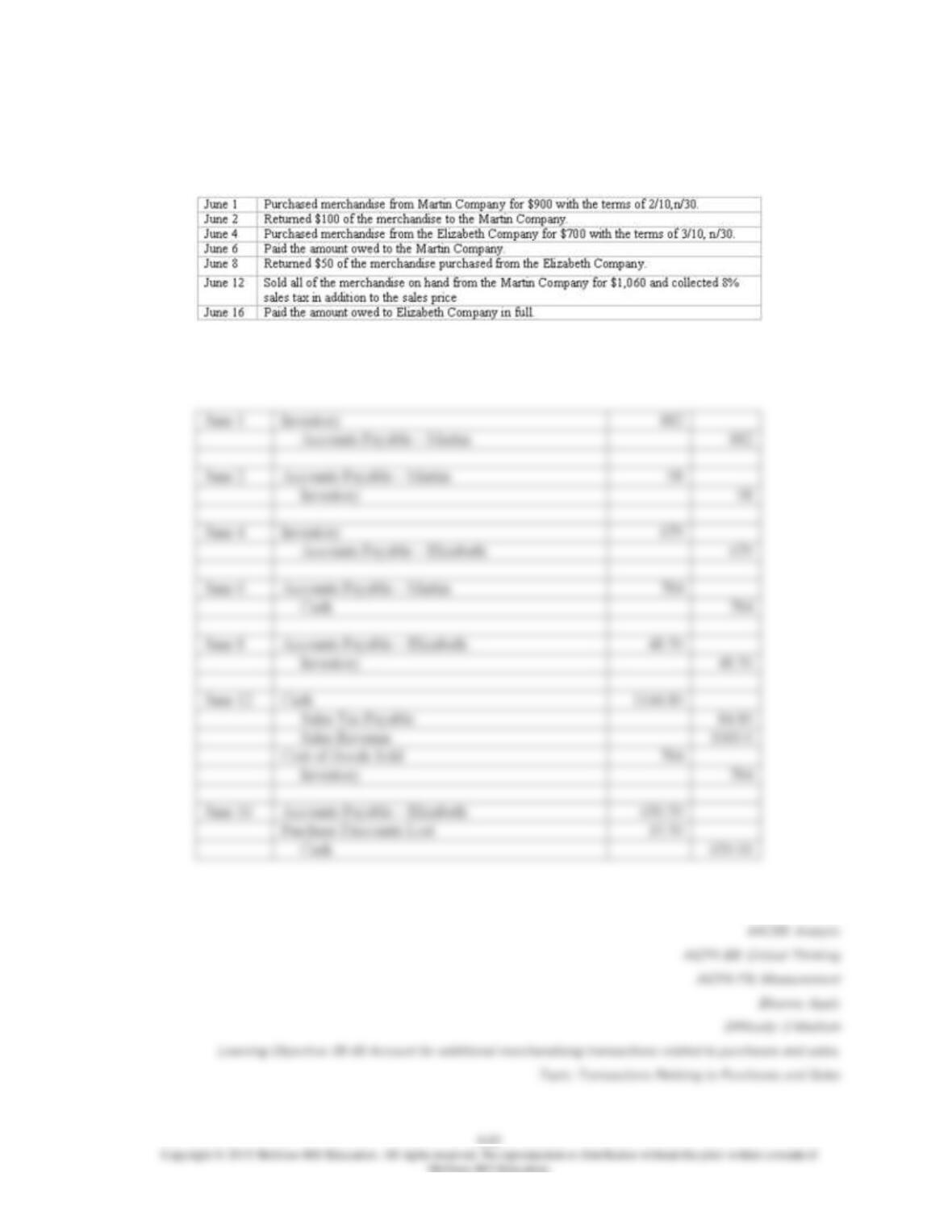
Shown below is a partial chart of accounts for Main Street Markets, followed by a series of
merchandising transactions. The company uses a perpetual inventory system, records
purchases at net cost, and records sales at the full invoice price. Sales taxes are collected
on all sales, and the sales tax liability is recorded immediately. Freight charges on inbound
shipments are recorded in the Inventory account.
Indicate the accounts that should be credited in recording each transaction by placing the
appropriate account number(s) in the space provided.
129.
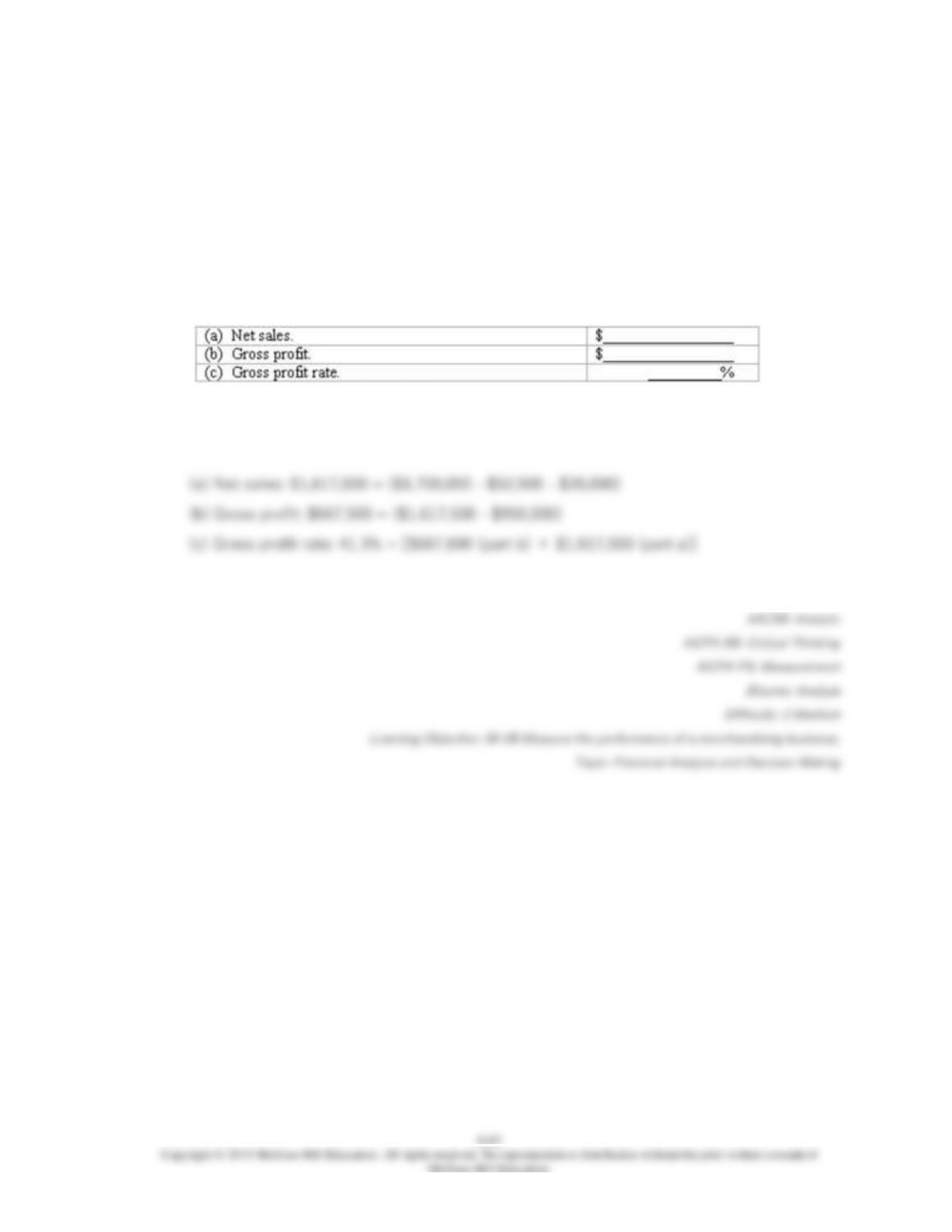
Prepare journals entries for the following, assuming the company uses a perpetual
inventory method and records purchases at their net amounts.
130.
Net sales and gross profit
Mayflower Supply House had gross sales revenue of $1,700,000, cost of goods sold of
$950,000, sales returns and allowances of $52,500, and allowed sales discounts of
$30,000.
Compute for the year:
131.
Using gross profit rates
Explain how the gross profit rate for a particular product is determined. How would you
expect the manager of a large department store to use these gross profit rates in deciding
which products to feature in the store’s window displays and in determining the location of
various types of merchandise within the store? Explain.

6-85
132.
Gross profit rates a practical application
Note to instructor: The following exercise requires students to use gross profit rates in a
manner not specifically illustrated in the chapter. We view this as an exercise in critical
thinking and, as such, it is more challenging than the typical exercise. Part d requires an
expository answer. Some instructors may choose to omit part d.
Your store sells computers and software. The average computer sells for $1,350, but the
customer buying a computer also buys an average of $750 in software. You earn only 10%
gross profit rate on sales of computers, but you make a 40% gross profit rate on software.
You currently are selling 150 computers per month.
(a) What is the total amount of your monthly gross profit? $________________.
(b) To increase sales, you are thinking about selling computers at cost ($1,215.) This
would be the “cheapest price in town,” and should attract more customers. You expect
each customer who buys a computer to also buy $750 worth of software. Under these
assumptions, how many computers must you sell each month in order to earn the same
amount of gross profit as you are earning now?
(c) Assume that as a result of reducing the sales price of computers to cost ($1,215), you
are able to sell 250 computers each month, and that each customer now buys $850 worth
of software. What will be the total amount of your monthly gross profit?
(d) Assume that you achieve the results specified in part c (250 sales transactions per
month, including an average of $850 in software). Would you consider the policy of selling
computers at cost successful or unsuccessful? Explain specifically why this strategy is
working out favorably or unfavorably.