141. Overhead is normally applied to production using a predetermined overhead rate based on
some underlying cost driver. The amount of overhead allocated to jobs will normally not be the
same as the actual amount of overhead cost incurred. The difference is called the overhead
variance.
Required:
Name two possible treatments for the overhead variance at the end of the accounting period.
What are the pros and cons of each treatment? When should each be used?
6-118
142. Rockingham Manufacturing Company builds highly sophisticated engine parts for cars
competing in stock racing and drag racing. The company uses a normal costing system that
applies factory overhead on the basis of direct labor-hours. For 2012, the company estimated that
it would incur $256,000 in factory overhead costs and 16,000 direct labor-hours. The April 1, 2012,
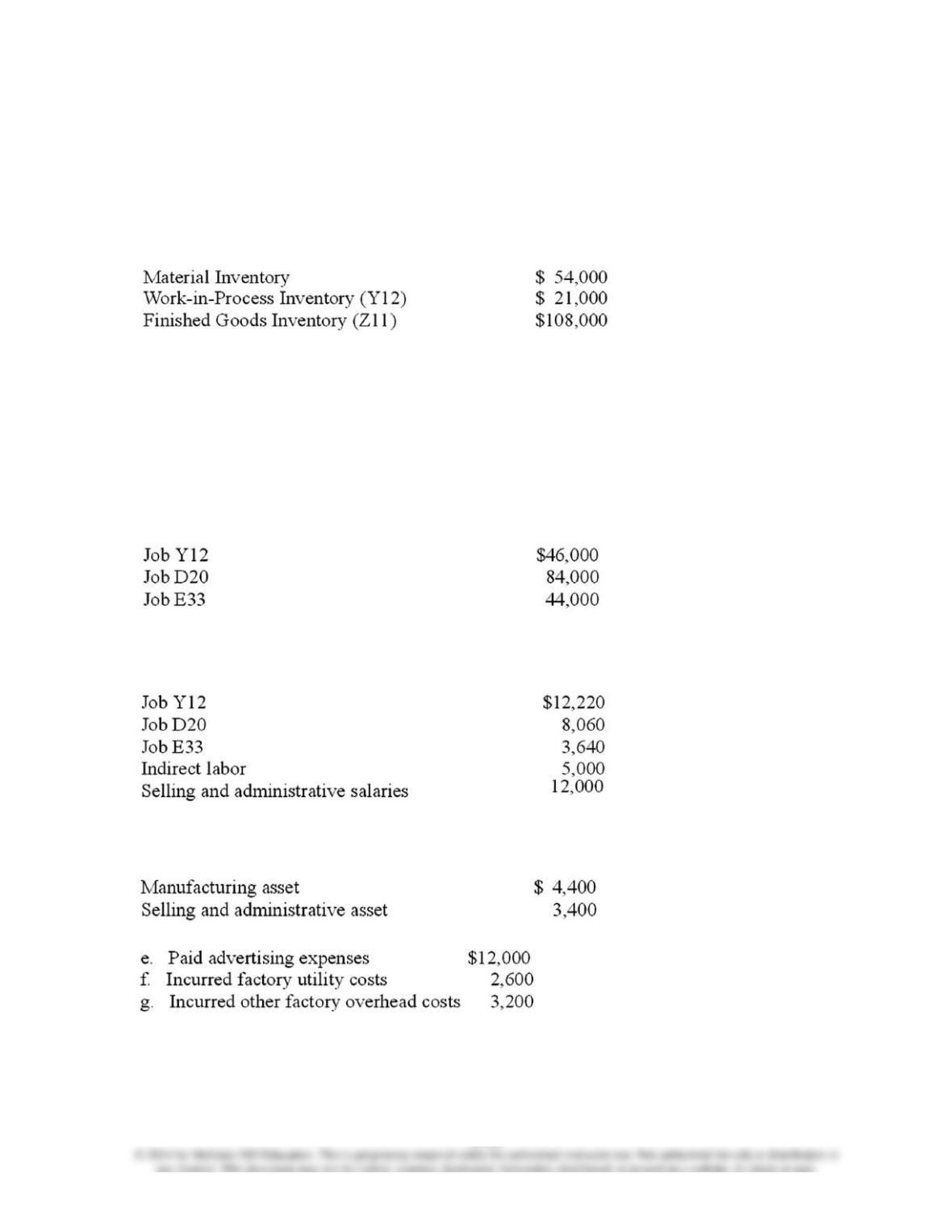
balance in inventory accounts follow:
Job Y12 is the only job in process on April 1, 2012. The following transactions were recorded for
the month of April:
a. Purchased materials on account, $180,000.
b. Issued $182,000 of materials to production, $8,000 of which was for indirect materials.
Cost of direct materials issued:
c. Incurred and paid payroll cost of $40,920; Direct labor cost ($20/hour; total 1,196 hours):
d. Recognized deprecation for the month:
h. Applied factory overhead to production on the basis of direct labor-hours.
i. Completed Job Y12 during the month and transferred it to the finished goods warehouse.
j. Sold Job Z11 on account for $118,000.

6-119
k. Received $50,000 of collections on account from customers during the month.
Required:
(1) Calculate the company’s predetermined overhead rate.
(2) Prepare journal entries for the April transactions. Record job-specific items in individual Work–
in-Process accounts.
(3) What was the balance of the Materials Inventory account on April 30, 2012?
(4) What was the balance of the Work–in-Process Inventory control account on April 30?
1. Predetermined overhead rate: $16.00 per DL hour ($256,000/16,000).
6-122
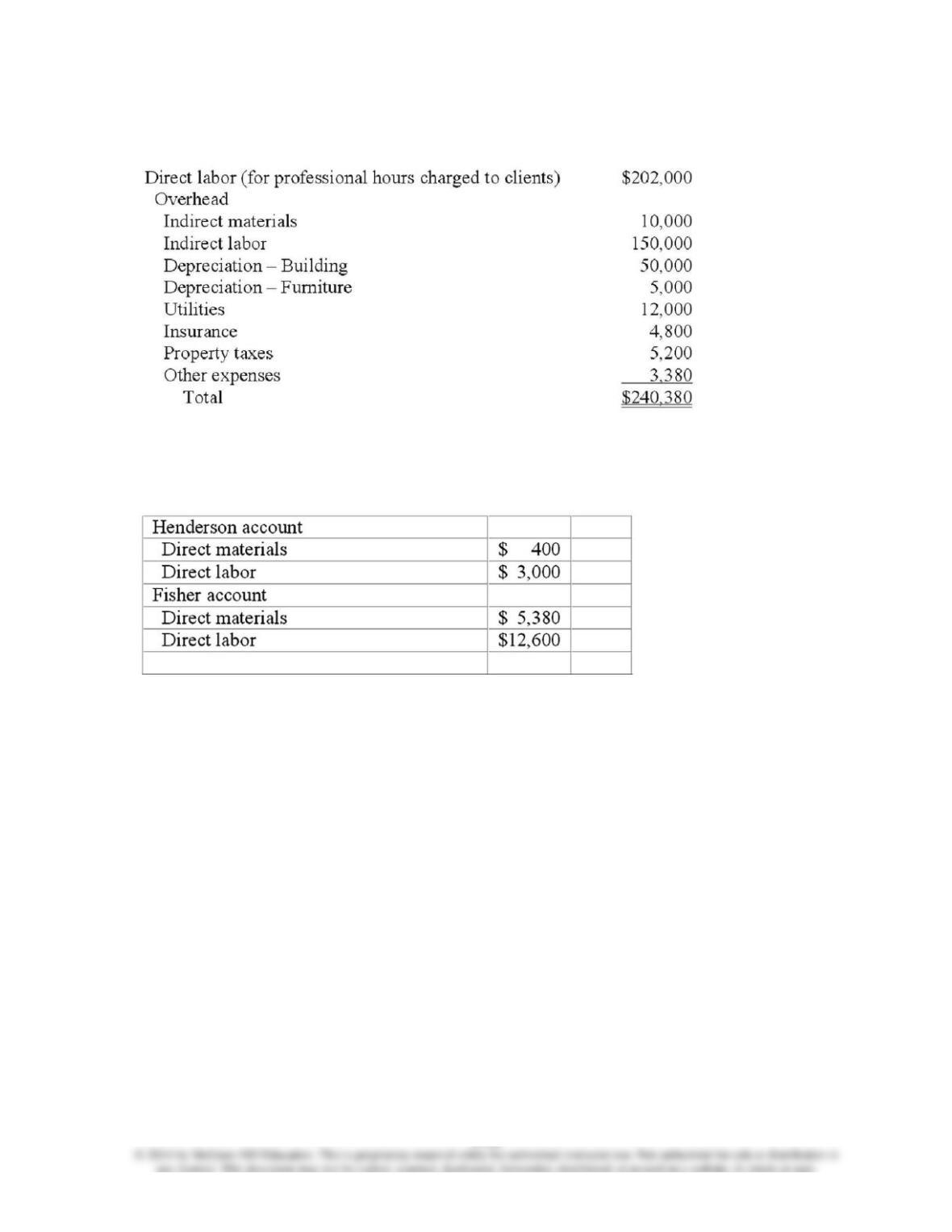
143. Jones and Jones CPA firm has the following budget for the year:
The firm uses direct labor as the cost driver to apply overhead to clients. During January, the firm
worked for many clients; data for two of them follow:
Required:
(1) Compute the Jones and Jones budgeted overhead rate. Explain how this is used.
(2) Compute the amount of overhead to be charged to the Henderson and Fisher accounts using
the predetermined overhead rate calculated in requirement (1).
(3) Compute the separate job cost for the Henderson and Fisher accounts.
6-124
144. The following information is for Stier Company for the month of November:
a. Factory overhead costs are applied to jobs at the predetermined rate of $80 per labor-hour. Job
X-14 incurred 2,300 labor-hours; Job SM-4 used 1,850 labor-hours.
b. Job X-14 was shipped to customers during November. Job X-14 had a gross margin of 24
percent based on manufacturing cost.
c. Job X-14 was completed; Job SM-4 was still in process at the end of November.
The company closed the overapplied or underapplied overhead to the Cost of Goods Sold account
at the end of November.
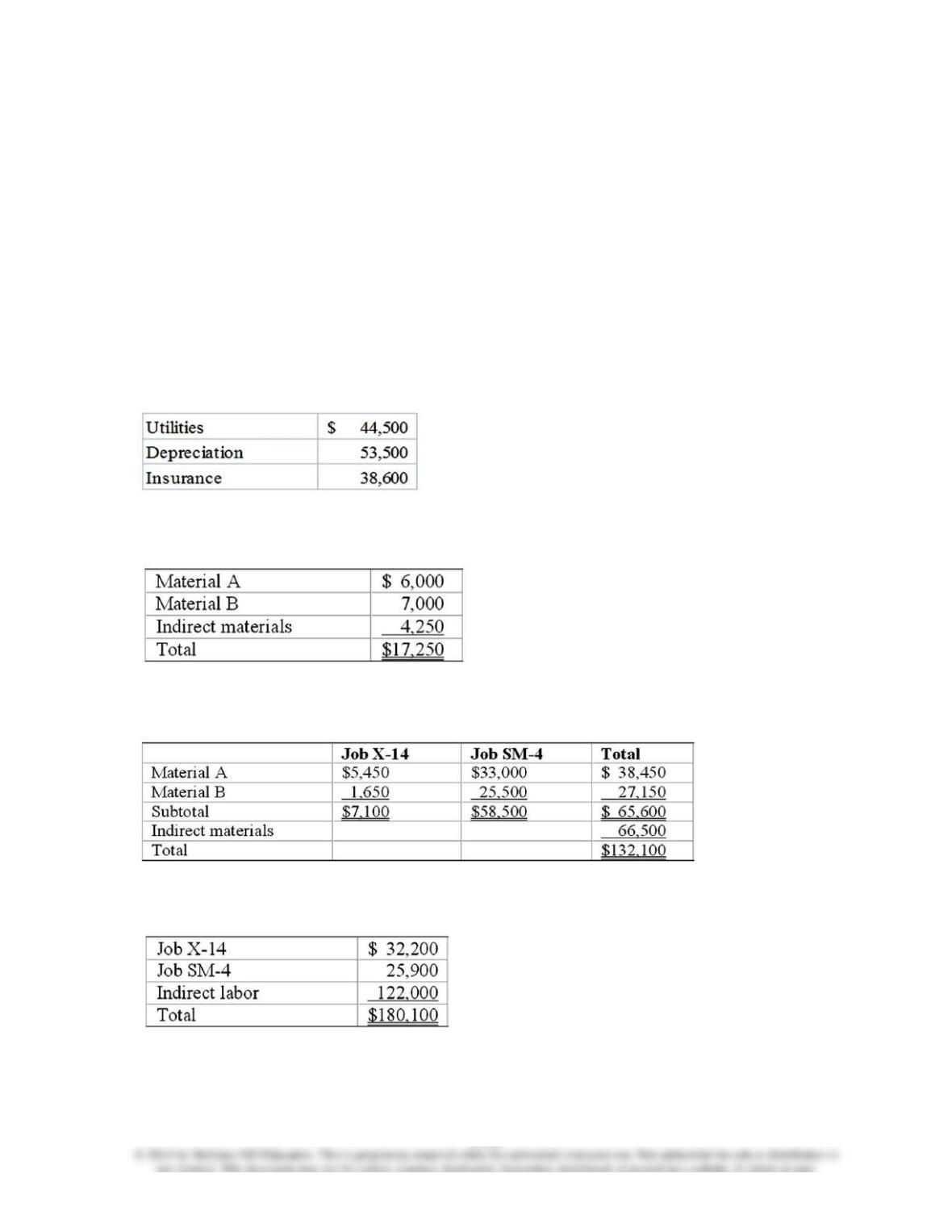
d. Factory utilities, factory depreciation, and factory insurance incurred is summarized by these
factory vouchers, invoices, and cost memos:
e. The Company purchased the following direct materials and indirect materials:
f. Direct materials and indirect materials used are as follows:
g. Factory labor incurred for the two jobs and indirect labor is as follows:
Required:
6-126
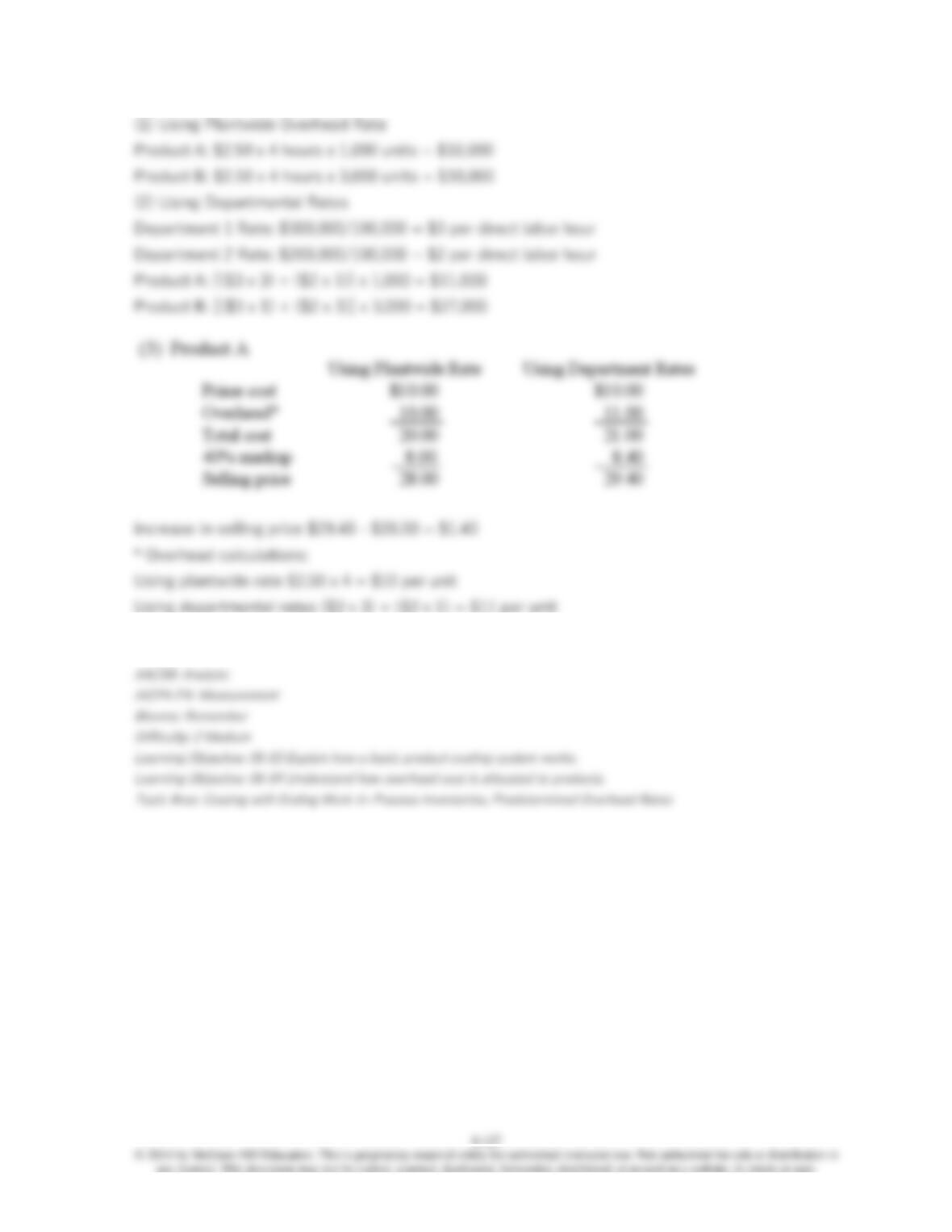
145. Arnold Company manufactured two products, A and B, during April. For purposes of
product costing, an overhead rate of $2.50 per direct-labor hour was used, based on budgeted
annual factory overhead of $500,000 and 200,000 budgeted annual direct-labor hours, as follows:
The number of labor hours required to manufacture each of these products was:
During April, production units for products A and B were 1,000 and 3,000.
Required:
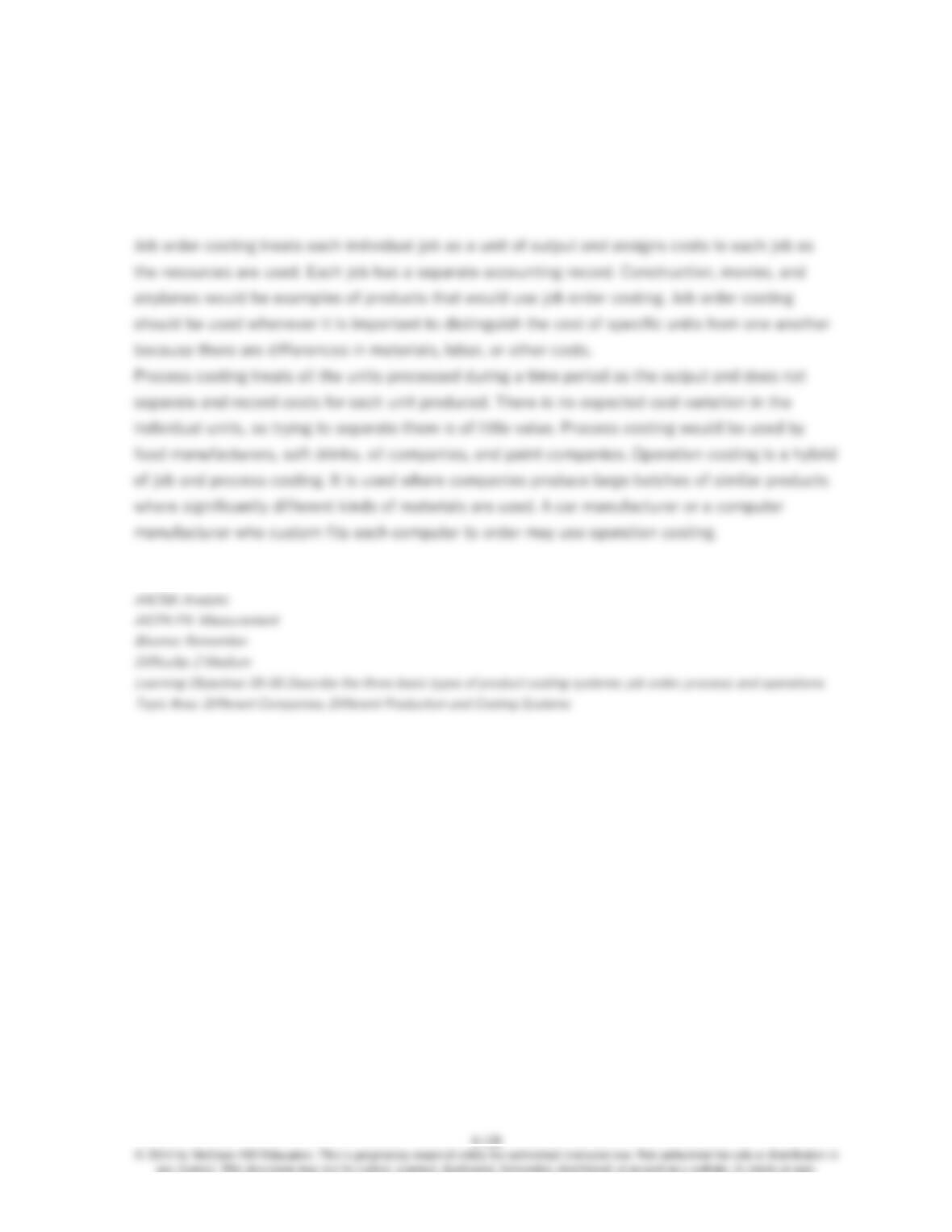
(1) Using a plantwide overhead rate, what are total overhead costs assigned to products A and B,
respectively?
(2) Using departmental overhead rates, what are total overhead costs assigned to products A and
B, respectively?
(3) Assume that materials and labor costs per unit of Product A are $10 and that the selling price
is established by adding 40% of absorption costs to cover profit and selling and administrative
expenses. What difference in selling price would result from the use of departmental overhead
rates?
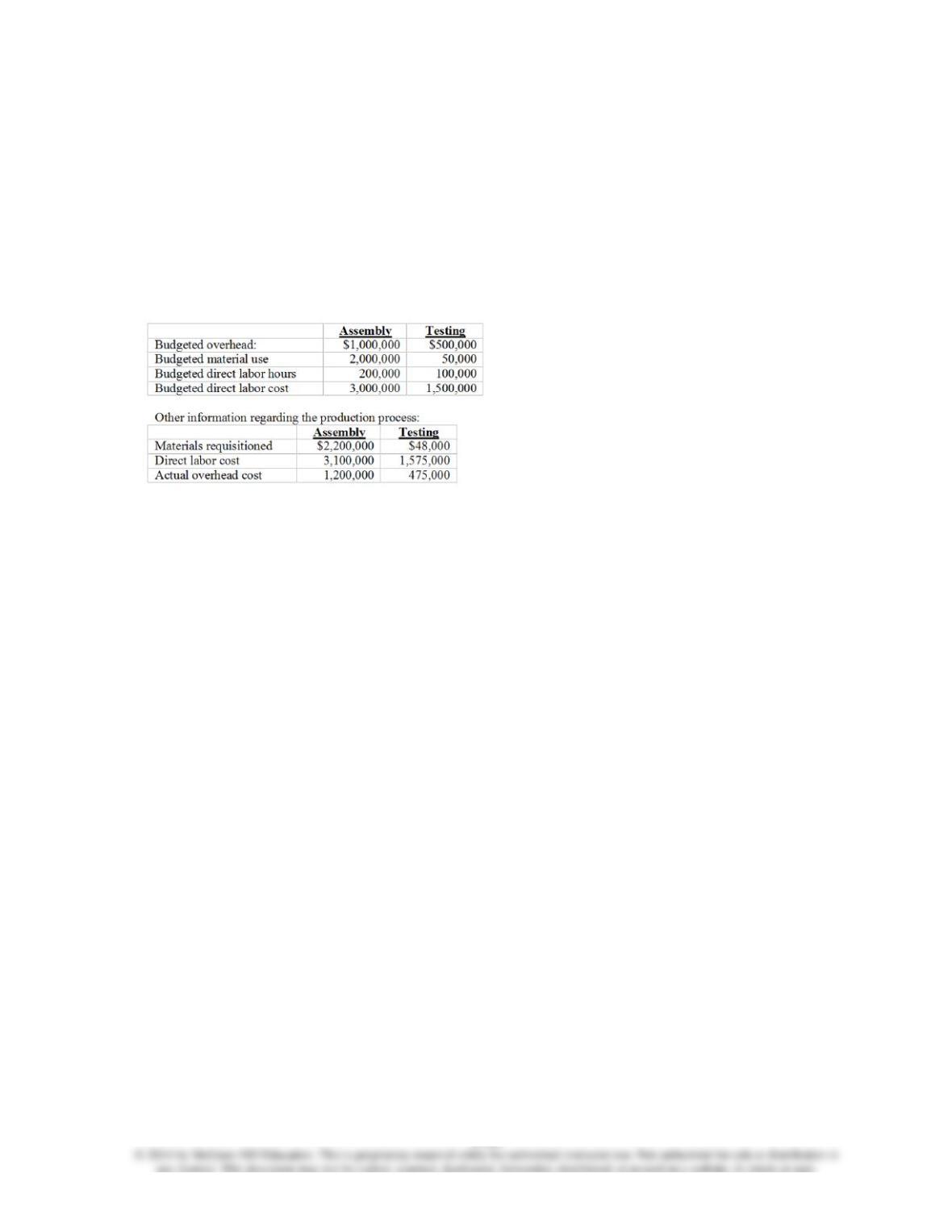
146. Distinguish between job order costing, process costing, and operation costing.
Give an example of a company that would use each.
6-129
147. Precision Measurement Company manufactures precision-measuring devices used by
industrial companies in various capacities. The devices are produced in two stages: Assembly and
Testing. The company has no beginning inventories because all units produced last year were sold
by the end of the year. At the beginning of the year, the company has an order of 8,000 units. The
company’s predetermined overhead rate is based on materials used in assembly and direct labor
hours in testing. Information concerning the predetermined overhead rates appears below: Direct
labor is paid $20 per hour.
Required:
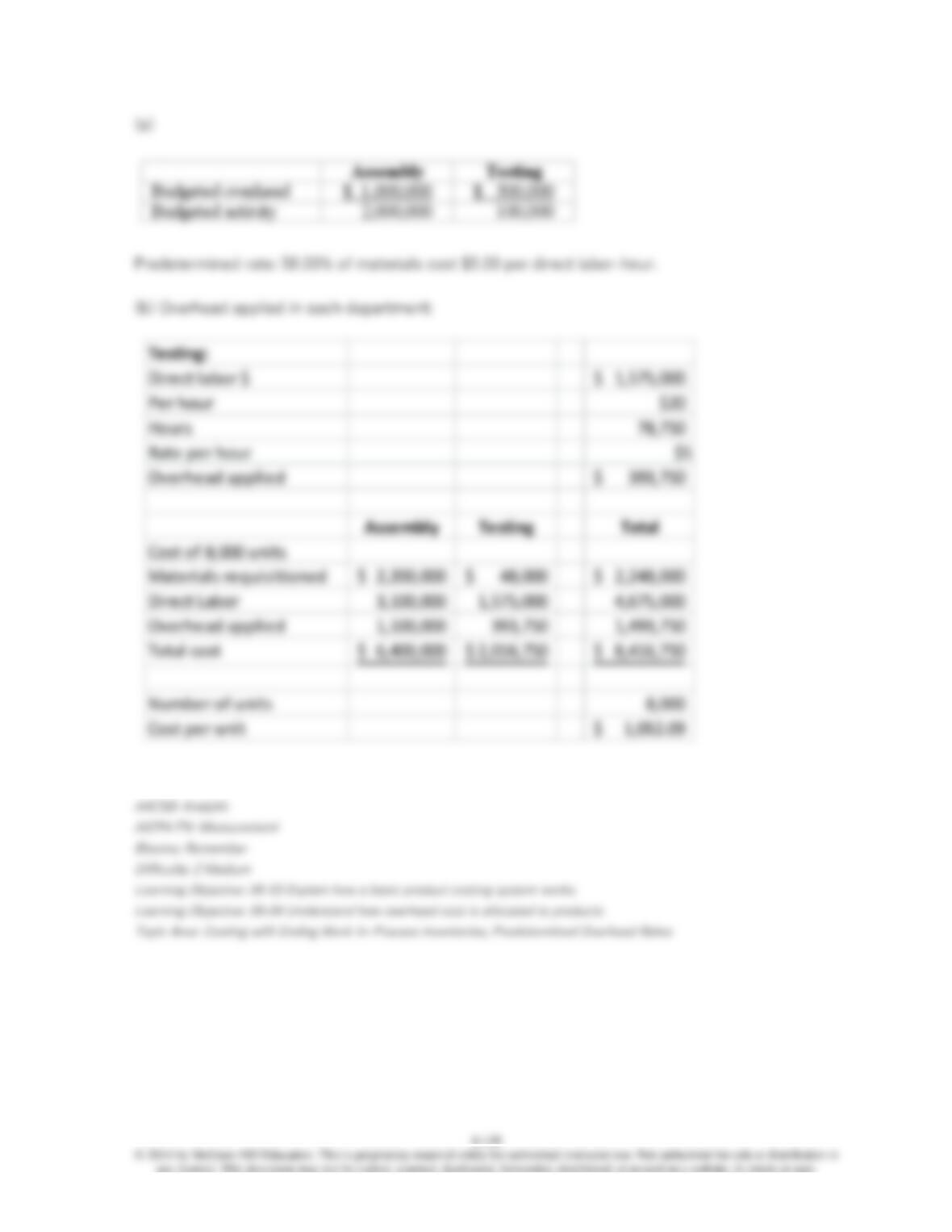
(a) Compute the predetermined overhead rate for each department.
(b) Calculate the total and per unit cost of producing 8,000 units.
6-131
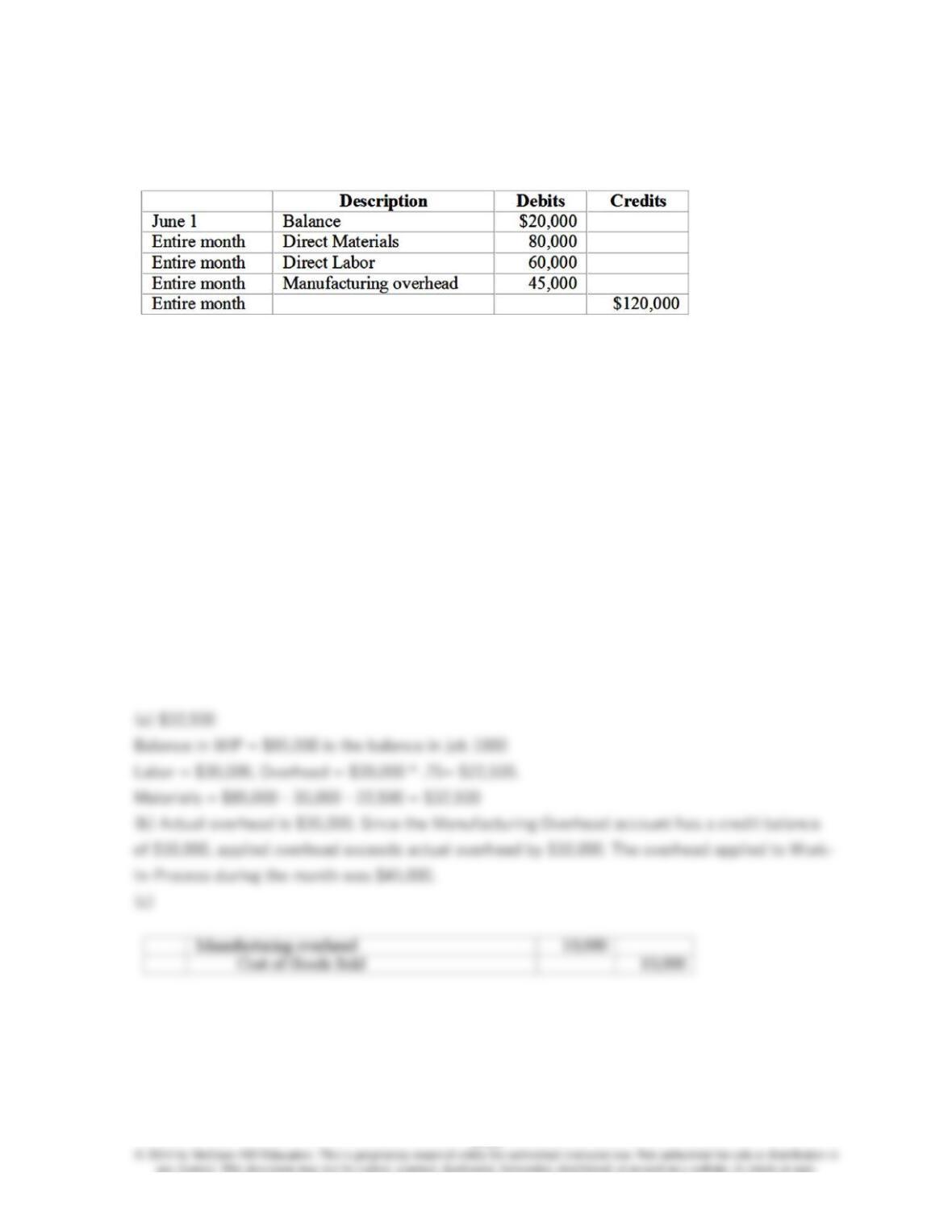
148. McGorry Furniture Company uses a job-order cost system. The following debits (credits)
appeared in the Work-in-Process account for February 2012:
McGorry applies overhead to production at a predetermined rate of 75%, based on direct labor
cost. Job 1000, the only job still in process at the end of June, has been charged with direct labor
of $30,000. McGory’s Manufacturing Overhead account showed a credit balance of $10,000 at the
end of February 2012.
Required:
(a) Calculate the amount of direct materials charged to Job 1000.
(b) Compute the actual overhead for February 2012.
(c) Assume that McGory closes its Manufacturing Overhead account each month. McGory does
not prorate the manufacturing overhead variance. Prepare the entry to close the overhead account
at the end of February, 2012.
149. Briefly discuss the issue of the choice of an activity measure for setting overhead rates.