Chapter 06 – Reporting and Interpreting Sales Revenue, Receivables, and Cash
Chapter 06 – Reporting and Interpreting Sales Revenue, Receivables, and Cash
6-73
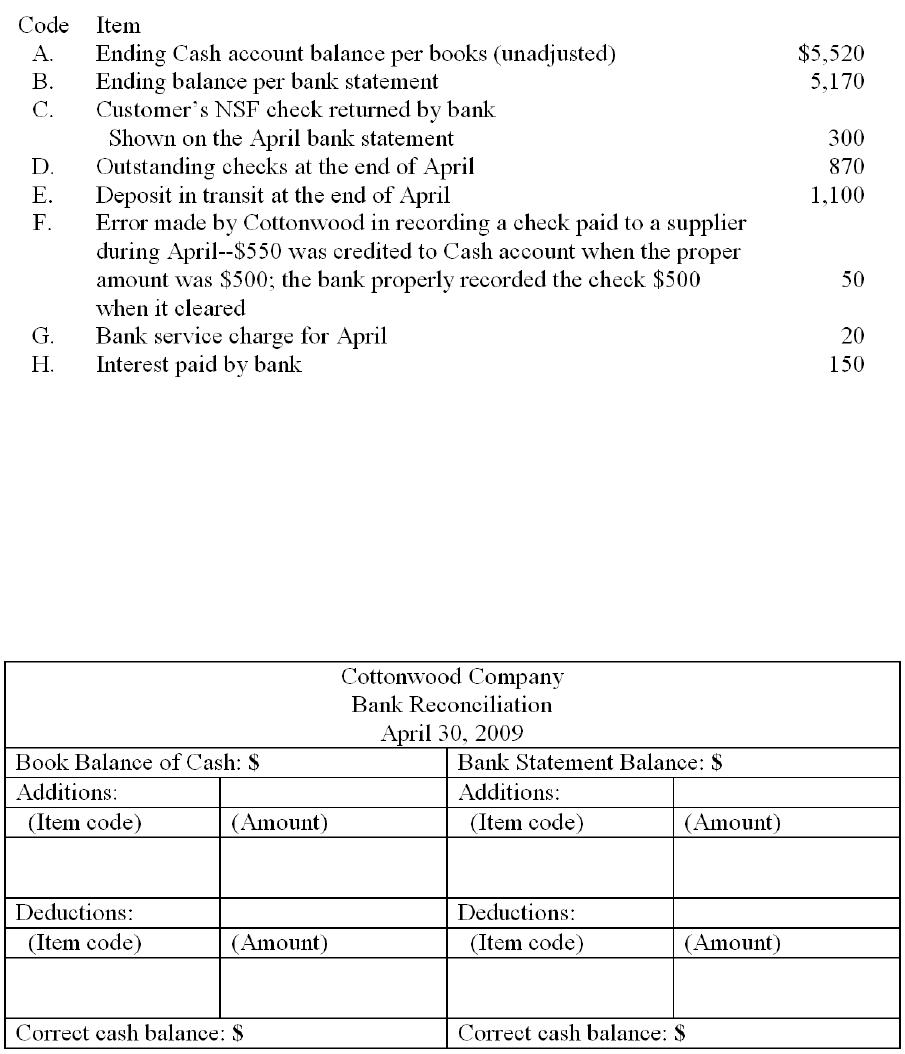
116. A comparison of the balance in Cottonwood Company’s cash account (per its books) as
of April 30, 2009, and the bank statement dated April 30, 2009, revealed the following
information:
Required:
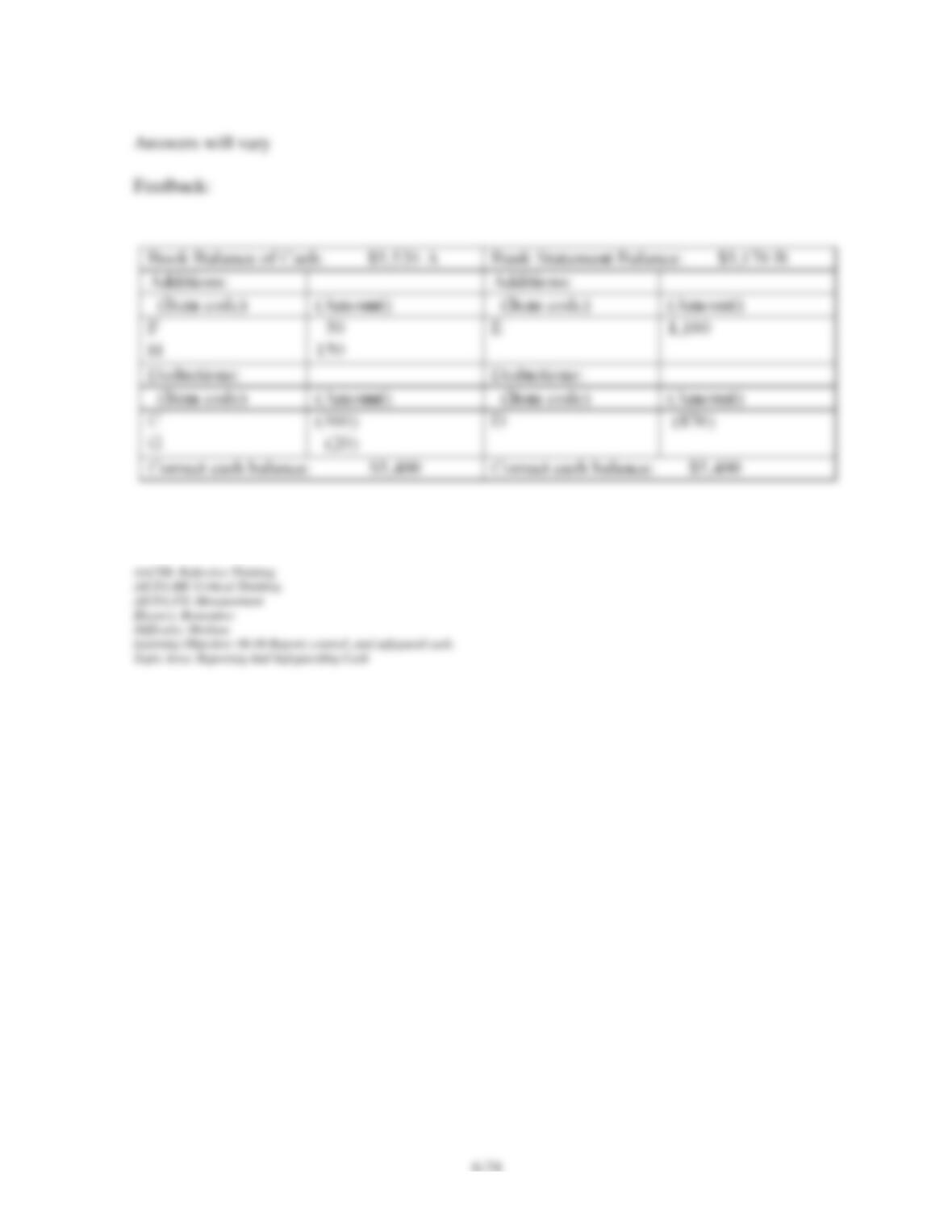
Prepare a bank reconciliation using the format below. Indicate the proper handling of each of
the items given above by listing the appropriate item code (letter) and amount under each
section of the reconciliation statement form below. Then determine the correct cash balance.
Note: If one or more of the items given above should not appear on the reconciliation
statement, do not include the item(s).
Chapter 06 – Reporting and Interpreting Sales Revenue, Receivables, and Cash
Chapter 06 – Reporting and Interpreting Sales Revenue, Receivables, and Cash
6-75
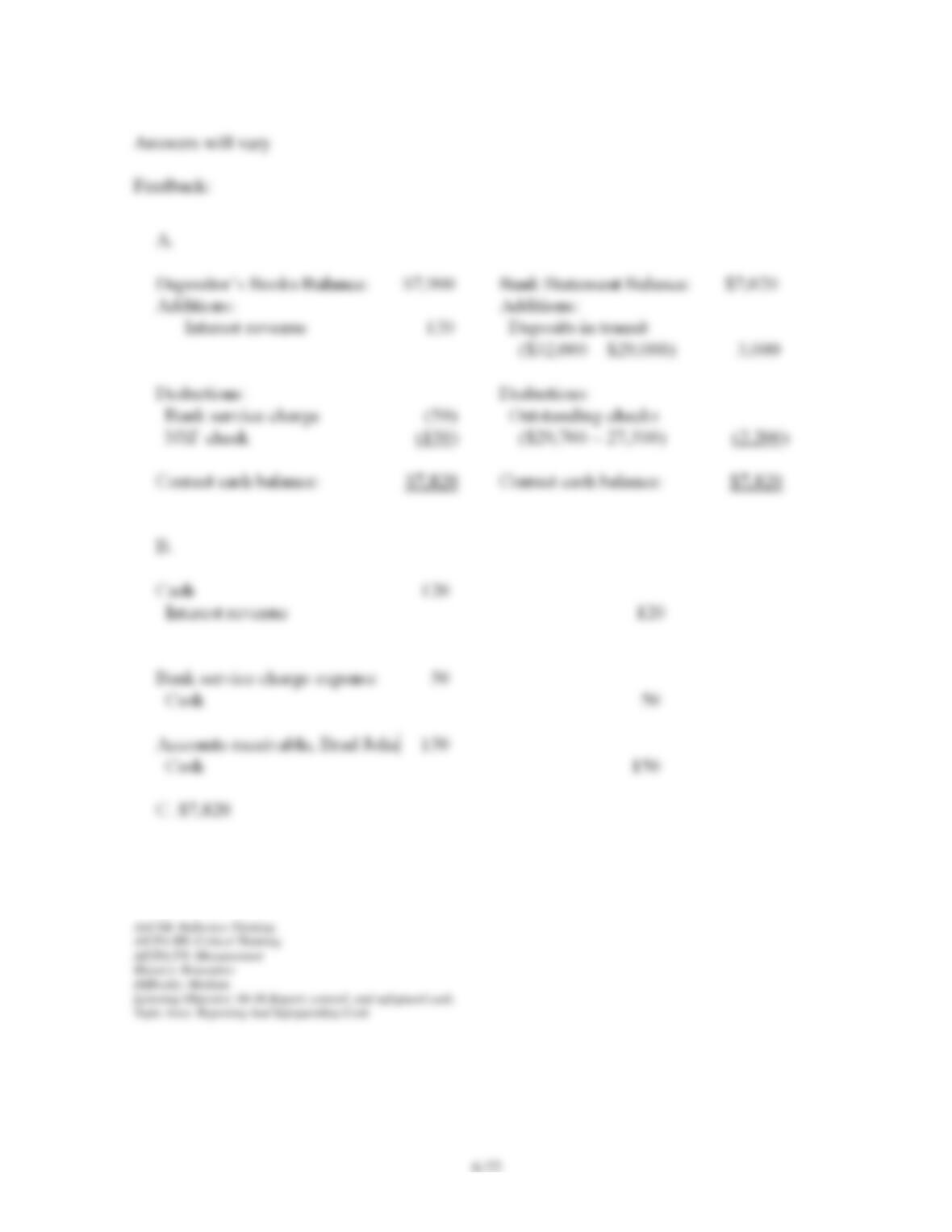
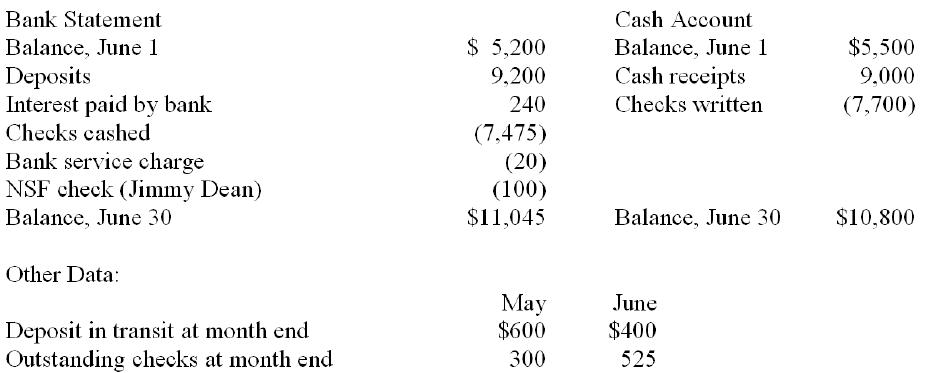
117. Burke Company has just received its June 30 bank statement from Urban Bank. The
bank statement and the cash account, summarized below, are to be reconciled for the month of
June.
Required:
A. Prepare the June 30 bank reconciliation.
B. Prepare the journal entries that should be made in the accounts of Burke Company as a
result of the bank reconciliation.
Chapter 06 – Reporting and Interpreting Sales Revenue, Receivables, and Cash
Chapter 06 – Reporting and Interpreting Sales Revenue, Receivables, and Cash
118. What are “cash equivalents”? Specifically where would they appear on the financial
statements?
119. You are the new manager of West Coast Company. The company distributes goods
throughout the Rocky Mountain area. Customers are billed after the shipments are sent. Most
customers pay within two weeks. You notice that one employee is responsible for opening all
incoming payments, recording them in the accounting records, and depositing all receipts in
the bank daily. When asked why this one person performed all of these duties, you were told
that it was more efficient for one person to handle cash and to keep track of things. If any cash
was missing, responsibility could be easily determined. Do you agree with this arrangement?
What changes would you make, and why?
Chapter 06 – Reporting and Interpreting Sales Revenue, Receivables, and Cash
120. Asia Company sold $10,000 of goods to Euro Company on credit on May 1. At the time
of the sale, Asia recorded a debit to Accounts Receivable and a credit to Sales Revenue for
$10,000. Terms were 2/10, n/30.
Required: Present the entries Asia Company would record for each of the following
independent situations:
A. Euro paid the balance due, less the discount, on May 10.
B. Euro returned half of the goods for credit on May 4. Euro paid the balance due, less the
discount, on May 10.
C. Euro paid their bill on May 30 (there were no returns).
Chapter 06 – Reporting and Interpreting Sales Revenue, Receivables, and Cash
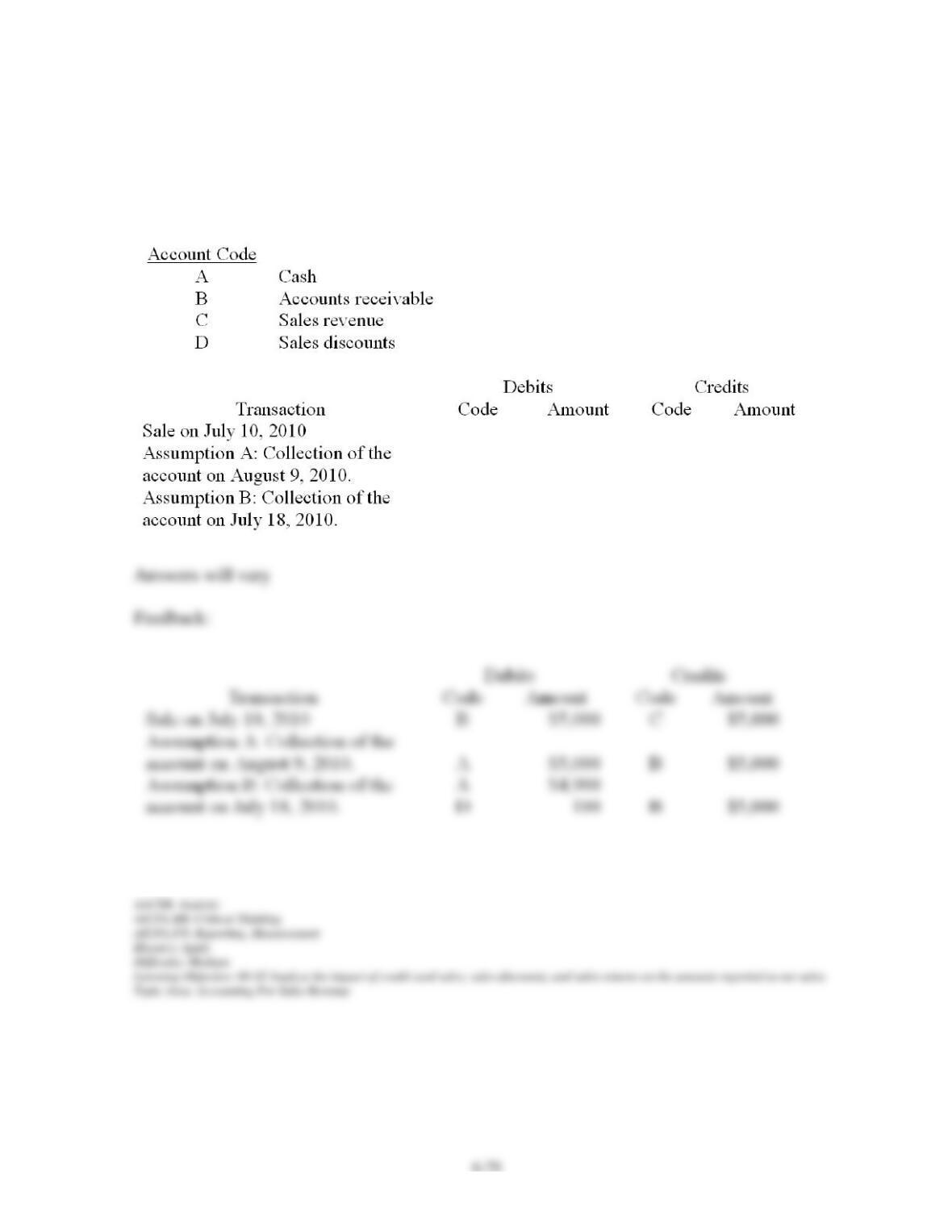
121. On July 10, 2010, Rex Company sold merchandise at an invoice price of $5,000 with
terms of 2/10, n/30. Give the journal entries required below by indicating the account code of
the appropriate account for each debit and credit and the amounts involved.
Chapter 06 – Reporting and Interpreting Sales Revenue, Receivables, and Cash
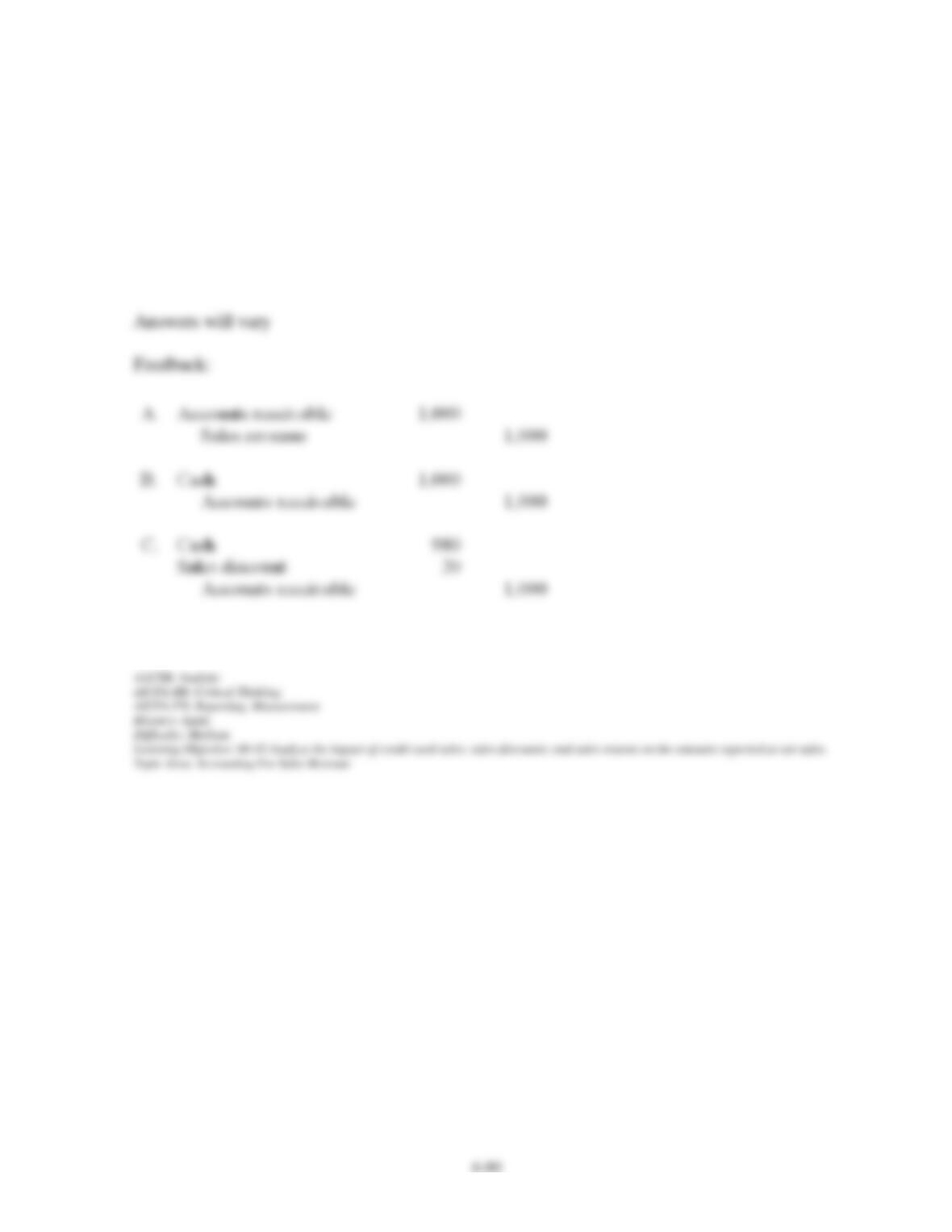
122. On June 1, 2010, Concorde Company sold merchandise on credit at an invoice price of
$1,000; terms 2/10, n/30. Give the journal entries to record the following:
A. To record the sale.
B. Assumption A: To record collection on June 28, 2010.
C. Assumption B: To record collection on June 9, 2010.
Chapter 06 – Reporting and Interpreting Sales Revenue, Receivables, and Cash
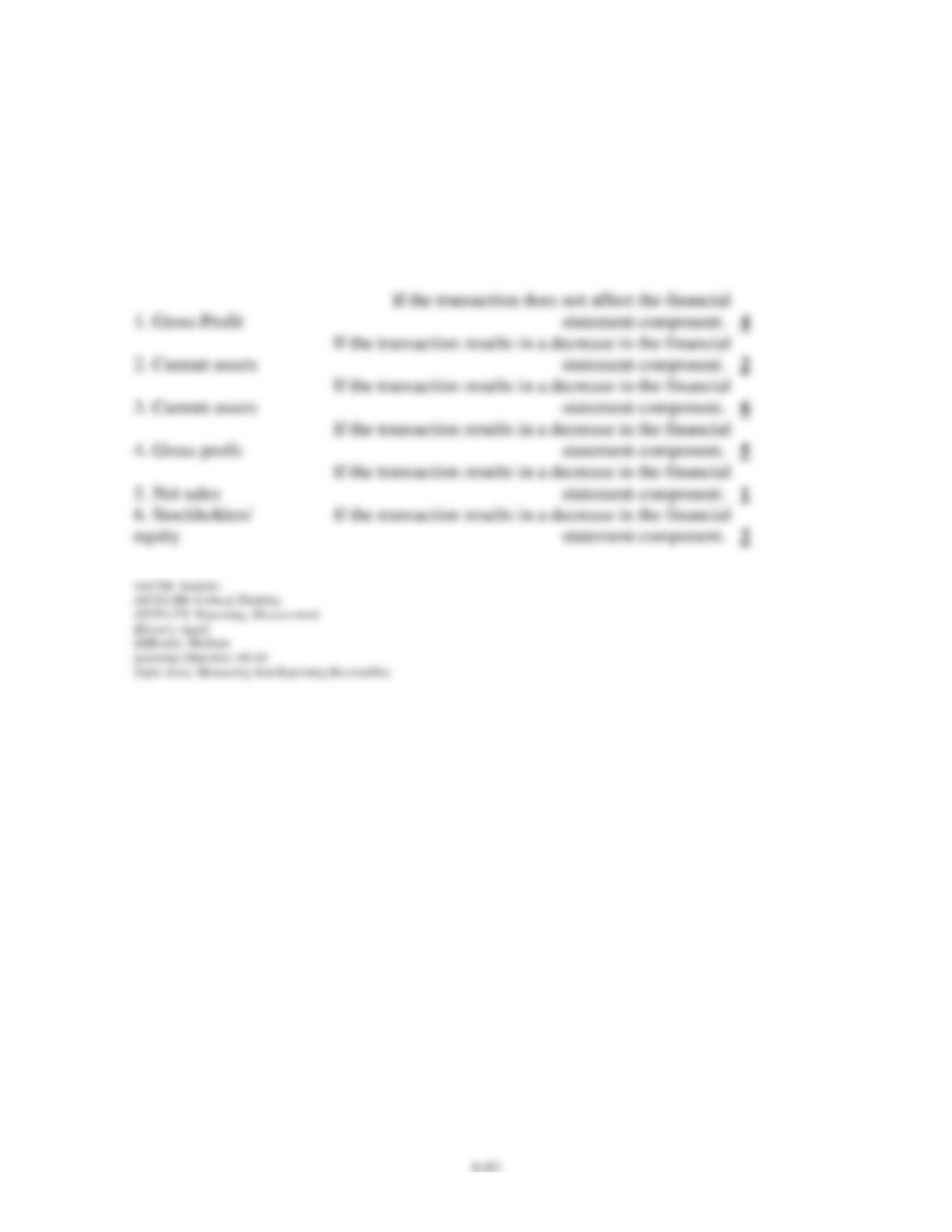
123. Determine the effect of the following transactions on the financial statement components
identified. Code your answers as follows:
Transaction 1: The adjusting entry to record bad debt expense was made.
Transaction 2: An account receivable was collected for which the customer took advantage of
a 2% discount and remitted the payment less the discount.