108. Accountants often call FIFO the balance sheet approach because the amount it reports for
ending inventory better approximates the current cost of inventory.
109. One of the primary benefits of using FIFO when inventory costs are rising is that it
results in greater tax savings.
110. The LIFO conformity rule requires a company that uses LIFO for tax reporting to use
FIFO for financial reporting.
111. The LIFO reserve is the additional amount of inventory a company would report if it
used FIFO instead of LIFO.
112. For inventory that is shipped FOB destination, title transfers from the seller to the buyer
once the seller ships the inventory.
113. For inventory that is shipped FOB shipping point, title transfers from the seller to the
buyer once the seller ships the inventory.
114. Freight-in is included in the cost of inventory.
115. At the time inventory is sold, cost of goods sold is recorded under the perpetual
inventory system.
116. Using a perpetual inventory system, the purchase of inventory is recorded with a debit to
the Purchases account, which is a temporary account closed to cost of goods sold at the end of
the period.
117. A multiple-step income statement reports multiple levels of profitability, such as gross
profit, operating income, income before income taxes, and net income.
118. Gross profit equals net sales of inventory less cost of goods sold.
119. Sales revenue minus cost of goods sold is referred to as operating income.
120. Income before income taxes equals operating income plus nonoperating revenues less
nonoperating expenses.
121. When the value of inventory falls below its cost, companies have the option of recording
the inventory at cost or the lower market value.
122. When the market value of inventory falls below its cost, no adjustment to the accounting
records is needed.
123. The adjustment to write down inventory from cost to its lower market value includes a
debit to Cost of Goods Sold and a credit to Inventory.
124. The use of the lower-of-cost-or-market method to report inventory is an example of
conservatism in financial reporting.
125. The inventory turnover ratio equals cost of goods sold divided by average inventory.
126. Generally, a higher inventory turnover ratio reflects positively on a company’s ability to
manage its inventory.
127. A company that has average inventory of $500 and cost of goods sold of $2,000 would
have an inventory turnover ratio of 0.25.
128. The gross profit ratio measures the amount by which the sale price of inventory exceeds
its cost per dollar of sales.
129. Generally, a lower gross profit ratio reflects positively on a company’s ability to manage
its inventory.
130. Using LIFO, the amount reported for ending inventory does not differ depending on
whether a company uses a periodic system or a perpetual system.
131. A periodic inventory system does not continually modify inventory amounts, but instead
adjusts for purchases and sales of inventory at the end of the reporting period based on a
physical count of inventory on hand.
132. Below are some of the items found in a multiple-step income statement:
Place these items in the order they would appear from first to last.
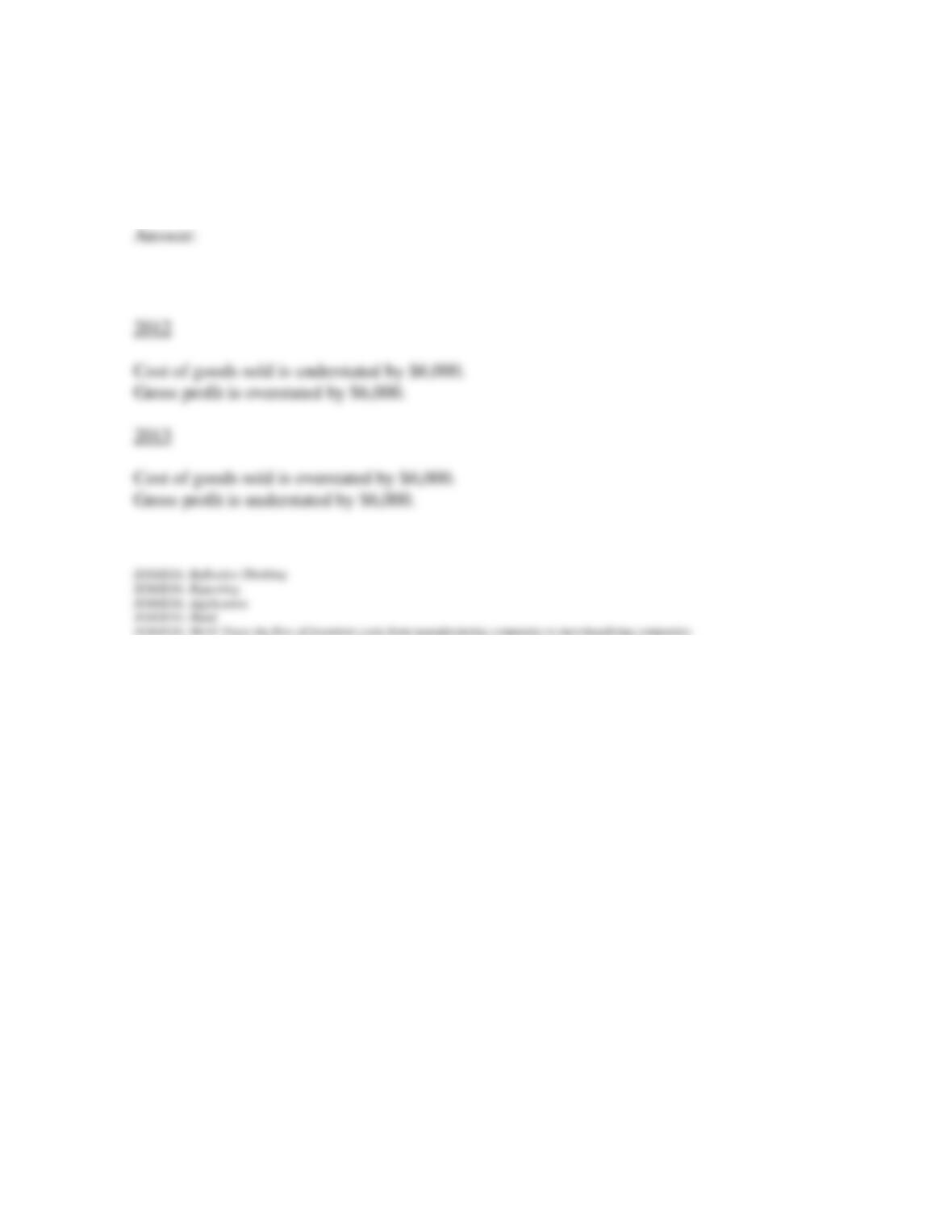
133. A company understated its ending inventory balance by $8,000 in 2012. What impact
will this error have on cost of goods sold and gross profit in 2012 and 2013?
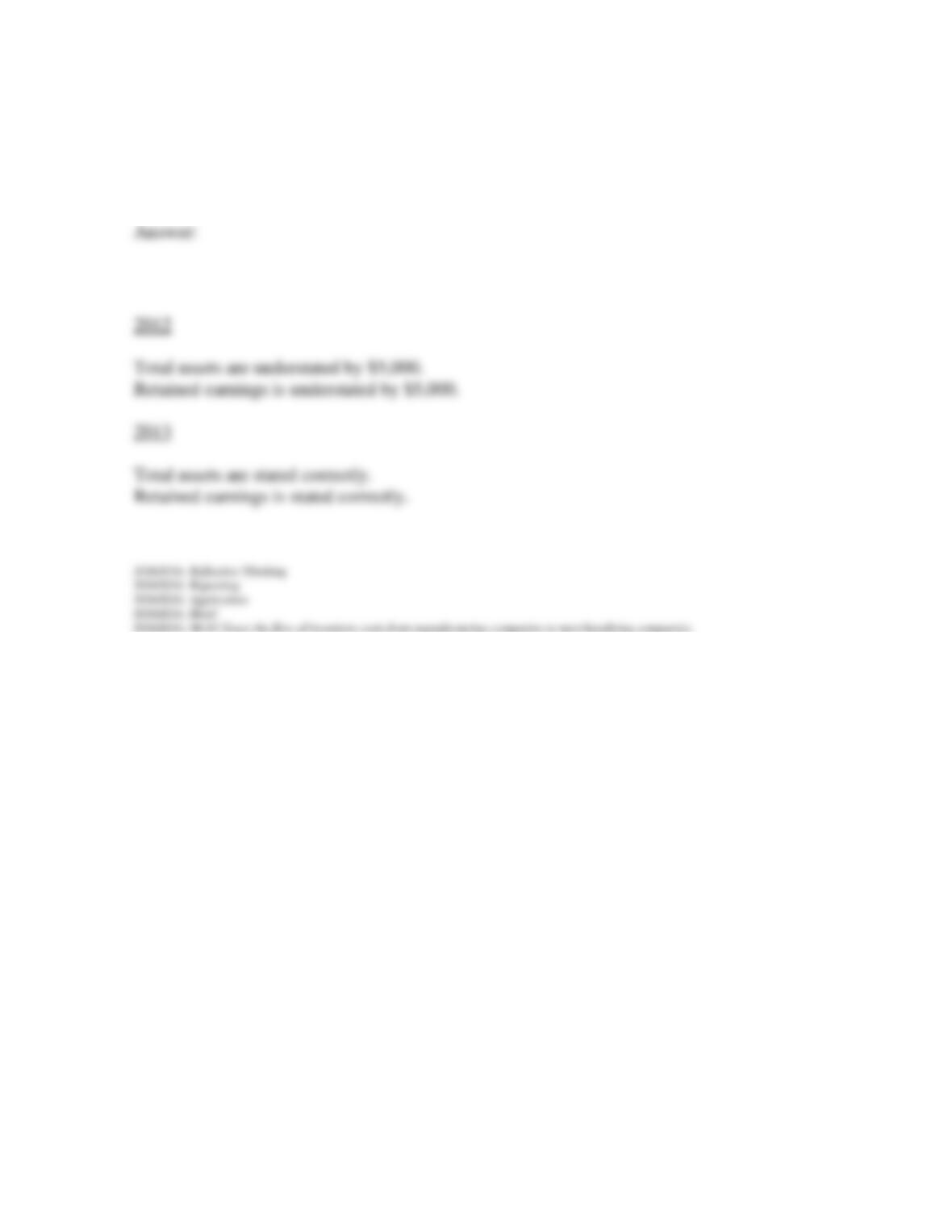
134. A company overstated its ending inventory balance by $6,000 in 2012. What impact will
this error have on cost of goods sold and gross profit in 2012 and 2013?
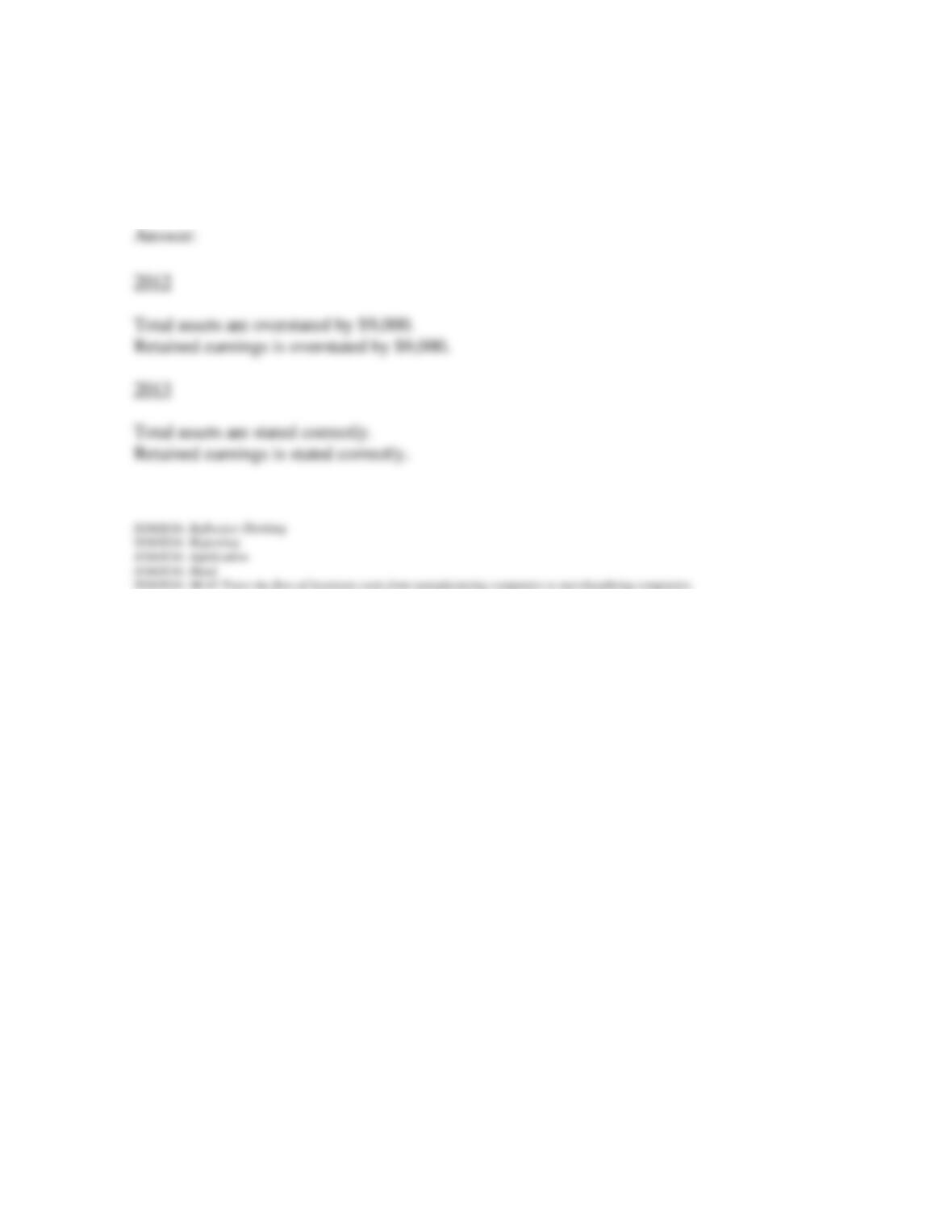
135. A company understated its ending inventory balance by $5,000 in 2012. What impact
will this error have on total assets and retained earnings in 2012 and 2013 (ignoring tax
effects)?
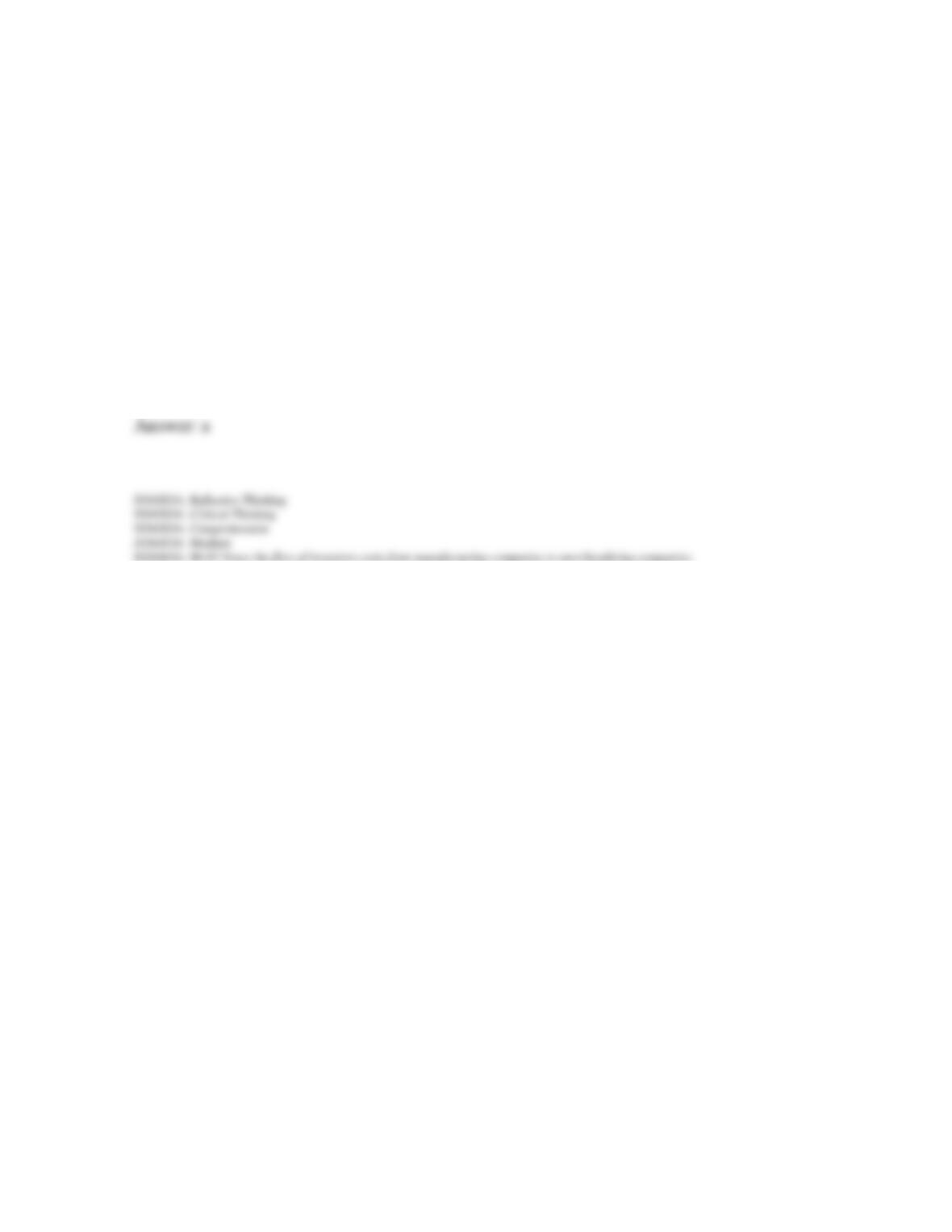
136. A company overstated its ending inventory balance by $9,000 in 2012. What impact will
this error have on total assets and retained earnings in 2012 and 2013 (ignoring tax effects)?
137. Listed below are five terms followed by a list of phrases that describe or characterize the
terms. Match each phrase with the best term placing the letter designating the term in the
space provided.
Terms:
a. Work-in-process inventory
b. Merchandising companies
c. Finished goods
d. Raw materials
e. Manufacturing companies _____ Products that have started the production process but are
not yet complete at the end of the period.
138. Listed below are five terms followed by a list of phrases that describe or characterize the
terms. Match each phrase with the best term placing the letter designating the term in the
space provided.
Terms:
a. Work-in-process inventory
b. Merchandising companies
c. Finished goods
d. Raw materials
e. Manufacturing companies _____ Inventory items for which the manufacturing process is
complete.
139. Listed below are five terms followed by a list of phrases that describe or characterize the
terms. Match each phrase with the best term placing the letter designating the term in the
space provided.
Terms:
a. Work-in-process inventory
b. Merchandising companies
c. Finished goods
d. Raw materials
e. Manufacturing companies _____ Companies that produce the inventories they sell, rather
than buying them from suppliers in finished form.
140. Listed below are five terms followed by a list of phrases that describe or characterize the
terms. Match each phrase with the best term placing the letter designating the term in the
space provided.
Terms:
a. Work-in-process inventory
b. Merchandising companies
c. Finished goods
d. Raw materials
e. Manufacturing companies_____ Companies that purchase inventories that are primarily in
finished form for resale to customers.
141. Listed below are five terms followed by a list of phrases that describe or characterize the
terms. Match each phrase with the best term placing the letter designating the term in the
space provided.
Terms:
a. Work-in-process inventory
b. Merchandising companies
c. Finished goods
d. Raw materials
e. Manufacturing companies _____ Cost of components that will become part of the finished
product but have not yet been used in production.
142. What does the balance of cost of goods sold in the income statement represent? What
does the balance of inventory in the balance sheet represent?
143. Listed below are ten terms followed by a list of phrases that describe or characterize five
of the terms. Match each phrase with the best term placing the letter designating the term in
the space provided.
Terms:
a. Ending inventory
b. Freight-in
c. Cost of goods sold
d. LIFO conformity rule
e. LIFO
f. Freight-out
g. LIFO reserve
h. Specific identification
i. FIFO
j. Average cost
_____ Cost of inventory not sold by the end of the period.
144. Listed below are ten terms followed by a list of phrases that describe or characterize five
of the terms. Match each phrase with the best term placing the letter designating the term in
the space provided.
Terms:
a. Ending inventory
b. Freight-in
c. Cost of goods sold
d. LIFO conformity rule
e. LIFO
f. Freight-out
g. LIFO reserve
h. Specific identification
i. FIFO
j. Average cost
_____ Cost flow assumption that assumes first units purchased are sold first.
145. Listed below are ten terms followed by a list of phrases that describe or characterize five
of the terms. Match each phrase with the best term placing the letter designating the term in
the space provided.
Terms:
a. Ending inventory
b. Freight-in
c. Cost of goods sold
d. LIFO conformity rule
e. LIFO
f. Freight-out
g. LIFO reserve
h. Specific identification
i. FIFO
j. Average cost
_____ Inventory costing method that assumes both cost of goods sold and ending inventory
consist of a random mixture of all the goods available for sale.
146. Listed below are ten terms followed by a list of phrases that describe or characterize five
of the terms. Match each phrase with the best term placing the letter designating the term in
the space provided.
Terms:
a. Ending inventory
b. Freight-in
c. Cost of goods sold
d. LIFO conformity rule
e. LIFO
f. Freight-out
g. LIFO reserve
h. Specific identification
i. FIFO
j. Average cost
_____ LIFO must be used for financial reporting if elected for taxes.
147. Listed below are ten terms followed by a list of phrases that describe or characterize five
of the terms. Match each phrase with the best term placing the letter designating the term in
the space provided.
Terms:
a. Ending inventory
b. Freight-in
c. Cost of goods sold
d. LIFO conformity rule
e. LIFO
f. Freight-out
g. LIFO reserve
h. Specific identification
i. FIFO
j. Average cost
_____ Cost of freight not included in inventory.