Chapter 06 – Reporting and Interpreting Sales Revenue, Receivables, and Cash
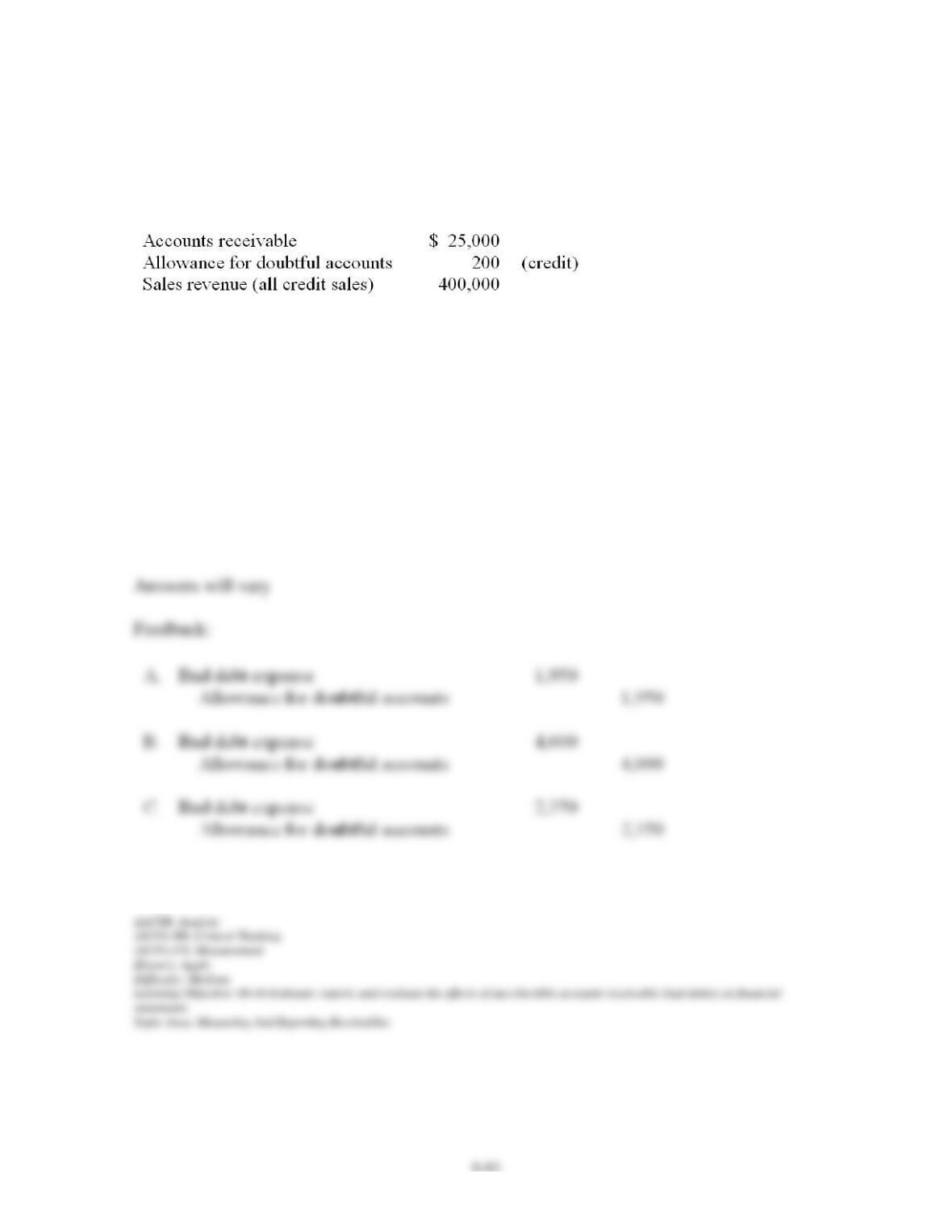
105. On December 31, 2011, Colonial Corporation had the following account balances related
to credit sales and receivables prior to recording adjusting entries:
Requirements:
Present the necessary year-end adjusting entry related to uncollectible accounts for each of the
following independent assumptions:
A. An aging of accounts receivable is completed. It is estimated that $2,150 of the receivables
outstanding at year-end will be uncollectible.
B. It is estimated that 1% of credit sales for the year will prove to be uncollectible.
C. Assume the same information presented in part A. Except that prior to adjustment, the
allowance for doubtful accounts had a debit balance of $200 rather than a credit balance of
$200.
Chapter 06 – Reporting and Interpreting Sales Revenue, Receivables, and Cash
106. On January 1, American Company’s allowance for doubtful accounts had a credit
balance of $3,000. The balance in the Accounts Receivable account on that date was $75,000.
On January 2, prior to any credit sales, a $500 account from National Company was deemed
to be uncollectible and written off.
Required:
A. Compute the net realizable value of American’s receivables on January 1.
B. Present the journal entry American would record on January 2 related to the write-off of
National’s account.
C. Compute the net realizable value of American’s receivables on January 2, immediately
following the write-off of National’s account.
Chapter 06 – Reporting and Interpreting Sales Revenue, Receivables, and Cash
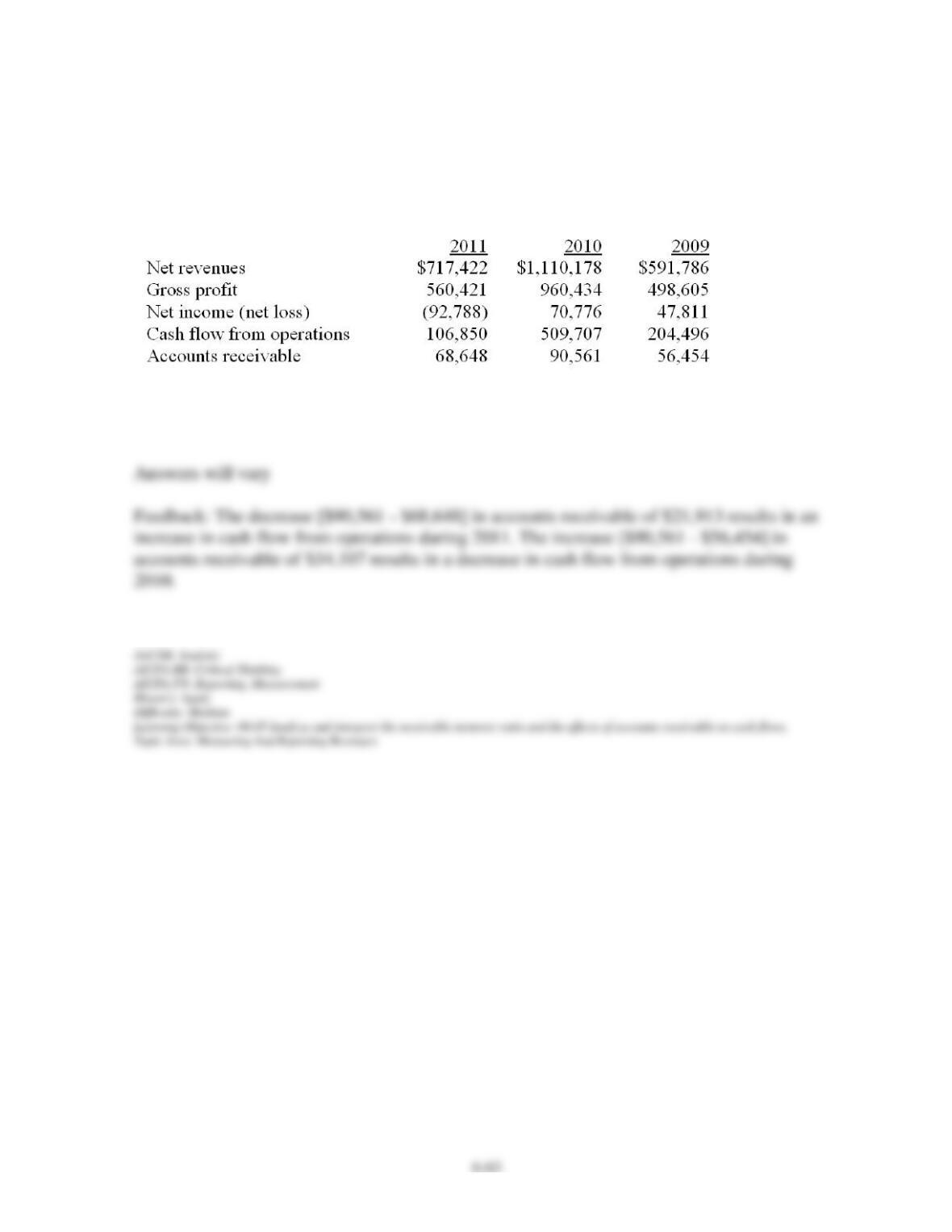
107. Cyclone Inc. reported the following figures from their financial statements for the years
2009 through 2011:
Describe how the change in accounts receivable will affect the calculation of cash flow from
operations for 2011 and 2010.
Chapter 06 – Reporting and Interpreting Sales Revenue, Receivables, and Cash
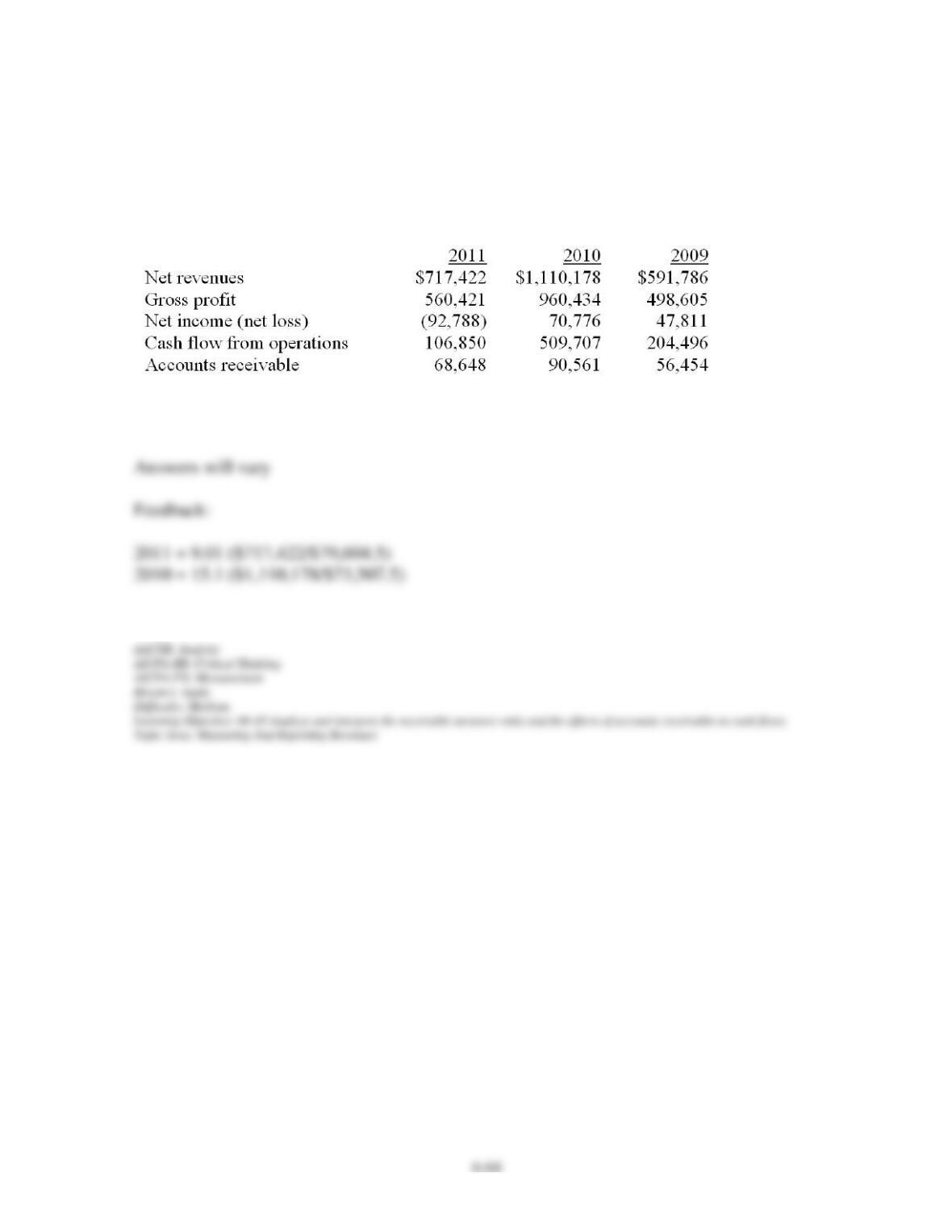
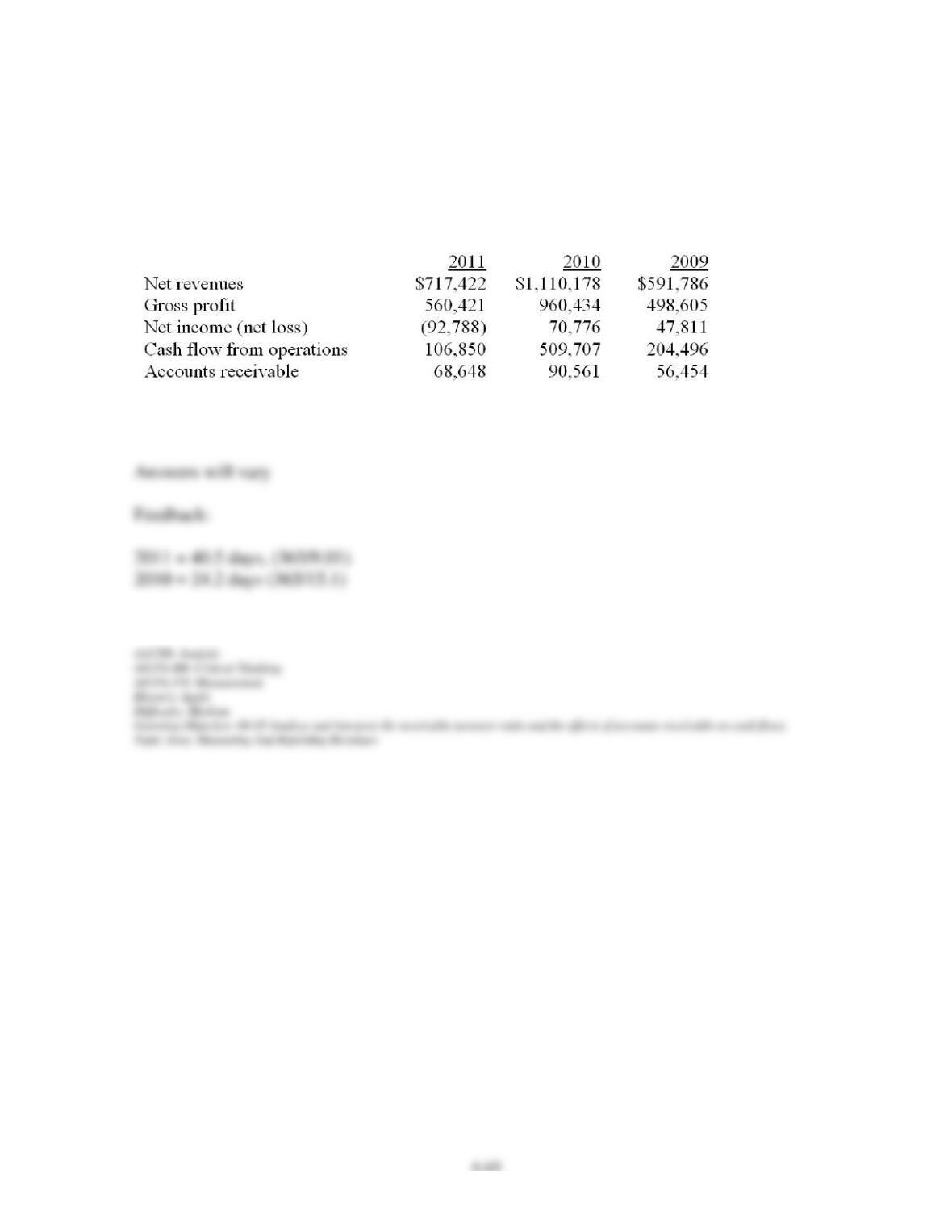
108. Cyclone Inc. reported the following figures from their financial statements for the years
2009 through 2011:
Calculate the accounts receivable turnover for 2011 and 2010:
Chapter 06 – Reporting and Interpreting Sales Revenue, Receivables, and Cash
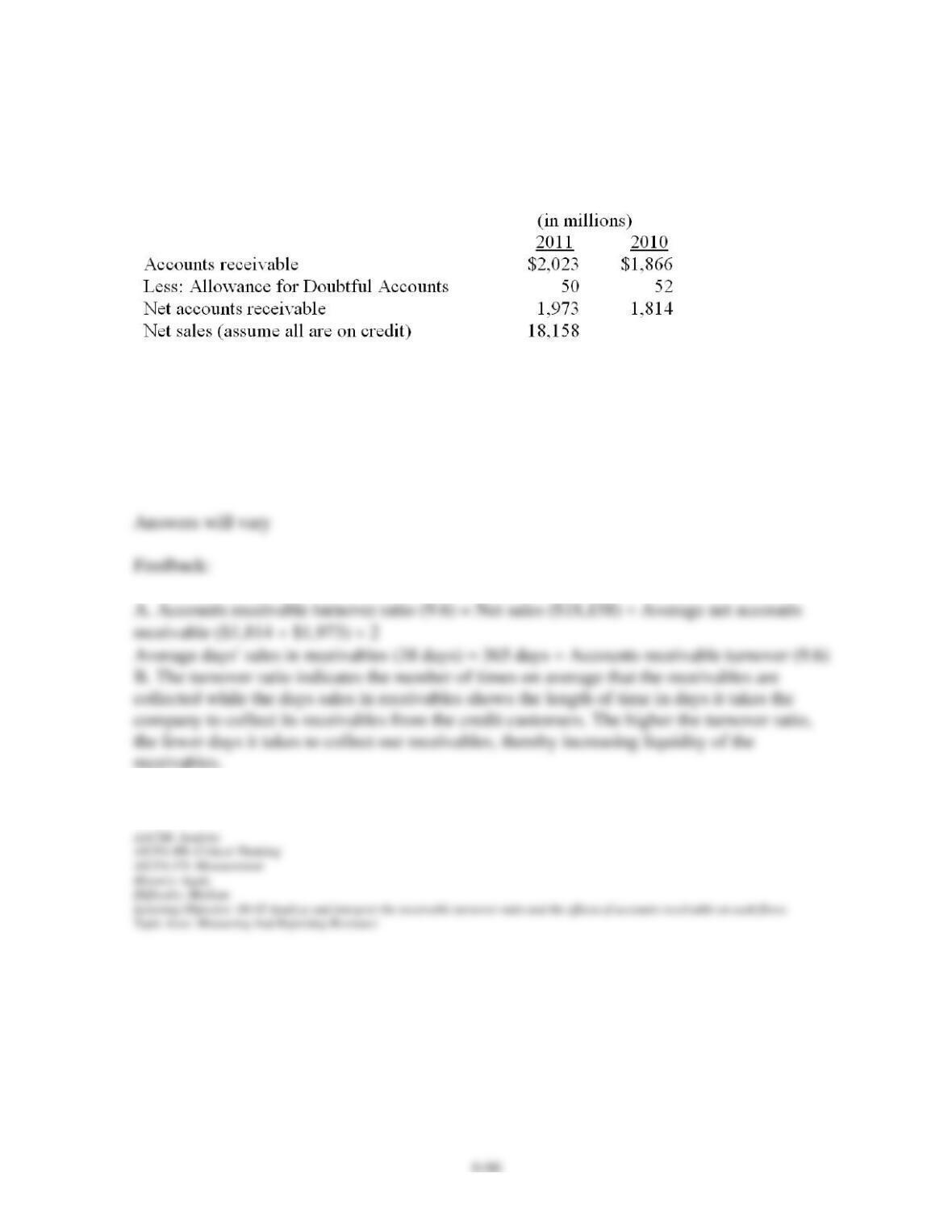
109. Cyclone Inc. reported the following figures from their financial statements for the years
2009 through 2011:
Calculate the days’ sales in receivables for 2011 and 2010:
Chapter 06 – Reporting and Interpreting Sales Revenue, Receivables, and Cash
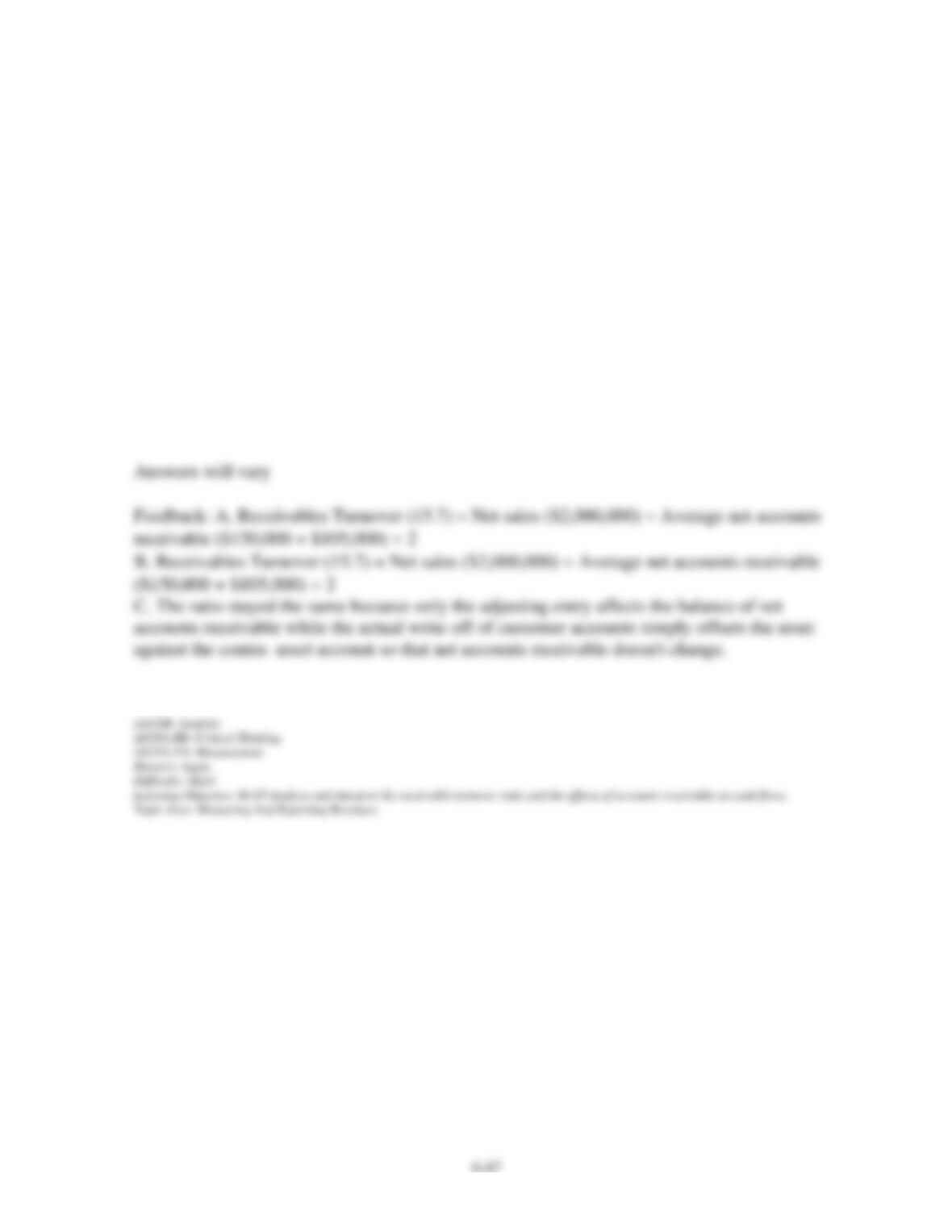
110. A recent annual report for Kirova Company contained the following data:
Requirements:
A. Calculate the accounts receivable turnover ratio and average days’ sales in receivables for
2011.
B. Explain the meaning of each number.
Chapter 06 – Reporting and Interpreting Sales Revenue, Receivables, and Cash
111. During 2011, Charles Inc. recorded credit sales of $2,000,000. Based on prior
experience, it estimates a 1 percent bad debt rate on credit sales. At the beginning of the year,
the balance in net accounts receivable was $150,000. At the end of the year, but before the
bad debt expense adjustment was recorded and before any bad debts had been written off, the
balance in net accounts receivable was $125,000.
A. Assume that on December 31, 2011, the appropriate bad debt expense adjustment was
recorded for the year 2011 and accounts receivable totaling $10,000 were written off for the
year, what was the receivables turnover ratio for the year?
B. Assume that on December 31, 2011, the appropriate bad debt expense adjustment was
recorded for the year 2011 and accounts receivable totaling $12,000 were written off for the
year, what was the receivables turnover ratio for the year?
C. Explain why the answers to parts 1 and 2 differ or do not differ.
Chapter 06 – Reporting and Interpreting Sales Revenue, Receivables, and Cash
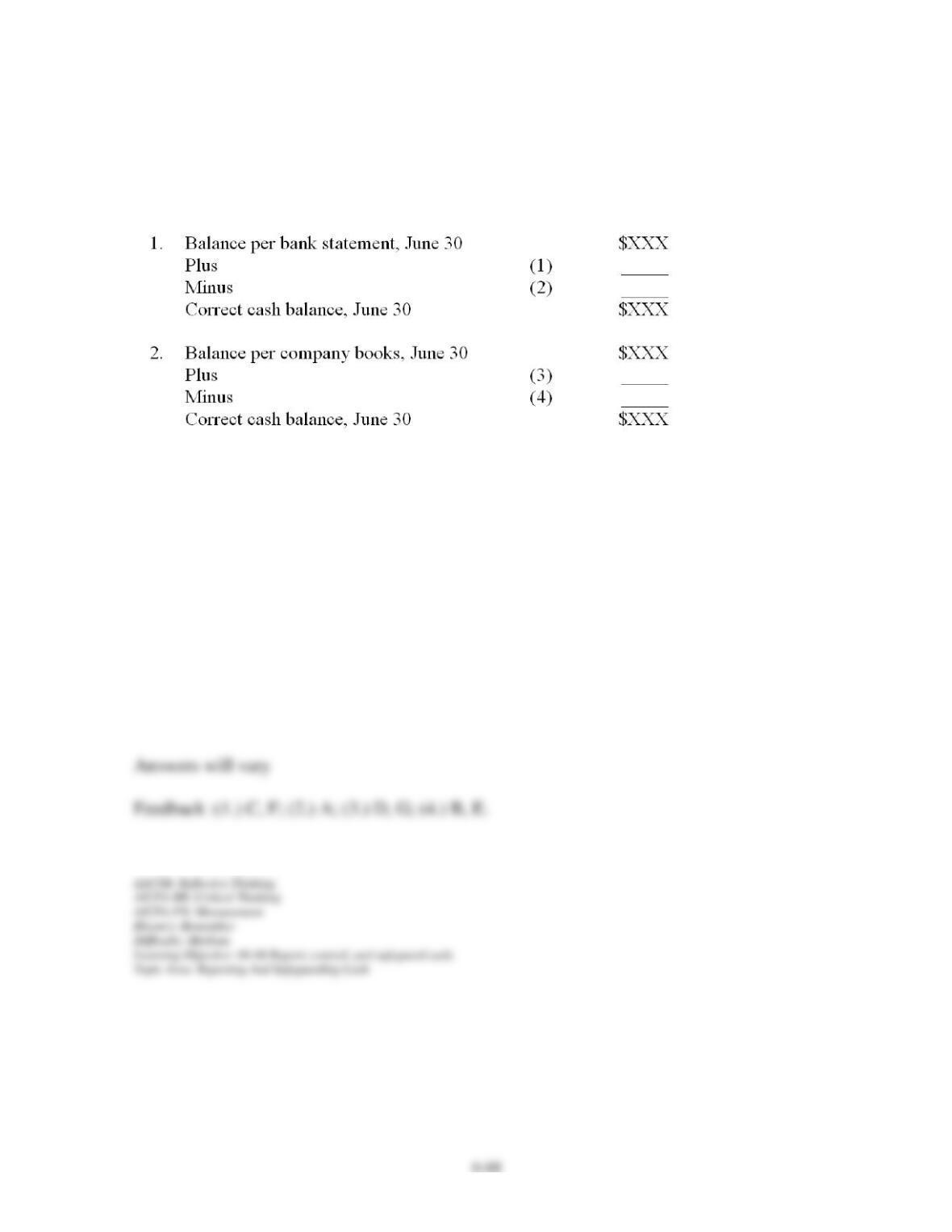
112. Where, if at all, do items A through G (listed below) belong in the following bank
reconciliation?
Items:
A. Checks written during June that had not cleared the bank by June 30.
B. Bank service charges for June which were not known until the June 30th bank statement
arrived.
C. Deposit made on June 30 that did not reach the bank until July 1.
D. Upon reviewing the company’s cash receipts book after June 30, it was discovered the
accounting clerk had neglected to post one receipt to the cash account.
E. The bank statement reported a “NSF check” during June.
F. The bank incorrectly deducted the check of another company to the bank account during
June.
G. The company was paid interest on its account by the bank.
Chapter 06 – Reporting and Interpreting Sales Revenue, Receivables, and Cash
113. Why is the reconciliation of a company’s cash account to the bank statement so important
for effective internal control for cash?
Chapter 06 – Reporting and Interpreting Sales Revenue, Receivables, and Cash
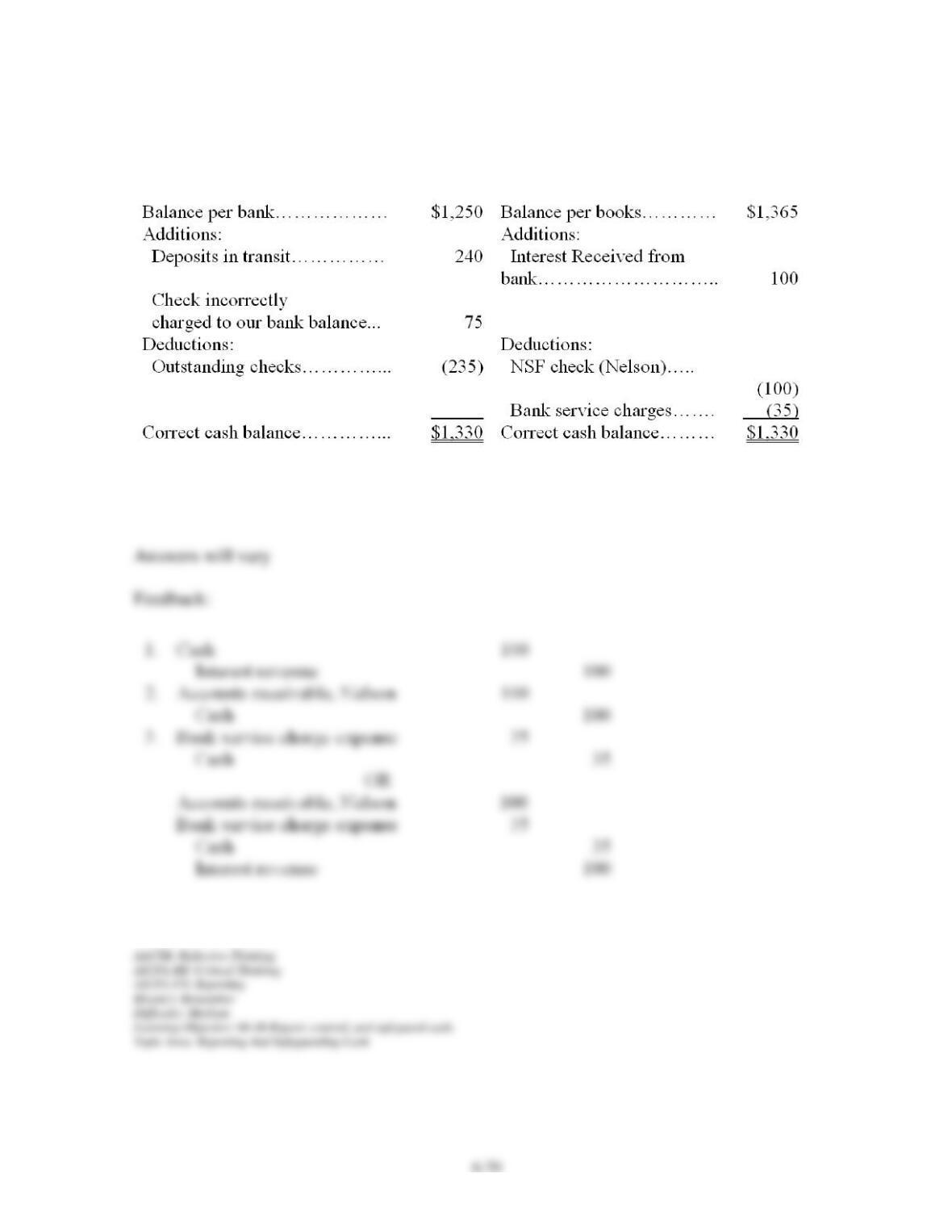
114. Illinois Company prepared the following bank reconciliation at May 31:
Prepare the necessary journal entries for Illinois Company required by the May 31 bank
reconciliation.
Chapter 06 – Reporting and Interpreting Sales Revenue, Receivables, and Cash
6-71
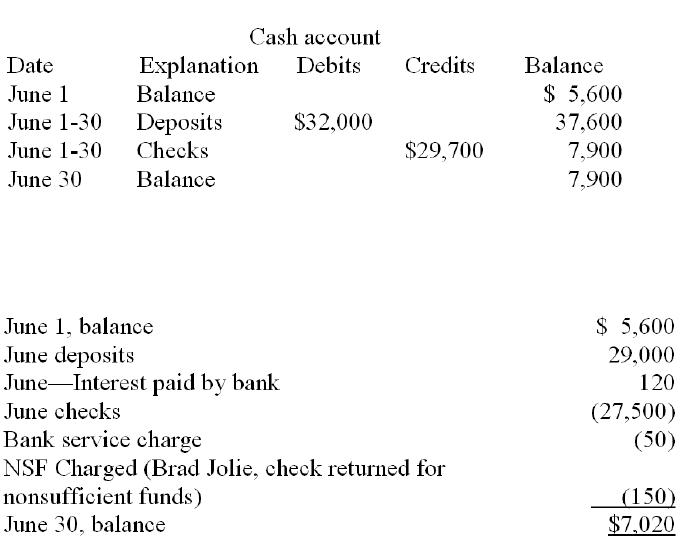
115. Chicago Company has hired you to reconcile its bank statement and cash account. For
June, the Cash account showed the following:
The June bank statement, just received, showed the following:
There were neither outstanding checks nor deposits in transit at May 31.
A. Prepare the bank reconciliation.
B. Prepare the adjusting journal entries needed due to the bank reconciliation.
C. What is the June 30 ending cash balance?