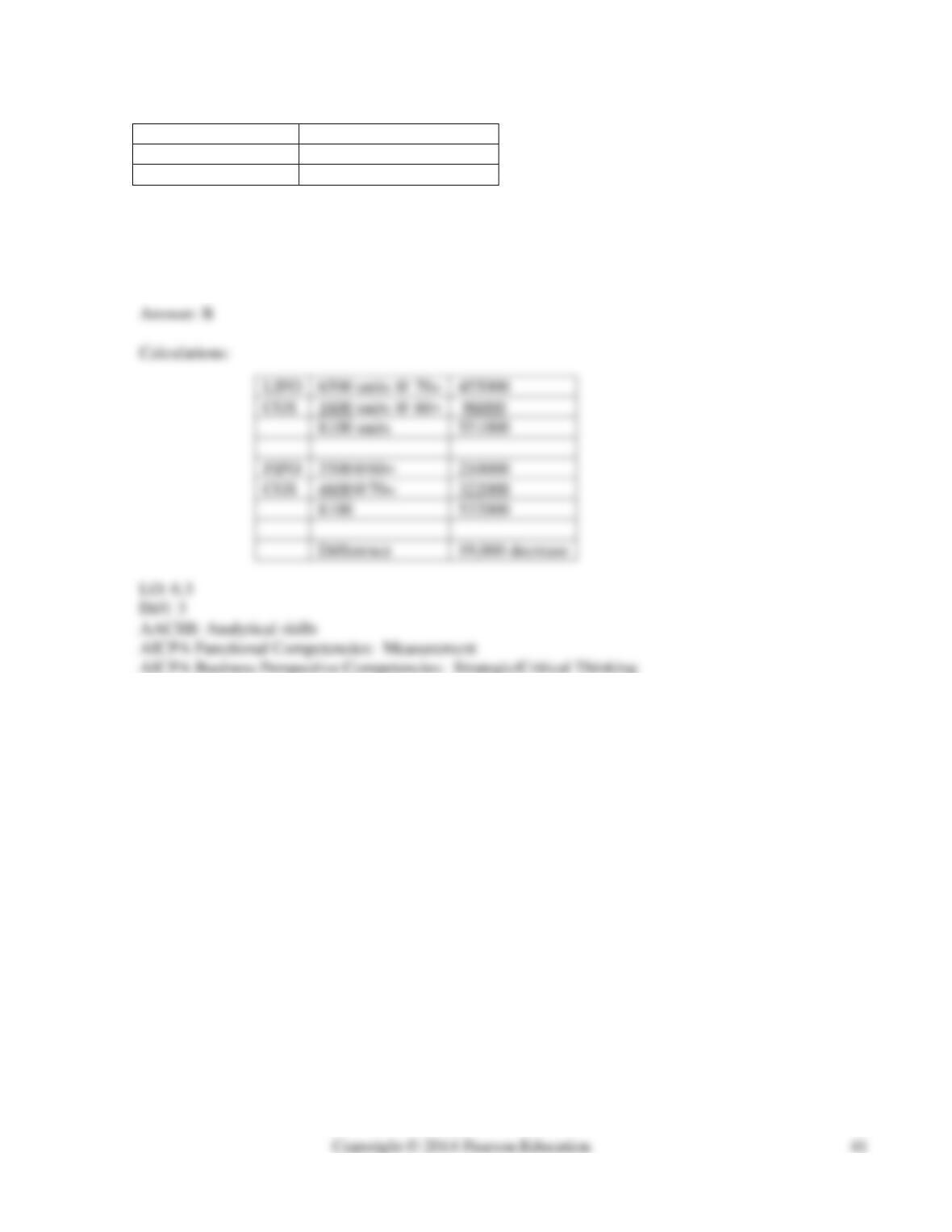
6.3-61 Given the following data, by how much would taxable income change if LIFO is used rather than FIFO?
Beginning inventory
3,500 units at $60
Purchases
6,500 units @ $70
Units sold
8,100
A) Decrease by $15,000
B) Decrease by $19,000
C) Increase by $15,000
D) Increase by $19,000
LIFO
6500 units @ 70=
455000
1600 units @ 60=
96000
8100 units
551000
FIFO
3500@60=
210000
4600@70=
322000
8100
532000
Difference
19,000 decrease
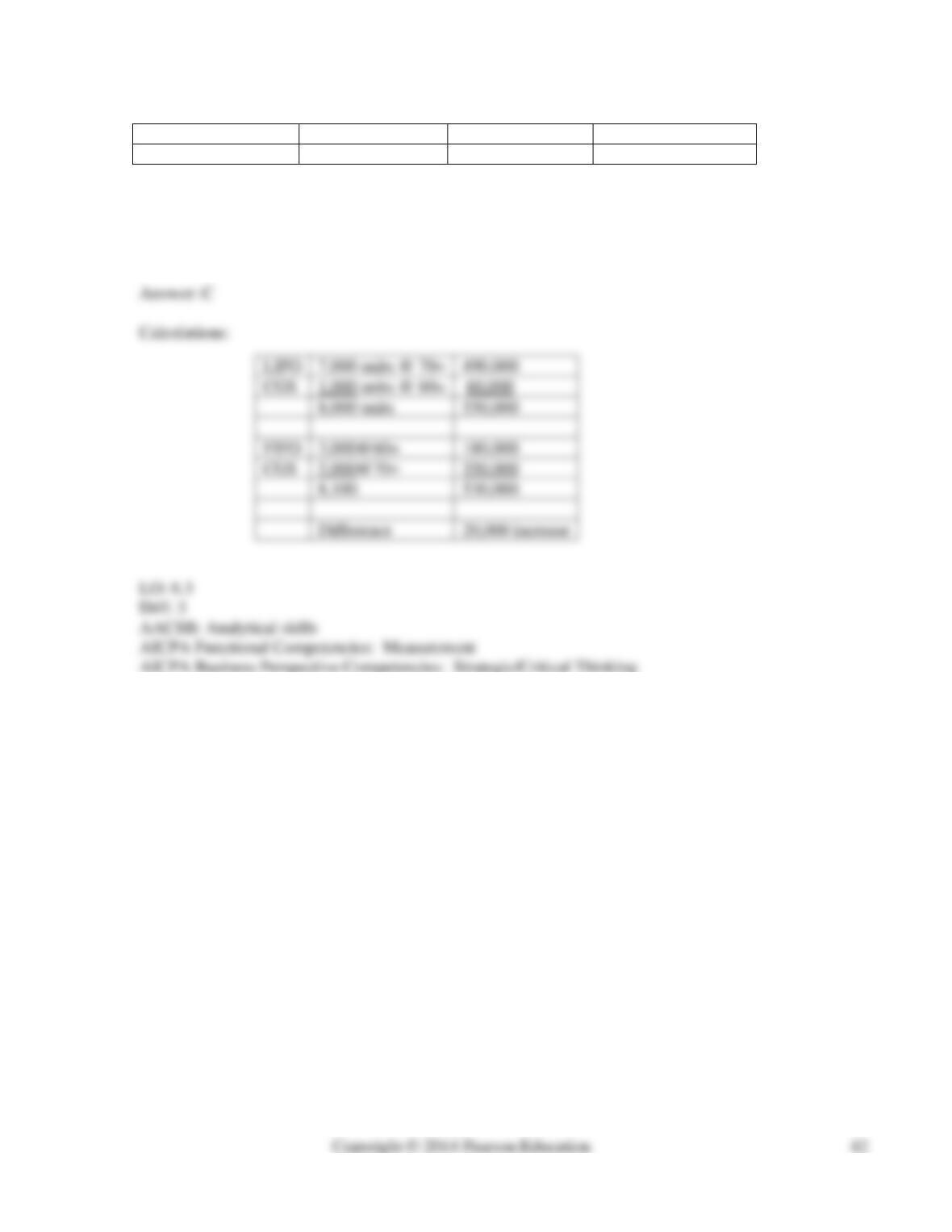
6.3-62 Given the following data, by how much would taxable income change if FIFO is used rather than LIFO?
Beginning inventory
3,000 units at $60
Purchases
7,000 units at $70
Units sold
8,000
A) Decrease by $20,000
B) Decrease by $19,000
C) Increase by $20,000
D) Increase by $19,000
7,000 units @ 70=
490,000
8,000 units
550,000
FIFO
3,000@60=
180,000
5,000@70=
350,000
8,100
530,000
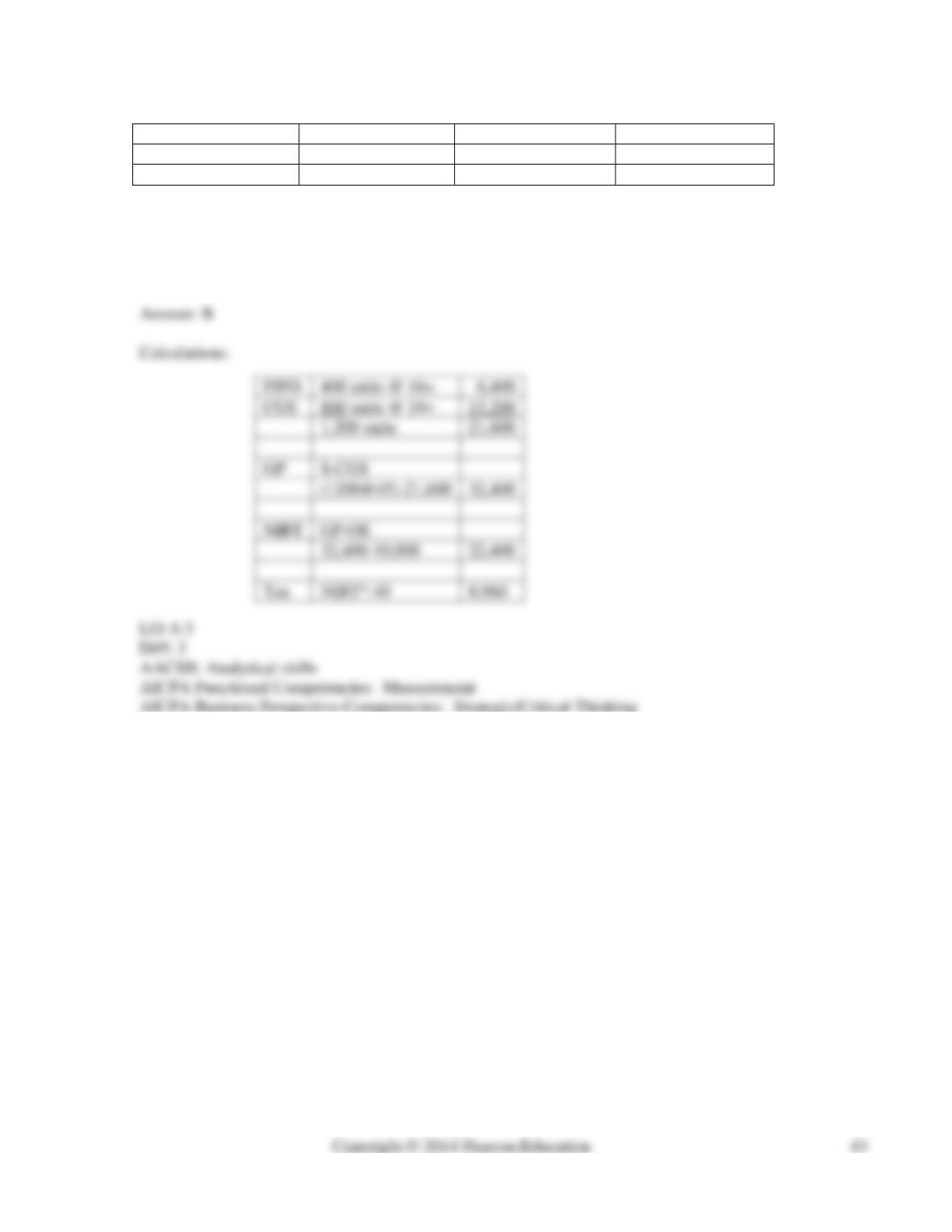
6.3-63 Given the following data, what would the income tax amount be if the company uses FIFO?
Beginning inventory
400 units at $16
Purchases
1,600 units at $19
Units sold
1,200 units at $45
Operating expenses
$10,000
Tax rate
40%
A) $ 6,800
B) $ 8,960
C) $10,200
D) $13,440
FIFO
400 units @ 16=
6,400
800 units @ 19=
15,200
1,200 units
21,600
(1200@45)-21,600
32,400
NIBT
32,400-10,000
22,400
Tax
NIBT*.40
8,960
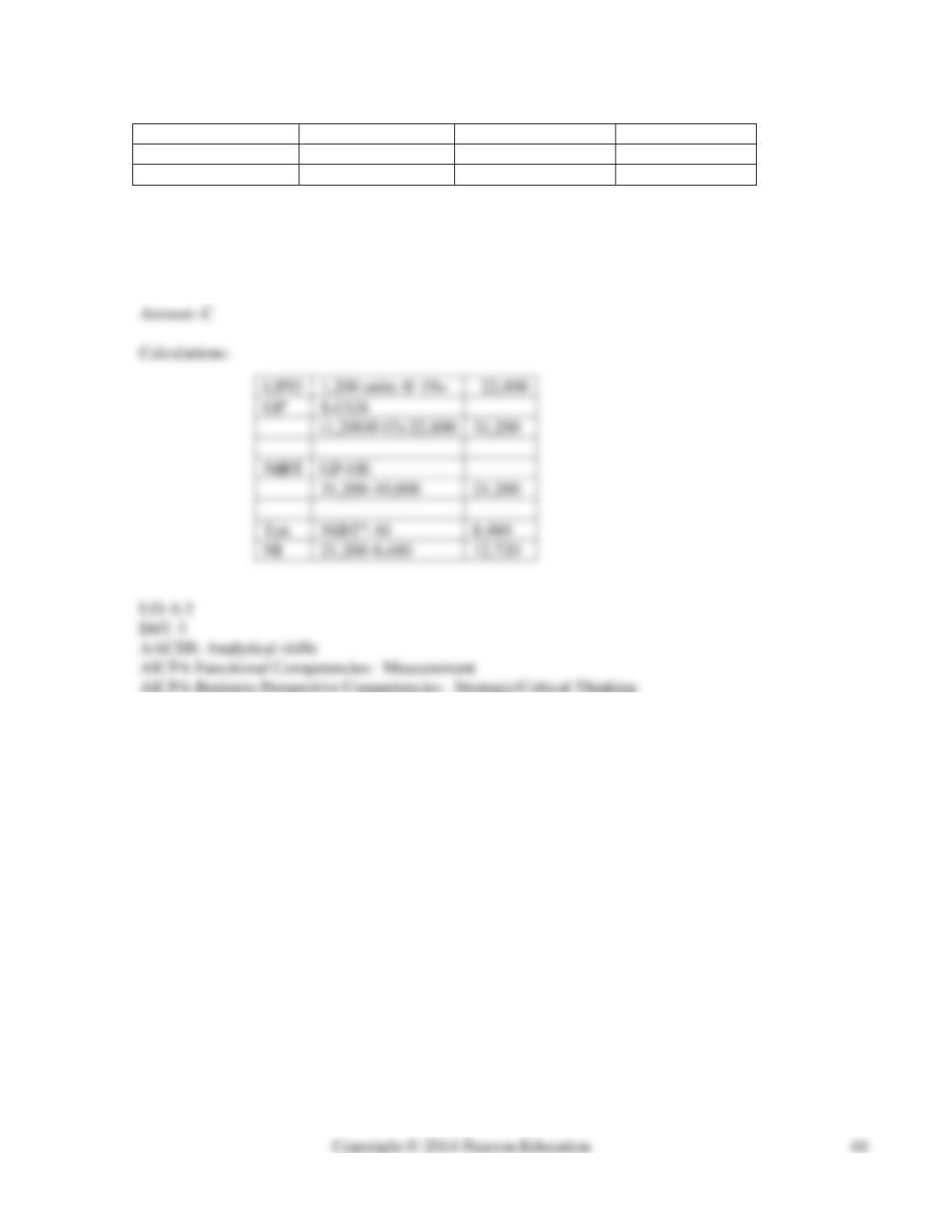
6.3-64 Given the following data, what would the net income after taxes be if the company uses LIFO?
Beginning inventory
400 units at $16
Purchases
1,600 units at $19
Units sold
1,200 units at $45
Operating expenses
$10,000
Tax rate
40%
A) $ 6,800
B) $ 8,960
C) $12,720
D) $13,440
LIFO
1,200 units @ 19=
22,800
(1,200@45)-22,800
31,200
NIBT
31,200-10,000
21,200
Tax
NIBT*.40
8,480
21,200-8,480
12,720
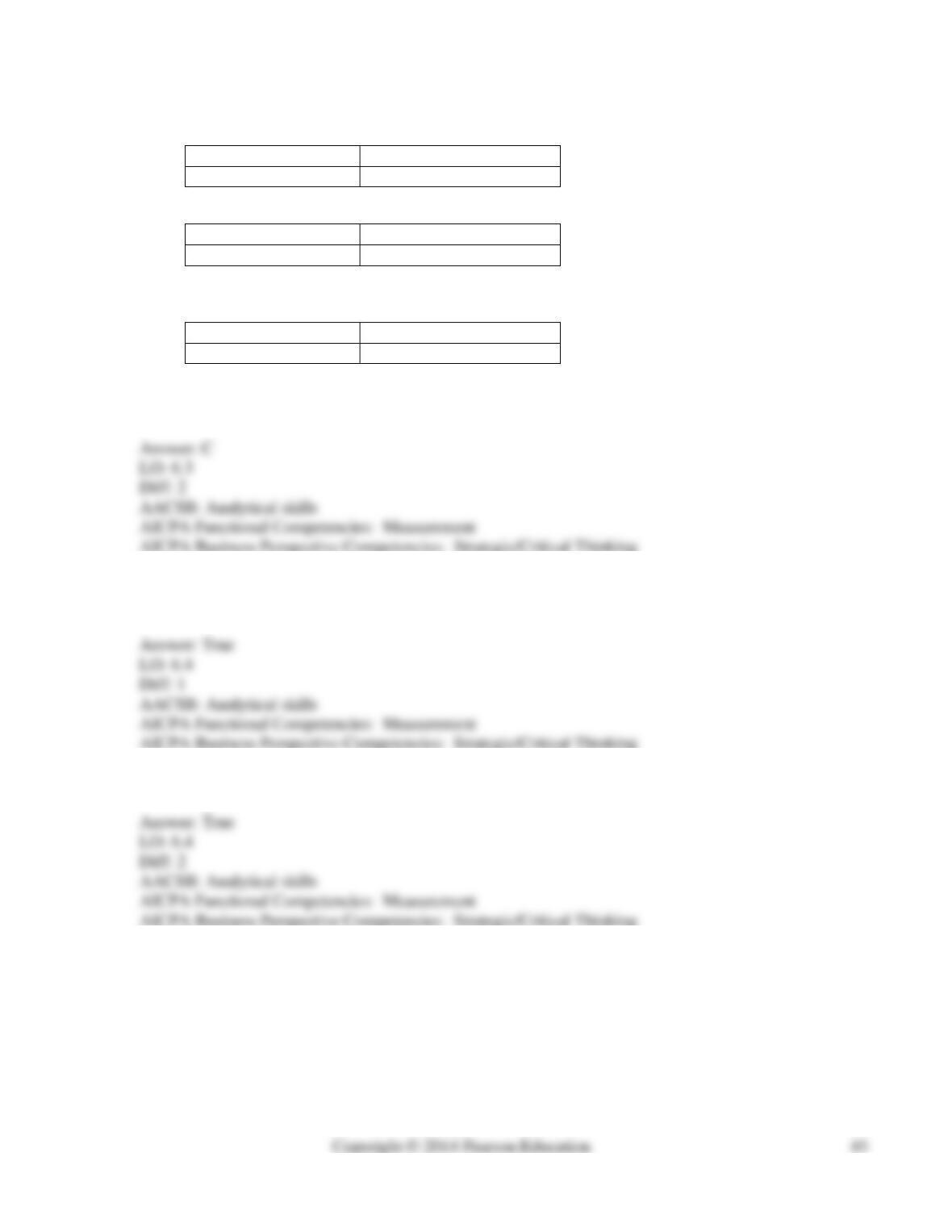
6.3-65 Bronx Company’s ending inventory (at cost) was greater than the market value of the ending inventory.
What adjusting entry is required to account for this difference?
A)
B)
C)
D) No adjusting entry is required.
6.41 QMB Co. attempts to sell its inventory as quickly as possible, because no profit is produced until the
inventory is sold.
6.4-2 The gross profit percentage expresses the relationship between gross profit and net sales revenue.
Cost of Goods Sold
Sales
Inventory
Cost of Goods Sold
Cost of Goods Sold
Inventory
6.4-3 The inventory turnover figure should be the same no matter what business a company is in.
6.4-4 A company can use the cost-of-goods-sold formula to determine how much inventory to purchase.
6.4-5 The cost-of-goods-sold model is extremely powerful because it captures all the inventory information for
an entire accounting period.
6.4-6 Inventory turnover is calculated as:
A) cost of goods sold minus ending inventory.
B) cost of goods sold divided by average inventory.
C) average inventory divided by cost of goods sold.
D) average inventory multiplied by cost of goods sold.
6.4-7 A gross profit margin of 30% means that:
A) for each dollar of sales, the company has a cost of goods sold of seventy cents.
B) for each dollar of sales, the company has a gross profit of thirty cents.
C) for each dollar of sales, the company has a cost of goods sold of thirty cents.
D) both A and B are true.
6.4-8 An indication of how quickly inventory is sold is the:
A) gross profit percentage.
B) cost-of-goods-sold model.
C) inventory turnover.
D) gross margin percentage.
6.4-9 The gross profit rate is calculated as:
A) cost of goods sold divided by net sales revenue.
B) net sales revenue minus gross profit on sales.
C) net sales revenue minus cost of goods sold.
D) gross profit divided by net sales revenue.
6.4-10 The cost-of-goods sold model is:
A) beginning inventory, plus purchases, plus ending inventory equals cost of goods sold.
B) beginning inventory, less purchases, less ending inventory equals cost of goods sold.
C) beginning inventory, plus purchases, less ending inventory equals cost of goods sold.
D) beginning inventory, less purchases, plus ending inventory equals cost of goods sold
6.4-11 To determine how much inventory a company should buy, the following formula should be used:
A) Cost of goods sold, plus ending inventory, less beginning inventory equals purchases.
B) Cost of goods sold, less ending inventory, less beginning inventory equals purchases.
C) Cost of goods sold, plus ending inventory, plus beginning inventory equals purchases.
D) None of the above are correct.
6.4-12 Char Daniels, controller for Chaka Inc., has the following items:
Sales revenue
$300,000
Cost of goods sold
$180,000
Beginning inventory
$85,000
Ending inventory
$65,000
Inventory turnover is:
A) 4.00.
B) 2.40.
C) 2.12.
D) 2.00.
6.4-13Char Daniels, controller for Chaka Inc., has the following items:
Sales revenue
$300,000
Cost of goods sold
$180,000
Beginning inventory
$85,000
Ending inventory
$65,000
The gross profit rate is:
A) 20%.
B) 40%.
C) 50%.
D) 60%.
6.4-14 Max from Darnel Inc. has the following items:
Sales revenue
$320,000
Beginning inventory
$68,000
Ending inventory
$36,000
Gross profit
35%
Inventory turnover is:
A) 2.15.
B) 4.00.
C) 4.31.
D) 6.15.
6.4-15Tonga Industries reported the following:
Net Sales
$450,000
Cost of goods sold
$360,000
Operating expenses
$60,000
Tax Rate
40%
The gross profit percentage is:
A) 80%.
B) 60%.
C) 32%.
D) 20%.
6.4-16 Tonga Industries reported the following:
Net Sales
$450,000
Cost of goods sold
$360,000
Operating expenses
$60,000
Tax Rate
40%
The net income is:
A) $180,000.
B) $ 30,000.
C) $ 18,000.
D) $ 12,000.
6.4-17 Papa Gene’s has the following information:
Cost of Goods Sold percentage
60%
Inventory turnover
5.1
Sales
$1,062,500
Papa Gene’s average inventory is:
A) $ 62,500.
B) $ 83,333.
C) $104,167.
D) $125,000.
6.4-18 The gross profit method is often used for calculating inventory destroyed by a disaster, such as a fire.
6.4-19 In order to detect large errors, a company can use the gross profit method to test for the overall
reasonableness of an ending inventory amount.