39. Which of the following statements is true?
40. Which of the following would be the least appropriate allocation base for allocating
overhead in a highly automated (i.e., capital-intensive) manufacturing company?
41. For which of the following businesses would the job order cost system be appropriate?
42. The loan department of a financial corporation makes loans to businesses. The costs of
processing these loans are often several thousand dollars. All loans are initially evaluated using
the same financial analysis software, but some require outside services such as appraisals and
legal services. Which is the most appropriate costing system for the loan department?
43. The UVW Manufacturing Company produces a single uniform product throughout the year.
Which of the following product costing systems should be used by UVW?
44.
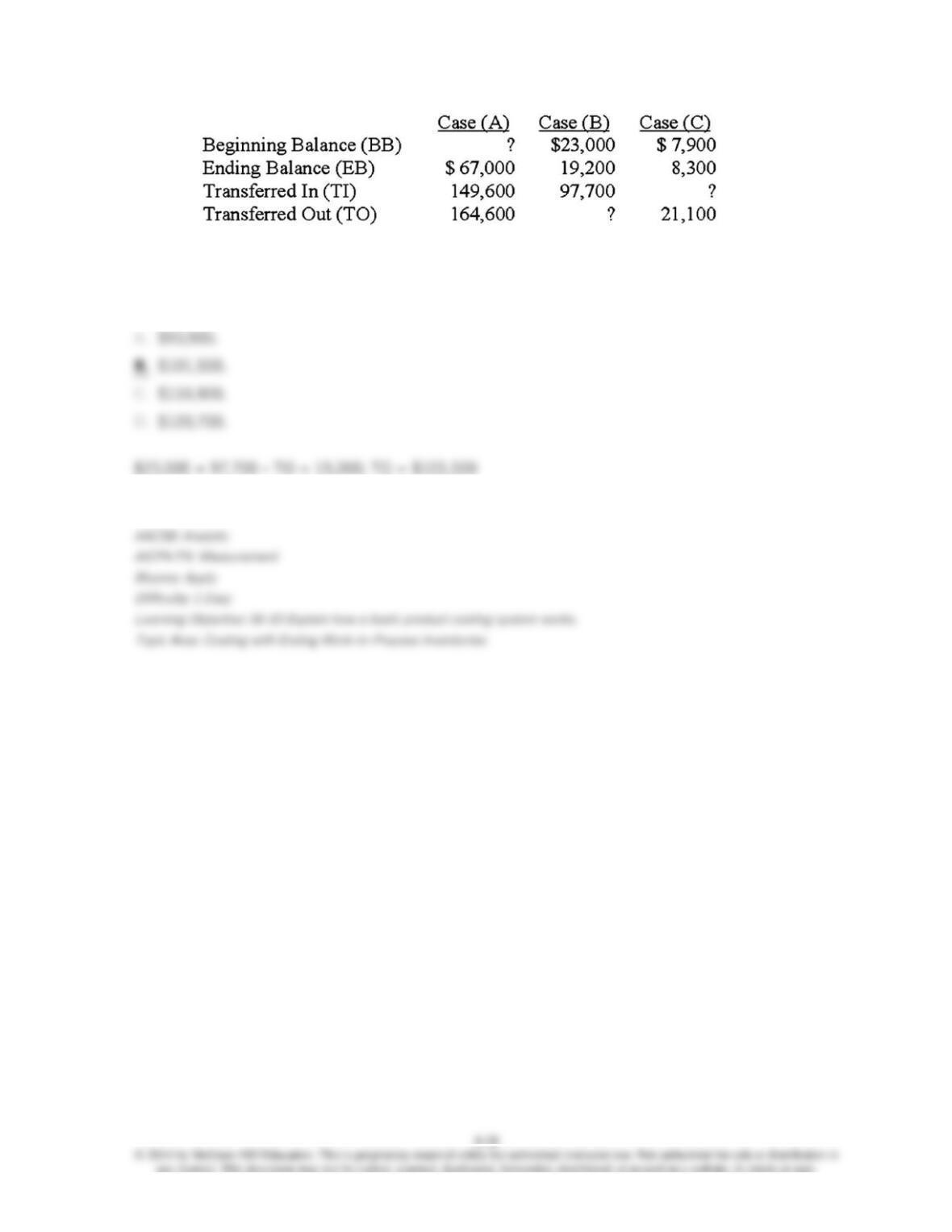
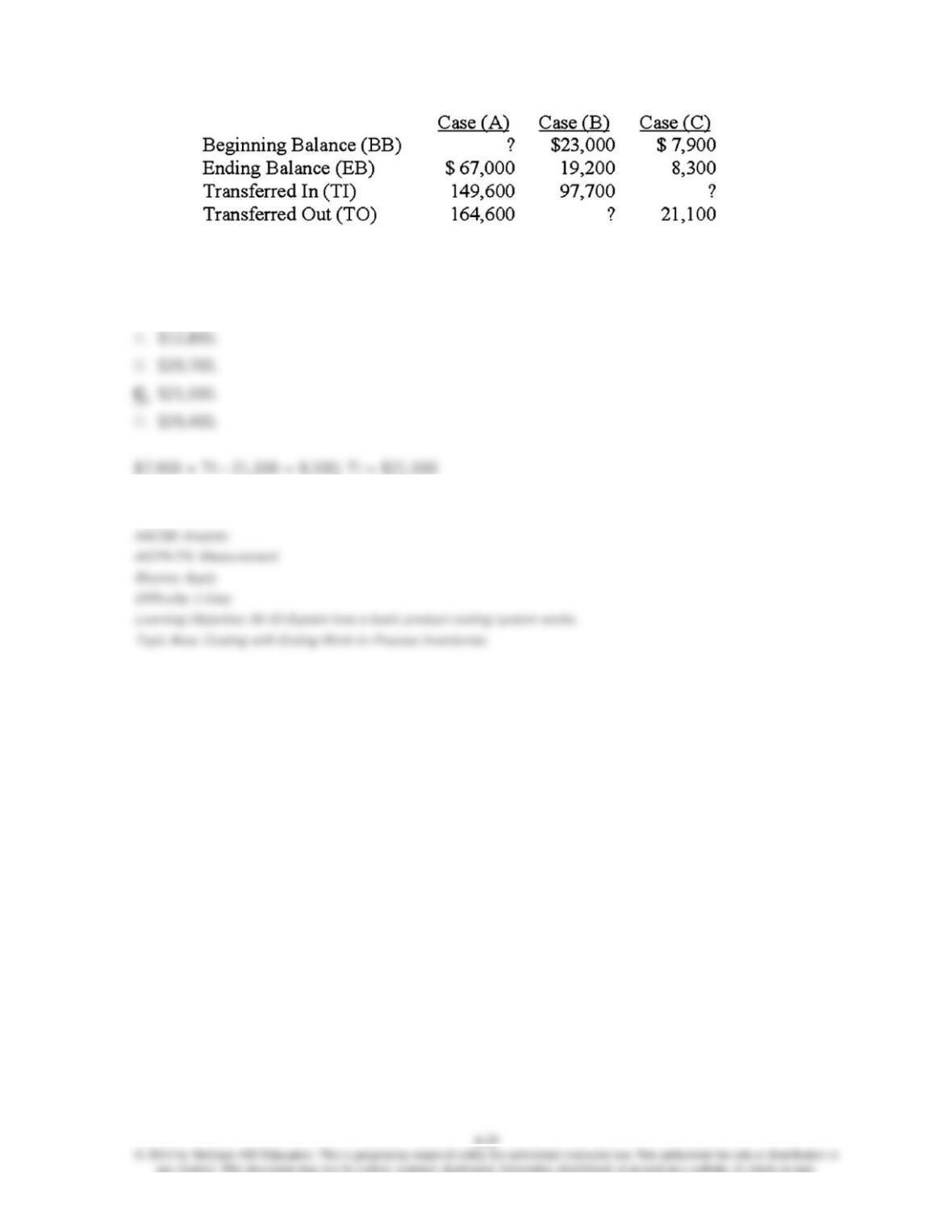
For Case (A) above, what is the Beginning Balance (BB)?
45.
For Case (B) above, what is the amount Transferred Out (TO)?
46.
For Case (C) above, what is the amount Transferred In (TI)?
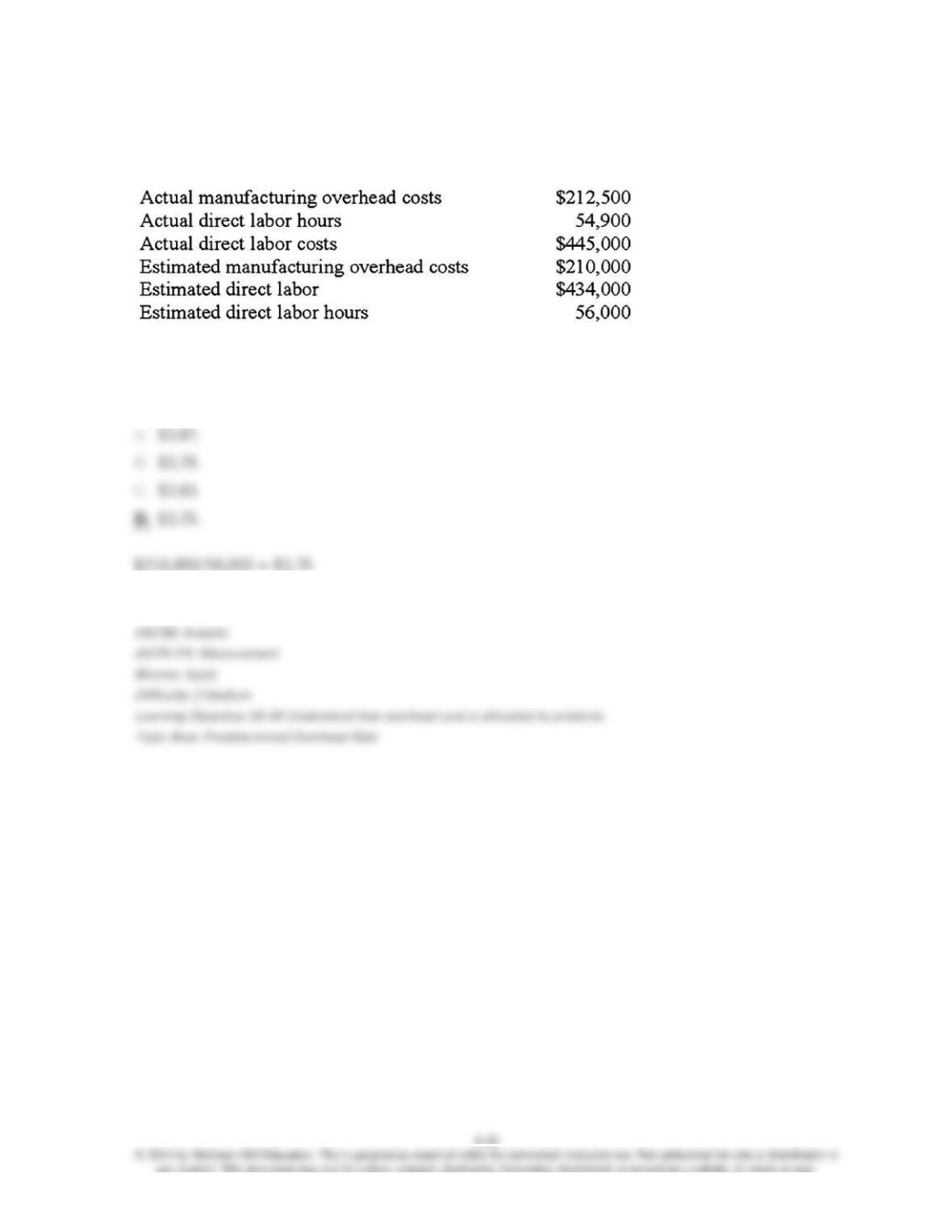
47. The following information has been gathered for the GHI Manufacturing Company for its
fiscal year ending December 31:
What is the predetermined manufacturing overhead rate per direct labor hour?
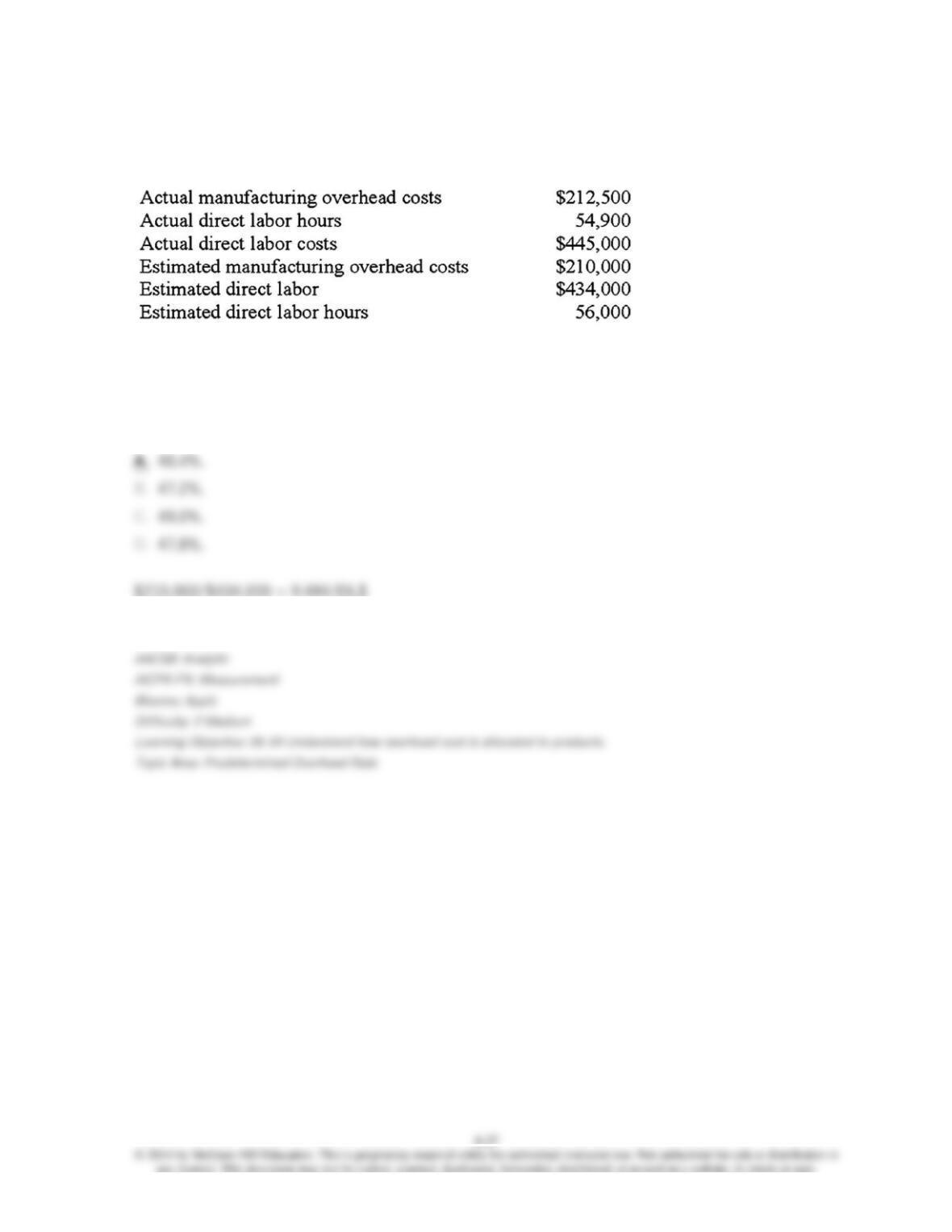
48. The following information has been gathered for the GHI Manufacturing Company for its
fiscal year ending December 31:
What is the predetermined manufacturing overhead rate, assuming direct labor cost is used as the
activity base?
49. The predetermined manufacturing overhead rate for 2012 was $4.00 per direct labor hour;
employees were paid $5.00 per hour. If the estimated direct labor cost was $75,000, what was the
estimated manufacturing overhead?
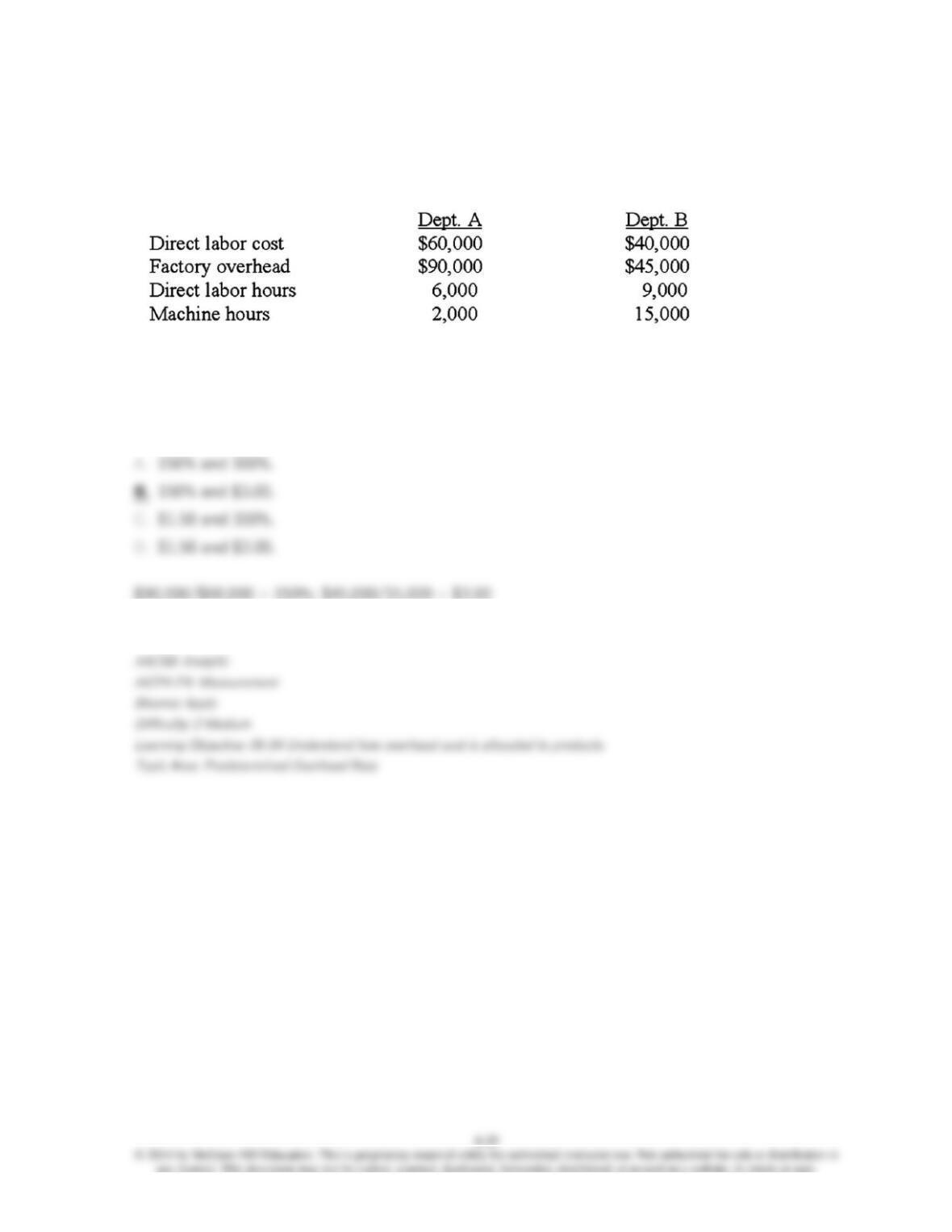
50. The Silver Company uses a predetermined overhead rate in applying overhead to
production orders on a direct labor cost basis in Department A and on a machine hours basis in
Department B. At the beginning of the year, the company made the following estimates:
What predetermined overhead rate would be used in Department A and Department B,
respectively?
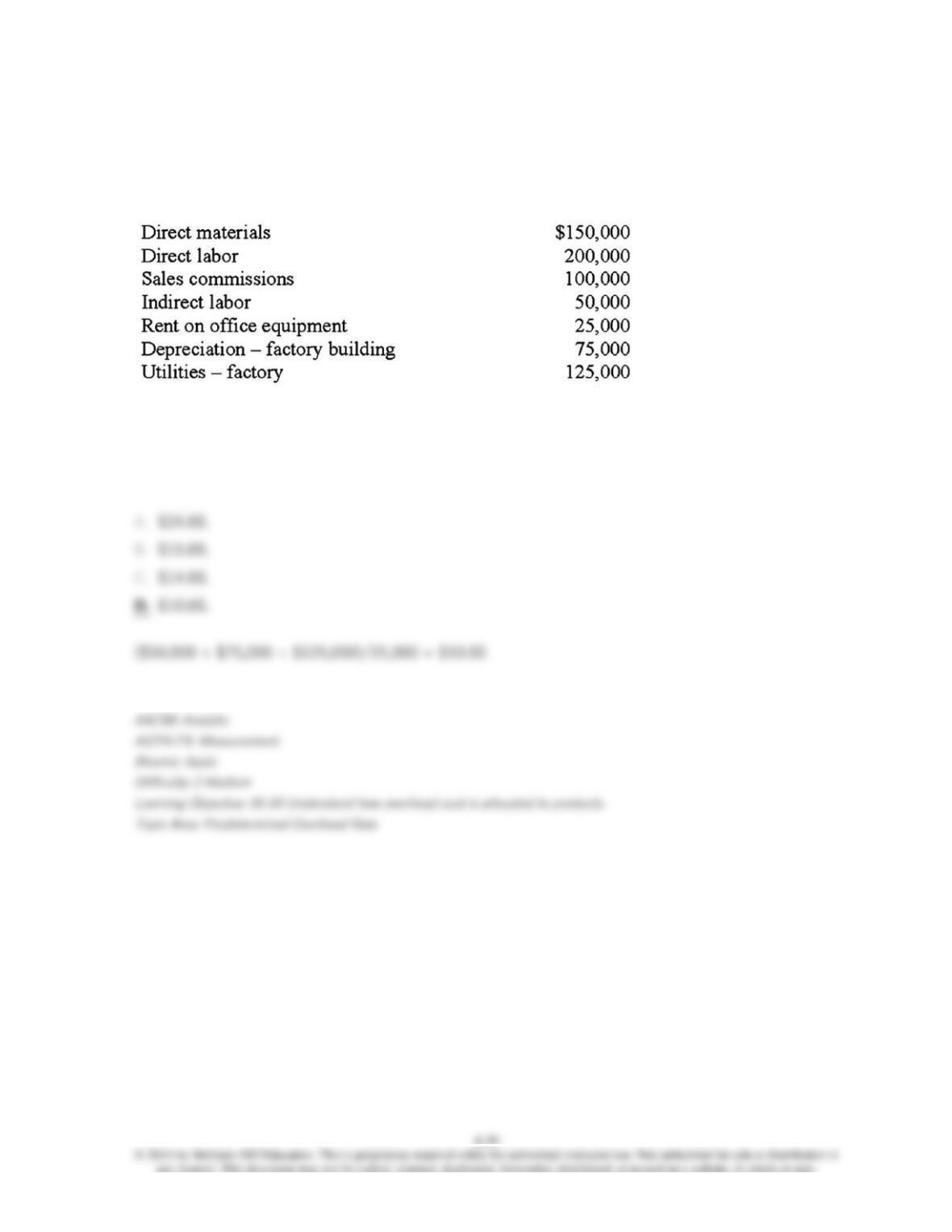
51. Techniques, Inc. uses a predetermined manufacturing overhead rate based on direct labor
hours to apply its indirect product costs to jobs. The following information has been collected for
the previous year:
Techniques used 25,000 direct labor hours and 50,000 machine hours during the previous year.
What is the predetermined overhead rate per direct labor hour?
52. Lexie Lou Industries applies manufacturing overhead to its cost objects on the basis of
75% of direct material cost. If Job 17X had $72,000 of manufacturing overhead applied to it during
May, the direct materials assigned to Job 17X was:
53. The Super Supply Company manufactures cleaning spray for public schools. During 2012,
the company spent $600,000 on prime costs and $800,000 on conversion costs. Overhead is
applied at a rate of 150% of direct labor costs. How much did the company allocate (apply) for
manufacturing overhead during 2012?
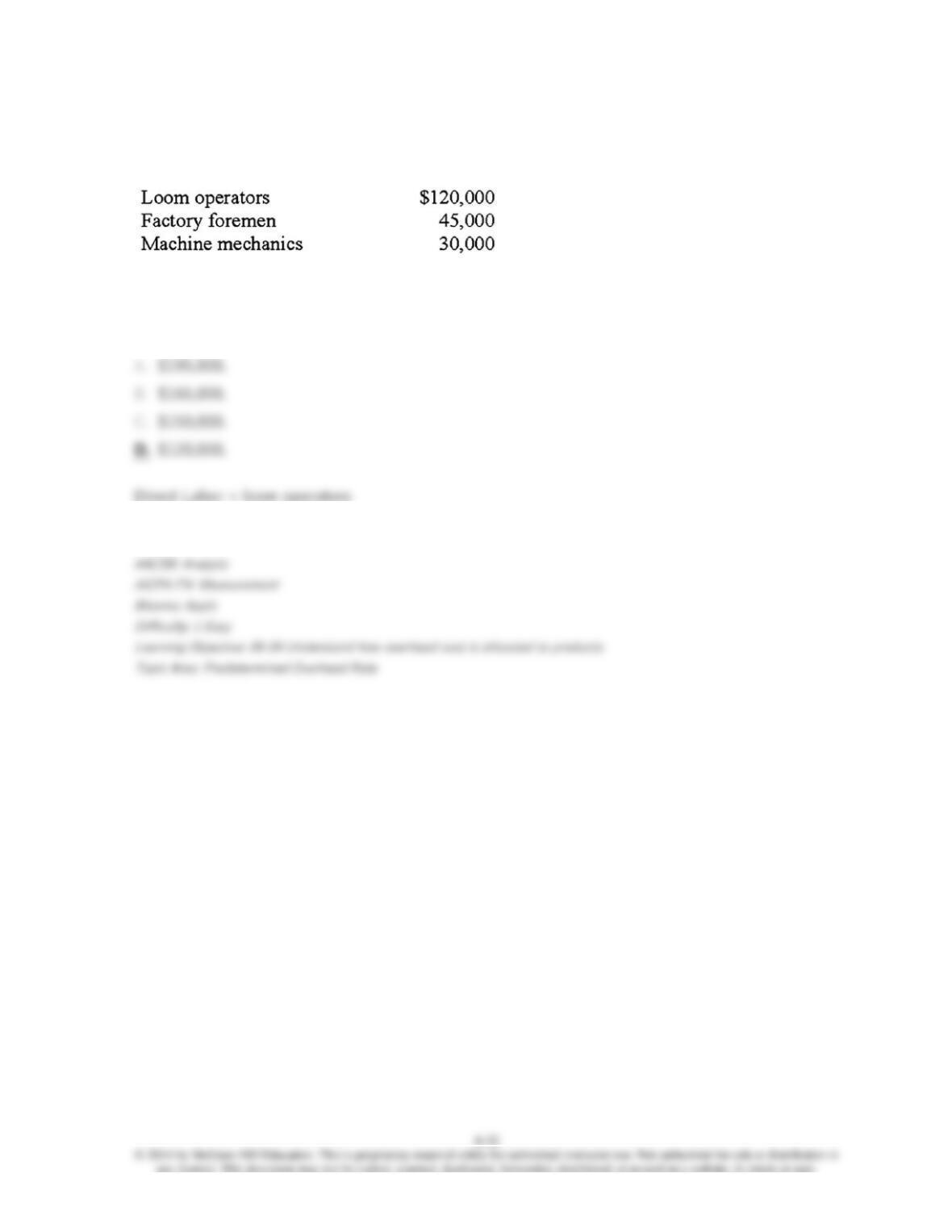
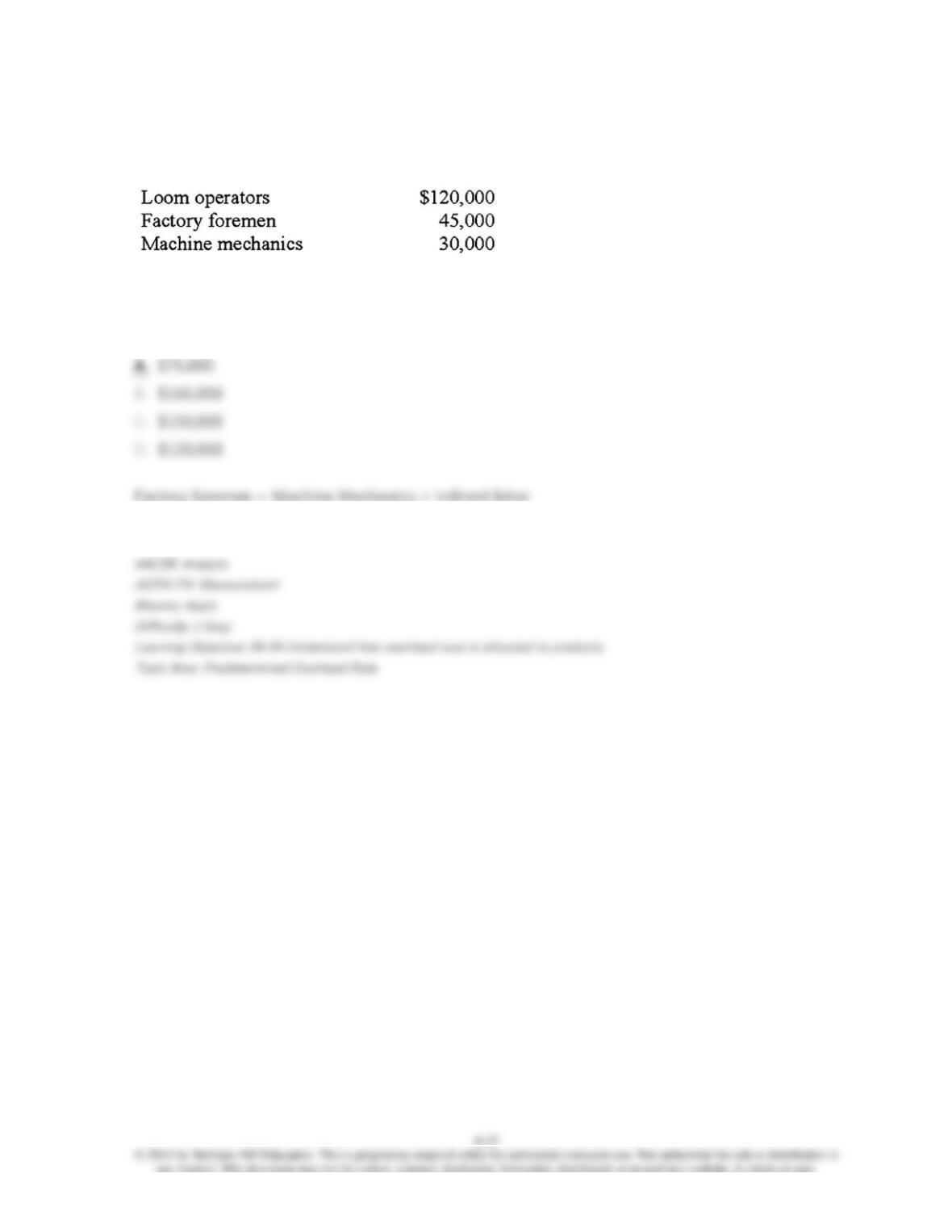
54. Fab Co. manufactures textiles. Among Fab’s 2012 manufacturing costs were the following
salaries and wages:
What was the amount of Fab’s 2012 direct labor? (CPA adapted)
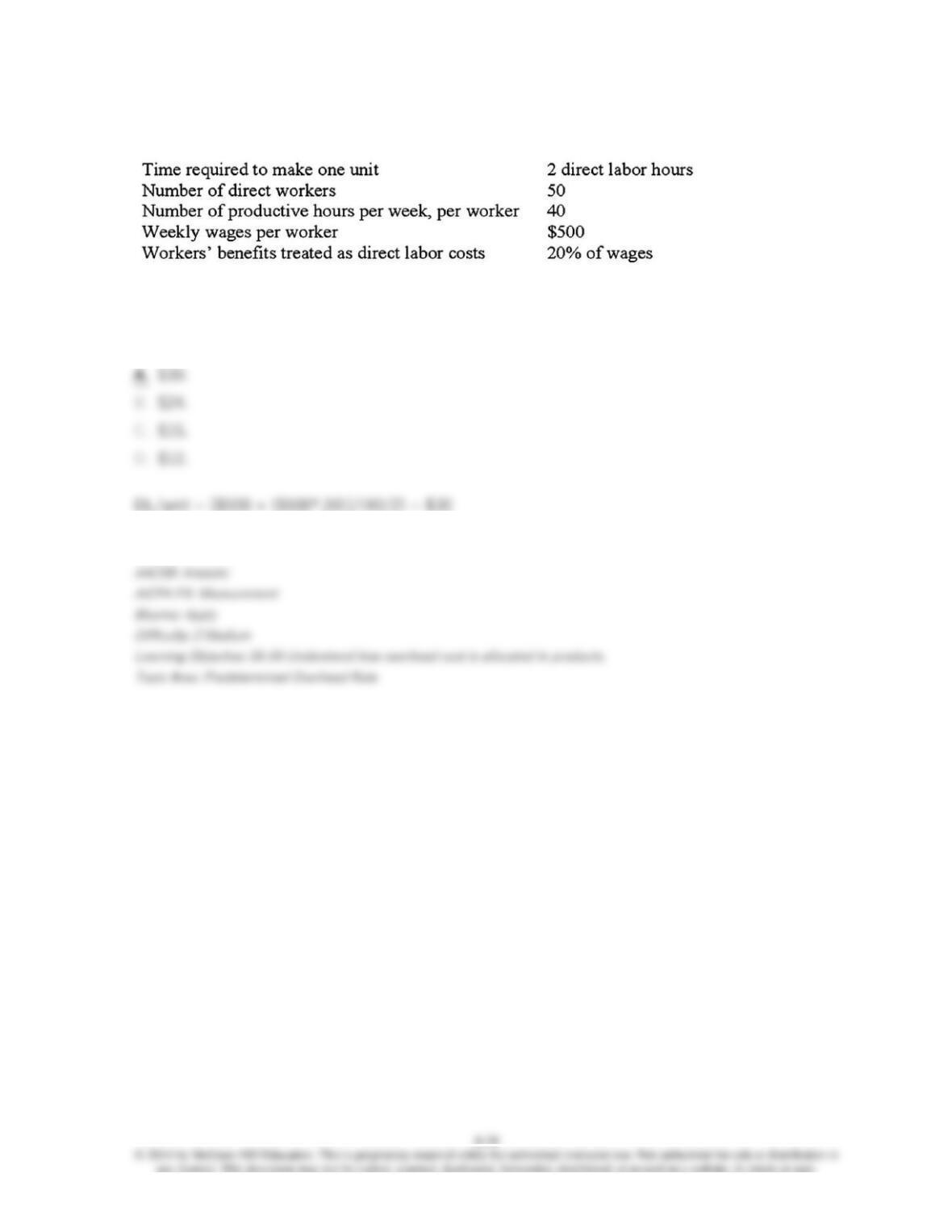
55. Fab Co. manufactures textiles. Among Fab’s 2012 manufacturing costs were the following
salaries and wages:
What was the amount of Fab’s 2012 indirect labor? (CPA adapted)
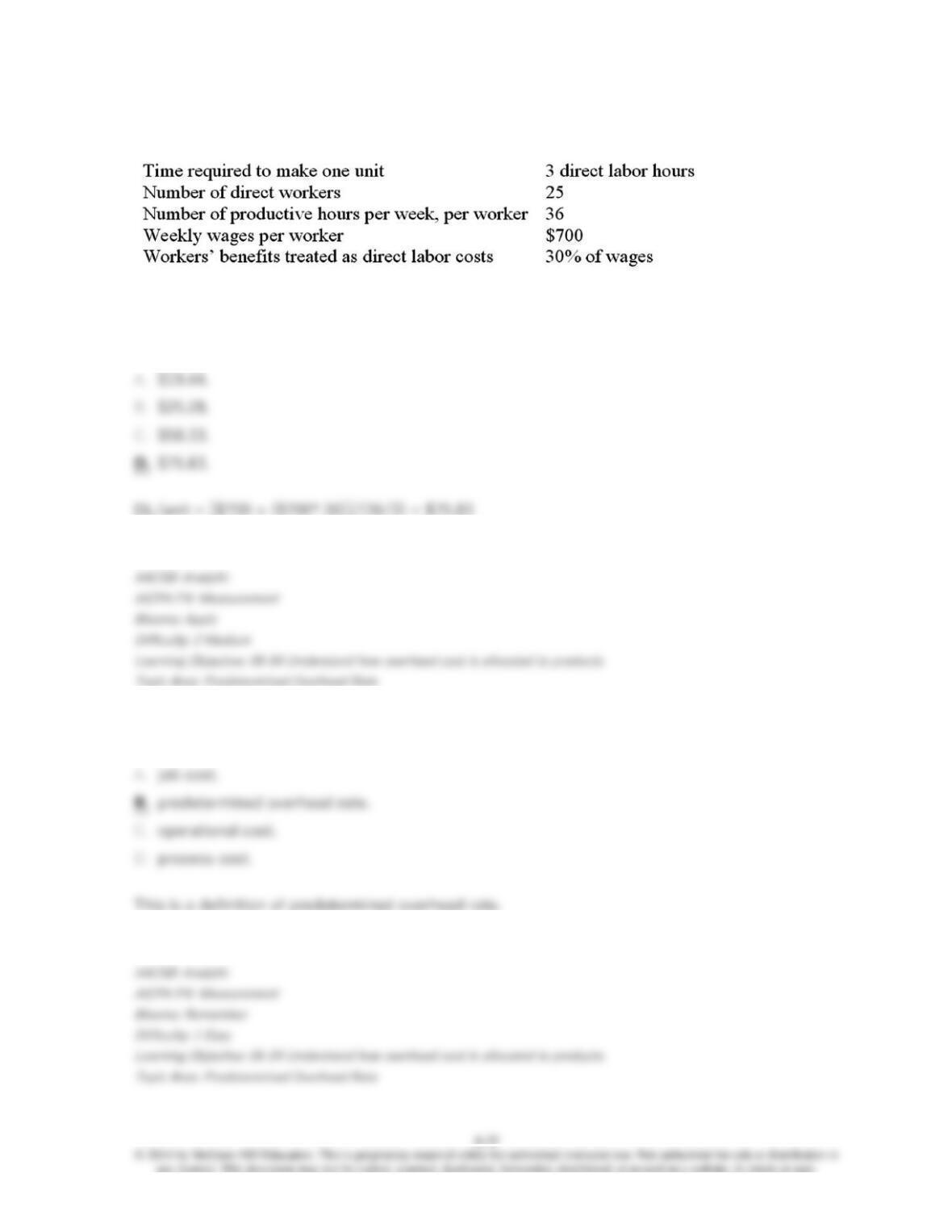
56. The following direct labor information pertains to the manufacture of product Glu:
What is the standard direct labor cost per unit of product Glu? (CPA adapted)
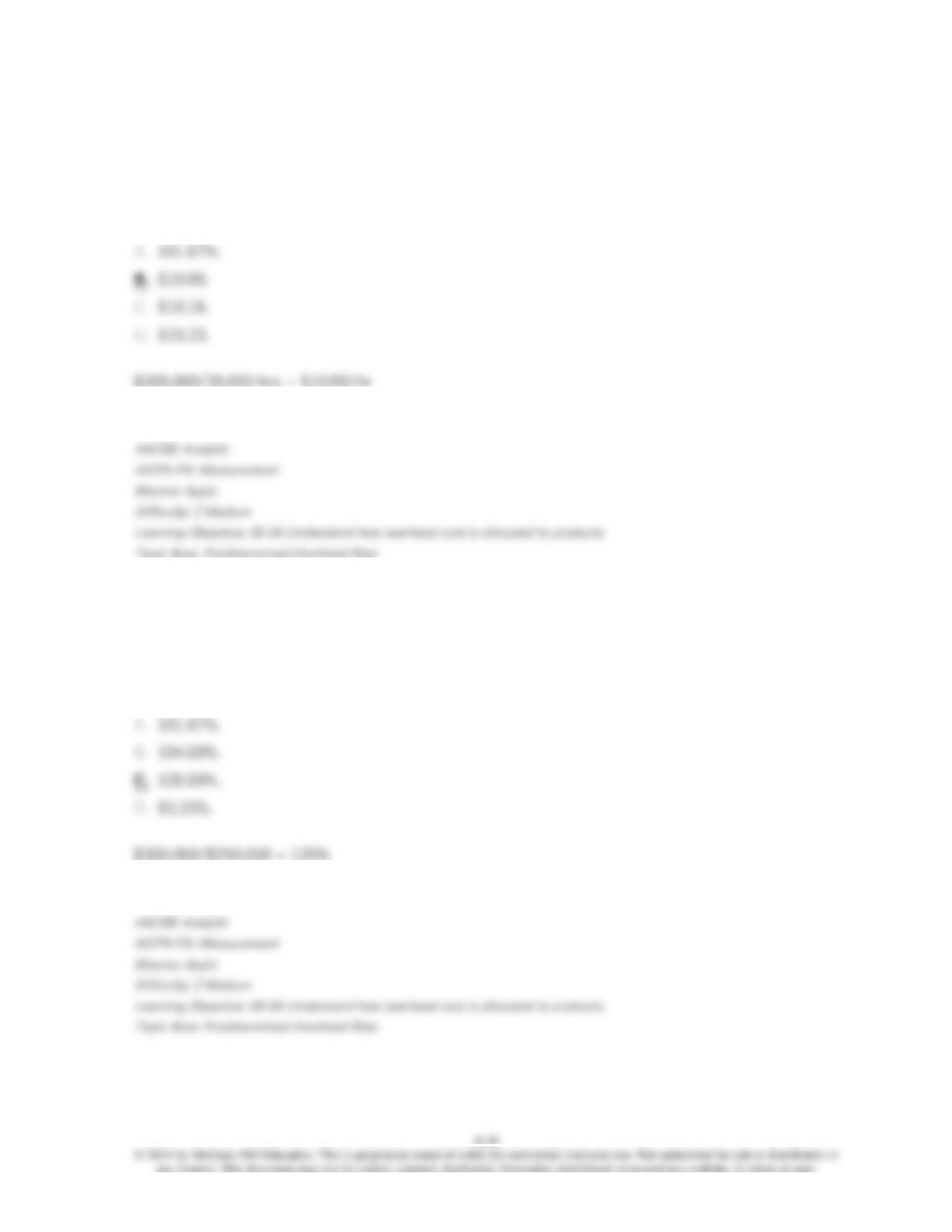
57. The following direct labor information pertains to the manufacture of product Frez:
What is the standard direct labor cost per unit of product Frez? (CPA adapted)
58. The cost per unit of the allocation base used to charge overhead to products is the:
59. Acme, Inc. has estimated overhead to be $300,000 and labor hours to be 30,000. Actual
overhead turned out to be $310,000 when 30,500 labor hours were worked. The predetermined
overhead rate would be:
60. Acme, Inc. had overhead of $310,000 during the year when $260,000 in labor costs were
incurred. Estimates at the start of the year for overhead and labor costs were $300,000 for
overhead and $250,000 for labor costs. The predetermined overhead rate would be:
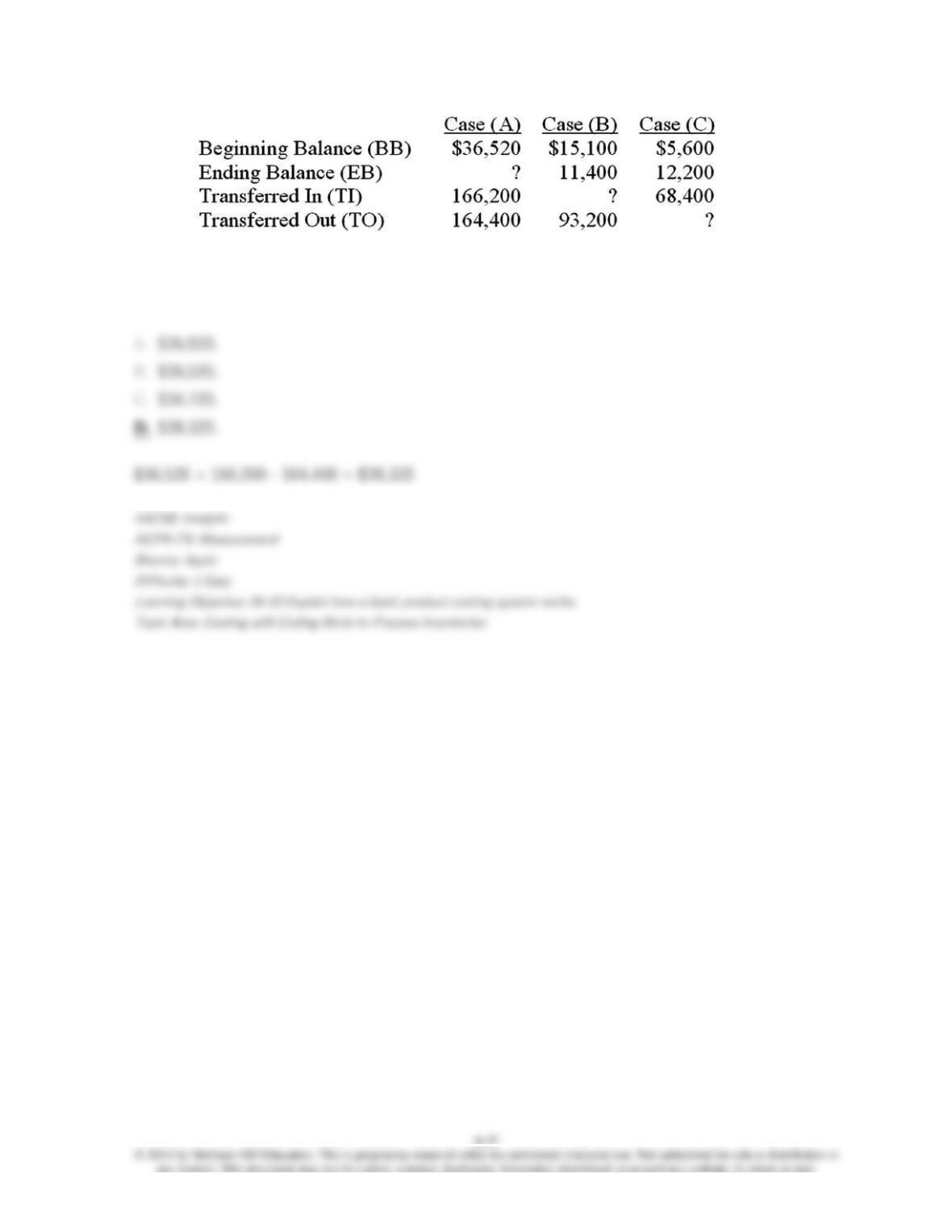
61.
For Case (A) above, what is the Ending Balance (EB)?
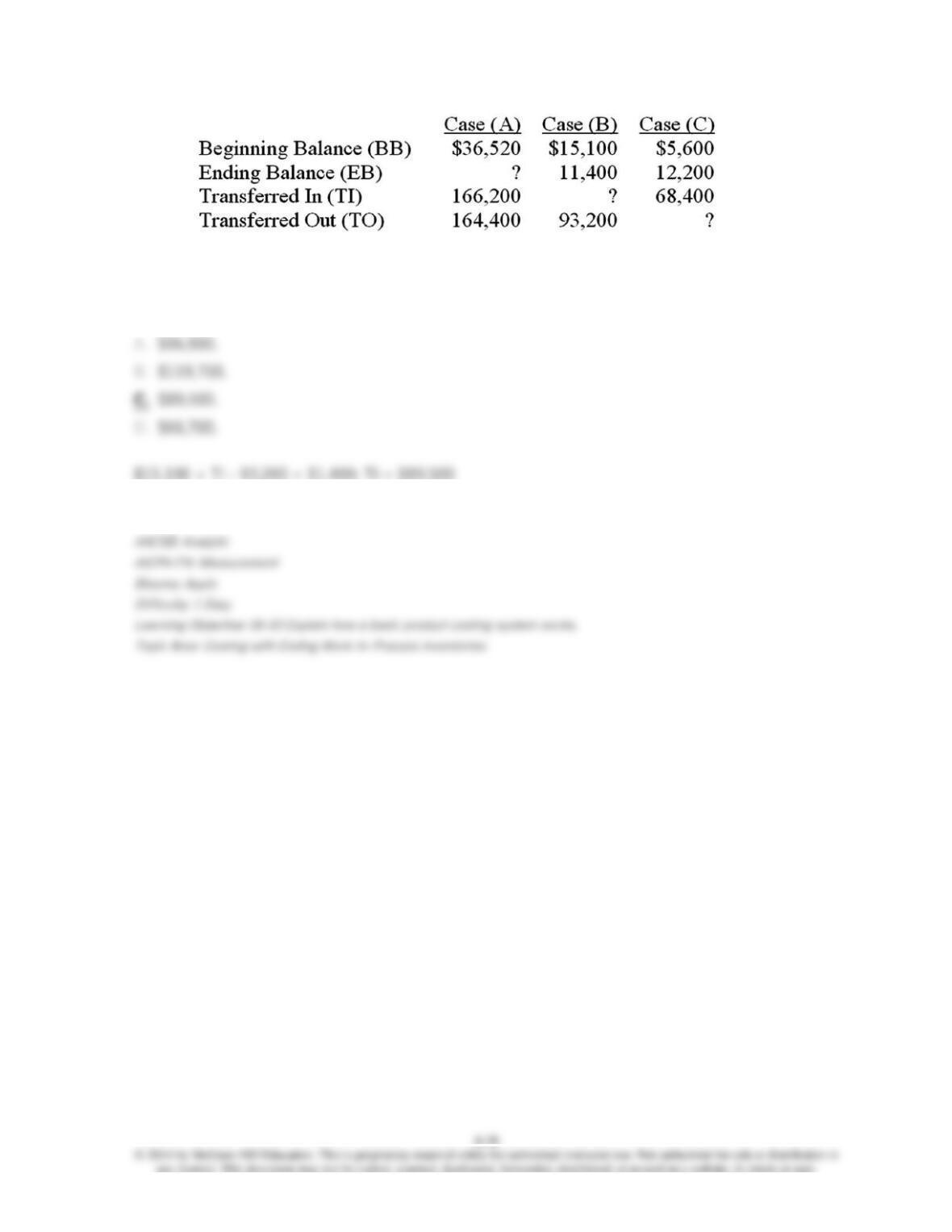
62.
For Case (B) above, what is the Transferred-In (TI)?
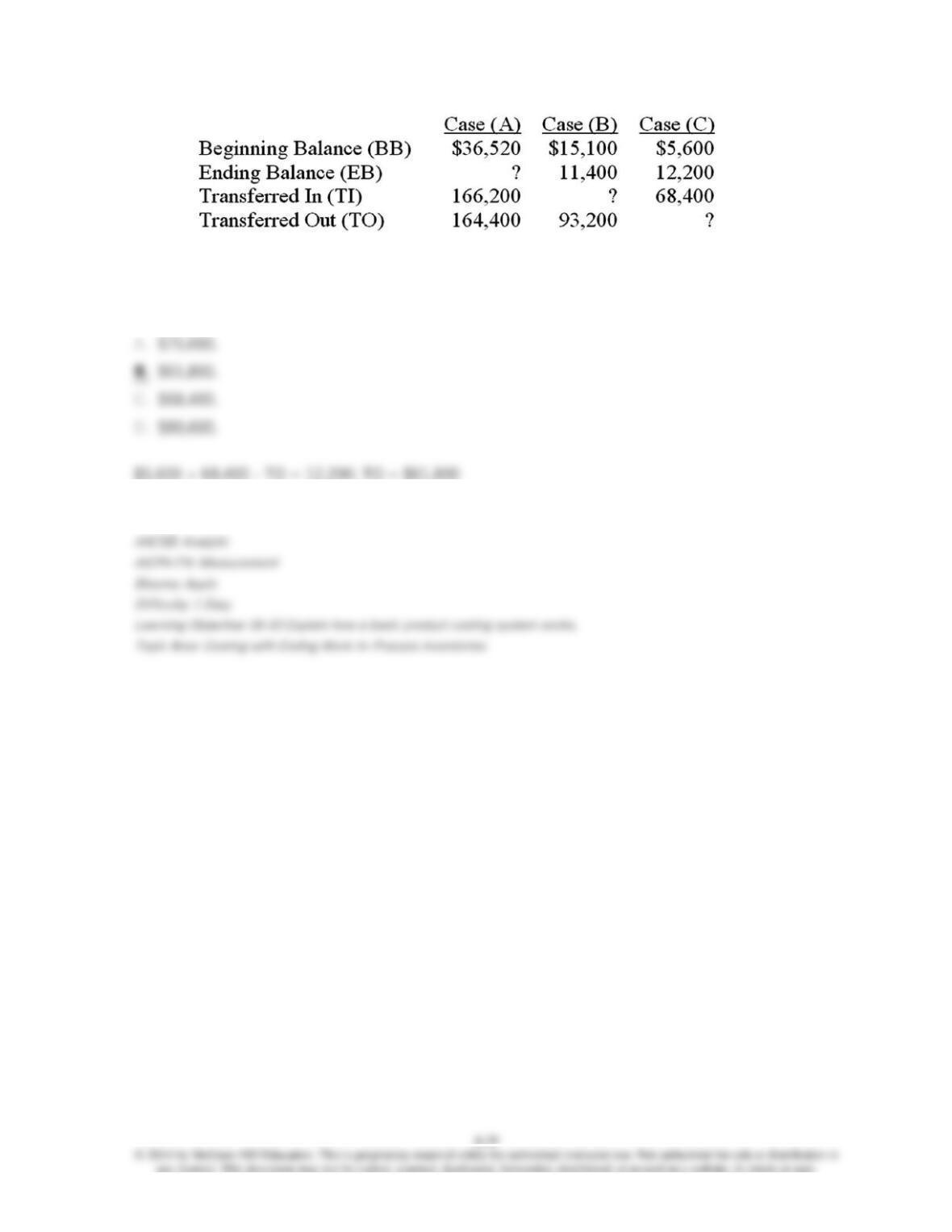
63.
For Case (C) above, what is the Transferred-Out (TO)?
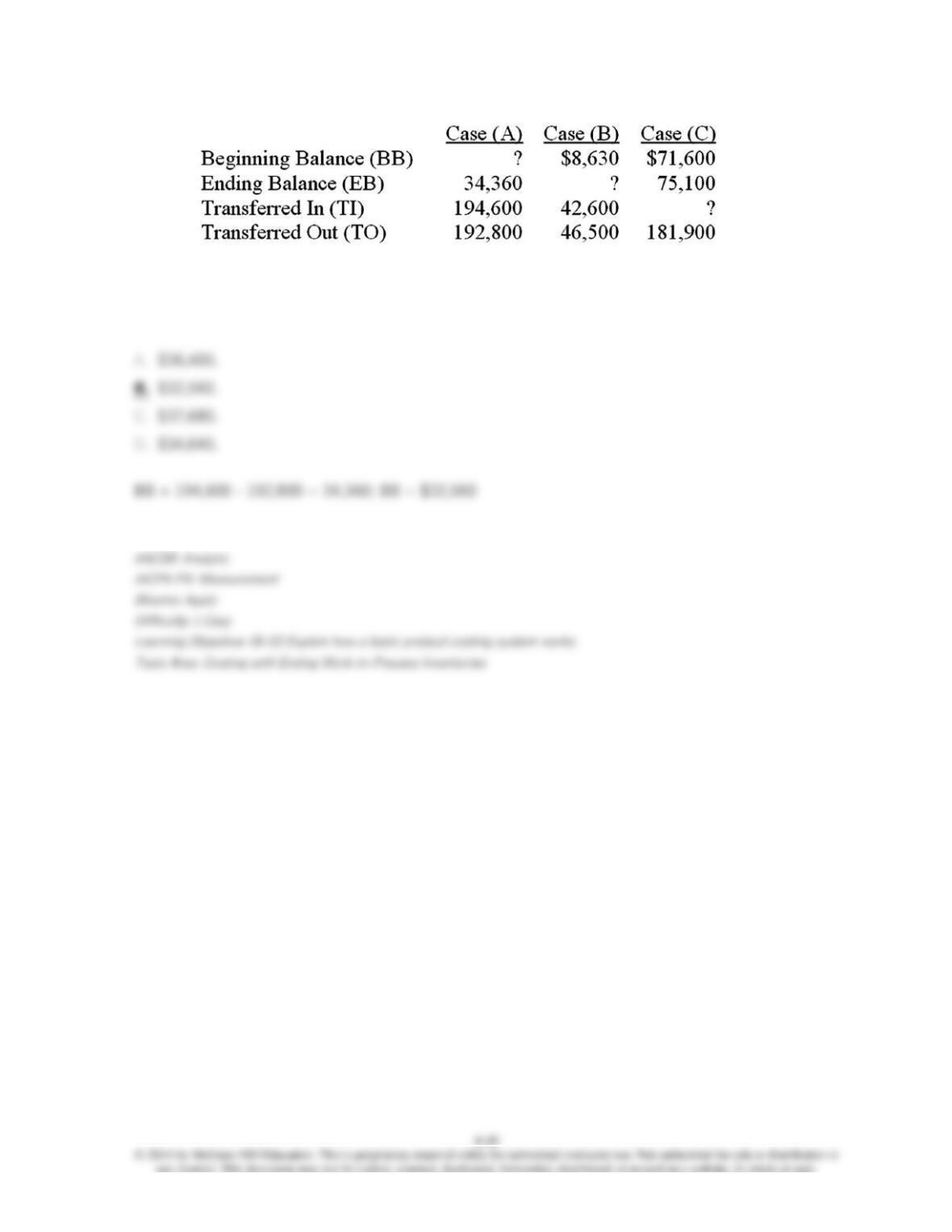
64.
For Case (A) above, what is the Beginning Balance (BB)?