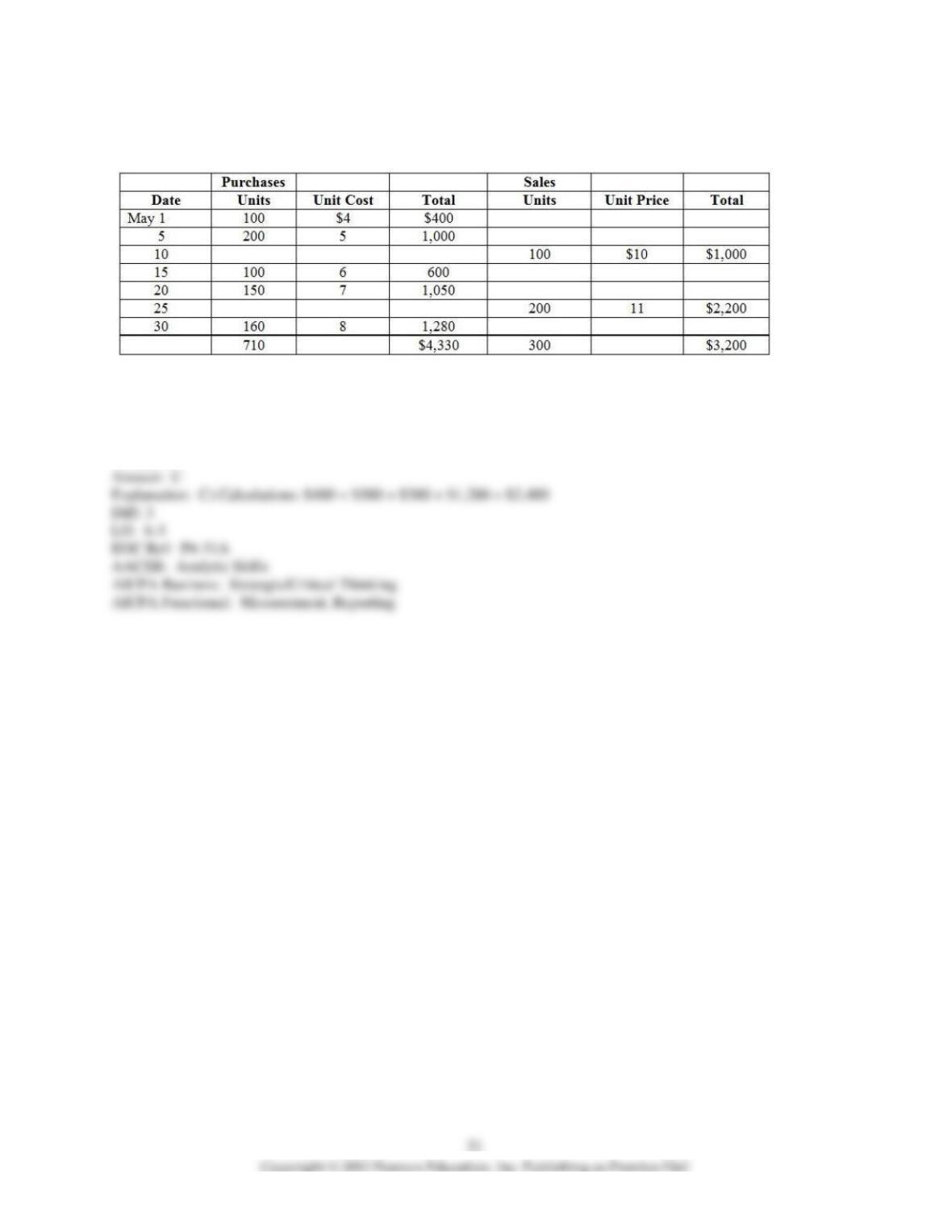
28) Santa Fe Tile Company had the following inventory purchases and sales during the month of May. The
company uses the periodic inventory method.
If Santa Fe uses LIFO costing, how much was the Ending inventory balance?
A) $2.980
B) $3,120
C) $2,480
D) $2,930
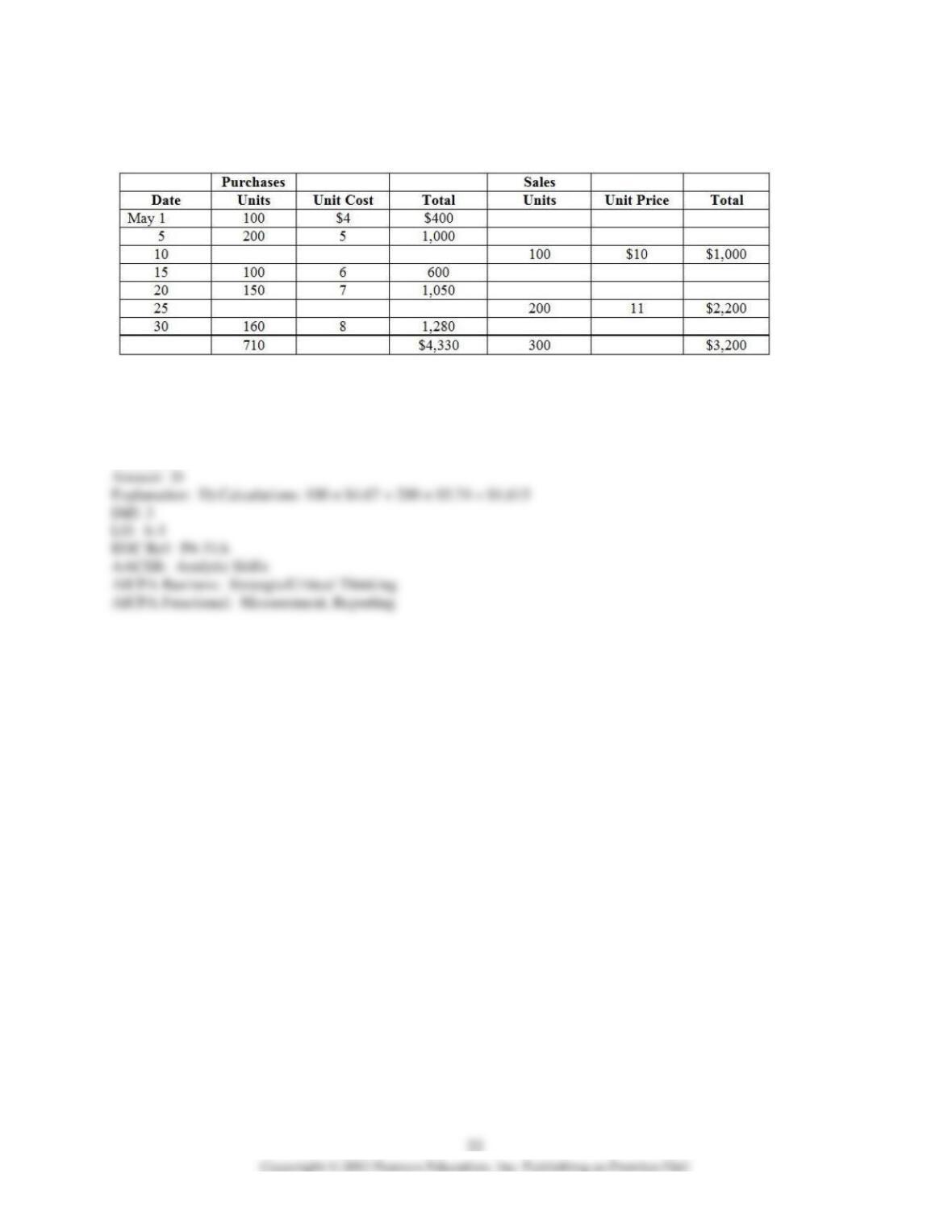
29) Santa Fe Tile Company had the following inventory purchases and sales during the month of May. The
company uses the periodic inventory method.
If Santa Fe uses average-cost, how much was the Cost of goods sold for the month?
A) $1,400
B) $1,850
C) $1,380
D) $1,615
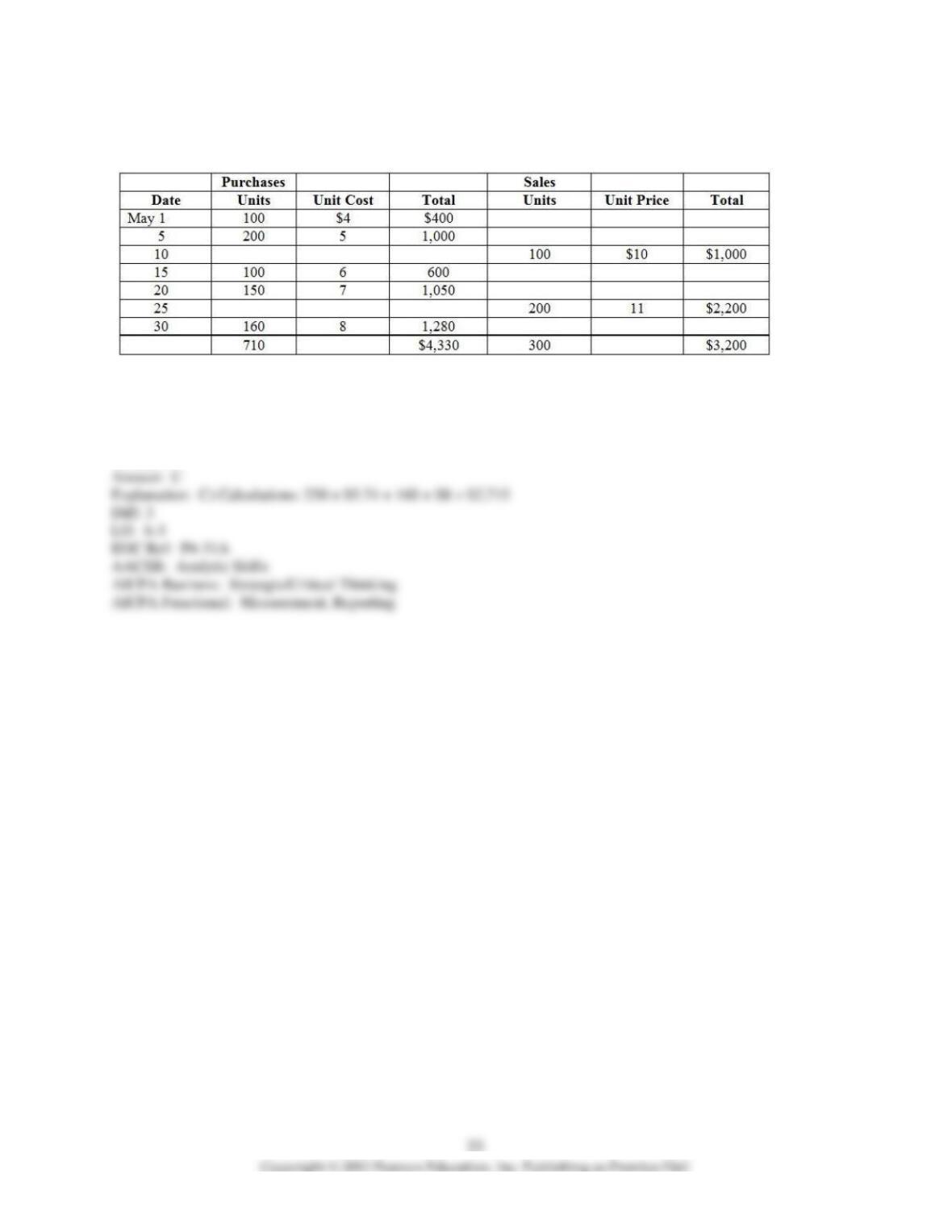
30) Santa Fe Tile Company had the following inventory purchases and sales during the month of May. The
company uses the periodic inventory method.
If Santa Fe uses average-cost, how much was the Ending inventory balance?
A) $2.980
B) $2,480
C) $2,715
D) $2,930
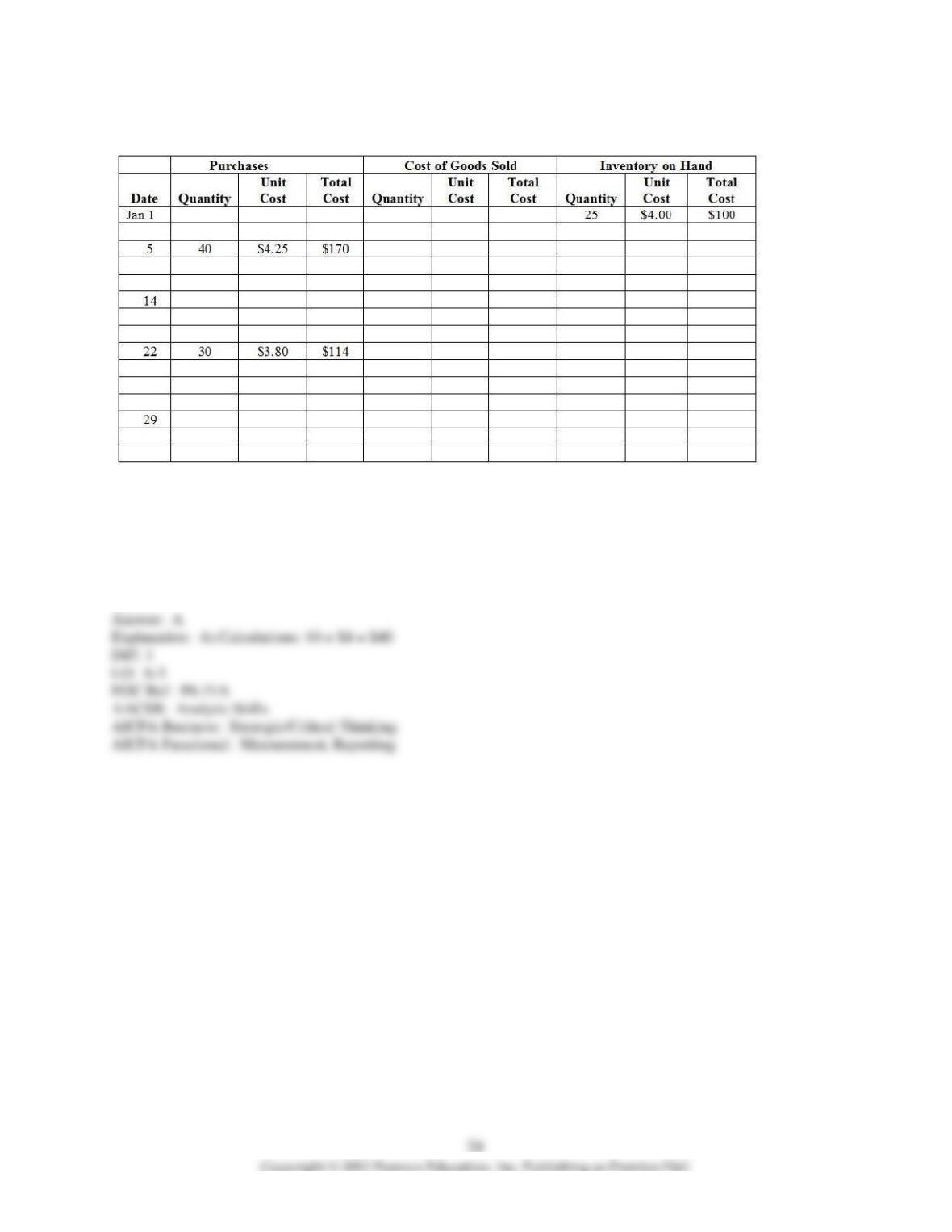
31) Berring Sales uses FIFO. The partially completed inventory record for January appears below.
On January 14, the company sold 10 units. On January 29, the company sold 50 units. Complete the inventory
record through the January 14 sale and calculate the Cost of goods sold for the sale on January 14. (Please round to
the nearest whole dollar.)
A) $40
B) $46
C) $38
D) $43
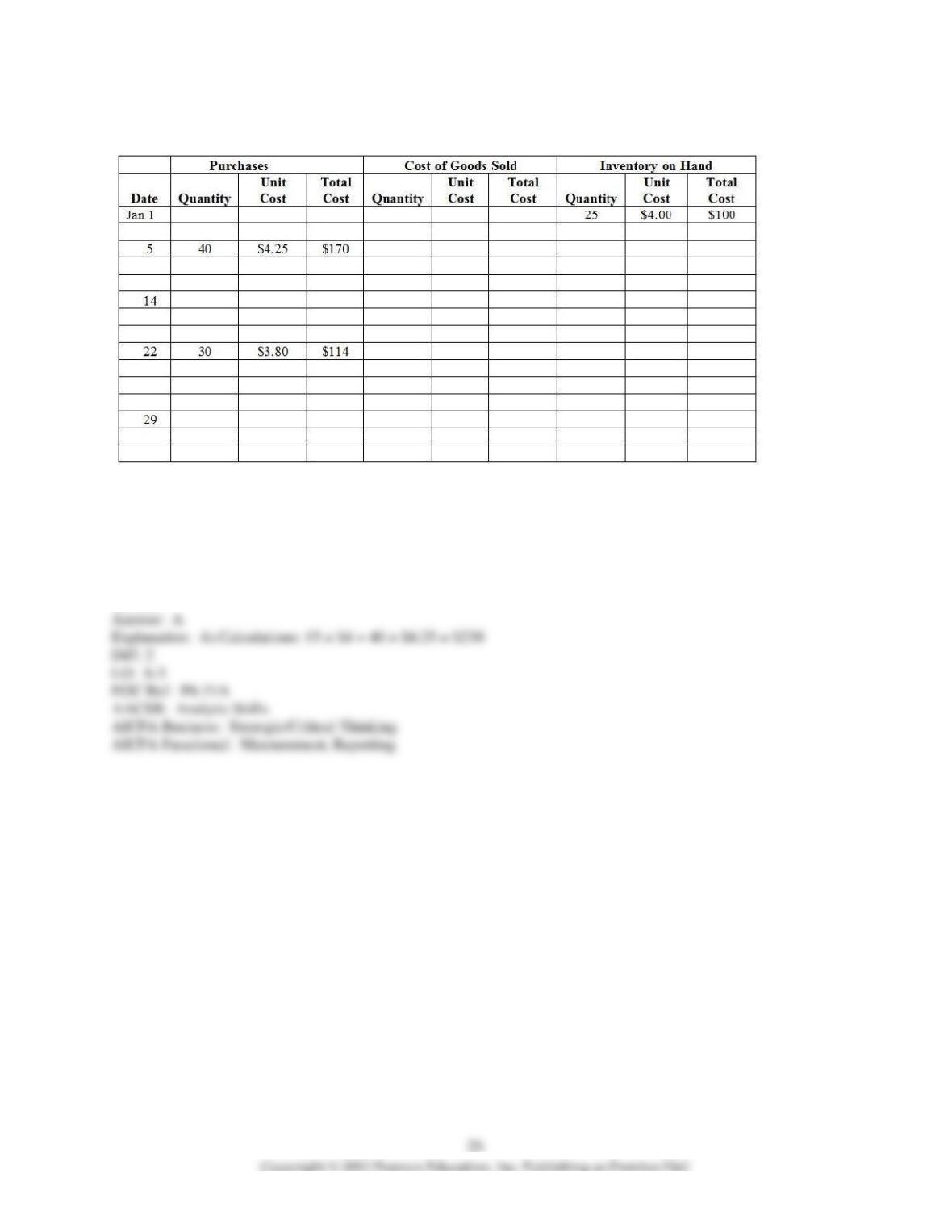
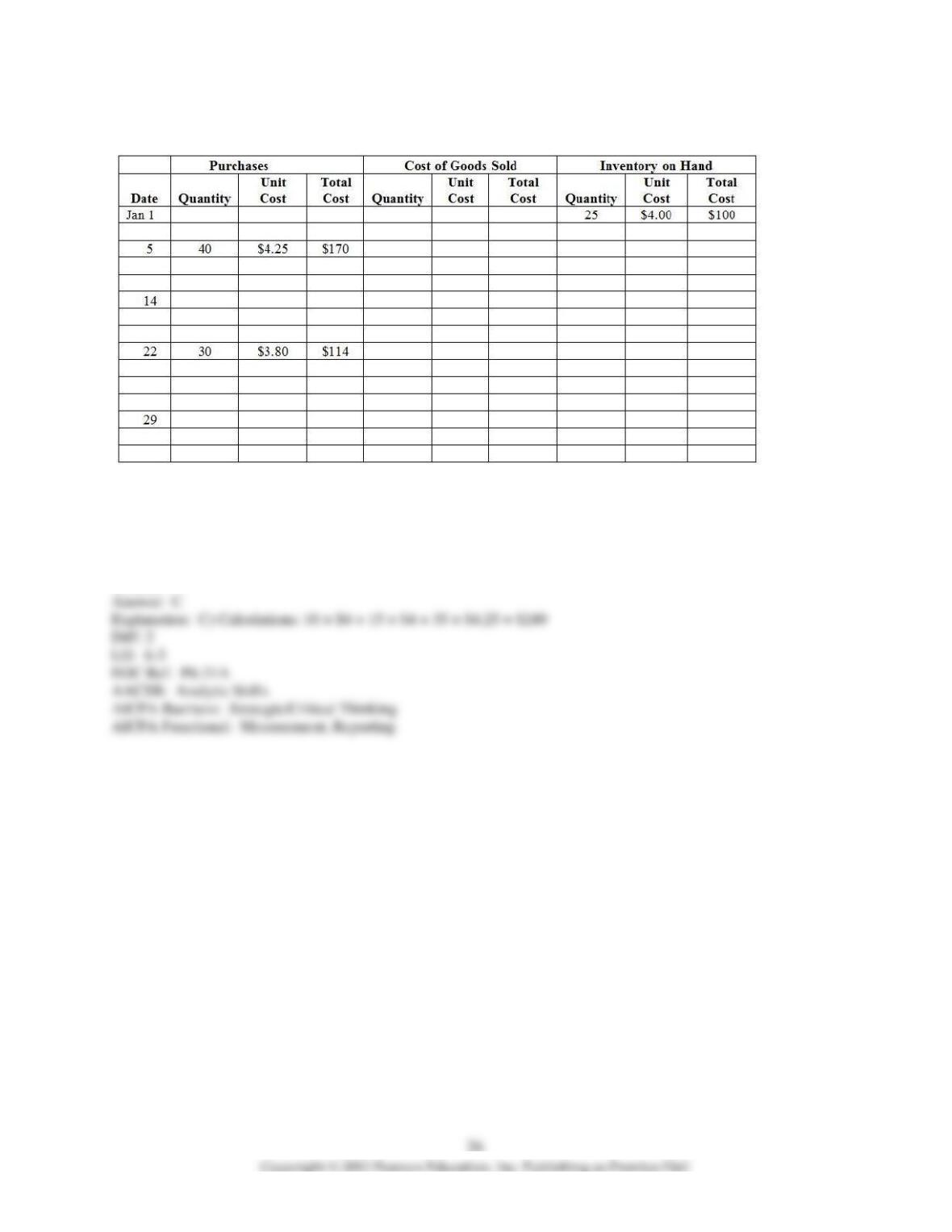
32) Berring Sales uses FIFO. The partially completed inventory record for January appears below.
On January 14, the company sold 10 units. On January 29, the company sold 50 units. Complete the inventory
record through the January 14 sale and calculate the inventory balance after the sale on January 14. (Please round to
the nearest whole dollar.)
A) $230
B) $228
C) $330
D) $216
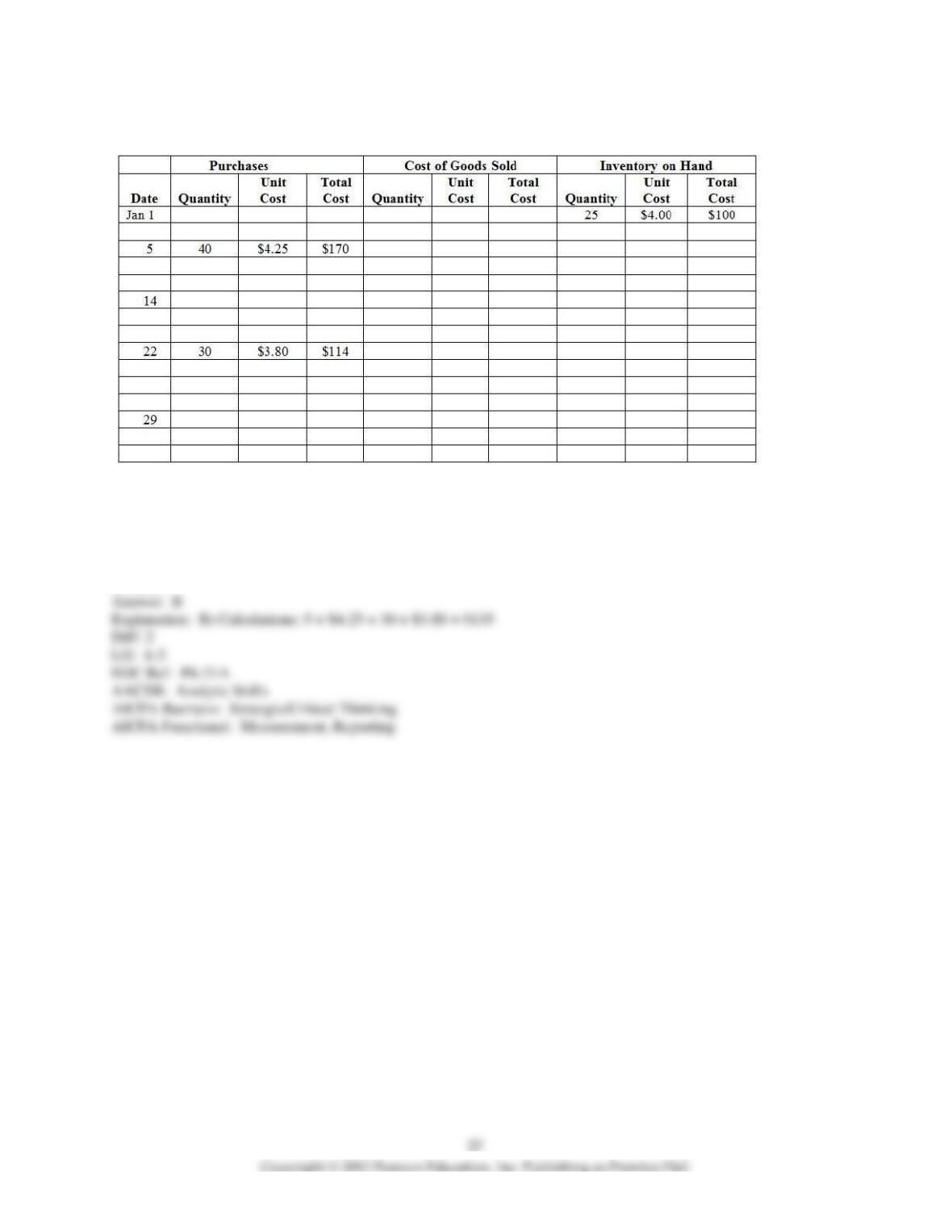
33) Berring Sales uses FIFO. The partially completed inventory record for January appears below.
On January 14, the company sold 10 units. On January 29, the company sold 50 units. Complete the inventory
record and calculate the Cost of goods sold for the month of January. (Please round to the nearest whole dollar.)
A) $240
B) $246
C) $249
D) $388
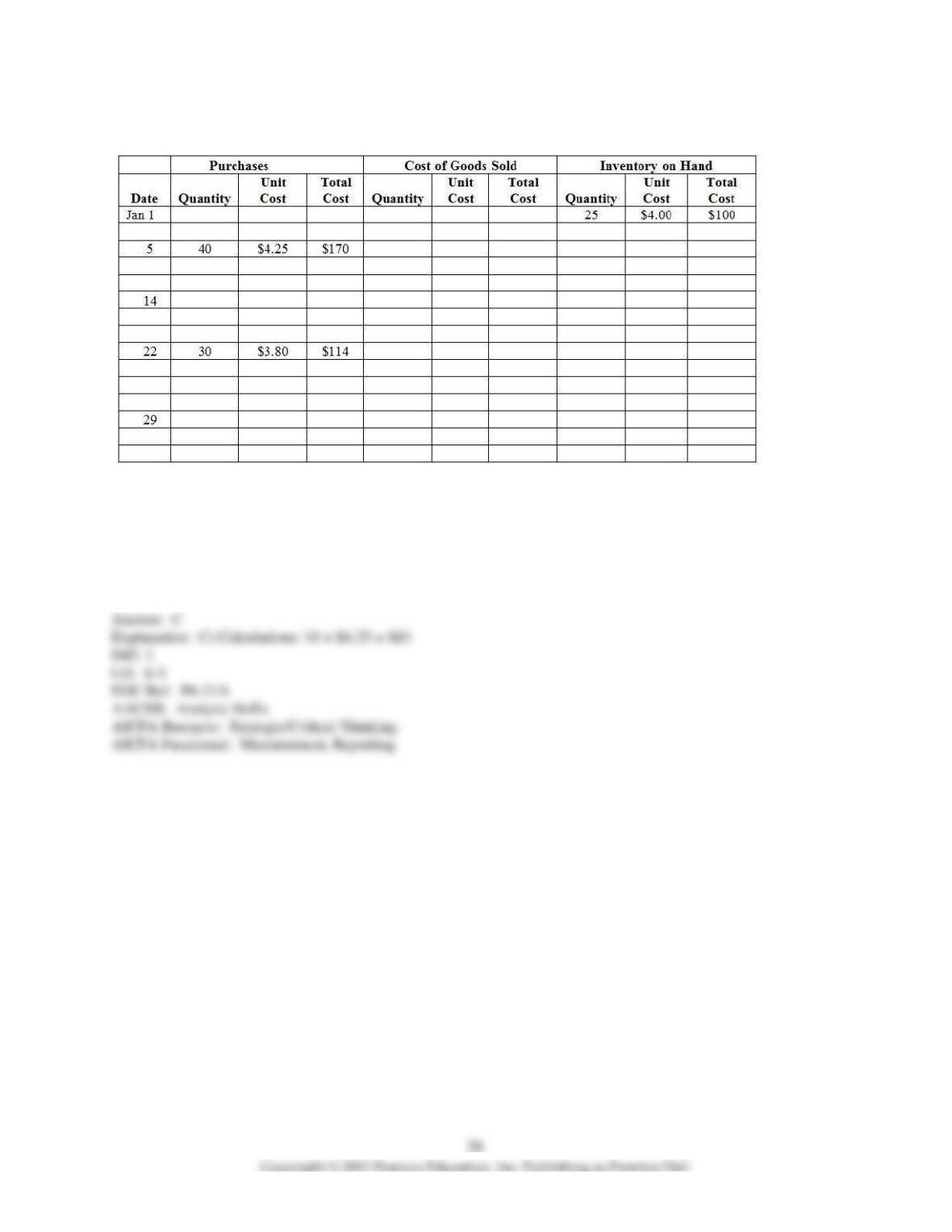
34) Berring Sales uses FIFO. The partially completed inventory record for January appears below.
On January 14, the company sold 10 units. On January 29, the company sold 50 units. Complete the inventory
record and calculate the Ending inventory balance at the end of January. (Please round to the nearest whole dollar.)
A) $128
B) $135
C) $112
D) $388
35) Berring Sales uses LIFO. The partially completed inventory record for January appears below.
On January 14, the company sold 10 units. On January 29, the company sold 50 units. Complete the inventory
record through the January 14 sale, and calculate the Cost of goods sold for the January 14 sale. (Please round to the
nearest whole dollar.)
A) $38
B) $33
C) $43
D) $40
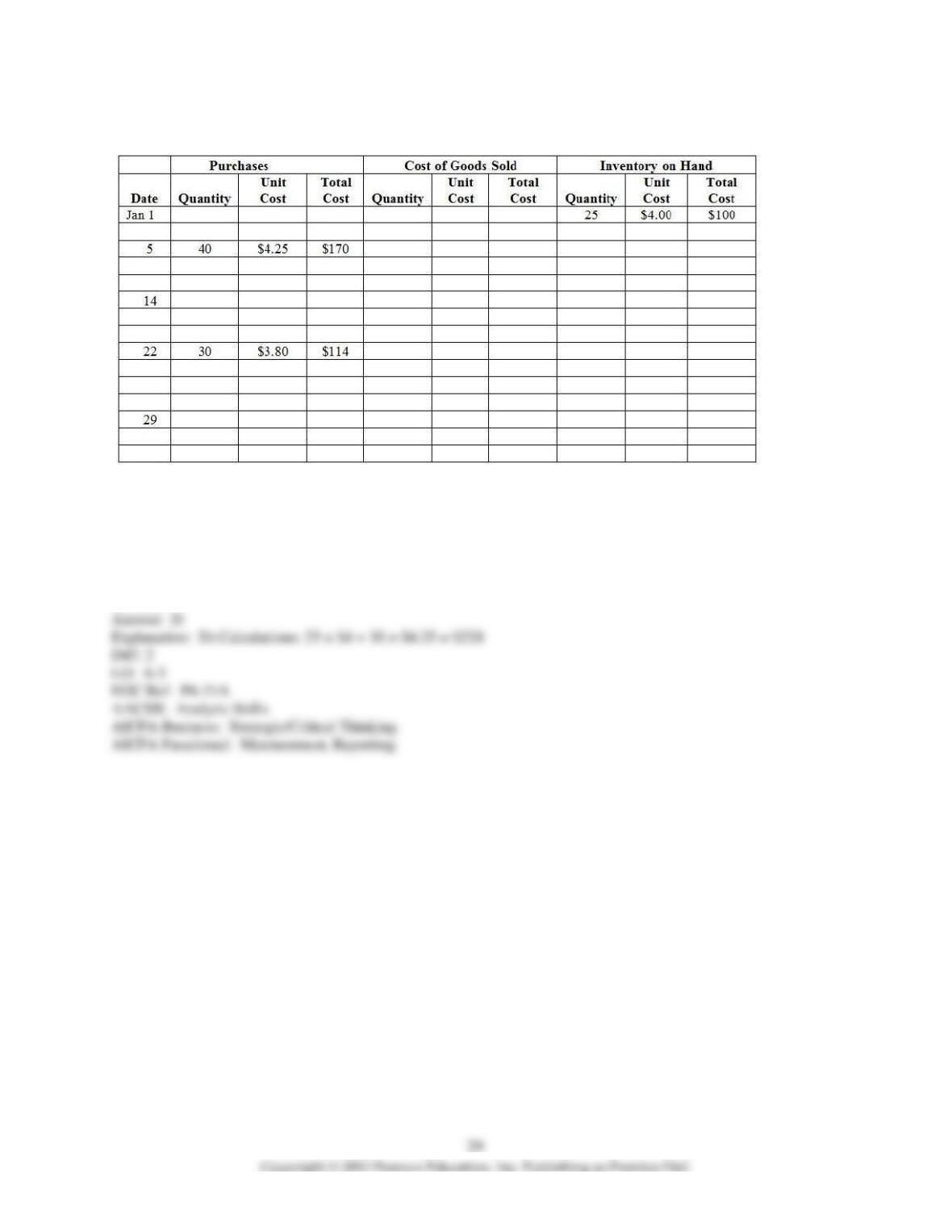
36) Berring Sales uses LIFO. The partially completed inventory record for January appears below.
On January 14, the company sold 10 units. On January 29, the company sold 50 units. Complete the inventory
record through the January 14 sale, and calculate the Inventory balance after the January 14 sale. (Please round to
the nearest whole dollar.)
A) $380
B) $330
C) $230
D) $228
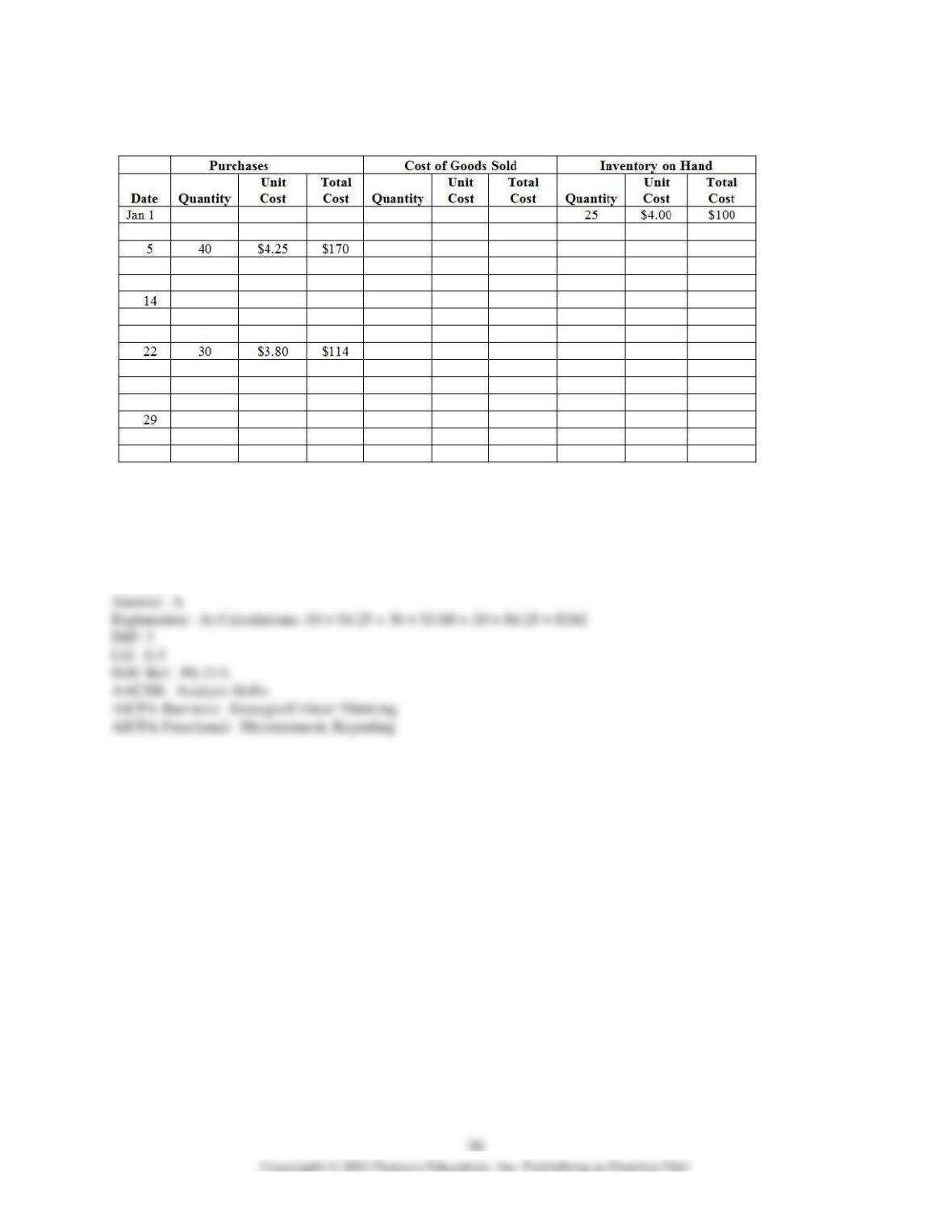
37) Berring Sales uses LIFO. The partially completed inventory record for January appears below.
On January 14, the company sold 10 units. On January 29, the company sold 50 units. Complete the inventory
record and calculate the Cost of goods sold for the month of January. (Please round to the nearest whole dollar.)
A) $242
B) $249
C) $230
D) $228
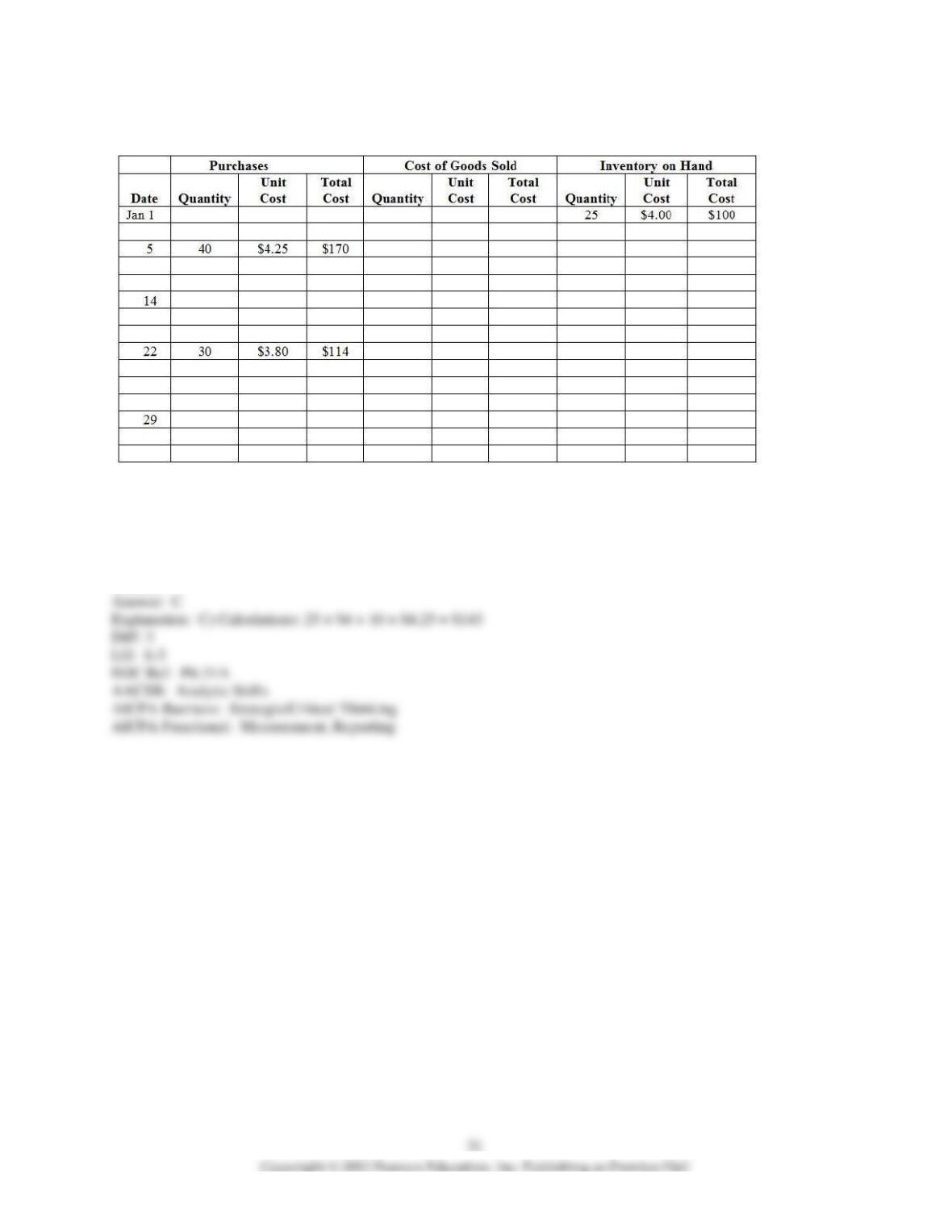
38) Berring Sales uses LIFO. The partially completed inventory record for January appears below.
On January 14, the company sold 10 units. On January 29, the company sold 50 units. Complete the inventory
record and calculate the Inventory balance at the end of January. (Please round to the nearest whole dollar.)
A) $135
B) $249
C) $143
D) $228
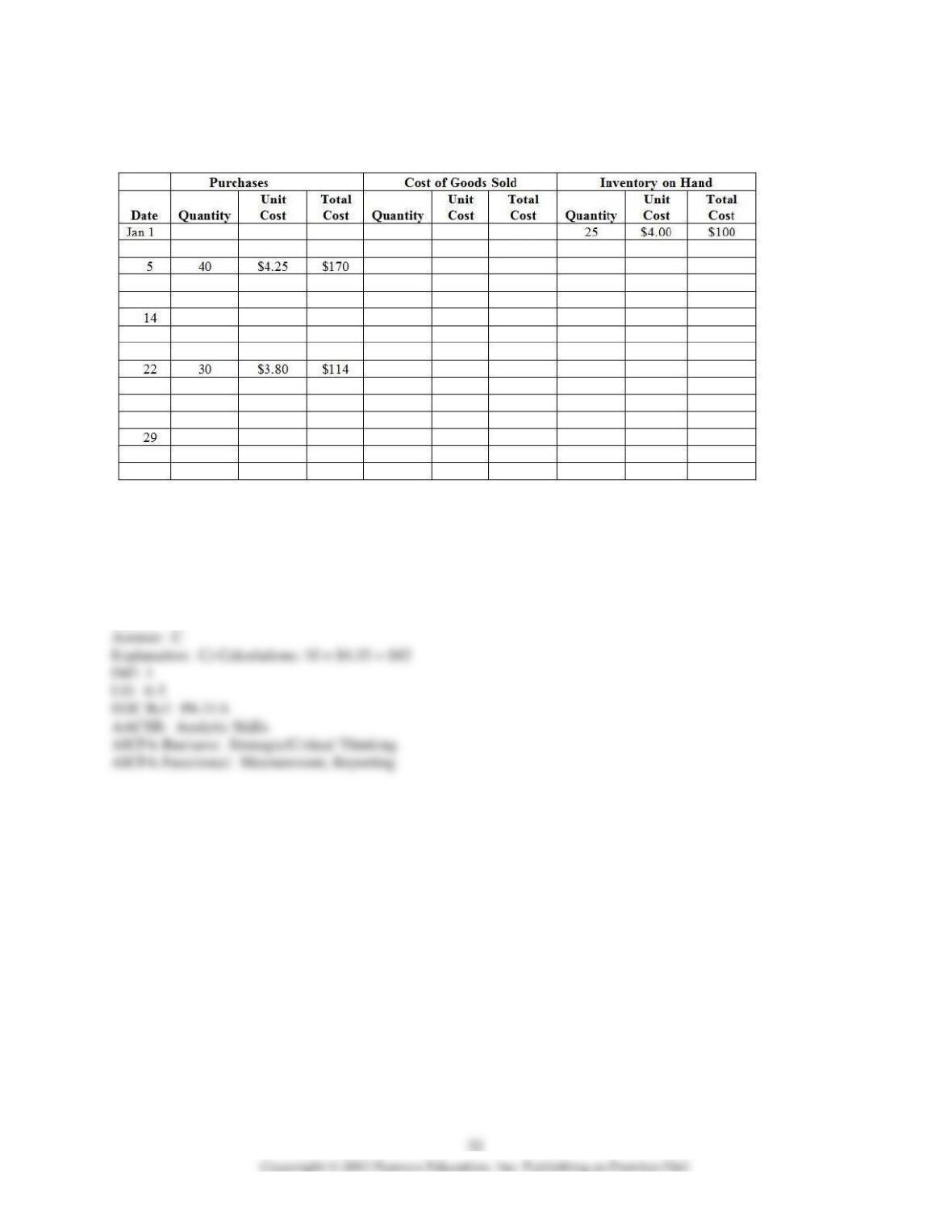
39) Berring Sales uses the average-cost method. The partially completed inventory record for January appears
below.
On January 14, the company sold 10 units. On January 29, the company sold 50 units. Complete the inventory
record through the January 14 sale, and calculate the Cost of goods sold for the January 14 sale. (Please round to the
nearest whole dollar.)
A) $38
B) $33
C) $42
D) $40
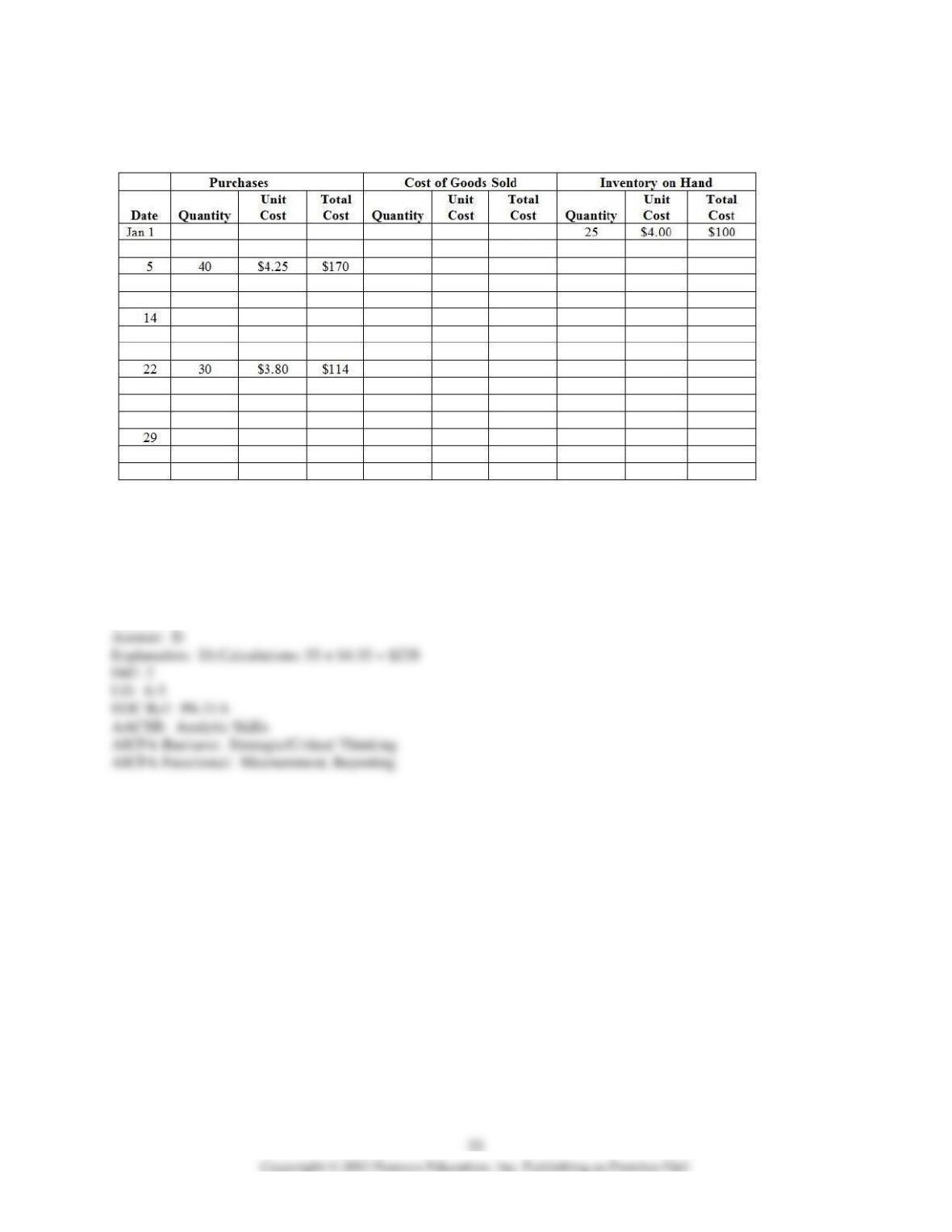
40) Berring Sales uses the average-cost method. The partially completed inventory record for January appears
below.
On January 14, the company sold 10 units. On January 29, the company sold 50 units. Complete the inventory
record through the January 14 sale, and calculate the Inventory balance after the January 14 sale. (Please round to
the nearest whole dollar.)
A) $380
B) $330
C) $230
D) $228
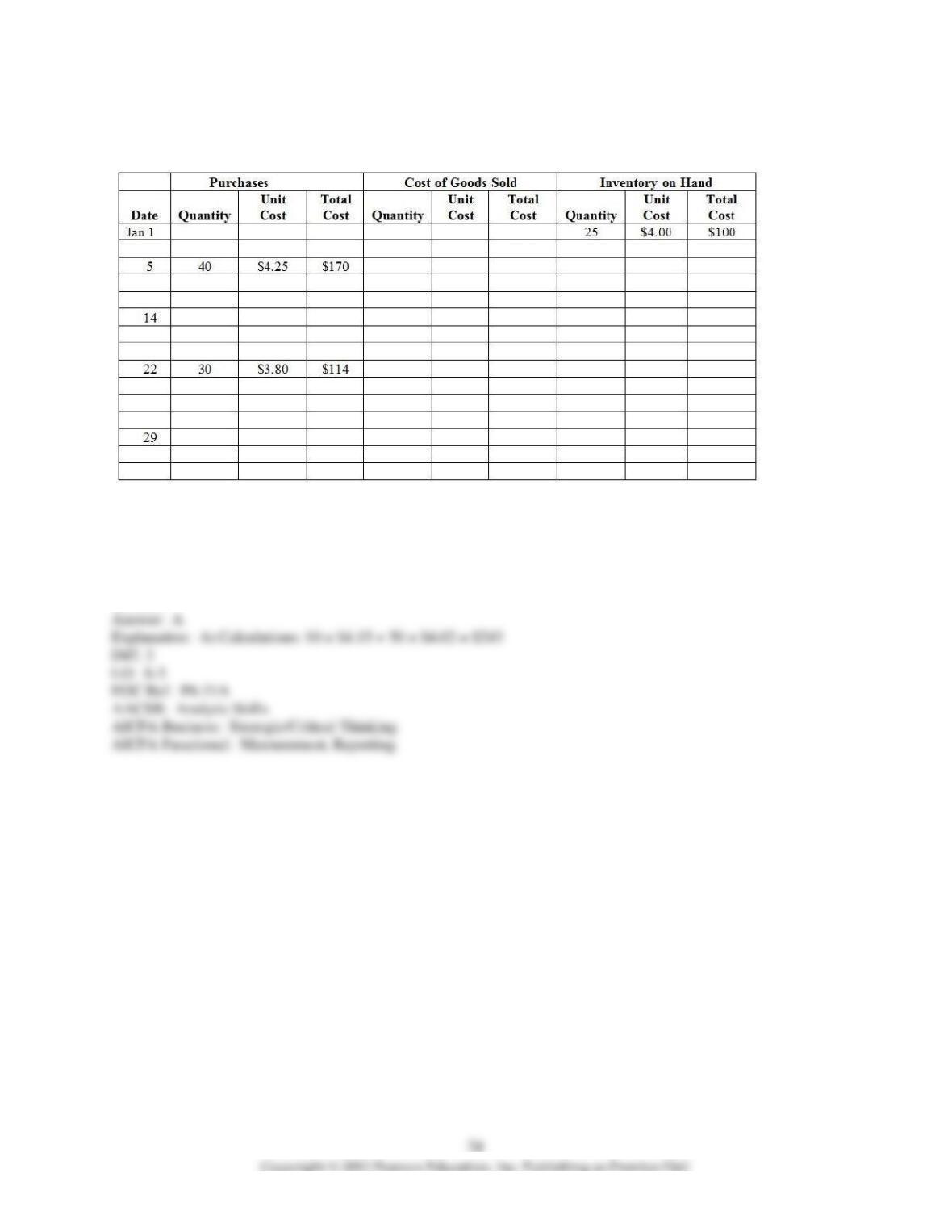
41) Berring Sales uses the average-cost method. The partially completed inventory record for January appears
below.
On January 14, the company sold 10 units. On January 29, the company sold 50 units. Complete the inventory
record and calculate the Cost of goods sold for the month of January. (Please round to the nearest whole dollar.)
A) $243
B) $249
C) $230
D) $228
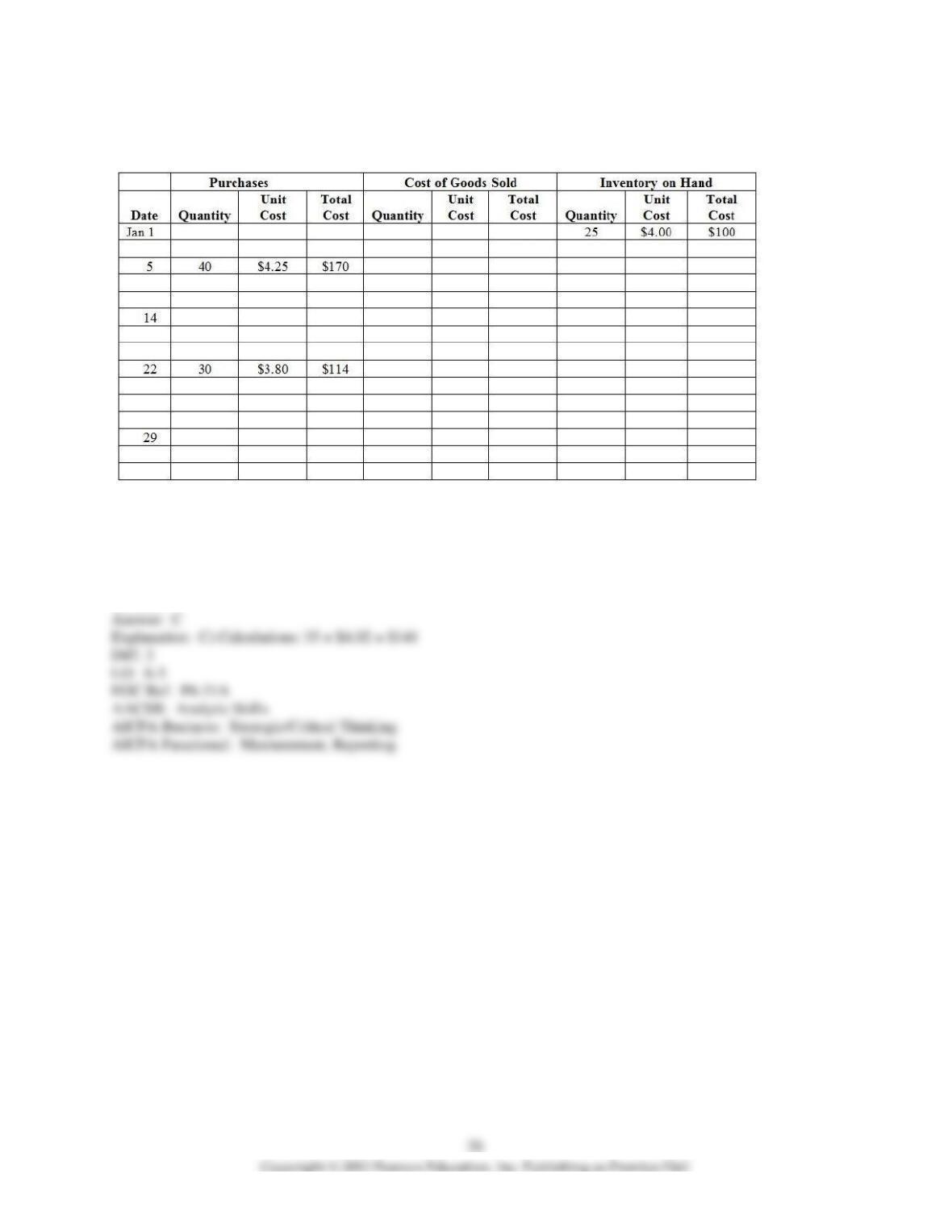
42) Berring Sales uses the average-cost method. The partially completed inventory record for January appears
below.
On January 14, the company sold 10 units. On January 29, the company sold 50 units. Complete the inventory
record and calculate the Inventory balance at the end of January. (Please round to the nearest whole dollar.)
A) $135
B) $249
C) $141
D) $228
43) A company that uses the perpetual inventory system sold $1,000 of goods to a customer on account. Which of
the following journal entries correctly records the Sales revenue?
A)
Cost of goods sold
1,000
Sales revenue
1,000
B)
Inventory
1,000
Cost of goods sold
1,000
C)
Accounts receivable
1,000
Cash
1,000
D)
Accounts receivable
1,000
Sales revenue
1,000
44) A company that uses the perpetual inventory system sold $1,000 of goods to a customer for cash. Which of the
following journal entries correctly records the Sales revenue?
A)
Cost of goods sold
1,000
Sales revenue
1,000
B)
Cash
1,000
Sales revenue
1,000
C)
Accounts receivable
1,000
Cash
1,000
D)
Inventory
1,000
Sales revenue
1,000
45) A company that uses the perpetual inventory system sold $1,000 of goods to a customer on account. The
inventory had been purchased by the company for $400. Which of the following journal entries correctly records
the Cost of goods sold?
A)
Cost of goods sold
400
Sales revenue
400
B)
Inventory
400
Cost of goods sold
400
C)
Cost of goods sold
400
Inventory
400
D)
Accounts receivable
400
Sales revenue
400
46) A company that uses the perpetual inventory system purchased an order of 500 pallets of industrial soap for
$8,000 and paid $750 for the freight-in. The company sold the whole lot to a supermarket chain for $10,000 on
account. Which of the following entries correctly records the Sales revenue?
A)
Accounts receivable
10,000
Sales revenue
10,000
B)
Inventory
10,000
Cost of goods sold
10,000
C)
Cost of goods sold
10,000
Sales revenue
10,000
D)
Sales revenue
10,000
Inventory
10,000
47) A company that uses the perpetual inventory system purchased an order of 500 pallets of industrial soap for
$8,000 and paid $750 for the freight-in. The company sold the whole lot to a supermarket chain for $10,000 on
account. The company uses the specific-identification method of inventory costing. Which of the following entries
correctly records the Cost of goods sold?
A)
Cost of goods sold
8,750
Inventory
8,750
B)
Inventory
8,750
Cost of goods sold
8,750
C)
Cost of goods sold
8,000
Sales revenue
8,000
D)
Cost of goods sold
8,000
Inventory
8,000
48) A company uses perpetual inventory in connection with the specific-identification method. The company
purchased 30 industrial diamonds for $500 per unit. Later in the month, they purchased another 20 diamonds from
another supplier for $480 per unit. On the last day of the month, they sold 18 diamonds to a customer at a price of
$800 per unit. Of the 18 diamonds, 3 came from the first batch and the remainder came from the second batch.
Which of the following journal entries correctly records the Sales revenues?
A)
Cash
14,400
Sales revenue
14,400
B)
Sales revenue
14,400
Inventory
14,400
C)
Cash
8,700
Sales revenue
8,700
D)
Inventory
8,700
Sales revenue
8,700
49) A company uses perpetual inventory in connection with the specific-identification method. The company
purchased 30 industrial diamonds for $500 per unit. Later in the month, they purchased another 20 diamonds from
another supplier for $480 per unit. On the last day of the month, they sold 18 diamonds to a customer at a price of
$800 per unit. Of the 18 diamonds, 3 came from the first batch and the remainder came from the second batch.
Which of the following journal entries correctly records the Cost of goods sold?
A)
Inventory
14,400
Cost of goods sold
14,400
B)
Sales revenue
14,400
Inventory
14,400
C)
Cost of goods sold
8,700
Sales revenue
8,700
D)
Cost of goods sold
8,700
Inventory
8,700
50) Henderson Sales purchased $500 of inventory on account. Please provide the journal entry.
Inventory
Accounts payable
51) Henderson Sales sold 400 units of product to a customer on account. The selling price was $25 per unit, and the
cost, according to the company’s inventory records, was $12 per unit. Please provide the journal entry to record the
Sales revenue.
Accounts receivable
52) Henderson Sales sold 400 units of product to a customer on account. The selling price was $25 per unit, and the
cost, according to the company’s inventory records, was $12 per unit. Please provide the journal entry to record
Cost of goods sold.
Cost of goods sold
Learning Objective 6-4
1) In a period of rising costs, FIFO produces lower cost of goods sold and higher gross profit than LIFO.