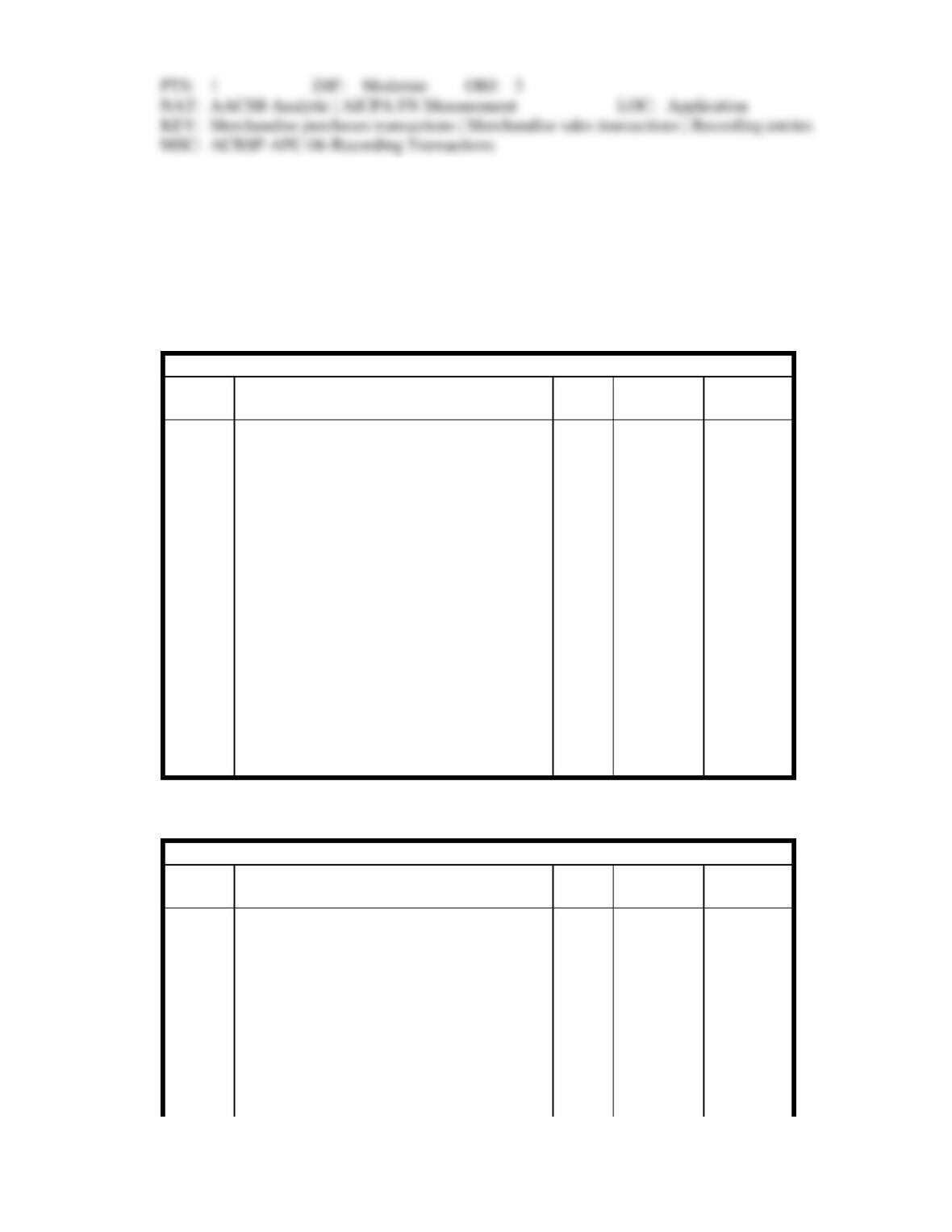
6. Scuilli Corporation purchased $5,000 worth of merchandise, terms n/30, from the Zupcic Corporation
on June 4. The cost of the merchandise to Zupcic was $3,600. On June 10, Scuilli returned $700 worth
of goods to Zupcic for full credit. The goods had a cost of $450 to Zupcic. On June 12, the account
was paid in full. Prepare journal entries without explanations to record these transactions in (a)
Scuilli’s records and (b) Zupcic’s records. Assume use of the perpetual inventory system by both
companies.
a. Scuilli’s records:
General Journal
Page 1
Date
Description
Post.
Ref.
Debit
Credit
b. Zupcic’s records:
General Journal
Page 1
Date
Description
Post.
Ref.
Debit
Credit
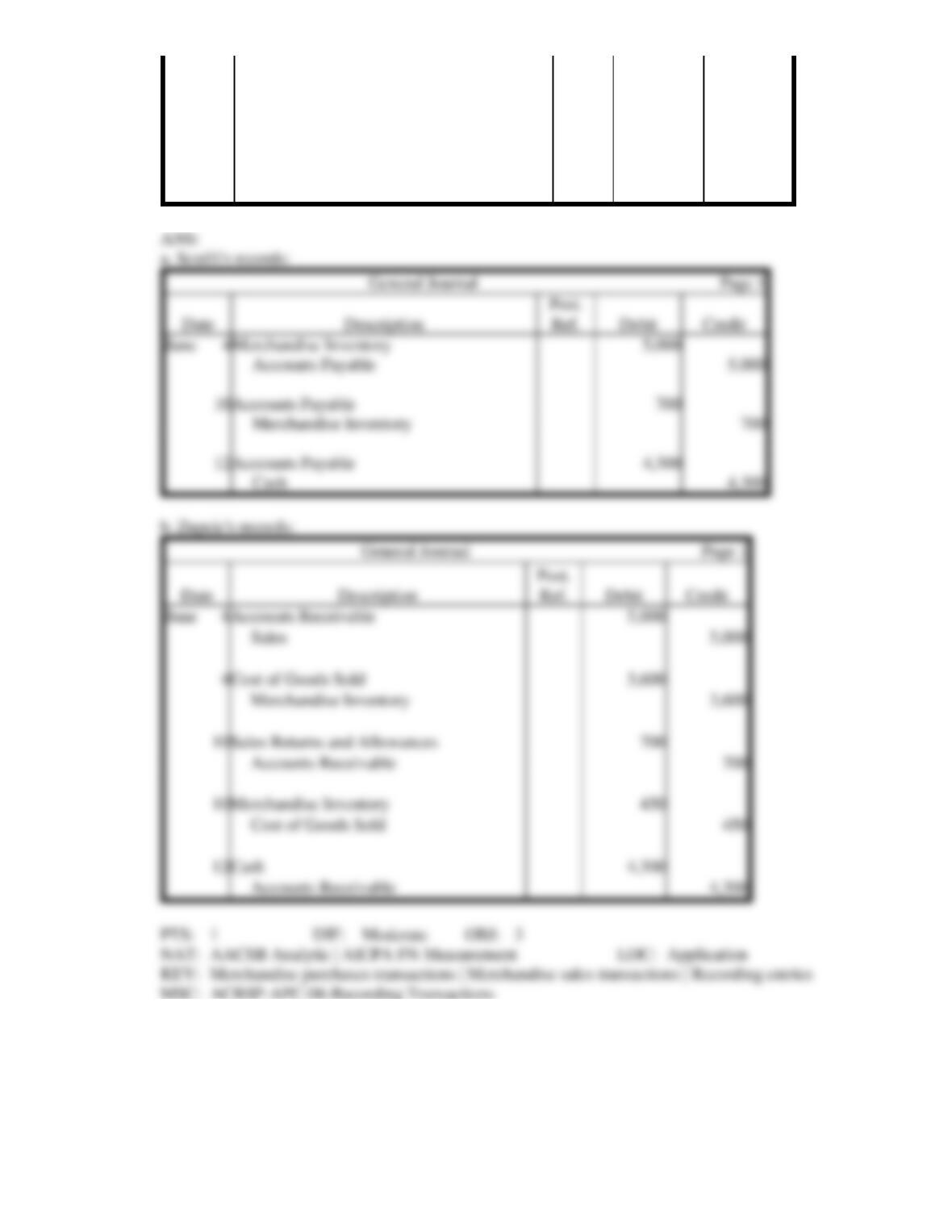
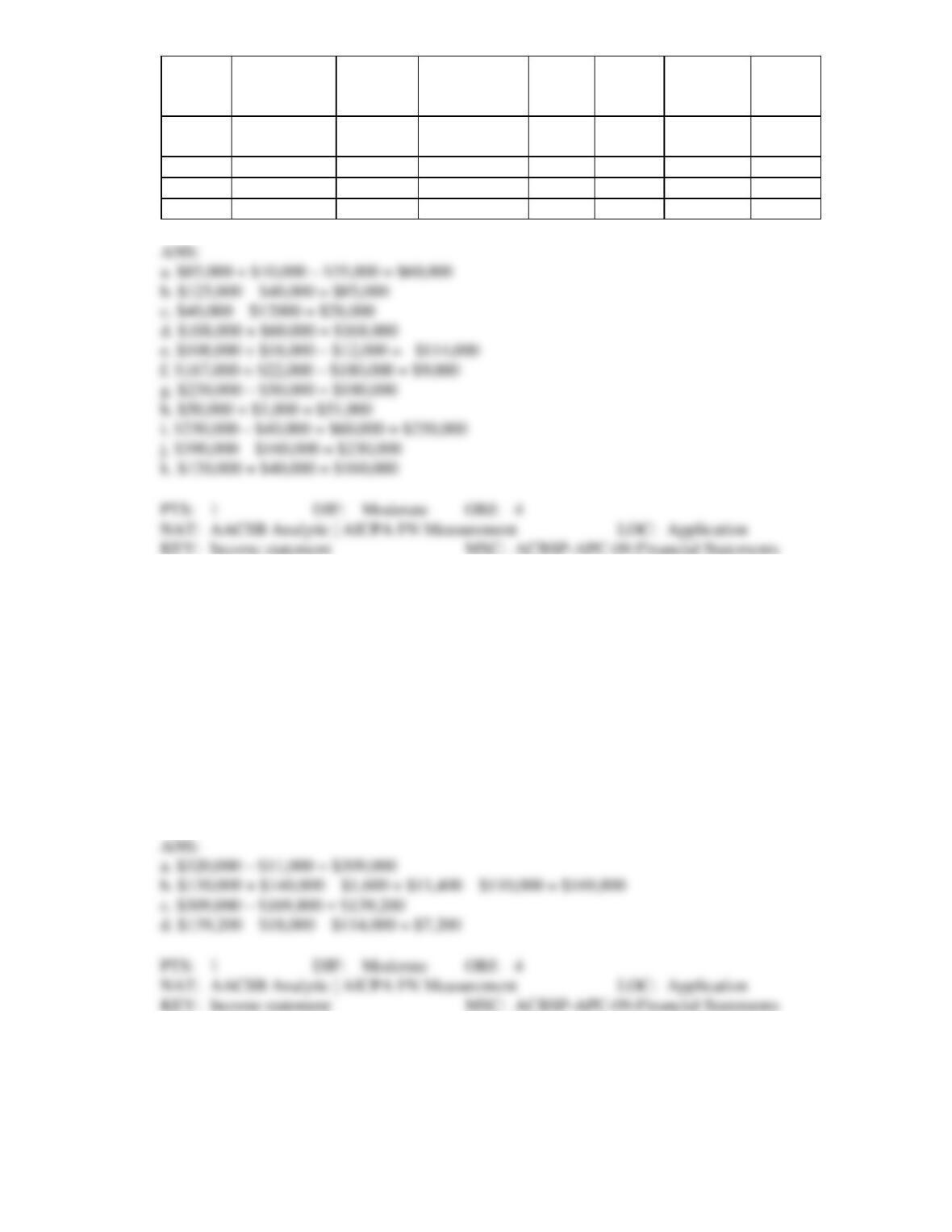
7. Compute the dollar amount of each item indicated by a letter in the following table. Treat each
horizontal row of numbers as a separate problem.
June
Accounts Receivable
Sales
Cost of Goods Sold
Merchandise Inventory
Sales Returns and Allowances
Merchandise Inventory
Cost of Goods Sold
Cash
Accounts Receivable
Sales
Beginning
Merchandise
Inventory
Net Cost
of
Purchases
Ending
Merchandise
Inventory
Cost of
Goods
Sold
Gross
Margin
Operating
Expenses
Net
Income
(Loss)
$125,000
$ a
.
$ 35,000
$10,000
$ b
$40,000
$ c
.
$12,000
d
12,000
e
18,000
108,000
60,000
40,000
20,000
230,000
22,000
167,000
f
g
50,000
h
(1,000)
390,000
40,000
i
60,000
j
k
120,000
40,000
8. Using the following information, calculate for 2013 (a) net sales, (b) cost of goods sold, (c) gross
margin, and (d) net income.
Freight-In
$ 11,400
Merchandise Inventory, December 31, 2012
130,000
Sales
320,000
Purchases Returns and Allowances
1,600
Advertising Expense
18,000
Purchases
140,000
Merchandise Inventory, December 31, 2013
110,000
Sales Returns and Allowances
11,000
General and Administrative Expenses
114,000
a. $320,000 – $11,000 = $309,000
b. $130,000 + $140,000 – $1,600 + $11,400 – $110,000 = $169,800
c. $309,000 – $169,800 = $139,200
d. $139,200 – $18,000 – $114,000 = $7,200
9. Using the following information, calculate for 2013 (a) net sales, (b) cost of goods sold, (c) gross
margin, and (d) net income before taxes.
Freight-In
$ 400
a. $85,000 + $10,000 – $35,000 = $60,000
b. $125,000 – $40,000 = $85,000
c. $40,000 – $12000 = $28,000
d. $108,000 + $60,000 = $168,000
e. $108,000 + $18,000 – $12,000 = $114,000
f. $167,000 + $22,000 – $180,000 = $9,000
g. $230,000 – $50,000 = $180,000
h. $50,000 + $1,000 = $51,000
i. $230,000 – $40,000 + $60,000 = $250,000
j. $390,000 – $160,000 = $230,000
k. $120,000 + $40,000 = $160,000
Merchandise Inventory, December 31, 2012
30,000
Sales
120,000
Purchases Returns and Allowances
600
Advertising Expense
8,000
Purchases
40,000
Merchandise Inventory, December 31, 2013
10,000
Sales Returns and Allowances
1,000
General and Administrative Expenses
14,000
10. Using the following information, calculate (a) net sales, (b) beginning merchandise inventory, (c)
gross margin, and (d) net income.
Sales staff Salaries Expense
$ 7,000
Sales
90,000
Ending Merchandise Inventory
16,000
Purchases Returns and Allowances
500
General and Administrative Expenses
11,000
Sales Returns and Allowances
1,200
Freight-In
1,500
Purchases
30,000
Cost of Goods Sold
47,000
a. $90,000 – $1,200 = $88,800
b. $47,000 + $16,000 – $30,000 + $500 – $1,500 = $32,000
c. $88,800 – $47,000 = $41,800
d. $41,800 – $7,000 – $11,000 = $23,800
11. Demmler Corporation entered into the transactions listed below. In the journal provided, prepare
Demmler’s journal entries, assuming use of the periodic inventory system. Omit explanations.
Oct.
3
Purchased $1,500 of merchandise on credit, terms n/15.
6
Returned $300 of the goods purchased on October 3.
7
Paid freight charges of $150 on goods purchased on October 3.
12
Paid for the goods purchased on October 3.
13
Sold goods on credit for $1,000, terms n/30.
14
The customer of October 13 returned $200 of the goods.
23
Received payment from the customer of October 13.
25
Purchased office supplies for $450.
a. $120,000 – $1,000 = $119,000
b. $30,000 + $40,000 – $600 + $400 – $10,000 = $59,800
c. $119,000 – $59,800 = $59,200
d. $59,200 – $8,000 – $14,000 = $37,200
General Journal
Page 1
Date
Description
Post.
Ref.
Debit
Credit
Debit
12. Tillman, Inc., entered into the transactions listed below. In the journal provided, prepare Tillman’s
journal entries, assuming use of the periodic inventory system. Omit explanations.
April
3
Purchased $3,200 of merchandise on credit, terms 2/10, n/60.
6
Returned $400 of the goods purchased on April 3.
7
Paid freight charges of $280 on goods purchased on April 3.
12
Paid for the goods purchased on April 3.
13
Sold goods on credit for $4,000, terms 1/10, n/30.
14
The customer of April 13 returned $400 of the goods.
23
Received payment from the customer of April 13.
25
Purchased office supplies for $1,000.
General Journal
Page 1
Date
Description
Post.
Ref.
Debit
Credit
13. Prepare journal entries without explanations for the merchandising transactions listed below for Naveh
Corporation. Assume use of the periodic inventory system.
July
1
Sold merchandise to Hobart Company for $1,000, terms n/15.
2
Purchased merchandise from Stowe Corporation for $4,000, terms n/15.
3
Gave credit to Hobart Company for merchandise returned, $100.
5
Purchased merchandise from Rajah Company for $5,000, terms n/30.
10
Received payment from Hobart Company for purchase of July 1.
11
Returned $500 in merchandise to Rajah Company for credit.
13
Paid Stowe Corporation in full for purchase of July 2.
14
Paid Rajah Company in full for purchase of July 5.
General Journal
Page 1
Date
Description
Post.
Ref.
Debit
Credit
Page 1
Date
Credit
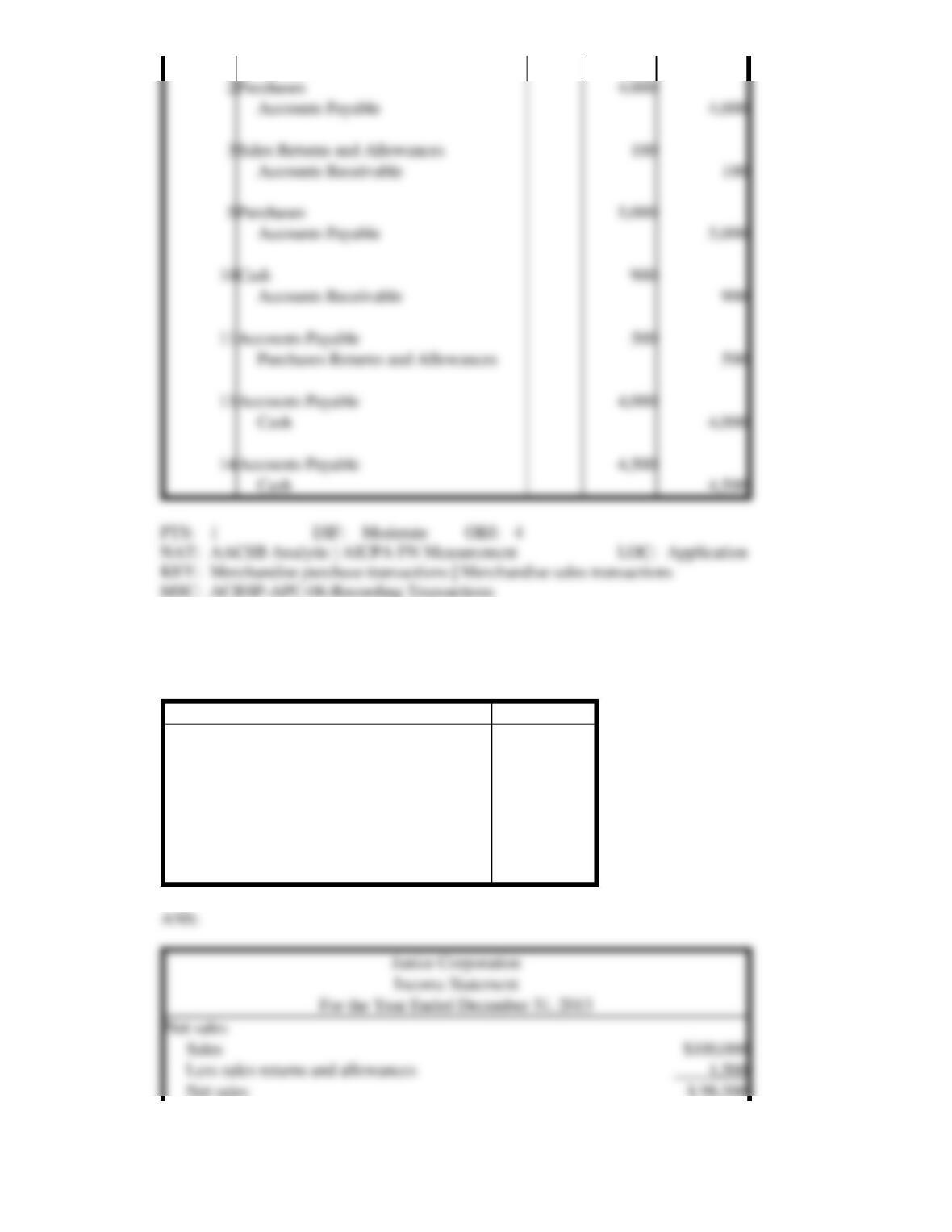
14. The income statement account balances on December 31, 2013, for Janice Corporation appear below.
In addition, beginning merchandise inventory was $3,000 and ending merchandise inventory was
$4,000. Prepare a 2013 income statement for the company.
Account Name
Balance
Sales
$100,000
Sales Returns and Allowances
1,500
Purchases
50,000
Purchases Returns and Allowances
3,000
Freight-In
5,000
Selling Expense
25,000
General and Administrative Expenses
10,000
Income Taxes Expense
1,800
Purchases
Accounts Payable
Sales Returns and Allowances
Purchases
Accounts Payable
Cash
Accounts Receivable
Accounts Payable
Purchases Returns and Allowances
Accounts Payable
Cash
Accounts Payable
Cash
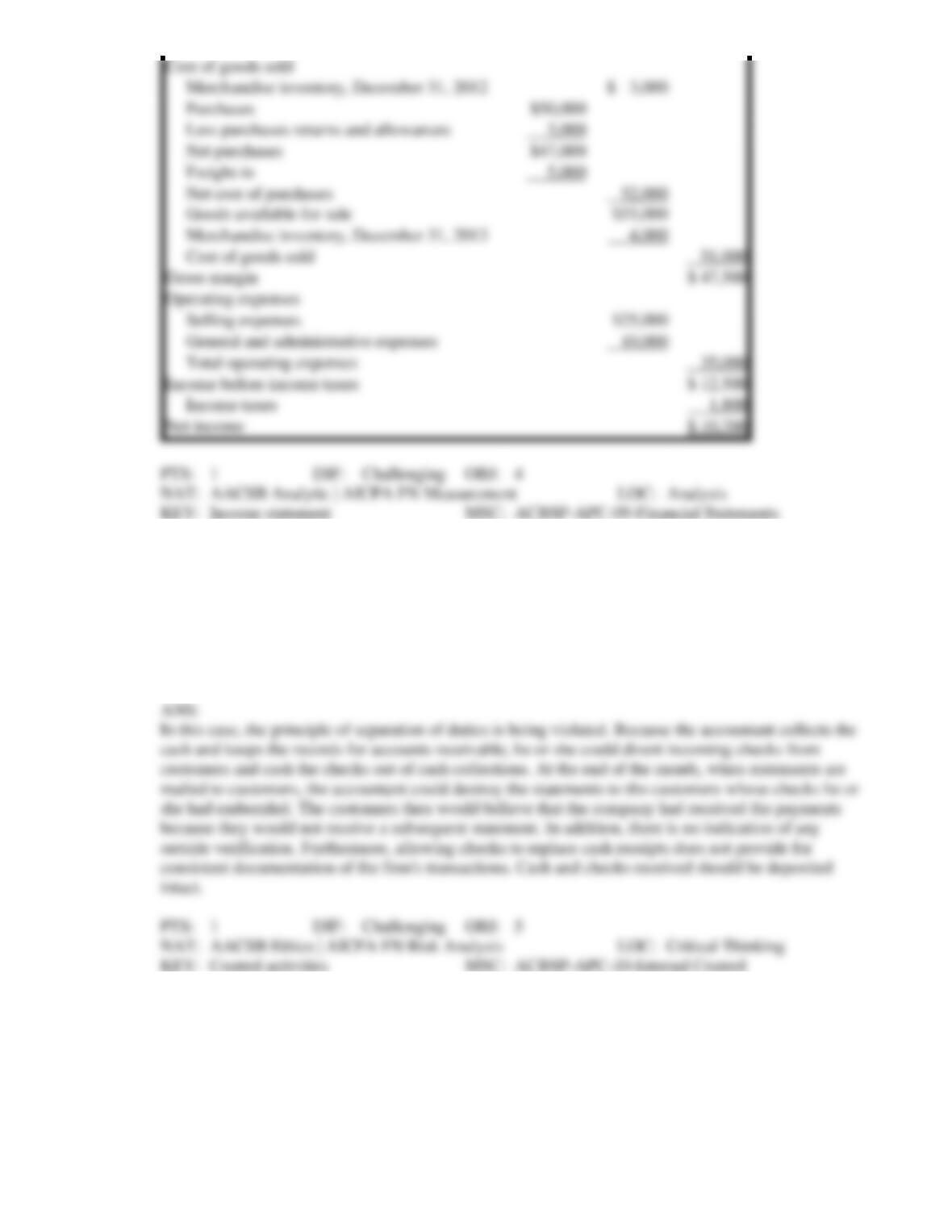
15. An accountant is responsible for the following activities: (1) receiving all cash; (2) maintaining the
general ledger; (3) maintaining the accounts receivable subsidiary ledger that includes the individual
records of each customer; (4) maintaining the journals for recording sales, purchases, and cash
receipts; and (5) preparing monthly statements to be sent to customers. As a service to customers and
employees, the company allows the accountant to cash checks of up to $50 with money from the cash
receipts. When deposits are made, the checks are included in place of the cash receipts. What
weaknesses in internal control exist in this system?
16. Colton, Inc., a specialty retailer of customized audio systems for automobiles, installed a perpetual
inventory system in the second quarter of 2012. The new system allowed the firm to adjust its
merchandise inventories to sales patterns more effectively and to prepare monthly financial statements.
Although the system led to an improvement in sales and income, the gross margin on the monthly
income statements was falling below both management’s expectations and the industry average. At the
end of 2013, a physical inventory revealed that actual merchandise inventory was considerably lower
than the perpetual inventory records indicated. The merchandise inventories of some stores were off
more than others, but all had deficiencies. What probably caused these losses and what steps could be
taken to prevent them in the future?