110.
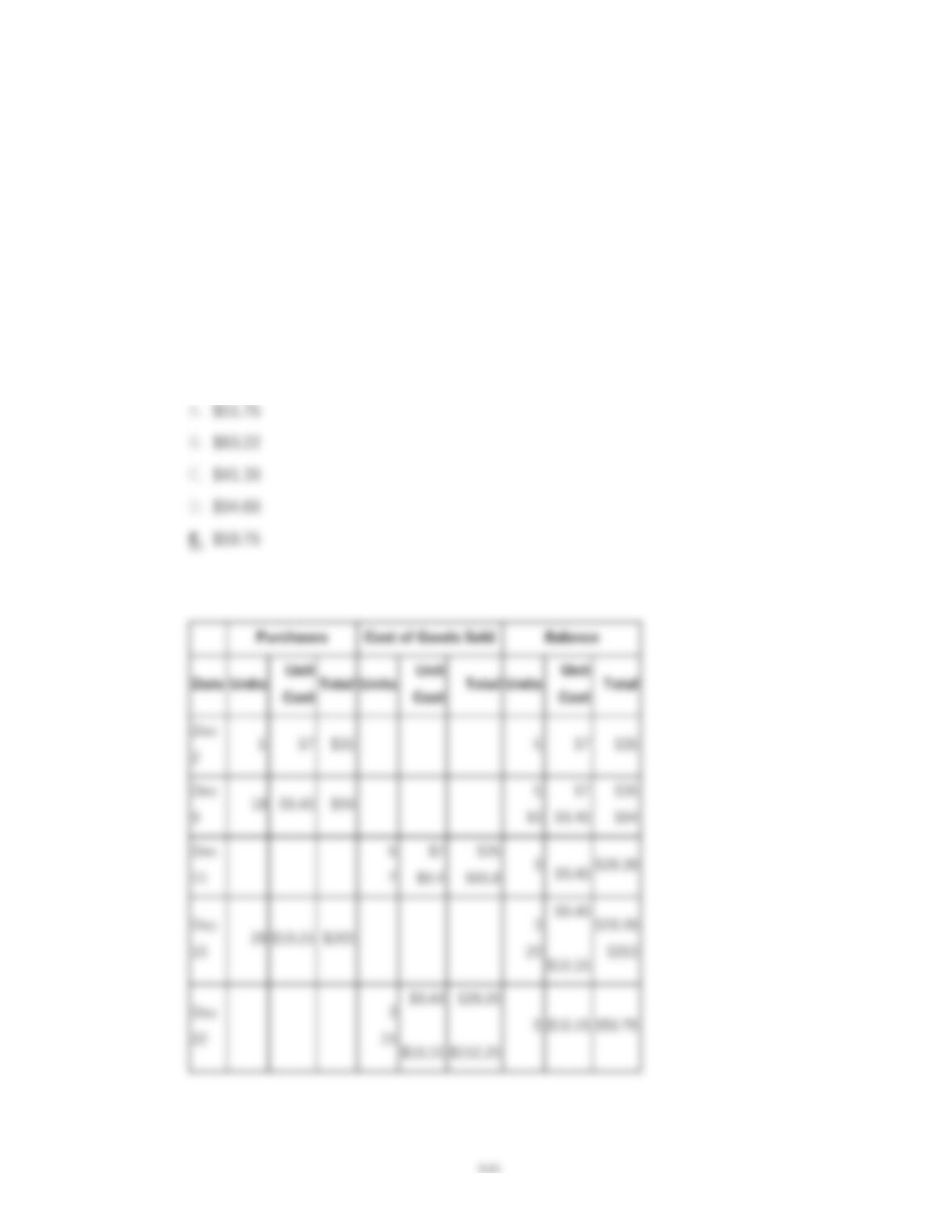
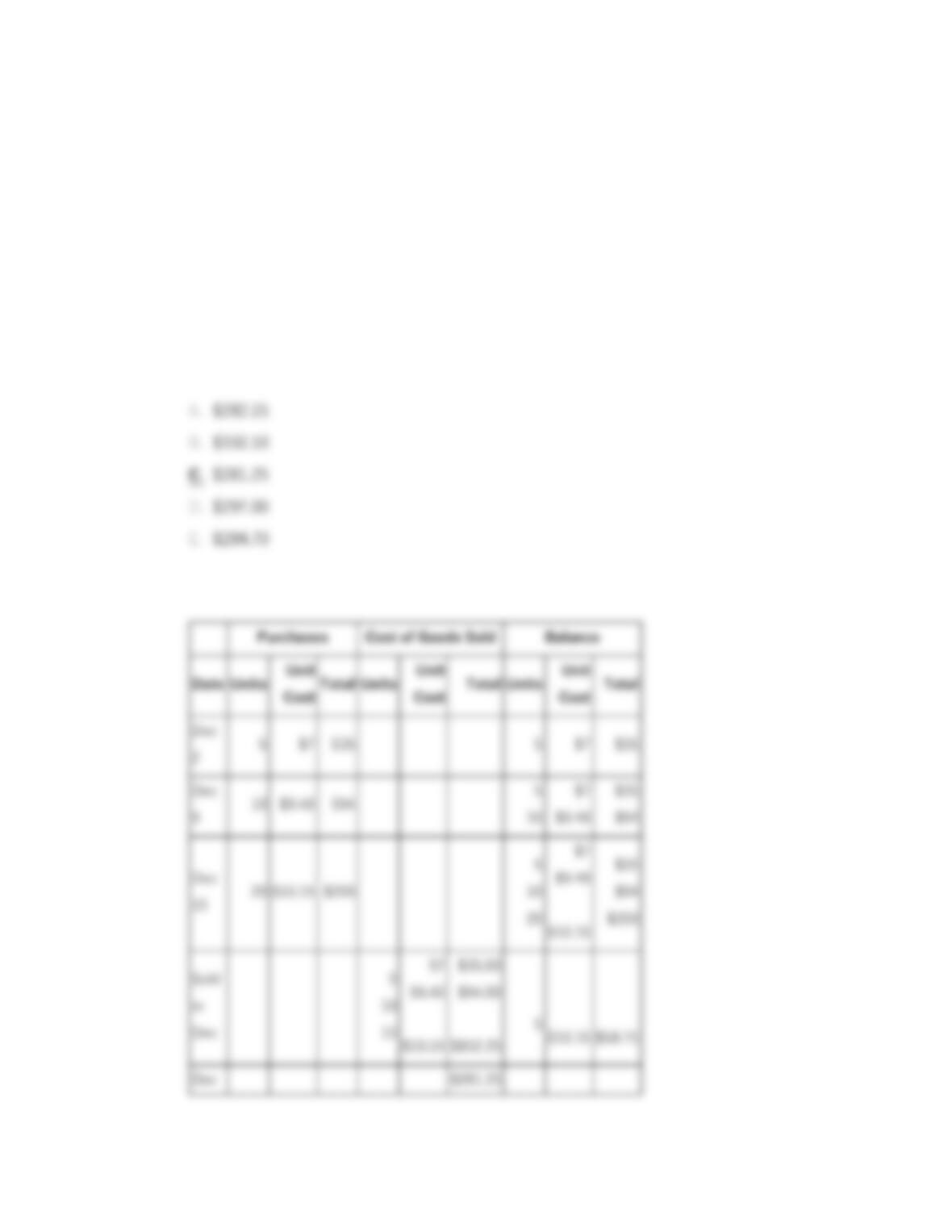
Given the following information, determine the cost of ending inventory at December 31
using the FIFO perpetual inventory method.
December 2: 5 units were purchased at $7 per unit.
December 9: 10 units were purchased at $9.40 per unit.
December 11: 12 units were sold at $35 per unit.
December 15: 20 units were purchased at $10.15 per unit.
December 22: 18 units were sold at $35 per unit.
111.
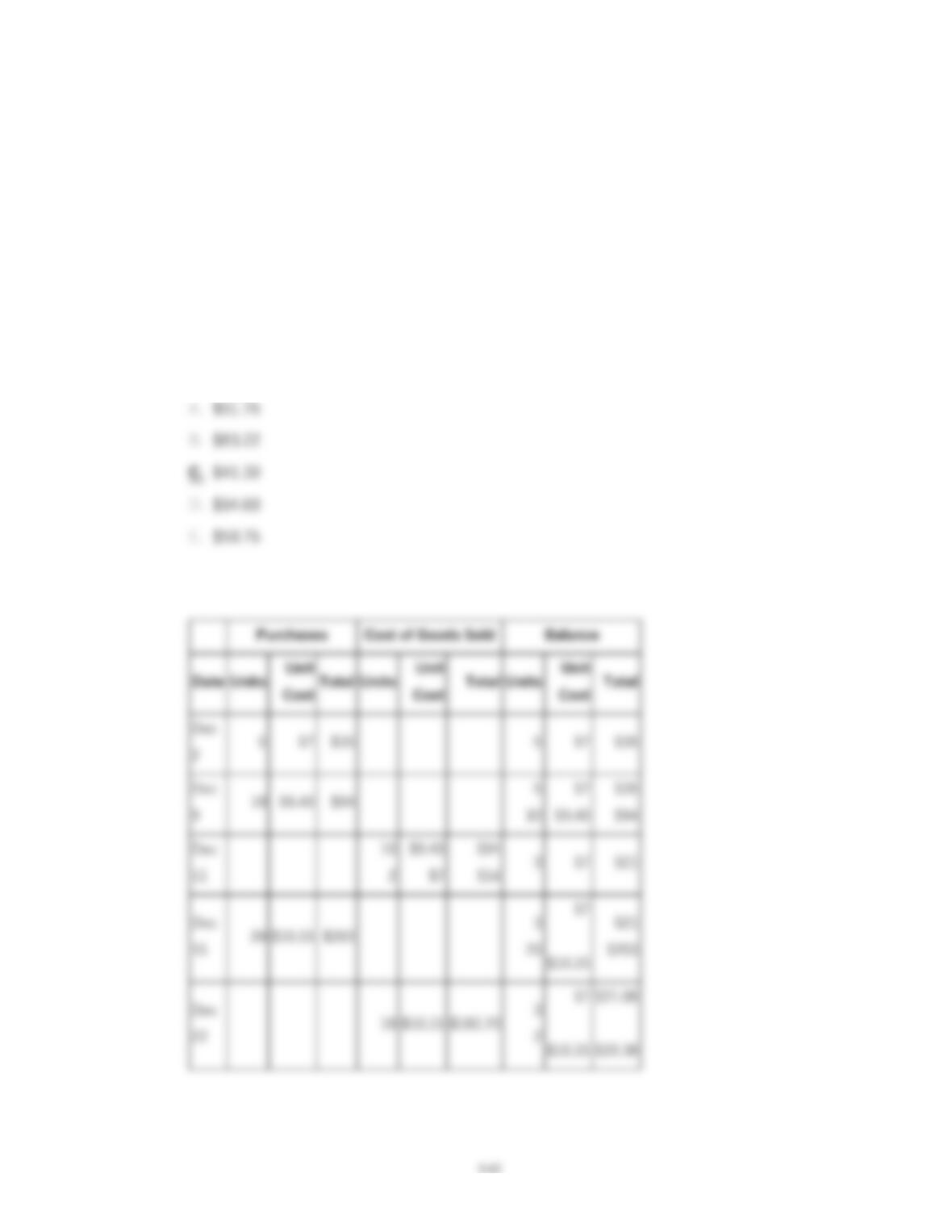
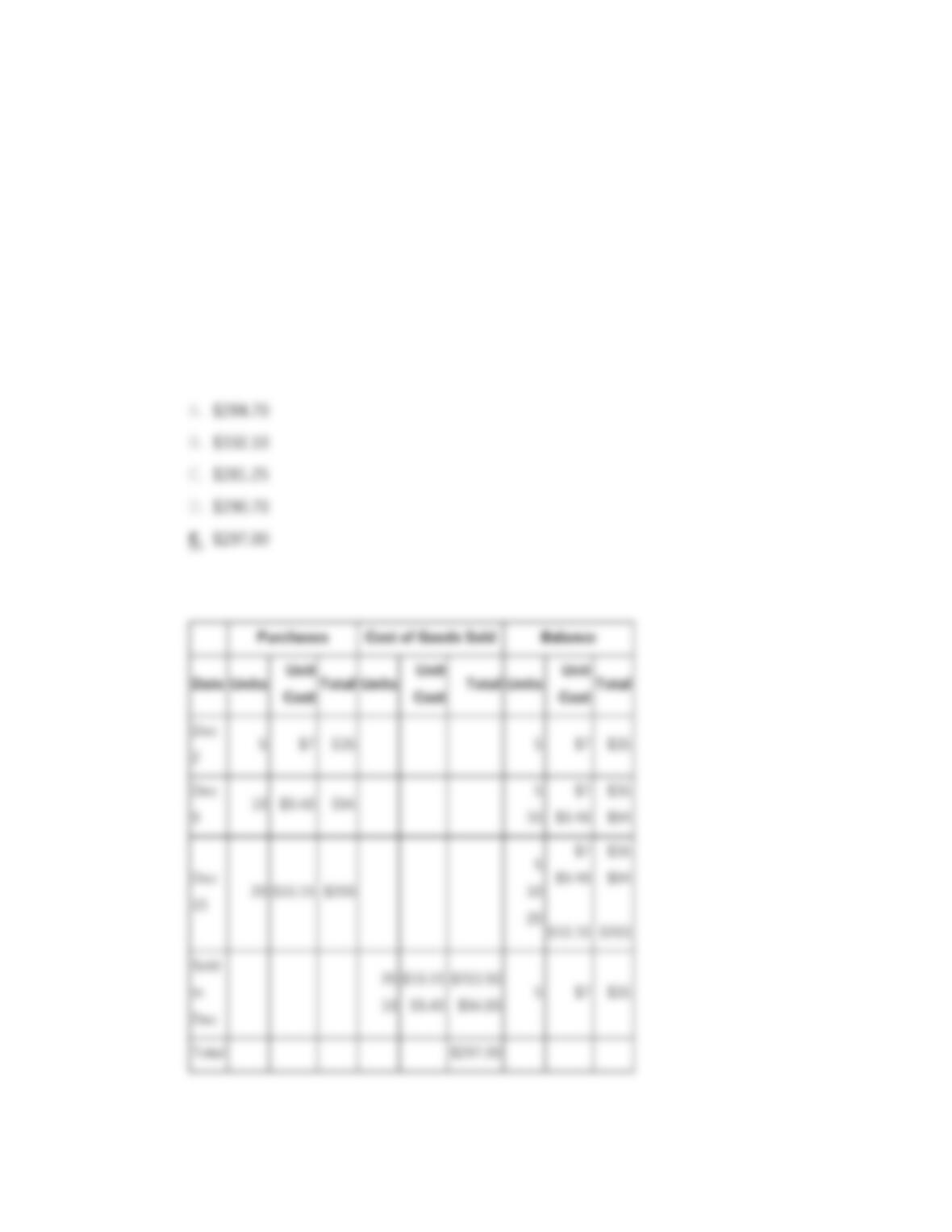
Given the following information, determine the cost of ending inventory at December 31
using the LIFO perpetual inventory method.
December 2: 5 units were purchased at $7 per unit.
December 9: 10 units were purchased at $9.40 per unit.
December 11: 12 units were sold at $35 per unit.
December 15: 20 units were purchased at $10.15 per unit.
December 22: 18 units were sold at $35 per unit.
112.
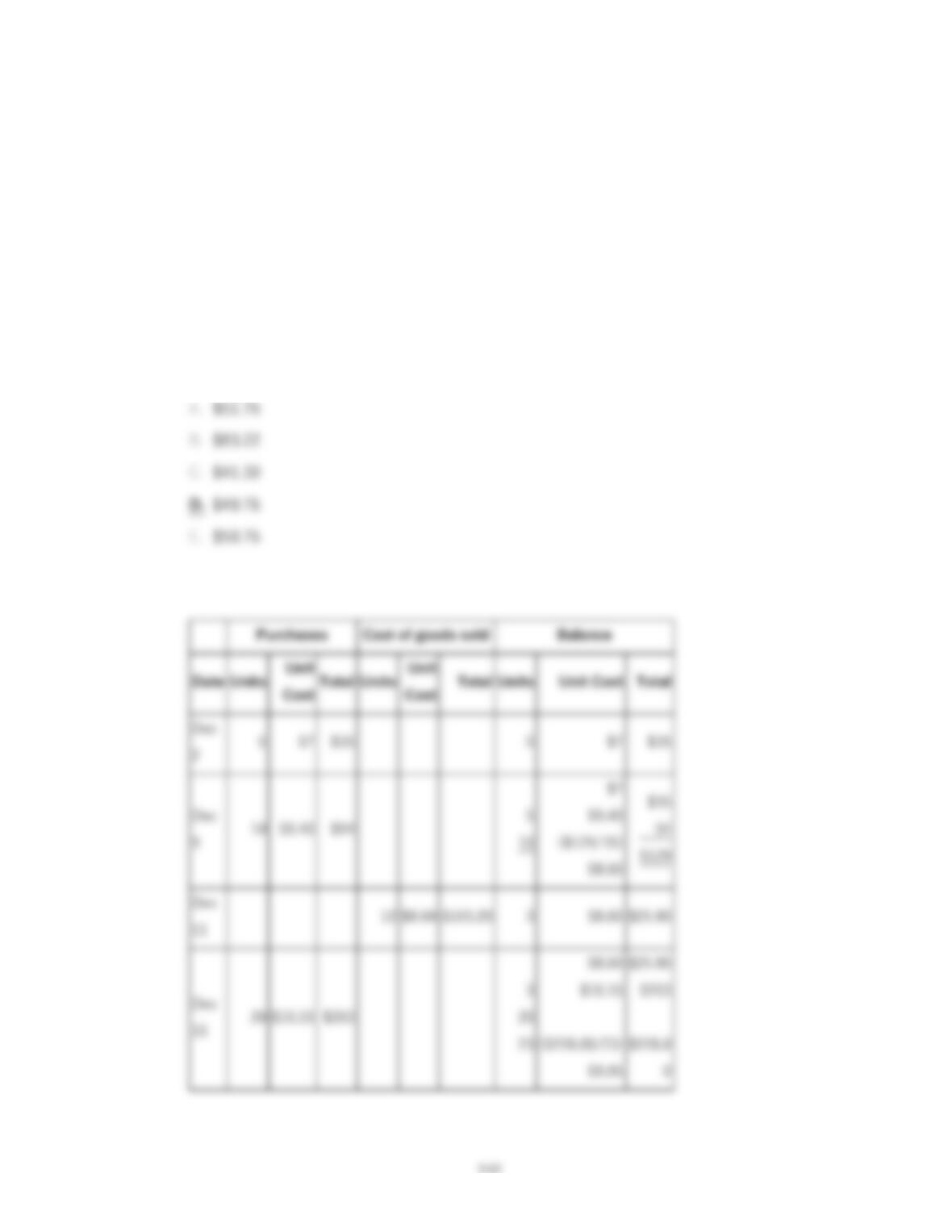
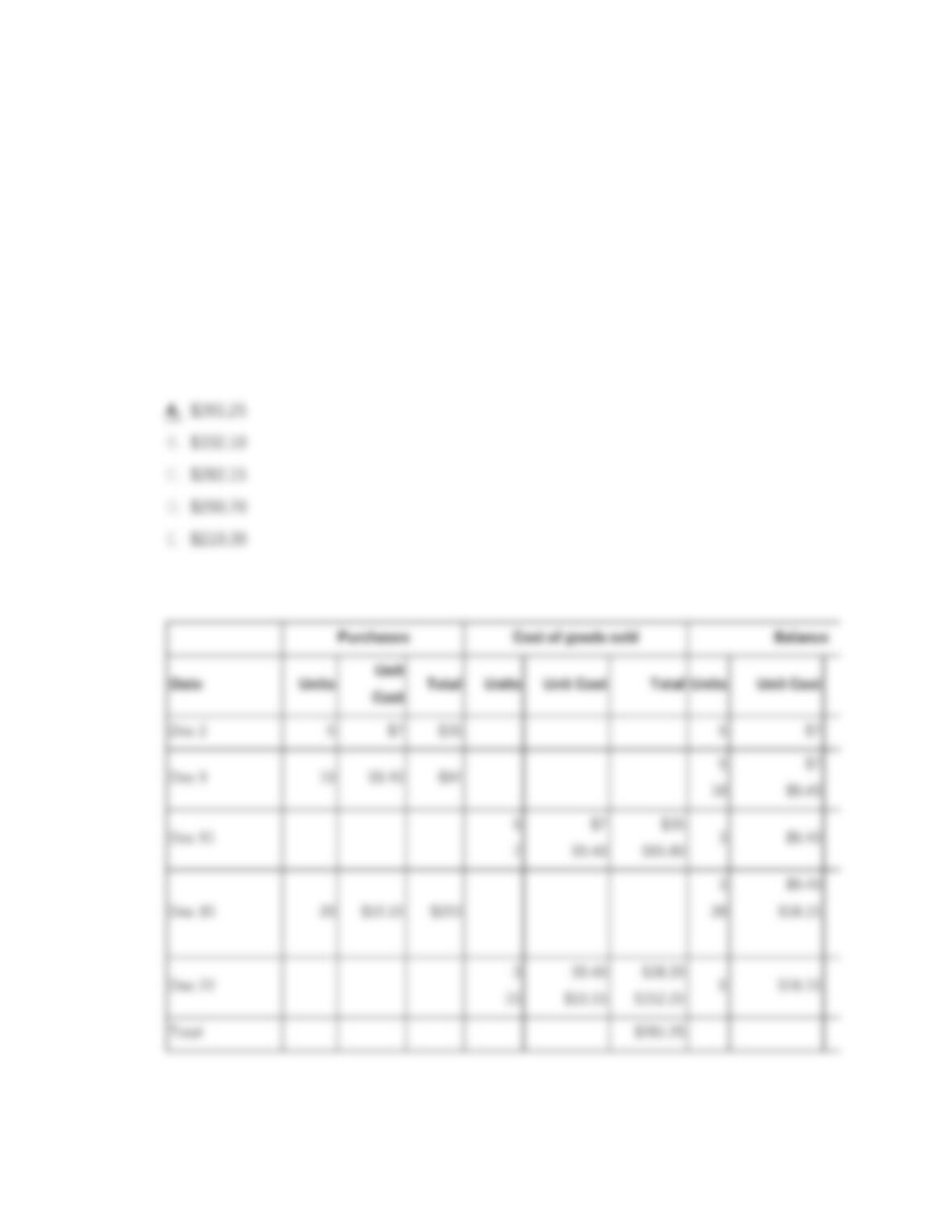
Given the following information, determine the cost of ending inventory at December 31
using the weighted average perpetual inventory method.
December 2: 5 units were purchased at $7 per unit.
December 9: 10 units were purchased at $9.40 per unit.
December 11: 12 units were sold at $35 per unit.
December 15: 20 units were purchased at $10.15 per unit.
December 22: 18 units were sold at $35 per unit.
5-65
113
.
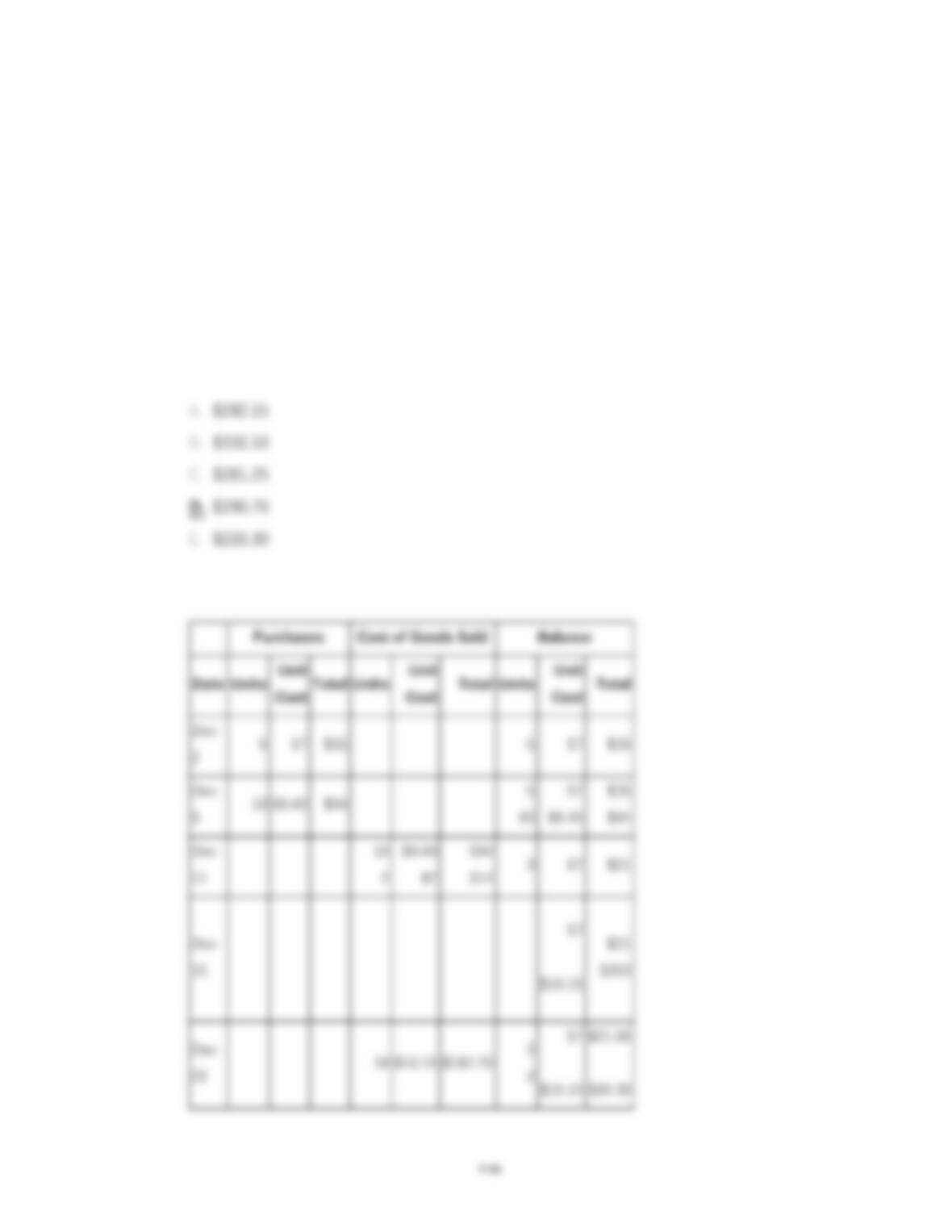
Given the following information, determine the cost of goods sold for December 31 using the
FIFO perpetual inventory method.
December 2: 5 units were purchased at $7 per unit.
December 9: 10 units were purchased at $9.40 per unit.
December 11: 12 units were sold at $35 per unit.
December 15: 20 units were purchased at $10.15 per unit.
December 22: 18 units were sold at $35 per unit.
114.
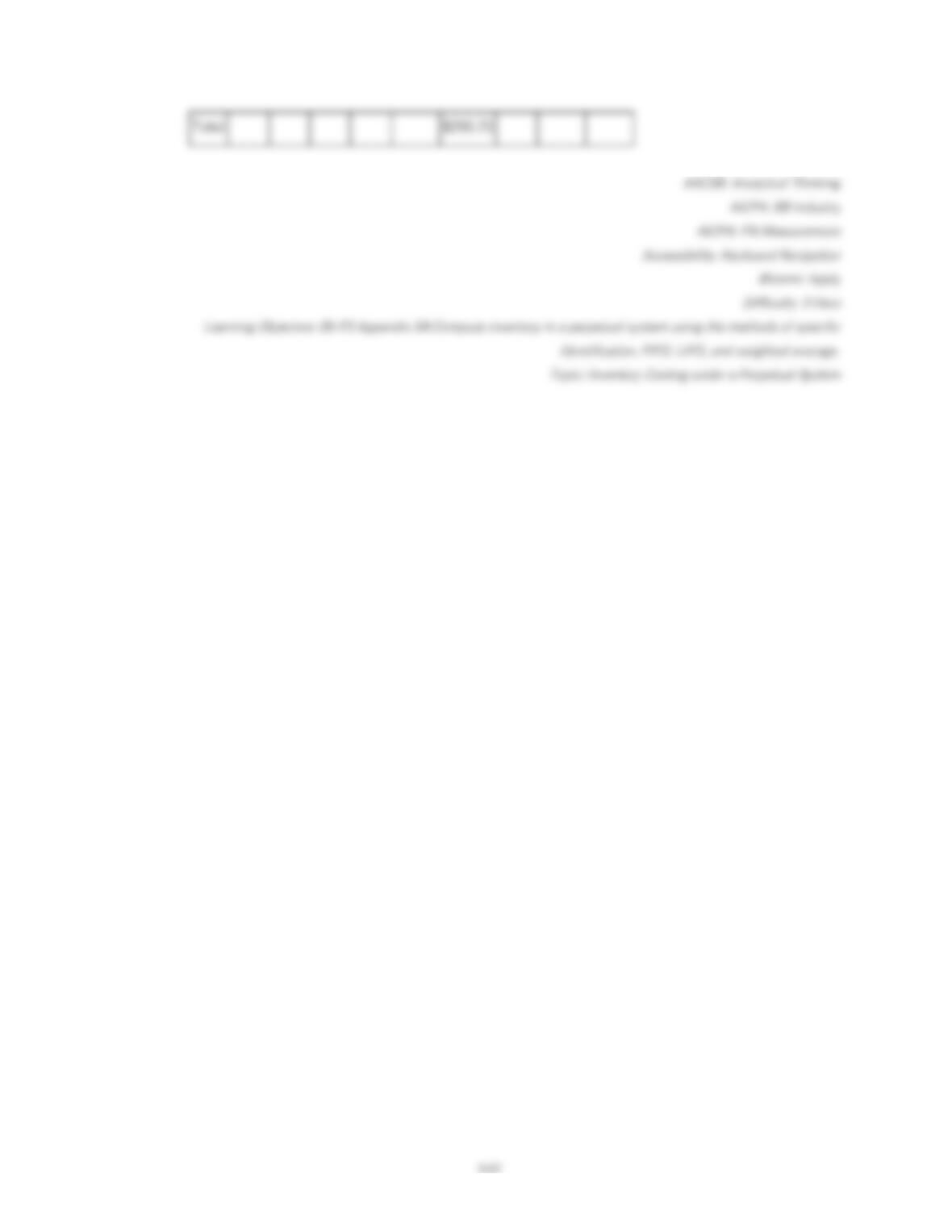
Given the following information, determine the cost of goods sold at December 31 using
the LIFO perpetual inventory method.
December 2: 5 units were purchased at $7 per unit.
December 9: 10 units were purchased at $9.40 per unit.
December 11: 12 units were sold at $35 per unit.
December 15: 20 units were purchased at $10.15 per unit.
December 22: 18 units were sold at $35 per unit.
5-68
115.
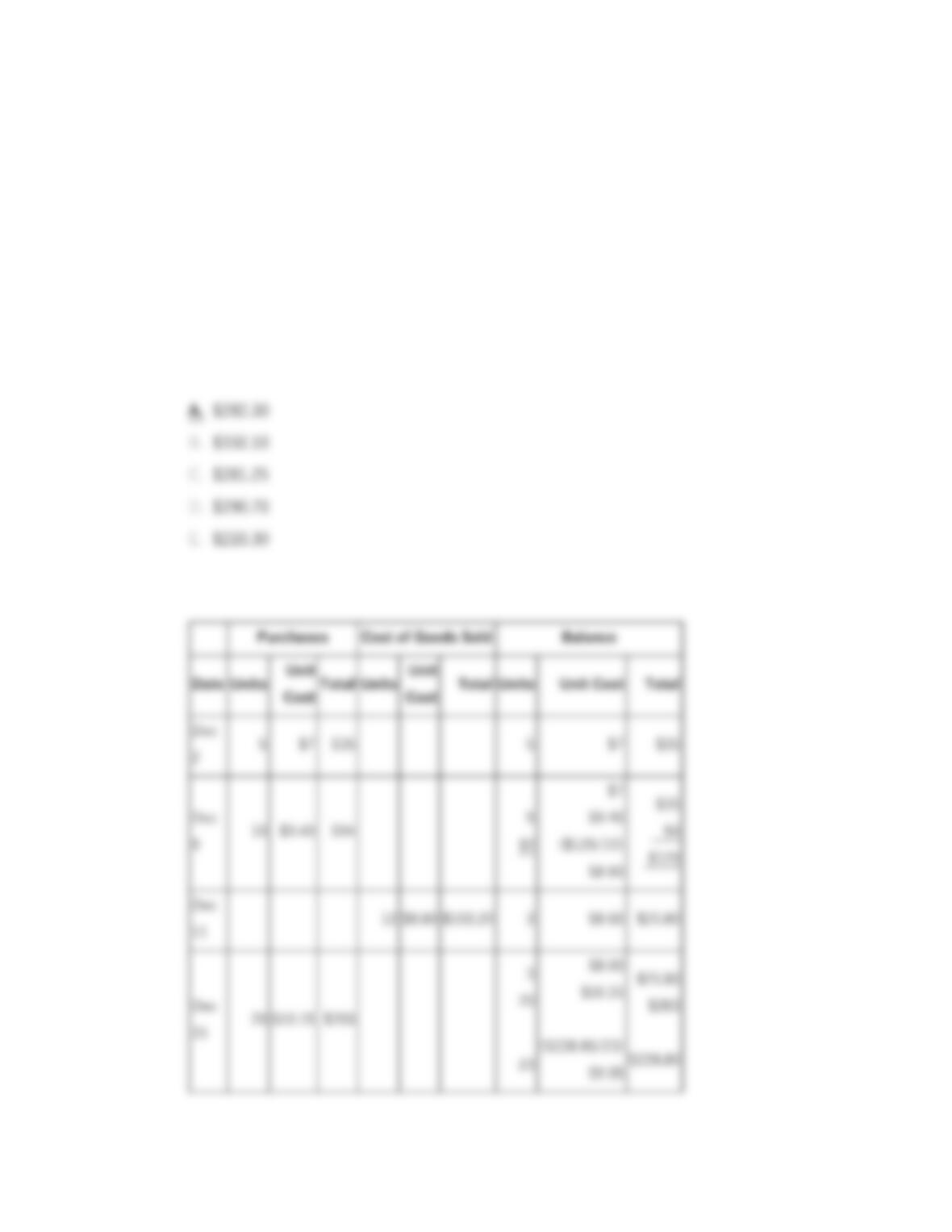
Given the following information, determine the cost of goods sold at December 31 using
the weighted average perpetual inventory method.
December 2: 5 units were purchased at $7 per unit.
December 9: 10 units were purchased at $9.40 per unit.
December 11: 12 units were sold at $35 per unit.
December 15: 20 units were purchased at $10.15 per unit.
December 22: 18 units were sold at $35 per unit.
116.
In applying lower of cost or market to inventory valuation, market is defined as:
117.
Generally accepted accounting principles require that the inventory of a company be
reported at its:
118.
The conservatism constraint requires that:
119.
A company normally sells its product for $20 per unit. However, the selling price has fallen
to $15 per unit. This company’s current inventory consists of 200 units purchased at $16
per unit. Replacement cost has now fallen to $13 per unit. Calculate the value of this
company’s inventory at the lower of cost or market.
120.
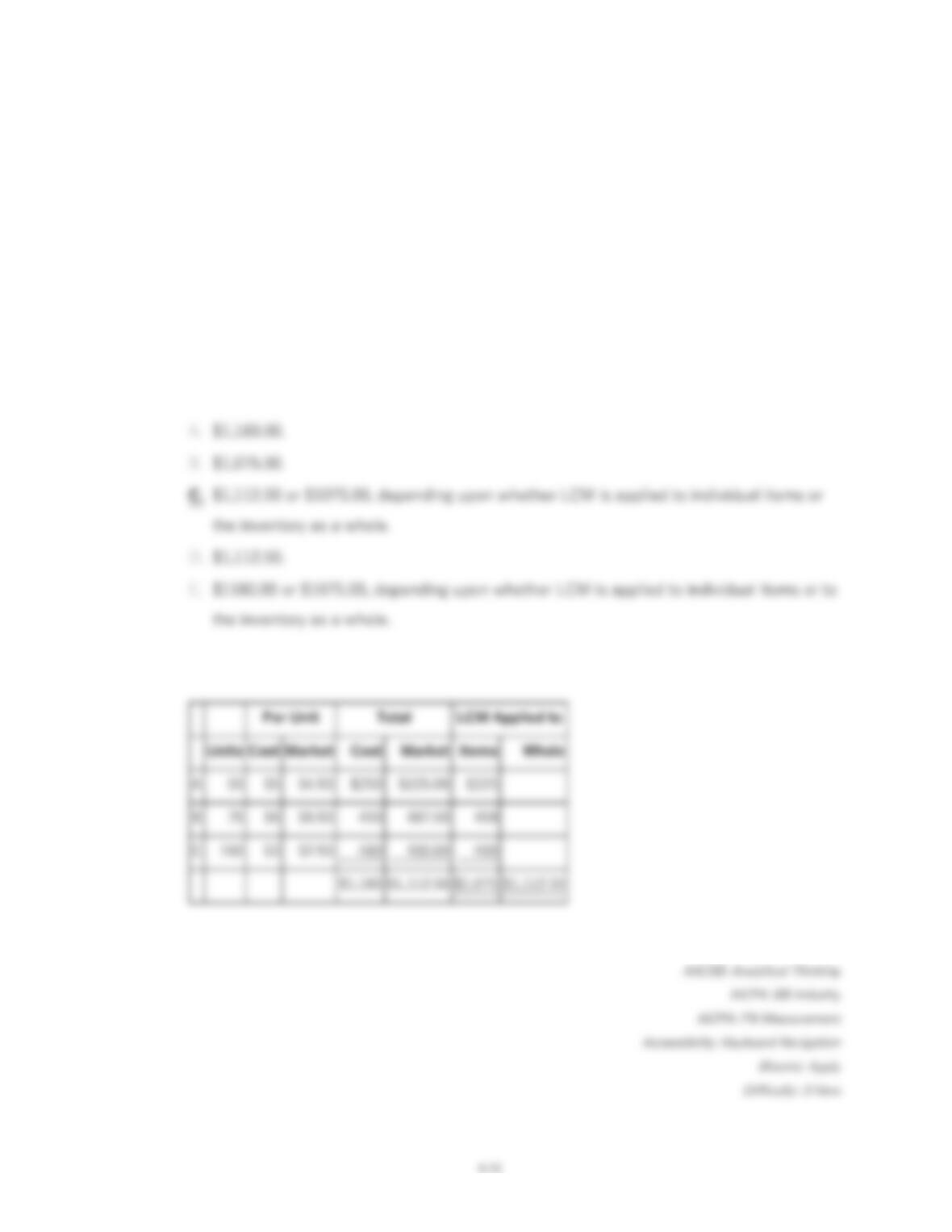
A company has the following per unit original costs and replacement costs for its
inventory:
Part A: 50 units with a cost of $5 and replacement cost of $4.50.
Part B: 75 units with a cost of $6 and replacement cost of $6.50.
Part C: 160 units with a cost of $3 and replacement cost of $2.50.
Under lower of cost or market, the total value of this company’s ending inventory must be
reported as:
121.
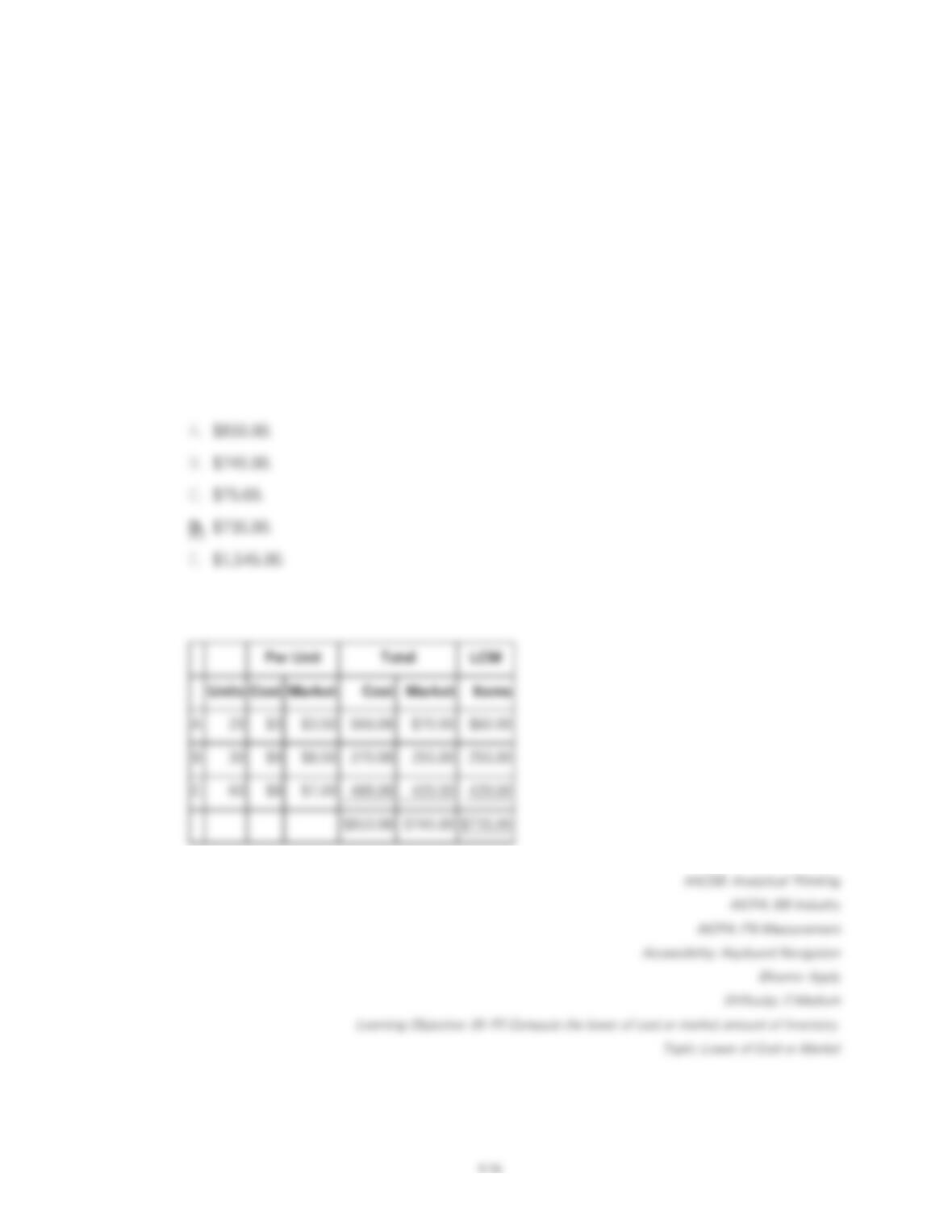
A company has the following per unit original costs and replacement costs for its
inventory:
Part A: 10 units with a cost of $3 and replacement cost of $2.50.
Part B: 40 units with a cost of $9 and replacement cost of $9.50.
Part C: 75 units with a cost of $8 and replacement cost of $7.50.
Under the lower of cost or market method, the total value of this company’s ending
inventory must be reported as:
122.
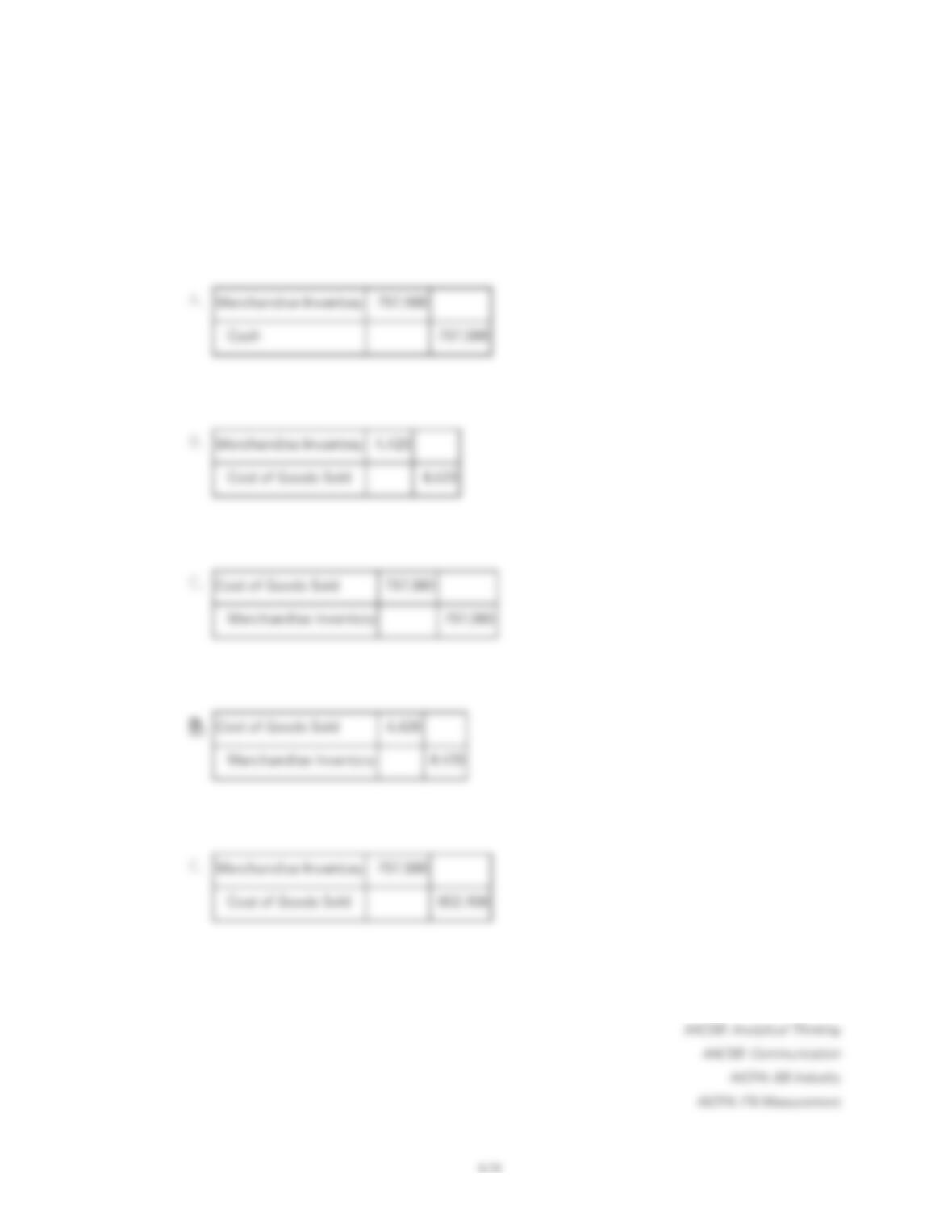
Mason Company has the following per unit original costs and replacement costs for its
inventory. The company applies LCM to individual items of product:
Part A: 20 units with a cost of $3 and replacement cost of $3.50.
Part B: 30 units with a cost of $9 and replacement cost of $8.50.
Part C: 60 units with a cost of $8 and replacement cost of $7.00.
When applying the lower of cost or market method, the total value of this company’s
ending inventory must be reported as:
123.
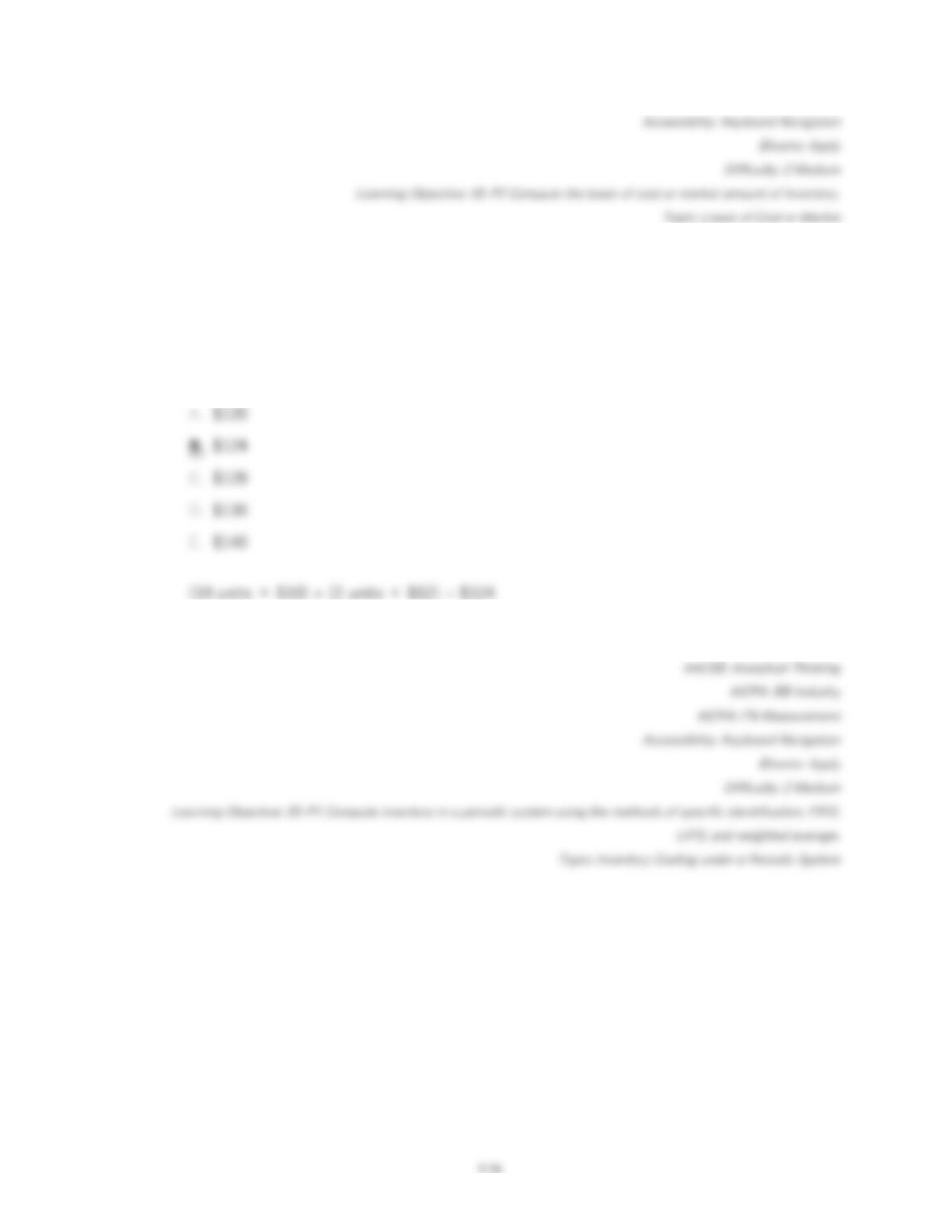
As part of its year end adjusting process, Jasper Industries has compared the $802,400
original cost of its inventory to the current replacement cost of $797,980 and determined
that it must make a lower-of-cost-or-market adjustment. The journal entry for this
adjustment should be:
124.
A company has inventory of 10 units at a cost of $10 each on June 1. On June 3, they
purchased 20 units at $12 each. 12 units are sold on June 5. Using the FIFO periodic
inventory method, what is the cost of the 12 units that were sold?
125.
A company has inventory of 10 units at a cost of $10 each on June 1. On June 3, they
purchased 20 units at $12 each. 12 units are sold on June 5. Using the FIFO periodic
inventory method, what is the cost 18 units remaining in ending Inventory after the June 5
sale?
5-78
126.
Given the following information, determine the cost of goods sold for December 31 using
the FIFO periodic inventory method:
December 2: 5 units were purchased at $7 per unit.
December 9: 10 units were purchased at $9.40 per unit.
December 11: 12 units were sold at $35 per unit.
December 15: 20 units were purchased at $10.15 per unit.
December 22: 18 units were sold at $35 per unit.
5-80
127.
Given the following information, determine the cost of goods sold at December 31 using
the LIFO periodic inventory method:
December 2: 5 units were purchased at $7 per unit.
December 9: 10 units were purchased at $9.40 per unit.
December 11: 12 units were sold at $35 per unit.
December 15: 20 units were purchased at $10.15 per unit.
December 22: 18 units were sold at $35 per unit.