188.
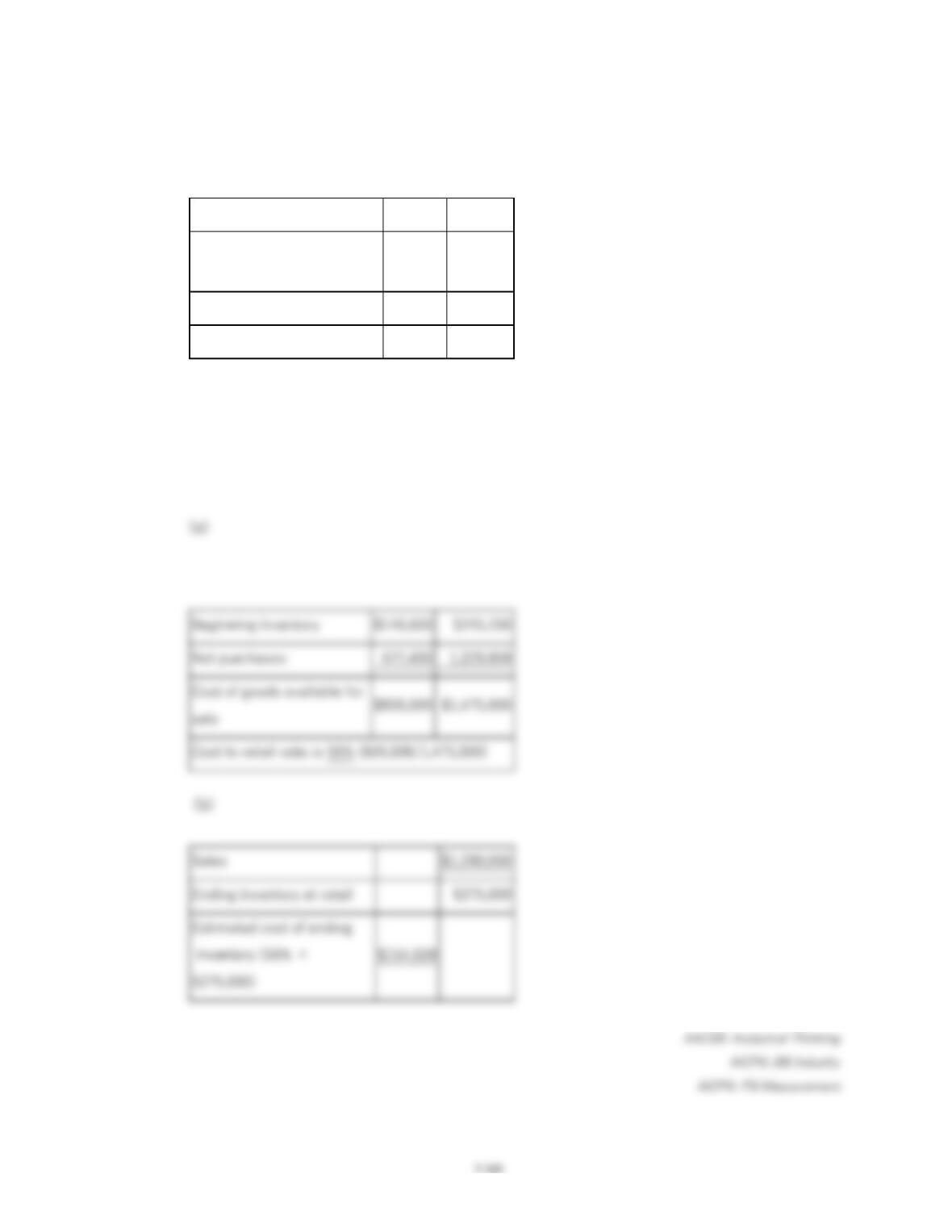
A company uses the retail inventory method and has the following information available
concerning its most recent accounting period:
At Cost
At Retail
Beginning-of-period
inventory
$148,600
$245,200
Net purchases
677,400
1,229,800
Sales
1,200,000
Sales
$1,200,000
(a) What is the cost–to-retail ratio using the retail method?
(b) What is the estimated cost of the ending inventory?
189.
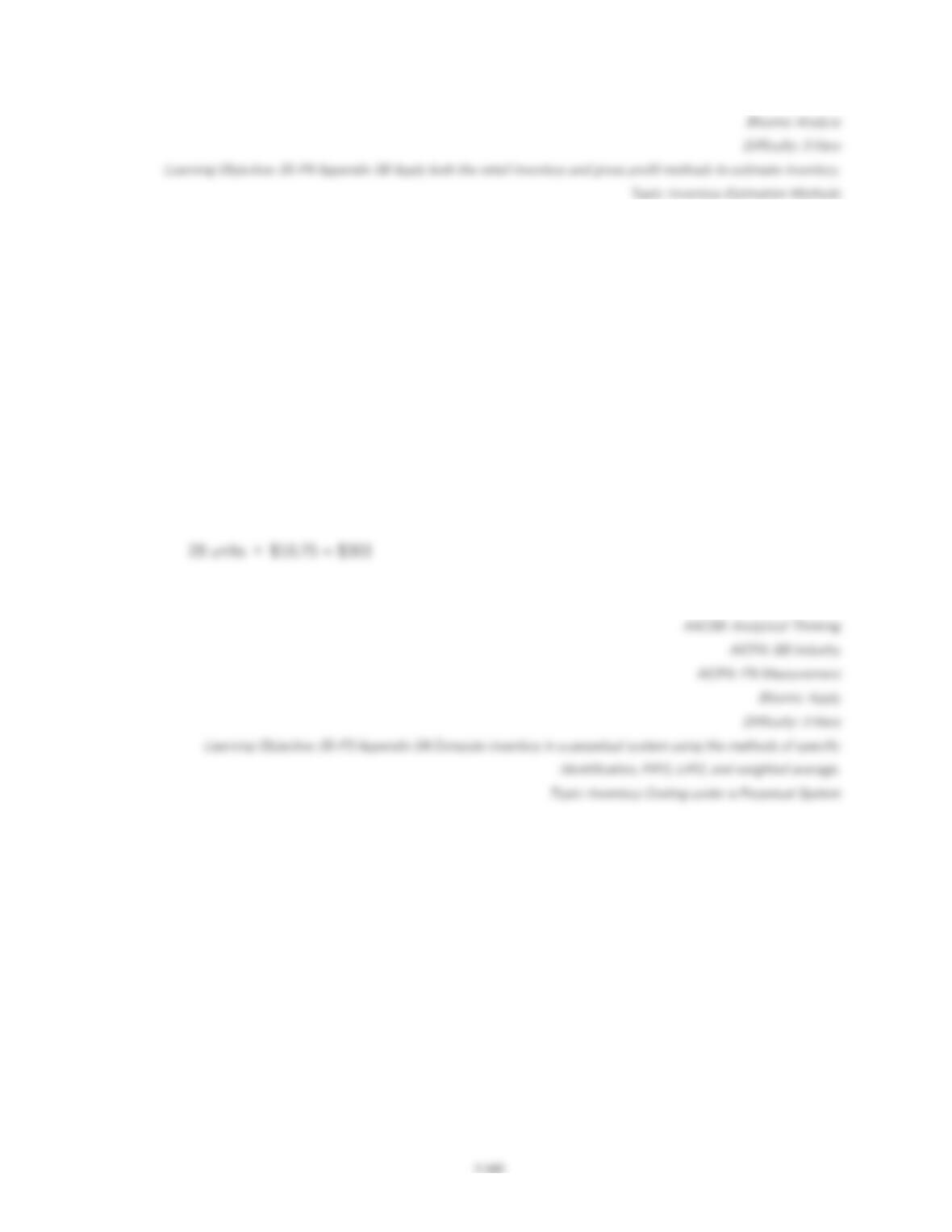
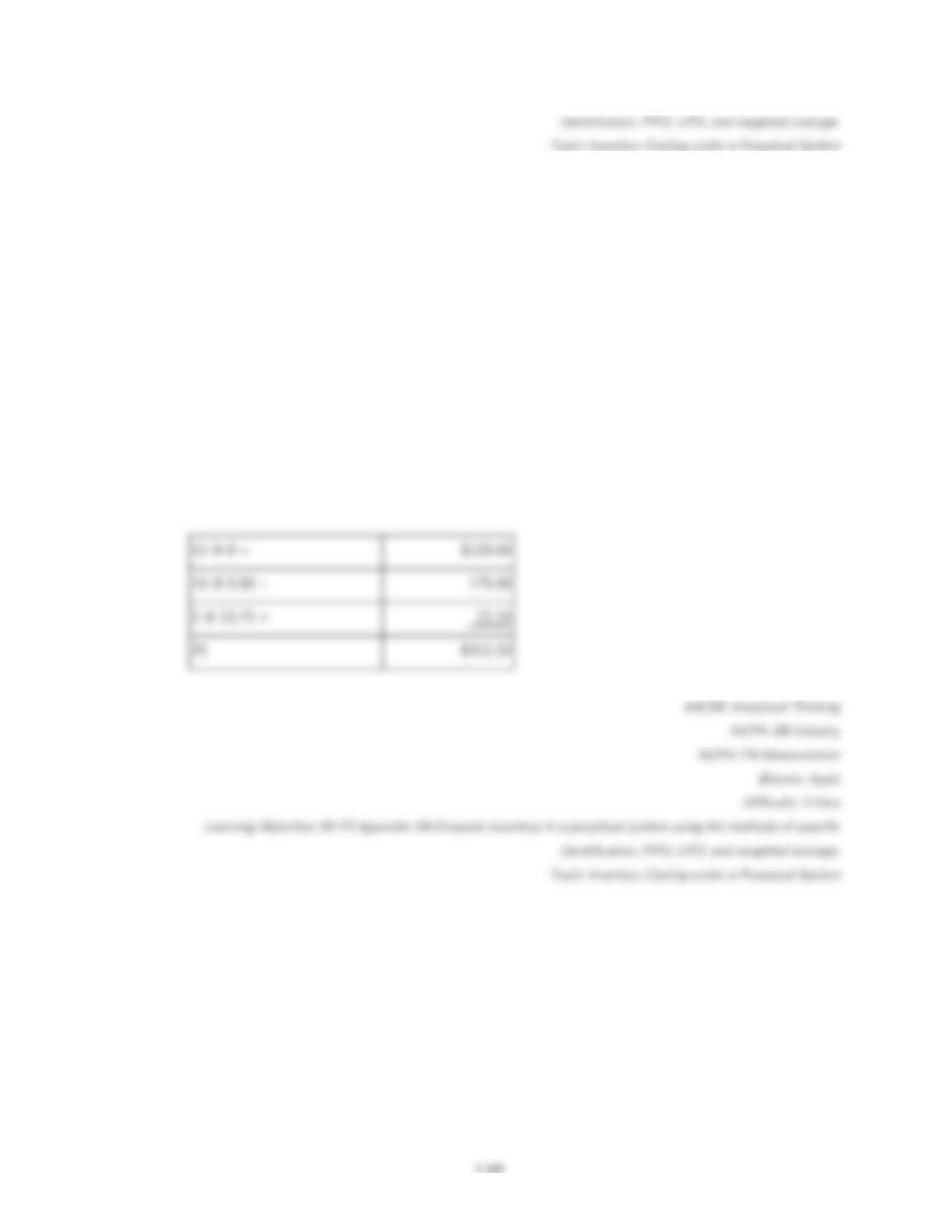
Given the following information, determine the cost of ending inventory at November 30
using the FIFO perpetual inventory method.
November 3: 15 units were purchased at $8 per unit.
November 11: 18 units were purchased at $9.50 per unit.
November 15: 15 units were sold at $45 per unit.
November 18: 30 units were purchased at $10.75 per unit.
November 30: 20 units were sold at $55 per unit.
190.
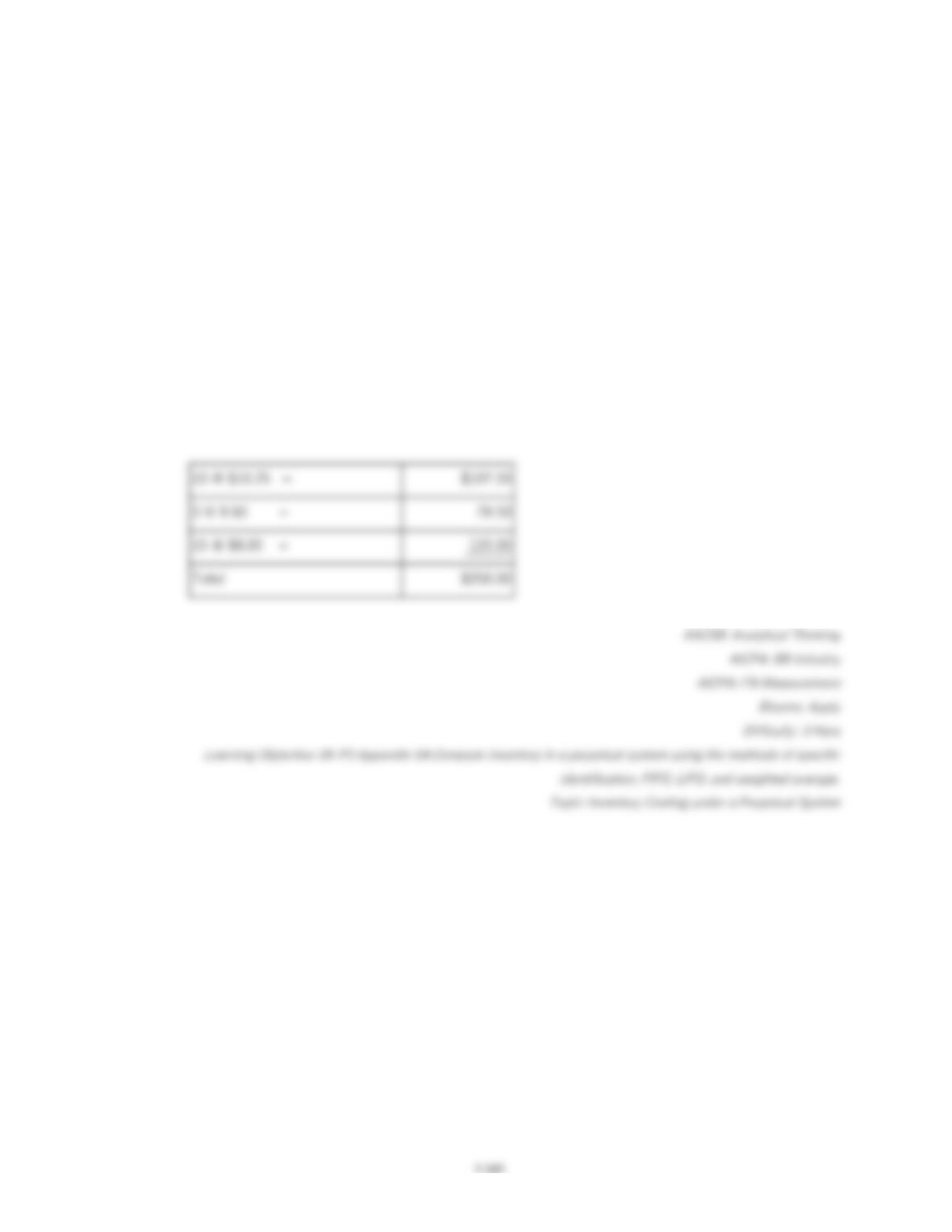
Given the following information, determine the cost of ending inventory at November 30
using the LIFO perpetual inventory method.
November 3: 15 units were purchased at $8 per unit.
November 11: 18 units were purchased at $9.50 per unit.
November 15: 15 units were sold at $45 per unit.
November 18: 30 units were purchased at $10.75 per unit.
November 30: 20 units were sold at $55 per unit.
191.
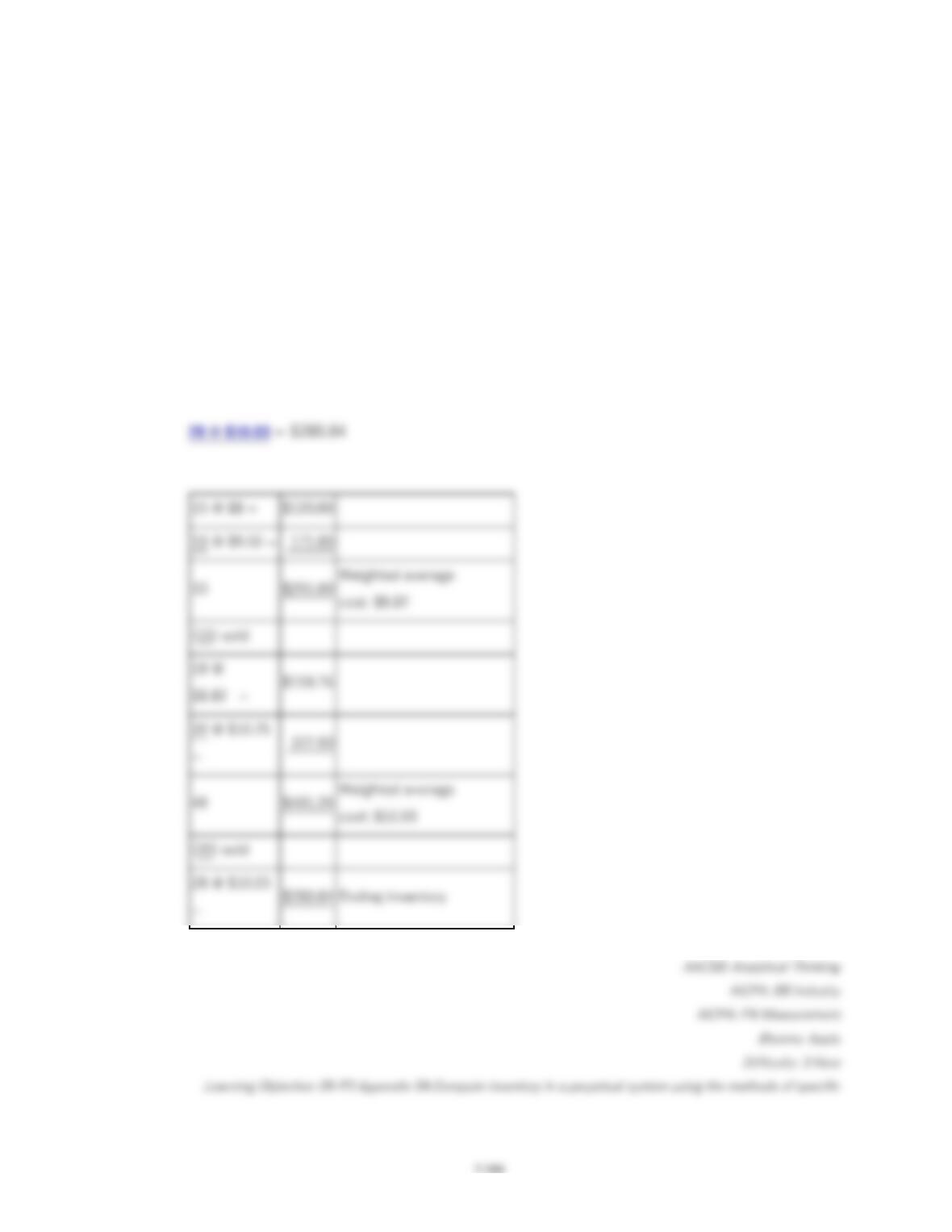
Given the following information, determine the cost of ending inventory at November 30
using the weighted average perpetual inventory method.
November 3: 15 units were purchased at $8 per unit.
November 11: 18 units were purchased at $9.50 per unit.
November 15: 15 units were sold at $45 per unit.
November 18: 30 units were purchased at $10.75 per unit.
November 30: 20 units were sold at $55 per unit.
192.
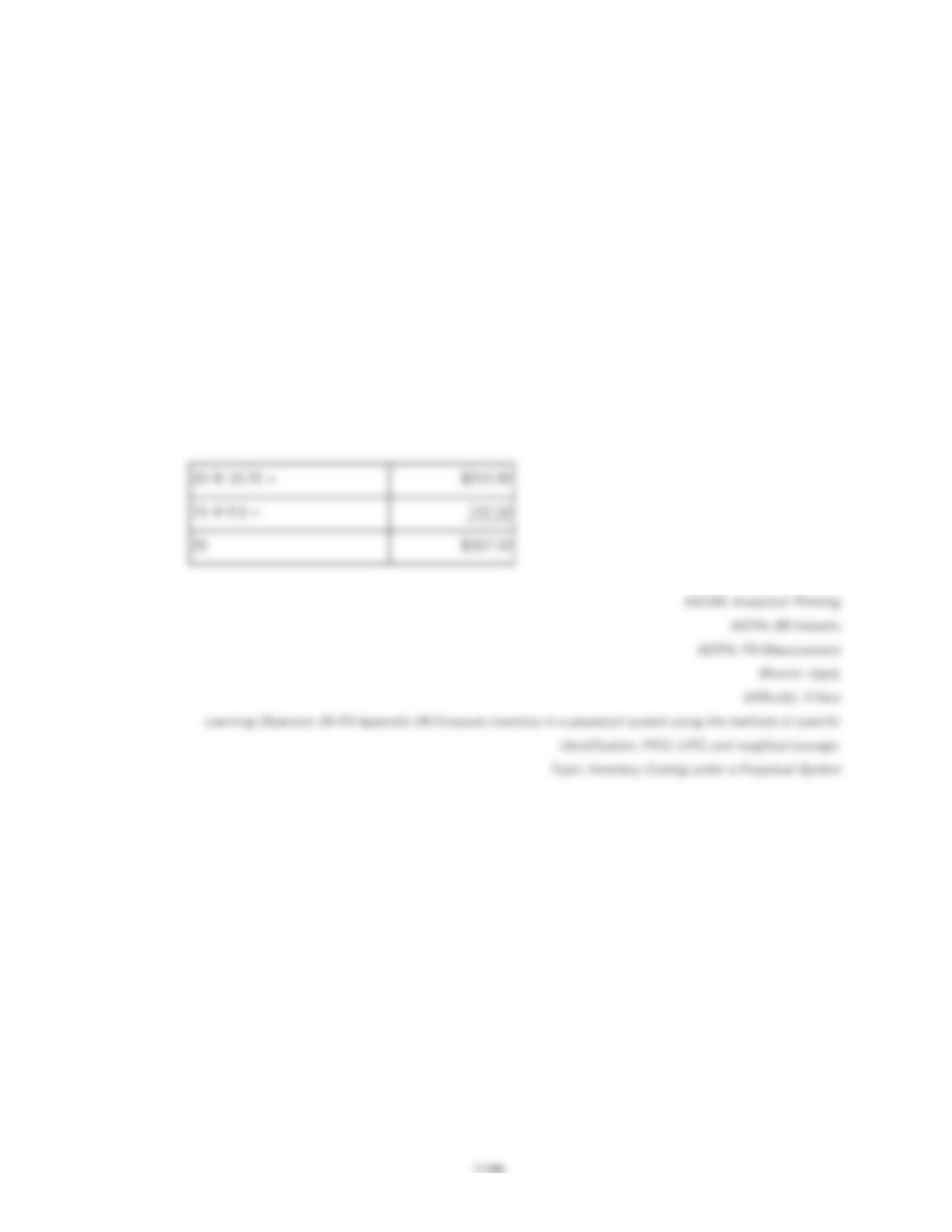
Given the following information, determine the cost of goods sold for November 30 using
the FIFO perpetual inventory method.
November 3: 15 units were purchased at $8 per unit.
November 11: 18 units were purchased at $9.50 per unit.
November 15: 15 units were sold at $45 per unit.
November 18: 30 units were purchased at $10.75 per unit.
November 30: 20 units were sold at $55 per unit.
193.
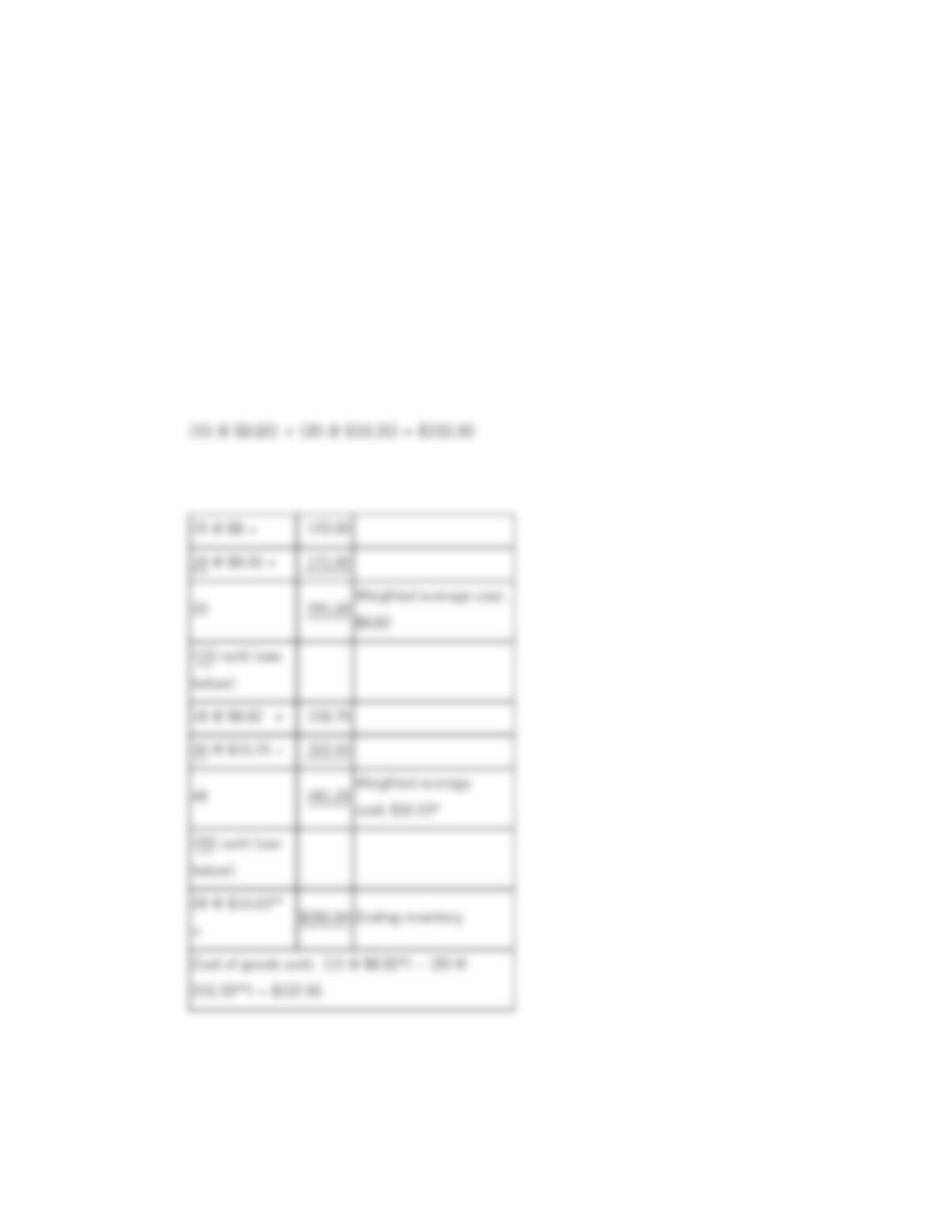
Given the following information, determine the cost of goods sold at November 30 using
the LIFO perpetual inventory method.
November 3: 15 units were purchased at $8 per unit.
November 11: 18 units were purchased at $9.50 per unit.
November 15: 15 units were sold at $45 per unit.
November 18: 30 units were purchased at $10.75 per unit.
November 30: 20 units were sold at $55 per unit.
5-147
194.
Given the following information, determine the cost of goods sold at November 30 using
the weighted average perpetual inventory method.
November 3: 15 units were purchased at $8 per unit.
November 11: 18 units were purchased at $9.50 per unit.
November 15: 15 units were sold at $45 per unit.
November 18: 30 units were purchased at $10.75 per unit.
November 30: 20 units were sold at $55 per.
195.
A merchandiser that uses a periodic inventory system made the following cash purchases
and sales during the year. There was no beginning inventory.
5-148
January 2
Purchased 230 units at $930 per
unit
May 5
Purchased 330 units at $1,030 per
unit
August 10
Purchased 430 units at $1,130 per
unit
October 15
Purchased 265 units at $1,180 per
unit
November
1
Sold 1,075 units at $1,500 per unit
The company has a calendar year-end and uses the FIFO inventory valuation method.
Calculate the ending inventory balance and cost of goods sold for the year.
196.
A merchandiser that uses a periodic inventory system made the following cash purchases
and sales during the year. There was no beginning inventory.
January 20
Purchased 225 units at $145 per
unit
June 5
Purchased 425 units at $165 per
unit
November
15
Purchased 125 units at $205 per
unit
December 1
Sold 450 units at $300 per unit
775 units available for sale
450 units sold
325 units in ending inventory
The company has a calendar year-end and uses the weighted average inventory valuation
method. Calculate the ending inventory balance and the cost of goods sold for the year.
(Round the weighted average cost per unit to three decimal points; round the ending
inventory and cost of goods sold to the nearest whole dollar.)
197.
Lansing Corporation uses the periodic inventory system and has provided the following
information about one of their laptop computers:
Date
Transaction
Number of
Units
Cost per
Unit
1/1
Beginning
Inventory
260
$960
5/5
Purchase
360
$1,060
8/10
Purchase
460
$1,160
10/15
Purchase
280
$1,210
During the year, 1,150 laptop computers were sold. What was ending inventory using the
FIFO cost flow assumption?
198.
Kalamazoo Corporation uses the periodic inventory system and has provided the following
information about one of their inventory items:
Date
Transaction
Number of
Units
Cost per
Unit
January
1
Beginning
Inventory
170
$870
April 1
Purchase
270
$970
July 10
Purchase
370
$1,070
October
2
Purchase
235
$1,120
During the year, 925 units were sold. What was the cost of goods sold using the FIFO cost
flow assumption?