169.
A company reported the following data:
Year 1
Year 2
Year 3
Cost of goods sold
$238,000
$375,000
$495,000
Ending inventory
120,000
150,000
180,000
Required:
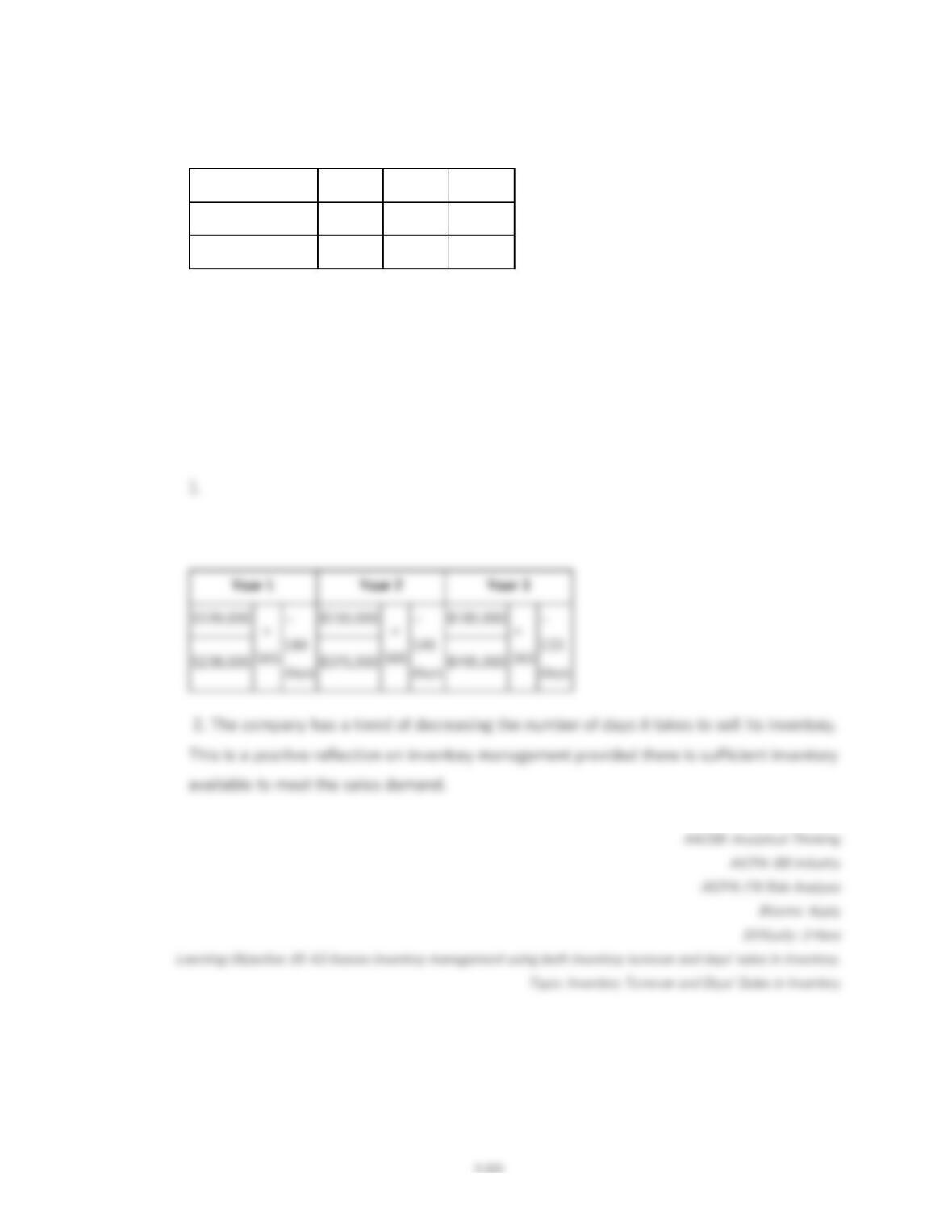
1. Calculate the days’ sales in inventory for each year.
2. Comment on the trend in inventory management.
170.
A company made the following purchases during the year:
Jan. 10
15
units at
$360 each
Mar. 15
25
units at
$390 each
Apr. 25
10
units at
$420 each
July 30
20
units at
$450 each
Oct. 10
15
units at
$480 each
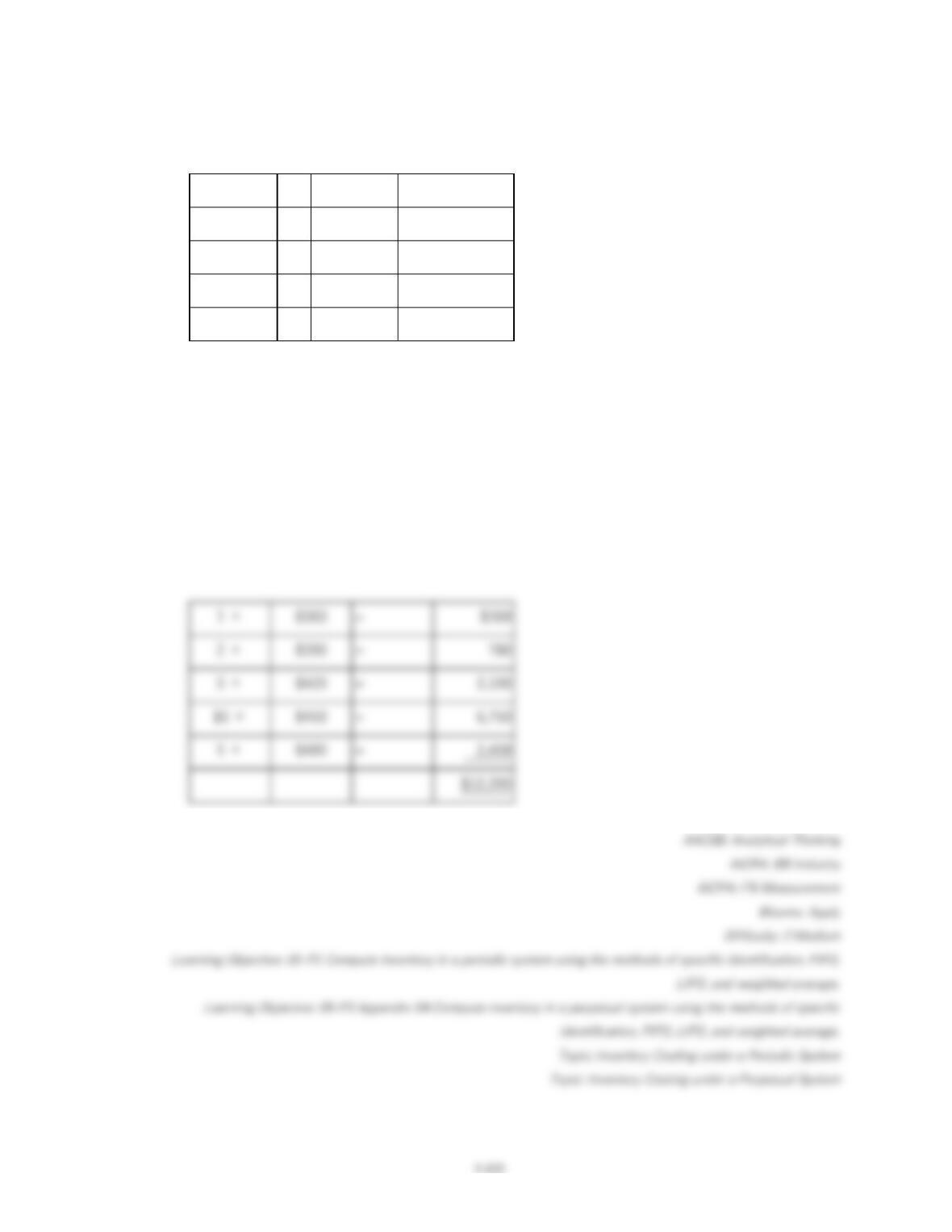
On December 31, there were 28 units in ending inventory. These 28 units consisted of 1
from the January 10 purchase, 2 from the March 15 purchase, 5 from the April 25
purchase, 15 from the July 30 purchase, and 5 from the October 10 purchase. Using
specific identification, calculate the cost of the ending inventory.
5-123
171.
A company made the following merchandise purchases and sales during the month of
May:
May 1 purchased
380
units at
$15 each
May 5 purchased
270
units at
$17 each
May 10 sold
400
units at
$50 each
May 20 purchased
300
units at
$22 each
May 25 sold
400
units at
$50 each
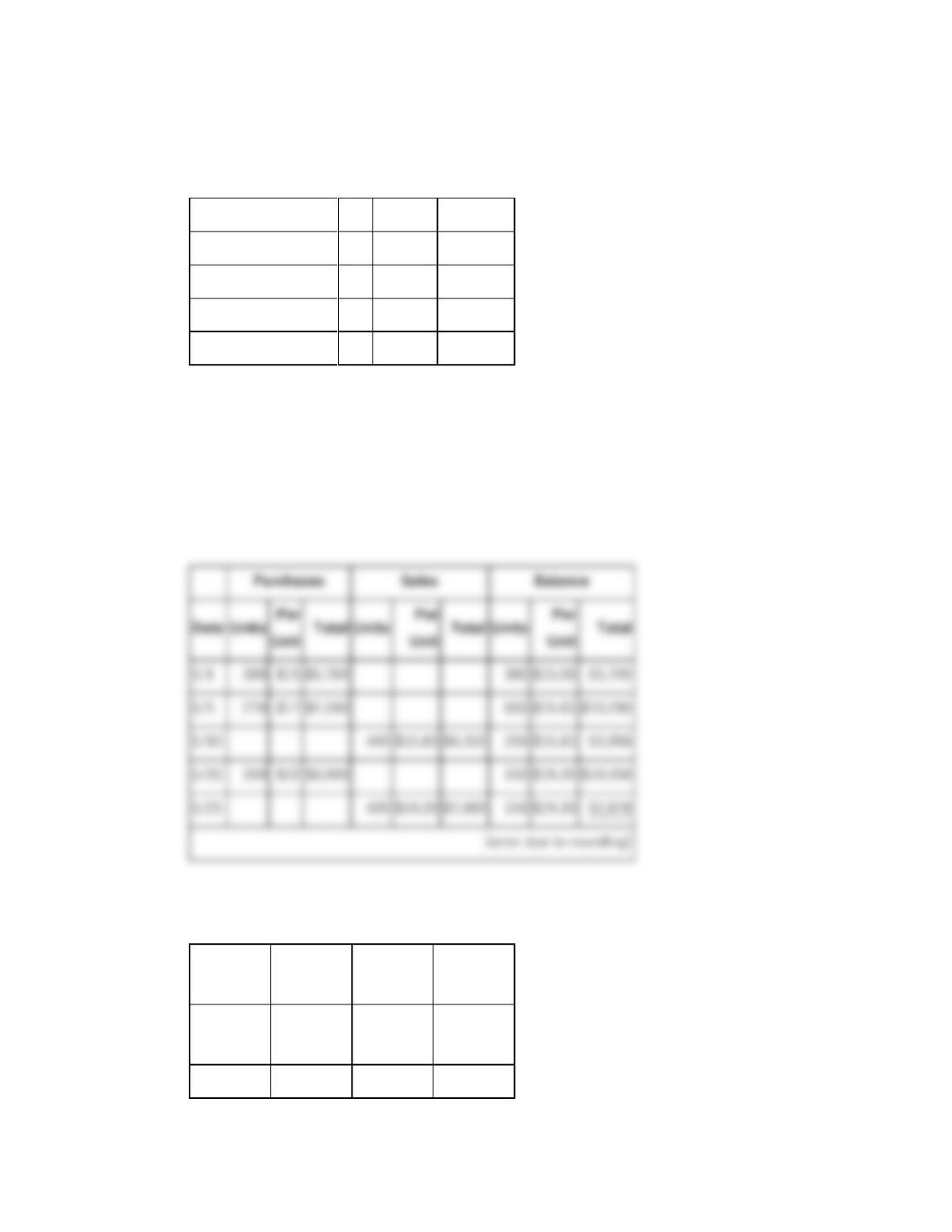
There was no beginning inventory. If the company uses the weighted average perpetual
inventory method, what would be the cost of its ending inventory?
172.
A company made the following merchandise purchases and sales during the month of July:
July 1
purchased
380
units at
$15 each
July 5
purchased
270
units at
$20 each
July 9 sold
500
units at
$55 each
5-124
July 14
purchased
300
units at
$24 each
July 20 sold
250
units at
$55 each
July 30
purchased
250
units at
$30 each
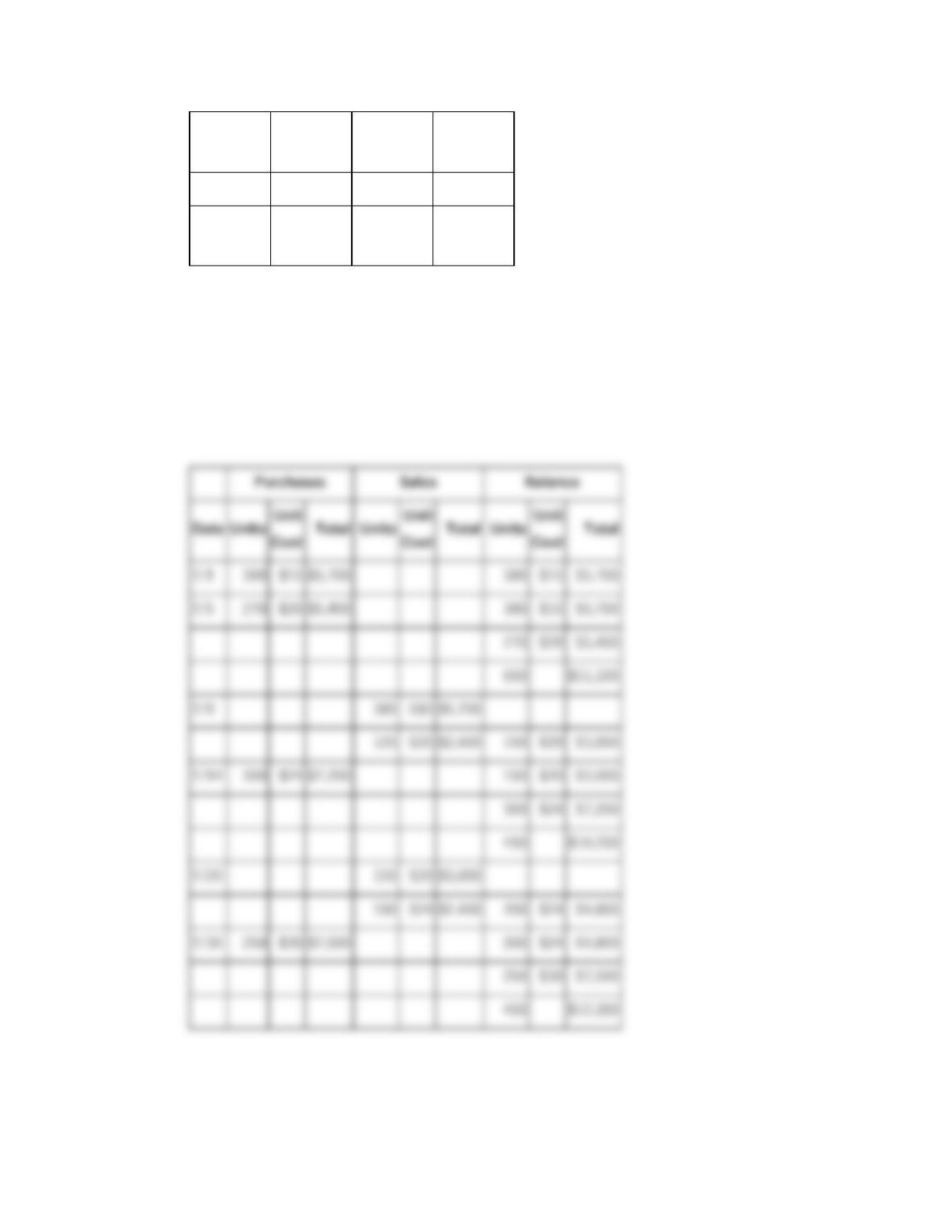
There was no beginning inventory. If the company uses the first-in, first-out perpetual
inventory method, what would be the cost of the ending inventory?
173.
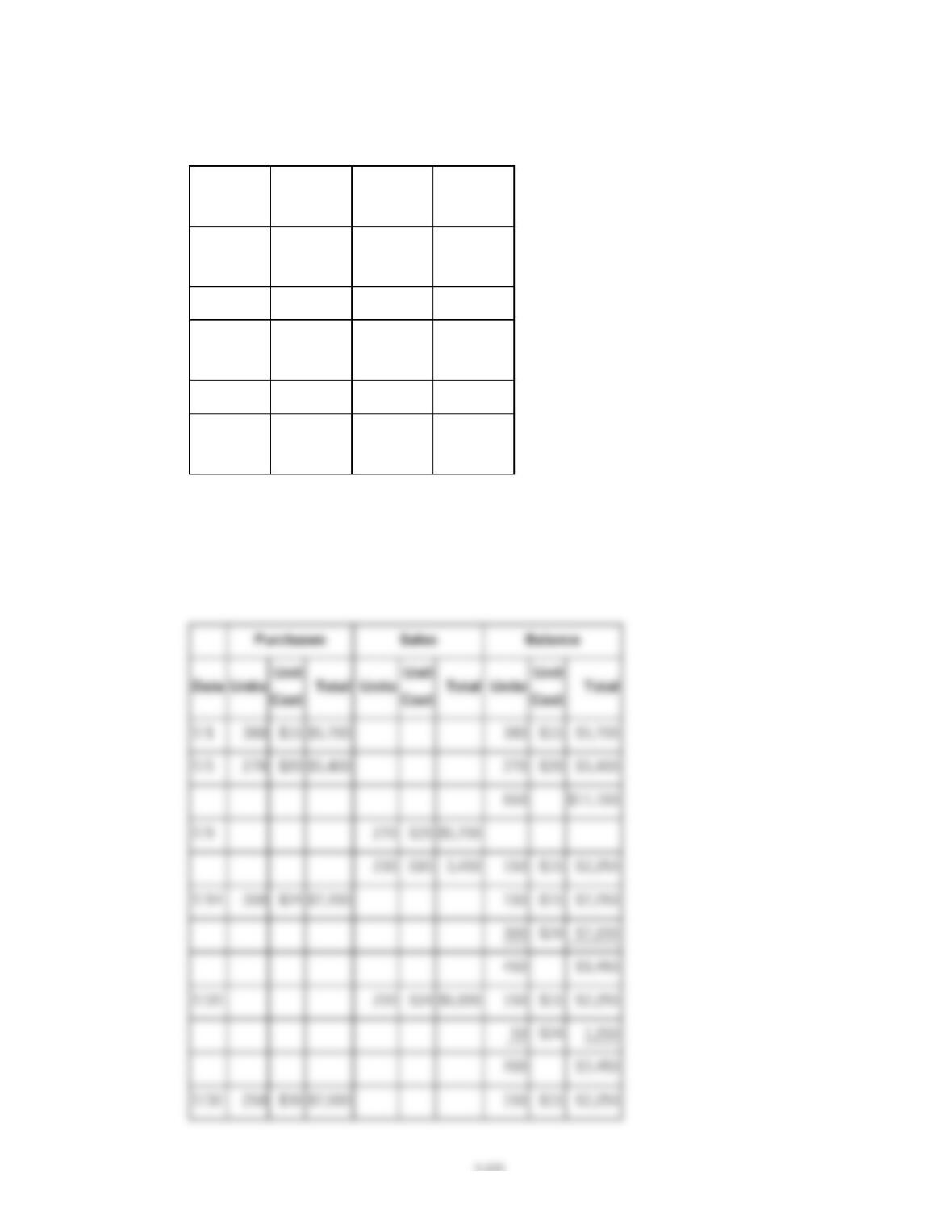
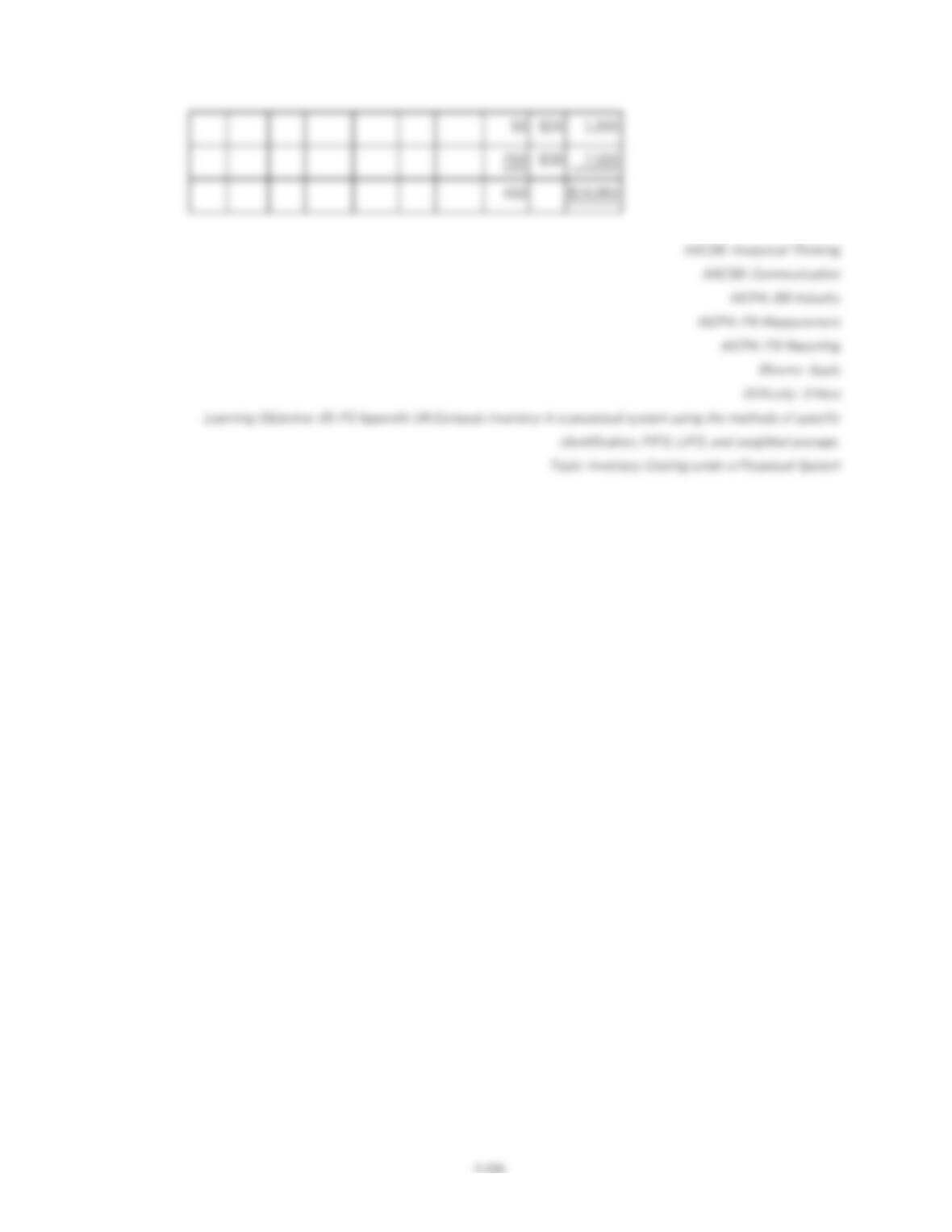
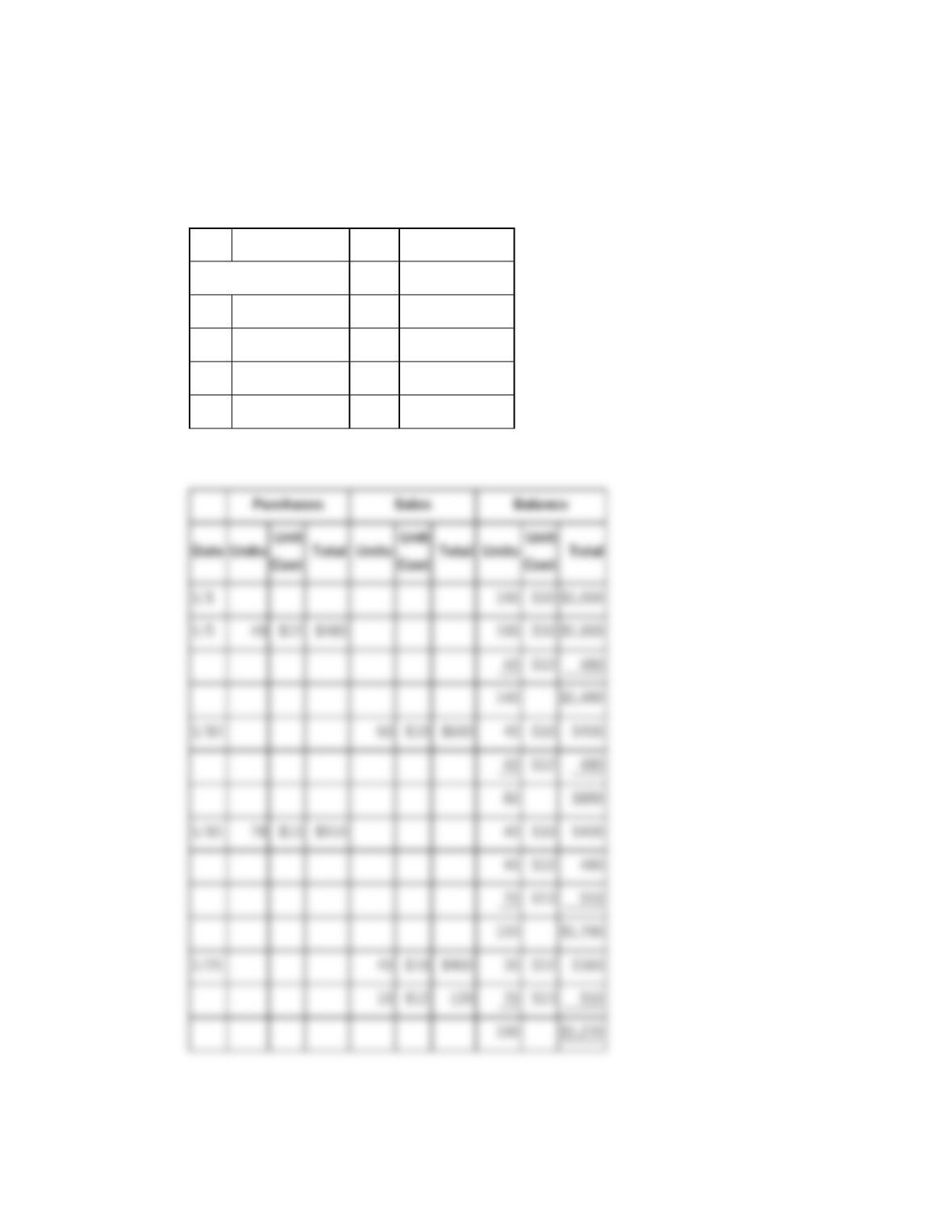
A company made the following merchandise purchases and sales during the current
month: There was no beginning inventory. If the company uses the last-in, first-out
7/1
$5,700
7/5
$5,400
7/14
$7,200
7/20
$3,000
$2,400
7/30
$7,500
5-125
perpetual inventory system, what would be the cost of the ending inventory?
July 1
purchased
380
units at
$15 each
July 5
purchased
270
units at
$20 each
July 9 sold
500
units at
$55 each
July 14
purchased
300
units at
$24 each
July 20 sold
250
units at
$55 each
July 30
purchased
250
units at
$30 each
$7,200
5-127
174.
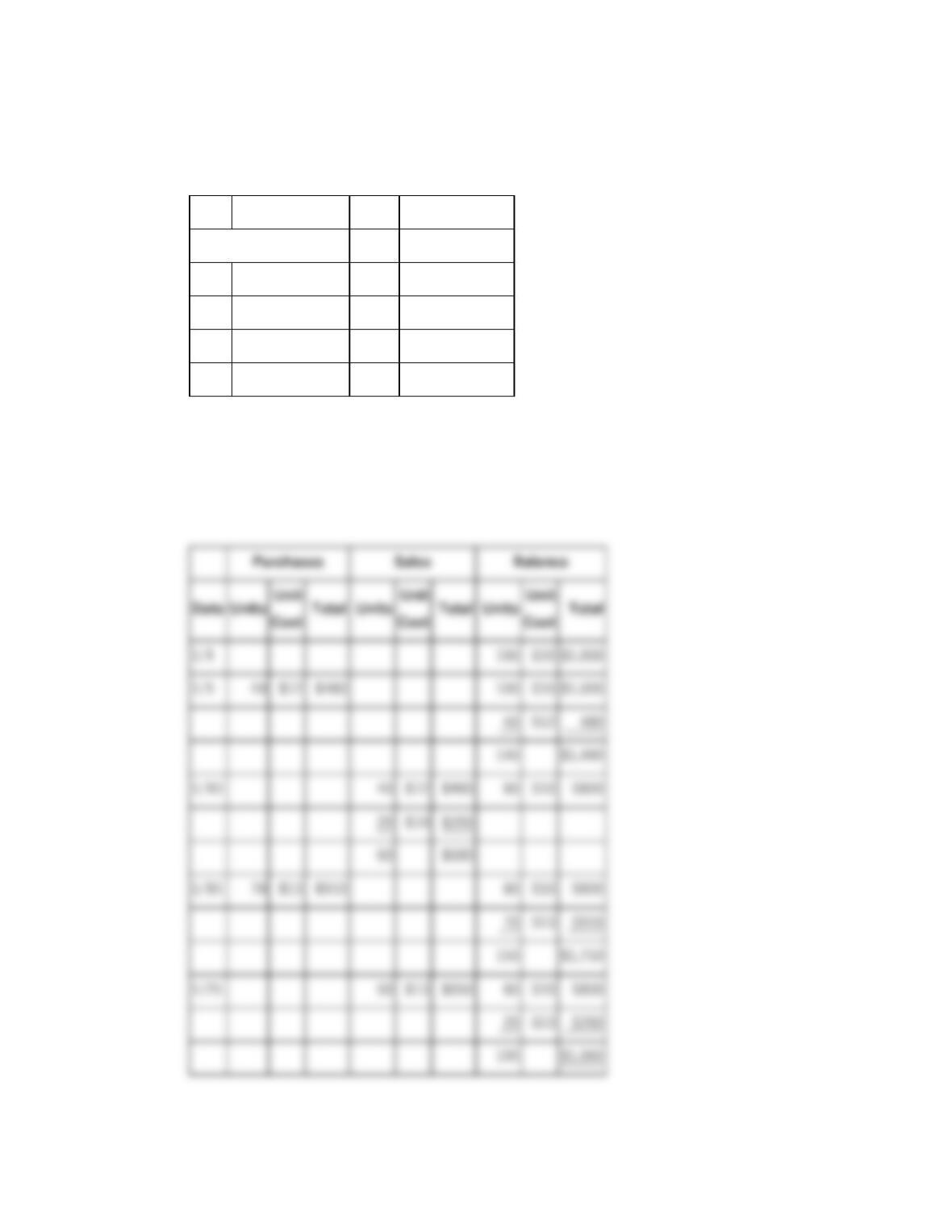
During January, a company that uses a perpetual inventory system had beginning
inventory, purchases and sales as follows. What was the FIFO cost of the company’s
January 31 inventory?
Units
Cost per Unit
Beginning inventory
100
$10
Jan.
5 purchase
40
12
10 sale
60
15 purchase
70
13
25 sale
50
175.
During January, a company that uses a perpetual inventory system had beginning
40
$1,480
1/10
70
$1,790
1/25
5-128
inventory, purchases, and sales as follows. What was the LIFO cost of the company’s
January 31 inventory?
Units
Cost per Unit
Beginning inventory
100
$10
Jan.
5 purchase
40
12
10 sale
60
15 purchase
70
13
25 sale
50
40
$1,480
1/10
70
$1,060
5-129
176.
During January, a company that uses a perpetual inventory system had beginning
inventory, purchases, and sales as follows. What was the weighted average cost of the
company’s January 31 inventory?
Units
Cost per Unit
Beginning inventory
100
$10
Jan.
5 purchase
40
12
10 sale
60
15 purchase
70
13
25 sale
50
177.
A company reported the following data related to its ending inventory:
Product
Units Available
Cost
Market
849
100
$10
$11
842
75
16
14
Cost
40
1/15
$1,756
1/25
$11.71
$1,171
5-130
847
60
14
13
860
40
16
20
Calculate the lower of cost or-market on both the:
(a) Inventory as a whole.
(b) Inventory applied separately to each product.
178.
A company reported the following data related to its ending inventory:
Product
Units Available
Cost
Market
719
100
$10
$11
712
75
16
14
717
60
14
13
720
40
16
20
Calculate the lower of cost or-market the inventory applied separately to each product.
5-131
179.
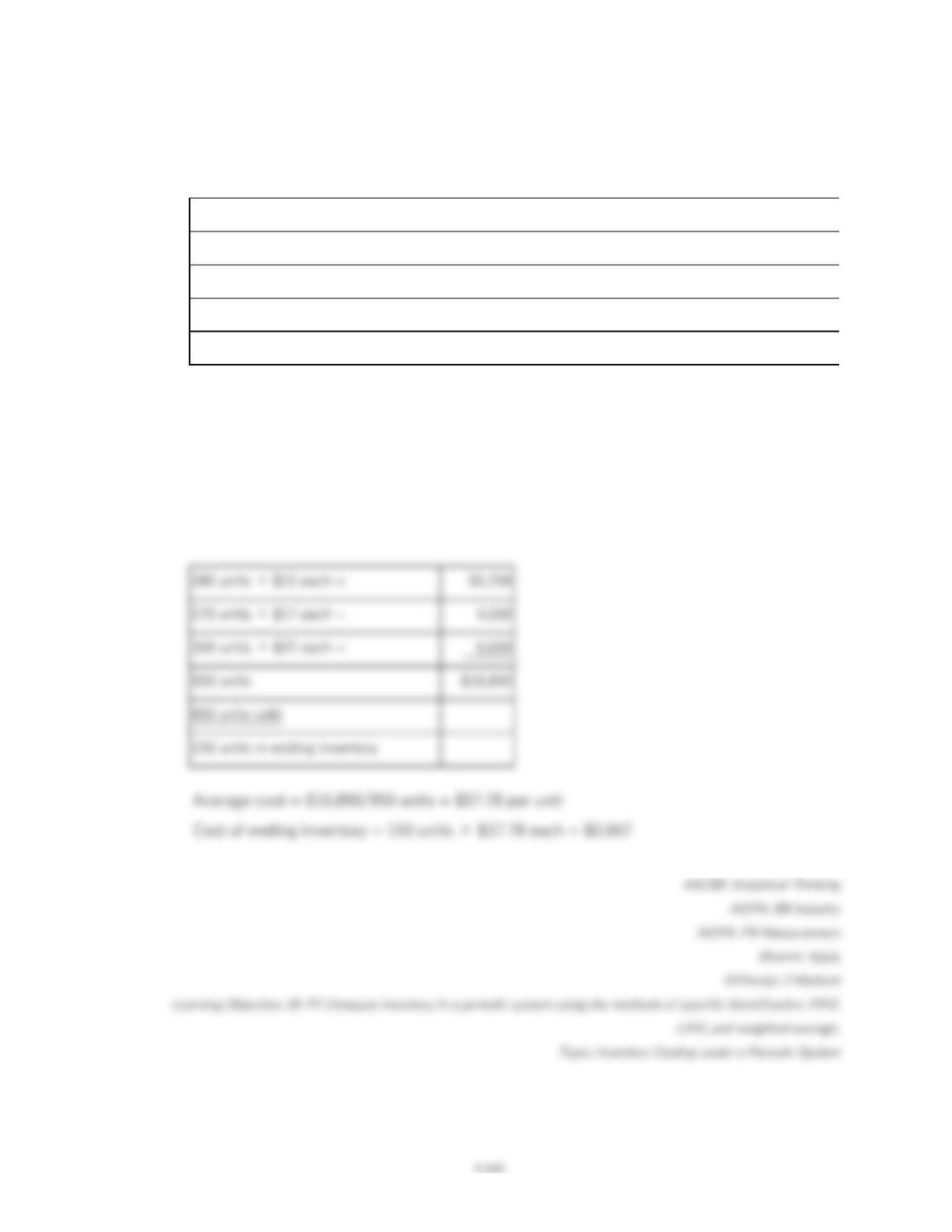
A company had the following ending inventory costs:
Product
Units Available
Cost
Market
A
10
$5
$6
B
50
8
7
C
35
10
11
Product
A
Instructions:
(a) Calculate the lower of cost or market (LCM) value for the inventory as a whole.
(b) Calculate the lower of cost or market (LCM) value for each individual item.
180.
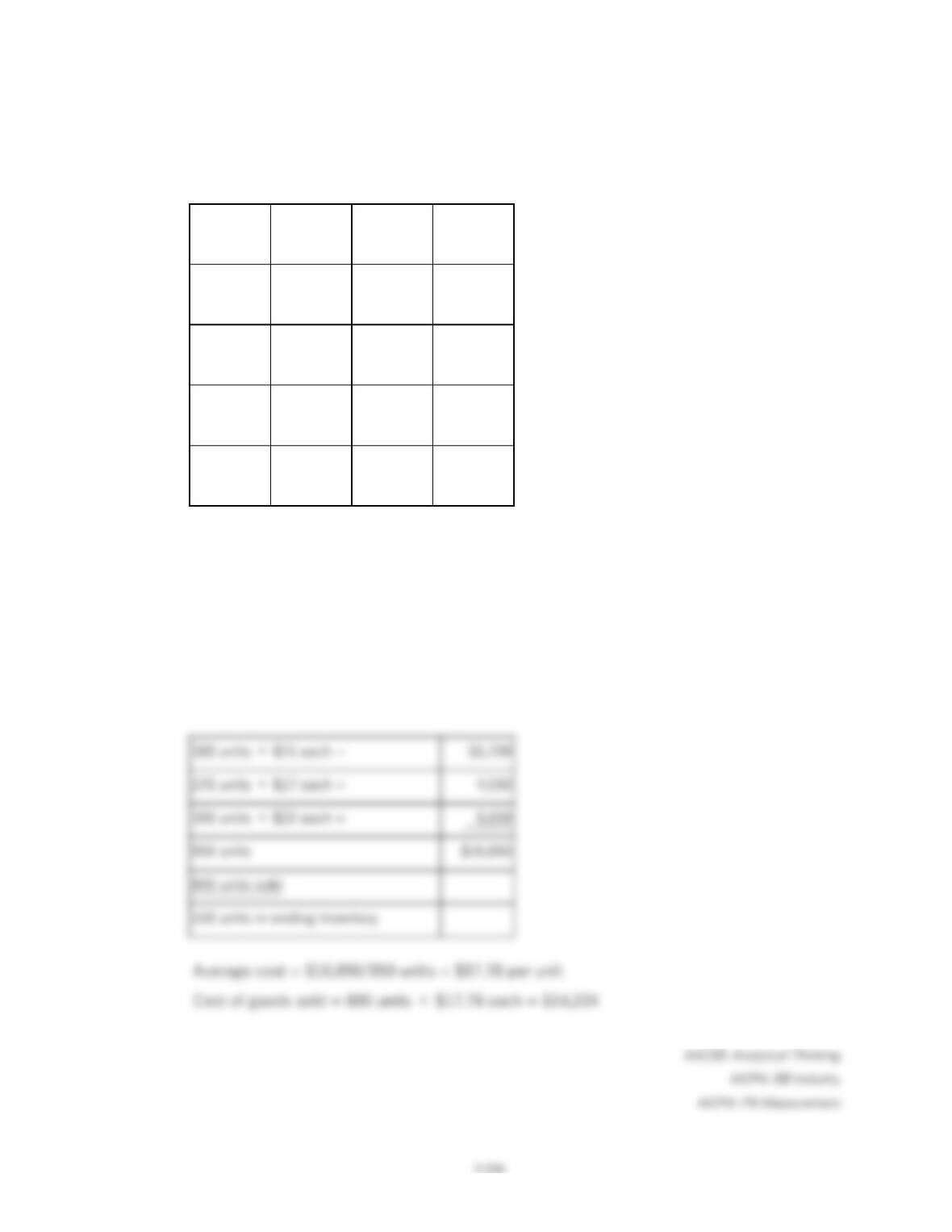
A company made the following merchandise purchases and sales during the month of
May:
May 1 purchased
May 5 purchased
May 10 sold
May 20 purchased
May 25 sold
There was no beginning inventory. If the company uses the weighted average periodic
method, what would be the cost of the ending inventory?
181.
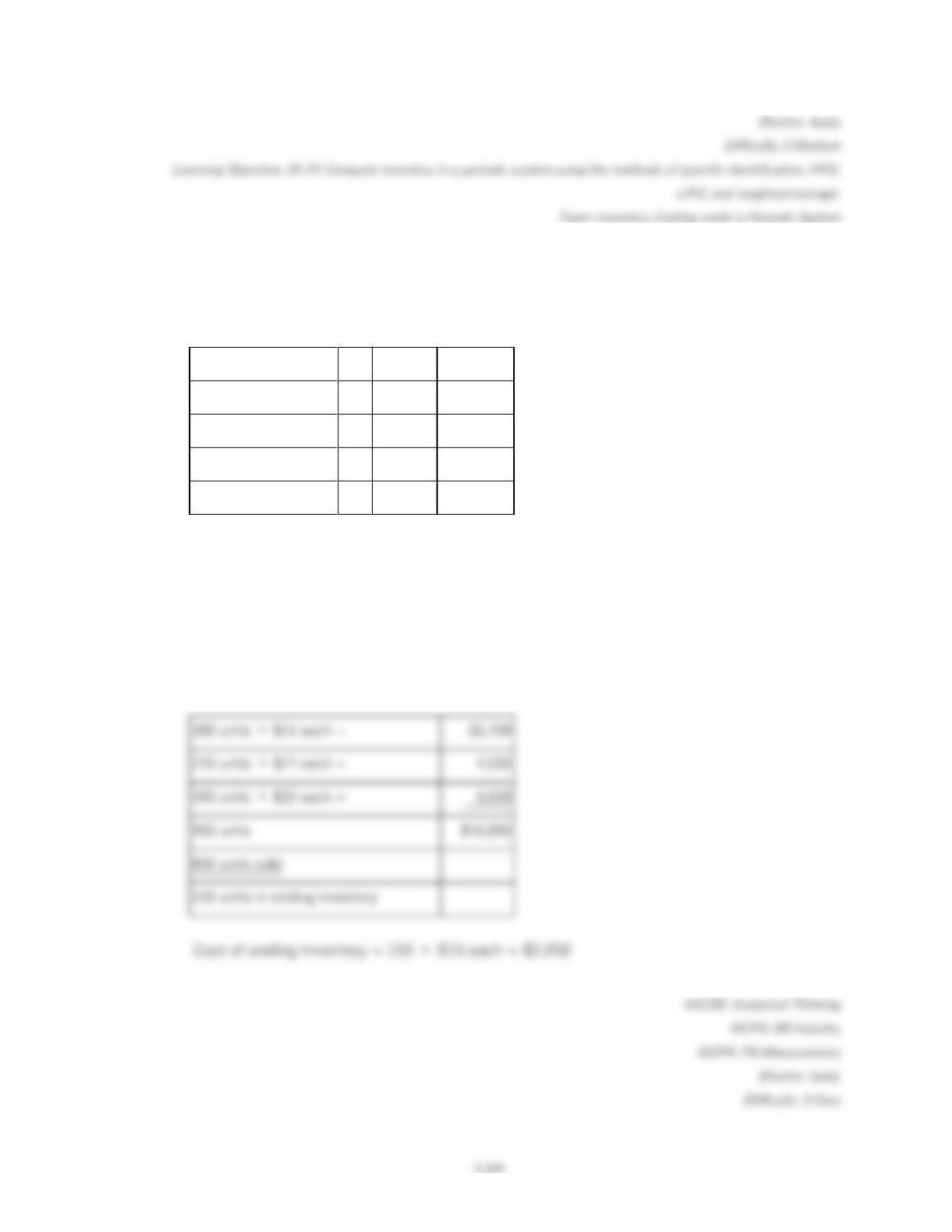
A company made the following merchandise purchases and sales during the month of
May:
May 1
purchased
380
units at
$15 each
May 5
purchased
270
units at
$17 each
May 10
sold
400
units at
$50 each
May 20
purchased
300
units at
$22 each
May 25
sold
400
units at
$50 each
There was no beginning inventory. If the company uses the weighted average periodic
method, what would be the cost of goods sold for May?
182.
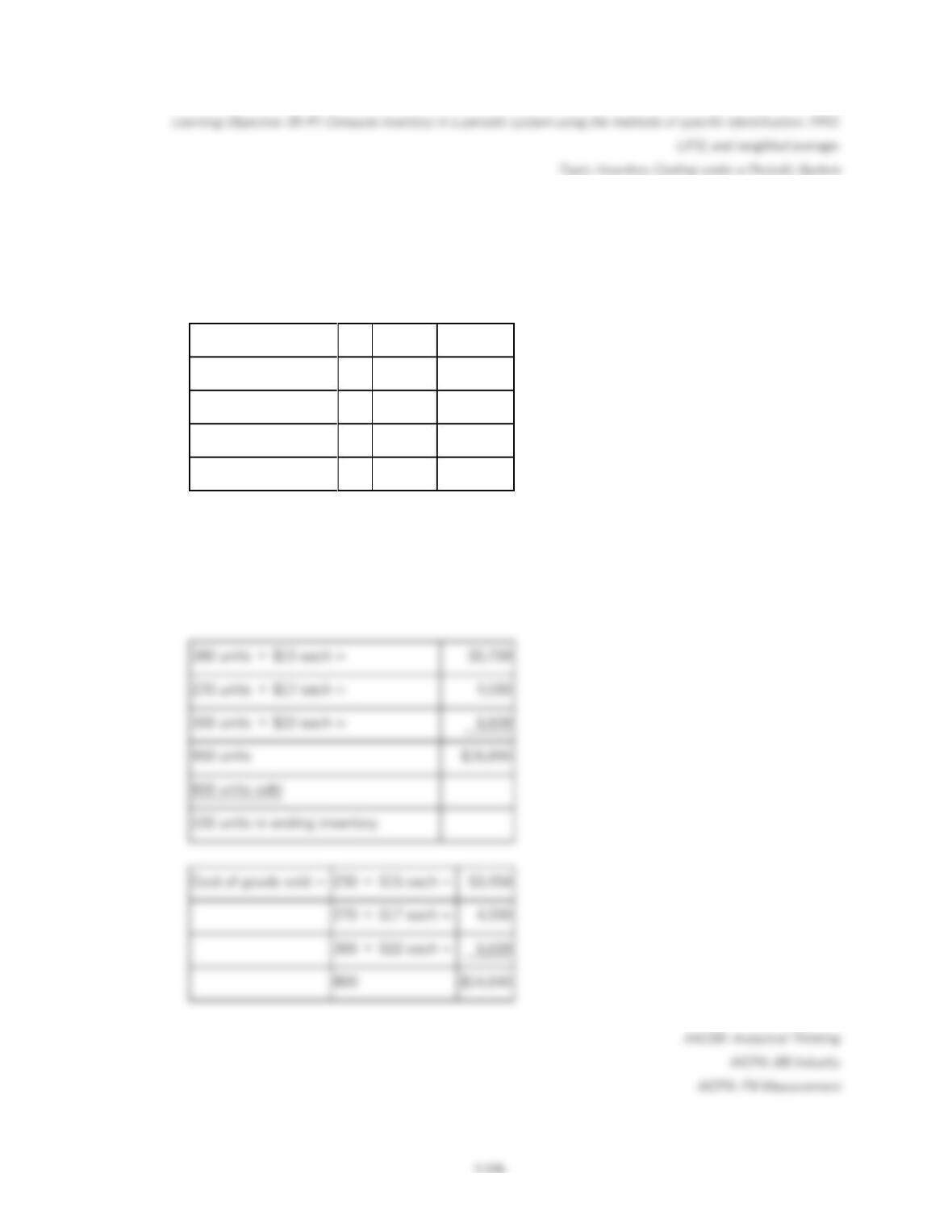
A company made the following merchandise purchases and sales during the month of
May:
May 1 purchased
380
units at
$15 each
May 5 purchased
270
units at
$17 each
May 10 sold
400
units at
$50 each
May 20 purchased
300
units at
$22 each
May 25 sold
400
units at
$50 each
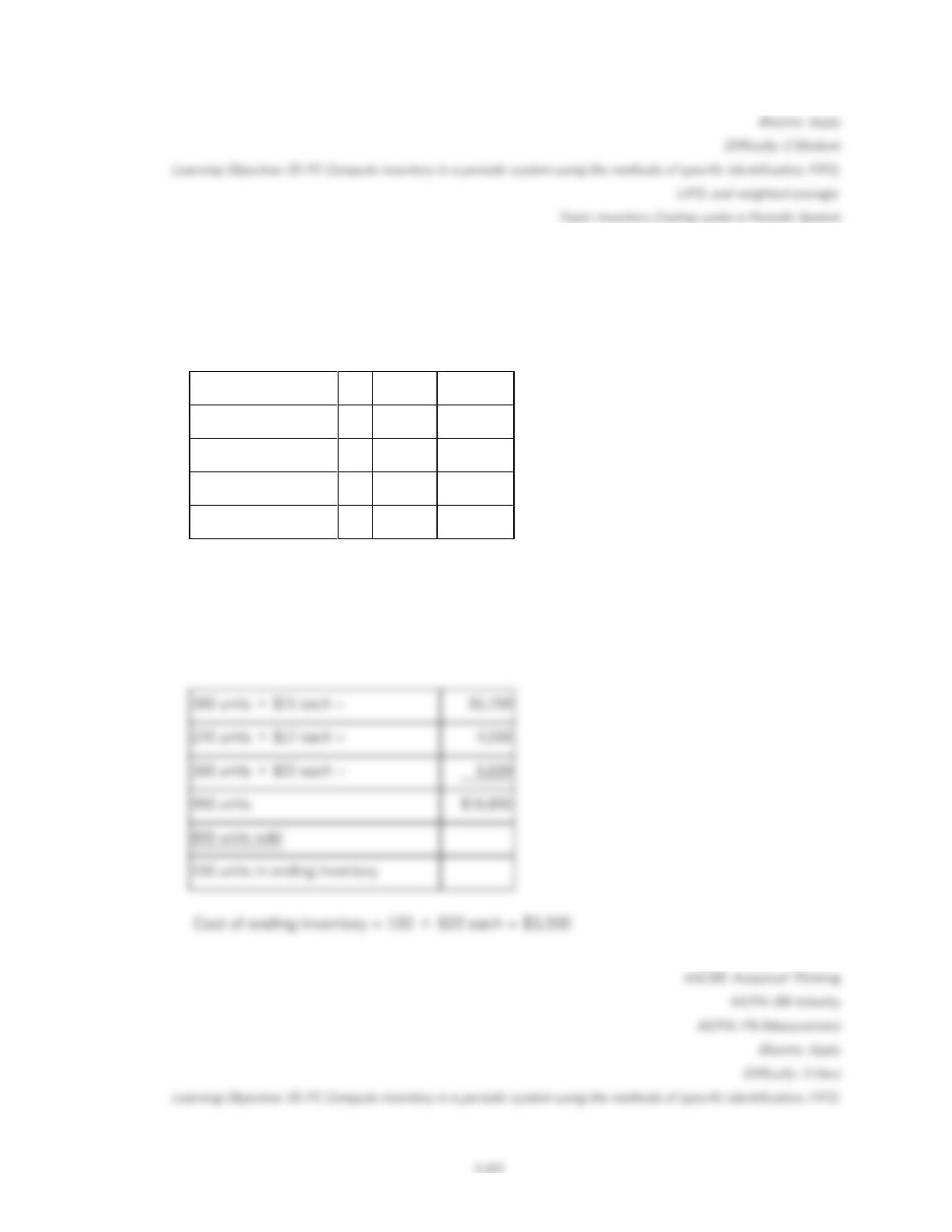
There was no beginning inventory. If the company uses the LIFO periodic inventory
method, what would be the cost of the ending inventory?
950 units
800 units sold
183.
A company made the following merchandise purchases and sales during the month of
May. There was no beginning inventory. If the company uses the LIFO periodic inventory
method, what would be the cost of goods sold for May?
May 1 purchased
380
units at
$15 each
May 5 purchased
270
units at
$17 each
May 10 sold
400
units at
$50 each
May 20 purchased
300
units at
$22 each
May 25 sold
400
units at
$50 each
950 units
800 units sold
150 units in ending inventory
Cost of goods sold =
800
184.
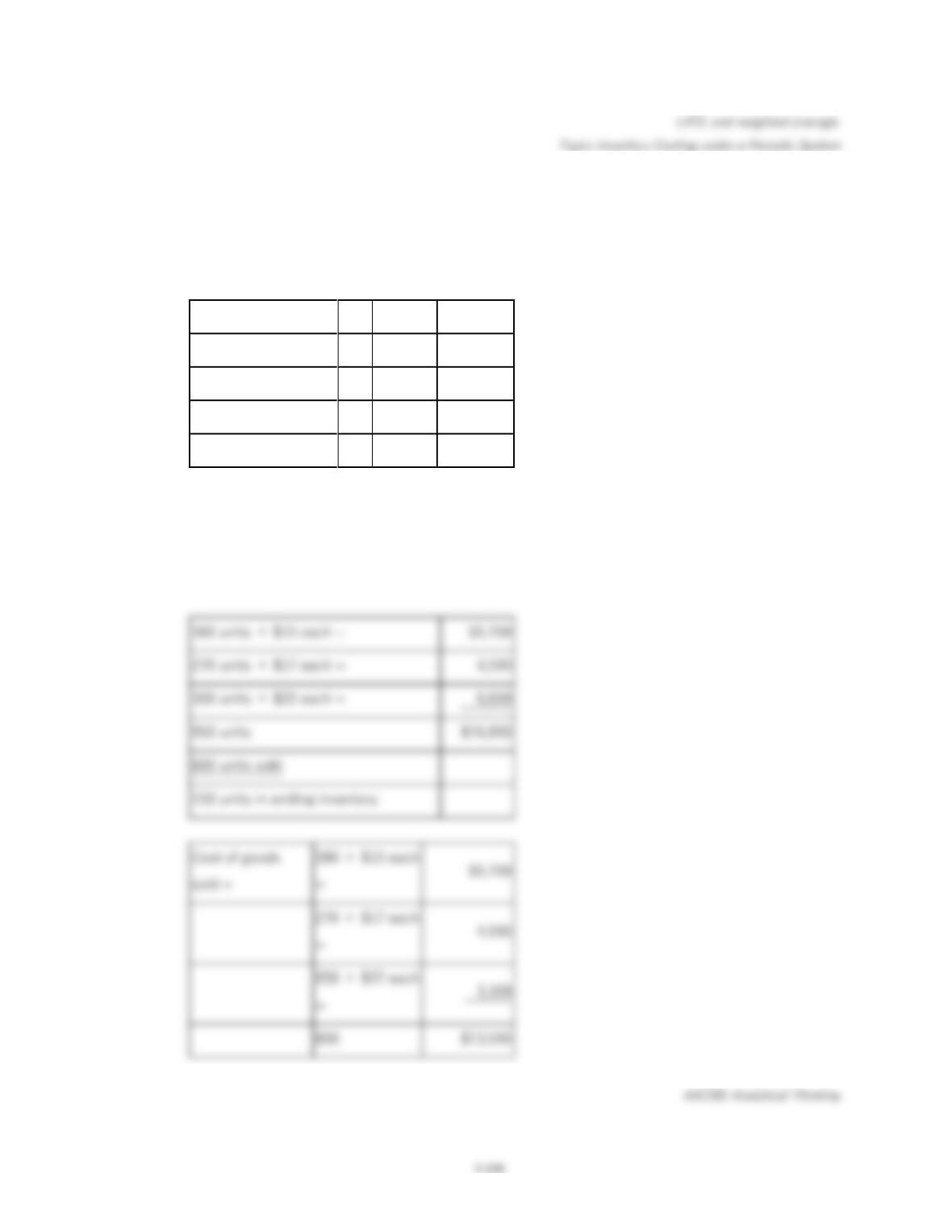
A company made the following merchandise purchases and sales during the month of
May. There was no beginning inventory. If the company uses the FIFO periodic inventory
method, what would be the cost of the ending inventory?
May 1 purchased
380
units at
$15 each
May 5 purchased
270
units at
$17 each
May 10 sold
400
units at
$50 each
May 20 purchased
300
units at
$22 each
May 25 sold
400
units at
$50 each
950 units
800 units sold
150 units in ending inventory
185.
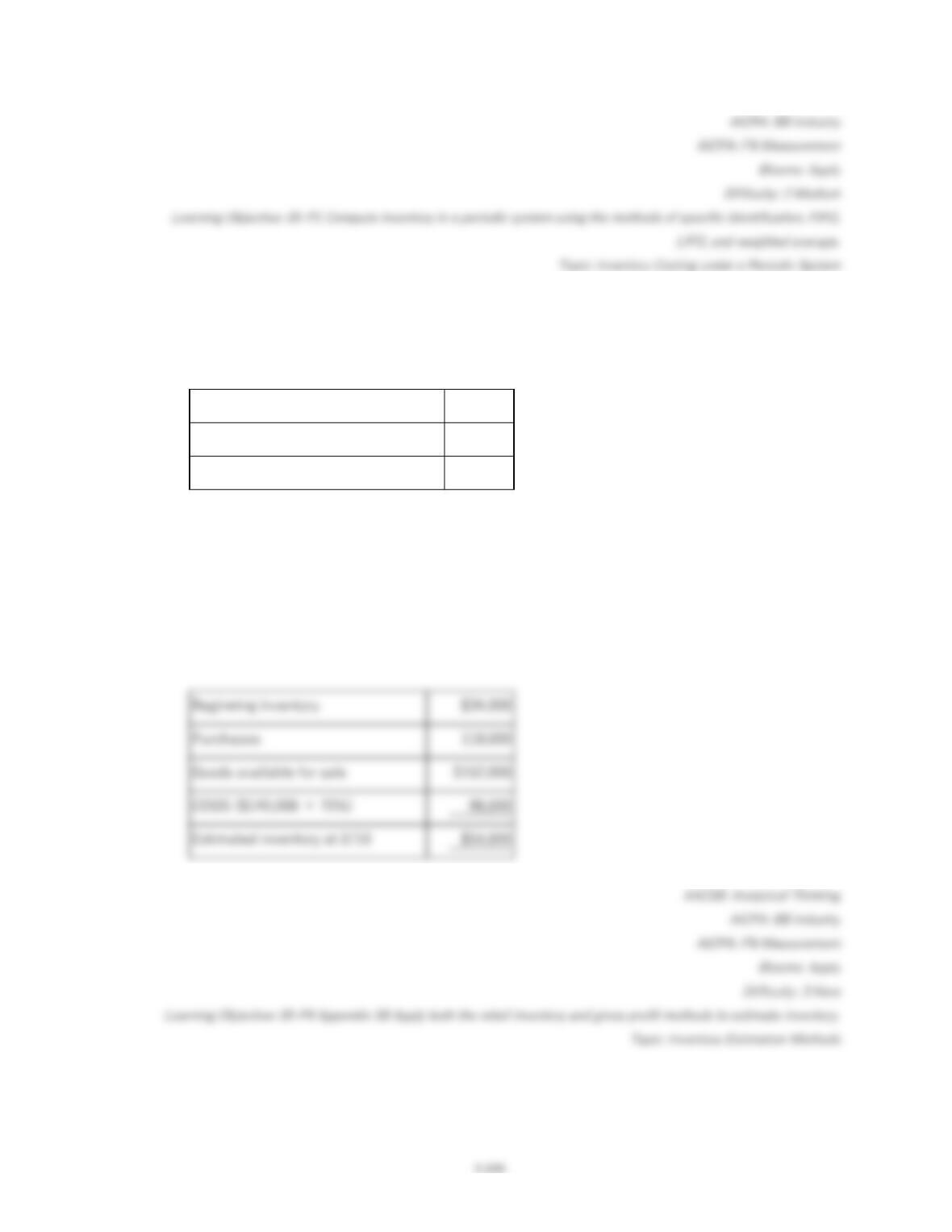
A company made the following merchandise purchases and sales during the month of
May. There was no beginning inventory. If the company uses the FIFO periodic inventory
method, what would be the cost of goods sold for May?
May 1 purchased
380
units at
$15 each
May 5 purchased
270
units at
$17 each
May 10 sold
400
units at
$50 each
May 20 purchased
300
units at
$22 each
May 25 sold
400
units at
$50 each
950 units
800 units sold
800
186.
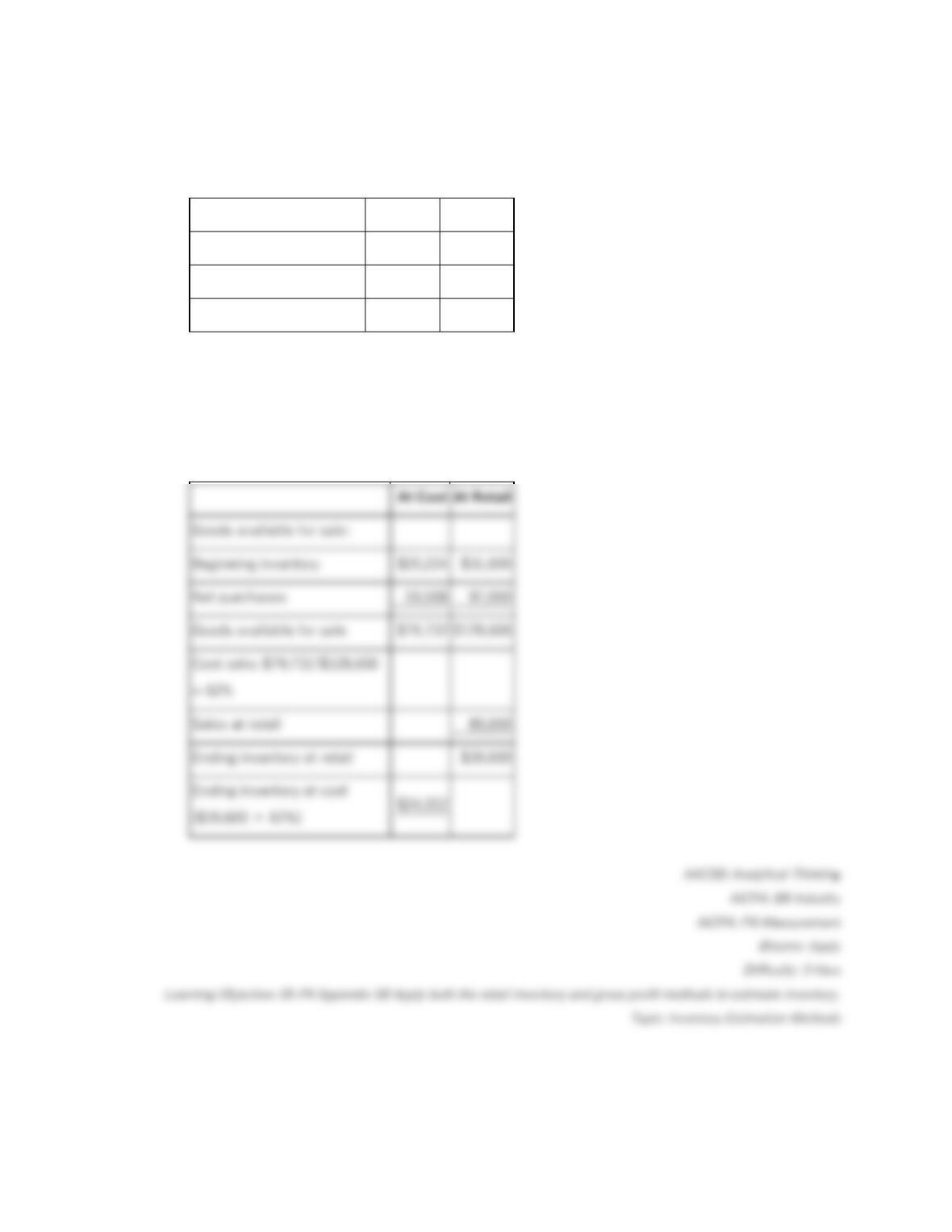
A company’s store was destroyed by a fire on February 10 of this year. The only
information for the current period that could be salvaged included the following:
Beginning inventory, January 1:
$34,000
Purchases to date:
118,000
Sales to date:
140,000
Beginning inventory
Goods available for sale
Estimated inventory at 2/10
Historically, the company’s gross profit ratio has been 30%. Estimate the value of the
destroyed inventory using the gross profit method.
5-140
187.
Apply the retail method to the following company information to calculate the cost of the
ending inventory for the current period:
Cost
Retail
Beginning inventory
$20,224
$31,600
Net purchases
59,508
97,000
Sales
89,000
Goods available for sale:
Beginning inventory
Net purchases
59,508
97,000
Goods available for sale
Sales at retail
89,000
Ending inventory at retail