5-81
128.
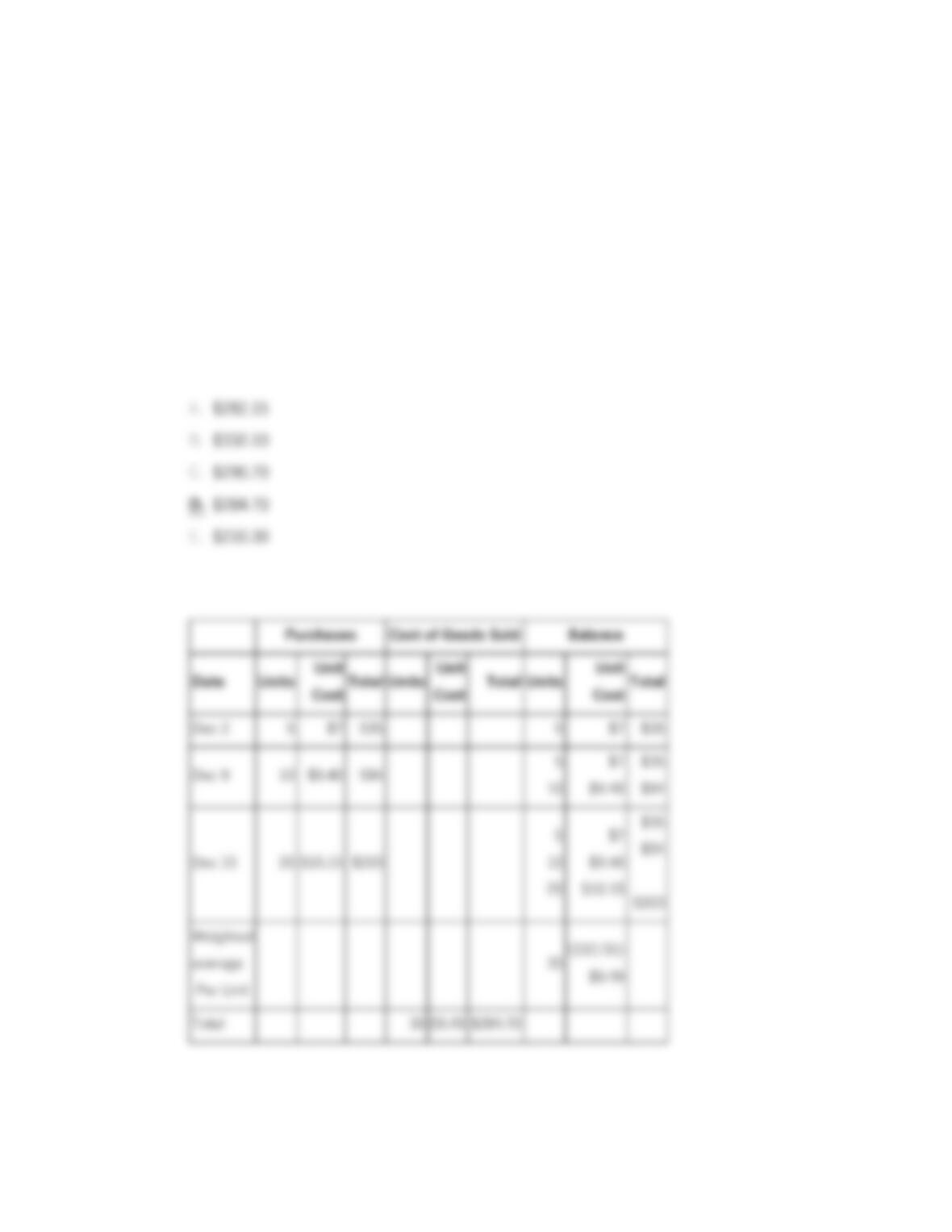
Given the following information, determine the cost of goods sold at December 31 using
the weighted average periodic inventory method:
December 2: 5 units were purchased at $7 per unit.
December 9: 10 units were purchased at $9.40 per unit.
December 11: 12 units were sold at $35 per unit.
December 15: 20 units were purchased at $10.15 per unit.
December 22: 18 units were sold at $35 per unit.
129.
A company has inventory of 15 units at a cost of $12 each on August 1. On August 5, they
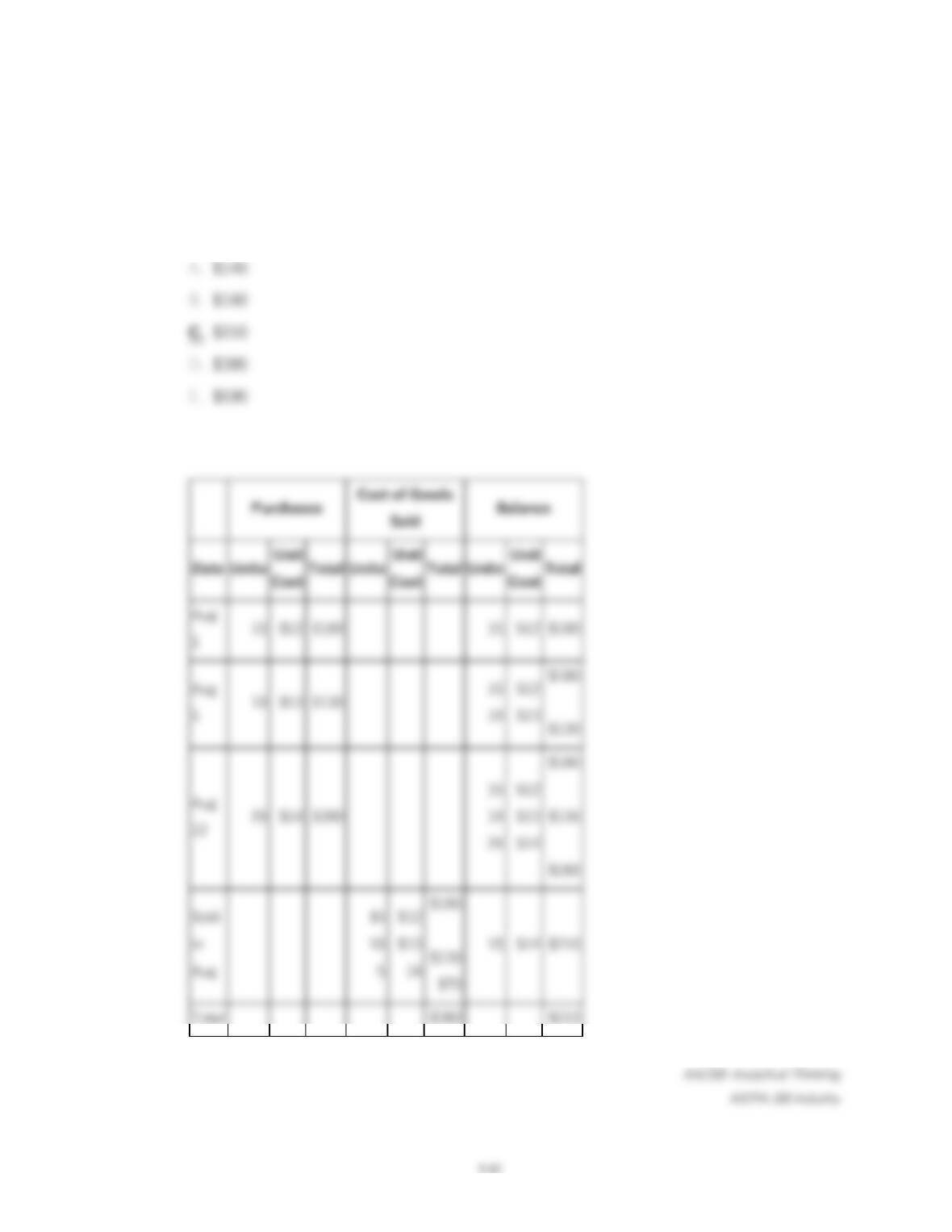
purchased 10 units at $13 per unit. On August 12, they purchased 20 units at $14 per unit.
On August 15, they sold 30 units. Using the FIFO periodic inventory method, what is the
value of the inventory at August 15 after the sale?
130.
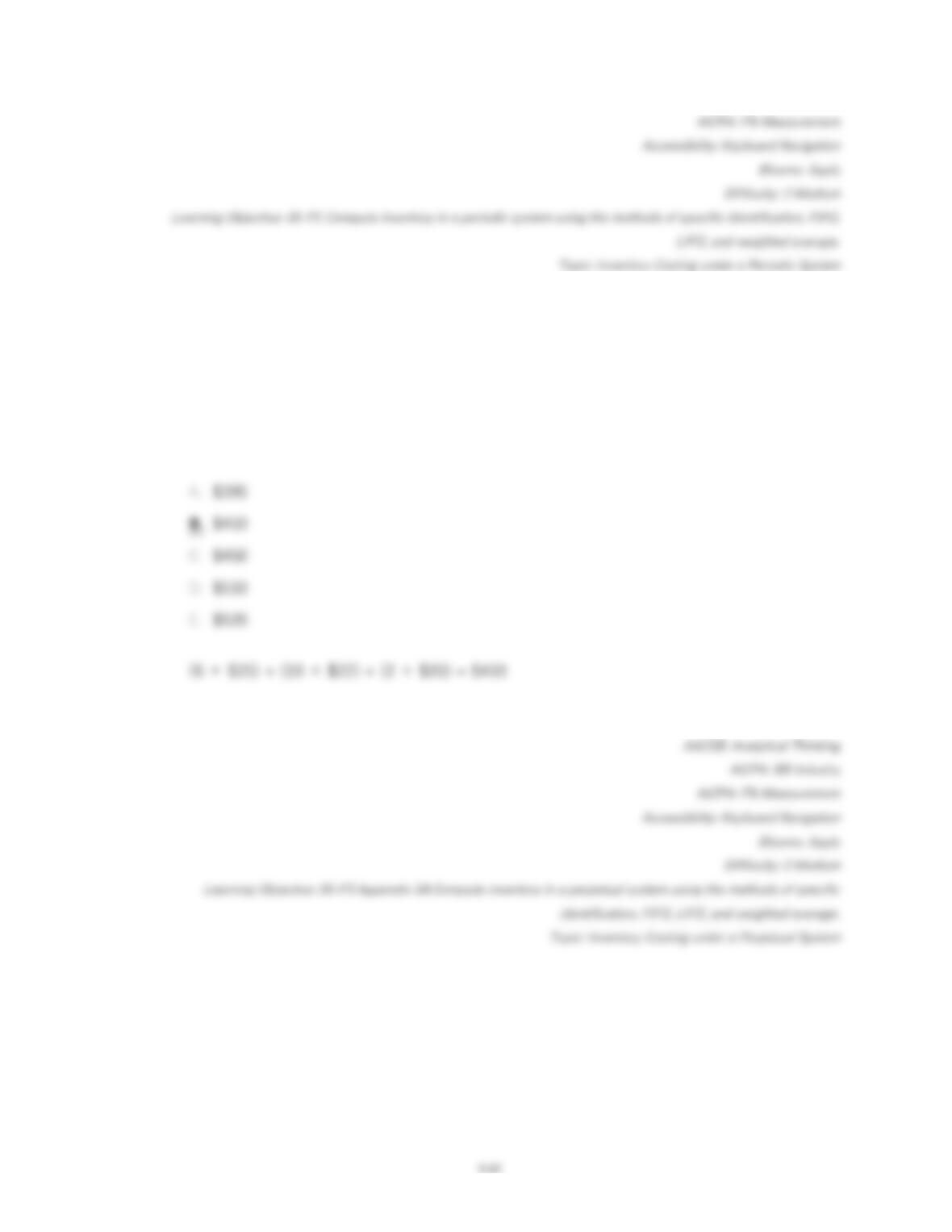
A company had inventory of 5 units at a cost of $20 each on November 1. On November 2,
they purchased 10 units at $22 each. On November 6, they purchased 6 units at $25 each.
On November 8, they sold 18 units for $54 each. Using the LIFO perpetual inventory
method, what was the cost of the 18 units sold?
131.
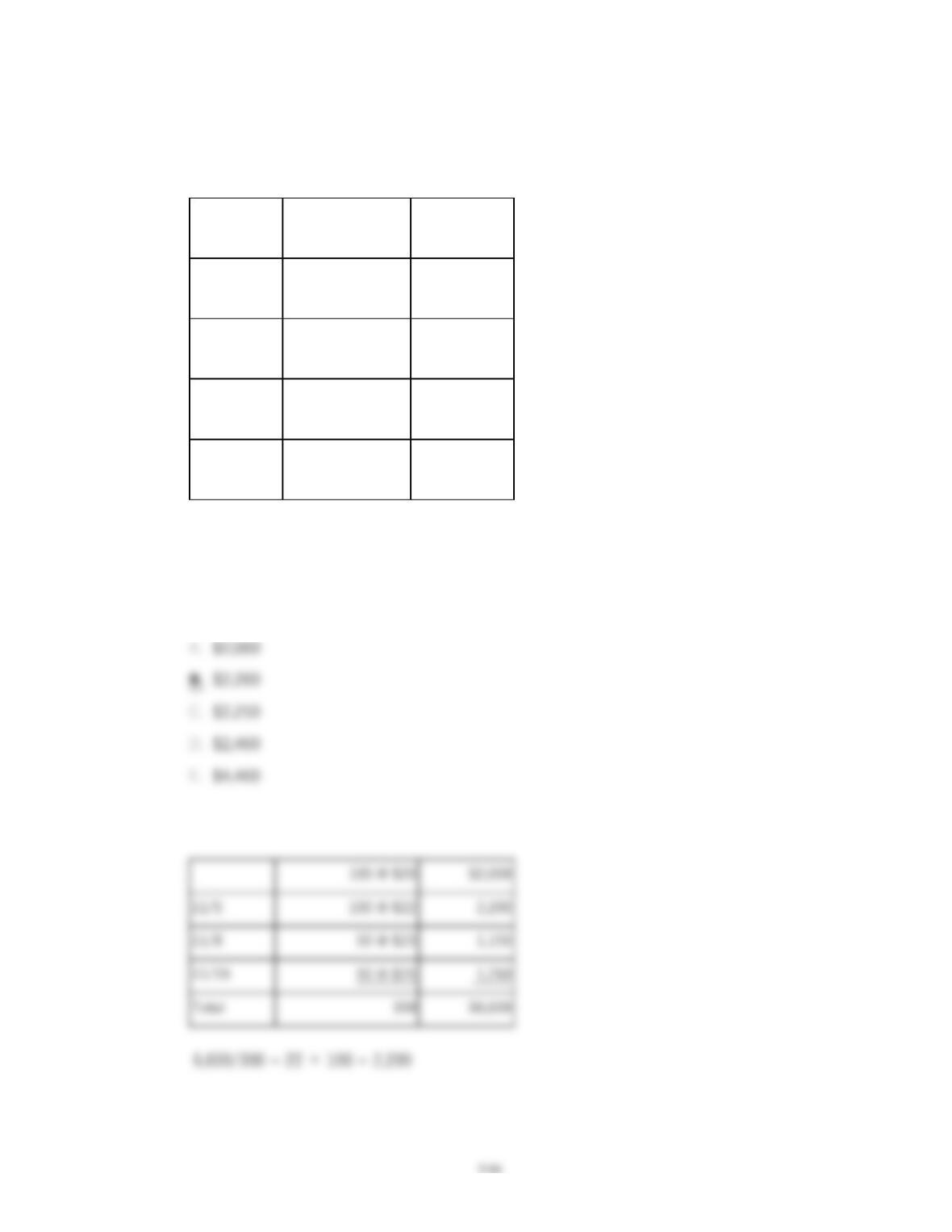
A company uses the periodic inventory system and had the following activity during the
current monthly period:
November 1:
Beginning
inventory
100 units @
$20
November 5:
Purchased
100 units @
$22
November 8:
Purchased
50 units @
$23
November
16:
Sold
200 units @
$45
November
19:
Purchased
50 units @
$25
Using the weighted average inventory method, the company’s ending inventory would be
reported at:
11/5
11/8
Total
132.
A company sells a climbing kit and uses the periodic inventory system to account for its
merchandise. The beginning balance of the inventory and its transactions during January
were as follows:
January 1:
Beginning balance of 18 units at $13
each
January
12:
Purchased 30 units at $14 each
January
19:
Sold 24 units at a selling price of $30
each
January
20:
Purchased 24 units at $17 each
January
27:
Sold 27 units at a selling price of $30
each
If the ending inventory is reported at $357, what inventory method was used?
133.
Interim statements:
134.
A company’s warehouse was destroyed by a tornado on March 15. The following
information was salvaged from the ruins:
Inventory, beginning: $28,000
Purchases for the period: $17,000
Sales for the period: $55,000
Sales returns for the period: $700
The company’s average gross profit ratio is 35%. What is the estimated cost of the lost
inventory?
135.
A company reported the following information regarding its inventory.
Beginning inventory: cost is $70,000; retail is $130,000.
Net purchases: cost is $65,000; retail is $120,000.
Sales at retail: $145,000.
The year-end inventory showed $105,000 worth of merchandise available at retail prices.
What is the cost of the ending inventory?
136.
On September 30 a company needed to estimate its ending inventory to prepare its third
quarter financial statements. The following information is available:
Beginning inventory, July 1: $4,000
Net sales: $40,000
Net purchases: $41,000
The company’s gross margin ratio is 15%. Using the gross profit method, the cost of goods
sold would be:
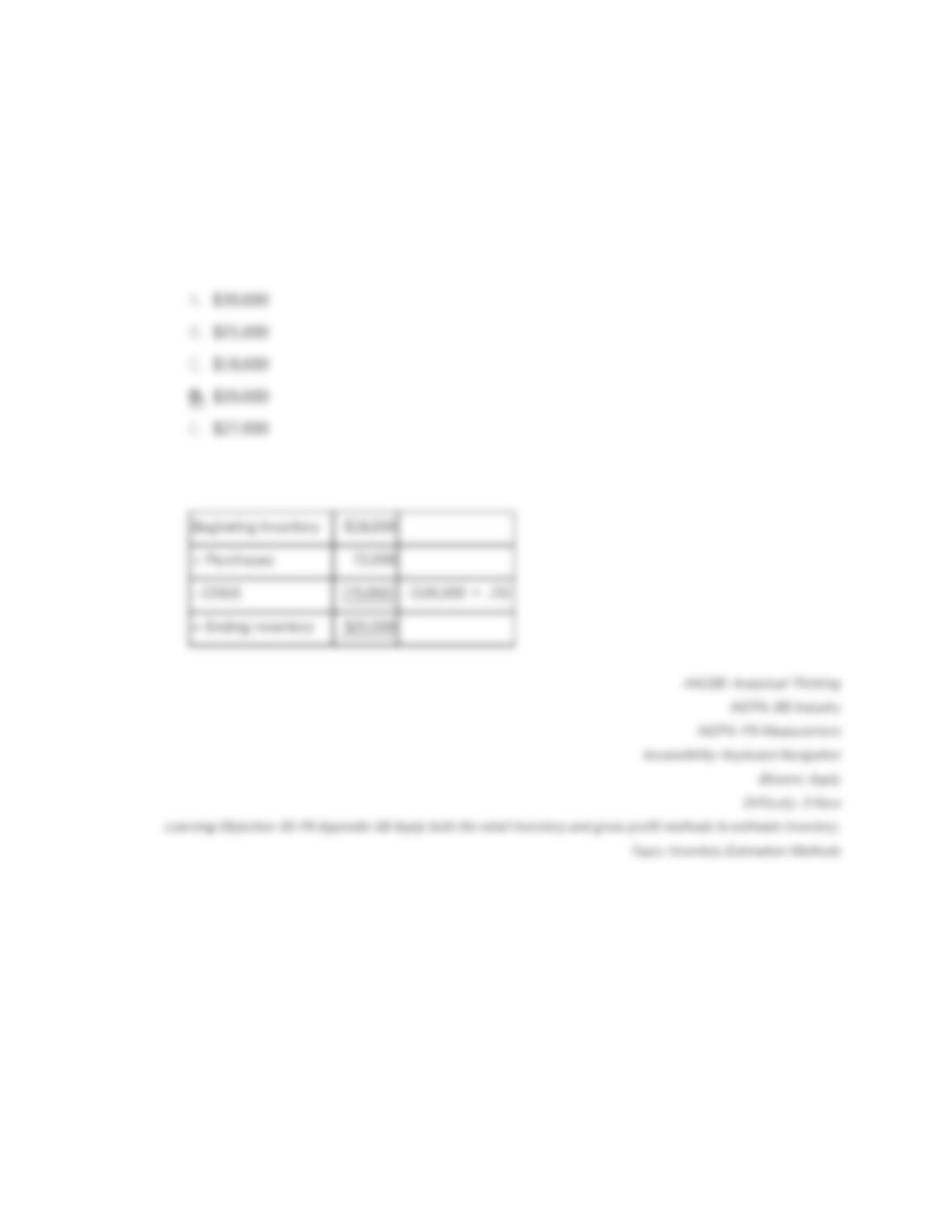
137.
On June 30 a company needed to estimate its ending inventory to prepare its second
quarter financial statements. The following information is available:
Beginning inventory, April 1: $6,000
Net sales: $70,000
Net purchases: $36,000
The company’s gross margin ratio is 12%. Using the gross profit method, the cost of goods
sold would be:
5-91
138.
A company that has operated with a 30% average gross profit ratio for a number of years
had $100,000 in sales during the first quarter of this year. If it began the quarter with
$18,000 of inventory at cost and purchased $72,000 of inventory during the quarter, its
estimated ending inventory using the gross profit method is:
139.
On December 31, a company needed to estimate its ending inventory to prepare its fourth
quarter financial statements. The following information is currently available:
Inventory as of October 1: $12,500
Net sales for fourth quarter: $40,000
Net purchases for fourth quarter: $27,500
The company typically achieves a gross profit ratio of 15%. Ending Inventory under the
gross profit method would be:
140.
Use the following information to estimate the third quarter ending inventory under the
gross profit method. This company’s gross profit ratio is 20%.
Third quarter beginning inventory: $54,000
Net sales for third quarter: $85,000
Net purchases for third quarter: $21,000
141.
A company had 8 units of inventory at a cost of $12 each in inventory on November 1. On
November 2, the company purchased 13 units at $13 each. On November 6, the company
purchased 9 units at $14 each. On November 8, the company sold 24 units for $57 each.
Given this information, determine the cost of the 24 units sold using the LIFO periodic
inventory method.
142.
A company had 8 units at a cost of $12 each in inventory on November 1. On November 2,
the company purchased 13 units at $13 each. On November 6, the company purchased 9
units at $14 each. On November 8, the company sold 24 units for $57 each. Given this
information, determine the cost of the 6 units remaining in inventory after the November 8
sale using the LIFO periodic inventory method.
143.
A company had 22 units of inventory at a cost of $26 each on March 1. On March 2, the
company purchased 27 units at $27 each. On March 6, the company purchased 23 units at
$28 each. On March 8, the company sold 52 units for $71 each. Given this information,
determine the cost of the 52 units sold using the LIFO periodic inventory method.
144.
A company had 22 units at a cost of $26 each in inventory on March 1. On March 2, the
company purchased 27 units at $27 each. On March 6, the company purchased 23 units at
$28 each. On March 8, the company sold 52 units for $71 each. Given this information,
determine the cost of the 20 units remaining in inventory after the March 8 sale using the
LIFO periodic inventory method.
145.
A company had 14 units of inventory at a cost of $18 each on July 1. On July 2, the
company purchased 19 units at $19 each. On July 6, the company purchased 15 units at
$20 each. On July 8, the company sold 36 units for $63 each. Given this information,
determine the cost of the 36 units sold using the LIFO periodic inventory method.
146.
A company had 14 units of inventory at a cost of $18 each on July 1. On July 3, the
company purchased 19 units at $19 each. On July 7, the company purchased 15 units at
$20 each. On July 9, the company sold 36 units for $63 each. Given this information,
determine the cost of the 12 units remaining in inventory after the July 9 sale using the
LIFO periodic inventory method.
147.
A company had 60 units of inventory at a cost of $15 each on January 1. On March 25, the
company purchased 40 units for $17 each. On July 10, the company purchased 20 units for
$18 each. Given this information, determine the weighted average unit cost under the
periodic inventory method. (Do not round your intermediate calculations; round the final
answer to nearest whole cent.)