2) With a periodic inventory method, it is necessary to conduct a physical count of inventory to determine cost of
goods sold.
3) Which of the following would appear on the income statement of a company that uses the periodic inventory
method, but would NOT appear on the income statement of a company that uses the perpetual inventory method?
A) Net sales
B) Cost of goods sold
C) Cost of goods available for sale
D) Insurance expenses
4) A company uses the periodic inventory method. Which of the following entries would be made to record a
$1,200 purchase of inventory on account?
A) The accounting entry would be a $1,200 debit to Purchases and a $1,200 credit to Accounts payable.
B) The accounting entry would be a $1,200 debit to Accounts payable and a $1,200 credit to Purchases.
C) The accounting entry would be a $1,200 debit to Inventory and a $1,200 credit to Accounts payable.
D) The accounting entry would be a $1,200 debit to Accounts payable and a $1,200 credit to Inventory.
5) A company uses the periodic inventory method. Which of the following entries would be made to record a return
of $200 of inventory purchased on account?
A) The accounting entry would be a $200 debit to Purchase returns and allowances and a $200 credit to Accounts
payable.
B) The accounting entry would be a $200 debit to Accounts payable and a $200 credit to Purchase returns and
allowances.
C) The accounting entry would be a $200 debit to Purchases and a $200 credit to Accounts payable.
D) The accounting entry would be a $200 debit to Accounts payable and a $200 credit to Purchases.
6) A company uses the periodic inventory method. Which of the following entries would be made to record a
purchase of inventory on account?
A) The accounting entry would be a debit to Purchases and a credit to Accounts payable.
B) The accounting entry would be a debit to Accounts payable and a credit to Purchases.
C) The accounting entry would be a debit to Inventory and a credit to Accounts payable.
D) The accounting entry would be a debit to Accounts payable and a credit to Inventory.
7) The following pertains to periodic inventory: On a merchandising income statement, which would NOT be found
under the heading of Cost of goods sold?
A) Supplies
B) Freight-in
C) Purchases returns and allowances
D) Purchases
8) If a company uses the periodic inventory method, which of the following is subtracted from Purchases to arrive at
Net purchases?
A) Beginning inventory
B) Ending inventory
C) Purchase discounts and Purchase returns and allowances
D) Cost of goods available for sale
9) The following pertains to periodic inventory: Compute the Net purchases.
Net sales
$198,000
Purchases
92,000
Purchases returns and allowances
1,800
Purchases discounts
1,250
Freight in
1,590
Beginning merchandise inventory
63,000
Ending merchandise inventory
37,000
A) $25,950
B) $87,360
C) $88,950
D) $106,000
10) The following refers to periodic inventory: Compute Cost of goods sold.
Net sales
$198,000
Purchases
92,000
Purchases returns and allowances
1,800
Purchases discounts
1,250
Freight in
1,590
Beginning merchandise inventory
63,000
Ending merchandise inventory
37,000
A) $116,540
B) $81,460
C) $114,950
D) $53,540
11) Avery Supplies uses a periodic inventory system. Avery purchased $10,000 of inventory on account. The terms
were 3/10, n/30. The purchase was made on February 1. Which of the following journal entries properly records this
transaction?
A)
Purchases
10,000
Accounts payable
10,000
B)
Accounts payable
10,000
Purchases
10,000
C)
Inventory
10,000
Accounts payable
10,000
D)
Inventory
10,000
Cash
10,000
12) Avery Supplies uses a periodic inventory system. Avery purchased $10,000 of inventory on account. The terms
were 3/10, n/30. The purchase was made on February 1. Avery paid the supplier on February 9. Which of the
following journal entries properly records this payment transaction?
A)
Accounts payable
9,700
Cash
9,700
B)
Accounts payable
9,700
Purchase discounts
300
Purchases
10,000
C)
Accounts payable
10,000
Cash
9,700
Purchase discounts
300
D)
Accounts payable
10,000
Cash
10,000
13) Avery Supplies uses a periodic inventory system. Avery purchased $10,000 of inventory on account. The terms
were 3/10, n/30. The purchase was made on February 1. On February 2, Avery returned $400 of damaged goods to
the supplier and was granted an allowance. How should Avery properly record the allowance?
A)
Accounts payable
400
Purchase returns and allowances
400
B)
Accounts payable
9,600
Purchase discounts
400
Purchases
10,000
C)
Accounts payable
10,000
Cash
9,600
Purchase returns and allowances
400
D)
Accounts payable
400
Cash
400
14) Avery Supplies uses a periodic inventory system. Avery purchased $10,000 of inventory on account. The terms
were 3/10, n/30. The purchase was made on February 1. Avery paid the shipper $250 cash for freight in. How
should Avery properly record the freight in?
A)
Freight in
250
Cash
250
B)
Accounts payable
250
Purchases
250
C)
Inventory
250
Cash
250
D)
Freight in
250
Accounts payable
250
15) Avery Supplies uses a periodic inventory system. Please refer to the following data:
Beginning inventory
$3,000
Ending inventory
2,100
Purchases
24,000
Purchase discounts
800
Purchase returns & allowances
1,200
Freight in
4,200
How much is Net purchases?
A) $26,000
B) $22,000
C) $25,000
D) $23,200
16) Avery Supplies uses a periodic inventory system. Please refer to the following data:
Beginning inventory
$3,000
Ending inventory
2,100
Purchases
24,000
Purchase discounts
800
Purchase returns & allowances
1,200
Freight in
4,200
How much is Cost of goods sold?
A) $26,000
B) $22,000
C) $27,100
D) $29,200
59
Learning Objective 5-8
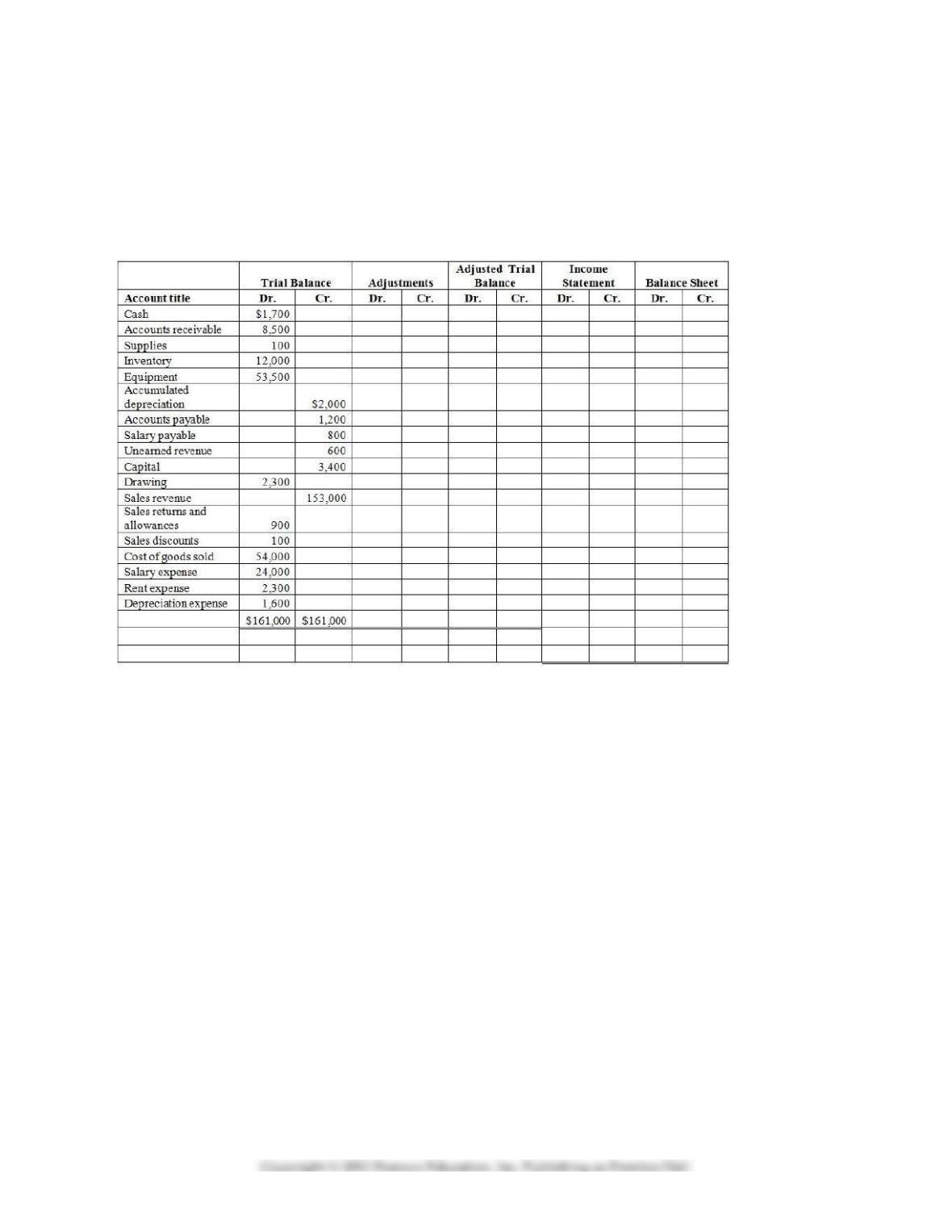
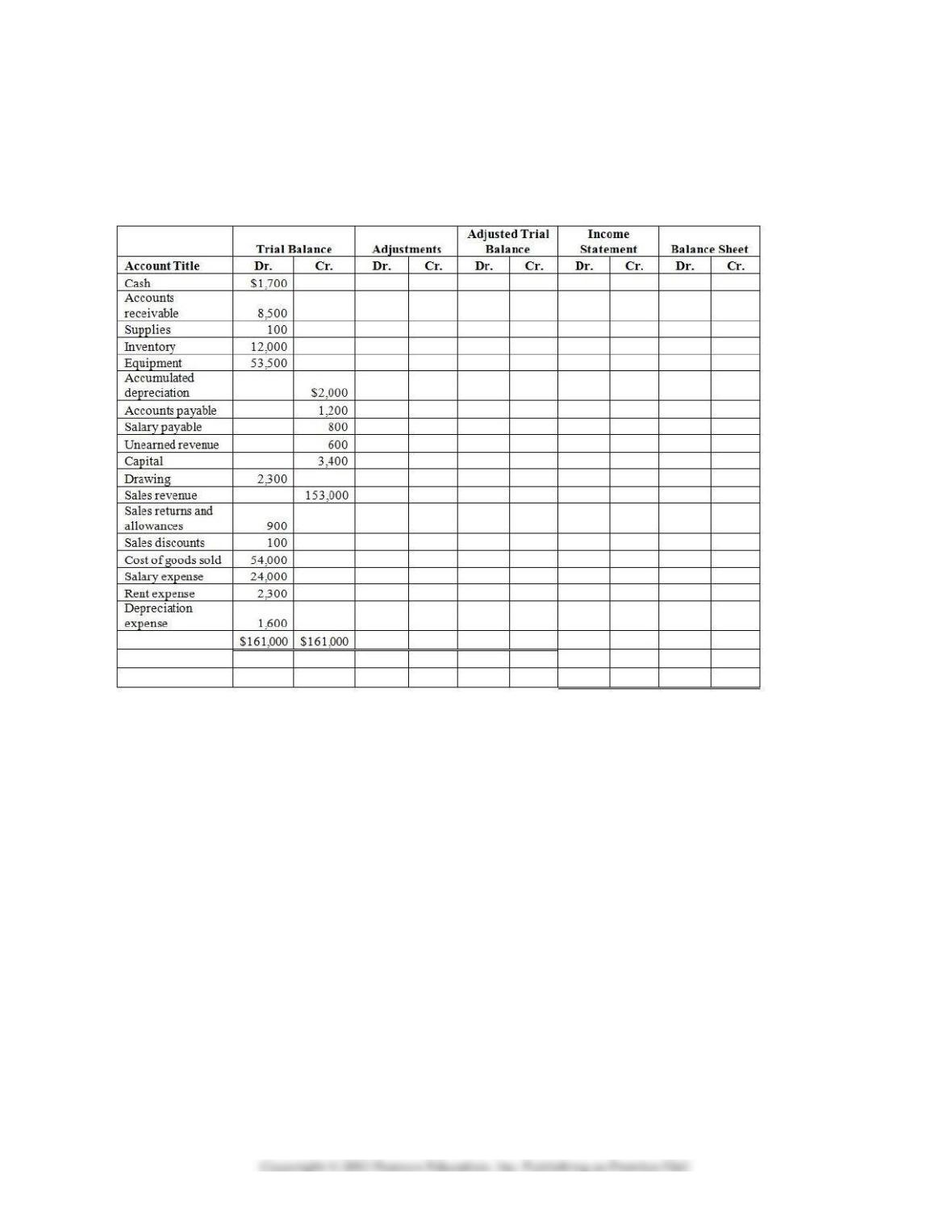
1) Baltic Supplies provides the worksheet shown below at the end of the year.
A count of the physical inventory at year-end shows that there is actually $11,000 of inventory left. Assuming this
is the only adjusting entry needed at year-end, please post the inventory adjustment to the worksheet and update the
adjusted trial balance.
61
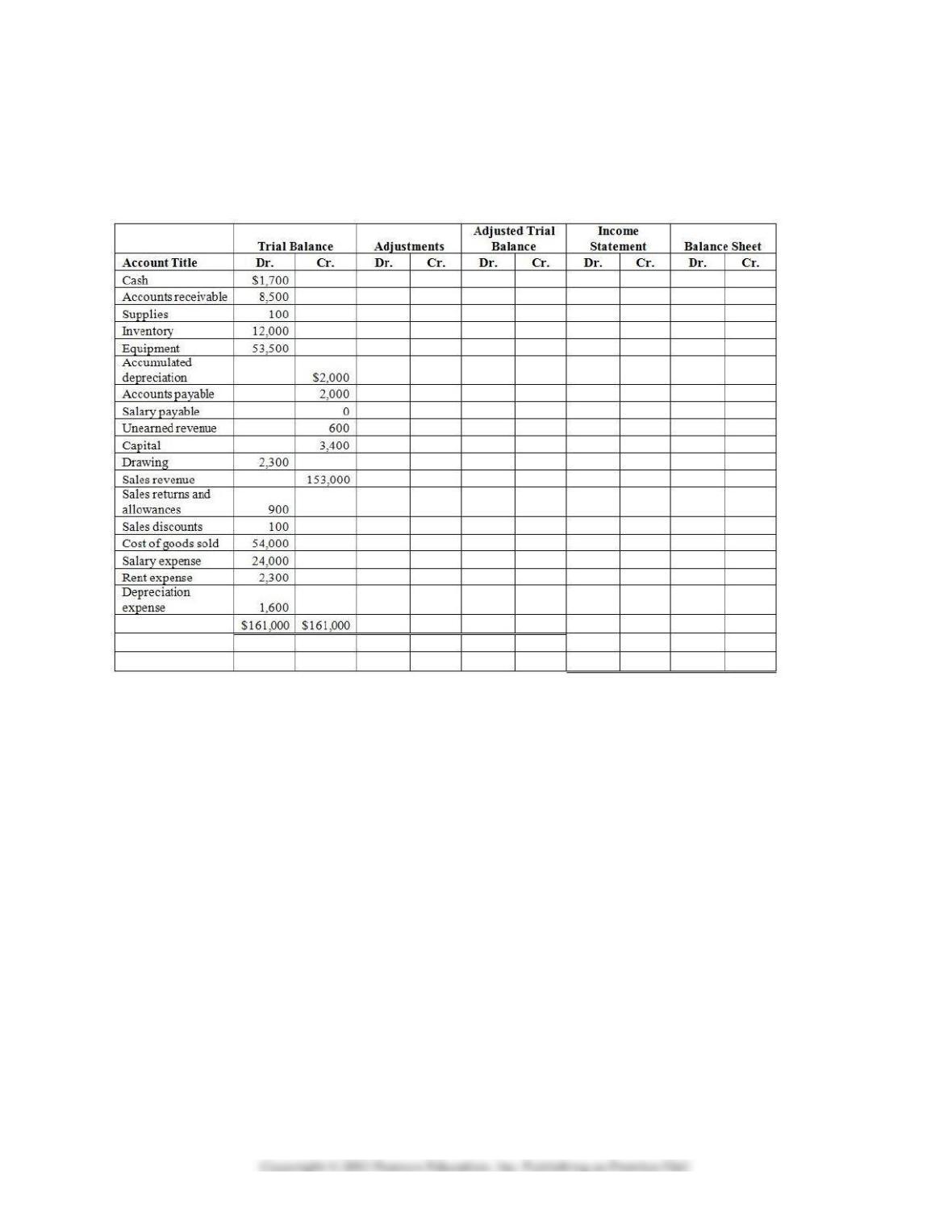
2) Baltic Supplies provides the worksheet shown below at the end of the year.
A count of the physical inventory at year end shows that there is actually $11,000 of inventory left. Assuming this is
the only adjusting entry needed at year-end, please post the inventory adjustment to the worksheet and update the
adjusted trial balance. Then complete the worksheet.
63
3) Baltic Supplies provides the worksheet shown below at the end of the year:
A count of the physical inventory at year end shows that there is actually $11,000 of inventory left. In addition,
there was $800 of accrued salary, and $200 of depreciation. Please post the adjustments to the worksheet and update
the adjusted trial balance. Then complete the worksheet.