139. Listed below are ten terms followed by a list of phrases that describe or characterize five
of the terms. Match each phrase with the best term placing the letter designating the term in
the space provided.
Terms:
a. Accounts receivable
b. Allowance method
c. No effect
d. Direct write-off method
e. Net realizable value
f. Aging method
g. Bad debt expense
h. Receivables written off
i. Decrease assets and increase expenses
j. Allowance for uncollectible accounts
_____ Contra asset that represents the estimated amount of future bad debts.
140. Listed below are ten terms followed by a list of phrases that describe or characterize five
of the terms. Match each phrase with the best term placing the letter designating the term in
the space provided.
Terms:
a. Accounts receivable
b. Allowance method
c. No effect
d. Direct write-off method
e. Net realizable value
f. Aging method
g. Bad debt expense
h. Receivables written off
i. Decrease assets and increase expenses
j. Allowance for uncollectible accounts
_____ Actual bad debts.
141. Listed below are ten terms followed by a list of phrases that describe or characterize five
of the terms. Match each phrase with the best term placing the letter designating the term in
the space provided.
Terms:
a. Accounts receivable
b. Allowance method
c. No effect
d. Direct write-off method
e. Net realizable value
f. Aging method
g. Bad debt expense
h. Receivables written off
i. Decrease assets and increase expenses
j. Allowance for uncollectible accounts
_____ The effect of estimating future bad debts.
142. Listed below are ten terms followed by a list of phrases that describe or characterize five
of the terms. Match each phrase with the best term placing the letter designating the term in
the space provided.
Terms:
a. Accounts receivable
b. Allowance method
c. No effect
d. Direct write-off method
e. Net realizable value
f. Aging method
g. Bad debt expense
h. Receivables written off
i. Decrease assets and increase expenses
j. Allowance for uncollectible accounts
_____ The procedure using an adjustment for future uncollectible accounts.
143. Listed below are ten terms followed by a list of phrases that describe or characterize five
of the terms. Match each phrase with the best term placing the letter designating the term in
the space provided.
Terms:
a. Accounts receivable
b. Allowance method
c. No effect
d. Direct write-off method
e. Net realizable value
f. Aging method
g. Bad debt expense
h. Receivables written off
i. Decrease assets and increase expenses
j. Allowance for uncollectible accounts
_____ The total amount owed to a company from credit sales to customers.
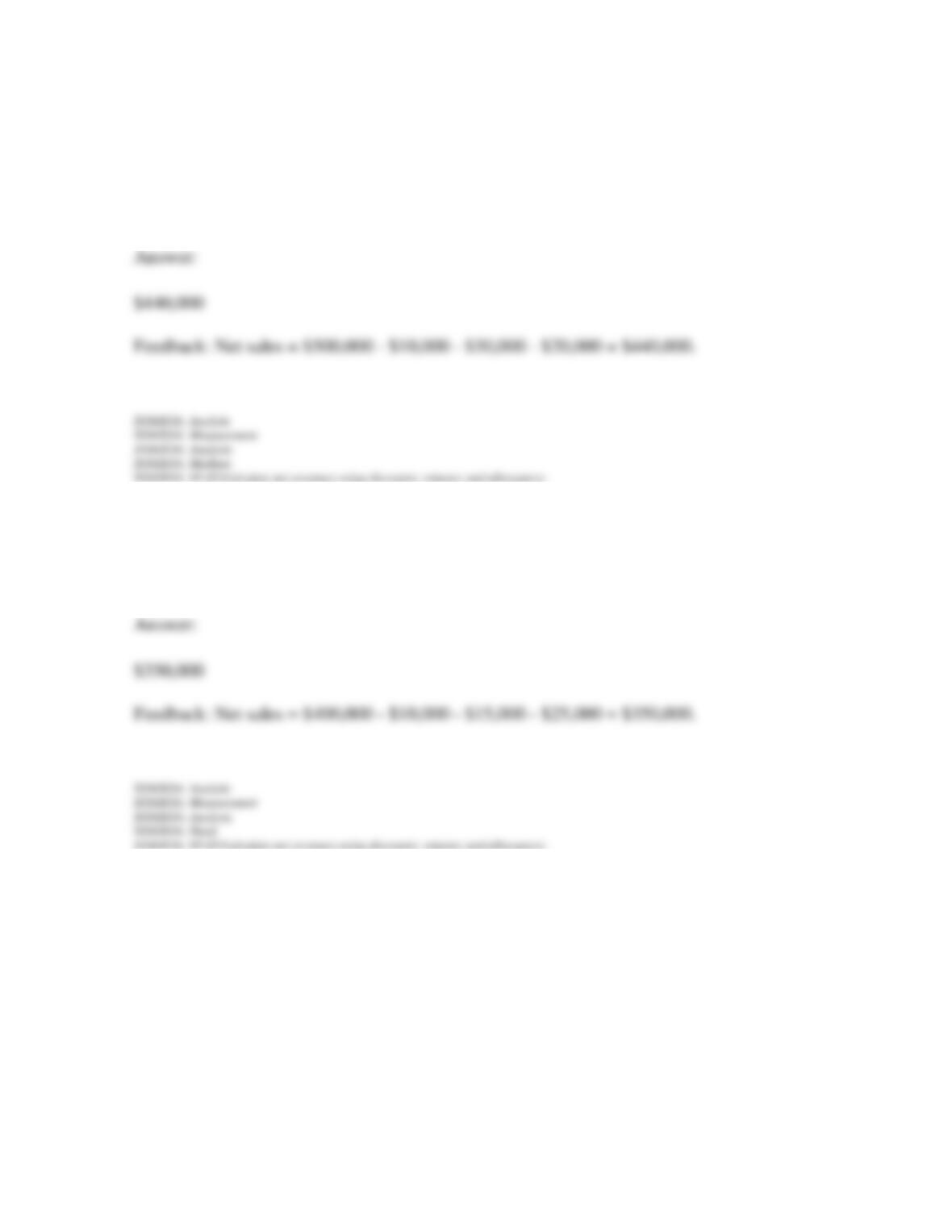
144. A company reports the following amounts at the end of the year: Total sales = $500,000;
sales discounts = $10,000; sales returns = $30,000; sales allowances = $20,000. Compute net
sales.
145. A company reports the following amounts at the end of the year: Total sales = $400,000;
cash = $35,000; sales discounts = $10,000; accounts receivable = $20,000; sales returns =
$15,000; operating expenses = $70,000; sales allowances = $25,000. Compute net sales.
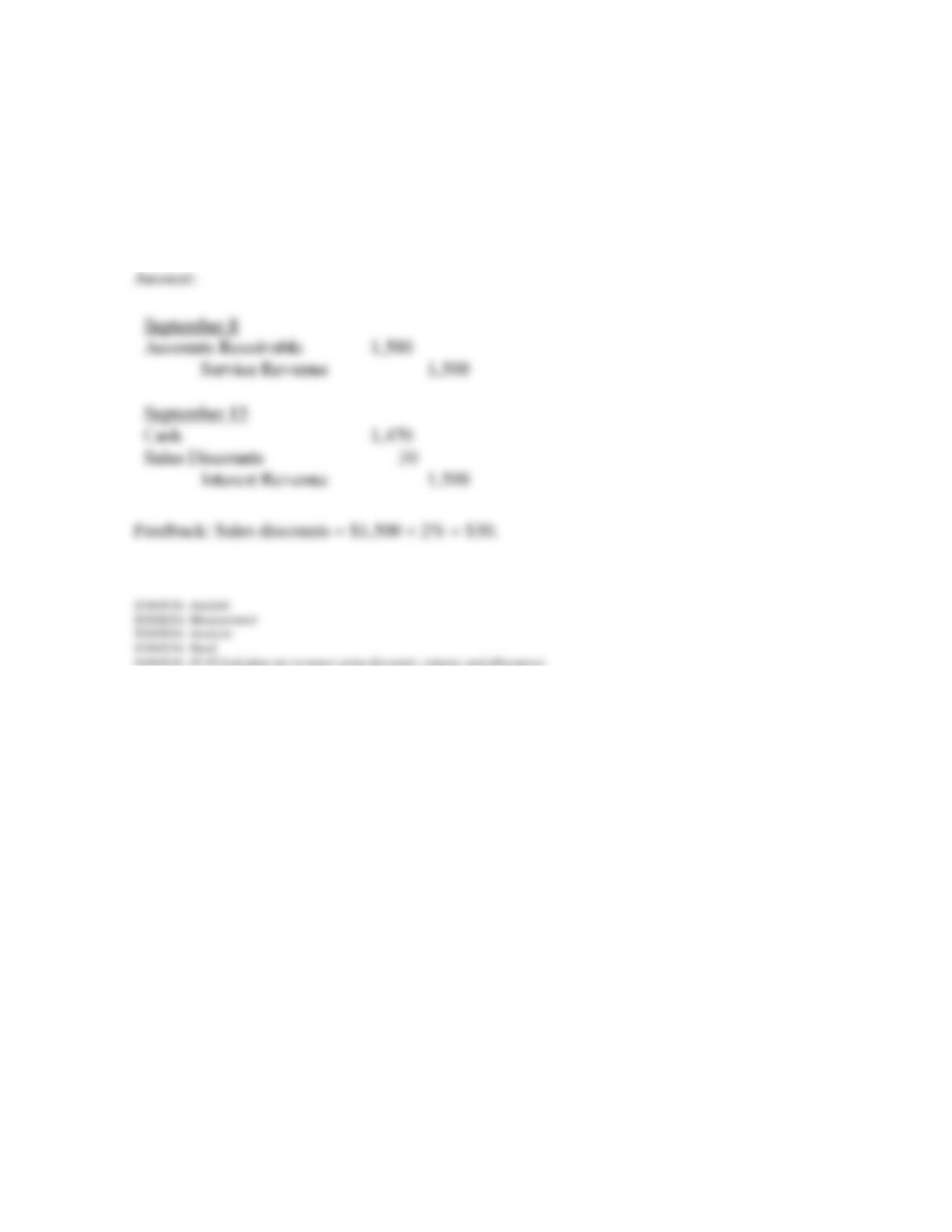
146. On September 8, a company provides services on account to a customer for $1,500,
terms 2/10, n/30. The customer pays for those services on September 15. Record the
transactions for the company when the services are provided on September 8 and when the
cash is collected on September 15.
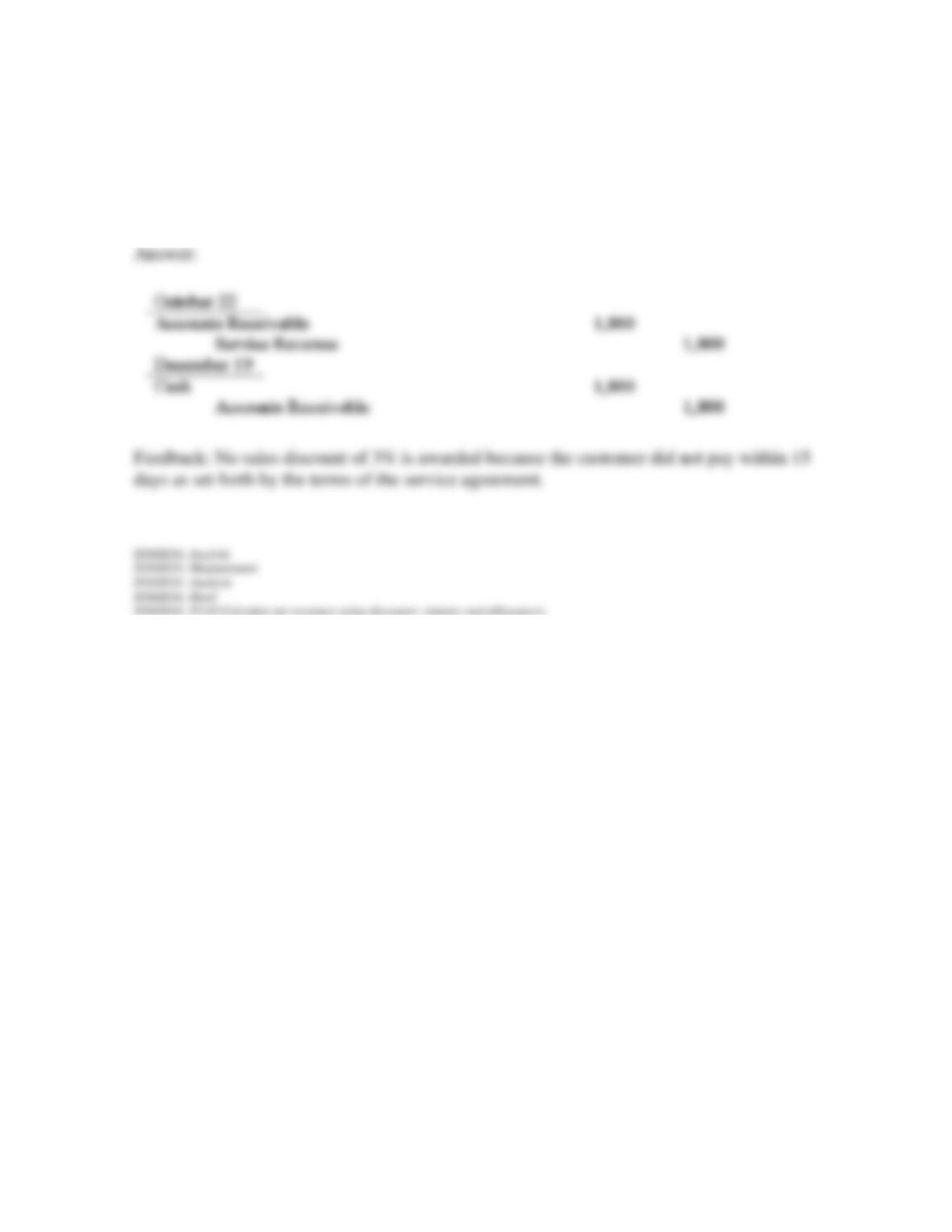
147. On October 22, a company provides services on account to a customer for $1,800, terms
3/15, n/30. The customer pays for those services on December 19. Record the transactions for
the company when the services are provided on October 22 and when cash is collected on
December 19.
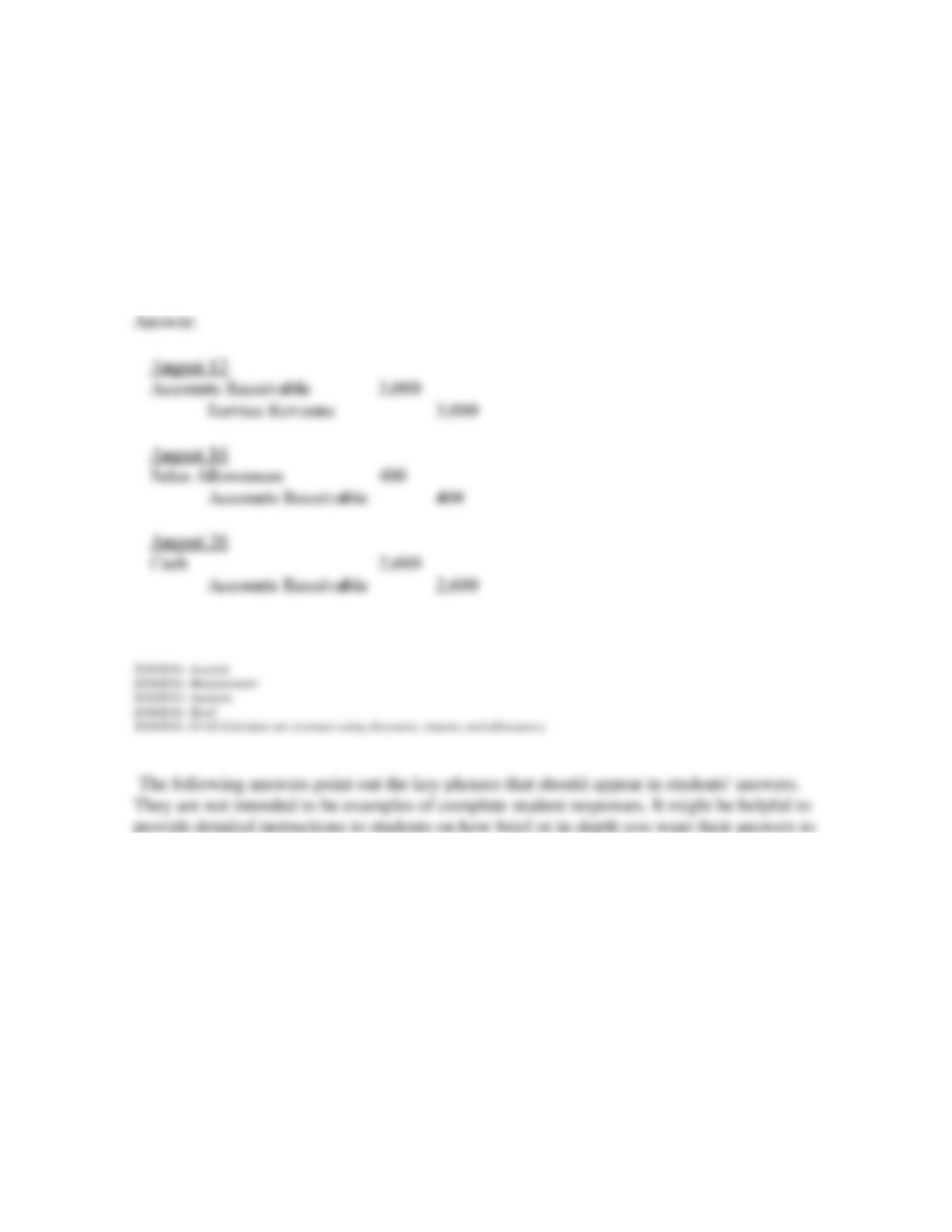
148. On August 12, a company provides services on account to a customer for $3,000.
However, on August 16, the customer is not completely satisfied with the service and the
company grants an allowance on the amount owed of $400. On August 20, the customer
makes full payment of the balance owed, excluding the allowance. Record the services
provided on August 12, the sales allowance on August 16, and the cash collection on August
20.
be.
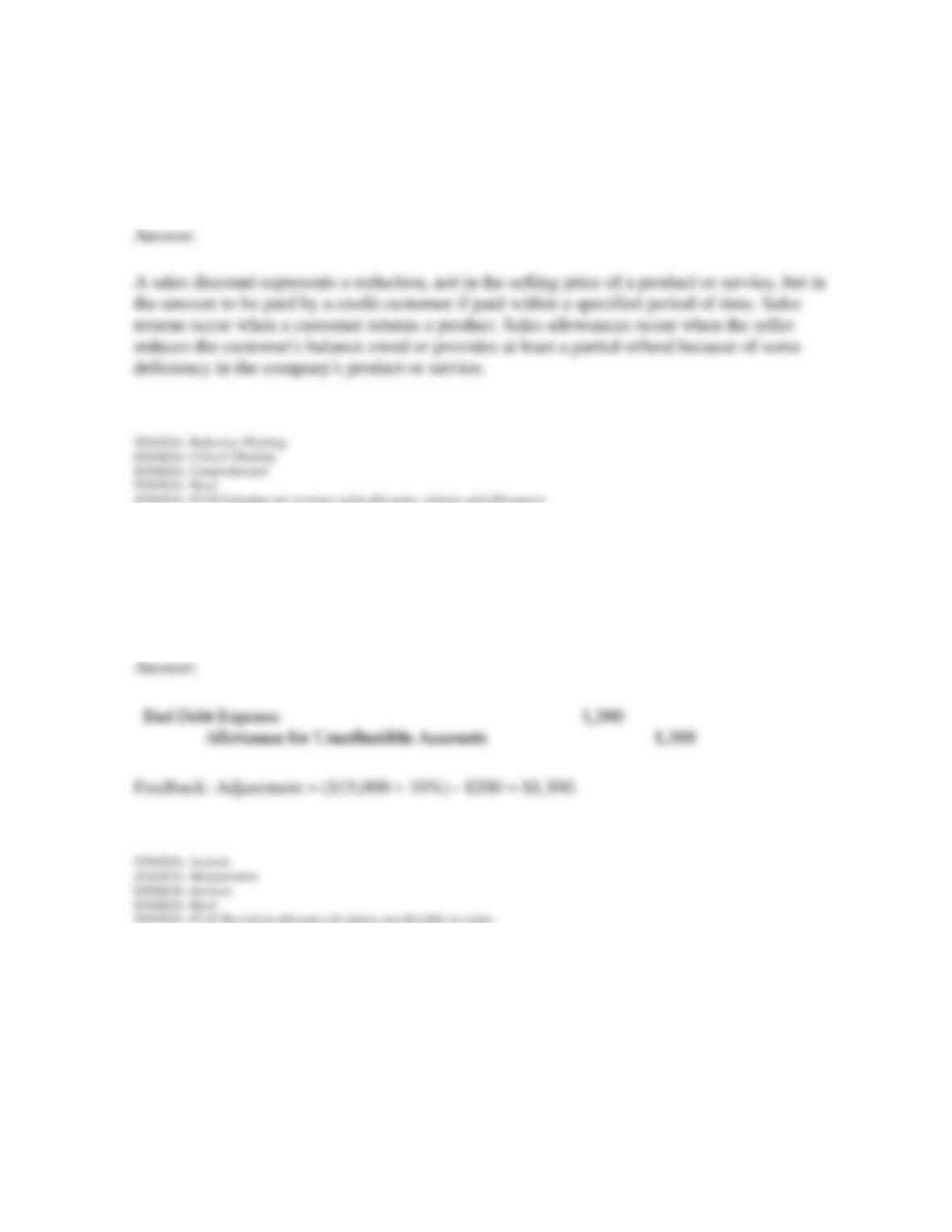
149. Give three examples of contra revenue accounts and the transactions with which they are
associated.
150. At the end of the year, a company has a balance in Allowance for Uncollectible
Accounts of $200 (credit) before any year-end adjustment. The balance of Accounts
Receivable is $15,000. The company estimates that 10% of accounts receivable will not be
collected over the next year. Record the adjustment for uncollectible accounts.
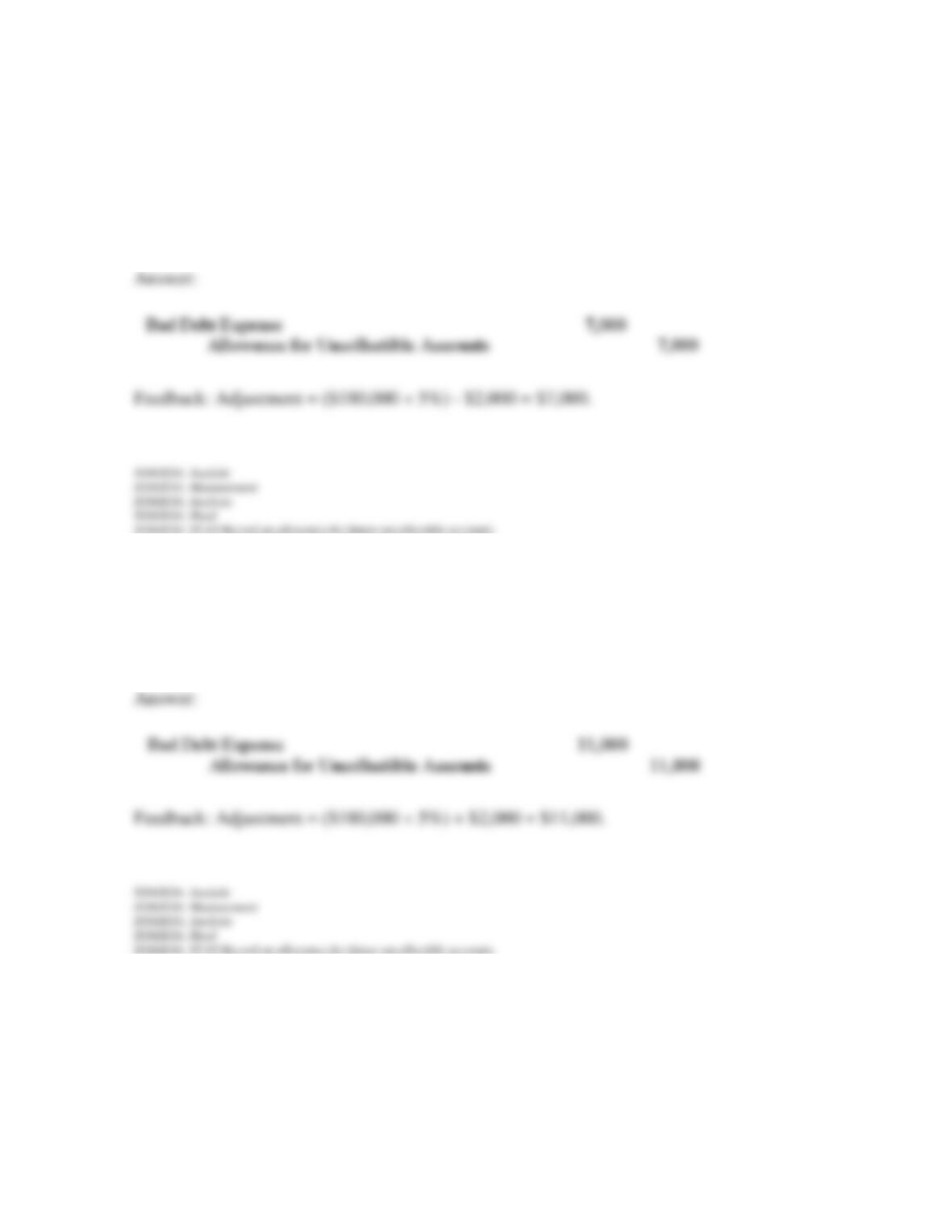
151. At the end of the year, a company has a balance in Allowance for Uncollectible
Accounts of $2,000 (credit) before any year-end adjustment. The balance of Accounts
Receivable is $180,000. The company estimates that 5% of accounts receivable will not be
collected over the next year. Record the adjustment for uncollectible accounts.
152. At the end of the year, a company has a balance in Allowance for Uncollectible
Accounts of $2,000 (debit) before any year-end adjustment. The balance of Accounts
Receivable is $180,000. The company estimates that 5% of accounts receivable will not be
collected over the next year. Record the adjustment for uncollectible accounts.
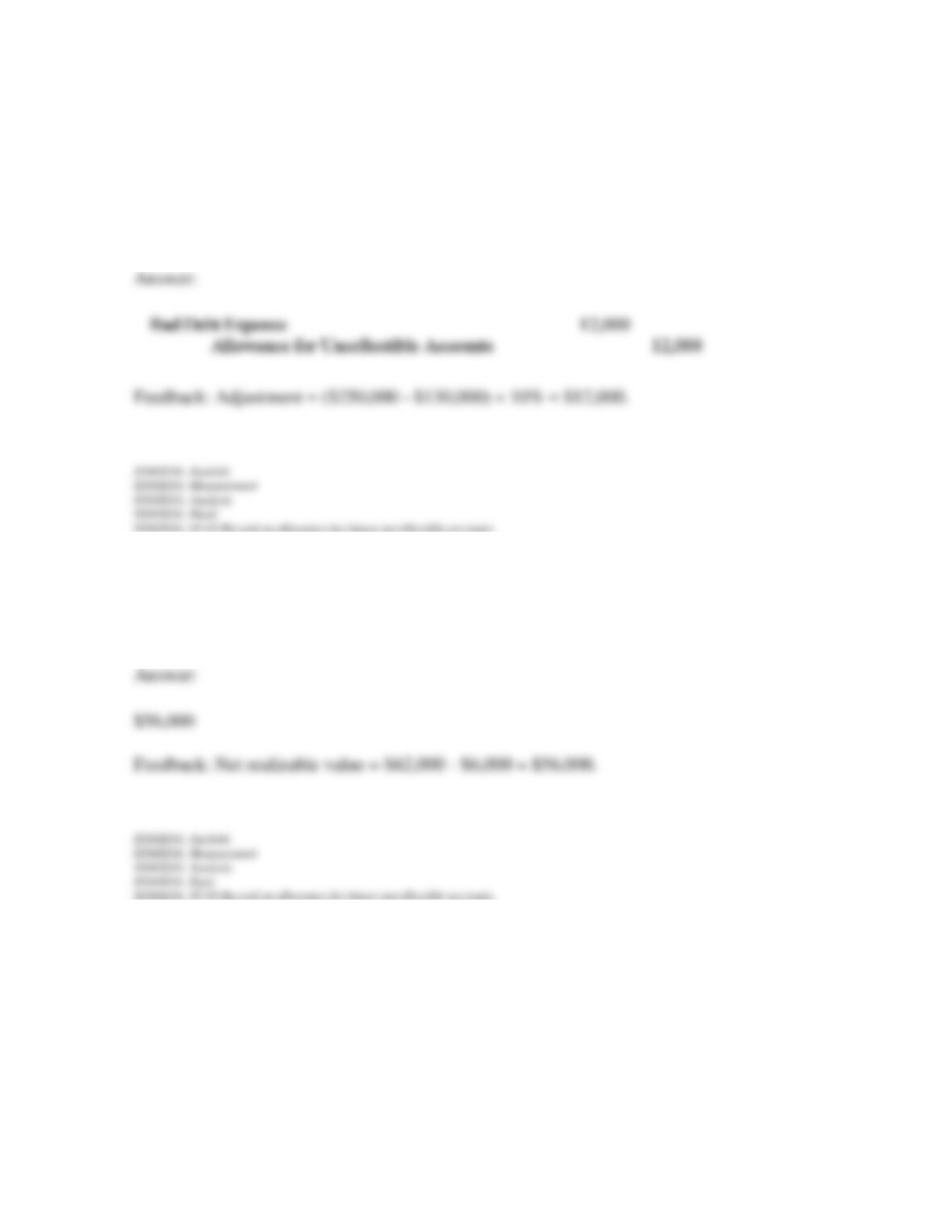
153. During 2012, its first year of operations, a company provides services on account of
$250,000. By the end of 2012, cash collections on these accounts total $130,000. The
company estimates that 10% of accounts receivable will be uncollectible. Record the
adjustment for uncollectible accounts on December 31, 2012.
154. A company has the following balances on December 31, 2012, after year-end
adjustments: Accounts Receivable = $62,000; Allowance for Uncollectible Accounts =
$6,000. Calculate the net realizable value of accounts receivable.
155. A company has the following balances on December 31, 2012, after year-end
adjustments: Accounts Receivable = $75,000; Service Revenue = $400,000; Allowance for
Uncollectible Accounts = $5,000; Cash = $20,000. Calculate the net realizable value of
accounts receivable.
156. Explain how companies account for uncollectible accounts receivable (bad debts).
157. What does it mean to report accounts receivable at their net realizable value.
158. Listed below are ten terms followed by a list of phrases that describe or characterize five
of the terms. Match each phrase with the best term placing the letter designating the term in
the space provided.
Terms:
a. Accounts receivable
b. Allowance method
c. No effect
d. Direct write-off method
e. Net realizable value
f. Aging method
g. Bad debt expense
h. Receivables written off
i. Decrease assets and increase expenses
j. Allowance for uncollectible accounts
_____ Considers that the longer past due the account receivable is, the less likely it is to be
collected.
159. Listed below are ten terms followed by a list of phrases that describe or characterize five
of the terms. Match each phrase with the best term placing the letter designating the term in
the space provided.
Terms:
a. Accounts receivable
b. Allowance method
c. No effect
d. Direct write-off method
e. Net realizable value
f. Aging method
g. Bad debt expense
h. Receivables written off
i. Decrease assets and increase expenses
j. Allowance for uncollectible accounts
_____ Recognizes bad debts when accounts become uncollectible.
160. Listed below are ten terms followed by a list of phrases that describe or characterize five
of the terms. Match each phrase with the best term placing the letter designating the term in
the space provided.
Terms:
a. Accounts receivable
b. Allowance method
c. No effect
d. Direct write-off method
e. Net realizable value
f. Aging method
g. Bad debt expense
h. Receivables written off
i. Decrease assets and increase expenses
j. Allowance for uncollectible accounts
_____ The amount of the adjustment to the allowance for uncollectible accounts during the
period.
161. Listed below are ten terms followed by a list of phrases that describe or characterize five
of the terms. Match each phrase with the best term placing the letter designating the term in
the space provided.
Terms:
a. Accounts receivable
b. Allowance method
c. No effect
d. Direct write-off method
e. Net realizable value
f. Aging method
g. Bad debt expense
h. Receivables written off
i. Decrease assets and increase expenses
j. Allowance for uncollectible accounts
_____ The effect of writing off an account receivable as a bad debt under the allowance
method.