17) On November 1, 2012, Everett Janitorial Supply sold merchandise for $5,000, FOB destination, 2/10, n/30. The
merchandise cost $3,200. Everett paid transportation costs of $100. On November 6, 2012, merchandise of $1,000
from the November 1 sale was returned. The returned merchandise had cost $600. Everett received payment for the
balance of the sale on November 10, 2012. If this were the only sales transaction of the period, what amount of Net
sales revenue would be shown on the income statement?
A) $2,400
B) $1,800
C) $1,320
D) $3,920
18) On November 1, 2012, Everett Janitorial Supply sold merchandise for $5,000, FOB destination, 2/10, n/30. The
merchandise cost $3,200. Everett paid transportation costs of $100. On November 6, 2012, merchandise of $1,000
from the November 1 sale was returned. The returned merchandise had cost $600. Everett received payment for the
balance of the sale on November 10, 2012. If this were the only sales transaction of the period, what amount of
Gross profit would be shown on the income statement?
A) $2,400
B) $1,800
C) $1,320
D) $3,920
19) Michelin Jewelers completed the following transactions. Michelin Jewelers uses the perpetual inventory system.
On April 2, Michelin sold $9,000 of merchandise to a customer on account with terms of 3/15, n/30. Michelin’s cost
of the merchandise sold was $5,500. Which of the following journal entries correctly records the Sales revenue?
A)
Sales revenue
9,000
Accounts receivable
9,000
B)
Sales revenue
9,000
Cost of goods sold
9,000
C)
Cash
9,000
Sales revenue
9,000
D)
Accounts receivable
9,000
Sales revenue
9,000
20) Michelin Jewelers completed the following transactions. Michelin Jewelers uses the perpetual inventory system.
On April 2, Michelin sold $9,000 of merchandise to a customer on account with terms of 3/15, n/30. Michelin’s cost
of the merchandise sold was $5,500. Which of the following journal entries correctly records the Cost of goods
sold?
A)
Cost of goods sold
5,500
Accounts receivable
5,500
B)
Sales revenue
5,500
Cost of goods sold
5,500
C)
Cost of goods sold
5,500
Inventory
5,500
D)
Inventory
5,500
Cost of goods sold
5,500
21) Michelin Jewelers completed the following transactions. Michelin Jewelers uses the perpetual inventory system.
On April 2, Michelin sold $9,000 of merchandise to a customer on account with terms of 3/15, n/30. Michelin’s cost
of the merchandise sold was $5,500. On April 4, the customer reported damaged goods and Michelin granted a
$1,000 sales allowance. Which of the following entries correctly records the sales allowance on Michelin’s books?
A)
Sales returns and allowances
1,000
Accounts receivable
1,000
B)
Sales returns and allowances
1,000
Sales revenue
1,000
C)
Cost of goods sold
1,000
Sales returns and allowances
1,000
D)
Sales returns and allowances
1,000
Cash
1,000
22) Michelin Jewelers completed the following transactions. Michelin Jewelers uses the perpetual inventory system.
On April 2, Michelin sold $9,000 of merchandise to a customer on account with terms of 3/15, n/30. Michelin’s cost
of the merchandise sold was $5,500. On April 4, the customer reported damaged goods and Michelin granted a
$1,000 sales allowance. On April 10, Michelin received payment from the customer. Which of the following
entries correctly records the cash receipt on Michelin’s books?
A)
Cash
7,760
Sales discount
240
Accounts receivable
8,000
B)
Accounts receivable
8,000
Sales discount
240
Cash
7,760
C)
Cash
8,000
Accounts receivable
8,000
D)
Cash
7,760
Accounts receivable
7,760
23) Michelin Jewelers completed the following transactions. Michelin Jewelers uses the perpetual inventory system.
On April 2, Michelin sold $9,000 of merchandise to a customer on account with terms of 3/15, n/30. Michelin’s cost
of the merchandise sold was $5,500. On April 4, the customer reported damaged goods and Michelin granted a
$1,000 sales allowance. On April 10, Michelin received payment from the customer. If this were the only
transaction for the period, what amount would be shown on the income statement for Net sales revenue?
A) $8,760
B) $9,000
C) $8,000
D) $7,760
24) Michelin Jewelers completed the following transactions. Michelin Jewelers uses the perpetual inventory system.
On April 2, Michelin sold $9,000 of merchandise to a customer on account with terms of 3/15, n/30. Michelin’s cost
of the merchandise sold was $5,500. On April 4, the customer reported damaged goods and Michelin granted a
$1,000 sales allowance. On April 10, Michelin received payment from the customer. If this were the only
transaction for the period, what amount would be shown on the income statement for Gross profit?
A) $2,260
B) $3,500
C) $3,260
D) $3,230
25) Michelin Jewelers completed the following transactions. Michelin Jewelers uses the perpetual inventory system.
On April 2, Michelin sold $9,000 of merchandise to a customer on account with terms of 3/15, n/30. Michelin’s cost
of the merchandise sold was $5,500. On April 4, the customer reported damaged goods and Michelin granted a
$1,000 sales allowance. On April 10, Michelin received payment from the customer. How much cash was received
from the customer?
A) $8,000
B) $8,730
C) $7,760
D) $2,260
26) Michelin Jewelers completed the following transactions. Michelin Jewelers uses the perpetual inventory system.
On April 2, Michelin sold $9,000 of merchandise to a customer on account with terms of 3/15, n/30. Michelin’s cost
of the merchandise sold was $5,500. On April 4, the customer reported damaged goods and Michelin granted a
$1,000 sales allowance. On April 22, Michelin received payment from the customer. How much cash was received
from the customer?
A) $8,000
B) $8,730
C) $7,760
D) $2,260
27) Which of the following defines Gross profit?
A) Sales revenue less Sales discounts and allowances
B) Sales revenue less Operating expenses
C) Net sales revenue less Sales discounts
D) Net sales revenue less Cost of goods sold
28) Gross profit is equal to Sales revenue less Sales returns and allowances, and Sales discounts.
29) Which of the following defines Net sales revnue?
A) Sales revenue less Sales returns and allowances, and Sales discounts
B) Sales revenue less Operating expenses
C) Sales revenue less Sales discounts
D) Sales revenue less Cost of goods sold
30) Net sales revenue is equal to Sales revenue less Sales returns and allowances, and Sales discounts.
31) On November 1, 2012, Everett Janitorial Supply sold merchandise for $5,000, FOB destination, 2/10, n/30. The
merchandise cost $3,200. Please provide the journal entry to record Sales revenue.
Accounts receivable
Sales revenue
32) On November 1, 2012, Everett Janitorial Supply sold merchandise for $5,000, FOB destination, 2/10, n/30. The
merchandise cost Everett $3,200. Please provide the journal entry to record Cost of goods sold.
Cost of goods sold
Inventory
33) On November 1, 2012, Everett Janitorial Supply sold merchandise for $5,000, FOB destination, 2/10, n/30. The
merchandise cost $3,200. Everett paid transportation costs of $100 to ship the goods to the customer. Please
provide the journal entry to record transportation costs.
Delivery expense
Cash
34) On November 1, 2012, Everett Janitorial Supply sold merchandise for $5,000, FOB destination, 2/10, n/30. The
merchandise cost $3,200. Everett paid transportation costs of $100. On November 6, 2012, merchandise of $1,000
from the November 1 sale was returned. The returned merchandise had cost $600. Please provide the two journal
entries to record the return.
Sales returns and allowances
Accounts receivable
Inventory
Cost of goods sold
35) On November 1, 2012, Everett Janitorial Supply sold merchandise for $5,000, FOB destination, 2/10, n/30. The
merchandise cost $3,200. Everett paid transportation costs of $100. On November 6, 2012, merchandise of $1,000
from the November 1 sale was returned. The returned merchandise had cost $600. Everett received payment for the
balance of the sale on November 10, 2012. Please provide the journal entry to record the receipt of payment from
the customer.
Cash
Sales discounts
Accounts receivable
Learning Objective 5-4
1) When a company uses the perpetual inventory method, it should NOT be necessary to conduct a physical count of
inventory.
2) The entry to close Sales discounts and Sales returns and allowances results in a debit to Income summary.
3) If a physical count of inventory indicates that the Inventory account is overstated, an additional adjusting entry is
required.
4) The entry to close Cost of goods sold results in a debit to Income summary.
5) A company uses the perpetual inventory system. The inventory account balance is $50,000. An actual count of
inventory reveals that actual inventory is $43,000. Which of the following would be included in the required
adjusting entry?
A) A $43,000 credit to Inventory would be required.
B) A $50,000 debit to Cost of goods sold would be required.
C) A $7,000 credit to Cost of goods sold would be required.
D) A $7,000 credit to Inventory would be required.
6) A company‘s ledger shows an Inventory balance of $20,000 and a physical count of the inventory shows $19,000.
Which of the following entries is needed to record the shrinkage?
A)
Cost of goods sold
1,000
Shrinkage expense
1,000
B)
Inventory
1,000
Cost of goods sold
1,000
C)
Cost of goods sold
1,000
Inventory
1,000
D)
Cash
1,000
Inventory
1,000
7) Which of the following accounts is used ONLY at the close of the merchandising cycle?
A) Net sales revenue
B) Income summary
C) Cost of goods sold
D) Sales revenue
8) The general ledger shows a balance of $65,300 in the Inventory account at the end of the period. A physical
inventory shows a count of $67,900. The adjusting entry would be a:
A) debit to Cost of goods sold and a credit to Inventory.
B) debit to Cost of goods sold and a credit to Cash.
C) debit to Inventory and a credit to Cost of goods sold.
D) debit to Inventory and a credit to Cash.
9) The general ledger shows a balance of $23,678 in the Inventory account at the end of the period. A physical
inventory shows a count of $22,078. The adjusting entry would be a:
A) debit to Cost of goods sold and a credit to Cash.
B) debit to Inventory and a credit to Cash.
C) debit to Cost of goods sold and a credit to Inventory.
D) debit to Inventory and a credit to Cost of goods sold.
10) The Income summary account has a $25,000 credit balance after the revenue and expense accounts have been
closed. To which account is this balance closed?
A) Drawing
B) Sales revenue
C) Cost of goods sold
D) Capital
11) An adjusted trial balance is shown below.
Debit
Credit
Cash
$12,600
Accounts receivable
2,400
Prepaid rent
800
Inventory
28,000
Accounts payable
$4,200
Salary payable
1,000
Notes payable
800
Capital
13,800
Drawing
1,000
Sales revenue
96,000
Sales returns and allowances
1,600
Sales discounts
400
Cost of goods sold
25,000
Salary expense
21,000
Rent expens
14,000
Depreciation expense
8,500
Supplies expense
500
Total
$115,800
$115,800
What will the final balance in Capital be after the closing entries?
A) $37,800
B) $12,700
C) $24,000
D) $36,800
12) Sales revenues were $20,000, Sales returns and allowances were $300, Sales discounts were $700, Cost of goods
sold were $12,000, and all other expenses totaled $4,500. The first closing entry would include which of the
following line items?
A) Credit to Income summary of $19,000
B) Credit to Income summary of $20,000
C) Debit to Income summary of $2,500
D) Debit to Income summary of $16,500
13) Sales revenues were $20,000, Sales Returns and allowances were $300, Sales discounts were $700, Cost of
goods sold were $12,000, and all other expenses totaled $4,500. The second closing entry would include which of
the following line items?
A) Debit to Income summary of $17,500
B) Credit to Income summary of $16,500
C) Debit to Income summary of $4,500
D) Debit to Income summary of $16,500
14) Sales revenues were $20,000, Sales returns and allowances were $300, Sales discounts were $700, Cost of goods
sold were $12,000, and all other expenses totaled $4,500. The third closing entry would include which of the
following line items?
A) Debit to Income summary of $2,500
B) Credit to Income summary of $2,500
C) Debit to Income summary of $19,000
D) Debit to Income summary of $16,500
15) A business has beginning Capital of $100,000. During the year, Sales revenues were $20,000, Sales returns and
allowances were $300, Sales discounts were $700, Cost of goods sold were $12,000, and all other expenses totaled
$4,500. $1,000 of withdrawals were taken. The fourth closing entry would include which of the following line
items?
A) Debit to Income summary of $1,000
B) Credit to Income summary of $1,000
C) Debit to Capital of $1,000
D) Debit to Capital of $16,500
16) A business has Beginning capital of $100,000. During the year, sales revenues were $20,000, Sales returns and
allowances were $300, Sales discounts were $700, Cost of goods sold were $12,000, and all other expenses totaled
$4,500. $1,000 of withdrawals were taken. The ending balance in Capital, after closing entries, would be:
A) $119,000.
B) $98,500.
C) $101,500.
D) $1,500.
17) A company’s ledger shows an Inventory balance of $20,000 and a physical count of the inventory shows
$19,000. Please provide the adjusting entry needed to record the shrinkage.
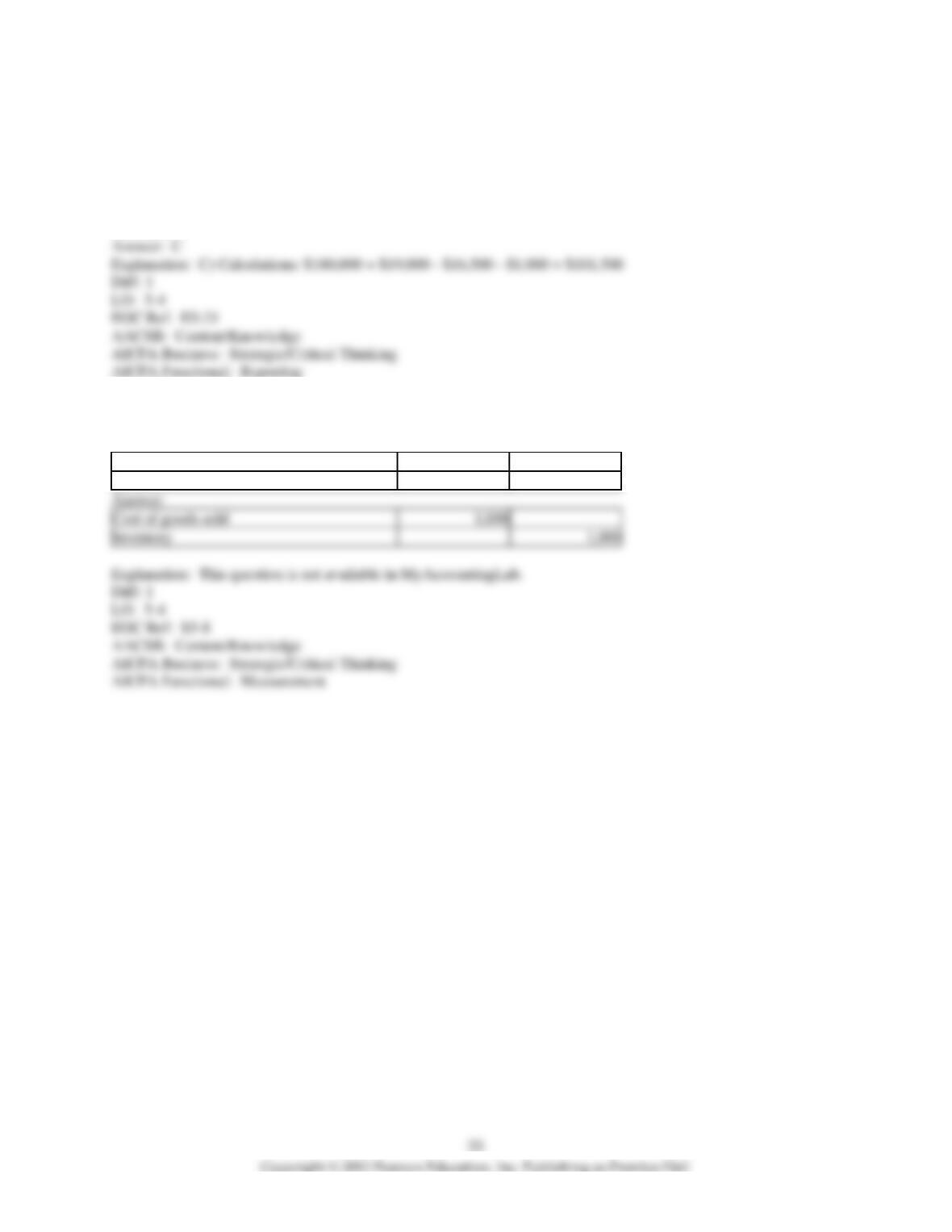
Cost of goods sold
Inventory
18) A trial balance is presented below. The company uses the perpetual inventory system. A physical inventory
reveals only $28,000 of inventory on hand.
Debit
Credit
Cash
$12,600
Accounts receivable
2,400
Prepaid rent
800
Inventory
30,000
Accounts payable
$4,200
Salary payable
1,000
Notes payable
800
Capital
13,800
Drawing
1,000
Sales revenue
96,000
Sales returns and allowances
1,600
Sales discounts
400
Cost of goods sold
23,000
Salary expense
21,000
Rent expense
14,000
Depreciation expense
8,500
Supplies expense
500
Total
$115,800
$115,800
Please prepare the adjusting entry to Inventory.
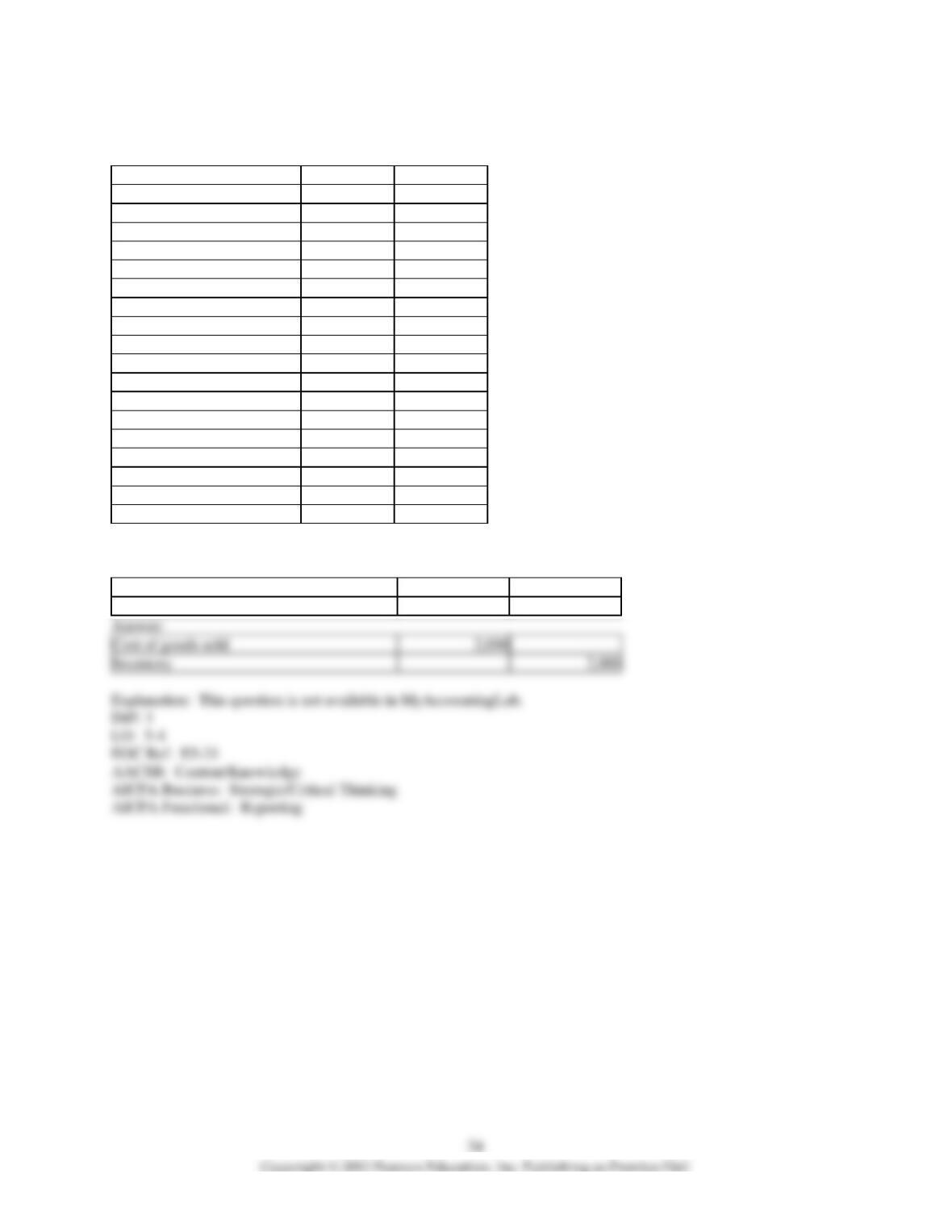
Inventory
19) An adjusted trial balance is shown below.
Debit
Credit
Cash
$12,600
Accounts receivable
2,400
Prepaid rent
800
Inventory
30,000
Accounts payable
$4,200
Salary payable
1,000
Notes payable
800
Capital
13,800
Drawing
1,000
Sales revenue
96,000
Sales returns and allowances
1,600
Sales discounts
400
Cost of goods sold
23,000
Salary expense
21,000
Rent expense
14,000
Depreciation expense
8,500
Supplies expense
500
Total
$115,800
$115,800
Please prepare the first closing entry.
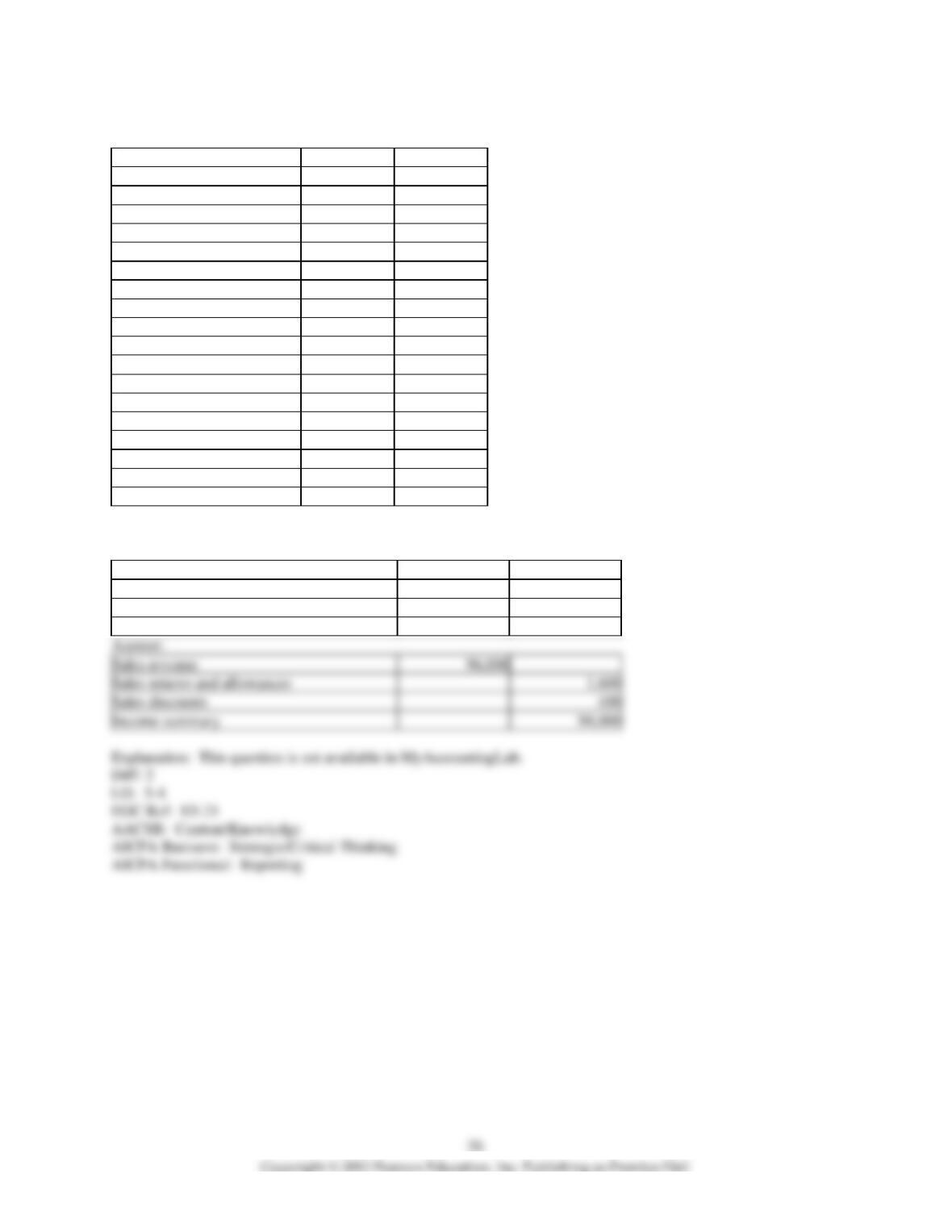
Sales revenue
Sales returns and allowances
Sales discounts
Income summary
20) An adjusted trial balance is shown below.
Debit
Credit
Cash
$12,600
Accounts receivable
2,400
Prepaid rent
800
Inventory
30,000
Accounts payable
$4,200
Salary payable
1,000
Notes payable
800
Capital
13,800
Drawing
1,000
Sales revenue
96,000
Sales returns and allowances
1,600
Sales discounts
400
Cost of goods sold
23,000
Salary expense
21,000
Rent expense
14,000
Depreciation expense
8,500
Supplies expense
500
Total
$115,800
$115,800
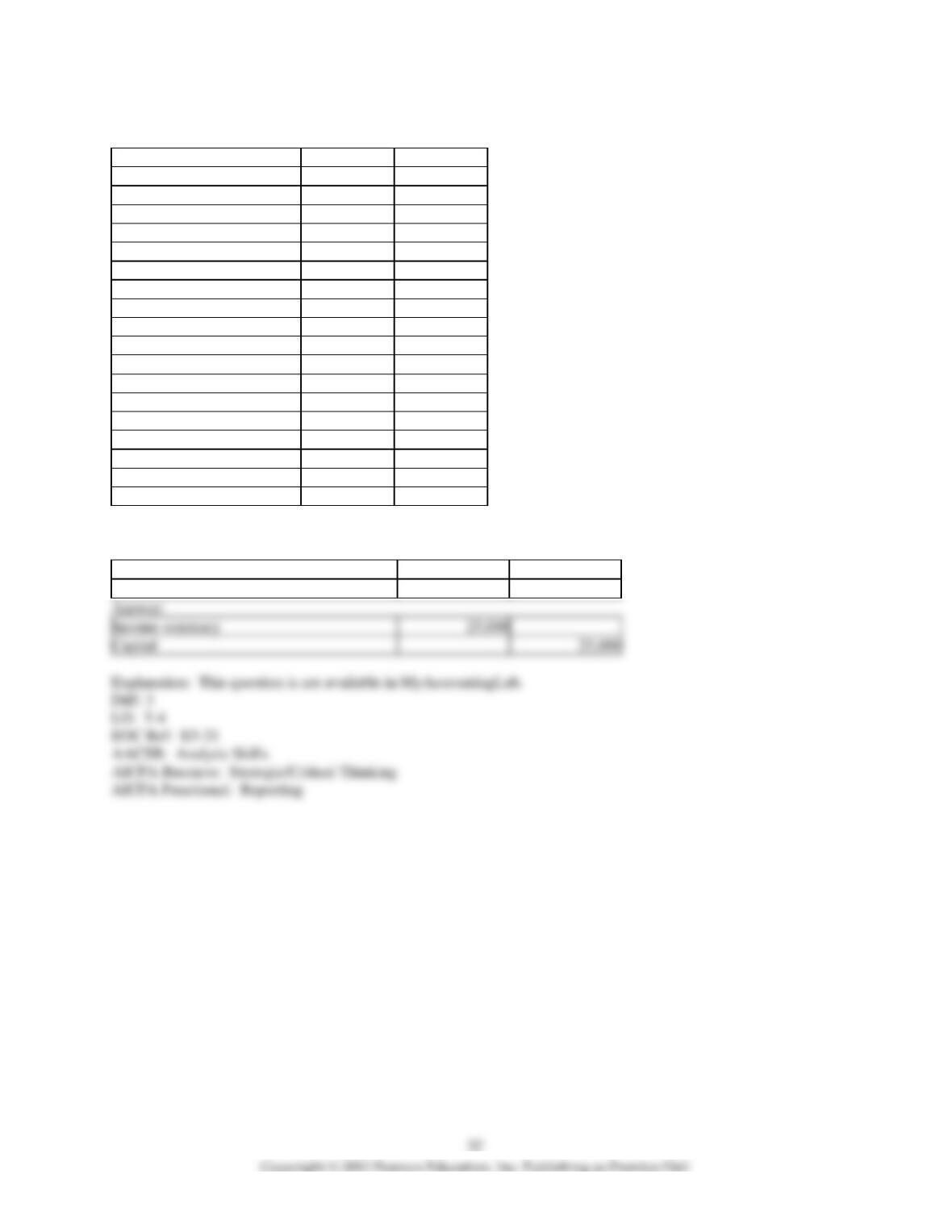
Please prepare the second closing entry.
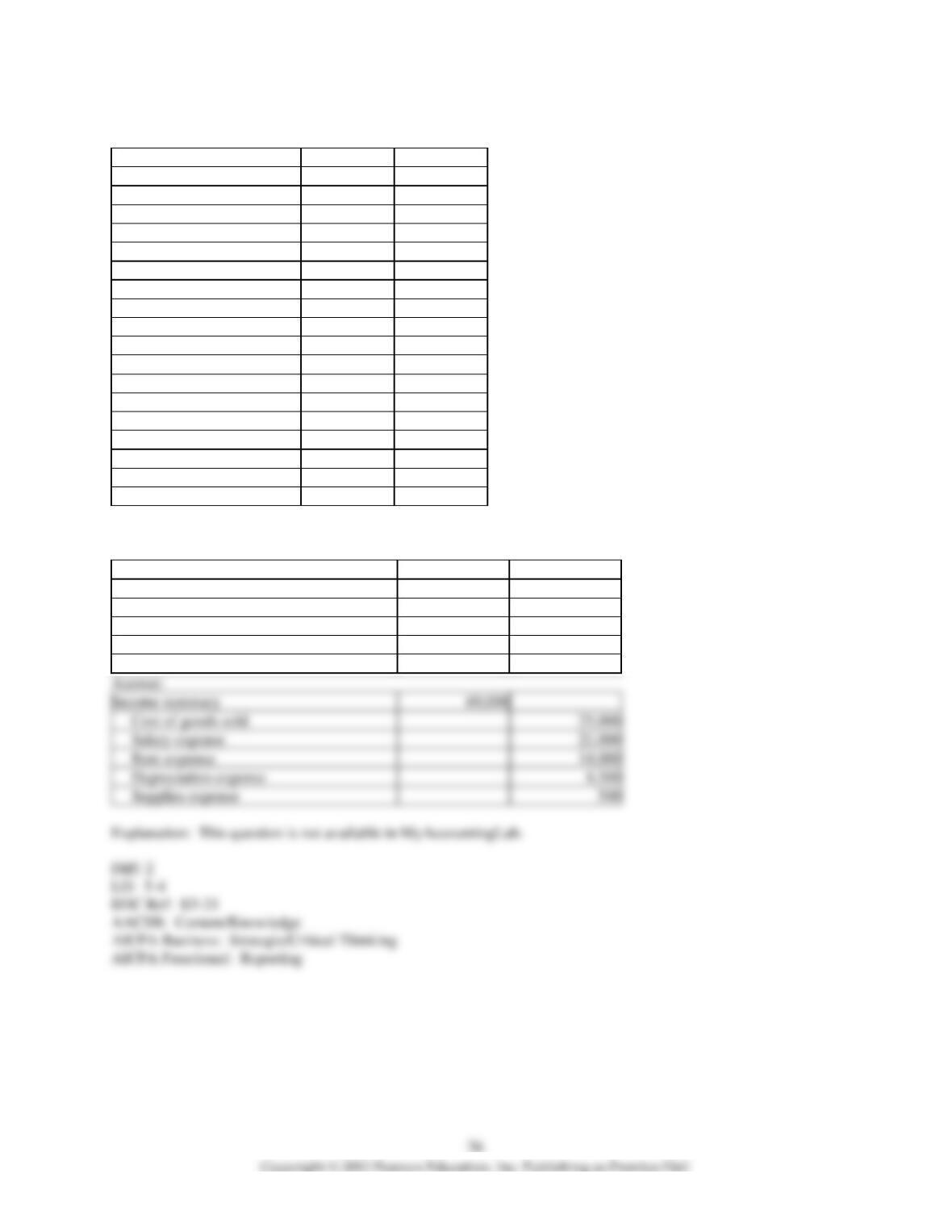
Income summary
21) An adjusted trial balance is shown below.
Debit
Credit
Cash
$12,600
Accounts receivable
2,400
Prepaid rent
800
Inventory
30,000
Accounts payable
$4,200
Salary payable
1,000
Notes payable
800
Capital
13,800
Drawing
1,000
Sales revenue
96,000
Sales returns and allowances
1,600
Sales discounts
400
Cost of goods sold
23,000
Salary expense
21,000
Rent expense
14,000
Depreciation expense
8,500
Supplies expense
500
Total
$115,800
$115,800
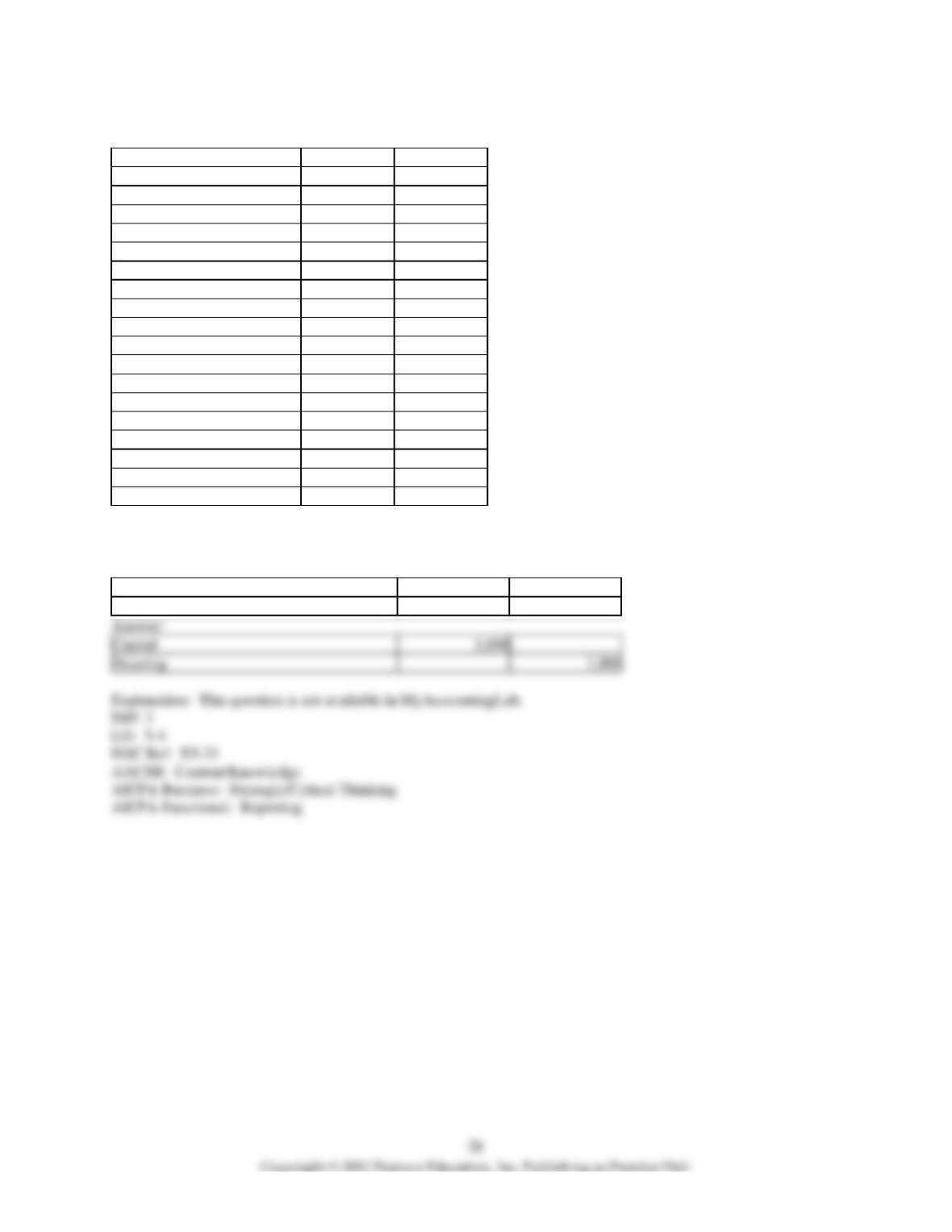
Please provide the third closing entry.
Income summary
22) An adjusted trial balance is shown below.
Debit
Credit
Cash
$12,600
Accounts receivable
2,400
Prepaid rent
800
Inventory
30,000
Accounts payable
$4,200
Salary payable
1,000
Notes payable
800
Capital
13,800
Drawing
1,000
Sales revenue
96,000
Sales returns and allowances
1,600
Sales discounts
400
Cost of goods sold
23,000
Salary expense
21,000
Rent expense
14,000
Depreciation expense
8,500
Supplies expense
500
Total
$115,800
$115,800
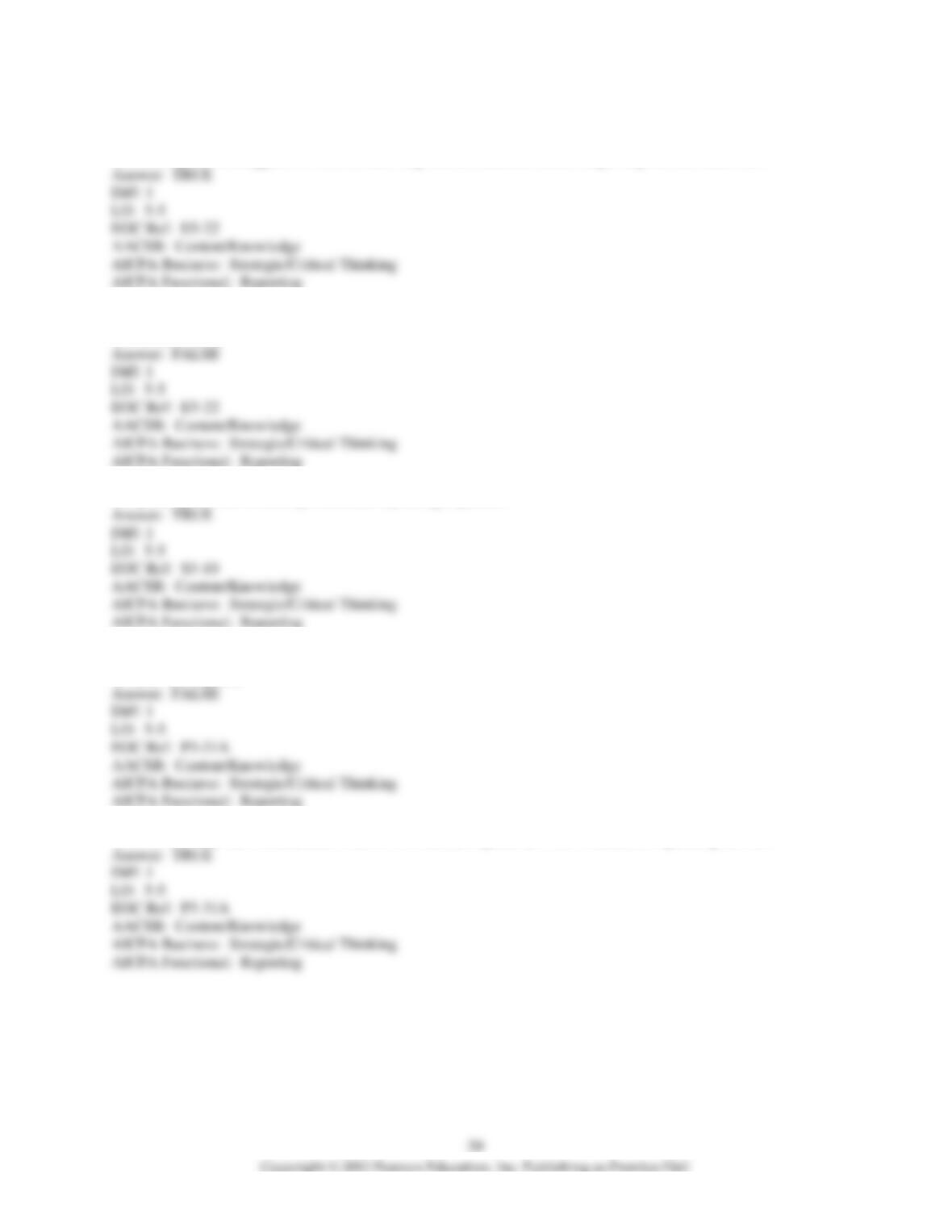
Please provide the fourth closing entry.
Drawing
Learning Objective 5-5
1) Cost of goods sold appears on both a multi-step income statement and a single-step income statement.
2) Both purchase discounts and sales discounts appear on the income statement of a company that uses the perpetual
inventory method.
3) Operating income is Gross profit minus Operating expenses.
4) In a multi-step income statement, Operating income includes selling expenses, general expenses and other
revenue and expense.
5) In a multi-step income statement, Interest revenue and expense are NOT included in Operating income.
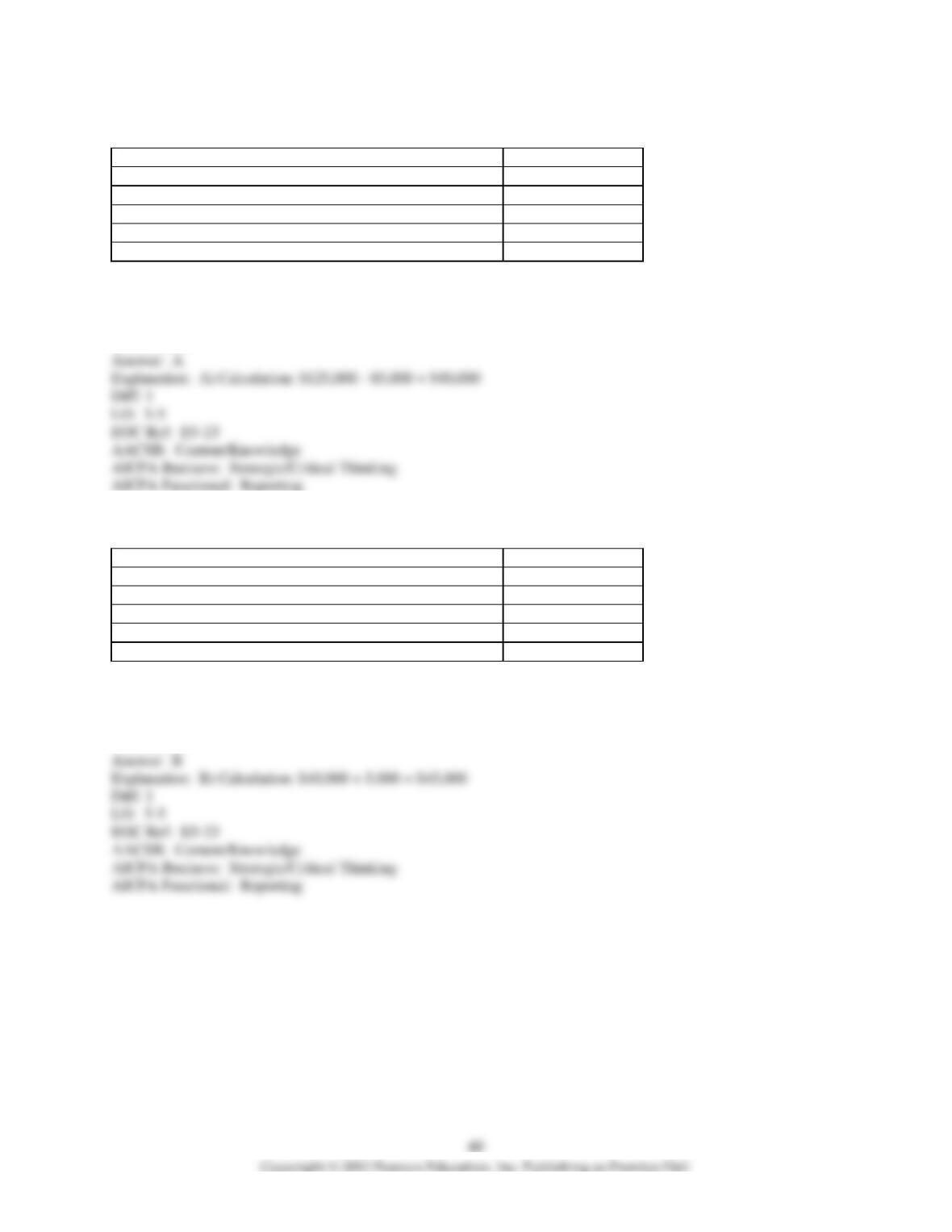
6) Referring to the following table, what is Operating income?
Sales revenue
$460,000
Cost of goods sold
300,000
Operating expenses
85,000
Sales discounts
20,000
Sales returns and allowances
15,000
Interest revenue
5,000
A) $40,000
B) $55,000
C) $160,000
D) $190,000
7) Referring to the following table, what is the Net income?
Sales revenue
$460,000
Cost of goods sold
300,000
Operating expenses
85,000
Sales discounts
20,000
Sales returns and allowances
15,000
Interest revenue
5,000
A) $35,000
B) $45,000
C) $60,000
D) $180,000