191.
How do closing entries for a merchandising company that uses the perpetual inventory
system differ from the closing entries for a service company?
192.
Explain the difference between the single-step and multiple-step income statements.
193.
Distinguish between selling expenses and general and administrative expenses.
194.
Describe the difference(s) between accounting for sales under the periodic and the
perpetual inventory accounting systems.
195.
Describe why the use of the perpetual inventory system has dramatically increased and
the benefits the system provides.
196.
Discuss the period-end adjusting entries that are required in the new revenue recognition
standards for estimating sales discounts and sales returns and allowances.
Essay Questions
197.
Farmen Company, Inc. had net sales of $600,000 and cost of goods sold of $450,000.
Calculate Farmen’s gross profit.
198.
National Storage Company, Inc. had sales of $1,000,000, sales discounts of $2,500, sales
returns and allowances of $15,000, and cost of goods sold of $525,000. Calculate
National’s gross profit.
199.
Harley’s Antique Shop, Inc. had net sales of $772,000. The gross profit was $415,000.
Calculate Harley’s cost of goods sold.
4-106
200.
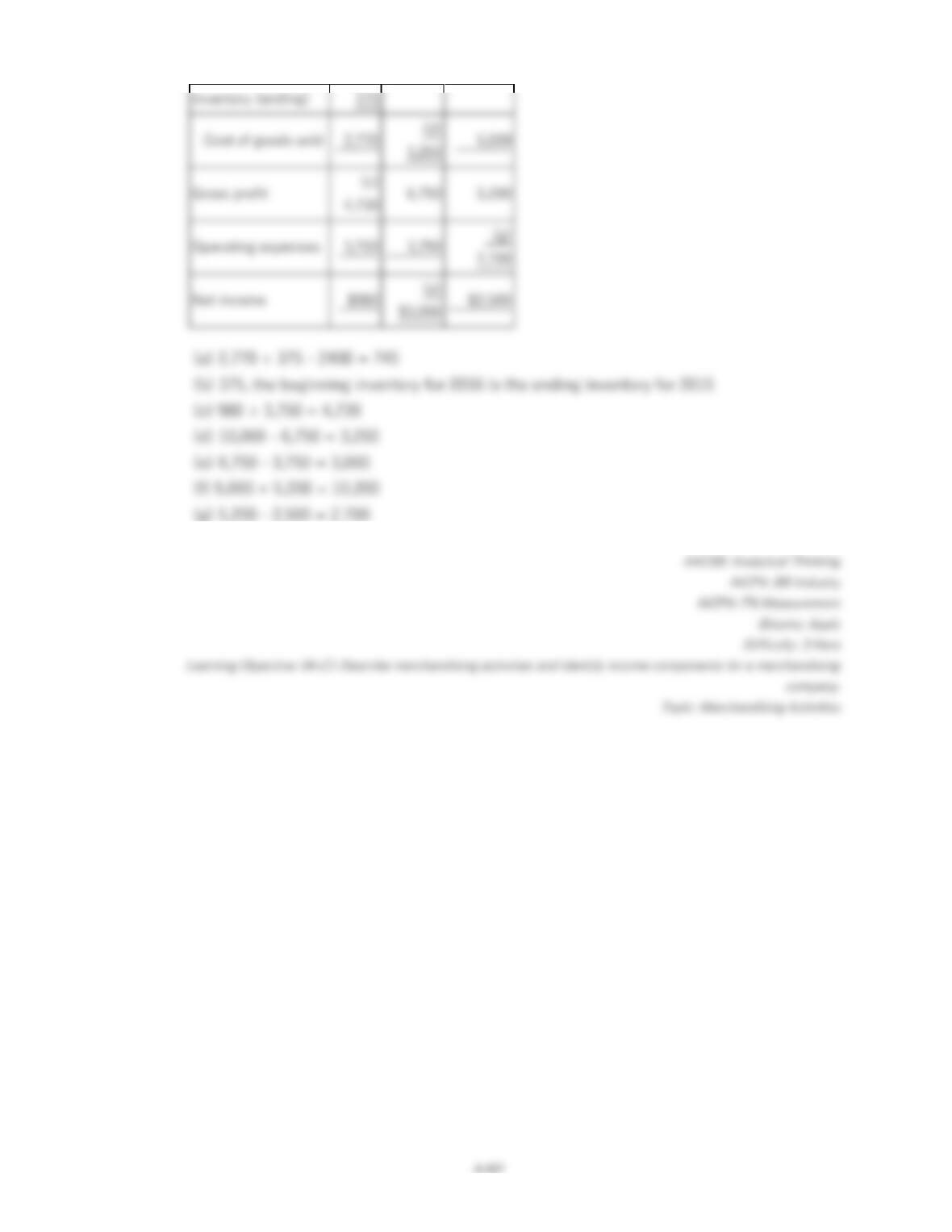
Fill in the blanks (a) through (g) for the Morrison Company, Inc. for each of the income
statements for 2015, 2016, and 2017.
Morrison Company, Inc
Income Statements
For the years ended December 31
2015
2016
2017
Sales
$7,500
$10,000
(f)
Cost of goods sold
Merchandise inventory
(beginning)
(a)
375
750
Total cost of
merchandise purchases
2,400
3,625
4,875
Merchandise inventory
(ending)
(b)
750
625
Cost of goods sold
2,770
(d)
5,000
Gross profit
(c)
6,750
5,200
Operating expenses
3,750
3,750
(g)
Net income
$980
(e)
$2,500
Income Statements
Cost of goods sold
(beginning)
4-108
201.
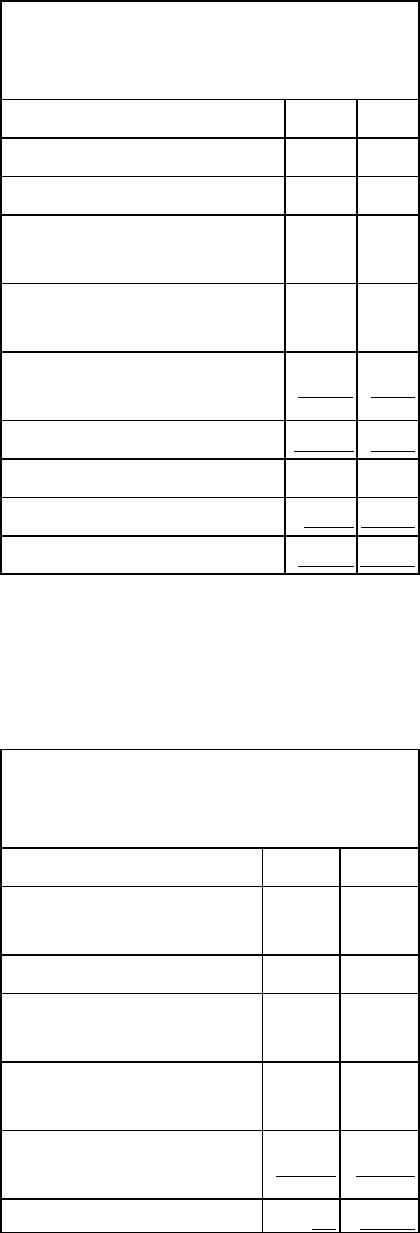
Fill in the blanks (a) through (g) for the Corman Company, Inc. for each of the income
statements for 2016 and 2017.
Corman Company, Inc.
Income Statements
For the years ended December 31
2016
2017
Sales
$10,000
(e)
Cost of goods sold
Merchandise inventory
(beginning)
375
750
Total cost of merchandise
purchases
3,625
4,875
Merchandise inventory
(ending)
750
(d)
Cost of goods sold
(a)
5,000
Gross profit
6,750
5,200
Operating expenses
3,750
(c)
Net income
(b)
$2,500
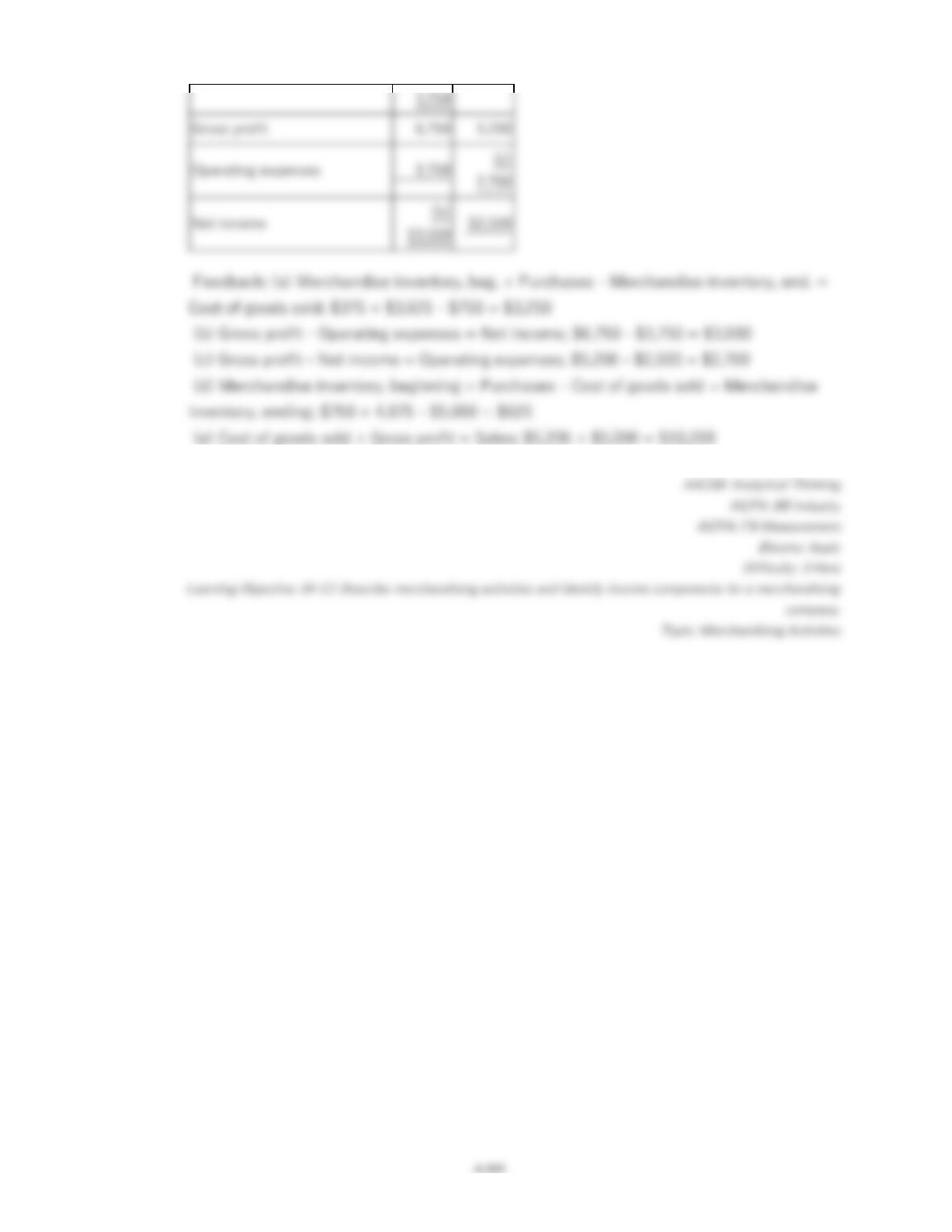
Corman Company, Inc.
Income Statements
For the years ended December 31
2016
2017
Sales
$10,000
(e)
$10,200
Cost of goods sold
Merchandise inventory
(beginning)
375
750
Total cost of merchandise
purchases
3,625
4,875
Merchandise inventory
(ending)
750
(d) 625
Cost of goods sold
(a)
5,000
4-110
202.
The following information is available for Flanders and its two main competitors in the
industry, Sanders and Anders:
Flanders
Sanders
Anders
Cash
$9,800
$10,500
$26,500
Short-term
investments
6,400
8,200
12,500
Accounts receivable
12,500
8,500
14,350
Merchandise
inventory
30,150
40,000
40,150
Prepaid expense
900
6,750
2,450
Accounts payable
19,400
13,750
26,800
Salaries payable
1,200
3,500
6,250
Other current
payables
600
1,200
2,150
The industry standard for the current ratio is 1.8 and the industry standard for the acid–
test ratio is 1.
Required:
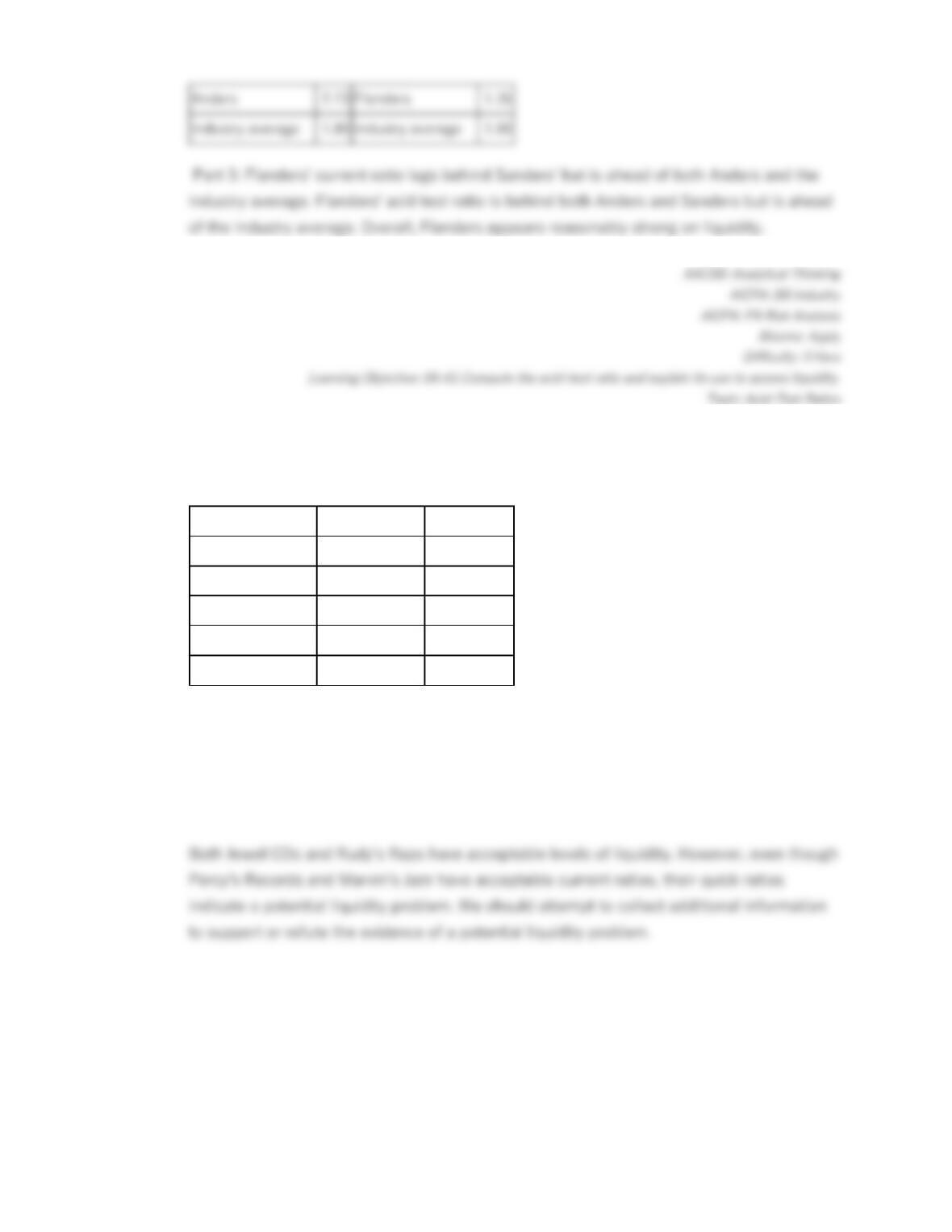
1. Calculate the current ratio and acid-test ratio for each firm.
2. Rank the firms in decreasing order of liquidity.
3. Comment on Flanders’ relative liquidity position.
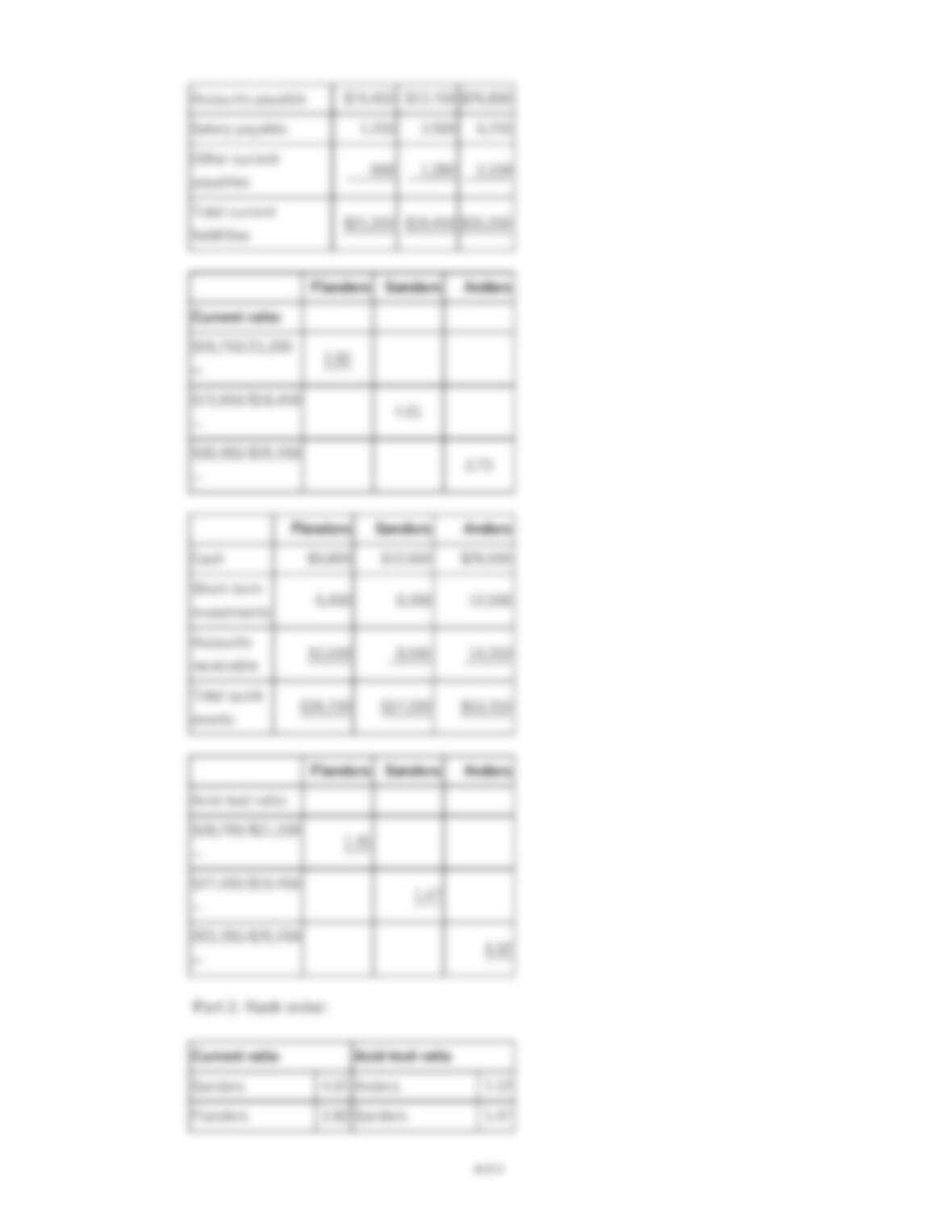
Part 1:
Flanders
Sanders
Anders
Cash
$9,800
$10,500
$26,500
Short-term
investments
6,400
8,200
12,500
Accounts receivable
12,500
8,500
14,350
Merchandise
inventory
30,150
40,000
40,150
4-112
203.
The following information refers to Percy’s Records and its competitors in the music store
business.
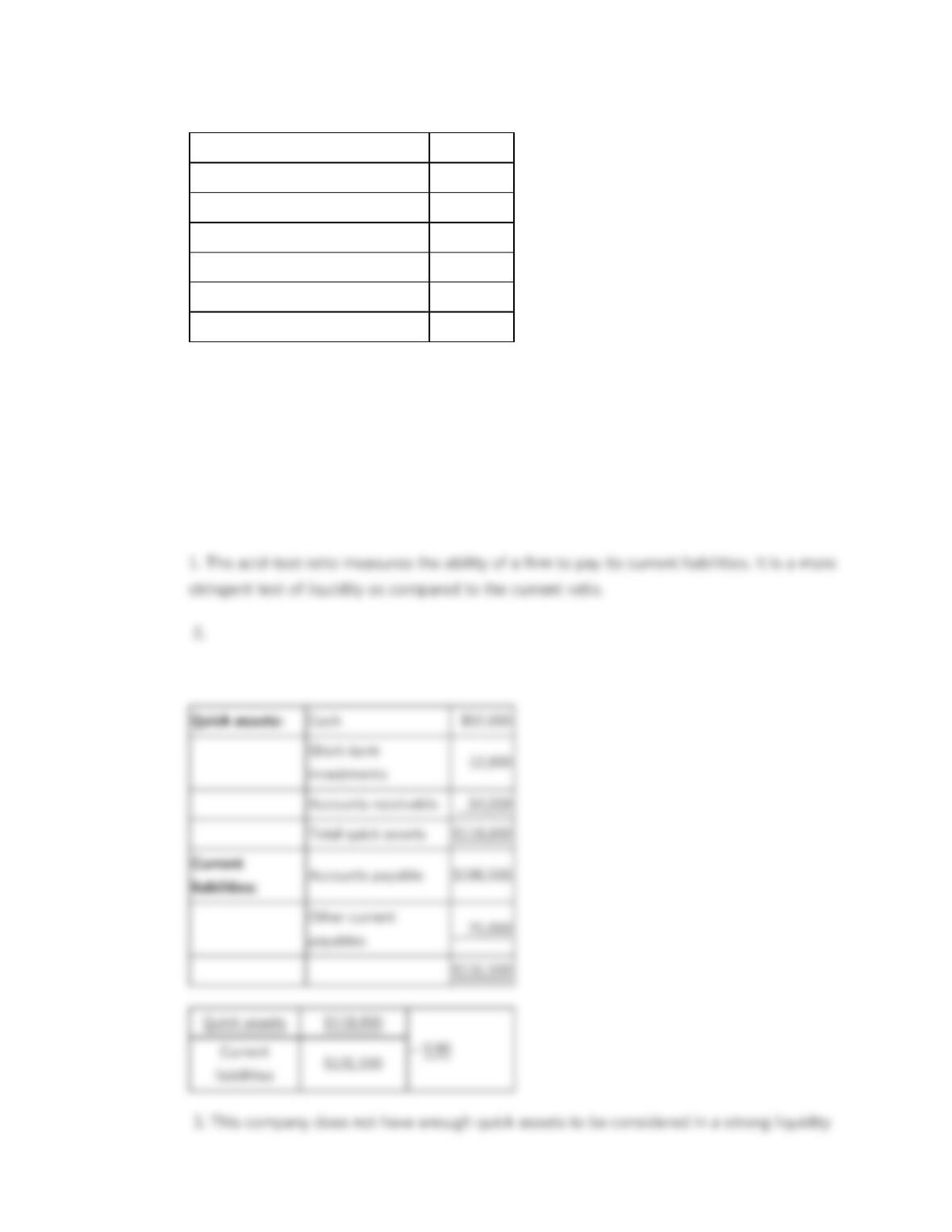
Current Ratio
Quick ratio
Percy’s Records
2.0
0.95
Jewel CDs
1.5
1.00
Rudy’s Raps
1.8
1.20
Marvin’s Jazz
1.9
0.80
Industry Average
2.0
1.00
Required:
Comment on the relative liquidity positions of these companies.
Industry average
Industry average
4-113
204.
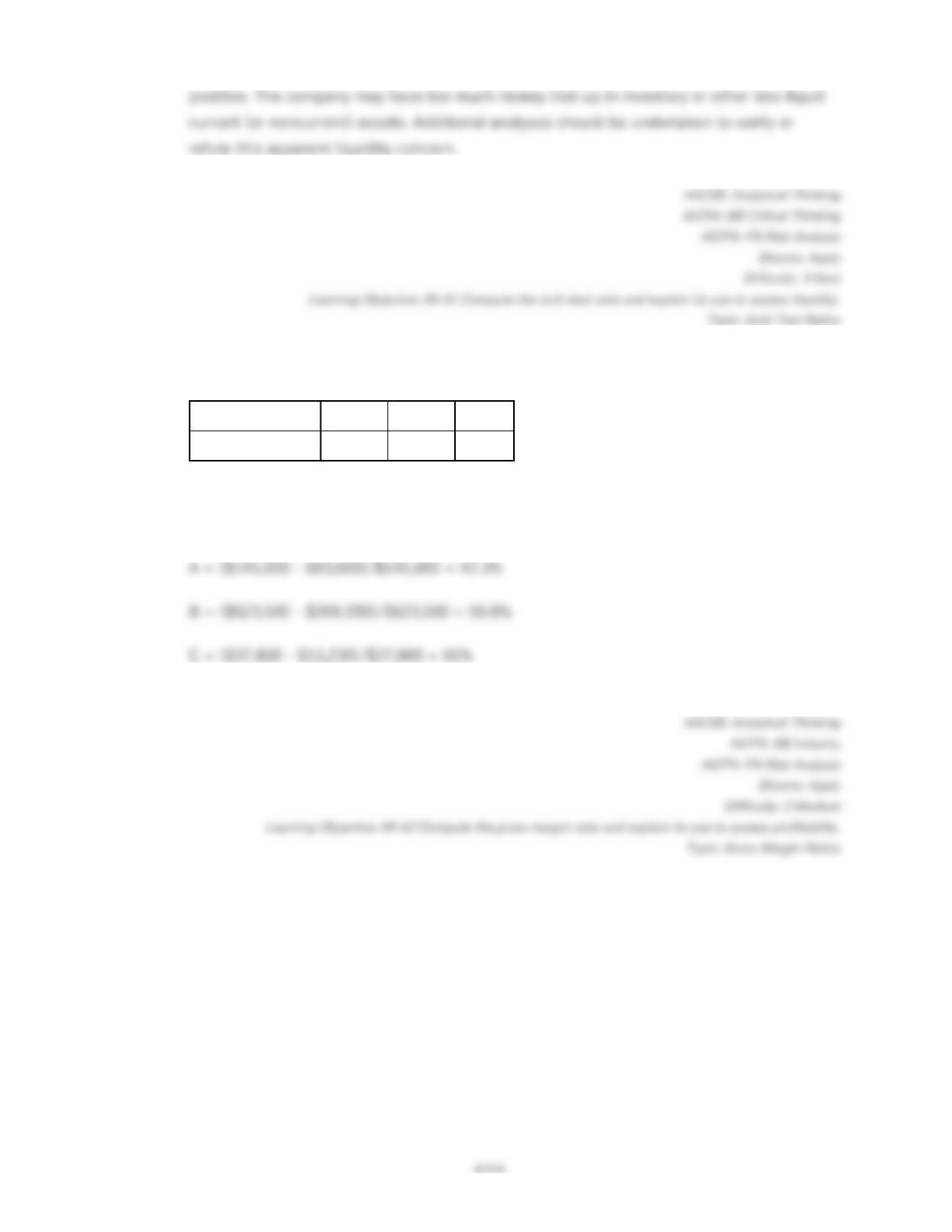
A company reported the following year-end information:
Cash
$52,000
Short-term investments
12,000
Accounts receivable
54,000
Inventory
325,000
Prepaid expenses
17,500
Accounts payable
106,500
Other current payables
25,000
Required:
1. Explain the purpose of the acid-test ratio.
2. Calculate the acid-test ratio for this company.
3. What does the acid-test ratio reveal about this company?
investments
Accounts receivable
Total quick assets
205.
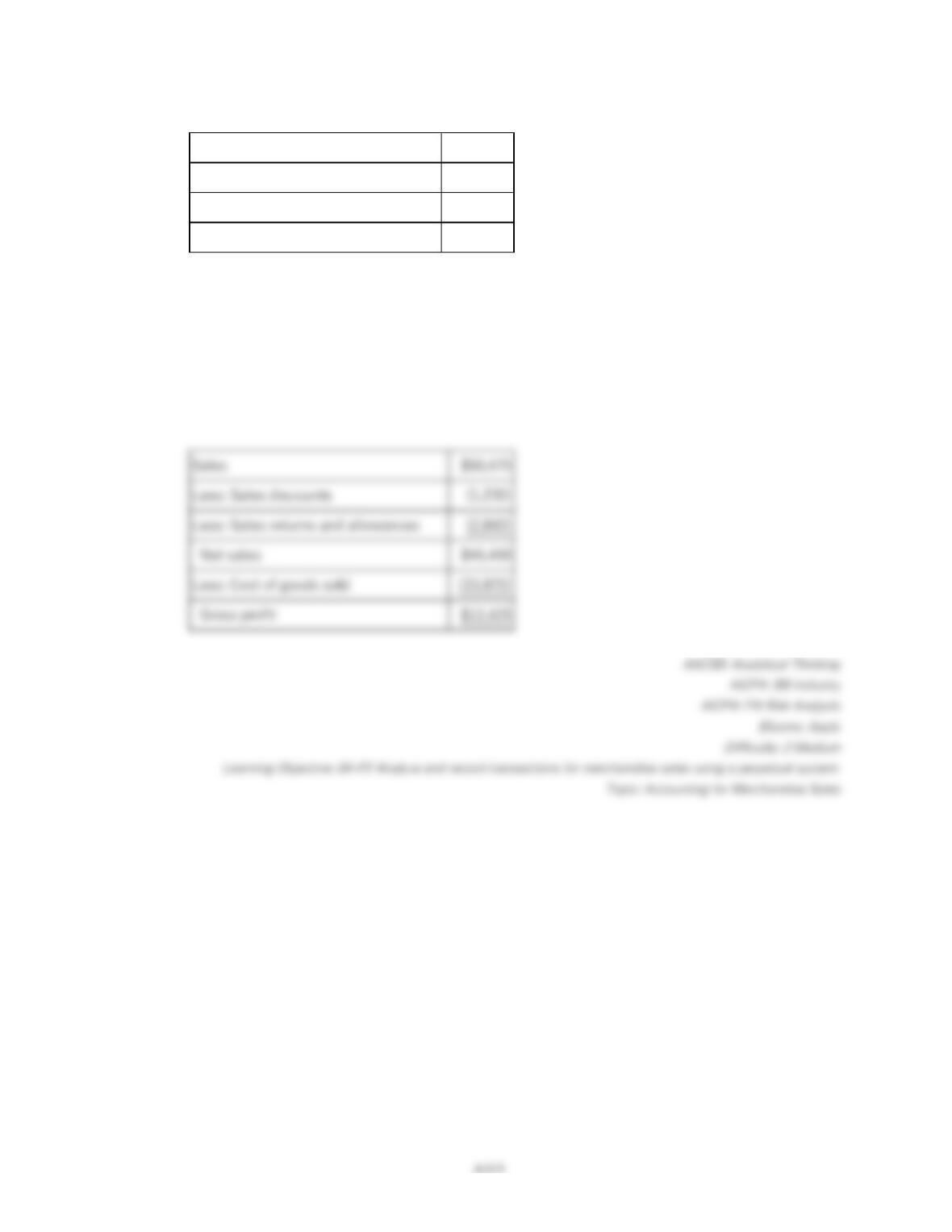
Calculate the gross margin ratio for each of the following separate cases A through C:
Net sales
$145,000
$623,500
$37,800
Cost of goods sold
83,600
269,200
13,230
206.
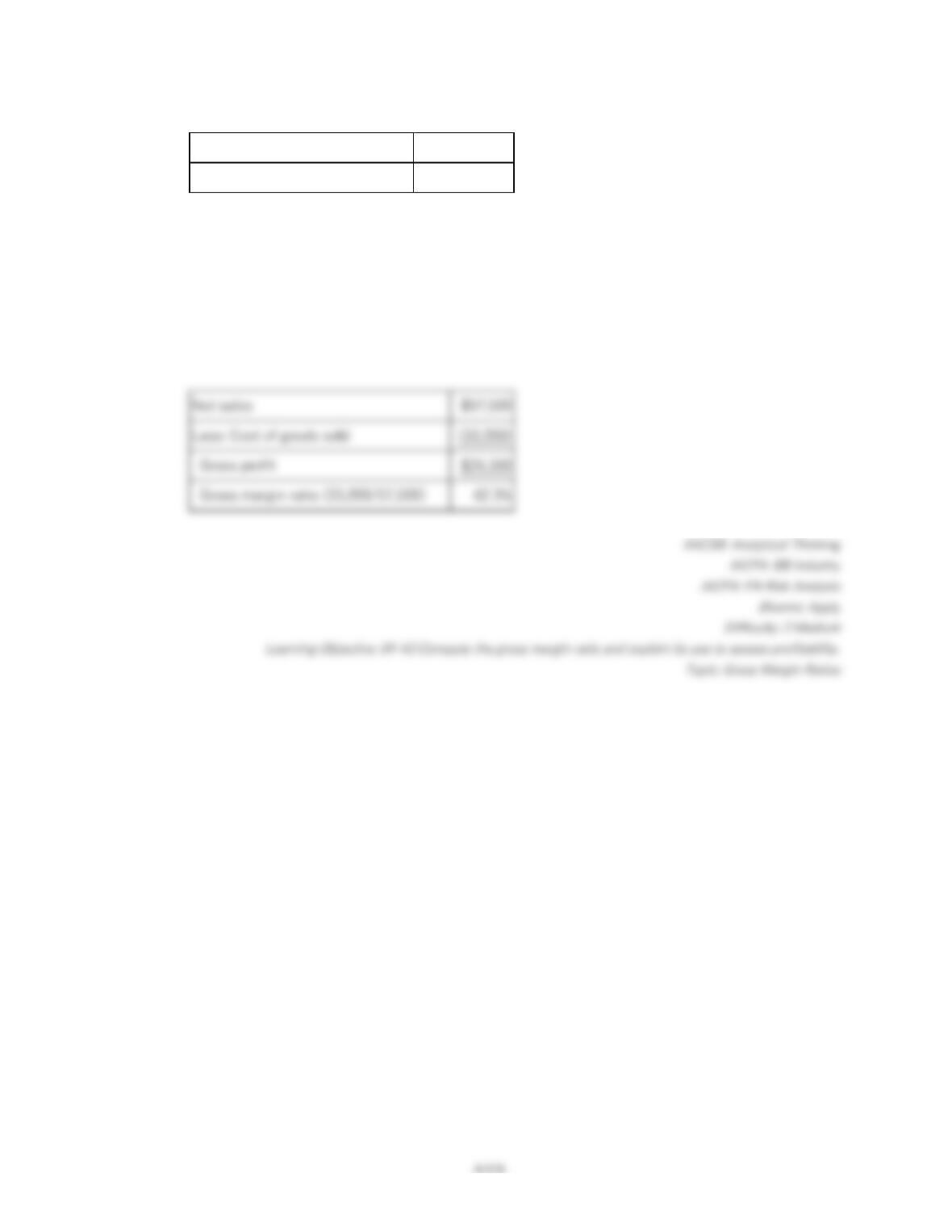
A company reported the following information for the month of July:
Sales
$50,475
Sales discounts
1,235
Sales returns and allowances
2,840
Cost of goods sold
33,975
Required:
Calculate this company’s gross profit.
Sales
Less: Sales discounts
Less: Sales returns and allowances
Less: Cost of goods sold
207.
A company reported the following information for the month of July:
Net Sales
$57,500
Cost of goods sold
33,200
Net sales
Less: Cost of goods sold
Required:
Calculate this company’s gross margin ratio.
208.
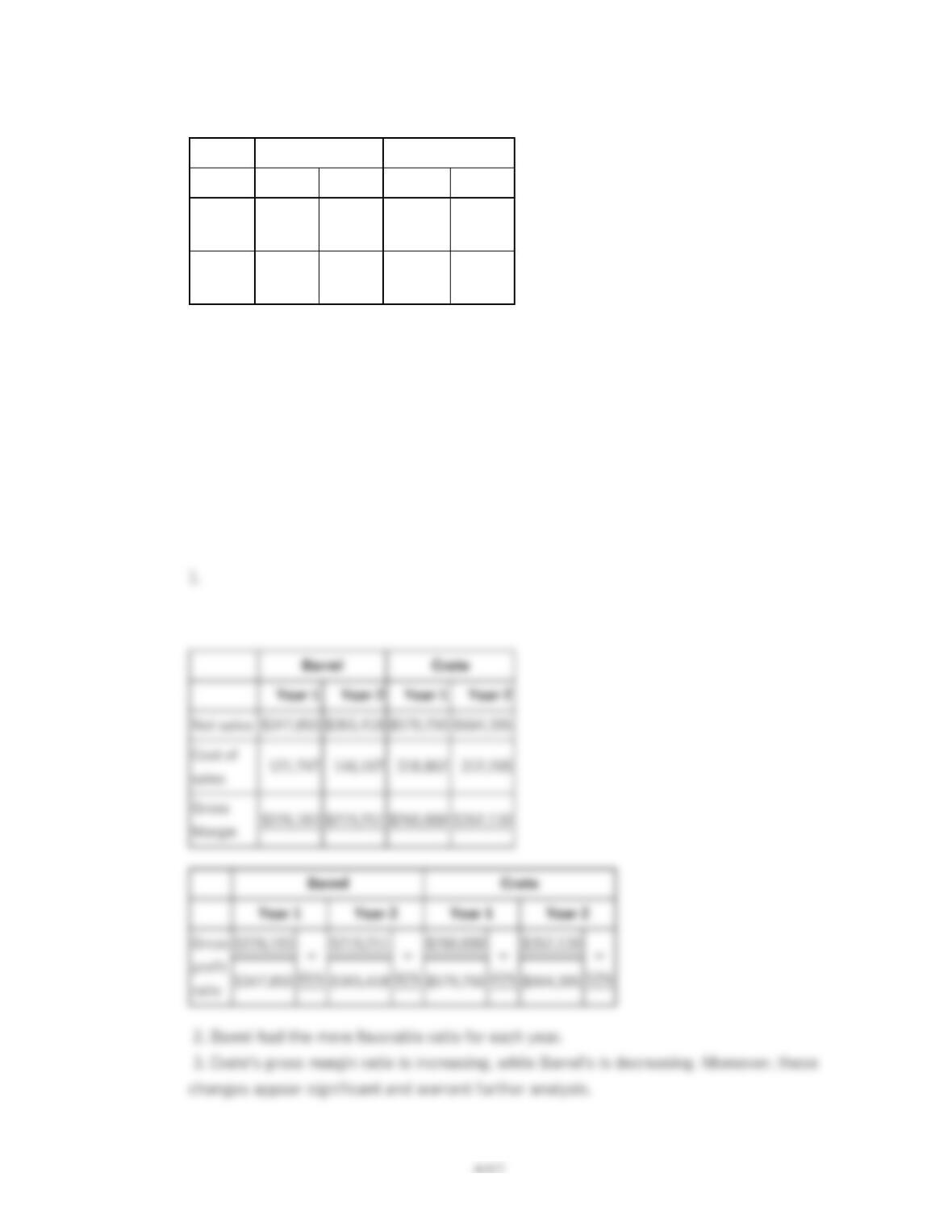
The following information is for Barrel and its competitor Crate.
Barrel
Crate
Year 1
Year 2
Year 1
Year 2
Net
sales
$347,850
$365,418
$579,750
$664,395
Cost of
sales
121,747
146,167
318,862
312,265
Cost of
sales
Gross
Margin
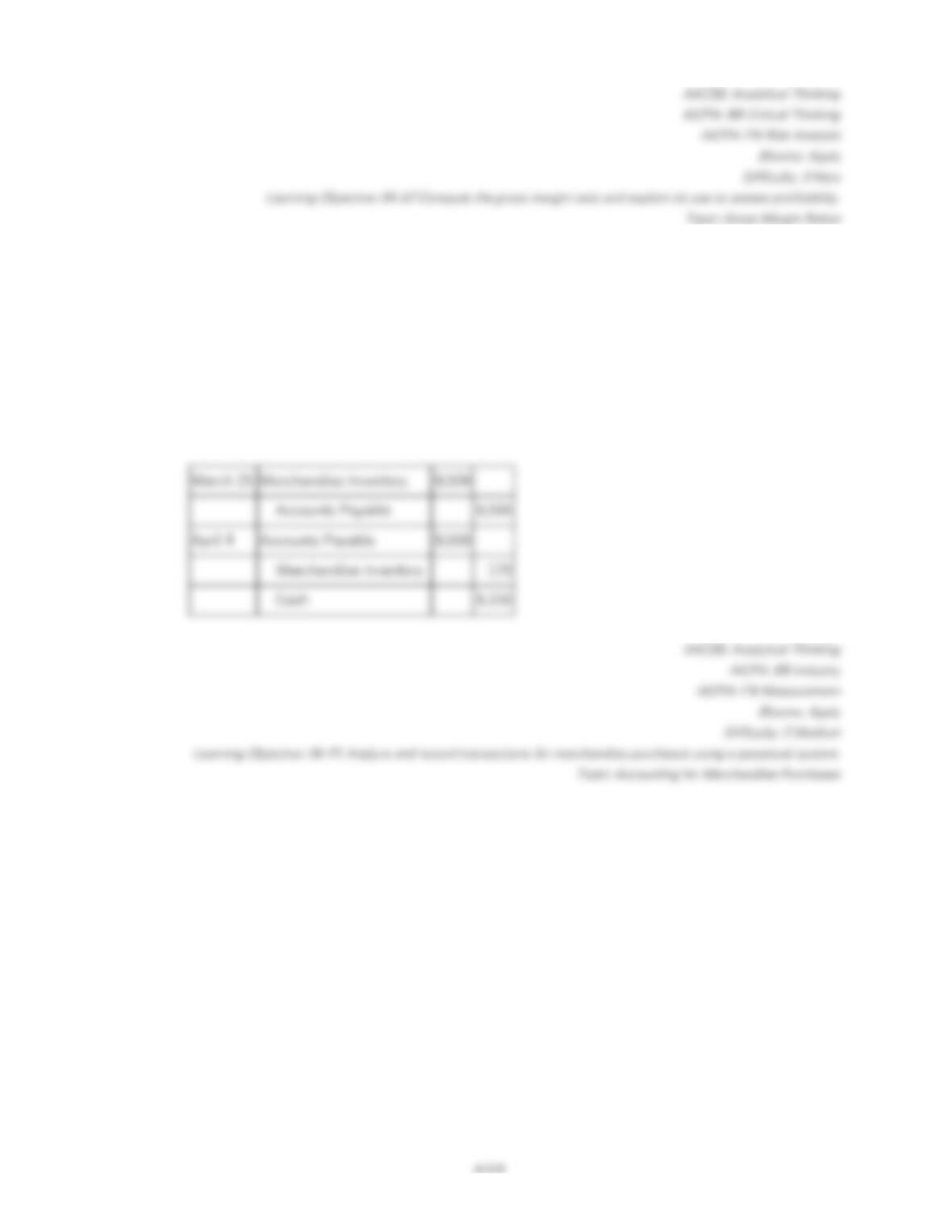
Required:
1. Calculate the dollar amount of gross margin and the gross margin ratio to the nearest
percent, for each company for both years.
2. Which company had the more favorable ratio for each year?
3. Which company had the more favorable change in the gross margin ratio over this 2–
year period?
209.
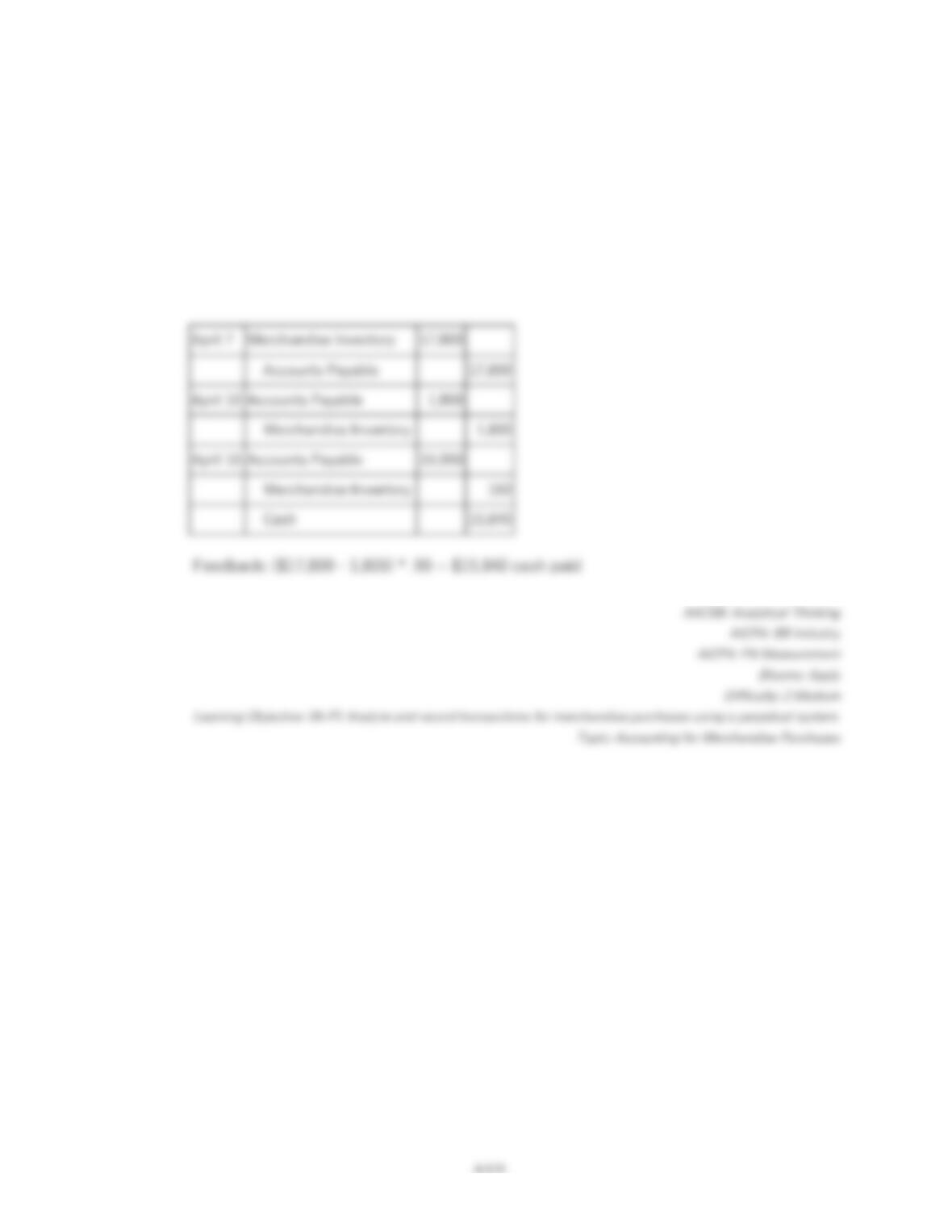
A company that uses the gross method of accounting for purchases and a perpetual
inventory system purchased $8,500 of merchandise on March 25 with credit terms of 2/10,
n/30. The invoice was paid in full on April 4. Prepare the journal entries to record the
transactions on March 25 and April 4.
210.
Sabor Company, Inc. uses the gross method of accounting for purchases and a perpetual
inventory system. It purchased $17,800 of merchandise on April 7 with credit terms of
1/10, n/30. Merchandise with a cost of $1,800 was damaged and returned to the seller on
April 10. On April 16 the company paid the amount due. Prepare the journal entries to
record the transactions on all three dates.
211.
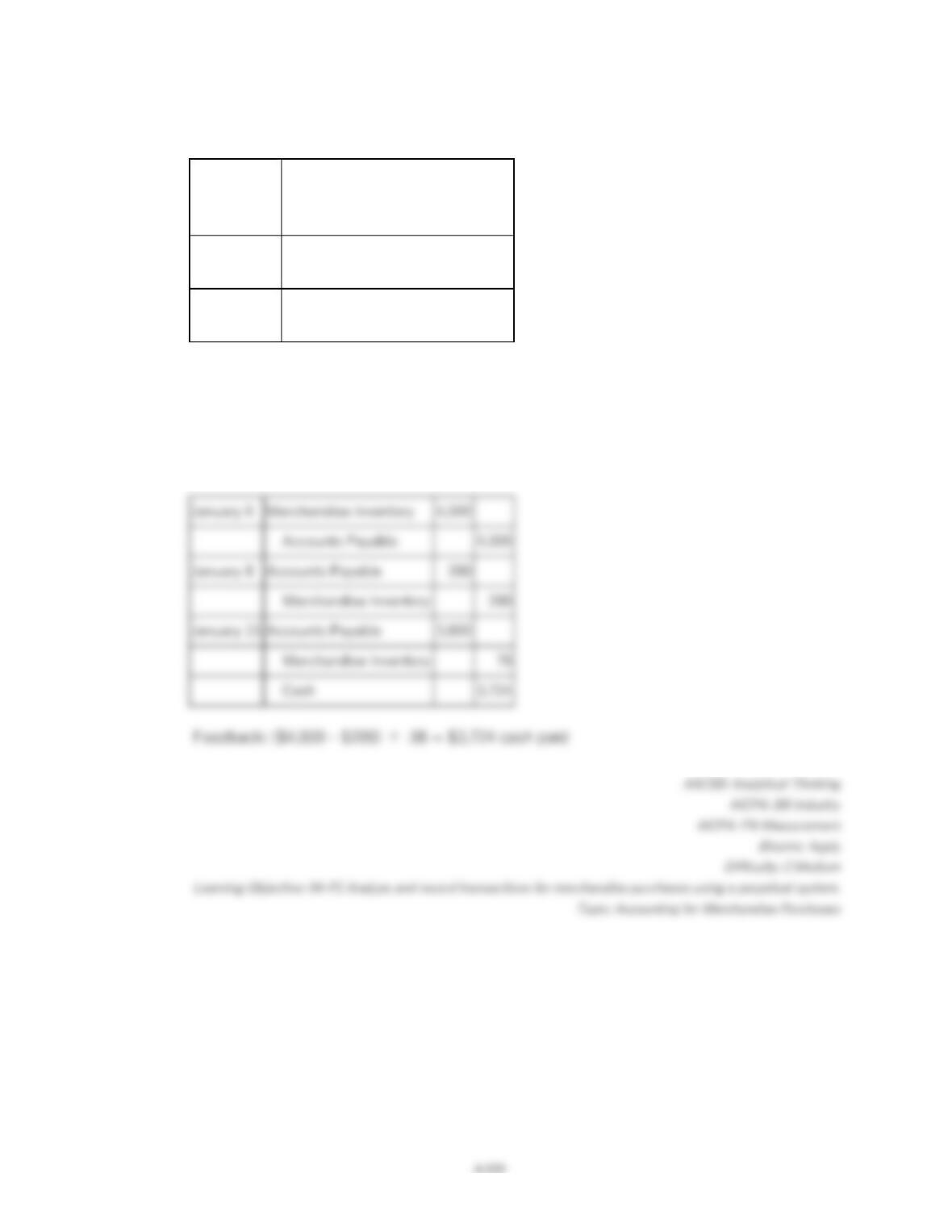
Whitehorn Ski Company uses the gross method of accounting for purchases and a
perpetual inventory system and had the following transactions during February:
February 6:
Purchased $4,000 of inventory.
The seller’s credit terms are 2/10,
n/30.
February 8:
Returned $200 worth of defective
units and received full credit.
February 15:
Paid the amount due, less the
returned items.
Prepare journal entries to record each of the preceding transactions.