Current assets
Current liabilities
Investments
Long-term liabilities
Property, plant, and equipment
Stockholders’ equity
Intangible assets
Not on balance sheet
For each account name below, write the name of the category above to which it belongs.
a.
Accumulated Depreciation
b.
Revenues Received in Advance
c.
Interest Expense
d.
Wages Payable
e.
Retained Earnings
f.
Inventory
g.
Trademark
h.
Notes Payable (due in five years)
i.
Depreciation Expense
j.
Prepaid Interest
k.
Land Held for Future Use
7. Following is a classification scheme for a balance sheet.
Current assets
Long-term liabilities
Investments
Contributed capital
Property, plant, and equipment
Retained earnings
Intangible assets
Not on balance sheet
Current liabilities
For each account name below, write the name of the category above to which it belongs.
a.
Additional paid-in-capital
b.
Cost of Goods Sold
c.
Retained Earnings
d.
Land
e.
Temporary Investments
f.
Mortgage Payable (due in ten years)
g.
Common Stock
a.
Property, plant, and equipment
b.
Current liabilities
c.
Not on balance sheet
d.
Current liabilities
e.
f.
Current assets
g.
Intangible assets
h.
Long-term liabilities
i.
Not on balance sheet
Current asset
k.
Investments
h.
Goodwill
i.
Notes Payable (due in ten months)
j.
Special Fund for Purchase of a Building
8. Distinguish between cost of goods sold and operating expenses, describing the nature of these two
items and their placement on the income statement.
9. Following is a classification scheme for a multistep income statement .
Revenues
General and administrative expenses
Cost of goods sold
Other revenues and expenses
Selling expenses
Not on income statement
For each account name below, write the name of the category above to which it belongs.
a.
Interest Income
b.
Accumulated Depreciation
c.
Sales Returns and Allowances
d.
Inventories
e.
Company President’s Salary
f.
Utilities Expense for Store
g.
Interest Expense
h.
Freight-Out Expense
i.
Office Salaries Expense for Headquarters
j.
Interest Receivable
a.
Other revenues and expenses
a.
Contributed capital
b.
Not on balance sheet
c.
Retained earnings
d.
Property, plant, and equipment
e.
Current assets
f.
Long-term liabilities
g.
Contributed capital
h.
Intangible assets
i.
Current liabilities
j.
Investments
10. Following is a classification scheme for a multistep income statement .
Revenues
General and administrative expenses
Cost of goods sold
Other revenues and expenses
Selling expenses
Not on income statement
For each account name below, write the name of the category above to which it belongs.
a.
Depreciation Expense (for delivery truck)
b.
Dividend Income
c.
Cash
d.
Interest Income
e.
Prepaid Rent
f.
Rent Expense (for main office)
g.
Advertising Expense
h.
Personnel Expense
i.
Unearned Revenue
j.
Sales Discounts
a.
Selling expenses
b.
Other revenues and expenses
c.
Not on income statement
e.
Not on income statement
f.
General and administrative expenses
g.
Selling expenses
h.
General and administrative expenses
i.
Not on income statement
j.
Revenues
b.
Not on income statement
c.
Revenues
d.
Not on income statement
e.
General and administrative expenses
f.
Selling expenses
g.
Other revenues and expenses
h.
Selling expenses
i.
General and administrative expenses
j.
Not on income statement
11. Sean and Dylan Matthews are brothers who each own and operate sports memorabilia shops in
neighboring towns. They decide to have a contest to see whose shop can be more profitable for the
year. At year-end, Sean’s records show sales of $105,000, cost of goods sold of $55,000, and operating
expenses of $21,000. The records of Dylan’s shop reveal sales of $108,000, cost of goods sold of
$62,000, and operating expenses of $19,000. Dylan’s shop also had other revenue of $3,000 received
for allowing the shop to be used in taping a television show. Each brother claims to have won the
contest. Provide explanations as to why each would think so, and then name the winner.
12. For each of the definitions below, write the name of the ratio that is described.
a. A measure that shows the proportion of a company’s assets that is financed by creditors and the
proportion financed by stockholders
b. A measure that shows the productivity of a company’s assets by comparing cash flows from
operating activities to average total assets.
c. A measure that relates the amount earned by a business to the stockholders’ investment in the
business
d. A measure that shows the percentage of each sales dollar that results in net income
e. A measure that shows how much cash a company’s operations generate in relation to its net income.
f. A measure that shows how efficiently a company uses its assets to produce income
g. A measure of how efficiently assets are used to produce sales
13. Using the following amounts taken from the balance sheet, income statement, and cash flows
statement of a business, compute the measures listed below. Round to one decimal place.
Current assets
$ 6,000
Average stockholders’ equity
$15,000
Average total assets
30,000
Net sales
19,500
Current liabilities
4,500
Net income
2,400
Long-term liabilities
10,500
Cash flows from operating activities
3,450
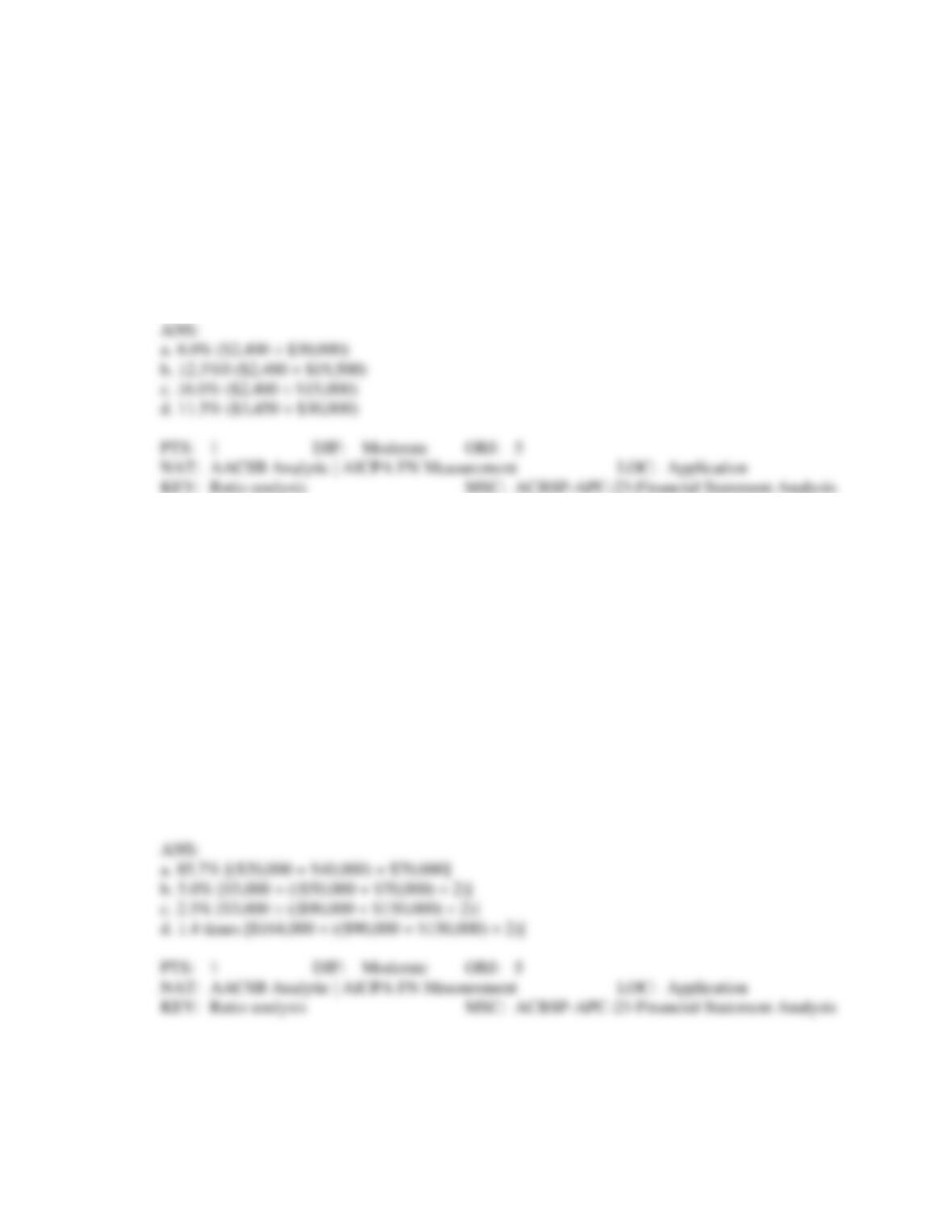
a. Return on assets
b. Profit margin
c. Return on equity
d. Cash return on assets
14. Using the following amounts taken from the balance sheet and income statement of a business,
compute the measures listed below. Round to one decimal place.
Beginning total assets
$ 90,000
Beginning stockholders’ equity
$50,000
Ending total assets
150,000
Ending stockholders’ equity
$70,000
Current liabilities
20,000
Net sales
164,000
Long-term liabilities
40,000
Net income
3,000
a. Debt to equity ratio
b. Return on equity
c. Return on assets
d. Asset turnover
MATCHING
Match each definition with the correct term below.
a.
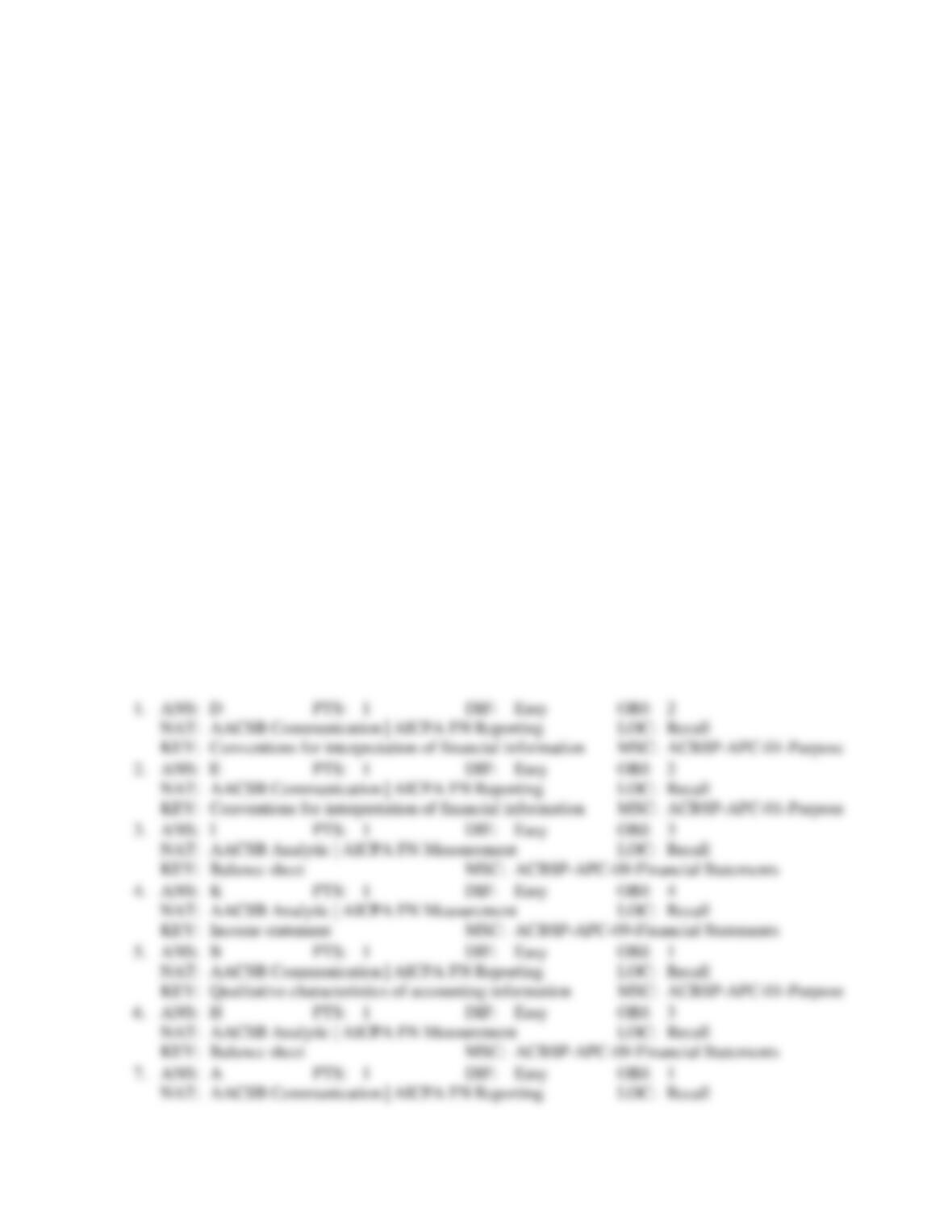
Information should have direct bearing on a decision.
b.
The quality or accounting information that enables users to comprehend the meaning of
the information they receive.
c.
The quality of accounting information that assures users that information as presented can
be substantiated.
d.
The accounting convention that requires that once a company has adopted an accounting
procedure, it must use it from one period to the next.
e.
The accounting convention that refers to the relative importance of an item or event.
f.
The accounting convention that states that when faced with choosing between two equally
acceptable procedures or estimates, accountants should choose the one that is least likely
to overstate assets and income.
g.
Cash and other assets that a company can reasonably expect to convert to cash, sell, or
consume within one year or the company’s normal operating cycle.
h.
Debts that fall due more than one year in the future or beyond the normal operating cycle.
i.
The amount that stockholders invest in the business.
j.
Gross sales less sales returns and allowances
k.
The amount a merchandiser paid for the merchandise it sold during an accounting period.
l.
The income from a company’s main business.
1. Consistency
2. Materiality
3. Contributed capital
4. Cost of goods sold
5. Understandability
6. Long-term liabilities
7. Relevance
8. Net sales
9. Verifiability
10. Current assets
11. Income from operations
12. Conservatism
PROBLEM
1. Define the following qualitative characteristics of accounting:
a. Relevance
b. Faithful Representation
c. Comparability
d. Verifiability
e. Timeliness
f. Understandability
2. Each of the following statements is justified by a concept or convention of accounting. Write the name
of the concept or convention that applies to each statement.
a.
This convention best enhances comparability of financial statements between years.
b.
A merger agreed on just after the balance sheet date nevertheless is reported in the notes
to the financial statements.
c.
A company forgoes hiring another full-time accountant, which would add only slightly to
the financial statements’ accuracy.
d.
A company uses lower-of-cost-or-market to value inventory.
e.
A large company rounds its financial statement figures to the nearest $10,000.
3. Each of the following statements violates a concept or convention of accounting. Write the name of the
concept or convention that is violated.
a.
A note to the financial statements indicating a change in inventory methods is omitted.
b.
When management is unsure of which estimates to use in a given situation, the estimate
resulting in the largest net income is always used.
c.
In 2012, a company uses straight-line depreciation and in 2013 the company uses
declining-balance depreciation.
d.
A small company expenses all expenditures under $10,000.
e.
A small company purchases a $50,000 computer to save $3,000 per year in bookkeeping
wages.
a.
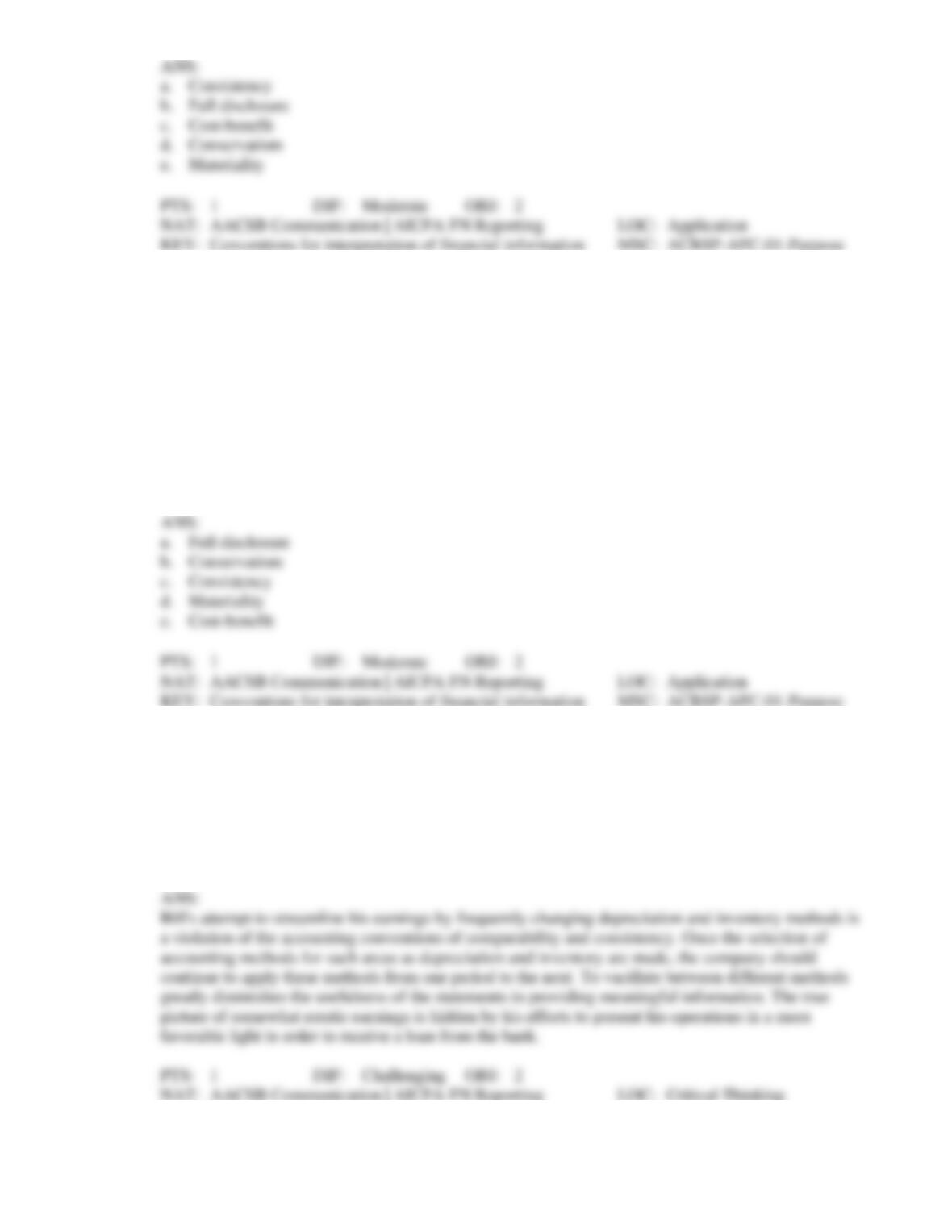
Full disclosure
b.
Conservatism
c.
Consistency
d.
Materiality
e.
Cost-benefit
4. Bill Pierce owns several ice cream shops all within 50 miles of his home. He has plans to expand
greatly the number of shops he owns. This planned expansion will require a large bank loan. Bill has
always done his own accounting work and has prepared a set of financial statements for each of the
past five years of operations to present to the bank. Because some periods were more profitable than
others, Bill attempted to streamline his earnings by switching depreciation and inventory valuation
methods frequently. This created the appearance that his company earnings were very consistent over
the years. Discuss the merits of Bill’s financial statements with regard to his streamlining decisions.
a.
Consistency
b.
Full disclosure
c.
Cost-benefit
d.
Conservatism
e.
Materiality
5. Following is the year end Balance Sheet for Dakota Company.
Dakota, Inc.
Balance Sheet
December 31, 2013
Assets
Cash
$ 60,000
Short-term investments
240,000
Notes receivable (due in five months)
180,000
Accounts receivable
120,000
Inventory
420,000
Securities
480,000
Land
540,000
Building
$600,000
Less accumulated depreciation
120,000
480,000
Patent
420,000
Total assets
$2,940,000
Liabilities
Notes payable (due in ten months)
$ 300,000
Accounts payable
120,000
Salaries payable
60,000
Mortgage payable (due in nine years)
540,000
Total liabilities
$1,020,000
Stockholders’ Equity
Common stock
$1,560,000
Retained earnings
360,000
Total stockholders’ equity
1,920,000
Total liabilities and stockholders’ equity
$2,940,000
Using the information above, calculate the total dollar amounts that should be included in each of the
following classifications.
a. Current assets
b. Investments
c. Property, plant, and equipment
d. Intangibles
e. Current liabilities
f. Long-term liabilities
g. Contributed capital
h. Retained earnings
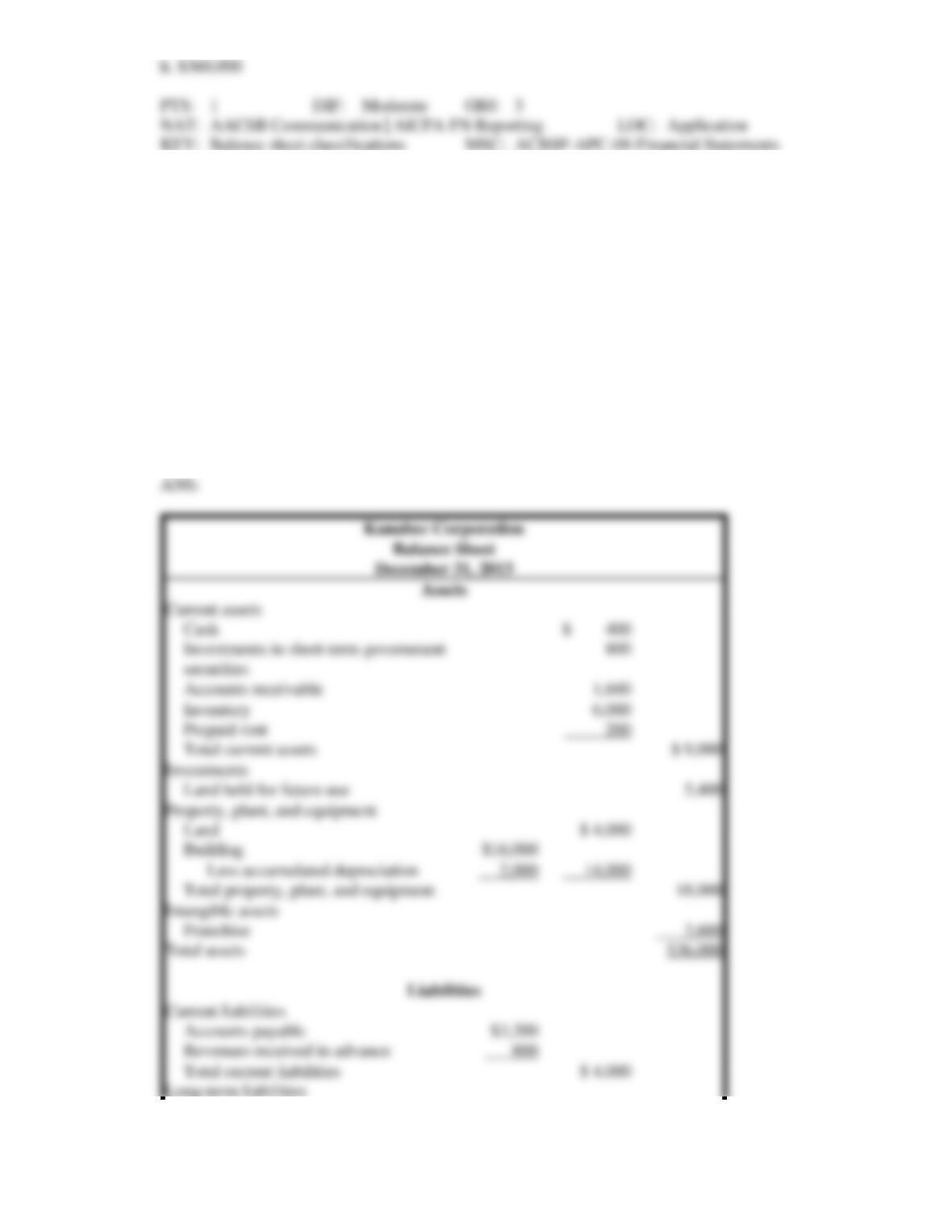
6. Using the following data, prepare a classified balance sheet for Kanabec Corporation as of December
31, 2013.
Cash
$ 400
Accumulated Depreciation–
Building
$ 2,000
Investments in Short-Term
Government Securities
800
Franchise
3,600
Accounts Receivable
1,600
Accounts Payable
3,200
Inventory
6,000
Revenues Received in Advance
800
Prepaid Rent
200
Notes Payable (in two years)
8,000
Investment in Land Held
for future use
5,400
Common Stock—$10 par value,
20,000
Land
4,000
Retained Earnings
4,000
Building
16,000
Current assets
Cash
Accounts receivable
Inventory
Prepaid rent
Total current assets
Investments
Land held for future use
Property, plant, and equipment
Land
Building
Less accumulated depreciation
Total property, plant, and equipment
Intangible assets
Franchise
Total assets
Current liabilities
Accounts payable
Revenues received in advance
Total current liabilities
Long-term liabilities
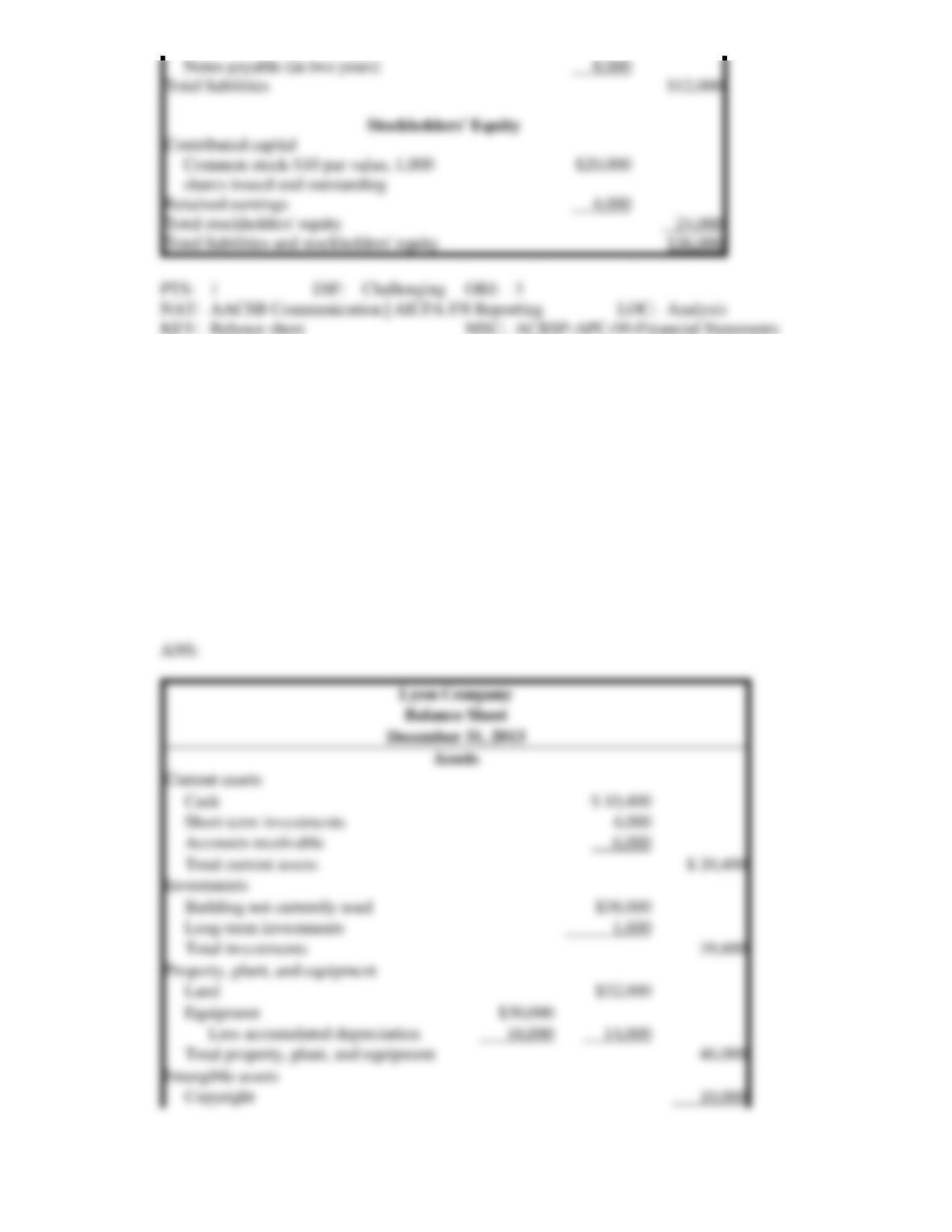
7. Using the following data, prepare a classified balance sheet as of December 31, 2013, for the Lyon
Company. There are 4,000 shares of $10 par value common stock issued and outstanding.
Accounts Payable
$3,200
Accounts Receivable
6,000
Building Not Currently Used
38,000
Cash
10,400
Accumulated Depreciation,
Equipment
16,000
Unearned Revenue
1,600
Short-Term Investments
4,000
Common Stock
40,000
Land
32,000
Retained Earnings
45,200
Equipment
30,000
Copyright
10,000
Long-Term Investments
1,600
Bonds Payable (due in 20
years)
26,000
Common stock-$10 par value, 1,000
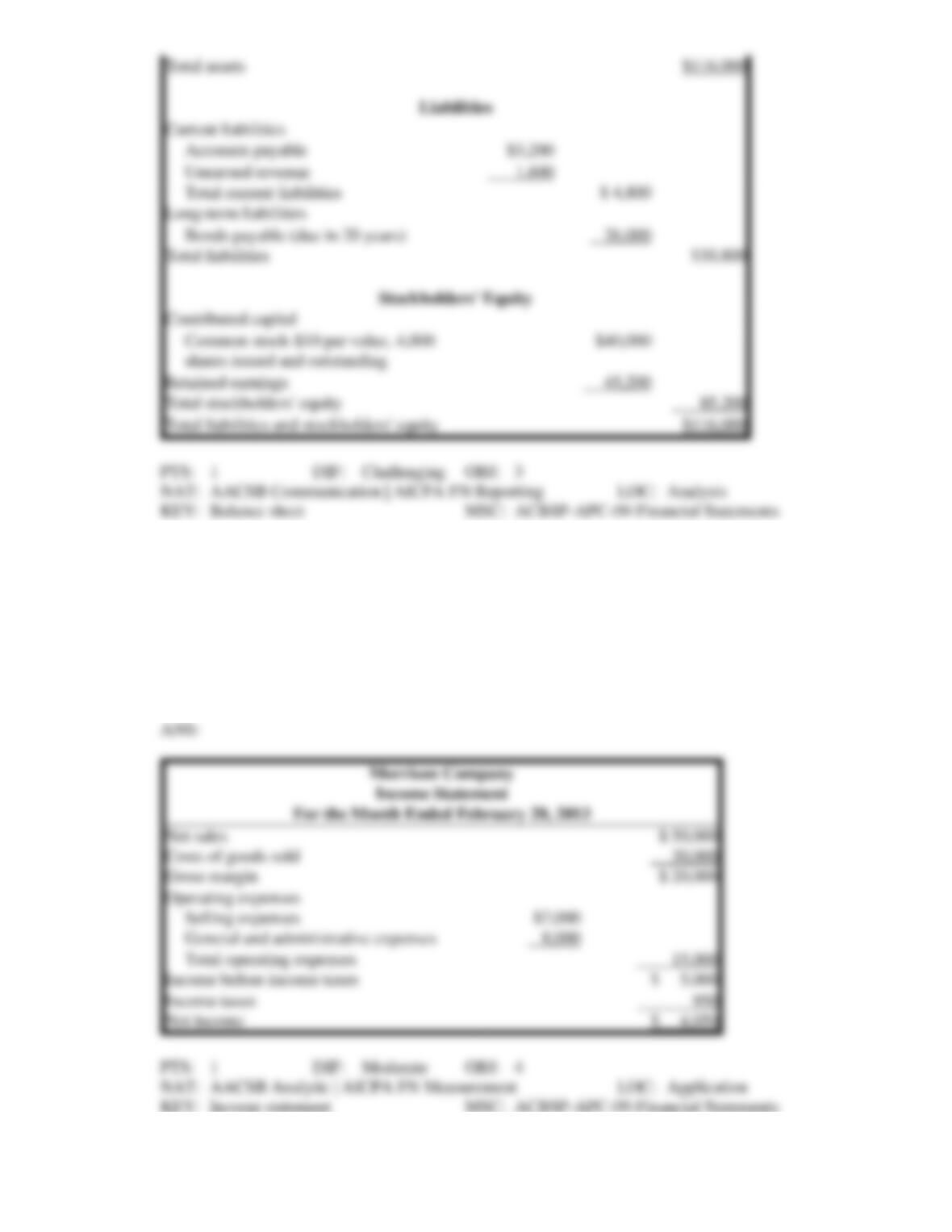
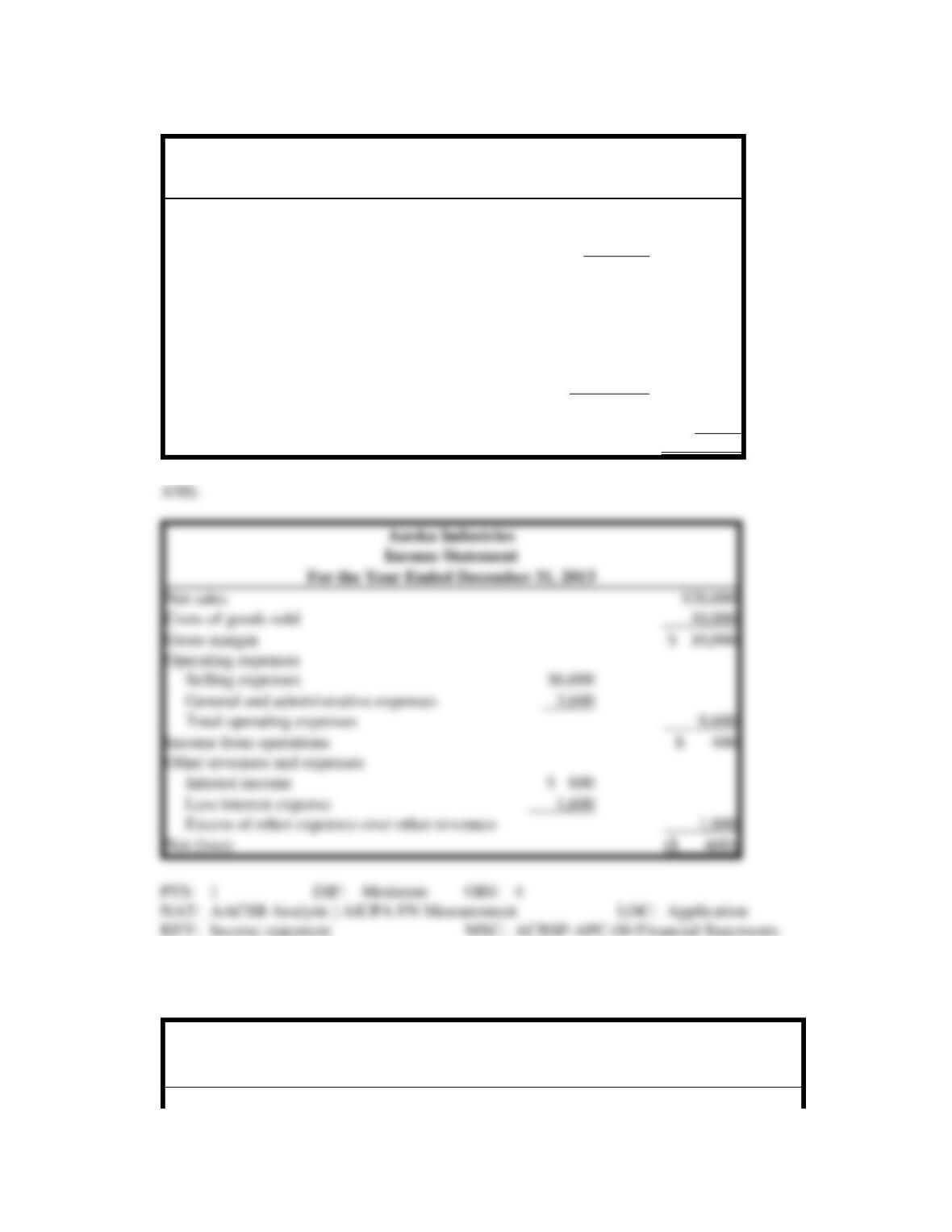
8. Using the following data, prepare a multistep income statement for Morrison Company for the month
ended February 28, 2013.
Cost of Goods Sold
$30,000
General and Administrative Expenses
8,000
Net Sales
50,000
Selling Expenses
7,000
Income Taxes
950
9. Use the information from the following single-step income statement to prepare a condensed multistep
income statement in proper form.
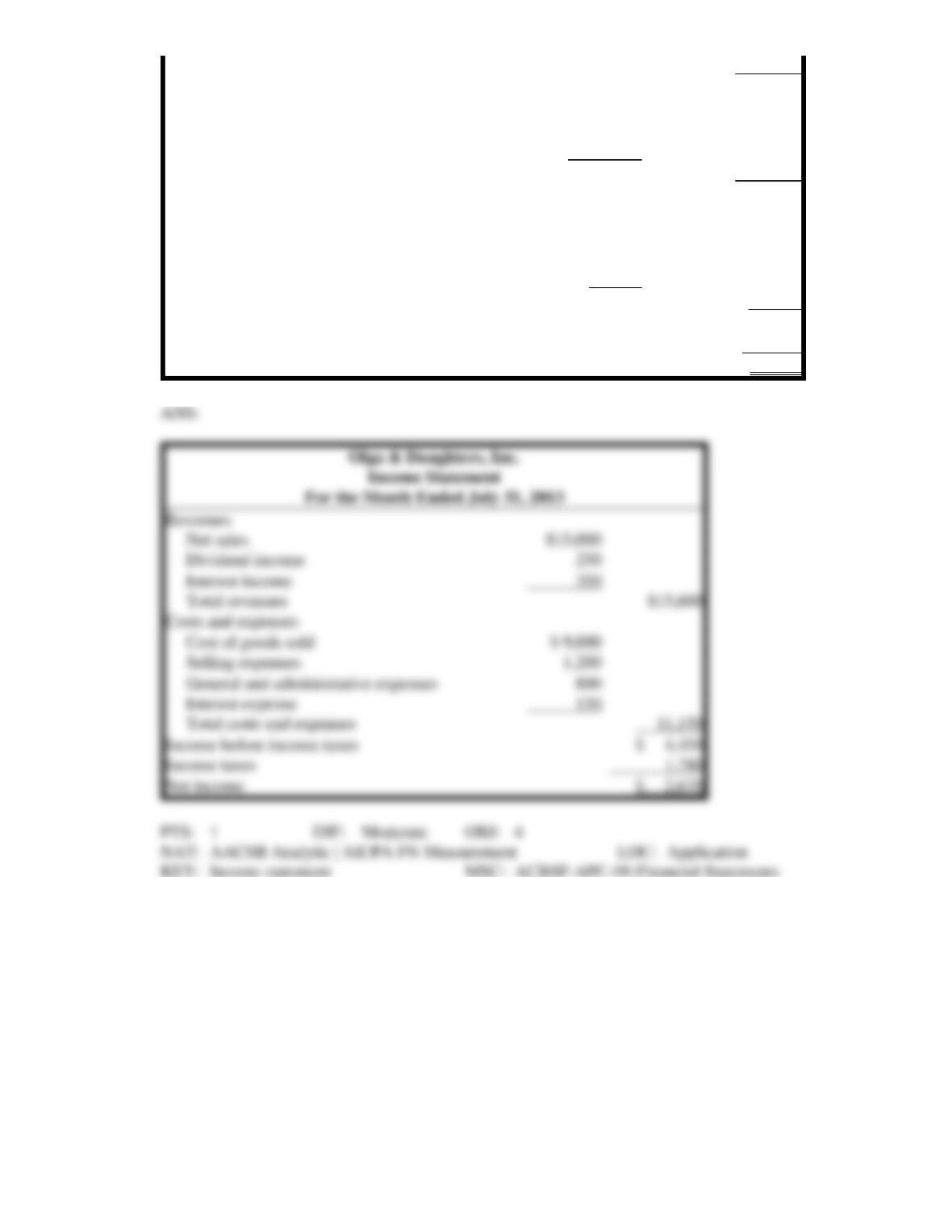
Anoka Industries
Income Statement
For the Year Ended December 31, 2013
Revenues
Net sales
$20,000
Interest income
600
Total revenues
$20,600
Costs and expenses
Costs of goods sold
$ 10,000
Selling expenses
6,000
General and administrative expenses
3,600
Interest expense
1,600
Total costs and expense
21,200
Net (loss)
($ 600)
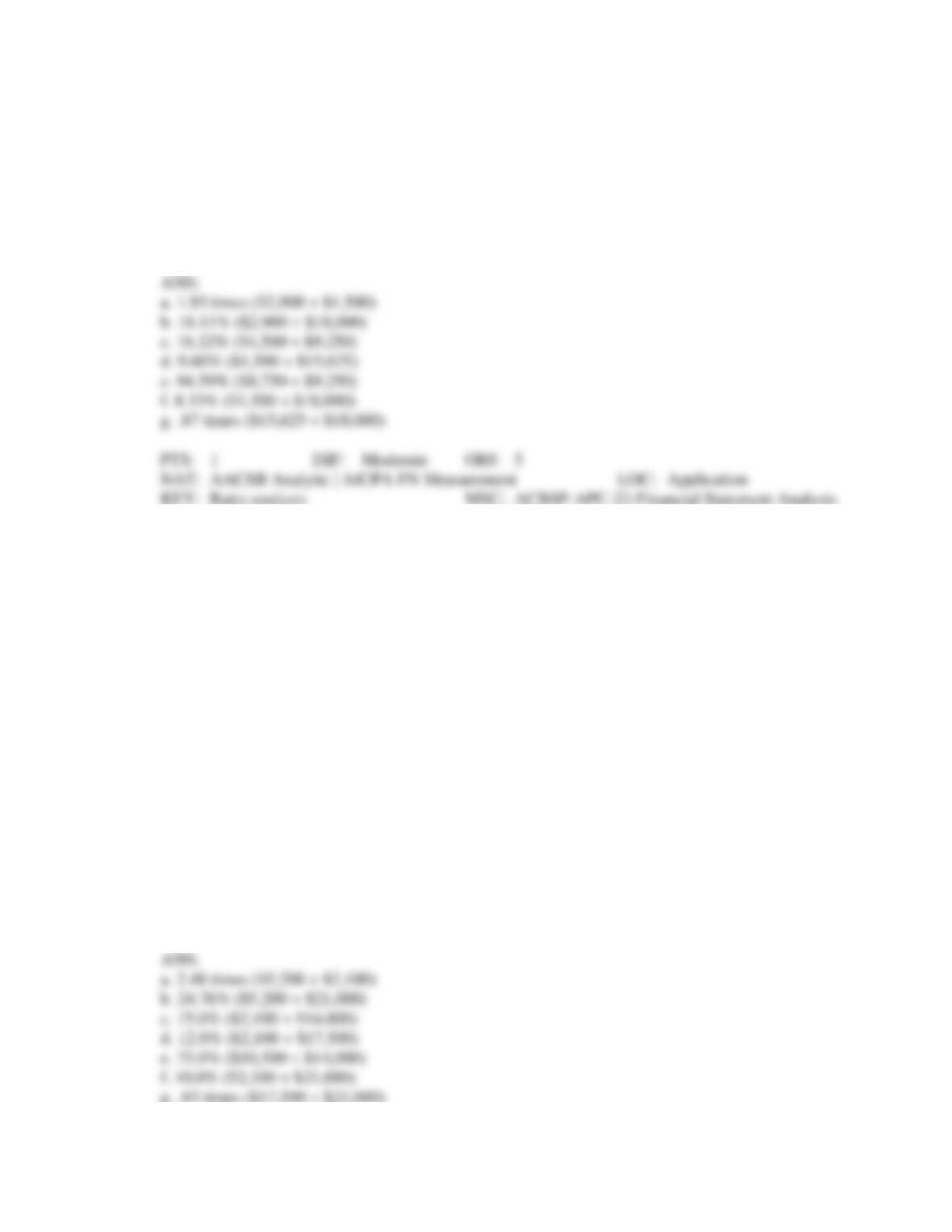
10. Use the information from the following multistep income statement to prepare a single-step income
statement in proper form.
Olga & Daughters, Inc.
Income Statement
For the Month Ended July 31, 2013
Net sales
$15,000
Operating expenses
Cost of goods sold
9,000
Gross margin
$ 6,000
Operating expenses
Selling expenses
$1,200
General and administrative expenses
800
Total operating expenses
2,000
Income from operations
$ 4,000
Other revenues and expenses
Dividend income
$ 250
Interest income
350
Less interest expense
150
Excess of other revenues over other expenses
450
Income before income taxes
$ 4,450
Income taxes
1,780
Net income
$ 2,670
11. Use the following information to calculate the ratios listed below. Round to two decimal places.
Average stockholders’ equity
$ 9,250
Net income
$ 1,500
Average total assets
18,000
Net sales
15,625
Current assets
11,250
Total liabilities
8,750
Current liabilities
7,500
Cash flow from operating activities
$2,900
a. Cash flow yield
b. Cash return on assets
Costs and expenses
Income taxes
c. Return on equity
d. Profit margin
e. Debt to equity
f. Return on assets
g. Asset turnover
12. Use the following information to calculate the ratios listed below. Round to two decimal places.
Average stockholders’ equity
$14,000
Net income
$ 2,100
Average total assets
21,000
Net sales
17,500
Current assets
15,000
Total liabilities
10,500
Current liabilities
10,000
Cash flow from operating activities
5,200
a. Cash flow yield
b. Cash return on assets
c. Return on equity
d. Profit margin
e. Debt to equity
f. Return on assets
g. Asset turnover
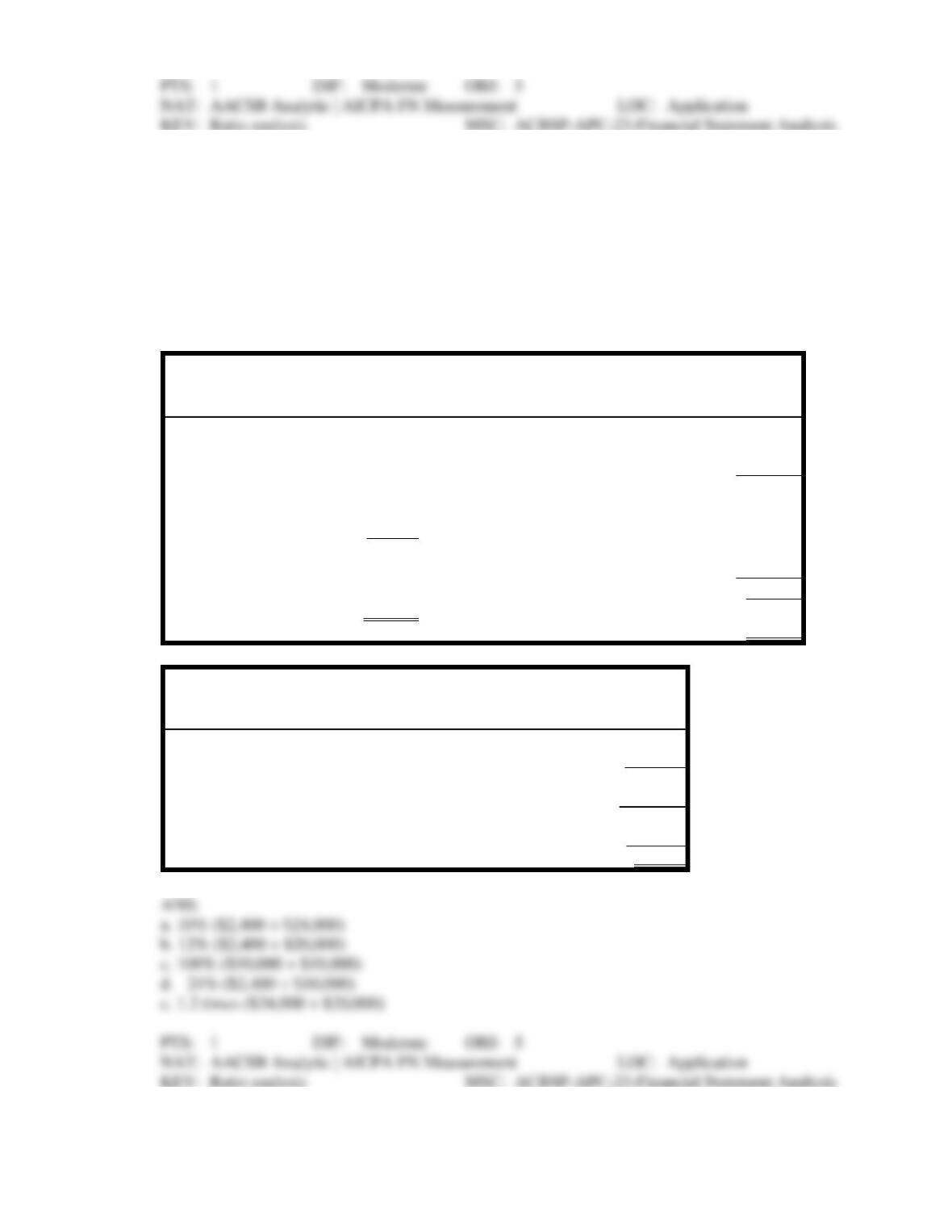
13. From the simplified balance sheet and income statement of the business below, compute the following
ratios. Assume that the June 30 amounts for total assets and stockholders’ equity also represent their
average amounts for the period. Round percentages to the nearest whole percent.
a. Profit margin
b. Return on assets
c. Debt to equity
d. Return on equity
e. Asset turnover
Sci-Tech Enterprises, Inc.
Balance Sheet
June 30, 2013
Assets
Liabilities
Current assets
$ 4,000
Current liabilities
$ 4,000
Investments
2,000
Long-term liabilities
6,000
Property, plant, and
Total liabilities
$10,000
equipment
12,000
Intangible assets
2,000
Stockholders’ Equity
Common stock
$ 8,000
Retained earnings
2,000
Total stockholders’ equity
$10,000
Total assets
$20,000
Total liabilities and stockholders’
equity
$20,000
Sci-Tech Enterprises, Inc.
Income Statement
For the Year Ended June 30, 2013
Net sales
$24,000
Cost of goods sold
12,000
Gross margin
$12,000
Operating expenses
8,000
Income before income taxes
$ 4,000
Income taxes
1,600
Net income
$ 2,400
14. From the simplified balance sheet and income statement of the business below, compute the following
ratios. Assume that the April 30 amounts for total assets and stockholders’ equity also represent their
average amounts for the period. Round percentages to the nearest whole percent.
a. Profit margin
b. Return on assets
c. Debt to equity
d. Return on equity
e. Asset turnover
Gruen Enterprises, Inc.
Balance Sheet
April 30, 2013
Assets
Liabilities
Current assets
$ 4,000
Current liabilities
$ 2,000
Investments
6,000
Long-term liabilities
8,000
Property, plant, and
equipment
16,000
Total liabilities
$10,000
Intangible assets
4,000
Stockholders’ Equity
Common stock
$14,000
Retained earnings
6,000
Total stockholders’ equity
$20,000
Total assets
$30,000
Total liabilities and stockholders’
equity
$30,000
Gruen Enterprises, Inc.
Income Statement
For the Year Ended April 30, 2013
Net sales
$40,000
Cost of goods sold
22,000
Gross margin
$18,000
Operating expenses
12,000
Income before income taxes
$ 6,000
Income taxes
2,400
Net income
$ 3,600