45) Which of the following does not correctly describe an adjusting journal entry that debits
depreciation expense and credits accumulated depreciation?
A) The entry increases expenses and increases assets.
B) The entry decreases net income and decreases assets.
C) The entry increases expenses and decreases retained earnings.
D) The entry decreases assets and decreases net income.
46) Which of the following correctly describes the effects of accruing income tax expense at
year-end?
A) A cash payment is made to pay the taxes due.
B) Liabilities are not affected.
C) Retained earnings decreases.
D) Net income increases.
47) Which of the following correctly describes the effects of initially recording deferred revenue
when cash is received from a customer?
A) Revenue is increased.
B) Liabilities are not affected.
C) Retained earnings increases.
D) Net income is not affected.
48) Which of the following correctly describes the effects of initially recording prepaid insurance
expense when cash is paid to purchase an insurance policy?
A) Total assets do not change.
B) Net income decreases.
C) Liabilities are decreased.
D) Stockholders’ equity increases.
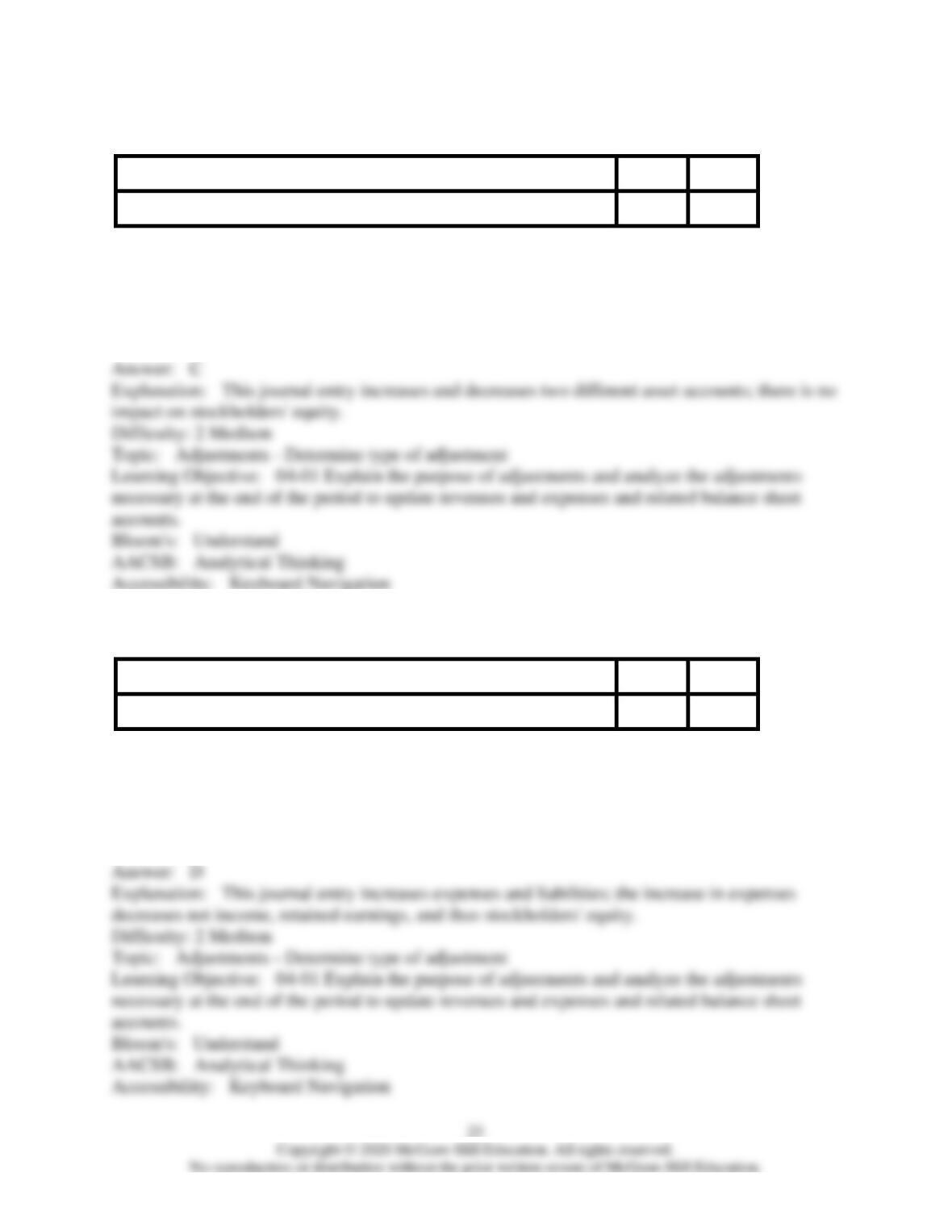
49) Which of the following does not correctly describe the following journal entry?
Supplies
xxx
Cash
xxx
A) Total assets do not change.
B) The transaction is an example of a deferral.
C) Stockholders’ equity decreases.
D) Net income is not affected.
50) Which of the following does not correctly describe the following adjusting journal entry?
Wages expense
xxx
Wages payable
xxx
A) Total assets do not change.
B) The transaction is an example of an accrual.
C) Stockholders’ equity decreases.
D) Net income is not affected.
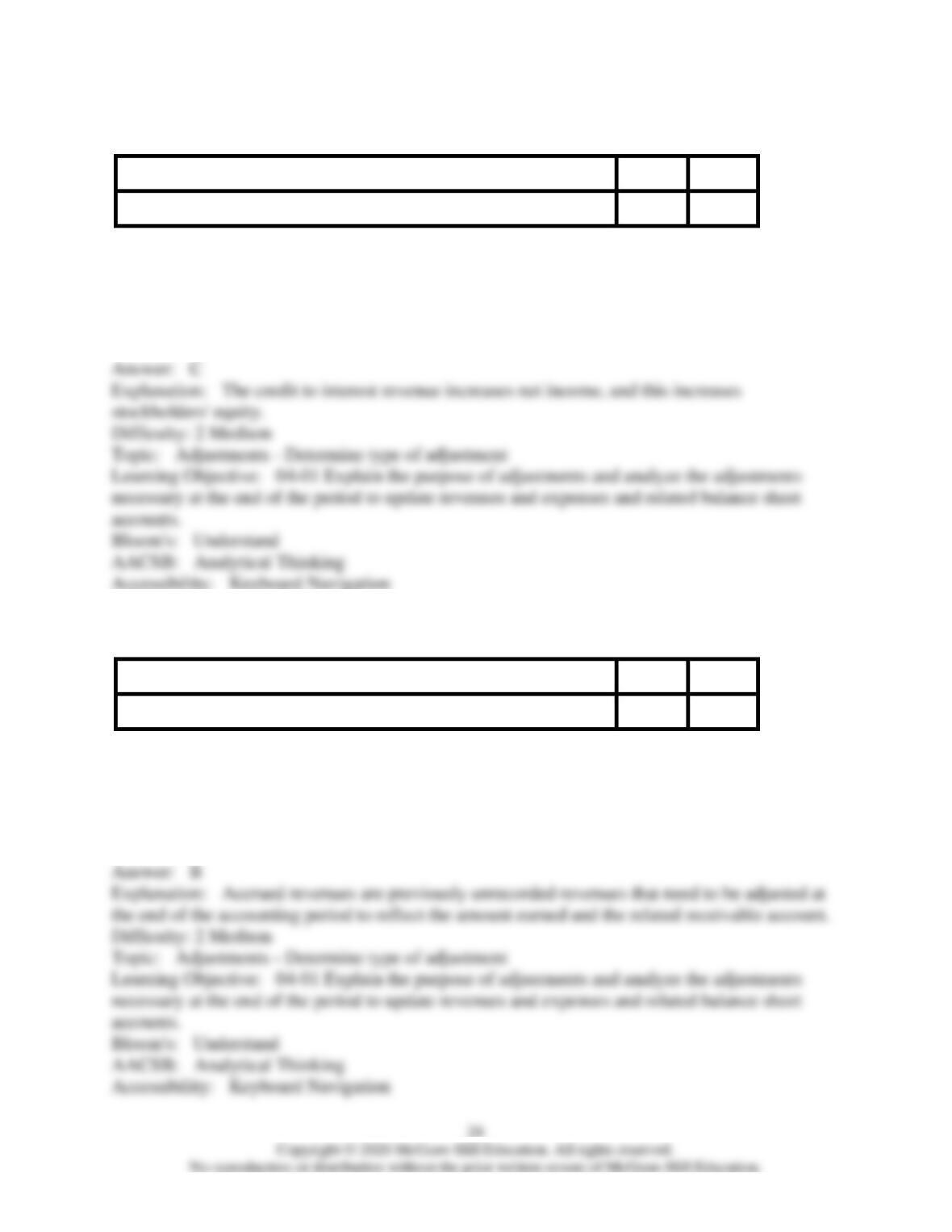
51) Which of the following does not correctly describe the following adjusting journal entry?
Interest receivable
xxx
Interest revenue
xxx
A) Total assets increase.
B) The transaction is an example of an accrual.
C) Stockholders’ equity decreases.
D) Net income increases.
52) Which of the following correctly describes the following adjusting journal entry?
Accounts receivable
xxx
Sales revenue
xxx
A) Total assets do not change.
B) The transaction is an example of an accrual.
C) Stockholders’ equity decreases.
D) Net income is not affected.
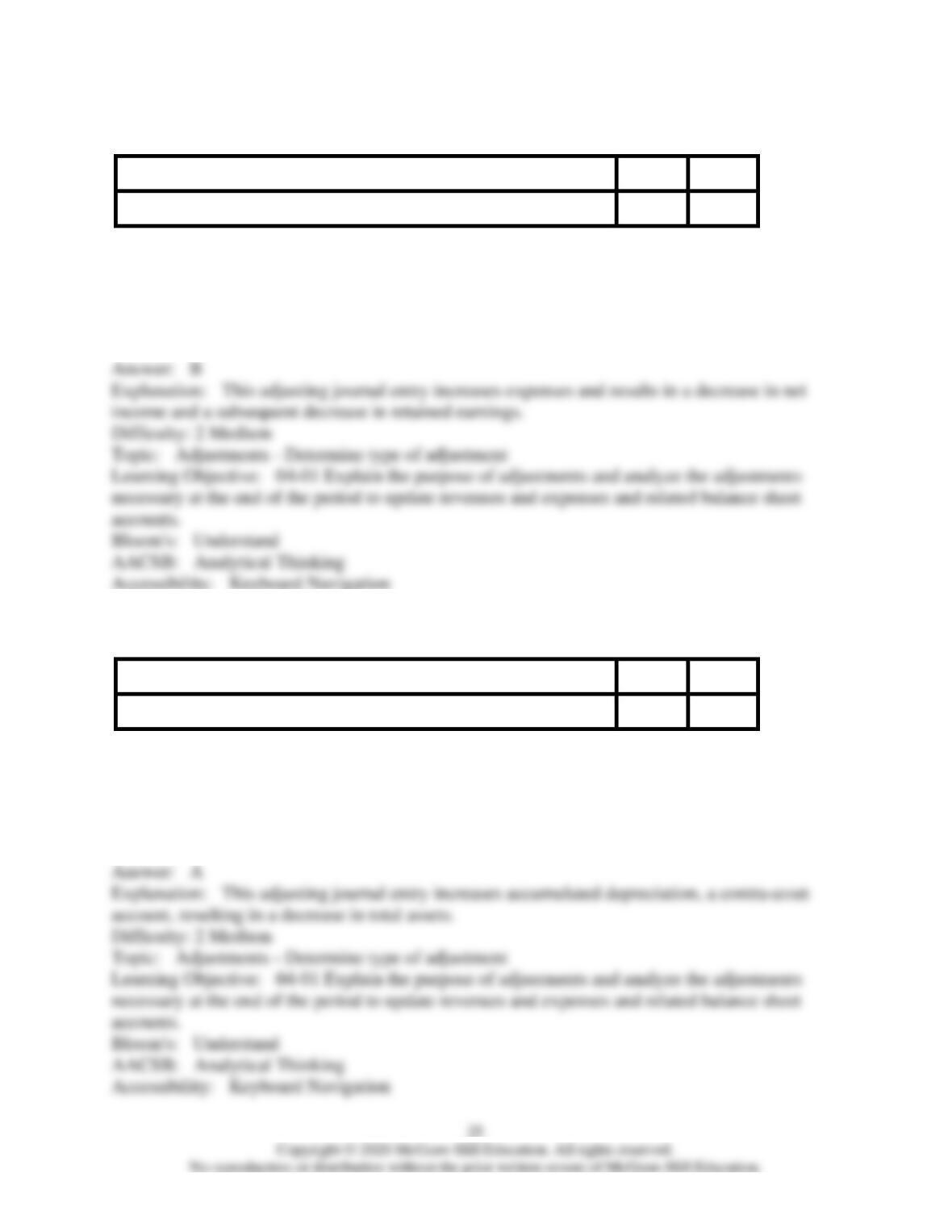
53) Which of the following does not correctly describe the following adjusting journal entry?
Rent expense
xxx
Prepaid rent
xxx
A) Total assets decrease.
B) Retained earnings are not affected.
C) Stockholders’ equity decreases.
D) Net income decreases.
54) Which of the following correctly describes the following adjusting journal entry?
Depreciation expense
xxx
Accumulated depreciation
xxx
A) Total assets decrease.
B) Liabilities will increase.
C) Stockholders’ equity is not affected.
D) Net income increases.
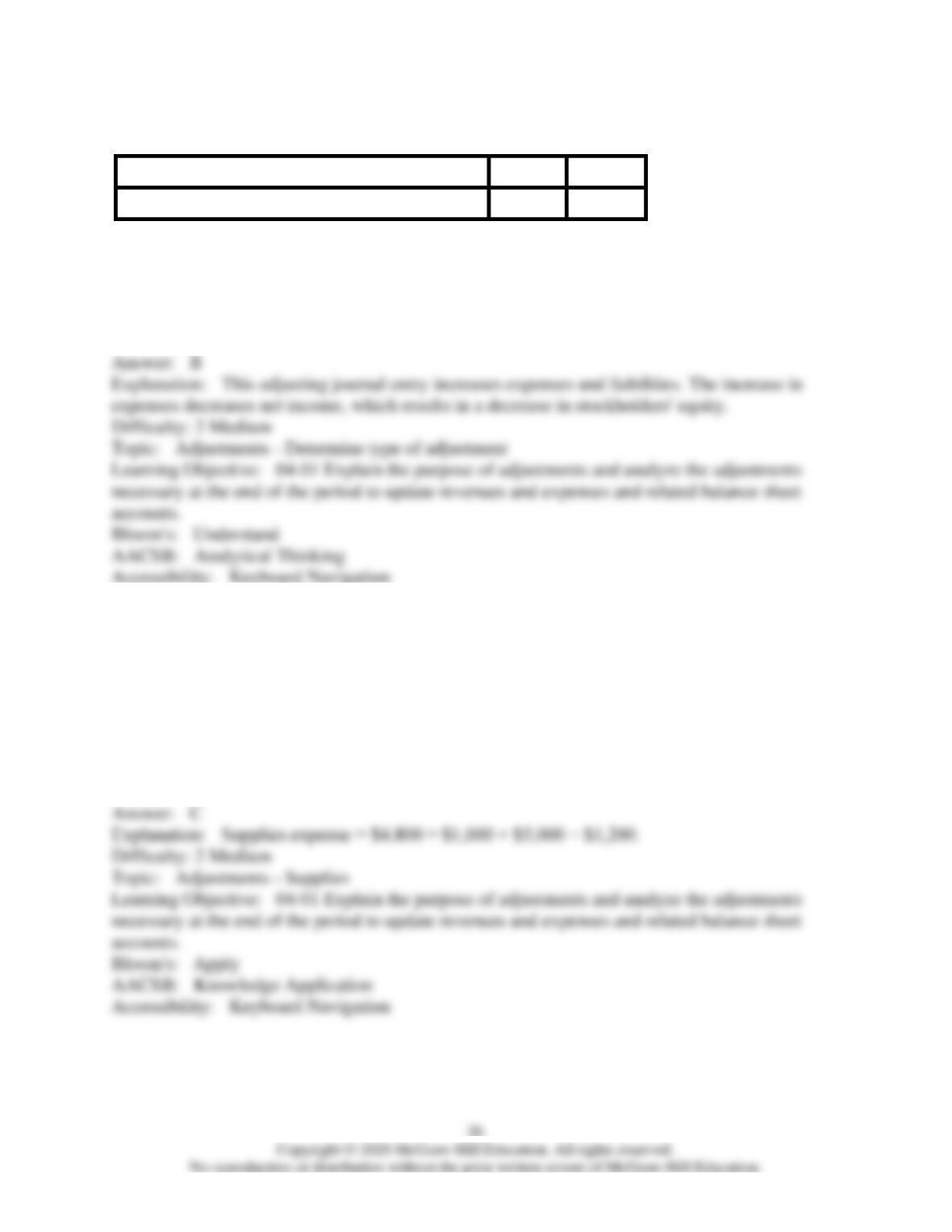
55) Which of the following correctly describes the following adjusting journal entry?
Utilities expense
xxx
Utilities payable
xxx
A) Total assets decrease and net income decreases.
B) Stockholders’ equity decreases and liabilities increase.
C) The transaction is an example of a deferral.
D) Net income decreases and stockholders’ equity does not change.
56) On January 1, 2019, the general ledger of Global Corporation included supplies of $1,000.
During 2019, supplies purchased amounted to $5,000. A physical count of inventory on hand at
December 31, 2019 determined that the amount of supplies on hand was $1,200. How much is
the supplies expense for year 2019?
A) $6,000.
B) $5,200.
C) $4,800.
D) $1,000.
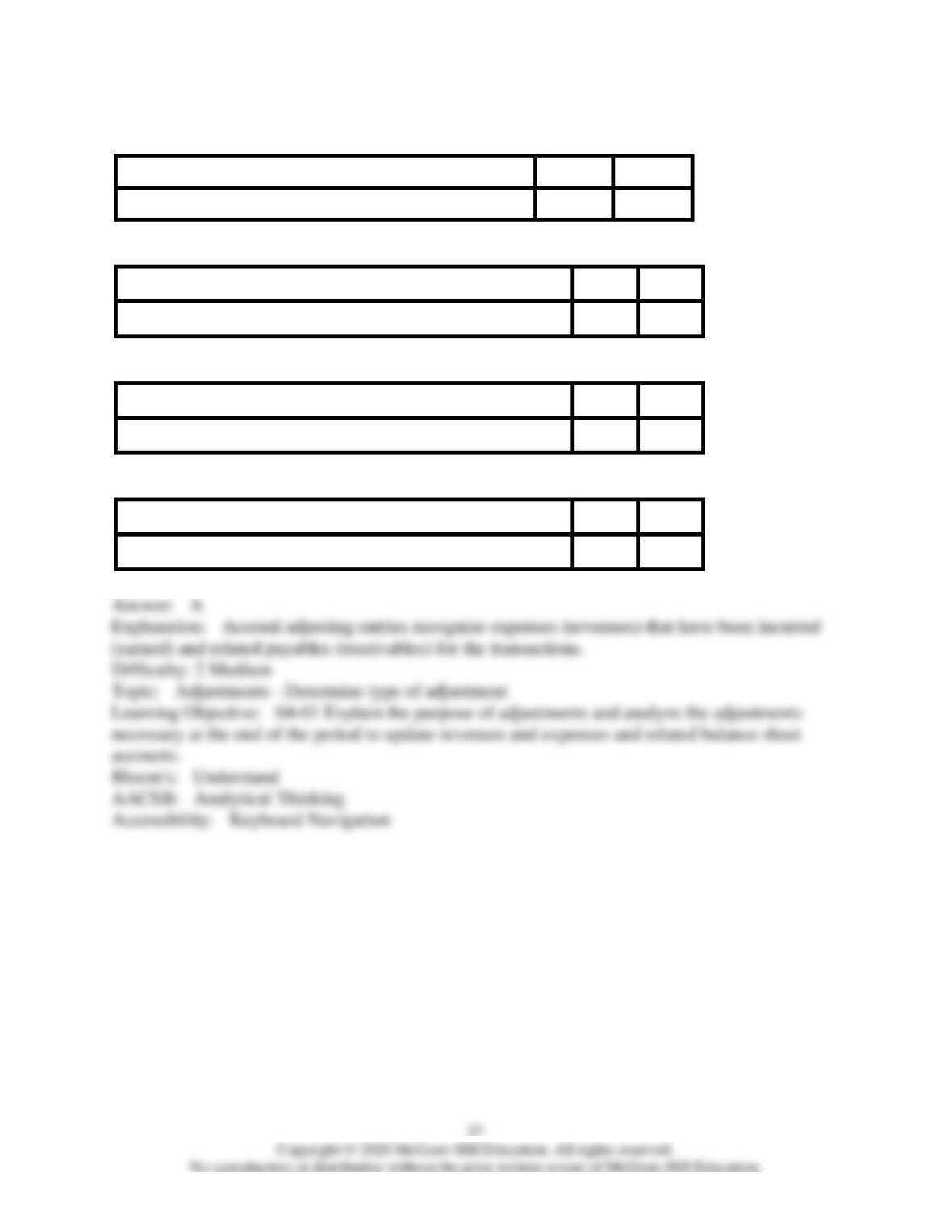
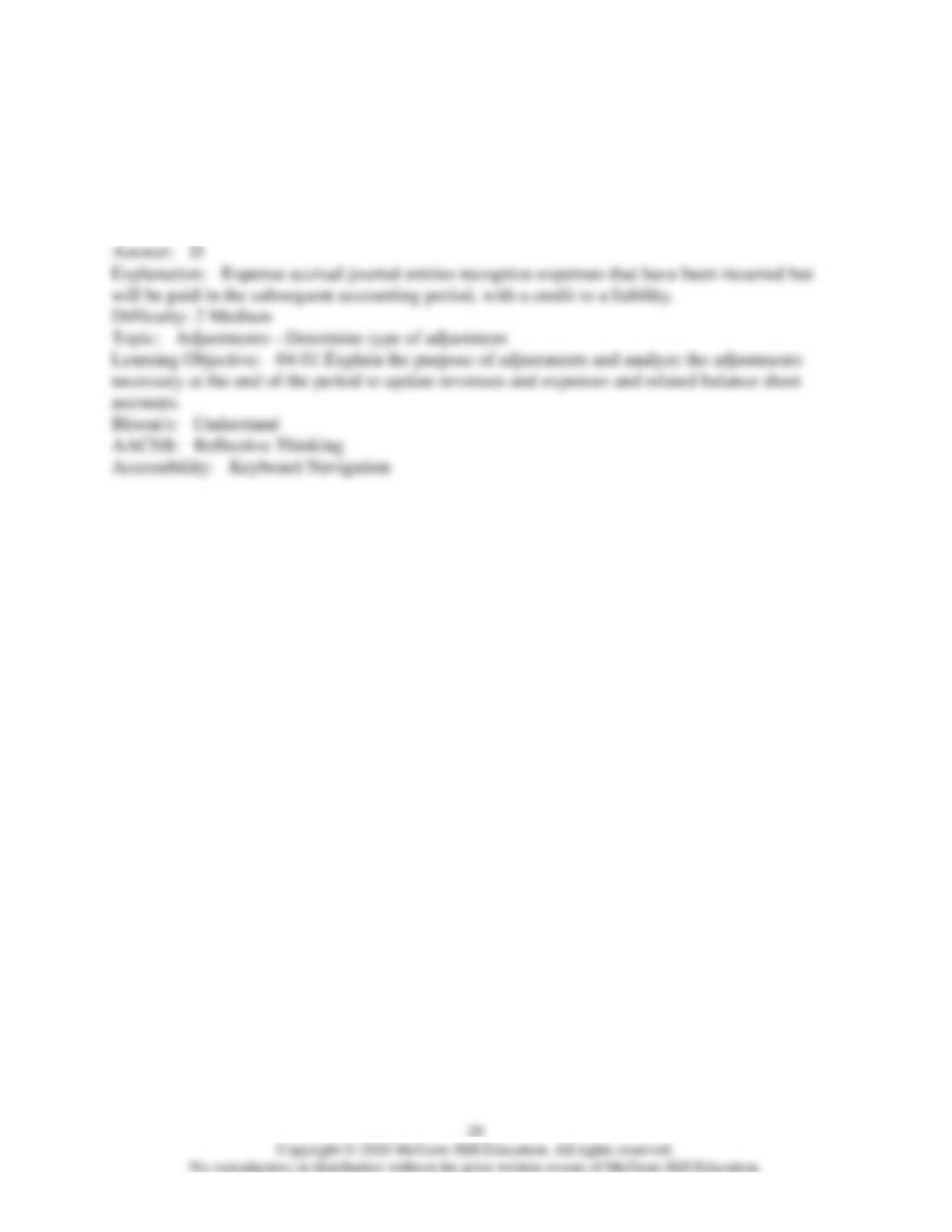
57) Which of the following adjusting journal entries is created as the result of an accrual?
A)
Wages expense
xxx
Wages payable
xxx
B)
Depreciation expense
xxx
Accumulated depreciation
xxx
C)
Prepaid Rent
xxx
Rent expense
xxx
D)
Accounts receivable
xxx
Unearned revenue
xxx
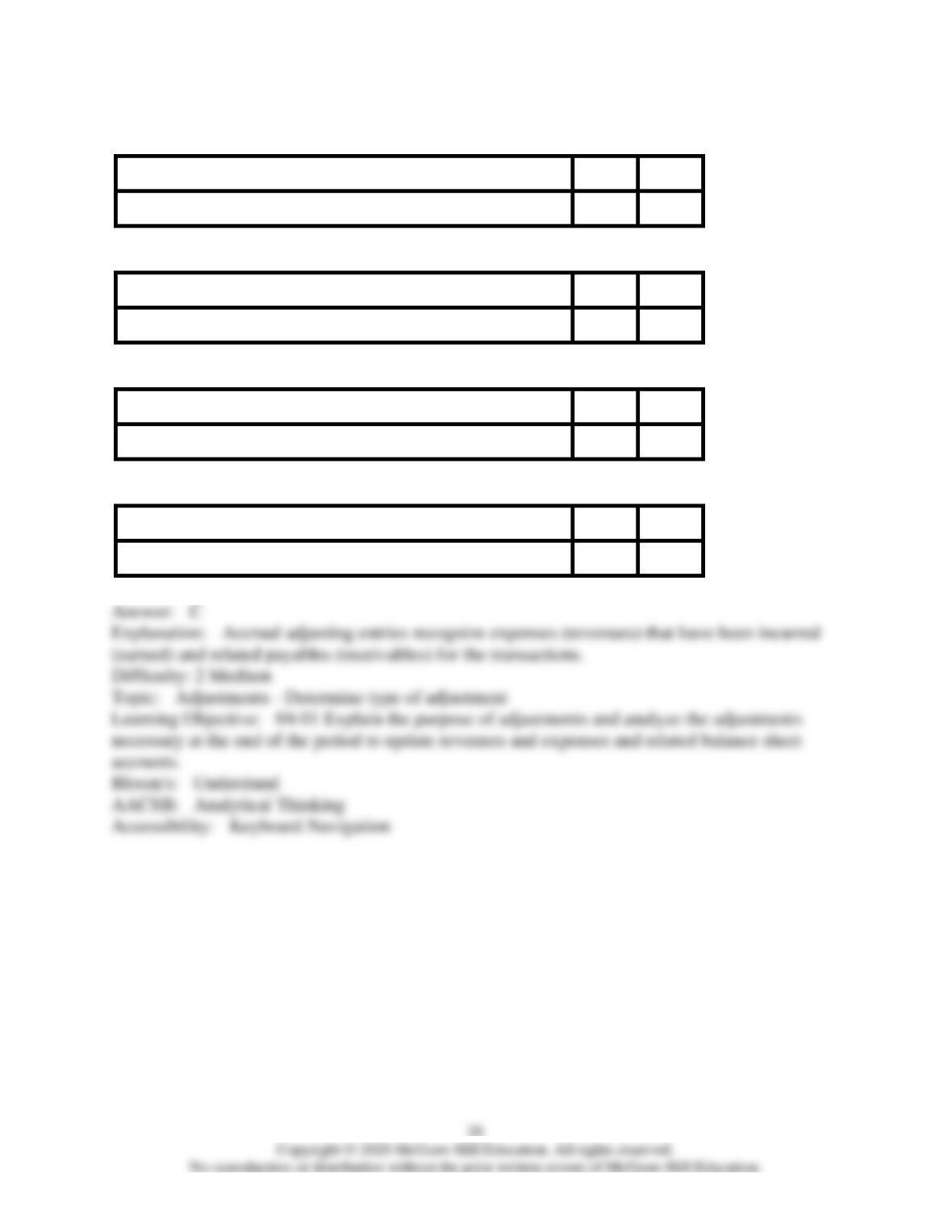
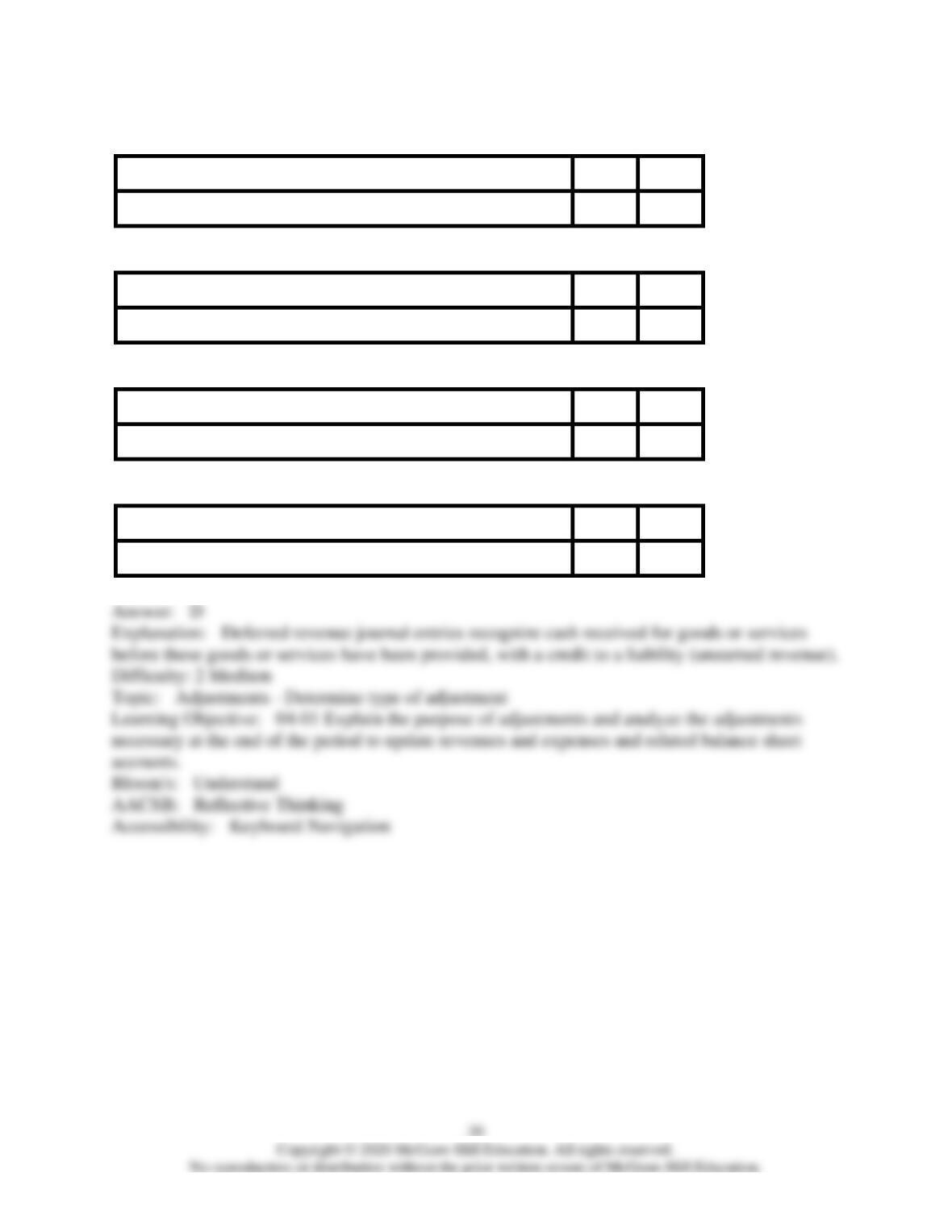
58) Which of the following adjusting journal entries is not created as the result of an accrual?
A)
Interest expense
xxx
Interest payable
xxx
B)
Accounts receivable
xxx
Service revenue
xxx
C)
Prepaid Rent
xxx
Rent expense
xxx
D)
Interest receivable
xxx
Interest revenue
xxx
59) Which of the following accounts is used to record an accrual for expenses?
A) Prepaid rent.
B) Unearned revenues.
C) Accounts receivable.
D) Interest payable.
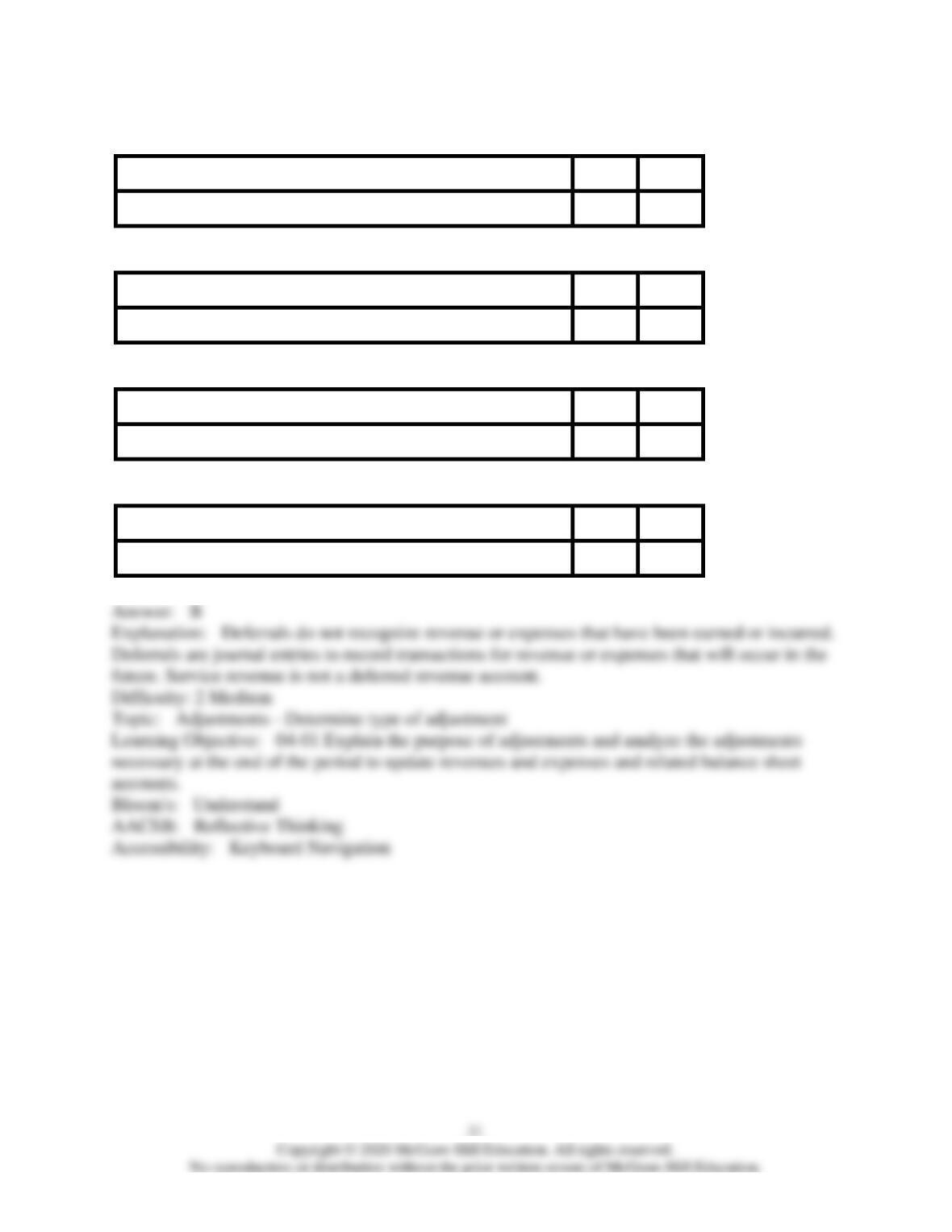
60) Which of the following journal entries is used to record a deferral?
A)
Interest expense
xxx
Interest payable
xxx
B)
Accounts receivable
xxx
Service revenue
xxx
C)
Wages expense
xxx
Wages payable
xxx
D)
Cash
xxx
Unearned revenue
xxx
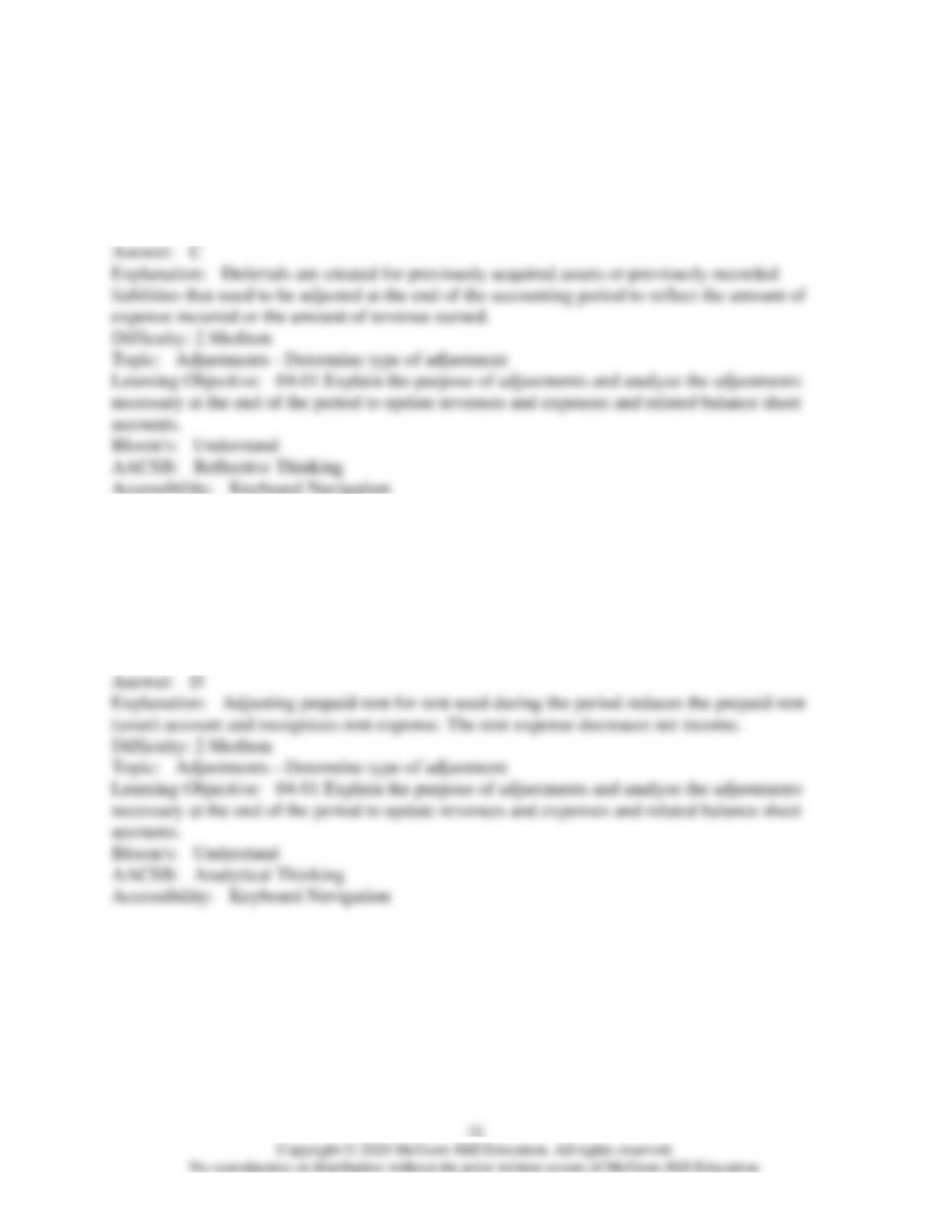
61) Which of the following journal entries would not be used to record a deferral?
A)
Prepaid rent
xxx
Cash
xxx
B)
Cash
xxx
Service revenue
xxx
C)
Supplies
xxx
Cash
xxx
D)
Cash
xxx
Unearned revenue
xxx
62) Which of the following accounts is used to initially record a deferral?
A) Interest payable.
B) Interest revenue.
C) Supplies.
D) Supplies expense.
63) Which of the following transactions and events results in a decrease in both total assets and
net income?
A) The accrual of wages expense at year-end.
B) Collecting cash from an account receivable.
C) Recognizing previously recorded deferred revenue as revenue.
D) Adjustment of the prepaid rent account for rent used during the period.
64) Which of the following transactions and events results in an increase in liabilities and a
decrease in net income?
A) The accrual of wages expense at year-end.
B) Collecting cash from a customer for services to be provided in the future.
C) The accrual of revenue earned at year-end.
D) Adjustment of the unearned revenue account for revenue earned during the period.
65) Which of the following transactions results in an increase in both net income and
stockholders’ equity?
A) Paying cash to acquire a six-month insurance policy.
B) Collecting cash from a customer for services to be provided in the future.
C) The accrual of interest expense year-end.
D) Adjustment of the unearned revenue account for revenue earned during the period.
66) Which of the following transactions does not create a deferral?
A) Paying cash to purchase a three-month insurance policy.
B) Receiving cash from a customer for services to be provided in the future.
C) Paying cash to employees for wages they have earned.
D) Paying cash to purchase a two-month supply of office supplies.
67) Which of the following is not an accrual?
A) Crediting wages payable for wages earned to date.
B) Debiting interest receivable for interest earned to date.
C) Debiting interest expense for interest incurred to date.
D) Debiting depreciation expense for depreciation incurred during the period.
68) What is the effect on the financial statements when a company fails to accrue wages expense
at year-end?
A) Net income is overstated and liabilities are understated.
B) Expenses are understated and stockholders’ equity is understated.
C) Expenses and liabilities are both overstated.
D) Net income is overstated and liabilities are properly reported.
69) What is the effect on the financial statements when a company fails to record depreciation
expense at year-end?
A) Net income is overstated and stockholders’ equity is understated.
B) Expenses are understated and stockholders’ equity is understated.
C) Expenses are understated and liabilities are overstated.
D) Net income is overstated and assets are overstated.
70) What is the effect on the financial statements when a company fails to adjust the prepaid
insurance expense account at year-end for insurance coverage that has been used?
A) Net income is overstated and stockholders’ equity is understated.
B) Expenses are understated and stockholders’ equity is understated.
C) Expenses are understated and net income is understated.
D) Net income is overstated and assets are overstated.
71) What is the effect on the financial statements when a company fails to adjust the unearned
revenue account for revenues earned at year-end?
A) Net income is understated and assets are understated.
B) Revenues are understated and liabilities are understated.
C) Net income is understated and liabilities are overstated.
D) Revenues are understated and stockholders’ equity is overstated.
72) What is the effect on the financial statements when a company fails to accrue interest
expense at year-end?
A) Net income is overstated and assets are overstated.
B) Expenses are understated and liabilities are understated.
C) Expenses are understated and stockholders’ equity is understated.
D) Net income is overstated and liabilities are overstated.
73) What is the effect on the financial statements when a company fails to accrue revenue earned
at year-end?
A) Net income is understated and assets are understated.
B) Revenue is understated and stockholders’ equity is overstated.
C) Revenue is understated and assets aren’t affected.
D) Net income is understated and liabilities are overstated.
74) On December 31, 2019, Krug Company prepared adjusting entries that included the
following items:
Depreciation expense: $31,000.
Accrued sales revenue: $29,000.
Accrued expenses: $12,000.
Used insurance: $9,000; the insurance was initially recorded as prepaid.
Rent revenue earned: $7,000; the rent was initially prepaid by the tenant and credited to unearned
rent revenue.
If Krug Company reported pretax income of $120,000 prior to the adjusting entries, how much is
Krug’s pretax income after the adjusting entries?
A) $113,000.
B) $104,000.
C) $106,000.
D) $128,000.
75) On December 31, 2019, Krug Company prepared adjusting entries that included the
following items:
Depreciation expense: $31,000.
Accrued sales revenue: $29,000.
Accrued expenses: $12,000.
Used insurance: $9,000; the insurance was initially recorded as prepaid.
Rent revenue earned: $7,000; the rent was initially prepaid by the tenant and credited to unearned
rent revenue.
If Krug Company reported total assets of $390,000 prior to the adjusting entries, how much are
Krug’s total assets after the adjusting entries?
A) $350,000.
B) $386,000.
C) $379,000.
D) $374,000.
76) On December 31, 2019, Krug Company prepared adjusting entries that included the
following items:
Depreciation expense: $31,000.
Accrued sales revenue: $29,000.
Accrued expenses: $12,000.
Used insurance: $9,000; the insurance was initially recorded as prepaid.
Rent revenue earned: $7,000; the rent was initially prepaid by the tenant and credited to unearned
rent revenue.
If Krug Company reported total liabilities of $110,000 prior to adjusting entries, how much are
Krug’s total liabilities after the adjusting entries?
A) $115,000.
B) $141,000.
C) $86,000.
D) $110,000.