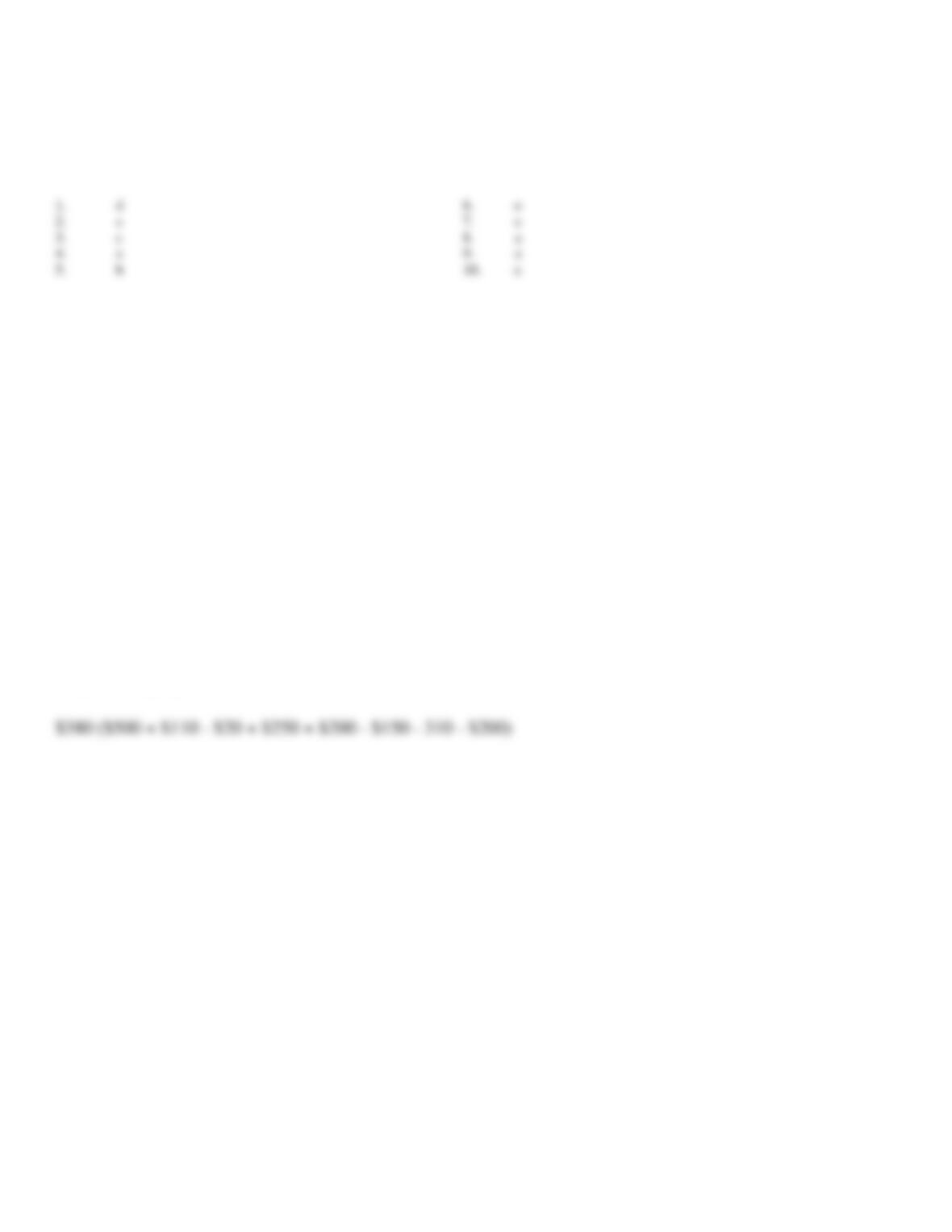
Required:
Match each measurement alternative to its balance sheet element by placing the appropriate letter in the space provided.
66. The following data were taken from the Otay, Inc. balance sheet:
Accounts payable
$ 150
Inventory
250
Retained earnings
40
Accumulated depreciation
300
Cash
500
Serial bonds payable ($200 matures each year)
800
Prepaid insurance
200
Allowance for doubtful accounts
20
Capital stock
440
Property, plant, and equipment
1,000
Accounts receivable (gross)
110
Accrued salaries
310
Required:
Compute working capital.
67. The following information has been provided for Zenon Corp.:
Prepaid insurance
$ 200
Accrued salaries
170
Petty cash
?
Investment in trading securities
1,200
Total current assets
4,560
Cash
600
Inventory, at sales value (cost = $1,500)
2,100
Unearned rent
940
Allowance for bad debts
150
Office supplies
110
Accounts receivable
800
Required:
a.
Prepare the current asset section of Zenon’s balance sheet.
b.
Calculate Zenon’s net working capital.
1.
d
6.
e
2.
a
7.
c
3.
c
8.
a
4.
a
9.
a
5.
b
10.
c
68. Listed below (in random order) are all of the December 31, 2010 balance sheet accounts of the McCain
Company.
Land
$10,500
Sinking fund for bond retirement
2,400
Discount on bonds payable
900
Equipment
14,000
Preferred stock, $100 par
5,000
Accumulated depreciation, buildings
5,500
Investment in bonds held to maturity
4,000
Accrued wages
1,950
Additional paid-in capital on common stock
3,500
Buildings
17,500
Bonds payable (due 2013)
13,000
Office supplies
750
Retained earnings
14,150
Inventory
10,000
Accounts receivable
7,650
Accounts payable
5,650
Prepaid insurance
900
Common stock, $10 par
6,750
Allowance for doubtful accounts
250
Interest payable
1,500
Cash
4,500
Treasury stock (at cost)
1,150
Dividends payable
750
Additional paid-in capital on preferred stock
1,000
Notes payable (due 1/1/13)
8,000
Income taxes payable (current)
3,000
Accumulated depreciation, equipment
4,250
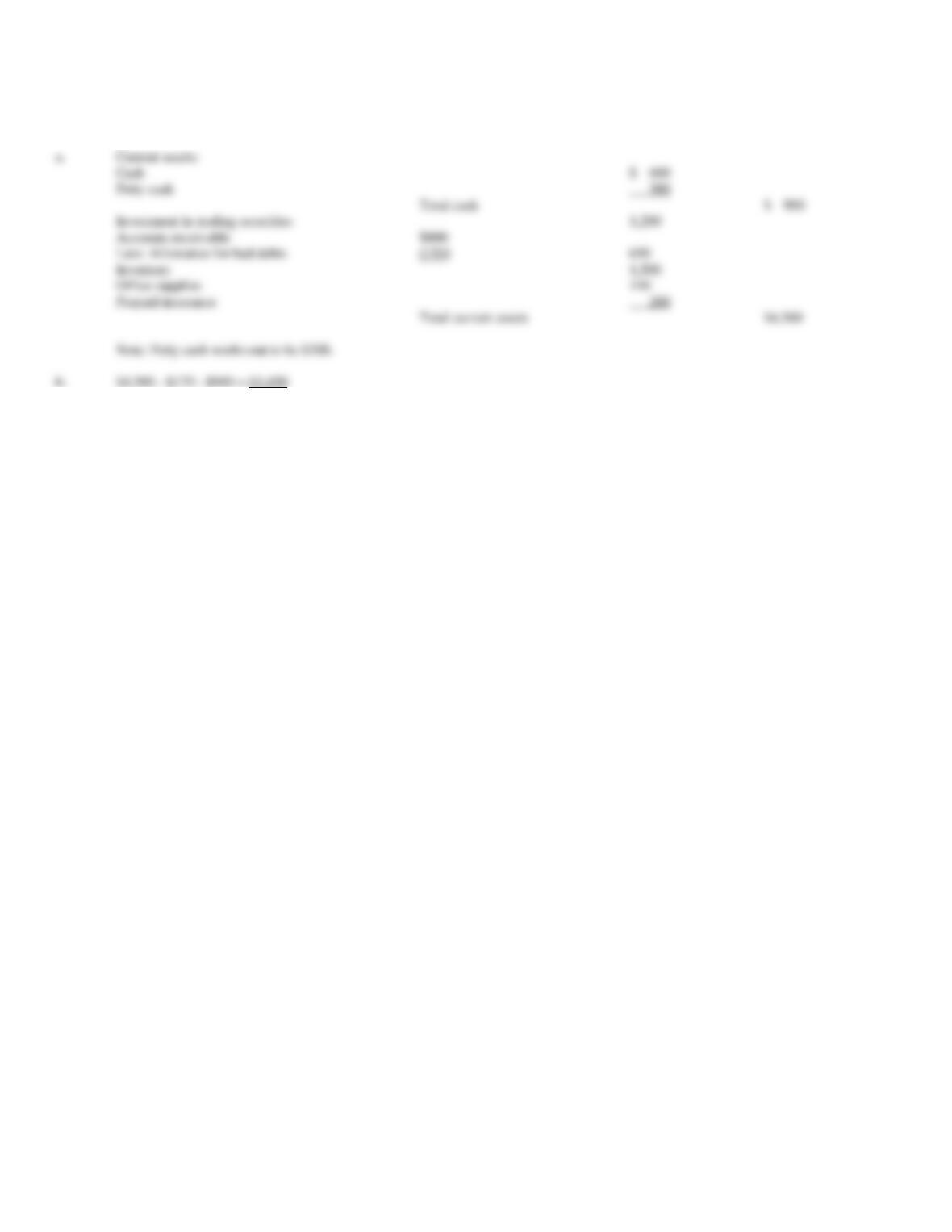
Current assets:
Cash
$ 600
Petty cash
300
Total cash
$ 900
Investment in trading securities
1,200
Accounts receivable
$800
Less: Allowance for bad debts
(150)
650
Inventory
1,500
Office supplies
110
Prepaid insurance
200
Total current assets
$4,560
Note: Petty cash works out to be $300.
b.
$4,560 – $170 – $940 = $3,450
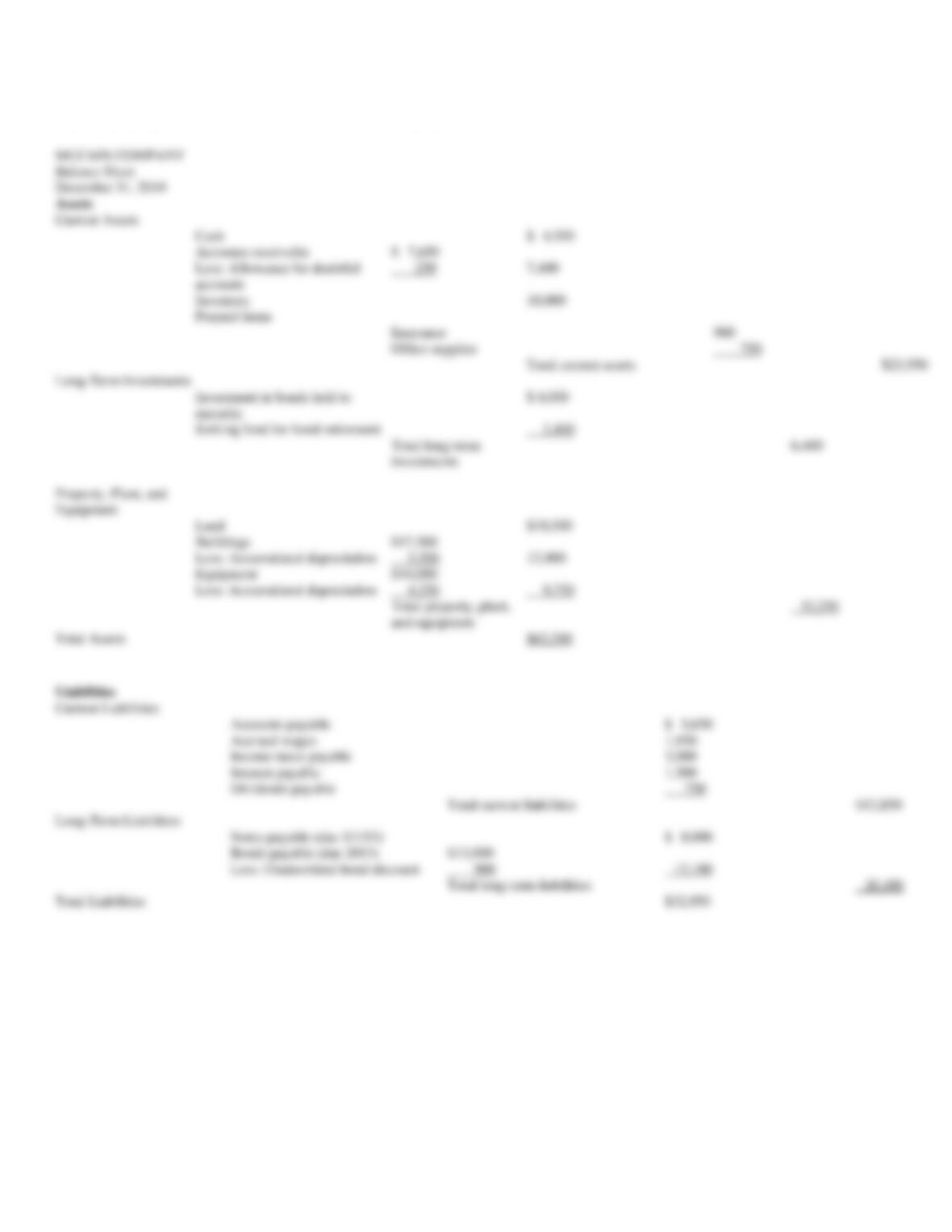
Required:
Prepare a properly classified balance sheet for the McCain Company on December 31, 2010.
69. The balance sheet contains the major sections (a-k) listed below. A listing of balance sheet accounts (1-12)
follows.
a.
Current assets
g.
Long-term liabilities
b.
Long-term investments
h.
Other liabilities
c.
Property, plant, and equipment
i.
Contributed capital
d.
Intangible assets
j.
Retained earnings
e.
Other assets
k.
Accumulated other comprehensive
f.
Current liabilities
income
____
1.
Goods in process
____
2.
Trademarks
____
3.
Sales revenue
____
4.
Cash surrender value of life insurance policy
____
5.
Additional paid-in capital on common stock
____
6.
Deferred tax assets
____
7.
Unrealized decrease in value in available for sale securities
____
8.
Allowance for uncollectible accounts receivable
____
9.
Interest payable
____
10.
Sinking fund for preferred stock retirement
____
11.
Discount on bonds payable (due in 10 years)
____
12.
Leased machinery under a capital lease
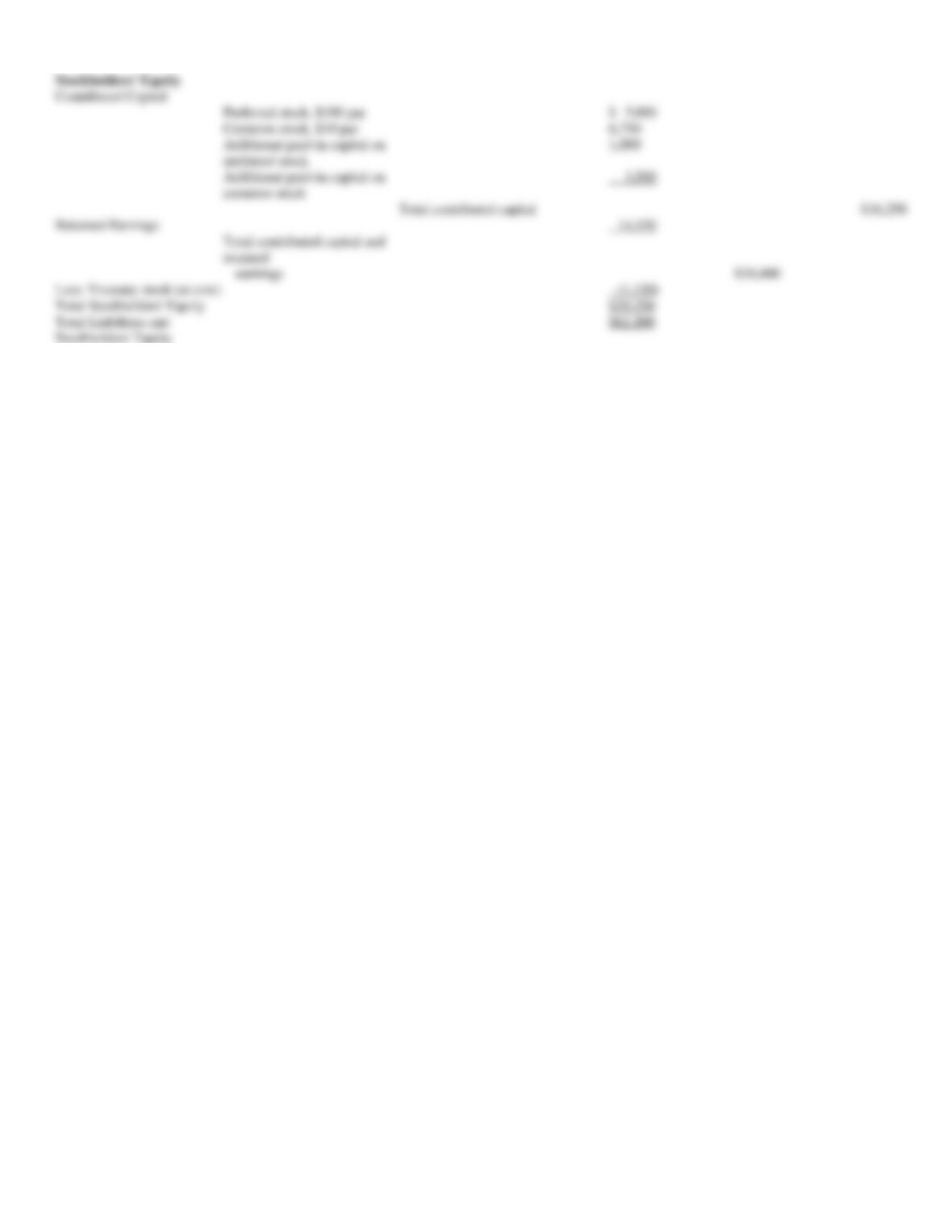
Contributed Capital
Preferred stock, $100 par
$ 5,000
Common stock, $10 par
6,750
Total contributed capital
Retained Earnings
14,150
earnings
$30,400
Less: Treasury stock (at cost)
(1,150)
Total Stockholders’ Equity
$29,250
Required:
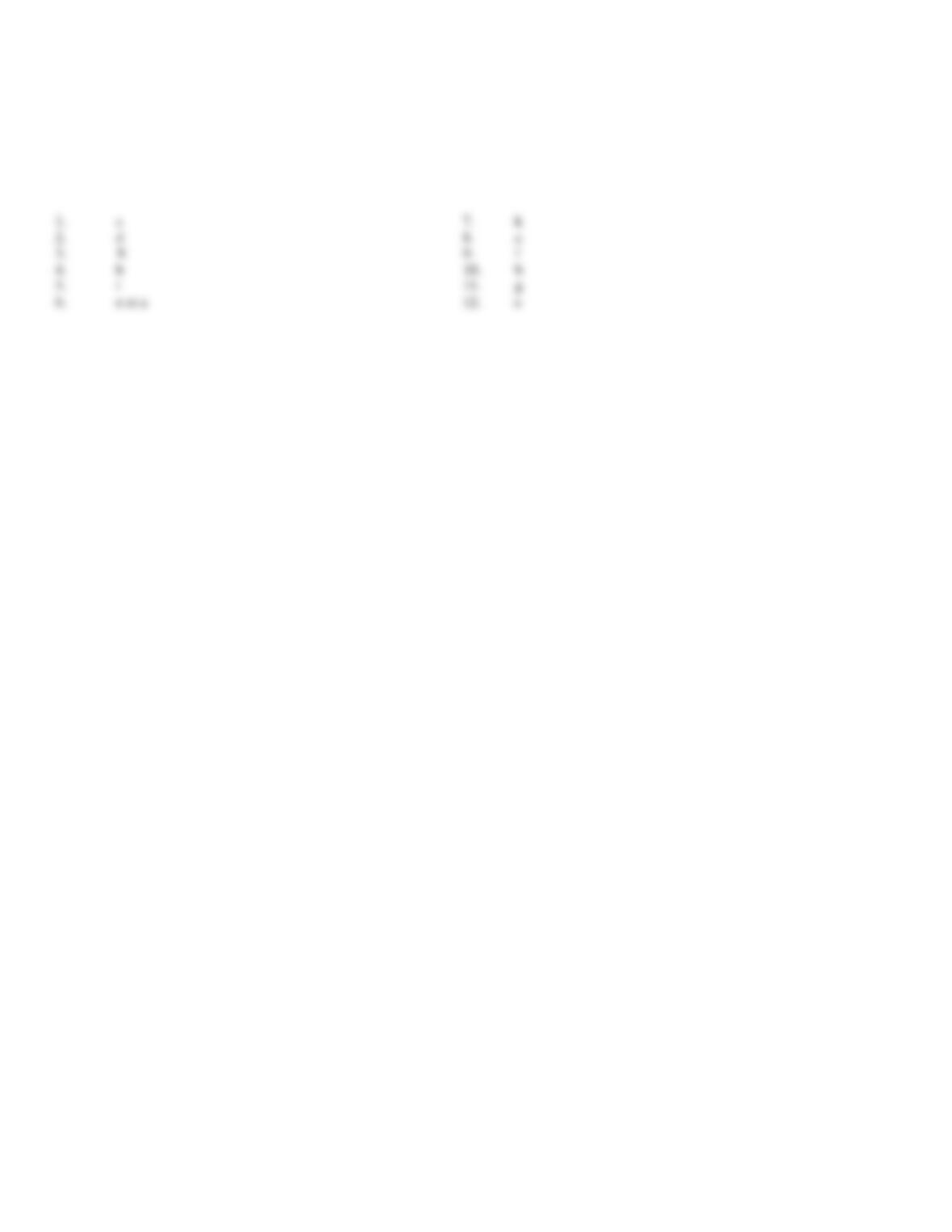
Using the letters (a-k), indicate in which section of the balance sheet each of the accounts (1-12) would be classified. Put parentheses around the
letter used if it represents a contra account. If the account does not appear on the balance sheet, place an “X” in the space provided.
70. Below is an alphabetical listing of the accounts of Walters, Inc. as of December 31, 2010.
Accounts payable
Accounts receivable
Accumulated depreciation: buildings and equipment
Additional paid-in capital on common stock
Allowance for doubtful accounts
Bonds payable (due 2014)
Buildings and equipment
Cash
Common stock, $5 par
Discount on bonds payable
Dividends payable
Inventory
Investment in securities available for sale
Land
Notes payable (due 2011)
Office supplies
Patents
Prepaid insurance
Retained earnings
Salaries payable
Taxes payable
Treasury stock
Unearned rent
Required:
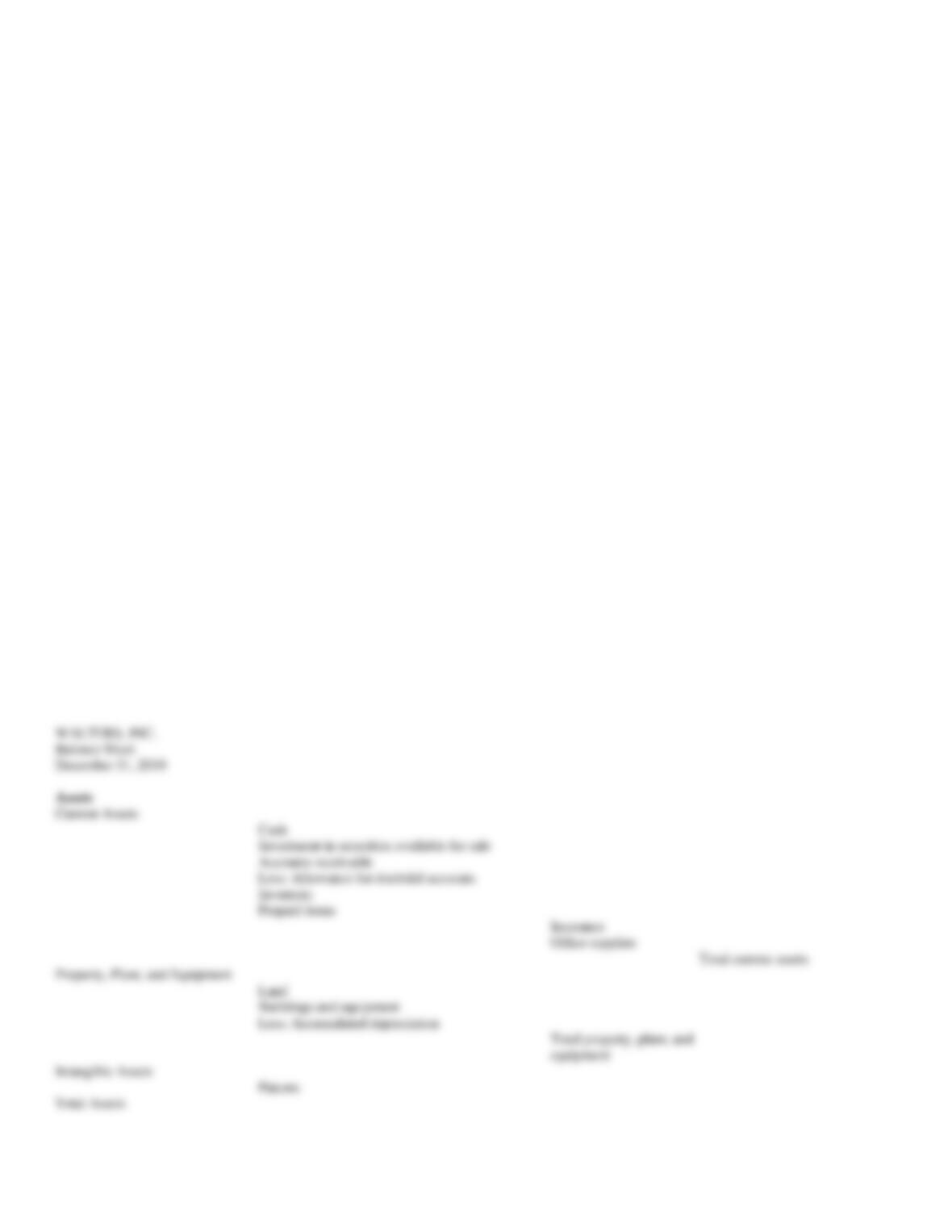
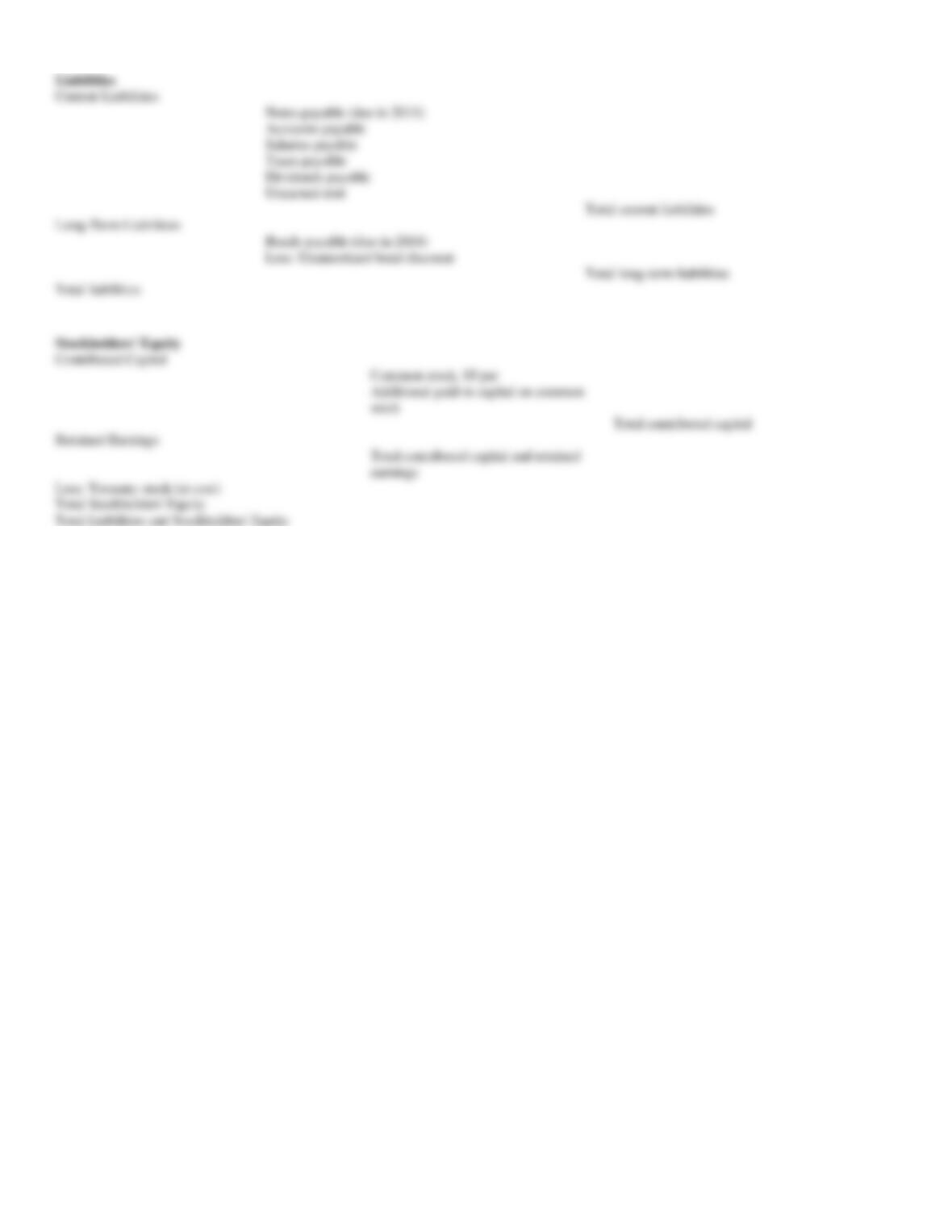
Prepare a properly classified balance sheet (without amounts) for Walters, Inc. on December 31, 2010.
71. The balance sheet contains the major sections (a-j) listed below. A listing of balance sheet accounts (1-10)
follows.
a.
Current assets
f.
Current liabilities
b.
Long-term investments
g.
Long-term liabilities
c.
Property, plant, and equipment
h.
Contributed capital
d.
Intangible assets
i.
Retained earnings
e.
Other assets
j.
Accumulated other comprehensive income
____
1.
Unexpired insurance
____
2.
Idle machinery
____
3.
Unrealized gain on available for sale securities
____
4.
Land
____
5.
Fund to retire preferred stock
____
6.
Additional paid-in capital on common stock
____
7.
Deferred income tax payable-Noncurrent
____
8.
Obligation for future pension payments
____
9.
Trademark
____
10.
Unearned ticket sales
Current Liabilities
Notes payable (due in 2011)
Accounts payable
Salaries payable
Taxes payable
Dividends payable
Unearned rent
Long-Term Liabilities
Bonds payable (due in 2014)
Less: Unamortized bond discount
Total liabilities
Contributed Capital
Common stock, $5 par
Retained Earnings
Less: Treasury stock (at cost)
Total Stockholders’ Equity
Total Liabilities and Stockholders’ Equity
Required:
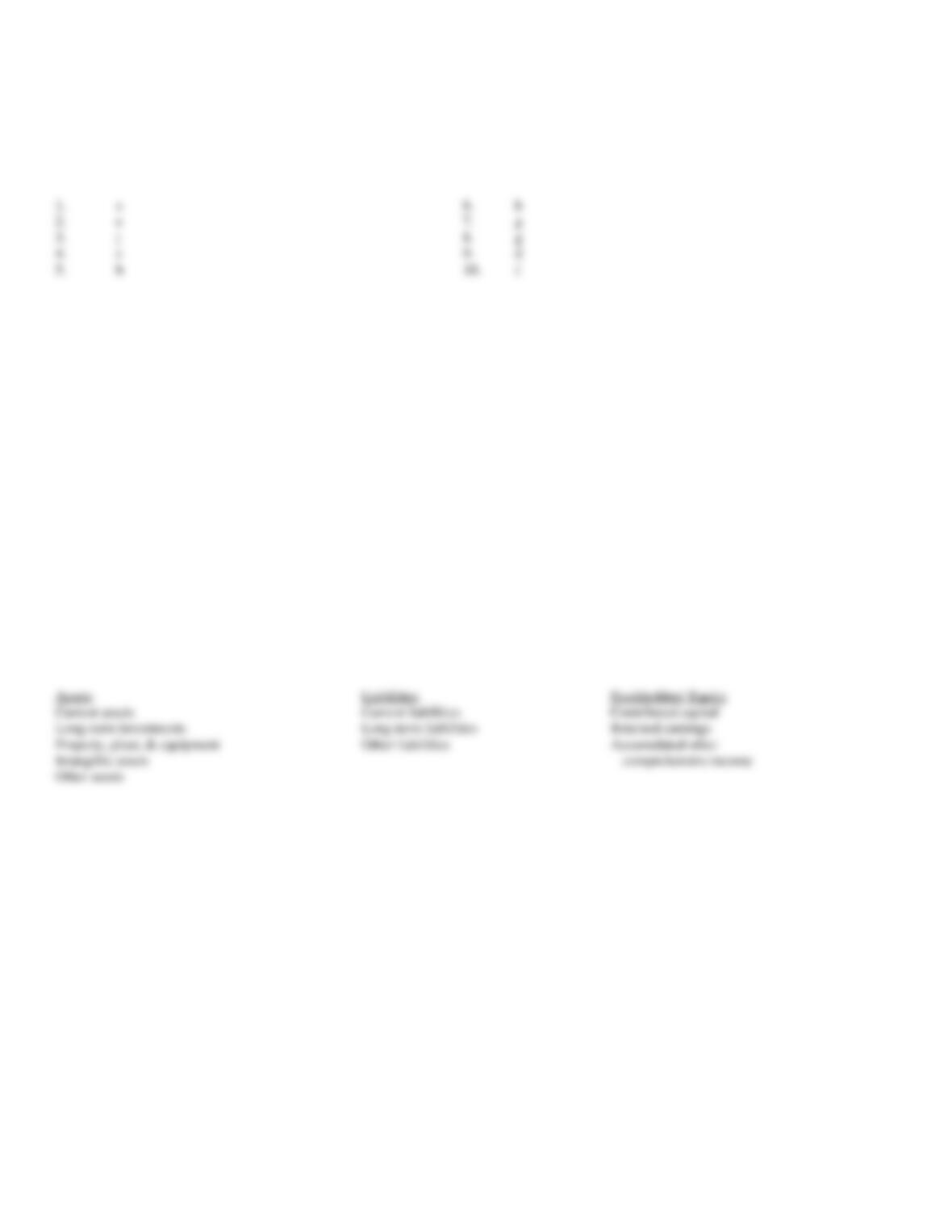
Using the letters (a-j), indicate in which section of the balance sheet the accounts (1-10) would most likely be classified.
72. A corporation’s balance sheet is usually divided into three sections with various subclassifications reported
within each group in an informative manner. Listed below are some typical subclassifications.
Contributed capital
Other assets
Current assets
Other liabilities
Current liabilities
Property, plant, & equipment
Intangible assets
Retained earnings
Long-term investments
Accumulated other comprehensive income
Long-term liabilities
Required:
Identify each of the three balance sheet sections and list the subclassifications within each section in the appropriate order.
Assets
Liabilities
Stockholders’ Equity
Current assets
Current liabilities
Contributed capital
Long-term investments
Long-term liabilities
Retained earnings
Property, plant, & equipment
Other liabilities
Accumulated other
Intangible assets
comprehensive income
Other assets
73. The following information has been provided by Slick Company:
Unearned rent
$ 500
Retained earnings (unrestricted)
41,000
Donated capital
8,000
Common stock, $5 par
50,000
Premium on bonds payable
800
Bonds payable
8,000
Additional paid-in capital on common stock
25,000
Treasury stock, at cost
9,000
Retained earnings restricted for plant expansion
7,000
Sinking fund for bond retirement
1,250
1.
a
6.
h
2.
e
7.
g
3.
j
8.
g
c
d
5.
b
10.
f
Required:
Prepare the stockholders’ equity section of the balance sheet for Slick.
74. On January 1, 2010, Martinez Corporation had the following stockholders’ equity account balances:
Accumulated other comprehensive income
$ 30,000
Additional paid-in capital on common stock
80,000
Common stock, $5 par (30,000 shares authorized)
50,000
Retained earnings
140,000
During 2010, the following events occurred in the order listed and were properly recorded:
·
The company issued 3,000 shares of common stock at $20 per share.
·
The company earned net income of $26,300.
·
The company paid a $1.20 per share dividend on its common stock.
·
The company experienced an unrealized decrease in the value of its investment in available-for-sale securities of $3,000.
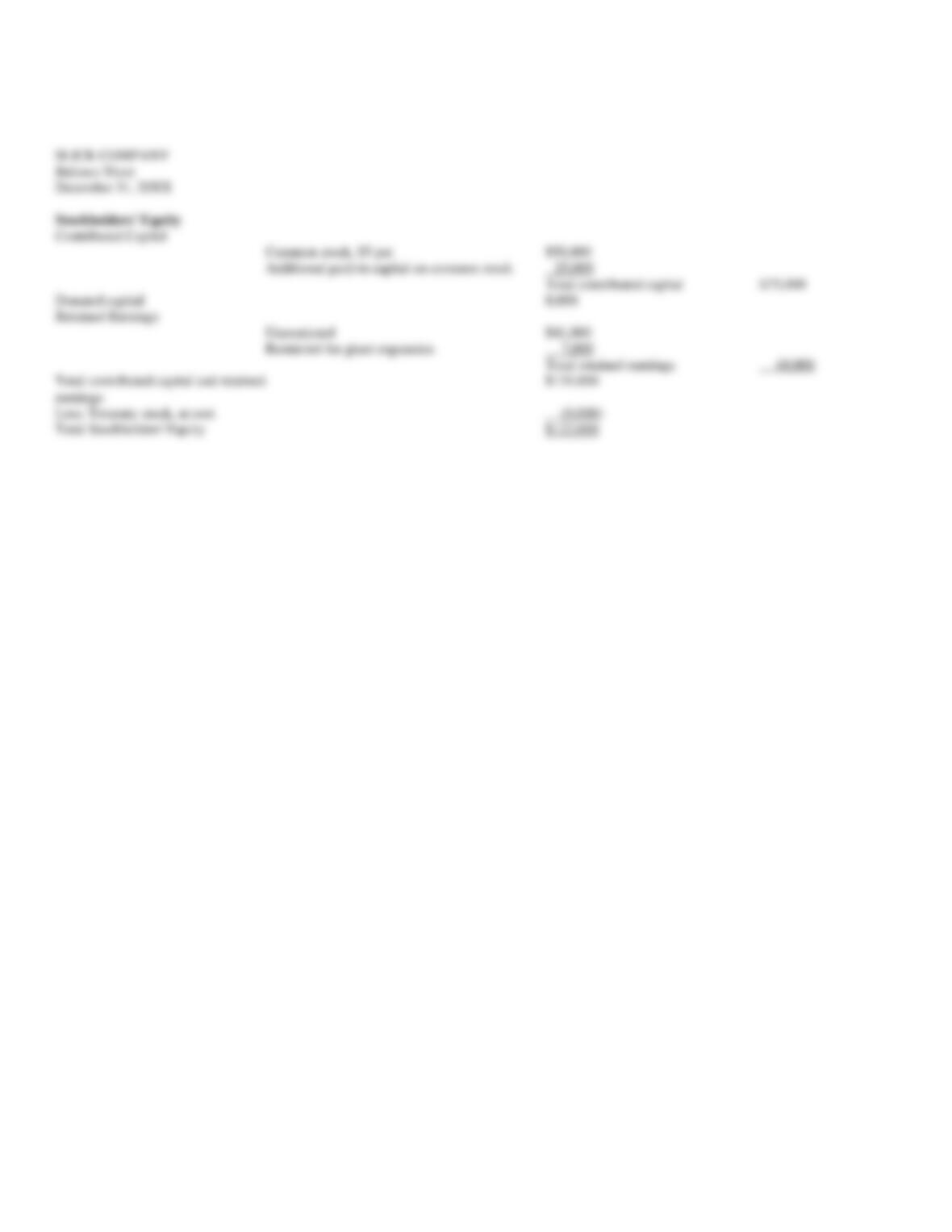
SLICK COMPANY
Balance Sheet
December 31, 20XX
Contributed Capital
Common stock, $5 par
$50,000
Additional paid-in capital on common stock
25,000
Total contributed capital
$75,000
Donated capital
8,000
Retained Earnings
Unrestricted
$41,000
Restricted for plant expansion
7,000
Total retained earnings
48,000
earnings
Less: Treasury stock, at cost
(9,000)
Total Stockholders’ Equity
$122,000
Required:
Prepare a statement of changes in stockholders’ equity for 2010.
75. A list of statements follows:
a.
A balance sheet summarizes the ____________________ ____________________ of a company.
b.
GAAP defines the ____________________ of a corporate balance sheet.
c.
Temporary investments in marketable securities are classified as ____________________ ____________________ and securities
available for sale.
d.
____________________ ____________________ is the amount of stockholders’ equity that a corporation may not distribute as
dividends.
e.
Unrealized increase in the value of available-for-sale securities is an example of ____________________ ____________________
____________________ ____________________.
f.
APB Opinion No. 22 recommends that the first footnote to the financial statements describe a company’s ____________________
____________________ ____________________.
g.
A(n) ____________________ ____________________ is one that occurs between the balance sheet date and the date the annual report
is issued.
Accumulated
Additional
Other
Common
Paid-In Capital
Retained
Comprehen-
Stock, $5 par
On Common
Earnings
sive Income
Total
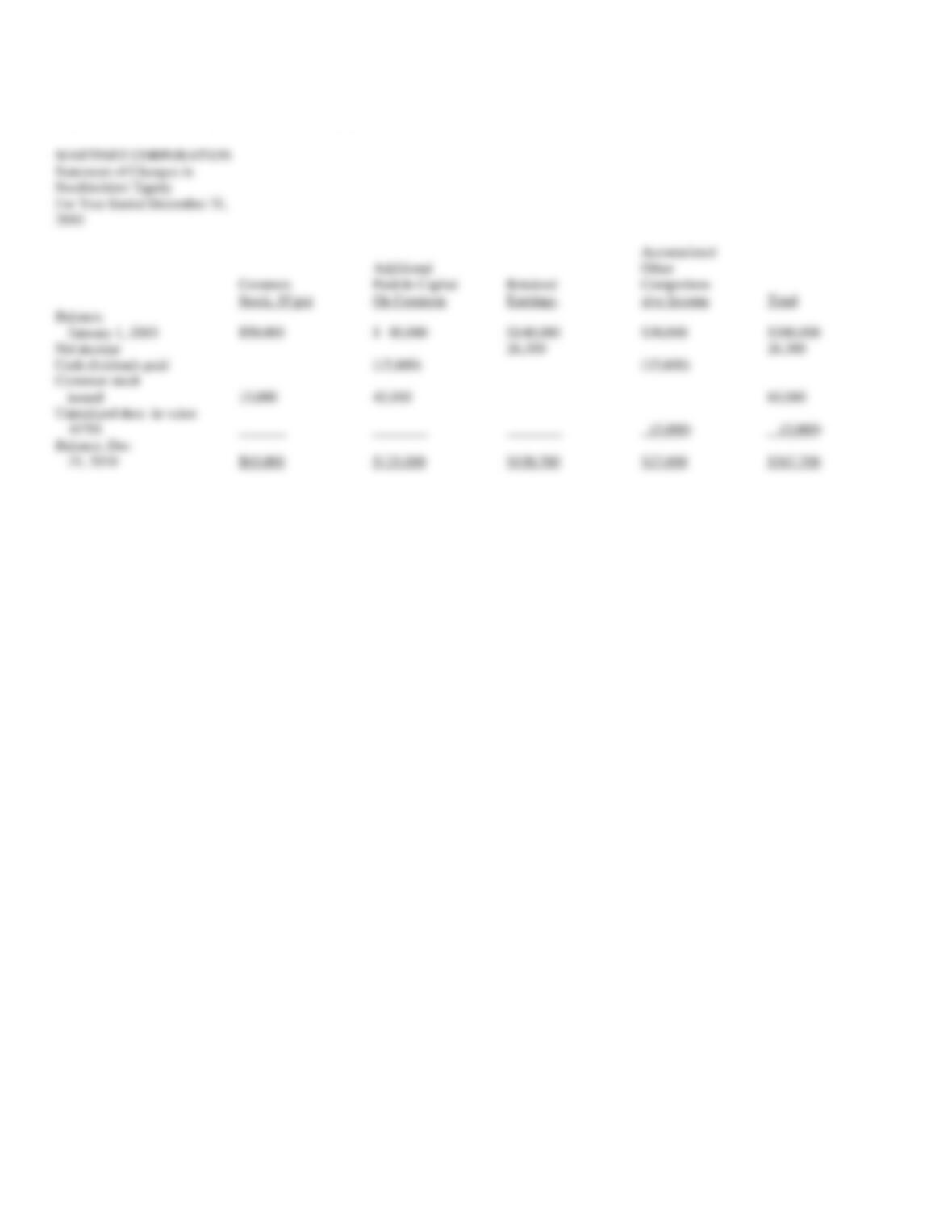
Balance,
January 1, 2010
$50,000
$ 80,000
$140,000
$30,000
$300,000
Net income
26,300
26,300
Cash dividends paid
(15,600)
(15,600)
Common stock
issued
15,000
45,000
60,000
Unrealized decr. in value
AFSS
(3,000)
(3,000)
Balance, Dec
31, 2010
$65,000
$125,000
$150,700
$27,000
$367,700
Required:
Fill in the words necessary to complete the statements.
76. A client of your accounting firm is impressed with the precision and detail in the financial statements that
you have just prepared for his company. However, he wants to know if there are any limitations to the
information contained in them.
Required:
Describe four limitations of the balance sheet.
77. A friend of the family has just received her first set of financial statements from her accountant. When she
finds out that you are an accounting major, she asks you the following question: “Why aren’t my employees
listed as an asset on my company’s balance sheet?”
Required:
Write an explanation describing the characteristics that an economic resource must possess in order to be
considered an asset. Include in your discussion the primary reason why “human resources” are not recognized as
assets.
78. With all of the turmoil in the financial markets in 2008, one of your friends has emailed you because she has
been wondering about the financial disclosure requirements for the banks and brokerage firms affected by the
market turbulence. Explain to your friend the general accounting requirements for financial instruments.
79. A friend comes to you with a set of financial statements that he thinks contains an error. The footnotes
contain a note on a bond issue sold after the end of the reporting period. Your friend is sure this is an error
because the transaction occurred after the cutoff date for the financial statements.
Required:
Explain to your friend why certain items that occur after the end of an accounting period are included in the
financial statements and the manner in which they can be disclosed.