Chapter 04 – Financial Reporting and Analysis
TRUE/FALSE
1. Only investors have an interest in a company’s ability to generate favorable cash flows.
2. Investors and creditors use financial statements to evaluate a company’s ability to pay dividends and
interest.
3. Financial statements are not important to the efficient allocation of resources in our economy.
4. Financial statements are generally prepared for a limited number of users.
5. The same set of financial statements usually is prepared for each user.
6. An advantage of accounting information is that it provides exact and completely reliable measures.
7. Accounting information does not contain estimates, classifications, summarizations, judgments, and
allocations.
8. For accounting information to be useful, it must be both relevant and reliable.
9. The Sarbanes-Oxley Act requires the management of a company to guarantee, to its knowledge, that
the financial statements that are filed with the SEC are accurate and complete.
10. Only the chief financial officer and the company’s CPAs are responsible for the accuracy of financial
statements. The chief executive officer is not expected to understand financial information.
11. Providing financial information that is useful to present and potential equity investors, lenders, and
other creditors in decision making is the objective of financial reporting.
12. When no errors have been made, accounting is always 100 percent accurate.
13. The relevance of accounting information is also an indication of its faithful representation.
14. To understand accounting information, users must be familiar with the accounting conventions, or
rules of thumb, used in preparing financial statements.
15. Consistency in accounting means that a company uses the same generally accepted accounting
principles from one accounting period to the next accounting period.
16. The convention of consistency pertains to the use of the same accounting principles by all firms.
17. A material item is one that is likely to affect a user’s decision.
18. In accounting, $500 is considered the dividing line between material and immaterial amounts.
19. The convention of materiality requires that financial statements present all the information relevant to
users’ understanding of the statements.
20. Illegal acts of a small dollar amount can be ignored because they are immaterial.
21. Although a stapler that costs $15 is a long-term asset, it can be expensed because the amount is
immaterial and will not affect anyone’s decision making.
22. General-purpose external financial statements that are divided into subcategories are called current
financial statements.
23. Classified balance sheets list accounts in alphabetical order.
24. Natural resources, such as coal mines and oil wells, are classified as property, plant, and equipment.
25. It is possible for an asset to be a current asset even though the expected conversion of that asset into
cash is to be longer than one year.
26. The investments category on the balance sheet normally includes investments that are intended to be
held for a long period of time.
27. The main difference between intangible assets and property, plant, and equipment is the length of the
asset’s life.
28. The main difference among the balance sheets of the sole proprietorship, the partnership, and the
corporation is found in the liabilities section.
29. The two parts of a corporation’s stockholders’ equity section are contributed capital and retained
earnings.
30. The Retained Earnings portion of a corporation’s balance sheet represents the earnings of the
corporation less any losses, dividends, or transfers to contributed capital.
31. Contributed capital is shown on a corporate balance sheet as two amounts: the par value of the issued
stock and additional paid-in capital.
32. The term owner’s equity is a more accurate term than net worth because many assets are recorded at
original cost rather than at current value.
33. Operating expenses include cost of goods sold.
34. For a merchandising company, the difference between net sales and cost of goods sold is called gross
margin.
35. On the income statement of a merchandising company, net income is the amount by which net sales
exceed operating expenses.
36. Accounting expense is a selling expense on the income statement.
37. General and administrative expenses are a category of operating expense.
38. Advertising expense appears as a general and administrative expense on the income statement.
39. An advantage of the single-step income statement is that it is less complex than the multistep form.
40. Freight paid on goods shipped to customers is classified as a general and administrative expense.
41. Interest paid on bank loans is classified as cost of goods sold.
42. The single-step and multistep income statements result in the same net income figures.
43. Advertising expense should be included in the general and administrative expenses section of a
multistep income statement.
44. Earnings per share, often called net income per share, is the final figure or “bottom line” of an income
statement.
45. Sales returns and allowances are not deducted from gross sales on the balance sheet.
46. The income statement of a company that provides a service only will contain gross margin.
47. Both return on assets and debt to equity ratio are profitability measures.
48. Return on assets is a measure of profitability.
49. Return on assets is a better measure of profitability than profit margin because it takes into account the
assets invested in the business.
50. Return on assets measures how efficiently assets are used to produce sales.
51. A debt to equity ratio of 1.0 means that half of the company’s assets are financed by creditors.
52. Profit margin and gross margin are not the same thing.
53. Cash return on assets is measured in percent.
54. A company with a profit margin of 6 percent earns six cents profit for every dollar of net sales.
55. A company with a high debt to equity ratio is in a more vulnerable position during poor economic
times than a company with a low debt to equity ratio.
56. A cash flow yield of 2.5 times is considered better than one of 2.0 times.
MULTIPLE CHOICE
1. All the following are qualitative characteristics of accounting information except
a.
flexibility.
b.
comparability.
c.
verifiability.
d.
relevance.
2. According to the FASB, the usefulness of accounting is judged by which of the following two prime
qualitative characteristics of accounting information?
a.
Timeliness and understandability
b.
Understandability and relevance
c.
Verifiability and faithful representation
d.
Relevance and faithful representation
3. The qualitative characteristic of faithful representation contains all the following features except
a.
complete.
b.
verifiability.
c.
neutral.
d.
free from material error.
4. Accounting information should make a difference to the outcome of a decision, according to the
qualitative characteristic of
a.
faithful representation.
b.
relevance.
c.
comparability.
d.
understandability.
5. The user can depend on the accuracy of financial information when which of the following qualitative
characteristics has been followed?
a.
Relevance
b.
Faithful representation
c.
Understandability
d.
Timeliness
6. The Securities and Exchange Commission instituted rules requiring the chief executive officers and
chief financial officers of all publicly traded companies to certify that, to their knowledge, the
quarterly and annual statements that their companies file with the SEC are
a.
100 percent accurate and contain no misstatements, errors, or mistakes.
b.
accurate and complete.
c.
subject to interpretation due to the many accounting rules and regulations.
d.
not to be used except by individuals working for the company.
7. Who is responsible for preparing financial statements?
a.
The CPA firm that audits the financial statements
b.
Management of the company
c.
A company’s accounting department
d.
The FASB
8. The lower-of-cost-or-market method of accounting for inventories follows the convention of
a.
full disclosure.
b.
materiality.
c.
conservatism.
d.
cost-benefit.
9. The convention of consistency refers to the consistent use of accounting principles
a.
among all firms in a particular industry.
b.
throughout one accounting period.
c.
among all firms.
d.
among accounting periods.
10. The convention of consistency relates most closely to
a.
verifiability.
b.
comparability.
c.
timeliness.
d.
faithful representation.
11. Which accounting convention describes a note to the financial statements explaining the company’s
method of revenue recognition?
a.
Comparability and consistency
b.
Materiality
c.
Conservatism
d.
Full disclosure
12. A practical decision to expense small capital expenditures rather than record them as property, plant,
and equipment and depreciate them is probably made on the basis of the convention of
a.
comparability.
b.
consistency.
c.
materiality.
d.
faithful representation.
13. The accounting convention that is most responsible for the increase in the number of notes to financial
statements is
a.
materiality.
b.
full disclosure.
c.
consistency.
d.
conservatism.
14. To obtain a slightly more accurate measure of net income, Gabrielli, Inc., has determined that it must
hire two full-time accountants. If it decides against the hiring, it has followed the convention of
a.
full disclosure.
b.
verifiability.
c.
consistency.
d.
cost-benefit.
15. Which of the following accounting conventions would an accountant most likely apply when facing
major uncertainties?
a.
Full disclosure
b.
Conservatism
c.
Materiality
d.
Consistency
16. Expensing a building in the year of purchase represents an abuse of which of the following accounting
conventions?
a.
Relevance
b.
Cost-benefit
c.
Conservatism
d.
Timeliness
17. Which accounting convention could cause an overload of information for the financial statement user?
a.
Consistency
b.
Conservatism
c.
Full disclosure
d.
Materiality
18. A company should classify land held for a planned manufacturing facility as
a.
an intangible asset.
b.
an investment.
c.
a current asset.
d.
property, plant, and equipment.
19. Which of the following should be classified as an intangible asset?
a.
Land held for future use
b.
Natural resources
c.
Equipment
d.
Goodwill
20. A corporation’s stockholders’ equity section of the balance sheet may contain all except
a.
T. McDonald, capital
b.
Retained earnings
c.
Additional paid-in capital
d.
Common stock
21. An investment is classified as short term or long term based on
a.
whether the investment can be sold immediately.
b.
the length of time the investor expects to hold it.
c.
the purpose for which it is held.
d.
the dollar amount of the investment.
22. Which of the following appears on the balance sheet?
a.
Rent income
b.
Depreciation expense
c.
Net sales
d.
Merchandise inventory
23. Which accounting term does not mean the same as the others?
a.
Retained earnings
b.
Net worth
c.
Capital
d.
Owner’s equity
24. Patents would appear in which section of the balance sheet?
a.
Contributed capital
b.
Property, plant, and equipment
c.
Current liabilities
d.
Intangible assets
25. Oil wells and coal mines used in the normal course of business would appear in which section of the
balance sheet?
a.
Property, plant, and equipment
b.
Investments
c.
Current assets
d.
Intangible assets
26. The normal operating cycle helps define which of the following balance sheet sections?
a.
Intangible assets
b.
Current assets
c.
Property, plant, and equipment
d.
Stockholders’ equity
27. Liabilities have which of the following two major categories?
a.
Investments and long term
b.
Contributed capital and retained earnings
c.
Current and long term
d.
Current and intangible
28. The owner’s capital for a sole proprietorship is similar in nature to which of the following for
corporations?
a.
Stockholders’ equity
b.
Retained earnings
c.
Common stock
d.
Dividends
29. Which of the following accounts is most likely to appear on the balance sheet as a current liability?
a.
Accumulated Depreciation
b.
Bonds Payable
c.
Mortgage Payable
d.
Wages Payable
30. Which of the following should not be classified as a current asset?
a.
A one-year installment receivable from the sale of a truck
b.
An investment expected to be needed for operations in the next year
c.
A one-year prepaid insurance policy
d.
A fund to be used to purchase land
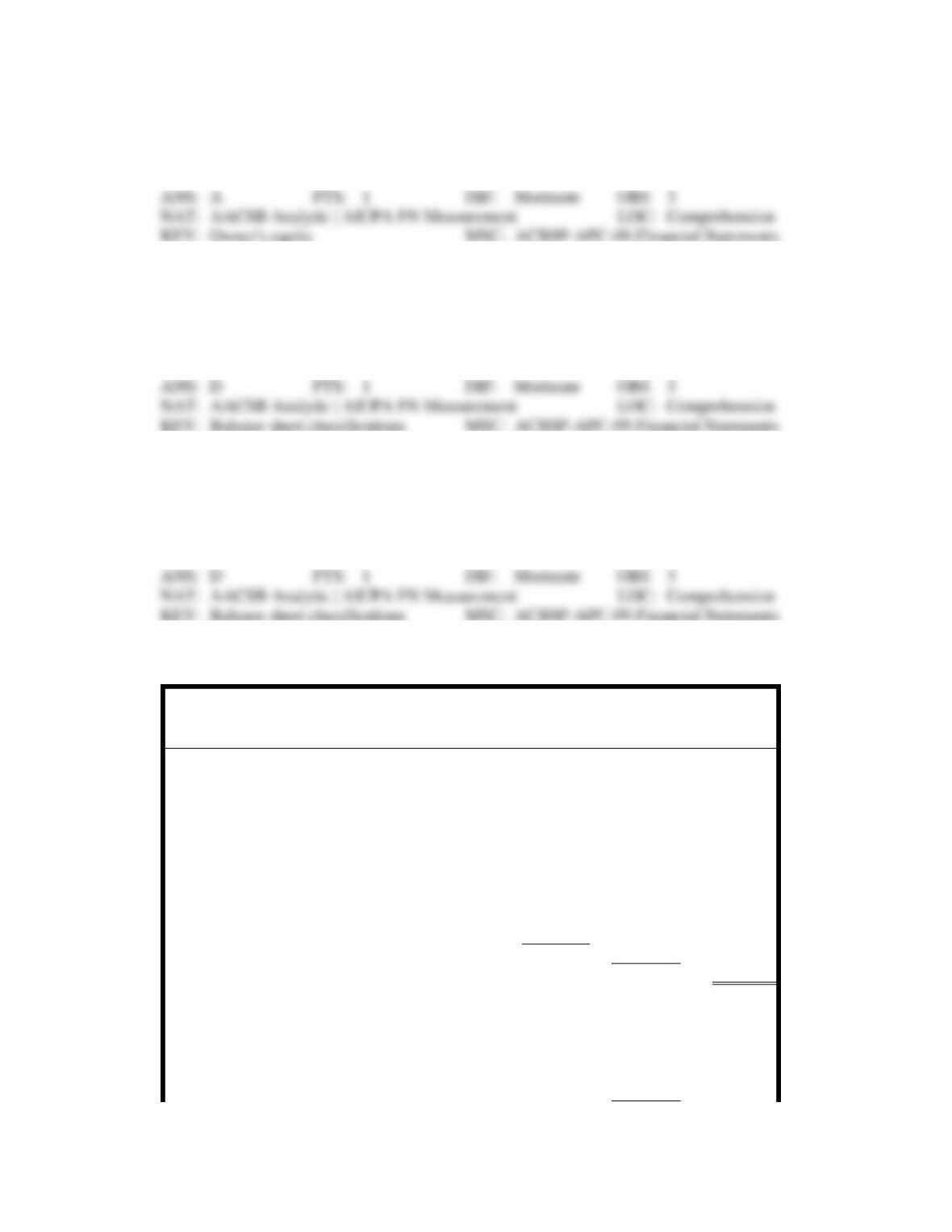
31. Use this information to answer the following question.
Becker, Inc.
Balance Sheet
December 31, 2013
Assets
Cash
$ 20,000
Short-term investments
80,000
Notes receivable (due in ten months)
60,000
Accounts receivable
40,000
Merchandise inventory
140,000
Land held for future use
160,000
Land
180,000
Building
$200,000
Less accumulated depreciation
40,000
160,000
Trademark
140,000
Total assets
$980,000
Liabilities
Notes payable (due in six months)
$ 100,000
Accounts payable
40,000
Salaries payable
20,000
Mortgage payable (due in seven years)
180,000
Total liabilities
$340,000
Stockholders’ Equity
Common stock
$520,000
Retained earnings
120,000
Total stockholders’ equity
640,000
Total liabilities and stockholders’ equity
$980,000
The total dollar amount of assets to be classified as current assets is
a.
$280,000.
b.
$440,000.
c.
$240,000.
d.
$340,000.
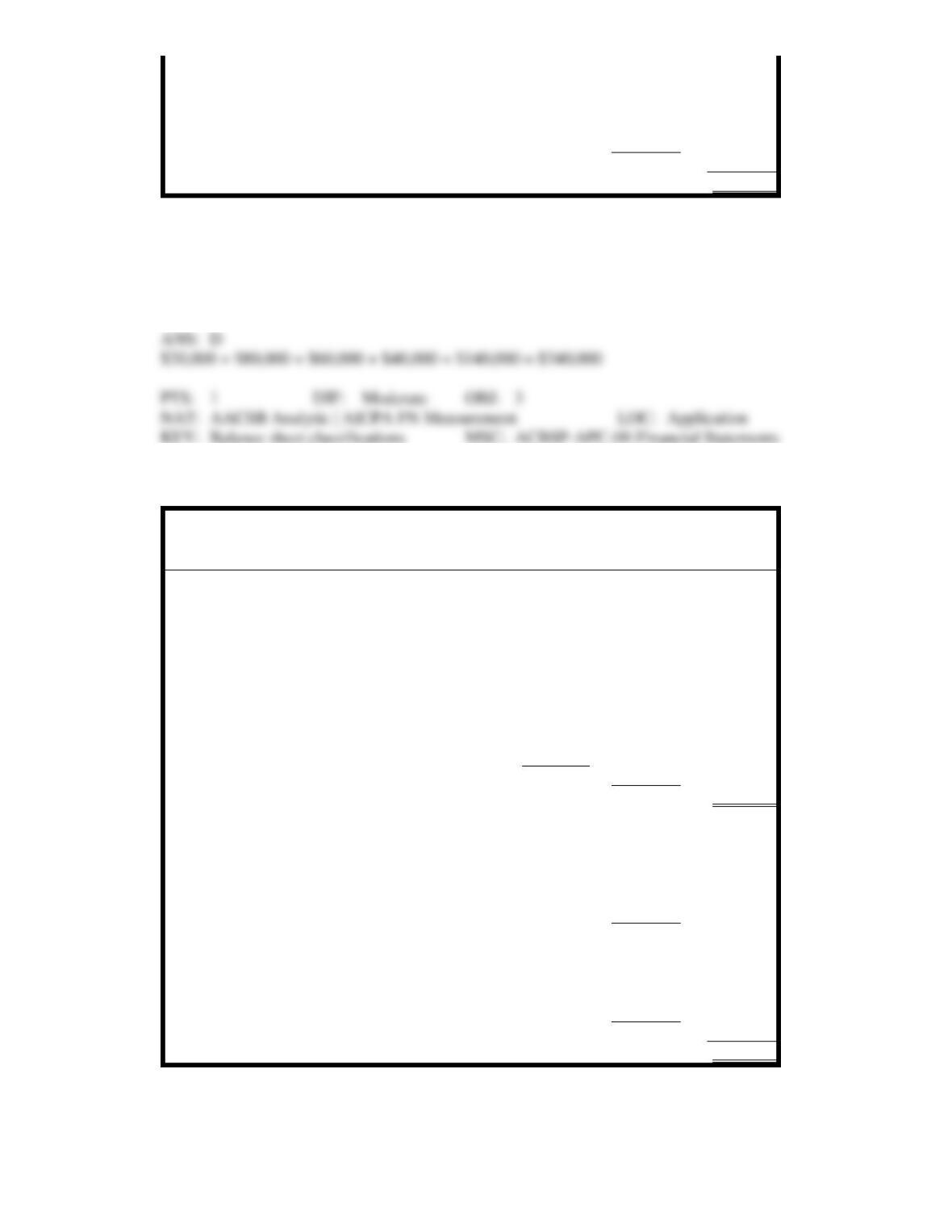
32. Use this information to answer the following question.
Becker, Inc.
Balance Sheet
December 31, 2013
Assets
Cash
$ 20,000
Short-term investments
80,000
Notes receivable (due in ten months)
60,000
Accounts receivable
40,000
Merchandise inventory
140,000
Land held for future use
160,000
Land
180,000
Building
$200,000
Less accumulated depreciation
40,000
160,000
Trademark
140,000
Total assets
$980,000
Liabilities
Notes payable (due in six months)
$ 100,000
Accounts payable
40,000
Salaries payable
20,000
Mortgage payable (due in seven years)
180,000
Total liabilities
$340,000
Stockholders’ Equity
Common stock
$520,000
Retained earnings
120,000
Total stockholders’ equity
640,000
Total liabilities and stockholders’ equity
$980,000
The total dollar amount of assets to be classified as investments is
a.
$200,000.
b.
$360,000.
c.
$0.
d.
$160,000.
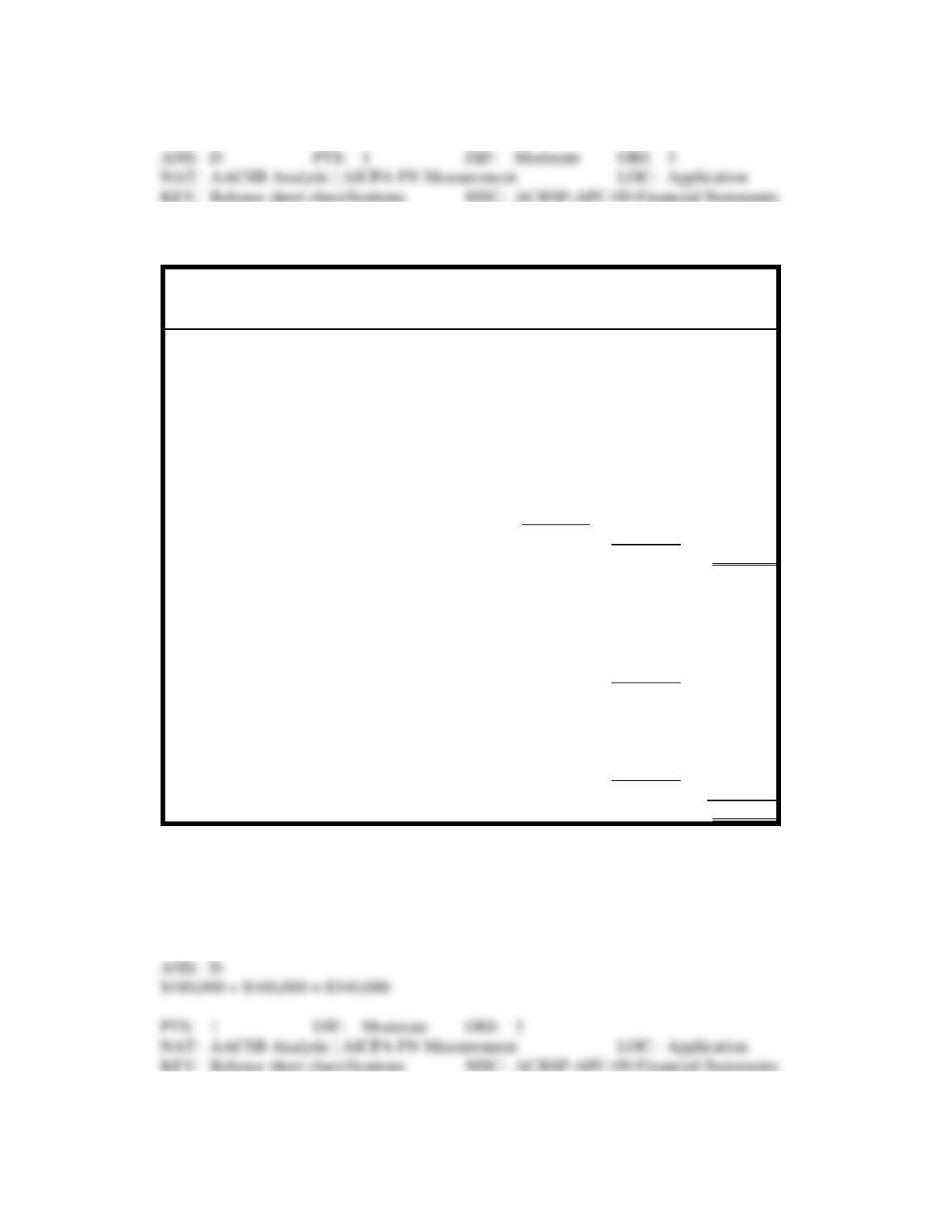
33. Use this information to answer the following question.
Becker, Inc.
Balance Sheet
December 31, 2013
Assets
Cash
$ 20,000
Short-term investments
80,000
Notes receivable (due in ten months)
60,000
Accounts receivable
40,000
Merchandise inventory
140,000
Land held for future use
160,000
Land
180,000
Building
$200,000
Less accumulated depreciation
40,000
160,000
Trademark
140,000
Total assets
$980,000
Liabilities
Notes payable (due in six months)
$ 100,000
Accounts payable
40,000
Salaries payable
20,000
Mortgage payable (due in seven years)
180,000
Total liabilities
$340,000
Stockholders’ Equity
Common stock
$520,000
Retained earnings
120,000
Total stockholders’ equity
640,000
Total liabilities and stockholders’ equity
$980,000
The total dollar amount of assets to be classified as property, plant, and equipment is
a.
$640,000.
b.
$480,000.
c.
$380,000.
d.
$340,000.
34. Use this information to answer the following question.
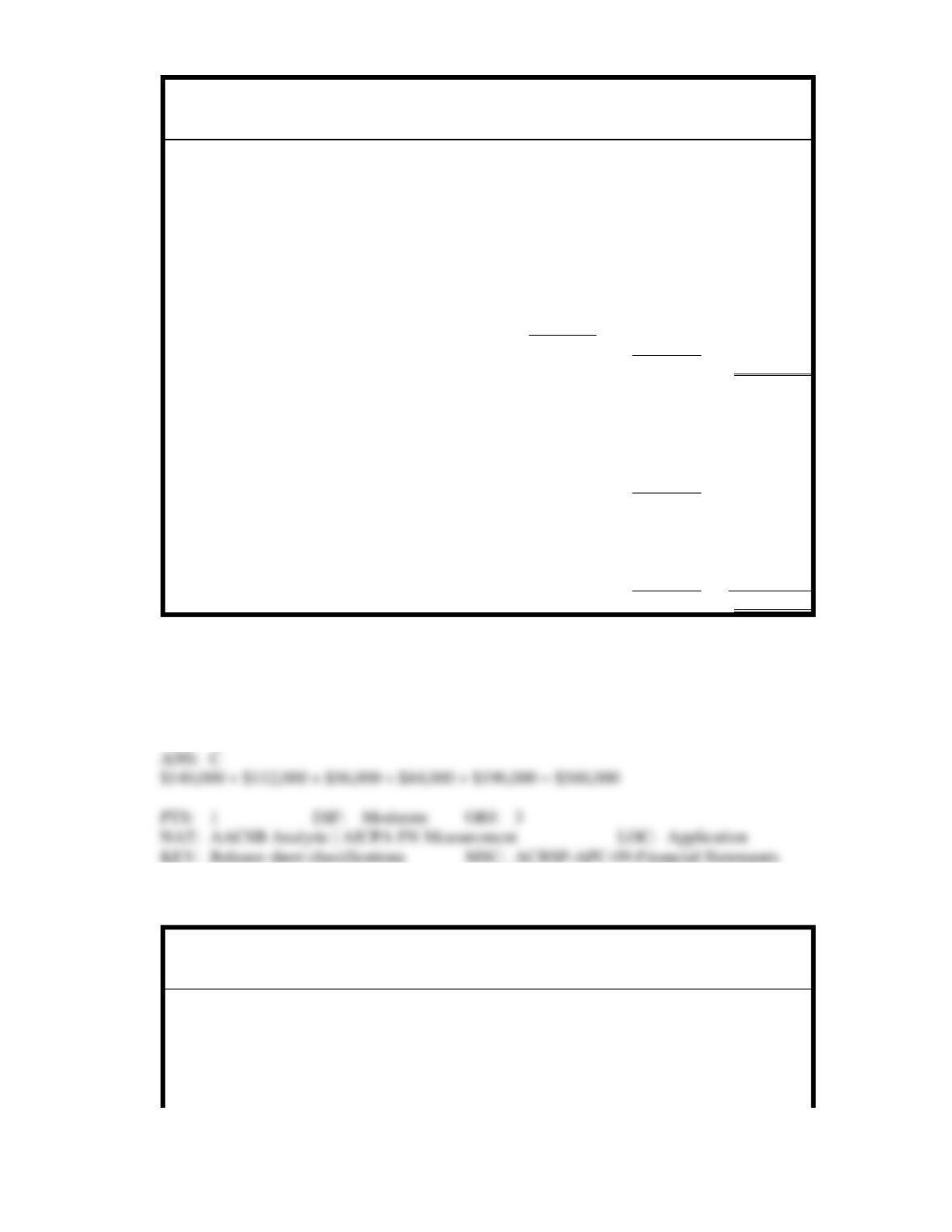
Cass Corporation
Balance Sheet
December 31, 2013
Assets
Cash
$ 140,000
Short-term investments
112,000
Accounts receivable
56,000
Notes receivable (due in one year)
84,000
Merchandise inventory
196,000
Land held for future use
224,000
Land
280,000
Building
$300,000
Less accumulated depreciation
56,000
244,000
Trademark
184,000
Total assets
$1,520,000
Liabilities
Notes payable (due in one year)
$ 140,000
Accounts payable
60,000
Salaries payable
28,000
Mortgage payable (due in seven years)
292,000
Total liabilities
$520,000
Stockholders’ Equity
Common stock
$600,000
Retained earnings
400,000
1,000,000
Total liabilities and stockholders’ equity
$1,520,000
The total dollar amount of assets to be classified as current assets is
a.
$504,000.
b.
$476,000.
c.
$588,000.
d.
$488,000.
35. Use this information to answer the following question.
Cass Corporation
Balance Sheet
December 31, 2013
Assets
Cash
$ 140,000
Short-term investments
112,000
Accounts receivable
56,000
Notes receivable (due in one year)
84,000
Merchandise inventory
196,000
Land held for future use
224,000
Land
280,000
Building
$300,000
Less accumulated depreciation
56,000
244,000
Trademark
184,000
Total assets
$1,520,000
Liabilities
Notes payable (due in one year)
$ 140,000
Accounts payable
60,000
Salaries payable
28,000
Mortgage payable (due in seven years)
292,000
Total liabilities
$520,000
Stockholders’ Equity
Common stock
$600,000
Retained earnings
400,000
1,000,000
Total liabilities and stockholders’ equity
$1,520,000
The total dollar amount of assets to be classified as investments is
a.
$336,000.
b.
$0.
c.
$224,000.
d.
$112,000.
36. Gross margin equals the difference between net sales and
a.
income taxes.
b.
income before income taxes.
c.
operating expenses.
d.
cost of goods sold.
37. Which of the following is not considered an operating expense?
a.
Rent expense
b.
Interest expense
c.
Freight-out expense
d.
Advertising expense
38. Which of the following accounts is not classified as a selling expense on the income statement?
a.
Freight-out expense
b.
Advertising expense
c.
Sales salaries expense
d.
Interest expense
39. Interest expense on a mortgage would be classified on a multistep income statement under the heading
a.
cost of goods sold
b.
selling expenses.
c.
operating expenses
d.
other revenues and expenses.
40. Which of the following appears in different sections of the income statement when prepared on a
single-step basis and when prepared on a multistep basis?
a.
Sales commissions
b.
Rent expense
c.
Interest expense
d.
Sales
41. Earnings per share are found on which financial statement?
a.
Balance sheet
b.
Income statement
c.
Statement of cash flows
d.
Statement of retained earnings
42. In which category would office salaries expense be included?
a.
Net sales
b.
Cost of goods sold
c.
Selling expenses
d.
General and administrative expenses
43. Which of the following is not considered a selling expense?
a.
Cost of goods sold
b.
Cost of storing goods
c.
Freight-out expense
d.
Advertising expense
44. Interest paid on debt would be entered on the multistep income statement in the category called
a.
selling expenses.
b.
other revenues and expenses.
c.
general and administrative expenses.
d.
operating expenses.
45. An advantage of the single-step income statement over the multistep form is
a.
the amount of information it provides.
b.
its simplicity.
c.
its comprehensiveness.
d.
its use in computing ratios.
46. Which of the following items is not shown on a single-step income statement?
a.
Cost of goods sold
b.
Interest expense
c.
Selling expenses
d.
Gross margin
47. A merchandiser will earn an operating income of exactly $0 when
a.
gross margin equals operating expenses.
b.
net sales equals cost of goods sold.
c.
cost of goods sold equals gross margin.
d.
operating expenses equal net sales.
48. Positive operating income will result if gross margin exceeds
a.
operating expenses.
b.
purchases.
c.
cost of goods sold.
d.
cost of goods sold minus operating expenses.
49. Income from operations is arrived after considering all except
a.
administrative salaries.
b.
interest income.
c.
the cost of sales.
d.
sales returns and allowances.
50. Which type of account is cost of goods sold?
a.
An asset account
b.
A liability account
c.
An expense account
d.
An income account
51. To which account is the cost of inventory transferred when a product is sold?
a.
Sales
b.
Freight expense
c.
Gross margin
d.
Cost of goods sold
52. Which type of account is gross margin?
a.
An income account
b.
An expense account
c.
An asset account
d.
None of these are correct
53. Which of the following is not a subtotal?
a.
Cost of goods sold
b.
Gross margin
c.
Net income
d.
Income from operations
54. The other revenues and expenses section of a multistep income statement could include all the
following except
a.
interest expense.
b.
investment income.
c.
dividend income.
d.
rent expense.