4-141
225.
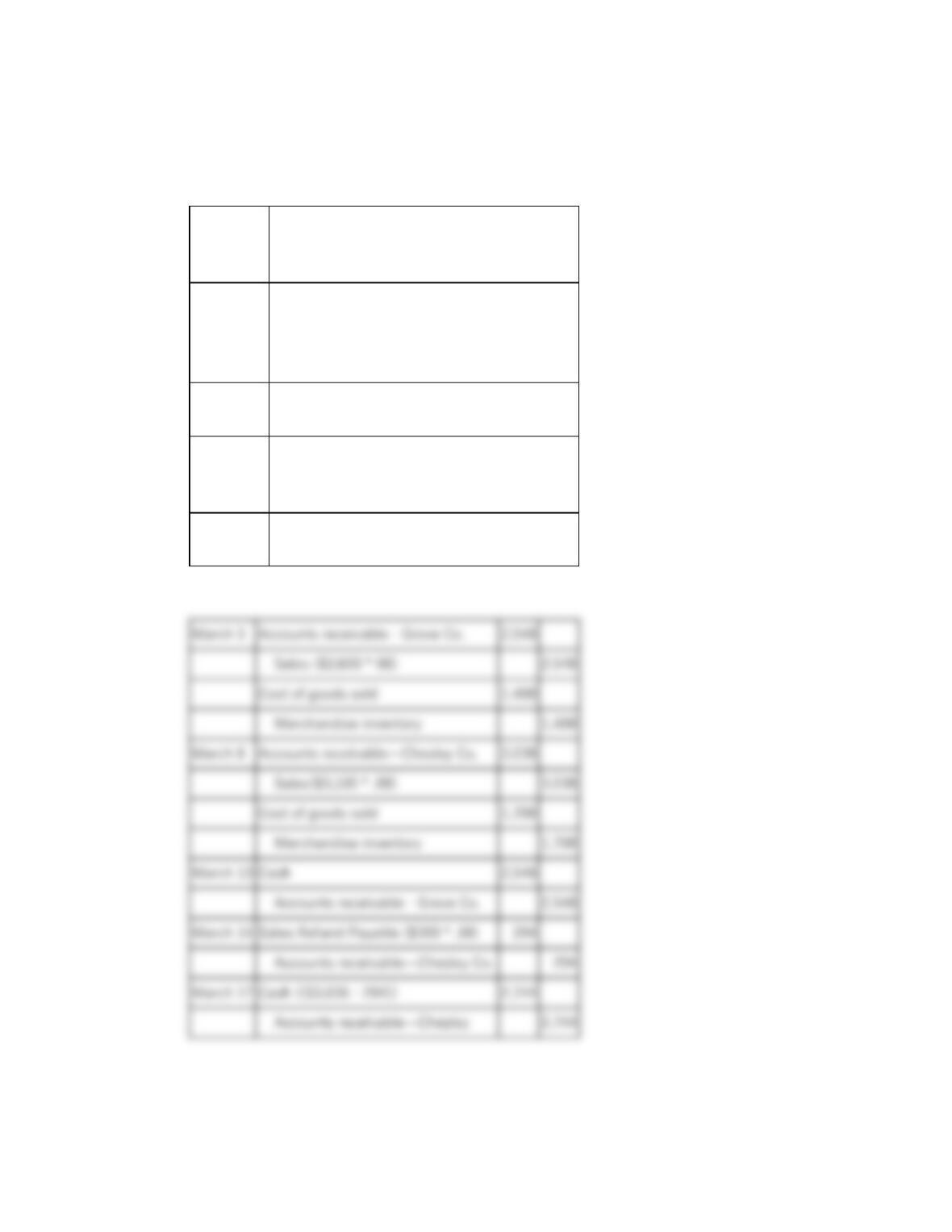
Prepare journal entries to record the following merchandising transactions of Prosser
Company, Inc., which uses the net method of accounting for sales and a
perpetual
inventory system.
Prosser
offers
all
of
its
credit
customers
credit
terms
of
2/10,
n/30
.
March 3
Sold merchandise to Grove Company for
$2,600, FOB shipping point, invoice dated
March 4. The merchandise had cost $1,400.
March 8
Sold merchandise to Chesley Company for
$3,100, FOB shipping point, invoice dated
March 8. The merchandise had a cost of
$1,700.
March 13
Received the balance due from Grove
Company within the discount period.
March 14
Issued a credit $300 credit memorandum to
Chesley Company for an allowance on
defective merchandise.
March 17
Received the balance due from Chesley
Company within the discount period.
March 3
Accounts receivable—Grove Co.
Sales ($2,600 * 98)
Cost of goods sold
Merchandise inventory
March 8
Accounts receivable—Chesley Co.
Sales($3,100 * .98)
Cost of goods sold
Merchandise inventory
March 13
4-142
226.
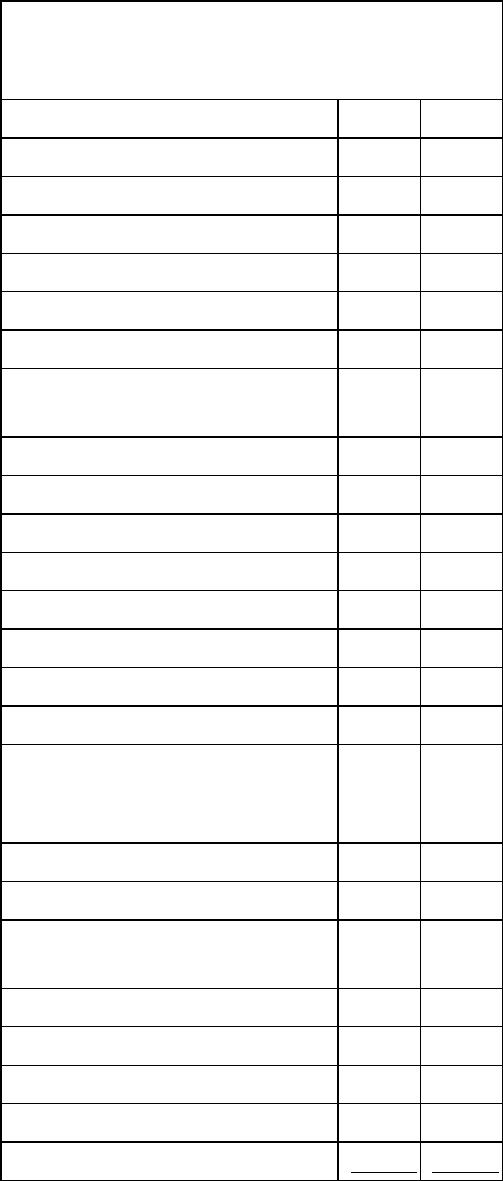
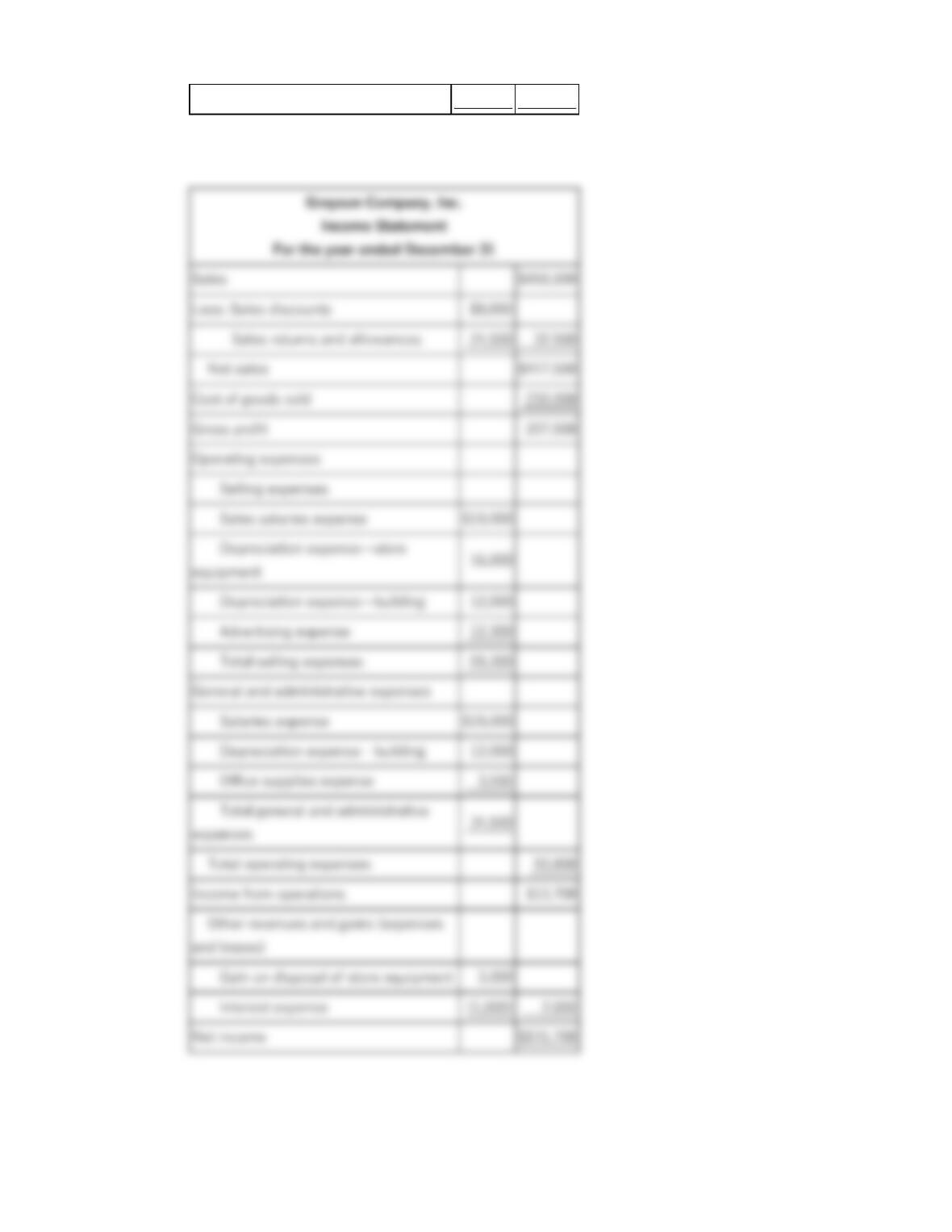
From the adjusted trial balance given below for the Grayson Company, Inc., prepare a
multiple-step income statement in good form. Salaries expense and building depreciation
expense should be equally divided between selling activities and the general and
administrative activities.
Grayson Company, Inc.
Adjusted Trial Balance
December 31
Debit
Credit
Cash
$19,500
Accounts receivable
27,000
Merchandise inventory
32,000
Inventory returns estimated
6,000
Office supplies
1,200
Store equipment
80,000
Accumulated depreciation—store
equipment
$25,000
Building
260,000
Accumulated depreciation—building
121,600
Accounts payable
20,500
Sales refund payable
8,000
Salaries payable
10,000
Common stock
1,000
Retained earnings
168,900
Dividends
45,000
Sales (net of $8,000 sales discounts
and $24,500 sales returns and
allowances)
417,500
Cost of goods sold
210,000
Salaries expense
38,000
Depreciation expense—store
equipment
16,000
Depreciation expense—building
24,000
Advertising expense
12,300
Office supplies expense
3,500
Gain on disposal of store equipment
3,000
Interest expense
1,000
4-143
Total
$775,500
$775,500
Sales
$450,000
equipment
expenses
227.
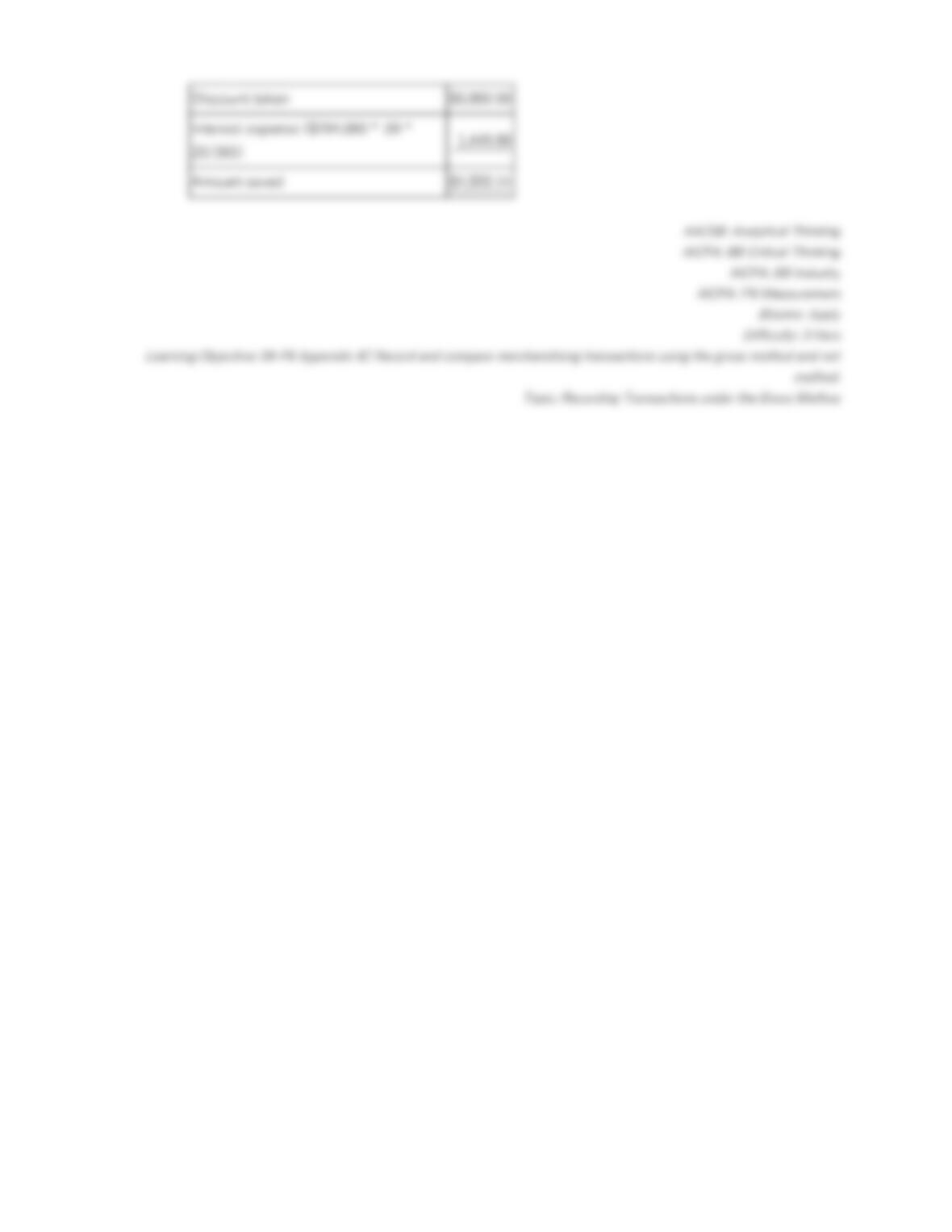
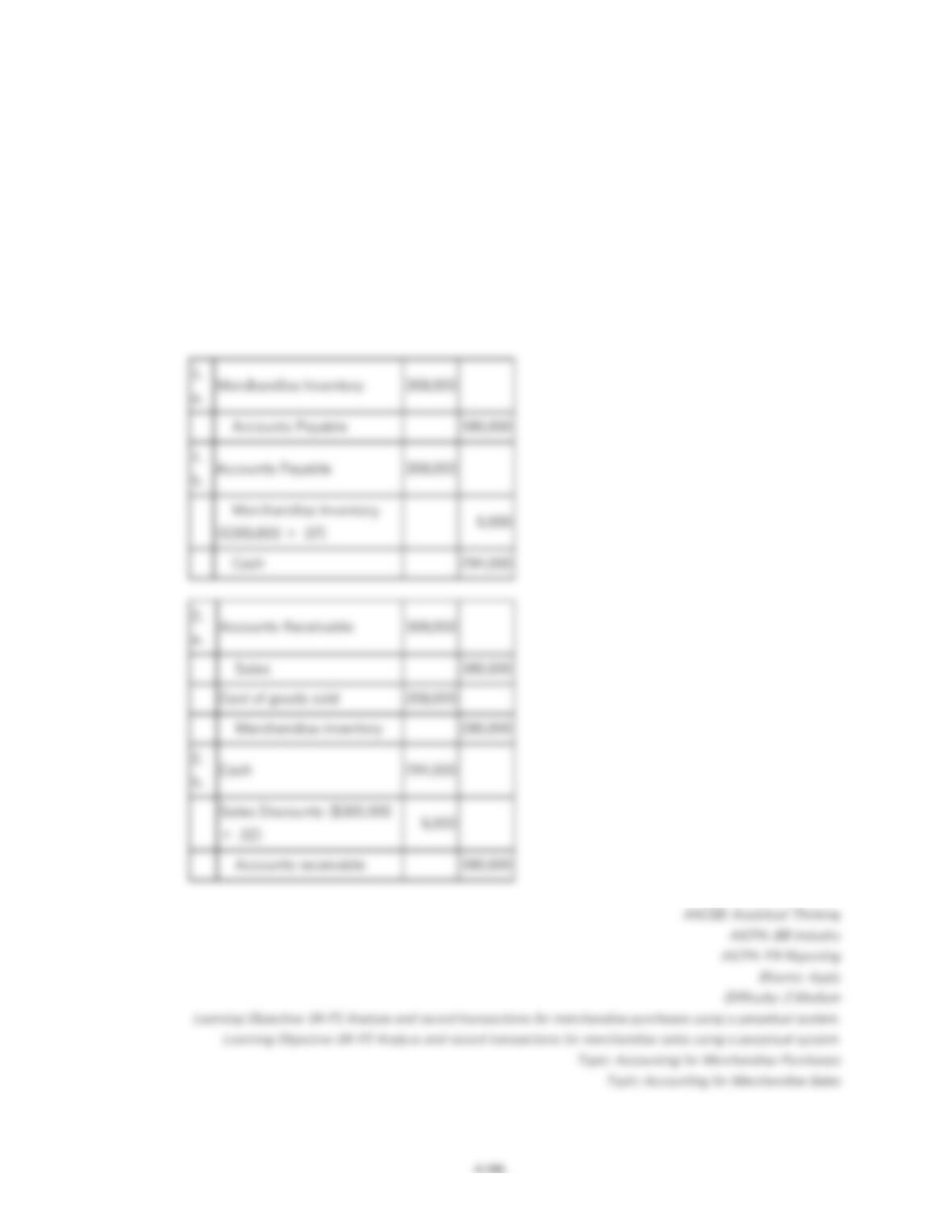
Vincent Company, Inc. purchased merchandise from Liu Company with an invoice price of
$300,000 and credit terms of 2/10, n/30. Liu Company’s cost for the merchandise was
$200,000. Vincent Company, Inc. paid within the discount period. Assume that both buyer
and seller use the net method of accounting for purchases and sales and a
perpetual
inventory system.
4-145
228.
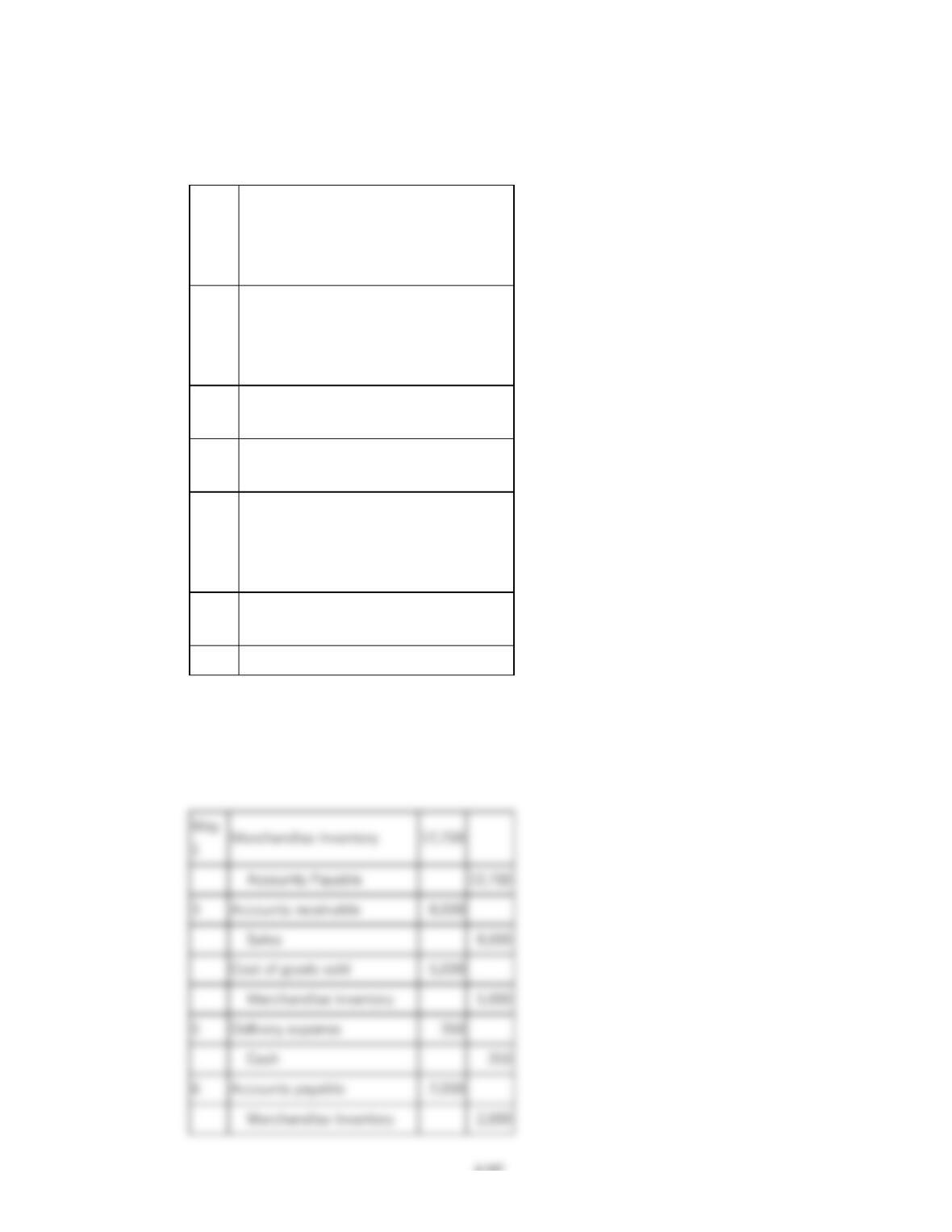
Vincent Company, Inc. purchased merchandise from Liu Company with an invoice price of
$300,000 and credit terms of 2/10, n/30. Liu Company’s cost for the merchandise was
$200,000. Vincent Company, Inc. paid within the discount period. Assume that both buyer
and seller use the gross method of accounting for purchases and sales and a
perpetual
inventory system.
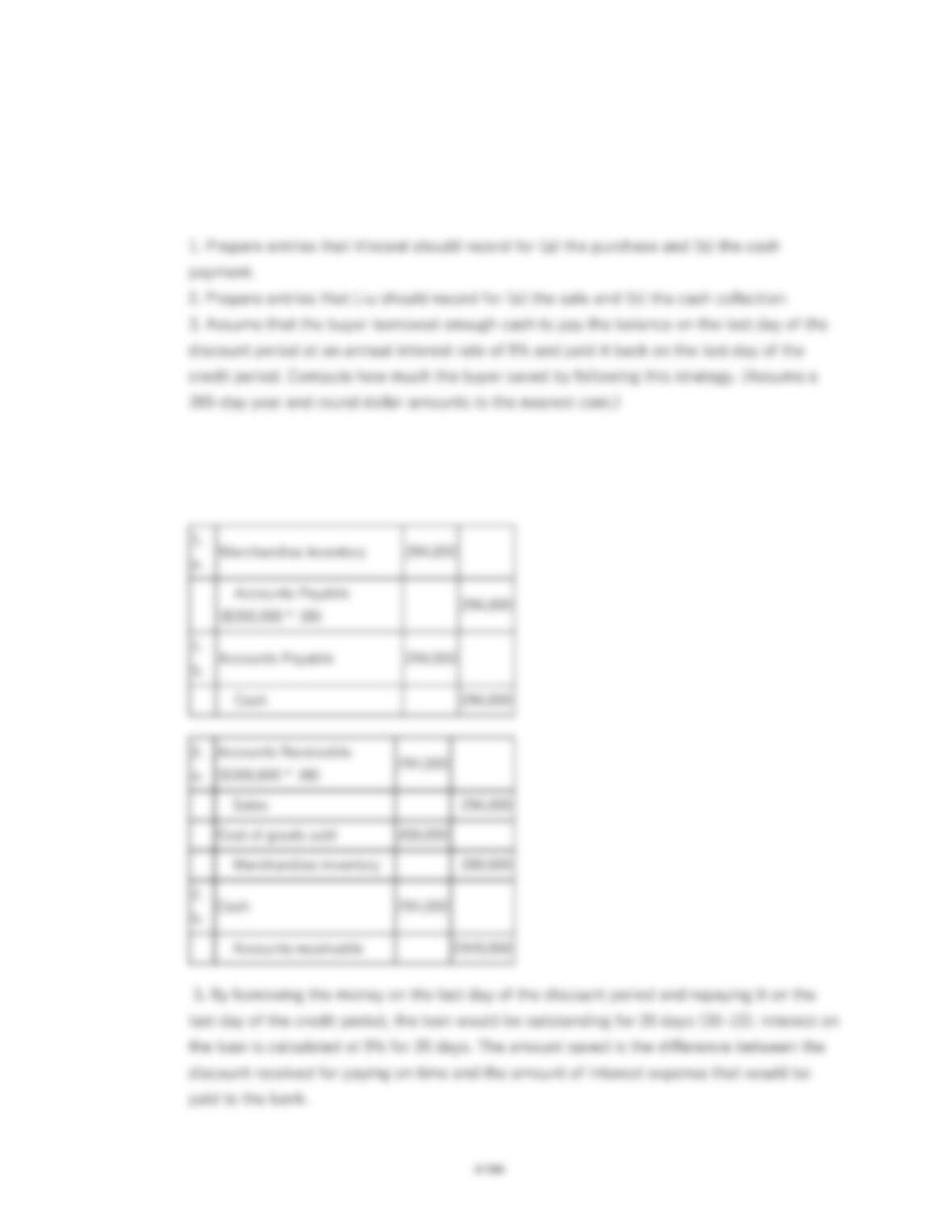
1. Prepare entries that Vincent should record for (a) the purchase and (b) the cash
payment.
2. Prepare entries that Liu should record for (a) the sale and (b) the cash collection.
4-147
229.
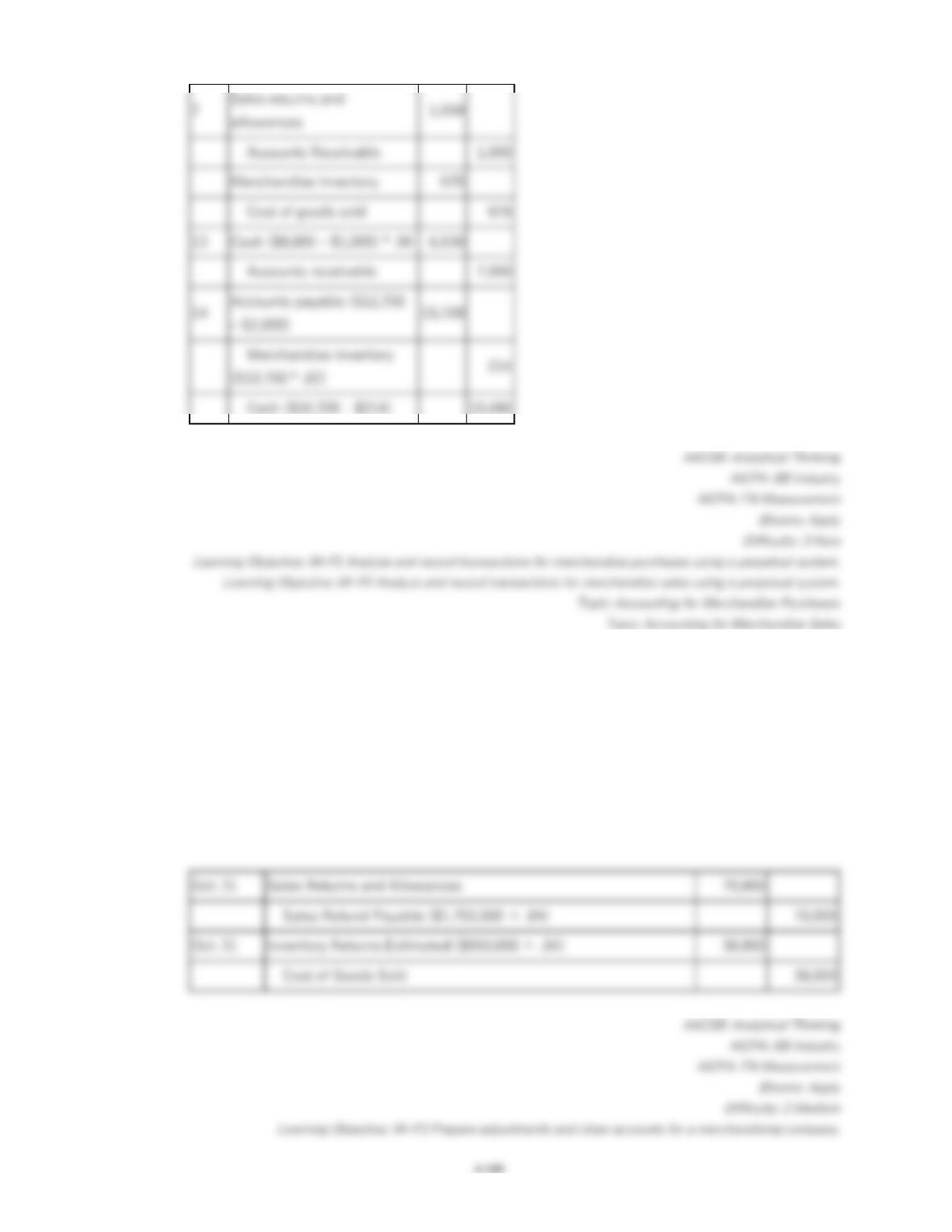
Prepare journal entries to record the following merchandise transactions of Martinez
Excavation Equipment, Inc., which uses the gross method of accounting for purchases and
sales and a
perpetual
inventory system.
May 1
Purchased merchandise from Kona
Company for $12,700 under credit terms
of 2/15, n/45, FOB destination, and
invoice dated May 1.
3
Sold merchandise to Walton for $8,000
under credit terms of 1/10, n/30, FOB
destination, invoice date May 3. The
merchandise had cost $5,000.
5
Paid $350 cash for shipping charges
related to the May 3 sale.
6
Returned $2,000 of the merchandise
purchased on May 1 to Kona Company.
7
Walton returned merchandise from the
May 3 sale that had been sold for $1,000
and had a cost of $625. The merchandise
was restored to inventory.
13
Received the balance due from Walton
less the return.
14
Paid the amount due Kona Company.
Accounts Payable
Accounts receivable
Sales
Cost of goods sold
Merchandise inventory
Delivery expense
Cash
230.
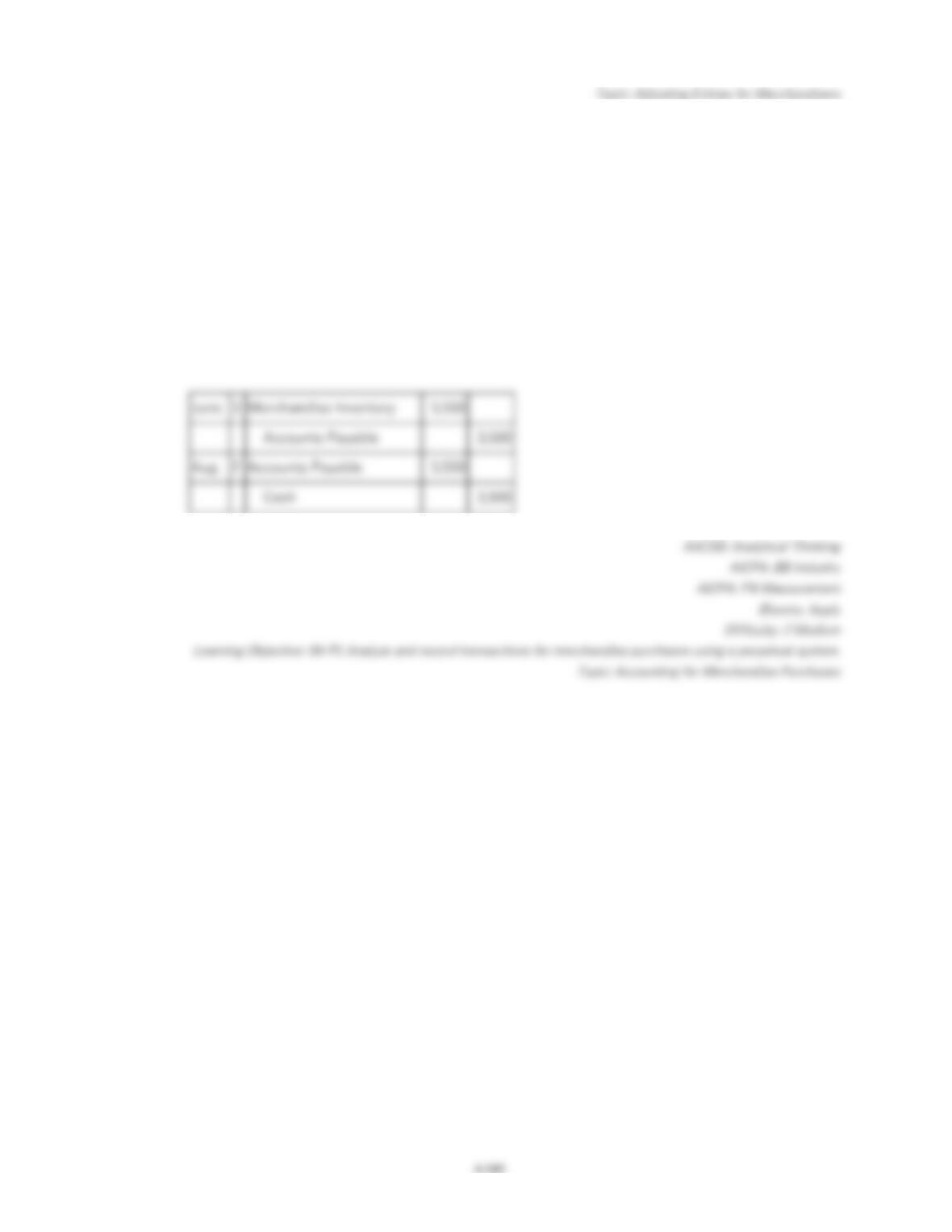
Clausen Corporation has estimated for October, based on current sales of $1,750,000 and
cost of goods sold of $950,000, that current and future returns and allowances will equal
4% of those sales. Prepare the adjusting entries necessary to record the revenue side and
cost side estimates for returns and allowances.
231.
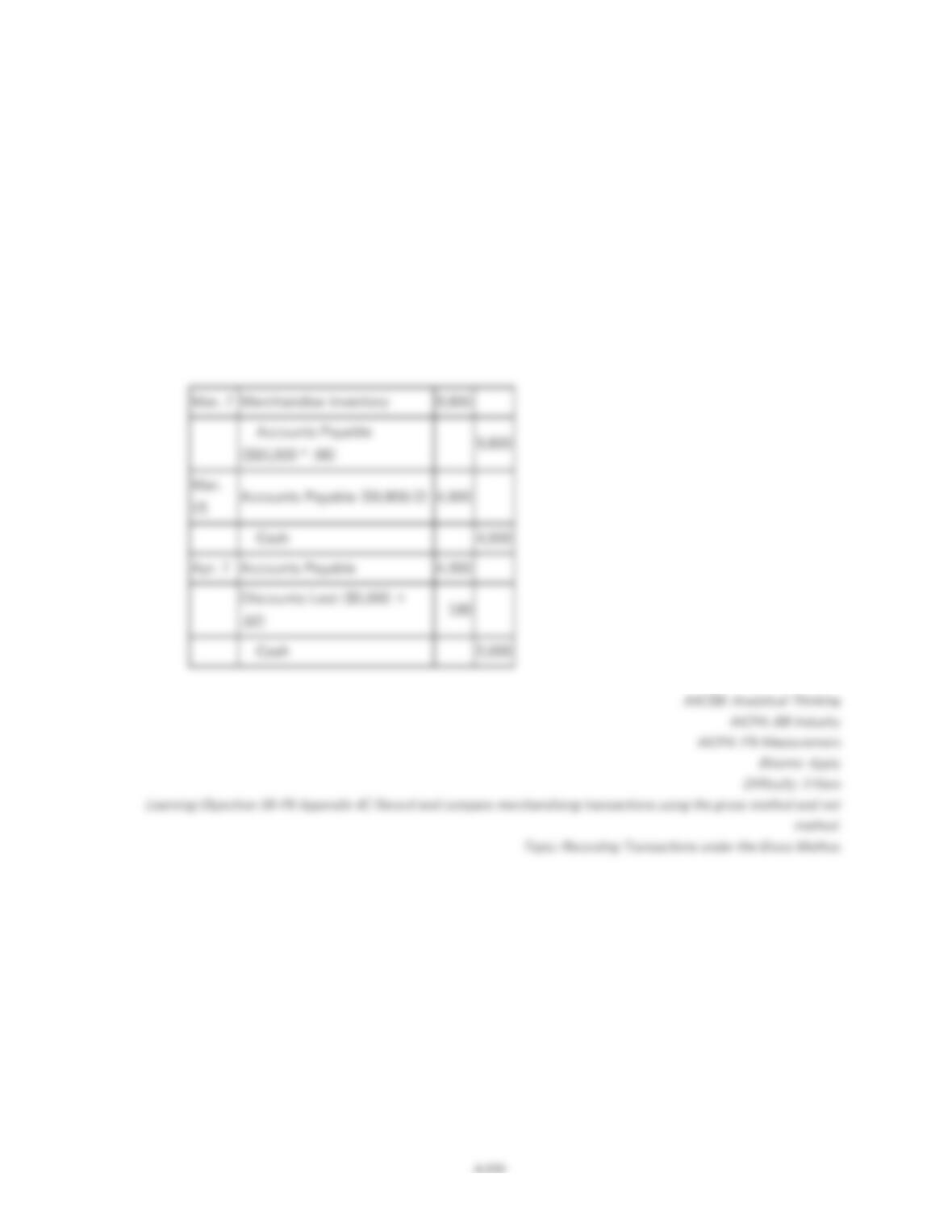
On June 3, Zhang Co., which uses a perpetual inventory system, received and recorded a
$3,500 invoice for merchandise on which the terms were 2/10, n/60. The company uses
the gross method to records invoices. On August 2, the company discovered that the
invoice had been incorrectly filed and the discount lost. The company paid the invoice on
August 2. Prepare the June 3 general journal entry to record the purchase and the August
2 entry to record payment of the invoice.
232.
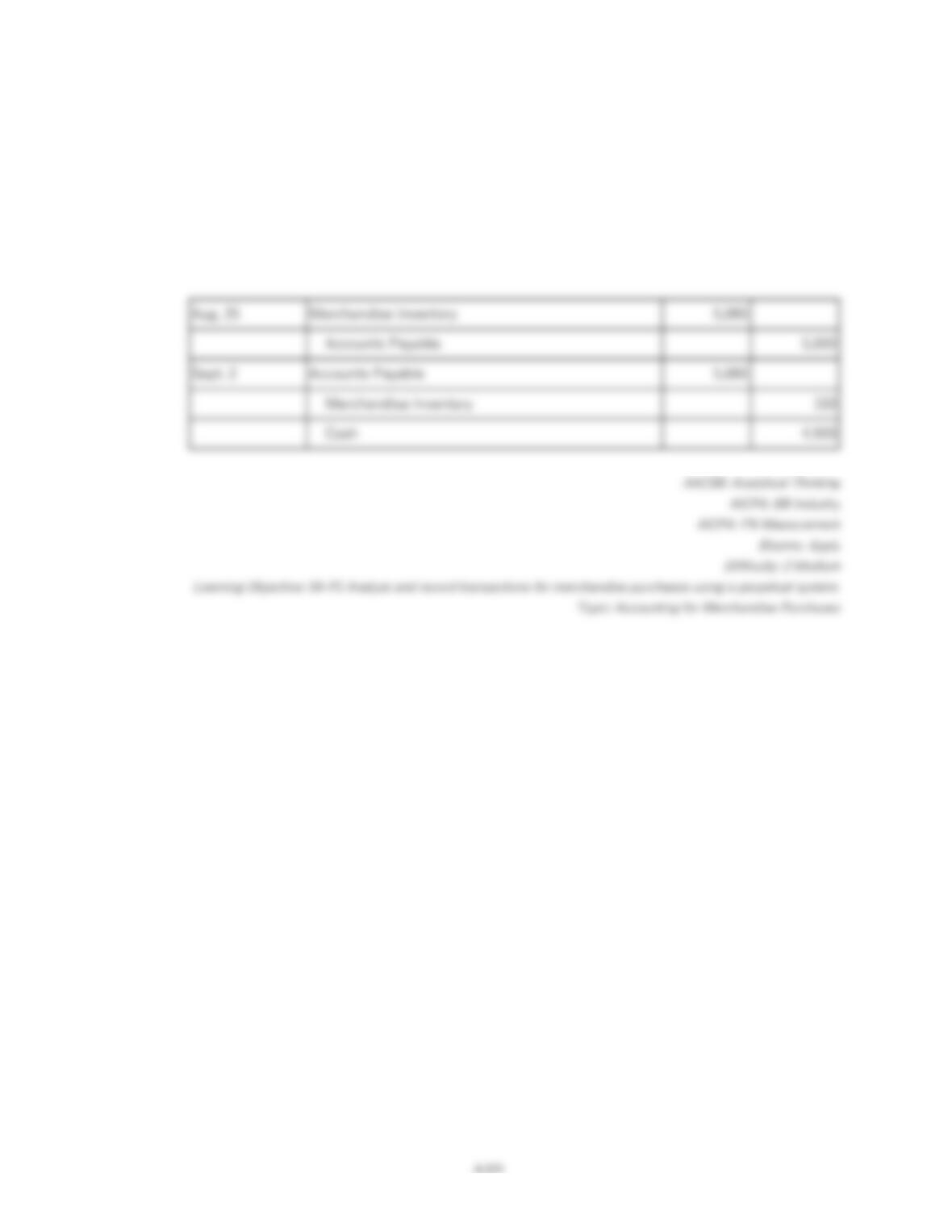
Akron Company, which uses a perpetual inventory system, purchased merchandise
inventory costing $10,000 with credit terms of 2/10, n/30 on March 7. On March 15, the
company paid 1/2 of the amount due. The remaining balance was paid on April 7.
Required:
Record the journal entries related to this transaction using the net method of recording
purchases.
233.
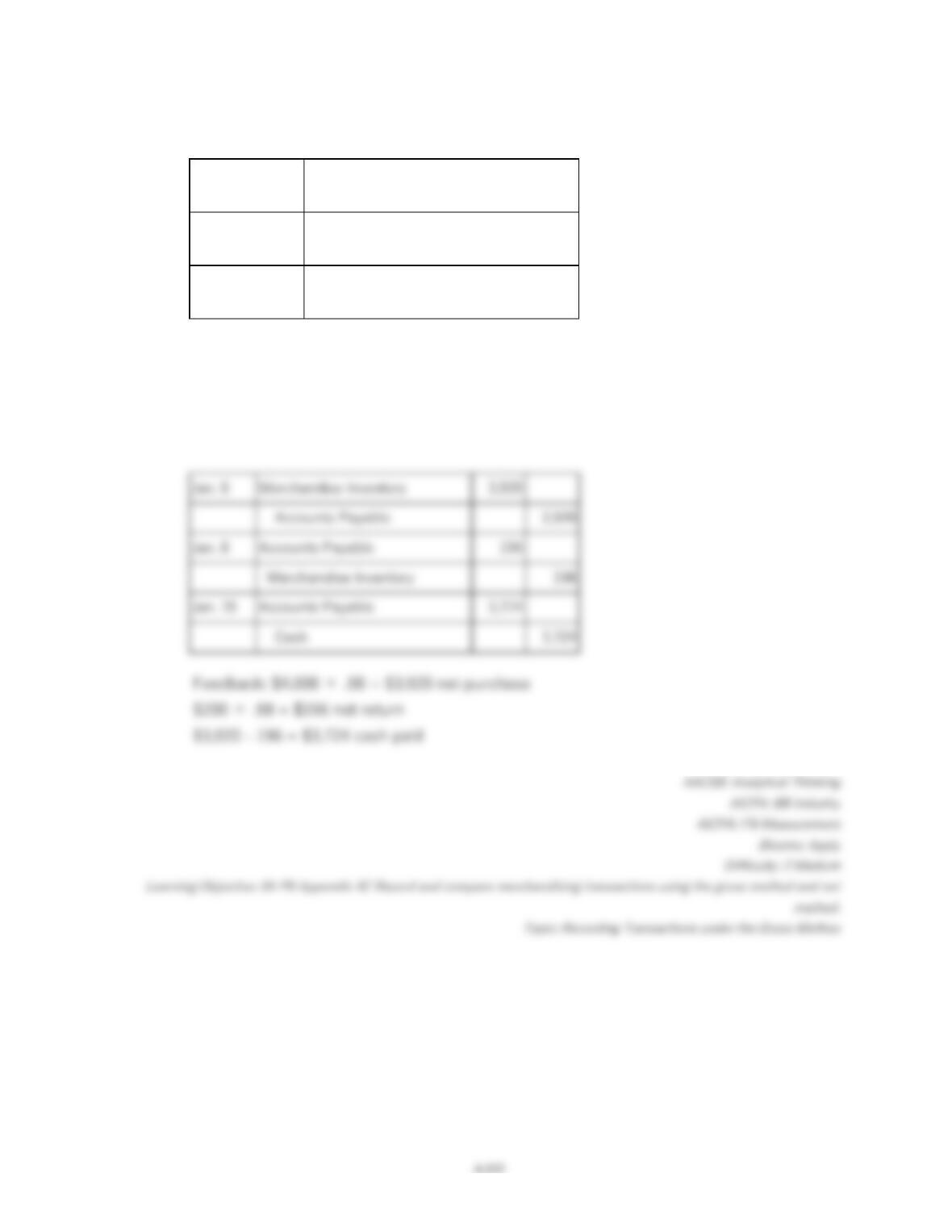
On August 25, Barrymore Co., which uses a perpetual inventory system, purchased $5,000
worth of merchandise on terms 2/10, n/30; on September 2, the amount due was paid.
Using the gross method of recording purchases, prepare general journal entries to record
(a) the purchase on August 25, and (b) the cash payment on September 2.
234.
Tahoe Ski Company uses the net method of accounting for purchases and a perpetual
inventory system and had the following transactions during January:
January 6:
Purchased $4,000 of inventory. The
seller’s credit terms are 2/10, n/30.
January 8:
Returned $200 worth of defective units
and received full credit.
January 15:
Paid the amount due, less the returned
items.
Jan. 6
Merchandise Inventory
Accounts Payable
Jan. 8
Accounts Payable
Jan. 15
Accounts Payable
Cash
Prepare journal entries to record each of the preceding transactions.
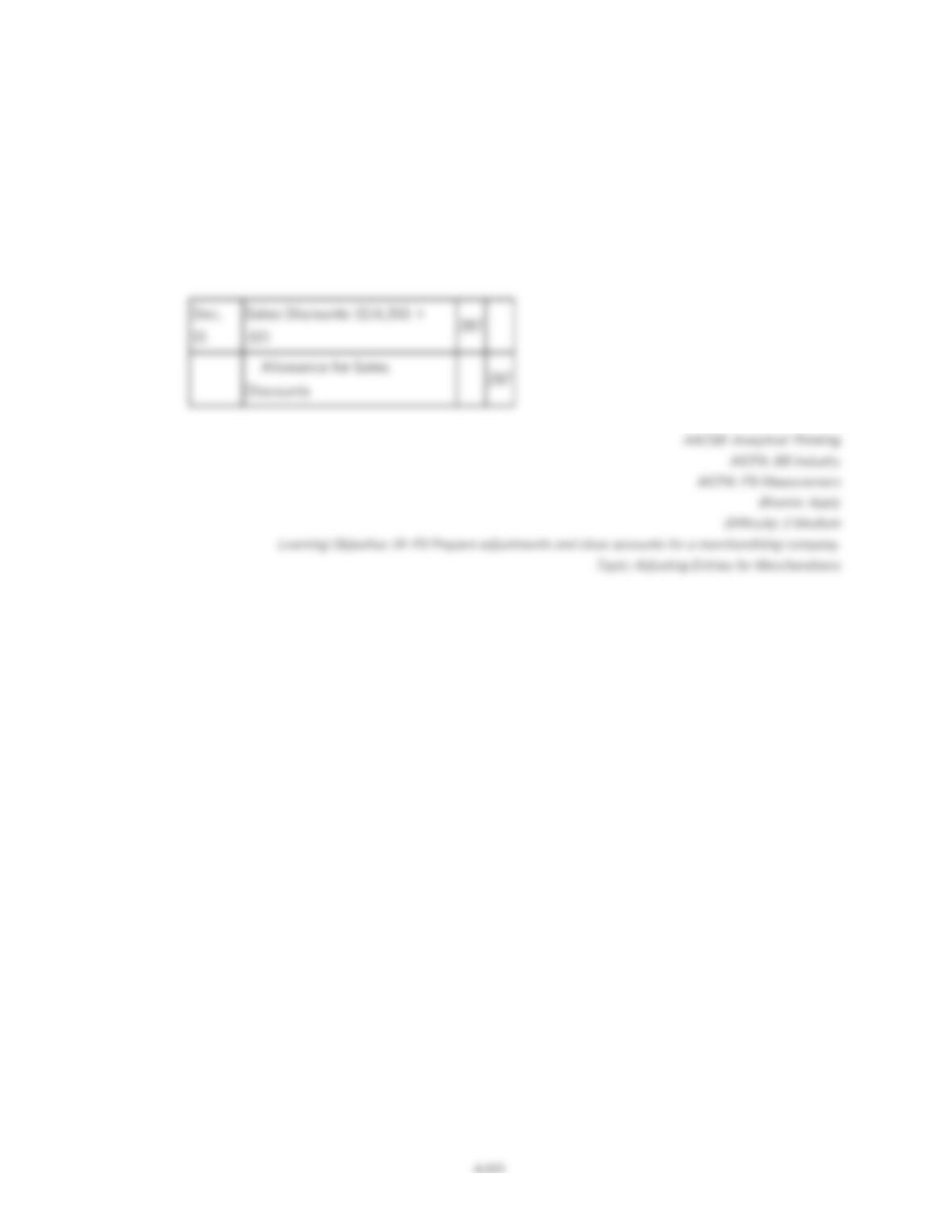
235.
Kerry Corporation has an unadjusted Accounts Receivable balance of $27,500 on
December 31, the end of its fiscal year. Of that amount, $14,350 are within a 2% discount
period that the company expects the buyers to take. Record the adjusting entry for the
allowance for sales discounts.