137.
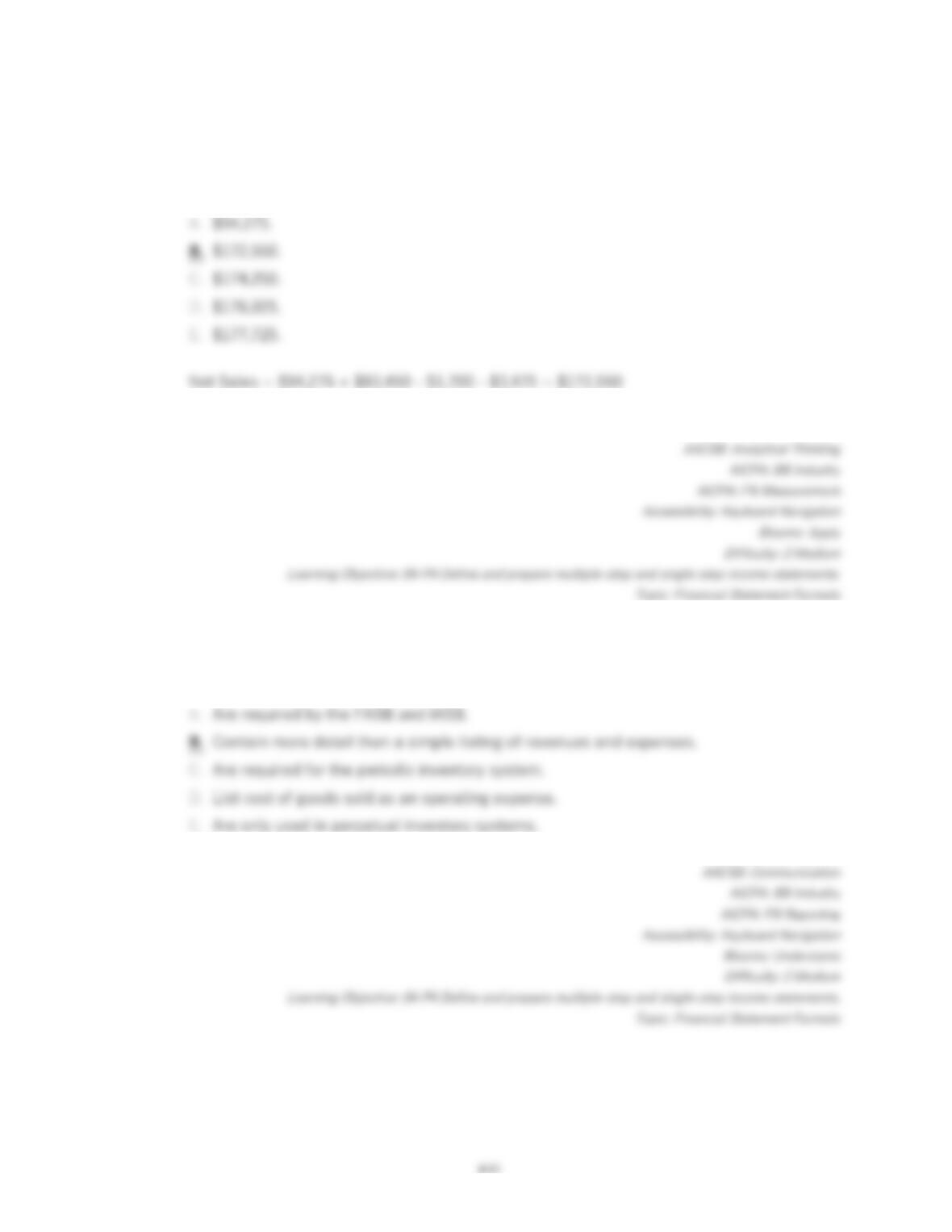
Prentice Company, Inc. had cash sales of $94,275, credit sales of $83,450, sales returns
and allowances of $1,700, and sales discounts of $3,475. Prentice’s net sales for this
period equal:
138.
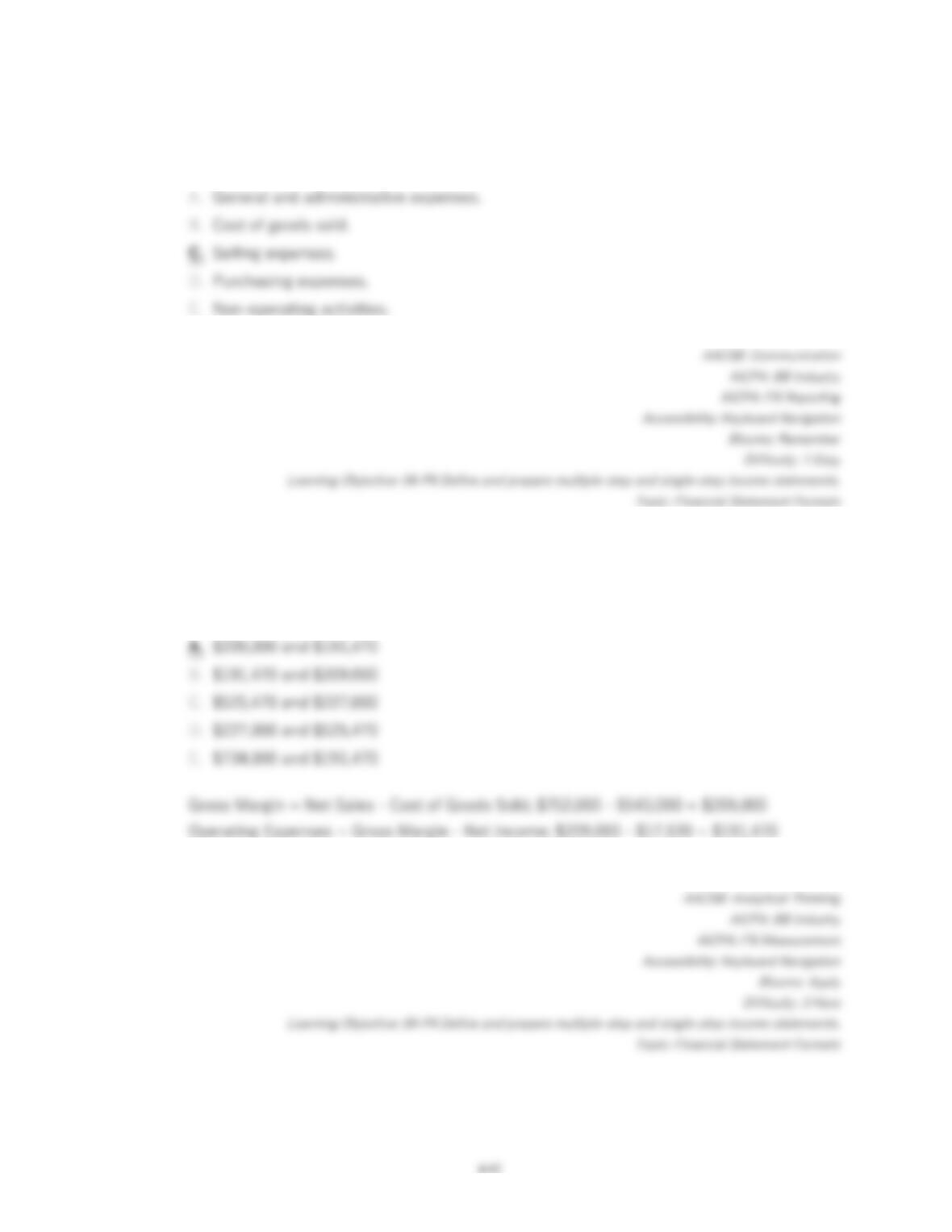
Multiple-step income statements:
139.
Expenses to promote sales by displaying and advertising merchandise, making sales, and
delivering goods to customers are known as:
140.
A company has net sales of $752,000 and cost of goods sold of $543,000. Its net income is
$17,530. The company’s gross margin and operating expenses, respectively, are:
141.
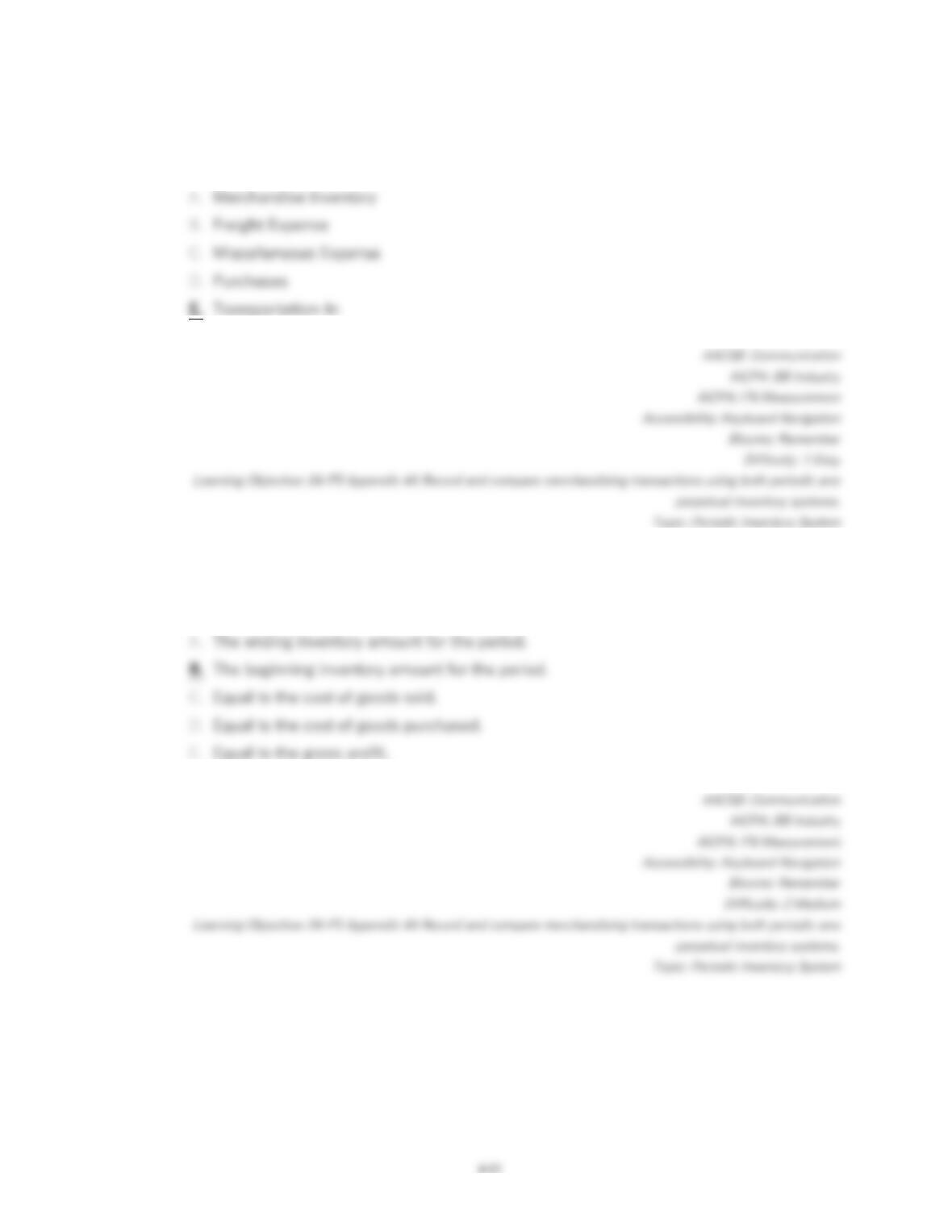
Which of the following accounts is used in a periodic inventory system to record the cost
of freight to transport purchased merchandise?
142.
The unadjusted Merchandise Inventory balance under a periodic inventory system is:
143.
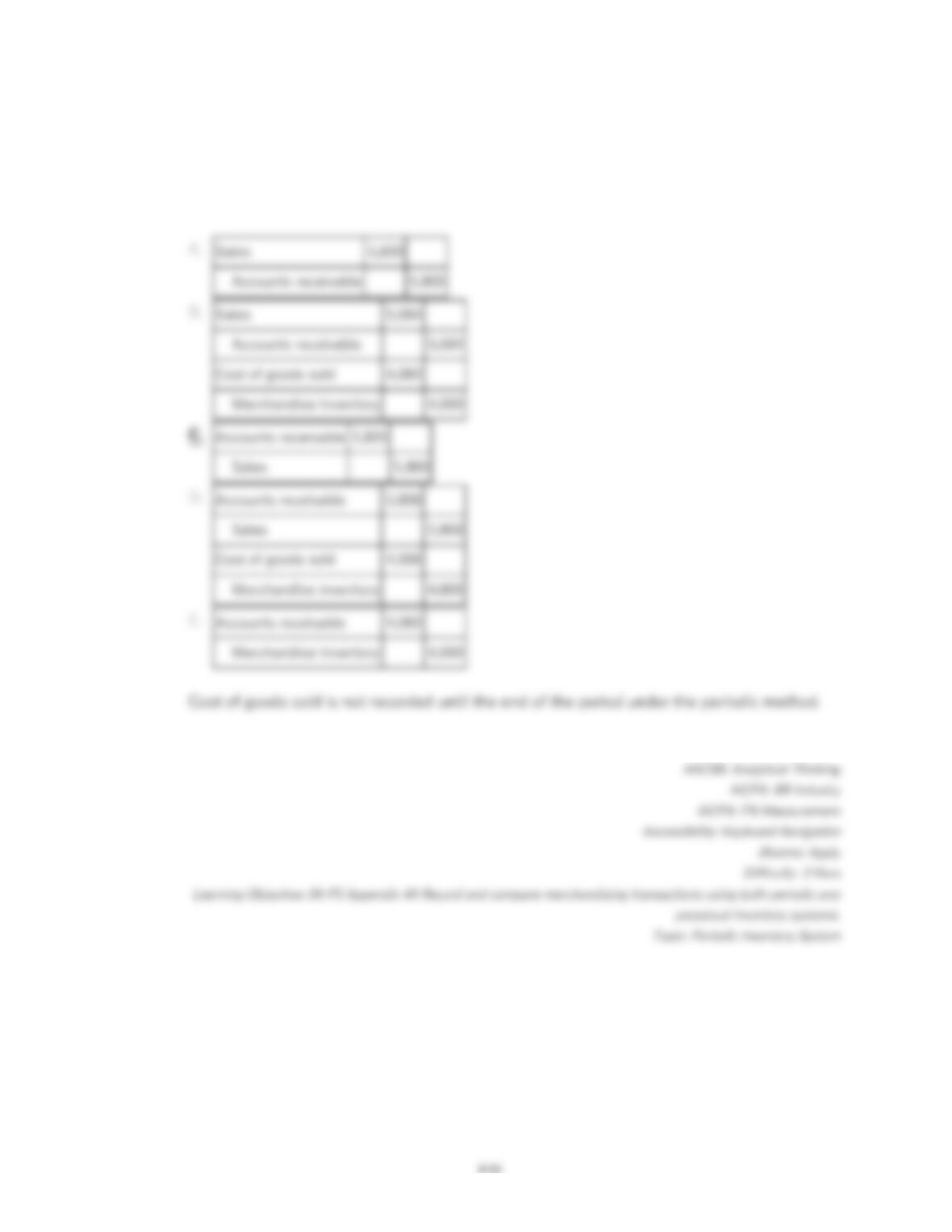
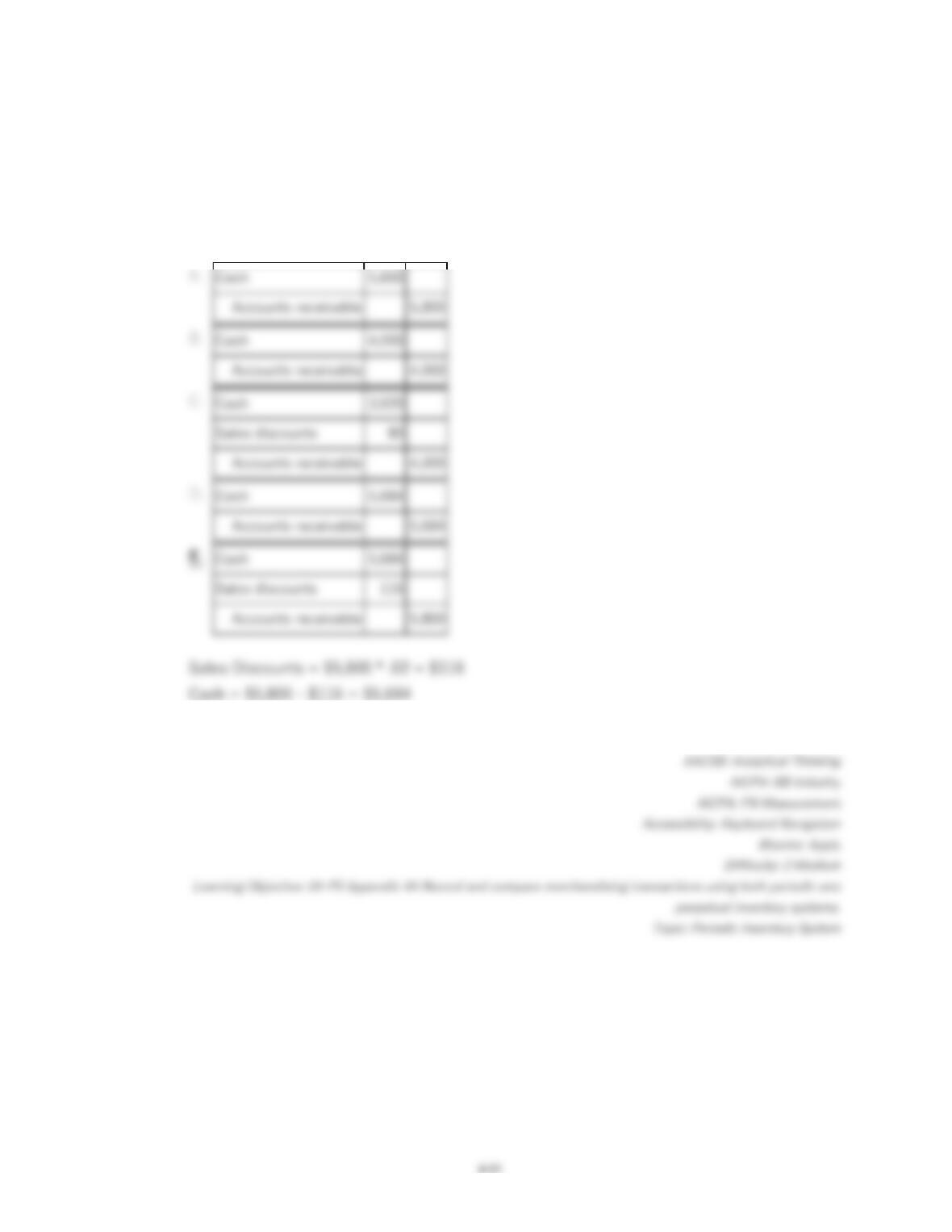
On September 12, Vander Company, Inc. sold merchandise in the amount of $5,800 to
Jepson Company on credit with terms of 2/10, n/30. The cost of the items sold is $4,000.
Vander uses the gross method of accounting for sales and a
periodic
inventory system.
The journal entry or entries that Vander will make on September 12 is(are):
144.
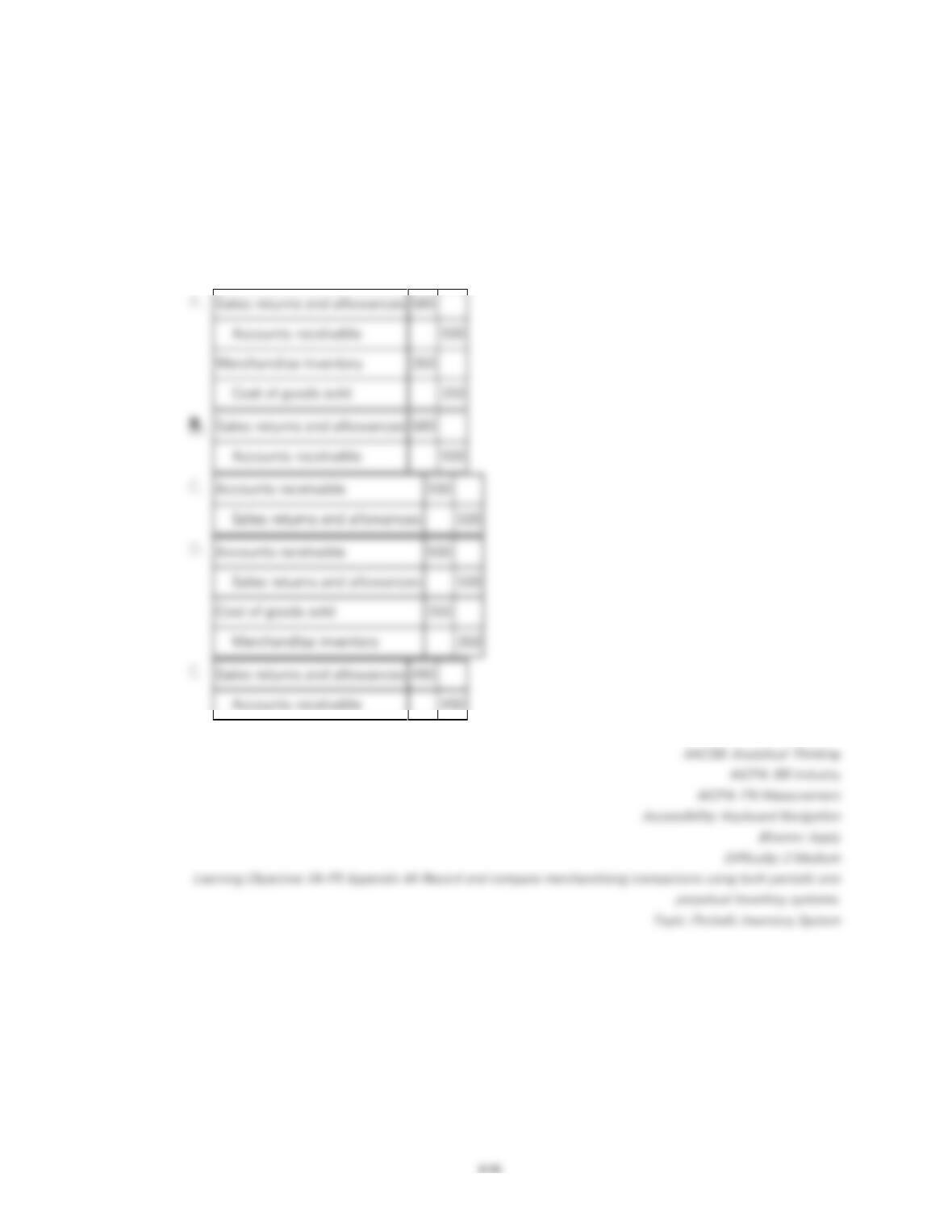
On September 12, Vander Company, Inc. sold merchandise in the amount of $5,800 to
Jepson Company on credit with terms of 2/10, n/30. The cost of the items sold is $4,000.
Vander uses the gross method of accounting for sales and a
periodic
inventory system.
Jepson pays the invoice on September 18, and takes the appropriate discount. The journal
entry that Vander makes on September 18 is:
145.
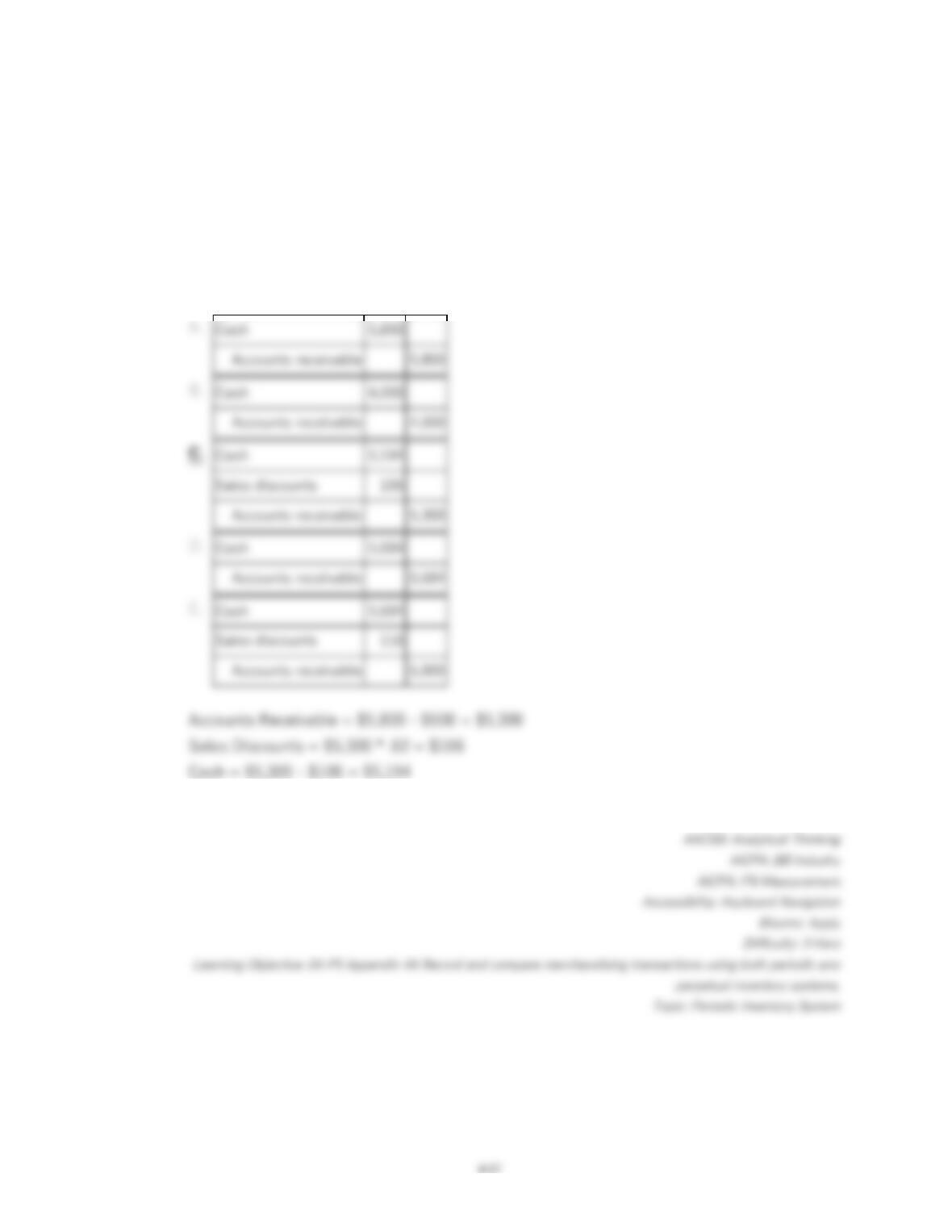
On September 12, Vander Company, Inc. sold merchandise in the amount of $5,800 to
Jepson Company on credit with terms of 2/10, n/30. The cost of the items sold is $4,000.
Vander uses the gross method of accounting for sales and a
periodic
inventory system. On
September 14, Jepson returns some of the merchandise. The selling price of the returned
merchandise is $500 and the cost of the merchandise returned is $350. The entry or
entries that Vander must make on September 14 is:
146.
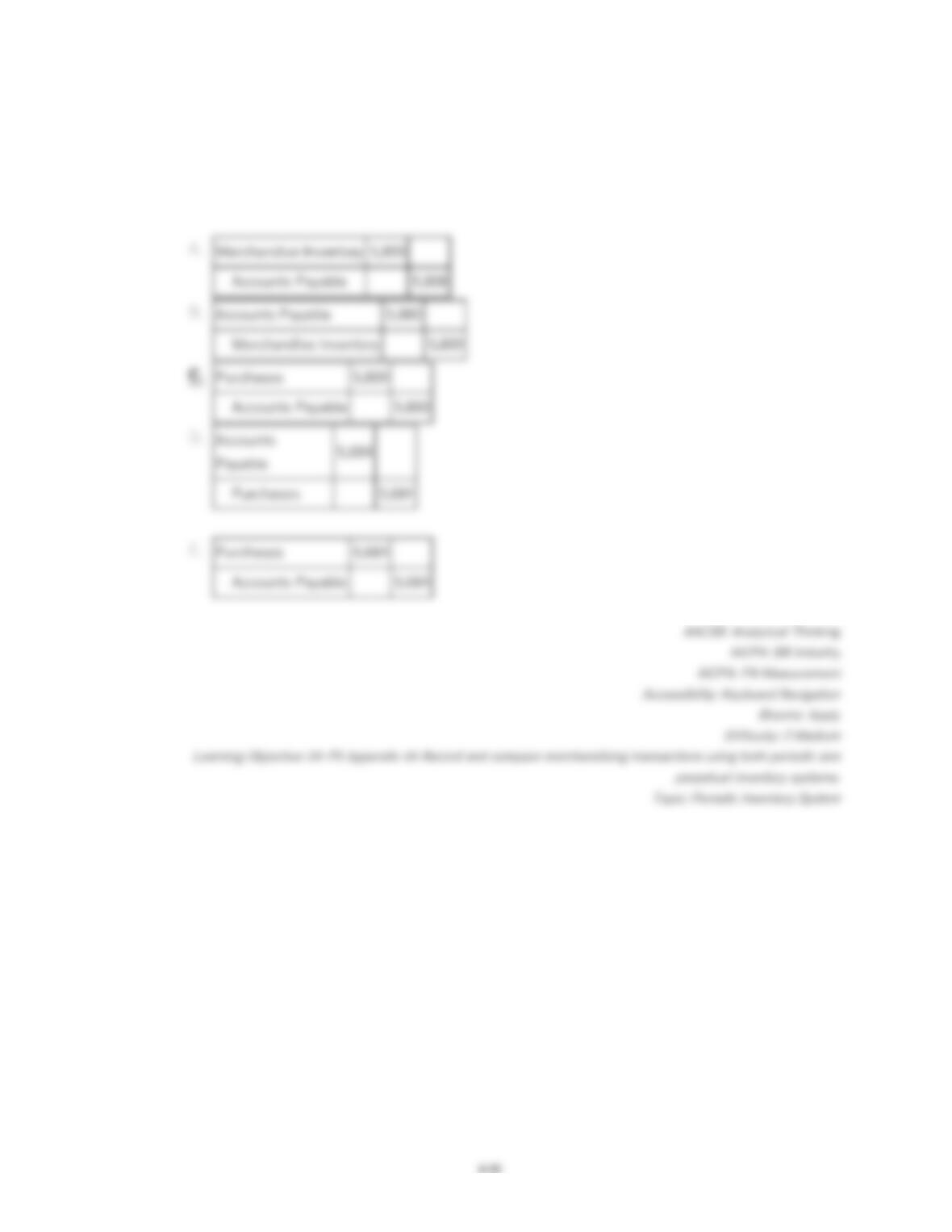
On September 12, Vander Company, Inc. sold merchandise in the amount of $5,800 to
Jepson Company on credit with terms of 2/10, n/30. The cost of the items sold is $4,000.
Vander uses the gross method of accounting for sales and a periodic inventory system. On
September 14, Jepson returns some of the merchandise. The selling price of the
merchandise is $500 and the cost of the merchandise returned is $350. Jepson pays the
invoice on September 18 and takes the appropriate discount. The journal entry that
Vander makes on September 18 is:
147.
On September 12, Jepson Company purchased merchandise in the amount of $5,800 from
Vander Company, Inc. on credit with terms of 2/10, n/30. Jepson uses the gross method of
accounting for purchases and a periodic inventory system. The journal entry that Jepson
will make on September 12 is:
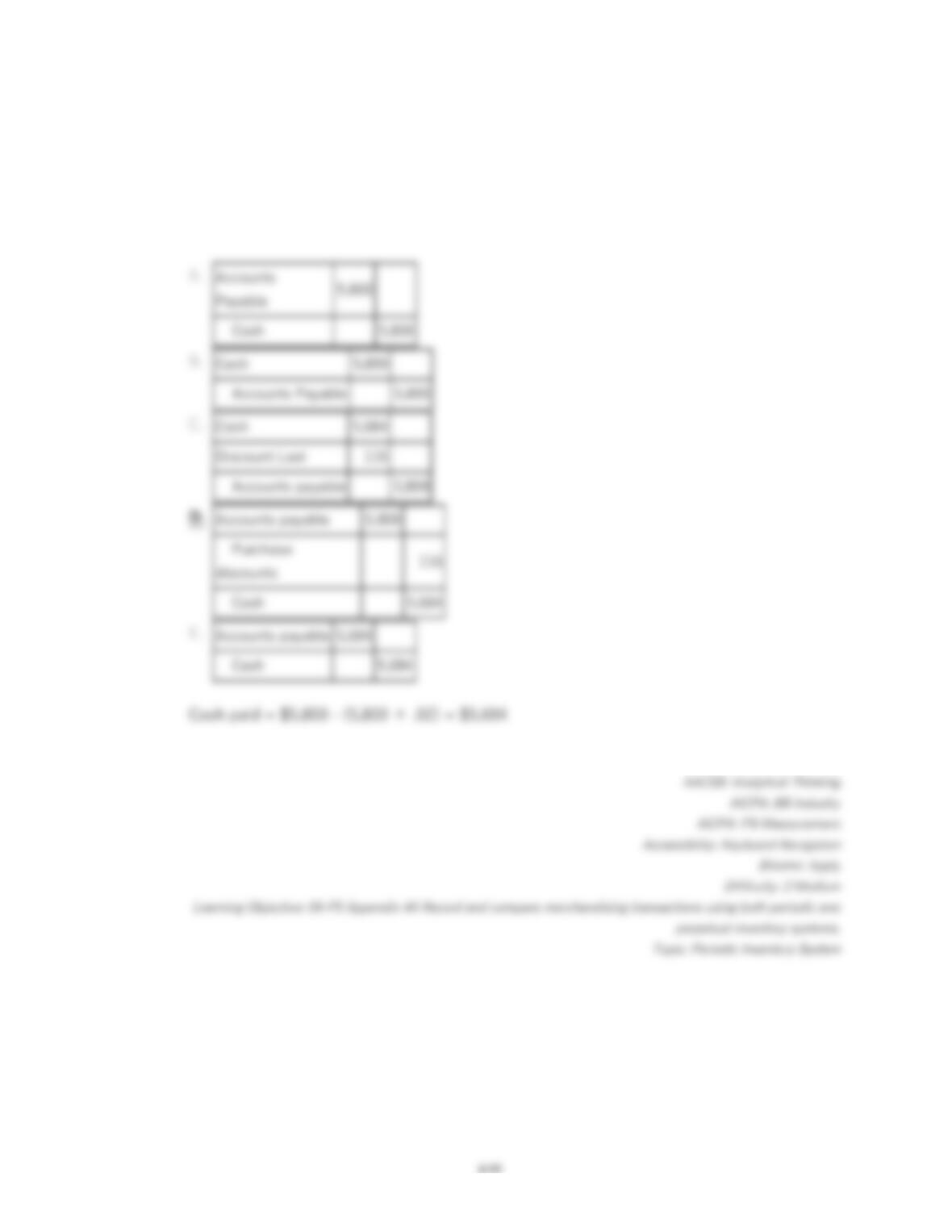
148.
On September 12, Jepson Company purchased merchandise in the amount of $5,800 from
Vander Company, Inc. on credit with terms of 2/10, n/30. Jepson uses the gross method of
accounting for purchases and a periodic inventory system. Jepson pays the invoice on
September 18, and takes the appropriate discount. The journal entry that Jepson makes on
September 18 is:
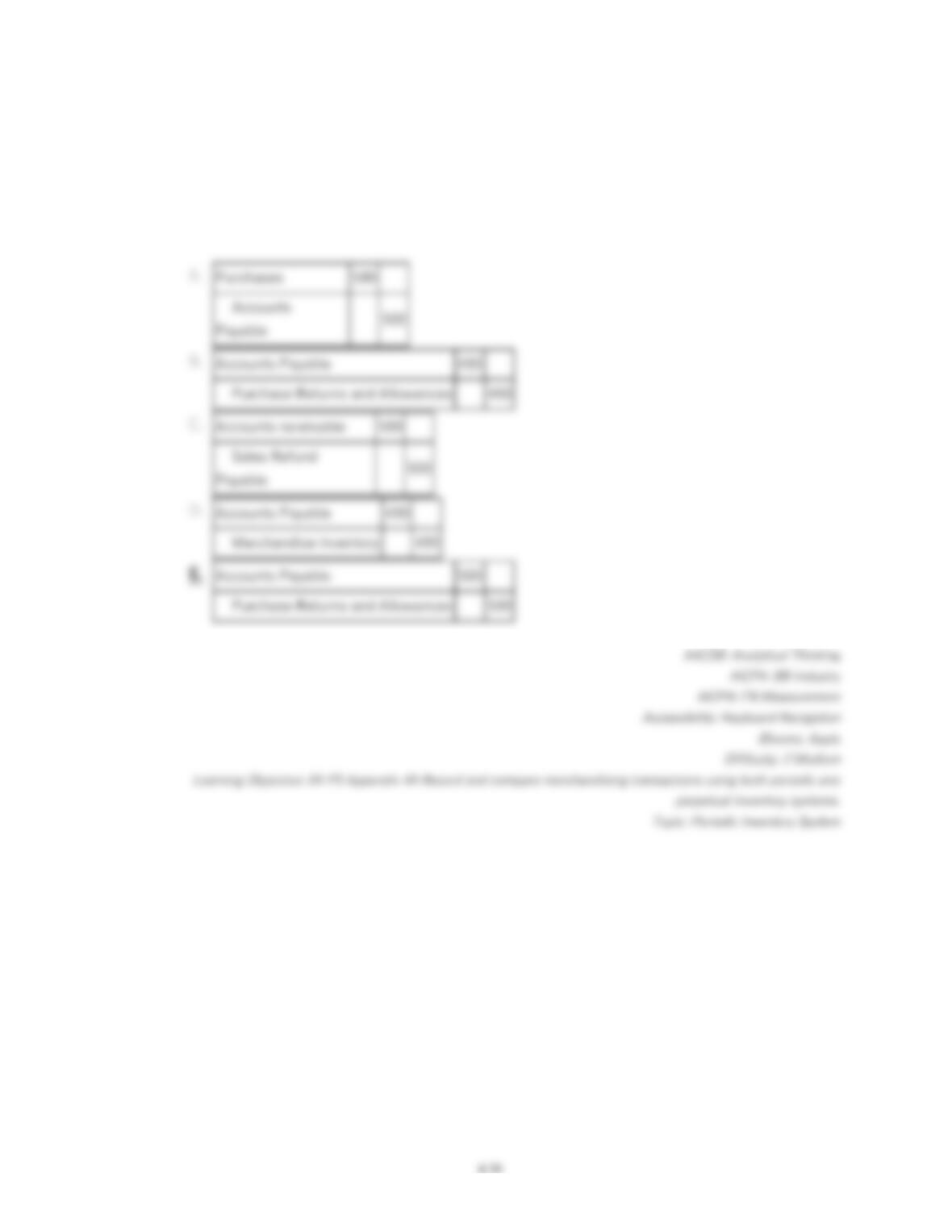
149.
On September 12, Jepson Company purchased merchandise in the amount of $5,800 from
Vander Company, Inc. on credit with terms of 2/10, n/30. Jepson uses the gross method of
accounting for purchases and a
periodic
inventory system. On September 14, Jepson
returns some of the merchandise. The purchase price of the returned merchandise is
$500. The entry or entries that Jepson must make on September 14 is:
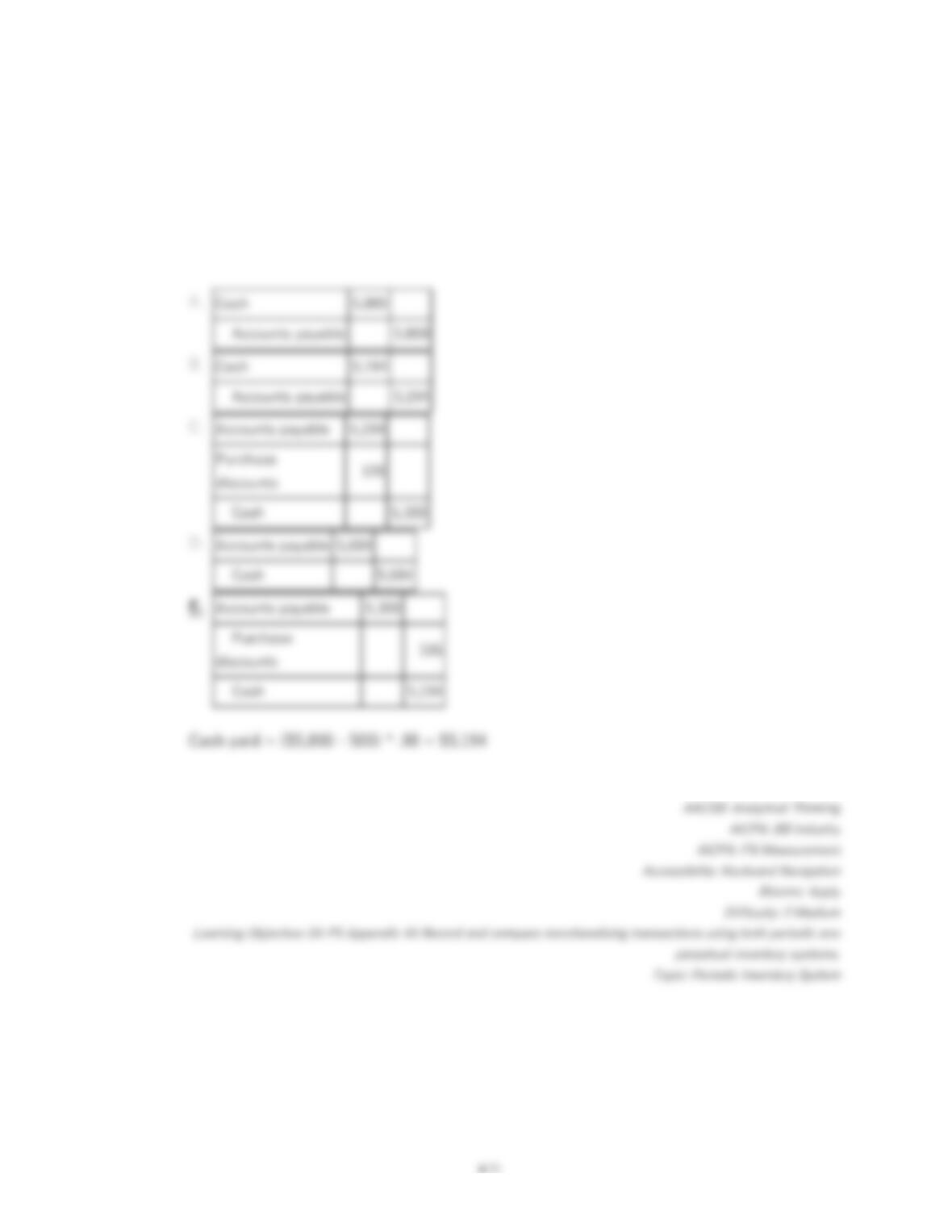
150.
On September 12, Jepson Company purchased merchandise in the amount of $5,800 from
Vander Company, Inc. on credit with terms of 2/10, n/30. Jepson uses the gross method of
accounting for purchases and a periodic inventory system. On September 14, Jepson
returns some of the merchandise with a purchase price of $500. Jepson pays the invoice
on September 18 and takes the appropriate discount. The journal entry that Jepson makes
on September 18 is:
151.
Kramer, Inc. uses a periodic inventory system. Kramer purchased $1,000 of merchandise
on credit, with terms 1/10, n/30, FOB shipping point. The shipping cost of $150 was paid
upon receipt of the goods. The journal entry to record the shipping cost includes a credit
to Cash and a debit to:
152.
Cushman Company, Inc. had $800,000 in net sales, $350,000 in gross profit, and $200,000
in operating expenses. Cost of goods sold equals:
153.
Cushman Company, Inc. had $800,000 in sales, sales discounts of $12,000, sales returns
and allowances of $18,000, cost of goods sold of $380,000, and $275,000 in operating
expenses. Gross profit equals:
154.
Cushman Company, Inc. had $800,000 in sales, sales discounts of $12,000, sales returns
and allowances of $18,000, cost of goods sold of $380,000, and $275,000 in operating
expenses. Net income equals:
155.
A company purchased $10,000 of merchandise on June 15 with terms of 3/10, n/45. On
June 20, it returned $800 of that merchandise. On June 24, it paid the balance owed for the
merchandise taking any discount it was entitled to. The cash paid on June 24 equals:
156.
A company purchased $10,000 of merchandise on June 15 with terms of 3/10, n/45, and
FOB shipping point. The freight charge of $500 was paid by the seller and added to the
sales invoice. On June 20, the company returned $800 of the merchandise. On June 24, it
paid the balance owed for the merchandise taking any discount it is entitled to. The cash
paid on June 24 equals:
157.
A company’s current assets are $23,420, its quick assets are $13,890 and its current
liabilities are $12,220. Its acid-test ratio equals:
158.
Using the following year-end information for Bauman, LLC, calculate the current ratio and
acid-test ratio:
Cash
$48,000
Short-term investments
12,000
Accounts receivable
45,000
Inventory
225,000
Prepaid expenses
12,500
Accounts payable
86,500
Other current payables
22,000
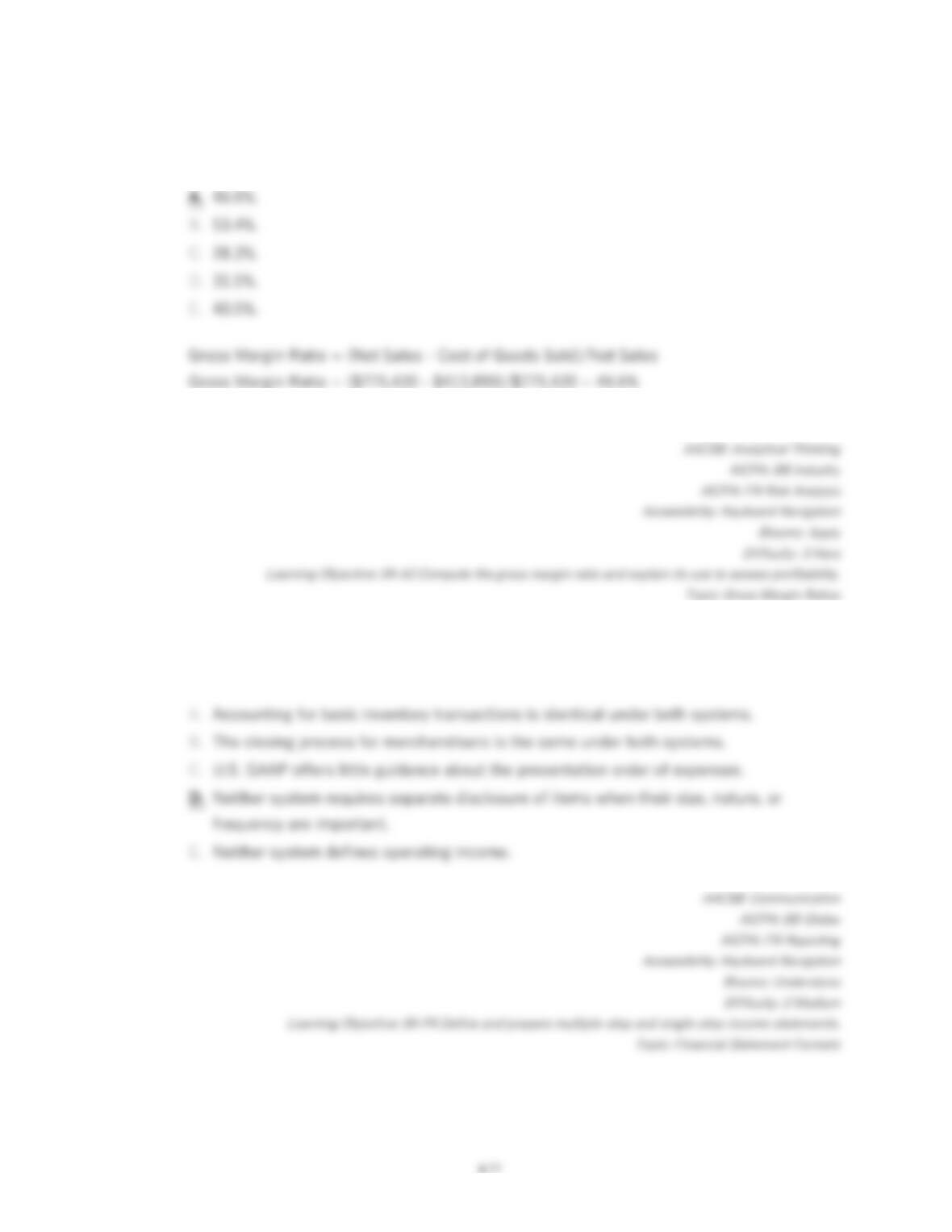
159.
A company’s net sales are $775,420, its costs of goods sold are $413,890, and its net
income is $117,220. Its gross margin ratio equals:
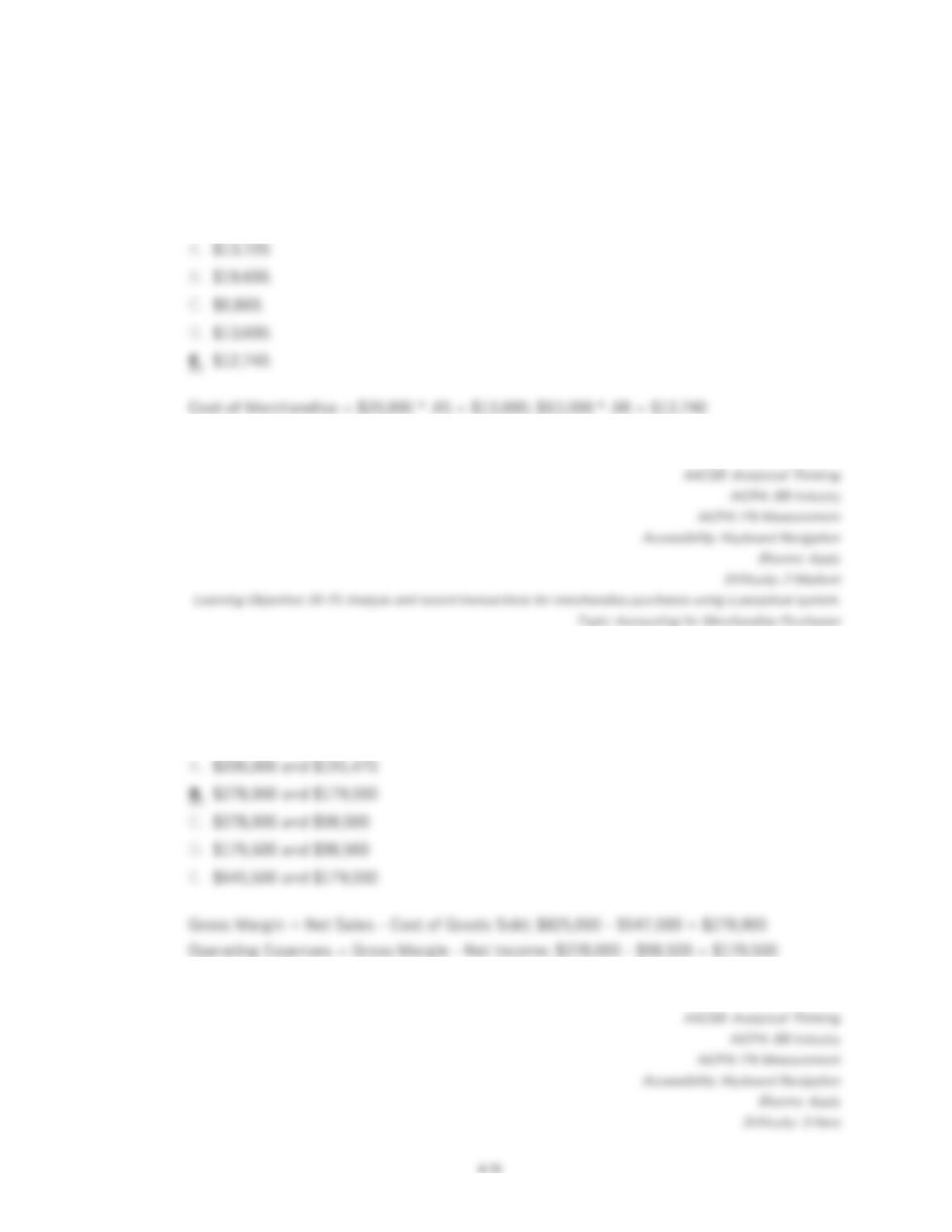
160.
All of the following statements related to U.S. GAAP and IFRS are true
except
:
161.
A company purchases merchandise from a wholesaler that has a list price of $20,000. The
company receives a 35% trade discount from the supplier and credit terms of 2/10, n/30.
Assuming no returns were made and that payment was made within the discount period,
what is the net cost of the merchandise?
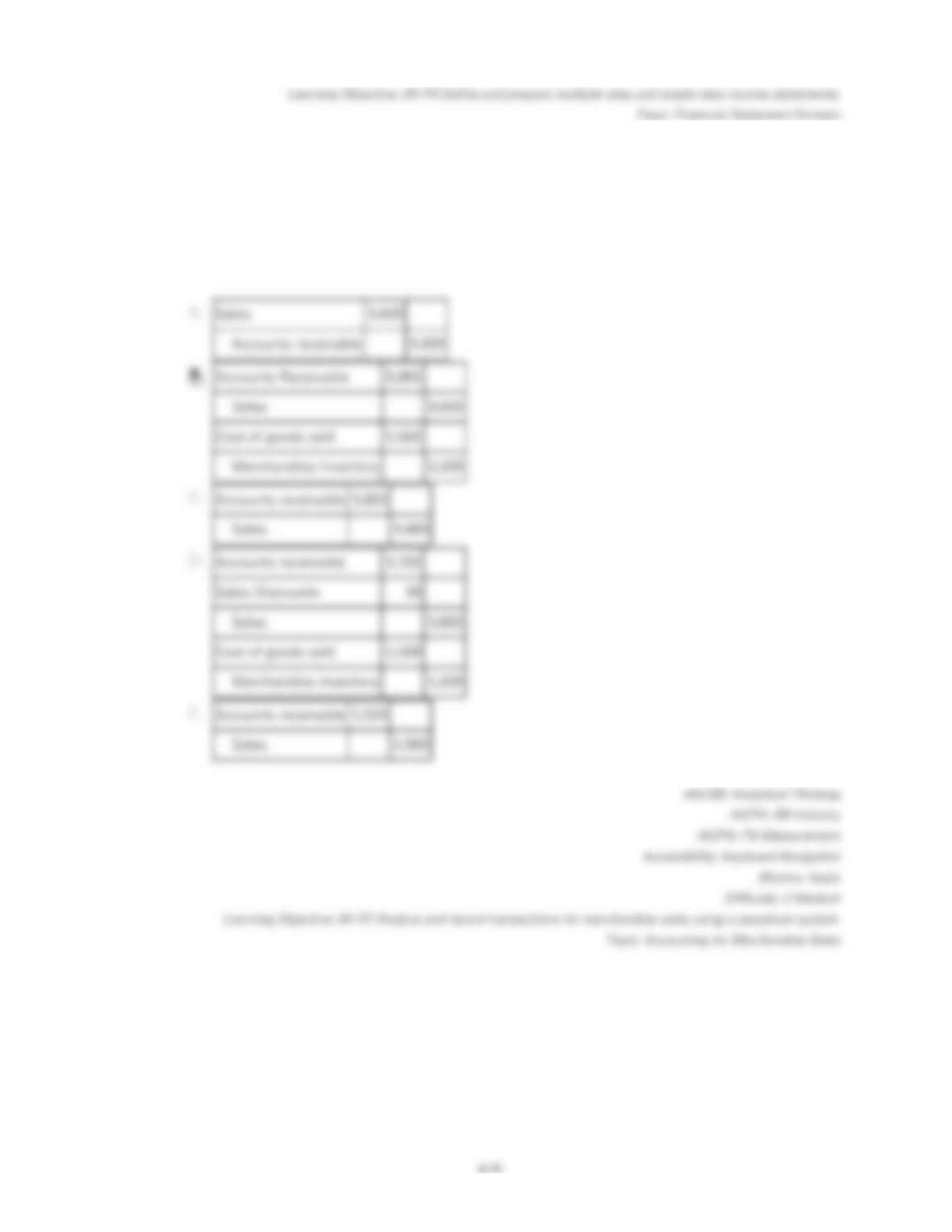
162.
A company has net sales of $825,000 and cost of goods sold of $547,000. Its net income is
$98,500. The company’s gross margin and operating expenses, respectively, are:
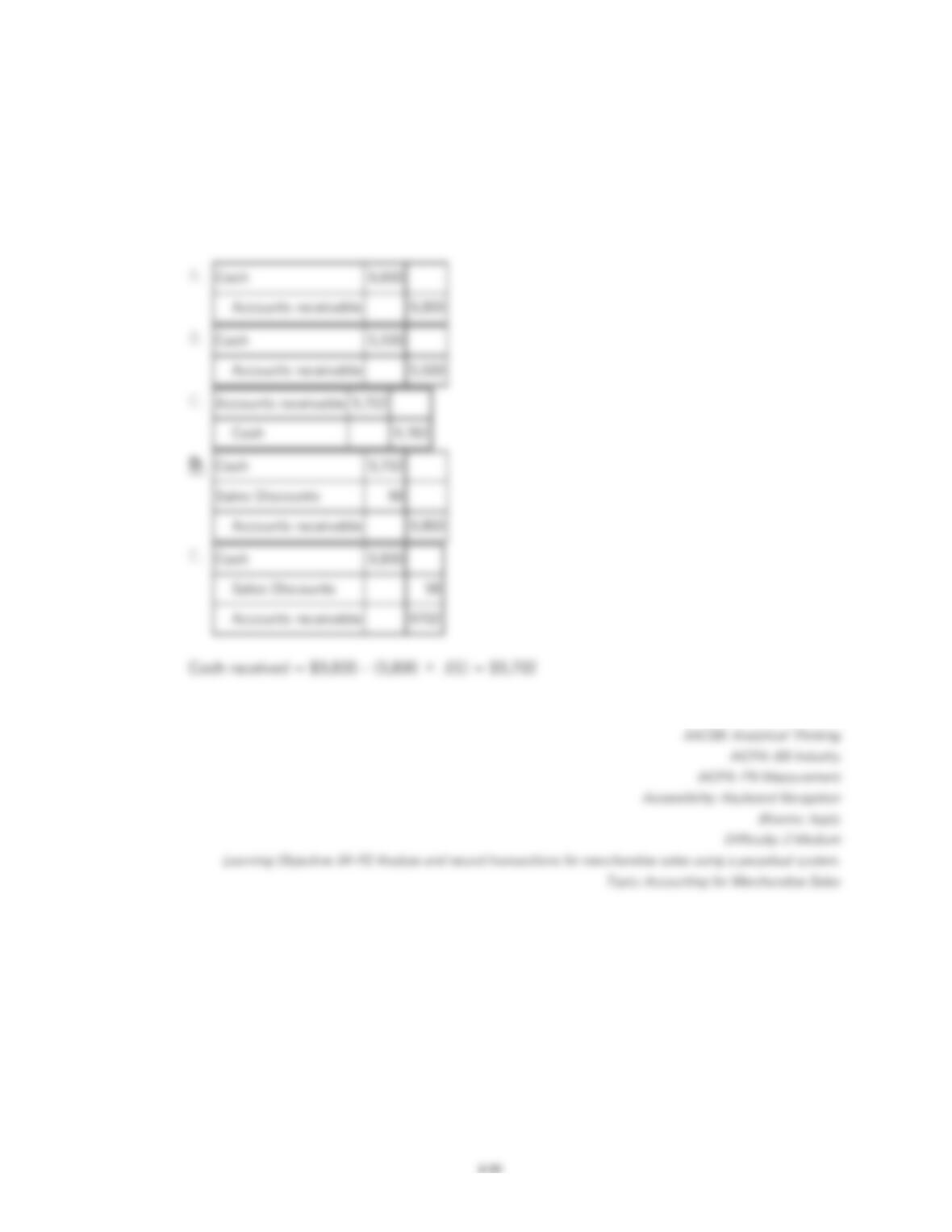
163.
On March 12, Klein Company, Inc. sold merchandise in the amount of $9,800 to Babson
Company, with credit terms of 1/10, n/30. The cost of the items sold is $5,500. Klein uses
the gross method of accounting for sales and a perpetual inventory system. The journal
entry or entries that Klein will make on March 12 is:
164.
On March 12, Klein Company, Inc. sold merchandise in the amount of $9,800 to Babson
Company, with credit terms of 1/10, n/30. The cost of the items sold is $5,500. Klein uses
the gross method of accounting for sales and a perpetual inventory system. Babson pays
the invoice on March 17, and takes the appropriate discount. The journal entry that Klein
makes on March 17 is: