165.
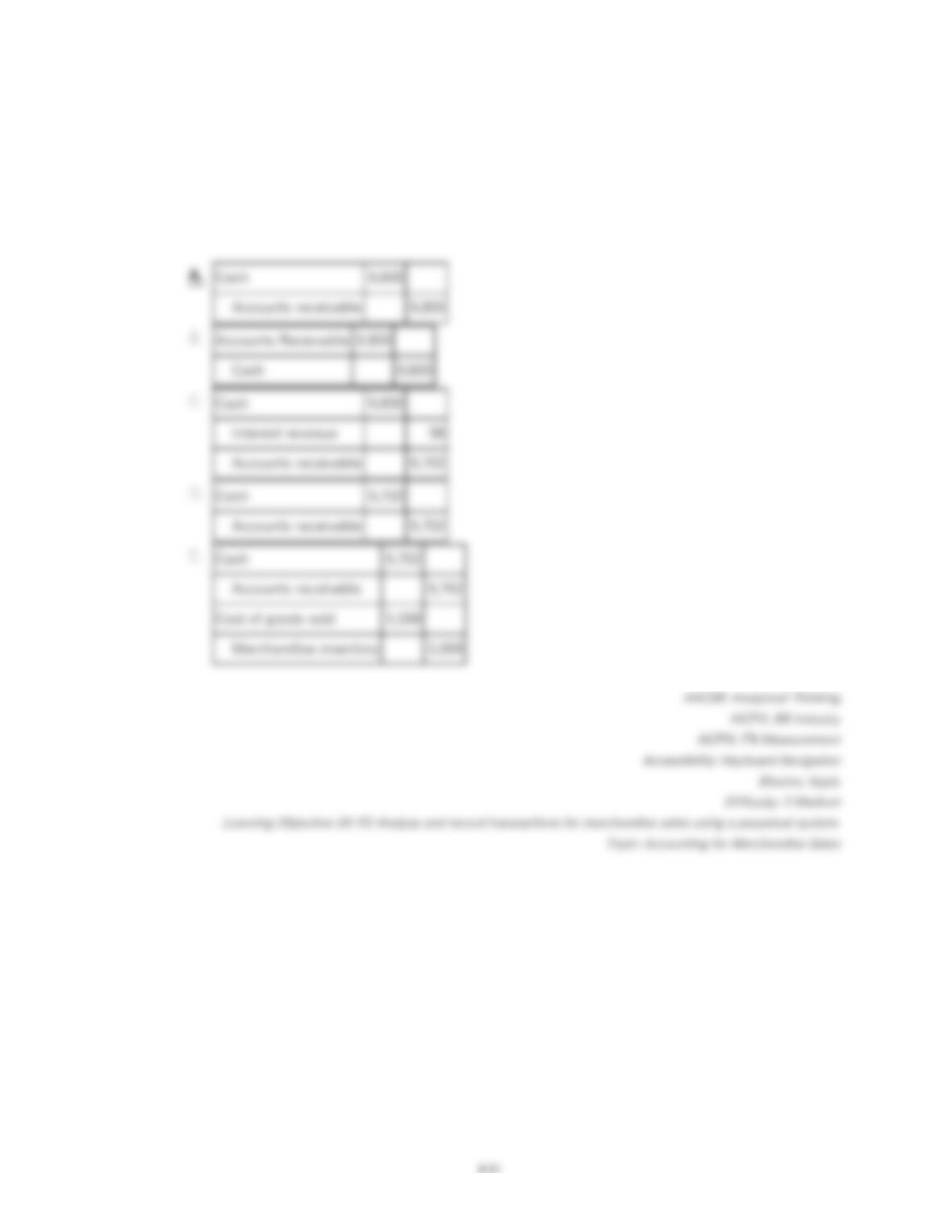
On March 12, Klein Company, Inc. sold merchandise in the amount of $9,800 to Babson
Company, with credit terms of 1/10, n/30. The cost of the items sold is $5,500. Klein uses
the gross method of accounting for sales and a perpetual inventory system. Babson pays
the invoice on March 30, which is after the discount period. The journal entry that Klein
makes on March 30 is:
166.
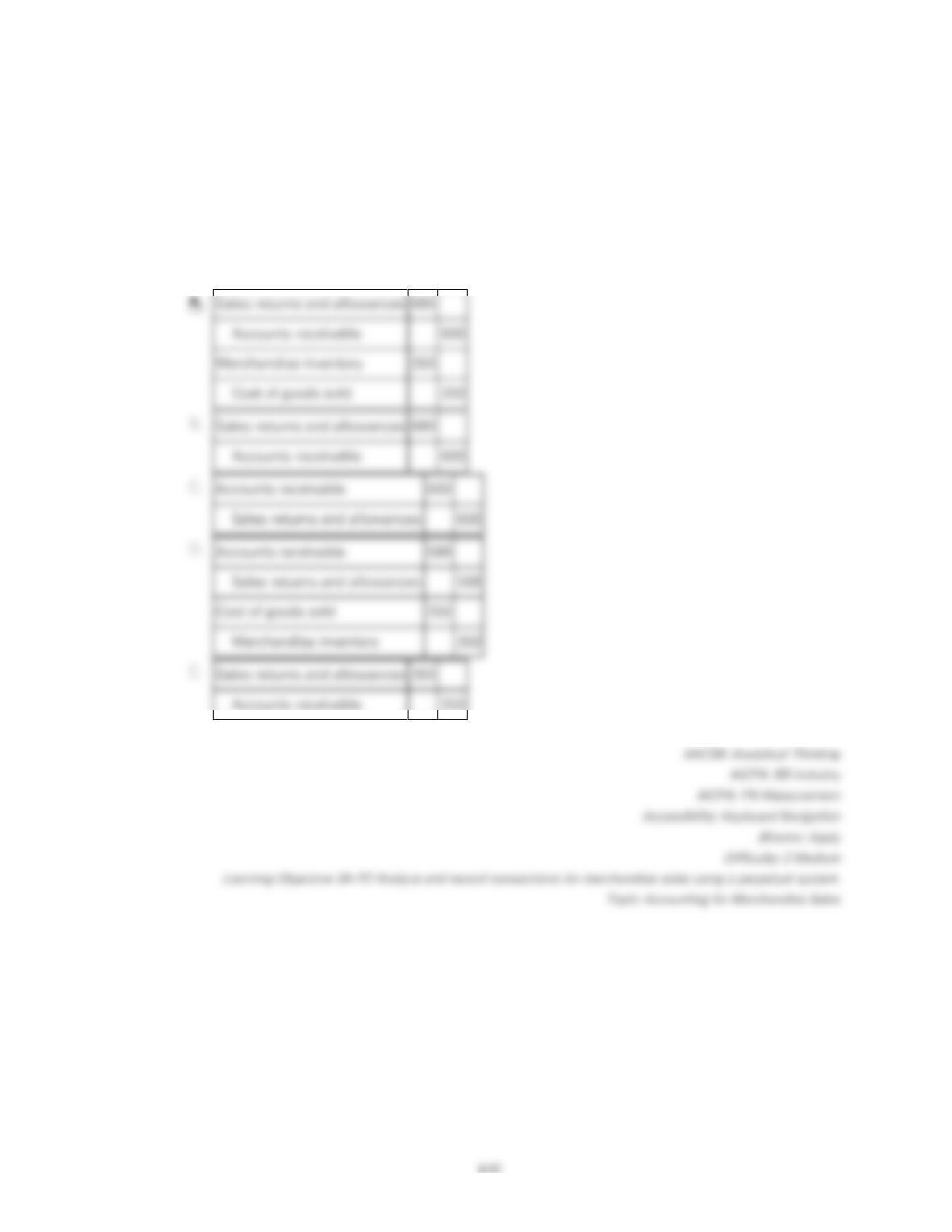
On March 12, Masterson Company, Inc. sold merchandise in the amount of $7,800 to
Forsythe Company, with credit terms of 2/10, n/30. The cost of the items sold is $4,500.
Masterson uses the gross method of accounting for sales and a
perpetual
inventory
system. On March 15, Forsythe returns some of the merchandise. The selling price of the
returned merchandise is $600 and the cost of the merchandise returned is $350. The entry
or entries that Masterson must make on March 15 is:
167.
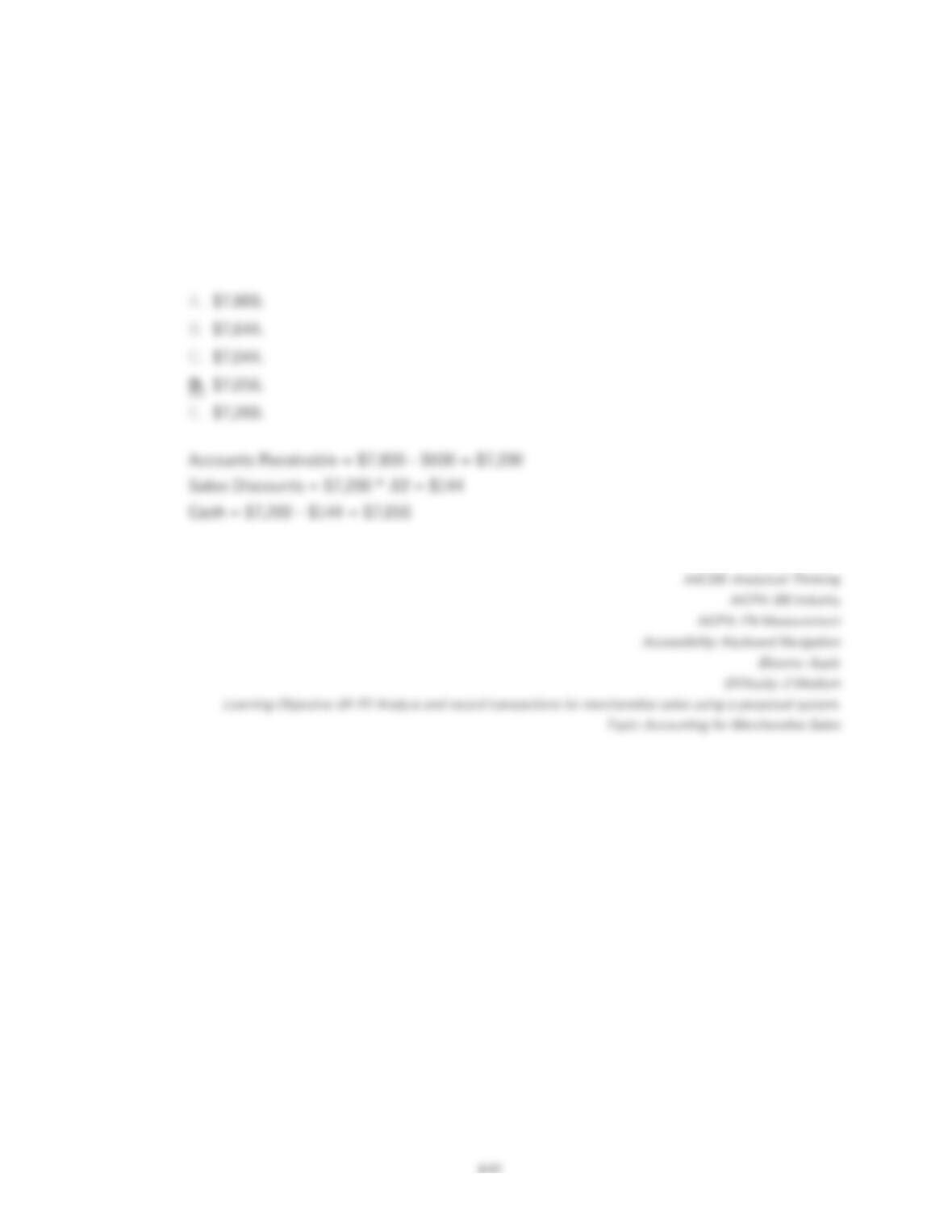
On March 12, Masterson Company, Inc. sold merchandise in the amount of $7,800 to
Forsythe Company, with credit terms of 2/10, n/30. The cost of the items sold is $4,500.
Masterson uses the
perpetual
inventory system. On March 15, Forsythe returns some of
the merchandise. The selling price of the merchandise is $600 and the cost of the
merchandise returned is $350. Forsythe pays the invoice on March 20, and takes the
appropriate discount. The amount that Masterson receives from Forsythe on March 20 is:
168.
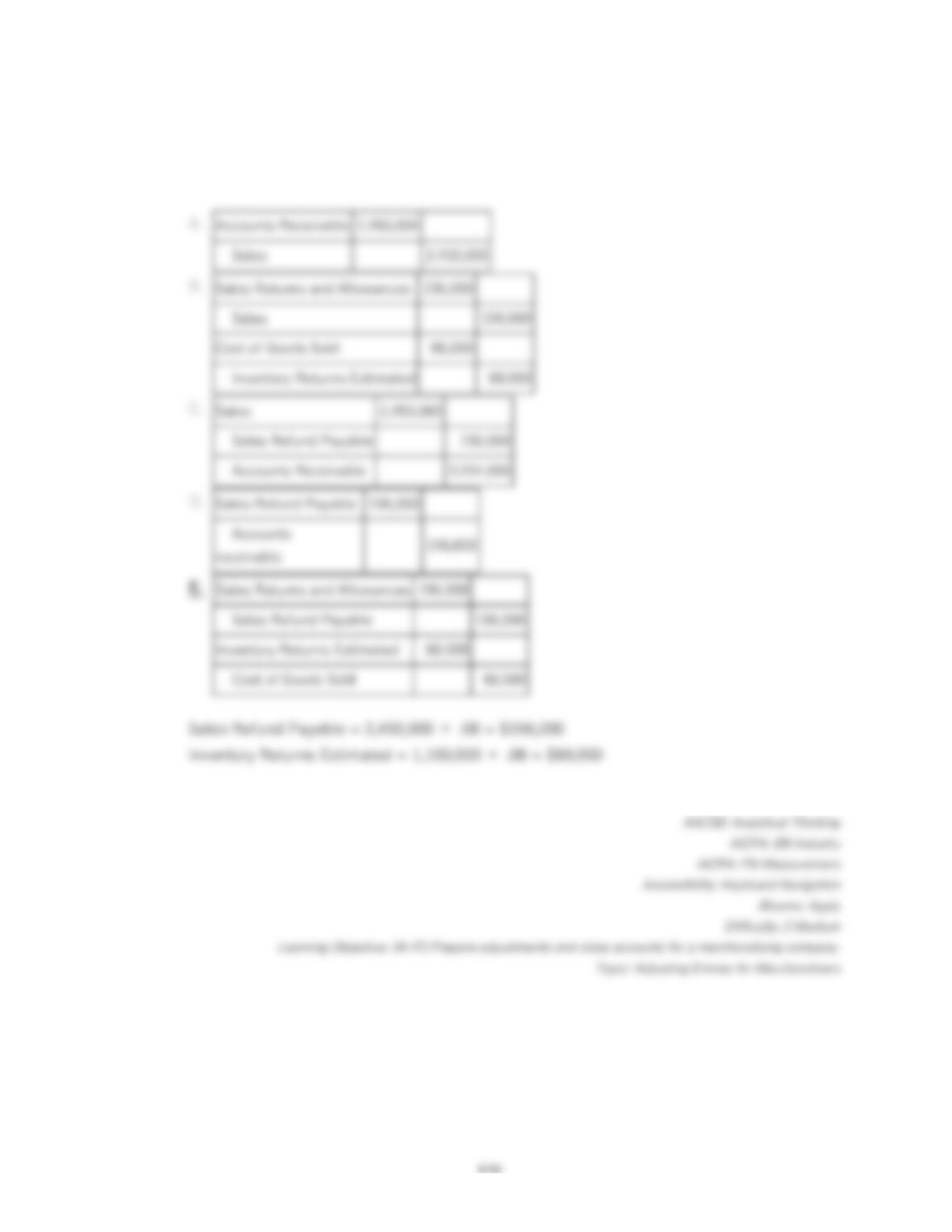
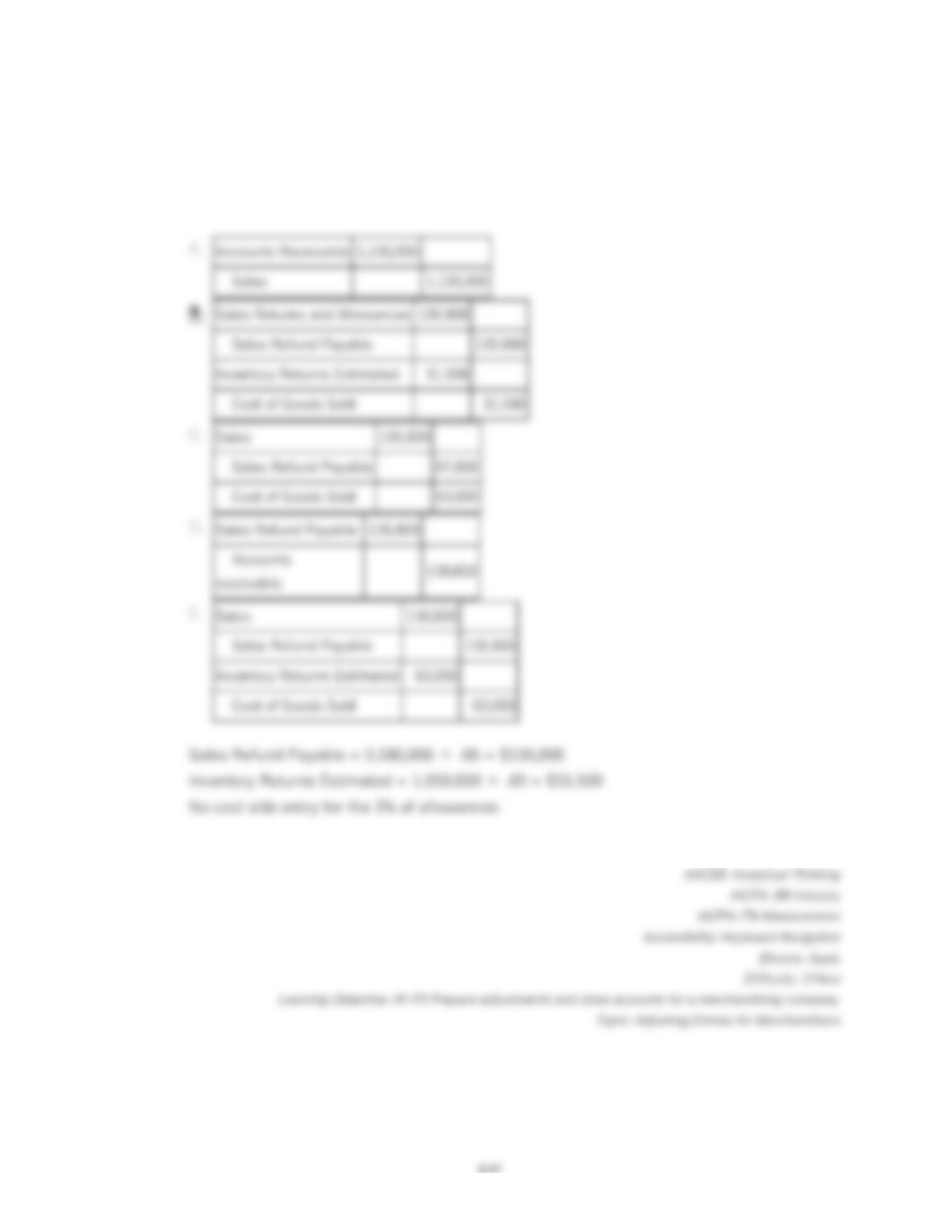
Borden Corporation had sales this year of $2,450,000 and cost of goods sold of $1,100,000.
Borden expects returns in the following year to equal 8% of sales. The adjusting entry or
entries to record the expected sales returns is(are):
169.
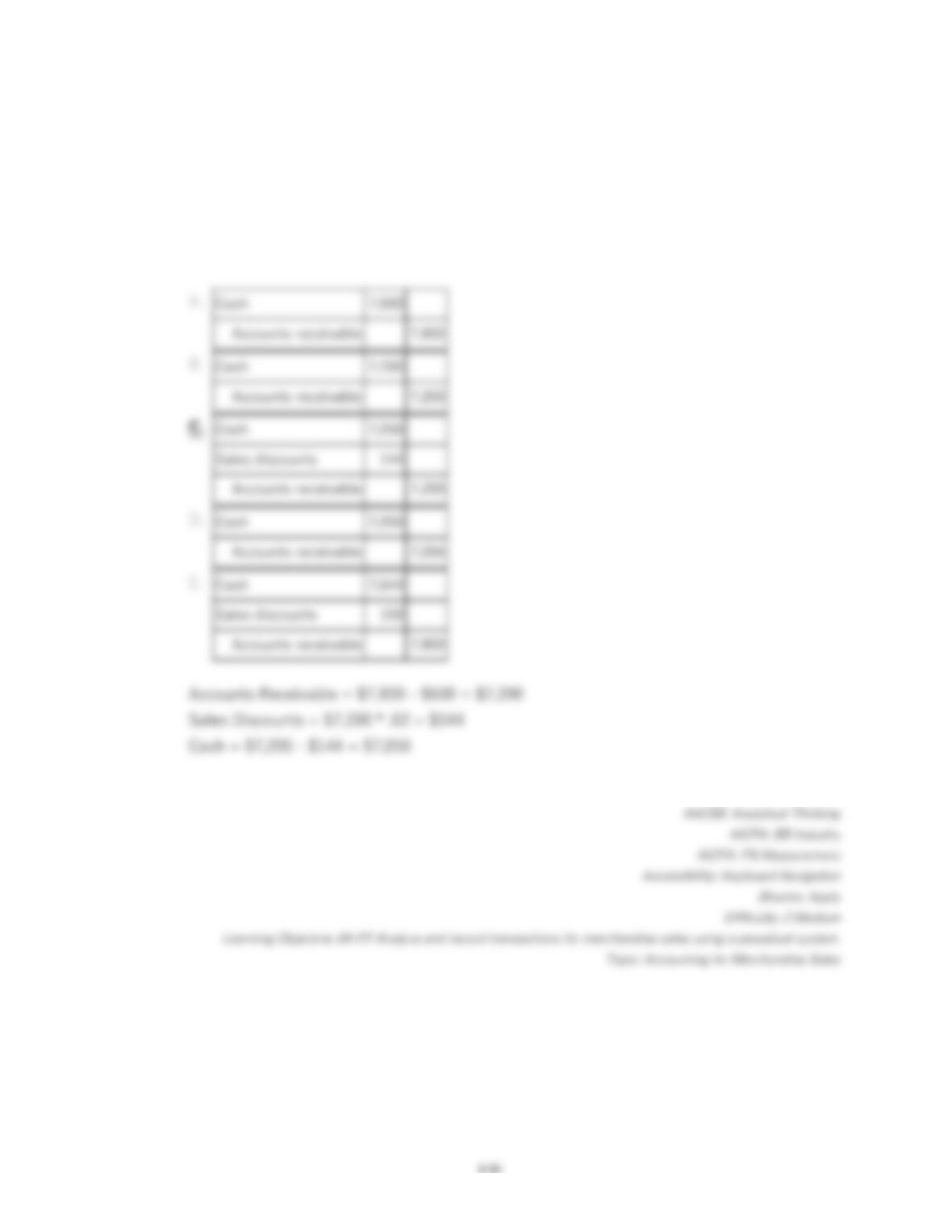
Wellington Company had sales this year of $2,180,000 and cost of goods sold of
$1,050,000. Wellington expects returns and allowances in the following year to equal 6% of
sales, half being returns of goods and half allowances for merchandise kept by the buyer.
The adjusting entry or entries to record the expected sales returns is(are):
170.
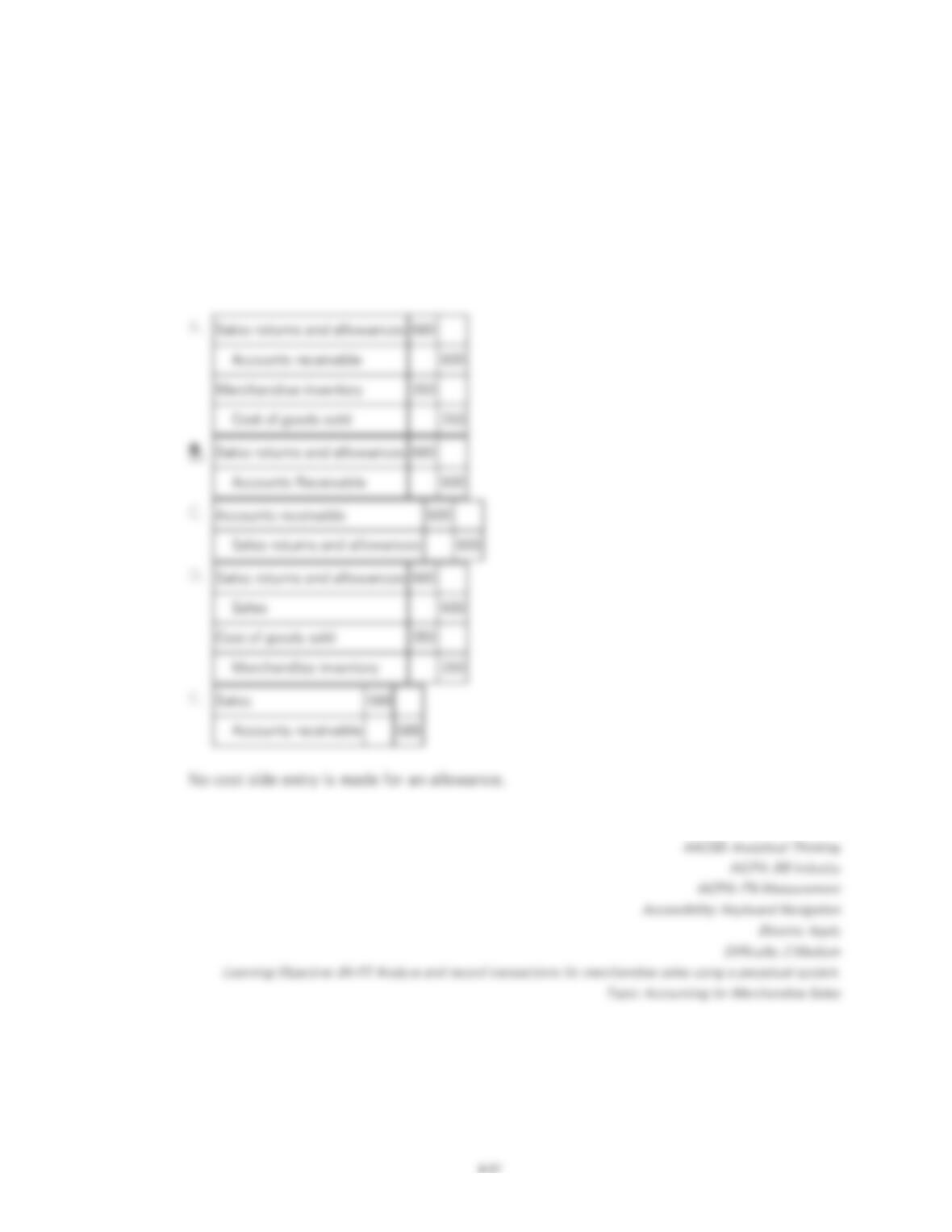
On March 12, Masterson Company, Inc. sold merchandise in the amount of $7,800 to
Forsythe Company, with credit terms of 2/10, n/30. The cost of the items sold is $4,500.
Masterson uses the gross method of accounting for sales and a
perpetual
inventory
system. On March 15, Forsythe was given an allowance of $600 on defective merchandise
that had a cost of $350. Forsythe pays the invoice on March 20, and takes the appropriate
discount. The journal entry that Masterson makes on March 20 is:
171.
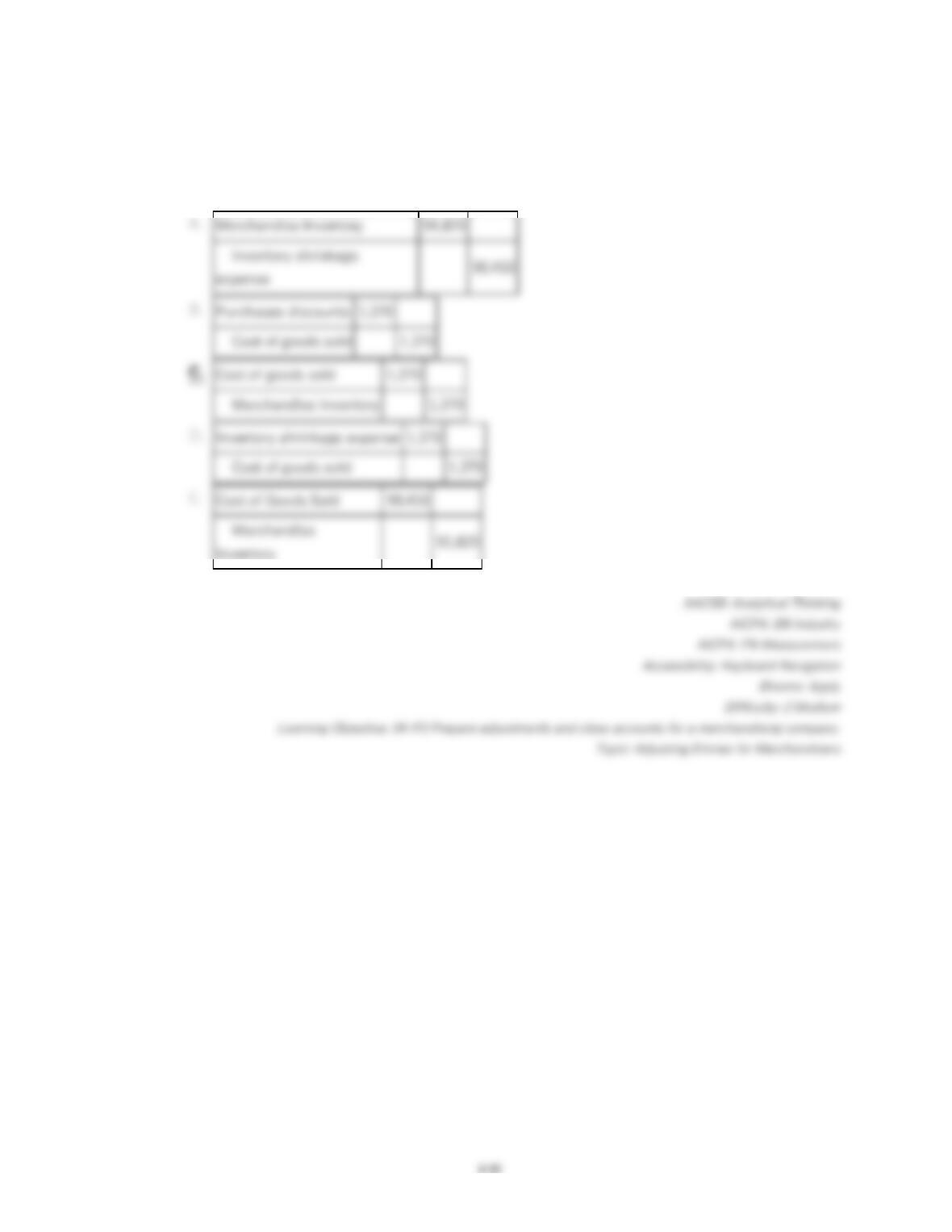
On March 12, Masterson Company, Inc. sold merchandise in the amount of $7,800 to
Forsythe Company, with credit terms of 2/10, n/30. The cost of the items sold is $4,500.
Masterson uses the gross method of accounting for sales and a
perpetual
inventory
system. On March 15, Forsythe was given an allowance of $600 on defective merchandise
that had a cost of $350. Forsythe pays the invoice on March 20, and takes the appropriate
discount. The journal entry that Masterson makes on March 15 when the allowance is
given is:
172.
Zenith Company Inc.’s Merchandise Inventory account at the end of year 2015 has a
balance of $91,820, but a physical count reveals that only $90,450 of inventory exists. The
adjusting entry to record inventory shrinkage is:
173.
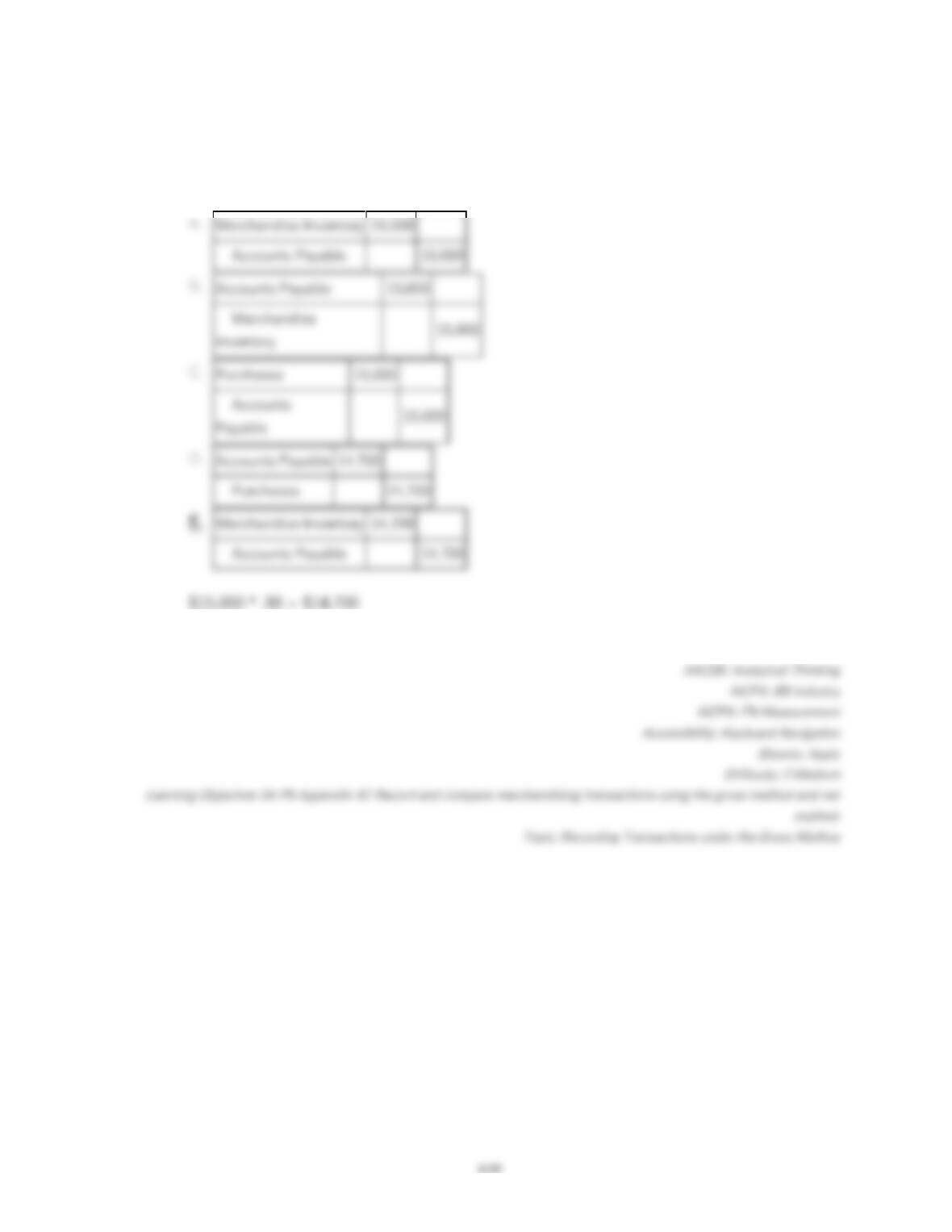
Morgan, Inc. uses a perpetual inventory system and the net method of recording
purchases. On May 12, a merchandise purchase of $15,000 was made on credit, 2/10,
n/30. The journal entry to record this purchase is:
174.
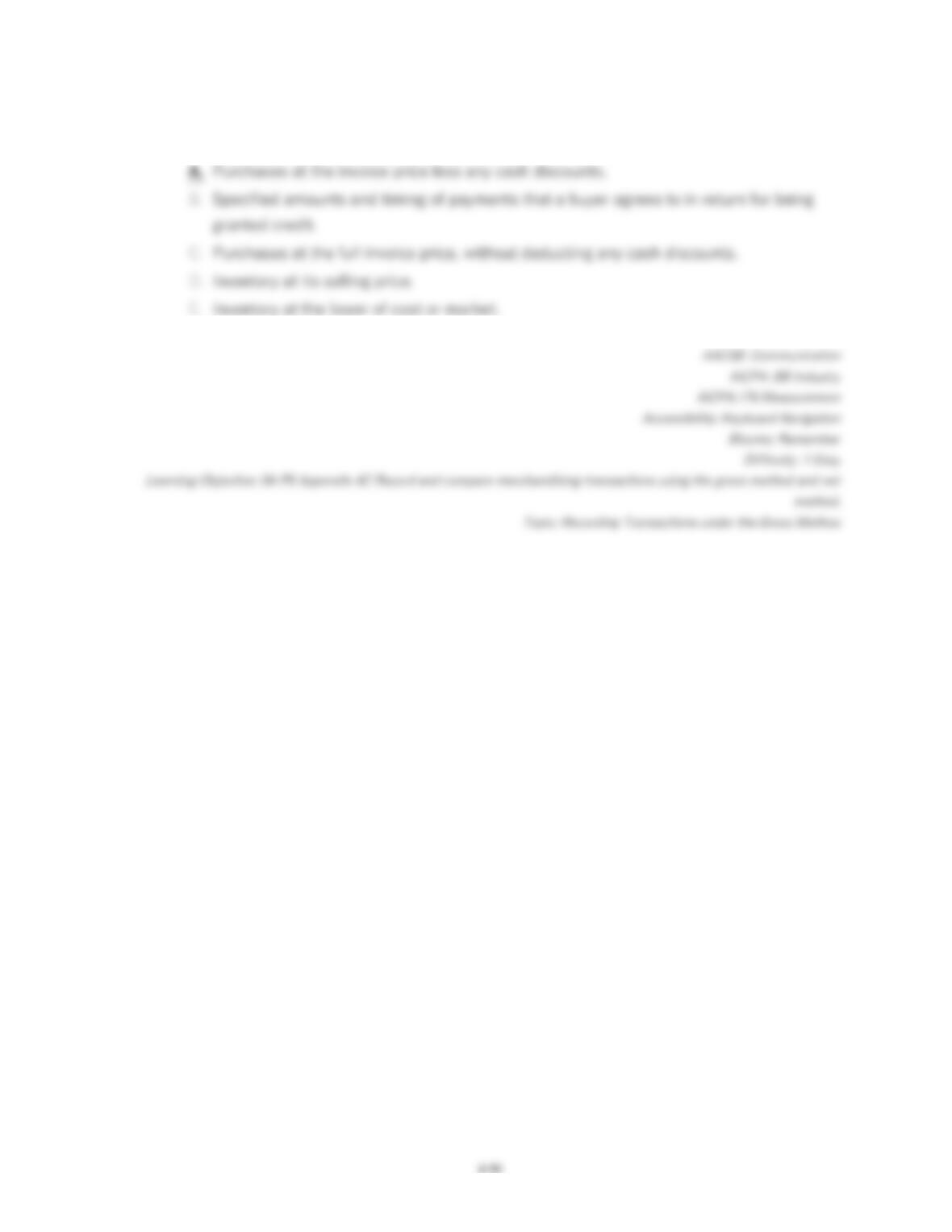
The net method of recording purchases refers to recording:
4-91
175.
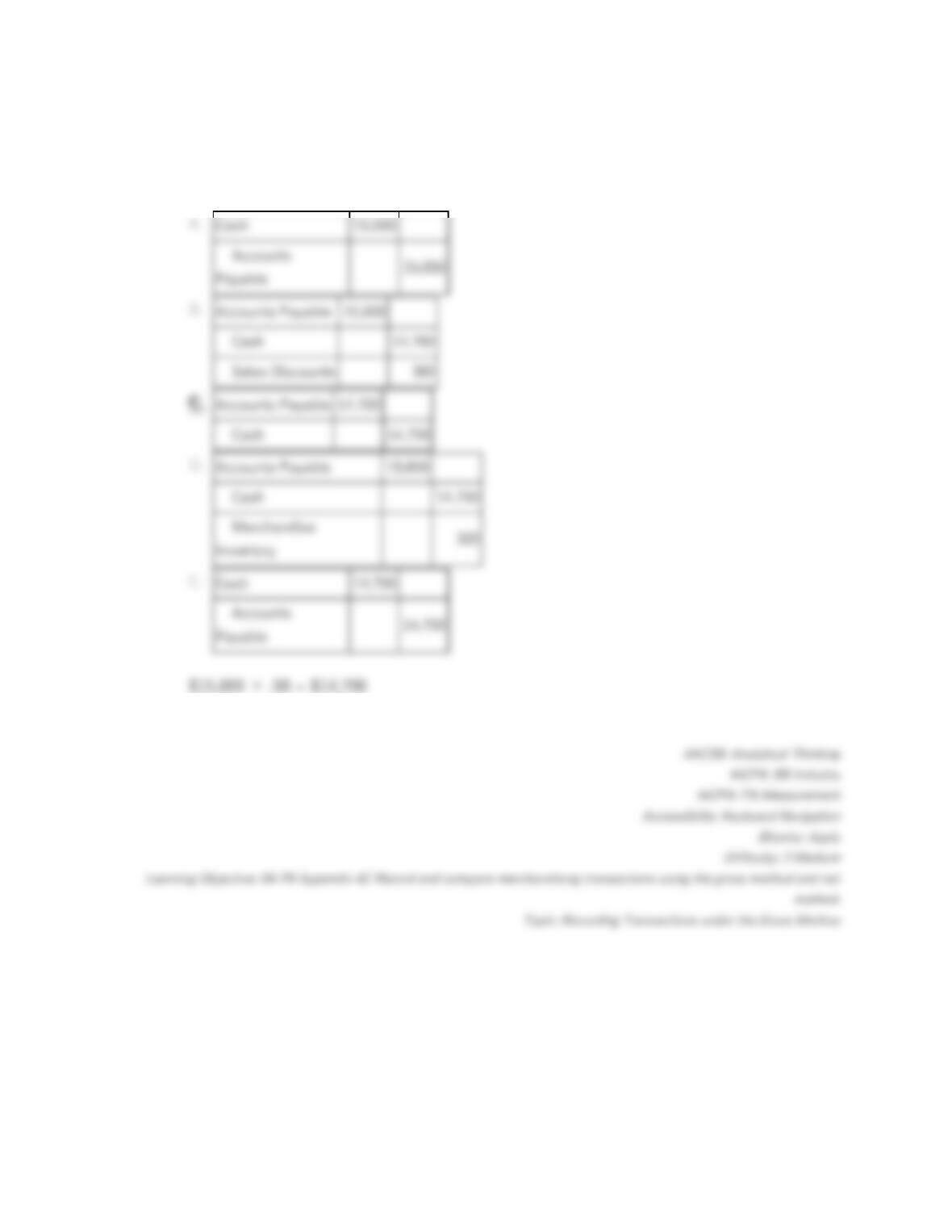
Morgan, Inc. uses a perpetual inventory system and the net method of recording
purchases. On May 12, a merchandise purchase of $15,000 was made on credit, 2/10,
n/30. Payment was made on May 20. The journal entry to record the payment is:
Matching Questions
4-92
176.
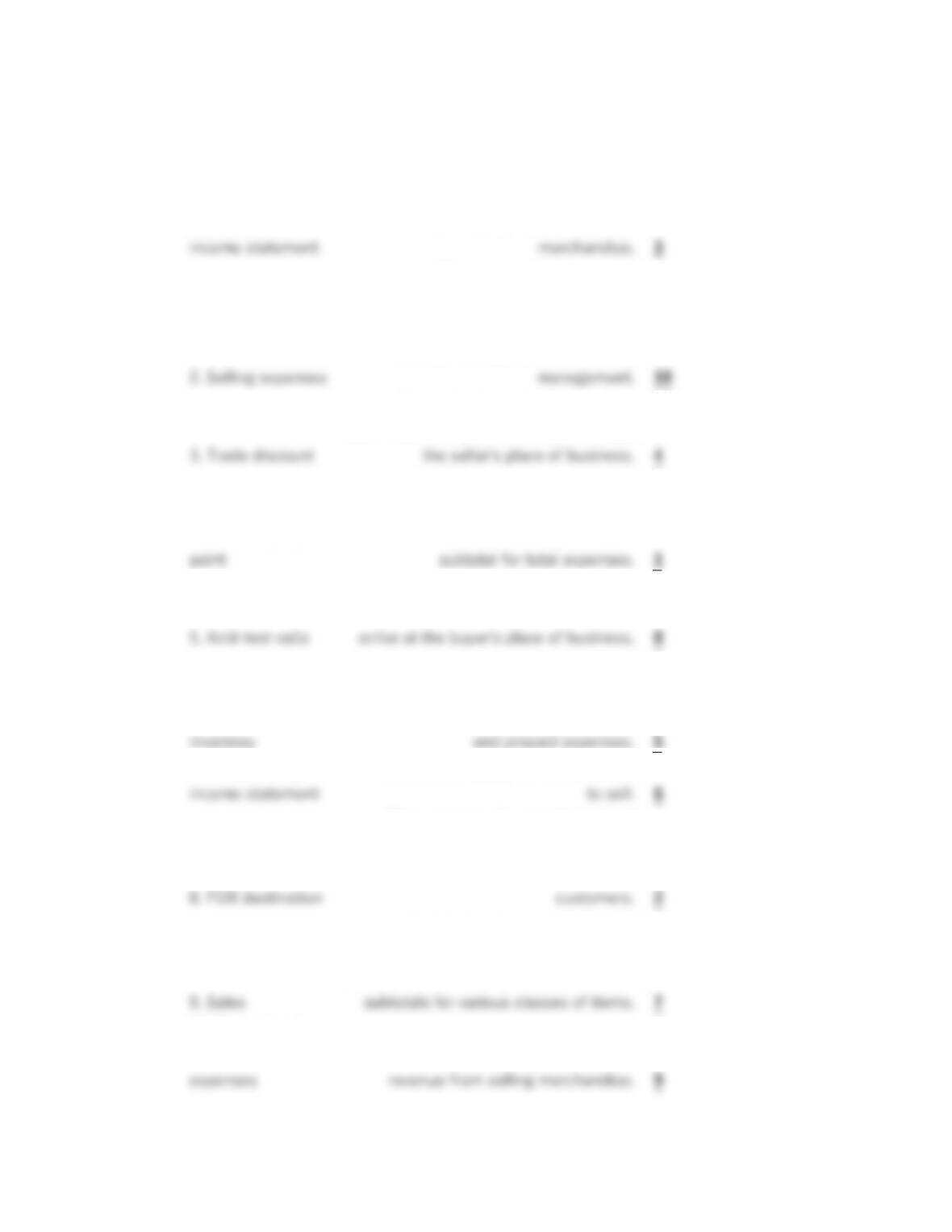
Match the following terms with the appropriate definitions.
1. Single-step
A given percent deducted from a list
price often granted to customers
purchasing large quantities of
The expenses that support a
company’s overall operations and include
costs related to accounting, human
resource management and financial
The point of transfer from seller to
buyer that takes place when goods depart
4. FOB shipping
A widely used income statement
format that lists cost of goods sold as
another expense and shows only one
The point of transfer from seller to
buyer that takes place when the goods
6. Merchandise
A measure of a company’s ability to
pay its current liabilities that excludes less
liquid current assets such as inventory
7. Multiple-step
Products a company owns and intends
The expenses of promoting sales by
displaying and advertising merchandise,
making sales, and delivering goods to
An income statement format that
shows detailed computations of net sales
and other costs and expenses, and reports
10. General and
administrative
The usual accounting term for the
177.
Match the following terms with the appropriate definitions.
10
1. Periodic
A notification that informs the seller of a
debit made to the seller’s account payable
3
The amount of time allowed before full
3. Credit period
8
The description of the amounts and
timing of payments from a buyer to a seller
5
4. Perpetual
A notification that informs a buyer of a
7
5. Credit
The time period in which reduced
payment can be made by the buyer because
of a cash discount offered by a seller of
2
The component of the income statement
calculated as net sales less cost of goods
1
7. Discount period
An inventory accounting method that
updates the accounting records for
merchandise transactions only at the end of
8. Credit terms
An inventory accounting method that
continually updates accounting records for
inventory available for sale and inventory
sold.
4
6
9. Purchase
A cash discount granted, from the view
of the seller, described in the credit terms
9
10. Debit
A cash discount granted, from the view
of the purchaser, intended to encourage
178.
Match the following terms with the appropriate definitions.
An expense account reflecting cash
discounts offered by the seller but not
A current liability account reflecting the
amount expected to be refunded to
3. Cost of Goods
A current asset account reflecting the
inventory estimated to be returned during
4. Sales Refund
A method of recording cash discounts
where an invoice is recorded as the
amount of sale less the cash discount
5. Interest Revenue
Inventory losses that can occur as a
result of theft or deterioration and require
an adjusting entry to account for those
6. Inventory
The expense of buying and preparing
merchandise reported on the income
7. Inventory Returns
An intermediary that buys products
from a manufacturer or other wholesaler
and sells them to retailers or other
An intermediary that buys products
from manufacturers or wholesalers and
The account the seller uses to reflect
the amount earned when a buyer does not
The products that a company acquires
Short Answer Questions
179.
Identify and explain the key components of a merchandiser’s net income as would be
shown in its income statement.
180.
Describe the difference between wholesalers and retailers.
181.
Define Merchandise Inventory and describe the types of costs that are included in the
inventory account for a merchandising company.
182.
What are the steps of the operating cycle for a merchandiser with credit sales?
183.
Describe the difference between accounting for purchases under the periodic and
perpetual inventory accounting systems.
184.
Explain the way in which costs flow through the merchandise inventory account to a
merchandiser’s income statement.
185.
What is the acid-test ratio? How does it measure a company’s liquidity?
186.
What is the gross margin ratio? How is it used as an indicator of profitability?
187.
What does the acronym FOB stand for? Describe the differences between FOB shipping
point (also called FOB factory) and FOB destination.
188.
Describe the recording process (including costs) for the types of transactions involved in
purchasing merchandise inventory when a perpetual inventory system is used.
189.
Describe the recording process (including costs) for the types of transactions associated
with sales of merchandise inventory using a perpetual inventory system and the gross
method of accounting for discounts.
190.
What is inventory shrinkage? How do managers account for shrinkage?