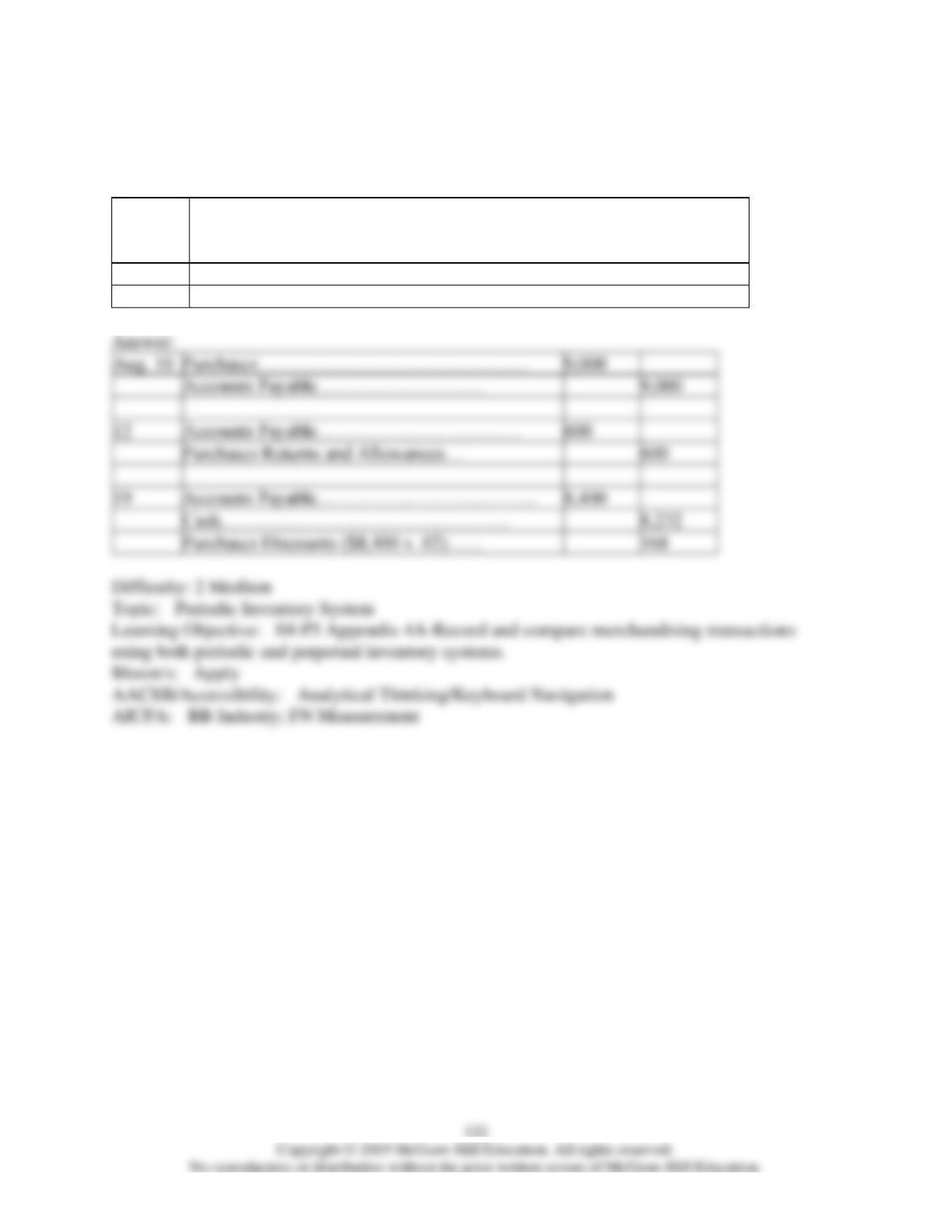
221) Johnnycake Restaurant uses a periodic inventory system and the gross method of
accounting for purchases. Prepare general journal entries to record the following transactions for
Johnnycake:
Aug. 10
Johnnycake purchased merchandise on credit from Foster Foods for
$9,000, terms 2/10, n/30, FOB destination. Transportation costs of $350
were paid by Foster.
12
Johnnycake returned $600 of merchandise from the August 10 purchase.
19
Johnnycake paid Foster for the August 10 purchase.
Aug. 10
9,000
9,000
12
600
600
19
Accounts Payable………………………………
8,400
8,232
168
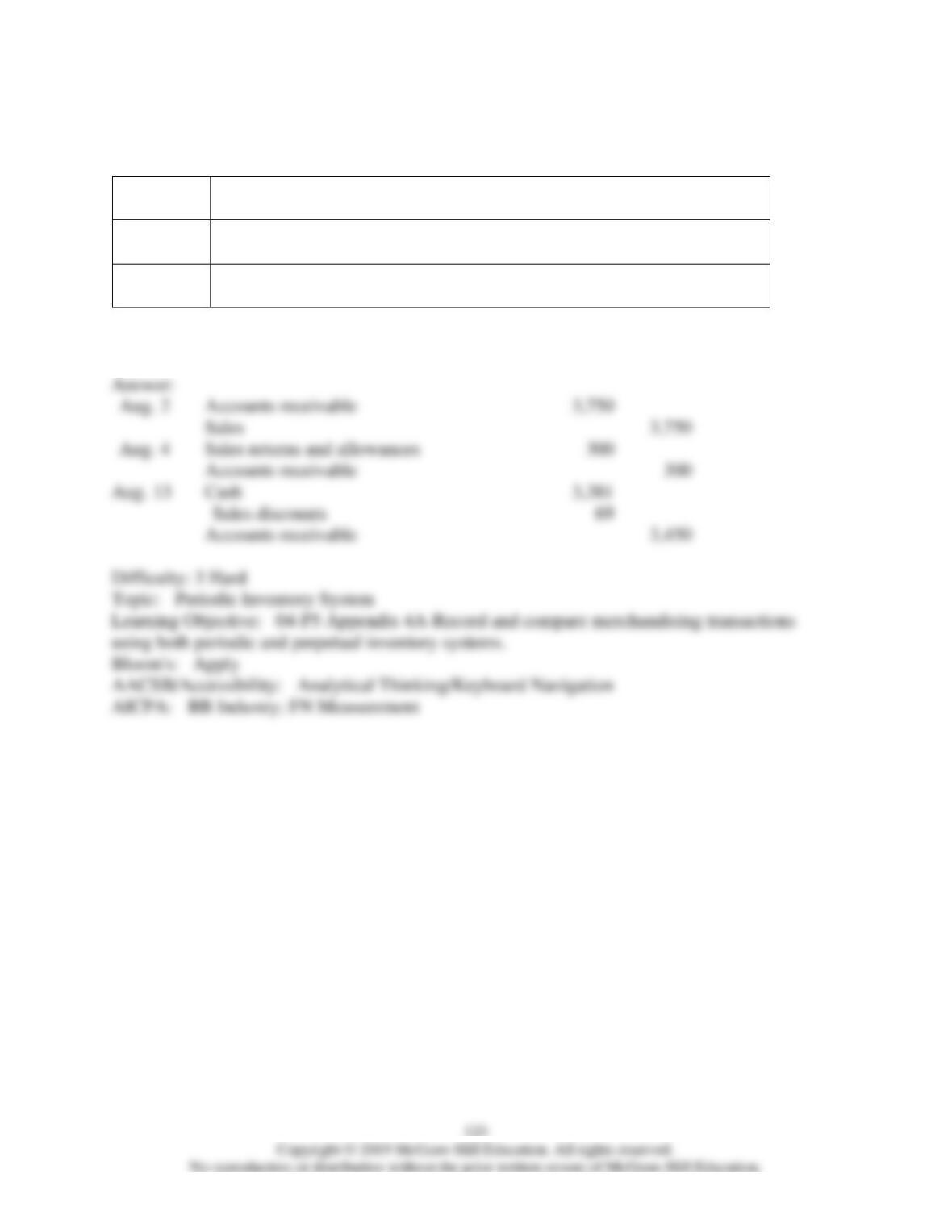
222) Austin’s Pub Supply uses the periodic inventory system and the gross method of accounting
for sales. The company had the following sales transactions during August:
August 2
Sold merchandise to Jo’s Pub and Grub on credit for $3,750, terms 2/15,
n/60. The items sold had a cost of $1,200.
August 4
Jo’s Pub and Grub returned merchandise that had a selling price of $300.
The cost of the merchandise returned was $110.
August 13
Jo’s Pub and Grub paid for the merchandise sold on August 2, taking any
appropriate discount earned.
Prepare the journal entries that Austin’s Pub Supply must make to record these transactions.
Aug. 2
Accounts receivable
Sales
Aug. 4
Sales returns and allowances
Accounts receivable
Aug. 13
Cash
Sales discounts
Accounts receivable
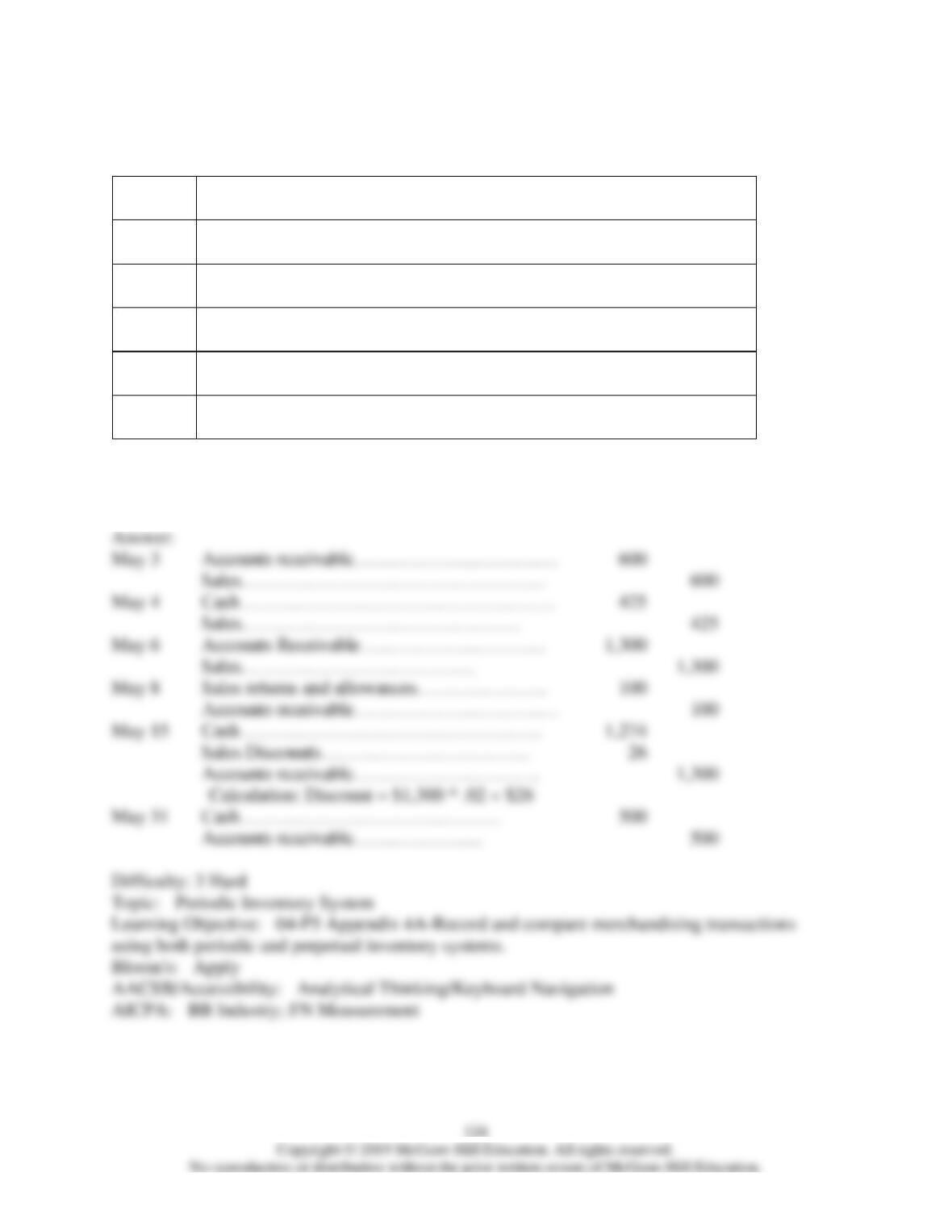
223) Preston Office Furniture uses the periodic inventory system and the gross method of
accounting for sales. It had the following transactions during the month of May:
May 3
Sold merchandise to a customer on credit for $600, terms 2/10, n/30. The
cost of the merchandise sold was $350.
May 4
Sold merchandise to a customer for cash of $425. The cost of the
merchandise was $250.
May 6
Sold merchandise to a customer on credit for $1,300, terms 2/10, n/30.
The cost of the merchandise sold was $750.
May 8
The customer from May 3 returned merchandise with a selling price of
$100. The cost of the merchandise returned was $55.
May 15
The customer from May 6 paid the full amount due, less any appropriate
discounts earned.
May 31
The customer from May 3 paid the full amount due, less any appropriate
discounts earned.
Prepare the required journal entries that Preston Office Furniture must make to record these
transactions.
May 3
May 4
May 6
May 8
Sales returns and allowances…………………
May 15
Calculation: Discount = $1,300 * .02 = $26
May 31
224) At its fiscal year-end of June 30, Kendall Wholesale’s general ledger shows the following
selected account balances. Kendall Wholesale uses the perpetual inventory system.
Merchandise Inventory
$60,000
Sales
940,000
Sales discounts
16,000
Sales returns and allowances
8,000
Cost of goods sold
456,000
A physical count of its June 30 year-end inventory discloses that the cost of the merchandise
inventory still available is $58,160. Prepare the entry to record any inventory shrinkage.
126
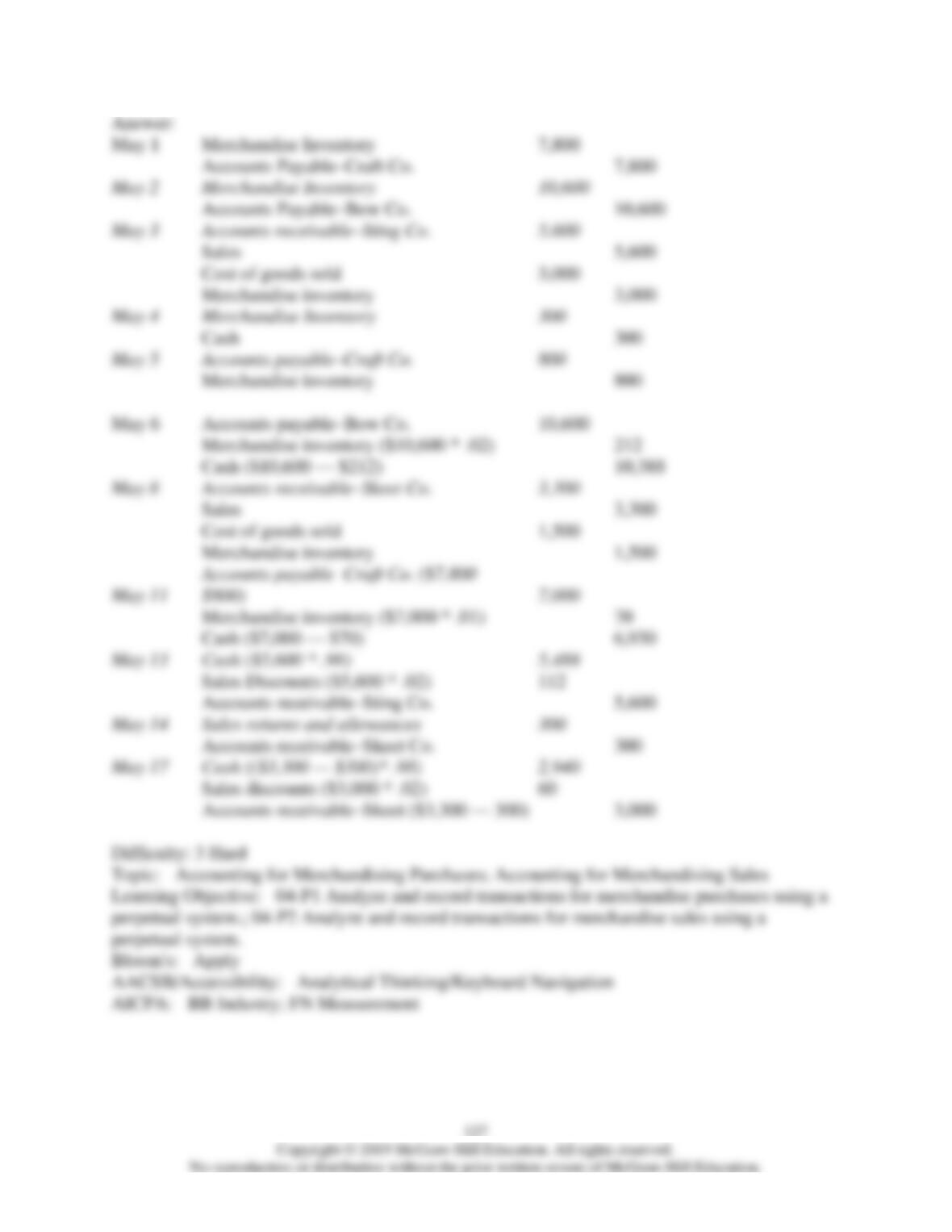
225) Prepare journal entries to record the following merchandising transactions of Margin
Company, which applies the perpetual inventory system and the gross method of recording
invoices. Margin Company offers all of its credit customers credit terms of 2/10, n/30.
May 1
Purchased merchandise from Craft Company for $7,800 under credit
terms of 1/10, n/30, FOB shipping point, invoice dated May 1.
May 2
Purchased merchandise from Bow Company for $10,600 under credit
terms 2/05, n/20, FOB destination.
May 3
Sold merchandise to Sting Company for $5,600, FOB shipping point,
invoice dated May 3. The merchandise had cost $3,000.
May 4
Paid $300 cash for the freight charges on the May 1 purchase of
merchandise.
May 5
Granted an $800 allowance from Craft Company for the return of part of
the merchandise purchased on May 1.
May 6
Paid Bow Company the balance due within the discount period.
May 8
Sold merchandise to Skeet Company for $3,300, FOB shipping point,
invoice dated May 8. The merchandise had a cost of $1,500.
May 11
Paid Craft Company the balance due within the discount period.
May 13
Received the balance due from Sting Company within the discount period.
May 14
Granted a credit of $300 to Skeet Company for an allowance on defective
merchandise.
May 17
Received the balance due from Skeet Company within the discount
period.
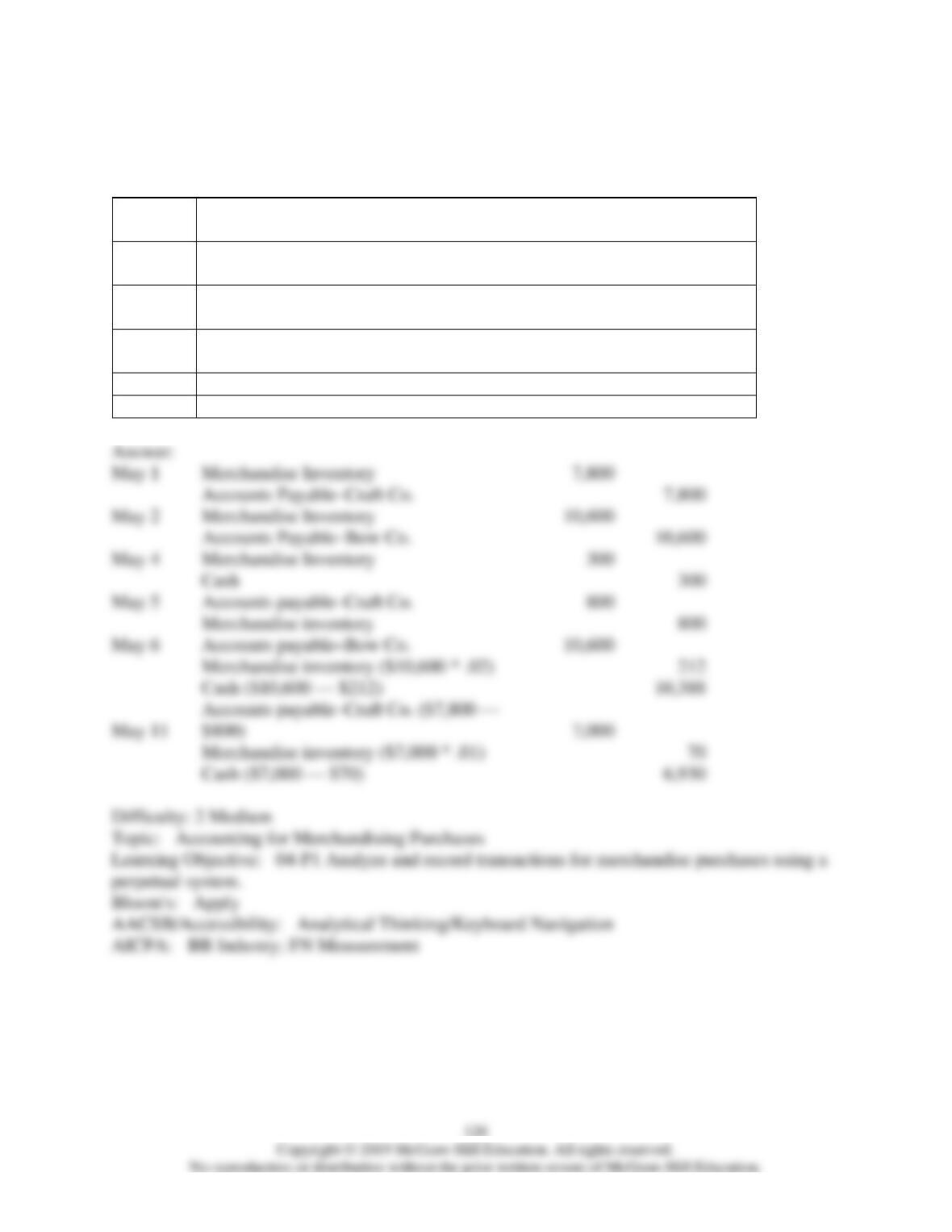
226) Prepare journal entries to record the following merchandising transactions of Margin
Company, which applies the perpetual inventory system and the gross method of recording
invoices. Margin Company offers all of its credit customers credit terms of 2/10, n/30.
May 1
Purchased merchandise from Craft Company for $7,800 under credit
terms of 1/10, n/30, FOB shipping point, invoice dated May 1.
May 2
Purchased merchandise from Bow Company for $10,600 under credit
terms 2/05, n/20, FOB destination.
May 4
Paid $300 cash for the freight charges on the May 1 purchase of
merchandise.
May 5
Granted an $800 allowance from Craft Company for the return of part of
the merchandise purchased on May 1.
May 6
Paid Bow Company the balance due within the discount period.
May 11
Paid Craft Company the balance due within the discount period.
May 1
Merchandise Inventory
Accounts Payable–Craft Co.
May 2
Merchandise Inventory
Accounts Payable–Bow Co.
May 4
Merchandise Inventory
Cash
May 5
Accounts payable–Craft Co.
Merchandise inventory
May 6
Accounts payable–Bow Co.
Merchandise inventory ($10,600 * .02)
Cash ($10,600 — $212)
May 11
Accounts payable–Craft Co. ($7,800 —
$800)
Merchandise inventory ($7,000 * .01)
Cash ($7,000 — $70)
227) Prepare journal entries to record the following merchandising transactions of Margin
Company, which applies the perpetual inventory system and the gross method of recording
invoices. Margin Company offers all of its credit customers credit terms of 2/10, n/30.
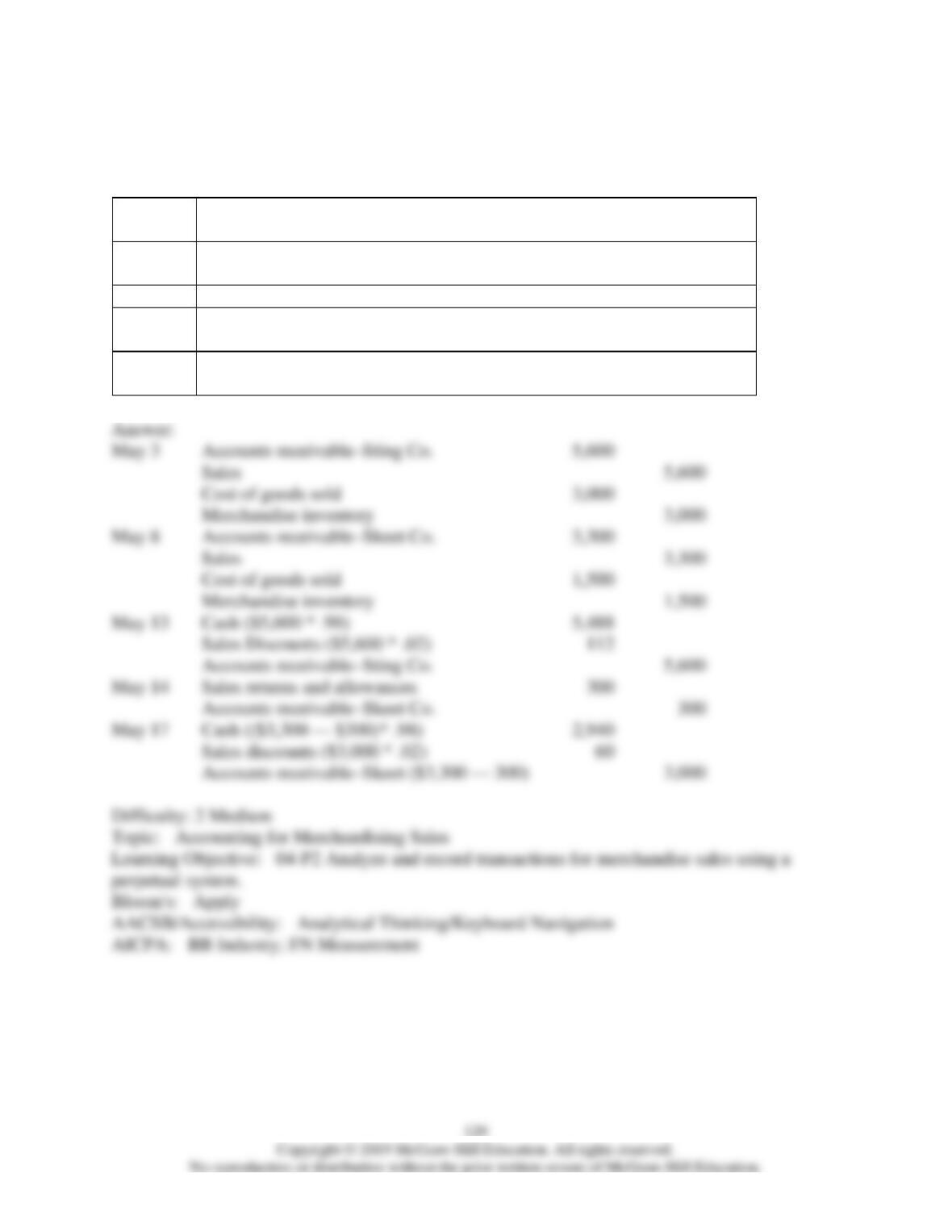
May 3
Sold merchandise to Sting Company for $5,600, FOB shipping point,
invoice dated May 3. The merchandise had cost $3,000.
May 8
Sold merchandise to Skeet Company for $3,300, FOB shipping point,
invoice dated May 8. The merchandise had a cost of $1,500.
May 13
Received the balance due from Sting Company within the discount period.
May 14
Granted a $300 allowance to Skeet Company for an allowance on
defective merchandise.
May 17
Received the balance due from Skeet Company within the discount
period.
May 3
Accounts receivable–Sting Co.
Sales
Cost of goods sold
Merchandise inventory
May 8
Accounts receivable–Skeet Co.
Sales
Cost of goods sold
Merchandise inventory
May 13
Cash ($5,600 * .98)
Accounts receivable–Sting Co.
May 14
Sales returns and allowances
Accounts receivable–Skeet Co.
May 17
Cash (($3,300 — $300)* .98)
Sales discounts ($3,000 * .02)
Accounts receivable–Skeet ($3,300 — 300)

130
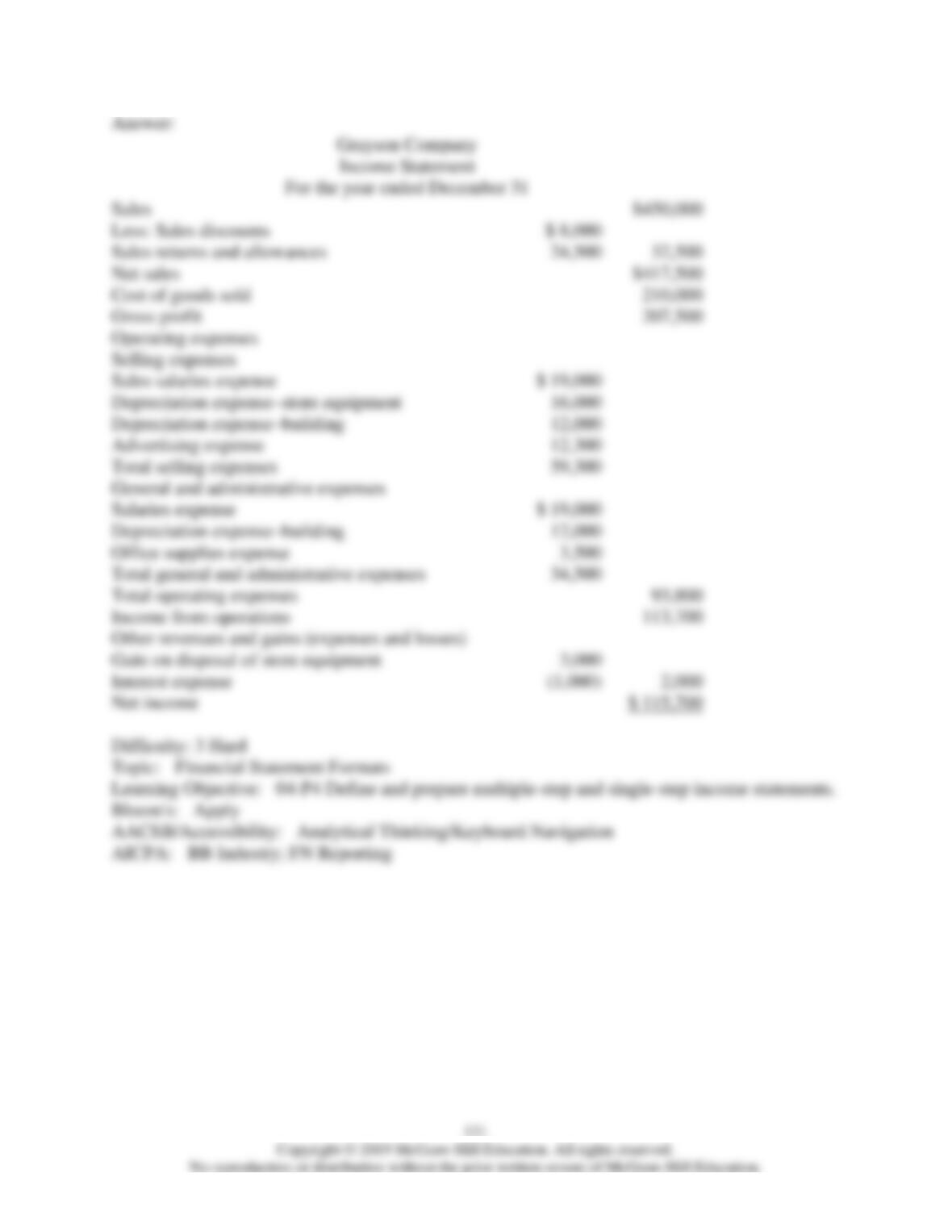
228) From the adjusted trial balance given below for the Grayson Company, prepare a multiple-
step income statement in good form. Salaries expense and building depreciation expense should
be equally divided between selling activities and the general and administrative activities.
Grayson Company
Adjusted Trial Balance
December 31
Debit
Credit
Cash
$ 19,500
Accounts receivable
27,000
Merchandise inventory
38,000
Office supplies
1,200
Store equipment
80,000
Accumulated depreciation–store equipment
$ 25,000
Building
260,000
Accumulated depreciation–building
121,600
Accounts payable
28,500
Salaries payable
10,000
Common stock
100,000
Retained earnings
69,900
Dividends
45,000
Sales
450,000
Sales discounts
8,000
Sales returns and allowances
24,500
Cost of goods sold
210,000
Salaries expense
38,000
Depreciation expense–store equipment
16,000
Depreciation expense–building
24,000
Advertising expense
12,300
Office supplies expense
3,500
Gain on disposal of store equipment
3,000
Interest expense
1,000
Totals
$808,000
$808,000
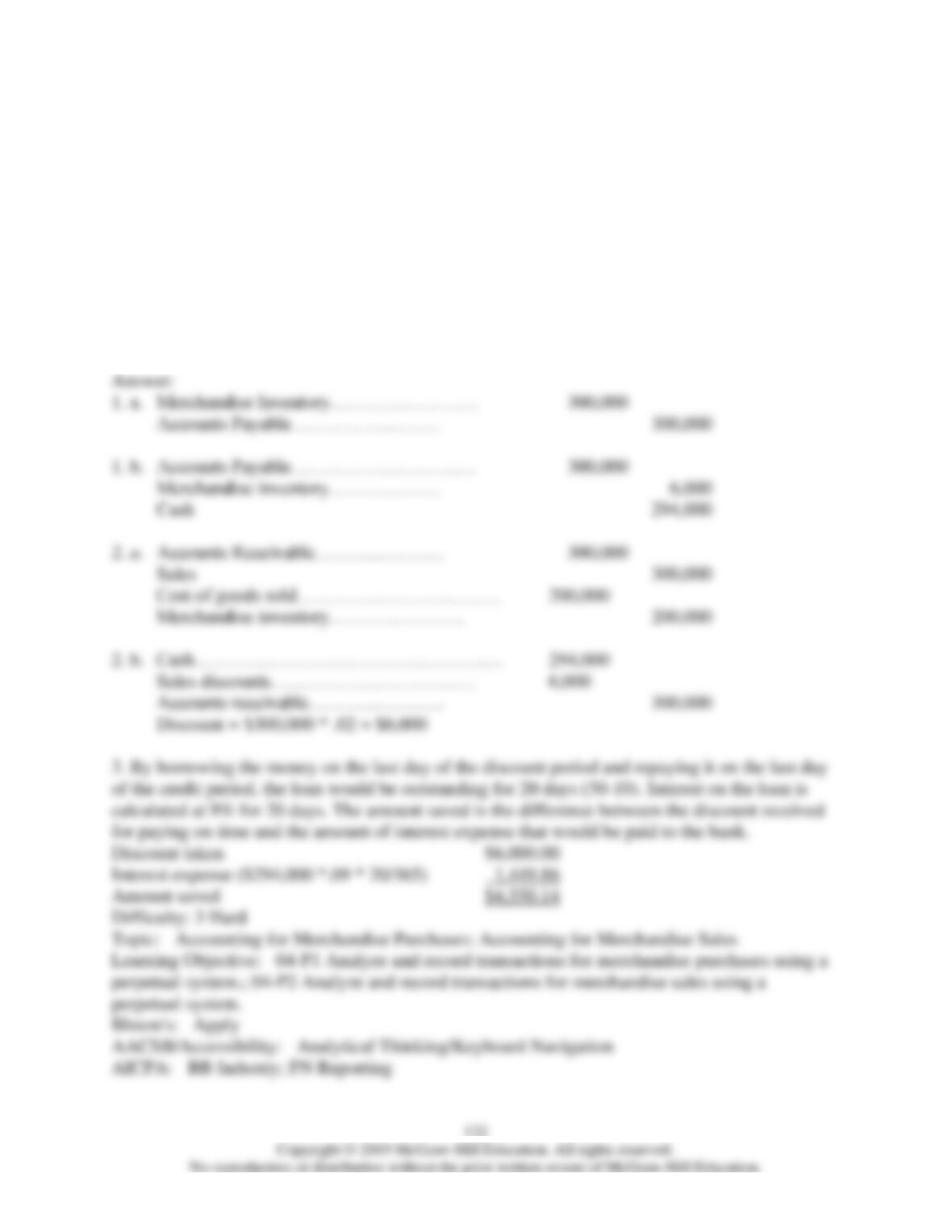
229) Vincent Company purchased merchandise from Liu Company with an invoice price of
$300,000 and credit terms of 2/10, n/30. Liu Company’s cost for the merchandise was $200,000.
Vincent Company paid within the discount period. Assume that both buyer and seller use a
perpetual inventory system and the gross method of recording invoices.
1. Prepare entries that Vincent should record for (a) the purchase and (b) the cash payment.
2. Prepare entries that Liu should record for (a) the sale and (b) the cash collection.
3. Assume that the buyer borrowed enough cash to pay the balance on the last day of the
discount period at an annual interest rate of 9% and paid it back on the last day of the credit
period. Compute how much the buyer saved by following this strategy. (Assume a 365-day year
and round dollar amounts to the nearest cent.)