103.
A debit memorandum is:
104.
A company purchased $1,800 of merchandise on July 5 with terms 2/10, n/30. On July 7, it
returned $200 worth of merchandise. On July 14, it paid the full amount due. The amount
of the cash paid on July 14 equals:
105.
A company that uses a perpetual inventory system purchased $1,800 of merchandise on
July 5 with terms 2/10, n/30. On July 7, it returned $200 worth of merchandise. On July 28,
it paid the full amount due. The amount of the cash paid on July 28 equals:
106.
A company that uses a perpetual inventory system purchased $1,800 of merchandise on
July 5 with terms 2/10, n/30. On July 7, it returned $200 worth of merchandise. On July 28,
it paid the amount due. The amount of the discount lost by failing to pay within the
discount period equals:
107.
A company that uses the gross method of recording purchases and a perpetual inventory
system purchased $1,800 of merchandise on July 5 with terms 2/10, n/30. On July 7, it
returned $200 worth of merchandise. On July 28, it paid the full amount due. The correct
journal entry to record the purchase on July 5 is:
108.
A company that uses the gross method of recording purchases and a perpetual inventory
system purchased $1,800 of merchandise on July 5 with terms 2/10, n/30. On July 7, it
returned $200 worth of merchandise. On July 28, it paid the full amount due. The correct
journal entry to record the merchandise return on July 7 is:
109.
An expense resulting from failing to take advantage of cash discounts when using the net
method of recording purchases is called:
110.
A company using the gross method of recording purchases and a perpetual inventory
system failed to take advantage of a discount available. When it pays the amount of the
invoice at the end of the credit period, the journal entry will include a debit to:
111.
A company that uses the gross method of recording purchases and a perpetual inventory
system made a purchase of $400 with terms of 2/10, n/30. The entry to record the
purchase would be:
112.
Merchandise with an invoice price of $2,000 was purchased on February 3, terms 2/15,
n/60. The company uses the gross method to record purchases and a perpetual inventory
system. The entry to record a cash payment of this purchase obligation on February 17 is:
113.
A company that uses the gross method of accounting for purchases and a perpetual
inventory system made a February 1 purchase of merchandise inventory on account for
$7,300 with terms of 1/10, n/30. The February 1 journal entry to record this transaction
would include a:
114.
A company that uses the net method of recording purchases and a perpetual inventory
system purchased $1,800 of merchandise on July 5 with terms 2/10, n/30. On July 7, it
returned $200 worth of merchandise. On July 28, it paid the full amount due. The correct
journal entry to record the payment on July 28 is:
115.
A company purchased $4,000 worth of merchandise FOB shipping point. Transportation
costs of an additional $350 were paid by the seller and added to the sales invoice. The
company later returned $275 worth of merchandise and paid the invoice within the 2%
cash discount period. The total amount paid for this merchandise is:
116.
Sales returns:
117.
All of the following statements regarding sales returns and allowances are true
except
:
118.
A debit to Sales Returns and Allowances and a credit to Accounts Receivable:
119.
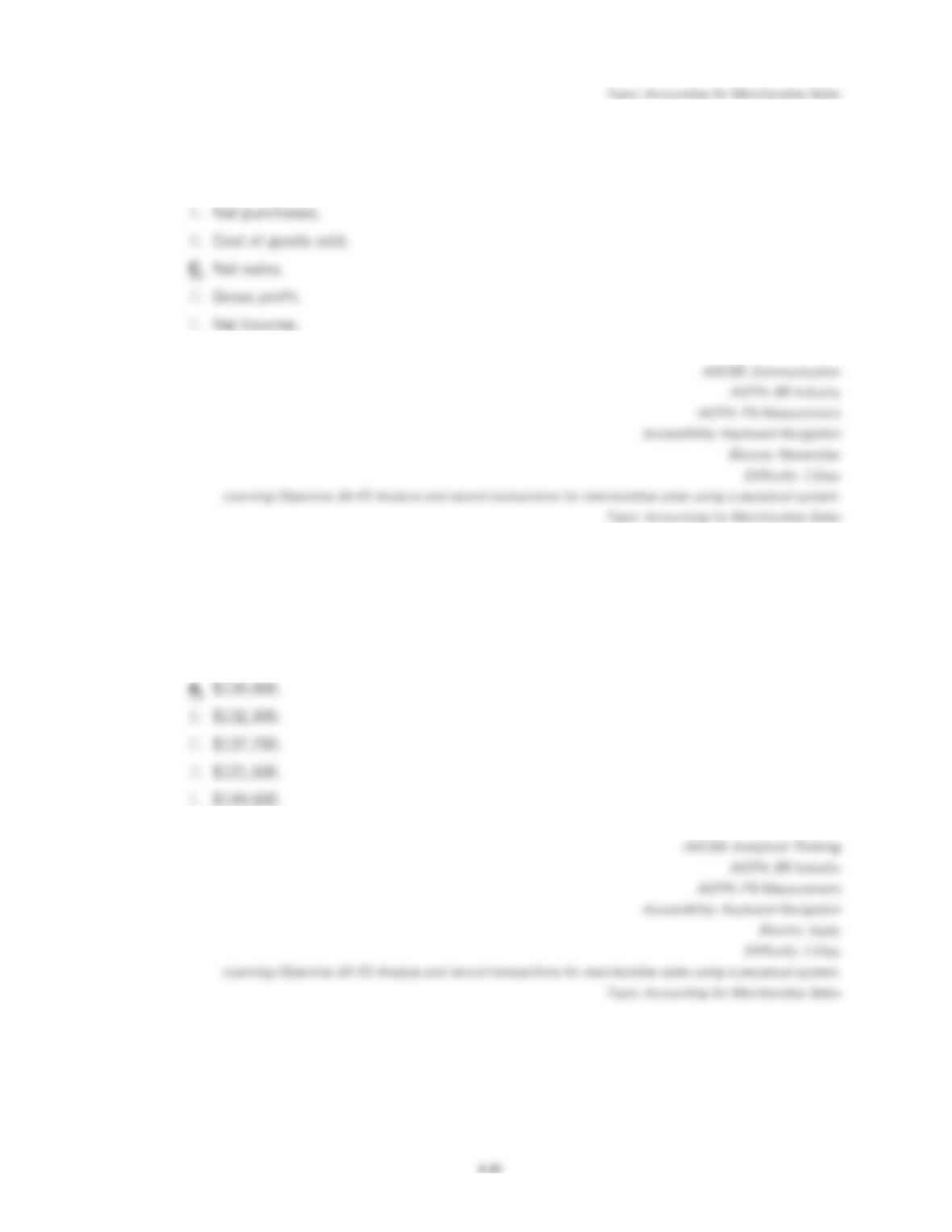
Sales less sales discounts less sales returns and allowances equals:
120.
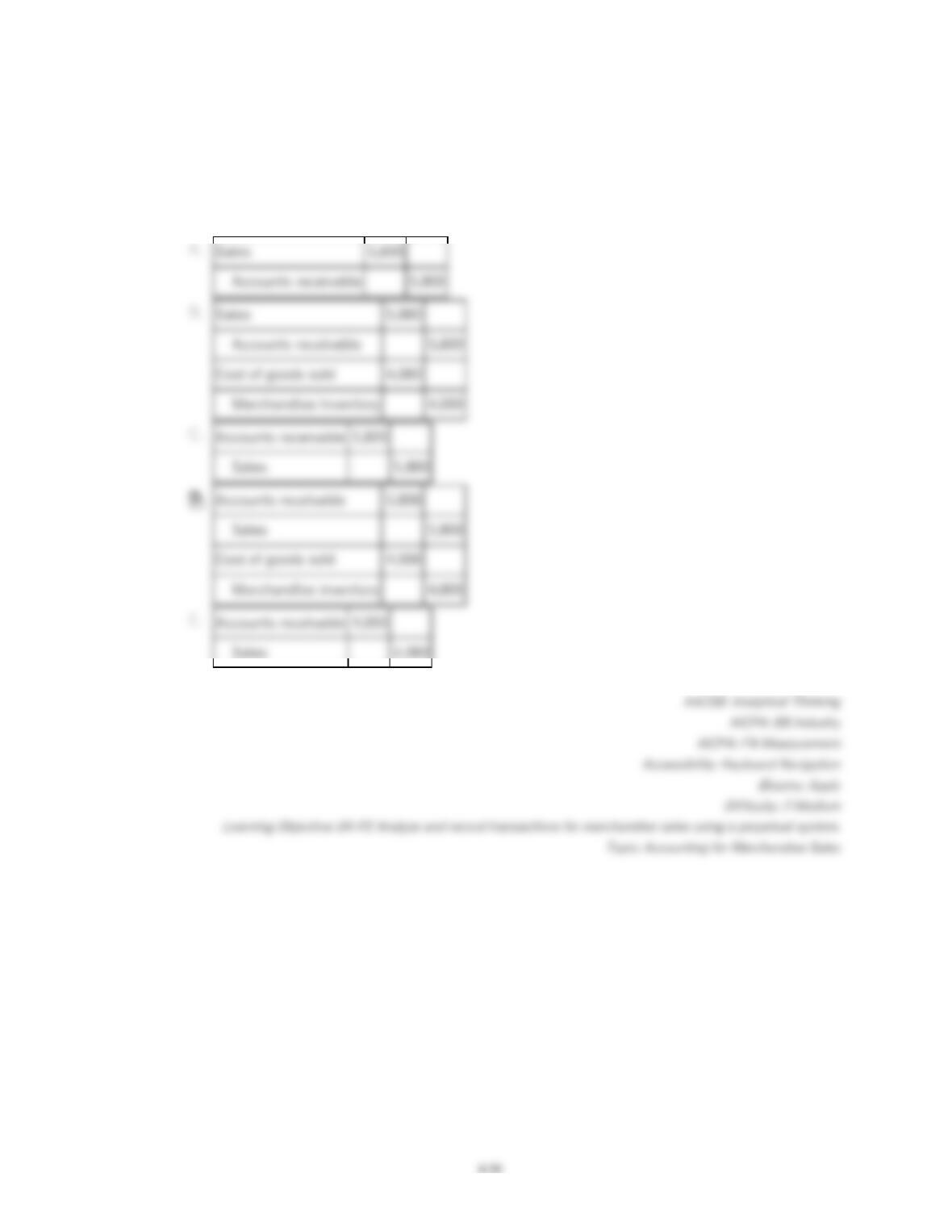
Garza Company made a $135,000 sale with terms 2/10, n/45: If the company uses the
gross method of accounting for sales, the sale should be recorded with a debit to Accounts
Receivable and a credit to Sales for which of the following amounts?
121.
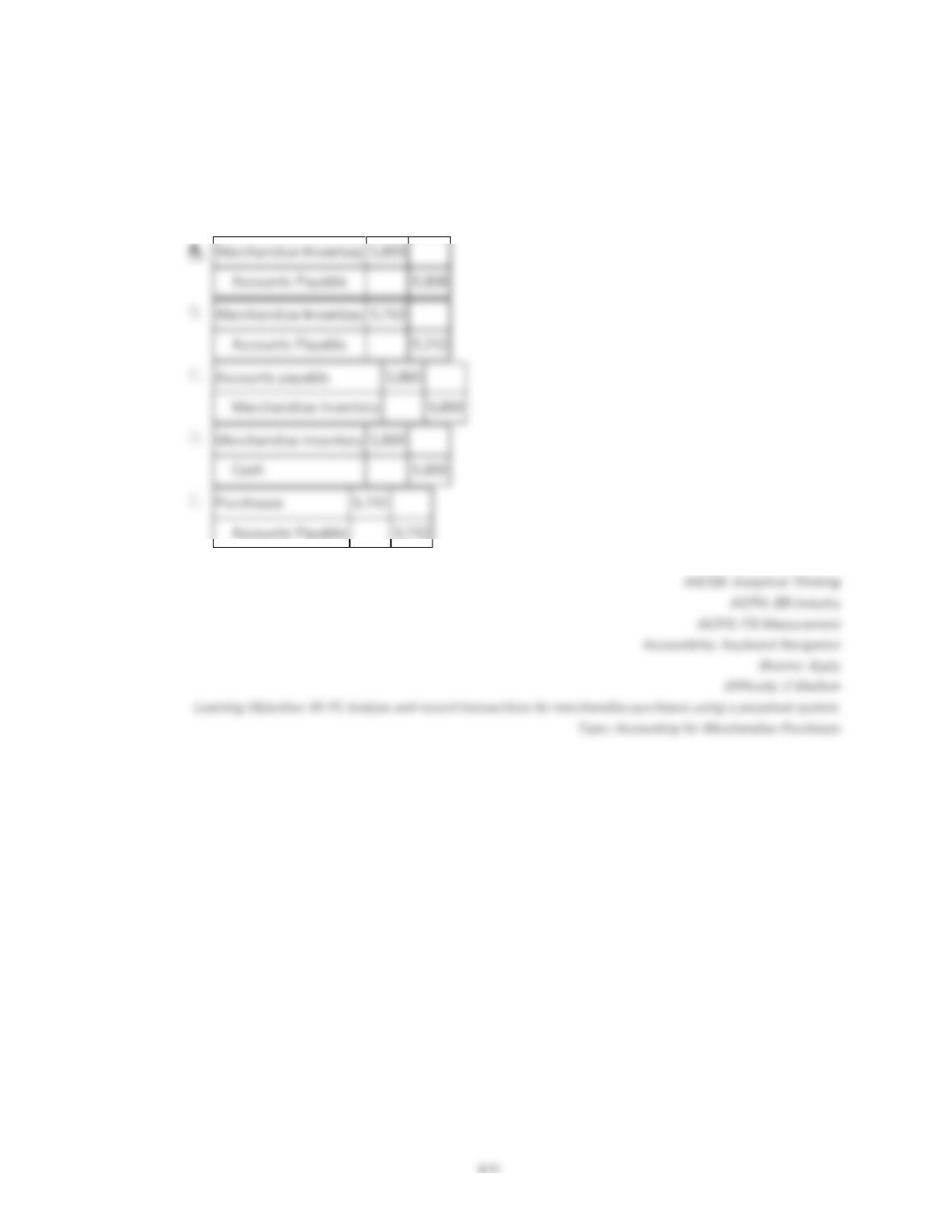
On May 1, Shilling Company, Inc. sold merchandise in the amount of $5,800 to Anders,
with credit terms of 2/10, n/30. The cost of the items sold is $4,000. Shilling uses the
gross method of recording sales and a perpetual inventory system. The journal entry or
entries that Shilling will make on May 1 is:
122.
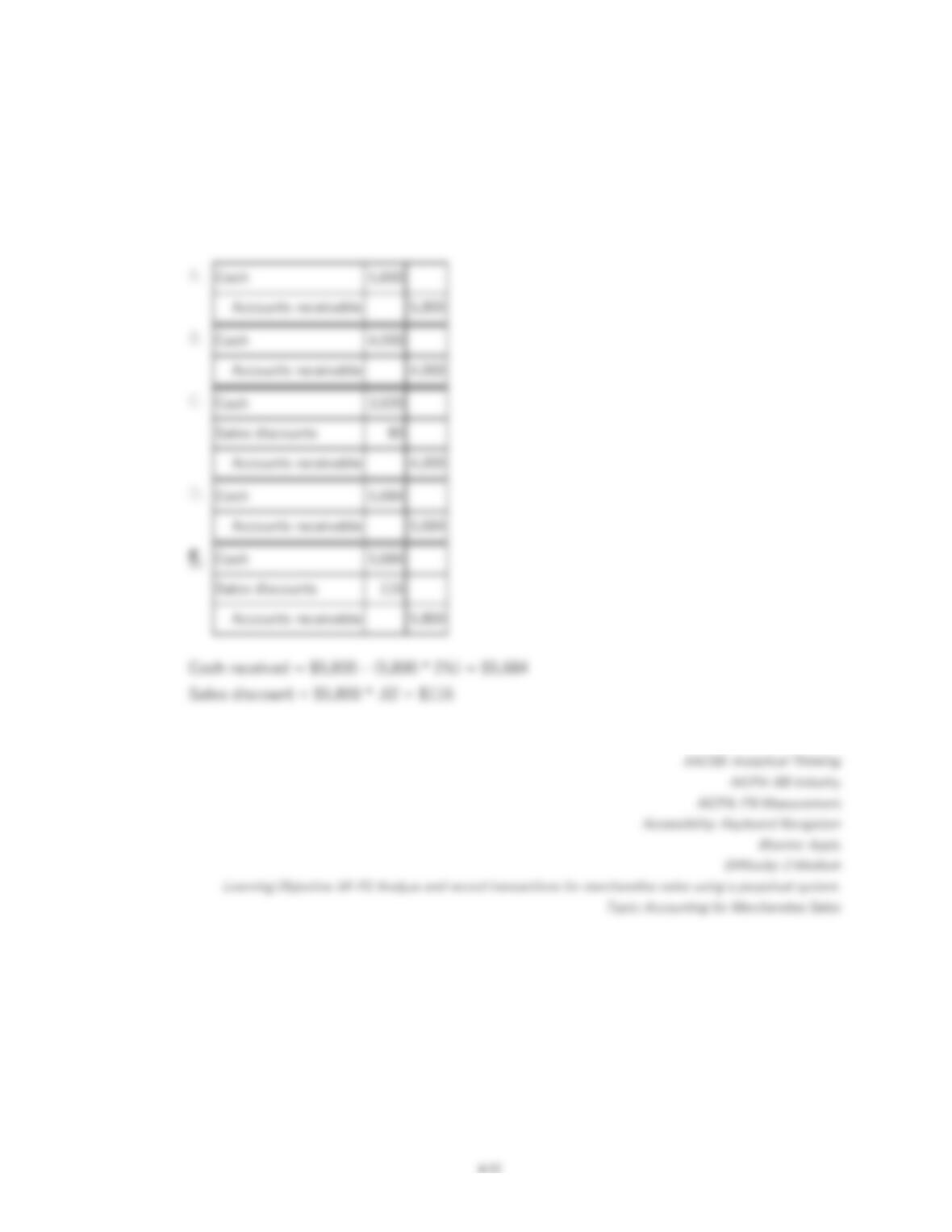
On May 1, Anders Company, Inc. purchased merchandise in the amount of $5,800 from
Shilling, with credit terms of 1/10, n/30. Anders uses the gross method of recording
purchases and a perpetual inventory system. The journal entry that Anders will make on
May 1 is:
123.
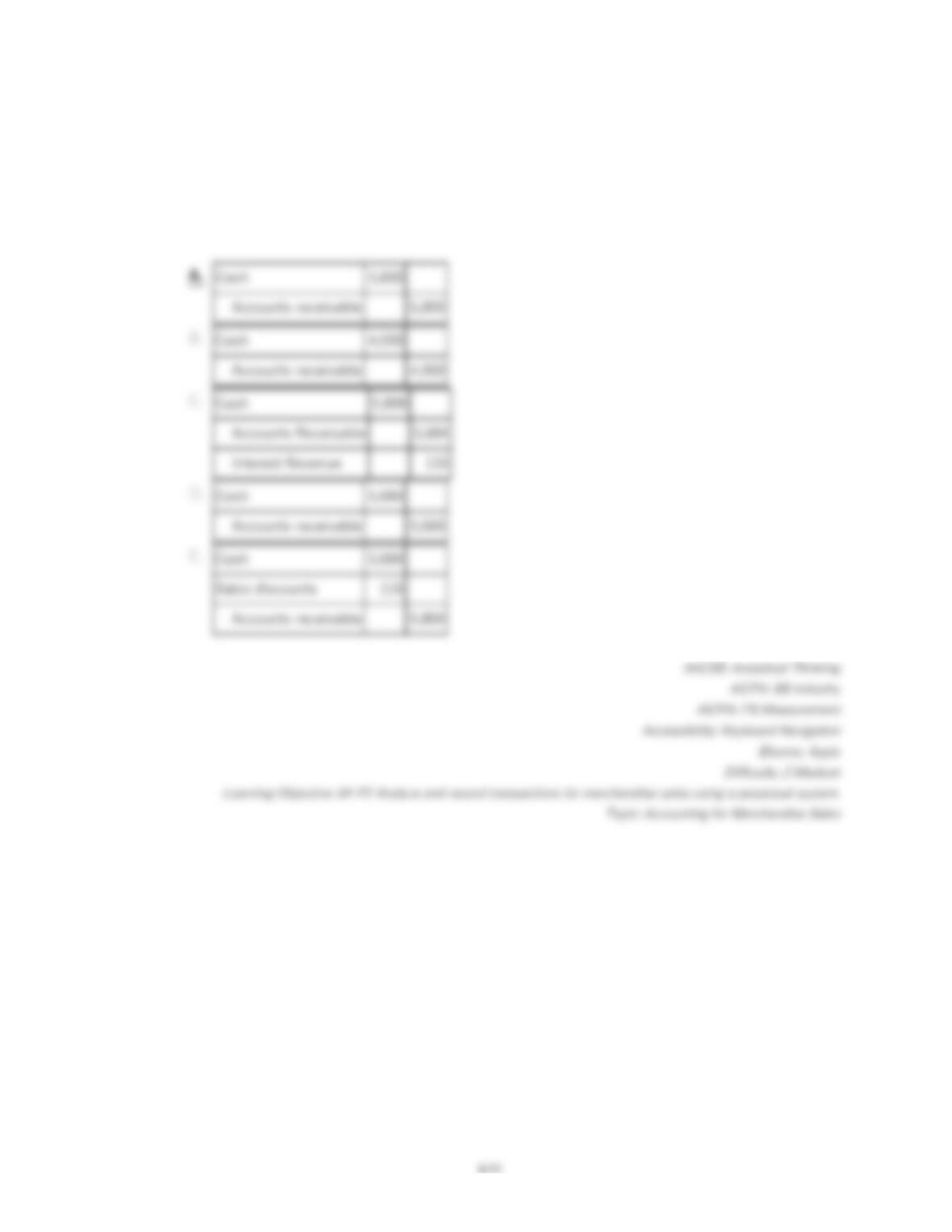
On February 3, Smart Company, Inc. sold merchandise in the amount of $5,800 to Truman
Company, with credit terms of 2/10, n/30. The cost of the items sold is $4,000. Smart uses
the gross method of accounting for sales and a perpetual inventory system. Truman pays
the invoice on February 8, and takes the appropriate discount. The journal entry that
Smart makes on February 8 is:
124.
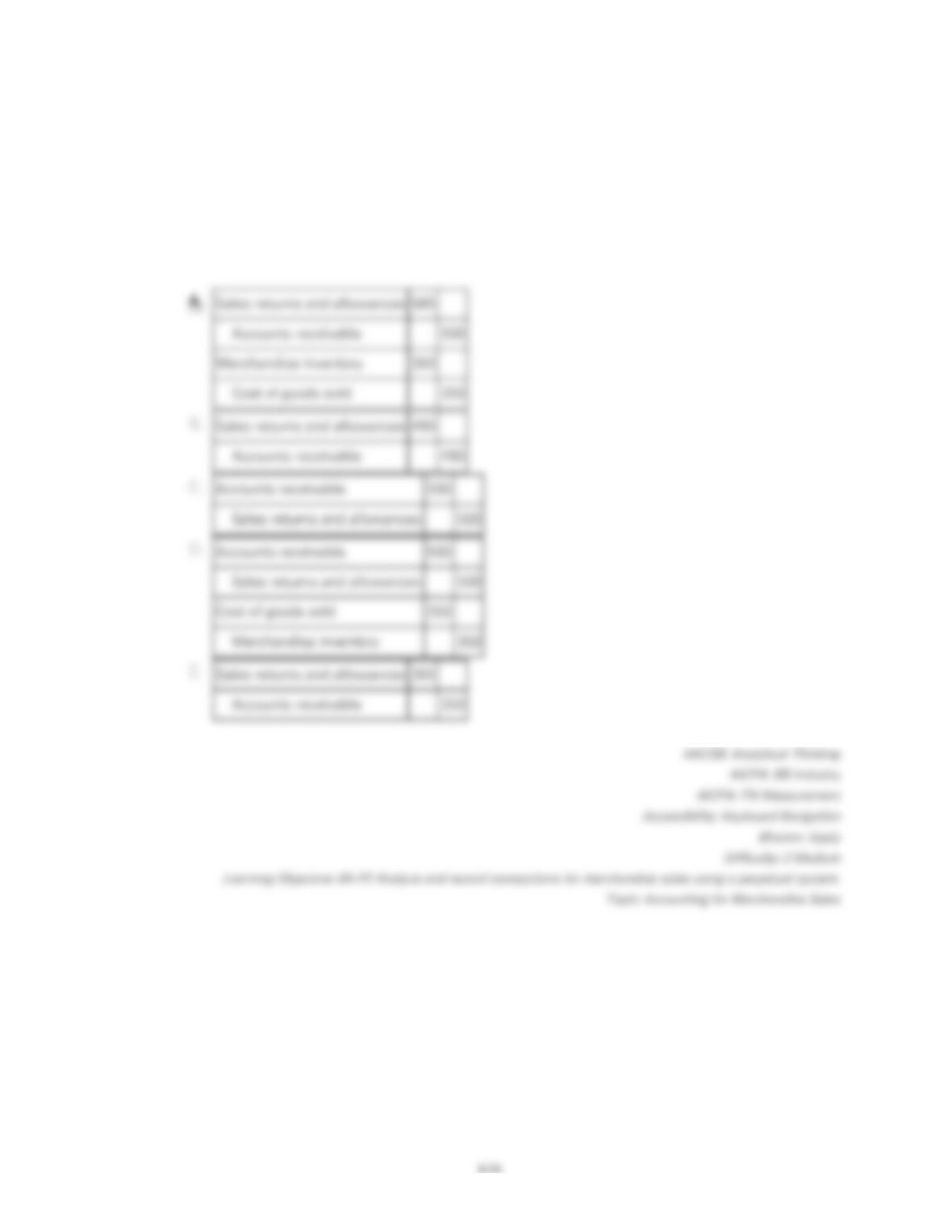
On February 3, Smart Company, Inc. sold merchandise in the amount of $5,800 to Truman
Company, with credit terms of 2/10, n/30. The cost of the items sold is $4,000. Smart uses
the gross method of accounting for sales and a perpetual inventory system. Truman pays
the invoice on February 18, which is after the discount period. The journal entry that Smart
makes on February 18 is:
125.
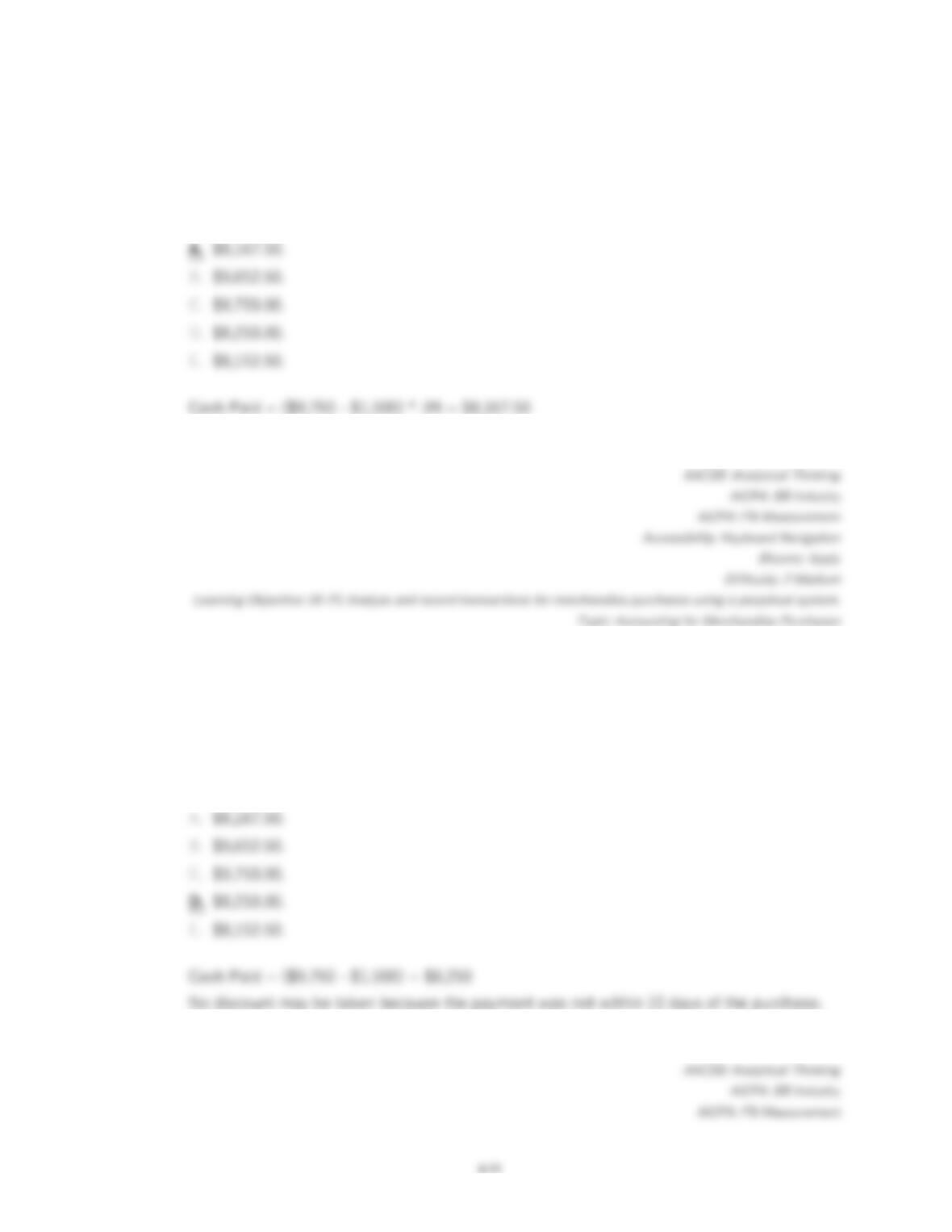
On July 1, Ferguson Company, Inc. sold merchandise in the amount of $3,700 to Tracey
Company, with credit terms of 2/10, n/30. The cost of the items sold is $2,000. Ferguson
uses the gross method of accounting for sales and a perpetual inventory system. On July 5,
Tracey returns some of the merchandise. The selling price of the merchandise returned is
$500 and the cost of the merchandise returned is $350. The entry or entries that Ferguson
must make on July 5 to record the return is:
126.
Juniper Company, Inc. uses a
perpetual
inventory system. The company purchased $9,750
of merchandise on August 7 with terms 1/10, n/30. On August 11, it returned $1,500 worth
of merchandise. On August 16, it paid the full amount due. The amount of the cash paid on
August 16 equals:
127.
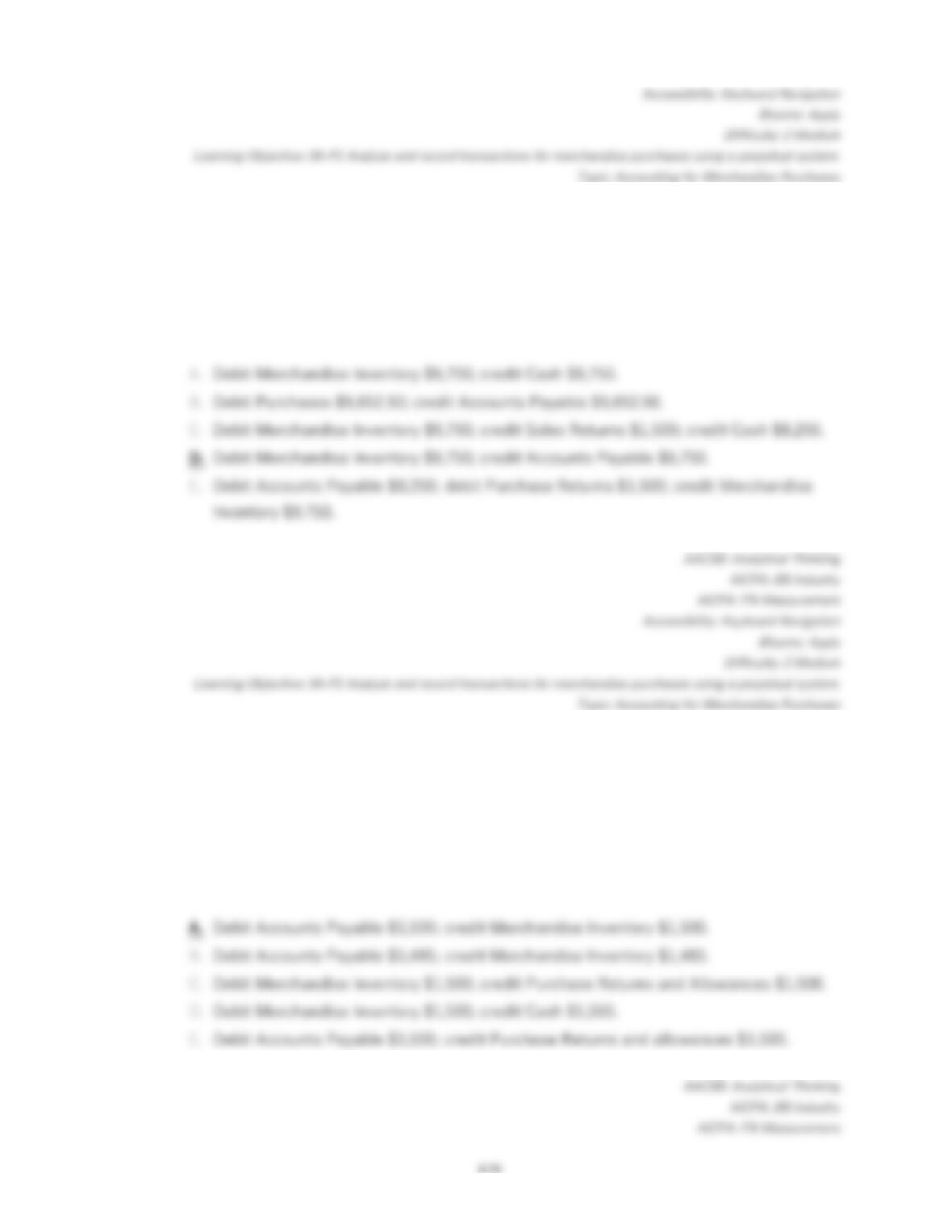
Juniper Company, Inc. uses a
perpetual
inventory system. The company purchased $9,750
of merchandise on August 7 with terms 1/10, n/30. On August 11, it returned $1,500 worth
of merchandise. On August 26, it paid the full amount due. The amount of the cash paid on
August 26 equals:
128.
Juniper Company, Inc. uses the gross method of recording purchases and a
perpetual
inventory system. The company purchased $9,750 of merchandise on August 7 with terms
1/10, n/30. On August 11, it returned $1,500 worth of merchandise. On August 16, it paid
the full amount due. The correct journal entry to record the purchase on August 7 is:
129.
Juniper Company, Inc. uses the gross method of recording purchases and a
perpetual
inventory system. The company purchased $9,750 of merchandise on August 7 with terms
1/10, n/30. On August 11, it returned $1,500 worth of merchandise. On August 26, it paid
the full amount due. The correct journal entry to record the merchandise return on August
11 is:
130.
Juniper Company, Inc. uses the gross method of recording purchases and a
perpetual
inventory system. The company purchased $9,750 of merchandise on August 7 with terms
1/10, n/30. On August 11, it returned $1,500 worth of merchandise. On August 16, it paid
the full amount due. The correct journal entry to record the payment on August 16 is:
131.
A company records the following journal entry: debit Cash $1,470, debit Sales Discounts
$30, and credit Accounts Receivable $1,500. This means that the customer has taken what
percentage cash discount for early payment?
132.
All of the following statements regarding inventory shrinkage are true
except
:
133.
Frisco Company Inc.’s Merchandise Inventory account at the end of year 2015 has a
balance of $62,115, but a physical count reveals that only $61,900 of inventory exists. The
adjusting entry to record the inventory shrinkage is:
134.
Which of the following accounts would be closed at the end of the accounting period with
a debit?
135.
An income statement that includes cost of goods sold as another expense and shows only
one subtotal for total expenses is a:
136.
Expenses that support the overall operations of a business and include the expenses
relating to accounting, human resource management, and financial management are
called: