
Name:
Class:
Date:
chapter 4
Indicate whether the statement is true or false.
1. The balance sheet accounts are referred to as real or permanent accounts.
a.
True
b.
False
2. The balances of the capital accounts from the Adjusted Trial Balance columns of the work sheet are extended to the
Statement of Owner’s Equity columns.
a.
True
b.
False
3. It is not necessary to post the closing entries to the general ledger.
a.
True
b.
False
4. After the account balances have been extended from the Adjusted Trial Balance columns on the work sheet, the
difference between the initial totals of the Balance Sheet Debit and Credit columns is net income or net loss.
a.
True
b.
False
5. The work sheet is not considered a part of the formal accounting records.
a.
True
b.
False
6. Current assets and current liabilities for Brayden Company are as follows:
20Y9
20Y8
Current assets
$498,600
$532,400
Current liabilities
269,300
301,500
The change in the current ratio from 20Y8 to 20Y9 was favorable.
a.
True
b.
False
7. During the closing process, some balance sheet accounts are closed and end the period with a zero balance.
a.
True
b.
False
8. Accumulated Depreciation is a permanent account.
a.
True
b.
False
9. The drawing account is a temporary account.
a.
True
b.
False
10. Cash and other assets that may reasonably be expected to be realized in cash, sold, or consumed through the normal

Name:
Class:
Date:
chapter 4
operations of a business, usually longer than one year, are called current assets.
a.
True
b.
False
11. There is really no benefit in preparing financial statements in any particular order.
a.
True
b.
False
12. Examples of temporary accounts are Supplies and Prepaid Expenses, which are in the ledger for just a short time
before they expire.
a.
True
b.
False
13. The ability of a business to pay its debts is called solvency.
a.
True
b.
False
14. The accounting cycle begins with preparing an unadjusted trial balance.
a.
True
b.
False
15. If the totals of the Income Statement Debit and Credit columns of a work sheet are $27,000 and $29,000, respectively,
after all account balances have been extended, the amount of the net loss is $2,000.
a.
True
b.
False
16. All income statement accounts will be closed at the end of the period.
a.
True
b.
False
17. Land is an example of a plant asset.
a.
True
b.
False
18. On the work sheet, the capital and drawing account balances are extended from the Adjusted Trial Balance columns to
the Balance Sheet columns.
a.
True
b.
False
19. The trial balance prepared after all the closing entries have been posted is called a pre-closing trial balance.
a.
True
b.
False
20. After analyzing and recording transactions in the journal, the next step would be to post the transactions to the ledger.
a.
True
b.
False

Name:
Class:
Date:
chapter 4
21. The unadjusted, adjusted, and post-closing trial balances are prepared during the accounting cycle of a period.
a.
True
b.
False
22. After net income or loss is entered on the work sheet, the Debit column total must equal the Credit column total for the
Balance Sheet pair of columns.
a.
True
b.
False
23. The trial balance may be listed on the work sheet instead of being prepared separately.
a.
True
b.
False
24. On the income statement, miscellaneous expenses are usually presented as the last item without regard to the dollar
amount.
a.
True
b.
False
25. Real accounts are not permanent accounts.
a.
True
b.
False
26. Balance sheet accounts are not considered real accounts.
a.
True
b.
False
27. Prepaid Insurance is an example of a current asset.
a.
True
b.
False
28. The last step of the accounting cycle is to prepare a post-closing trial balance.
a.
True
b.
False
29. Net income is shown on the work sheet in the Income Statement Debit column and the Balance Sheet Credit column.
a.
True
b.
False
30. Liabilities that will be due within one year or less and that are to be paid out of current assets are called current
liabilities.
a.
True
b.
False
31. Journalizing and posting closing entries must be completed before financial statements can be prepared.
a.
True

Name:
Class:
Date:
chapter 4
b.
False
32. A net loss is shown on the work sheet in the Credit columns of both the Income Statement columns and the Balance
Sheet columns.
a.
True
b.
False
33. The difference between a classified balance sheet and one that is not classified is that the classified one has
subheadings.
a.
True
b.
False
34. Accrued expenses are ordinarily listed on the balance sheet as current assets.
a.
True
b.
False
35. Working capital is the excess of the current liabilities of a business over its current assets.
a.
True
b.
False
36. The ability to convert assets into cash is called liquidity.
a.
True
b.
False
37. A post-closing trial balance contains only asset and liability accounts.
a.
True
b.
False
38. The work sheet is a working paper that accountants can use to summarize adjusting entries and the account balances
for the financial statements.
a.
True
b.
False
39. The current ratio is computed by dividing current liabilities by current assets.
a.
True
b.
False
40. When accounts do not appear on the unadjusted trial balance but are needed to post adjustments, they are simply
added to the Account Title column.
a.
True
b.
False
41. Office Equipment is an example of a current asset account.
a.
True
b.
False

Name:
Class:
Date:
chapter 4
42. Cross-referencing is useful in assuring that the debits and credits are in balance.
a.
True
b.
False
43. Unearned revenues that will be earned in a relatively short period of time are listed on the balance sheet as current
assets.
a.
True
b.
False
44. Financial statements should be prepared before the closing entries are journalized and posted.
a.
True
b.
False
45. Capital and drawing are reported in the Owner’s Equity section of the balance sheet.
a.
True
b.
False
46. The balance in the capital account on the work sheet will equal the amount presented on the balance sheet.
a.
True
b.
False
47. Once an account has been closed for the period, inserting a line in the balance columns zeros out the account, making
it ready for the following period.
a.
True
b.
False
48. The chart of accounts, the journal, and the ledger are essential parts of the accounting system.
a.
True
b.
False
49. Assets, liabilities, and owner’s capital are real accounts and do not get closed at the end of the period.
a.
True
b.
False
50. The totals of the Adjusted Trial Balance columns on a work sheet will always be the sum of the Trial Balance column
totals and the Adjustments column totals.
a.
True
b.
False
51. The drawing account is debited in the closing entry.
a.
True
b.
False
52. Accounts reported on the balance sheet that are carried forward from year to year are known as permanent accounts.
a.
True
b.
False
Name:
Class:
Date:
chapter 4
53. The amount of the net income for a period appears on both the income statement and the balance sheet for that period.
a.
True
b.
False
54. The current ratio is more useful than working capital in making comparisons across companies.
a.
True
b.
False
55. Net income is closed to the owner’s capital account.
a.
True
b.
False
56. The closing process is sometimes referred to as closing the books.
a.
True
b.
False
57. Prepaid expenses that benefit a relatively short period of time are listed on the balance sheet as current assets.
a.
True
b.
False
58. Current assets and current liabilities for Brayden Company are as follows:
20Y9
20Y8
Current assets
$498,600
$532,400
Current liabilities
269,300
301,500
The change in working capital from 20Y8 to 20Y9 indicates that Brayden will no longer be solvent.
a.
True
b.
False
59. Journalizing and posting the adjustments and closing entries updates the ledger for the new accounting period.
a.
True
b.
False
60. From the adjusted trial balance, the revenue and expense accounts will flow into the income statement.
a.
True
b.
False
61. Accrued revenues are ordinarily listed on the balance sheet as current liabilities.
a.
True
b.
False
62. The most important outcome of the accounting cycle is the financial statements.
a.
True
b.
False

Name:
Class:
Date:
chapter 4
63. Closing entries are entered directly on to the work sheet.
a.
True
b.
False
64. The post-closing trial balance will generally have fewer accounts than the adjusted trial balance.
a.
True
b.
False
65. A work sheet heading is dated for a period of time.
a.
True
b.
False
66. Since the adjustments are entered on the work sheet, it is not necessary to record them in the journal or post them to
the ledger.
a.
True
b.
False
67. Adjusting entries are not recorded under the cash basis of accounting.
a.
True
b.
False
68. Under the cash basis of accounting, a purchase of merchandise on account is not recorded until payment is made.
a.
True
b.
False
69. The income statement can be prepared from the Income Statement columns on the work sheet.
a.
True
b.
False
70. Entries required to close the balances of the temporary accounts at the end of the period are called final entries.
a.
True
b.
False
71. For most businesses, the cash basis of accounting will provide adequate financial statements for user needs.
a.
True
b.
False
72. A post-closing trial balance should be prepared before the financial statements are prepared.
a.
True
b.
False
73. The accumulated depreciation account is closed to the drawing account.
a.
True
b.
False
Name:
Class:
Date:
chapter 4
74. The usual presentation of the statement of owner’s equity is (1) Beginning capital, (2) Net income or loss, (3)
Drawing, (4) Owner’s contributions, and (5) Ending capital.
a.
True
b.
False
75. Accrued taxes payable are generally reported on the balance sheet as a current liability.
a.
True
b.
False
Indicate the answer choice that best completes the statement or answers the question.
Use the adjusted trial balance for Stockton Company to answer the questions that follow.
Stockton Company
Adjusted Trial Balance
December 31
Account
No.
Debit
Balances
Credit
Balances
Cash
11
6,530
Accounts Receivable
12
2,100
Prepaid Expenses
13
700
Equipment
18
13,700
Accumulated Depreciation
19
1,100
Accounts Payable
21
1,900
Notes Payable
22
4,300
Bob Steely, Capital
31
12,940
Bob Steely, Drawing
32
790
Fees Earned
41
9,250
Wages Expense
51
2,500
Rent Expense
52
1,960
Utilities Expense
53
775
Depreciation Expense
54
250
Miscellaneous Expense
59
185
Totals
29,490
29,490
76. Use the adjusted trial balance for Stockton Company. Determine the net income (loss) for the period.
a.
Net income is $9,250.
b.
Net loss is $(790).
c.
Net loss is $(5,670).
d.
Net income is $3,580.
77. Net income appears on the end-of-period spreadsheet in the
a.
Debit column of the Balance Sheet columns
b.
Debit column of the Adjustments columns
c.
Debit column of the Income Statement columns
d.
Credit column of the Income Statement columns

Name:
Class:
Date:
chapter 4
78. Debts listed as current liabilities are those that
a.
will be paid in less than one year
b.
are due to be paid in 5 to 10 years
c.
are due to be paid in more than one year
d.
are owed to the owner and will never be paid
79. During the end-of-period processing, which of the following best describes the logical order of steps?
a.
preparation of adjustments, adjusted trial balance, financial statements
b.
preparation of income statement, adjusted trial balance, balance sheet
c.
preparation of adjusted trial balance, cross-referencing, journalizing
d.
preparation of adjustments, adjusted trial balance, posting
80. The Income Statement columns in the end-of-period spreadsheet show that debits total $55,800 and credits total
$77,520. What does this information mean to the accountant?
a.
There is a net income of $21,720.
b.
There is a net loss of $21,720.
c.
The accounts are out of balance, indicating that an error has been made.
d.
The accounts have not been updated.
81. Which of the following is not an essential part of the accounting records?
a.
journal
b.
ledger
c.
chart of accounts
d.
end-of-period spreadsheet
82. On March 1, a company collects revenue in advance for the next 12 months and credits a liability account. The
adjusting entry at year-end on the work sheet would
a.
increase a liability account
b.
decrease an asset account
c.
decrease a revenue account
d.
decrease a liability account
83. Which of the following businesses is least likely to use the cash basis of accounting?
a.
attorney’s office
b.
physician’s practice
c.
real estate agency
d.
merchandiser of home furnishings
84. After net income is entered on the end-of-period spreadsheet, the Balance Sheet Debit and Credit columns must
a.
be the same amount as the total amount of the Income Statement Debit and Credit columns
b.
equal each other
c.
be the same amount as the total amount in the Adjusted Trial Balance Debit and Credit columns
d.
not be equal to each other and need not be the same total amounts as any other pair of columns on the work
sheet

Name:
Class:
Date:
chapter 4
85. Which of the following is not true about closing entries?
a.
There are two closing entries that update the owner’s equity account.
b.
After the first closing entry, the owner’s capital account has been increased (decreased) by the amount of net
income (or loss) for the period.
c.
All real accounts are closed at the end of the period.
d.
By closing nominal accounts at the end of the period to zero, it is possible to isolate next period’s information
correctly.
86. What is the first account that should be listed in the post-closing trial balance?
a.
Net Income
b.
Owner, Capital
c.
Cash
d.
Fees Earned
87. A summary of selected ledger accounts appears as follows for Alberto’s Plumbing Services for the current calendar
year-end.
Alberto, Capital
12/31 Clos.
8,500
1/1 Bal.
6,500
12/31 Clos.
15,000
Alberto, Drawing
6/30
3,500
12/31 Clos.
8,500
11/30
5,000
Net income for the period is
a.
$13,000
b.
$33,500
c.
$15,000
d.
$18,500
88. The accounting cycle requires three trial balances to be prepared. In what order should they be prepared?
a.
post-closing, unadjusted, adjusted
b.
unadjusted, post-closing, adjusted
c.
unadjusted, adjusted, post-closing
d.
post-closing, adjusted, unadjusted
89. The statement of owner’s equity begins with the beginning balance followed by
a.
adding net income less withdrawals
b.
adding net income plus investments
c.
adding investments less withdrawals
d.
adding investments plus net income less withdrawals
90. Diane’s Designs purchased a one-year liability insurance policy on March 1 of a year for $8,400 and recorded it as a
prepaid expense. Which of the following amounts would be recorded as insurance expense during the adjusting process at
the end of Diane’s first month of operations on March 31?

Name:
Class:
Date:
chapter 4
a.
$8,400
b.
$840
c.
$700
d.
$7,700
91. The entry to close the appropriate insurance account at the end of the accounting period is
a.
debit Owner’s Capital; credit Prepaid Insurance
b.
debit Prepaid Insurance; credit Owner’s Capital
c.
debit Insurance Expense; credit Owner’s Capital
d.
debit Owner’s Capital; credit Insurance Expense
92. Adjusting entries are required at the end of the accounting period in order to fulfill the _____ principle.
a.
matching
b.
going concern
c.
business entity
d.
objectivity
93. In the accounting cycle, the last step is
a.
preparing the financial statements
b.
journalizing and posting the adjusting entries
c.
preparing a post-closing trial balance
d.
journalizing and posting the closing entries
94. Accumulated Depreciation appears on the
a.
balance sheet in the Current Assets section
b.
balance sheet in the Property, Plant, and Equipment section
c.
balance sheet in the Long-Term Liabilities section
d.
income statement as an operating expense
95. After all of the account balances have been extended to the Balance Sheet columns of the work sheet, the totals of the
Debit and Credit columns are $36,755 and $32,735, respectively. What is the amount of net income or net loss for the
period?
a.
$4,020 of net income
b.
$36,755 of net loss
c.
$4,020 of net loss
d.
$32,735 of net income
96. An end-of-period spreadsheet includes columns for
a.
adjusting entries
b.
closing entries
c.
reversing entries
d.
adjusting and closing entries
97. Which of the following account groups does not include a nominal account?
a.
Cash, Prepaid Insurance, Wages Payable
Name:
Class:
Date:
chapter 4
b.
Prepaid Insurance, Equipment, Fees Earned
c.
Owner’s Capital, Owner’s Drawing, Fees Earned
d.
Rent Revenue, Fees Earned, Miscellaneous Expense
98. The income statement will present
a.
revenues less expenses (ordered largest to smallest amounts) with miscellaneous expense listed last
b.
revenues less expenses (ordered smallest to largest amounts) with miscellaneous expense listed last
c.
revenues less expenses (ordered in alphabetical order)
d.
revenues less expenses (order is not important)
99. Current assets and current liabilities for Brayden Company are as follows:
20Y9
20Y8
Current assets
$498,600
$532,400
Current liabilities
269,300
301,500
What is the current ratio for 20Y9 and 20Y8?
a.
0.94 and 0.89
b.
1.07 and 1.12
c.
0.54 and 0.57
d.
1.85 and 1.77
Use the adjusted trial balance for Stockton Company to answer the questions that follow.
Stockton Company
Adjusted Trial Balance
December 31
Account
No.
Debit
Balances
Credit
Balances
Cash
11
6,530
Accounts Receivable
12
2,100
Prepaid Expenses
13
700
Equipment
18
13,700
Accumulated Depreciation
19
1,100
Accounts Payable
21
1,900
Notes Payable
22
4,300
Bob Steely, Capital
31
12,940
Bob Steely, Drawing
32
790
Fees Earned
41
9,250
Wages Expense
51
2,500
Rent Expense
52
1,960
Utilities Expense
53
775
Depreciation Expense
54
250
Miscellaneous Expense
59
185
Totals
29,490
29,490
100. Use the adjusted trial balance for Stockton Company. Determine the total liabilities for the period.

Name:
Class:
Date:
chapter 4
Cash
a.
$1,900
b.
$6,200
c.
$4,300
d.
$20,240
101. Which of the following has the steps of the accounting cycle in the proper sequence? (Some steps may be missing.)
a.
analyze and record transactions, post transaction to the ledger, prepare a trial balance, prepare financial
statements, journalize closing entries, analyze adjustment data and prepare adjusting entries
b.
prepare a trial balance, analyze adjustment data, prepare adjusting entries, prepare financial statements,
journalize closing entries and post to the ledger, analyze and record transactions, post transactions to the ledger
c.
analyze and record transactions, post transactions to the ledger, prepare a trial balance, analyze adjustment
data, prepare adjusting entries, prepare financial statements, journalize closing entries and post to the ledger,
and prepare a post-closing trial balance
d.
prepare financial statements, journalize closing entries and post to the ledger, analyze and record transactions,
post transactions to the ledger, prepare a trial balance, analyze adjustment data, prepare adjusting entries
102. After posting the first closing entry to the owner’s capital account, the balance will be increased (decreased) by
a.
zero
b.
owner’s equity
c.
revenues for the period
d.
the net income (net loss) for the period
103. When preparing the statement of owner’s equity, the beginning capital balance can always be found
a.
in the Income Statement columns of the work sheet
b.
on the statement of cash flows
c.
in the general ledger
d.
in the Balance Sheet columns of the work sheet
104. Closing entries
a.
need not be journalized if adjusting entries are prepared
b.
need not be posted if the financial statements are prepared from the work sheet
c.
are not needed if adjusting entries are prepared
d.
must be journalized and posted
105. Which of the following accounts will be debited in the closing entry at the end of the year?
a.
Rent Expense
b.
Fees Earned
c.
Unearned Fees
d.
Depreciation Expense
106. Evan Roberts owns a business, Shores Sports, that rents canoes and kayaks. The adjusted trial balance at December
31 is as follows:
Account
No.
Debit
Balances
Credit
Balances
Name:
Class:
Date:
chapter 4
Accounts Receivable
12
2,000
Interest Receivable
13
100
Prepaid Insurance
14
1,600
Notes Receivable
(long-term)
16
2,800
Equipment
18
15,000
Accumulated
Depreciation
19
3,000
Accounts Payable
21
2,400
Accrued Expenses
Payable
22
3,920
Income Taxes Payable
23
2,700
Unearned Rent Fees
25
500
Evan Roberts, Capital
31
7,700
Evan Roberts, Drawing
32
2,000
Rent Fees Earned
41
37,000
Furniture Rental
Revenue
42
1,200
Interest Revenue
43
100
Wages Expense
51
19,000
Depreciation Expense
52
1,800
Utilities Expense
53
320
Insurance Expense
54
700
Maintenance Expense
55
9,000
Income Tax Expense
56
2,700
58,520
58,520
The entry required to close the revenue and expense accounts at the end of the period includes a
a.
debit to Evan Roberts, Capital for $4,780
b.
credit to Evan Roberts, Drawing for $38,300
c.
debit to Evan Roberts, Drawing for $33,520
d.
credit to Evan Roberts, Capital for $4,780
Use the following end–of-period spreadsheet to answer the questions that follow.
Finley Company
End-of-Period Spreadsheet
For the Year Ended December 31
Adjusted Trial
Balance
Income Statement
Balance Sheet
Account Title
Dr.
Cr.
Dr.
Cr.
Dr.
Cr.
Cash
48,000
48,000
Accounts
Receivable
18,000
18,000
Supplies
6,000
6,000
Equipment
57,000
57,000
Accumulated
Depreciation
18,000
18,000
Accounts
Payable
25,000
25,000
Name:
Class:
Date:
chapter 4
Wages
Payable
6,000
6,000
C. Finley,
Capital
33,000
33,000
C. Finley,
Drawing
3,000
3,000
Fees Earned
155,000
155,000
Wages
Expense
63,000
63,000
Rent Expense
27,000
27,000
Depreciation
Expense
15,000
15,000
237,000
237,000
105,000
155,000
132,000
82,000
Net income
50,000
50,000
155,000
155,000
132,000
132,000
107. Use the end-of-period spreadsheet for Finley Company. The expenses would be closed by
a.
debiting Wages Expense for $63,000, Rent Expense for $27,000, and Depreciation Expense for $15,000
b.
debiting Expenses for $105,000
c.
crediting Expenses for $105,000
d.
crediting Wages Expense for $63,000, Rent Expense for $27,000, and Depreciation Expense for $15,000
Use the adjusted trial balance for Stockton Company to answer the questions that follow.
Stockton Company
Adjusted Trial Balance
December 31
Account
No.
Debit
Balances
Credit
Balances
Cash
11
6,530
Accounts Receivable
12
2,100
Prepaid Expenses
13
700
Equipment
18
13,700
Accumulated Depreciation
19
1,100
Accounts Payable
21
1,900
Notes Payable
22
4,300
Bob Steely, Capital
31
12,940
Bob Steely, Drawing
32
790
Fees Earned
41
9,250
Wages Expense
51
2,500
Rent Expense
52
1,960
Utilities Expense
53
775
Depreciation Expense
54
250
Miscellaneous Expense
59
185
Totals
29,490
29,490
108. Use the adjusted trial balance for Stockton Company. Determine the owner’s equity ending balance.
a.
$12,150
Name:
Class:
Date:
chapter 4
b.
$15,730
c.
$6,480
d.
$21,400
109. Once the adjusting entries are posted, the adjusted trial balance is prepared to
a.
verify that the debits and credits are in balance
b.
verify that the net income correctly flows into the statement of owner’s equity from the income statement
c.
verify that the net income (loss) is correct for the period
d.
verify the correct flow of accounts into the financial statements
Use the adjusted trial balance for Stockton Company to answer the questions that follow.
Stockton Company
Adjusted Trial Balance
December 31
Account
No.
Debit
Balances
Credit
Balances
Cash
11
6,530
Accounts Receivable
12
2,100
Prepaid Expenses
13
700
Equipment
18
13,700
Accumulated Depreciation
19
1,100
Accounts Payable
21
1,900
Notes Payable
22
4,300
Bob Steely, Capital
31
12,940
Bob Steely, Drawing
32
790
Fees Earned
41
9,250
Wages Expense
51
2,500
Rent Expense
52
1,960
Utilities Expense
53
775
Depreciation Expense
54
250
Miscellaneous Expense
59
185
Totals
29,490
29,490
110. Use the adjusted trial balance for Stockton Company. Determine the current assets.
a.
$23,030
b.
$9,330
c.
$21,930
d.
$8,630
111. An amount for which of the following items would appear in the Income Statement columns of the end-of-period
spreadsheet?
a.
Cash
b.
Prepaid Insurance
c.
Unearned Revenue
d.
Net Loss

Name:
Class:
Date:
chapter 4
112. The income statement should be prepared
a.
before the statement of owner’s equity and balance sheet
b.
after the statement of owner’s equity and before the balance sheet
c.
after the statement of owner’s equity and balance sheet
d.
after the balance sheet and before the statement of owner’s equity
113. Which of the following accounts should be closed to the capital account at the end of the year?
a.
Service Revenue
b.
Equipment
c.
Unearned Revenue
d.
Unearned Rent
114. Which of the following statements indicates that a company earned a net income for the period?
a.
The sum of the credits exceeds the sum of the debits in the Balance Sheet columns on the end-of-period
spreadsheet.
b.
The sum of the credits exceeds the sum of the debits in the Income Statement columns on the end-of-period
spreadsheet.
c.
The sum of the debits exceeds the sum of the credits in the Income Statement columns on the end-of-period
spreadsheet.
d.
Cash inflows exceed cash outflows.
115. Unearned fees appear on the
a.
balance sheet in the Current Assets section
b.
balance sheet as a current liability
c.
balance sheet in the Owner’s Equity section
d.
income statement as revenue
116. The post-closing trial balance differs from the adjusted trial balance in that it does not
a.
take into account closing entries
b.
take into account adjusting entries
c.
include balance sheet accounts
d.
include income statement accounts
117. The classified balance sheet will show which asset subsections?
a.
Current Assets and Other Equity
b.
Current Assets and Property, Plant, and Equipment
c.
Current Liabilities and Short-Term Assets
d.
Other Revenues and Property, Plant and Equipment
118. The end-of-period spreadsheet
a.
is an integral part of the accounting cycle
b.
eliminates the need to rewrite the financial statements
c.
is a working paper that is required
d.
is used to summarize account balances and adjustments for the financial statements
Name:
Class:
Date:
chapter 4
119. Which of the following accounts ordinarily appears in the post-closing trial balance?
a.
Fees Earned
b.
Supplies Expense
c.
Zane White, Drawing
d.
Unearned Rent
120. Which of the following accounts would be closed by posting a debit to the account?
a.
Prepaid Insurance
b.
Fees Earned
c.
Josh Morton, Drawing
d.
Miscellaneous Expense
Use the following end–of-period spreadsheet to answer the questions that follow.
Finley Company
End-of-Period Spreadsheet
For the Year Ended December 31
Adjusted Trial
Balance
Income Statement
Balance Sheet
Account Title
Dr.
Cr.
Dr.
Cr.
Dr.
Cr.
Cash
48,000
48,000
Accounts
Receivable
18,000
18,000
Supplies
6,000
6,000
Equipment
57,000
57,000
Accumulated
Depreciation
18,000
18,000
Accounts
Payable
25,000
25,000
Wages
Payable
6,000
6,000
C. Finley,
Capital
33,000
33,000
C. Finley,
Drawing
3,000
3,000
Fees Earned
155,000
155,000
Wages
Expense
63,000
63,000
Rent Expense
27,000
27,000
Depreciation
Expense
15,000
15,000
237,000
237,000
105,000
155,000
132,000
82,000
Net income
50,000
50,000
155,000
155,000
132,000
132,000
121. Use the end-of-period spreadsheet for Finley Company. The ending balance in C. Finley, Capital is
a.
$33,000

Name:
Class:
Date:
chapter 4
b.
$80,000
c.
$30,000
d.
$83,000
122. Which one of the following steps is not aided by the preparation of the end-of-period spreadsheet?
a.
preparing the adjusted trial balance
b.
posting to the general ledger
c.
preparing the financial statements
d.
preparing the closing entries
123. Which of the following accounts would appear in the Balance Sheet columns of the end-of-period spreadsheet?
a.
Consulting Revenue
b.
Prepaid Insurance
c.
Rent Expense
d.
Fees Earned
124. What is the major difference between the unadjusted trial balance and the adjusted trial balance?
a.
The adjusted trial balance will show the net income (loss) as an additional account.
b.
Unlike the adjusted trial balance, the unadjusted trial balance will continue with the end-of-period processing
even if it is not in balance.
c.
The adjusted trial balance reflects the updated balances in the accounts after the adjusting entries.
d.
The adjusted trial balance will be used to record the adjustments for the period.
125. Of the following steps of the accounting cycle, which step should be completed first?
a.
Closing entries are journalized and posted to the ledger.
b.
Transactions are posted to the ledger.
c.
Adjusting entries are journalized and posted to the ledger.
d.
Financial statements are prepared.
126. Which of the following does not appear on the end-of-period spreadsheet?
a.
adjusting entries
b.
the unadjusted trial balance
c.
closing entries
d.
the drawing account
127. The classified balance sheet will show which liability subsections?
a.
Current Liabilities and Long-Term Liabilities
b.
Current Liabilities and Other Liabilities
c.
Other Liabilities and Long-Term Liabilities
d.
Present Liabilities and Tomorrow’s Liabilities
128. The balance sheet should be prepared
a.
before the income statement and the statement of owner’s equity
b.
before the income statement and after the statement of owner’s equity

Name:
Class:
Date:
chapter 4
c.
after the income statement and the statement of owner’s equity
d.
after the income statement and before the statement of owner’s equity
129. Evan Roberts owns a business, Shore Sports, that rents canoes and kayaks. The adjusted trial balance at December
31 is as follows:
Account
No.
Debit
Balances
Credit
Balances
Cash
11
1,500
Accounts Receivable
12
2,000
Interest Receivable
13
100
Prepaid Insurance
14
1,600
Notes Receivable
(long-term)
16
2,800
Equipment
18
15,000
Accumulated
Depreciation
19
3,000
Accounts Payable
21
2,400
Accrued Expenses
Payable
22
3,920
Income Taxes Payable
23
2,700
Unearned Rent Fees
25
500
Evan Roberts, Capital
31
7,700
Evan Roberts, Drawing
32
2,000
Rent Fees Earned
41
37,000
Furniture Rental
Revenue
42
1,200
Interest Revenue
43
100
Wages Expense
51
19,000
Depreciation Expense
52
1,800
Utilities Expense
53
320
Insurance Expense
54
700
Maintenance Expense
55
9,000
Income Tax Expense
56
2,700
Totals
58,520
58,520
The entry required to close the expense accounts at the end of the period will include a(n)
a.
increase to Owner’s Capital of $33,520
b.
decrease to Owner’s Capital of $33,520
c.
increase to Owner’s Capital of $4,780
d.
decrease to Owner’s Capital of $4,780
130. Notes receivable due in 350 days appear on the
a.
balance sheet in the Current Assets section
b.
balance sheet in the Fixed Assets section
c.
balance sheet in the Current Liabilities section
d.
income statement as an expense
131. Closing entries are dated in the journal as of

Name:
Class:
Date:
chapter 4
a.
the date they are actually journalized
b.
the last day of the accounting period
c.
the first day of the subsequent accounting period
d.
None of these choices
132. Balance sheet accounts
a.
represent amounts accumulated during a specific period of time
b.
are called real accounts
c.
have zero balances after the closing entries have been posted
d.
are not affected by adjustments
133. On September 1, the company pays rent for 12 months in advance and debits an asset account. At year-end, the
adjusting entry on the work sheet would
a.
increase an expense account
b.
decrease a liability account
c.
increase an asset account
d.
decrease an expense account
134. On the balance sheet, owner’s equity is
a.
added to assets and the two are equal to liabilities
b.
added to liabilities and the two are equal to assets
c.
subtracted from liabilities and the net amount is equal to assets
d.
equal to the total of assets and liabilities
135. Of the following steps of the accounting cycle, which step should be completed last?
a.
An adjusted trial balance is prepared.
b.
Transactions are posted to the ledger.
c.
An unadjusted trial balance is prepared.
d.
Adjusting entries are journalized and posted to the ledger.
136. After all of the account balances have been extended to the Balance Sheet columns of the work sheet, the totals of the
Debit and Credit columns show debits of $37,686 and credits of $41,101. This indicates that
a.
neither net income nor loss can be computed because it is found on the income statement
b.
the company has a net loss of $3,415 for the period
c.
the company has a net income of $3,415 for the period
d.
the amounts are out of balance and need to be corrected
137. Prepaid insurance is reported on the balance sheet as a
a.
current asset
b.
fixed asset
c.
current liability
d.
long-term liability
138. Daniel’s end-of-period spreadsheet at the end of July has $4,950 in the Balance Sheet Credit column for Accumulated
Depreciation. The end-of-period spreadsheet at the end of August has $7,600 in the Balance Sheet Credit column for

Name:
Class:
Date:
chapter 4
Accumulated Depreciation. What is the amount of the depreciation expense adjustment for the month of August?
a.
$12,550
b.
$7,600
c.
$4,950
d.
$2,650
139. The first item appearing on the statement of owner’s equity is
a.
net income
b.
the ending balance of owner’s equity
c.
owner withdrawals
d.
the beginning balance of owner’s equity
140. The following accounts were taken from the Adjusted Trial Balance columns of the work sheet:
Accumulated Depreciation
$ 3,200
Fees Earned
17,400
Depreciation Expense
1,300
Insurance Expense
400
Prepaid Insurance
4,800
Supplies
900
Supplies Expense
3,800
Net income for the period is
a.
$5,500
b.
$11,900
c.
$17,400
d.
$8,700
141. An amount for which of the following accounts would not appear in the Balance Sheet columns of the end-of-period
spreadsheet?
a.
Terry James, Drawing
b.
Service Revenue
c.
Unearned Revenue
d.
Terry James, Drawing and Unearned Revenue
142. When the end-of-period spreadsheet is complete, the Adjustments columns should have
a.
total credits greater than total debits if a net income was earned
b.
total debits greater than total credits if a net loss was incurred
c.
total debits greater than total credits if a net income was earned
d.
total debits equal to total credits
143. Which of the following accounts will not be closed to the capital account at the end of the year?
a.
Utilities Expense
b.
Fees Earned
c.
Prepaid Insurance
d.
Insurance Expense
Name:
Class:
Date:
chapter 4
Use the adjusted trial balance for Stockton Company to answer the questions that follow.
Stockton Company
Adjusted Trial Balance
December 31
Account
No.
Debit
Balances
Credit
Balances
Cash
11
6,530
Accounts Receivable
12
2,100
Prepaid Expenses
13
700
Equipment
18
13,700
Accumulated Depreciation
19
1,100
Accounts Payable
21
1,900
Notes Payable
22
4,300
Bob Steely, Capital
31
12,940
Bob Steely, Drawing
32
790
Fees Earned
41
9,250
Wages Expense
51
2,500
Rent Expense
52
1,960
Utilities Expense
53
775
Depreciation Expense
54
250
Miscellaneous Expense
59
185
Totals
29,490
29,490
144. Use the adjusted trial balance for Stockton Company. Determine the total assets.
a.
$8,630
b.
$23,030
c.
$21,930
d.
$9,330
145. There are two closing entries. The first one is to close _____; the second one is to close _____.
a.
revenues and expenses; the drawing account
b.
revenues; expenses and the drawing account
c.
revenues; expenses
d.
the drawing account; revenues
146. Current assets and current liabilities for Brayden Company are as follows:
20Y9
20Y8
Current assets
$498,600
$532,400
Current liabilities
269,300
301,500
What conclusions can be drawn regarding Brayden’s ability to meet its financial obligations?
a.
The current ratio has worsened, and the working capital has decreased.
b.
The current ratio has improved, and the working capital has increased.
c.
The current ratio has improved, while the working capital has decreased.
d.
The current ratio has worsened, but the working capital has increased.
Name:
Class:
Date:
chapter 4
Use the following end–of-period spreadsheet to answer the questions that follow.
Finley Company
End-of-Period Spreadsheet
For the Year Ended December 31
Adjusted Trial
Balance
Income Statement
Balance Sheet
Account Title
Dr.
Cr.
Dr.
Cr.
Dr.
Cr.
Cash
48,000
48,000
Accounts
Receivable
18,000
18,000
Supplies
6,000
6,000
Equipment
57,000
57,000
Accumulated
Depreciation
18,000
18,000
Accounts
Payable
25,000
25,000
Wages
Payable
6,000
6,000
C. Finley,
Capital
33,000
33,000
C. Finley,
Drawing
3,000
3,000
Fees Earned
155,000
155,000
Wages
Expense
63,000
63,000
Rent Expense
27,000
27,000
Depreciation
Expense
15,000
15,000
237,000
237,000
105,000
155,000
132,000
82,000
Net income
50,000
50,000
155,000
155,000
132,000
132,000
147. Use the end-of-period spreadsheet for Finley Company. The first closing entry would be
a.
Fees Earned 155,000
Wages Expense 63,000
Rent Expense 27,000
Depreciation Expense 15,000
C. Finley, Capital 260,000
b.
Wages Expense 63,000
Rent Expense 27,000
Depreciation Expense 15,000
C. Finley, Capital 50,000
Fees Earned 155,000
c.
Fees Earned 155,000
Wages Expense 63,000
Rent Expense 27,000
Depreciation Expense 15,000
Name:
Class:
Date:
chapter 4
Copyright Cengage Learning. Powered by Cognero.
Page 25
C. Finley, Capital 50,000
d.
C. Finley, Capital 260,000
Fees Earned 155,000
Wages Expense 63,000
Rent Expense 27,000
Depreciation Expense 15,000
148. After all of the account balances have been extended to the Income Statement columns of the work sheet, the totals
of the Debit and Credit columns are $77,500 and $83,900, respectively. What is the amount of the net income or net loss
for the period?
a.
$6,400 of net income
b.
$6,400 of net loss
c.
$83,900 of net income
d.
$77,500 of net loss
Use the following end–of-period spreadsheet to answer the questions that follow.
Finley Company
End-of-Period Spreadsheet
For the Year Ended December 31
Adjusted Trial
Balance
Income Statement
Balance Sheet
Account Title
Dr.
Cr.
Dr.
Cr.
Dr.
Cr.
Cash
48,000
48,000
Accounts
Receivable
18,000
18,000
Supplies
6,000
6,000
Equipment
57,000
57,000
Accumulated
Depreciation
18,000
18,000
Accounts
Payable
25,000
25,000
Wages
Payable
6,000
6,000
C. Finley,
Capital
33,000
33,000
C. Finley,
Drawing
3,000
3,000
Fees Earned
155,000
155,000
Wages
Expense
63,000
63,000
Rent Expense
27,000
27,000
Depreciation
Expense
15,000
15,000
237,000
237,000
105,000
155,000
132,000
82,000
Net income
50,000
50,000
155,000
155,000
132,000
132,000

Name:
Class:
Date:
chapter 4
149. Use the end-of-period spreadsheet for Finley Company. The first closing entry would include a
a.
debit to C. Finley, Capital for $155,000
b.
debit to C. Finley, Capital for $50,000
c.
credit to C. Finley, Capital for $50,000
d.
credit to C. Finley, Capital for $155,000
150. The statement of owner’s equity should be prepared
a.
before the income statement and after the balance sheet
b.
before the income statement and balance sheet
c.
after the income statement and balance sheet
d.
after the income statement and before the balance sheet
Use the following end–of-period spreadsheet to answer the questions that follow.
Finley Company
End-of-Period Spreadsheet
For the Year Ended December 31
Adjusted Trial
Balance
Income Statement
Balance Sheet
Account Title
Dr.
Cr.
Dr.
Cr.
Dr.
Cr.
Cash
48,000
48,000
Accounts
Receivable
18,000
18,000
Supplies
6,000
6,000
Equipment
57,000
57,000
Accumulated
Depreciation
18,000
18,000
Accounts
Payable
25,000
25,000
Wages
Payable
6,000
6,000
C. Finley,
Capital
33,000
33,000
C. Finley,
Drawing
3,000
3,000
Fees Earned
155,000
155,000
Wages
Expense
63,000
63,000
Rent Expense
27,000
27,000
Depreciation
Expense
15,000
15,000
237,000
237,000
105,000
155,000
132,000
82,000
Net income
50,000
50,000
155,000
155,000
132,000
132,000
151. Use the end-of-period spreadsheet for Finley Company. The entry to close C. Finley, Drawing would be

Name:
Class:
Date:
chapter 4
a.
debit C. Finley, Capital, $3,000; credit C. Finley, Drawing, $3,000
b.
debit C. Finley, Capital, $12,000; credit C. Finley, Drawing, $12,000
c.
debit C. Finley, Drawing, $3,000; credit C. Finley, Capital, $3,000
d.
debit C. Finley, Drawing, $12,000; credit C. Finley, Capital, $12,000
152. Which one of the fixed asset accounts listed will not have a related contra asset account?
a.
Office Equipment
b.
Land
c.
Delivery Equipment
d.
Building
153. Under the revenue recognition principle, revenues are recorded
a.
in the same period as related expenses
b.
when cash is received
c.
when earned
d.
when earned or when cash is received, depending on which occurs first
154. Current assets and current liabilities for Brayden Company are as follows:
20Y9
20Y8
Current assets
$498,600
$532,400
Current liabilities
269,300
301,500
What is the working capital for 20Y9 and 20Y8?
a.
$498,600 and $532,400
b.
$229,300 and $230,900
c.
$269,300 and $301,500
d.
$(230,900) and $(229,300)
155. A net loss appears on the end-of-period spreadsheet in the
a.
Debit column of the Balance Sheet columns
b.
Credit column of the Balance Sheet columns
c.
Debit column of the Income Statement columns
d.
Credit column of the Adjustments columns
156. The difference between the totals of the Debit and Credit columns of the Adjusted Trial Balance columns on the end-
of-period spreadsheet
a.
is the amount of net income or loss
b.
indicates there is an error on the work sheet
c.
is the amount of owner’s equity
d.
is the difference between revenue and expenses
Match each of the following accounts listed in the Adjusted Trial Balance columns of the end-of-period spreadsheet (work
sheet) to the statement (a–c) to which its balance would flow. Each letter may be used more than once.

Name:
Class:
Date:
chapter 4
a.
Income statement
b.
Statement of owner’s equity
c.
Balance sheet
157. Accounts Payable
158. Dobson, Drawing
159. Depreciation Expense
160. Accumulated Depreciation
161. Fees Earned
162. Supplies
163. Supplies Expense
164. Unearned Fees
Match each of the following accounts listed in the adjusted trial balance to the section (a–f) in which it would be reported
on the balance sheet or income statement. Each letter may be used more than once.
a.
Current Assets section of balance sheet
b.
Property, Plant, and Equipment section of balance sheet
c.
Current Liabilities section of balance sheet
d.
Long-Term Liabilities section of balance sheet
e.
Revenues section of income statement
f.
Expenses section of income statement
165. Truck
166. Accumulated Depreciation
167. Telephone Expense
168. Fees Earned
169. Wages Payable
170. Prepaid Insurance
171. Office Supplies
172. Dining Expense
173. Unearned Rent
Match each of the following journal entries with the type of entry (a–c) it represents. Each letter may be used more than
once.

Name:
Class:
Date:
chapter 4
a.
Transaction entry
b.
Adjusting entry
c.
Closing entry
174. Cash 450
Fees Earned 450
175. Fees Earned 650
ABC, Capital 650
176. Utilities Expense 430
Cash 430
177. Wages Expense 870
Wages Payable 870
178. Unearned Revenue 985
Fees Earned 985
179. Owner’s Capital 597
Rent Expense 200
Supplies Expense 180
Utilities Expense 110
Miscellaneous Exp. 107
180. RS, Drawing 215
Cash 215
181. Accounts Receivable 325
Fees Earned 325
Match each of the following accounts to how it would be treated (a–c) in the closing entries at the end of the period.
a.
Closed with a debit
b.
Closed with a credit
c.
N/A (account would not be closed)
182. Utilities Payable
183. Utilities Expense
184. Supplies
185. Supplies Expense
186. Fees Earned
187. Unearned Fees
188. Accounts Receivable

Name:
Class:
Date:
chapter 4
206. Prepaid Advertising
189. Jason Hill, Drawing
190. Jason Hill, Capital
191. Accumulated Depreciation
192. Depreciation Expense
193. Equipment
194. Prepaid Insurance
195. Insurance Expense
Match each of the following accounts listed in the adjusted trial balance of Blaine Auto Service Company to the section
(a–e) in which it would be reported on the balance sheet. Each letter may be used more than once.
a.
Current Assets
b.
Property, Plant, and Equipment
c.
Current Liabilities
d.
Long-Term Liabilities
e.
Owner’s Equity
196. Blaine Brock, Capital
197. Accumulated Depreciation
198. Unearned Revenues
199. Mortgage Payable
200. Equipment
201. Notes Payable (due in two years)
202. Cash
203. Accounts Receivable
Match each of the following accounts listed in the adjusted trial balance to the section (a–d) in which it would be reported
on the balance sheet or income statement. Each letter may be used more than once.
a.
Current Assets section of balance sheet
b.
Current Liabilities section of balance sheet
c.
Revenues section of income statement
d.
Expenses section of income statement
204. Supplies
205. Unearned Fees

Name:
Class:
Date:
chapter 4
207. Advertising Expense
208. Supplies Expense
209. Prepaid Insurance
210. Accounts Payable
211. Fees Earned
Match each of the following accounts listed in the Adjusted Trial Balance columns of the end-of-period spreadsheet (work
sheet) to the statement (a–c) to which its balance would flow. Each letter may be used more than once.
a.
Income statement
b.
Statement of owner’s equity
c.
Balance sheet
212. Salaries Payable
213. Fees Earned
214. Accounts Payable
215. Supplies
216. Supplies Expense
217. Unearned Rent
218. Felipe Ramos, Drawing
219. Equipment
220. Accounts Receivable
221. Accumulated Depreciation
222. Salary Expense
223. Depreciation Expense
224. On the basis of the following data taken from the Adjusted Trial Balance columns of the work sheet for the year
ended March 31 for Banes Domino’s Company, journalize the closing entries.
Cash
30,000
Accounts Receivable
45,200
Supplies
5,000
Equipment
169,900
Accumulated Depreciation
32,000

Name:
Class:
Date:
chapter 4
Accounts Payable
12,500
Jack Banes, Capital
71,600
Jack Banes, Drawing
47,000
Fees Earned
510,000
Salary Expense
244,500
Rent Expense
48,000
Depreciation Expense
25,000
Supplies Expense
9,500
Miscellaneous Expense
2,000
626,100
626,100
225. The following data were taken from the Adjusted Trial Balance columns of the end-of-period spreadsheet for April
30, for Abigail Company:
Accumulated Depreciation
$42,400
Prepaid Rent
6,800
Supplies
850
Unearned Fees
7,310
Trucks
49,300
Cash
3,400
Abigail, Capital
?
Prepare a classified balance sheet.
226. The following revenue and expense account balances were taken from the Income Statement columns of the work
sheet for Fraser Services Co. for December 31:
Depreciation Expense
$ 4,950
Insurance Expense
2,900
Miscellaneous Expense
1,200
Rent Expense
24,000
Service Revenue
92,500
Supplies Expense
3,150
Utilities Expense
5,000
Wages Expense
63,750
Prepare an income statement.
227. Hannah Roberts owns and operates Hannah’s Pool Service Company. On January 1, Hannah Roberts, Capital had a
balance of $252,000. During the year, Hannah invested an additional $32,000 and withdrew $52,400. For the year ended
December 31, Hannah’s Pool Service Company reported a net income of $73,200. Prepare a statement of owner’s equity
for the year ended December 31.
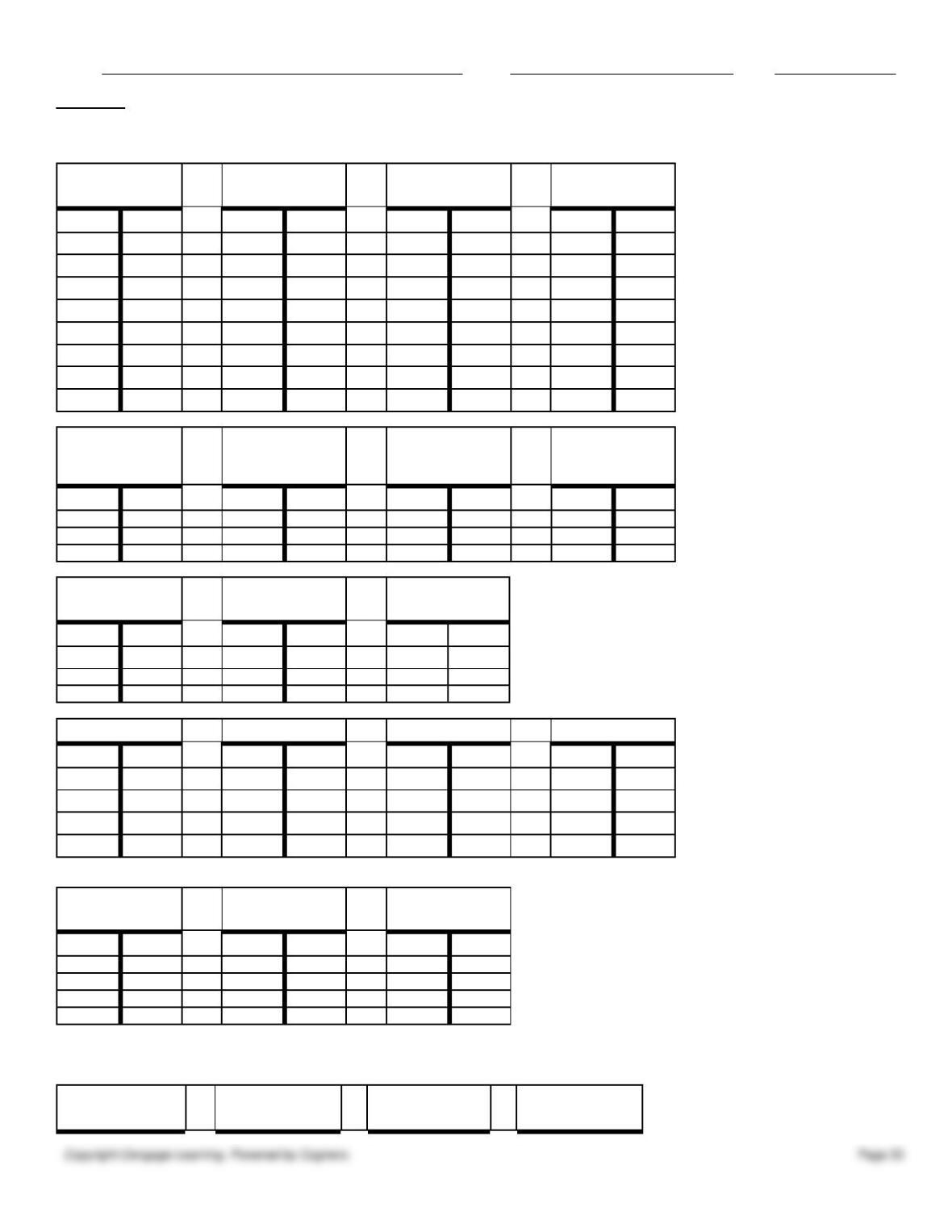
228. Dana Bowen Company is completing its first year of operations on April 30.
a. Reconstruct the journal entries for the year ended April 30 from the T accounts. Assign letters to each transaction, as
follows:
(a)–(l) Transaction entries
(m)–(r) Adjusting entries
b. Determine the ending balance of each account.
c. Prepare the income statement, the statement of owner’s equity, and the balance sheet.
d. Journalize the closing entries (s)–(t).
Name:
Class:
Date:
chapter 4
e. Prepare the post-closing trial balance.
Cash
Accounts
Receivable
Supplies
Prepaid
Insurance
6,500
1,250
870
1,940
900
385
540
725
400
420
1,940
2,500
50
350
930
Equipment
Accumulated
Depreciation
Accounts
Payable
Wages Payable
2,500
130
870
225
Unearned
Revenue
Dana Bowen,
Capital
Dana Bowen,
Drawing
930
6,500
350
590
2,500
Fees Earned
Wages Expense
Rent Expense
Supplies Expense
900
420
400
540
1,250
225
2,500
385
590
Insurance
Expense
Depreciation
Expense
Miscellaneous
Expense
725
130
50
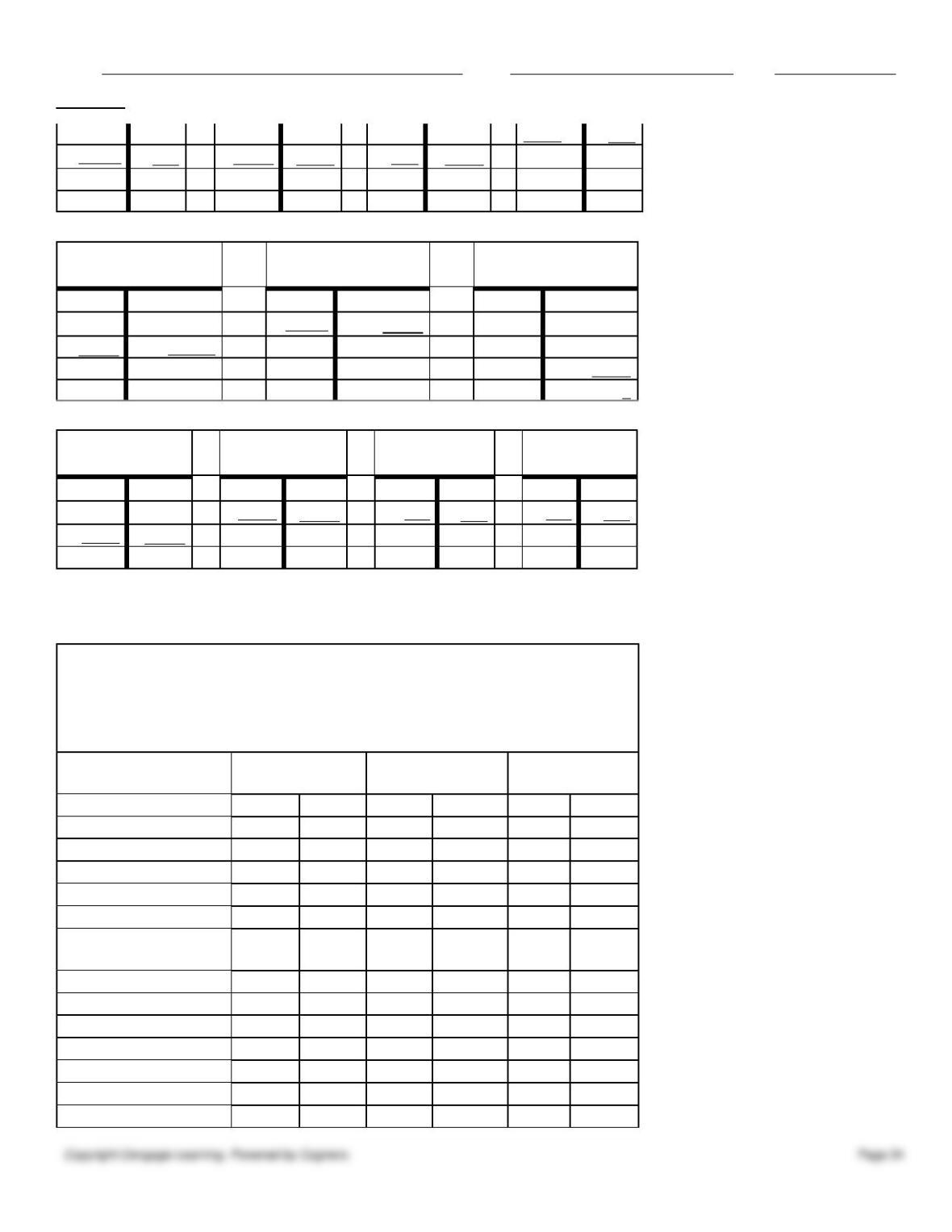
229. Reconstruct the adjusting and closing entries from the following T accounts:
Prepaid
Insurance
Accounts
Receivable
Unearned
Revenue
Wages Payable
Name:
Class:
Date:
chapter 4
1,200
6,000
1,350
530
200
1,500
435
530
1,000
7,500
915
Madison Cox,
Capital
Madison Cox,
Drawing
Fees Earned
7,000
2,100
8,000
5,280
2,100
1,500
2,100
0
435
10,180
9,935
0
Wages Expense
Rent Expense
Insurance
Expense
Utilities
Expense
2,600
1,145
200
180
530
1,145
200
180
3,130
0
0
0
0
230. Kirk Enterprises offers rug cleaning services to business clients. The unadjusted trial balance was prepared on the
end-of-period spreadsheet (work sheet) for the month ended July 31, as follows:
Kirk Enterprises
End-of-Period Spreadsheet
For the Month Ended July 31
Unadjusted
Trial Balance
Adjustments
Adjusted Trial
Balance
Dr.
Cr.
Dr.
Cr.
Dr.
Cr.
Cash
36
Prepaid Insurance
12
Fees Receivable
56
Supplies
12
Equipment
60
Accumulated
Depreciation
12
Unearned Revenue
20
Accounts Payable
32
Wages Payable
Ruben Ramon, Capital
84
Ruben Ramon, Drawing
4
Service Revenue
80
Advertising Expense
28
Name:
Class:
Date:
chapter 4
Wages Expense
20
Insurance Expense
Supplies Expense
Depreciation Expense
228
228
Adjustment Data:
(a) The equipment is estimated to last for five years with no salvage value. The asset will be depreciated evenly over its
useful life. Record one month’s depreciation.
(b) Accrued wages, $2.
(c) Unused supplies on hand, $8.
(d) Of the unearned revenue, 75% has been earned.
(e) Unexpired insurance remaining at the end of the month, $9.
Required:
Enter the adjustment data on the work sheet, and complete the Adjusted Trial Balance columns.
231. The balances in the ledger of Good Landscape Services as of January 31 before adjustments are as follows:
Cash
$ 6,750
Dalton Good, Capital
$29,775
Supplies
3,900
Dalton Good, Drawing
3,425
Prepaid Insurance
8,400
Service Revenue
56,300
Equipment
41,750
Salary Expense
24,300
Accumulated
Rent Expense
6,000
Depreciation
9,950
Miscellaneous Expense
1,500
Adjustment data are as follows: supplies on hand, January 31, $900; insurance expired for January, $1,100; depreciation
on equipment for January, $1,600; salaries accrued, January 31, $1,650.
a.
Prepare a 10-column end-of-period spreadsheet for Good Landscape Services for January.
b.
On the basis of the work sheet in (a), prepare the (1) income statement, (2) statement of owner’s
equity (assume no additional owner investments were made during the month), and (3) balance sheet
c.
On the basis of the work sheet in (a) journalize the closing entries as of January 31.
232. Robert Evans owns a business, Beachside Realty, that rents condominiums and furnishings. The adjusted trial
balance at December 31 is as follows:
Account
No.
Debit
Balances
Credit
Balances
Cash
11
1,500
Accounts Receivable
12
2,000
Interest Receivable
13
100
Prepaid Insurance
14
1,600
Notes Receivable (long-term)
16
2,800
Equipment
18
15,000
Accumulated Depreciation
19
3,000
Accounts Payable
21
2,400
Accrued Expenses Payable
22
3,920
Income Taxes Payable
23
2,700
Unearned Rent Fees
24
500
Robert Evans, Capital
31
7,700
Robert Evans, Drawing
32
2,000
Name:
Class:
Date:
chapter 4
Rent Fees Earned
41
37,000
Furniture Rental Revenue
42
1,200
Interest Revenue
43
100
Wages Expense
51
19,000
Depreciation Expense
52
1,800
Utilities Expense
53
320
Insurance Expense
54
700
Maintenance Expense
55
9,000
Income Tax Expense
56
2,700
58,520
58,520
Journalize the entry required to close the drawing account at the end of the period.
233. The following accounts were taken from the Adjusted Trial Balance columns of the end–of-period spreadsheet for
April 30, for Finnegan Co.:
Accumulated Depreciation
$32,000
Fees Earned
78,000
Depreciation Expense
7,250
Rent Expense
34,000
Prepaid Insurance
6,000
Supplies
400
Supplies Expense
1,800
Prepare an income statement.
234. After all adjustments have been made, but before the accounts have been closed, the following balances were taken
from the ledger of Ramona’s Designs:
Accounts Payable
$ 27,600
Rent Expense
$ 32,700
Accounts Receivable
64,500
Salary Expense
41,390
Accumulated Depreciation
73,325
Salaries Payable
8,150
Cash
17,150
Service Revenue
186,000
Depreciation Expense
13,500
Supplies
1,500
Equipment
165,000
Supplies Expense
2,500
Insurance Expense
2,510
Ramona Cross, Capital
99,950
Prepaid Insurance
6,275
Ramona Cross, Drawing
48,000
Journalize the entries to close the appropriate accounts.
235. The following are all the steps in the accounting cycle. List them in the order in which they should be completed.
– Closing entries are journalized and posted to the ledger.
– An unadjusted trial balance is prepared.
– An optional end-of-period spreadsheet (work sheet) is prepared.
– A post-closing trial balance is prepared.
– Adjusting entries are journalized and posted to the ledger.
– Transactions are analyzed and recorded in the journal.
– Adjustment data are assembled and analyzed.
– Financial statements are prepared.
– An adjusted trial balance is prepared.
– Transactions are posted to the ledger.
Name:
Class:
Date:
chapter 4
236. List and describe the purpose of the two closing entries
237. Explain how net income or loss is determined by using the end-of-period spreadsheets.
238. Robert Evans owns a business, Beachside Realty, that rents condominiums and furnishings. The adjusted trial
balance at December 31 is as follows:
Account
No.
Debit
Balances
Credit
Balances
Cash
11
1,500
Accounts Receivable
12
2,000
Interest Receivable
13
100
Prepaid Insurance
14
1,600
Notes Receivable (long-term)
16
2,800
Equipment
18
15,000
Accumulated Depreciation
19
3,000
Accounts Payable
21
2,400
Accrued Expenses Payable
22
3,920
Income Taxes Payable
23
2,700
Unearned Rent Fees
24
500
Robert Evans, Capital
31
13,700
Robert Evans, Drawing
32
2,000
Rent Fees Earned
41
31,000
Furniture Rental Revenue
42
1,200
Interest Revenue
43
100
Wages Expense
51
19,000
Depreciation Expense
52
1,800
Utilities Expense
53
320
Insurance Expense
54
700
Maintenance Expense
55
9,000
Income Tax Expense
56
2,700
58,520
58,520
Journalize the closing entry required to transfer the income or loss at the end of the period.
239. The following balance sheet contains errors.
Mark Brock Services Co.
Balance Sheet
For the Year Ended December 31
Assets
Current assets:
Cash
$ 7,170
Accounts payable
7,500
Supplies
2,590
Prepaid insurance
800
Land
24,000
Total current assets
$ 42,060
Property, plant, and

Name:
Class:
Date:
chapter 4
equipment:
Building
$43,700
Equipment
29,250
Total property, plant,
and equipment
72,950
Total assets
$131,510
Liabilities
Current liabilities:
Accounts receivable
$10,000
Accum. depr.—building
12,525
Accum. depr.—equipment
7,340
Net income
11,500
Total liabilities
$41,365
Owner’s Equity
Wages payable
$ 1,500
Mark Brock, capital
88,645
Total owner’s equity
90,145
Total liabilities and
owner’s equity
$131,510
a. List the errors in the balance sheet.
b. Prepare a corrected balance sheet.
240. The following is the adjusted trial balance for Nadia Company.
Nadia Company
Adjusted Trial Balance
December 31
Account
No.
Debit
Balances
Credit
Balances
Cash
11
5,130
Accounts Receivable
12
3,300
Prepaid Expenses
13
420
Equipment
18
12,400
Accumulated Depreciation
19
2,200
Accounts Payable
21
700
Notes Payable (due on June 30)
22
3,070
Nadia Porter, Capital
31
13,000
Nadia Porter, Drawing
32
700
Fees Earned
41
10,930
Wages Expense
51
2,450
Rent Expense
52
1,900
Utilities Expense
53
1,475
Depreciation Expense
54
1,150
Miscellaneous Expense
59
975
Totals
29,900
29,900
Prepare an income statement, statement of owner’s equity, and balance sheet. Assume that the capital account started with
a beginning balance of $10,000 and that the owner made an additional investment of $3,000 during the year.
241. The following adjusted trial balance is the result of the adjustments made at the end of the month of July for Ladonna

Name:
Class:
Date:
chapter 4
Douglas Company. Utilize these adjusted values to perform the closing entries for Ladonna Douglas Company.
Cash
34,750
Accounts Receivable
9,750
Office Supplies
2,525
Store Supplies
4,785
Machinery
10,750
Accumulated Depreciation
2,150
Accounts Payable
14,300
Notes Payable
11,500
Ladonna Douglas, Capital
53,725
Ladonna Douglas, Drawing
13,250
Service Revenue
41,500
Wages Expense
37,425
Rent Expense
3,000
Advertising Expense
2,750
Office Supplies Expense
1,465
Store Supplies Expense
2,150
Depreciation Expense
575
123,175
123,175
242. The end-of-period spreadsheet (work sheet) for the current year for Jamal Company shows Balance Sheet columns
with a debit total of $614,210 and a credit total of $630,430. This is before the amount for net income or net loss has been
included. In preparing the income statement from the work sheet, what is the amount of net income or net loss?
243. The following adjusted trial balance is the result of the adjustments made at the end of the month of March for Erik
Martin Company. Use these adjusted values to journalize the closing entries for Erik Martin Company.
Cash
24,750
Accounts Receivable
5,750
Office Supplies
3,525
Store Supplies
4,785
Machinery
9,750
Accumulated Depreciation
2,150
Accounts Payable
3,550
Notes Payable
7,500
Erik Martin, Capital
19,725
Erik Martin, Drawing
6,250
Service Revenue
36,500
Wages Expense
6,425
Office Supplies Expense
1,465
Store Supplies Expense
5,150
Depreciation Expense
1,575
69,425
69,425
244. Describe a classified balance sheet.
245. Robert Evans owns a business, Beachside Realty, that rents condominiums and furnishings. The adjusted trial
balance at December 31 is as follows:
Account
No.
Debit
Balances
Credit
Balances
Name:
Class:
Date:
chapter 4
Cash
11
1,500
Accounts Receivable
12
2,000
Interest Receivable
13
100
Prepaid Insurance
14
1,600
Notes Receivable (long-term)
16
2,800
Equipment
18
15,000
Accumulated Depreciation
19
3,000
Accounts Payable
21
2,400
Accrued Expenses Payable
22
3,920
Income Taxes Payable
23
2,700
Unearned Rent Fees
24
500
Robert Evans, Capital
31
7,700
Robert Evans, Drawing
32
2,000
Rent Fees Earned
41
37,000
Furniture Rental Revenue
42
1,200
Interest Revenue
43
100
Wages Expense
51
19,000
Depreciation Expense
52
1,800
Utilities Expense
53
320
Insurance Expense
54
700
Maintenance Expense
55
9,000
Income Tax Expense
56
2,700
58,520
58,520
Journalize the entry required to close the revenue and expense accounts at the end of the period.
246. On the basis of the following information taken from the Adjusted Trial Balance columns of the work sheet for the
month ended September 30, journalize the closing entries for Perez Roofing Company.
Cash
22,500
Accounts Receivable
3,575
Office Supplies
2,850
Repair Parts
3,785
Machinery
17,750
Accumulated Depreciation
3,250
Accounts Payable
1,150
Notes Payable
6,500
Sam Perez, Capital
2,500
Sam Perez, Drawing
1,750
Service Revenue
47,200
Wages Expense
4,840
Office Supplies Expense
1,275
Repair Parts Expense
925
Depreciation Expense
1,350
60,600
60,600
247. Complete the following end-of-period spreadsheet for Danilo Enterprises.
Danilo Enterprises
Name:
Class:
Date:
chapter 4
For the Year Ended December 31
Adjusted
Trial Balance
Income
Statement
Balance
Sheet
Account Title
Dr.
Cr.
Dr.
Cr.
Dr.
Cr.
Cash
14,500
Accounts Receivable
7,500
Supplies
500
Equipment
20,500
Accumulated Depr.—
Equip.
15,000
Accounts Payable
9,500
Wages Payable
3,060
Tony Danilo, Capital
18,240
Tony Danilo, Drawing
1,000
Fees Earned
34,000
Wages Expense
18,000
Rent Expense
9,300
Depreciation Expense
8,500
79,800
79,800
Net loss
248. You have just accepted your first job out of college, which requires you to evaluate loan requests at Eastwood
National Bank. The first loan request you receive is from Richard Enterprises, a small proprietorship. Richard Tracy, the
owner, is requesting $105,000 and brings you the following trial balance (or statement of accounts) for his first year of
operations ended December 31.
What three accounts do you think should be relabeled for greater clarity?
Richard Enterprises
Statement of Accounts
December 31
Cash
2,050
Billings Due from Others
15,070
Office Supplies
7,470
Trucks
36,370
Equipment
8,090
Amounts Owed to Others
2,850
Investment in Business
33,500
Service Revenue
73,650
Wages Expense
30,050
Rent Expense
7,330
Insurance Expense
2,400
Utilities Expense
700
Miscellaneous Expense
470
110,000
110,000
249. Prior to adjustment at August 31, Salary Expense has a debit balance of $298,500. Salaries owed but not paid as of
the same date total $4,200.
a.
Journalize the adjusting entry to record accrued salaries as of August 31.
Name:
Class:
Date:
chapter 4
b.
Indicate the amount at which Salaries Expense would be included in the closing entry
on August 31 and whether it would be a debit or credit.
250. The end-of-period spreadsheet (work sheet) for the current year for Jamal Company shows Balance Sheet columns
with a debit total of $630,430 and a credit total of $614,210. This is before the amount for net income or net loss has been
included. In preparing the income statement from the end-of-period spreadsheet, what is the amount of net income or net
loss?
251. If end-of-period spreadsheets are not considered part of the formal accounting records, why are they used?
252. The following are selected T accounts for the current year for Linda’s Surveying Services:
Linda
Winter, Capital
Linda Winter, Drawing
12/31
Clos.
25,000
1/1
Bal.
20,000
3/31
12,000
12/31
Clos.
25,000
12/31
48,000
12/22
13,000
Prepare a statement of owner’s equity.
253. You have just accepted your first job out of college, which requires you to evaluate loan requests at Eastwood
National Bank. The first loan request you receive is from Richard Enterprises, a small proprietorship. Richard Tracy, the
owner, is requesting $105,000 and brings you the following trial balance (or statement of accounts) for his first year of
operations ended December 31.
Which of the following accounts do you think might need to be adjusted before an accurate set of financial statements can
be prepared?
Richard Enterprises
Statement of Accounts
December 31
Cash
2,050
Billings Due from Others
15,070
Office Supplies
7,470
Trucks
36,370
Equipment
8,090
Amounts Owed to Others
2,850
Investment in Business
33,500
Service Revenue
73,650
Wages Expense
30,050
Rent Expense
7,330
Insurance Expense
2,400
Utilities Expense
700
Miscellaneous Expense
470
110,000
110,000
254. Austin Enterprises was started by Daniel Austin. During the current year, Daniel Austin invested $8,000 in the
business. Based on the following end–of-period spreadsheet, prepare an income statement, statement of owner’s equity,
and balance sheet for Austin Enterprises for the year ended December 31.
Austin Enterprises
Name:
Class:
Date:
chapter 4
End-of-Period Spreadsheet
For the Year Ended December 31
Adjusted Trial Balance
Income Statement
Balance Sheet
Account Title
Dr.
Cr.
Dr.
Cr.
Dr.
Cr.
Cash
26,500
26,500
Accounts Receivable
7,000
7,000
Supplies
1,000
1,000
Equipment
18,500
18,500
Accumulated Depr.—Equip.
5,000
5,000
Accounts Payable
11,000
11,000
Wages Payable
1,000
1,000
Daniel Austin, Capital
8,000
8,000
Daniel Austin, Drawing
2,000
2,000
Fees Earned
59,500
59,500
Wages Expense
19,000
19,000
Rent Expense
7,000
7,000
Depreciation Expense
3,500
3,500
84,500
84,500
29,500
59,500
55,000
25,000
Net income
30,000
30,000
59,500
59,500
55,000
55,000
255. Journalize closing entries from the following end-of-period spreadsheet.
Austin Enterprises
End-of-Period Spreadsheet
For the Year Ended December 31
Unadjusted
Trial Balance
Adjustments
Adjusted
Trial Balance
Account
Title
Dr.
Cr.
Dr.
Cr.
Dr.
Cr.
Cash
26,500
26,500
Accounts Receivable
5,000
2,000
7,000
Supplies
8,000
7,000
1,000
Equipment
18,500
18,500
Accumulated
Depreciation
1,500
3,500
5,000
Accounts Payable
11,000
11,000
Wages Payable
1,000
1,000
Don Austin, Capital
8,000
8,000
Don Austin,
Drawing
2,000
2,000
Fees Earned
57,500
2,000
59,500
Wages Expense
18,000
1,000
19,000
Supplies Expense
7,000
7,000
Depreciation
Expense
3,500
3,500
78,000
78,000
13,500
13,500
84,500
84,500
Name:
Class:
Date:
chapter 4
256. The following is the adjusted trial balance for Miller Company.
Miller Company
Adjusted Trial Balance
December 31
Account
No.
Debit
Balances
Credit
Balances
Cash
11
8,130
Accounts Receivable
12
3,300
Prepaid Expenses
13
2,750
Equipment
18
10,400
Accumulated Depreciation
19
2,200
Accounts Payable
21
2,700
Notes Payable
22
1,000
Diane Miller, Capital
31
11,200
Diane Miller, Drawing
32
4,870
Fees Earned
41
36,600
Wages Expense
51
12,450
Rent Expense
52
4,900
Utilities Expense
53
3,475
Depreciation Expense
54
2,150
Miscellaneous Expense
59
1,275
53,700
53,700
Journalize the closing entries, and prepare the post-closing trial balance.
257. After the accounts have been adjusted at January 31, the end of the year, the following balances are taken from the
ledger of Harrison’s Dog Walking Service Company:
Harrison Taylor, Capital
$349,000
Harrison Taylor, Drawing
6,000
Fees Earned
124,600
Wages Expense
29,000
Rent Expense
43,000
Supplies Expense
7,300
Miscellaneous Expense
5,700
Journalize the entries required to close the accounts
258. You evaluate loan requests as part of your job at Eastwood National Bank. One loan request you received is from
Surfer Dude Supplies, a small proprietorship. Richard Tracy, the owner, is requesting $105,000 and brings you a trial
balance (or statement of accounts) for his first year of operations ended December 31.
While you are willing to work with Richard, how would you explain to him that a complete set of financial statements
from his accountant would be more useful for evaluating the loan request?
259. Reconstruct adjusting and closing entries for the month ended September 30 from the following T accounts:
Name:
Class:
Date:
chapter 4
Prepaid
Insurance
Accounts
Receivable
Unearned
Revenue
Wages
Payable
1,350
1,250
1,050
385
130
275
235
385
1,220
1,525
815
Diane Lin, Capital
Diane
Lin, Drawing
Fees Earned
7,000
2,400
5,000
580
2,400
275
2,400
0
235
4,020
5,510
0
Wages Expense
Rent Expense
Insurance
Expense
Utilities
Expense
3,600
1,880
130
95
385
1,880
130
95
3,985
0
0
0
0

Name:
Class:
Date:
chapter 4
Answer Key

Name:
Class:
Date:
chapter 4

Name:
Class:
Date:
chapter 4

Name:
Class:
Date:
chapter 4

Name:
Class:
Date:
chapter 4

Name:
Class:
Date:
chapter 4

Name:
Class:
Date:
chapter 4

Name:
Class:
Date:
chapter 4
Name:
Class:
Date:
chapter 4
Name:
Class:
Date:
chapter 4
Name:
Class:
Date:
chapter 4
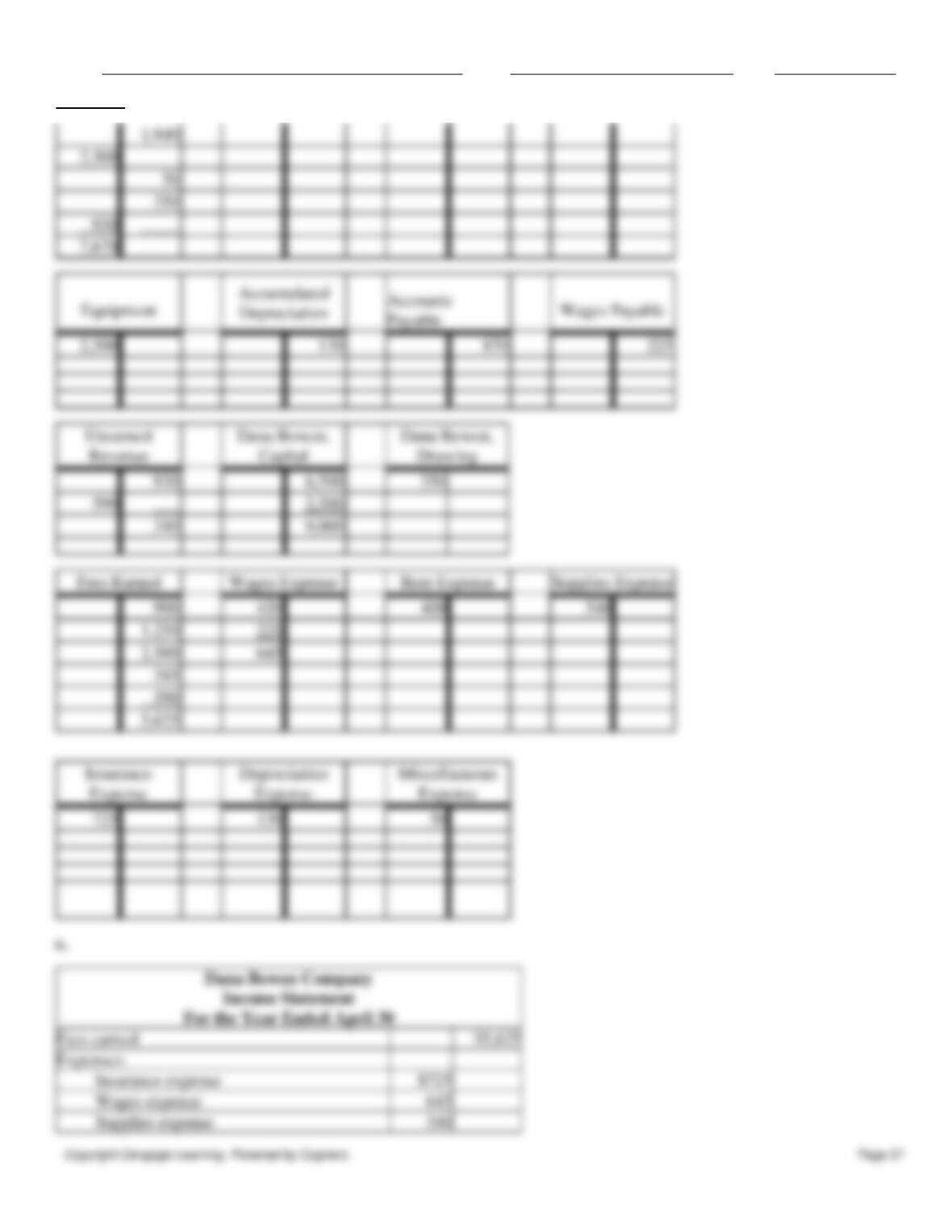
Name:
Class:
Date:
chapter 4
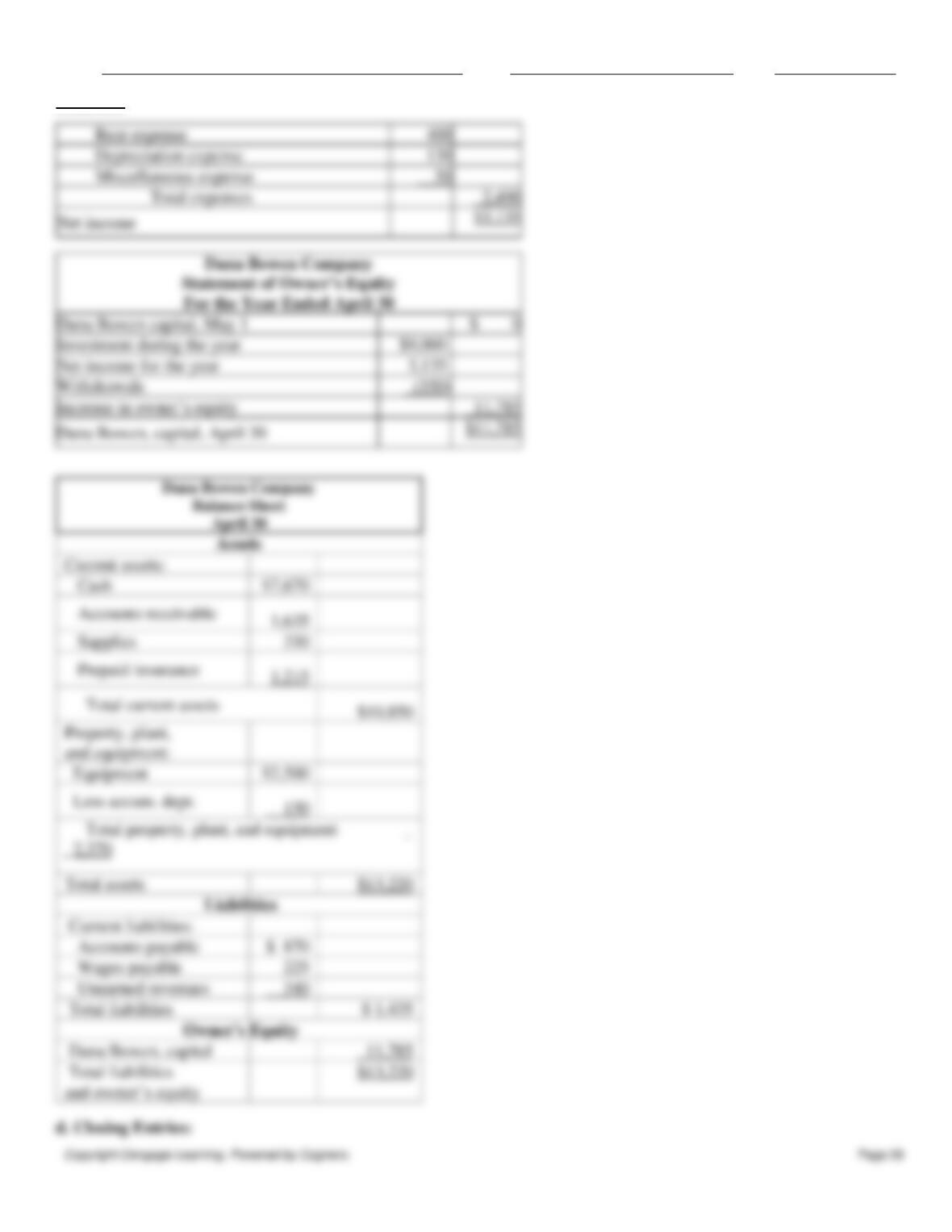
Name:
Class:
Date:
chapter 4
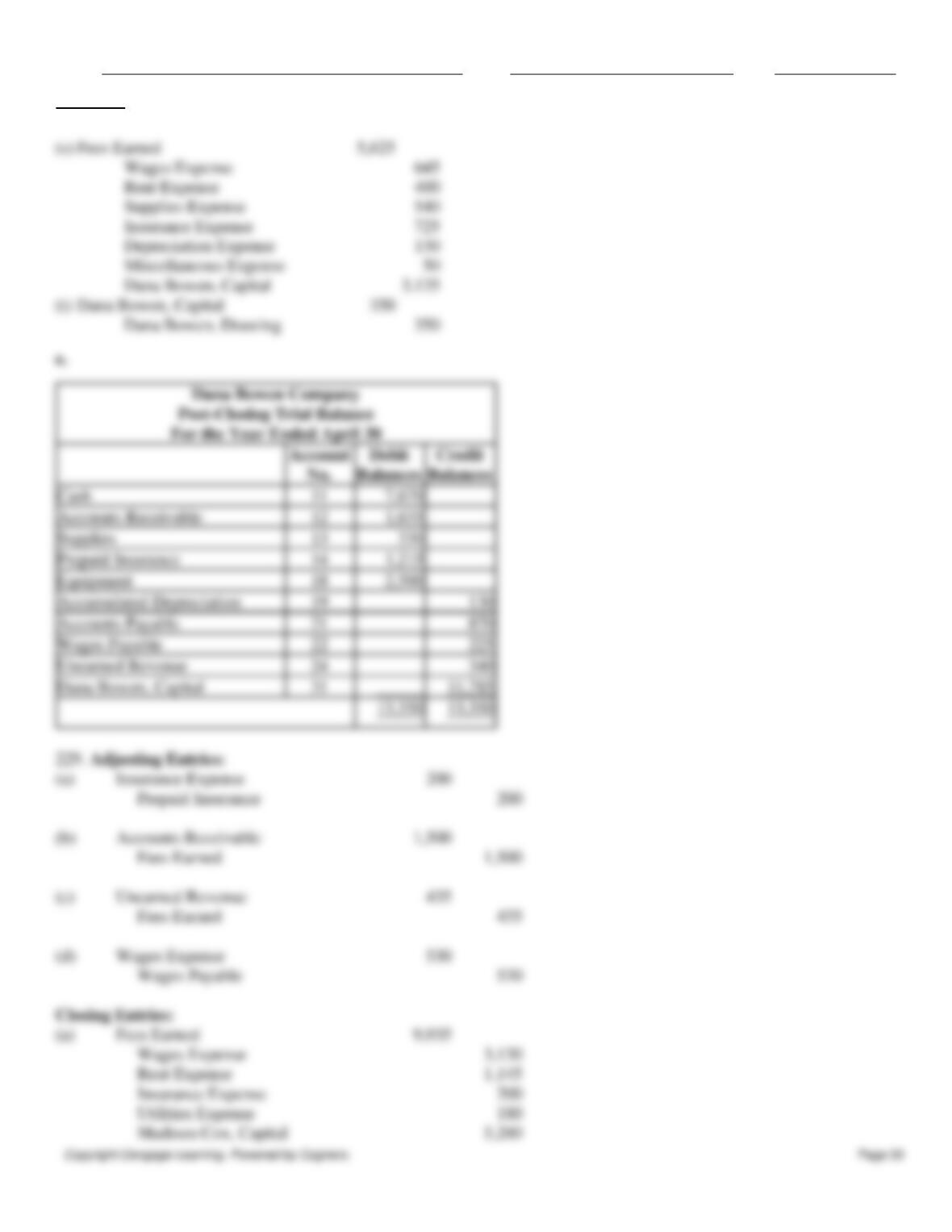
Name:
Class:
Date:
chapter 4
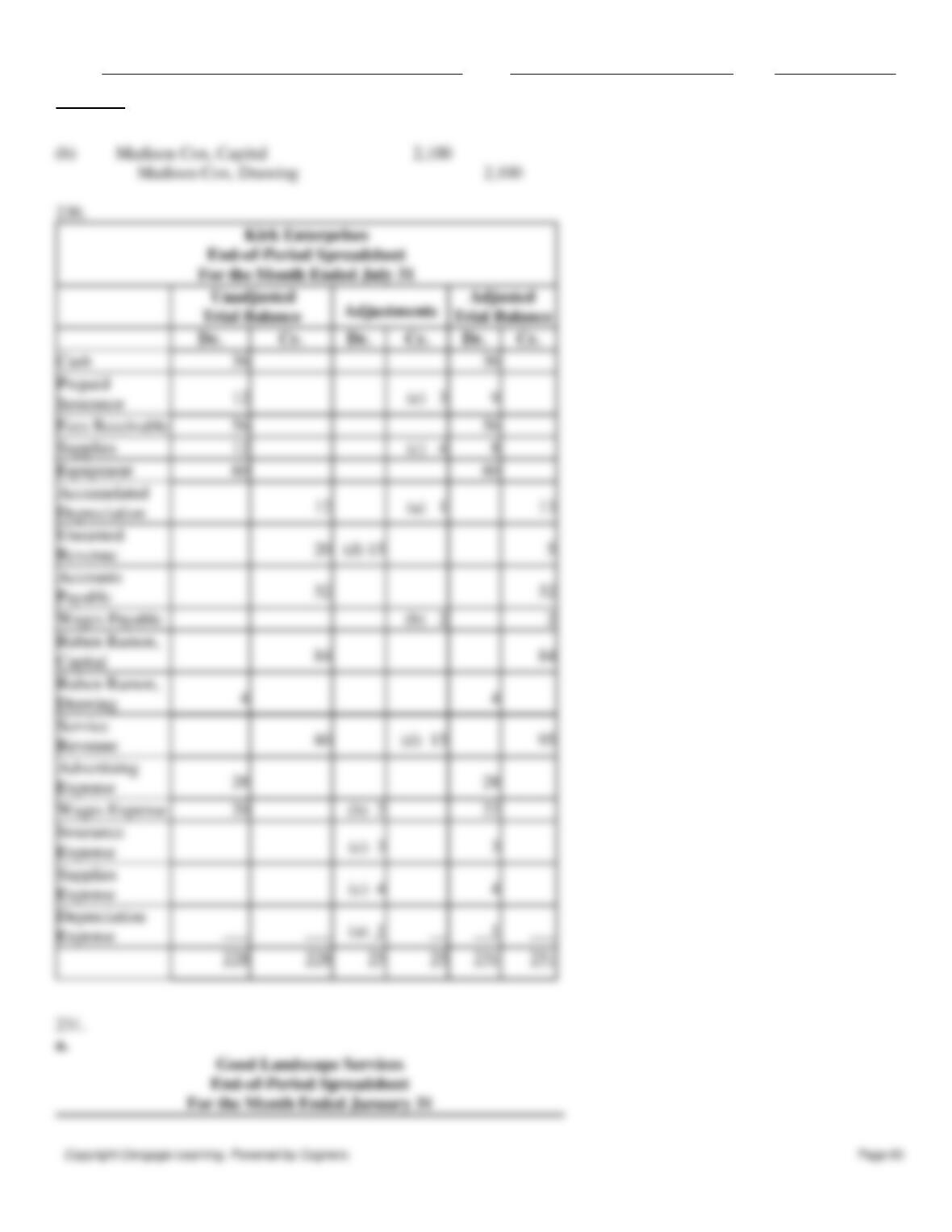
Name:
Class:
Date:
chapter 4
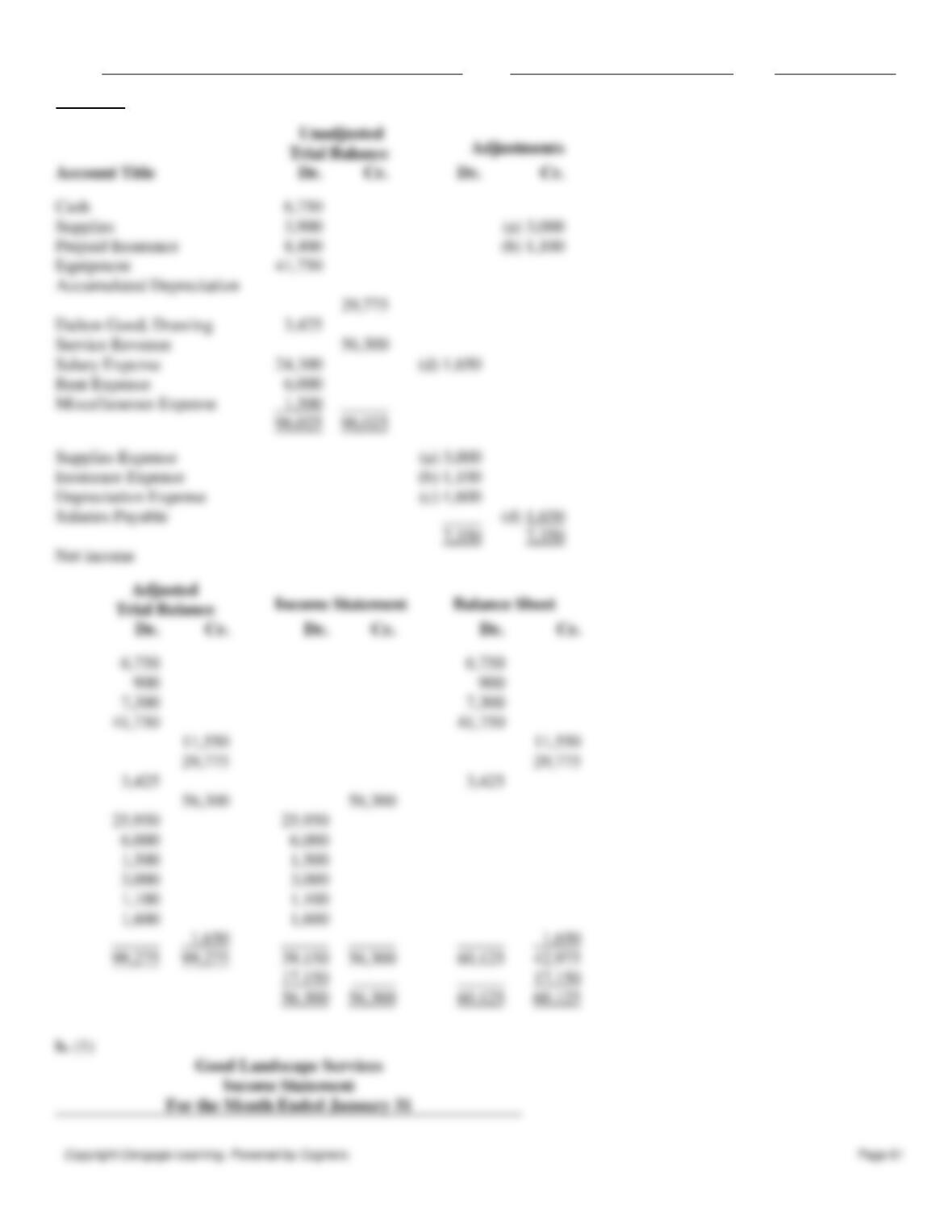
Name:
Class:
Date:
chapter 4
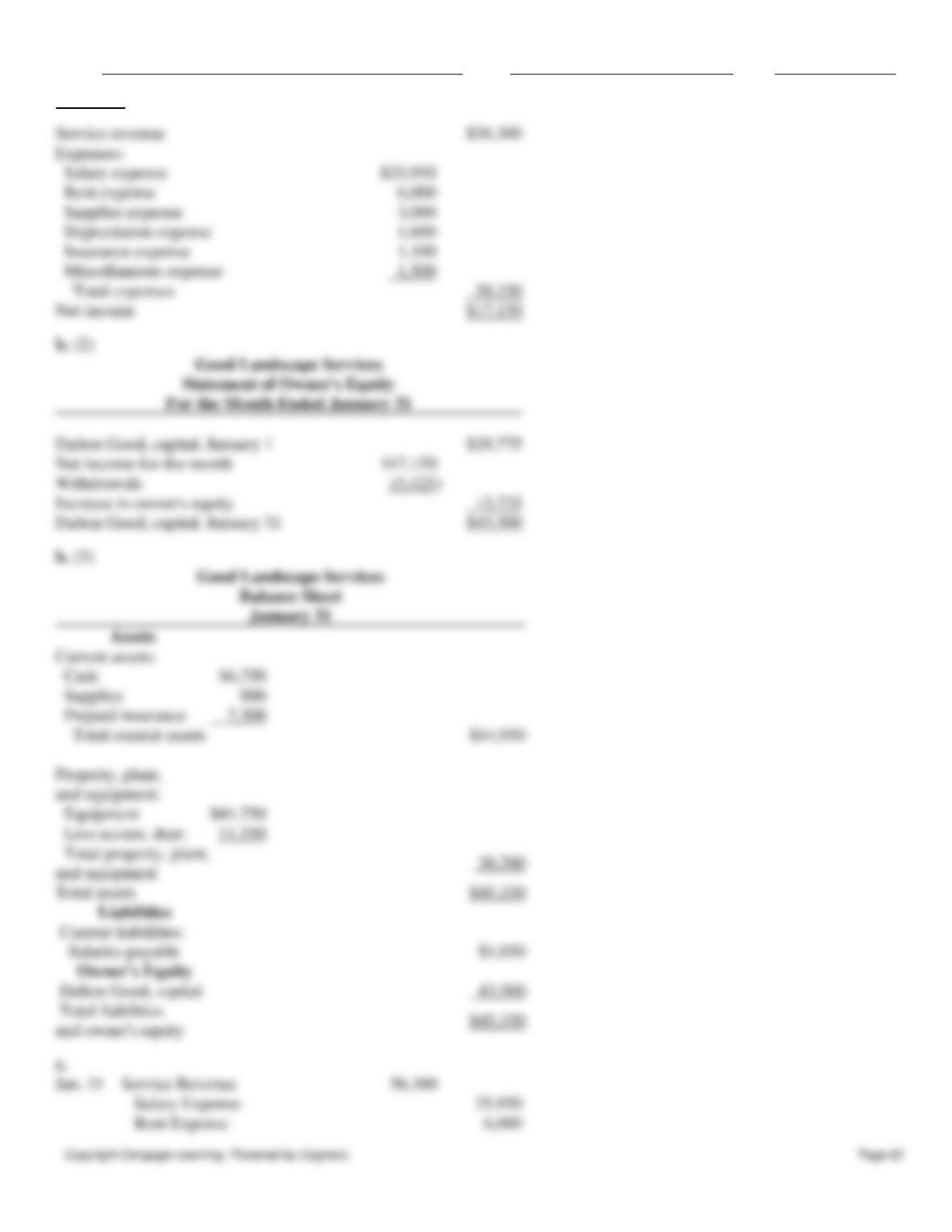
Name:
Class:
Date:
chapter 4
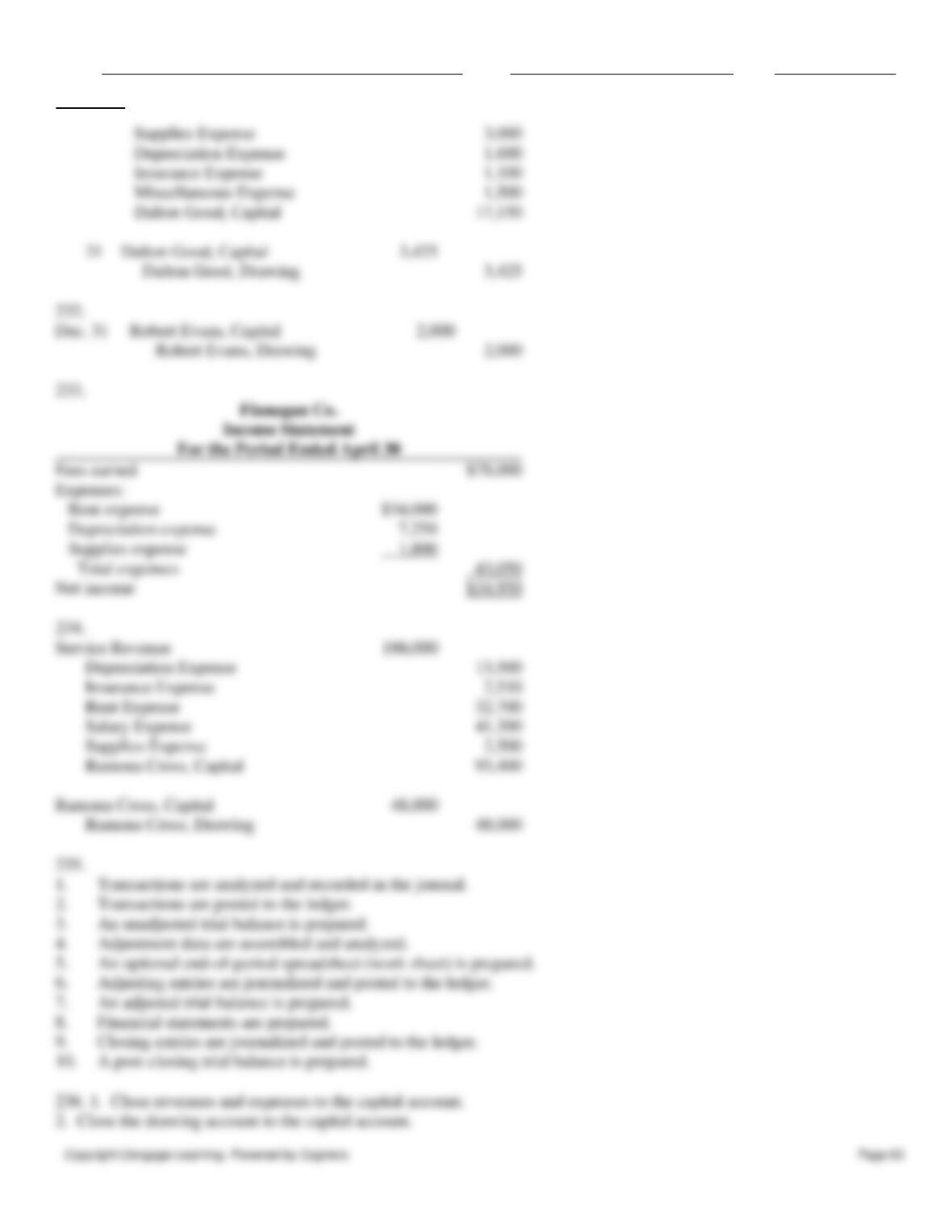
Name:
Class:
Date:
chapter 4
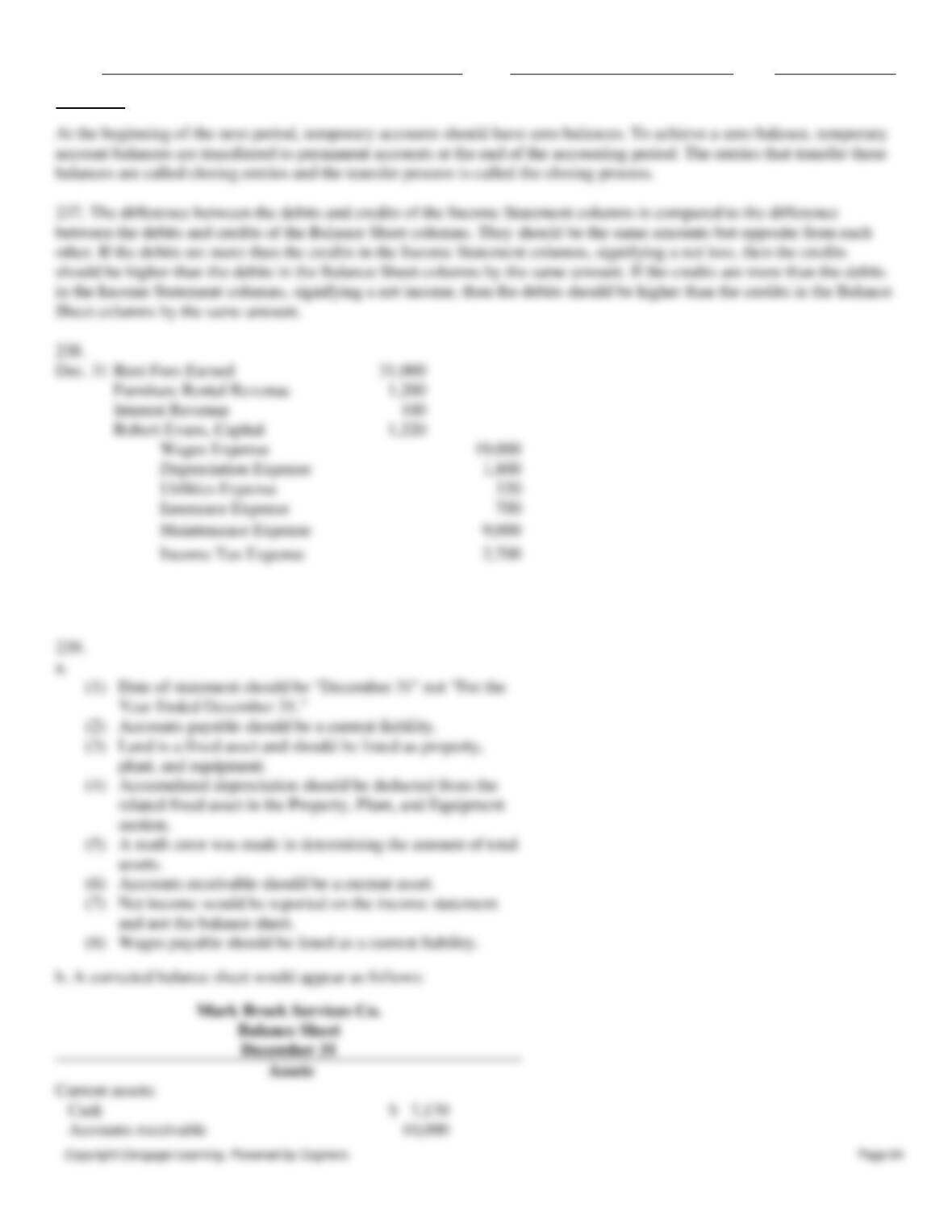
Name:
Class:
Date:
chapter 4
Name:
Class:
Date:
chapter 4
Name:
Class:
Date:
chapter 4
Name:
Class:
Date:
chapter 4
Name:
Class:
Date:
chapter 4
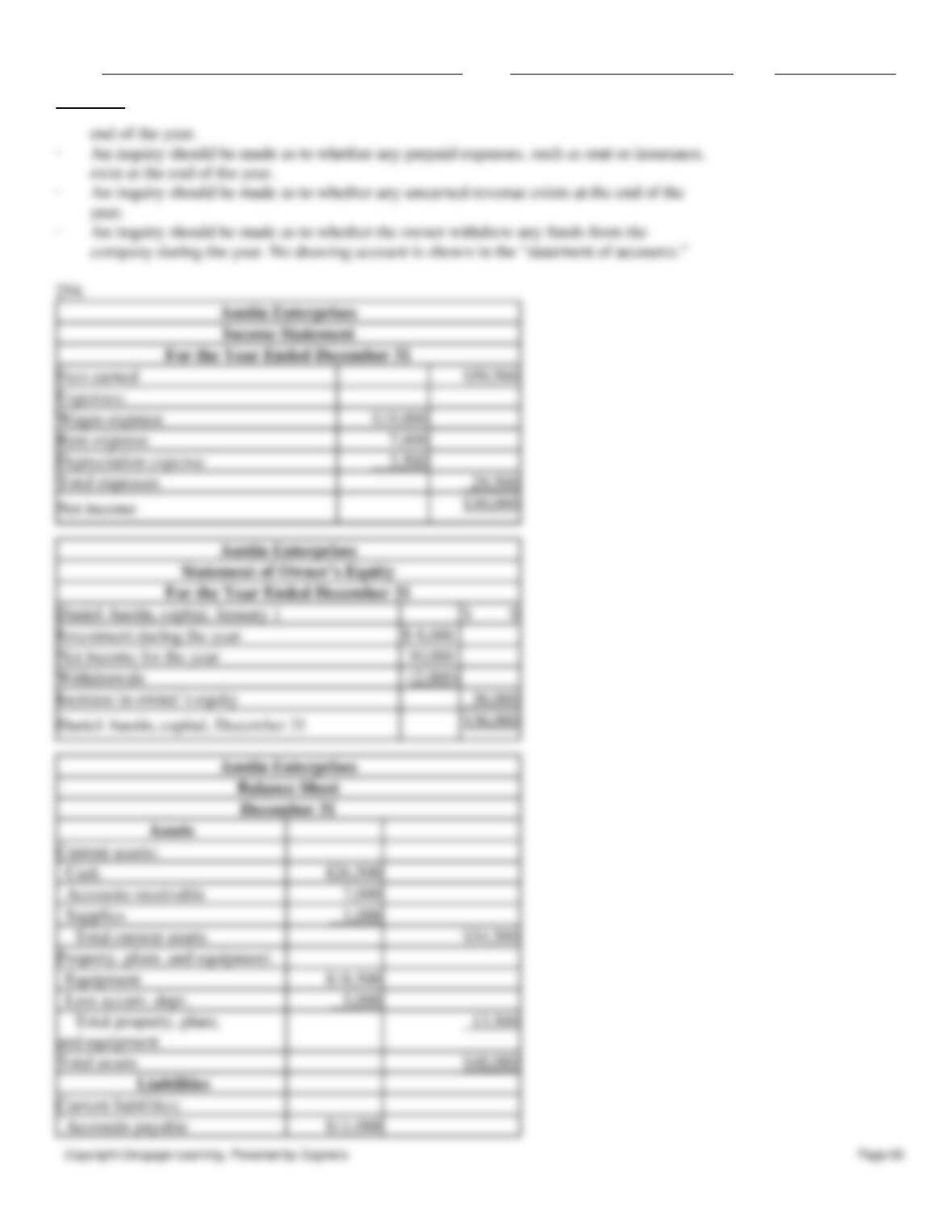
Name:
Class:
Date:
chapter 4
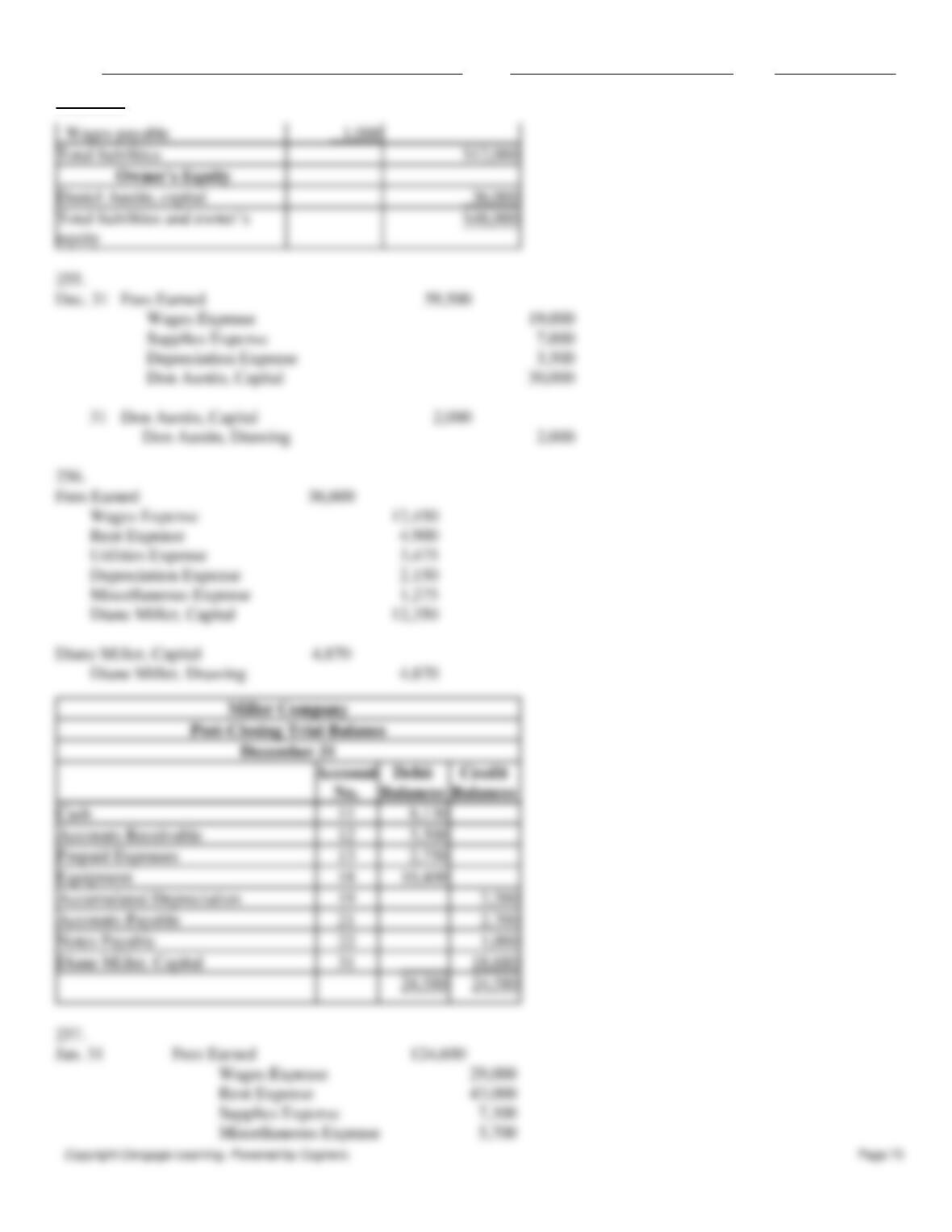
Name:
Class:
Date:
chapter 4
Name:
Class:
Date:
chapter 4