CHAPTER 4:
1. Which are two major differences between U.S. GAAP and IFRS in accounting for
property, plant, and equipment (PPE)?
A. Re-evaluation, impairment requirements
B. Component depreciation, re-evaluation
C. Interest cost during construction, impairment requirements
D. Depreciation method, interest cost during construction
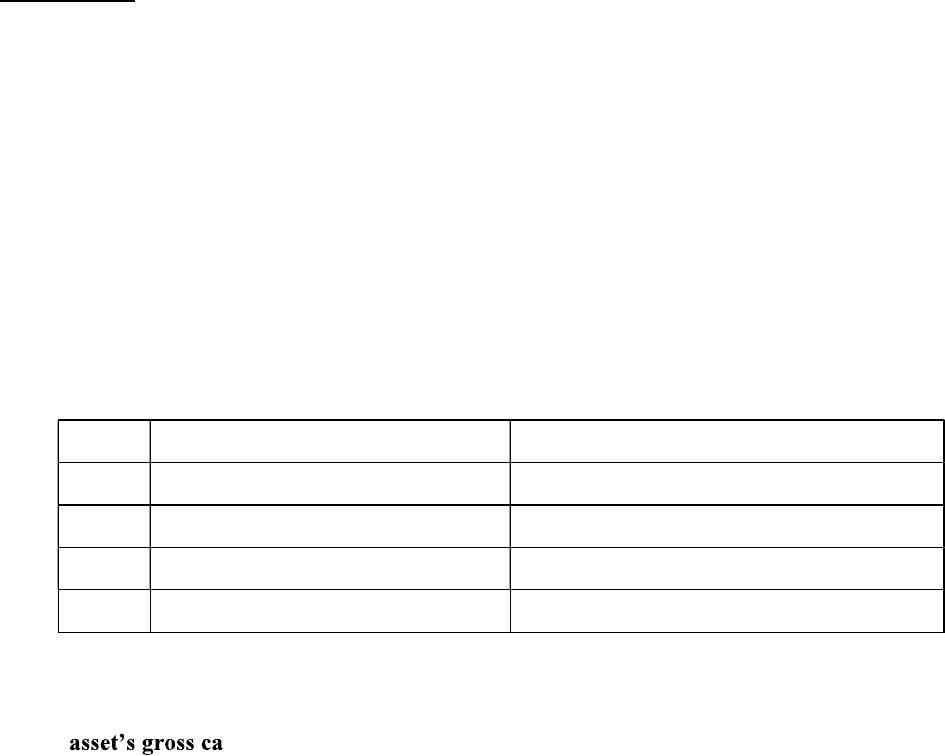
2. How do IFRS and U.S. GAAP deal with interest cost on assets during contraction
respectively?
IFRS GAAP
A Expensing or capitalization Capitalization
B Capitalization Expensing
C Expensing Capitalization
D Capitalization Expensing or capitalization
3. Consider a situation where accumulated depreciation is eliminated against the
rrying amount and the net amount is restated to the revalued
amount of the asset, which term applies to the revaluation of depreciation?
A. Proportional method
B. Reset method
C. Book cost method
D. Elimination method
4. Recoverable amount is the higher of the following:
A. fair value and value in use
B. fair value and carrying value
C. fair value less costs to sell and value in use
D. value in use and carrying value
5. In which way(s) are intangible assets under IFRS treated similarly to U.S. GAAP?
A. Indefinite-lived intangible assets are amortized over useful life but are tested for
impairment annually.
B. Goodwill is recognized in acquisition accounting.
C. Definite-lived intangible assets are carried at cost with annually test for impairment
D. Initial recording of acquired intangible assets is at cost
E. B and D
6. Which of the following is not the major difference in accounting for intangible assets
under IFRS and U.S.GAAP?
A. Under IFRS, intangible assets previously written down may be revalued upward if the
annual impairment test indicates an increase in fair value.
B. Under U.S. GAAP, once written down due to lower impairment, intangible assets can
be written up again.
C. All of the above
D. None of the above

7. Which of the following statement is correct regarding impairment of goodwill?
A. Impairment of goodwill is tested at least annually under IFRS but not U.S. GAAP by
comparing the carrying amount to recoverable value.
B. Under IFRS, Goodwill is allocated to cash generating units and can be larger than an
operating segment.
C. Under U.S. GAAP, Goodwill is allocated to reporting unit level which may contain
multiple cash generating units.
D. None of the above.
8. Which differences between U.S. GAAP and IFRS exists with regard to accounting
for research and development costs is true?
U.S. GAAP IFRS
A Research costs: Capitalized
Development costs: Capitalized and
amortized
Research and development costs are
expensed
B Research and development costs are
capitalized
Research costs: Expensed
Development costs: Capitalized and
amortized
C Research costs: Expensed
Development costs: Capitalized and
amortized
Research and development costs are
capitalized
D Research and development costs are
expensed
Research costs: Expensed
Development costs: Capitalized and
amortized
9. Which following statement regarding investment property is true?
A. Investment property is property held to earn rentals from outside parties or held for
capital appreciation.
B. Investment property includes property that is owner occupied and used or leased for
use in the business.
C. Investment property includes property held as inventory such as a homebuilder.
D. U.S. GAAP and IFRS both specifically address this type of property in the standards.
10. Which of the following is not a similar requirement of financial instruments under
both IFRS and U.S. GAAP?
A. Financial assets held for trading at fair value with changes in profit but not loss on the
income statement
B. Held to maturity investments at amortized cost to the income statement
C. Available for sale investments at fair value with changes in other comprehensive
income
D. Receivables and loans at amortized cost to the income statement
11. Which of the following is a correct treatment of impaired equity securities?
A. Under IFRS, equity security is impaired if the decline in value is significant and
prolonged
B. Under U.S. GAAP, equity security is impaired if the decline in value is significant or
prolonged.
C. All of the above
D. None of the above

12. The impairment of debt investments are treated as follows except:
A. under IFRS, impairment losses are recognized in profit and loss on the income
statement
B. under U.S. GAAP, in the intent is to sell the debt investment, impairment losses are
recognized entirely on the income statement.
C. under U.S. GAAP, other debt investments are recognized as other comprehensive
income.
D. reverse of impairment write-downs are allowed under U.S. GAAP
13. Which following is not a new requirement of IFRS 9?
A. Equity investments are measured at fair value and changes in fair value appear in
other comprehensive income and are recycled to profit and loss
B. Amortized cost may be used only if the asset gives rise on specified date to cash
flows that are solely payments of principal and interest on the outstanding principal
C. All other financial assets must be accounted for at fair value.
D. Most financial liabilities are measured at fair value.
14. The required current amount of the pension fund depends primarily on which of the
following?
A. The discount rate used to discount future payments
B. The length of time that retirees are expected to received payments
C. A and B
D. None of the above

15. Significant differences can occur in required funding of pension funds due to
different discount rates required under IFRS and U.S. GAAP, which of the
following is true?
A. The discount rates under IFRS are determined by reference to market yields at the
balance sheet date on high quality corporate bonds.
B. The discount rate under U.S.GAAP should reflect the rates at which pension benefits
could be effectively settled.
C. All of the above
D. None of the above
16. Which of the following regarding operating lease and financing lease is true?
A. Under operating leases, the lease is usually longer term, approximating the life of the
asset being leased
B. Under financing leases, the lease is short-term.
C. Under operating leases, the risk of ownership lie with the lessor
D. Under financing leases, the risks of ownership lie more with the lessor
17. Which of the following regarding financing leases and operating leases under lessors
and lessees is not true?
A. The lessor model requires that most leases be recognized as financing leases
B. The lessor model requires a relatively long-term leases-usually those more than one
year in duration- would be recorded as an operating lease.
C. The lessee model uses concept deal with financing leases
D. The lessee model records operating lease payments as an expense when paid.
18. Which of the following standards would exist for cancellable leases?
A. Can be canceled by the lessee and lessor with minimal termination payments
B. Include renewal options that the lessor and lessee must agree to
C. All of the above
D. None of the above
19. Which statement regarding commitments and contingencies is false?
A. U.S. GAAP record commitments since they have a legal basis
B. Under IFRS, the purchase agreements are recognized when an entity has a
demonstrable commitment for a future payment or transfer of assets
C. Under U.S. GAAP, contingent assets and liabilities are recognized if they are
probable and can be estimated.
D. Under IFRS, there must be a present obligation that arises from past events and fair
value must be determinable
20. When the revaluation results in an increase, a debit is made to the asset account,
which account does the revaluation surplus go?
A. Equity
B. Liability
C. Asset
D. Contra–Asset
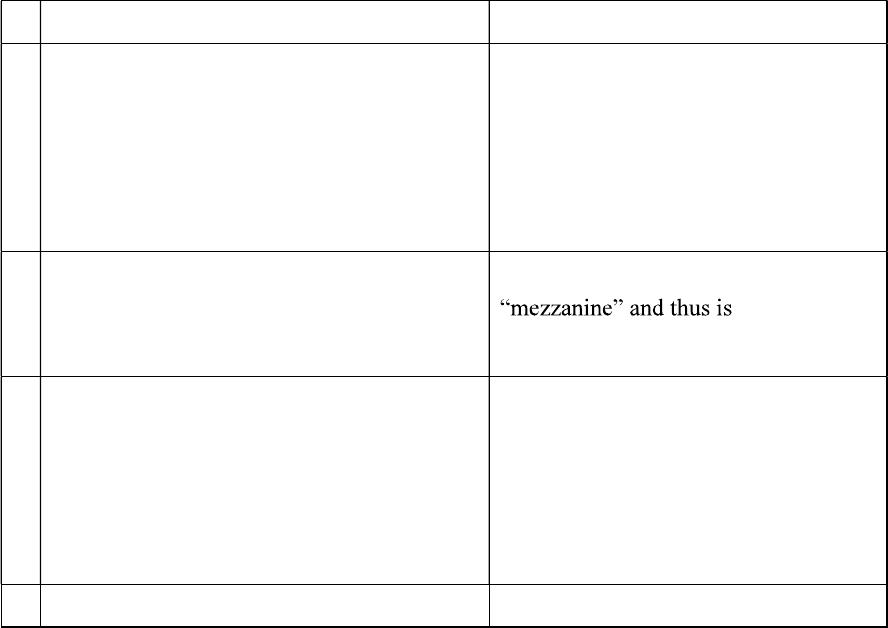
21. Which of the following comparison statements is not correct?
U.S GAAP IFRS
A
Convertible bonds are classified as debt and
convertible stock is classified as equity
Under split accounting, the proceeds
of the financial instrument are
allocated between its debt component
at fair value and its equity component
at the residual value
B Minority interest is classified as equity Minority interest is classified as
not part of
equity
C Deferred income tax assets and liabilities
are classified based on the classification of
the related asset or liability. Thus, the
classification may be either current or non-
current
Deferred income tax assets or
liabilities are classified only as non-
current
D
LIFO and FIFO both are allowed LIFO is prohibited
22. What is the major difference between how U.S GAAP and IFRS handle share-based
payments?
A. U.S. GAAP rules measure SBP at fair value on the grant date; IFRS records the future
option of the SBP right after the announcement
B. U.S. GAAP rules only recognize market shares as payments; IFRS also includes
goods or services paid in shares or SBP
C. U.S. GAAP rules apply only to employee SBP; IFRS apply to all SBP, including non-
employee SBP
D. U.S. GAAP rules true up for failure to meet service, non-market vesting conditions;
IFRS true up for failure to meet market conditions
23. Which of the following statements regarding consolidation is false?
A. U.S. GAAP, with few exceptions, require a greater than 50 percent ownership before
financial statements of related companies are consolidated into a single set of
financial statements.
B. Under IFRS, consolidation is based on the power of the investor over the investees
company.
C. Under U.S. GAAP, consolidation may occur more often in cases when a company has
less than 50 percent ownership than under IFRS
D. None of the above
24. Which of the following is an indicator of power to influence financial and operating
policy of an investee?
A. Representation on the board of directors
B. Participation in the policy making process
C. Material transactions between investor and investee
D. Interchange of managerial personnel
E. All of the above