113. Investing activities include cash transactions involving revenue and expense events
during the period.
114. Investing activities include cash investments in long-term assets and investment
securities.
115. Investing activities include transactions designed to raise cash or finance the business.
116. Only transactions involving cash affect a company’s cash flows.
117. A company’s operating cash inflows less operating cash outflows generally equals the
reported amount of net income in the income statement.
118. Earnings quality is the ability of net income to report the true underlying performance of
the company.
119. A company’s free cash flows equal operating cash flows plus financing cash flows during
the period.
120. Generally, when a company’s net income and free cash flows trend in the same direction
over time, earnings are believed to have higher quality.
be.
121. Discuss the events leading up to the passage of the Sarbanes-Oxley Act and its major
provisions.
Listed below are ten terms followed by a list of phrases that describe or characterize five of
the terms. Match each phrase with the best term by placing the letter designating the term in
the space provided.
Terms:
a. Monitoring
b. Oversight board
c. Control activities
d. Corporate executive accountability
e. Nonaudit services
f. Control environment
g. Internal control
h. Information and communication
i. Auditor rotation
j. Risk assessment
122. ____ Procedures for maintaining separation of duties.
123. ____ PCAOB establishes standards related to the preparation of audited financial
reports.
124. ____ Formal policies to evaluate internal and external threats to achieving company
objectives.
125. ____ Audit firm cannot provide a variety of other services to its client, such as
consulting.
126. ____ Management must document the effectiveness of procedures that could affect
financial reporting.
Listed below are ten terms followed by a list of phrases that describe or characterize five of
the terms. Match each phrase with the best term by placing the letter designating the term in
the space provided.
Terms:
a. Monitoring
b. Oversight board
c. Control activities
d. Corporate executive accountability
e. Nonaudit services
f. Control environment
g. Internal control
h. Information and communication
i. Auditor rotation
j. Risk assessment
127. ____ Lead audit partners are required to change every five years.
128. ____ Transfer of data from lower managers to top executives for accurate financial
reporting.
129. ____ Executives must personally certify the financial statements.
130. ____ Overall attitude of the company with respect to internal controls.
131. ____ Routine activities that are meant to continually observe internal control activities.
132. What is internal control? Briefly describe the five components of internal control
outlined by the Committee of Sponsoring Organizations (COSO).
Answer:
Listed below are five terms followed by a list of phrases that describe or characterize the
terms. Match each phrase with the best term by placing the letter designating the term in the
space provided.
Terms:
a. Cash equivalent
b. Bank reconciliation
c. Petty cash
d. Debit card
e. Credit card
133. ____ Minor amount of cash kept on hand.
134. ____ Short-term investments that have a maturity date no longer than three months from
the date of purchase.
135. ____ Matches the balance of cash in the bank account with the balance of cash in the
company’s own records.
136. ____ Withdraws funds directly from the user’s account at the time of use.
137. ____ Allows users to purchase items without having to pay cash immediately.
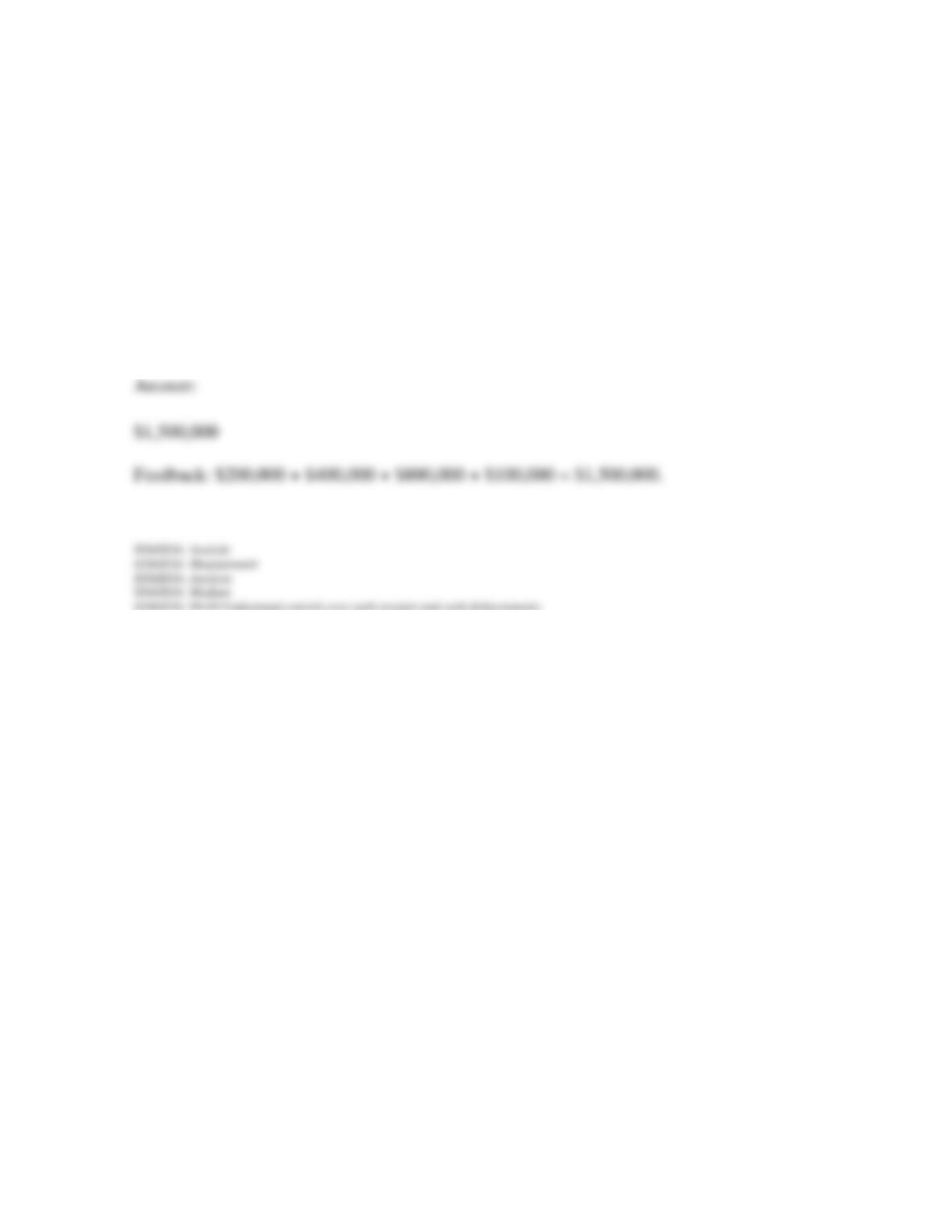
138. A company had the following sales transactions:
1. Total debit card sales = $200,000.
2. Total credit card sales = $400,000.
3. Total cash sales = $800,000.
4. Total check sales = $100,000.
There is a charge of 2% on all credit card transactions. Calculate total sales revenue recorded
for the year.
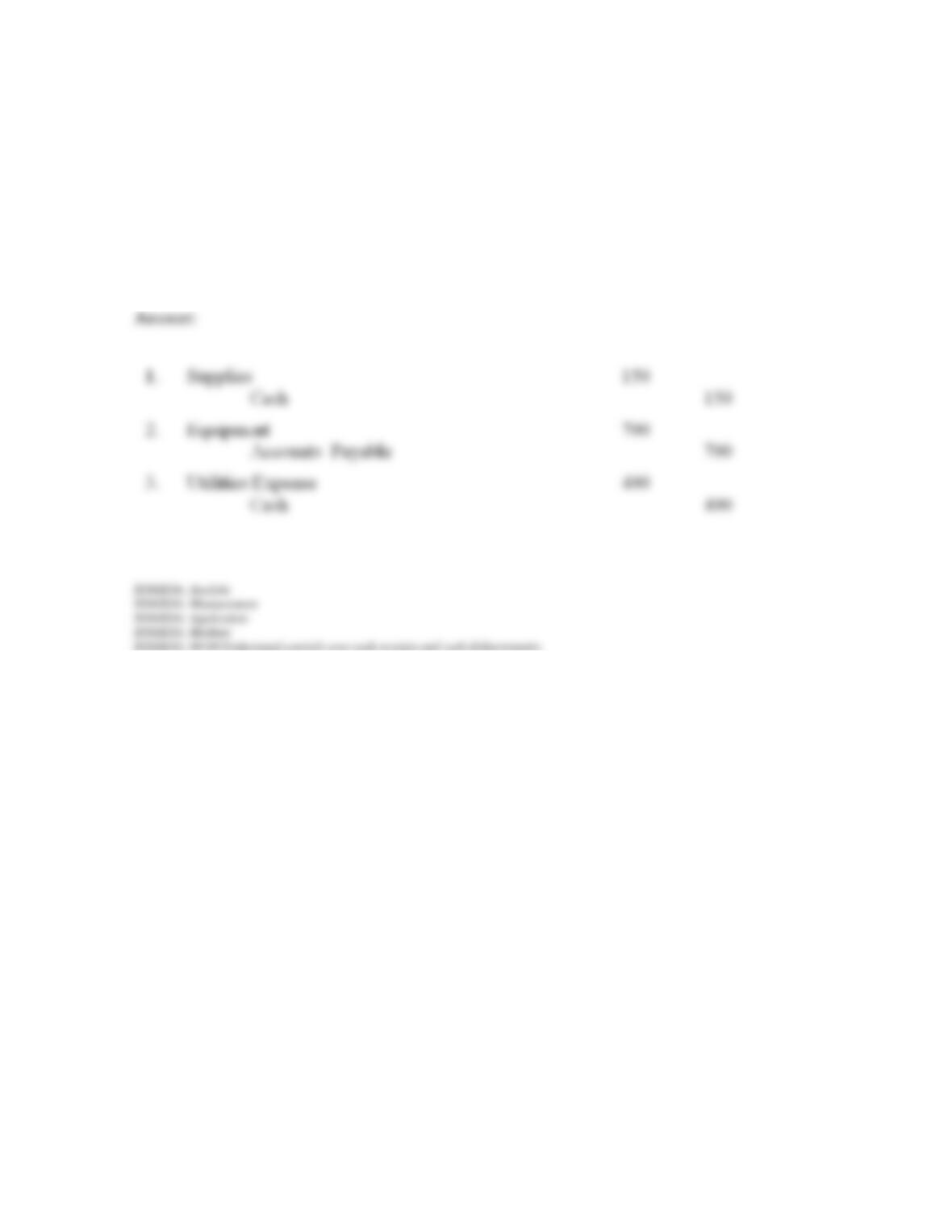
139. A company had the following transactions:
1. Paid $150 for office supplies using a debit card.
2. Purchased office equipment costing $700 using a credit card.
3. Paid utilities bill of $400 by issuing a check.
Record each transaction.
140. A company uses the following process for its cash receipts. At the end of each day, the
secretary places all cash and checks received from customers in a desk drawer. Each Monday,
the secretary totals all amounts received, records this in the accounting records, and deposits
the money in the bank account. Then, once every three months, the office manager requests
information from the bank necessary to prepare a bank reconciliation. Discuss the company’s
internal control procedures related to cash receipts.
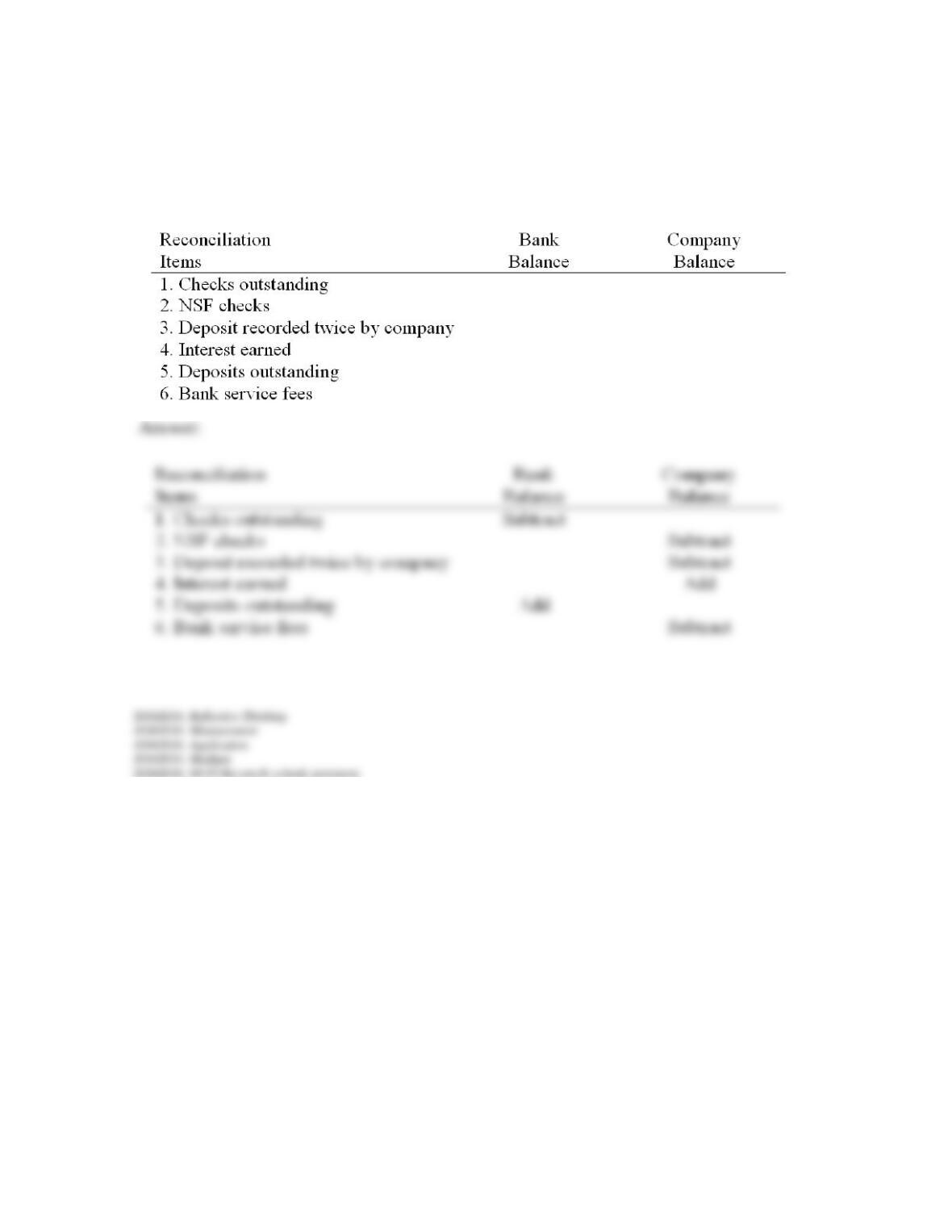
141. Indicate whether the firm should add or subtract each item below from its balance of
cash or the bank’s balance of cash in preparing a bank reconciliation.
142. A company’s general ledger shows a cash balance of $4,570. Comparing the company’s
cash records with the monthly bank statement reveals several additional cash transactions
such as checks outstanding of $2,840, bank service fees of $110, and interest earned of $15.
Calculate the correct balance of cash.
143. A company’s general ledger shows a cash balance of $2,380. Comparing the company’s
cash records with the monthly bank statement reveals several additional cash transactions
such as deposits outstanding of $1,760, note collected by the bank on the company’s behalf of
$1,000, and interest earned of $20. The company also finds an error by the bank of an
additional deposit of $100. Calculate the correct balance of cash.
144. A company’s bank statement shows a cash balance of $4,230. Comparing the company’s
cash records with the monthly bank statement reveals several additional cash transactions
such as checks outstanding of $3,880, deposits outstanding of $1,230, NSF check of $300,
and service fee of $50. Calculate the correct balance of cash.
145. A company’s bank statement shows a cash balance of $4,170. Comparing the company’s
cash records with the monthly bank statement reveals several additional cash transactions
such as checks outstanding of $2,110, NSF check of $200, interest earned of $30, service fee
of $40, and a check for $150 recorded twice by the company. Calculate the correct balance of
cash.
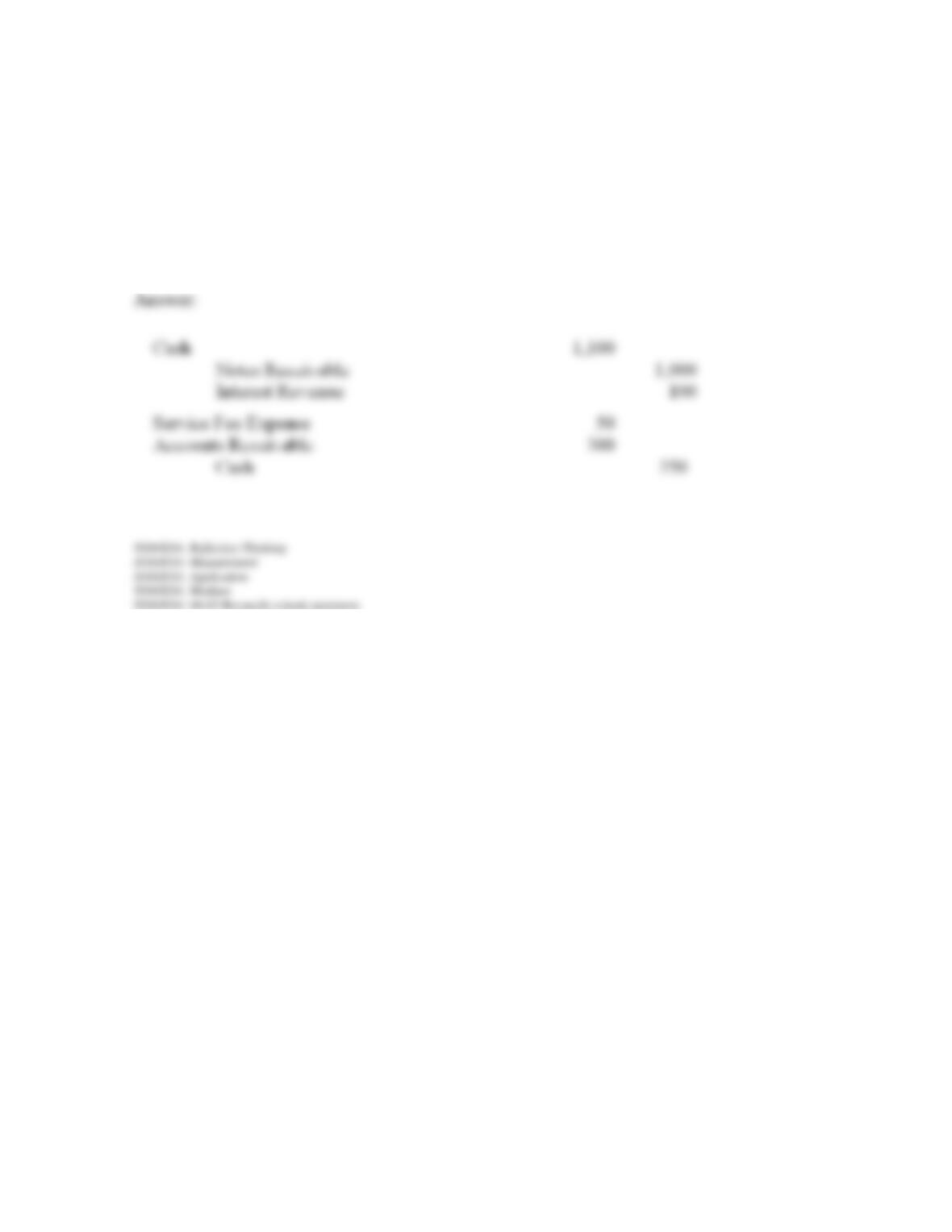
146. A company’s Cash account shows a balance of $3,450 at the end of the month.
Comparing the company’s Cash account with the monthly bank statement reveals several
additional cash transactions such as bank service fees ($50), an NSF check from a customer
($300), a customer’s note receivable collected by the bank ($1,000), and interest earned
($100). Prepare the necessary entries to adjust the balance of cash.
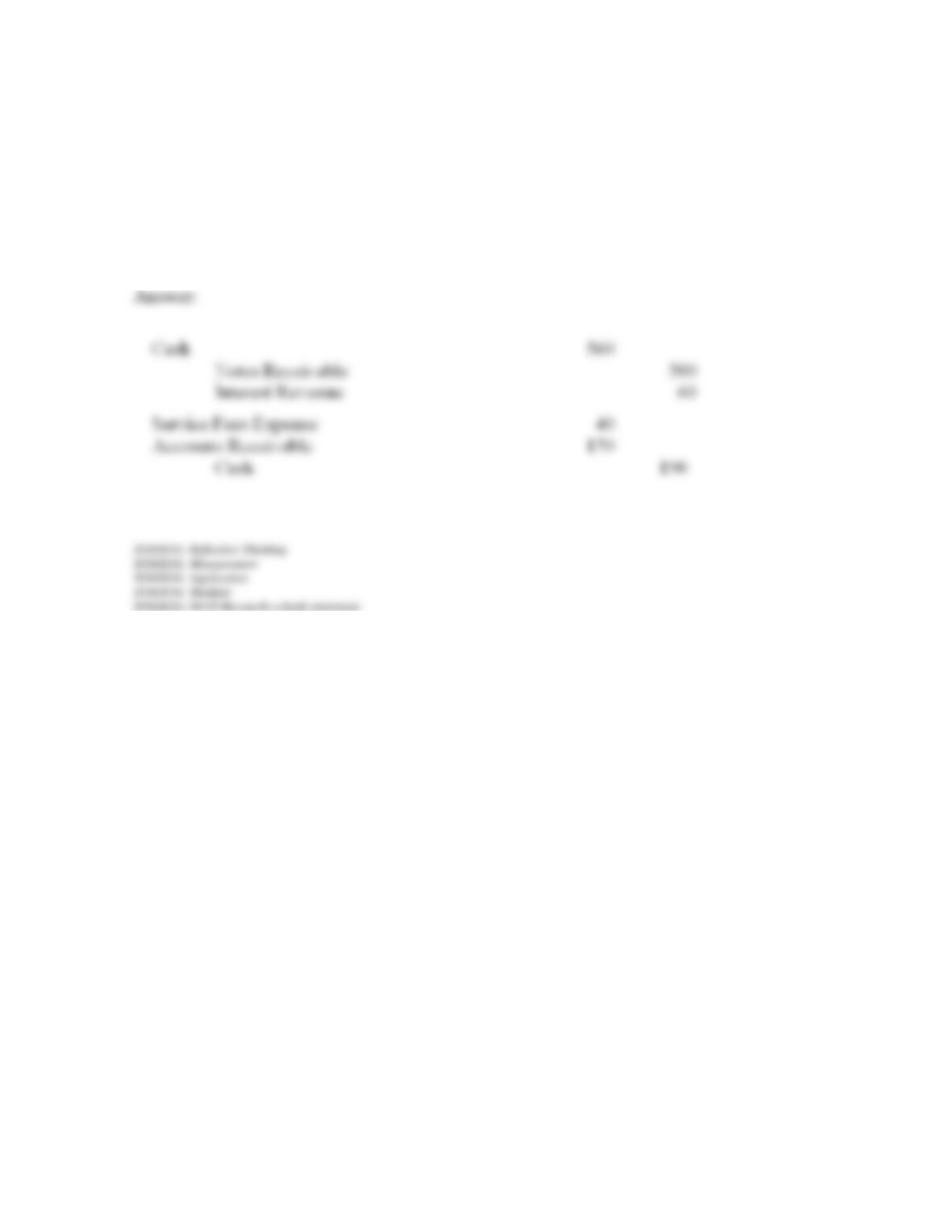
147. A company’s Cash account shows a balance of $5,680 at the end of the month.
Comparing the company’s Cash account with the monthly bank statement reveals several
additional cash transactions such as deposits outstanding ($1,250), checks outstanding
($2,380), bank service fees ($40), an NSF check from a customer ($150), a customer’s note
receivable collected by the bank ($500), and interest earned ($60). Prepare the necessary
entries to adjust the balance of cash.
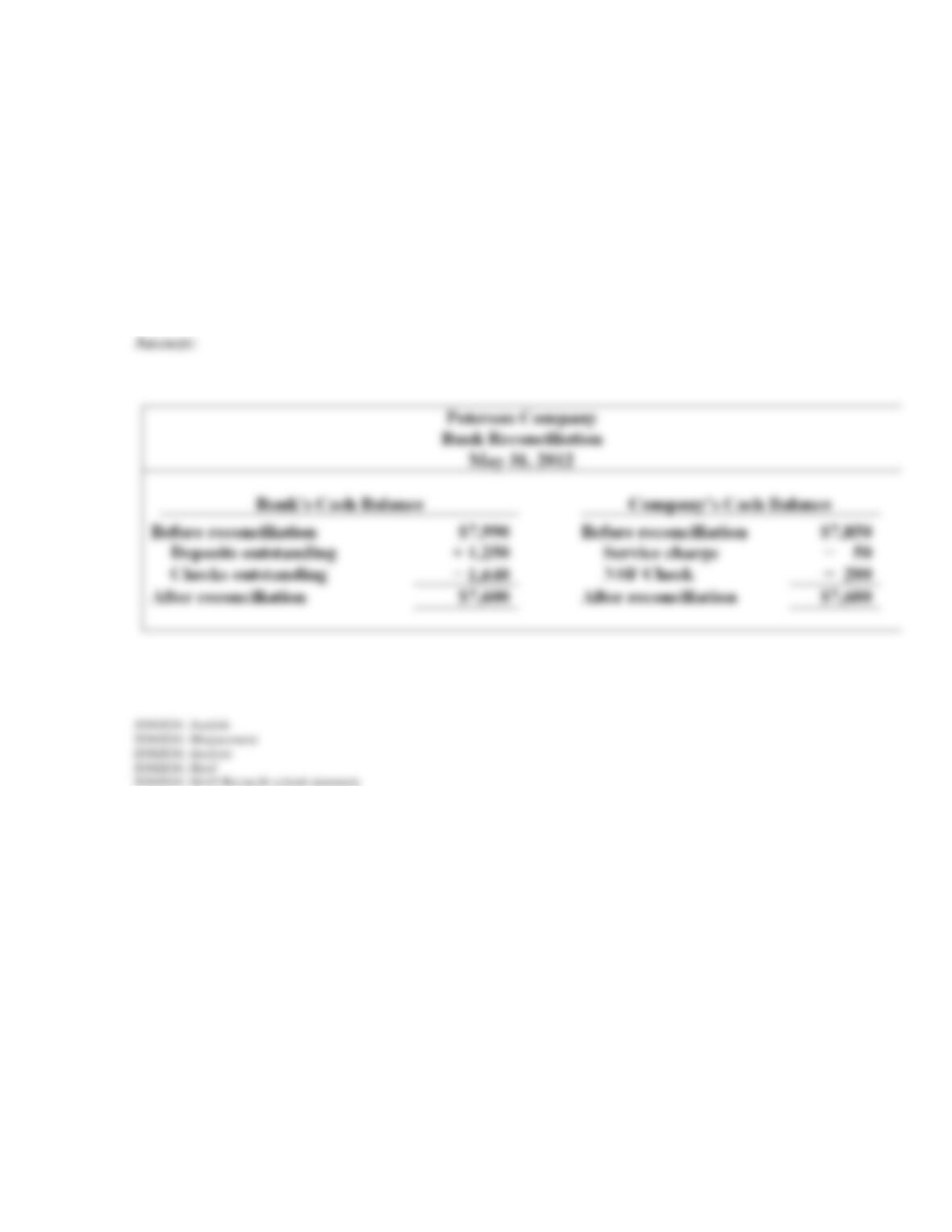
148. Peterson Company’s general ledger shows a cash balance of $7,850 on May 31, 2012.
May cash receipts of $1,250, included in the general ledger balance, are placed in the night
depository at the bank on May 31 and processed by the bank on June 1. The bank statement
dated May 31 shows an NSF check for $200 and a service fee of $50. The bank processes all
checks written by the company by May 31 and lists them on the bank statement, except for
one check totaling $1,640. The bank statement shows a balance of $7,990 on May 31. Prepare
a bank reconciliation to calculate the correct ending balance of cash on May 31, 2012.