Accounting, 9e (Horngren)
Chapter 4 Completing the Accounting Cycle
Learning Objective 4-1
1) The last two columns generally found on the right side of the worksheet are the income statement columns.
2) Net income is entered as the balancing amount in the debit side of the income statement columns and the credit
side of the balance sheet columns of the worksheet.
3) Net income (loss) is the difference between the total debits and the total credits in the income statement columns.
5) Which of the following statements is TRUE concerning the worksheet?
A) The worksheet is a ledger.
B) The worksheet is a document used to summarize data to prepare the financial statements.
C) The worksheet is a financial statement.
D) The worksheet is a journal.
6) The adjusting entry for depreciation would include a:
A) debit to Depreciation expense and a credit to Cash.
B) debit to Accumulated depreciation and a credit to Depreciation expense.
C) debit to Accumulated depreciation and a credit to the asset.
D) debit to Depreciation expense and a credit to Accumulated depreciation.
7) The purpose of the depreciation adjustment is to:
A) spread the cost invested in an asset over its useful life.
B) show the current market value of the asset.
C) set up a reserve fund for purchasing a new asset.
D) expense the full amount of the asset in the year purchased.
8) Which of the following statements is TRUE concerning the worksheet?
A) The worksheet helps accountants make the adjusting entries.
B) The worksheet helps accountants close the accounts.
C) The worksheet helps accountants prepare the financial statements.
D) The worksheet helps accountants do all of the above.
9) Which of the following is the LAST step of preparing the worksheet?
A) Compute each account’s adjusted balance by combining the trial balance and adjustment figures. Enter each
account’s adjusted amount in the adjusted trial balance columns.
B) On the income statement column, compute net income. Enter net income as the balancing amount on the income
statement and balance sheet columns. Total the income statement and balance sheet columns.
C) Copy the asset, liability, and owner’s equity amounts from the adjusted trial balance to the balance sheet columns.
Copy the revenue and expense amounts to the income statement columns. Total each column.
D) Enter the adjusting entries in the adjustments columns, and total the amounts.
10) Which of the following statements is TRUE about the worksheet?
A) Net income is recorded in the income statement credit column.
B) Net income is recorded in the adjusted trial balance debit column.
C) Net income is recorded in the income statement debit column.
D) Net income is recorded in the balance sheet debit column.
11) Which of the following is TRUE if the income statement debit column exceeds the income statement credit
column on a worksheet?
A) The company has a net loss.
B) The capital account increased during the period.
C) The company has net income.
D) Liabilities are greater than assets.
12) Which of the following is TRUE of a completed worksheet?
A) The total debits in the trial balance column equal the total debits in the adjusted trial balance column.
B) The total debits in the income statement column equal the dividends paid.
C) The total debits in the income statement column equal the total debits in the balance sheet column.
D) The total debits equal the total credits in each column.
13) Which of the following adjusted balances would appear in the balance sheet credit column of a worksheet?
A) Rent revenue
B) Insurance expense
C) Salary payable
D) Equipment
14) Where does Net income appear on a worksheet?
A) Net income appears only in the income statement debit column.
B) Net income appears in the balance sheet credit column and in the income statement debit column.
C) Net income appears in the income statement credit column and in the balance sheet debit column.
D) Net income appears only in the balance sheet credit column.
15) What is TRUE if the income statement credit column exceeds the income statement debit column on a
worksheet?
A) The company has a net income.
B) The company has a net loss.
C) The capital account decreased during the period.
D) Total liabilities exceed total assets.
16) In which of the columns of the worksheet would a net loss be found?
A) In the balance sheet credit column and the income statement debit column
B) In the balance sheet debit column and the income statement credit column
C) In the trial balance credit column, the adjusted trial balance credit column and the balance sheet credit column
D) In the trial balance debit column, the adjusted trial balance debit column and the balance sheet debit column
17) Prepaid rent in the worksheet’s trial balance column is $4,000. Prepaid rent in the balance sheet column is
$2,000. Which of the following entries would have caused this difference?
A) A $2,000 debit entry to Prepaid rent in the worksheet’s adjustments column
B) A $2,000 credit entry to Rent expense in the worksheet’s adjustments column
C) A $2,000 credit entry to Prepaid rent in the worksheet’s adjustments column
D) A $2,000 debit entry to Cash in the worksheet’s adjustments column
18) Interest expense in the worksheet’s trial balance column is $3,000. Interest expense in the income statement
column is $7,000. Which of the following entries would have caused this difference?
A) A $7,000 credit to Interest expense in the worksheet’s adjustments column
B) A $7,000 credit to Interest payable in the worksheet’s adjustments column
C) A $4,000 debit to Interest expense in the worksheet’s adjustments column
D) A $4,000 credit to Interest expense in the worksheet’s adjustments column
19) The adjusted balance in the service revenue account is copied to the credit column of the income statement
worksheet.
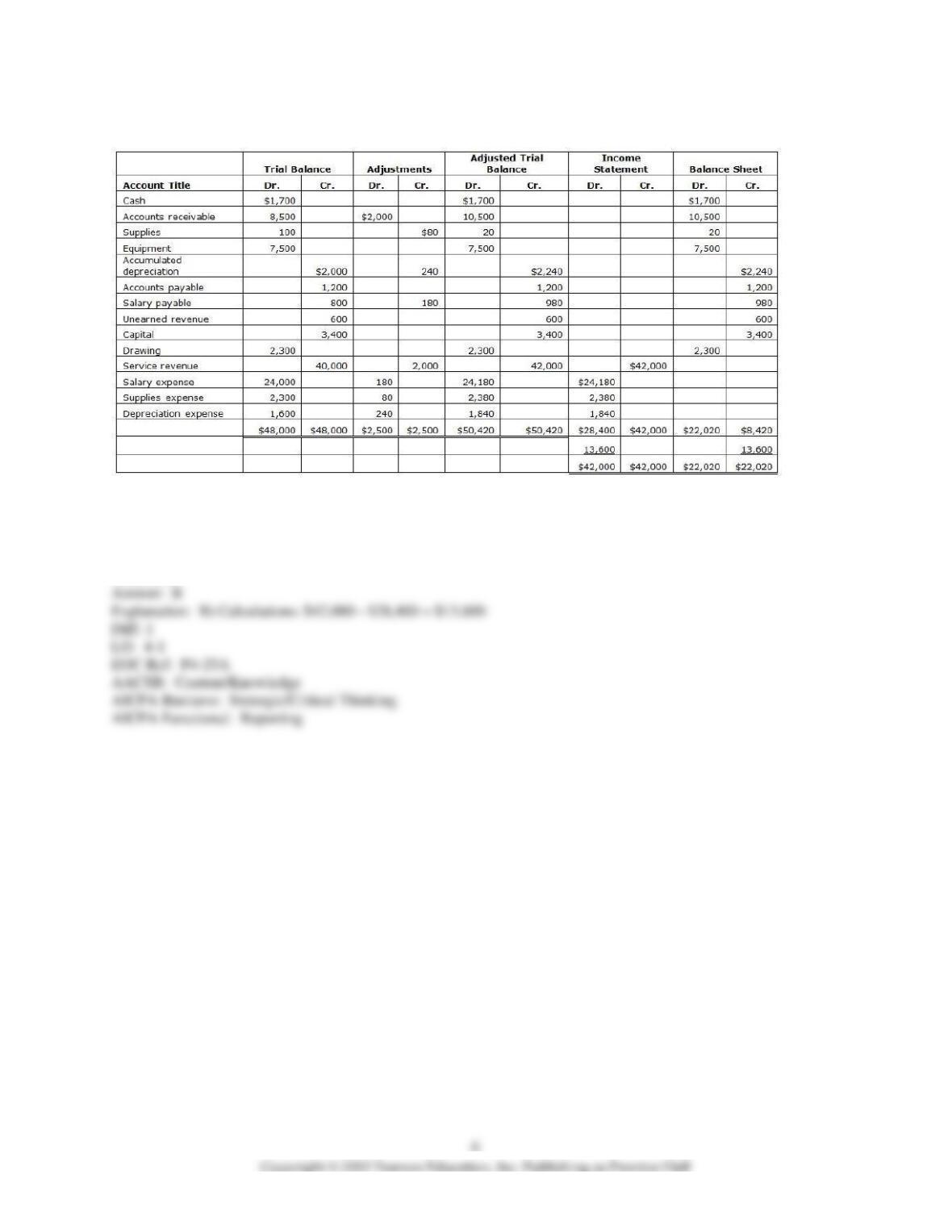
20) Please refer to the worksheet below.
How much was the Net income?
A) $42,000
B) $13,600
C) $22,020
D) $28,400
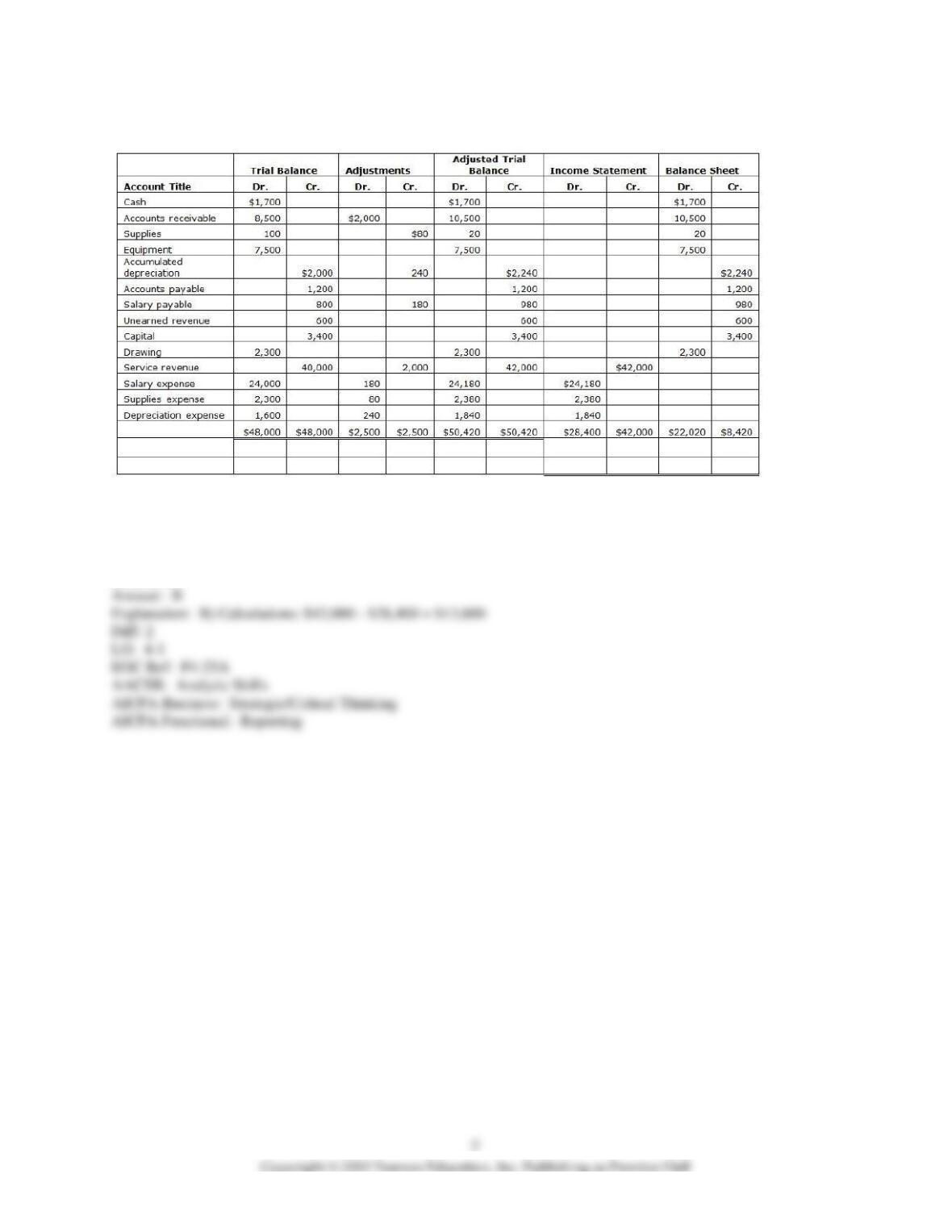
21) Please refer to the partially completed worksheet below:
How much was the Net income?
A) $42,000
B) $13,600
C) $22,020
D) $28,400
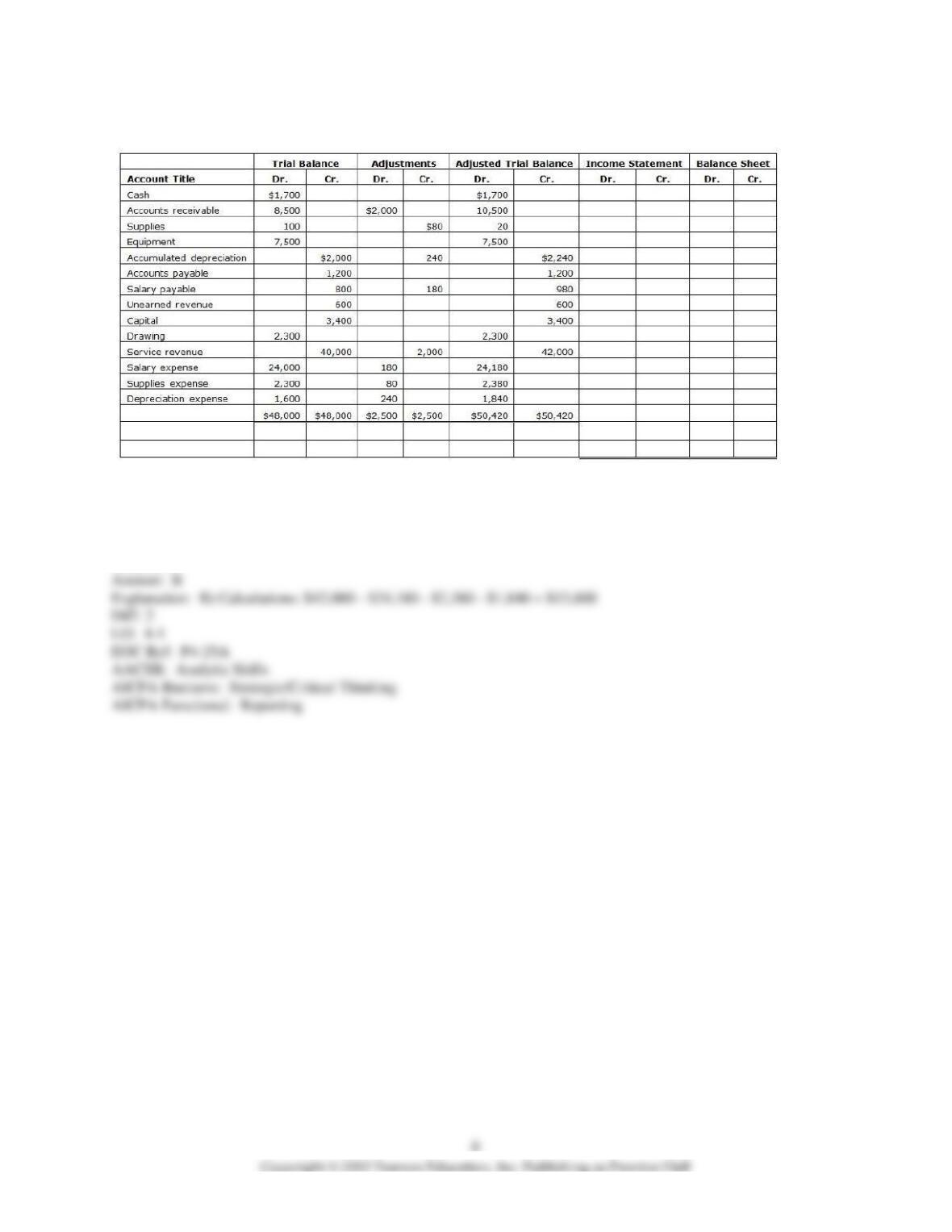
22) Please refer to the partially completed worksheet below:
How much was the Net income?
A) $42,000
B) $13,600
C) $22,020
D) $28,400
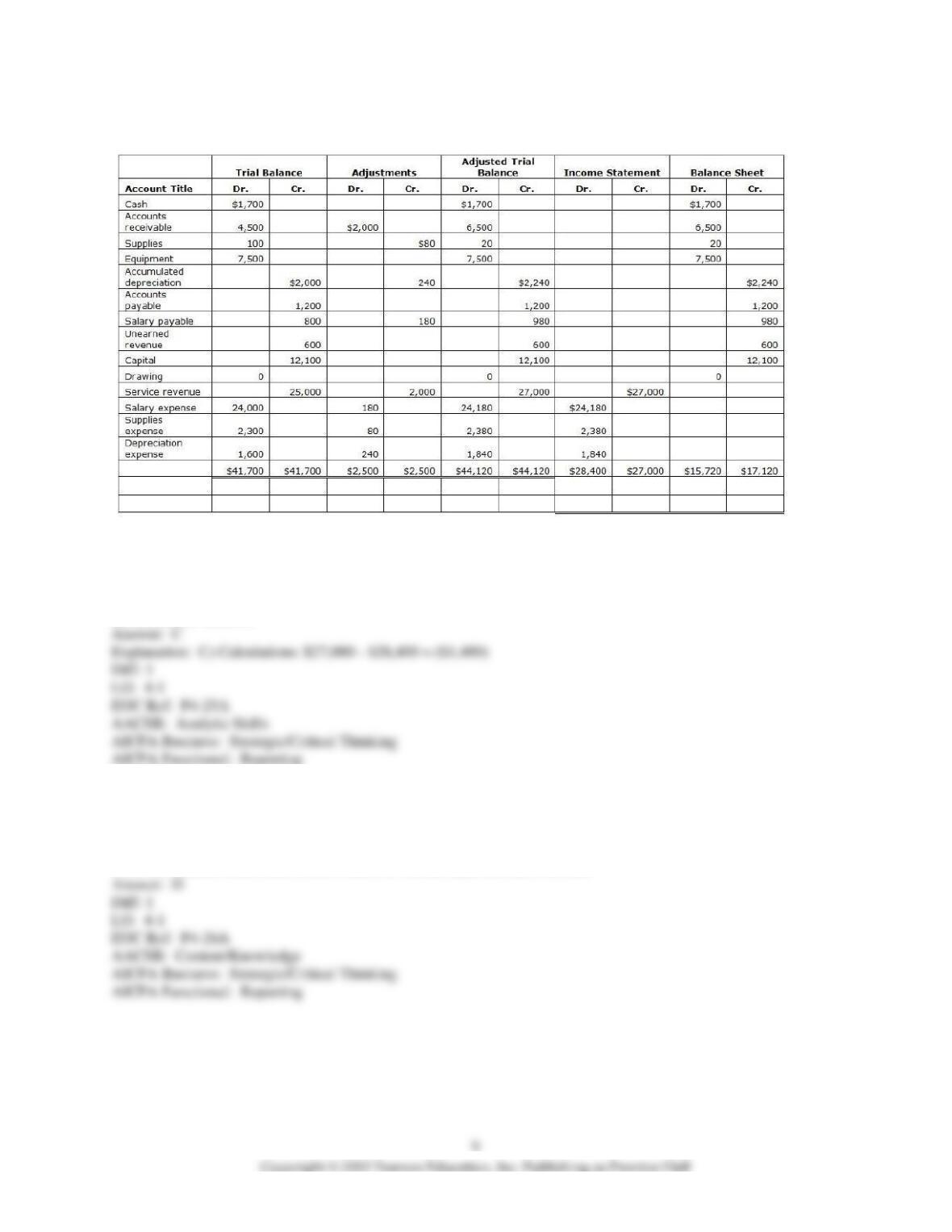
23) Please refer to the following partially completed worksheet:
How much was the Net income or Net loss?
A) Net income of $1,400
B) Net income of $27,000
C) Net loss of $1,400
D) Net loss of $28,400
24) In which of the columns of the worksheet would Net income be found?
A) In the trial balance credit column, the adjusted trial balance credit column and the balance sheet credit column
B) In the trial balance debit column, the adjusted trial balance debit column and the balance sheet debit column
C) In the balance sheet debit column and the income statement credit column
D) In the balance sheet credit column and the income statement debit column
25) Which of the following accounts would appear in the balance sheet credit column?
A) Prepaid insurance
B) Buildings
C) Unearned service revenue
D) Service revenue
26) Which of the following accounts would appear in the income statement credit column?
A) Service revenue
B) Prepaid insurance
C) Unearned service revenue
D) Depreciation expense
27) Which of the following accounts would appear in the balance sheet debit column?
A) Unearned service revenue
B) Accumulated depreciation
C) Service revenue
D) Prepaid insurance
28) Which of the following accounts would appear in the income statement debit column?
A) Unearned service revenue
B) Service revenue
C) Depreciation expense
D) Prepaid insurance
29) Which of the following does NOT appear on the worksheet?
A) Closing entries
B) Adjusted balances
C) Net income
D) Adjusting entries
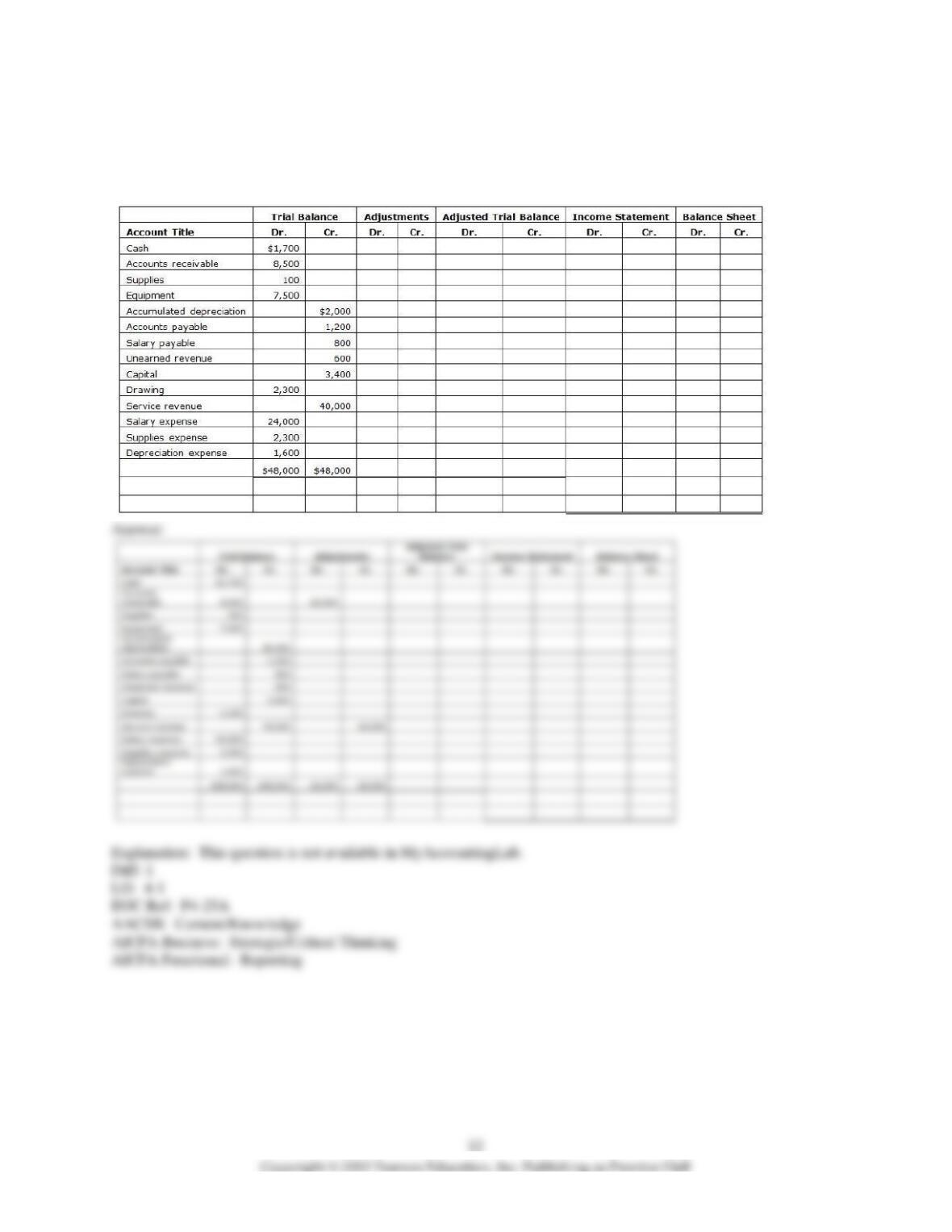
30) Please refer to the worksheet below. Enter the following adjusting entry into the worksheet:
At year-end, the company has earned $2,000 of service revenue from a client, but has not yet completed the job, or
received a payment.
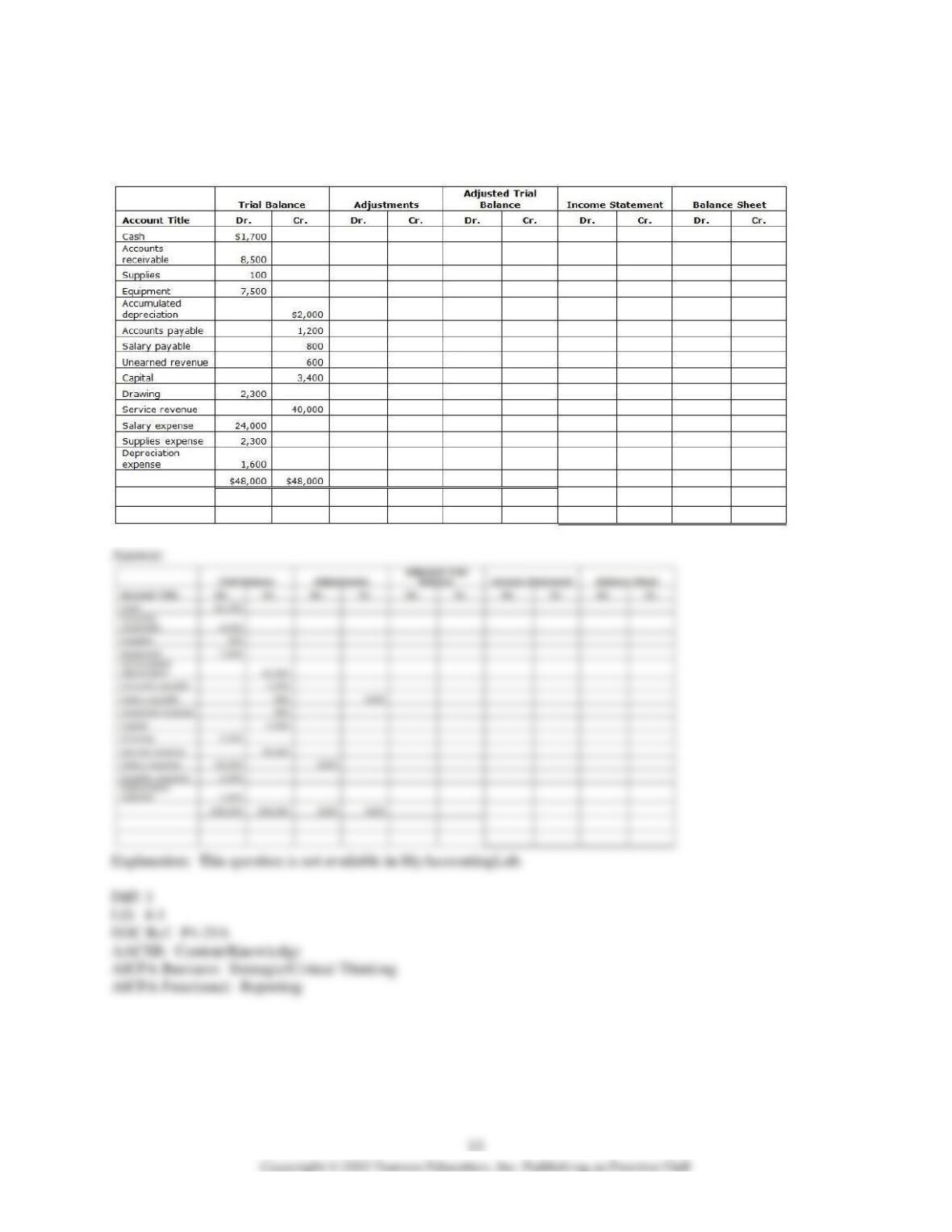
31) Please refer to the worksheet below. Enter the following adjusting entry into the worksheet:
At year-end, the company owes $180 of salaries to its staff that it has not paid yet.
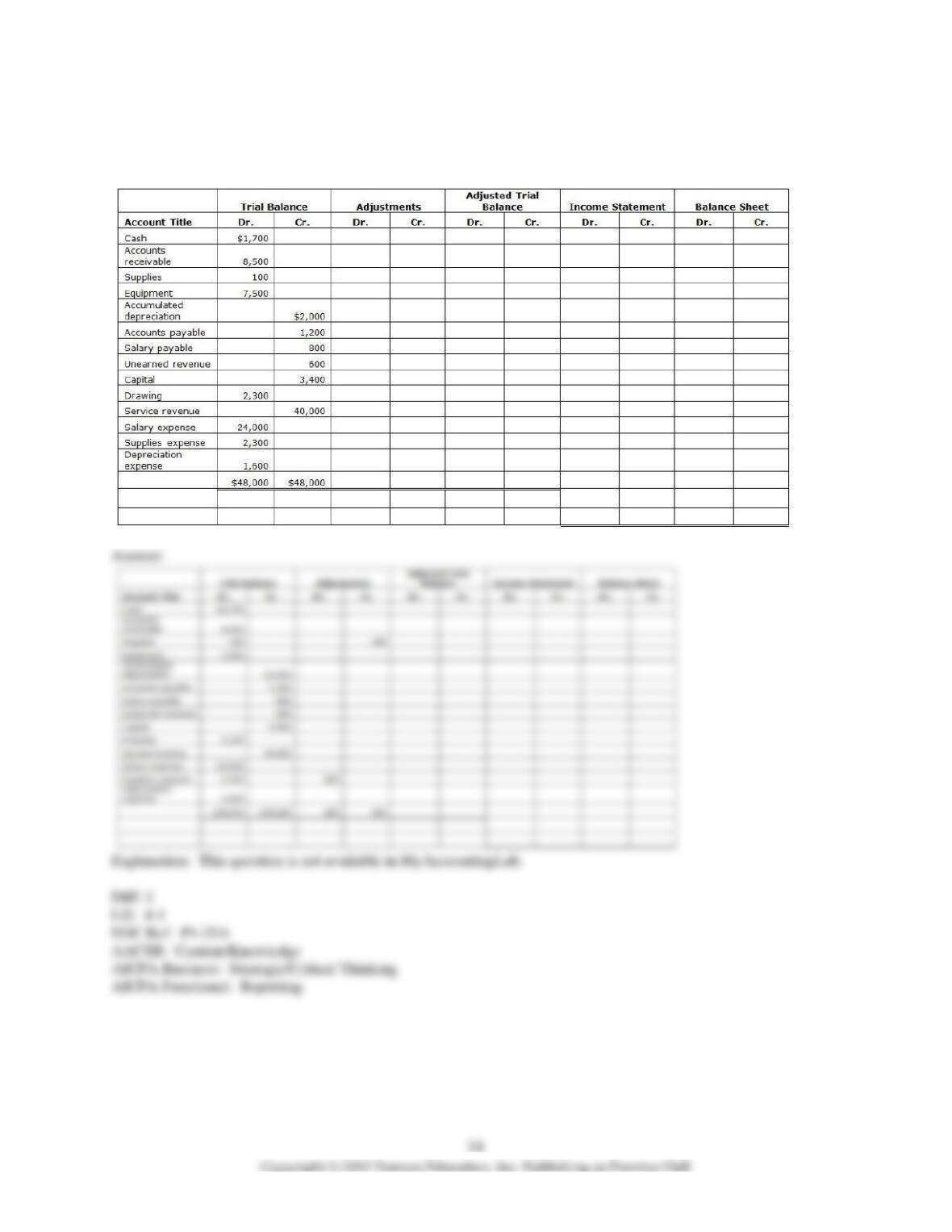
32) Please refer to the worksheet below. Enter the following adjusting entry into the worksheet:
At year-end, the company has only $20 of supplies left.
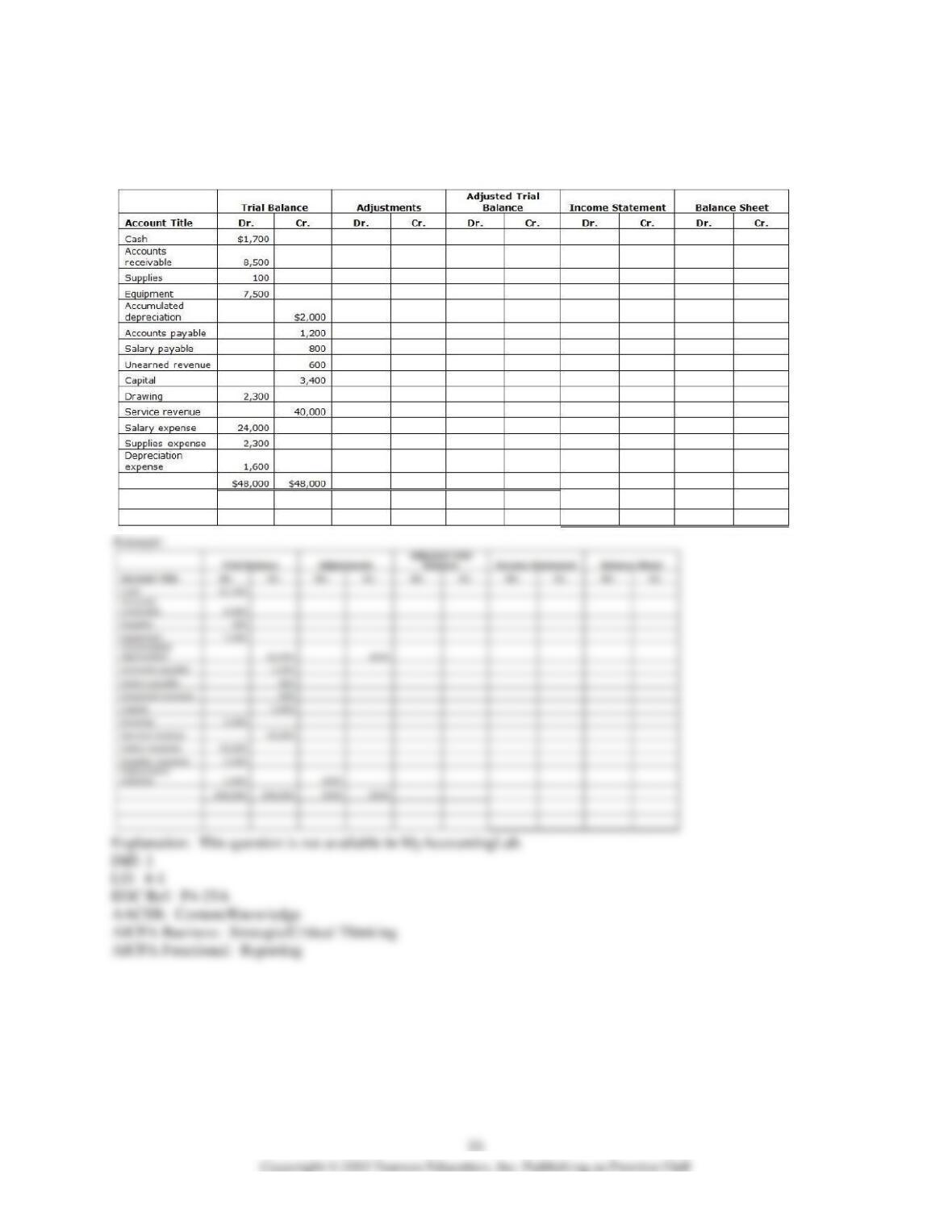
33) Please refer to the worksheet below. Enter the following adjusting entry into the worksheet:
At year-end, the company records $240 of depreciation expense.
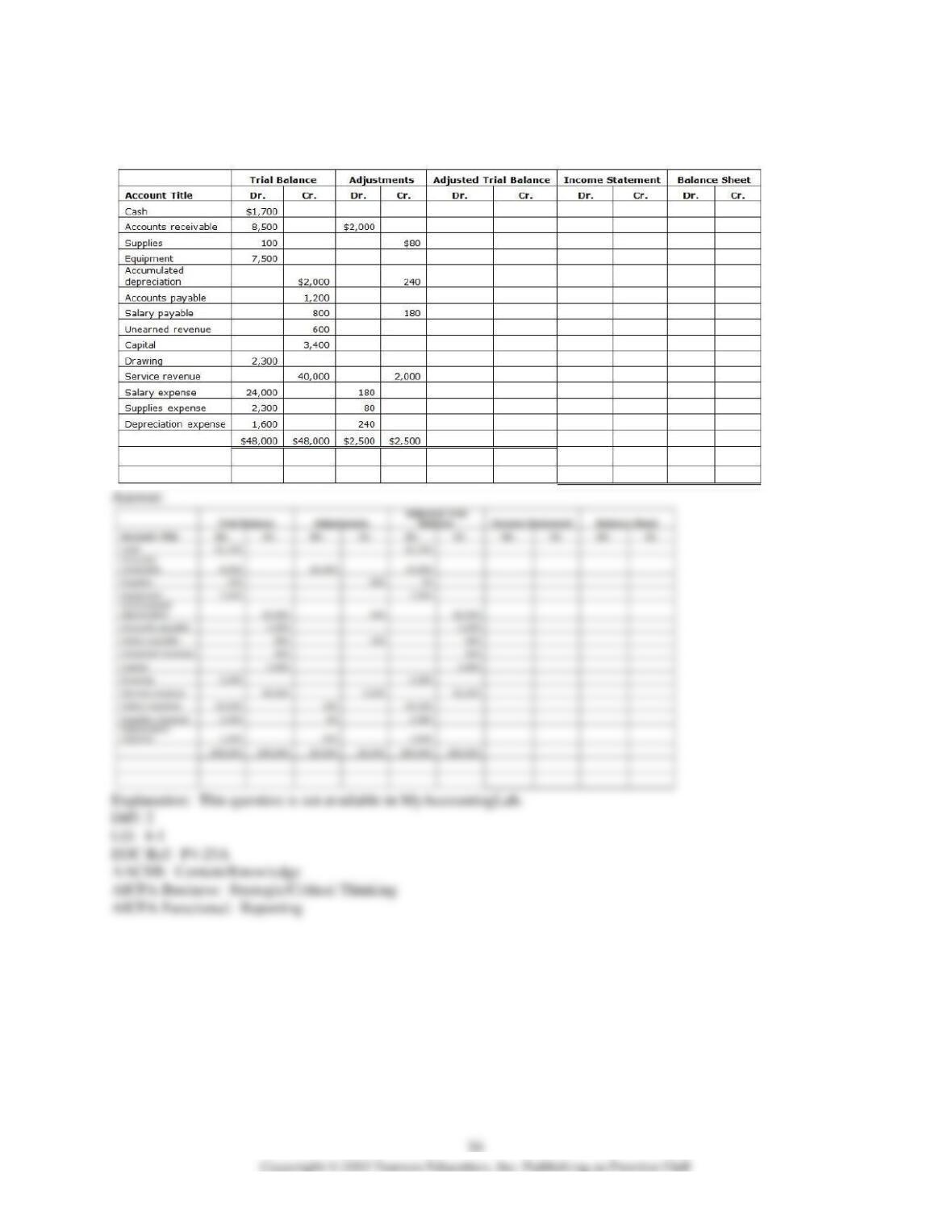
34) Please refer to the worksheet below. Adjusting entries have been posted. Calculate the adjusted balances for all
accounts and enter them in to the columns for Adjusted Trial Balance.
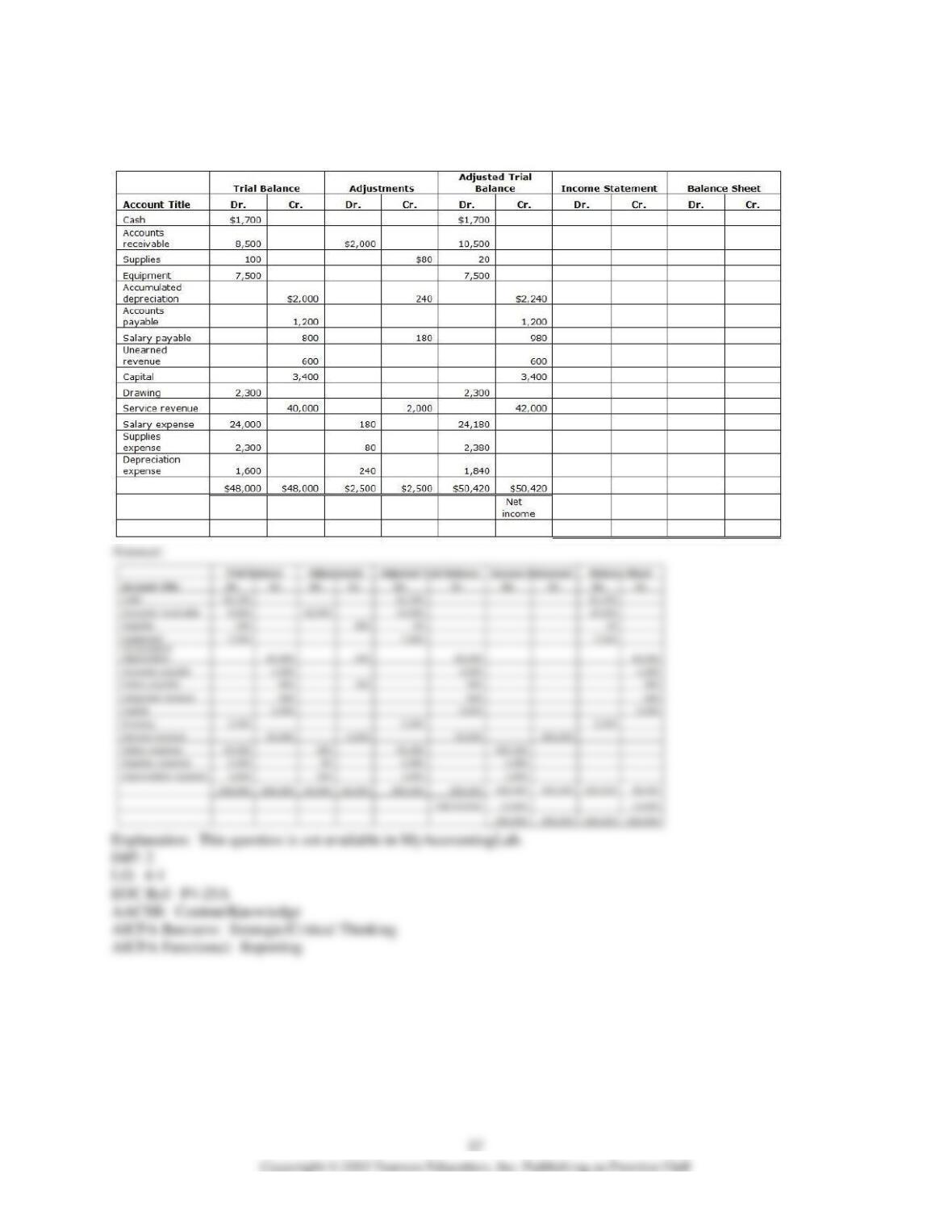
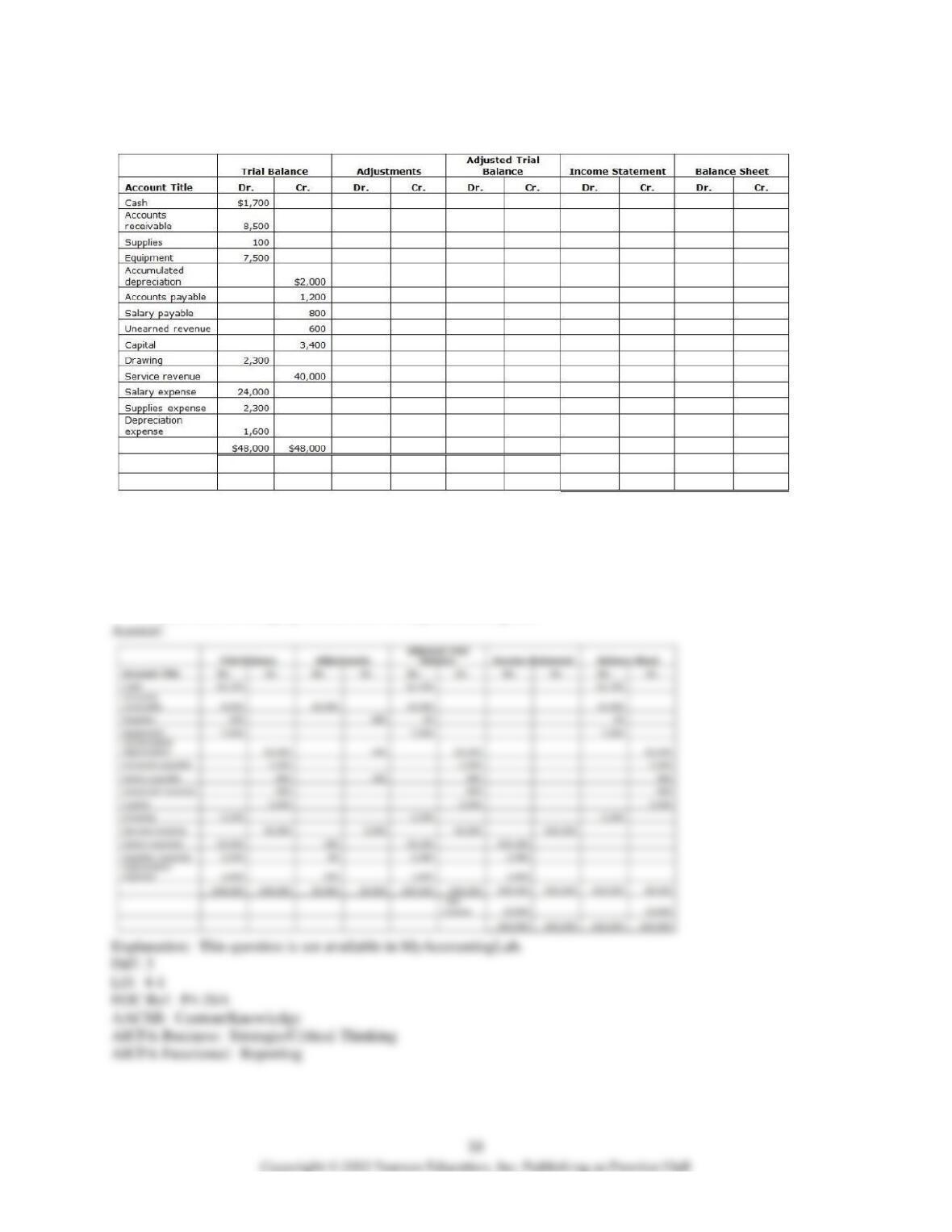
35) Please refer to the worksheet below. Please complete the worksheet, including the balancing amounts in the last
row.
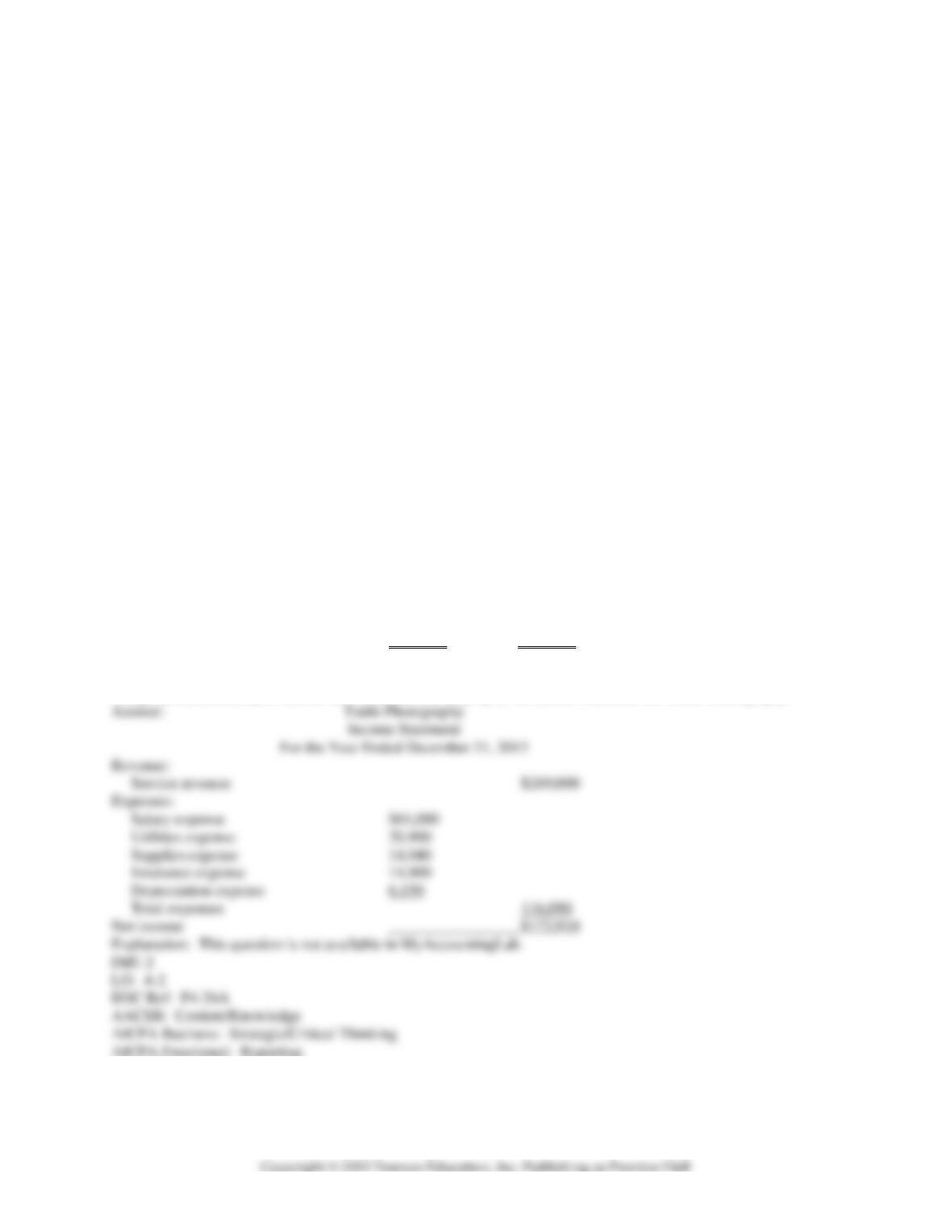
36) Please refer to the worksheet below:
Post adjustments needed according to the information below, and complete the worksheet.
∙ At year-end, the company has earned $2,000 of service revenue from a client, but has not yet completed the job,
or received a payment.
∙ At year-end, the company owes $180 of salaries to its staff that it has not paid yet.
∙ At year-end, the company has only $20 of supplies left.
∙ At year-end, the company records $240 of depreciation expense.
19
Learning Objective 4-2
1) The following is the adjusted trial balance from the worksheet for Tuttle Photography.
Tuttle Photography
Worksheet
For the Year Ended December 31, 2013
Accounts Debit Credit
Cash $15,000
Accounts receivable 30,000
Prepaid insurance 7,500
Office supplies 3,200
Land 40,000
Building 160,000
Accumulated depreciation $12,000
Equipment 75,000
Accumulated depreciation 8,500
Accounts payable 12,000
Salaries payable 2,000
Unearned service revenue 25,000
Mortgage payable 100,000
R. Tuttle, capital 21,290
R. Tuttle, drawing 23,000
Service revenue 289,000
Salaries expense 61,000
Depreciation expense 6,150
Supplies expense 14,040
Insurance expense 14,000
Utilities expense 20,900
$469,790 $469,790
Using the information provided in the worksheet above, prepare an income statement for Tuttle Photography.
2) The following is the adjusted trial balance from the worksheet for Tuttle Photography, Inc.
Tuttle Photography
Worksheet
For the Year Ended December 31, 2013
Accounts Debit Credit
Cash $15,000
Accounts receivable 30,000
Prepaid insurance 7,500
Office supplies 3,200
Land 40,000
Building 160,000
Accumulated depreciation $12,000
Equipment 75,000
Accumulated depreciation 8,500
Accounts payable 12,000
Salaries payable 2,000
Unearned service revenue 25,000
Mortgage payable 100,000
R. Tuttle, capital 21,290
R. Tuttle, drawing 23,000
Service revenue 289,000
Salaries expense 61,000
Depreciation expense 6,150
Supplies expense 14,040
Insurance expense 14,000
Utilities expense 20,900
$469,790 $469,790
Using the information from the worksheet above, prepare a statement of owner’s equity for Tuttle Photography.