235.
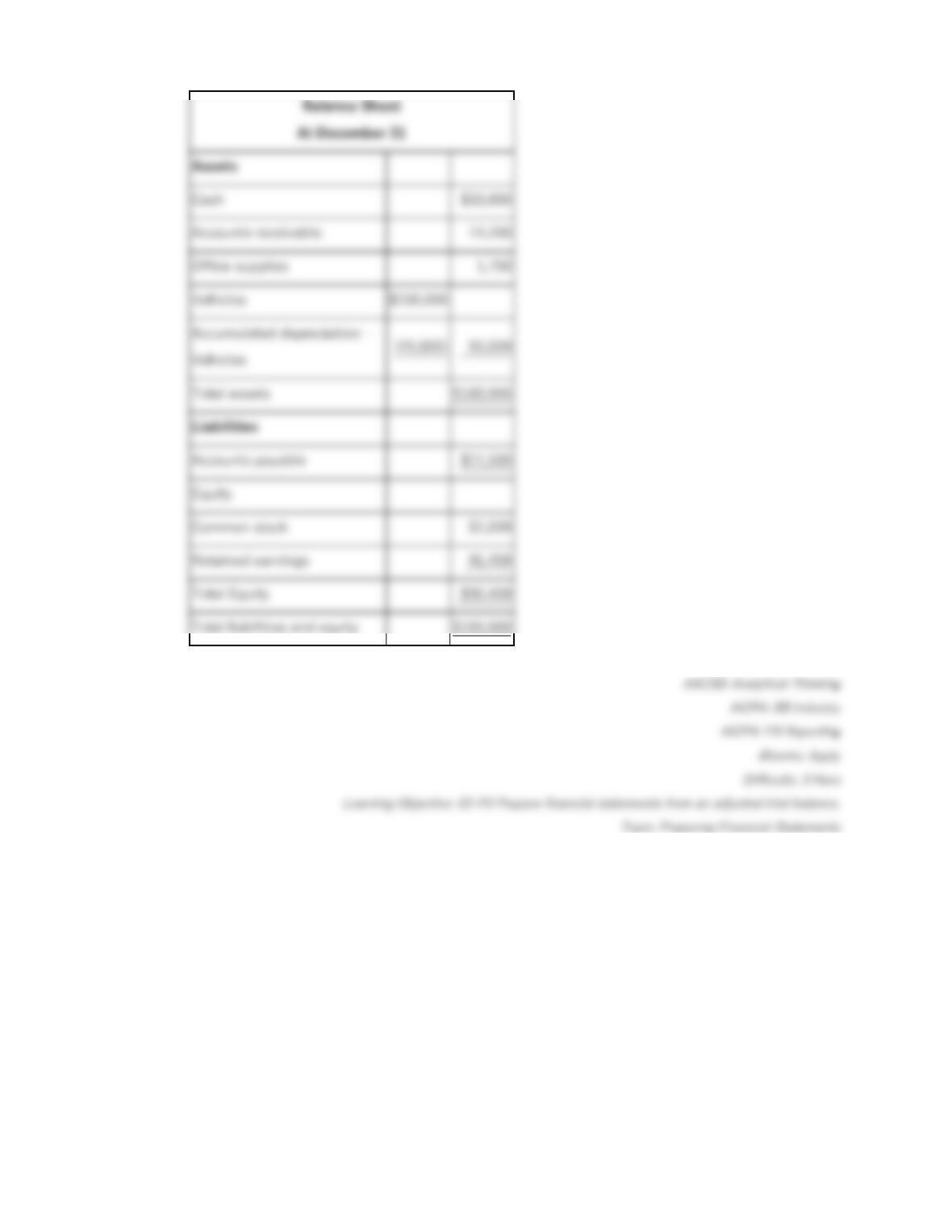
Using the information given below, prepare a balance sheet for Rapid Car Services, Inc.
from the adjusted trial balance. The stockholders did not make any additional investments
in the company during the year.
Rapid Car Services, Inc.
Adjusted Trial Balance
For the year ended December 31
Cash
$33,000
Accounts receivable
14,200
Office supplies
1,700
Vehicles
100,000
Accumulated depreciation—
Vehicles
45,000
Accounts payable
11,500
Common stock
1,000
Retained earnings
Dividends
40,000
Fees earned
155,000
Rent expense
13,000
Office supplies expense
2,000
Utilities expense
2,500
Depreciation Expense—
Vehicles
15,000
Salary expense
50,000
Fuel expense
12,000
Total
$283,400
$283,400
236.
Abdulla Co., collected 6-months’ rent in advance from a tenant on October 1 of the current
year. When it collected the cash, it recorded the following entry:
Oct. 01
Cash
15,000
Rent Revenue Earned
15,000
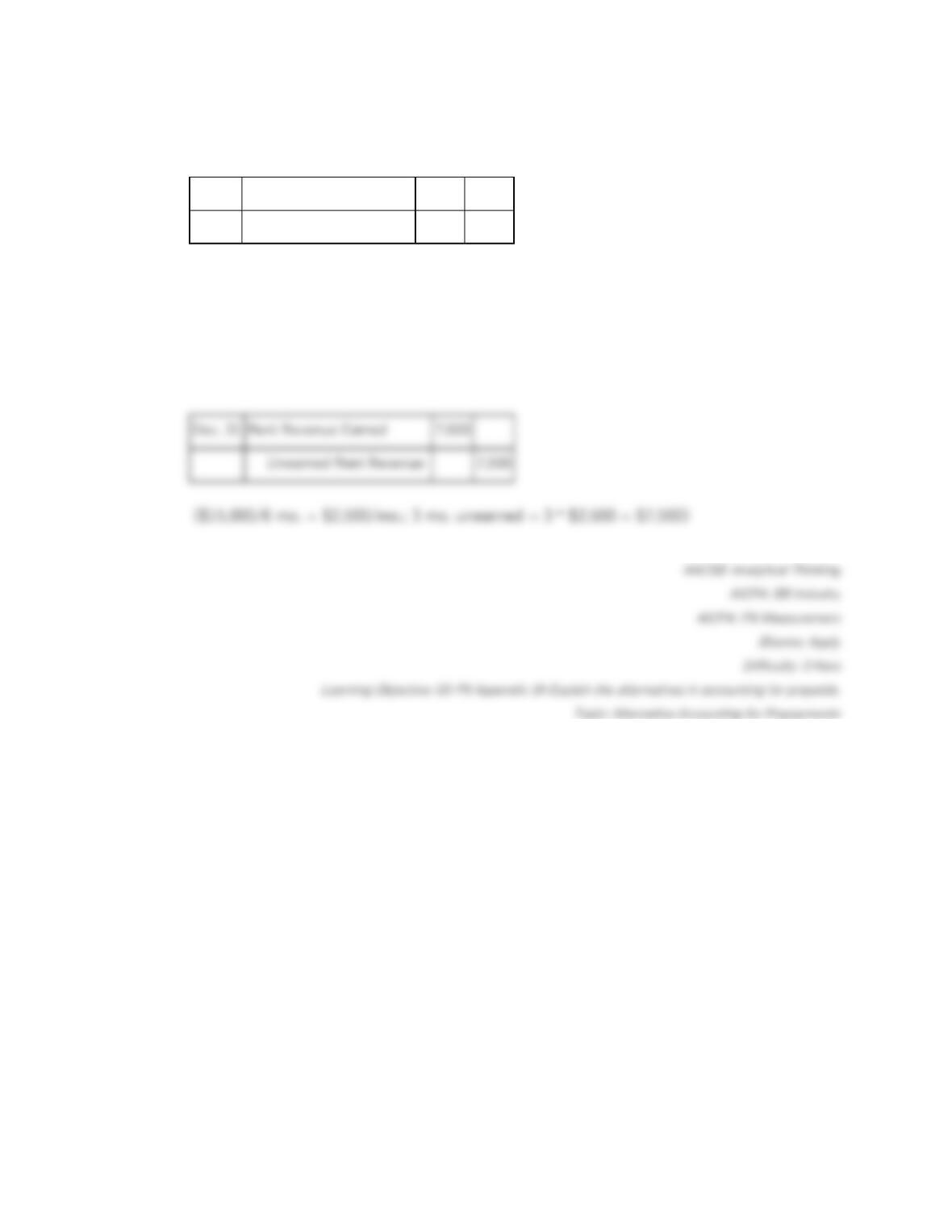
Prepare the required adjusting entry at December 31 of the current year.
Dec. 31
Rent Revenue Earned
7,500
Unearned Rent Revenue
7,500
237.
On November 1 of the current year, Salinger Company paid $9,600 cash for a one-year
insurance policy that took effect on that day. On the date of the payment, Salinger
recorded the following entry:
Nov. 01
Insurance Expense
9,600
Cash
9,600
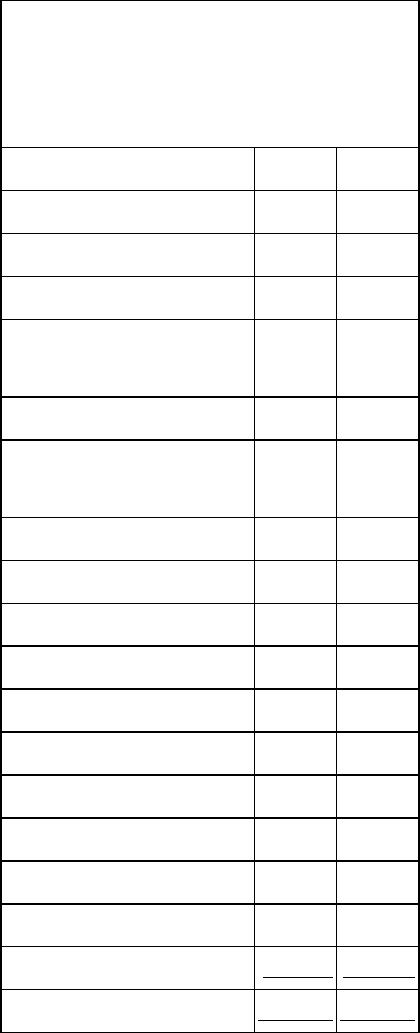
Prepare the required adjusting entry at December 31 of the current year.
Dec. 01
Prepaid Insurance
Insurance Expense
238.
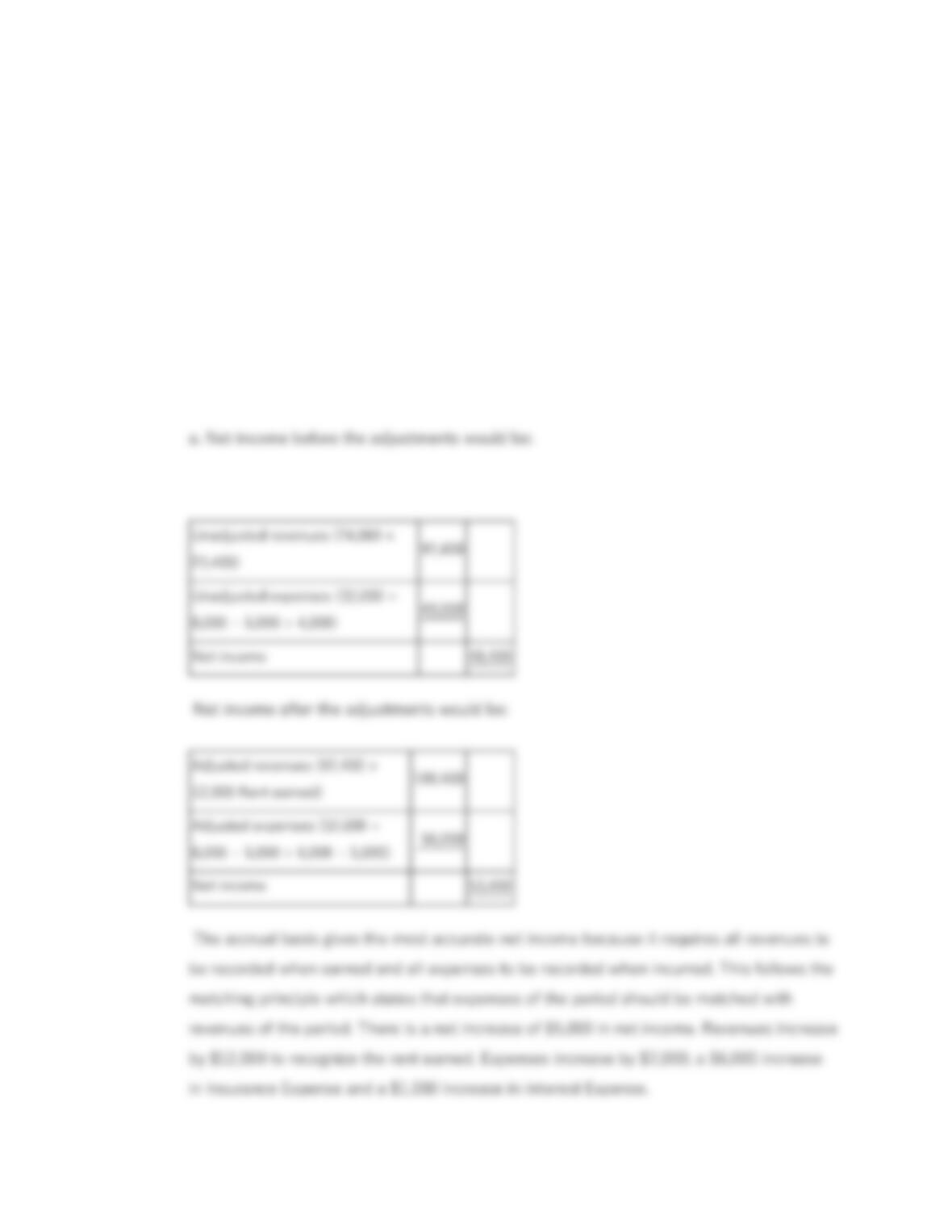
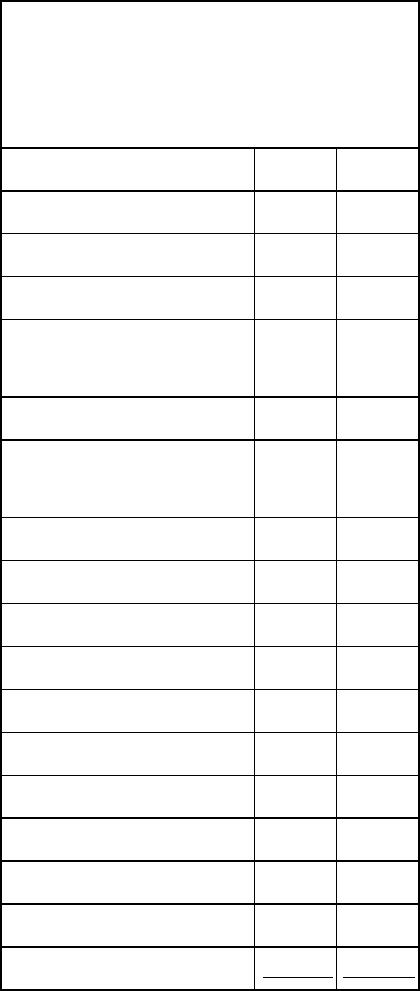
The unadjusted trial balance and the adjustment data for Porter Business Institute, Inc.
are given below along with adjusting entry information. What is the impact on net income
if these adjustments are not recorded? Show the calculation for net income without the
adjustments and net income with the adjustments. Which one gives the most accurate net
income? Which accounting principles are being violated if the adjustments are not made?
Porter Business Institute, Inc.
Unadjusted Trial Balance
December 31
(in millions)
Cash
$58,000
Accounts receivable
59,000
Prepaid insurance
12,000
Equipment
8,000
Accumulated depreciation—
equipment
$2,000
Buildings
57,500
Accumulated depreciation—
buildings
17,500
Land
55,000
Unearned rent
16,000
Long-term notes payable
50,000
Common stock
1,000
Retained earnings
114,600
Tuition fees earned
74,000
Training fees earned
23,400
Wages expense
32,000
Utilities expense
8,000
Property taxes expense
5,000
Interest expense
4,000
Total
$298,500
$298,500
Additional information items:
a. The Prepaid Insurance account consists of a payment for a 1 year policy. An analysis of
the insurance invoice indicates that one half of the policy has expired by the end of the
December 31 year-end.
b. A cash payment for space sublet for 8 months was received on July 1 and was credited
to Unearned Rent.
c. Accrued interest expense on the note payable of $1,000 has been incurred but not
paid.
239.
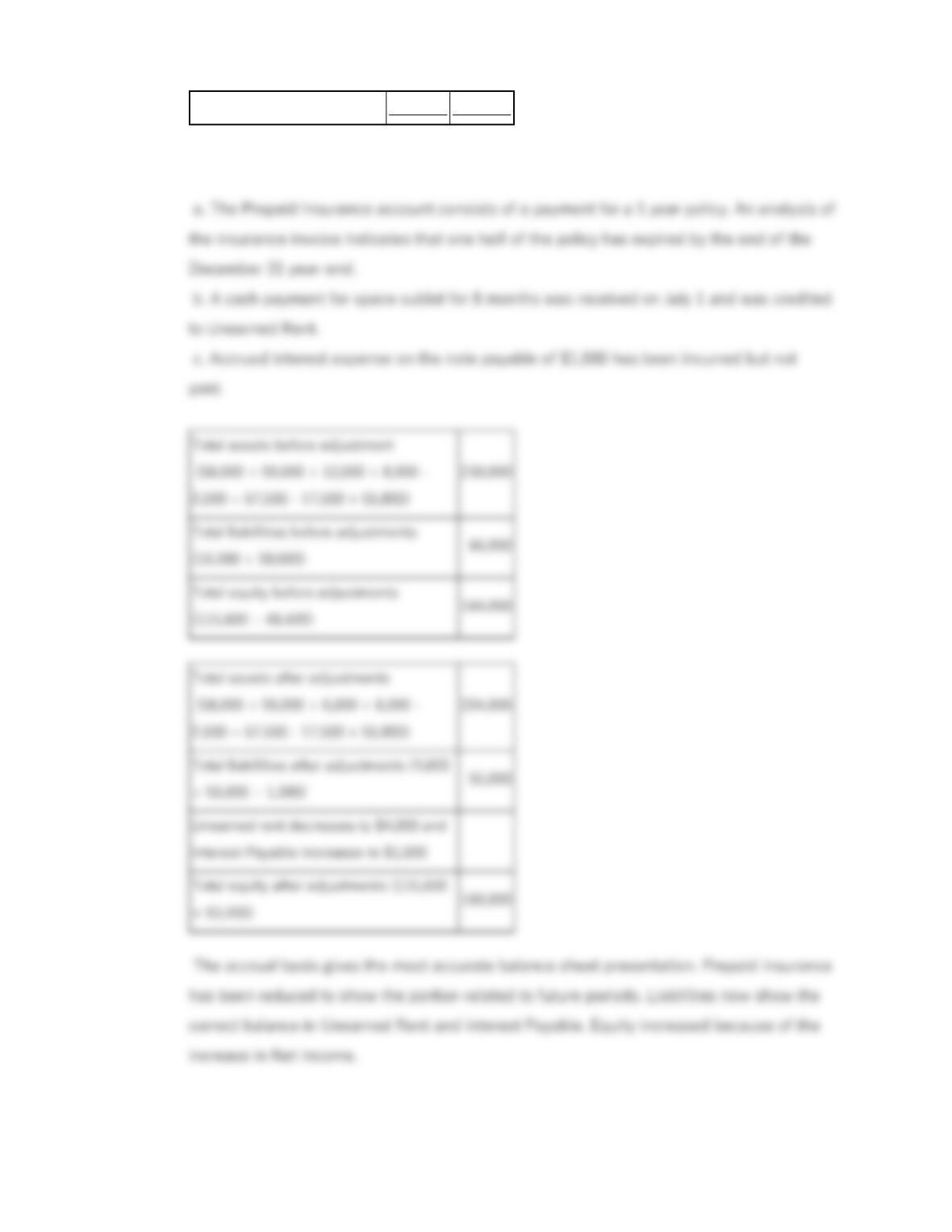
The unadjusted trial balance and the adjustment data for Porter Business Institute, Inc.
are shown below along with adjusting entry information. What is the impact of the
adjusting entries on the balance sheet? Show the calculation for total assets, total
liabilities, and stockholders’ equity without the adjustments; show the calculation for total
assets, total liabilities, and stockholders’ equity with the adjustments. Which one provides
the most accurate presentation of the balance sheet?
Porter Business Institute, Inc.
Unadjusted Trial Balance
December 31
(in millions)
Cash
$58,000
Accounts receivable
59,000
Prepaid insurance
12,000
Equipment
8,000
Accumulated depreciation—
equipment
$2,000
Buildings
57,500
Accumulated depreciation—
buildings
17,500
Land
55,000
Unearned rent
16,000
Long-term notes payable
50,000
Common stock
1,000
Retained earnings
114,600
Tuition fees earned
74,000
Training fees earned
23,400
Wages expense
32,000
Utilities expense
8,000
Property taxes expense
5,000
Interest expense
4,000
Total
$298,500
$298,500
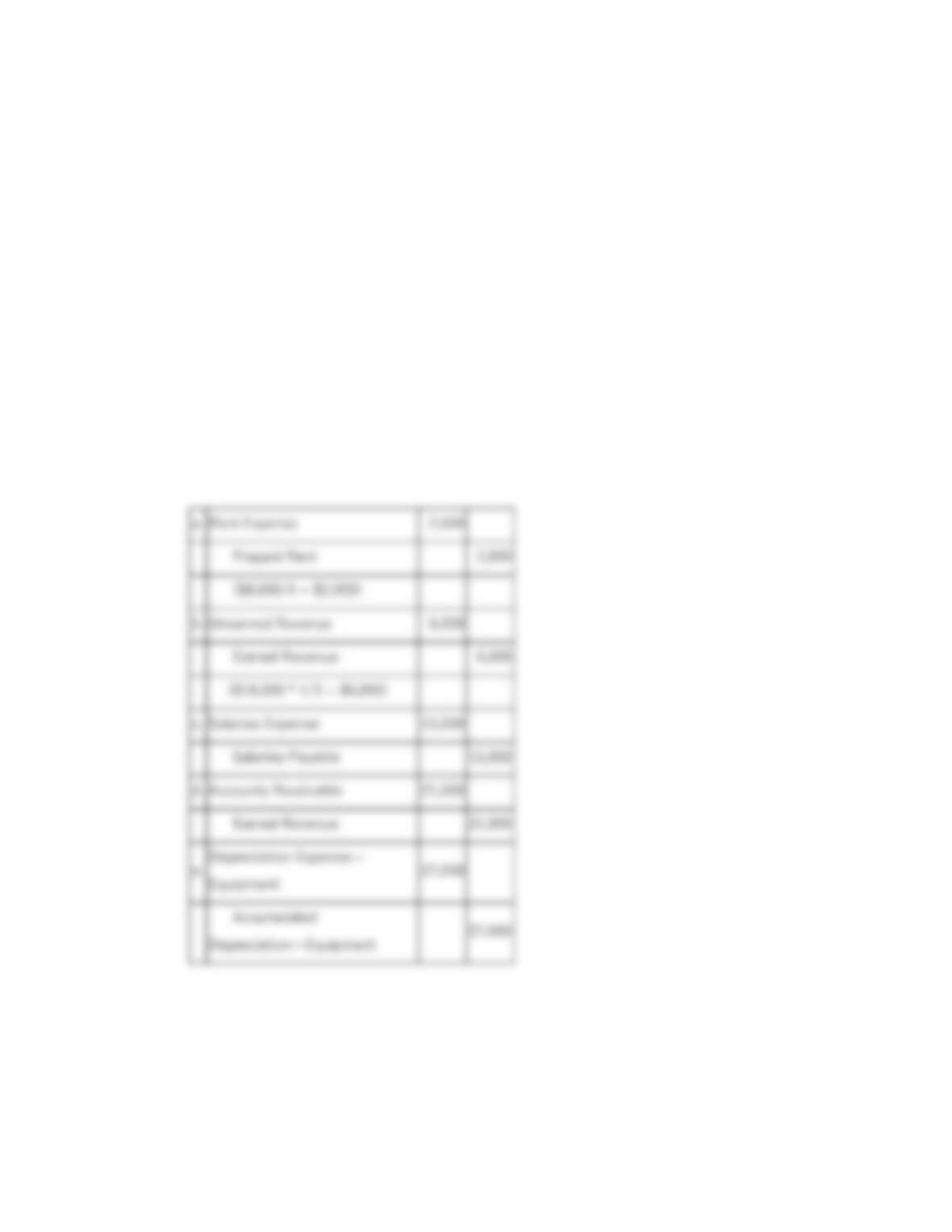
Additional information items:
240.
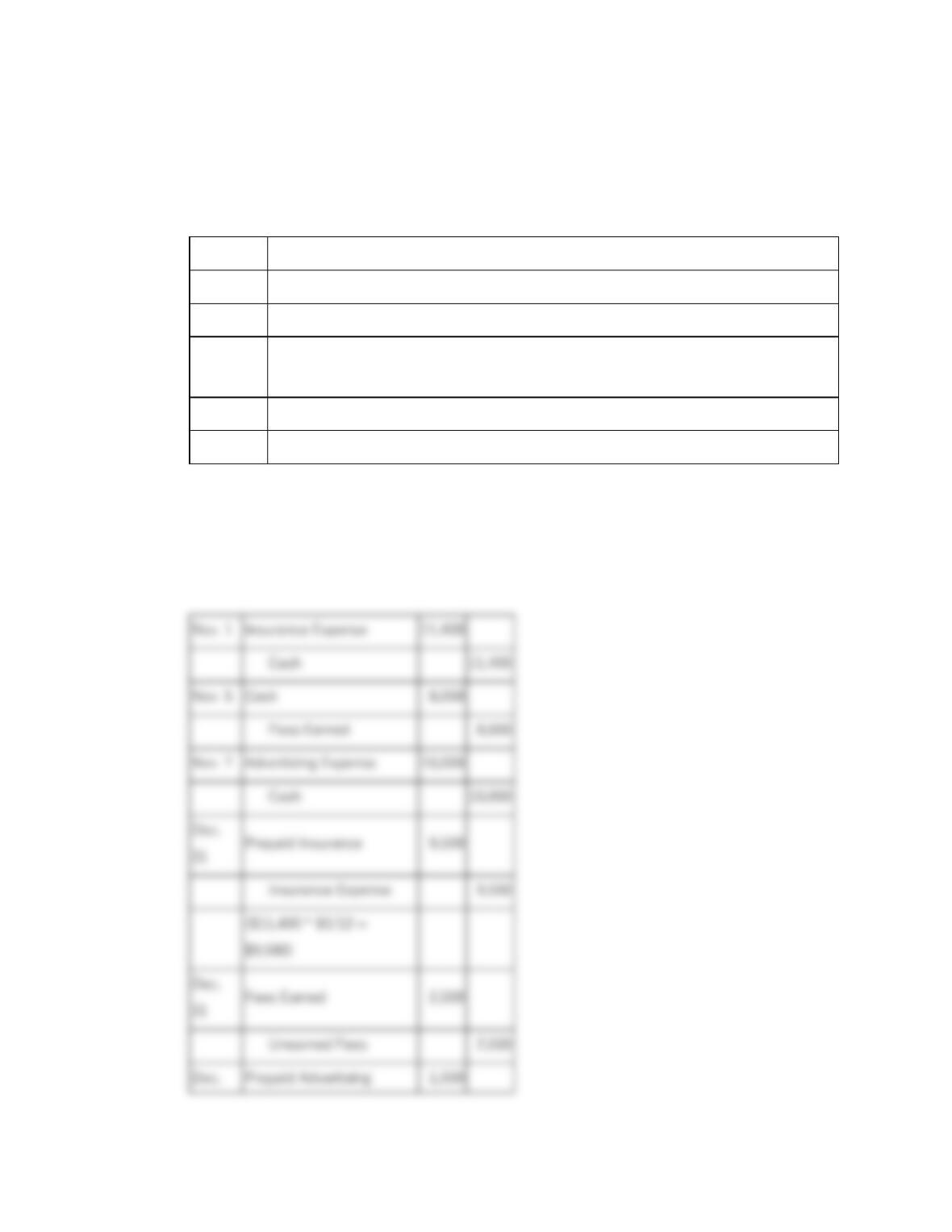
Prepare adjusting entries for the year ended December 31, for each of these separate
situations. Assume that prepaid expenses are initially recorded in asset accounts and that
fees collected in advance are initially recorded as liabilities.
a. The Prepaid Rent account has a debit balance of $8,000 before adjustment,
representing a prepayment for four months’ rent made on December 1 of the current year.
b. One-third of the work related to $18,000 of cash received in advance was performed
during this period.
c. Unpaid accrued salaries at December 31 amounts to $15,000.
d. Work was completed for a client on December 31 in the amount of $21,000, but was not
previously billed or recorded.
e. Estimated depreciation on office equipment is $27,000.
241.
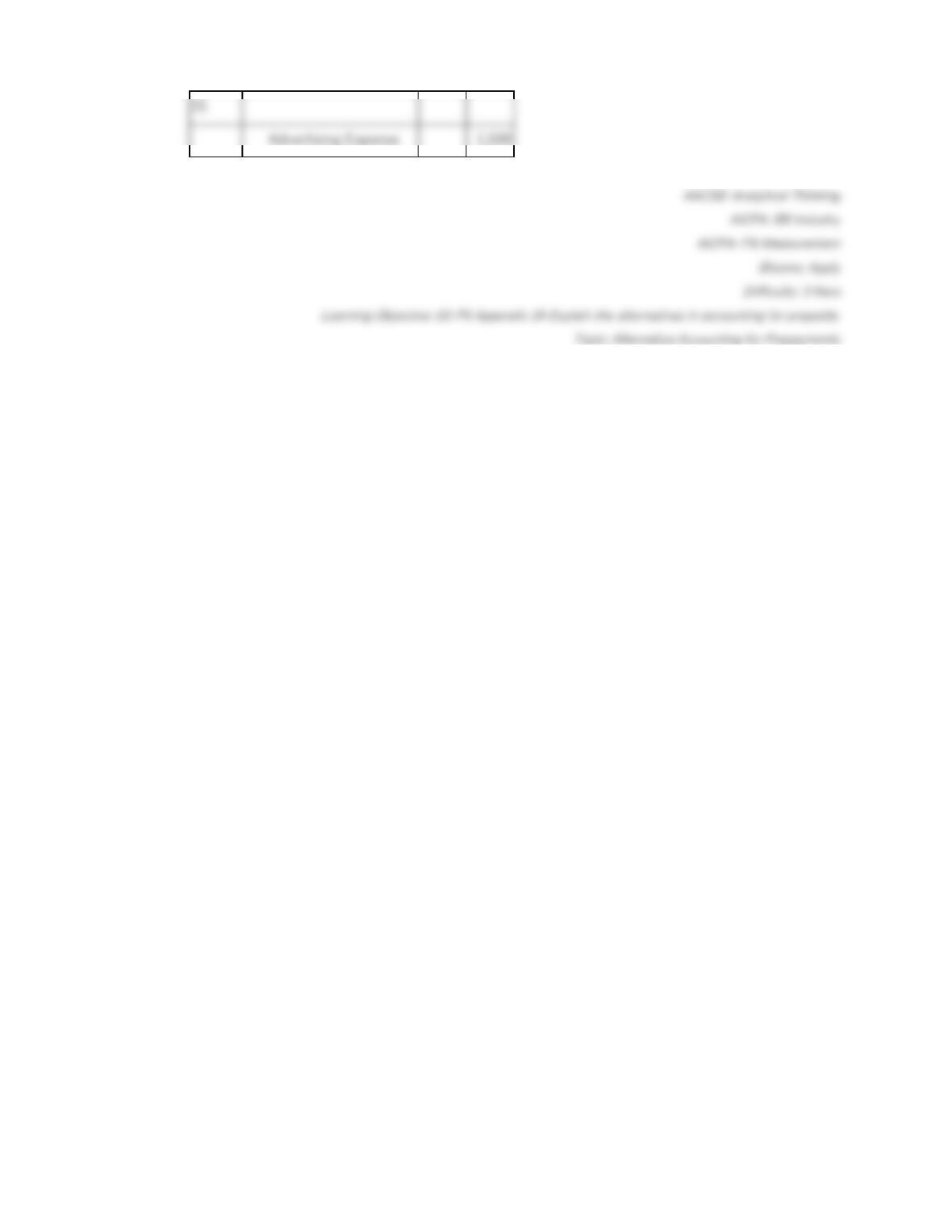
Gracio Co., Inc. had the following transactions in the last two months of its year ended
December 31. Prepare entries for these transactions under the method that records
prepaid expenses as expenses and records unearned revenues as revenues. Also prepare
adjusting entries at the end of the year.
Nov. 1
Paid $11,400 for 12 months of insurance coverage through October 31 of next year.
5
Received $8,000 cash for future services to be provided to a customer.
7
Paid $10,000 for future advertising.
Dec. 31
A portion of the insurance paid for on November 1 has expired. No adjustment was
made in November to the insurance account.
31
Services of $2,500 are not yet provided to the customer who paid on November 5.
31
Of the advertising paid for on November 7, $1,500 is not yet used.
Nov. 1
Insurance Expense
Cash
Nov. 5
Fees Earned
Nov. 7
Advertising Expense
Cash
Insurance Expense
Unearned Fees
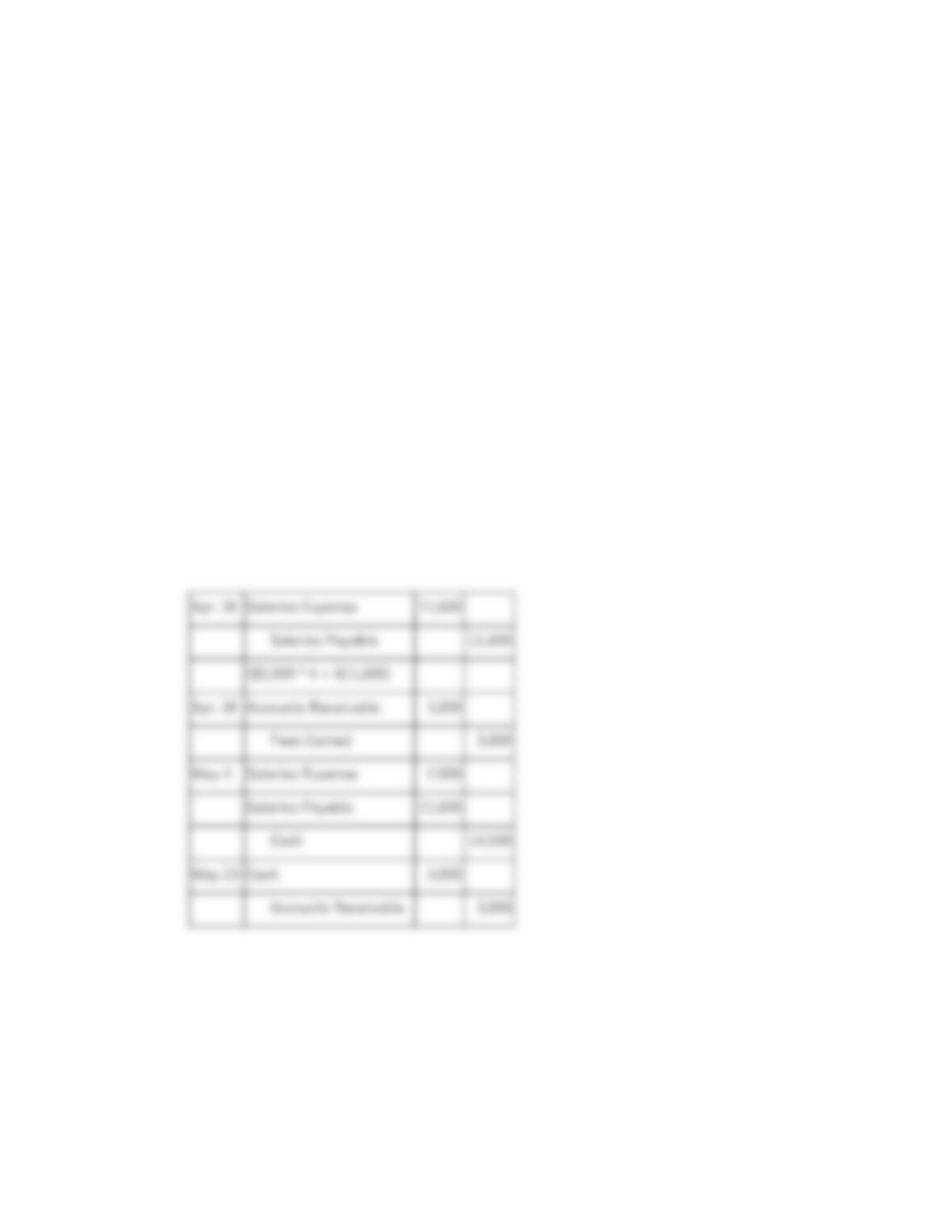
242.
For each of the following two separate situations, present both the April 30 adjusting entry
and the subsequent entry during May to record the payment of the accrued expenses or
receipt of the accrued revenue.
a. Nicolas Company has 5 employees, who earn a total of $2,900 in salaries each working
day. They are paid on Monday for the five-day workweek ending on the previous Friday.
Assume that fiscal year ended April 30, is a Thursday and all employees worked each day
and will be paid salaries for five full days on the following Monday.
b. Services of $3,000 have been performed for Clevenger Company through April 30. The
client will pay the entire amount of the contract when services are completed on May 23.
c. Paid the employees’ salaries on May 4.
d. Received payment from Clevenger Company for services that are now completed on
May 23.
243.
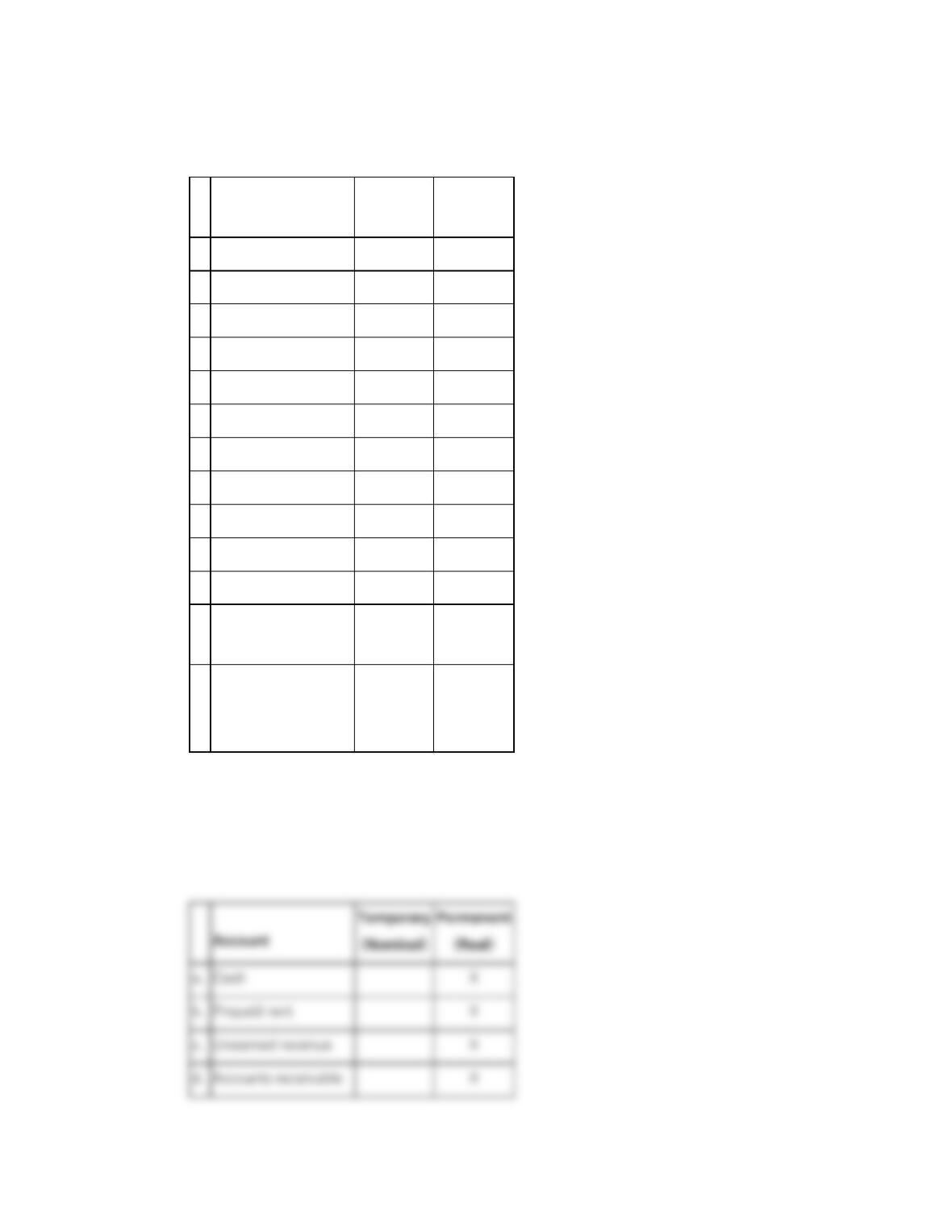
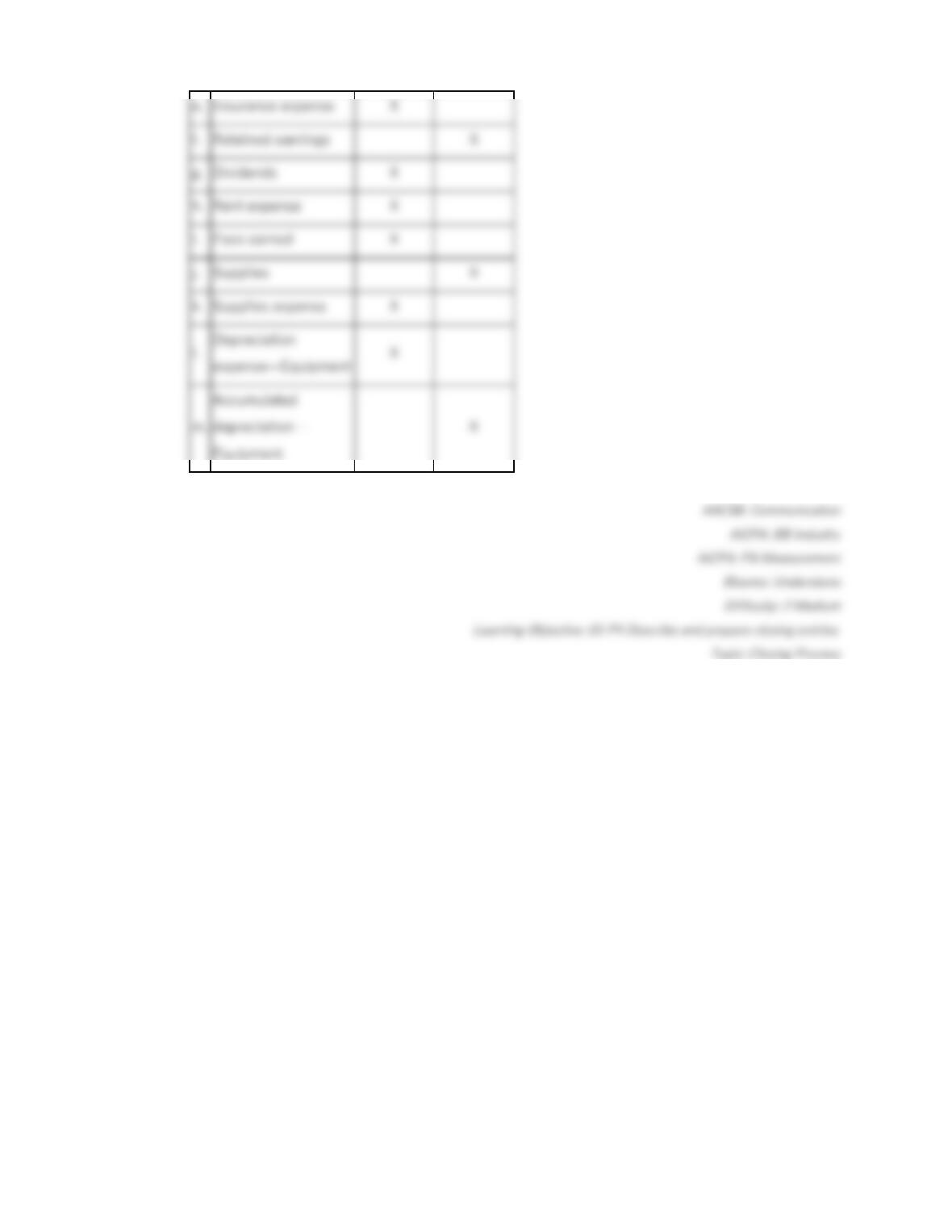
In the table below, indicate with an “X” in the proper column whether the account is a
temporary (nominal) account or a permanent (real) account.
Account
Temporary
(Nominal)
Permanent
(Real)
a.
Cash
b.
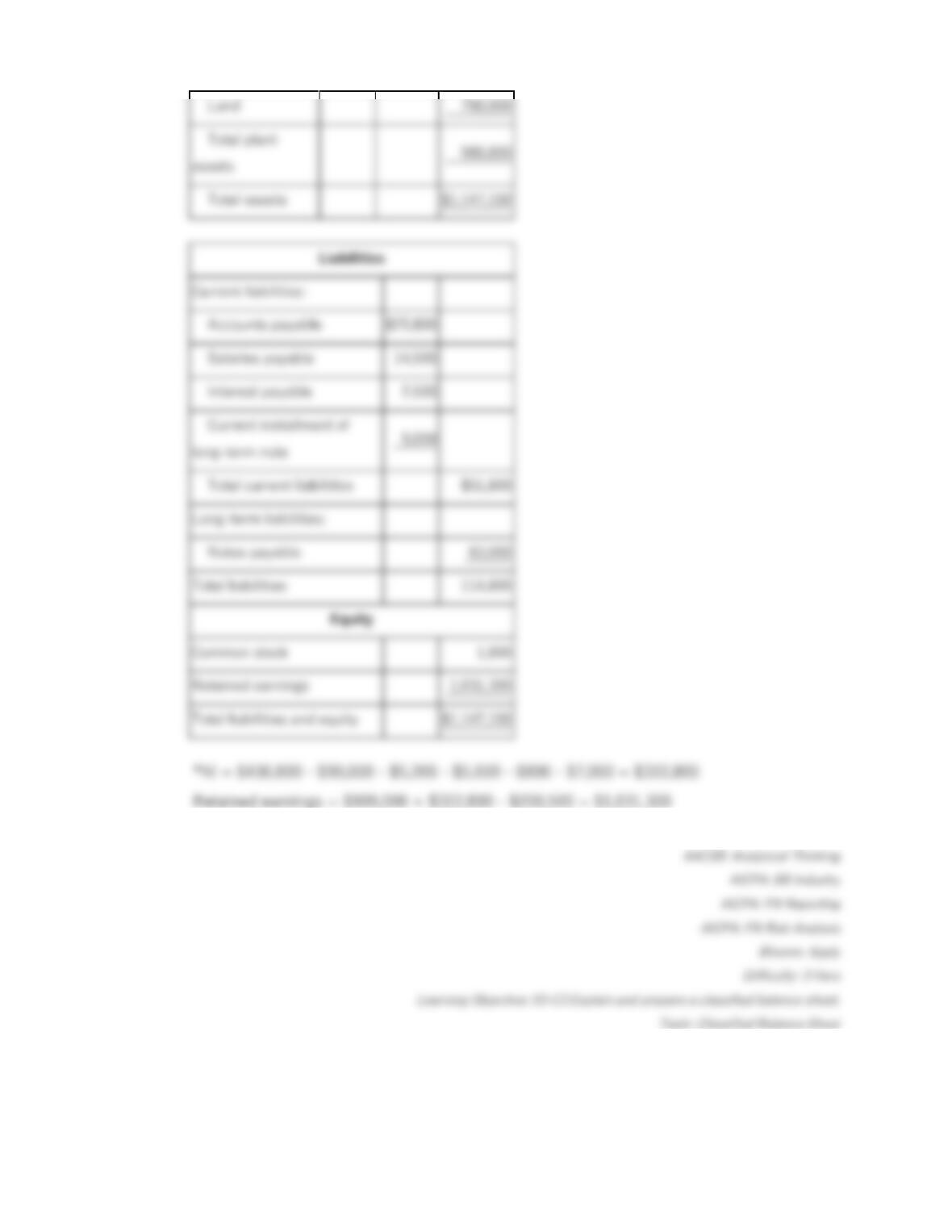
Prepaid rent
c.
Unearned revenue
d.
Accounts receivable
e.
Insurance expense
f.
Retained earnings
g.
Dividends
h.
Rent expense
i.
Fees earned
j.
Supplies
k.
Supplies expense
l.
Depreciation
expense—Equipment
m.
Accumulated
depreciation—
Equipment
Cash
b.
Prepaid rent
c.
Unearned revenue
244.
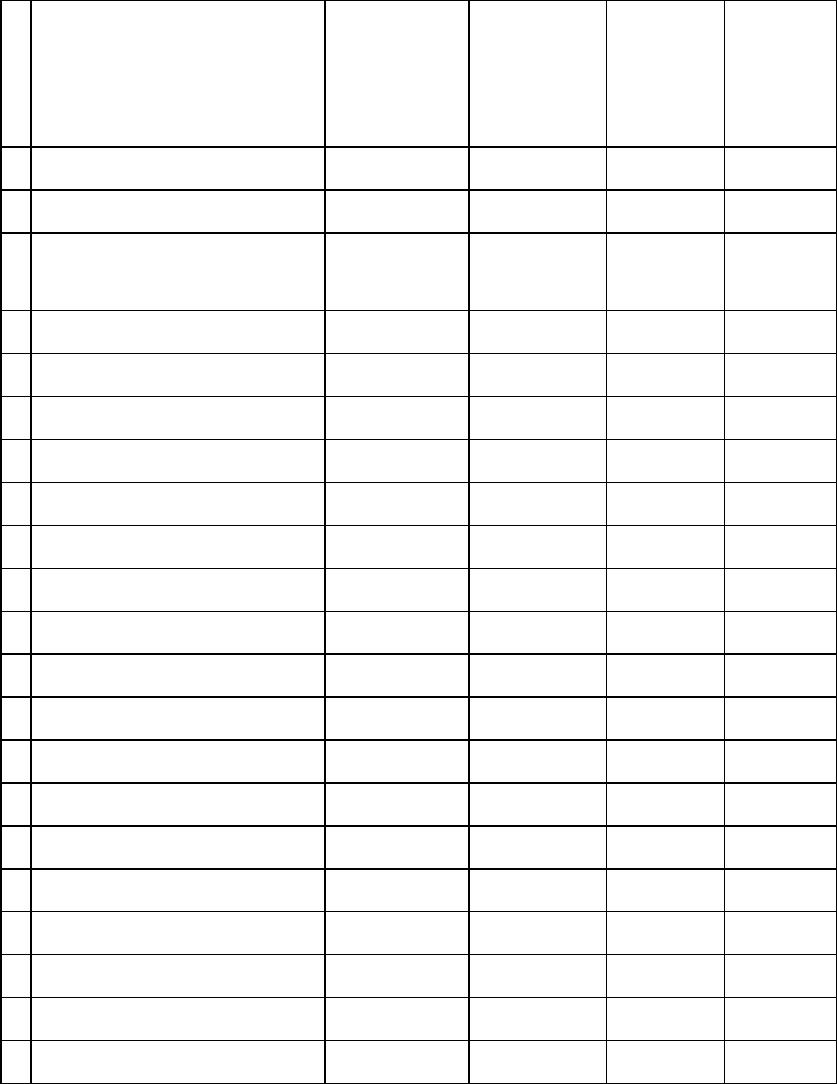
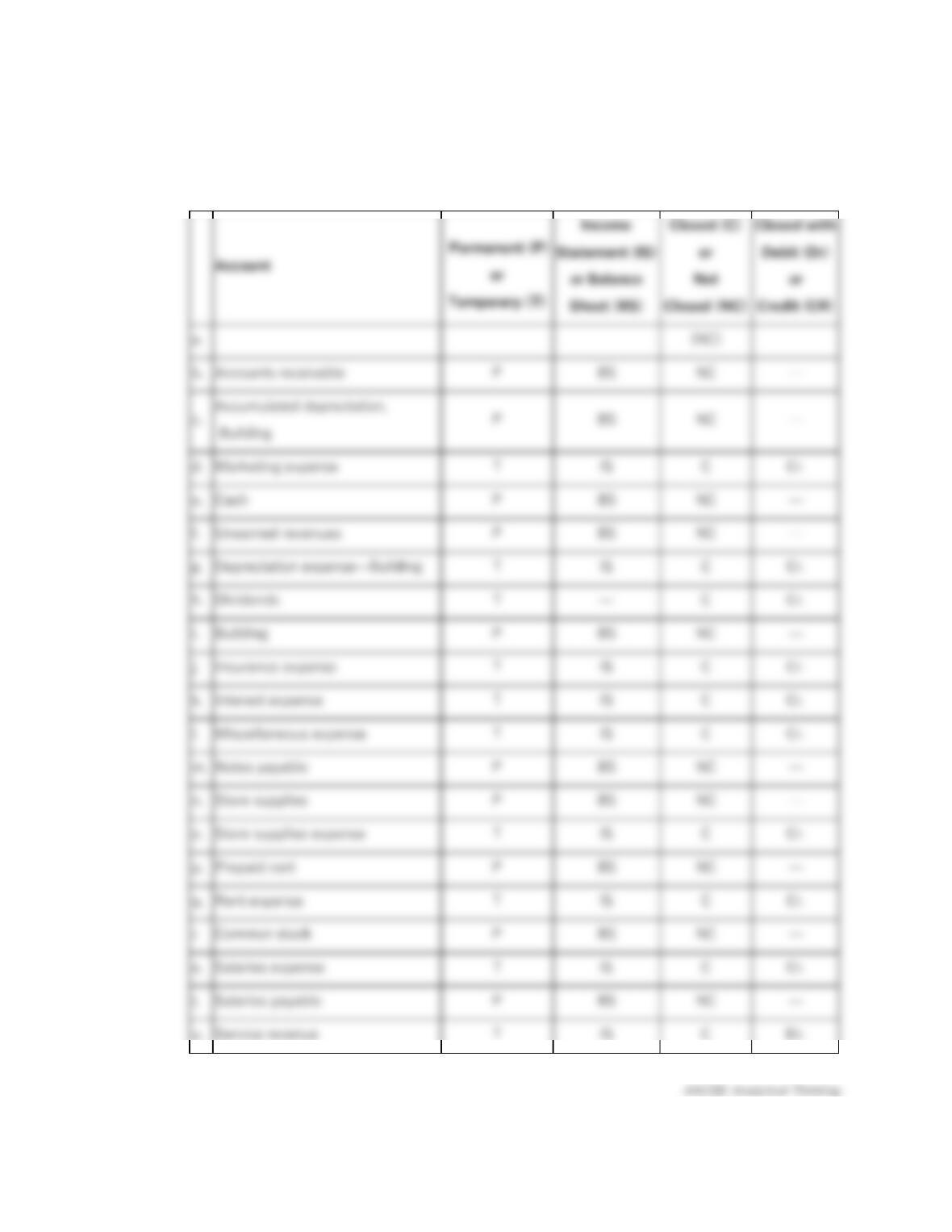
A number of accounts are listed below. Use the table to classify each account by
indicating whether it is a temporary or permanent account, whether it is included in the
Income Statement or Balance sheet, and if it is closed at the end of the accounting period,
and, if so, whether it is closed with a debit or credit. The first one is done as an example.
Account
Permanent (P)
or
Temporary (T)
Income
Statement (IS)
or Balance
Sheet (BS)
Closed (C)
or
Not
Closed (NC)
Closed with
Debit (Dr)
or
Credit (CR)
a.
Accounts payable
P
BS
NC
b.
Accounts receivable
c.
Accumulated depreciation,
Building
d.
Marketing expense
e.
Cash
f.
Unearned revenues
g.
Depreciation expense—Building
h.
Dividends
i.
Building
j.
Insurance expense
k.
Interest expense
l.
Miscellaneous expense
m.
Notes payable
n.
Store supplies
o.
Store supplies expense
p.
Prepaid rent
q.
Rent expense
r.
Common stock
s.
Salaries expense
t.
Salaries payable
u.
Service revenue
245.
The steps in the accounting cycle are shown below. List them in the correct order in which
they are completed:
Prepare adjusted trial balance
Post transactions
Prepare an unadjusted trial balance
Journalize transactions
Prepare the financial statements
Close the temporary accounts
Adjust the ledger accounts
Prepare a post-closing trial balance
Analyze transactions

246.
The calendar year-end adjusted trial balance for Blessinger Co., Inc. follows:
BLESSINGER CO., Inc.
Adjusted Trial Balance
December 31
Cash
$112,000
Accounts receivable
27,000
Prepaid rent
15,000
Prepaid Insurance
9,000
Office supplies
3,300
Office equipment
38,000
Accumulated
depreciation—Equipment
$3,200
Building
288,000
Accumulated
depreciation—Building
42,000
Land
700,000
Accounts payable
25,800
Salaries payable
14,500
Interest payable
2,500
Long-term note payable
72,000
Common stock
1,000
Retained earnings
909,000
Dividends
200,500
Service fees earned
430,800
Salaries expense
90,000
Insurance expense
5,200
Rent expense
5,000
Depreciation expense—
Equipment
800
Depreciation expense—
Building
7,000
Total
$1,500,800
$1,500,800
Required:
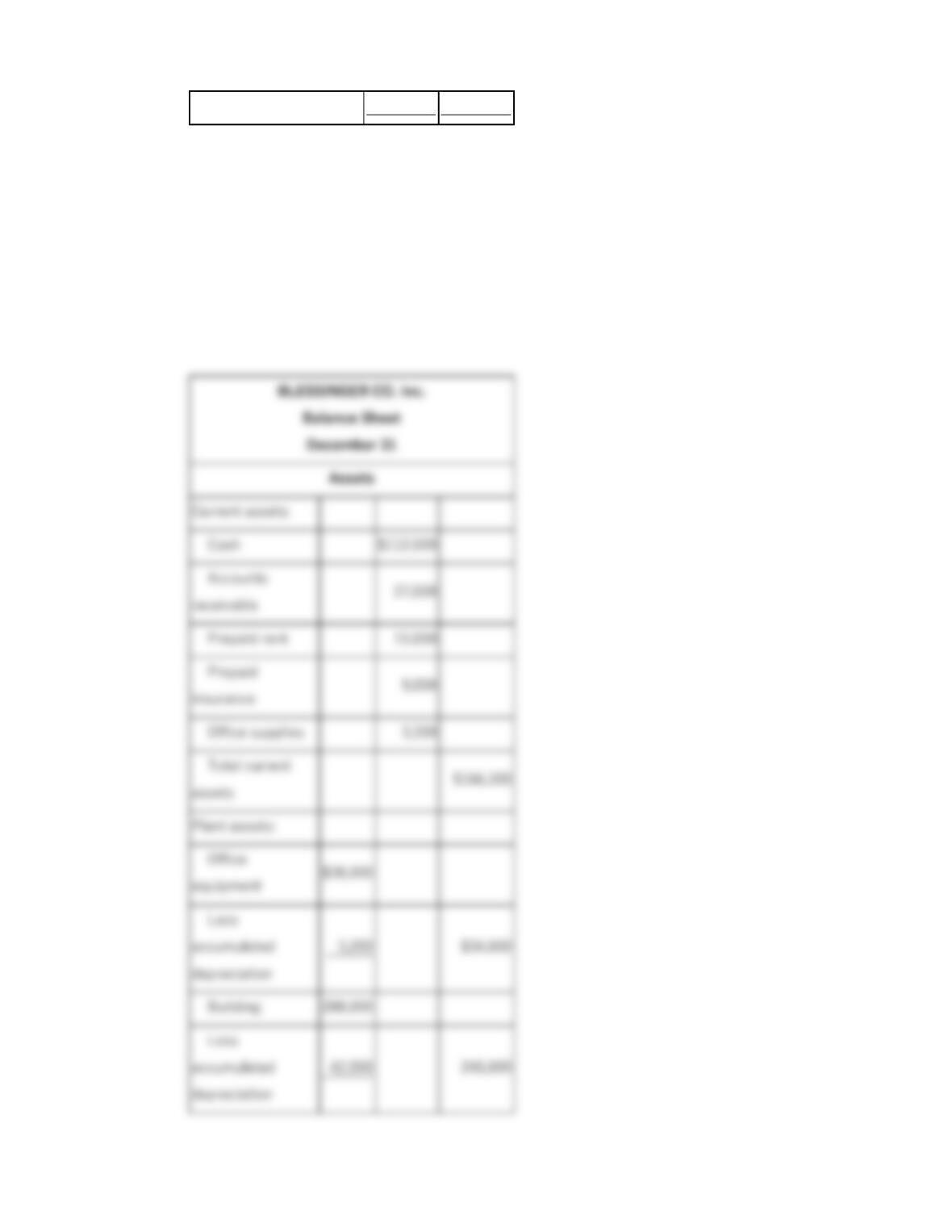
(a) Prepare a classified year-end balance sheet. (Note: A $9,000 installment on the long–
term note payable is due within one year.)
$112,000