CHAPTER 3
THE ACCOUNTING INFORMATION SYSTEM
IFRS questions are available at the end of this chapter.
TRUE/FALSE
Answer No. Description
MULTIPLE CHOICE—Conceptual
Answer No. Description
Test Bank for Intermediate Accounting, Seventeenth Edition
3 – 2
The Accounting Information System
3 – 3
MULTIPLE CHOICE—Computational
Answer No. Description
MULTIPLE CHOICE—CPA Adapted
Answer No. Description

Test Bank for Intermediate Accounting, Seventeenth Edition
3 – 4
BRIEF EXERCISES
Item Description
BE3–122 Definitions.
BE3–123 Terminology.
BE3–124 Accrued and deferred items.
EXERCISES
Item Description
E3-125 Adjusting entries.
E3-126 Adjusting entries.
*E3–127 Accrual adjusting entries.
*E3-128 Deferral adjusting entries.
*E3–129 Adjusting entries.
*E3–130 Analyze adjusted trial balance.
*E3–131 Adjusting and reversing entries.
*E3–132 Financial statements.
*E3–133 Cash-basis vs. accrual-basis accounting.
*E3-134 Accrual basis.
*E3-135 Accrual basis.
*E3-136 Accrual basis.
*E3-137 Cash basis.
PROBLEMS
Item Description
P3-138 Adjusting entries and account classifications.
P3-139 Adjusting entries.
P3-140 Adjusting and closing entries.
*P3-141 Cash to accrual accounting.
*P3-142 Accrual accounting.
*P3-143 Accrual basis.
*P3-144 Eight-column work sheet.

The Accounting Information System
3 – 5
CHAPTER LEARNING OBJECTIVES
1. Describe the basic accounting information system.
2. Record and summarize basic transactions.
3. Identify and prepare adjusting entries.
4. Prepare financial statements from the adjusted trial balance and prepare closing entries.
5. Prepare financial statements for a merchandising company.
6. Differentiate the cash basis of accounting from the accrual basis of accounting.
7. Identify adjusting entries that may be reversed.
8. Prepare a 10-column worksheet.
9. Compare the accounting information systems under GAAP and IFRS.
Test Bank for Intermediate Accounting, Seventeenth Edition
3 – 6
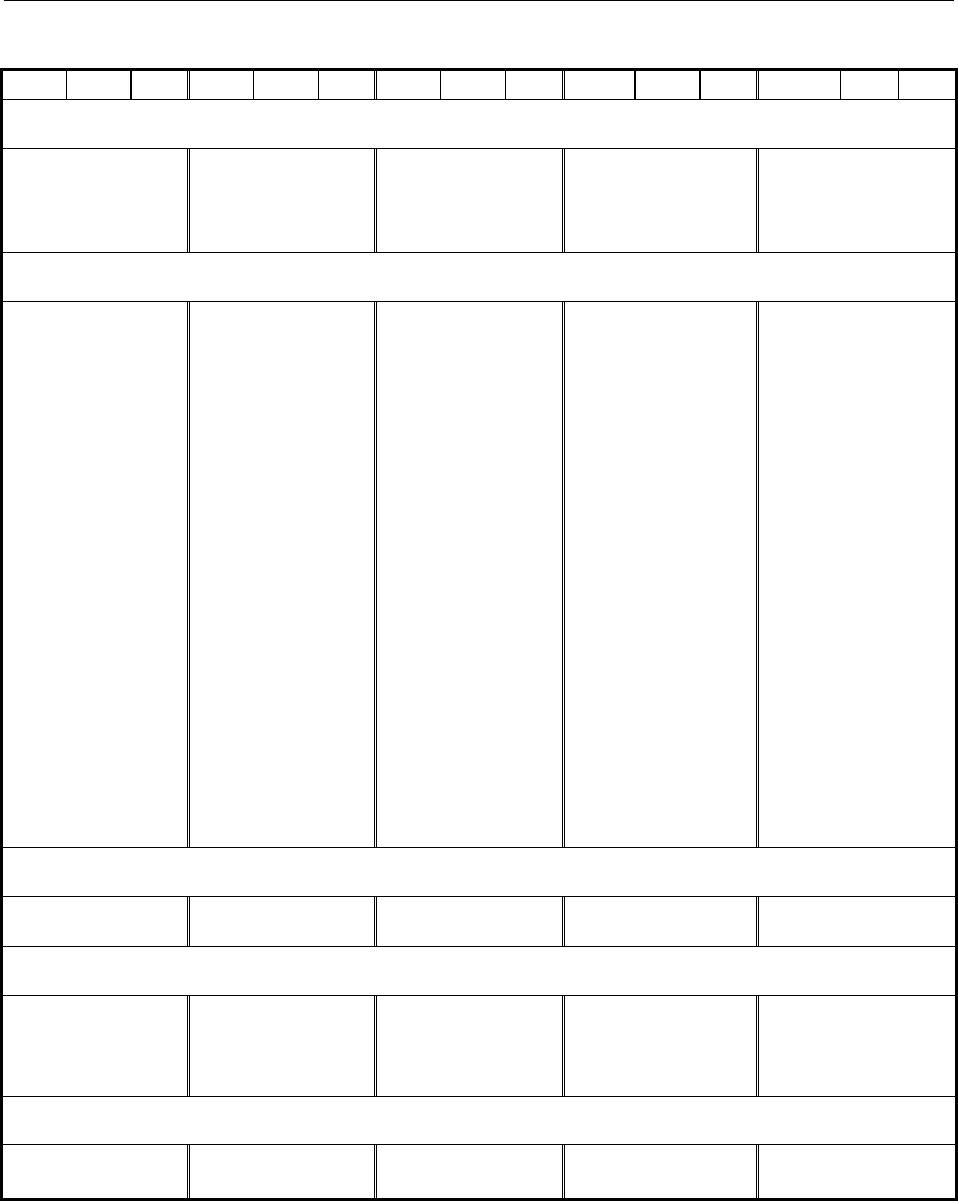
SUMMARY OF QUESTIONS BY LEARNING OBJECTIVES AND BLOOM’S TAXONOMY
Item
LO
BT
Item
LO
BT
Item
LO
BT
Item
LO
BT
Item
LO
BT
TRUE-FALSE STATEMENTS
1.
1
K
5.
1
C
9.
2
K
13.
3
K
17.
5
C
2.
1
K
6.
1
C
10.
2
C
14.
4
C
18.
6
K
3.
1
K
7.
1
K
11.
3
K
15.
4
K
19.
7
K
4.
1
C
8.
2
K
12.
3
C
16.
4
C
20.
8
K
MULTIPLE CHOICE QUESTIONS
21.
1
K
42.
2
AP
63.
3
K
84.
7
C
105.
7
AP
22.
1
K
43.
2
AP
64.
3
K
85.
8
C
106.
7
AN
23.
1
C
44.
2
AP
65.
3
K
86.
1
AN
107.
7
AP
24.
1
K
45.
2
C
66.
3
K
87.
1
AN
108.
7
AP
25.
1, 2
K
46.
2
K
67.
3
C
88.
3
AP
109.
7
AP
26.
1
C
47.
3
C
68.
3
K
89.
3
AP
110.
3
AP
27.
1
C
48.
3
C
69.
3
C
90.
3
AP
111.
3
AP
28.
1
K
49.
6
C
70.
3
AP
91.
3
AP
112.
3
AP
29.
1
K
50.
3
C
71.
3
K
92.
3
AP
113.
3
AP
30.
1
AP
51.
3
AN
72.
3
K
93.
3
AP
114.
3
AP
31.
1
C
52.
3
K
73.
3
K
94.
3
AP
115.
3
AP
32.
1
K
53.
3
AN
74.
3, 4
K
95.
7
AP
116.
3
AP
33.
1
C
54.
3
AN
75.
4
C
96.
3
AP
117.
3
AP
34.
1
C
55.
3
K
76.
4
K
97.
3
AP
118.
6
AN
35.
1
K
56.
3
C
77.
6
AN
98.
4
AP
119.
6
AP
36.
1
K
57.
3
K
78.
6
K
99.
6
AN
120.
6
AP
37.
1
K
58.
3
C
79.
6
AP
100.
6
AN
121.
6
AP
38.
1
K
59.
3
C
80.
6
AP
101.
6
AN
39.
1
C
60.
3
K
81.
7
K
102.
6
AN
40.
2
C
61.
3
K
82.
7
C
103.
6
AN
41.
2
K
62.
3
C
83.
7
C
104.
6
AN
BRIEF EXERCISES
122.
3, 7
K
123.
1, 2,
3
K
124.
3
C
EXERCISES
125.
3
AP
128.
3
AP
131.
3, 7
AP
134.
6
AP
137.
6
AP
126.
2, 3
AP
129.
3
AP
132.
4
AP
135.
6
AP
127.
3
AP
130.
3
AN
133.
6
AN
136.
6
AP
PROBLEMS
138.
3
AP
140.
3, 4
AP
142.
6
AN
144.
8
AP
139.
3
AN
141.
6
AN
143.
6
AN
The Accounting Information System
3 – 7
TRUE/FALSE
1. A ledger is where a company first records transactions and other selected events.
2. Nominal (temporary) accounts are revenue, expense, and dividend accounts and are
periodically closed.
3. Real (permanent) accounts are revenue, expense, and dividend accounts and are
periodically closed.
4. An example of an internal event would be a flood that destroyed a portion of a
company’s inventory.
5. All liability accounts and stockholders’ equity accounts are increased on the credit side
and decreased on the debit side.
6. In general, debits refer to increases in account balances, and credits refer to decreases.
7. The first step in the accounting cycle is the journalizing of transactions and selected
other events.
8. One purpose of a trial balance is to prove that debits and credits are equal in the
general ledger.
9. A general journal chronologically lists transactions and other events, expressed in terms
of debits and credits to accounts.
10. If a company fails to post one of its journal entries to its general ledger, the trial balance
will not show an equal amount of debit and credit balance accounts.
11. Adjusting entries for prepayments record the portion of the prepayment that represents
the expense incurred or the revenue recognized in the current accounting period.
Test Bank for Intermediate Accounting, Seventeenth Edition
3 – 8
12. An adjustment for wages expense, earned but unpaid at year end, is an example of an
accrued expense.
13. The book value of any depreciable asset is the difference between its cost and its
salvage value.
14. The ending retained earnings balance is reported on both the retained earnings
statement and the balance sheet.
15. The post-closing trial balance consists of asset, liability, stockholders’ equity, revenue
and expense accounts.
16. It is not necessary to post the closing entries to the ledger accounts because new
revenue and expense accounts will be opened in the subsequent accounting period.
17. Total stockholders’ equity consists of common stock and the earnings retained in the
business.
*18. The accrual-basis of accounting recognizes revenue when the performance obligation is
satisfied and expenses when cash is paid.
*19. Reversing entries are made at the end of the accounting cycle to correct errors in the
original recording of transactions.
*20. An adjusted trial balance that shows equal debit and credit columnar totals proves the
accuracy of the adjusting entries.

The Accounting Information System
3 – 9
True / False Answers — Conceptual
Test Bank for Intermediate Accounting, Seventeenth Edition
3 – 10
MULTIPLE CHOICE—Conceptual
21. Factors that shape an accounting information system include the
a. nature of the business.
b. size of the firm.
c. volume of data to be handled.
d. All of these answer choices are correct.
22. The process of transferring figures from the book of original entry to the ledger accounts is
called
a. adjusting.
b. balancing.
c. ledgering.
d. posting.
23. Debit always means
a. the right side of an account.
b. an increase.
c. a decrease.
d. None of these answer choices are correct.
24. An accounting record into which the essential facts and figures in connection with all
transactions are first recorded is called the
a. ledger.
b. account.
c. trial balance.
d. None of these answer choices are correct.
25. A trial balance
a. proves that debits and credits are equal in the ledger.
b. supplies a listing of open accounts and their balances that are used in preparing
financial statements.
c. is normally prepared three times in the accounting cycle.
d. All of these answer choices are correct.
26. Which of the following is a real (permanent) account?
a. Goodwill
b. Service Revenue
c. Accounts Receivable
d. Both Goodwill and Accounts Receivable
The Accounting Information System
3 – 11
27. Which of the following is a nominal (temporary) account?
a. Unearned Service Revenue
b. Salaries and Wages Expense
c. Inventory
d. Retained Earnings
28. Nominal accounts are also called
a. temporary accounts.
b. permanent accounts.
c. real accounts.
d. None of these answer choices are correct.
29. The double-entry accounting system means
a. Each transaction is recorded with two journal entries.
b. Each item is recorded in a journal entry, then in a general ledger account.
c. The dual effect of each transaction is recorded with a debit and a credit.
d. None of these answer choices are correct.
30. When a corporation pays a note payable and interest,
a. the account notes payable will be increased.
b. the account interest expense will be decreased.
c. they will debit notes payable and interest expense.
d. they will debit cash.
31. Stockholders’ equity is not affected by all
a. cash receipts.
b. dividends.
c. revenues.
d. expenses.
32. The debit and credit analysis of a transaction normally takes place
a. before an entry is recorded in a journal.
b. when the entry is posted to the ledger.
c. when the trial balance is prepared.
d. at the end of the accounting cycle.
33. The accounting equation must remain in balance
a. throughout each step in the accounting cycle.
b. only when journal entries are recorded.
c. only at the time the trial balance is prepared.
d. only when formal financial statements are prepared.
Test Bank for Intermediate Accounting, Seventeenth Edition
3 – 12
34. The difference between the accounting process and the accounting cycle is
a. the accounting process results in the preparation of financial statements, whereas the
accounting cycle is concerned with recording business transactions.
b. the accounting cycle represents the steps taken to accomplish the accounting
process.
c. the accounting process represents the steps taken to accomplish the accounting
cycle.
d. merely semantic, because both concepts refer to the same thing.
35. An optional step in the accounting cycle is the preparation of
a. adjusting entries.
b. closing entries.
c. a statement of cash flows.
d. a post-closing trial balance.
36. Which of the following criteria must be met before an event or item should be recorded for
accounting purposes?
a. The event or item can be measured objectively in financial terms.
b. The event or item is relevant and reliable.
c. The event or item is an element.
d. All of these must be met.
37. Which of the following is a recordable event or item?
a. Changes in managerial policy
b. The value of human resources
c. Changes in personnel
d. Payment of monthly payroll.
38. Which of the following is not an internal event?
a. Depreciation
b. Using raw materials in the production process
c. Dividend declaration and subsequent payment
d. All of these are internal transactions.
39. External events do not include
a. interaction between an entity and its environment.
b. a change in the price of a good or service that an entity buys or sells.
c. improvement in technology by a competitor.
d. using buildings and machinery in operations.
The Accounting Information System
3 – 13
40. A trial balance may prove that debits and credits are equal, but
a. an amount could be entered in the wrong account.
b. a transaction could have been entered twice.
c. a transaction could have been omitted.
d. All of these answer choices are correct.
41. A general journal
a. chronologically lists transactions and other events, expressed in terms of debits and
credits.
b. contains one record for each of the asset, liability, stockholders’ equity, revenue, and
expense accounts.
c. lists all the increases and decreases in each account in one place.
d. contains only adjusting entries.
42. A journal entry to record the sale of inventory on account will include a
a. debit to Inventory.
b. debit to Accounts Receivable.
c. debit to Sales Revenue.
d. credit to Cost of Goods Sold.
43. A journal entry to record a payment on account will include a
a. debit to Accounts Receivable.
b. credit to Accounts Receivable.
c. debit to Accounts Payable.
d. credit to Accounts Payable.
44. A journal entry to record a receipt of rent in advance will include a
a. debit to Rent Revenue.
b. credit to Rent Revenue.
c. credit to Cash.
d. credit to Unearned Revenue.
45. Which of the following errors will cause an imbalance in the trial balance?
a. Omission of a transaction in the journal.
b. Posting an entire journal entry twice to the ledger.
c. Posting a credit of $720 to Accounts Payable as a credit of $720 to Accounts
Receivable.
d. Listing the balance of an account with a debit balance in the credit column of the trial
balance.
Test Bank for Intermediate Accounting, Seventeenth Edition
3 – 14
46. Which of the following is not a principal purpose of an unadjusted trial balance?
a. It proves that debits and credits of equal amounts are in the ledger.
b. It is the basis for any adjustments to the account balances.
c. It supplies a listing of open accounts and their balances.
d. It proves that debits and credits were properly entered in the ledger accounts.
47. An adjusting entry should never include
a. a debit to an expense account and a credit to a liability account.
b. a debit to an expense account and a credit to a revenue account.
c. a debit to a liability account and a credit to revenue account.
d. a debit to a revenue account and a credit to a liability account.
48. Which of the following is an example of an accrued expense?
a. Office supplies purchased at the beginning of the year and debited to an expense
account.
b. Property taxes incurred during the year, to be paid in the first quarter of the
subsequent year.
c. Depreciation expense
d. Rent recognized during the period, to be received at the end of the year
*49. Which of the following statements is true about the accrual basis of accounting?
a. The timing of cash receipts and disbursements is emphasized.
b. A minimal amount of record keeping is required in accrual basis accounting compared
to cash basis.
c. This method is used less frequently by businesses than the cash method of
accounting.
d. Revenues are recognized in the period the performance obligation is satisfied,
regardless of the time period the cash is received.
50. An adjusting entry to record an accrued expense involves a debit to a(an)
a. expense account and a credit to a prepaid account.
b. expense account and a credit to Cash.
c. expense account and a credit to a liability account.
d. liability account and a credit to an expense account.
51. The failure to properly record an adjusting entry to accrue an expense will result in an
a. understatement of expenses and an understatement of liabilities.
b. understatement of expenses and an overstatement of liabilities.
c. understatement of expenses and an overstatement of assets.
d. overstatement of expenses and an understatement of assets.

The Accounting Information System
3 – 15
52. Which of the following properly describes a deferral?
a. Cash is received after revenue is recognized.
b. Cash is received before revenue is recognized.
c. Cash is paid after expense is incurred.
d. Cash is paid in the same time period that an expense is incurred.
53. The failure to properly record an adjusting entry to accrue a revenue item will result in an
a. understatement of revenues and an understatement of liabilities.
b. overstatement of revenues and an overstatement of liabilities.
c. overstatement of revenues and an overstatement of assets.
d. understatement of revenues and an understatement of assets.
54. The omission of the adjusting entry to record depreciation expense will result in an
a. overstatement of assets and an overstatement of owners’ equity.
b. understatement of assets and an understatement of owner’s equity.
c. overstatement of assets and an overstatement of liabilities.
d. overstatement of liabilities and an understatement of owners’ equity.
55. Adjustments are often prepared
a. after the balance sheet date, but dated as of the balance sheet date.
b. after the balance sheet date, and dated after the balance sheet date.
c. before the balance sheet date, and dated before the balance sheet date.
d. before the balance sheet date, and dated after the balance sheet date.
56. At the time a company prepays a cost
a. it debits an asset account to show the service or benefit it will receive in the future.
b. it debits an expense account to match the expense against revenues recognized.
c. its credits a liability account to show the obligation to pay for the service in the future.
d. it credits an asset account and debits an expense account.
57. How do these prepaid expenses expire?
Rent Supplies
a. With the passage of time Through use and consumption
b. With the passage of time With the passage of time
c. Through use and consumption Through use and consumption
d. Through use and consumption With the passage of time
Test Bank for Intermediate Accounting, Seventeenth Edition
3 – 16
58. Recording the adjusting entry for depreciation has the same effect as recording the
adjusting entry for
a. an unearned revenue.
b. a prepaid expense.
c. an accrued revenue.
d. an accrued expense.
59. Unearned revenue on the books of one company is likely to be
a. a prepaid expense on the books of the company that made the advance payment.
b. an unearned revenue on the books of the company that made the advance payment.
c. an accrued expense on the books of the company that made the advance payment.
d. an accrued revenue on the books of the company that made the advance payment.
60. To compute interest expense on a note for an adjusting entry, the formula is (principal ×
annual rate × a fraction). The numerator and denominator of the fraction are:
Numerator Denominator
a. Length of time note has been outstanding 12 months
b. Total length of note 12 months
c. Length of time until note matures Total length of note
d. Length of time note has been outstanding Total length of note
61. Adjusting entries are necessary to
1. obtain a proper matching of revenue and expense.
2. achieve an accurate statement of assets and equities.
3. adjust assets and liabilities to their fair market value.
a. 1
b. 2
c. 3
d. 1 and 2
62. Why are certain costs of doing business capitalized when incurred and then depreciated
or amortized over subsequent accounting cycles?
a. To reduce the federal income tax liability
b. To aid management in cash-flow analysis
c. To match the costs of production with revenues as recognized
d. To adhere to the accounting constraint of conservatism
63. When an expense is paid in cash before it is used, it is called a(n)
a. prepaid expense.
b. accrued expense.
c. estimated expense.
d. cash expense.

The Accounting Information System
3 – 17
64. When revenue or expense has been recognized or incurred but not yet collected or paid,
it is normally called a(n) ____________ revenue or expense.
a. deferred
b. adjusted
c. estimated
d. None of these answer choices are correct.
65. When a revenue is collected and recorded in advance, it is normally accounted for as a(n)
___________ revenue.
a. accrued
b. prepaid
c. unearned
d. cash
66. An accrued expense can best be described as an amount
a. paid and currently matched with earnings.
b. paid and not currently matched with earnings.
c. not paid and not currently matched with earnings.
d. not paid and currently matched with earnings.
67. During an accounting period, if an expense has been incurred and consumed but not yet
paid for or recorded, then the end–of-period adjusting entry would involve
a. a liability account and an asset account.
b. an asset or contra asset account and an expense account.
c. a liability account and an expense account.
d. a receivable account and a revenue account.
68. Which of the following must be considered in estimating depreciation on an asset for an
accounting period?
a. The original cost of the asset
b. Its useful life
c. The decline of its fair value
d. Both the original cost of the asset and its useful life.
69. Which of the following would not be a correct form for an adjusting entry?
a. A debit to a revenue and a credit to a liability
b. A debit to an expense and a credit to a liability
c. A debit to a liability and a credit to a revenue
d. A debit to an asset and a credit to a liability

70. Year-end net assets would be overstated and current expenses would be understated as
a result of failure to record which of the following adjusting entries?
a. Expiration of prepaid insurance
b. Depreciation of fixed assets
c. Use of supplies
d. All of these answer choices are correct.
71. A prepaid expense can best be described as an amount
a. paid and currently matched with revenues.
b. paid and not currently matched with revenues.
c. not paid and currently matched with revenues.
d. not paid and not currently matched with revenues.
72. An accrued revenue can best be described as an amount
a. collected and currently matched with expenses.
b. collected and not currently matched with expenses.
c. not collected and currently matched with expenses.
d. not collected and not currently matched with expenses.
73. An unearned revenue can best be described as an amount
a. collected and currently matched with expenses.
b. collected and not currently matched with expenses.
c. not collected and currently matched with expenses.
d. not collected and not currently matched with expenses.
74. An adjusted trial balance
a. is prepared after the financial statements are completed.
b. proves the equality of the debit balances and credit balances of ledger accounts after
all adjustments have been made.
c. is a required financial statement under generally accepted accounting principles.
d. cannot be used to prepare financial statements.
75. Which type of account is always debited during the closing process?
a. Dividends
b. Expense
c. Revenue
d. Retained earnings

The Accounting Information System
3 – 19
76. Which of the following statements best describes the purpose of closing entries?
a. To faciliate posting and taking a trial balance.
b. To determine the amount of net income or net loss for the following period.
c. To reduce the balances of revenue and expense accounts to zero so that they may be
used to accumulate the revenues and expenses of the next period.
d. To complete the record of various transactions that were started in a prior period.
77. If ending accounts receivable exceeds the beginning accounts receivable
a. cash collections during the period exceed the amount of revenue recognized.
b. net income for the period is less than the amount of cash-basis income.
c. no cash was collected during the period.
d. cash collections during the year are less than the amount of revenue recognized.
*78. Under the cash-basis of accounting, revenues are recorded
a. when they are recognized and realized.
b. when they are recognized and realizable.
c. when they are recognized.
d. when they are realized.
*79. When converting from cash-basis to accrual-basis accounting, which of the following
adjustments should be made to cash receipts from customers to determine accrual-basis
service revenue?
a. Subtract ending accounts receivable.
b. Subtract beginning unearned service revenue.
c. Add ending accounts receivable.
d. Add cash sales.
None
*80. When converting from cash-basis to accrual-basis accounting, which of the following
adjustments should be made to cash paid for operating expenses to determine accrual–
basis operating expenses?
a. Add beginning accrued liabilities.
b. Subtract beginning prepaid expense.
c. Subtract ending prepaid expense.
d. Subtract interest expense.
Test Bank for Intermediate Accounting, Seventeenth Edition
3 – 20
*81. Reversing entries are
1. normally prepared for prepaid, accrued, and estimated items.
2. necessary to achieve a proper matching of revenue and expense.
3. useful in simplifying the recording of transactions in the next accounting
period.
a. 1
b. 2
c. 3
d. 1 and 2
*82. Adjusting entries that should be reversed include those for prepaid or unearned items that
a. create an asset or a liability account.
b. were originally entered in a revenue or expense account.
c. were originally entered in an asset or liability account.
d. create an asset or a liability account and were originally entered in a revenue or
expense account.
*83. Adjusting entries that should be reversed include
a. all accrued revenues.
b. all accrued expenses.
c. those that debit an asset or credit a liability.
d. All of these answer choices are correct.
*84. A reversing entry should never be made for an adjusting entry that
a. accrues unrecorded revenue.
b. adjusts expired costs from an asset account to an expense account.
c. accrues unrecorded expenses.
d. adjusts unexpired costs from an expense account to an asset account.
*85. The worksheet for Sharko Co. consisted of five pairs of debit and credit columns. The
dollar amount of one item appeared in both the credit column of the income statement
section and the debit column of the balance sheet section. That item is
a. net income for the period.
b. beginning inventory.
c. cost of goods sold.
d. net loss for the period.