135. Pines Inc. produces and sells two products. During the most recent month, Product
A123’s sales were $25,000 and its variable costs were $5,750. Product B456’s sales were $40,000
and its variable costs were $9,850. The company’s fixed costs were $48,310.
Required:
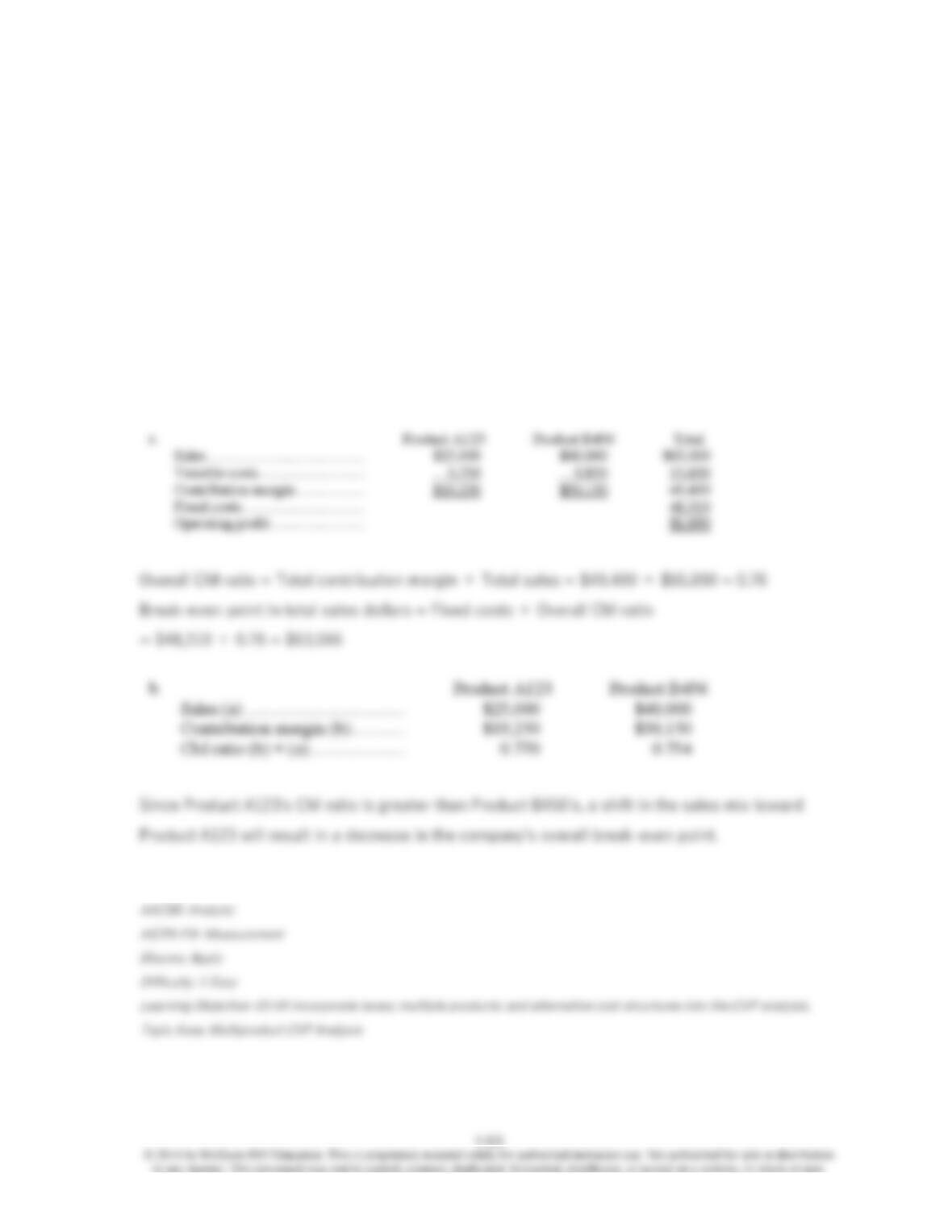
a. Determine the overall break-even point for the company.
b. If the sales mix shifts toward Product A123, with no change in total sales, what will happen to
the break-even point for the company? Explain.
3-122
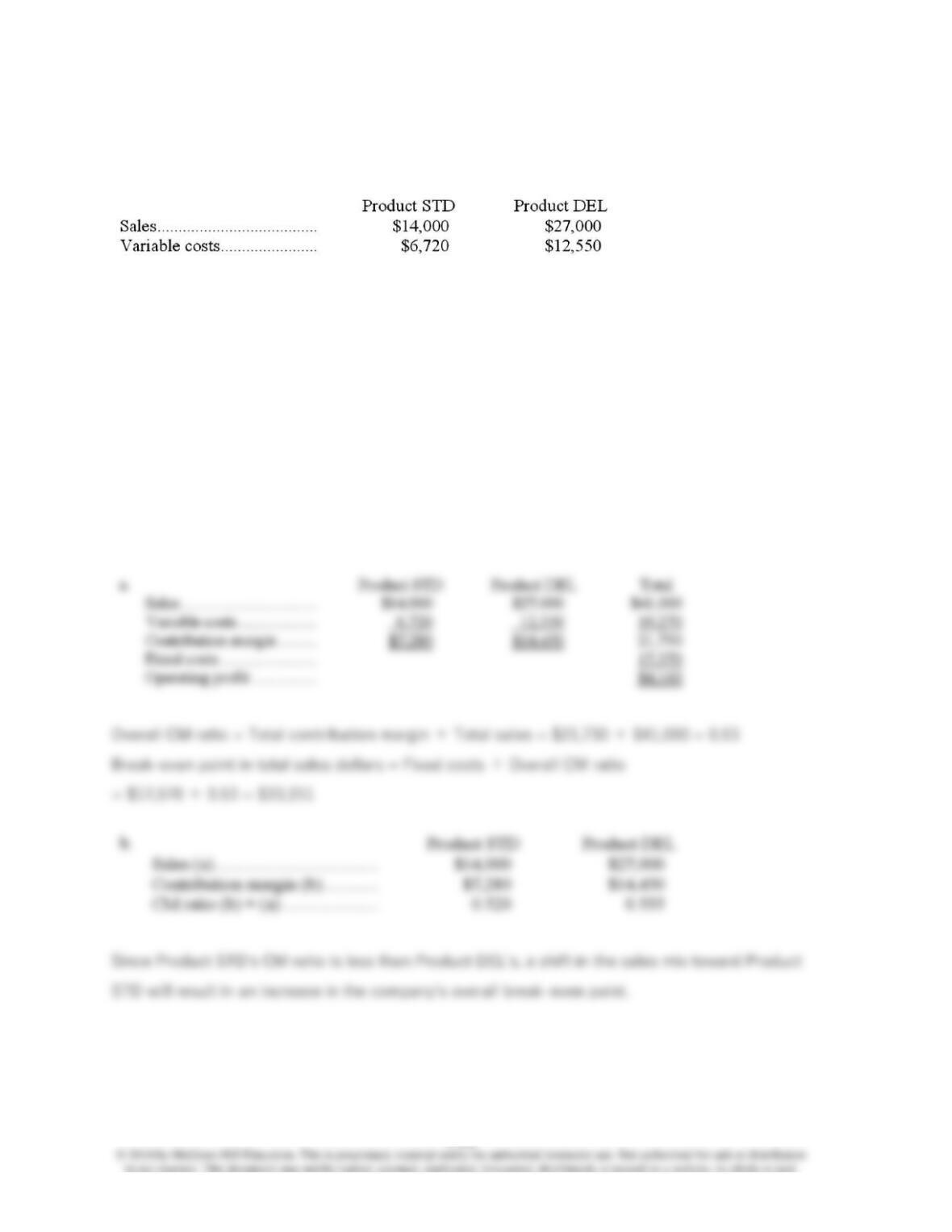
136. Strangler Tools produces and sells two products. Data concerning these products for the
most recent month appear below:
Fixed costs for the entire company were $17,570.
Required:
a. Determine the overall break-even point for the company.
b. If the sales mix shifts toward Product STD, with no change in total sales, what will happen to
the break-even point for the company? Explain.
137. In the most recent month, Eckhart Corporation’s total contribution margin was $208,000
and its operating profit $39,400.
Required:
a. Compute the degree of operating leverage to two decimal places.
b. Using the degree of operating leverage, estimate the percentage change in operating profit
that should result from a 1% increase in sales.
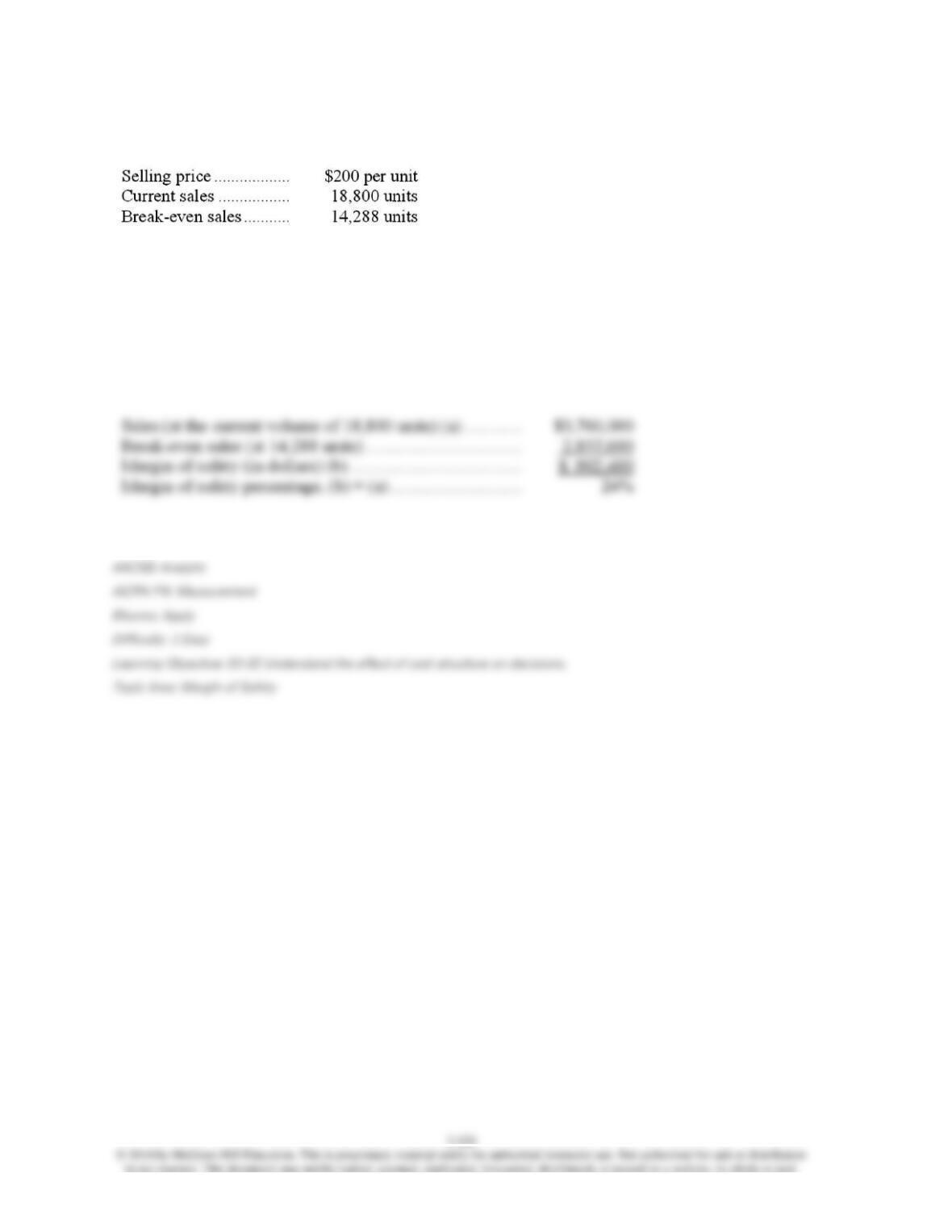
138. Dander Co. has provided the following data concerning its only product:
Required:
Compute the margin of safety in both dollars and as a percentage of sales.
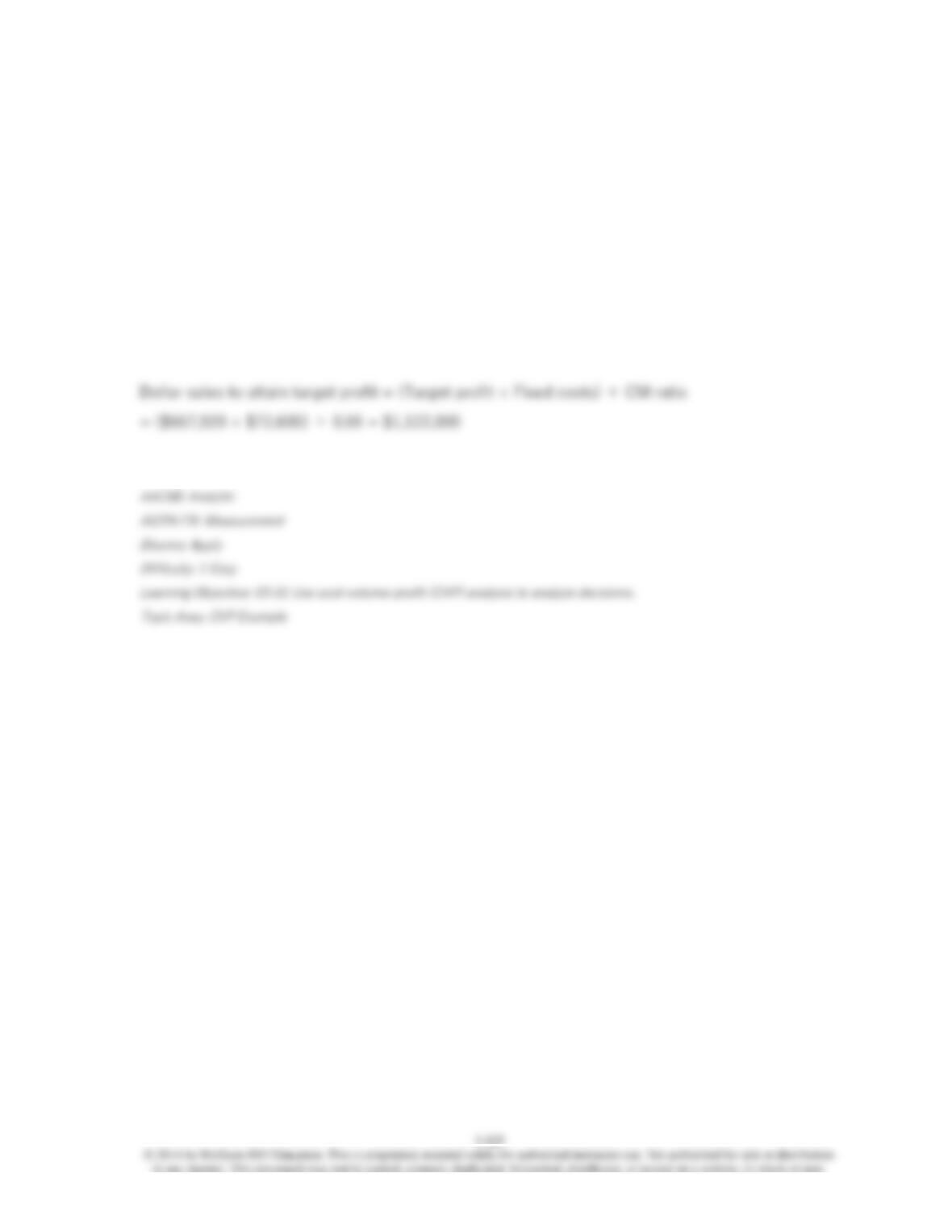
139. Doggon Inc. produces and sells a single product whose contribution margin ratio is 66%.
The company’s monthly fixed cost is $667,920 and the company’s monthly target profit is
$72,600.
Required:
Determine the dollar sales to attain the company’s target profit.
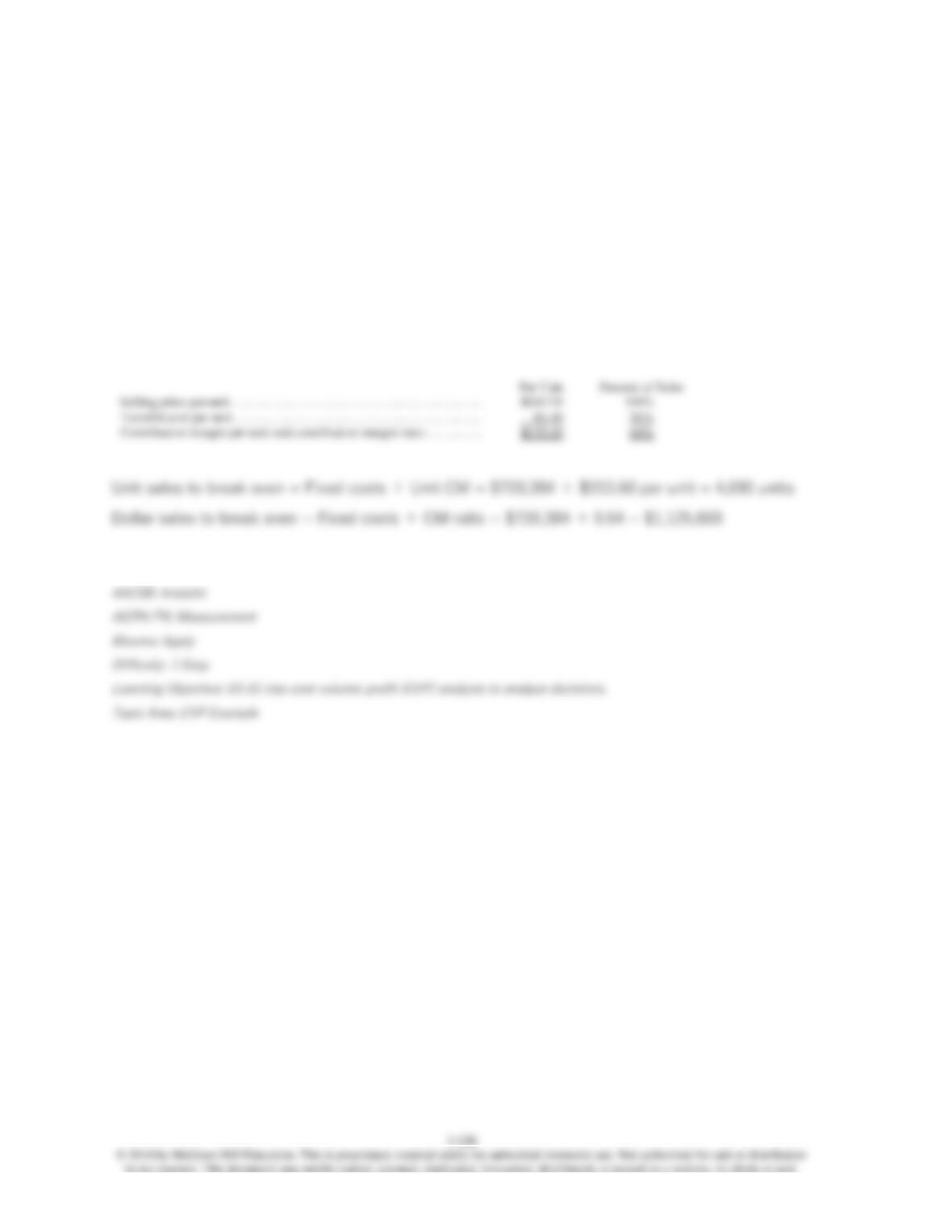
140. Madmen Corporation produces and sells a single product whose selling price is $240.00
per unit and whose variable cost is $86.40 per unit. The company’s fixed cost is $720,384 per
month.
Required:
Determine the monthly break-even point in both units and dollar sales.
141. Explain the difference between the break-even point, the margin of safety, and operating
leverage.
142. Explain the difference between total contribution margin and gross margin.
143. Why is it important for the profit equation to make a distinction between fixed and
variable costs?
144. Why is the time period so important for the definition of fixed costs?
145. Present the profit equation and define all of the terms.
3-129
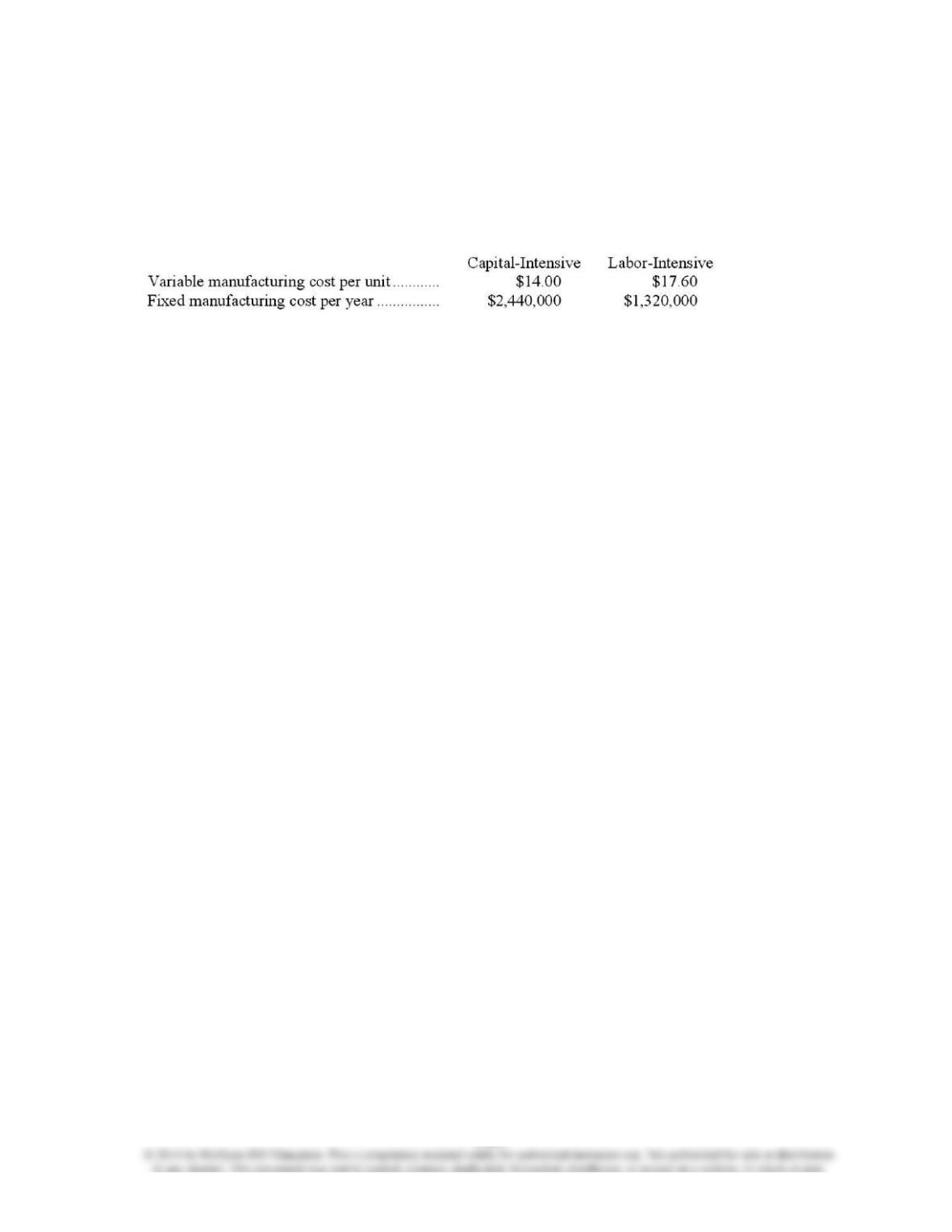
146. Candy, Inc. has decided to introduce a new product. The product can be manufactured
using either a capital-intensive or labor-intensive method. The manufacturing method will not
affect the quality or sales of the product. The estimated manufacturing costs of the two methods
are as follows:
The company’s market research department has recommended an introductory selling price of
$30 per unit for the new product. The annual fixed selling and administrative costs of the new
product are $500,000. The variable selling and administrative costs are $2 per unit regardless of
how the new product is manufactured.
Required:
a. Calculate the break-even point in units if Candy, Inc. uses the:
1. capital-intensive manufacturing method.
2. labor-intensive manufacturing method.
b. Determine the unit sales volume at which the operating profit is the same for the two
manufacturing methods.
c. Assuming sales of 250,000 units, what is the degree of operating leverage if the company uses
the:
1. capital-intensive manufacturing method.
2. labor-intensive manufacturing method.
d. What is your recommendation to management concerning which manufacturing method to
use?
3-130
3-132
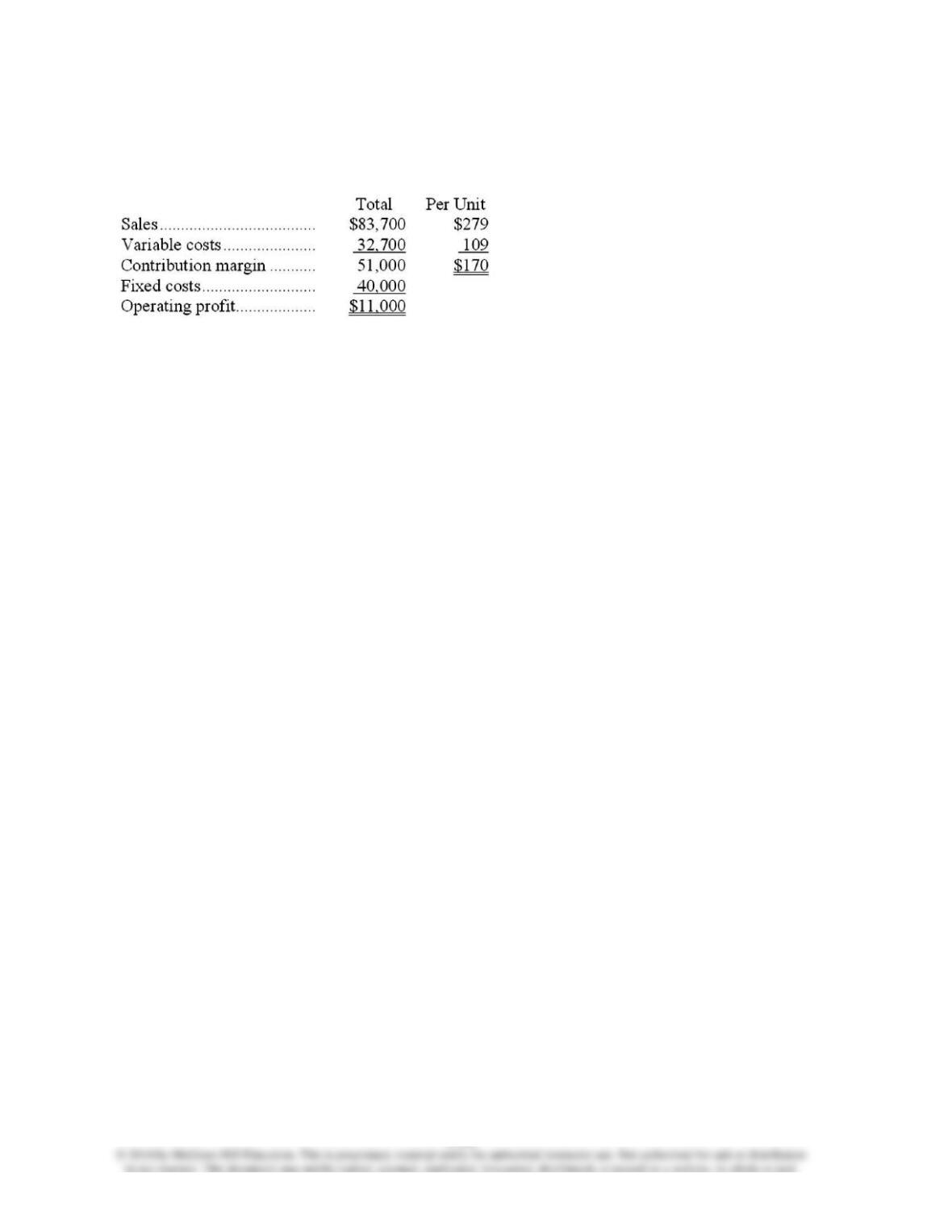
147. The following monthly data in contribution format are available for the Alpha Company
and its only product, Product Beta:
The company produced and sold 300 units during the month and had no beginning or ending
inventories.
Required:
a. Without resorting to calculations, what is the total contribution margin at the break-even
point?
b. Management is contemplating the use of plastic gearing rather than metal gearing in Product
Beta. This change would reduce variable costs by $18 per unit. The company’s sales manager
predicts that this would reduce the overall quality of the product and, thus, would result in a
decline in sales to a level of 250 units per month. Should this change be made?
c. Assume that Alpha Company is currently selling 300 units of Product Beta per month.
Management wants to increase sales and feels this can be done by cutting the selling price by
$22 per unit and increasing the advertising budget by $20,000 per month. Management believes
that these actions will increase unit sales by 50 percent. Should these changes be made?
d. Assume that Alpha Company is currently selling 300 units of Product Beta. Management wants
to automate a portion of the production process for Product Beta. The new equipment would
reduce direct labor costs by $20 per unit but would result in a monthly rental cost for the new
robotic equipment of $10,000. Management believes that the new equipment will increase the
reliability of Product Beta thus resulting in an increase in monthly sales of 12%. Should these
changes be made?