Accounting, 9e (Horngren)
Chapter 24 Performance Evaluation and the Balanced Scorecard
Learning Objective 24-1
1) When a small company grows to a large size, it may decide to decentralize because it is difficult for one owner
(or manager) to manage an entire, large business.
2) Small companies tend to use centralized decision-making because of the smaller scope of their operations.
3) Companies that are centralized split their operations into different divisions or operating units and top
management delegates decision-making to the division/unit managers.
4) A benefit of decentralization is that it allows top management to concentrate on long-term strategic planning.

5) In a decentralized business, a typical cost center is responsible for not only the profit and loss of its business, but
also for the evaluation and return on capital investment projects.
6) Which of the following is an advantage of decentralization?
A) May create disparities in alignment of goals between different business units
B) May cause inconsistencies in the way various business units operate
C) May duplicate costs and functions across multiple business units
D) Helps prepare and train managers at lower levels for higher positions later on
7) Which of the following is a disadvantage of decentralization?
A) Promotes use of specialized skills and knowledge
B) Helps business keep closer relationships with customers
C) May duplicate costs and functions across multiple business units
D) Helps prepare and train managers at lower levels for higher positions later on
8) Which of the following BEST describes the term goal congruence?
A) The creation of a strategic plan that sets managers’ goals
B) The alignment of unit managers’ goals with those of upper management and shareholders
C) A set of incentives for managers to achieve performance targets
D) Making sure that compensation packages for managers at equivalent levels are equal
9) The Frito-Lay division of PepsiCo is most likely treated as a(n):
A) cost center.
B) revenue center.
C) profit center.
D) investment center.
10) The central reservations office at American Airlines is most likely treated as a(n):
A) cost center.
B) revenue center.
C) profit center.
D) investment center.
11) A product line at Coca-Cola is most likely treated as a(n):
A) cost center.
B) revenue center.
C) profit center.
D) investment center.
12) Which of the following is a cost center?
A) A company‘s legal department
B) A company’s sales department
C) A product line of a particular company
D) A company‘s individual stores
13) Which of the following would be considered a profit center?
A) A company‘s accounting department
B) A company’s sales department
C) A company’s product line
D) A company‘s operating divisions
14) The manager of a cost center has control of:
A) revenues.
B) investment decisions.
C) expenses.
D) investment funds.
15) The manager of a profit center has control of:
A) revenues and expenses.
B) investment decisions and operating income.
C) revenues and financing decisions.
D) investment funds.
16) The human resources department would most likely be considered a(n):
A) cost center.
B) revenue center.
C) investment center.
D) profit center.
17) Which of the following would most likely be evaluated using return on investment?
A) Cost center
B) Profit center
C) Revenue center
D) Investment center
18) The production line at Gateway Computers is most likely treated as a(n):
A) cost center.
B) revenue center.
C) profit center.
D) investment center.
19) Which of the following is NOT a potential advantage of decentralization?
A) Top management can use their time to concentrate on long-term strategic planning rather than daily operations.
B) Customer relations are generally improved.
C) It improves the motivation and retention of division managers.
D) Decentralization promotes goal congruence and coordination.
1) Performance evaluation systems provide top management with a framework for maintaining control over the
organization.

2) Companies benchmark their performance against the performance of their competitors and also against their own
past performance.
3) Decentralization increases the difficulty of achieving goal congruence among managers.
4) If a manager’s performance is evaluated solely on the ability to control costs, he or she may sacrifice quality for
savings, thus endangering customer satisfaction.
5) From the shareholders’ point of view, performance measurement should focus on financial performance only.
6) Financial performance metrics are considered to be a lead indicator, providing signs of future performance.
7) Which of the following goals of a performance evaluation system is accomplished when targets are compared to
actual results?
A) Communication of a company’s expectations
B) The promotion of goal congruence
C) Motivation of assembly line employees
D) Providing feedback to management
8) Which one of the following is NOT a goal of a performance evaluation system?
A) Communicating expectations
B) Formulating a budget
C) Motivating unit managers
D) Providing feedback
9) Which of the following statements reflects the use of benchmarking in a performance evaluation system?
A) A company uses internal controls to prevent theft and wastage.
B) A company initiates innovative production technology.
C) A company compares its performance metrics with other companies in its industry.
D) A company attracts top talent from other companies using stock options and other financial rewards.
10) Which one of the following is NOT a goal of a performance evaluation system?
A) Communicating expectations
B) Benchmarking
C) Motivating unit managers
D) Issuing stock to investors
11) The performance measurement system should provide incentives for coordinating activities of the subunits and
focusing them toward the overall company objectives. This statement reflects which of the following performance
measurement goals?
A) Motivating unit managers
B) Promoting goal congruence
C) Providing feedback
D) Benchmarking
12) The performance measurement system should compare the company’s performance against the best practices in
the industry. This statement reflects which of the following performance measurement goals?
A) Motivating unit managers
B) Promoting goal congruence
C) Providing feedback
D) Benchmarking
13) The performance measurement system must ensure that managers know the specific goals and targets for the
subunits. This statement reflects which of the following performance measurement goals?
A) Motivating unit managers
B) Communicating expectations
C) Providing feedback
D) Motivating managers
14) The performance measurement system lets upper management know whether the subunits are achieving their
goals and targets or not. This statement reflects which of the following performance measurement goals?
A) Motivating unit managers
B) Communicating expectations
C) Providing feedback
D) Motivating managers
Learning Objective 24-3
1) In a balanced scorecard system, the key performance indicators (KPIs) are ways to measure whether the company
is meeting its goals.
2) Each one of the four perspectives of a strong balanced scorecard should have as many KPIs as management can
devise, to create a more effective and efficient system.
3) A company that uses a balanced scorecard has established a KPI for employee turnover. If the KPI is negative,
that implies a very low rate of employee turnover.
4) In designing a balanced scorecard, the company begins with company goals, then develops KPIs, and finally,
based on the KPIs that are established, the company identifies the company’s critical factors.
5) A good balanced scorecard focuses only on leading indicators, because lagging indicators that relate to past
performance are not important for the scorecard.
6) Which of the following is NOT one of the four perspectives of a balanced scorecard?
A) Financial perspective
B) Customer perspective
C) Technological perspective
D) Learning and growth perspective
7) One part of the balanced scorecard helps management answer the question: “How do we look to shareholders?”
Which of the four perspectives is being described here?
A) Financial perspective
B) Customer perspective
C) Internal business perspective
D) Learning and growth perspective
8) One part of the balanced scorecard helps management answer the question: “How can we continue to improve
and create value?” Which of the four perspectives is being described here?
A) Financial perspective
B) Customer perspective
C) Internal business perspective
D) Learning and growth perspective
9) One part of the balanced scorecard helps management answer the question: “What business processes must we
excel at in order to reach our objectives?” Which of the four perspectives is being described here?
A) Financial perspective
B) Customer perspective
C) Internal business perspective
D) Learning and growth perspective
10) One perspective of the balanced scorecard focuses on revenue growth and productivity. Which of the four
perspectives is this?
A) Financial perspective
B) Customer perspective
C) Internal business perspective
D) Learning and growth perspective
11) KPIs for revenue growth and cost cutting pertain to which of the four perspectives of a balanced scorecard?
A) Financial perspective
B) Customer perspective
C) Internal business perspective
D) Learning and growth perspective
12) KPIs for customer satisfaction ratings pertain to which of the four perspectives of a balanced scorecard?
A) Financial perspective
B) Customer perspective
C) Internal business perspective
D) Learning and growth perspective
13) KPIs, such as percentage of market share and rate of on-time deliveries, pertain to which of the four perspectives
of a balanced scorecard?
A) Financial perspective
B) Customer perspective
C) Internal business perspective
D) Learning and growth perspective
14) Innovation, operations and post-sales service are key factors related to which of the four perspectives of a
balanced scorecard?
A) Financial perspective
B) Customer perspective
C) Internal business perspective
D) Learning and growth perspective
15) Employee skills, information system capabilities, and the company’s “climate for action” are key factors related
to which of the four perspectives of a balanced scorecard?
A) Financial perspective
B) Customer perspective
C) Internal business perspective
D) Learning and growth perspective
16) Which of the following statements most accurately describes the company’s “climate for action?”
A) A corporate culture that encourages communication, change, and growth
B) A corporate culture that is focused on strong, top-down command and control
C) A corporate culture which is aimed exclusively at period earnings
D) A corporate culture that encourages physical activity, sports and recreation to improve employee health and
morale
17) Many companies use a balanced scorecard for performance evaluation. The balanced scorecard has four
business perspectives, and utilizes KPIs to evaluate performance in various areas. Which of the following KPIs
would relate to the financial perspective?
A) Hours of employee training
B) Number of warranty claims
C) Percentage of market share
D) Return on investment

18) Many companies use a balanced scorecard for performance evaluation. The balanced scorecard has four
business perspectives, and utilizes KPIs to evaluate performance in various areas. Which of the following KPIs
would relate to the customer perspective?
A) Hours of employee training
B) Number of warranty claims
C) Percentage of market share
D) Return on investment
19) Many companies use a balanced scorecard for performance evaluation. The balanced scorecard has four
business perspectives, and utilizes KPIs to evaluate performance in various areas. Which of the following KPIs
would relate to the internal business perspective?
A) Hours of employee training
B) Number of warranty claims
C) Percentage of market share
D) Return on investment
20) Many companies use a balanced scorecard for performance evaluation. The balanced scorecard has four
business perspectives, and utilizes KPIs to evaluate performance in various areas. Which of the following KPIs
would relate to the learning and growth perspective?
A) Hours of employee training
B) Number of warranty claims
C) Percentage of market share
D) Return on investment
21) In a balanced scorecard system, which of the following KPIs would relate to the financial perspective?
A) Defect rate
B) Employee satisfaction
C) Gross margin growth
D) Number of repeat customers
22) In a balanced scorecard system, which of the following KPIs would relate to the customer perspective?
A) Defect rate
B) Employee satisfaction
C) Gross margin growth
D) Number of repeat customers
23) In a balanced scorecard system, which of the following KPIs would relate to the internal business perspective?
A) Defect rate
B) Employee satisfaction
C) Gross margin growth
D) Number of repeat customers
24) In a balanced scorecard system, which of the following KPIs would relate to the learning and growth
perspective?
A) Defect rate
B) Employee satisfaction
C) Gross margin growth
D) Number of repeat customers

25) In a balanced scorecard system, if customer satisfaction was one of the critical factors, which of the following
would be a relevant KPI?
A) Revenue growth
B) Production yield rate
C) Market share
D) Employee training hours
26) In a balanced scorecard system, if operational efficiency was one of the critical factors, which of the following
would be a relevant KPI?
A) Revenue growth
B) Production yield rate
C) Market share
D) Employee training hours
27) In a balanced scorecard system, if employee excellence was one of the critical factors, which of the following
would be a relevant KPI?
A) Revenue growth
B) Production yield rate
C) Market share
D) Employee training hours
28) In a balanced scorecard system, if financial profitability was one of the critical factors, which of the following
would be a relevant KPI?
A) Revenue growth
B) Production yield rate
C) Market share
D) Employee training hours
29) Which of the following is NOT a relevant performance indicator for the balanced scorecard’s financial
perspective?
A) Earnings per share
B) Revenue growth
C) Return on investment
D) Number of repeat customers
30) Which of the following is a relevant performance indicator for the balanced scorecard’s learning and growth
perspective?
A) Earnings per share growth
B) Revenue growth
C) Employee access to customer information
D) Percentage of on-time deliveries
31) Which of the following statements BEST describes the purpose of the balanced scorecard approach?
A) The goal of the balanced scorecard approach is to maximize profits.
B) The goal of the balanced scorecard approach is to maximize operational efficiency.
C) The goal of the balanced scorecard approach is to develop a set of organizational performance measures to assist
the organization in implementing its strategies.
D) The goal of the balanced scorecard approach is to maximize shareholder wealth.
32) Manufacturing cycle time is a measure pertaining to the balanced scorecard’s:
A) learning and growth perspective.
B) internal business perspective.
C) financial perspective.
D) customer perspective.
33) Real-time feedback on quality is a measure pertaining to the balanced scorecard’s:
A) learning and growth perspective.
B) internal business perspective.
C) financial perspective.
D) customer perspective.
34) New product development time is a measure pertaining to the balanced scorecard’s:
A) learning and growth perspective.
B) internal business perspective.
C) financial perspective.
D) customer perspective.
35) Which of the following is FALSE about a balanced scorecard?
A) It communicates the company’s strategy to employees.
B) It monitors how well the company’s employees are realizing the company’s business strategy.
C) It provides a starting point for creating company strategies.
D) It provides benchmarks to encourage employees to carry out the company’s strategy.
36) Customer satisfaction, operational efficiency, and employee excellence are the three primary considerations
when using the balanced scorecard approach.

37) When measuring a company’s performance, which of the following is NOT a lag indicator?
A) Operating income for the last month
B) Ratio analysis
C) Variance analysis
D) The expected growth in future demand for a company’s products
38) Which of the following is a lagging indicator?
A) Operational performance
B) Customer satisfaction
C) Financial performance
D) Employee training
Learning Objective 24-4
1) When companies use the management by exception approach, ONLY unfavorable variances are investigated.
2) Revenue center performance reports highlight ONLY flexible budget variances, whereas cost center performance
reports include sales volume variances.
3) Managers of profit centers are responsible for generating revenue and controlling costs, so their performance
reports include both revenues and expenses.
4) A critical function of the performance report is to focus on which managers must take blame for unfavorable
variances.
5) Based on the variances shown on responsibility performance reports, management must take corrective action on
all variances, including favorable, unfavorable, controllable, and uncontrollable variances.
6) Union Company’s corporate payroll department is a cost center, and prepares monthly performance reports.
Union uses the management by exception approach, based on the dollar amounts of the variances. Based on the
performance report for the payroll department shown below, on which of the following variances would the
company focus first for investigation and explanation?
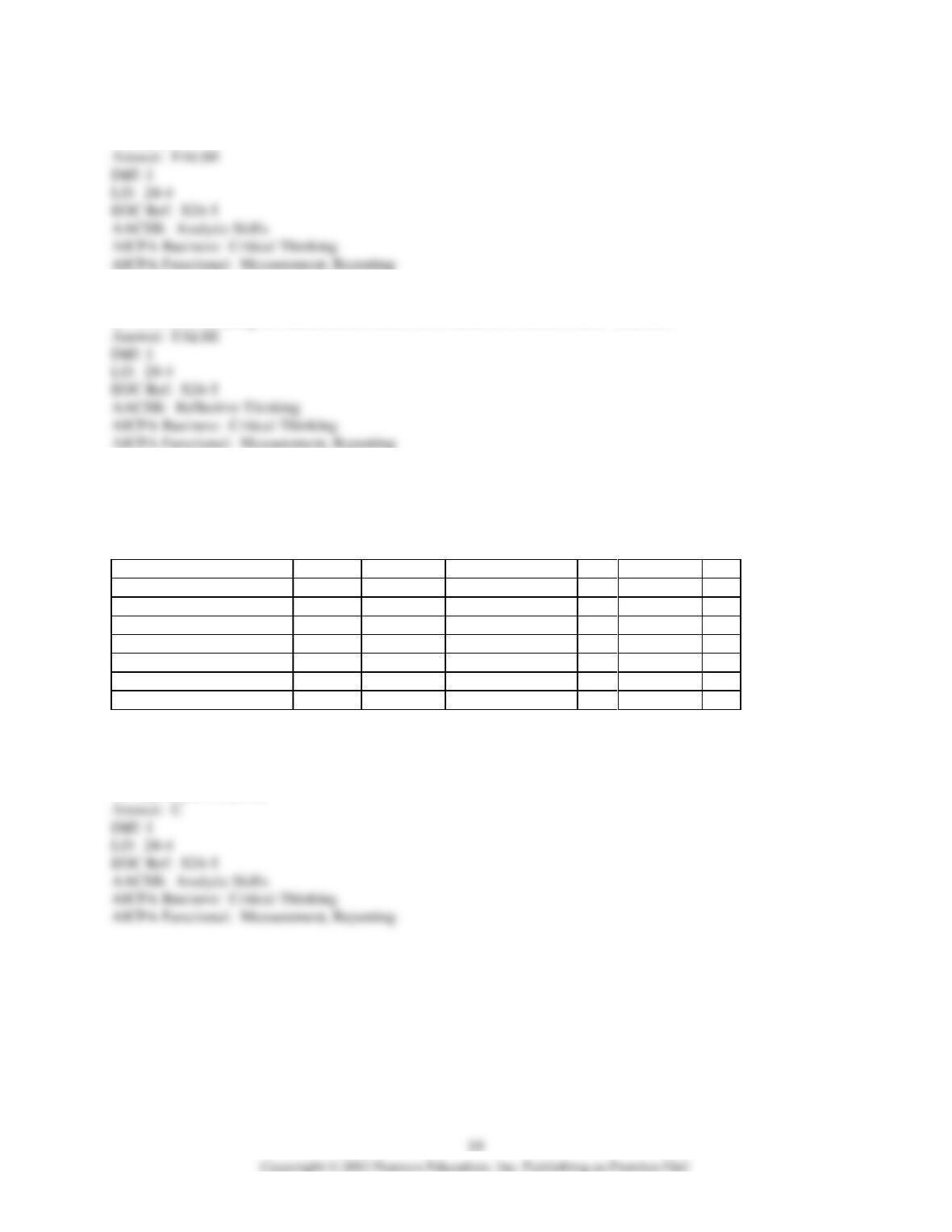
Cost Center
Flexible
Flexible Budget
Performance Report
Actual
Budget
Variance
U/F
% variance
U/F
Salary & benefits
$46,000
$44,500
$1,500
U
3.4%
U
Rent expense
12,750
11,900
850
U
7.1%
U
Depreciation expense
8,900
9,080
180
F
2.0%
F
Supply expense
1,890
2,200
310
F
14.1%
F
Miscellaneous expense
4,320
4,120
200
U
4.9%
U
$73,860
$71,800
$2,060
U
2.9%
U
A) Rent expense
B) Miscellaneous expense
C) Salary and benefits
D) Depreciation expense
7) Westhaven Company has a warehousing unit which operates as a cost center. They prepare monthly performance
reports.
The report for February is shown here:
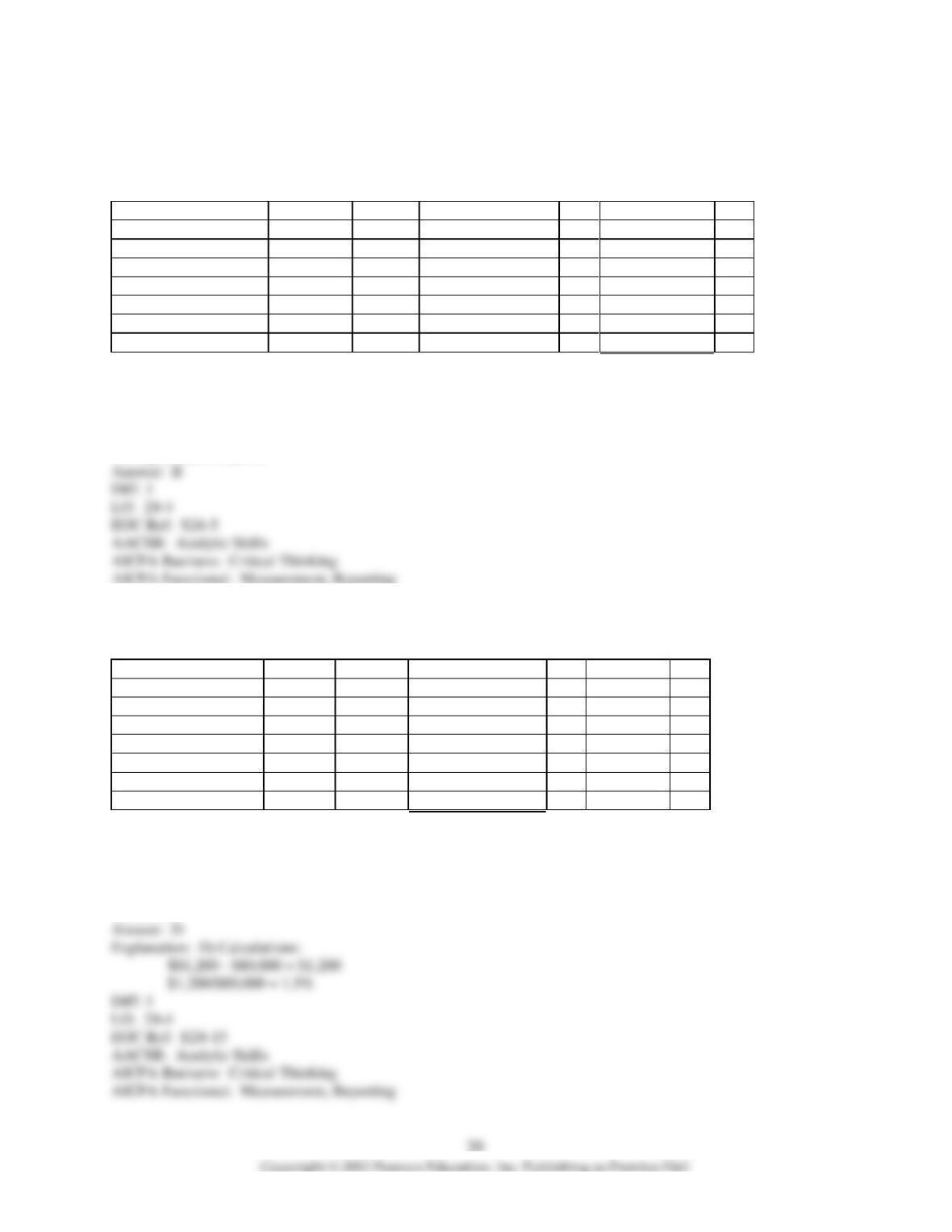
Cost Center
Flexible
Flexible Budget
Performance Report
Actual
Budget
Variance
U/F
% variance
U/F
Salary & benefits
$119,000
$120,000
$1,000
F
0.8%
F
Rent expense
94,500
90,000
4,500
U
5.0%
U
Depreciation expense
23,200
24,000
800
F
3.3%
F
Supply expense
11,890
12,000
110
F
0.9%
F
Other expense
8,120
8,000
120
U
1.5%
U
$256,710
$254,000
$2,710
U
1.1%
U
Westhaven uses the management by exception approach. On which of the following variances would the company
focus first for investigation and explanation?
A) Supply expense
B) Rent expense
C) Other expense
D) Depreciation expense
8) Waycross Construction Company has a pipeyard operation which is run as a cost center. They are preparing a
performance report for the month of March and have provided the data below:
Cost Center
Flexible
Flexible Budget
Performance Report
Actual
Budget
Variance
U/F
% variance
U/F
Wages & benefits
$81,200
$80,000
Office lease expense
42,060
45,000
Depreciation expense
39,600
42,000
Insurance expense
33,490
30,000
Other expense
7,120
8,000
$203,470
$205,000
How much is the percentage variance for Wages and benefits?
A) 2.2 % F
B) 2.2 % U
C) 1.5% F
D) 1.5% U