Learning Objective 23-5
1) When completing a standard costing income statement, favorable variances for direct materials or direct labor
will go to reduce the “cost of goods sold at standard cost.”
2) When completing a standard costing income statement, unfavorable variances for direct materials or direct labor
will go to reduce the “cost of goods sold at standard cost.”
3) When a manufacturing company uses standard costing accounting, the Manufacturing wages account records
actual wages and NOT standard wages.
4) When a manufacturing company uses standard costing accounting, the Manufacturing overhead account records
the actual amounts of both variable and fixed overhead as debits to the account.
5) When management is investigating overhead variances, they need to further determine whether cost increases
were controllable or uncontrollable.
6) When a manufacturing company uses standard costing methodology in their journal entries and accounts, the
Work in process account records all transactions at standard cost amounts.
7) When a manufacturing company uses standard costing methodology in their journal entries and accounts, a
favorable variance has the effect of being a contra expense.
8) When a manufacturing company uses standard costing methodology in their journal entries and accounts, an
unfavorable variance has the effect of being a contra expense.
9) Allbrand Company uses standard costs for their manufacturing division. Standards specify 0.1 direct labor hours
per unit of product. At the beginning of the year, the static budget for variable overhead costs included the
following data:
Production volume: 5,000 units
Estimated variable overhead costs: $12,500
Estimated direct labor hours: 500 hours
At the end of the year, actual data were as follows:
Production volume: 4,000 units
Actual variable overhead costs: $11,760
Actual direct labor hours: 480 hours
How much is the standard price per hour for variable overhead?
A) $25.00 per direct labor hour
B) $20.50 per direct labor hour
C) $28.00 per direct labor hour
D) $26.88 per direct labor hour
10) Allbrand Company uses standard costs for their manufacturing division. Standards specify 0.1 direct labor hours
per unit of product. At the beginning of the year, the static budget for variable overhead costs included the
following data:
Production volume: 5,000 units
Estimated variable overhead costs: $12,500
Estimated direct labor hours: 500 hours
At the end of the year, actual data were as follows:
Production volume: 4,000 units
Actual variable overhead costs: $11,760
Actual direct labor hours: 480 hours
How much is the spending (price) variance for variable overhead?
A) $2,000 Favorable
B) $2,000 Unfavorable
C) $240 Favorable
D) $240 Unfavorable
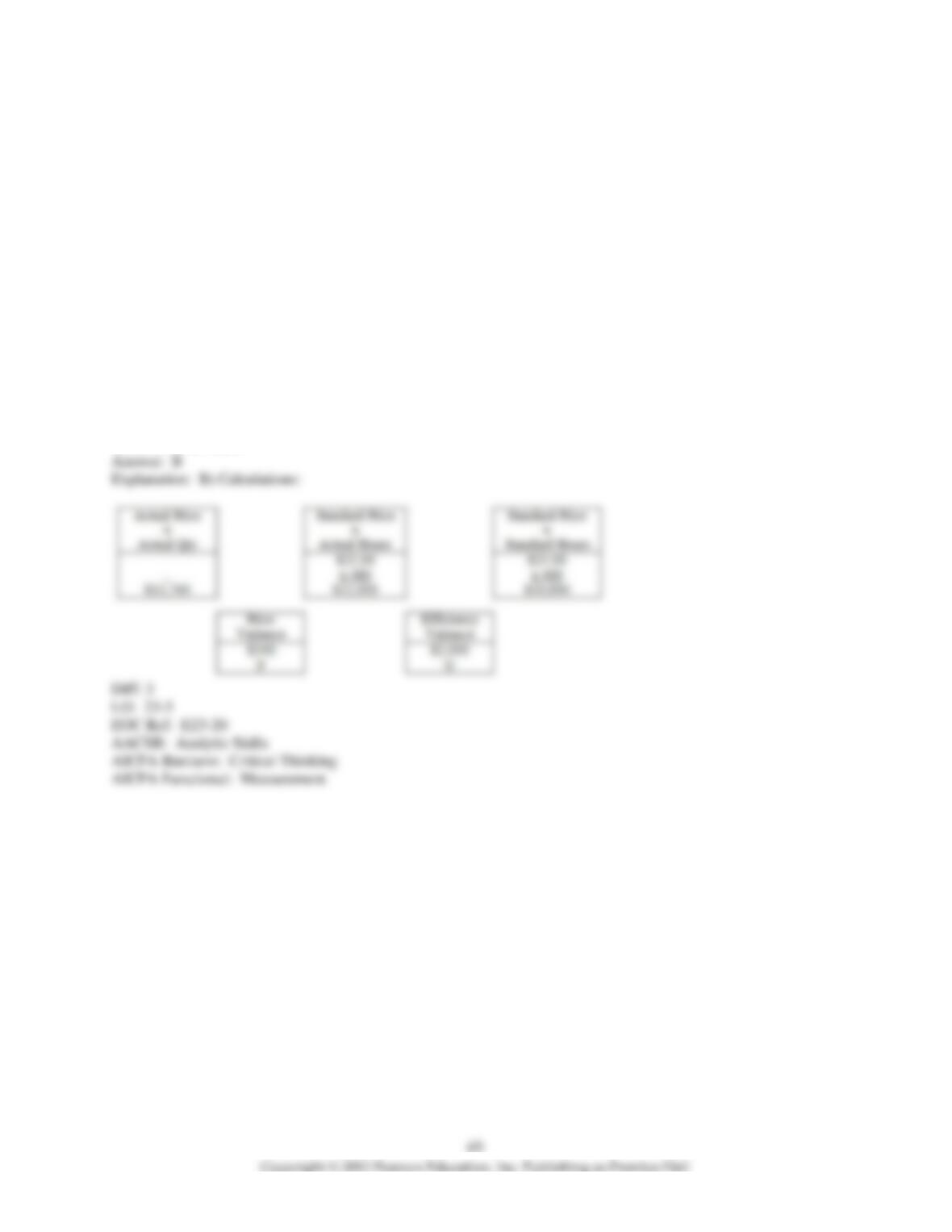
11) Allbrand Company uses standard costs for their manufacturing division. Standards specify 0.1 direct labor hours
per unit of product. At the beginning of the year, the static budget for variable overhead costs included the
following data:
Production volume: 5,000 units
Estimated variable overhead costs: $12,500
Estimated direct labor hours: 500 hours
At the end of the year, actual data were as follows:
Production volume: 4,000 units
Actual variable overhead costs: $11,760
Actual direct labor hours: 480 hours
How much is the efficiency variance for variable overhead?
A) $2,000 Favorable
B) $2,000 Unfavorable
C) $240 Favorable
D) $240 Unfavorable
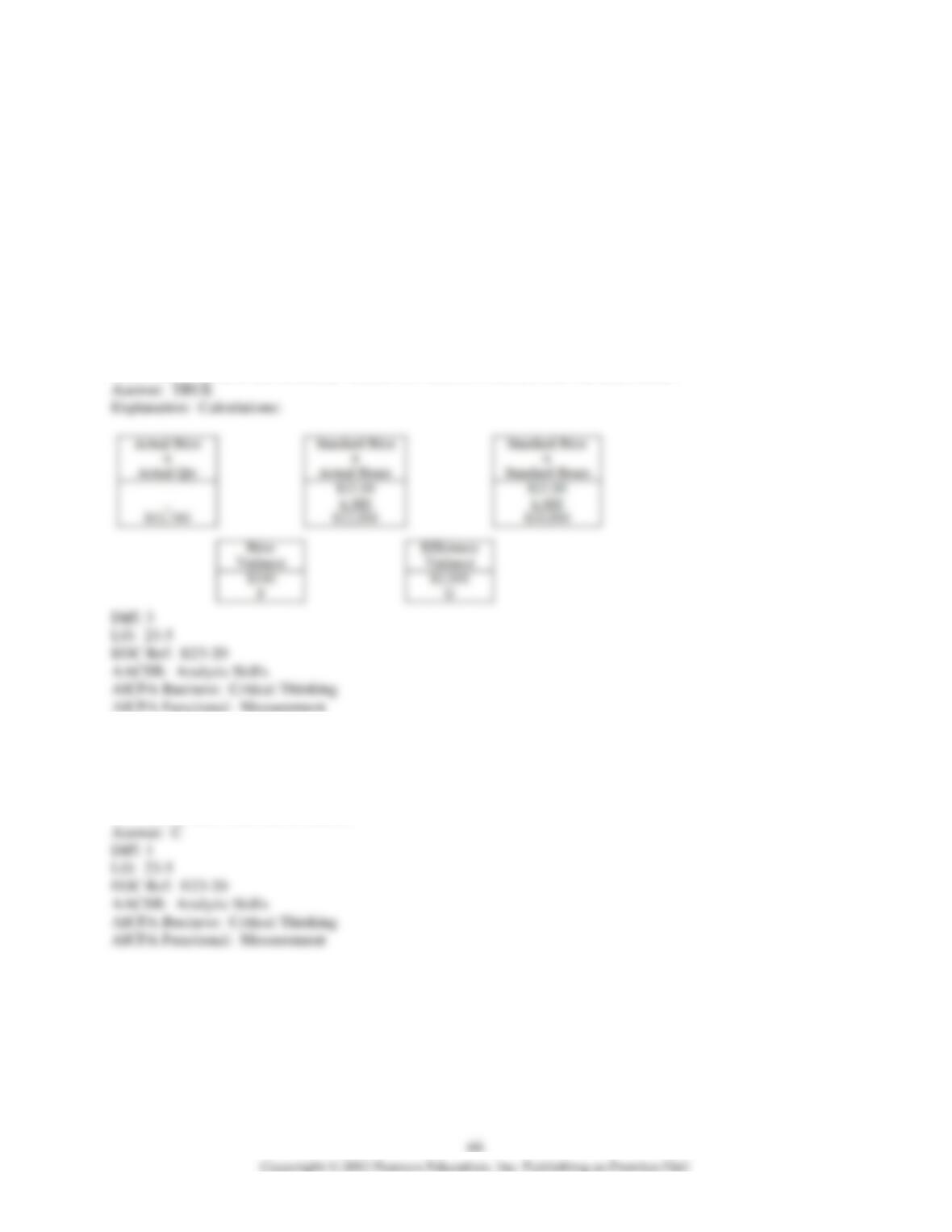
12) Allbrand Company uses standard costs for their manufacturing division. Standards specify 0.1 direct labor hours
per unit of product. At the beginning of the year, the static budget for variable overhead costs included the
following data:
Production volume: 5,000 units
Estimated variable overhead costs: $12,500
Estimated direct labor hours: 500 hours
At the end of the year, actual data were as follows:
Production volume: 4,000 units
Actual variable overhead costs: $11,760
Actual direct labor hours: 480 hours
At the end of the year, the efficiency variance for variable overhead costs was unfavorable.
13) When analyzing overhead costs, which of the following is a key point to investigate?
A) Whether workers can produce goods more quickly and efficiently
B) Whether direct materials prices are higher than standards
C) Whether certain overhead costs are controllable or not
D) Whether labor costs can be reduced
14) Zennick Fashion Products uses standard costs for their manufacturing division. Standards specify 3.0 direct
labor hours per unit of product. At the beginning of the year, the static budget for variable overhead costs included
the following data:
Production volume: 1,000 units
Estimated variable overhead costs: $120,000
Estimated direct labor hours: 3,000 hours
At the end of the year, actual data were as follows:
Production volume: 1,500 units
Actual variable overhead costs: $174,300
Actual direct labor hours: 4,200 hours
How much is the standard price per hour for variable overhead?
A) $35.00 per direct labor hour
B) $39.50 per direct labor hour
C) $38.00 per direct labor hour
D) $40.00 per direct labor hour
15) Zennick Fashion Products uses standard costs for their manufacturing division. Standards specify 3.0 direct
labor hours per unit of product. At the beginning of the year, the static budget for variable overhead costs included
the following data:
Production volume: 1,000 units
Estimated variable overhead costs: $120,000
Estimated direct labor hours: 3,000 hours
At the end of the year, actual data were as follows:
Production volume: 1,500 units
Actual variable overhead costs: $174,300
Actual direct labor hours: 4,200 hours
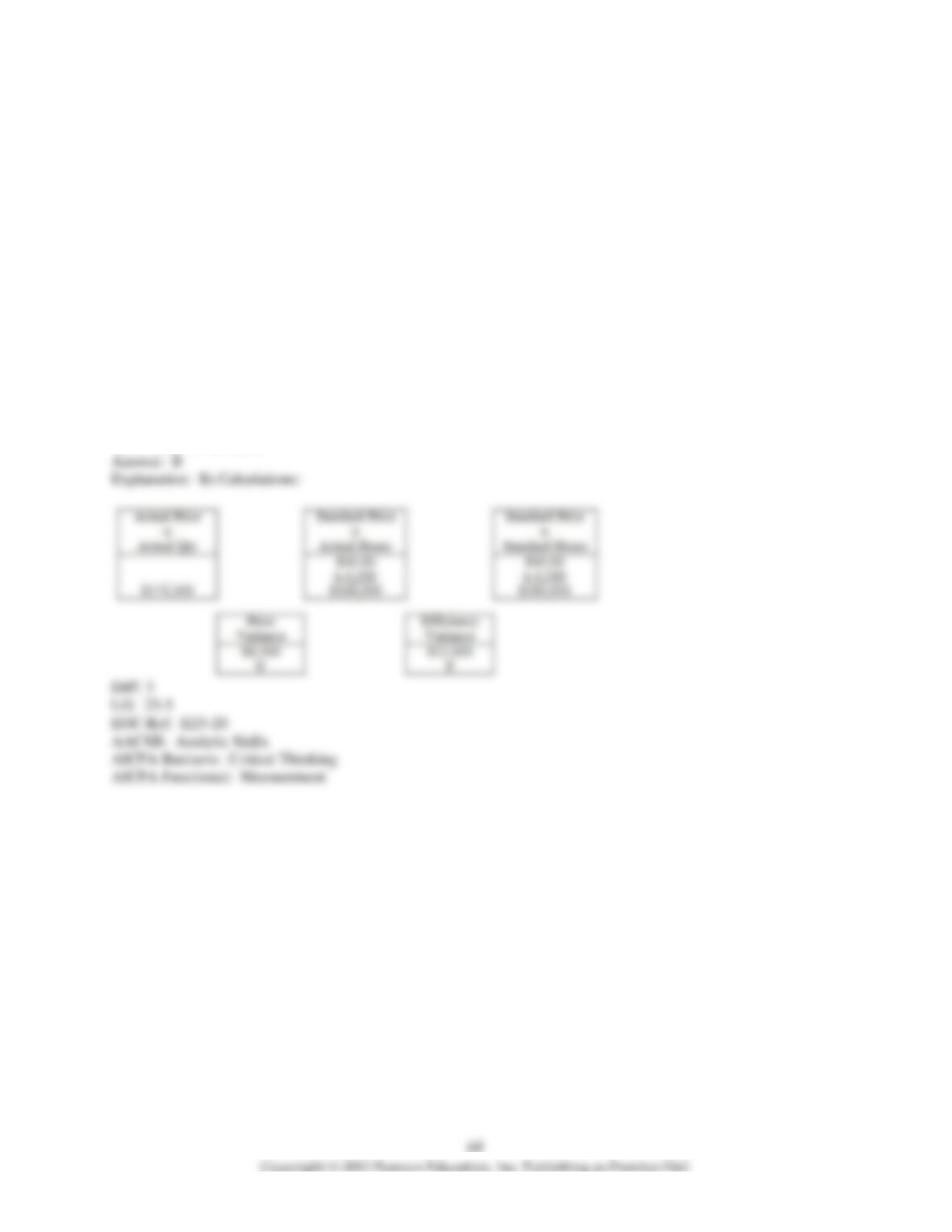
How much is the spending (price) variance for variable overhead?
A) $6,300 Favorable
B) $6,300 Unfavorable
C) $12,000 Favorable
D) $12,000 Unfavorable
16) Zennick Fashion Products uses standard costs for their manufacturing division. Standards specify 3.0 direct
labor hours per unit of product. At the beginning of the year, the static budget for variable overhead costs included
the following data:
Production volume: 1,000 units
Estimated variable overhead costs: $120,000
Estimated direct labor hours: 3,000 hours
At the end of the year, actual data were as follows:
Production volume: 1,500 units
Actual variable overhead costs: $174,300
Actual direct labor hours: 4,200 hours
How much is the efficiency variance for variable overhead?
A) $6,300 Favorable
B) $6,300 Unfavorable
C) $12,000 Favorable
D) $12,000 Unfavorable
17) Zennick Fashion Products uses standard costs for their manufacturing division. Standards specify 3.0 direct
labor hours per unit of product. At the beginning of the year, the static budget for variable overhead costs included
the following data:
Production volume: 1,000 units
Estimated variable overhead costs: $120,000
Estimated direct labor hours: 3,000 hours
At the end of the year, actual data were as follows:
Production volume: 1,500 units
Actual variable overhead costs: $174,300
Actual direct labor hours: 4,200 hours
At the end of the year, the spending (price) variance for variable overhead is favorable.
18) Discount Brand Products uses standard costing to manage their direct costs and their overhead costs. Overhead
costs are allocated based on direct labor hours. In the first quarter, Discount Brand had a favorable price variance
for their variable overhead costs. Which of the following scenarios would be a reasonable explanation for that
variance?
A) The actual number of direct labor hours was lower than budgeted.
B) The actual costs were higher than budgeted.
C) The actual costs were lower than budgeted.
D) The actual number of direct labor hours was higher than budgeted.
19) Discount Brand Products uses standard costing to manage their direct costs and their overhead costs. Overhead
costs are allocated based on direct labor hours. In the first quarter, Discount Brand had a favorable efficiency
variance for their variable overhead costs. Which of the following scenarios would be a reasonable explanation for
that variance?
A) The actual number of direct labor hours was lower than budgeted.
B) The actual costs were higher than budgeted.
C) The actual costs were lower than budgeted.
D) The actual number of direct labor hours was higher than budgeted.
20) Quality Brand Products uses standard costing to manage their direct costs and their overhead costs. Overhead
costs are allocated based on direct labor hours. In the first quarter, Quality Brand had an unfavorable price variance
for their variable overhead costs. Which of the following scenarios would be a reasonable explanation for that
variance?
A) The actual number of direct labor hours was lower than budgeted.
B) The actual costs were higher than budgeted.
C) The actual costs were lower than budgeted.
D) The actual number of direct labor hours was higher than budgeted.
21) Quality Brand Products uses standard costing to manage their direct costs and their overhead costs. Overhead
costs are allocated based on direct labor hours. In the first quarter, Quality Brand had an unfavorable efficiency
variance for their variable overhead costs. Which of the following scenarios would be a reasonable explanation for
that variance?
A) The actual number of direct labor hours was lower than budgeted.
B) The actual costs were higher than budgeted.
C) The actual costs were lower than budgeted.
D) The actual number of direct labor hours was higher than budgeted.
Learning Objective 23-6
1) Atlantic Manufacturing Company uses standard costing methodology in their journal entries and accounts.
Standards for direct materials are as follows:
Pounds per unit 2.0 Price per pound $5.00
Atlantic plans to produce 3,000 units of product, and has just purchased 10,000 pounds of raw materials for a net
cost of $48,000. The journal entry to record this transaction would be to:
A) debit Materials inventory $50,000, credit Accounts payable $48,000, credit Materials Price Variance $2,000.
B) debit Materials inventory $48,000, credit Accounts payable $48,000.
C) debit Materials inventory $50,000, credit Accounts payable $50,000, credit Materials Price Variance $2,000.
D) debit Materials price variance $2,000, debit Materials inventory $48,000, credit Accounts payable $50,000.
2) Atlantic Manufacturing Company uses standard costing methodology in their journal entries and accounts.
Standards for direct materials are as follows:
Pounds per unit 2.0 Price per pound $5.00
Actual purchases of materials for the current month are as follows: 10,000 pounds for $48,000
Planned production for the month: 3,000 units
Atlantic has just issued 10,000 pounds of raw materials to production. The journal entry to record this transaction
would be to:
A) debit WIP $28,800, credit Materials inventory $30,000, debit Materials efficiency variance $1,200.
B) debit WIP $28,800, credit Materials inventory $50,000, debit Materials efficiency variance $28,750.
C) debit WIP $30,000, credit Materials inventory $50,000, debit Materials efficiency Variance $20,000.
D) debit WIP $50,000, credit Materials inventory $48,000, credit Materials efficiency variance $50,000.