2) When a company is using standard costs, a favorable variance is a definite indication that a manager is doing a
good job.
3) When a company is using standard costs, an unfavorable variance is NOT necessarily an indication that a
manager is doing a poor job.
4) When a company is using standard costs, favorable variances are good news, and so the reasons for them do not
need to be explained or investigated.
5) When a company is using standard costs, only unfavorable variances need to be explained or investigated.
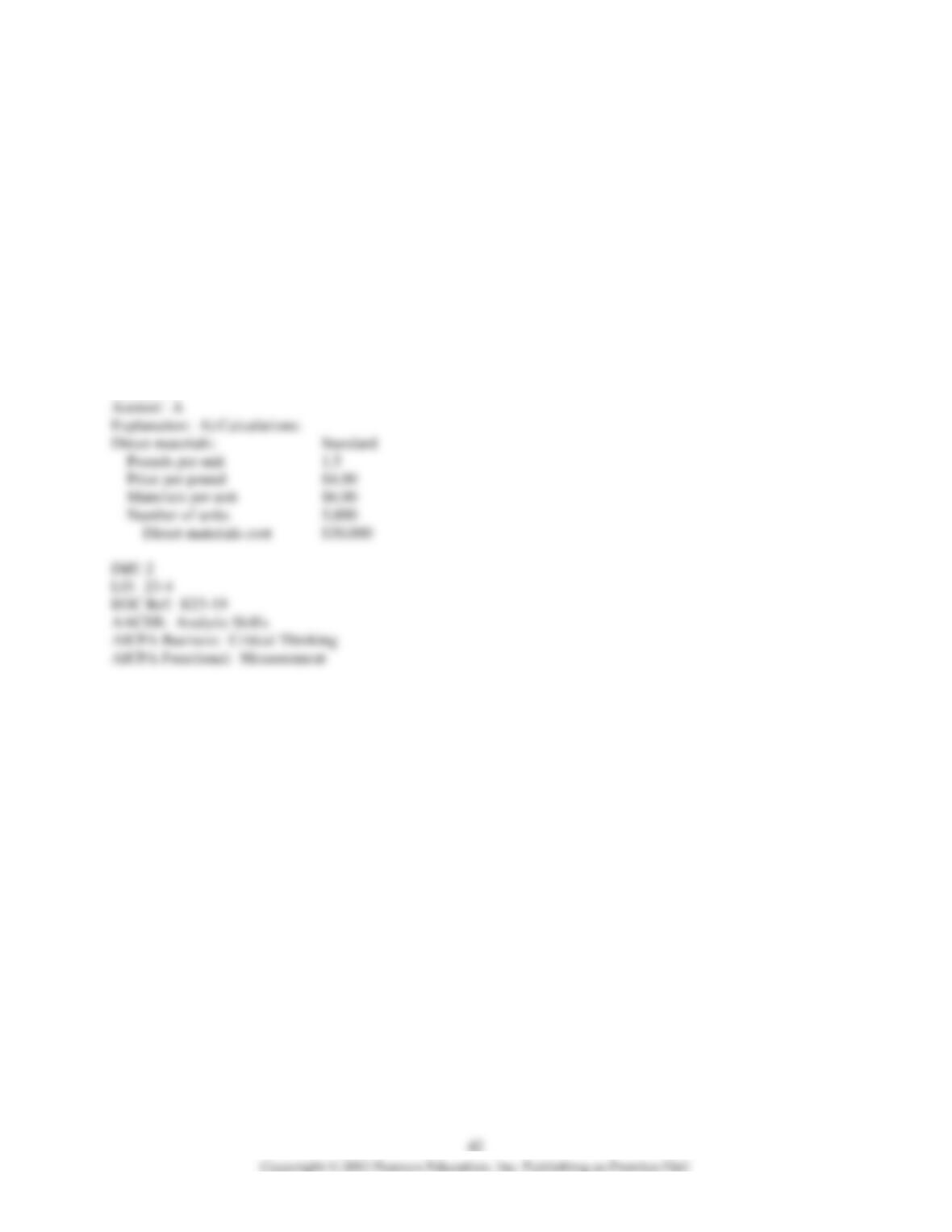
6) Faas Marine Stores Company manufactures decorative fittings for luxury yachts which require highly skilled
labor, and special metallic materials. Faas uses standard costs to prepare its flexible budget. For the first quarter of
2011, direct material and direct labor standards for one of their popular products were as follows:
Materials: 1.5 pounds per unit; $4.00 per pound
Labor: 2.0 hours per unit; $18.00 per hour
During the first quarter, Faas produced 5,000 units of this product. Actual direct materials costs were $29,750.
Actual direct labor costs were $184,800.
For purposes of preparing the flexible budget, what is the total standard direct materials cost at a production volume
of 5,000 units?
A) $30,000
B) $29,750
C) $32,345
D) $29,975
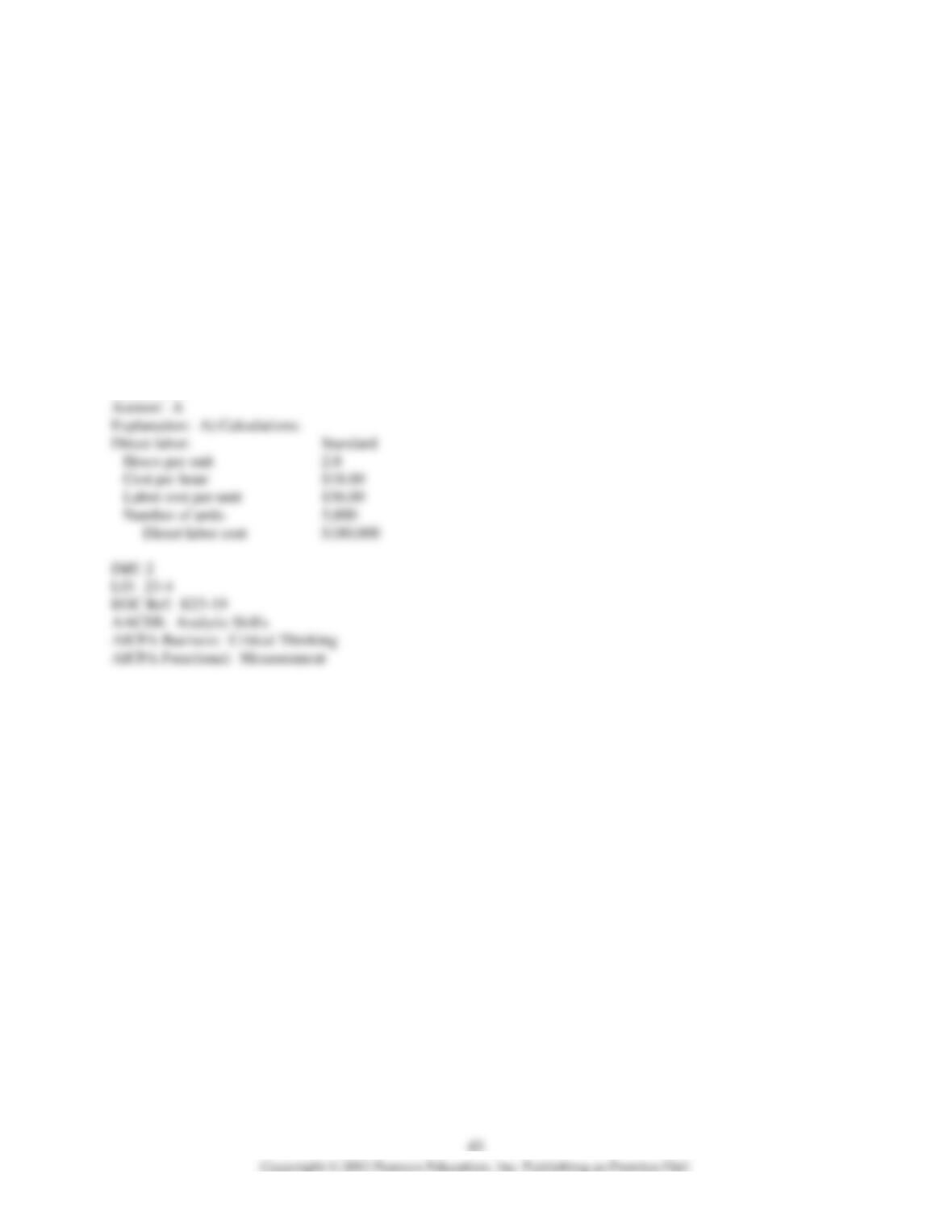
7) Faas Marine Stores Company manufactures decorative fittings for luxury yachts which require highly skilled
labor, and special metallic materials. Faas uses standard costs to prepare its flexible budget. For the first quarter of
2011, direct material and direct labor standards for one of their popular products were as follows:
Materials: 1.5 pounds per unit; $4.00 per pound
Labor: 2.0 hours per unit; $18.00 per hour
During the first quarter, Faas produced 5,000 units of this product. Actual direct materials costs were $29,750.
Actual direct labor costs were $184,800.
For purposes of preparing the flexible budget, what is the total standard direct labor cost at a production volume of
5,000 units?
A) $180,000
B) $184,800
C) $182,345
D) $179,975
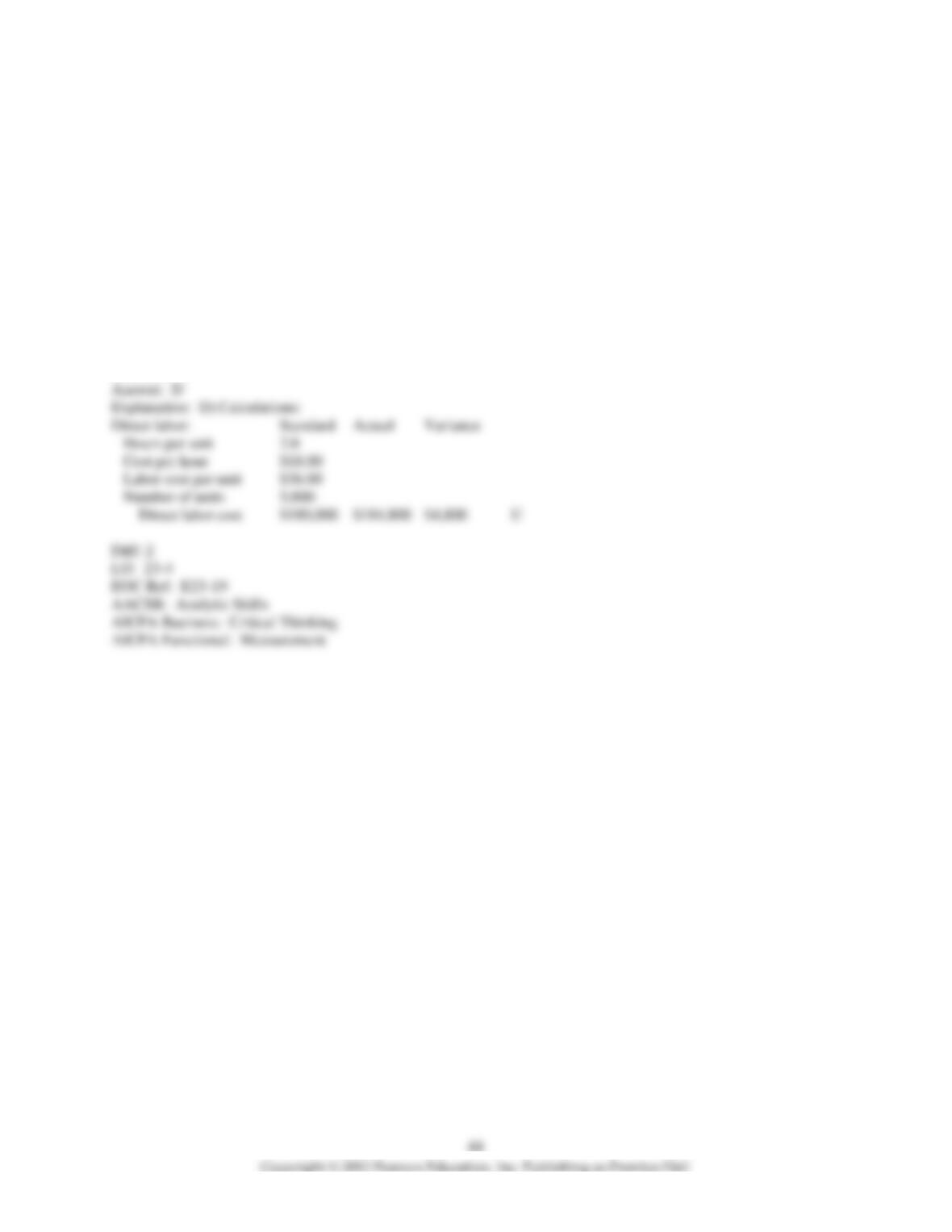
8) Faas Marine Stores Company manufactures decorative fittings for luxury yachts which require highly skilled
labor, and special metallic materials. Faas uses standard costs to prepare its flexible budget. For the first quarter of
2011, direct material and direct labor standards for one of their popular products were as follows:
Materials: 1.5 pounds per unit; $4.00 per pound
Labor: 2.0 hours per unit; $18.00 per hour
During the first quarter, Faas produced 5,000 units of this product. Actual direct materials costs were $29,750.
Actual direct labor costs were $184,800.
For purposes of calculating the flexible budget variances, what is the direct labor cost variance?
A) $3,200 F
B) $3,200 U
C) $4,800 F
D) $4,800 U
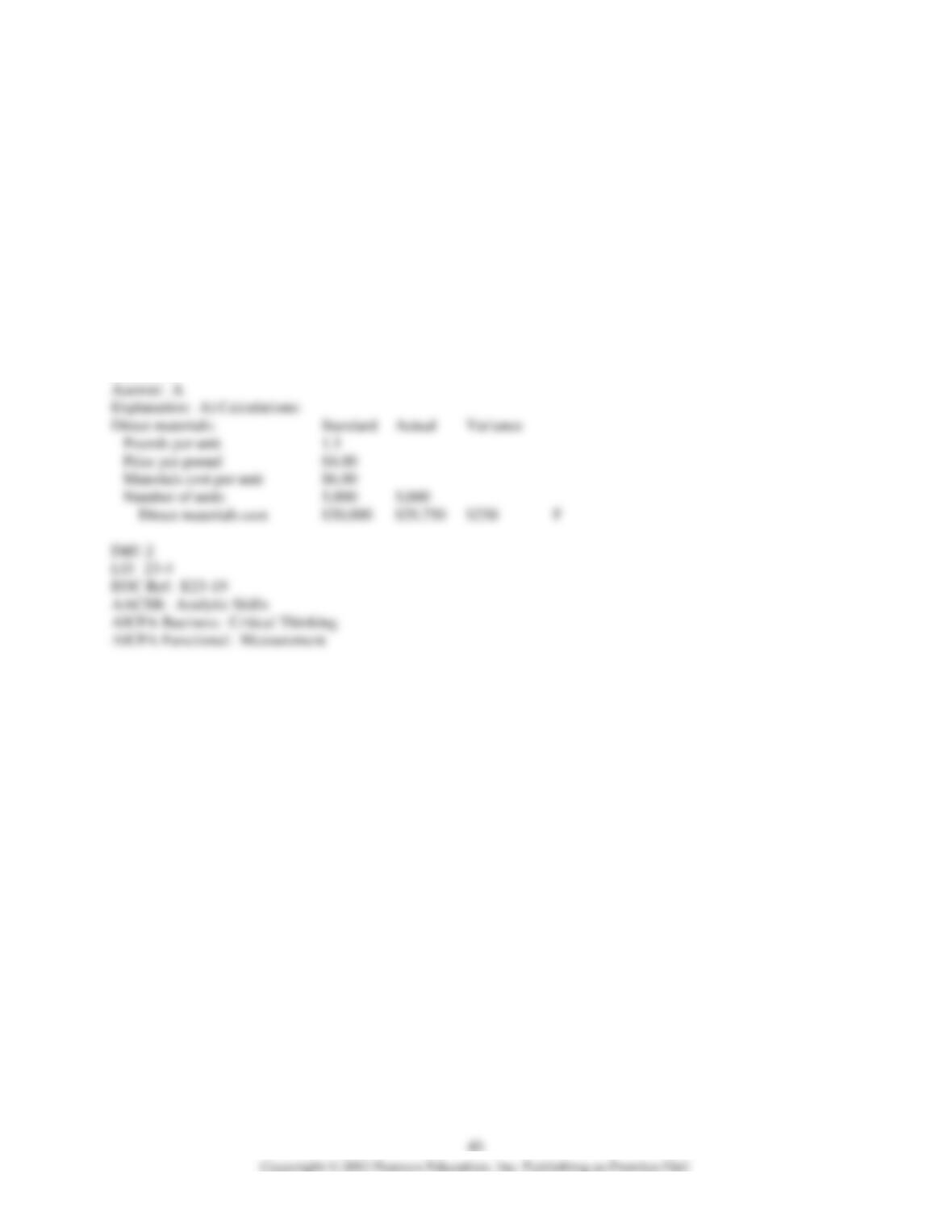
9) Faas Marine Stores Company manufactures decorative fittings for luxury yachts which require highly skilled
labor, and special metallic materials. Faas uses standard costs to prepare its flexible budget. For the first quarter of
2011, direct material and direct labor standards for one of their popular products were as follows:
Materials: 1.5 pounds per unit; $4.00 per pound
Labor: 2.0 hours per unit; $18.00 per hour
During the first quarter, Faas produced 5,000 units of this product. Actual direct materials costs were $29,750.
Actual direct labor costs were $184,800.
For purposes of calculating the flexible budget variances, what is the direct materials cost variance?
A) $250 F
B) $250 U
C) $480 F
D) $480 U
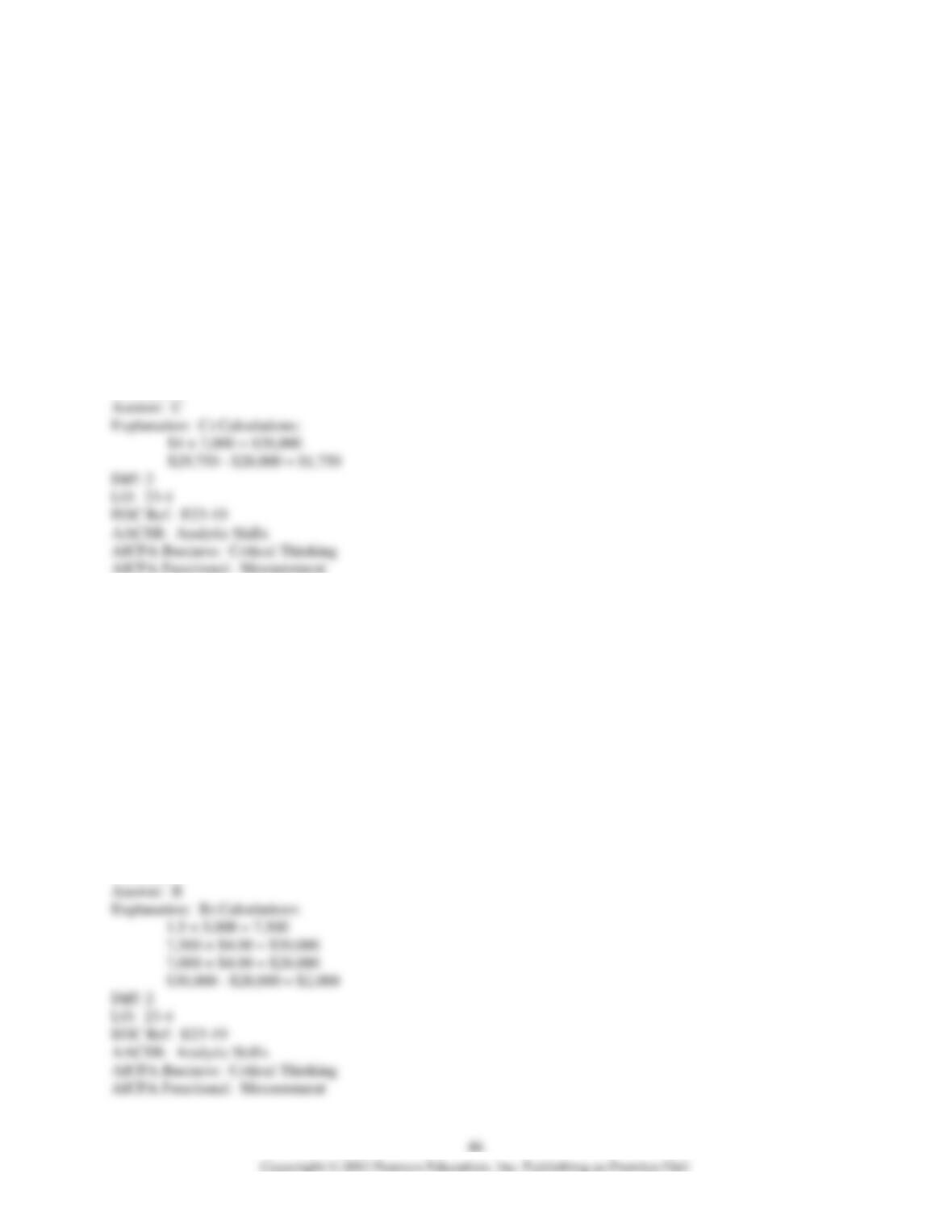
10) Faas Marine Stores Company manufactures decorative fittings for luxury yachts which require highly skilled
labor, and special metallic materials. Faas uses standard costs to prepare its flexible budget. For the first quarter of
2011, direct material and direct labor standards for one of their popular products were as follows:
Materials: 1.5 pounds per unit; $4.00 per pound
Labor: 2.0 hours per unit; $18.00 per hour
During the first quarter, Faas produced 5,000 units of this product. At the end of the quarter, an examination of the
materials records showed that the company used 7,000 pounds of materials and actual total material costs were
$29,750.
How much is the direct materials price variance?
A) $1,640 U
B) $2,000 F
C) $1,750 U
D) $2,020 F
11) Faas Marine Stores Company manufactures decorative fittings for luxury yachts which require highly skilled
labor, and special metallic materials. Faas uses standard costs to prepare its flexible budget. For the first quarter of
2011, direct material and direct labor standards for one of their popular products were as follows:
Materials: 1.5 pounds per unit; $4.00 per pound
Labor: 2.0 hours per unit; $18.00 per hour
During the first quarter, Faas produced 5,000 units of this product. At the end of the quarter, an examination of the
materials records showed that the company used 7,000 pounds of materials and actual total material costs were
$29,750.
How much is the direct materials efficiency variance?
A) $1,640 U
B) $2,000 F
C) $1,750 U
D) $2,020 F
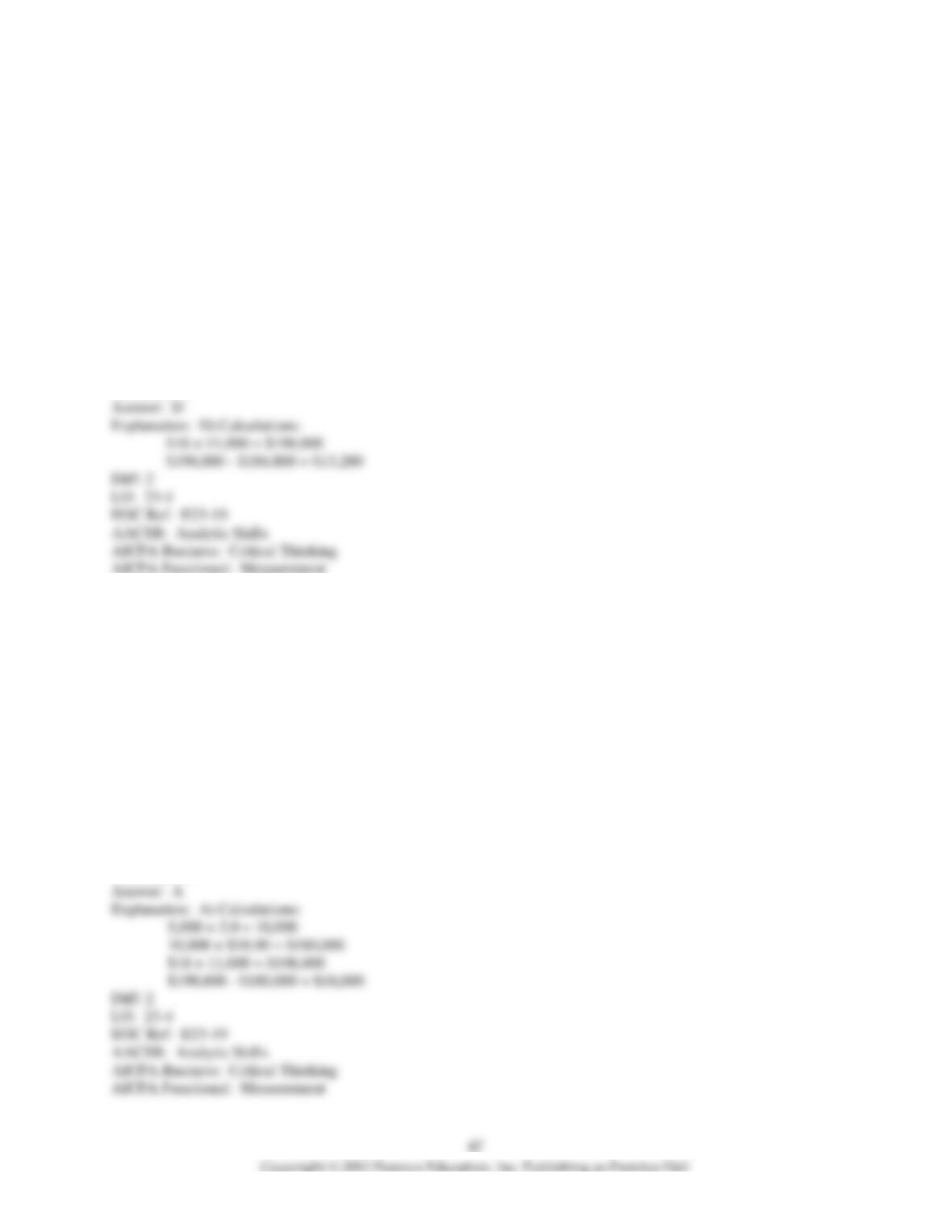
12) Faas Marine Stores Company manufactures decorative fittings for luxury yachts which require highly skilled
labor, and special metallic materials. Faas uses standard costs to prepare its flexible budget. For the first quarter of
2011, direct material and direct labor standards for one of their popular products were as follows:
Materials: 1.5 pounds per unit; $4.00 per pound
Labor: 2.0 hours per unit; $18.00 per hour
During the first quarter, Faas produced 5,000 units of this product. At the end of the quarter, an examination of the
labor cost records showed that the company used 11,000 direct labor hours and actual total direct labor costs were
$184,800.
How much is the direct labor price variance?
A) $18,000 U
B) $18,000 F
C) $13,200 U
D) $13,200 F
13) Faas Marine Stores Company manufactures decorative fittings for luxury yachts which require highly skilled
labor, and special metallic materials. Faas uses standard costs to prepare its flexible budget. For the first quarter of
2011, direct material and direct labor standards for one of their popular products were as follows:
Materials: 1.5 pounds per unit; $4.00 per pound
Labor: 2.0 hours per unit; $18.00 per hour
During the first quarter, Faas produced 5,000 units of this product. At the end of the quarter, an examination of the
labor cost records showed that the company used 11,000 direct labor hours and actual total direct labor costs were
$184,800.
How much is the direct labor efficiency variance?
A) $18,000 U
B) $18,000 F
C) $13,200 U
D) $13,200 F
14) Faas Marine Stores Company manufactures decorative fittings for luxury yachts which require highly skilled
labor, and special metallic materials. Faas uses standard costs to prepare its flexible budget. For the first quarter of
2011, direct material and direct labor standards for one of their popular products were as follows:
Materials: 1.5 pounds per unit; $4.00 per pound
Labor: 2.0 hours per unit; $18.00 per hour
During the first quarter, Faas produced 5,000 units of this product. At the end of the quarter, an examination of the
materials records showed that the company used 7,000 pounds of materials and actual total material costs were
$29,750. The direct materials price variance was $1,750 U. Which of the following would be a logical explanation
for this variance?
A) The company used more labor hours than allowed by standards.
B) The company paid a higher rate for labor than allowed by standards.
C) The company used greater quantity of materials than allowed by standards.
D) The company paid a higher price for the materials than allowed by standards.
15) Faas Marine Stores Company manufactures decorative fittings for luxury yachts which require highly skilled
labor, and special metallic materials. Faas uses standard costs to prepare its flexible budget. For the first quarter of
2011, direct material and direct labor standards for one of their popular products were as follows:
Materials: 1.5 pounds per unit; $4.00 per pound
Labor: 2.0 hours per unit; $18.00 per hour
During the first quarter, Faas produced 5,000 units of this product. At the end of the quarter, an examination of the
labor cost records showed that the company used 11,000 hours of direct labor and actual direct labor costs were
$184,800. The direct labor price variance was $13,200 F. Which of the following would be a logical explanation for
this variance?
A) The company used fewer labor hours than allowed by standards.
B) The company paid a lower rate for labor than allowed by standards.
C) The company used a lower quantity of materials than allowed by standards.
D) The company paid a lower price for the materials than allowed by standards.
16) Faas Marine Stores Company manufactures decorative fittings for luxury yachts which require highly skilled
labor, and special metallic materials. Faas uses standard costs to prepare its flexible budget. For the first quarter of
2011, direct material and direct labor standards for one of their popular products were as follows:
Materials: 1.5 pounds per unit; $4.00 per pound
Labor: 2.0 hours per unit; $18.00 per hour
During the first quarter, Faas produced 5,000 units of this product. At the end of the quarter, an examination of the
labor cost records showed that the company used 11,000 hours of direct labor and actual direct labor costs were
$184,800. The direct labor efficiency variance was $18,000 U. Which of the following would be a logical
explanation for this variance?
A) The company used more labor hours than allowed by standards.
B) The company paid a higher rate for labor than allowed by standards.
C) The company used a higher quantity of materials than allowed by standards.
D) The company paid a higher price for the materials than allowed by standards.
17) Boxes Company has collected the following data for one of its products:
Direct materials standard (3 pounds @ $1/lb.) $3 per finished good
Direct materials flexible budget variance-unfavorable $14,000
Actual direct materials used 100,000 pounds
Actual finished goods produced 25,000 units
How much is the direct materials efficiency variance?
A) $11,000 unfavorable
B) $11,000 favorable
C) $25,000 unfavorable
D) $25,000 favorable
18) Quick Tax Returns budgets 1.5 direct labor hours for every tax return that it prepares, at a standard cost of $20
an hour. During the most recent year, 500 returns were completed with the labor cost totaling $17,600. The actual
labor cost was $22 per hour during that period. What was the direct labor price variance?
A) $1,500 unfavorable
B) $1,500 favorable
C) $1,600 favorable
D) $1,600 unfavorable
19) Cardinal Corporation produces birdhouses. It takes 1 hour of direct labor to produce a birdhouse. Cardinal’s
standard labor cost is $15 per hour. During June, Cardinal produced 10,000 birdhouses and used 10,250 hours of
direct labor at a total cost of $143,500. What is Cardinal’s direct labor price variance for June?
A) $10,000 U
B) $10,250 U
C) $10,250 F
D) $10,000 F
20) What does a favorable direct materials price variance indicate?
A) The actual quantity of materials used was less than the standard quantity.
B) The actual cost of materials purchased was less than the standard cost of materials purchased.
C) The actual cost of materials purchased was greater than the standard cost of materials purchased.
D) The actual quantity of materials used was greater than the standard quantity.
21) The following information describes a company’s usage of direct labor in a recent period:
Actual direct labor hours used 44,000
Actual rate per hour $20
Standard rate per hour $18
Standard hours for units produced 42,000
How much is the direct labor efficiency variance?
A) $40,000 unfavorable
B) $40,000 favorable
C) $36,000 favorable
D) $36,000 unfavorable
22) The following information describes a company’s usage of direct labor in a recent period:
Actual direct labor hours used 44,000
Actual rate per hour $20
Standard rate per hour $18
Standard hours for units produced 42,000
How much is the direct labor price variance?
A) $84,000 favorable
B) $88,000 favorable
C) $88,000 unfavorable
D) $84,000 unfavorable
23) The actual cost of direct materials is $10.50 per pound. The standard cost per pound is $11.75. During the
current period, 10,000 pounds were used in production. The standard quantity for actual units produced is 9,900
pounds. How much is the direct materials efficiency variance?
A) $1,175 unfavorable
B) $1,175 favorable
C) $1,050 favorable
D) $16,800 unfavorable
24) The actual cost of direct labor per hour is $12.50 and the standard cost of direct labor per hour is $12.00. Two
budgeted direct labor hours are allowed per finished good. During the current period, 250 finished goods were
produced using 475 direct labor hours. How much is the direct labor price variance?
A) $250.00 favorable
B) $250.00 unfavorable
C) $237.50 favorable
D) $237.50 unfavorable
25) Raymie Food Products is famous for their specialty fruit cake. The main ingredient of the cake is dried fruit,
which Raymie purchases by the pound. In addition, the production requires a certain amount of direct labor. Raymie
uses a standard cost system, and at the end of the first quarter, there was a favorable materials price variance. Which
of the following would be a logical explanation for that variance?
A) The production manager negotiated a lower wage package for production staff, bringing direct labor costs down.
B) The factory lost two experienced workers at the beginning of the quarter, and their replacements worked at a
much slower rate during their training period.
C) The procurement manager was able to secure a volume discount on dried fruit, purchasing the fruit for less than
the amount set by standard.
D) The production staff changed the work flow process so that there was less wastage of direct materials during
production.
26) Raymie Food Products is famous for their specialty fruit cake. The main ingredient of the cake is dried fruit,
which Raymie purchases by the pound. In addition, the production requires a certain amount of direct labor. Raymie
uses a standard cost system, and at the end of the first quarter, there was an unfavorable materials efficiency
variance. Which of the following would be a logical explanation for that variance?
A) The production manager negotiated a lower wage package for production staff, bringing direct labor costs down.
B) The factory lost two experienced workers at the beginning of the quarter, and their replacements wasted a large
amount of materials during their training period.
C) The procurement manager was able to secure a volume discount on dried fruit, purchasing the fruit for less than
the amount set by standard.
D) The production staff changed the work flow process so that production required fewer direct labor hours.
27) Raymie Food Products is famous for their specialty fruit cake. The main ingredient of the cake is dried fruit,
which Raymie purchases by the pound. In addition, the production requires a certain amount of direct labor. Raymie
uses a standard cost system, and at the end of the first quarter, there was an unfavorable labor price variance. Which
of the following would be a logical explanation for that variance?
A) The cost of workers’ medical insurance plans jumped up dramatically during the quarter.
B) The factory lost two experienced workers at the beginning of the quarter, and their replacements wasted a large
amount of materials during their training period.
C) The procurement manager was able to secure a volume discount on dried fruit, purchasing the fruit for less than
the amount set by standard.
D) The production staff changed the work flow process so that production required fewer direct labor hours.
28) Raymie Food Products is famous for their specialty fruit cake. The main ingredient of the cake is dried fruit,
which Raymie purchases by the pound. In addition, the production requires a certain amount of direct labor. Raymie
uses a standard cost system, and at the end of the first quarter, there was a favorable labor efficiency variance.
Which of the following would be a logical explanation for that variance?
A) The cost of workers’ medical insurance plans jumped up dramatically during the quarter.
B) The factory lost two experienced workers at the beginning of the quarter, and their replacements wasted a large
amount of materials during their training period.
C) The procurement manager was able to secure a volume discount on dried fruit, purchasing the fruit for less than
the amount set by standard.
D) The production staff changed the work flow process so that production required fewer direct labor hours.
29) The procurement manager was able to bring down the cost of direct materials by purchasing materials of a
slightly lower grade quality than the company had used previously. The lower grade of materials, however, meant a
higher defect rate on the assembly line, and higher wastage of materials during production, which in turn lowered
operating income. This situation could have produced which of the following variances?
A) Favorable materials price variance
B) Favorable labor price variance
C) Unfavorable labor efficiency variance
D) Favorable materials efficiency variance
30) The procurement manager was able to bring down the cost of direct materials by purchasing materials of a
slightly lower grade quality than the company had used previously. The lower grade of materials, however, meant a
higher defect rate on the assembly line, and higher wastage of materials during production, which in turn lowered
operating income. This situation could have produced which of the following variances?
A) Unfavorable materials price variance
B) Favorable labor price variance
C) Unfavorable labor efficiency variance
D) Unfavorable materials efficiency variance
31) The production manager of a company, in an effort to gain a promotion, negotiated a new labor contract with her
factory employees that required them to bear a greater percentage of benefit costs than before, thus bringing down
the cost of direct labor to the company. Shortly afterward, several experienced and highly skilled workers resigned,
and were replaced by new employees whose work was very slow during their training period. At the end of the
quarter, the company’s profits fell 10%. This situation could have produced which of the following variances?
A) Unfavorable materials price variance
B) Favorable labor price variance
C) Favorable labor efficiency variance
D) Unfavorable materials efficiency variance
32) The production manager of a company, in an effort to gain a promotion, negotiated a new labor contract with her
factory employees that required them to bear a greater percentage of benefit costs than before, thus bringing down
the cost of direct labor to the company. Shortly afterward, several experienced and highly skilled workers resigned,
and were replaced by new employees whose work was very slow during their training period. At the end of the
quarter, the company’s profits fell 10%. This situation could have produced which of the following variances?
A) Unfavorable materials price variance
B) Unfavorable labor price variance
C) Unfavorable labor efficiency variance
D) Favorable materials efficiency variance
33) The production manager of a company was experiencing high defect rate on the assembly line, which was
slowing production and causing wastage of valuable materials. He decided to purchase a higher grade of material
which would be more reliable, but he was worried that the cost of the new material might negatively impact
operating income. This situation could have produced which of the following variances?
A) Unfavorable materials price variance
B) Favorable labor price variance
C) Favorable labor efficiency variance
D) Unfavorable materials efficiency variance
34) The production manager of a company was experiencing high defect rate on the assembly line, which was
slowing production and causing wastage of valuable materials. He decided to purchase a higher grade of material
which would be more reliable, but he was worried that the cost of the new material might negatively impact
operating income. This situation could have produced which of the following variances?
A) Favorable materials price variance
B) Unfavorable labor price variance
C) Unfavorable labor efficiency variance
D) Favorable materials efficiency variance
35) The production manager of a company was experiencing high defect rate on the assembly line, which was
slowing production and causing wastage of valuable materials. He decided recruit some highly skilled production
workers from another company to bring down the defect rate, but he was worried that the higher wages of these
workers might negatively impact operating income. This situation could have produced which of the following
variances?
A) Unfavorable materials price variance
B) Unfavorable labor price variance
C) Unfavorable labor efficiency variance
D) Unfavorable materials efficiency variance
36) The production manager of a company was experiencing high defect rate on the assembly line, which was
slowing production and causing wastage of valuable materials. He decided recruit some highly skilled production
workers from another company to bring down the defect rate, but he was worried that the higher wages of these
workers might negatively impact operating income. This situation could have produced which of the following
variances?
A) Unfavorable materials price variance
B) Favorable labor price variance
C) Favorable labor efficiency variance
D) Unfavorable materials efficiency variance
37) A company was experiencing slow production rates, and lower production volumes than demanded by
management, so a new factory manager was hired. Upon investigation, she found that the workers were poorly
motivated and not closely supervised. Midway through the quarter, she started an incentive program and paid out
cash bonuses when workers hit their production targets. Within a short time, production output increased, but the
bonuses had to be charged to the direct labor budget, and she was worried about the impact of these costs on
operating income. This situation could have produced which of the following variances?
A) Unfavorable materials price variance
B) Unfavorable materials efficiency variance
C) Unfavorable labor efficiency variance
D) Unfavorable labor price variance

38) A company was experiencing slow production rates, and lower production volumes than demanded by
management, so a new factory manager was hired. Upon investigation, she found that the workers were poorly
motivated and not closely supervised. Midway through the quarter, she started an incentive program and paid out
cash bonuses when workers hit their production targets. Within a short time, production output increased, but the
bonuses had to be charged to the direct labor budget, and she was worried about the impact of these costs on
operating income. This situation could have produced which of the following variances?
A) Unfavorable materials price variance
B) Unfavorable materials efficiency variance
C) Favorable labor efficiency variance
D) Favorable labor price variance
39) Faas Marine Stores Company manufactures decorative fittings for luxury yachts which require highly skilled
labor, and special metallic materials. Faas uses standard costs to prepare its flexible budget. For the first quarter of
2011, direct material and direct labor standards for one of their popular products were as follows:
Materials: 1.5 pounds per unit; $4.00 per pound
Labor: 2.0 hours per unit; $18.00 per hour
During the first quarter, Faas produced 5,000 units of this product. At the end of the quarter, an examination of the
materials records showed that the company used 7,000 pounds of materials and actual total material costs were
$29,750. The direct materials efficiency variance was $2,000 F. Which of the following would be a logical
explanation for this variance?
A) The company used fewer labor hours than allowed by standards.
B) The company paid a lower rate for labor than allowed by standards.
C) The company used a lower quantity of materials than allowed by standards.
D) The company paid a lower price for the materials than allowed by standards.
40) Faas Marine Stores Company manufactures decorative fittings for luxury yachts which require highly skilled
labor, and special metallic materials. Faas uses standard costs to prepare its flexible budget. For the first quarter of
2011, direct material and direct labor standards for one of their popular products were as follows:
Materials: 1.5 pounds per unit; $4.00 per pound
Labor: 2.0 hours per unit; $18.00 per hour
During the first quarter, Faas produced 5,000 units of this product. Actual direct materials costs were $29,750.
Actual direct labor costs were $184,800. Faas is now preparing an analysis of actual versus flexible budget. Using
the reporting format below, please complete the data for direct materials and direct labor costs, and fill in all
remaining data cells.
Actual v. Flexible Budget Actual Flexible Budget Flexible Budget Variance
F/U
Variable costs
Direct materials
Direct labor
Variable overhead $12,400 $12,000 $400 U
Marketing, admin 3,100 3,300 200 F
Total variable
Fixed costs
Fixed overhead $7,000 $7,440 $440 F
Marketing, admin 2,420 2,300 120 U
Total fixed
Total costs
41) Faas Marine Stores Company manufactures decorative fittings for luxury yachts which require highly skilled
labor, and special metallic materials. Faas uses standard costs to prepare its flexible budget. For the first quarter of
2011, direct material and direct labor standards for one of their popular products were as follows:
Materials: 1.5 pounds per unit; $4.00 per pound
Labor: 2.0 hours per unit; $18.00 per hour
During the first quarter, Faas produced 5,000 units of this product. At the end of the quarter, an examination of the
materials records showed that the company used 7,000 pounds of materials and actual total material costs were
$29,750.
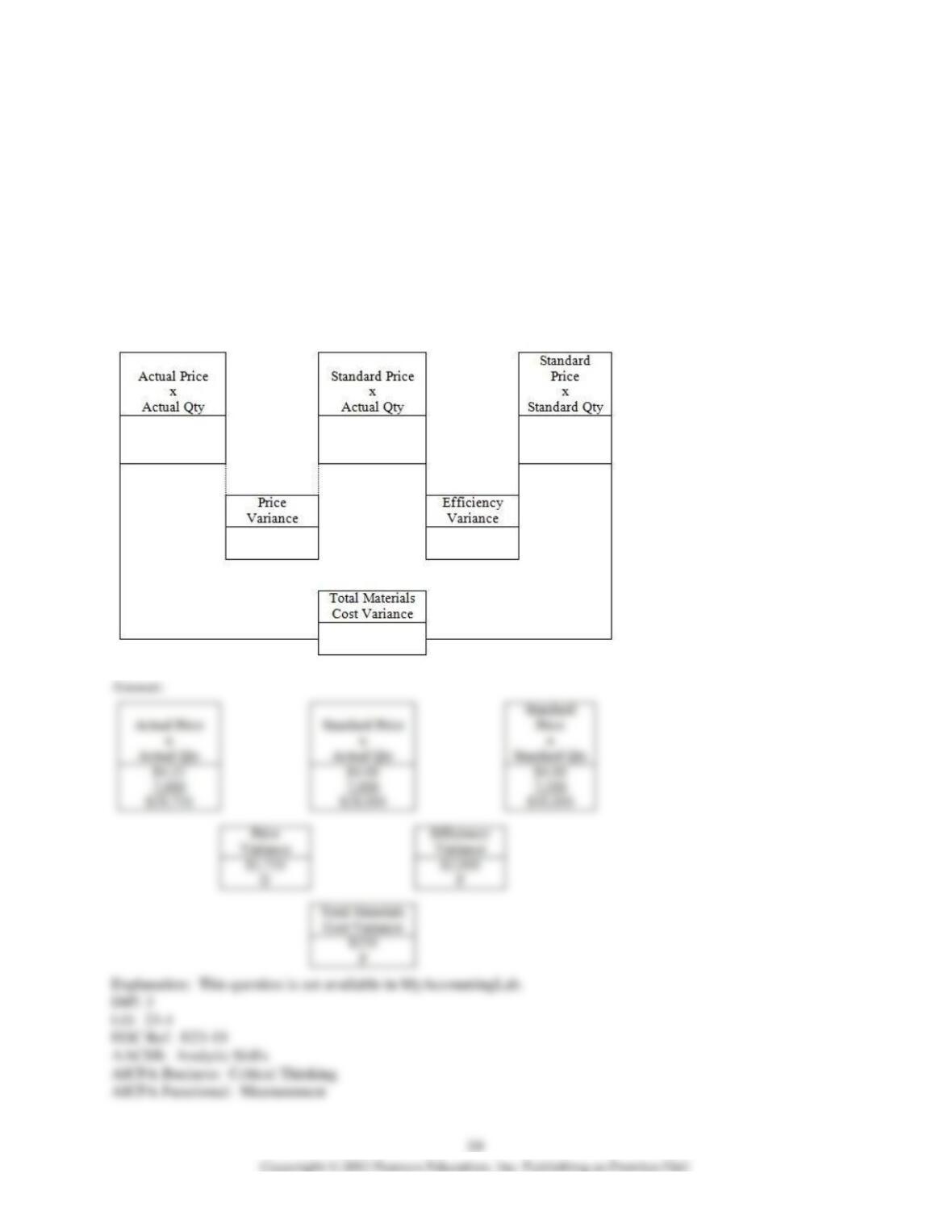
Using the format below, please prepare an analysis of the direct materials variances.
42) Faas Marine Stores Company manufactures decorative fittings for luxury yachts which require highly skilled
labor, and special metallic materials. Faas uses standard costs to prepare its flexible budget. For the first quarter of
2011, direct material and direct labor standards for one of their popular products were as follows:
Materials: 1.5 pounds per unit; $4.00 per pound
Labor: 2.0 hours per unit; $18.00 per hour
During the first quarter, Faas produced 5,000 units of this product. At the end of the quarter, an examination of the
labor cost records showed that the company used 11,000 hours of direct labor time and actual direct labor costs were
$184,800.
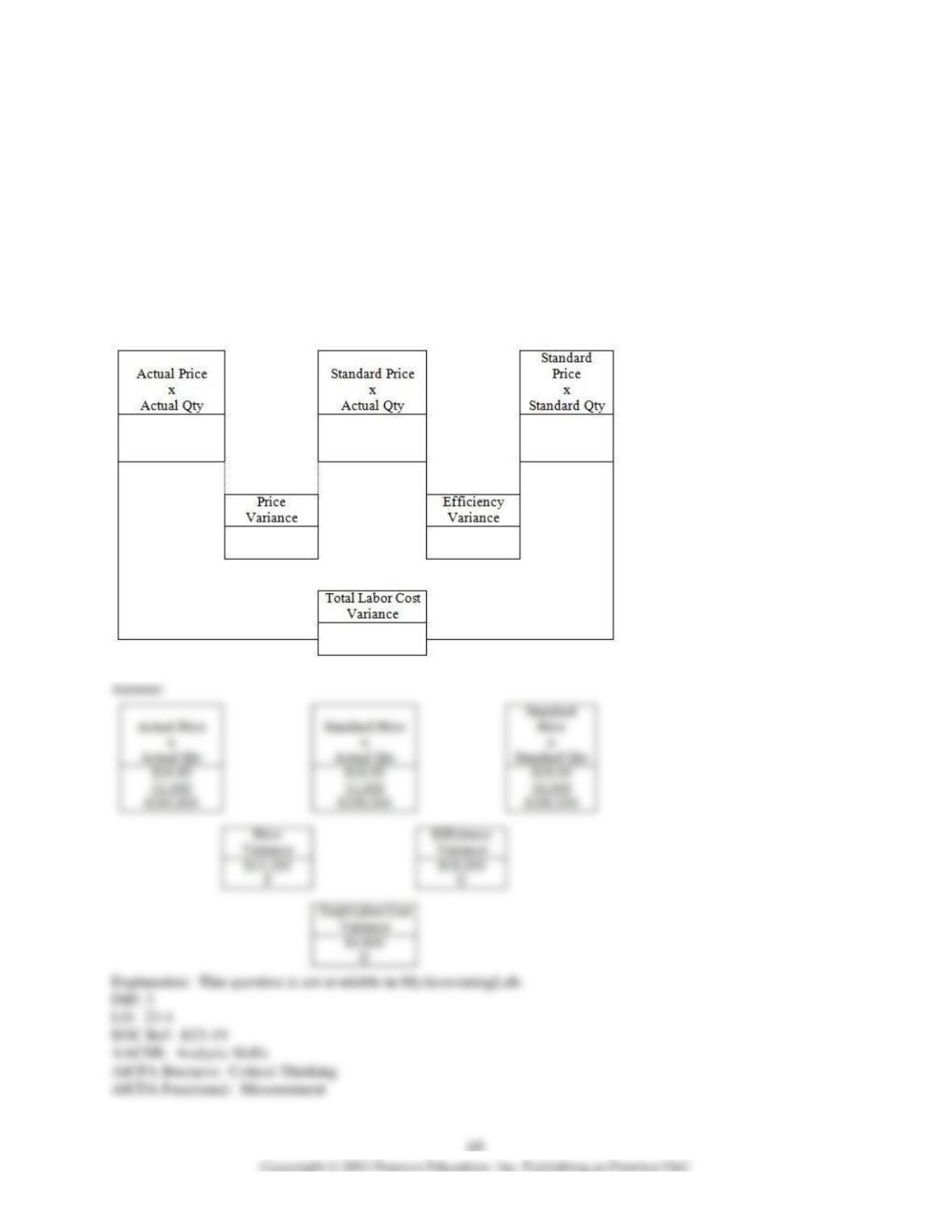
Using the format below, please prepare an analysis of the direct labor cost variances.