48) If internal rate of return is less than required rate of return, the net present value is positive.
49) Managers prefer projects with higher IRRs to projects with lower IRRs, if all other things are equal.
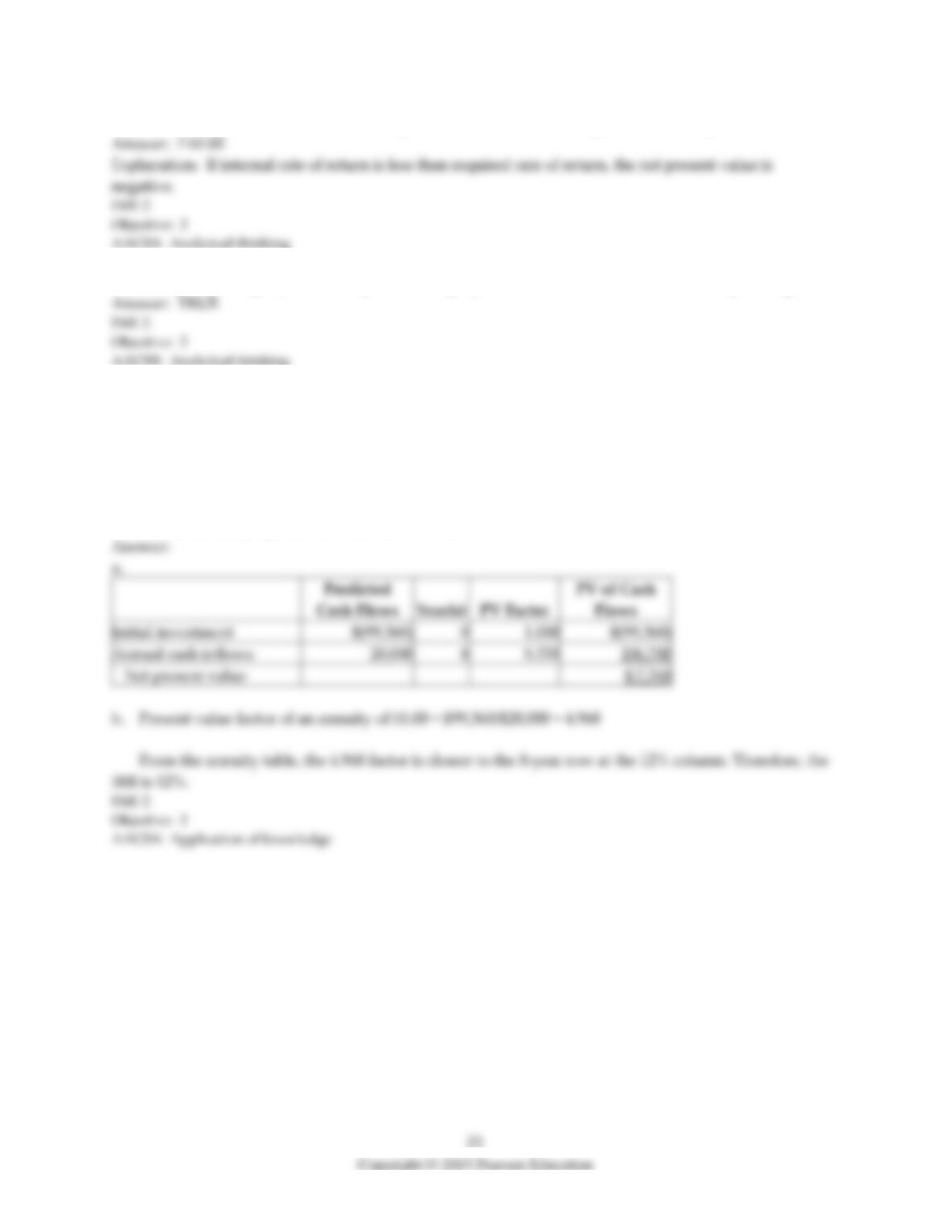
50) The Enor Machine Company is evaluating a capital expenditure proposal that requires an initial
investment of $99,360 and has predicted cash inflows of $20,000 per year for 8 years. It will have no
salvage value.
Required:
a. Using a required rate of return of 10%, determine the net present value of the investment proposal.
b. Determine the proposal’s internal rate of return.
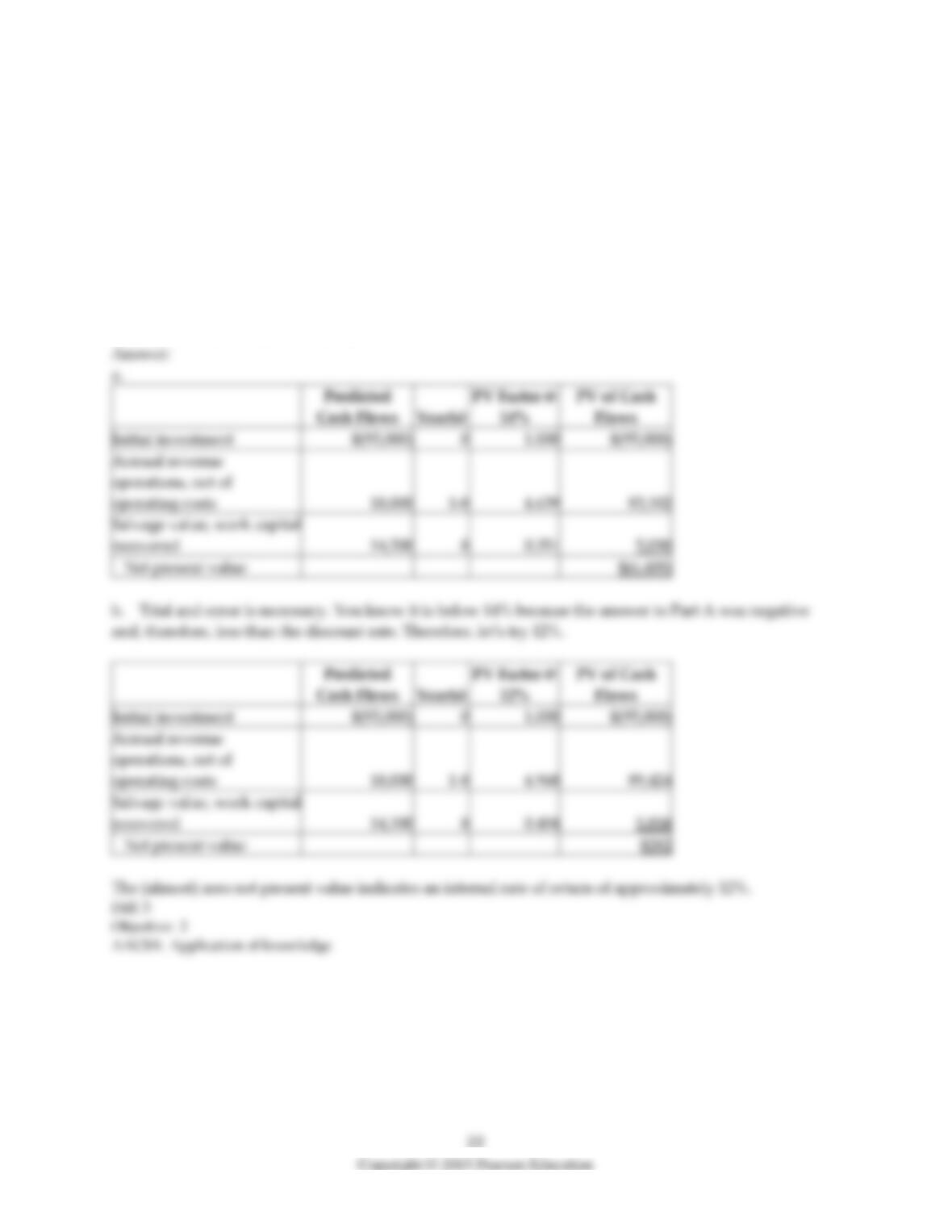
51) Network Service Center is considering purchasing a new computer network for $82,000. It will
require additional working capital of $13,000. Its anticipated eight-year life will generate additional client
revenue of $33,000 annually with operating costs, excluding depreciation, of $15,000. At the end of eight
years, it will have a salvage value of $9,500 and return $5,000 in working capital. Taxes are not
considered.
Required:
a. If the company has a required rate of return of 14%, what is the net present value of the proposed
investment?
b. What is the internal rate of return?
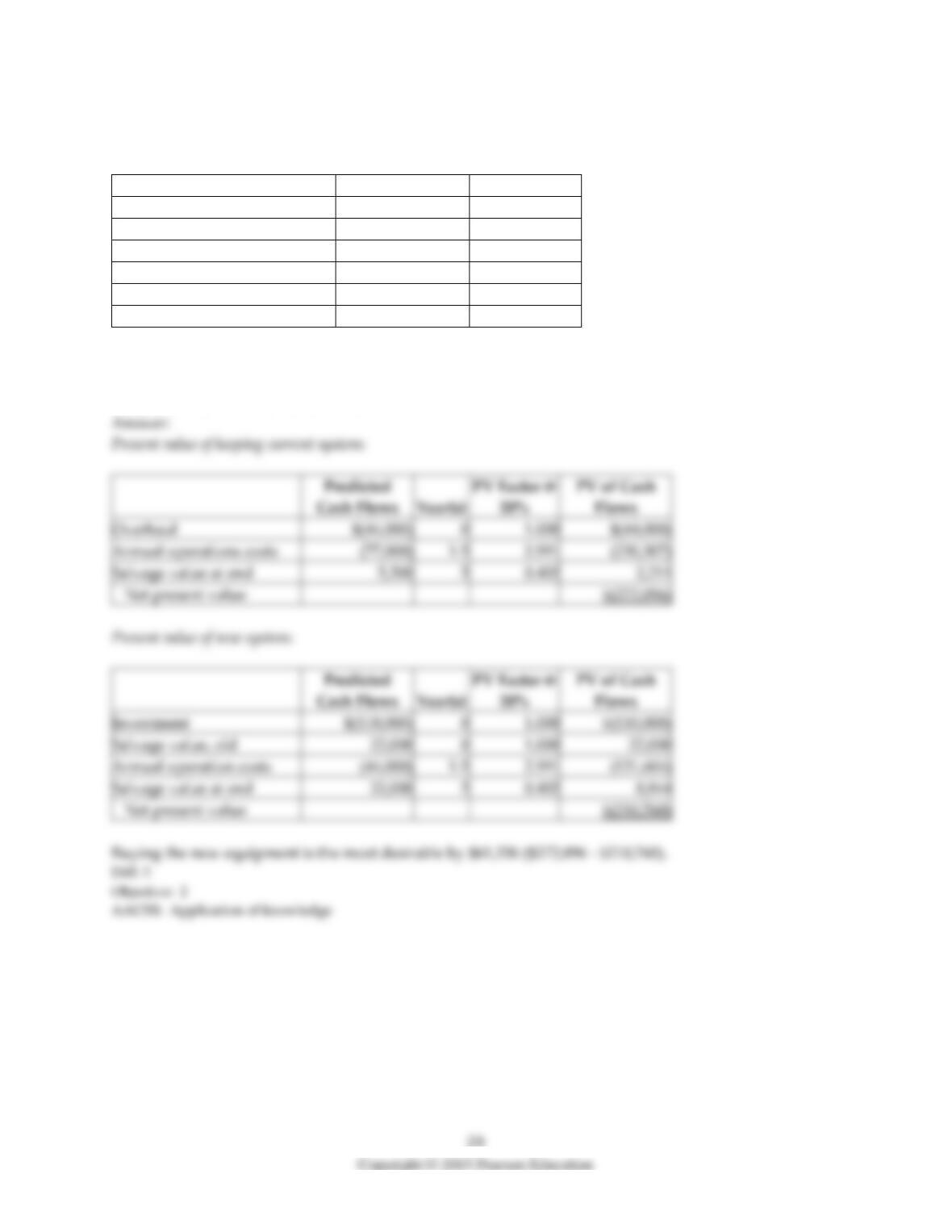
52) EIF Manufacturing Company needs to overhaul its drill press or buy a new one. The facts have been
gathered, and they are as follows:
Current Machine
New Machine
Purchase Price, New
$88,000
$110,000
Current book value
33,000
Overhaul needed now
44,000
Annual cash operating costs
77,000
44,000
Current salvage value
22,000
Salvage value in five years
5,500
22,000
Required:
Which alternative is the most desirable with a current required rate of return of 20%? Show
computations, and assume no taxes.
Overhaul
Annual operations costs
Salvage value at end
Investment
Salvage value, old
22,000
22,000
Annual operation costs
Salvage value at end
22,000
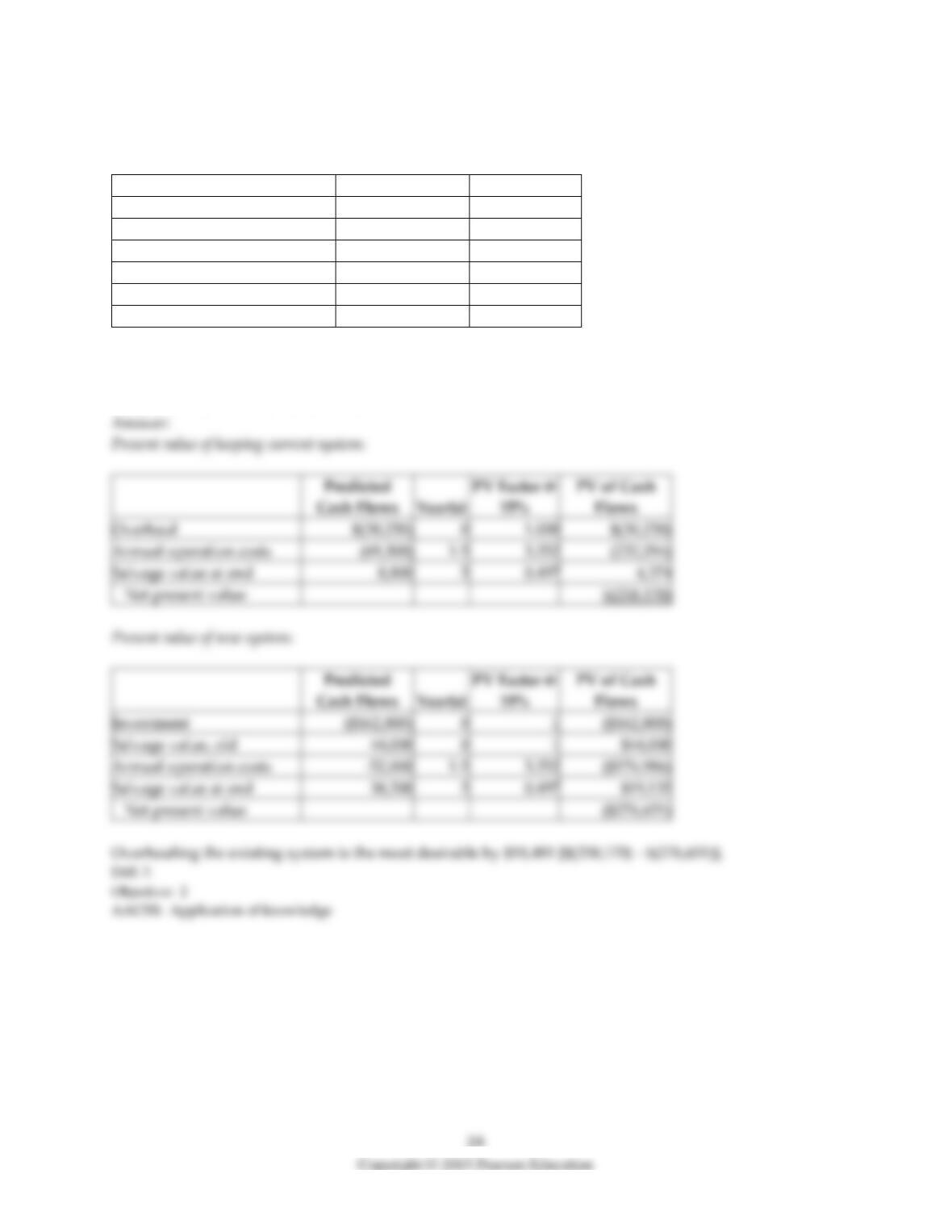
53) Flilane Tire Company needs to overhaul its auto lift system or buy a new one. The facts have been
gathered, and they are as follows:
Current Machine
New Machine
Purchase Price, New
$123,750
$162,800
Current book value
36,850
Overhaul needed now
30,250
Annual cash operating costs
69,300
52,800
Current salvage value
44,000
Salvage value in five years
8,800
38,500
Required:
Which alternative is the most desirable with a current required rate of return of 15%? Show
computations, and assume no taxes.
Overhaul
Annual operation costs
Salvage value at end
Investment
Salvage value, old
44,000
Annual operation costs
Salvage value at end
38,500
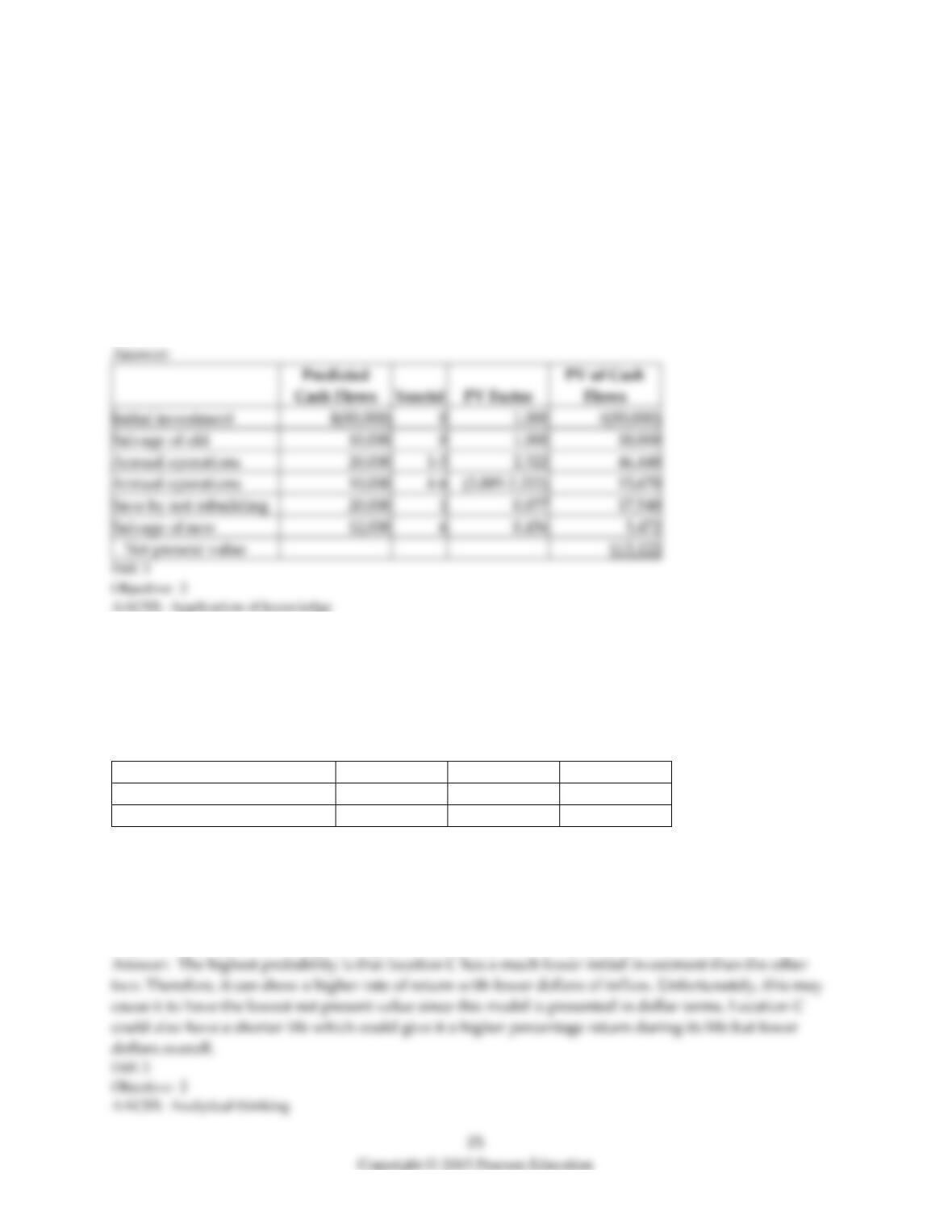
54) ABC Boat Company is interested in replacing a molding machine with a new improved model. The
old machine has a salvage value of $10,000 now and a predicted salvage value of $4,000 in six years, if
rebuilt. If the old machine is kept, it must be rebuilt in one year at a predicted cost of $20,000.
The new machine costs $80,000 and has a predicted salvage value of $12,000 at the end of six years. If
purchased, the new machine will allow cash savings of $20,000 for each of the first three years, and
$10,000 for each year of its remaining six-year life.
Required:
What is the net present value of purchasing the new machine if the company has a required rate of return
of 14%?
Initial investment
Salvage of old
Annual operations
Annual operations
Save by not rebuilding
Salvage of new
55) Retail Outlet is looking for a new location near a shopping mall. It is considering purchasing a
building rather than leasing, as it has done in the past. Three retail buildings near a new mall are
available but each has its own advantages and disadvantages. The owner of the company has completed
an analysis of each location that includes considerations for the time value of money. The information is
as follows:
Location A
Location B
Location C
Internal rate of return
13%
17%
20%
Net present value
$25,000
$40,000
$20,000
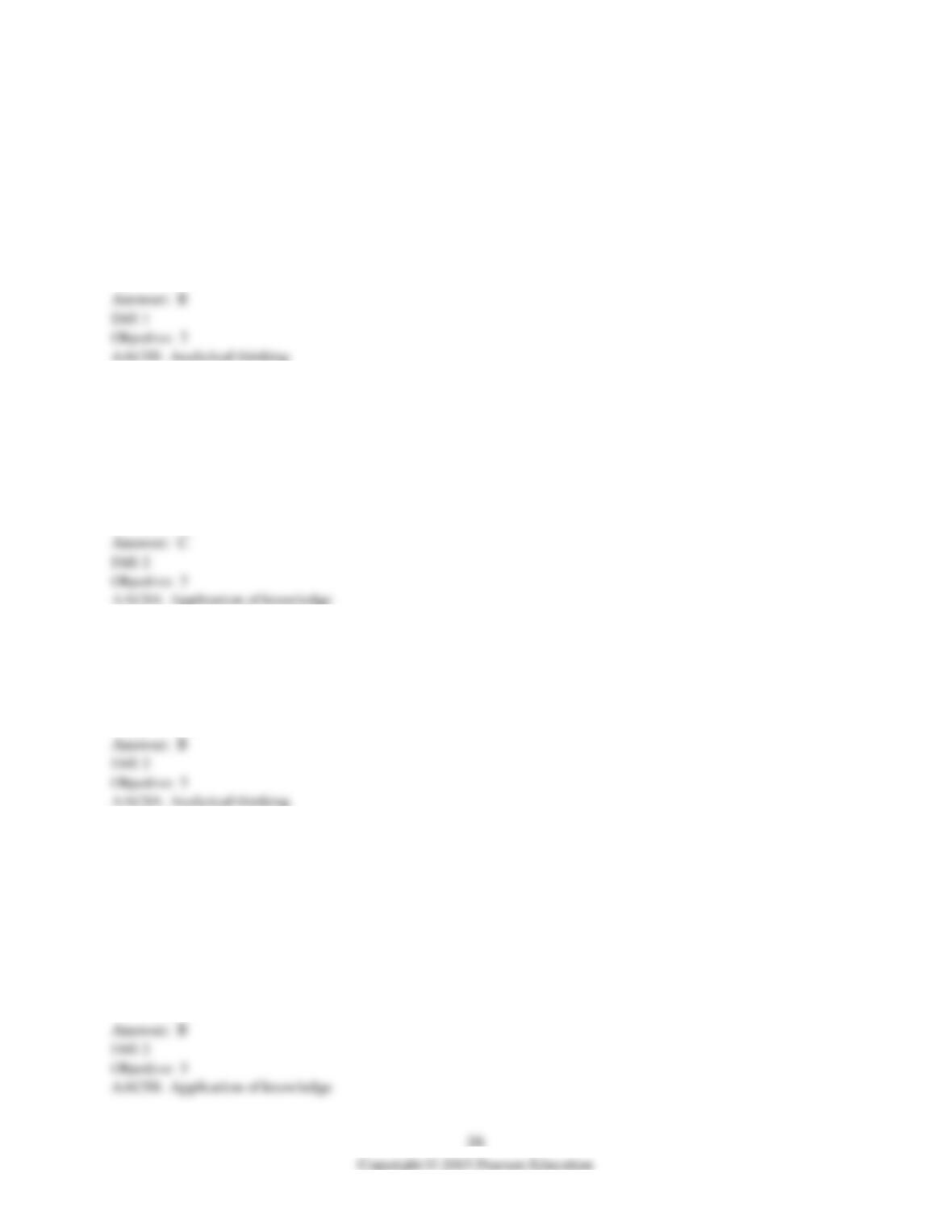
The owner does not understand how the location with the highest percentage return has the lowest net
present value.
Required:
Explain to the owner what is (are) the probable cause(s) of the comparable differences.
Objective 21.3
1) The method that measures the time it will take to recoup, in the form of future cash inflows, the total
dollars invested in a project is called ________.
A) the accrued accounting rate-of-return method
B) the payback method
C) the internal rate-of-return method
D) the book-value method
2) The net initial investment for a piece of construction equipment is $3,000,000. Annual cash inflows are
expected to increase by $500,000 per year. The equipment has an 8-year useful life. What is the payback
period?
A) 8 years
B) 6.5 years
C) 6 years
D) 5 years
3) The payback method of capital budgeting approach to an investment decision ________.
A) considers cash flows over the life of the investment
B) highlights liquidity of the investment
C) considers time value of money
D) ignores the initial investment
4) Malive Park Department is considering a new capital investment. The following information is
available on the investment. The cost of the machine will be $119,000. The annual cost savings if the new
machine is acquired will be $35,000. The machine will have a 5-year life, at which time the terminal
disposal value is expected to be zero. Malive Park is assuming no tax consequences. Malive Park has a
12% required rate of return. What is the payback period for the investment?
A) 4.2 years
B) 3.4 years
C) 5 years
D) 6.8 years
5) Pearl Manufacturing Company provides glassware machines for major department store retailers. The
company has been investigating a new piece of machinery for its production department. The old
equipment has a remaining life of five years and the new equipment has a value of $239,400 with a five-
year life. The expected additional cash inflows are $63,000 per year. What is the payback period for this
investment?
A) 2.5 years
B) 4.5 years
C) 3.8 years
D) 5 years
6) Ambinu Flower Company provides flowers and other nursery products for decorative purposes in
medium to large sized restaurants and businesses. The company has been investigating the purchase of a
new specially equipped van for deliveries. The van has a value of $113,750 with a seven-year life. The
expected additional cash inflows are $32,500 per year. What is the payback period for this investment?
A) 3 years
B) 3.5 years
C) 6 years
D) 4 years
7) Unlike the net present value method and the internal rate-of-return method, the payback method does
NOT distinguish between the origins of the cash flows.
8) If there are uniform cash flows, payback period is calculated by dividing net initial investment by
uniform increase in annual future cash flows.
9) A weaknesses of the payback method is that it does not consider a project’s cash flows after the
payback period.
10) Supply the missing data for each of the following proposals:
Proposal A
Proposal B
Proposal C
Initial investment
(a)
$62,900
$226,000
Annual net cash inflow
$60,000
(c)
(e)
Life, in years
10
6
10
Salvage value
$0
$10,000
$0
Payback period in years
(b)
(d)
5.65
Internal rate of return
12%
24%
(f)
Annual cash inflow
Initial investment
PV of salvage value ($10,000 × 0.275)
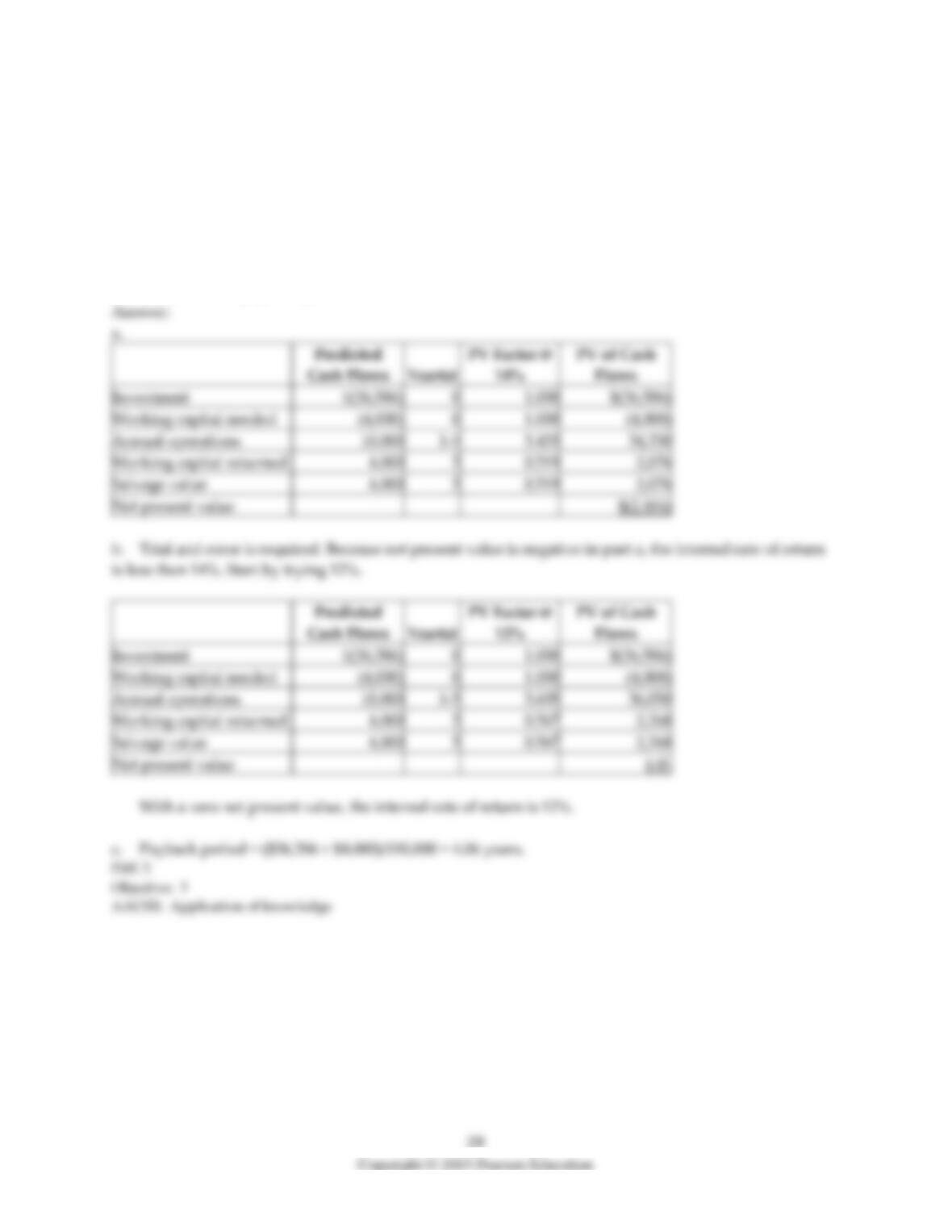
11) Book & Bible Bookstore desires to buy a new coding machine to help control book inventories. The
machine sells for $36,586 and requires working capital of $4,000. Its estimated useful life is five years and
will have a salvage value of $4,000. Recovery of working capital will be $4,000 at the end of its useful life.
Annual cash savings from the purchase of the machine will be $10,000.
Required:
a. Compute the net present value at a 14% required rate of return.
b. Compute the internal rate of return.
c. Determine the payback period of the investment.
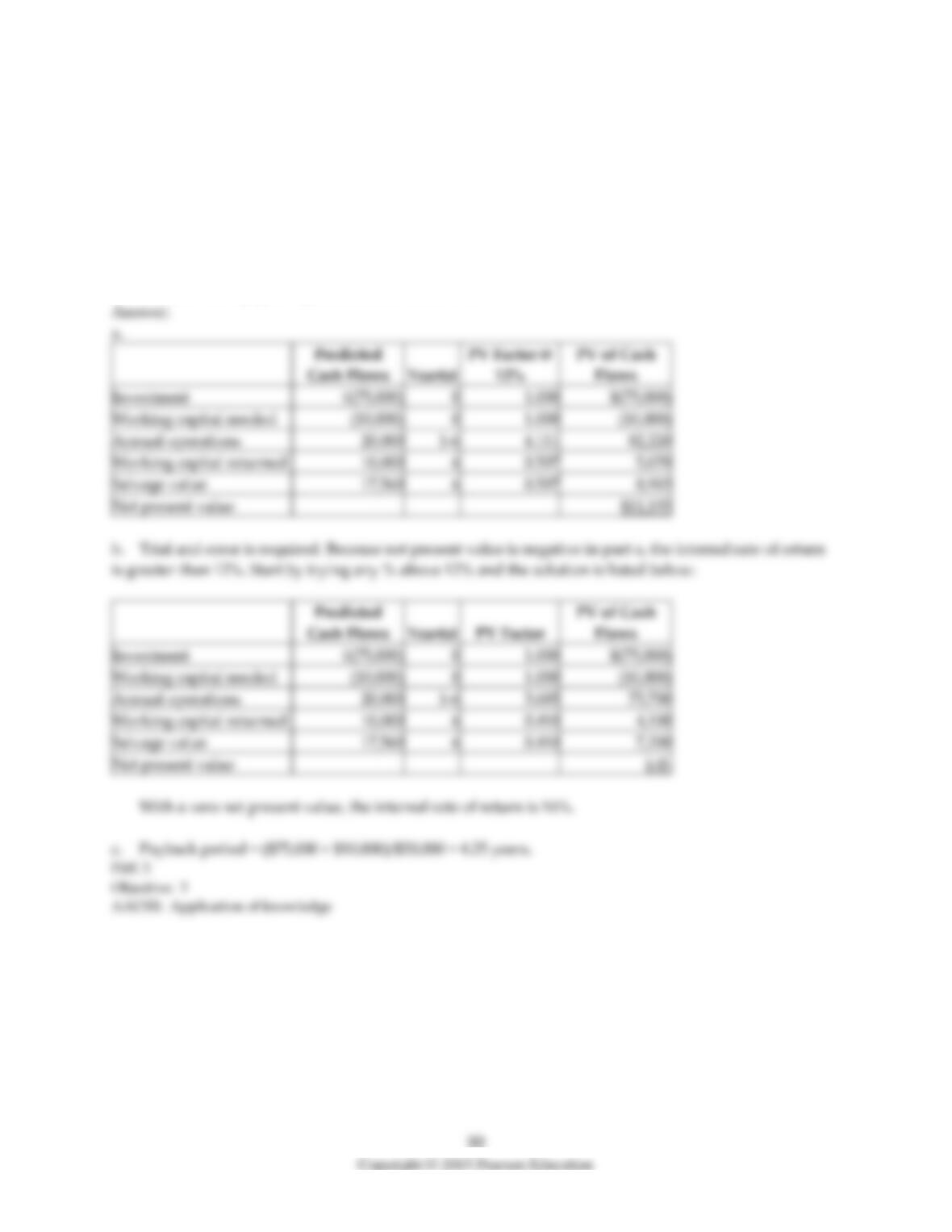
12) Sam’s Structures desires to buy a new crane and accessories to help move and install modular
buildings. The machine sells for $75,000 and requires working capital of $10,000. Its estimated useful life
is six years and it will have a salvage value of $17,560. Recovery of working capital will be $10,000 at the
end of its useful life. Annual cash savings from the purchase of the machine will be $20,000.
Required:
a. Compute the net present value at a 12% required rate of return.
b. Compute the internal rate of return.
c. Determine the payback period of the investment.
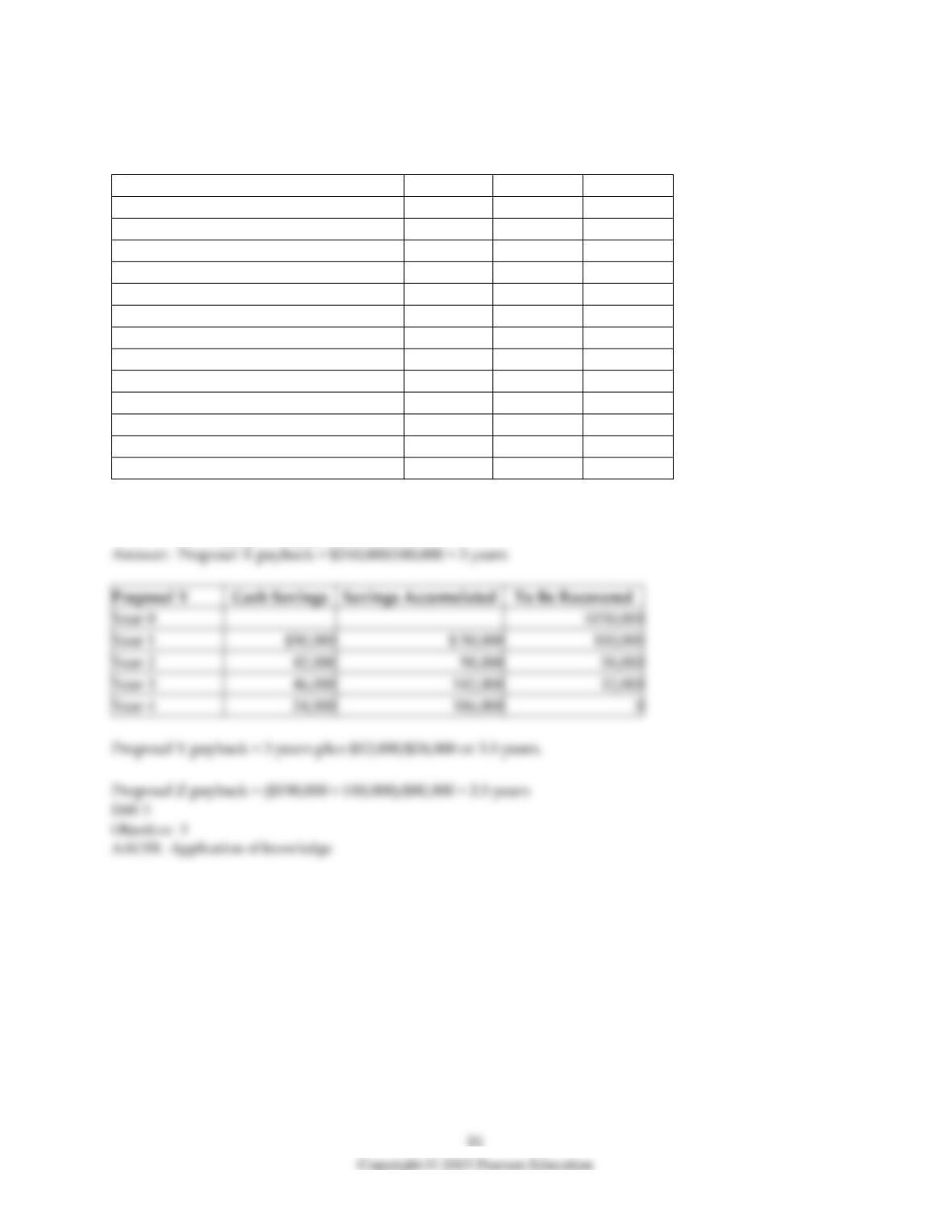
13) Griffith Vehicle has received three proposals for its new vehicle-painting machine. Information on
each proposal is as follows:
Proposal X
Proposal Y
Proposal Z
Initial investment in equipment
$240,000
$150,000
$190,000
Working capital needed
0
0
10,000
Annual cash saved by operations:
Year 1
80,000
50,000
80,000
Year 2
80,000
42,000
80,000
Year 3
80,000
46,000
80,000
Year 4
80,000
24,000
80,000
Salvage value end of year:
Year 1
100,000
80,000
60,000
Year 2
80,000
60,000
50,000
Year 3
40,000
40,000
30,000
Year 4
10,000
20,000
15,000
Working capital returned
0
0
10,000
Required:
Determine each proposal’s payback.
Year 0
$150,000
Year 1
Year 2
Year 3
Year 4
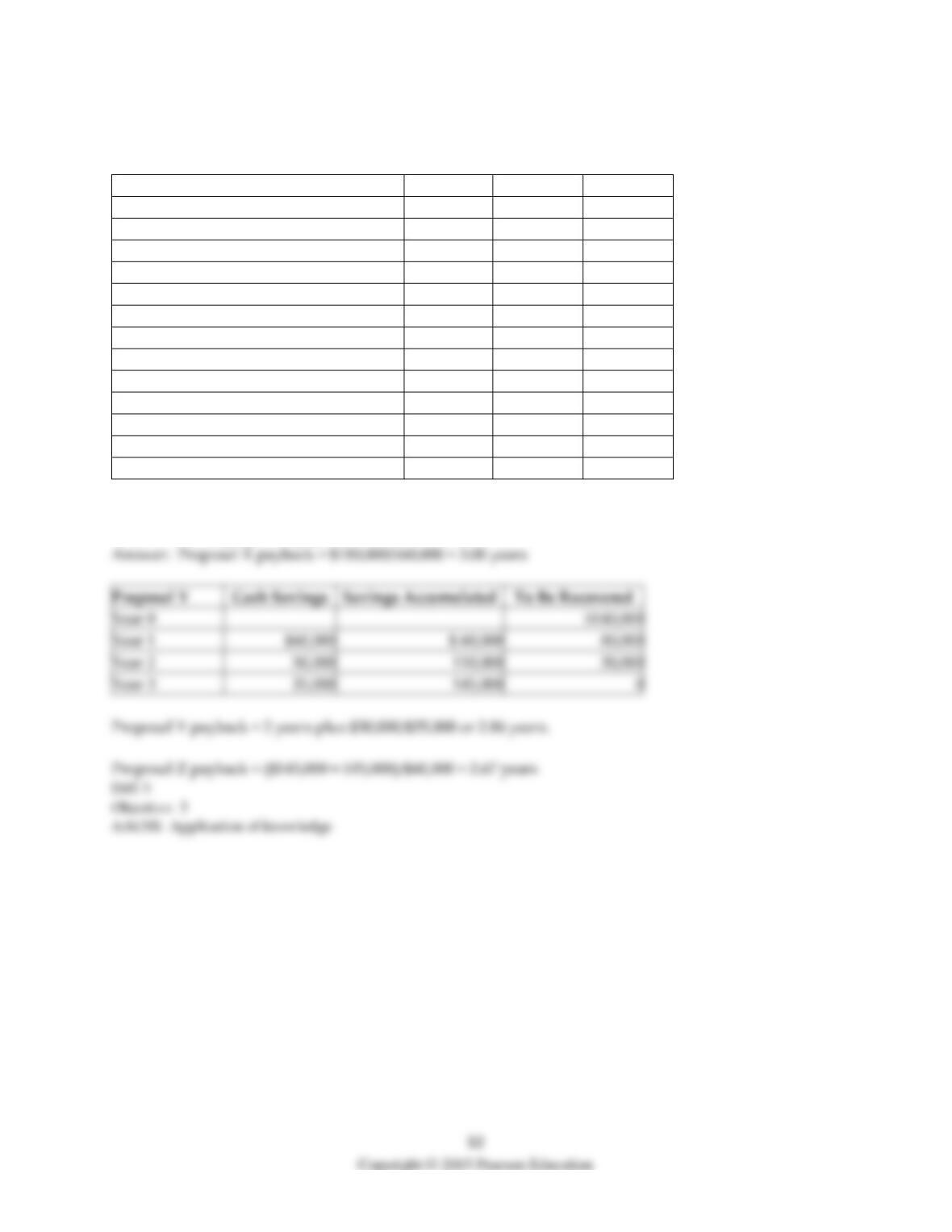
14) Cedile Trailer Supply has received three proposals for its new trailer assembly line. Information on
each proposal is as follows:
Proposal X
Proposal Y
Proposal Z
Initial investment in equipment
$180,000
$140,000
$145,000
Working capital needed
0
0
15,000
Annual cash saved by operations:
Year 1
60,000
60,000
60,000
Year 2
60,000
50,000
60,000
Year 3
60,000
35,000
60,000
Year 4
60,000
10,000
60,000
Salvage value end of year:
Year 1
30,000
25,000
45,000
Year 2
25,000
20,000
40,000
Year 3
20,000
15,000
35,000
Year 4
15,000
10,000
25,000
Working capital returned:
0
0
15,000
Required:
Determine each proposal’s payback.
Year 0
$140,000
Year 1
Year 2
Year 3
Objective 21.4
1) Which of the following methods of capital budgeting divides the average annual accrual accounting
income of a project by a measure of the investment in it?
A) net present value
B) internal rate of return
C) payback method
D) accrual accounting rate of return
2) Accrual accounting rate of return is calculated by dividing ________.
A) net initial investment by an increase in expected average annual after-tax operating income
B) an increase in expected average annual after-tax operating income by the net initial investment
C) an increase in expected average annual cash flow by the net initial investment
D) net initial investment by an increase in expected average annual cash flow
3) Which of the following is the numerator in the mathematical expression for accrual accounting rate-of–
return (AARR)?
A) increase in expected average investment
B) increase in expected average annual after-tax operating income
C) increase in expected average cash flow
D) increase in expected net initial investment
4) AARR indicates the average rate at which ________.
A) a dollar of investment generates after-tax operating income
B) a dollar of after-tax cash flow generates net income
C) a dollar of investment generates a positive cash flow
D) a dollar of after-tax non-operating income generates net income

5) Which of the following statements is true of accrual accounting rate of return (AARR) method and
internal rate of return (IRR) method?
A) AARR method calculates the return in absolute terms, whereas IRR method calculates the result in
terms of percentage.
B) The AARR method calculates the return using operating-income numbers after considering accruals
and taxes, whereas the IRR method calculates the return using after-tax cash flows and the time value of
money.
C) The AARR method calculates the return considering the time value of money, whereas the IRR
method calculates the return ignoring the time value of money.
D) The AARR method considers cash flows, whereas the IRR method considers operating income.
6) The AARR method is similar to the IRR method as ________.
A) both calculate the return using after-tax cash flows
B) both calculate the return using operating-income numbers after considering accruals and taxes
C) both calculate the result in terms of percentage
D) both consider the time value of money
7) Which of the following is a limitation of AARR method?
A) It is difficult to compare projects as its result is expressed in dollars and not in percentage terms.
B) It does not consider income earned throughout a project’s expected useful life.
C) It does not track initial investment.
D) It does not consider time value of money.
8) Accrual accounting rate of return is calculated by dividing increase in expected average annual after-
tax operating income by the net initial investment.
9) The accrual accounting rate-of-return method is similar to the internal rate-of-return method because
both methods calculate a rate-of-return percentage.
10) Accrual accounting rate of return is calculated by dividing an increase in expected average annual
after-tax operating income by the net initial or average investment.
11) The accrual accounting rate-of-return method has a significant weakness for use in making capital
budgeting decisions because it does NOT track cash flows and it ignores the time value of money.
12) As cash flows and time value of money are central to capital budgeting decisions, the AARR method
is regarded as better than the IRR method.
13) Unlike the payback method, which ignores cash flows after the payback period, the AARR method
considers income earned throughout a project’s expected useful life.