Learning Objective 21-3
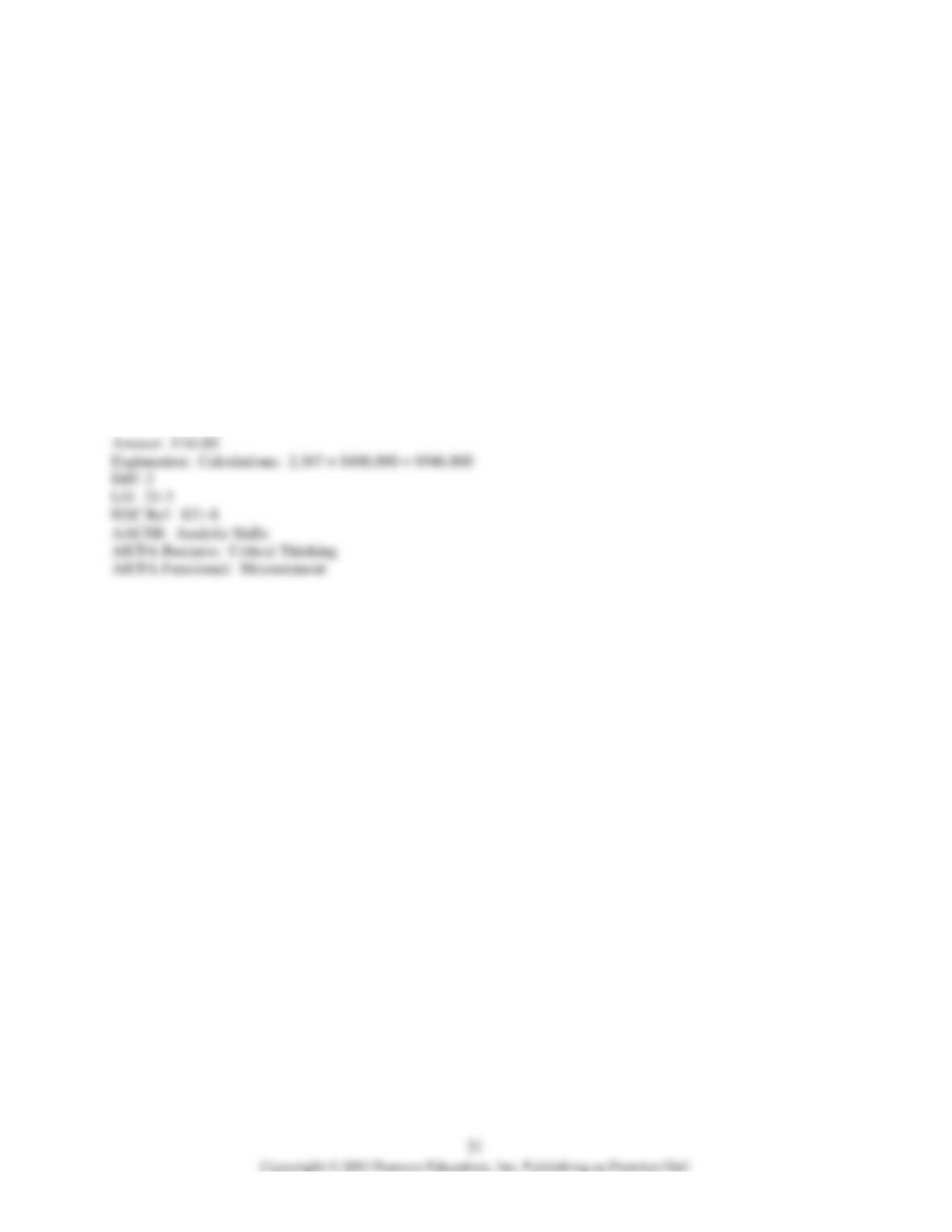
1) If Teddy Godfried invests $400,000 today at a rate of 9% compounding yearly, his investment will grow to
$1,000,000 in 10 years.
Future Value of $1
4% 5% 6% 7% 8% 9%
1 1.040 1.050 1.060 1.070 1.080 1.090
2 1.082 1.103 1.124 1.145 1.166 1.188
3 1.125 1.158 1.191 1.225 1.260 1.295
4 1.170 1.216 1.262 1.311 1.360 1.412
5 1.217 1.276 1.338 1.403 1.469 1.539
6 1.265 1.340 1.419 1.501 1.587 1.677
7 1.316 1.407 1.504 1.606 1.714 1.828
8 1.369 1.477 1.594 1.718 1.851 1.993
9 1.423 1.551 1.689 1.838 1.999 2.172
10 1.480 1.629 1.791 1.967 2.159 2.367
2) Simms Manufacturing is considering two alternative investment proposals with the following data:
Proposal X Proposal Y
Investment $620,000 $400,000
Useful life 8 years 8 years
Estimated annual net cash inflows for 8 years $130,000 $80,000
Residual value $0 $0
Depreciation method Straight-line Straight-line
Discount rate 9% 10%
Present Value of an Annuity of $1
5% 6% 7% 8% 9% 10%
1 0.952 0.943 0.935 0.926 0.917 0.909
2 1.859 1.833 1.808 1.783 1.759 1.736
3 2.723 2.673 2.624 2.577 2.531 2.487
4 3.546 3.465 3.387 3.312 3.240 3.170
5 4.329 4.212 4.100 3.993 3.890 3.791
6 5.076 4.917 4.767 4.623 4.486 4.355
7 5.786 5.582 5.389 5.206 5.033 4.868
8 6.463 6.210 5.971 5.747 5.535 5.335
9 7.108 6.802 6.515 6.247 5.995 5.759
10 7.722 7.360 7.024 6.710 6.418 6.145
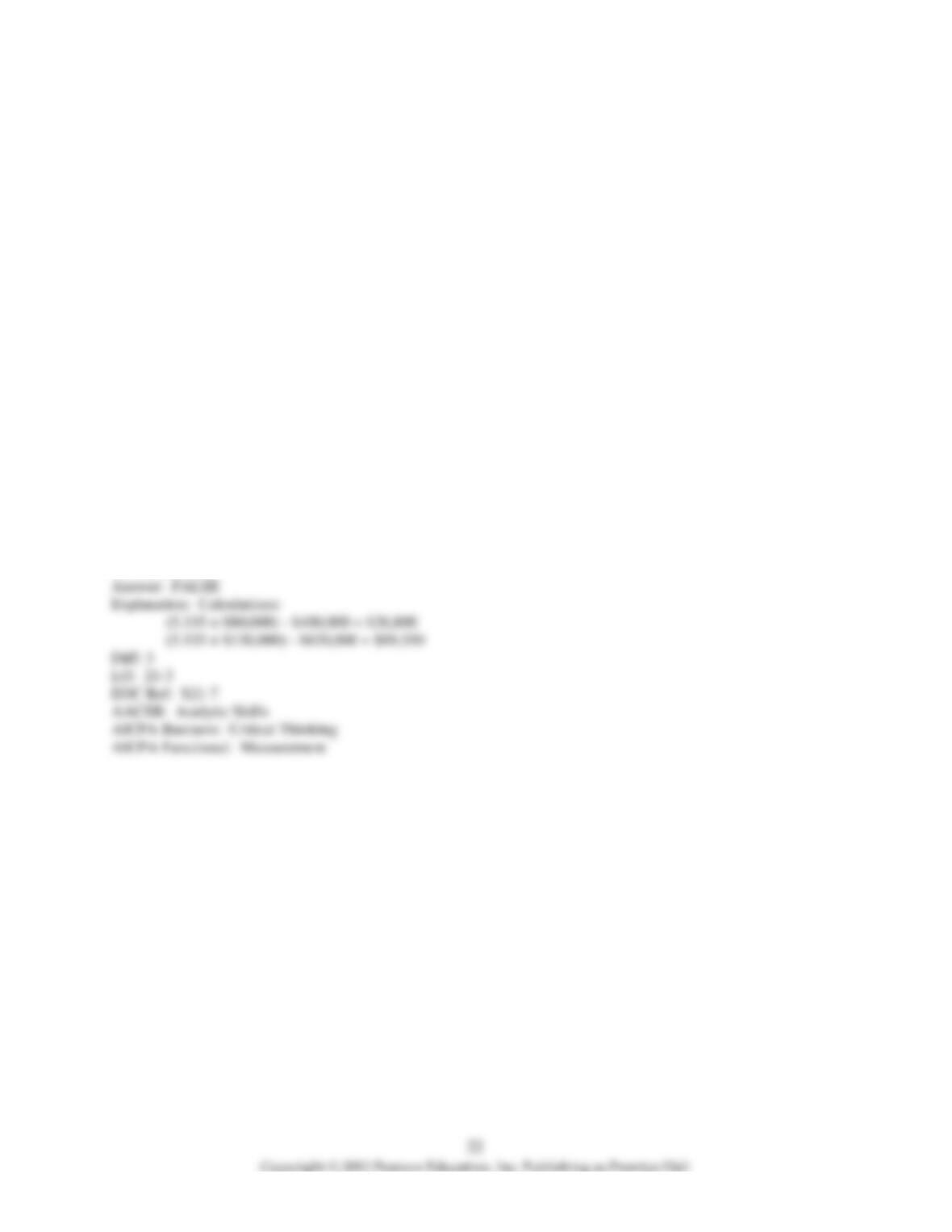
After calculating the net present value of the two alternatives, Proposal Y appears to deliver the most
favorable results.
3) Sun Company is considering purchasing new equipment costing $350,000. Sun’s management has estimated that
the equipment will generate cash inflows as follows:
Year 1 $100,000
Year 2 $100,000
Year 3 $125,000
Year 4 $125,000
Year 5 $75,000
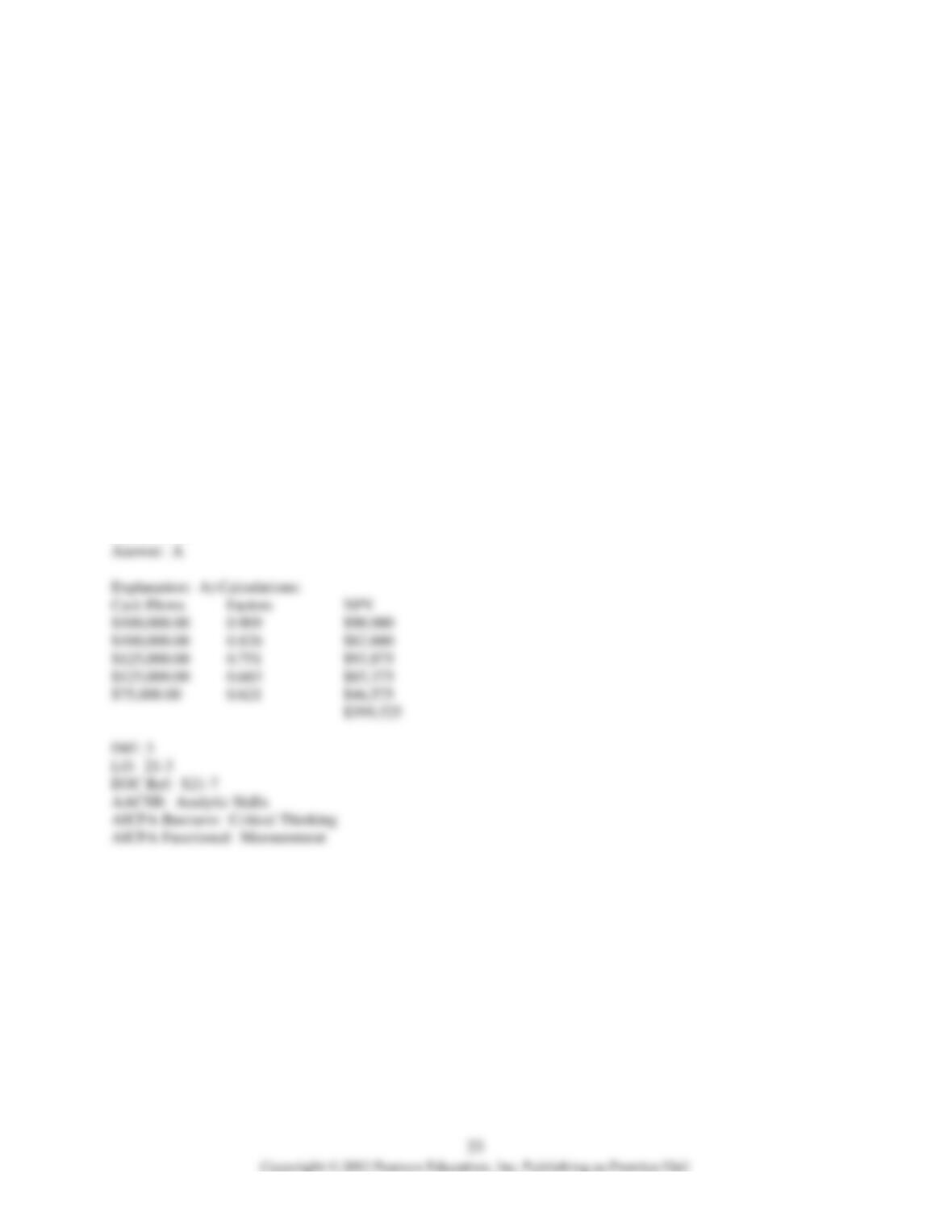
Using the factors in the table below, please calculate the net present value of the net cash inflows above,
using a discount rate of 10%. Please round all calculations to the nearest whole dollar.
Present Value of $1
5% 6% 7% 8% 9% 10%
1 0.952 0.943 0.935 0.926 0.917 0.909
2 0.907 0.890 0.873 0.857 0.842 0.826
3 0.864 0.840 0.816 0.794 0.772 0.751
4 0.823 0.792 0.763 0.735 0.708 0.683
5 0.784 0.747 0.713 0.681 0.650 0.621
A) $399,325
B) $342,800
C) $401,667
D) $399,761
4) Sun Company is considering purchasing new equipment costing $350,000. Sun’s management has estimated that
the equipment will generate cash inflows as follows:
Year 1 $100,000
Year 2 $100,000
Year 3 $125,000
Year 4 $125,000
Year 5 $75,000
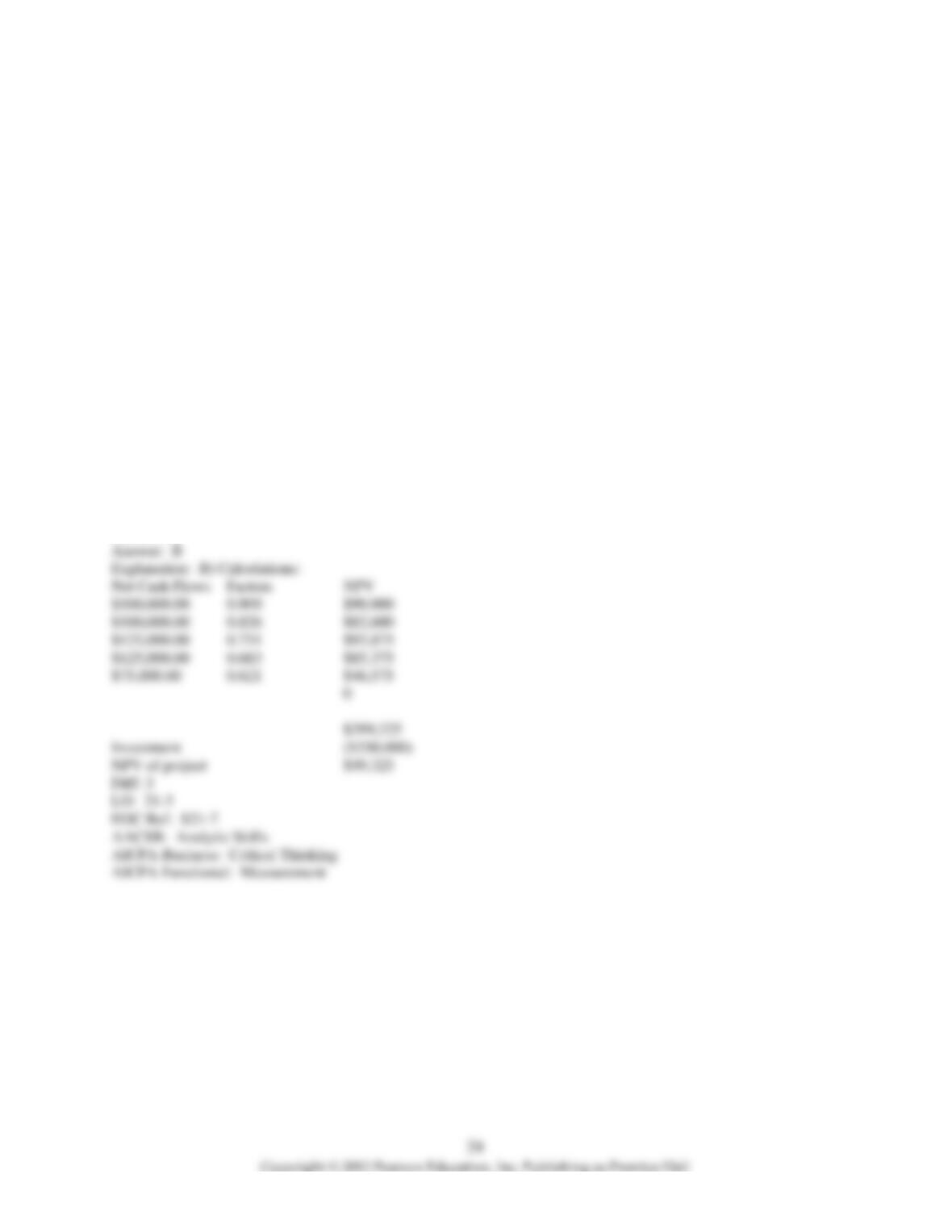
Using the factors in the table below, please calculate the net present value of the investment project (including initial
investment plus the NPV of the net cash inflows above) using a discount rate of 10%. Please round all calculations
to the nearest whole dollar.
Present Value of $1
5% 6% 7% 8% 9% 10%
1 0.952 0.943 0.935 0.926 0.917 0.909
2 0.907 0.890 0.873 0.857 0.842 0.826
3 0.864 0.840 0.816 0.794 0.772 0.751
4 0.823 0.792 0.763 0.735 0.708 0.683
5 0.784 0.747 0.713 0.681 0.650 0.621
A) $41,667
B) $49,325
C) $41,667
D) $39,761
5) Sun Company is considering purchasing new equipment costing $350,000. Sun’s management has estimated that
the equipment will generate cash inflows as follows:
Year 1 $100,000
Year 2 $100,000
Year 3 $125,000
Year 4 $125,000
Year 5 $75,000
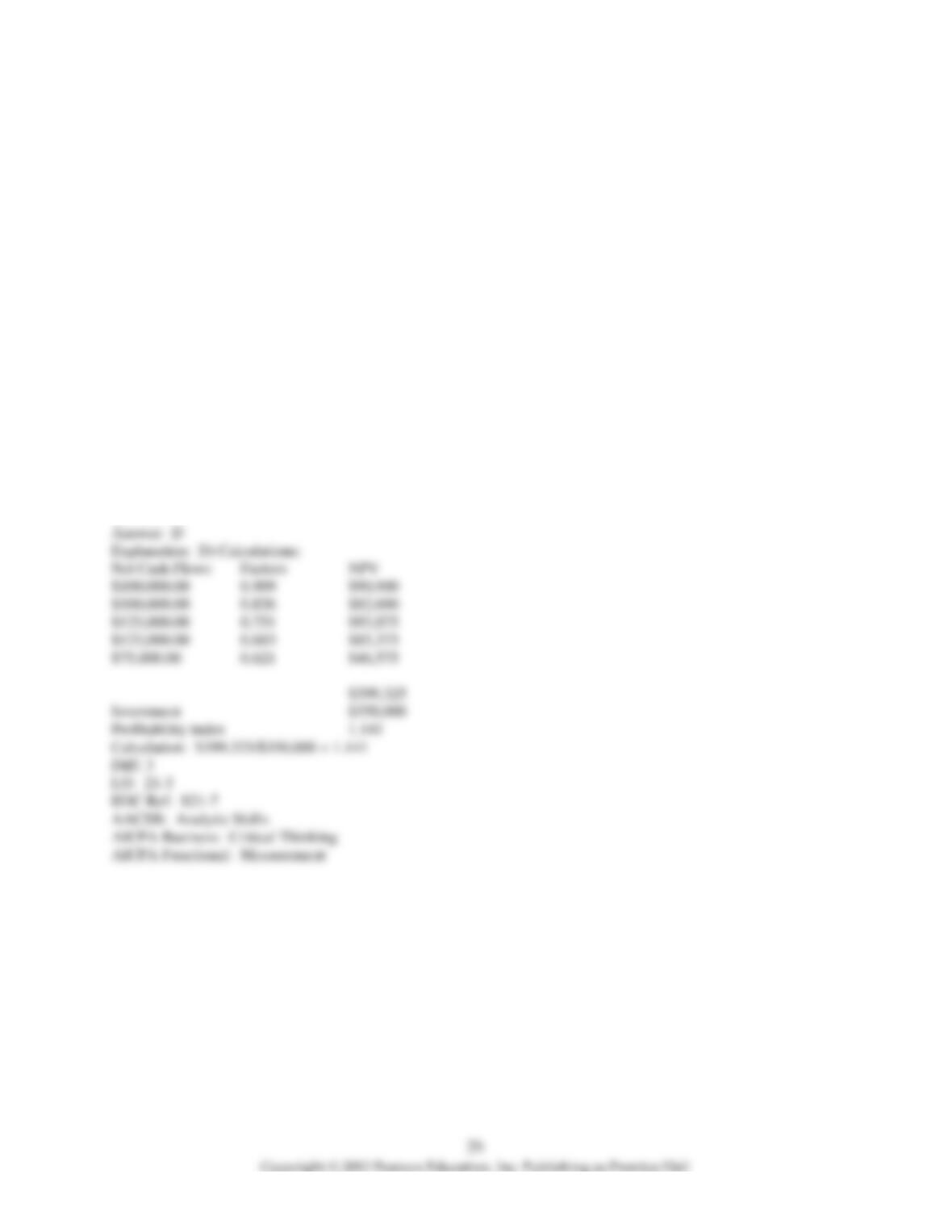
Using the table below, please calculate the profitability index of the project using a discount rate of 10%. Please
round all calculations to the nearest whole dollar.
Present Value of $1
5% 6% 7% 8% 9% 10%
1 0.952 0.943 0.935 0.926 0.917 0.909
2 0.907 0.890 0.873 0.857 0.842 0.826
3 0.864 0.840 0.816 0.794 0.772 0.751
4 0.823 0.792 0.763 0.735 0.708 0.683
5 0.784 0.747 0.713 0.681 0.650 0.621
A) 1.67
B) 2.07
C) 1.20
D) 1.14
26
6) Which of the following describes the term time value of money?
A) Money can only be used at certain times and for certain purposes.
B) Money loses its purchasing power over time through inflation.
C) Wasted time can result in wasted money.
D) When money is invested over time, it earns income and grows.
7) Which of the following MOST accurately describes the term annuity?
A) An investment which grows in value over time
B) An installment loan with amortizing principal payments
C) A stream of equal installments of cash payments
D) A term life insurance policy
8) If $1,000 is invested in an account with 4% interest compounding yearly, what will the balance of the account be
after 4 years? (You may ignore small differences that result from rounding.)
A) $1,218
B) $1,170
C) $1,040
D) $1,240
Diff: 2
LO: 21-3
EOC Ref: S21-8
AACSB: Analytic Skills
AICPA Business: Critical Thinking
AICPA Functional: Measurement
9) If $1,000 is invested in an account with 4% interest compounding yearly, what will the balance of the account be
after 4 years? Please refer to the following Future Value table:
Future Value of $1
4% 5% 6% 7%
1 1.040 1.050 1.060 1.070
2 1.082 1.103 1.124 1.145
3 1.125 1.158 1.191 1.225
4 1.170 1.216 1.262 1.311
5 1.217 1.276 1.338 1.403
6 1.265 1.340 1.419 1.501
A) $1,218
B) $1,170
C) $1,040
D) $1,240
10) If $2,000 is invested in an account with 5% interest compounding yearly, what will the balance of the account be
after 6 years? Please refer to the following Future Value table:
Future Value of $1
4% 5% 6% 7%
1 1.040 1.050 1.060 1.070
2 1.082 1.103 1.124 1.145
3 1.125 1.158 1.191 1.225
4 1.170 1.216 1.262 1.311
5 1.217 1.276 1.338 1.403
6 1.265 1.340 1.419 1.501
A) $1,340
B) $2,680
C) $2,676
D) $2,432
11) If $5,000 is invested in an account with 7% interest compounding yearly, what will the balance of the account be
after 3 years? Please refer to the following Future Value table:
Future Value of $1
4% 5% 6% 7%
1 1.040 1.050 1.060 1.070
2 1.082 1.103 1.124 1.145
3 1.125 1.158 1.191 1.225
4 1.170 1.216 1.262 1.311
5 1.217 1.276 1.338 1.403
6 1.265 1.340 1.419 1.50
A) $6,180
B) $6,211
C) $5,867
D) $6,125
29
12) If $1,000 is invested in an account with 9% interest compounding yearly, approximately how many years will it
take for the amount to double? Please refer to the following Future Value table:
Future Value of $1
4% 5% 6% 7% 8% 9%
1 1.040 1.050 1.060 1.070 1.080 1.090
2 1.082 1.103 1.124 1.145 1.166 1.188
3 1.125 1.158 1.191 1.225 1.260 1.295
4 1.170 1.216 1.262 1.311 1.360 1.412
5 1.217 1.276 1.338 1.403 1.469 1.539
6 1.265 1.340 1.419 1.501 1.587 1.677
7 1.316 1.407 1.504 1.606 1.714 1.828
8 1.369 1.477 1.594 1.718 1.851 1.993
9 1.423 1.551 1.689 1.838 1.999 2.172
10 1.480 1.629 1.791 1.967 2.159 2.367
A) Slightly more than 8 years
B) Exactly 9 years
C) 5 years
D) Slightly less than 7 years
13) John Doe wins the lottery and may pick from the following three choices:
Take $750,000 now.
Take $1,000,000 ten years from now.
Take $90,000 at the end of this year, and at the end of each following year for ten installments in
total.
Assume that John Doe uses a discount rate of 5% to evaluate his choices. If he selects the first option, how much is
the present value of that alternative?
A) $750,000
B) $1,000,000
C) $450,000
D) $798,000
14) John Doe wins the lottery and may pick from the following three choices:
Take $750,000 now.
Take $1,000,000 ten years from now.
Take $90,000 at the end of this year, and at the end of each following year for ten installments in total.
Assume that John Doe uses a discount rate of 5% to evaluate his choices. If he selects the second option, how much
is the present value of that alternative?
Present Value of $1
5% 6% 7% 8% 9% 10%
1 0.952 0.943 0.935 0.926 0.917 0.909
2 0.907 0.890 0.873 0.857 0.842 0.826
3 0.864 0.840 0.816 0.794 0.772 0.751
4 0.823 0.792 0.763 0.735 0.708 0.683
5 0.784 0.747 0.713 0.681 0.650 0.621
6 0.746 0.705 0.666 0.630 0.596 0.564
7 0.711 0.665 0.623 0.583 0.547 0.513
8 0.677 0.627 0.582 0.540 0.502 0.467
9 0.645 0.592 0.544 0.500 0.460 0.424
10 0.614 0.558 0.508 0.463 0.422 0.386
A) $614,000
B) $1,000,000
C) $750,000
D) $798,000
15) John Doe wins the lottery and may pick from the following three choices:
Take $750,000 now.
Take $1,000,000 ten years from now.
Take $90,000 at the end of this year, and at the end of each following year for ten installments
in total.
Assume that John Doe uses a discount rate of 5% to evaluate his choices. If he selects the third option, how much is
the present value of that alternative?
Present Value of an Annuity of $1
5% 6% 7% 8% 9% 10%
1 0.952 0.943 0.935 0.926 0.917 0.909
2 1.859 1.833 1.808 1.783 1.759 1.736
3 2.723 2.673 2.624 2.577 2.531 2.487
4 3.546 3.465 3.387 3.312 3.240 3.170
5 4.329 4.212 4.100 3.993 3.890 3.791
6 5.076 4.917 4.767 4.623 4.486 4.355
7 5.786 5.582 5.389 5.206 5.033 4.868
8 6.463 6.210 5.971 5.747 5.535 5.335
9 7.108 6.802 6.515 6.247 5.995 5.759
10 7.722 7.360 7.024 6.710 6.418 6.145
A) $814,000
B) $900,000
C) $694,980
D) $798,000
16) If Arthur Godfried invests $1,000 today at a rate of 7% compounding yearly, what will the value of the
investment be in 4 years?
Future Value of $1
4% 5% 6% 7% 8% 9%
1 1.040 1.050 1.060 1.070 1.080 1.090
2 1.082 1.103 1.124 1.145 1.166 1.188
3 1.125 1.158 1.191 1.225 1.260 1.295
4 1.170 1.216 1.262 1.311 1.360 1.412
5 1.217 1.276 1.338 1.403 1.469 1.539
6 1.265 1.340 1.419 1.501 1.587 1.677
7 1.316 1.407 1.504 1.606 1.714 1.828
8 1.369 1.477 1.594 1.718 1.851 1.993
9 1.423 1.551 1.689 1.838 1.999 2.172
10 1.480 1.629 1.791 1.967 2.159 2.367
A) $1,311
B) $1,967
C) $1,316
D) $1,000
17) If Alice Godfried invests $14,000 today at a rate of 4% compounding yearly, what will the value of the
investment be in 8 years?
Future Value of $1
4% 5% 6% 7% 8% 9%
1 1.040 1.050 1.060 1.070 1.080 1.090
2 1.082 1.103 1.124 1.145 1.166 1.188
3 1.125 1.158 1.191 1.225 1.260 1.295
4 1.170 1.216 1.262 1.311 1.360 1.412
5 1.217 1.276 1.338 1.403 1.469 1.539
6 1.265 1.340 1.419 1.501 1.587 1.677
7 1.316 1.407 1.504 1.606 1.714 1.828
8 1.369 1.477 1.594 1.718 1.851 1.993
9 1.423 1.551 1.689 1.838 1.999 2.172
10 1.480 1.629 1.791 1.967 2.159 2.367
A) $18,311
B) $19,967
C) $19,166
D) $19,000
18) If Teddy Godfried invests $10,000 today in an account compounding yearly, and he wants his money to at least
double within 10 years, what interest rate is needed?
Future Value of $1
4% 5% 6% 7% 8% 9%
1 1.040 1.050 1.060 1.070 1.080 1.090
2 1.082 1.103 1.124 1.145 1.166 1.188
3 1.125 1.158 1.191 1.225 1.260 1.295
4 1.170 1.216 1.262 1.311 1.360 1.412
5 1.217 1.276 1.338 1.403 1.469 1.539
6 1.265 1.340 1.419 1.501 1.587 1.677
7 1.316 1.407 1.504 1.606 1.714 1.828
8 1.369 1.477 1.594 1.718 1.851 1.993
9 1.423 1.551 1.689 1.838 1.999 2.172
10 1.480 1.629 1.791 1.967 2.159 2.367
A) 5%
B) 6%
C) 7%
D) 8%
19) $23,000 invested today in an account with 5% interest compounding yearly will grow to what amount in 6
years?
Future Value of $1
4% 5% 6% 7% 8% 9%
1 1.040 1.050 1.060 1.070 1.080 1.090
2 1.082 1.103 1.124 1.145 1.166 1.188
3 1.125 1.158 1.191 1.225 1.260 1.295
4 1.170 1.216 1.262 1.311 1.360 1.412
5 1.217 1.276 1.338 1.403 1.469 1.539
6 1.265 1.340 1.419 1.501 1.587 1.677
7 1.316 1.407 1.504 1.606 1.714 1.828
8 1.369 1.477 1.594 1.718 1.851 1.993
9 1.423 1.551 1.689 1.838 1.999 2.172
10 1.480 1.629 1.791 1.967 2.159 2.367
A) $29,800
B) $22,490
C) $30,820
D) $32,637
20) Billy Pierce invests $1,000 at the end of each year for 5 years at 9%. What is the future value of the investment?
Future Value of an Annuity of $1
4% 5% 6% 7% 8% 9%
1 1.000 1.000 1.000 1.000 1.000 1.000
2 2.040 2.050 2.060 2.070 2.080 2.090
3 3.122 3.153 3.184 3.215 3.246 3.278
4 4.246 4.310 4.375 4.440 4.506 4.573
5 5.416 5.526 5.637 5.751 5.867 5.985
6 6.633 6.802 6.975 7.153 7.336 7.523
7 7.898 8.142 8.394 8.654 8.923 9.200
8 9.214 9.549 9.897 10.26 10.64 11.03
9 10.58 11.03 11.49 11.98 12.49 13.02
10 12.01 12.58 13.18 13.82 14.49 15.19
A) $5,985
B) $1,250
C) $4,599
D) $7,523
21) Billy Pierce invests $8,000 at the end of each year for 5 years at 6%. What is the future value of the investment?
Future Value of an Annuity of $1
4% 5% 6% 7% 8% 9%
1 1.000 1.000 1.000 1.000 1.000 1.000
2 2.040 2.050 2.060 2.070 2.080 2.090
3 3.122 3.153 3.184 3.215 3.246 3.278
4 4.246 4.310 4.375 4.440 4.506 4.573
5 5.416 5.526 5.637 5.751 5.867 5.985
6 6.633 6.802 6.975 7.153 7.336 7.523
7 7.898 8.142 8.394 8.654 8.923 9.200
8 9.214 9.549 9.897 10.26 10.64 11.03
9 10.58 11.03 11.49 11.98 12.49 13.02
10 12.01 12.58 13.18 13.82 14.49 15.19
A) $45,096
B) $51,008
C) $49,599
D) $47,523
22) If Billy Pierce invests $1,000 at the end of each year for 8 years, and he wants it to grow to at least $10,000,
what interest rate would be needed?
Future Value of an Annuity of $1
4% 5% 6% 7% 8% 9%
1 1.000 1.000 1.000 1.000 1.000 1.000
2 2.040 2.050 2.060 2.070 2.080 2.090
3 3.122 3.153 3.184 3.215 3.246 3.278
4 4.246 4.310 4.375 4.440 4.506 4.573
5 5.416 5.526 5.637 5.751 5.867 5.985
6 6.633 6.802 6.975 7.153 7.336 7.523
7 7.898 8.142 8.394 8.654 8.923 9.200
8 9.214 9.549 9.897 10.26 10.64 11.03
9 10.58 11.03 11.49 11.98 12.49 13.02
10 12.01 12.58 13.18 13.82 14.49 15.19
A) 4%
B) 5%
C) 6%
D) 7%
23) If Billy Pierce invests $1,000 at the end of each year at 9% compounded annually, how many years will it take
until his investment reaches above $10,000?
Future Value of an Annuity of $1
4% 5% 6% 7% 8% 9%
1 1.000 1.000 1.000 1.000 1.000 1.000
2 2.040 2.050 2.060 2.070 2.080 2.090
3 3.122 3.153 3.184 3.215 3.246 3.278
4 4.246 4.310 4.375 4.440 4.506 4.573
5 5.416 5.526 5.637 5.751 5.867 5.985
6 6.633 6.802 6.975 7.153 7.336 7.523
7 7.898 8.142 8.394 8.654 8.923 9.200
8 9.214 9.549 9.897 10.26 10.64 11.03
9 10.58 11.03 11.49 11.98 12.49 13.02
10 12.01 12.58 13.18 13.82 14.49 15.19
A) 5 years
B) 6 years
C) 7 years
D) 8 years
24) Your grandmother has promised to give you $2,000 at the end of each of the next four years if you earn Cs or
better in all of your courses each year. Using a discount rate of 8% and the table below, what is the present value of
the gift?
Present Value of an Annuity of $1
5% 6% 7% 8% 9% 10%
1 0.952 0.943 0.935 0.926 0.917 0.909
2 1.859 1.833 1.808 1.783 1.759 1.736
3 2.723 2.673 2.624 2.577 2.531 2.487
4 3.546 3.465 3.387 3.312 3.240 3.170
5 4.329 4.212 4.100 3.993 3.890 3.791
A) $5,612
B) $5,900
C) $6,109
D) $6,624