101

102
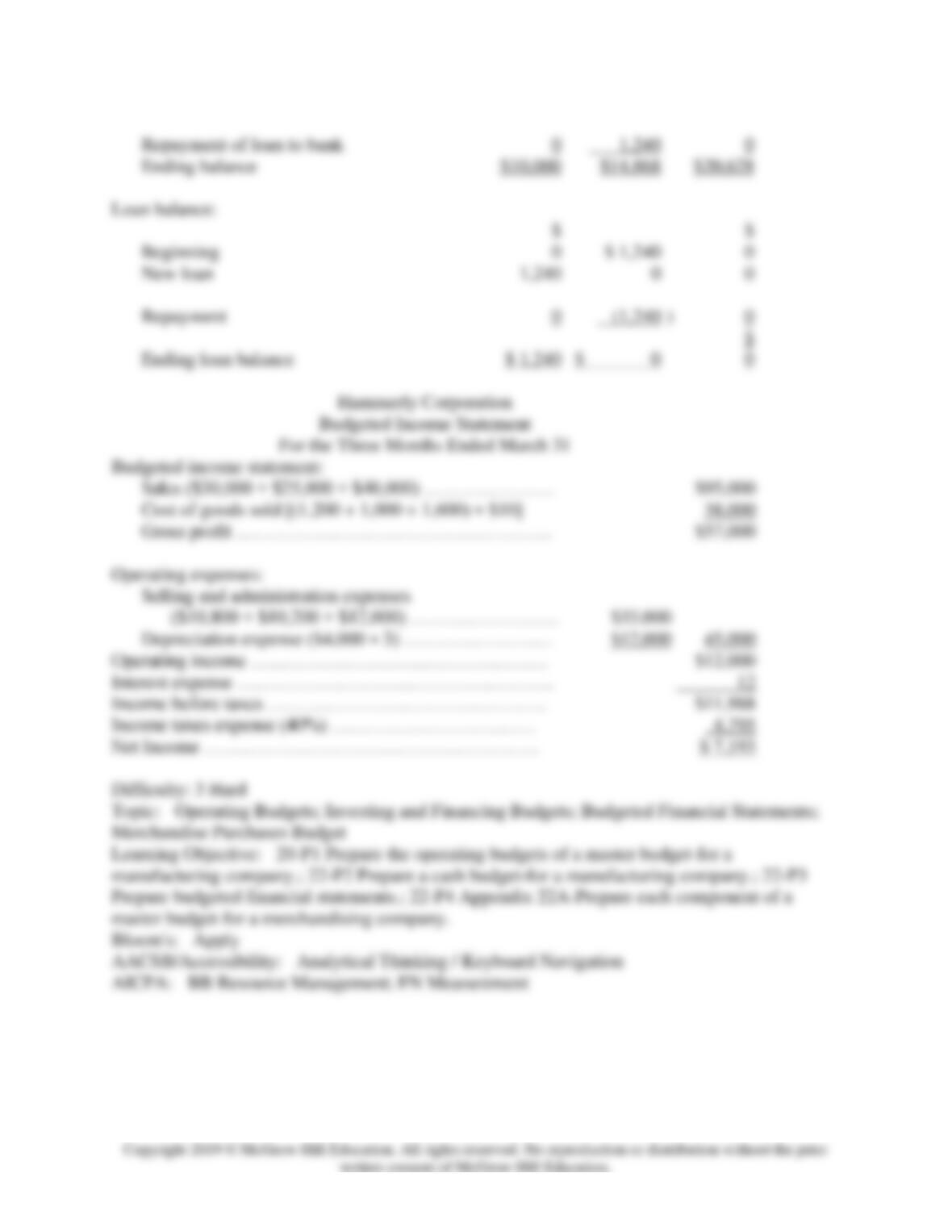
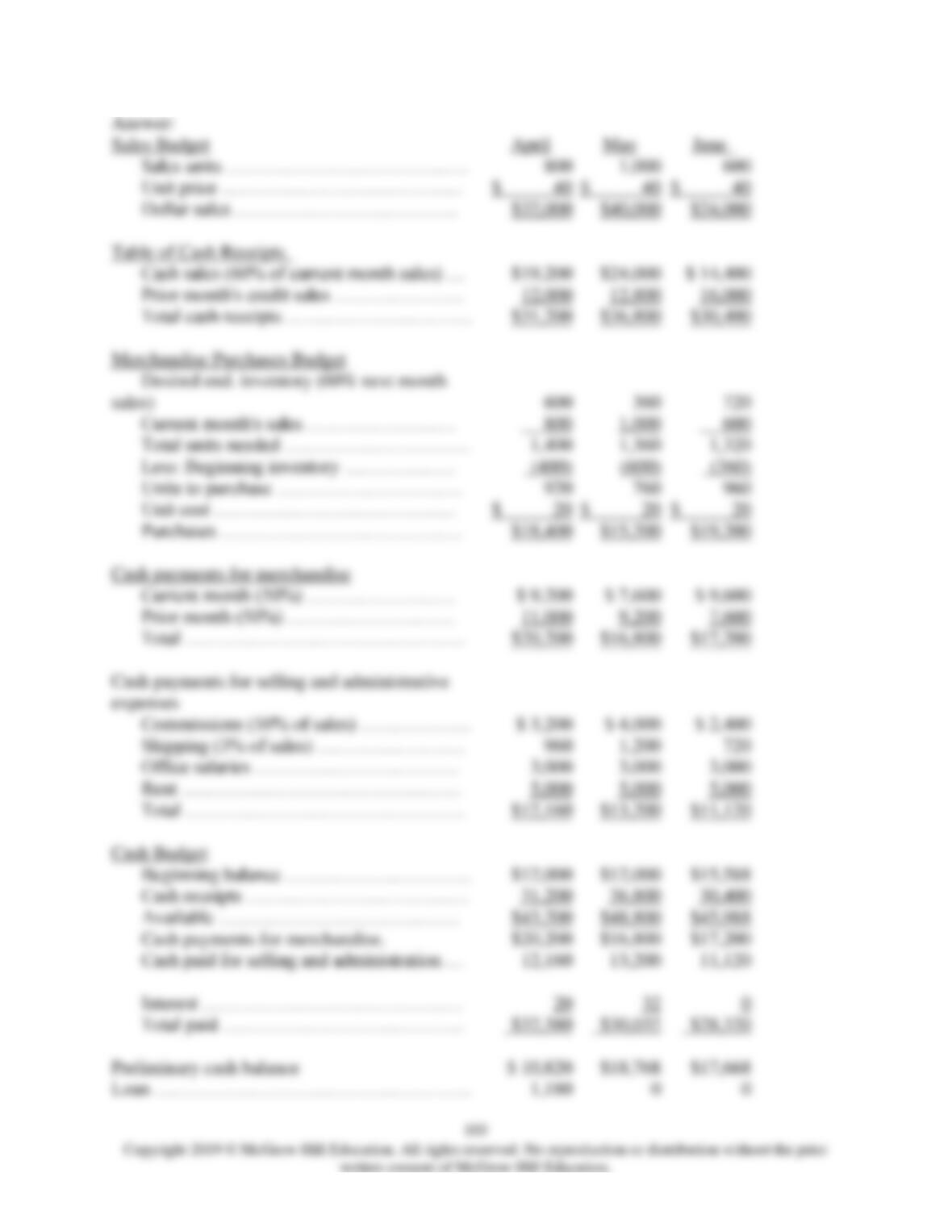
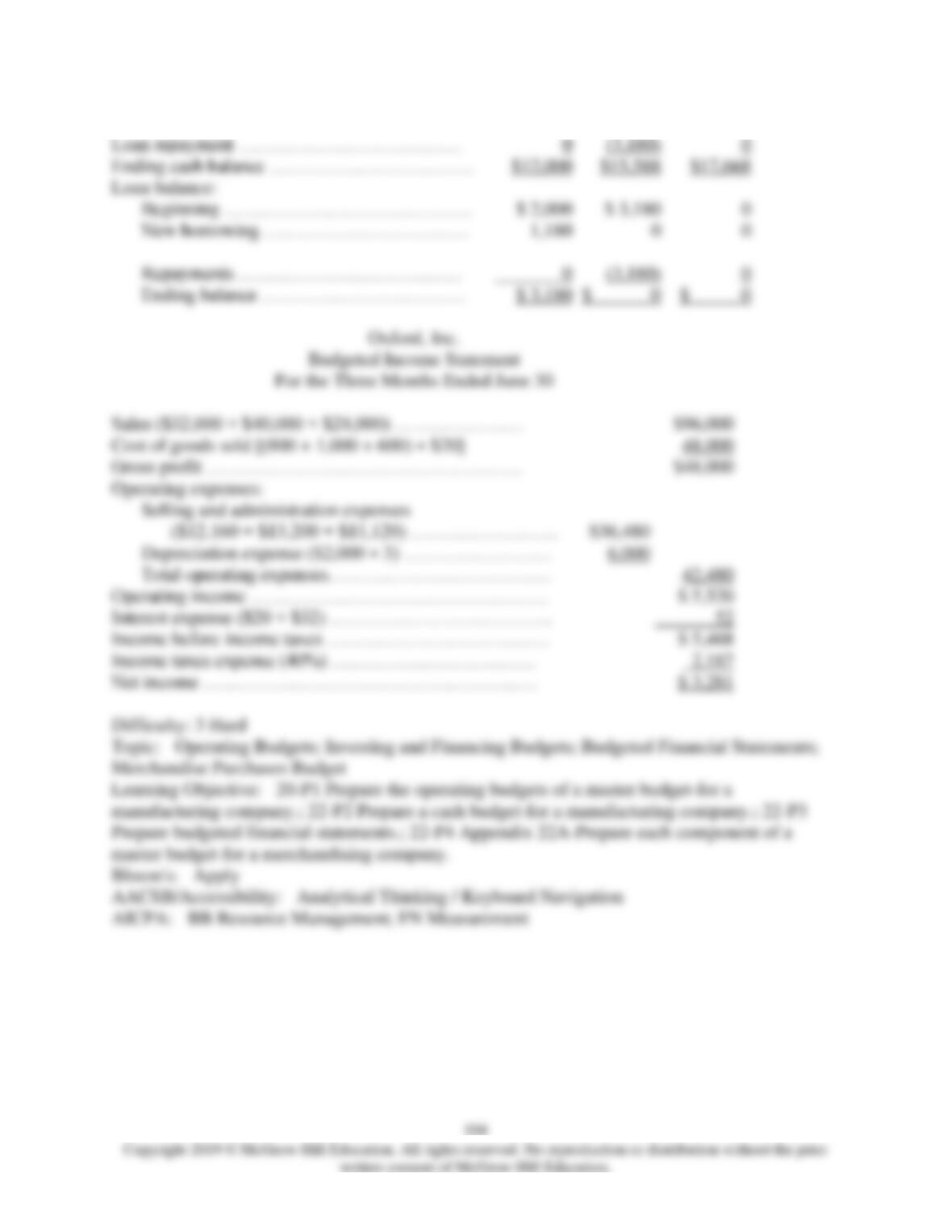
190) Oxford, Inc., is preparing its master budget for the quarter ended June 30. It sells a single
product for $40 each. Sales are 60% cash and 40% on credit. All credit sales are collected in the
month following the sale. At March 31, the balance in accounts receivable is $12,000, which
represents the uncollected balance on March sales. Budgeted unit sales for the next four months
follows:
April
May
June
July
Sales in units ………..
800
1,000
600
1,200
The product cost is $20 per unit, and desired ending inventory is 60% of the following month’s
sales in units. Inventory at March 31 is 480 units. Purchases are paid 50% in the month of
purchase and 50% in the following month. At March 31, the balance in accounts payable is
$11,000, which represents the unpaid purchases from March. Operating expenses are paid in the
month incurred and consist of:
· Commissions (10% of sales)
· Shipping (3% of sales)
· Office salaries ($3,000 per month)
· Rent ($5,000 per month)
Depreciation is $2,000 per month. Income taxes are 40%, and will be paid on July 1. There are
no taxes payable at March 31. A minimum cash balance of $12,000 is required, and the
beginning cash balance is $12,000. Loans are obtained at the end of any month when a cash
shortage occurs. Interest is 1% per month based on the beginning of the month loan balance and
is paid at each month end. If the ending cash balance exceeds the minimum, the excess will be
applied to repaying any outstanding loan balance. At March 31, the loan balance is $2,000.
Prepare a master budget (round all dollar amounts to the nearest whole dollar) for each of the
months of April, May, and June that includes the:
· Sales budget
· Schedule of cash receipts
· Merchandise purchases budget
· Schedule of cash payments for purchases of merchandise
· Schedule of cash payments for selling and administrative expenses (combined)
· Cash budget, including information on the loan balance
· Budgeted income statement for the quarter
191) Stanley Company is preparing a cash budget for February. The company has $30,000 cash
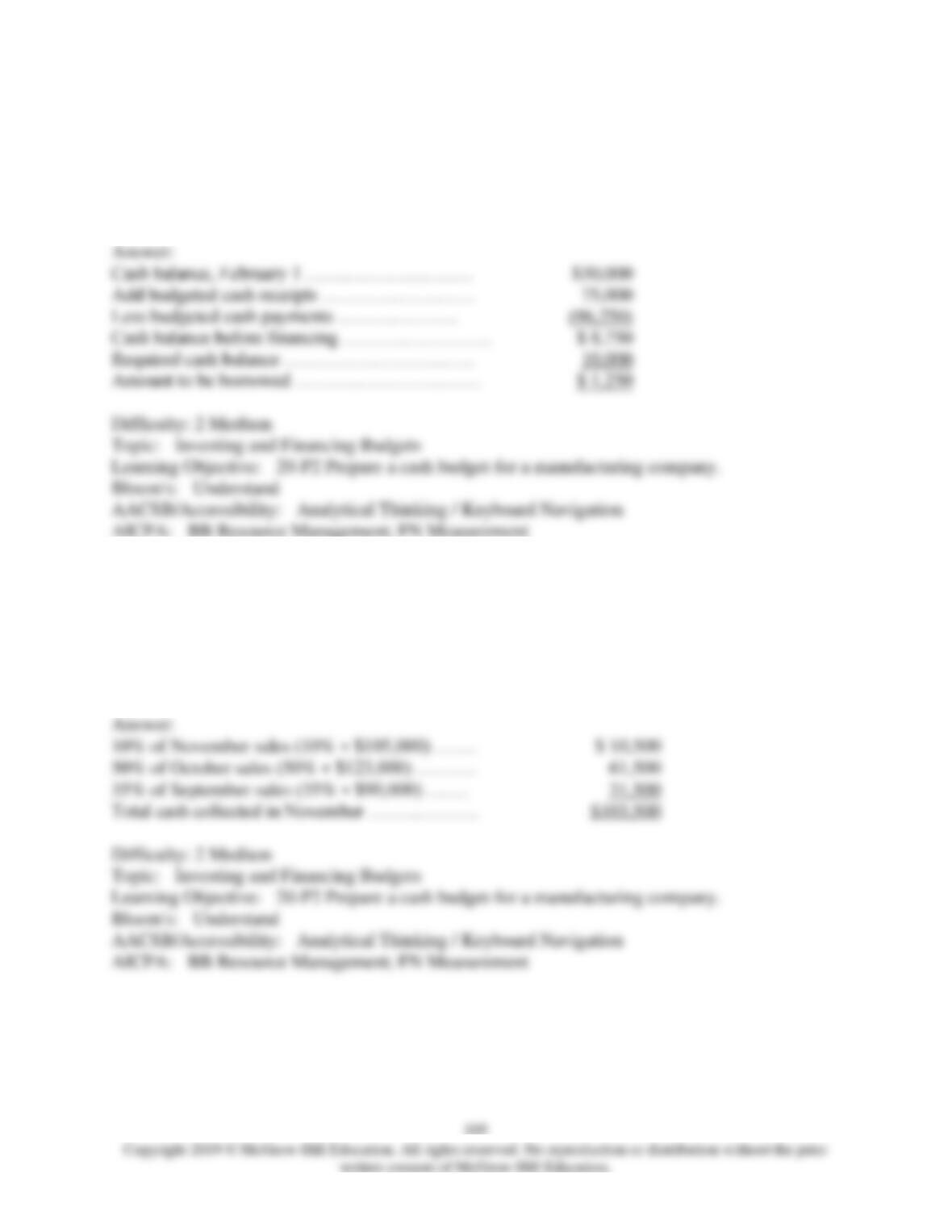
at the beginning of February and anticipates $75,000 in cash receipts and $96,250 in cash
payments during February. Stanley Company has an agreement with its bank to maintain a cash
balance of $10,000. What amount, if any, must the company borrow at the end of February to
maintain a $10,000 cash balance?
192) Groundworks Company budgeted the following credit sales during the current year:
September, $90,000; October, $123,000; November, $105,000; December, $111,000. Experience
has shown that cash from credit sales is received as follows: 10% in the month of sale, 50% in
the first month after sale, 35% in the second month after sale, and 5% is uncollectible. How
much cash should Groundworks Company expect to collect in November from its current and
past credit sales?
106
193) Ewing Company budgeted sales for January, February, and March of $96,000, $88,000, and
$72,000, respectively. Seventy percent of sales are on credit. The company collects 60% of its
credit sales in the month following sale, and 40% in the second month following sale. What are
Ewing’s expected cash receipts for March related to its current and past sales?
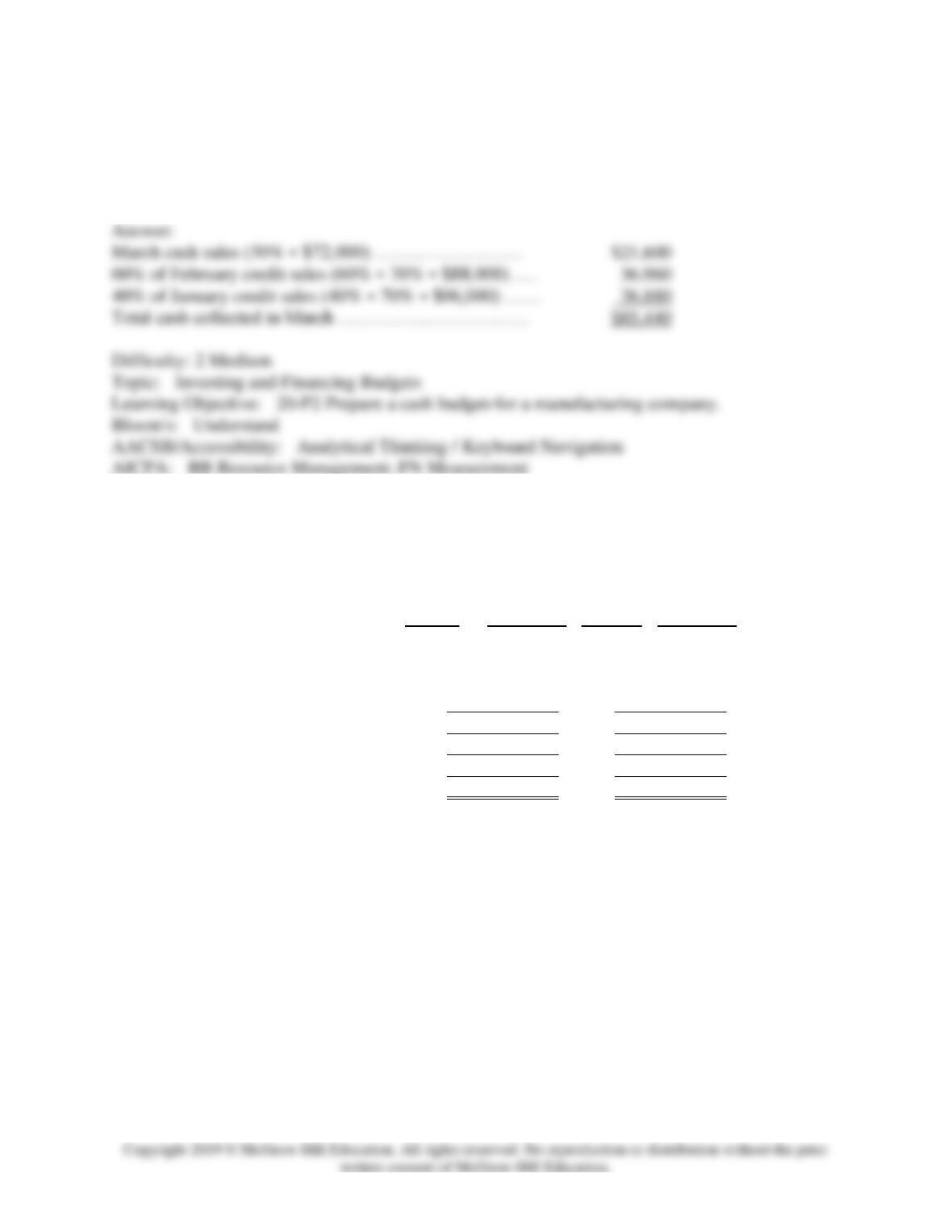
Total cash collected in March ………………………….
194) Lafayette Company’s experience shows that 20% of its sales are for cash and 80% are on
credit. An analysis of credit sales shows that 50% are collected in the month following the sale,
45% are collected in the second month, and 5% prove to be uncollectible. Calculate the
following items (1) through (10).
August
September
October
November
Sales ……….……….……….
$500,000
$525,000
$535,000
$550,000
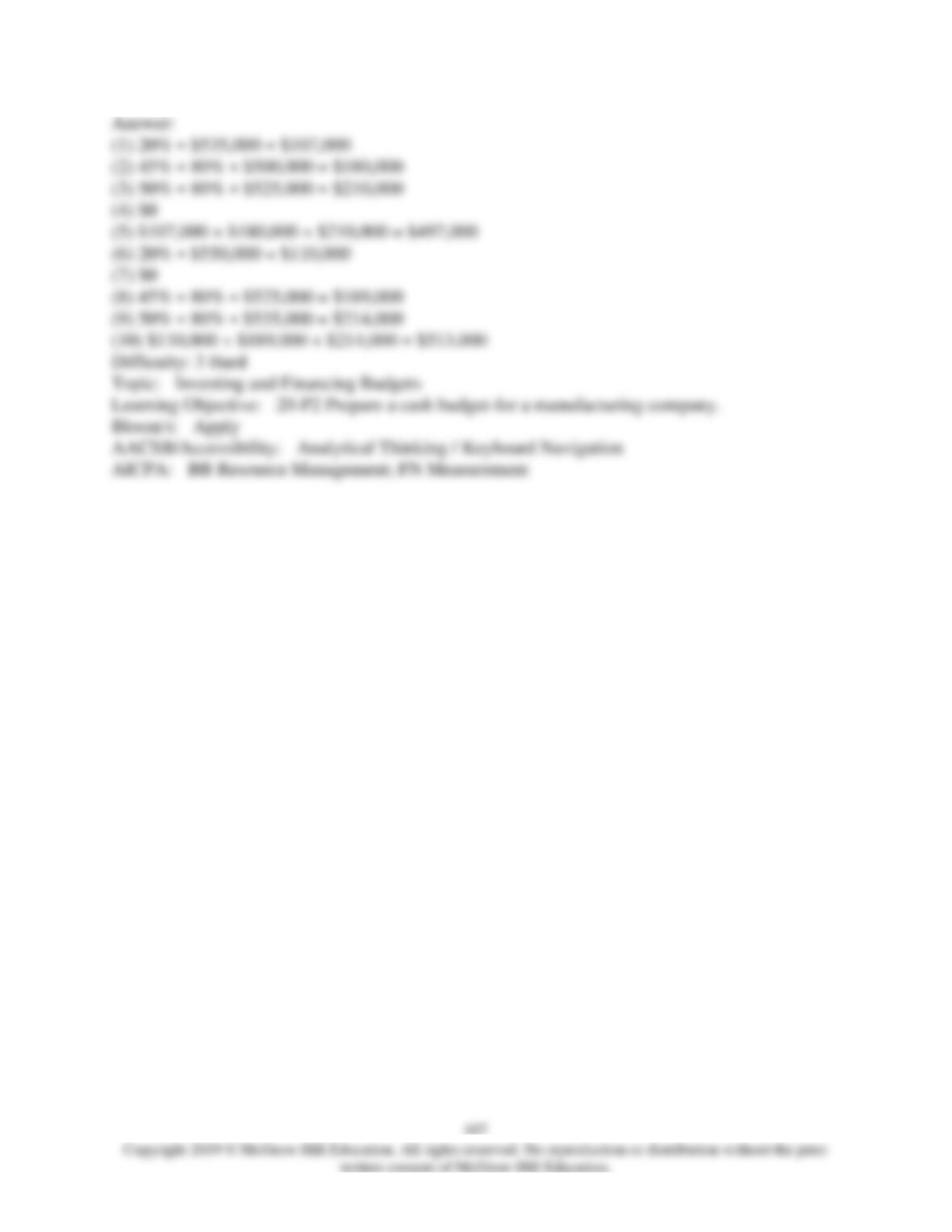
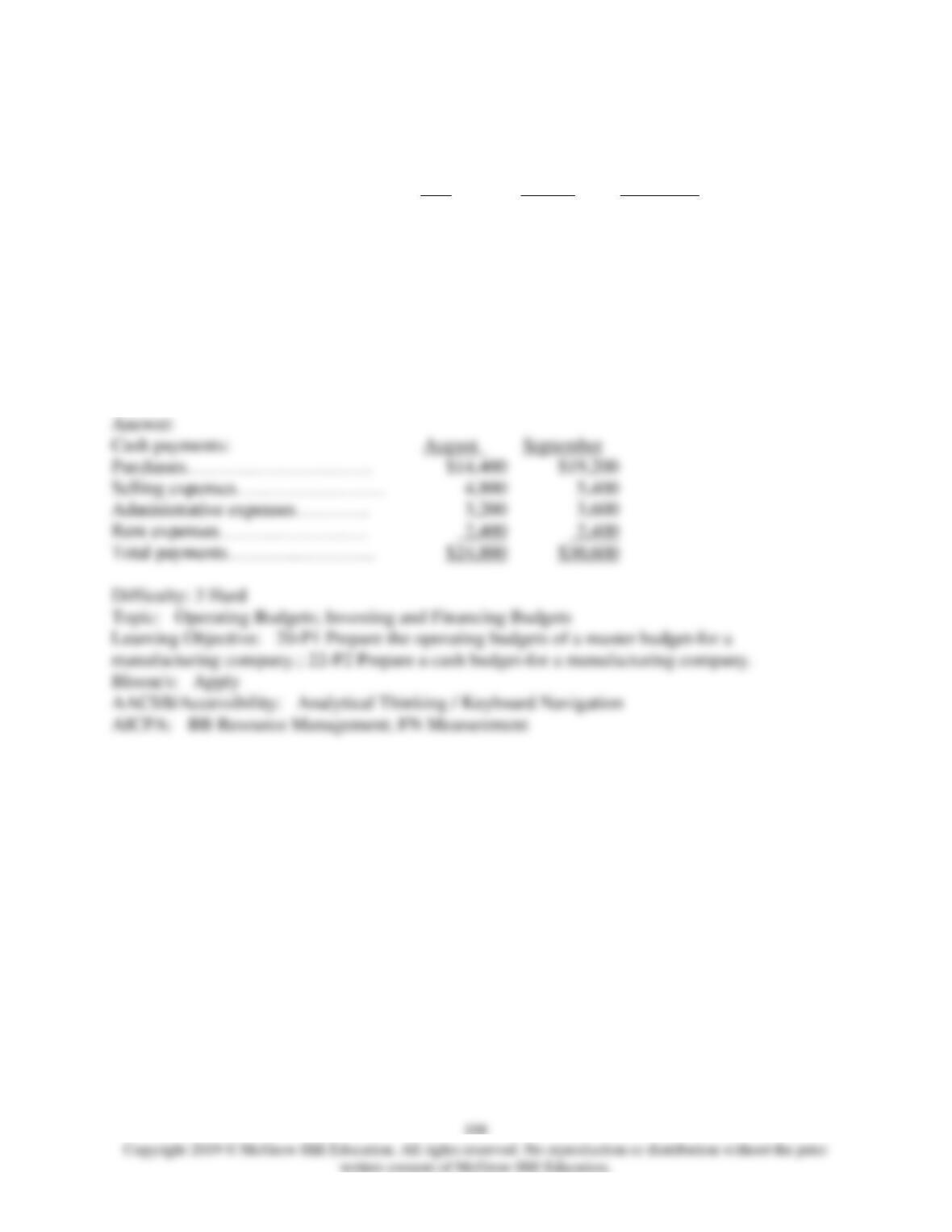
October November
Receipts from cash sales (1) (6)
Collections from August credit sales (2) (7)
Collections from September credit sales (3) (8)
Collections from October credit sales (4) (9)
Total cash collections during the month (5) (10)
195) Use the following data to determine the company’s cash payments for August and
September:
July
August
September
Sales ……………………………
$24,000
$32,000
$36,000
Purchases………………………
$14,400
$19,200
$21,600
Payments for purchases……………………
One month after purchase
Selling expenses……………………………
15% of sales, paid in the month of sale
Administrative expenses…………………
10% of sales, paid in the month of sale
Rent expense………………………………
$2,400 per month
Equipment depreciation……………………
$1,300 per month
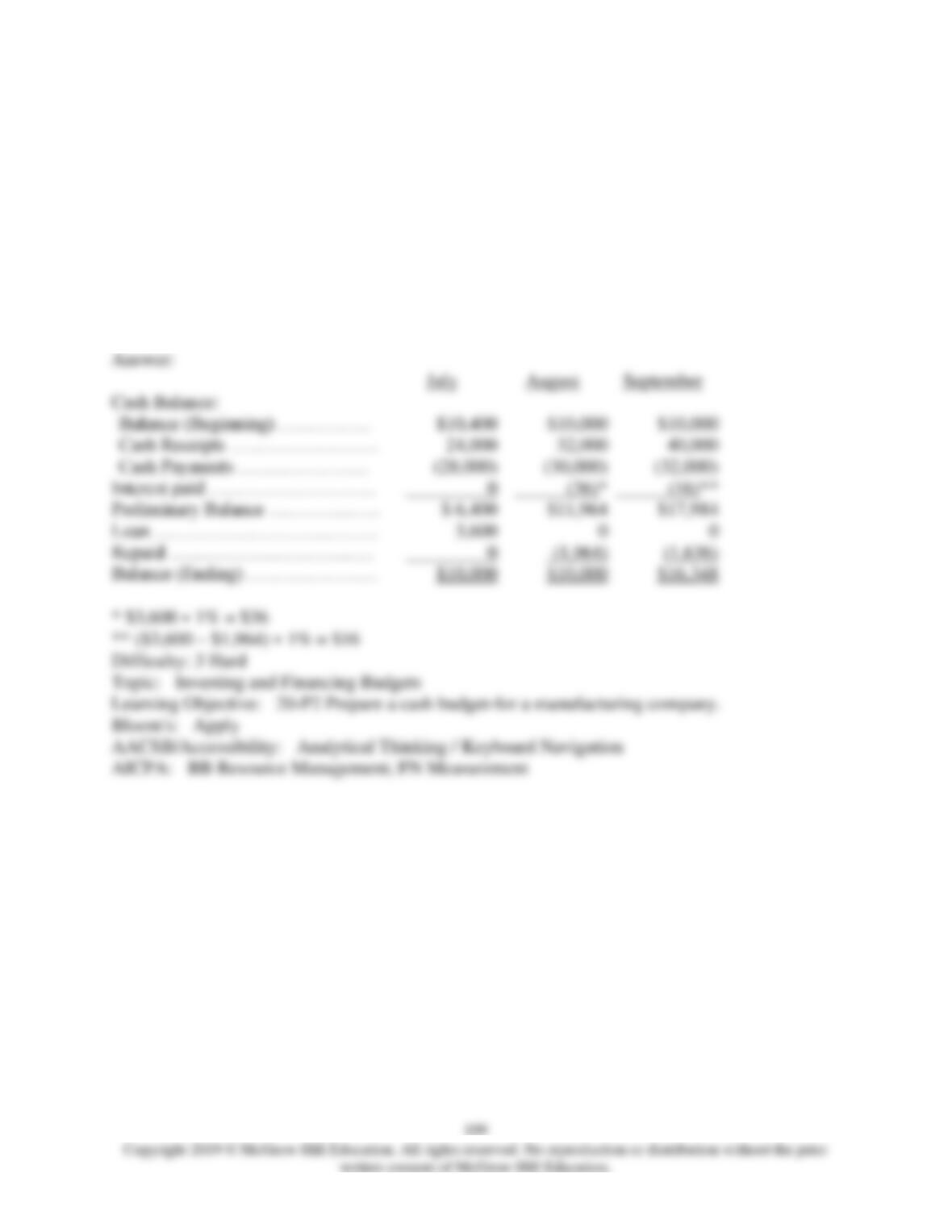
Cash payments:
August
September
Purchases…………………………
Selling expenses……………………
Administrative expenses…………
Rent expenses……………………
Total payments……………………
196) Widmer Corp. requires a minimum $10,000 cash balance. If necessary, loans are taken to
meet this requirement at a cost of 1% interest per month (paid monthly). If the ending cash
balance exceeds the minimum, the excess will be applied to repaying any outstanding loan
balance. The cash balance on July 1 is $10,400. Cash receipts other than for loans received for
July, August, and September are forecasted as $24,000, $32,000, and $40,000, respectively.
Payments other than for loan or interest payments for the same period are planned at $28,000,
$30,000, and $32,000, respectively at July 1, there are no outstanding loans.
Required:
Prepare a cash budget for July, August, and September.
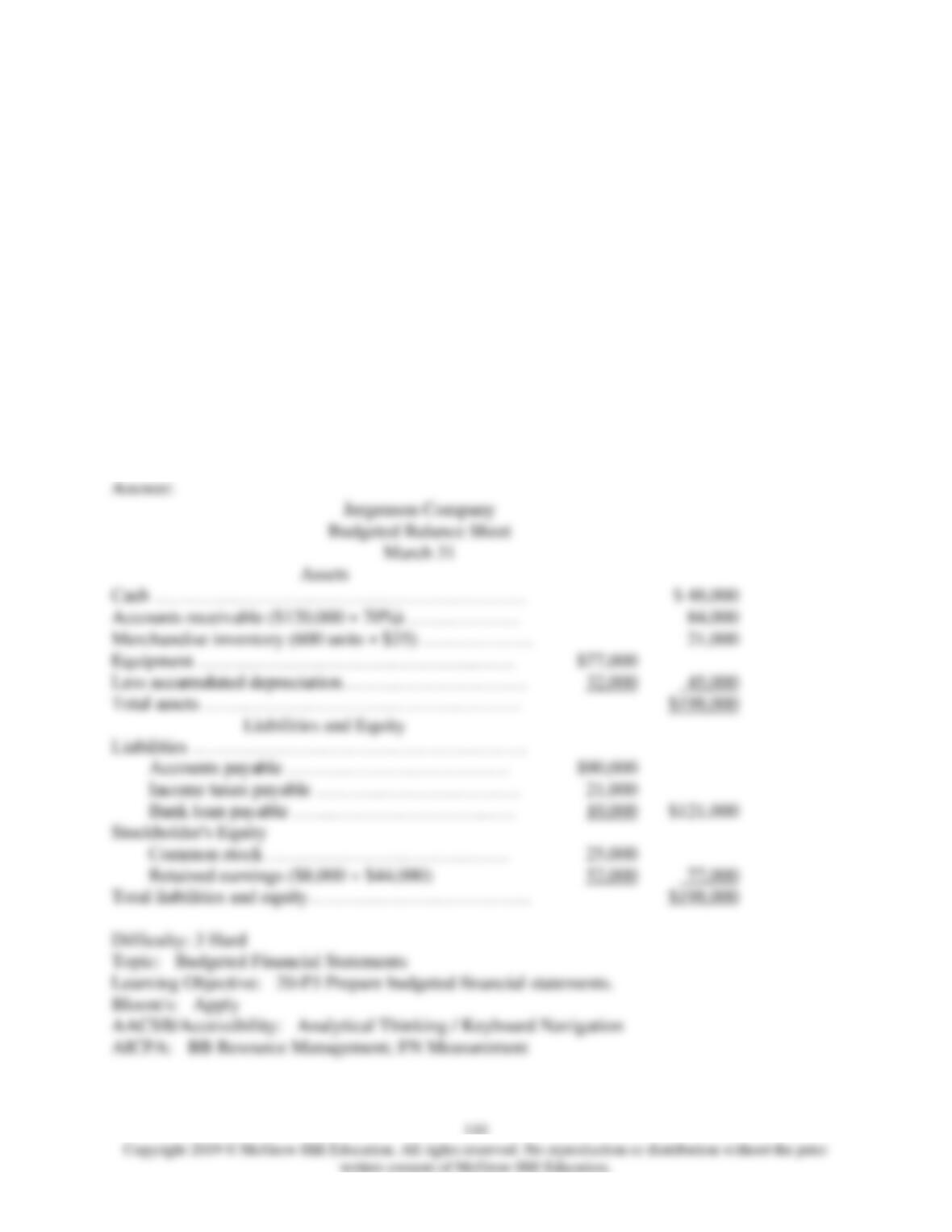
197) The following information is available for Jergenson Company:
a. The Cash Budget for March shows a bank loan of $10,000 and an ending cash balance of
$48,000.
b. The Sales Budget for March indicates sales of $120,000. Accounts receivable is expected to be
70% of March sales.
c. The Merchandise Purchases Budget indicates that $90,000 in merchandise will be purchased
in March on account. Ending inventory for March is predicted to be 600 units at a cost of $35 per
unit. Purchases on account are paid 100% in the month following the purchase.
d. The Budgeted Income Statement shows depreciation expense of $4,000, net income of
$44,000 and $21,000 in income tax expense for the quarter ended March 31. Accrued taxes will
be paid in April.
e. The Balance Sheet for February 28 shows equipment of $77,000 with accumulated
depreciation of $28,000, common stock of $25,000 and retained earnings of $8,000. There are no
changes budgeted in the equipment or common stock accounts for March
Prepare a budgeted balance sheet as of March 31.
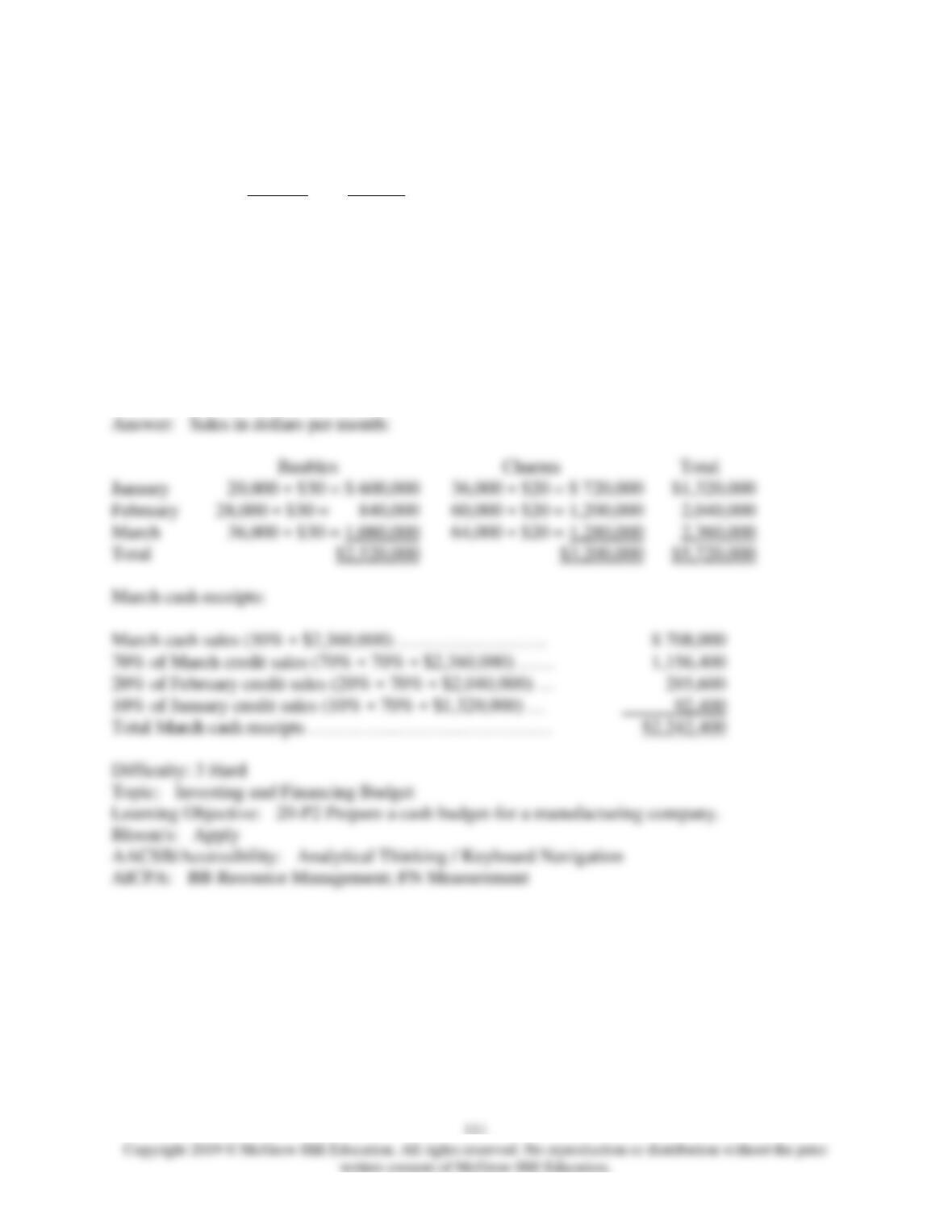
198) Diego, Inc., sells two products, Baubles and Charms. The sales forecast in units for the first
quarter of the coming year is:
Baubles
Charms
January…..
20,000
36,000
February…
28,000
60,000
March……
36,000
64,000
Cash sales are 30% of each product’s monthly sales. The remaining sales are credit sales which
are collected as follows: 70% in the month of sale, 20% the next month, and 10% in the
following month. Unit sale prices are $30 and $20 for Baubles and Charms, respectively.
Determine the company’s cash receipts for March from its current and past sales.
January
February
March
Total

112
199) Todd Enterprises is preparing a cash budget for the second quarter of the coming year. The
following data have been forecasted:
April
May
Sales ……………………………………………….
$150,000
$157,500
Merchandise purchases ……………………………
107,000
112,400
Operating expenses:
Payroll ………………………………………….
13,600
14,280
Advertising …………………………………….
5,400
5,700
Rent …………………………………………….
2,500
2,500
Depreciation ……………………………………
7,500
7,500
End of April balances:
Cash …………………………………………….
30,000
Bank loan payable ………………………………
26,000
Additional data:
(1) Sales are 40% cash and 60% credit. The collection pattern for credit sales is 50% in the
month following the sale and 50% in the month thereafter. Total sales in March were $125,000.
(2) Purchases are all on credit, with 40% paid in the month of purchase and 60% paid in the
following month.
(3) Operating expenses are paid in the month they are incurred.
(4) A minimum cash balance of $25,000 is required at the end of each month.
(5) Loans are used to maintain the minimum cash balance. At the end of each month, interest of
1% per month is paid on the outstanding loan balance as of the beginning of the month.
Repayments are made at the end of the month if the cash balance exceeds $25,000.
Prepare the company’s cash budget for May. Show the ending loan balance at May 31.