Accounting, 9e (Horngren)
Chapter 20 Short-Term Business Decisions
Learning Objective 20-1
1) If a business is considering buying a new vehicle, the cost of insurance on the new vehicle is information that is
relevant to the business decision.
2) When considering whether to have a new roof installed on a building, the money spent previously on roof repairs
to the old roof is information that is relevant to the business decision.
3) When a business is considering whether to replace old equipment with newer equipment, the cost of operating the
old equipment-compared to the cost of operating the new equipment-is information relevant to the business decision.
4) When a business is considering whether to replace old equipment with newer equipment, the original cost of the
old equipment-compared to the cost of the new equipment-is information relevant to the business decision.
5) A depreciable asset’s original cost is relevant when considering whether to replace the depreciable asset.
6) A sunk cost is a cost that was previously incurred and is irrelevant to the decision making process.
7) Managers’ decisions are based primarily on quantitative data because the qualitative factors are NOT usually
relevant to the decision making process.
8) Fixed costs that do NOT differ between two alternatives are:
A) relevant to the decision.
B) considered opportunity costs.
C) irrelevant to the decision.
D) important only if they represent a material dollar amount.
9) In considering the trade-in of a vehicle, which of the following is a sunk cost?
A) Depreciation on new vehicle
B) Trade-in value of old vehicle
C) Purchase price of new vehicle
D) Original purchase price of the old vehicle
10) All of the following are relevant to the decision to replace equipment EXCEPT the:
A) cost of new equipment.
B) selling price of old equipment.
C) future maintenance costs of old equipment.
D) original cost of old equipment.
11) In making a short-term decision, which of the following is MOST important?
A) Separate variable costs from fixed costs
B) Focus on total costs
C) Use a conventional absorption costing approach
D) Focus on the bottom line net income
12) Which of the following describes a sunk cost?
A) One that is relevant to a decision because it changes depending on different courses of action
B) An outlay expected to be incurred in the future
C) A historical cost that is always irrelevant
D) A historical cost that may be relevant to future events
13) Which of the following is the format of the income statement that is MOST useful in decision-making?
A) Absorption costing format
B) Multiple-step format
C) Single-step format
D) Contribution margin format
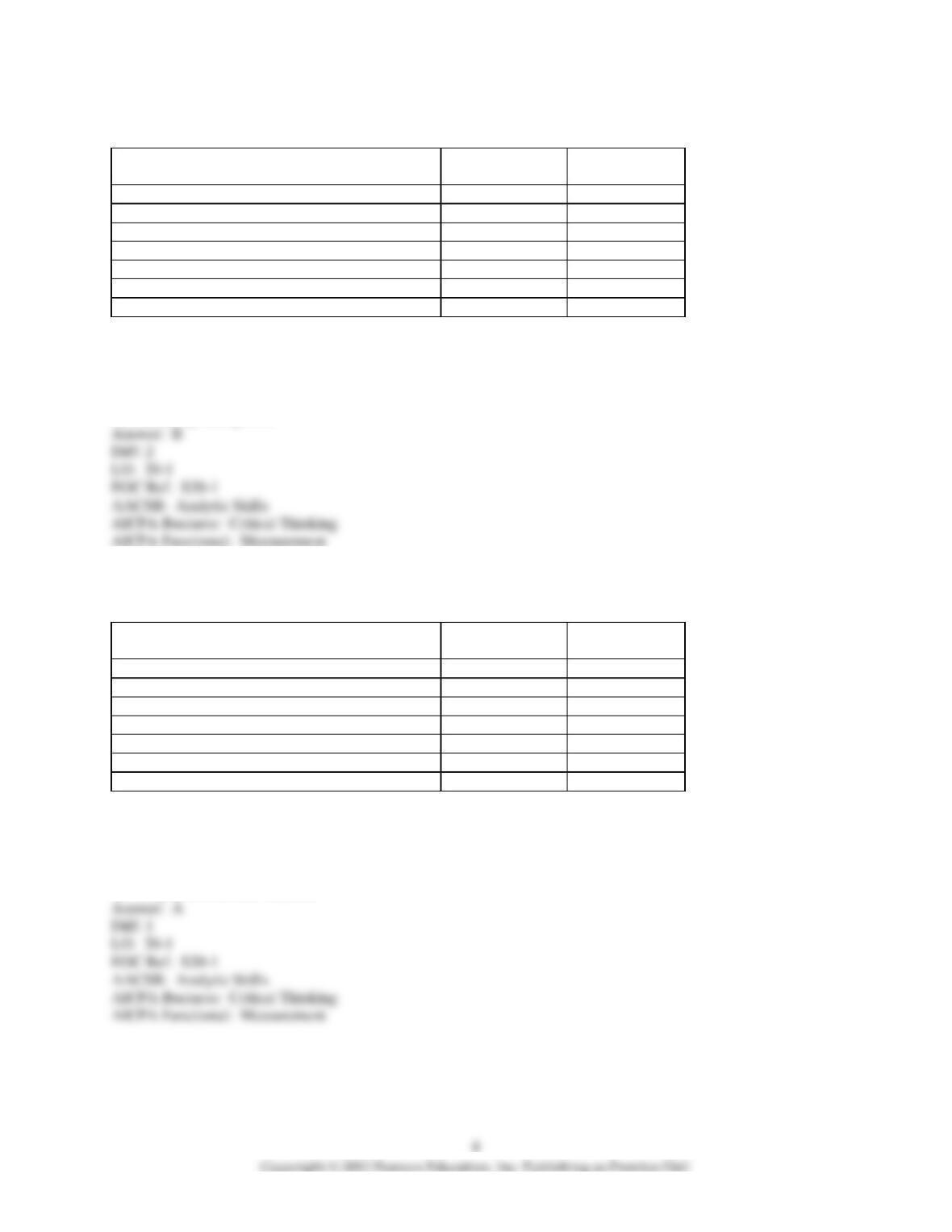
14) Smith Industries is considering replacing a machine that is presently used in its production process. The
following information is available:
Old Machine
Replacement
Machine
Original cost
$45,000
$35,000
Remaining useful life in years
5
5
Current age in years
5
0
Book value
$25,000
Current disposal value in cash
$8,000
Future disposal value in cash (in 5 years)
$0
$0
Annual cash operating costs
$7,000
$4,000
Which of the information provided in the table is irrelevant to the replacement decision?
A) The price of the new machine
B) The original cost of the old machine
C) The current disposal value of the old machine
D) Annual operating costs
15) Smith Industries is considering replacing a machine that is presently used in its production process. The
following information is available:
Old Machine
Replacement
Machine
Original cost
$45,000
$35,000
Remaining useful life in years
5
5
Current age in years
5
0
Book value
$25,000
Current disposal value in cash
$8,000
Future disposal value in cash (in 5 years)
$0
$0
Annual cash operating costs
$7,000
$4,000
For a machine replacement decision which of the information provided in the table is a sunk cost?
A) The original cost of the old machine
B) The current disposal value of the old machine
C) The current annual operating cost of the old machine
D) The price of the new machine
16) The benefit foregone by NOT choosing an alternative course of action is referred to as a(n):
A) opportunity cost.
B) sunk cost.
C) variable cost.
D) incremental cost.
17) The effect of a plant closing on employee morale is an example of which of the following?
A) A quantitative factor
B) A qualitative factor
C) A sunk cost
D) A variable cost
18) Which of the following is NOT important with respect to short-run decision making?
A) Focusing on relevant revenues and costs
B) Using a contribution margin income statement format
C) Focusing on maximizing the gross profit of each unit sold
D) Focusing on analyzing incremental revenues and costs
19) Which of the following is irrelevant when making a decision?
A) The original cost of an asset that the company is considering replacing
B) The fixed overhead costs that differ among decision alternatives
C) The cost of further processing a product that could be sold as is
D) The expected increase in contribution margin of one product line as a result of a decision to drop a separate
unprofitable product line
20) Which of the following pieces of information would NOT be relevant in deciding to upgrade a company’s
heating and air conditioning system?
A) The energy efficiency of the old equipment versus the energy efficiency of the new equipment
B) The safety of the new equipment compared to the old equipment
C) The purchase price of the old equipment compared to the purchase price of the new equipment
D) The productivity of the old equipment compared to that of the new equipment
21) Which of the following are the two most important keys to short-term business decision-making?
A) Focus on costs which do not change under two alternatives and on historic costs
B) Focus on qualitative data only and ignore future cash flows
C) Focus on sunk costs and quantitative data only
D) Focus on future expected data and use the contribution margin approach
22) If a company wishes to be a price-setter, which of the following strategies should they take?
A) Produce a generic mass-market product
B) Enter a competitive market and boost profits by cost cutting
C) Produce a unique product
D) Produce a commodity and outsource the manufacturing operations
23) Which of the following business strategies would NOT be consistent with a price setter?
A) Enter a competitive market and focus on cost cutting
B) Produce a unique product
C) Exploit the value of a fashionable brand name
D) Differentiate the product clearly from the competitors
Learning Objective 20-2
1) Special sales orders increase operating income if the revenue from the order exceeds the incremental variable and
fixed costs incurred to fill the order.
2) In deciding whether to accept a special sales order, management should consider the quantitative data ONLY and
disregard qualitative factors.
3) Fixed costs are relevant to a special sales order decision if those fixed costs are subject to change as a result of the
special order.
4) Origami Company is a price-taker and uses target pricing. Please refer to the following information:
Production volume
500,000
Units per year
Market price
$24.00
Per unit
Desired operating profit
12%
Of total assets
Revenue at market price plus the desired operating profit equals the product’s target full cost.
5) When a company is a price-setter, that means that the company has flexibility in setting its price and may choose
to use the cost-plus methodology.
6) If a company is a price-taker, it has considerable flexibility in setting its products’ prices.
7) Potlatch Company manufactures sonars for fishing boats. Model 100 sells for $200. Potlatch produces and sells
5,000 of them per year. Cost data are as follows:
Variable manufacturing
$105.00
Per unit
Variable marketing
$5.00
Per unit
Fixed manufacturing
$270,000
Per year
Fixed marketing & admin
$140,000
Per year
The sales manager says he has an opportunity to pitch a special sale to a new Canadian fishing company that is
outfitting new boats. He proposes a sale of 30 units at a special price of $140 per unit. He says it will not
cannibalize the company’s regular sales and is a one-time transaction. It will require the normal amount of variable
costs, both marketing and manufacturing, but will not impact fixed costs in any way. The president of the company
has some reservations, but finally agrees to make the deal if and only if it adds a minimum of $1,000 to operating
income. Based on the president’s criteria, Potlatch will decline the offer.
8) Potlatch Company manufactures sonars for fishing boats. Model 100 sells for $200. Potlatch produces and sells
5,000 of them per year. Cost data are as follows:
Variable manufacturing
$105.00
Per unit
Variable marketing
$5.00
Per unit
Fixed manufacturing
$270,000
Per year
Fixed marketing & admin
$140,000
Per year
A potential deal has come up for a one time sale of 25 units at a special price of $105 per unit. The marketing
manager says that the sale will not negatively impact the company’s regular sales activities, but it will require the
normal amount of variable marketing costs. The production manager says that there’s plenty of excess capacity and
the deal will not impact fixed costs in any way. The controller points out, however, that because the incremental
revenues are just equal to the incremental costs to fill the order, the deal will not have any impact on the bottom line
whatever. The controller is correct in his statement.
9) Which of the following is NOT a major consideration when analyzing a special order?
A) Will the price be high enough to cover any incremental costs to fill the order?
B) Does the company have excess capacity available?
C) Will the profit margin of the special sale be as high as regular sales?
D) Will the special order negatively impact regular sales?
10) Origami Company is a price-taker and uses target pricing. Please refer to the following information:
Production volume
500,000
Units per year
Market price
$24.00
Per unit
Desired operating profit
12%
Of total assets
Total assets
$12,500,000
How much is the desired profit for the year?
A) $1,440,000
B) $11,000,000
C) $12,000,000
D) $1,500,000
11) Origami Company is a price-taker and uses target pricing. Please refer to the following information:
Production volume
500,000
Units per year
Market price
$24.00
Per unit
Desired operating profit
12%
Of total assets
Total assets
$12,500,000
How much is the target full cost in total for the year?
A) $1,440,000
B) $10,500,000
C) $12,000,000
D) $1,500,000
12) Origami Company is a price-taker and uses target pricing. Please refer to the following information:
Production volume
500,000
Units per year
Market price
$24.00
Per unit
Desired operating profit
12%
Of total assets
Total assets
$12,500,000
How much is the target full cost per unit? (Please round to nearest cent.)
A) $21.00
B) $24.00
C) $22.67
D) $19.33
13) Origami Company is a price-taker and uses target pricing. Please refer to the following information:
Production volume
500,000
Units per year
Market price
$24.00
Per unit
Desired operating profit
12%
Of total assets
Total assets
$12,500,000
Variable cost per unit
$17.00
Per unit
Fixed cost per year
$3,000,000
Per year
With the current cost structure, Origami cannot achieve its profit goals. It will have to reduce either the fixed costs
or the variable costs. Assuming that variable costs CANNOT be reduced, how much will the target fixed costs per
year be?
A) $2,000,000
B) $1,500,000
C) $2,500,000
D) $800,000
14) Origami Company is a price-taker and uses target pricing. Please refer to the following information:
Production volume
500,000
Units per year
Market price
$24.00
Per unit
Desired operating profit
12%
Of total assets
Total assets
$12,500,000
Variable cost per unit
$17.00
Per unit
Fixed cost per year
$3,000,000
Per year
With the current cost structure, Origami cannot achieve its profit goals. It will have to reduce either the fixed costs
or the variable costs. Assuming that fixed costs CANNOT be reduced, how much will the target variable costs per
year be?
A) $7,500,000
B) $12,500,000
C) $2,500,000
D) $8,000,000
15) Origami Company is a price-taker and uses target pricing. Please refer to the following information:
Production volume
500,000
Units per year
Market price
$24.00
Per unit
Desired operating profit
12%
Of total assets
Total assets
$12,500,000
Variable cost per unit
$17.00
Per unit
Fixed cost per year
$3,000,000
Per year
With the current cost structure, Origami cannot achieve its profit goals. It will have to reduce either the fixed costs
or the variable costs. Assuming that fixed costs CANNOT be reduced, how much will the target variable costs per
unit be? (Please round to nearest cent.)
A) $14.67
B) $16.25
C) $15.00
D) $17.50
16) Pueblo Products is a price-taker and uses target pricing. Please refer to the following information:
Production volume
250,000
Units per year
Market price
$2.00
Per unit
Desired operating profit
10%
Of total assets
Total assets
$1,000,000
How much is the target full cost per year?
A) $400,000
B) $410,000
C) $440,000
D) $390,000
17) Pueblo Products is a price-taker and uses target pricing. Pueblo has just done an analysis of their revenues, costs
and desired profits, and has calculated its target full cost. Please refer to the following information:
Target full cost
$400,000
Per year
Actual fixed cost
$160,000
Per year
Actual variable cost
$1.00
Per unit
Production volume
250,000
Units per year
Actual costs are currently higher than target full cost. Assuming that variable costs are dependent on commodity
prices and CANNOT be reduced, how much is the target fixed cost?
A) $160,000
B) $175,000
C) $150,000
D) $140,000
18) Pueblo Products is a price-taker and uses target pricing. Pueblo has just done an analysis of their revenues, costs
and desired profits, and has calculated its target full cost. Please refer to the following information:
Target full cost
$400,000
Per year
Actual fixed cost
$160,000
Per year
Actual variable cost
$1.00
Per unit
Production volume
250,000
Units per year
Actual costs are currently higher than target full cost. Assuming that fixed costs are predominantly related to
depreciation expense and CANNOT be reduced, how much is the target variable cost?
A) $200,000 per year
B) $250,000 per year
C) $240,000 per year
D) $214,000 per year
19) Pueblo Products is a price-taker and uses target pricing. Pueblo has just done an analysis of their revenues, costs
and desired profits, and has calculated its target full cost. Please refer to the following information:
Target full cost
$400,000
Per year
Actual fixed cost
$160,000
Per year
Actual variable cost
$1.00
Per unit
Production volume
250,000
Units per year
Actual costs are currently higher than target full cost. Assuming that fixed costs are predominantly related to
depreciation expense and CANNOT be reduced, how much is the target variable cost per unit?
A) $0.92
B) $1.04
C) $1.00
D) $0.96
20) Polynesian Products sells 1,800 kayaks per year at a price of $480 per unit. Polynesian sells in a highly
competitive market and uses target pricing. The company has $900,000 of assets and the shareholders wish to make
a profit of 15% on assets. How much is the target full cost?
A) $864,000
B) $729,000
C) $135,000
D) $712,500
21) Polynesian Products sells 1,800 kayaks per year at a price of $480 per unit. Polynesian sells in a highly
competitive market and uses target pricing. The company has $900,000 of assets and the shareholders wish to make
a profit of 15% on assets. Fixed costs are $400,000 per year and CANNOT be reduced. How much are the target
variable costs?
A) $265,000
B) $410,000
C) $396,000
D) $329,000
22) Polynesian Products sells 1,800 kayaks per year at a price of $480 per unit. Polynesian sells in a highly
competitive market and uses target pricing. The company has calculated its target full cost at $729,000 per year.
Fixed costs are $400,000 per year and CANNOT be reduced. How much are the target variable costs?
A) $265,000
B) $410,000
C) $396,000
D) $329,000
23) Polynesian Products sells 1,800 kayaks per year at a price of $480 per unit. Polynesian sells in a highly
competitive market and uses target pricing. The company has $900,000 of assets and the shareholders wish to make
a profit of 15% on assets. Variable costs are $220 per unit and CANNOT be reduced. How much are the target
fixed costs?
A) $265,000
B) $410,000
C) $396,000
D) $333,000
24) Polynesian Products sells 1,800 kayaks per year at a price of $480 per unit. Polynesian sells in a highly
competitive market and uses target pricing. The company has calculated its target full cost at $729,000 per year.
Total variable costs are $396,000 per year and cannot be reduced. How much are the target fixed costs?
A) $265,000
B) $410,000
C) $396,000
D) $333,000
25) In a special sales order decision, incremental fixed costs which would be incurred because of an additional
purchase of equipment would be considered to be:
A) relevant to the decision.
B) irrelevant to the decision.
C) opportunity costs.
D) sunk costs.
26) Lowwater Sailmakers manufactures sails for sailboats. The company has the capacity to produce 25,000 sails
per year, and is currently producing and selling 20,000 sails per year. The following information relates to current
production:
Sale price per unit
$150
Variable costs per unit:
Manufacturing
55
Marketing and administrative
25
Total fixed costs:
Manufacturing
$640,000
Marketing and administrative
$280,000
If a special sales order is accepted for 5,000 sails at a price of $125 per unit, and fixed costs remain unchanged, what
is the change in operating income? (Assume the special sales order will require variable manufacturing costs and
variable marketing and administrative costs.)
A) Operating income decreases $5,000.
B) Operating income increases $190,000.
C) Operating income decreases $125,000.
D) Operating income increases $225,000.
27) Lowwater Sailmakers manufactures sails for sailboats. The company has the capacity to produce 25,000 sails
per year, and is currently producing and selling 20,000 sails per year. The following information relates to current
production:
Sale price per unit
$150
Variable costs per unit:
Manufacturing
55
Marketing and administrative
25
Total fixed costs:
Manufacturing
$640,000
Marketing and administrative
$280,000
If a special sales order is accepted for 3,000 sails at a price of $75 per unit, fixed costs remain unchanged, and there
are no additional variable marketing and administrative costs for this order, what is the change in operating income?
A) Operating income decreases $5,000.
B) Operating income decreases $36,000.
C) Operating income increases $35,000.
D) Operating income increases $60,000.
28) Lowwater Sailmakers manufactures sails for sailboats. The company has the capacity to produce 25,000 sails
per year, and is currently producing and selling 20,000 sails per year. The following information relates to current
production:
Sale price per unit
$150
Variable costs per unit:
Manufacturing
55
Marketing and administrative
25
Total fixed costs:
Manufacturing
$640,000
Marketing and administrative
$280,000
If a special sales order is accepted for 2,000 sails at a price of $95 per unit, and if the order requires both variable
manufacturing and variable marketing and administrative costs, and if incremental fixed costs of $10,000 are
required, what will be the impact on operating income?
A) Operating income decreases $34,000.
B) Operating income decreases $44,000.
C) Operating income increases $20,000.
D) Operating income increases $25,000.
29) Lowwater Sailmakers manufactures sails for sailboats. The company has the capacity to produce 25,000 sails
per year, and is currently producing and selling 20,000 sails per year. The following information relates to current
production:
Sale price per unit
$150
Variable costs per unit:
Manufacturing
55
Marketing and administrative
25
Total fixed costs:
Manufacturing
$640,000
Marketing and administrative
$280,000
If a special sales order is accepted for 2,000 sails at a price of $70 per unit, and if the order requires no incremental
marketing and administrative costs, and no change in fixed costs, what will the effect on operating income be?
A) Operating income increases $30,000.
B) Operating income decreases $44,000.
C) Operating income increases $20,000.
D) Operating income increases $25,000.
30) Paragon Products sells a special kind of navigation equipment for $1,200. Variable costs are $900 per unit.
When a special order arrived from a foreign contractor to buy 40 units at a reduced price of $1,000 per unit, there
was a discussion among management. The controller said that as long as the special price was less than the variable
costs, the sale would contribute to the company’s profits, and so it should be accepted as offered. The production
manager warned that the company was already working at full capacity, and would have to add staff and equipment
to accommodate the order. The sales manager urged caution because if they sold to this contractor, it might
adversely affect their regular sales. The vice-president decided to decline the order. Which of the following
statements is NOT valid for sound business decision making?
A) The controller was correct in that the only relevant facts are the special sales price and the incremental variable
costs.
B) The production manager was correct because the incremental fixed costs of expanding capacity could negate the
positive contribution margin of the sale.
C) The sales manager was right because even if this sale generated profit, it may cut into future profits by reducing
future sales.
D) The vice-president was wise to be cautious given the concerns about capacity and the effect on regular sales.