PROBLEM
1. Explain why the dollar amount of total stockholders’ equity probably will not equal the dollar amount
that would remain if all the assets were sold and all the liabilities were then settled.
2. Amalgamated Campus Stores, Inc. (ACS) employed student representatives to market grooming aids,
casual clothes, and other such products on college campuses. The representatives organized parties at
which they displayed samples of all the products. Students who bought products paid the
representative, who in turn ordered the products and paid ACS for them. When the products arrived,
the student representatives delivered them to the buyers. The representatives paid ACS less than they
charged the buyers. The difference represented the earnings of the representatives, who were not
employees of ACS. Wall Street investors admired ACS because the company had enjoyed several
years of rapid growth in sales and earnings.
Last year, the president of ACS predicted further increases in sales of 30 percent. By December,
however, it was apparent that the forecasted sales goals would not be met. So during the last two
weeks of December, ACS shipped $23 million of merchandise to the sales representatives to be held
for future sales parties. The company billed the student representatives and recorded the shipments as
sales. In this way, ACS was able to meet its sales goal for the year.
Were these merchandise shipments properly recorded as sales?
3. Why is the Dividends account increased by a debit? Explain in terms of its relationship to
stockholders’ equity.
4. For each item below, indicate whether a debit or a credit applies.
a. Decrease in Accounts Payable
b. Decrease in Land
c. Increase in Retained Earnings
d. Increase in Unearned Revenue
e. Decrease in Interest Payable
f. Increase in Prepaid Insurance
g. Increase in Wages Expense
h. Decrease in Art Supplies
i. Increase in Advertising Fees Earned
5. For each item below, indicate whether a debit or a credit applies.
a. Increase in Art Fees Earned
b. Decrease in Prepaid Rent
c. Decrease in Unearned Fees
d. Increase in Common Stock
e. Increase in Depreciation Expense
f. Increase in Interest Receivable
g. Decrease in Retained Earnings
h. Increase in Dividends
i. Increase in Notes Payable
6. Use the following descriptive phrases to determine the account name that would be used for each. In
addition, classify the account as an asset (A), liability (L), stockholders’ equity (SE), revenue (R), or
expense (E).
a. Amount due to creditor for merchandise purchased
b. Coins and currency
c. Property to be used in the business
d. An amount paid to stockholders resulting from profits
e. Income recorded for performance of legal services
f. Amount due to bank for loan to purchase building
g. Stationery, pencils, etc., purchased but not yet used
h. Stationery, pencils, etc., that have been consumed (used)
i. An insurance premium paid covering the next two years
j. Representation of stockholders’ investments in a business
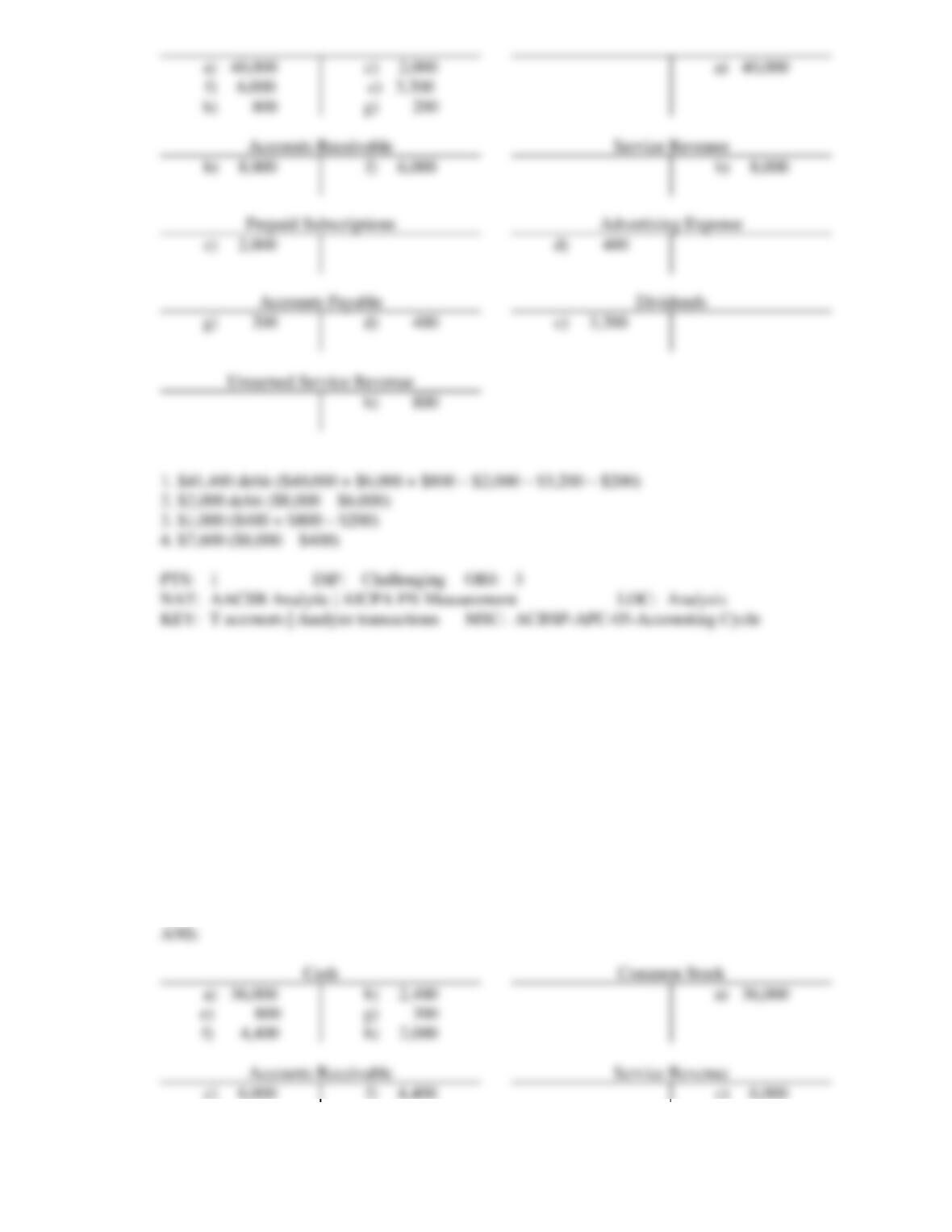
7. The following transactions are for Cockrell Company.
a. Opened business by issuing common stock for $40,000 cash.
b. Billed customers for services rendered, $8,000.
c. Paid for six months’ subscription in advance, $2,000.
d. Received advertising bill, to be paid next week, $400.
e. Dividends of $3,200 were declared and paid.
f. Received $6,000 from customers billed in b.
g. Paid half of advertising bill.
h. Received $800 in advance of performing a service.
Record the above transactions in T Accounts and then calculate (1) the ending balance of Cash, (2) the
ending balance of Accounts Receivable, (3) total liabilities, and (4) net income for the period.
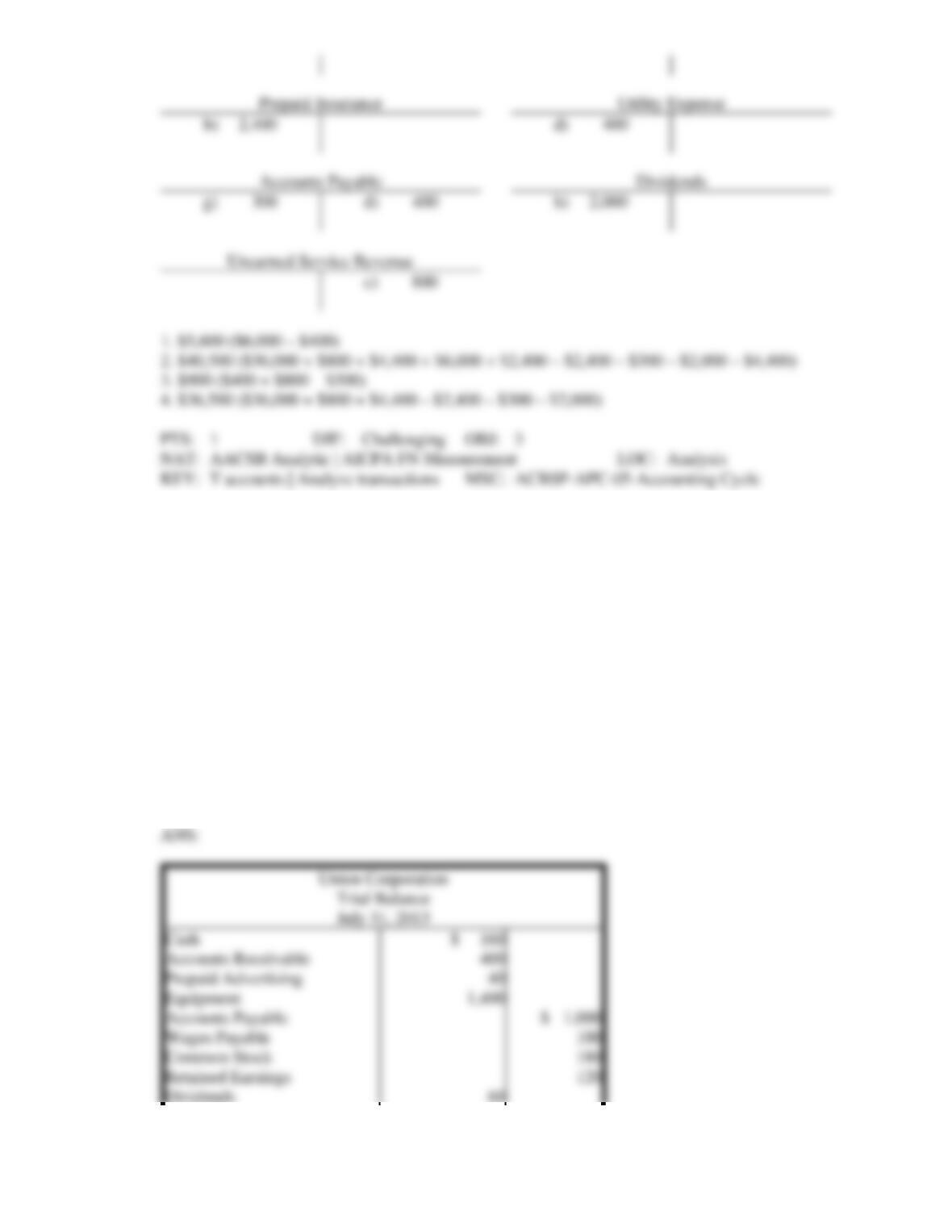
8. The following transactions are available for Carlson Company.
a. Opened business by issuing common stock for $36,000.
b. Paid one year’s insurance in advance, $2,400.
c. Billed customers for services rendered, $6,000.
d. Received utility bill, to be paid next month, $400.
e. Received $800 in advance of performing a service.
f. Received $4,400 from customers billed in c.
g. Paid $300 on the utility bill of d.
h. Dividends of $2,000 were declared and paid.
Record the above transactions in T Accounts and then calculate (1) net income for the period, as well
as the ending balances of (2) total assets, (3) total liabilities, and (4) Cash.
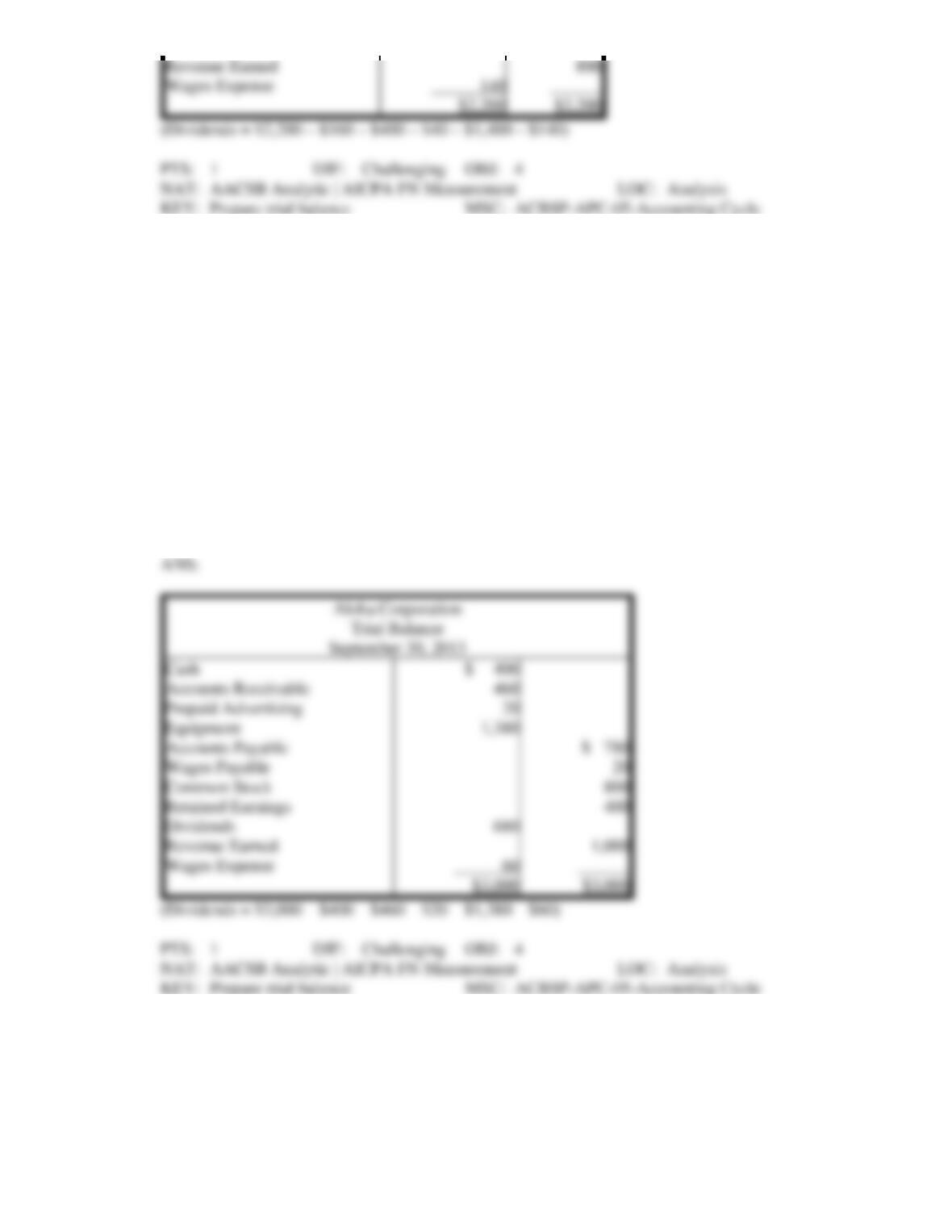
9. From the following alphabetical list of account balances, all of which are normal, for Union
Corporation on July 31, 2013, prepare a trial balance in proper form (the amount of Dividends must be
computed).
Accounts Payable
$1,000
Accounts Receivable
400
Cash
160
Common Stock
180
Dividends
?
Equipment
1,400
Prepaid Advertising
40
Retained Earnings
120
Revenue Earned
800
Wages Expense
140
Wages Payable
100
Cash
Accounts Receivable
Prepaid Advertising
Equipment
Accounts Payable
Wages Payable
Common Stock
Dividends
10. From the following alphabetical list of account balances, all of which are normal, for Aloha
Corporation on September 30, 2013, prepare a trial balance in proper form (the amount of Dividends
must be computed).
Accounts Payable
$ 780
Accounts Receivable
460
Cash
400
Common Stock
800
Dividends
?
Equipment
1,380
Prepaid Advertising
20
Retained Earnings
400
Revenue Earned
1,000
Wages Expense
60
Wages Payable
20
Cash
Accounts Receivable
Prepaid Advertising
Equipment
Accounts Payable
Wages Payable
20
Common Stock
Retained Earnings
Dividends
Revenue Earned
Wages Expense
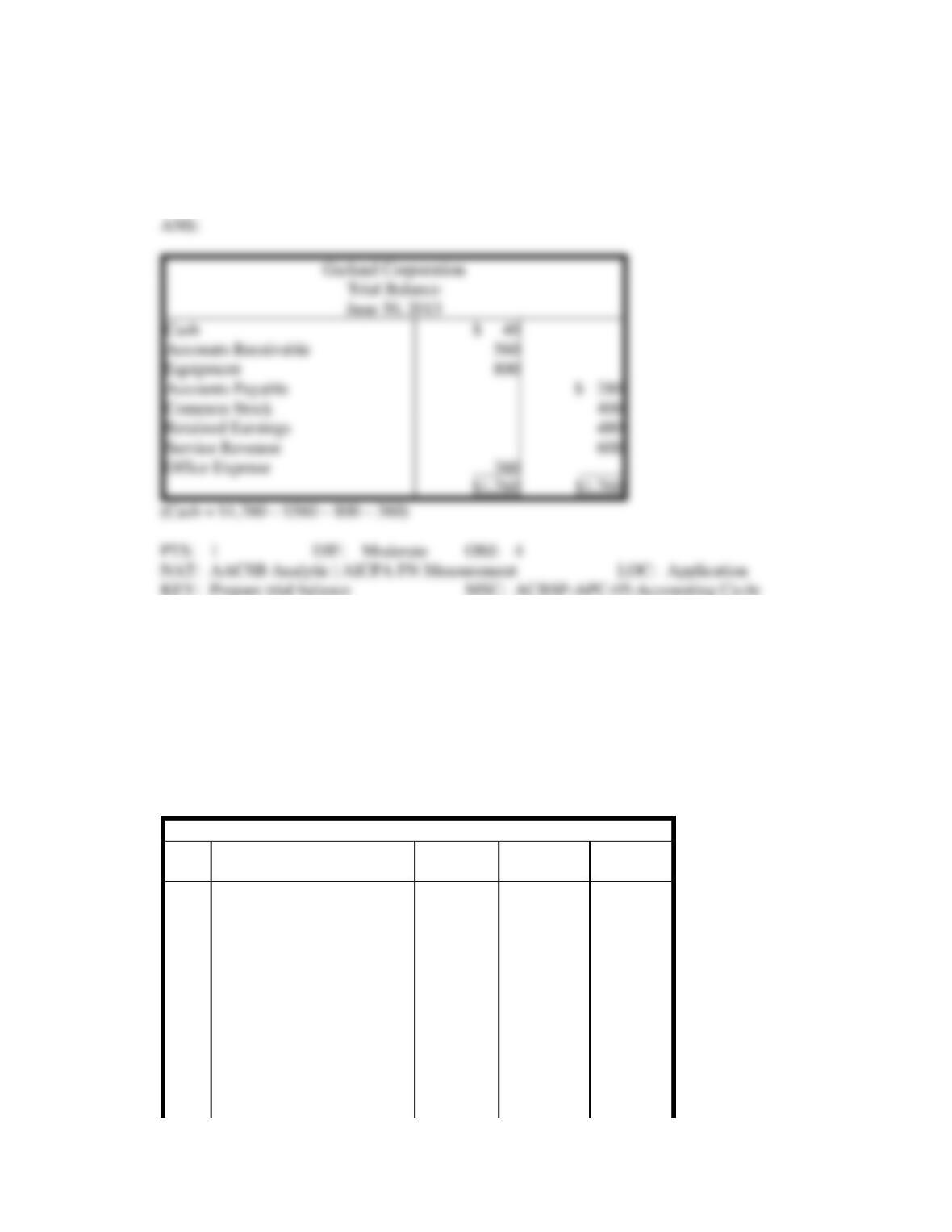
11. Using the alphabetical list of account balances presented below, all of which are normal, prepare a trial
balance for Garland Corporation at June 30, 2013, in proper order. Compute the balance of the Cash
account.
Accounts Payable
$280
Revenue Earned
Wages Expense
Accounts Receivable
560
Cash
?
Common Stock
400
Equipment
800
Office Expense
360
Retained Earnings
480
Service Revenue
600
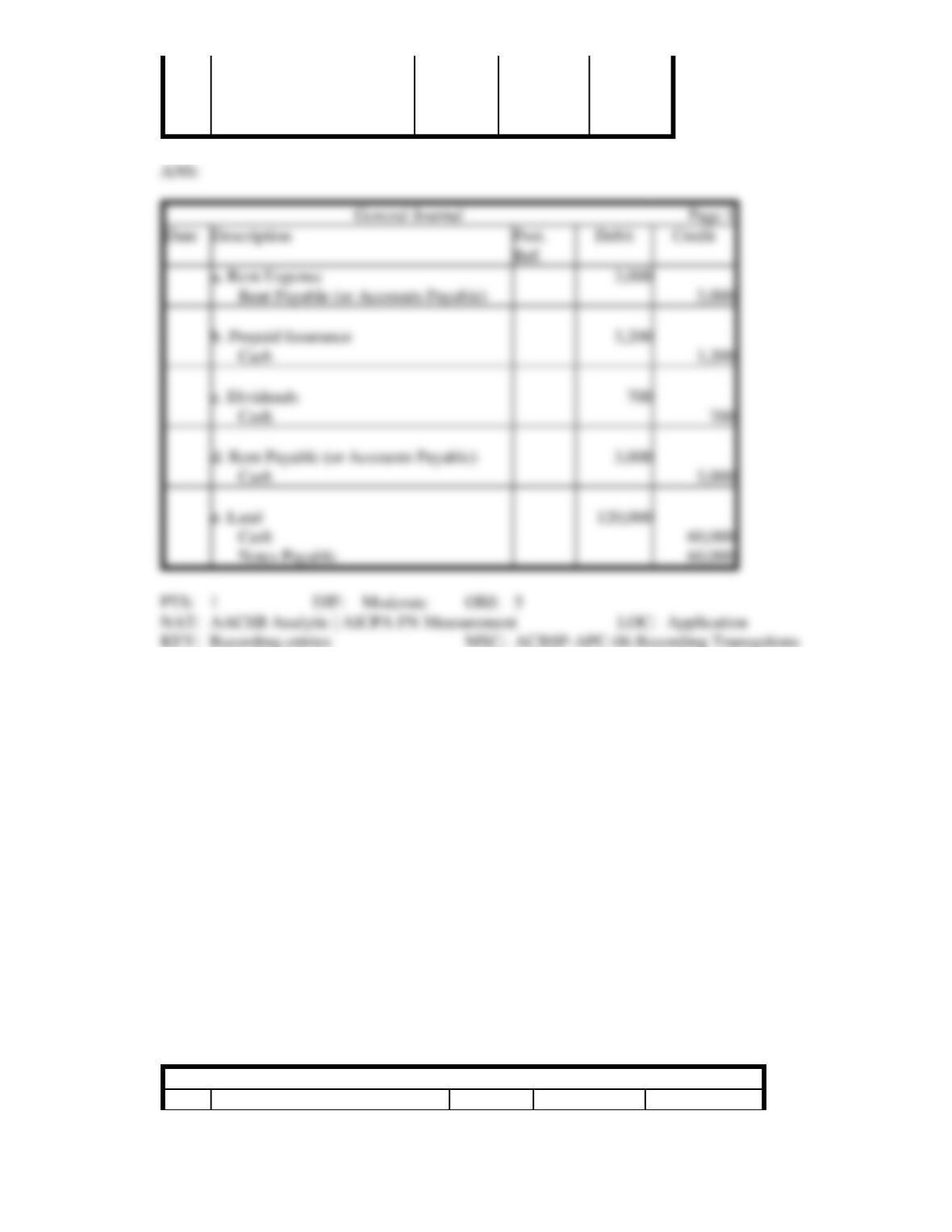
12. In the journal provided, prepare journal entries without explanations for the following transactions.
Write “no entry” if none is needed.
a. Received a $3,000 invoice for this month’s rent. Payment will not be made right away.
b. Paid $3,200 for insurance premiums to cover the next six months.
c. A $700 dividend is declared and paid.
d. The rent invoice (in a) is paid.
e. Purchased land for $120,000. The company paid half in cash and issued a promissory note for the
other half.
General Journal
Page 1
Date
Description
Post.
Ref.
Debit
Credit
Garland Corporation
Cash
Accounts Receivable
Equipment
Accounts Payable
Common Stock
Retained Earnings
Service Revenue
Office Expense
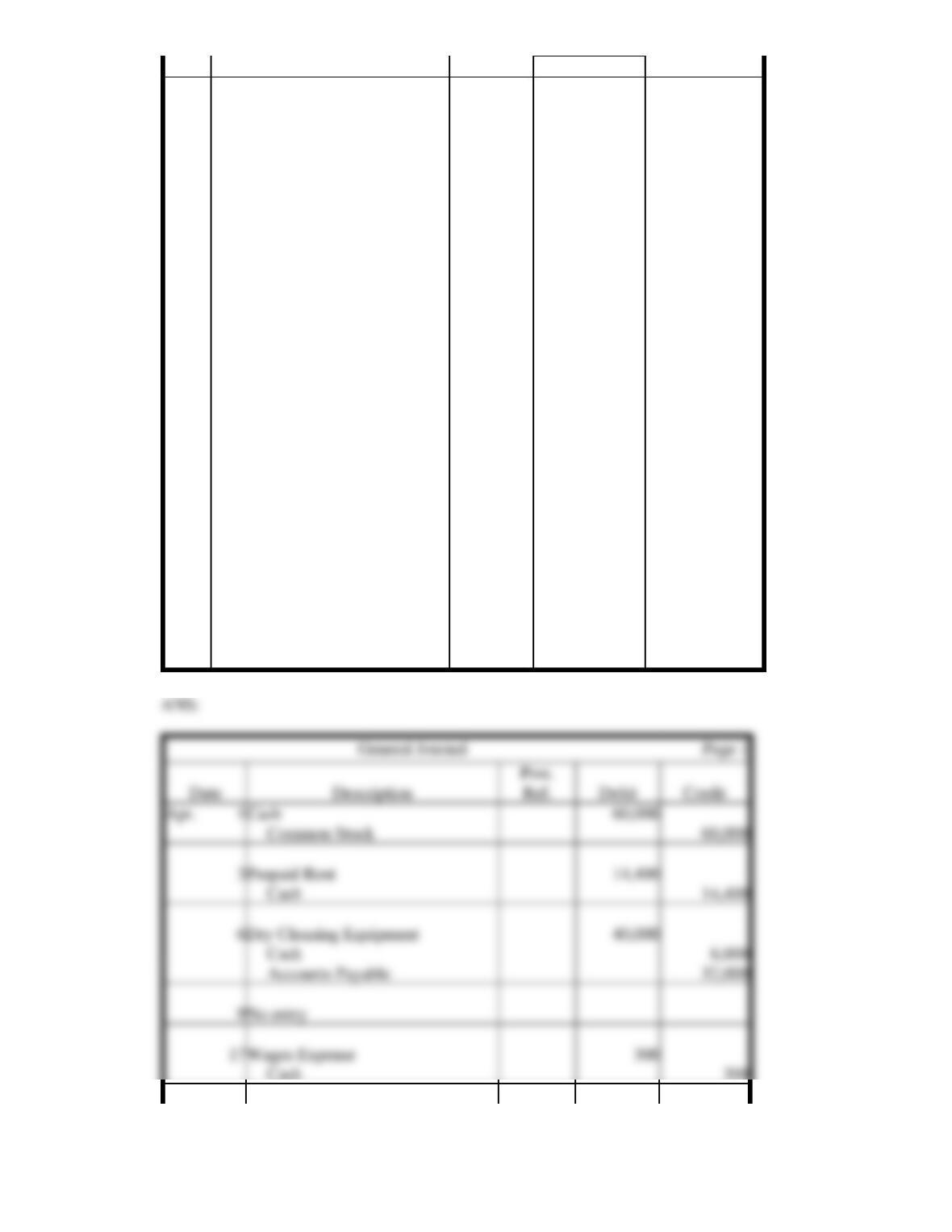
13. In the journal provided, prepare journal entries (in good form) for the following transactions. If no
entry is required, write “no entry.” Omit explanations.
Apr.
1
Investors opened a dry cleaning service, called Same Day Cleaners, by depositing
$60,000 into a business bank account and receiving 60,000 shares of $1 par value
stock in exchange.
3
Paid two years rent in advance, $14,400.
6
Purchased dry cleaning equipment for $40,000. Paid $8,000 in cash, the remainder
to be paid in two weeks.
9
Hired a part-time worker, to be paid $300 per week, starting tomorrow.
17
Paid the worker’s weekly wage.
17
Recorded cash received for services performed during the week, $3,000.
20
Paid for the remainder of the equipment purchased on April 6.
21
Received $200 in advance of cleaning and boxing a wedding gown.
23
Performed $500 of dry cleaning services for Asa’s Tuxedo Shop. It will remit
payment in three days.
24
Paid the weekly wages.
26
Received payment from Asa’s Tuxedo Shop.
30
Received a telephone bill for $100, which will be paid in two weeks.
General Journal
Page 1
Post.
Date
Description
Post.
Ref.
a. Rent Expense
Rent Payable (or Accounts Payable)
b. Prepaid Insurance
Cash
c. Dividends
Cash
d. Rent Payable (or Accounts Payable)
Cash
e. Land
Cash
Notes Payable
Date
Description
Ref.
Debit
Credit
Apr.
Cash
Common Stock
Prepaid Rent
Cash
Dry Cleaning Equipment
Cash
Accounts Payable
No entry
Wages Expense
Cash
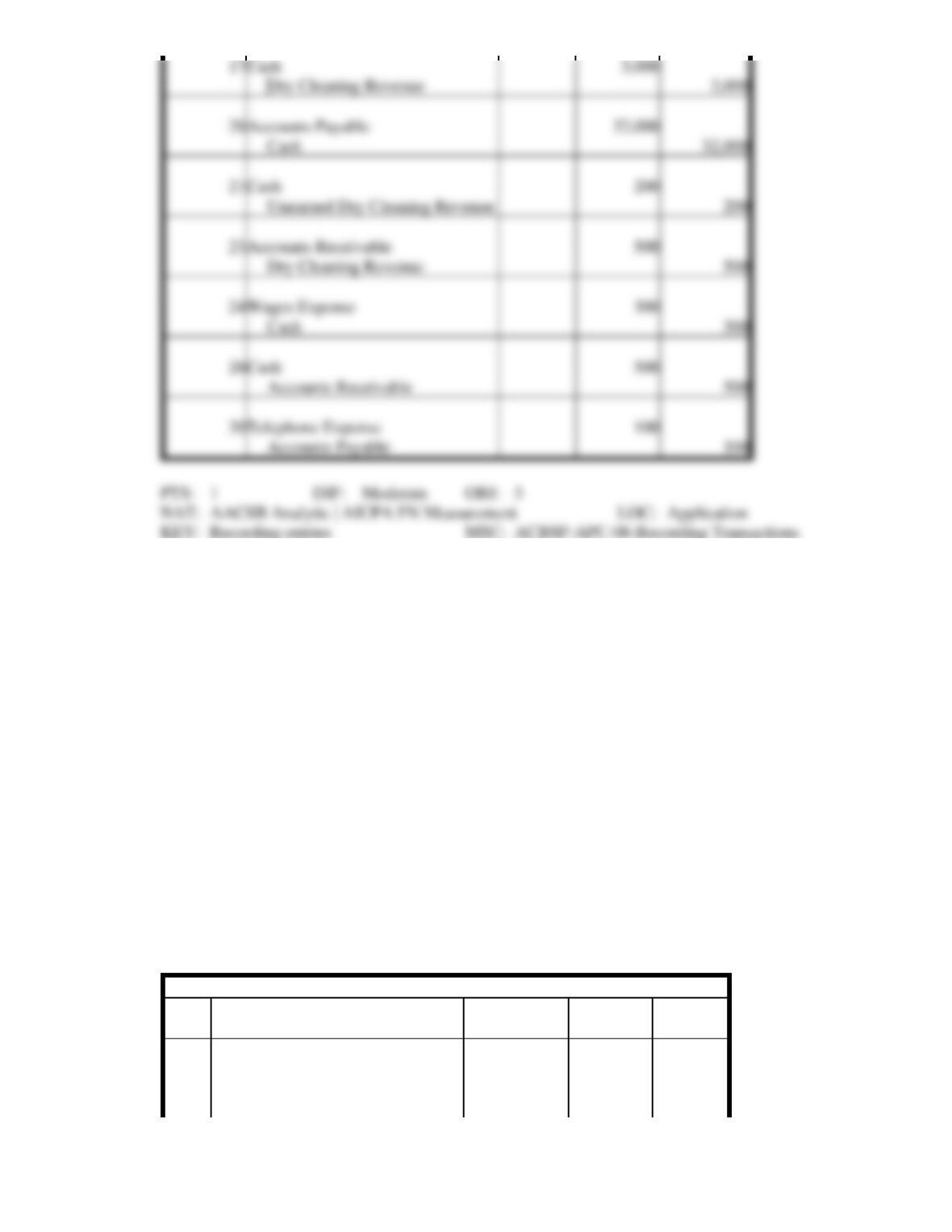
14. In the journal provided, prepare journal entries (in good form) for the following transactions. If no
entry is required, write “no entry.” Omit explanations.
July
1
Investors opened a dry cleaning service, called Jolly Cleaners, by depositing
$200,000 into a business bank account and receiving 100,000 shares of $2 par
value stock in exchange.
3
Paid one year of rent in advance, $22,400.
6
Purchased dry cleaning equipment for $60,000. Paid $25,000 in cash, the
remainder to be paid in two weeks.
10
Hired a worker, to be paid $800 per week.
17
Paid the worker’s weekly wage.
17
Recorded cash received for services rendered during the week, $10,000.
20
Paid for the remainder of the equipment purchased on May 6.
21
Received $300 in advance of cleaning and boxing a wedding gown.
23
Performed $1,200 of dry cleaning services for Weddings Unlimited. It will remit
payment in three days.
24
Paid the weekly wages.
26
Received payment from Weddings Unlimited.
30
Received an electricity bill for $350, which will be paid in two weeks.
General Journal
Page 1
Date
Description
Post.
Ref.
Debit
Credit
Cash
Accounts Payable
Cash
Cash
Unearned Dry Cleaning Revenue
Accounts Receivable
Dry Cleaning Revenue
Wages Expense
Cash
Cash
Accounts Receivable
Telephone Expense
Accounts Payable
July
Cash
Common Stock
Prepaid Rent
Cash
Dry Cleaning Equipment
Cash
Accounts Payable
No entry
Wages Expense
Cash
Cash
Dry Cleaning Revenue
Cash
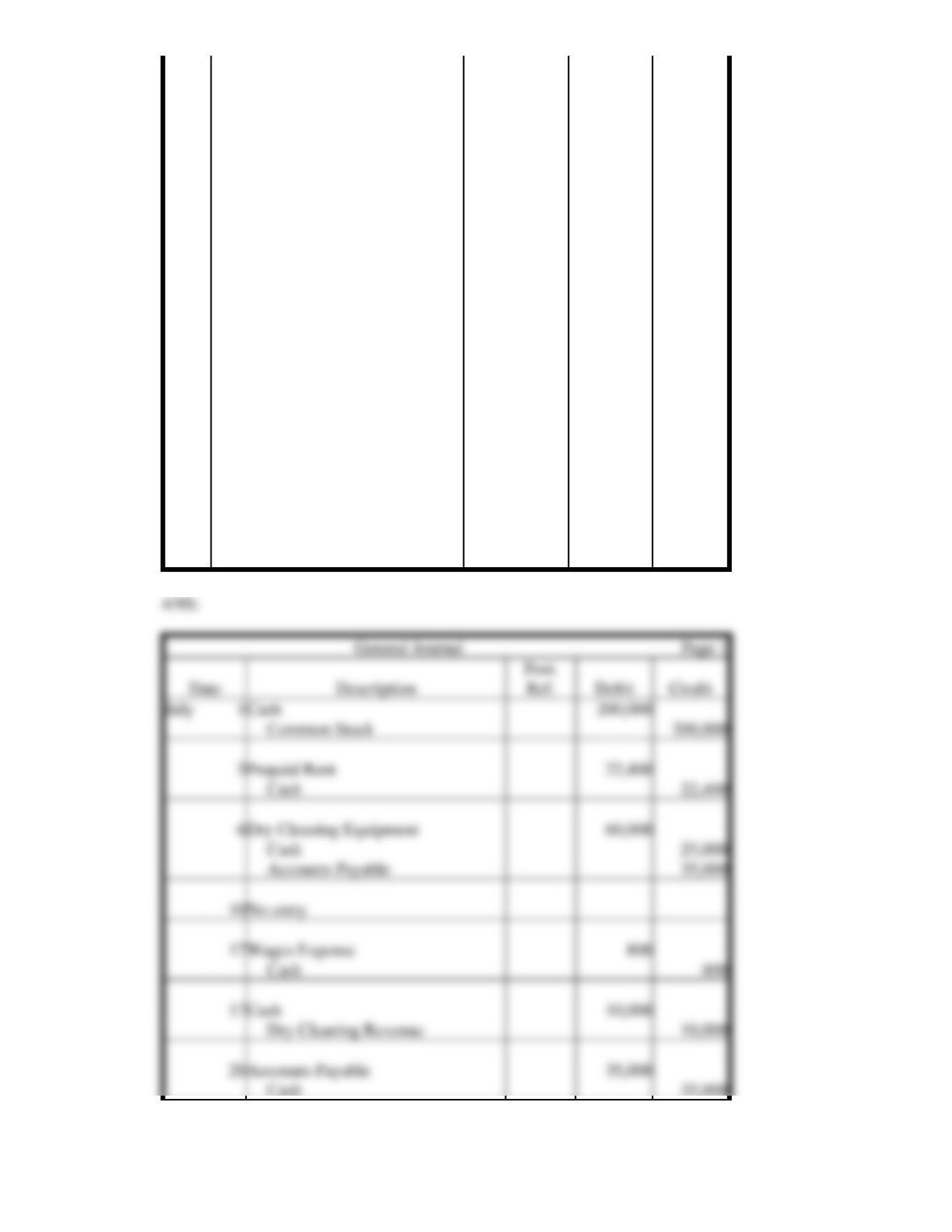
15. In the journal provided, prepare journal entries (in good form) for the following transactions. If no
entry is required, write “no entry.” Omit explanations.
Mar.
1
Investors opened a dance school, called Yolonda’s Dance Studio, by depositing
$15,000 into a business bank account in exchange for 15,000 shares of $1 par
value stock.
2
Paid three months’ rent in advance, $1,800.
4
Hired a part-time assistant, to be paid $250 per week, starting next week.
6
Purchased sound equipment for $2,000. Paid $400 in cash, the remainder to be
paid in installments of $800 every two weeks.
8
Signed up five students, who will begin lessons on March 10, at $80 per week
per student.
17
Received the first week’s tuition from four students; the fifth student will remit
payment in three days.
17
Paid the assistant his first week’s wages.
20
Received payment from the fifth student.
21
Paid the first installment on the sound equipment purchased on March 6.
23
Received an electric bill of $100, to be paid April 1.
General Journal
Page 1
Date
Description
Post.
Ref.
Debit
Credit
Cash
Unearned Dry Cleaning Revenue
Accounts Receivable
Dry Cleaning Revenue
Wages Expense
Cash
Cash
Accounts Receivable
Utility Expense
Accounts Payable
Mar.
Cash
Common Stock
Prepaid Rent
No entry
Sound Equipment
Cash
Accounts Payable
No entry
Cash
Accounts Receivable
Tuition Revenue
Wages Expense
Cash
Cash
Accounts Receivable
Accounts Payable
Cash
16. In the journal provided, prepare journal entries (in good form) for the following transactions. If no
entry is required, write “no entry.” Omit explanations.
Nov.
1
Investors opened a dance school called Olga’s Dance Studio by depositing
$24,000 into a business bank account in exchange for 24,000 shares of $1 par
value stock.
2
Paid three months’ rent in advance, $2,400.
4
Hired a part-time assistant, to be paid $275 per week.
6
Purchased sound equipment for $4,200. Paid $600 in cash, the remainder to be
paid in installments of $1,200 every two weeks.
8
Signed up ten students, who will begin lessons on November 10, at $100 per
week per student.
17
Received the first week’s tuition from nine students; the tenth student will remit
payment in three days.
17
Paid the assistant his first week’s wages.
20
Received payment from the tenth student.
20
Paid the next installment on the sound equipment purchased on November 6.
23
Received an electric bill of $150, to be paid on December 1.
General Journal
Page 1
Date
Description
Post.
Ref.
Debit
Credit
Utilities Expense
Accounts Payable
17. Post the following transaction.
General Journal
Page 14
Date
Description
Post.
Ref.
Debit
Credit
Nov.
Cash
Common Stock
Prepaid Rent
Cash
No entry
Sound Equipment
Cash
Accounts Payable
No entry
Cash
Accounts Receivable
Tuition Revenue
Wages Expense
Cash
Cash
Accounts Receivable
Accounts Payable
Cash
Utilities Expense
Accounts Payable
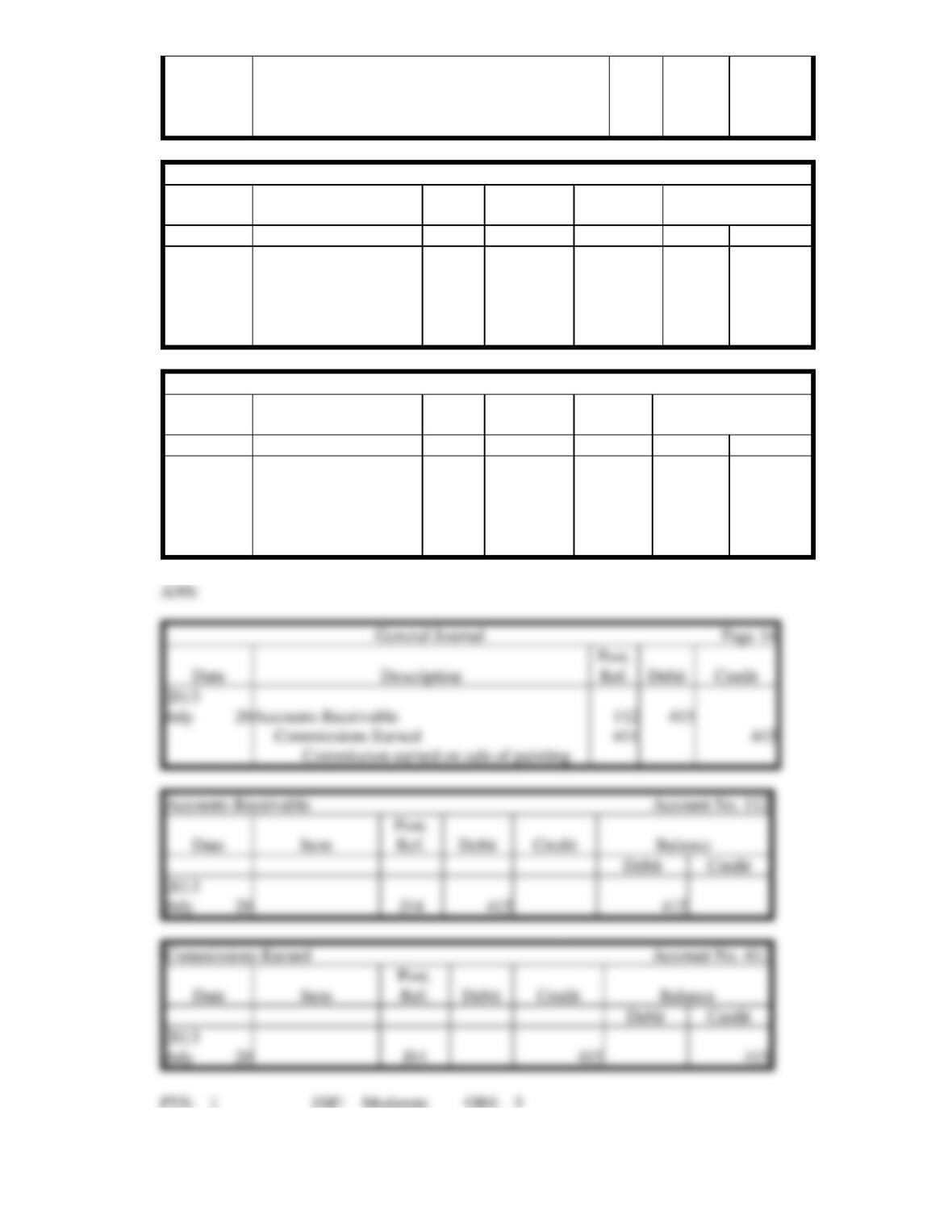
2013
July
20
Accounts Receivable
415
Commissions Earned
415
Commission earned on sale of painting
Accounts Receivable
Account No. 112
Date
Item
Post.
Ref.
Debit
Credit
Balance
Debit
Credit
2013
Commissions Earned
Account No. 411
Date
Item
Post.
Ref.
Debit
Credit
Balance
Debit
Credit
2013
Credit
2013
July
20
Accounts Receivable
Commissions Earned
415
Commission earned on sale of painting
Accounts Receivable
Post.
Credit
2013
July
20
J14
Commissions Earned
Credit
2013
July
20
415
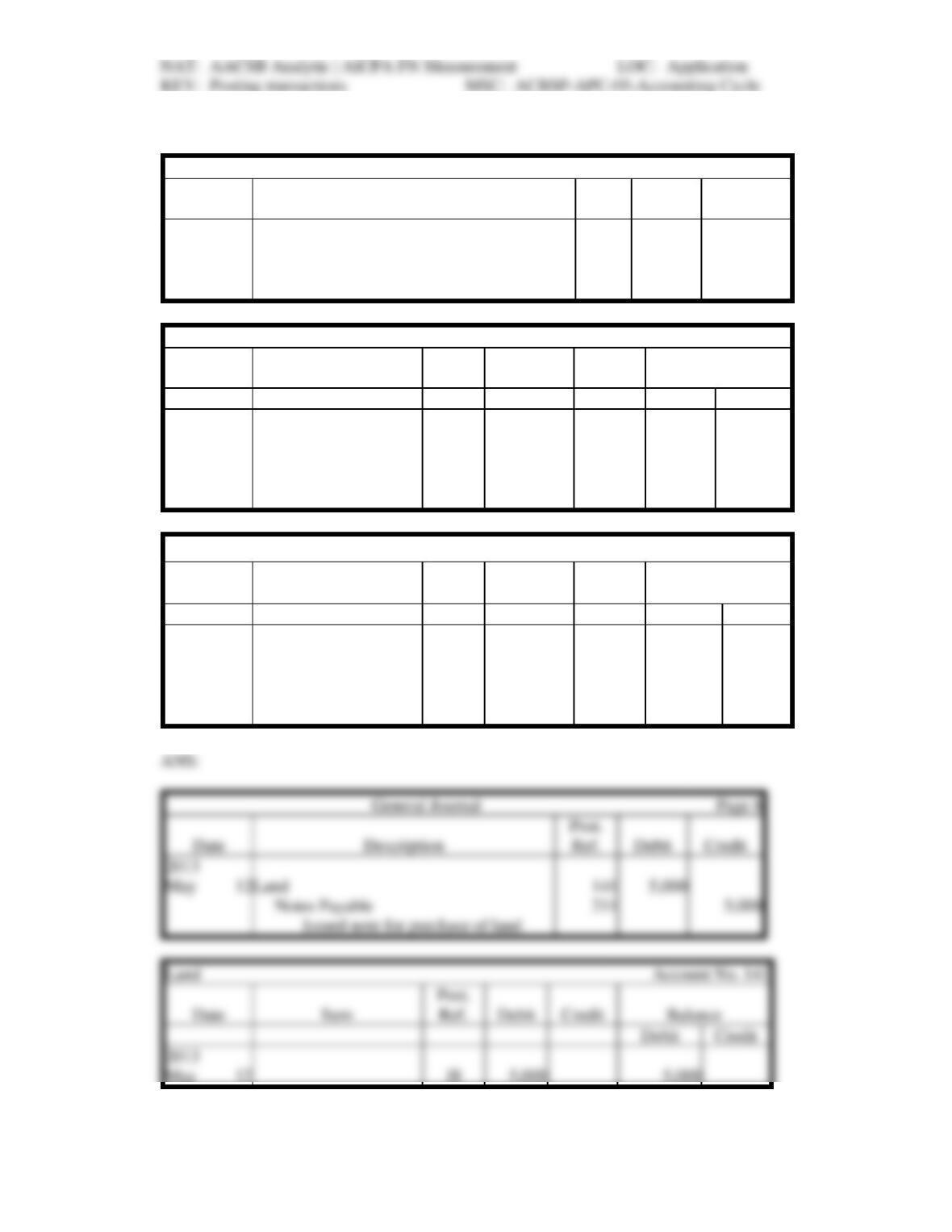
18. Post the following transaction.
General Journal
Page 8
Date
Description
Post.
Ref.
Debit
Credit
2013
May
12
Land
5,000
Notes Payable
5,000
Issued note for purchase of land
Land
Account No. 141
Date
Item
Post.
Ref.
Debit
Credit
Balance
Debit
Credit
2013
Notes Payable
Account No. 211
Date
Item
Post.
Ref.
Debit
Credit
Balance
Debit
Credit
2013
Post.
2013
May
12
Land
5,000
Notes Payable
5,000
Issued note for purchase of land
Land
Date
Item
Post.
Ref.
Credit
Credit
2013
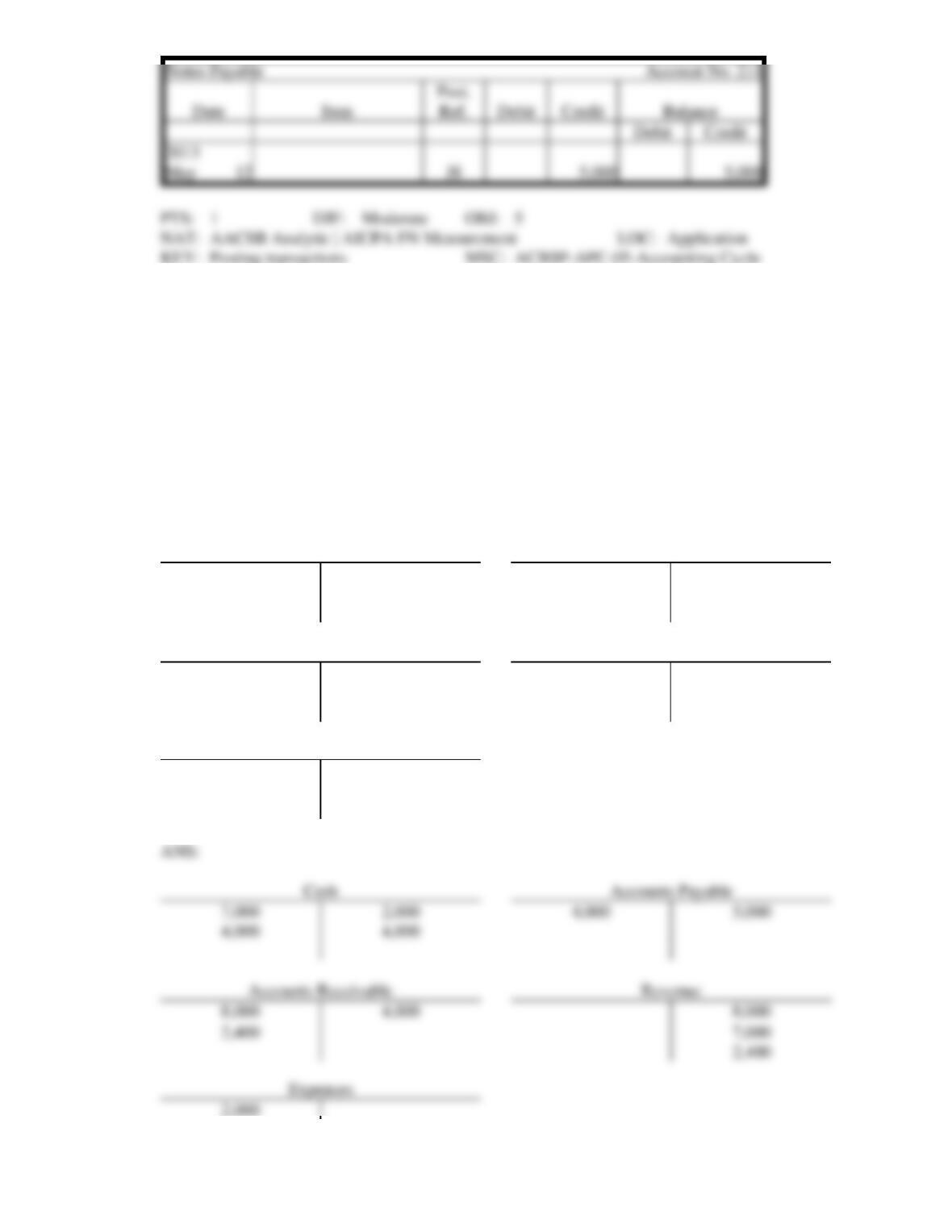
19. Lindsay Company had the following transactions for the month of August.
5
Performed services on credit, $8,000
10
Performed services for cash, $7,000
12
Paid expenses in cash, $2,000
14
Collected on account, $4,000
19
Incurred expenses on credit, $5,000
24
Performed services on credit, $2,400
29
Paid on account, $4,000
Enter the above transactions in the following T accounts. Determine the cash balance after
transactions, the amount still to be received, and the amount still to be paid.
Cash
Accounts Payable
Accounts Receivable
Revenue
Expenses
Cash
Accounts Payable
Accounts Receivable
Revenue
Expenses
Notes Payable
Debit
Credit
May