
Chapter 2: Basic Accounting Concepts
74. Anthony, Inc. buys land for $50,000 cash. The net effect on assets is:
a. $50,000 increase.
b. $0.
c. $50,000 decrease.
d. $25,000 increase.
75. Declaring and paying cash dividends affects which account/ accounts?
a. Cash only
b. Capital stock only
c. Cash and retained earnings
d. Cash and capital stock
76. Buying equipment for cash affects which account/ accounts?
a. Cash only
b. Retained earnings only
c. Equipment and retained earnings
d. Cash and equipment
77. Cash receipts from cash sales affects which financial statement elements?
a. Assets only
b. Stockholders’ equity only
c. Assets and stockholders’ equity
d. Assets and liabilities
78. Paying expenses affects which financial statement elements?
a. Assets only
b. Stockholders’ equity only
c. Assets and stockholders’ equity
d. Assets and liabilities
79. The payment of a liability:
a. decreases assets and stockholders’ equity.
b. increases assets and decreases liabilities.
c. decreases assets and increases liabilities.
d. decreases assets and decreases liabilities.

Chapter 2: Basic Accounting Concepts
80. The first month of operation showed the net cash from operating activities to be $1,850, the net
cash from investing activities to be ($3,000), and the ending cash balance to be $1,600. The net
cash from financing activities must be:
a. $450.
b. $2,750.
c. $3,250.
d. $6,450.
81. A common-sized income statement is prepared by expressing income statement amounts as a
percent of .
a. sales
b. purchases
c. total assets
d. profit
82. A common-sized balance sheet is prepared by expressing each liability item as a percent of:
a. total sales.
b. total stockholders’ equity.
c. total liabilities.
d. total liabilities plus stockholders’ equity.
83. A common-sized balance sheet is prepared by expressing each stockholders’ equity item as a
percent of:
a. total sales.
b. total liabilities plus stockholders’ equity.
c. total stockholders’ equity.
d. total liabilities.
Chapter 2: Basic Accounting Concepts
84.
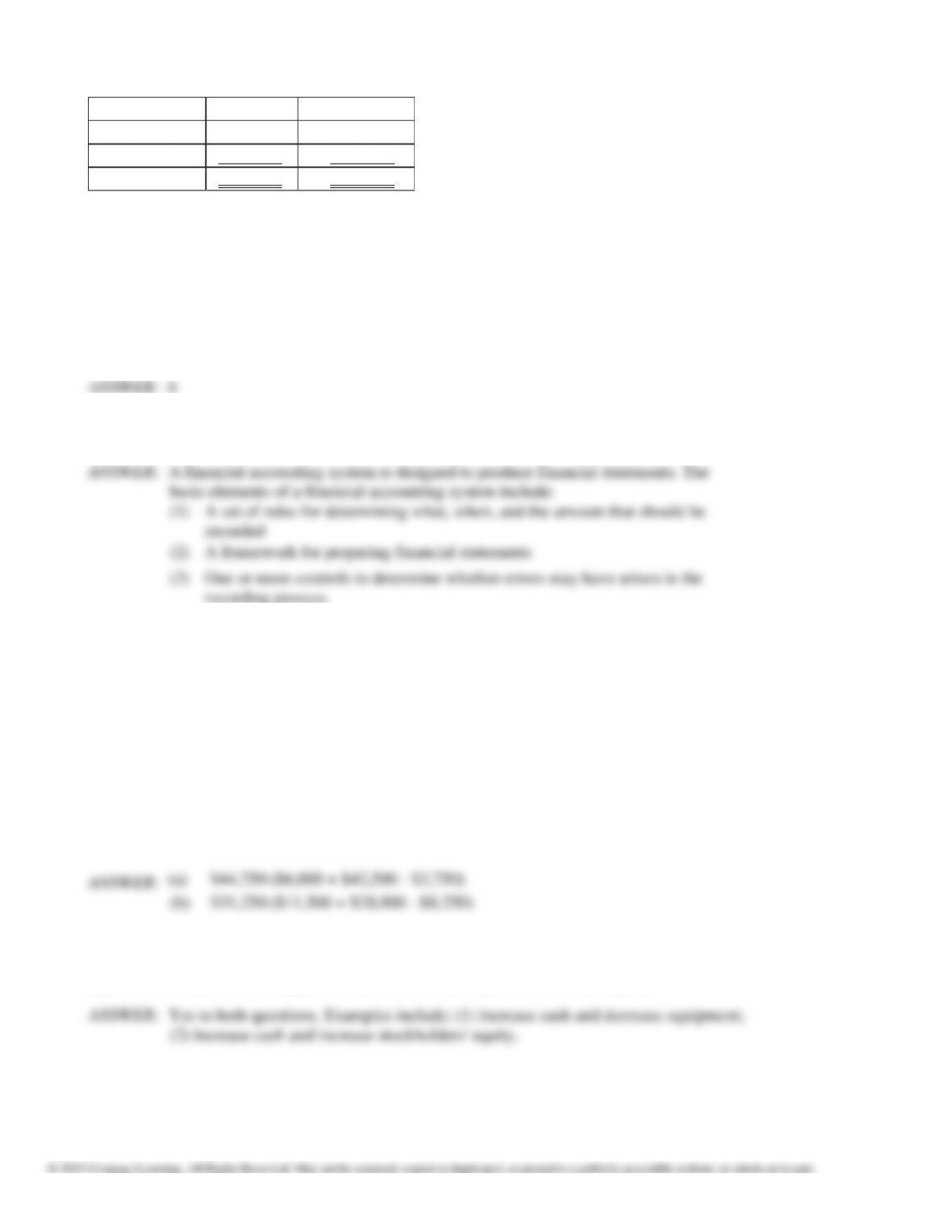
Year 2
Year 1
Sales
$170,000
$130,000
Cost of sales
135,000
105,000
Gross profit
$ 35,000
$ 25,000
Using the above information, calculate the percentage increase or decrease in cost of sales from
Year 1 to Year 2?
a. Increase of 2.1%
b. Decrease of 1.4%
c. Increase of 1.4%
d. Decrease of 2.1%
85. What are the basic elements of a financial accounting system?
86. Calculate the following:
(a) Determine the cash receipts for May based on the following data:
Cash payments during May $42,500
Cash account balance, May 1 3,750
Cash account balance, May 31 6,000
(b) Determine the cash received from customers on account during May based on the
following data:
Accounts receivable account balance, May 1 $11,500
Accounts receivable account balance, May 31 8,250
Fees billed to customers during May 28,000
87. The accounting equation “Assets = Liabilities + Stockholders’ Equity” is affected by
transactions. Is it possible to have a transaction that only impacts one financial element of the
equation? Can a transaction impact two elements of the equation? Give examples.
Chapter 2: Basic Accounting Concepts
88. Letty’s Laundry and Dry Cleaning incorporated and started business on January 1, 2016.
1. Letty’s Laundry and Dry Cleaning began business by depositing $30,000 in a checking
account in the name of Letty’s Laundry and Dry Cleaning, Inc. for which capital stock is
issued.
2. Borrowed $6,000 from City Bank.
3. Purchased equipment from Washers Wholesale, $16,200.
4. Purchased supplies costing $3,000 from Suds ‘n Stuff for cash.
5. Paid one month’s rent for business space in Pine Plaza, $1,000.
6. Services provided to customers during January totaled $13,400. All services were paid for
in cash.
7. Paid employees for January, $2,240.
8. Received and paid the utility bill, $500.
9. Received and paid the telephone bill, $250.
10. Paid dividends to the stockholders, $2,140.
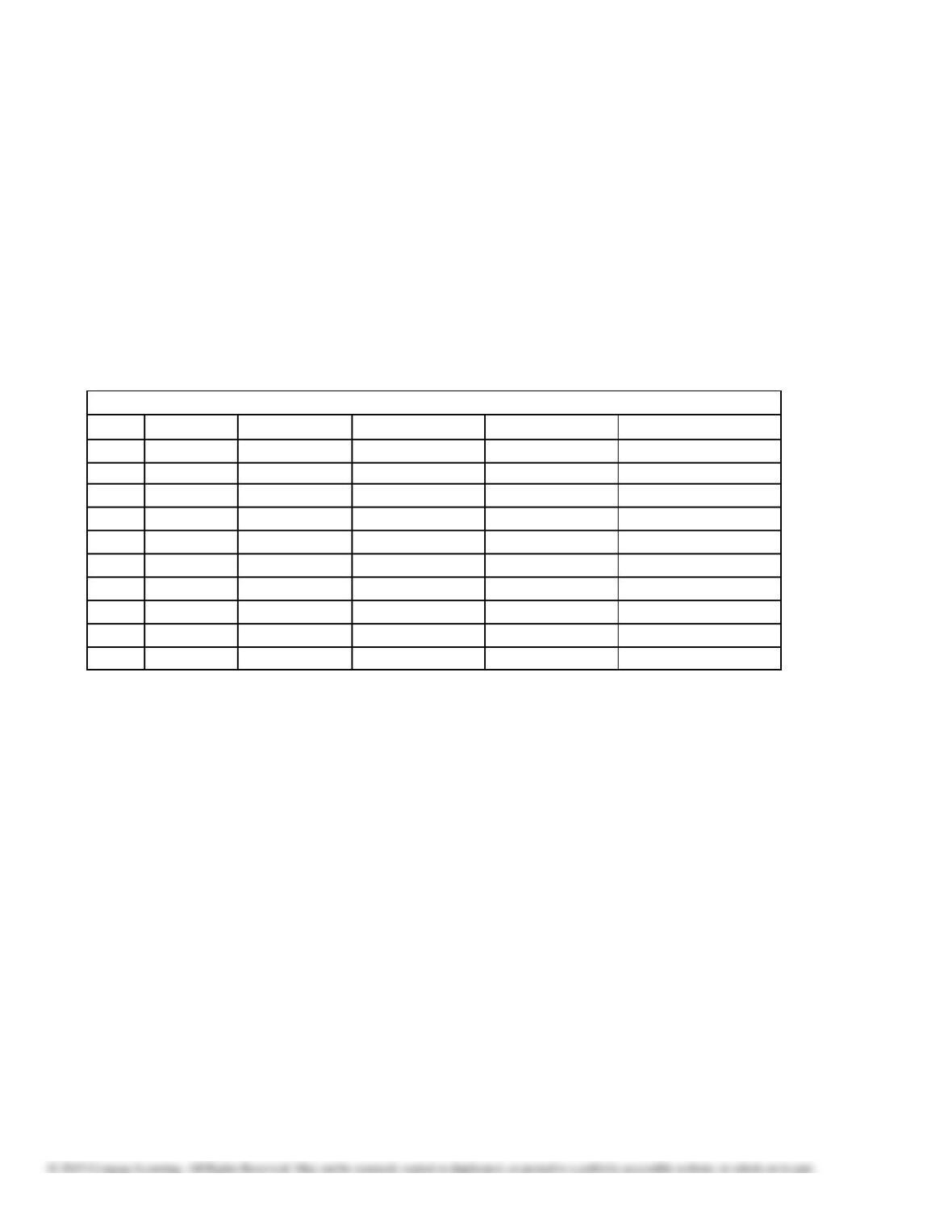
Indicate the effect of each transaction on the accounting equation by listing the numbers
identifying the transactions, (1) through (10) in a vertical column, and inserting at the right of
each number the appropriate letter from the following list:
a
Increase in an asset, decrease in another asset.
b
Increase in an asset, increase in a liability.
c
Increase in an asset, increase in stockholders’ equity.
d
Decrease in an asset, decrease in a liability.
e
Decrease in an asset, decrease in stockholders’ equity
Chapter 2: Basic Accounting Concepts
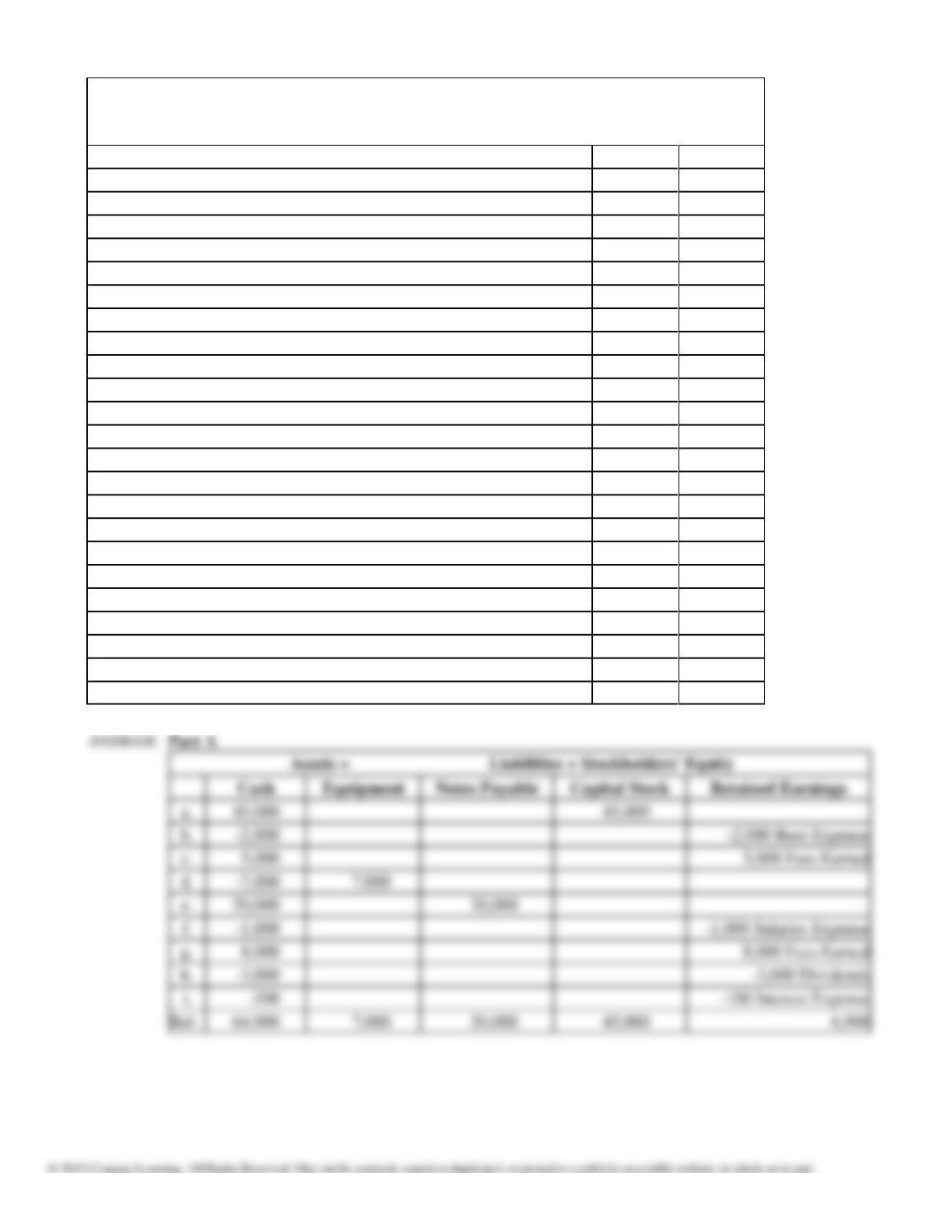
89. Part A
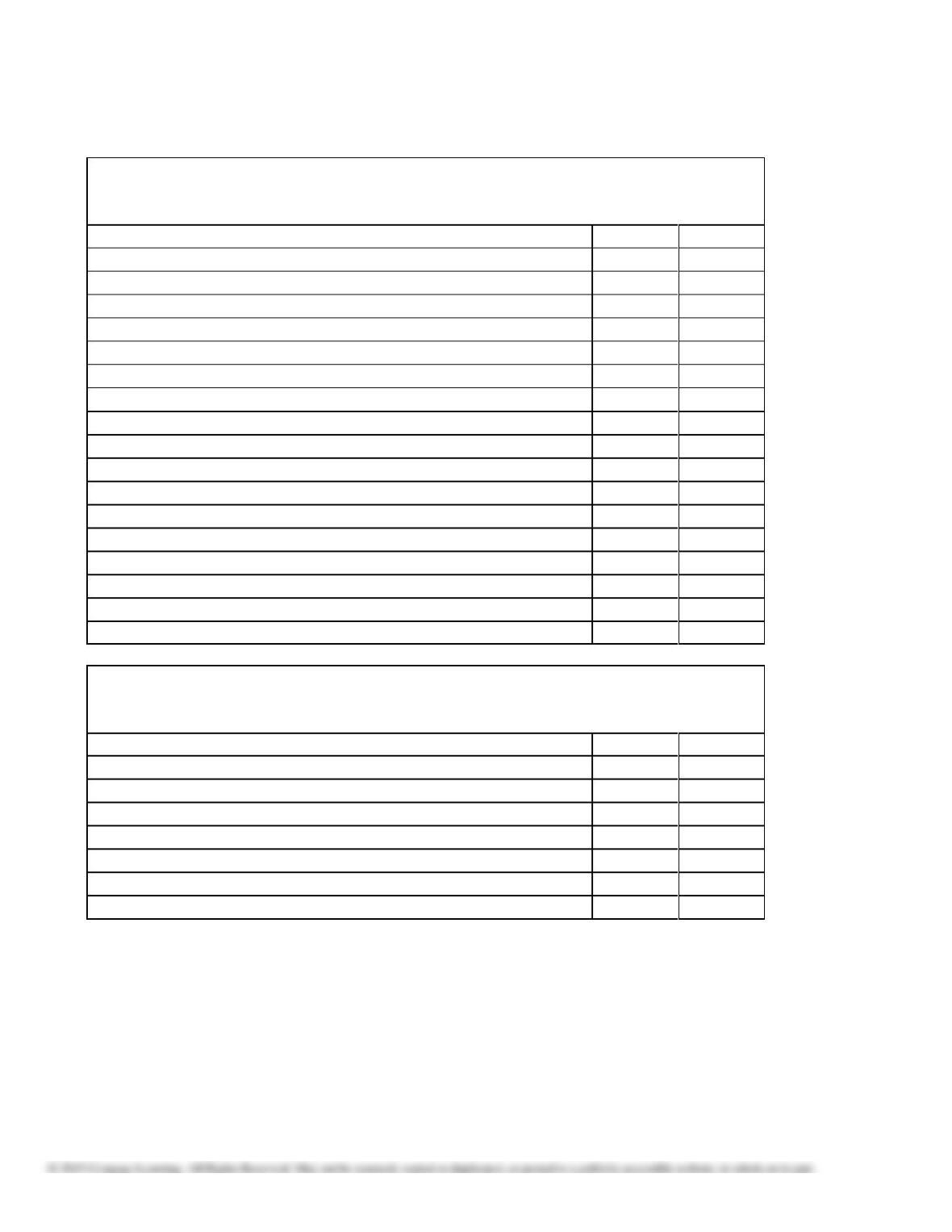
Indicate the effect of each transaction during the month of October 2016 and the balances for
the accounting equation after all transactions have been recorded. No beginning balances exist
in the accounts. An accounting equation has been provided.
a. Opened a business bank account for Jones, Inc., with an initial deposit of $45,000 in
exchange for capital stock.
b. Paid rent on the office building for the month, $2,000.
c. Received cash for fees earned of $5,000.
d. Purchased equipment, $7,000.
e. Borrowed $20,000 by issuing a note payable.
f. Paid salaries for the month, $1,000.
g. Received cash for fees earned of $8,000.
h. Paid dividends, $3,000.
i. Paid interest on the note, $100.
Assets = Liabilities + Stockholders’ Equity
Cash
Equipment
Notes Payable
Capital Stock
Retained Earnings
a
b
c
d
e
f
g
h
i
Bal.
Chapter 2: Basic Accounting Concepts
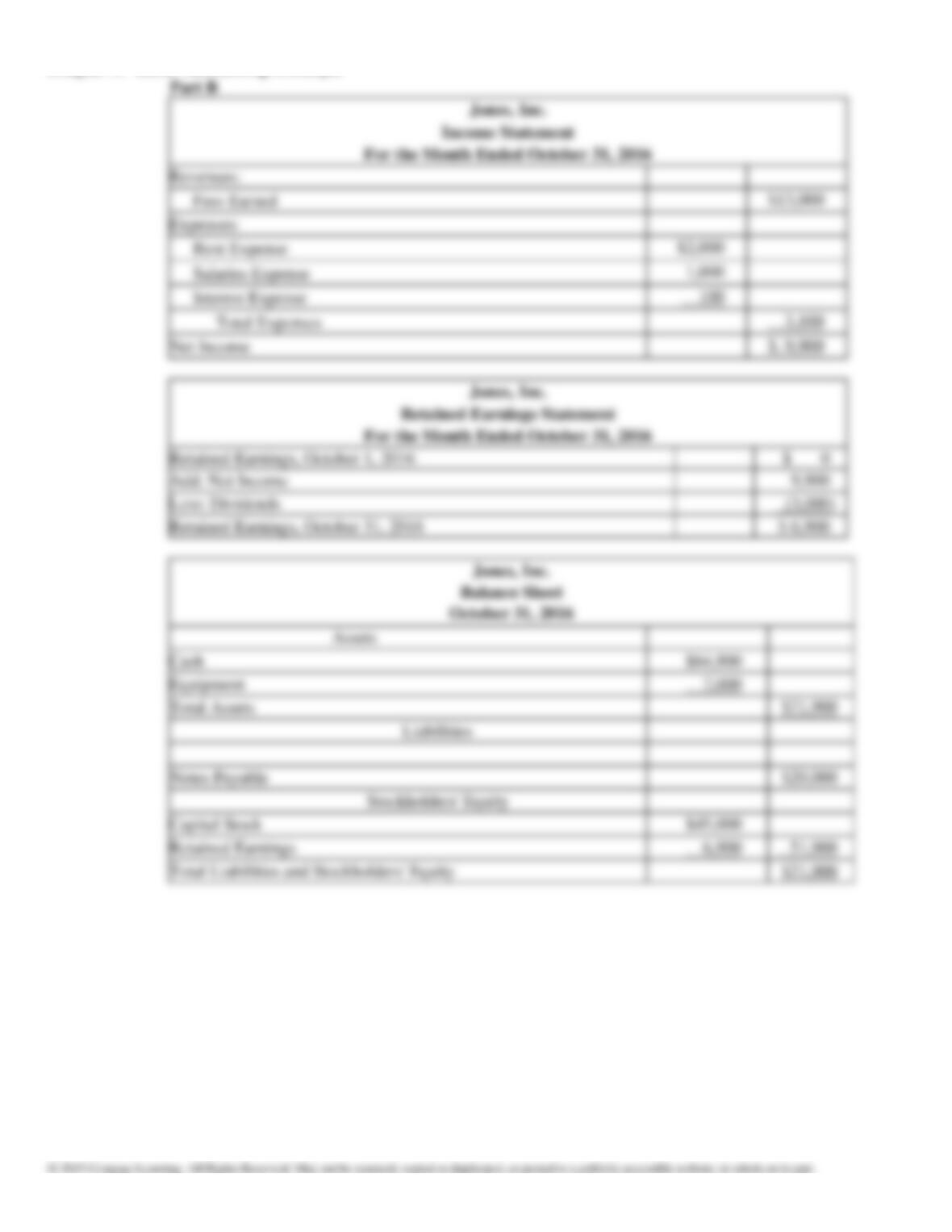
Part B
Using the information from Part A, prepare (1) an income statement, (2) a statement of retained
earnings, (3) a balance sheet, and (4) a statement of cash flows for the month of October.
Jones, Inc.
Income Statement
For the Month Ended October 31, 2016
Jones, Inc.
Retained Earnings Statement
For the Month Ended October 31, 2016

Chapter 2: Basic Accounting Concepts
Jones, Inc.
Balance Sheet
October 31, 2016
Chapter 2: Basic Accounting Concepts
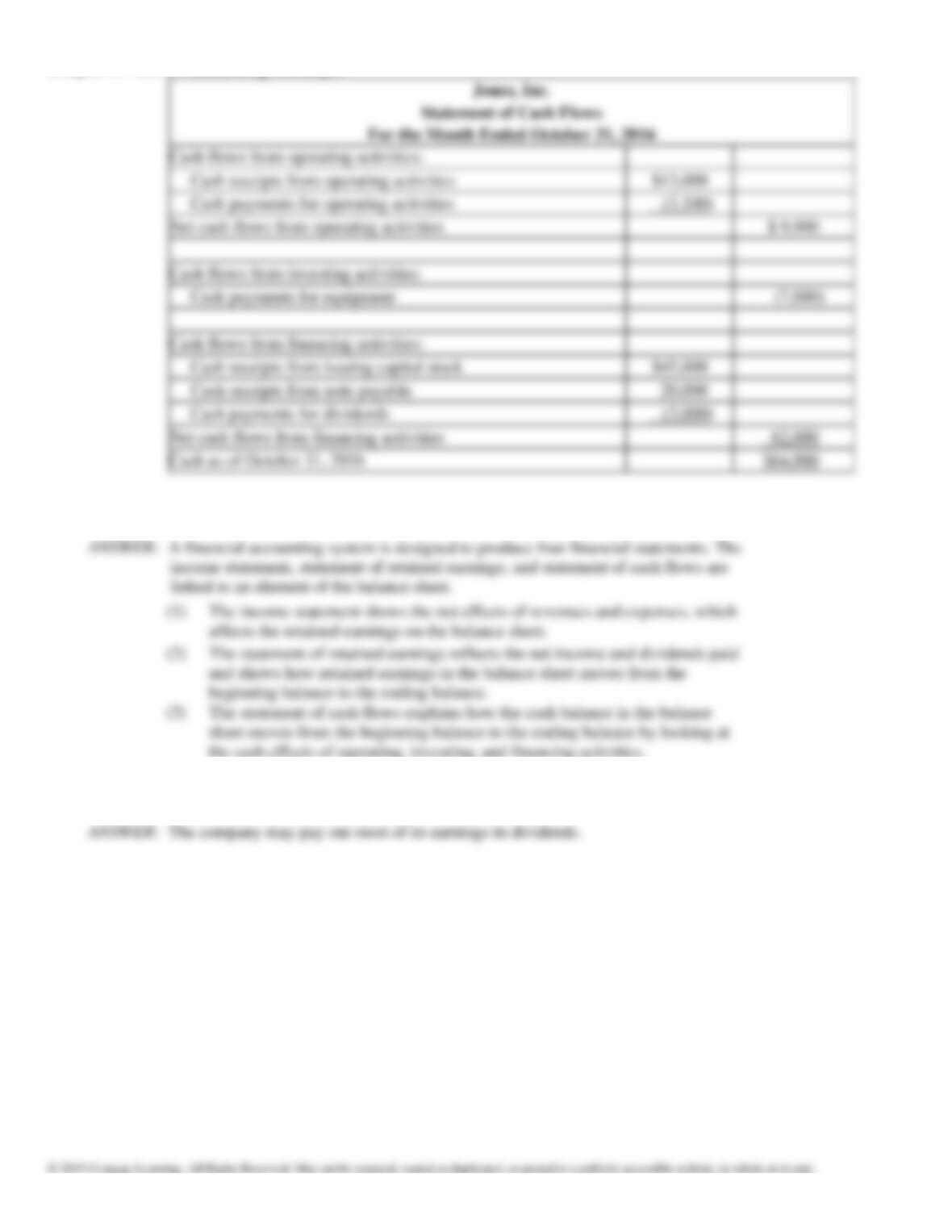
Jones, Inc.
Statement of Cash Flows
For the Month Ended October 31, 2016
Chapter 2: Basic Accounting Concepts
Chapter 2: Basic Accounting Concepts
90. Explain how the four financial statements are linked.
91. How can a company earn a large net income and have a small balance in retained earnings?
Chapter 2: Basic Accounting Concepts
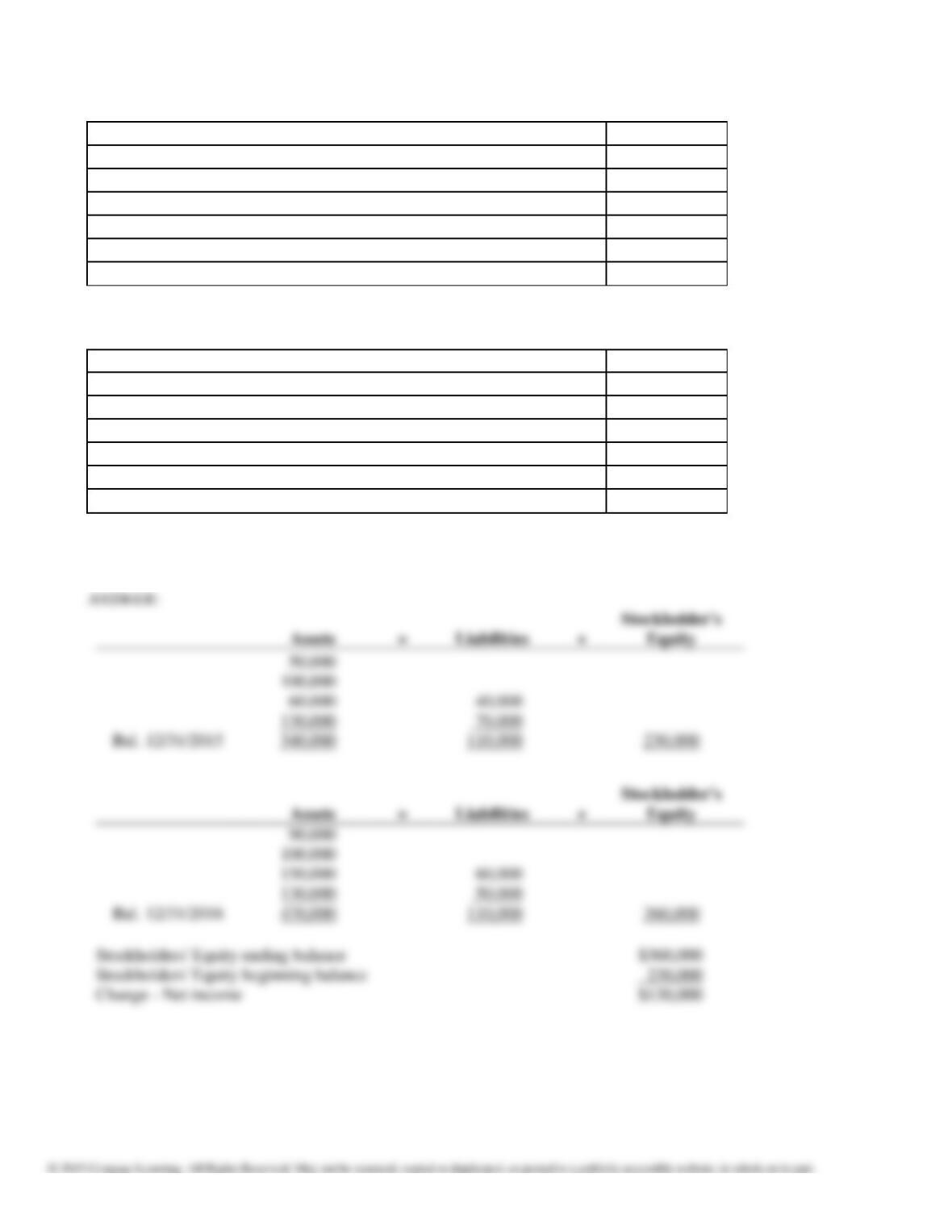
92. The following are included in Ace Auto Parts, Inc.’s December 31, 2015 balance sheet:
Accounts Receivable
$ 50,000
Building
100,000
Cash
60,000
Land
130,000
Accounts Payable
40,000
Notes Payable
70,000
Stockholders’ Equity
?
Below are the balances for December 31, 2015:
Accounts Receivable
$ 90,000
Building
100,000
Cash
150,000
Land
130,000
Accounts Payable
60,000
Notes Payable
50,000
Stockholders’ Equity
?
Analyze the changes in these balances and determine net income for 2016, assuming that the
only change to stockholders’ equity is from net income.
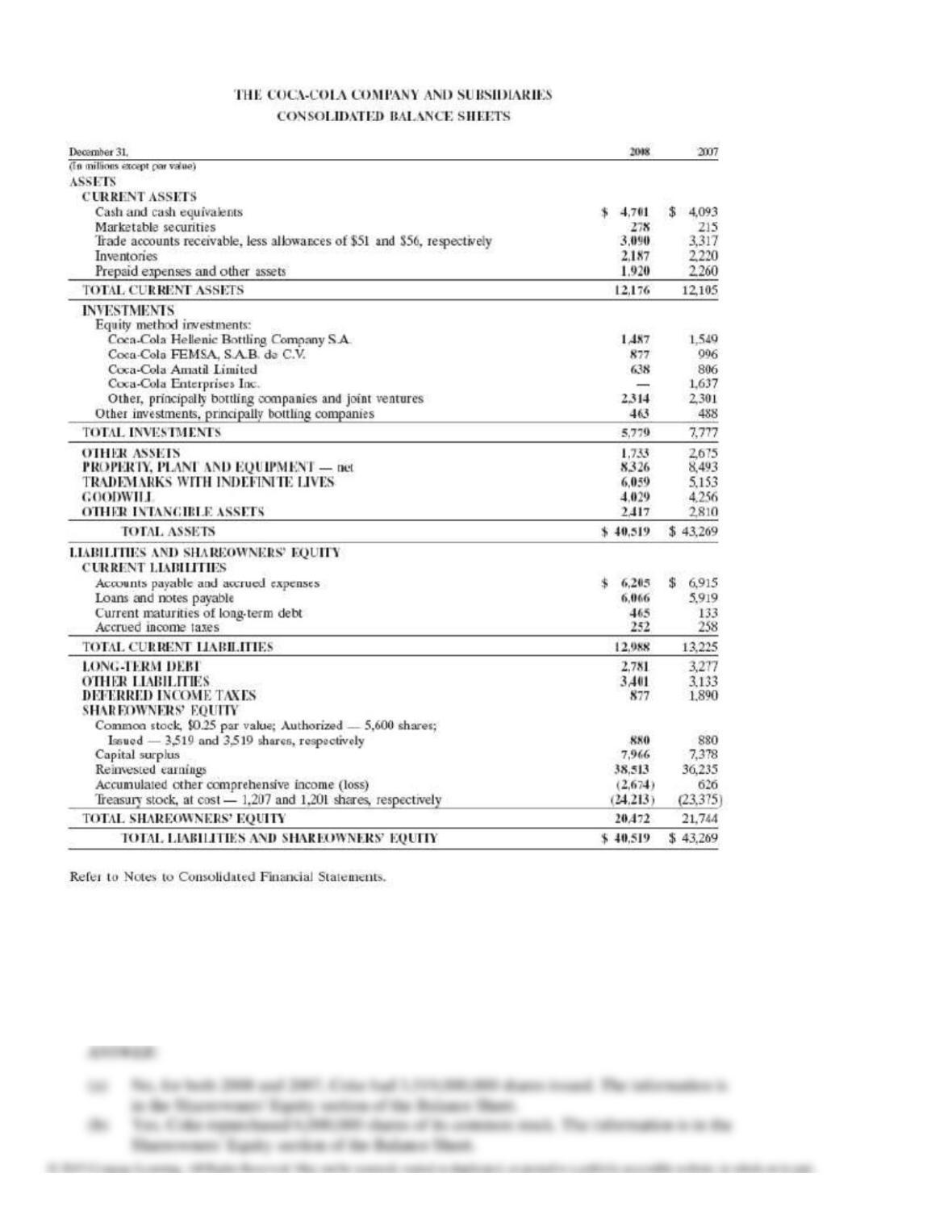
Chapter 2: Basic Accounting Concepts
93. Refer to Coke’s balance sheet and answer the following questions:
(a)
Did Coke issue any stock in 2008? If so, how many shares were issued and where
might this information be found?
(b)
Did Coke repurchase any common stock in 2008? If so, how many shares were
repurchased and where might this information be found?

Chapter 2: Basic Accounting Concepts
94. On May 1, the cash account balance was $72,600. During May, cash receipts totaled $345,600
and the May 31 balance was $95,230. Determine the cash payments made during May.